By George Davis and Michael Clark

The physical or natural creation is a mirror image of spiritual things. The physical body with its many members serves as the supreme example of this. Of all the members of the body, the most significant and representative of spiritual priorities is the organ of sight, the eye. Jesus often used the eye as a parable of spiritual things, calling it “the lamp of the body.” Sight is a light and darkness issue. When your eye is sound, your whole body is full of light; but when it is unsound, the body is full of darkness (Luke 11:34).
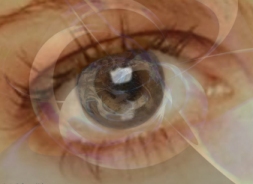
EyeThis also is true of the church, the body of Christ. The body that lacks spiritual sight is full of darkness, but the spiritually sighted body is full of light. Everything is relative to sight or the lack of it. Christ often used sight as a synonym for wisdom and understanding, referring to those religious leaders who lacked it as blind guides leading the blind. The eye is the chief channel of information for man. Of all the five senses, sight is the most highly valued. Sight is the key to knowledge. What you cannot conceptualize, you cannot understand. Both in the natural life and in the spiritual life, seeing precedes knowledge.

It is not exceptional for a child to see. In fact, within six to eight weeks of birth a baby sees clearly. Anything less than this is abnormal. First children see, and then they learn about what they have seen. They see before they can sit up, crawl, or say their first word. Before any of these things, their little eyes are intently searching, assimilating, and discerning the grandeur of their new surroundings. One of the little joys of parenthood is seeing that gleam of recognition in the eyes of our children as they learn to identify the people and things around them. Soon Junior is talking and walking freely about the house. Then something happens that catches the uninitiated parent completely off guard–the child becomes a two-year-old. At this stage of the child’s life, only things that are out of sight and out of mind are safe. The discerning parent knows that it is not out of orneriness that the two-year-old gleefully runs from thing to thing, touching, pulling, pushing and twisting everything that catches his eye. Everything is new and exciting! The world is a wonderland, full of mysterious and wonderful things, thanks to the miracle of sight. Everywhere he looks there is some new attraction, begging for his attention.

Nothing is sacred or safe. You turn on the stereo only to discover that every knob has been tweaked, the volume is at maximum and you have blown one of your prized 200-watt woofers. While you are grieving over this horrendous loss, you turn to discover that Junior has opened the lower kitchen cupboards and has scattered the contents all over the floor. Scrambling to clean up the mess, you again sense that unholy calm that always occurs when Junior discovers some new delight. The recurrent question comes to mind, “Where is Junior?” Then you turn to find this darling of your womb looking for hazardous waste underneath the bathroom sink, and as usual, attempting to stick these newfound objects in his mouth! At the day’s end, when Junior is tucked safely into his bed and finally goes to sleep, a quiet and secret two-fold rejoicing ensues. One, that the day is over, and two, that somehow Junior has miraculously survived it. Slumping listlessly into the living room sofa in a near catatonic state, the haggard parents regroup for another day. All this because of sight! Regardless of all the maintenance required to monitor little sight-inspired creatures, I have never heard parents wish that their child had been born blind. Everyone knows that with sight and increasing maturity come understanding, maximum mobility and ultimate effectiveness in life. Perhaps this helps us understand how essential spiritual sight is to the growth and maturity of believers.

“Unless one is born anew, he cannot see”

In both the natural and the spiritual, you must be born before you can see. An infant born into the natural realm sees with natural eyes, and one born of the Spirit sees with spiritual eyes. Paul put it this way, “While we look not at the things, which are seen, but at the things which are not seen: for the things which are seen are temporal; but the things which are not seen are eternal” (2 Corinthians 4:18). How do we look at things that are not seen? What kind of ambiguous language is this? Spiritual sight is necessary for spiritual understanding.

A Pharisees named Nicodemus, a ruler of the Jews, came to Jesus by night. Nicodemus was an extremely educated man, a learned Master of Israel. He greeted Jesus in a posture and attitude of deference, saying, “Rabbi, we know that you are a teacher come from God: for no man can do the miracles that you do, except God be with him.” Nicodemus came yielding to Christ in the same manner in that all students of his day yielded to senior mentors, acknowledging their superior knowledge.

Today we measure knowledge by titles of mastery, such as A.S., A.A., B.A., M.A., PhD., D.D., etc. What you know determines where you fit in the greater academic scheme of things as well as the social pecking order. The goal is to reach that enviable place of mastery where you are acknowledged as the authority on such matters.

In Christ’s day, there was a very similar system of academia, a strict hierarchy of knowledge, where degrees of knowledge were measured by honorific titles such as Rabbi, Master and Father. Jesus was not impressed and warned His disciples to avoid this elitist system, explaining the antagonism between it and the brotherhood of believers.

“But don’t you be called ‘Rabbi,’ for one is your teacher, the Christ, and all of you are brothers. Call no man on the earth your father, for one is your Father, he who is in heaven. Neither be called masters, for one is your master, the Christ. But he who is greatest among you will be your servant. Whoever exalts himself will be humbled, and whoever humbles himself will be exalted.” (Matthew 23:8-12 WEB)

This helps us understand Nicodemus’ attitude when he approached Jesus. Jesus had upstaged the entire rabbinical college, so Nicodemus came in the traditional, master-to-pupil mindset that was all he had ever known. To Nicodemus, if you wanted to learn, this is how you did it. You found a master and submitted yourself to him, and then he taught you out of his extensive pool of knowledge. Nicodemus came yielding to Jesus as Rabbi, desiring to learn about the kingdom. Seeing this, Christ begins His lesson with, “Most assuredly, I tell you, unless one is born anew, he can’t see the Kingdom of God” (John 3:3 WEB).

Nicodemus came to learn from Jesus and his first lesson was that he was blind to spiritual things. Before you can know you must first see and that seeing comes through a spiritual birth. A few months later Jesus told some of Nicodemus’ contentious, scholarly peers, “If you were blind, you would have no sin; but now you say, ‘We see.’ Therefore your sin remains.” There is seeing, and then there is seeing! Nicodemus wanted to learn with his natural mind but Jesus wanted him to see. There is an unbridgeable gap between spiritual knowledge and the fleshly human mind, yet Christians today still try to approach God through scholarship and scholasticism. It is said that if you want to loose your faith in Christ, go to seminary. Paul put it this way, “If any man thinks he knows something, let him know this; he knows nothing as he ought to know.”

Still attempting to understand with his natural faculties, Nicodemus went on to prove Christ’s point. “How can a man be born when he is old? Can he enter the second time into his mother’s womb, and be born?” Like Mr. Spock of Star Trek, Nicodemus was saying, “This is not logical!” This is the point exactly. Spiritual truth is often not logical to the human mind. Apostle Paul, who was a graduate of the best schooling that the Jewish system had to offer, wrote, “The natural man doesn’t receive the things of God’s Spirit, for they are foolishness to him, and he can’t know them, because they are spiritually discerned” (1 Corinthians 2:14). Until you become alive to spiritual things by a spiritual birth, you cannot see the kingdom of God and you most certainly cannot enter.

Jesus answered Nicodemus, “Most assuredly I tell you, unless one is born of water and spirit, he can’t enter into the Kingdom of God! That which is born of the flesh is flesh. That which is born of the Spirit is spirit. Don’t marvel that I said to you, ‘You must be born anew'” (John 3:5-8 WEB). It is a basic law of creation that each being must reproduce after its own kind (See Genesis 1:24 and 25). It takes divine intervention for a man to be born of the Spirit and no amount of learning can make this happen. It is a sovereign act of God.

When Jesus asked His disciples, “Who do men say that I, the Son of Man, am?” They answered Him, “Some say John the Baptizer, some, Elijah, and others, Jeremiah, or one of the prophets.” Jesus responded, “But who do you say that I am?” Simon Peter answered, “You are the Christ, the Son of the living God.” Jesus answered him, “Blessed are you, Simon Bar Jonah, for flesh and blood has not revealed this to you, but my Father who is in heaven” (Matthew 16:14-18 WEB). Flesh and blood can never know or reveal Christ. Human intelligence can never comprehend him. The Spirit of God, working in us mightily, enables us to “be able to comprehend with all the saints what is the width and length and depth and height–to know the love of Christ which passes knowledge; that you (we) may be filled with all the fullness of God” (Ephesians 3:18-19 NKJV). We cannot learn Christ from other learned men. The Spirit takes what belongs to Christ and reveals it to men on a spiritual level (see John 16:14).

Spiritual sight precedes the recognition and comprehension of spiritual things without previous study. Intellectual potential is of no avail. The prodigy is on no better footing than the mentally challenged. In fact, Jesus said that you must become as a child to enter the kingdom of heaven. The Master, Rabbi or the Doctor in theology must go through a much greater stripping before he can enter the kingdom of God. Nicodemus came expecting to be taught about the kingdom in a scholastic way, as one would be taught in the synagogue, setting at the feet of a Master. Nothing was as he expected. The words of Jesus offended the theological mind of this Master of Israel and left him totally puzzled. Jesus replied, “Are you the teacher of Israel, and don’t understand these things?” (John 3:10 WEB). Christ was sharing the most rudimentary spiritual truths and Nicodemus, one of the sharpest minds among the Jews, knew nothing about them. Many in Christendom today are still ignorant about the reality of the new birth. What a humbling experience this must have been for that old Jewish scholar.

Mr. B. E. Hutchinson, Vice President of Chrysler Corporation, observed,

“Holy Writ is a record of what the prophets [seers] and not what the Sanhedrin [scholars] had to say.” (Parenthetical emphasis added).

Mr. Hutchinson makes a very valid point here, which we should carefully consider. In collecting the canon of scripture, great care was taken to determine whether each letter or book was divinely inspired. This criterion demanded that the author of each book had seen the things that he wrote about. This stringent requirement does not hold true with theology. Theology (the study of God) concerns itself with the study of things that others have seen, trying to determine scholastically what the prophets and apostles saw in the Spirit.

Christian writings are classified into two main categories. First there are the “pre-scholastic” writings, referring to the eye witness accounts of the apostles and those who received their witness. These were authoritative witnesses because they were eye witnesses, declaring those things that they had seen and heard (1 John 1: 1-3). Even our legal system recognizes that an eyewitness is the only reliable and therefore credible witness. When the witness starts to speculate on things he did not see, his testimony is stricken from the record as mere supposition. On the other hand there are the “scholastic writings” that are essentially man’s attempt to comprehend, articulate and enter in with his mind of flesh to things that he has not seen.

Paul warned, “Let no one fraudulently deprive you of your prize, doing his own will in humility and worship of angels, entering into (searching into or scrutinizing) things which he has not seen, vainly puffed up by the mind of his flesh” (Colossians 2:18 Darby).

Because of their lack of physical sight, blind people find it difficult to enter in or participate, and many activities are closed to them. When you scrutinize divine things, never having seen them by revelation, the end-result is always arrogance, pride and eventual misconception. This kind of knowledge always puffs up. This is the fruit of the tree of the knowledge of good and evil, the fruit that fallen man continues to eat in his quest to be all-knowing and self-governing like God.

In 1609, a man named Galileo invented the telescope. Using his invention, he discovered that the earth and other planets revolve around the sun, contrary to the popular belief that the universe was geocentric, revolving around the earth. Galileo’s discoveries eventually brought him into conflict with the Catholic Church, which governed all scientific and religious matters at that time. Galileo was warned that he should no longer discuss or defend his theories. In 1633 he was called to Rome to face the Inquisition.

Galileo: “Look into my telescope and you’ll see what I’m seeing.”

Grand Inquisitor: “We will not look into the telescope because we cannot see what is not there.”

We laugh at such “flat-earth” mindedness without thinking that future generations might judge us just as harshly. Will they judge us as we now judge the Pharisees? They judged the spiritual blindness of their forefathers by saying, “If we had been in the days of our fathers, we would not have been partakers with them [of the blood of the prophets]” (Matthew 23:30). Will we allow the light of God to shine into our darkness and heal the blindness within us, or will we do as every generation before us and fill up the measure of our fathers?

It requires humility to admit that we see in part. “For now we see in a mirror, dimly, but then face to face. Now I know in part, but then I shall know just as I also am known” (1 Corinthians 13:12 NKJV). How can those who see in part give a total accounting of the truth of our infinite God, let alone write it down as systematic theology? Religious men are driven to do this very thing and are saying by their actions, “We do not see in part, but we see the whole. We need no further revelation.” They are like the man who Jesus started to heal of blindness. When Jesus ask him what he saw he said, “I see men as trees walking.” A further healing was still needed.

Have we successfully inflicted blindness on our eyes and closed ourselves off from further truth through the arrogant belief that what is not codified within our belief-system is not “orthodox” and therefore not true? Are we delusional enough to believe that what we do not affirm is not real? In claiming to see, have we become blind? Jesus told the disciples that the Pharisees were blind guides leading the blind, yet we give way to scholarship like theirs before we will listen to the Holy Spirit of God. It was such blindness that Jesus came into the world to judge–that those who see might become blind and those that are blind might see.

In John 9 we read the story of how Jesus met a man that had been blind from birth. The rabbinical college of that day taught that such impairments were the consequence of sin. Being curious, Christ’s disciples asked Him, “Teacher, who sinned, this man or his parents, that he was born blind?” Jesus’ answer is very telling. “Neither did this man sin, nor his parents; but, that the works of God might be revealed in him” (John 9:4-5). This man had been born blind so that God could reveal specific things in him. He was a walking parable of the spiritual blindness of the religious leaders of Israel. God used him to expose just how blind they were.

Jesus spat on the ground and made mud with the saliva, anointed the blind man’s eyes with the mud, and commanded him to go and wash in the pool of Siloam. He went, washed, and came back seeing. This created quite a stir throughout the region. According to the traditions of the Pharisees, Jesus broke the law by healing this blind man on the Sabbath day. To them this was no small transgression and made Jesus a rank sinner in their eyes. On the other hand, they had to admit that this miracle was a sign (Greek semeion), a mark of divine approval and authority. Yet this healing had been done on the Sabbath, so how could God honor a sinner in this way?

The solution to the dilemma was to discredit Christ under the pretence of an open-minded pursuit of the truth. When the theology of man conflicts with the Truth, man often chooses to preserve his theology at truth’s expense. You do not have to hang around organized religion very long to find out that the traditions of men make void the commandments of God that are revealed in the scriptures.

What would win the day–the truth or the traditions of men? Before this pseudo pursuit of the “truth” was over, the Pharisees concluded that Christ was indeed a sinner and that the man who was born blind was deceived. They completely ignored the sign, the evidence of Christ’s authority from God, and they threw the healed man out of the synagogue. They couldn’t have him hanging around as a reminder of their own impotence, challenging their judgment and authority. They had come together to judge this matter, but little did they know that another judgment was taking place in the courts of heaven where they, not Jesus, were on trial. They were passing judgment on themselves by their actions.

After the Jewish leaders had cast him out of the synagogue, Jesus found the man who could now see and revealed the reason for his many years of blindness. “I came into this world for judgment, that those who don’t see may see; and that those who see may become blind.” Some nearby Pharisees overheard Jesus and understood exactly what He meant. They said, “Are we also blind?” Jesus answered them, “If you were blind, you would have no sin; but now you say, ‘We see.’ Therefore your sin remains” (John 9: 41).

The healing of this blind man had a twofold purpose. One was to reveal the miracle working power of God in him. It was also a parable or object lesson. Jesus did not come into the world to judge the world or the sinner (John 3:17), but to judge religious arrogance, calling it by its rightful name–blindness. When you consider the meaning of judgment as putting things in right order, these words of His make much more sense: “I came into this world for judgment, that those who don’t see may see; and that those who see may become blind.”

“Blind Guides of the Blind”

Jesus spoke rather harshly to the religious leaders of His day, calling them such things as snakes, vipers, children of the devil and tombs full of dead men’s bones. In today’s politically correct environment such speech would be considered “hate speech.” Jesus stood in the authority of heaven and openly exposed the pious ones of the religious world, with little regard for their feelings.

Some people have difficulty harmonizing this severity of our Lord with the “Spirit of Love.” All things considered, this was the most loving thing that Jesus could say to the Pharisees. He could not affirm them in their blindness. A Christianity that lives by a “no-speak” rule that allows darkness and blindness to continue for the sake of peace and unity sees this as harsh and even cruel language indeed. If Jesus were physically here today, what would He say to the venerated leaders of Christendom? Would He tell them the same thing that He told the religious leaders in the days of His flesh? Would he say to them, “You have made the commandment of God void because of your traditions. You hypocrites! Well did Isaiah prophesy of you, saying, ‘These people draw near to me with their mouth, and honor me with their lips; but their heart is far from me. And in vain do they worship me, teaching as doctrine rules made by men'”?

This statement troubled Christ’s disciples greatly, and they asked Him, “Do you know that the Pharisees were offended, when they heard this saying?” To this Jesus replied, “Every plant which my heavenly Father didn’t plant will be uprooted. Leave them alone. They are blind guides of the blind. If the blind guide the blind, both will fall into a pit” (See Matthew 15:6-14).

It is interesting to note that Jesus said to “leave them alone. . .both will fall into the pit.” Pits have a purpose in the kingdom of God. When blind people have blind leaders they trust to keep them out of spiritual pits and they still end up in one, they have a chance to see and forsake such leadership. Many of us fell into our spiritual pit before we would finally surrender to God, admit our spiritual blindness and be healed. Many a failed attempt has finally led us to a place where we put our trust in God alone to guide us.

The words of Christ ought to serve as a profound warning to us all! Every plant that the Father does not plant will be rooted up. What plant was Jesus talking about here? Jesus was telling the Pharisees that they were not the planting of the Lord, neither were their traditions that He called “rules made by men.”

The Pharisees fancied themselves as guides of the blind. No one ever loved them enough to call them blind guides before. The term blind guides was extremely offensive but true none the less. It’s easy for us to point fingers at the Pharisees but we had better be careful here, least we succumb to the same pride. Do we dare be honest enough to allow God to expose our religious blindness? Know this! According to Jesus, our blindness is the greatest when we say we see. “If anyone thinks that he knows anything, he knows nothing yet as he ought to know” (1 Corinthians 8:2).

Our pride in our knowledge is proof enough that we know nothing yet as we ought to know. Pride stops us from learning any more. Often thinking we know keeps us from fully knowing. Approaching the things of God on a head level misses what can only be known experientially and internalized. The secret to knowing the things of God is to know that no one knows the things of God except the Spirit of God. Truth is resident within the Spirit of Truth and nowhere else. It is never ours to toy with intellectually.

When Paul encountered the resurrected Christ on the road to Damascus, the first words out of this humbled Jew were, “Who are you Lord?” Paul admitted to Jesus that he did not really know God as he though he did. This very question should never stop being our own. We should pray, “Lord, I knew you yesterday, but I know that there is so much more of yourself that you want to reveal to me. Who are you today?” Of the increase of His kingdom, there will be no end. Our knowledge of our Creator should be equally expanding day by day and it will if we humble ourselves before Him and admit that we really know nothing as we ought to know.

Jesus told a parable that clearly sets out the principle.

Two men went up into the temple to pray; one was a Pharisee, and the other was a tax collector. The Pharisee stood and prayed to himself like this: “God, I thank you, that I am not like the rest of men, extortioners, unrighteous, adulterers, or even like this tax collector. I fast twice a week. I give tithes of all that I get.” But the tax collector, standing far away, wouldn’t even lift up his eyes to heaven, but beat his breast, saying, “God, be merciful to me, a sinner!” I tell you, this man went down to his house justified rather than the other; for everyone who exalts himself will be humbled, but he who humbles himself will be exalted. (Luke 18:10-14).

The Pharisee saw himself as set apart and different from all other men. He saw extortioners all around him but failed to see his own dishonest heart. This is blindness indeed! He claimed to see, so his sin remained. On the other hand, the tax collector saw his true condition, asked forgiveness and went down to his house justified.

The prayer of the Pharisee can still be heard reverberating through the hallowed halls of Christendom. “God, I thank you that I am not like other people!” Have you ever sat in a church service and said to yourself, “I sure hope so and so is listening to this sermon. He sure needs to hear it.” Or have you ever attended a prayer meeting and aimed a prayer at another person there? “Lord, I just pray right now for those among us who are still smoking, blah, blah, blah.”

In looking around and comparing ourselves among ourselves, we fail to see the Pharisee in us. We are like the Laodicean Church, dressed in her fineries, saying, “I am rich, and increased with goods, and have need of nothing.” Remember that Jesus views us as we really are, wretched, miserable, poor, blind, and naked (Revelation 3:17). Hear these words of our Savior! “I counsel you to buy from me gold refined by fire, that you may become rich; and white garments, that you may clothe yourself, and that the shame of your nakedness may not be revealed; and eye salve to anoint your eyes, that you may see” (Revelation 3:18).

Spiritual Sight and Saving Faith

Let’s return to Jesus’ conversation with Nicodemus to further comprehend the principle of Spiritual Sight and its effect on every area of our Christian lives. After telling Nicodemus that he could neither see nor enter the kingdom without spiritual birth and spiritual sight, Jesus directed his attention to the entrance of the kingdom. “As Moses lifted up the serpent in the wilderness, even must the Son of Man be lifted up, that whoever believes in him should not perish, but have eternal life” (John 3:14-15).

The Son of Man must be lifted up in the same manner as Moses lifted up the serpent in the wilderness. In Numbers 21:6-9, we read how God sent fiery serpents into the camp of Israel because of their rebellion. Many were bitten and died. Israel repented and asked Moses to pray to Yahweh to remove the serpents. Moses prayed and God answered, “Make you a fiery serpent, and set it on a standard: and it shall happen, that everyone, who is bitten, when he sees it, shall live (21:8) Moses did as the Lord commanded him. He “made a bronze serpent, and put it on a pole; and so it was, if a serpent had bitten anyone, when he looked at the bronze serpent, he lived” (Numbers 21:9 NKJV).

In comparing John 3:14-15 with Numbers 21:6-9, we see that looking and believing are the same thing. The act of looking at the Old Testament bronze serpent prefigured New Covenant belief in Christ. In this instance, seeing is believing. Brilliantly assessing the problem healed no one. A different seeing was required, the kind of seeing that the Lord spoke of when He said, “They shall look upon me whom they have pierced . . .” (Zechariah 12:10).

How critical is this seeing?

Paul wrote to the Galatian believers who were returning to the bondage of law-keeping, “Foolish Galatians, who has bewitched you not to obey the truth, before whose eyes Jesus Christ was openly set forth among you as crucified?” (Galatians 3:1). The New Living Translation reads, “You used to see the meaning of Jesus Christ’s death as clearly as though I had shown you a signboard with a picture of Christ dying on the cross.” The Galatian believers had lost sight of the lifted up Christ. They used to see but now they had lost faith and were returning to blind legalism.

We cannot be drawn unto Christ and made whole unless He is lifted up and seen. When I, George, was growing up as a child I heard the story of Jesus every Sunday, but I did not truly see Him. He was little more than a cutout on a flannel graph or a story in an old leather-bound book. This Sunday school knowledge of Him did not keep me from setting out on a life of alcohol, drugs and every other vice imaginable. One day the Father revealed His Son to me by His Spirit! I saw my true condition upon the backdrop of His glory. I felt like Isaiah must have felt after seeing the Lord high and lifted up, “Woe is me! For I am undone, because I am a man of unclean lips, and I dwell in the midst of a people of unclean lips.” Why this new perspective? “My eyes have seen the King.” (Isaiah 6: 1-5). When he saw who Jesus really was, that rough fisherman Peter responded, “Depart from me, for I am a sinful man, Lord” (Luke 5:8).

Religious people made sure I knew I was a sinner. That didn’t bring the grace I needed to change. Nothing short of seeing Jesus lifted up, by the Spirit, could reprove me of sin and nothing but being drawn to Him by that same Spirit could deliver me from sin’s dominion. Everyone who truly looks on Him will be drawn to Him. He is himself the transforming power, or as one brother so graphically put it, “Jesus is the Change Agent.” He is the resurrection and the Life! Christ has been made unto us redemption but He has also been made our sanctification ( 1 Corinthians 1:30). We are changed, from glory to glory as we with open faces continue to behold His glory (2 Corinthians 3:18). Both the forgiveness of sins and the power to live righteously begin with spiritual sight.

The Visible Standard of Righteousness

Toward the end of Christ’s earthly ministry he turned His attention more and more toward His disciples. He seemed to look forward to those times away from the crowds, when He could draw them to Himself and prepare them for His departure. He wanted them to understand that a time of transition was nearing, a time when He must go to the Father. His speech was mysterious and ambiguous to the natural mind. “A little while, and you will not see me. Again a little while, and you will see me . . . the world will see Me no more, but you will see Me.”

How is it that the world will no longer see Jesus but His disciples will? Jesus continues, “I will pray to the Father, and he will give you another Counselor, that he may be with you forever, the Spirit of truth, whom the world can’t receive; for it doesn’t see Him. You know Him, for He lives with you, and will be in you. I will not leave you orphans. I will come to you. Yet a little while, and the world will see Me no more, but you will see Me. Because I live, you will live also . . . A little while, and you will not see me. Again a little while, and you will see Me” (John 14:15-19, 16:16 WEB).

The world cannot believe what it can’t see with the natural eye. The world could see the physical Christ but Jesus spoke of a time when only those with spiritual eyes could see Him.

Jesus said, that He would ask the Father to give “another (allos) Comforter.” The Greek word that is translated another is allos, meaning another of the same kind or identical. How does Jesus come to us and abide with us? How is He made visible to us and not to the world? He comes to us through the Comforter, the one who is (allos) identical to Jesus. Jesus said of His coming, “I will come to you.” Christ has come to us through the Holy Spirit and the promise is kept, “I will never leave you or forsake you.” Although Christ has ascended to the right hand of the Father, He has never left us alone. He has come! The world can’t see Him but we see Him. To the sinner, the lifted-up-Christ is the reproof of sin but to the saints, who see Him by the Spirit, He is still the visual standard of righteousness.

Christ spoke of this standard in John 16:8-11. “And when he (the Holy Spirit) is come, he will reprove the world of sin, and of righteousness. . .Of sin, because they believe not on me; Of righteousness, because I go to my Father, and you see me no more.”

Two different groups of people are spoken of here–they and you–the world and the believer. When the world sees Christ, they are reproved of sin. When the believer sees Christ, he takes on the likeness of what he sees, and the righteousness that results belongs to Jesus alone.

While He was in the world, Jesus was the light of men. Then the physical Christ served as the visible standard of righteousness on the earth and the judgment on those who rejected His words and deeds was severe. Jesus had to go away before the Holy Spirit could come. He said of this great transition, “I am going to my Father, and you won’t see me any more.” The Standard would no longer be seen with physical eyes, but by spiritual sight.

The Holy Spirit takes the standard, (Jesus) the Logos, and convinces the believer of righteousness. But it does not stop there. He is much, much more. Christ has not only been made to us righteousness, but also sanctification and redemption (1 Corinthians 1:30). He is all and in all. He is the full meal deal as we partake of Him. He does not just save from having to pay for our sins. God had much more in mind when He sent His only begotten Son. True discipleship has little to do with general intelligence but is utterly dependent on spiritual sight. A true learner is a seer.

Spiritual Sight and truly being Christ’s Disciple

Jesus said to some Jews that believed on him, “If you remain (continue) in my word, then you are truly my disciples. You will know the truth, and the truth will make you free.” Consider what Jesus is saying here. Although these Jews believed on Christ, they were not yet truly His disciples. The Greek word for disciple means learner. The amazing thing about Christ is that He always knew just what to say to expose the bondage in the hearts of men that kept them from following Him. To the rich young ruler who was bound by his wealth, Jesus said, “One thing you lack. Go, sell whatever you have, and give to the poor, and you will have treasure in heaven; and come, follow me, taking up the cross” (Mark 10:21). Jesus asked him to give up his wealth and prestige for a cross!

These Jews were under an even greater bondage to their pride and traditions, which kept them from truly being Christ’s disciples and fully knowing the truth and the freedom that it brings. They depended on the righteousness of Moses and were still under the law. They proved this when they said, “We are disciples of Moses.” But in the economy of God, you cannot coast into heaven on anther man’s righteousness. You cannot be another man’s disciple and fulfill the plan of God. You must be a disciple of Christ. Jesus cut strait to the chase. In saying to them, “you will know the truth,” He was implying that though they knew the law, they didn’t know the truth. By saying, “the truth will make you free,” He was telling them that they were in bondage. They got the message and it offended them. “We are Abraham’s seed,” they boastfully retorted, “and have never been in bondage to anyone. How do you say, ‘You will be made free?'” (John 8:31-33). Talk about blindness!

They were in bondage to the Roman Empire, but more than that, they were in bondage to the law and the traditions of the elders even as they spoke. Jesus revealed the truth about their captivity. “I say the things which I have seen with my Father; and you also do the things which you have seen with your father” (John 8:39). “Our father is Abraham,” they answered. Jesus said to them, “If you were Abraham’s children, you would do the works of Abraham. But now you seek to kill me, a man who has told you the truth, which I heard from God. Abraham didn’t do this . . . You are of your Father, the devil . . . ” Wait a minute! Weren’t these believing Jews? How could they believe on Jesus and yet have Satan as their father? They may have believed, but they certainly weren’t teachable and so had not yet been taught the truth. Truth has to be assimilated or it remains fiction to the hearer. As one unknown sage put it, “When a man who is honestly mistaken hears the truth, he will either quit being mistaken, or cease to be honest.”

The term Father was a title of respect given to teachers who shaped the minds or thoughts of men. This is why Alexander the Great claimed Aristotle, the principal shaper of western rationalism, as his father. These Jews were not truly learners or Disciples of Christ, but defenders of the teachings of their father, who had enslaved them through the traditions of men. Their position was based on what they had seen with their father, the father of lies. They were clearly not Christ’s disciples yet. To be a disciple of Christ requires a new heart that manifests itself in obedience and love for Him. How could they learn of Christ while arguing with Him? Jesus ended the debate when he said, “Your father Abraham rejoiced to see my day: and he saw it, and was glad” (See John 8:38-56).

Thousands of years before Christ, Abraham saw Christ and was glad? This is clearly one of the best definitions of faith in the entire Bible. Abraham looked, through spiritual eyes, at those things that are not seen. If these Jews who were beginning to believe on Christ were truly Abraham’s seed they would have possessed Abraham’s spiritual sight. They would have seen what Abraham saw. They would rejoice in what Abraham rejoiced in. But no, they lacked the family resemblance. The absence of Abraham’s vision and faith was clear evidence that they were not the seed of Abraham. Instead of seeing Christ’s day and rejoicing, they tried to kill Him. They couldn’t help but do the things that they had seen with their father.

Abraham looked at those unseen eternal things, beyond the temporal realm. He saw Christ and rejoiced. He saw “the substance of things hoped for, the evidence of things not seen” (Hebrews 11:1). He saw Christ! This is the secret of Abraham’s faith. He saw Christ! God has no grandkids. This seeing heart that Abraham had could not be passed even to Isaac, the next generation, much less hundreds of generations later to these Jews. The kingdom of heaven is not entered by fleshly birthright. Paul observed, “flesh and blood cannot inherit the kingdom of God; nor does corruption inherit incorruption.” Later he added to this thought and wrote, “While we look not at the things which are seen, but at the things which are not seen: for the things which are seen are temporal; but the things which are not seen are eternal” (2 Corinthians 4:18).

Abraham did not see himself in a Cadillac, sporting a $3,000 suit, diamond ring and a Rolex watch like the hedonistic, “name it and claim it” faith-teachers of our day. No! He saw Christ’s day and rejoiced. His faith was based on sacrifice and hope. He refused the wealth of Sodom, the security of its city walls and dwelt by faith in tents, awaiting a better hope, looking for that city whose Builder and Maker is God. This is faith. Faith is seeing beyond the temporal to the eternal–looking at those things that are not seen. It is not a means of gaining wealth. In fact, Paul exhorts us to withdraw from men of corrupt minds who suppose that gain is godliness (1 Timothy 6:5)

True faith is Christ-centered. Faith works by love. Love takes no thought for itself (1 Corinthians 13:5). True faith is not driven by private ambition but requires sacrifice. Moses by faith saw beyond the carnal and temporal world of need and desire, want and lust and “chose rather to suffer affliction with the people of God than to enjoy the pleasure of sin for a season . . . Esteeming the reproach of Christ greater riches than the treasures in Egypt” (Hebrews 11:25-26). This is the kind of faith that Abraham had, a faith based upon spiritual sight. The blessing of Abraham that is given to all true believers is the Spirit, who gave Abraham such clarity of vision, the very Spirit that led him out of the luxury and earthly security of Babylon to dwell in a humble tent in an unknown land.

Jesus died to take away the veil that obscures spiritual sight. The Jews to this day still have eyes that cannot see because they have not appropriated the sight of their Savior by faith. We can be just as blind as we cling to our own traditions and refuse to follow His Spirit. We get letters from hundreds of saints who are learning to be sons of God and this is a great blessing, but there are still many that cannot hear or see Him for themselves. The best they can do is pass on some tidbit from the vision of others that caught their fancy. It makes us sad to know of such a great inheritance we have in Christ, spiritual sight, and see it sold so short. Dare to open your hearts to Him this day and pray that He opens the eyes of your understanding as you read the scriptures. Pray that He speaks to you through other sources as well. The One who is called The Word has never quit speaking. Be watchful. Perfect wisdom comes forth out of the mouths of babes for of such is the kingdom of heaven. Remember that not many wise according to the flesh, not many mighty, not many noble, are called. Don’t look to others for spiritual sight. See with your own eyes. He still rewards those who diligently seek Him.


Spritual Sight by George Davis and Michael Clark

http://awildernessvoice.com/SpiritualSight.html


The profound declaration in Daniel 2:22, “[The Lord] reveals the deep and secret things: He knows what is in the darkness, and the light dwells with Him,” resonates powerfully throughout the Book of Daniel and encapsulates the essence of faith in times of adversity.

As I revisited the text, I was struck by the significance of the remnant—four young Jewish boys, Daniel, Hananiah, Mishael, and Azariah—who were set apart to uphold the Kingdom of God amidst the oppressive darkness of Babylon.

Their story is not just one of survival but of steadfastness, embodying the hope that even in the face of compromise and despair, one can maintain a testimony that honors God. The narrative of Daniel reveals a crucial lesson about the relentless nature of spiritual warfare.

The spirit of Hell seeks to pollute what it cannot destroy and to destroy what it cannot pollute. This theme echoes throughout Scripture, illustrating the ongoing struggle between light and darkness. In a world where Israel has succumbed to the pressures of surrounding cultures, these four friends stand resolutely against the tide of moral decay.

They represent the overcomers—those who cling to their faith and refuse to compromise their beliefs despite overwhelming opposition. This struggle is not unlike the challenges faced by believers today. As we navigate our own wilderness experiences, we must recognize that the enemy will use various tactics to try to undermine our faith.

Yet, just as Daniel and his companions demonstrated, every attempt to disrupt their faith ultimately served to reinforce their resolve. The remnant is strengthened through trials, and the darkness only serves to illuminate the light that dwells within them.

In Revelation 12:11, we find another layer of this testimony: “They overcame him by the blood of the Lamb and by the word of their testimony; they did not love their lives so much as to shrink from death.” This verse emphasizes that overcoming is not merely about verbal confession but is rooted in the demonstration of faith through action.

In our contemporary understanding, “testimony” often connotes a public declaration of faith; however, in the biblical context, it encapsulates the lived experience of truth under pressure. This distinction is vital—our faith is a living testimony that must be demonstrated in the face of adversity.

For many, truth is relegated to a theoretical concept, a set of beliefs to be recited rather than a reality to be lived out. The Book of Daniel challenges us to reconsider our own understanding of truth. It invites us to engage with our faith actively, allowing it to transform us in the crucible of life’s challenges.

As we meditate on the trials faced by Daniel and his friends, let us reflect on how these experiences can inform our own journeys as believers. The powerful message woven throughout the Book of Daniel is that the remnant is positioned for victory.

Each trial faced becomes an opportunity for growth and strength. The enemy may scheme and plot, but ultimately, it is through these very struggles that God’s greatness is revealed. The encouragement is clear: do not lose heart in the trials you face.

Instead, stand firm, for you are on the verge of significant breakthroughs and revelations. Like Daniel, we can emerge from our trials fortified in faith and equipped to testify to God’s power. In our current age, many believers are drawn to the vibrant stories of the Book of Acts, and rightly so.

However, I urge you to also delve into the Book of Daniel. There, amid the narratives of courage and faithfulness, lies the blueprint for overcoming in our own lives.

The testimony of the Remnant—both in the Old Testament and in the early church—reveals a consistent theme: faith in God’s promises and an unwavering commitment to His truth can and will prevail against all odds.

Holy Spirit has set a message that is burning in my spirit; “Without compromising the Remnant must stand strong in this hour”. And I am holy convicted that as we allow Holy Spirit to position us in unity, as the Lord’s Ecclesia, holding on with spiritual steadfastness, we too can join the ranks of the overcomers, shining as lights in a world that often seeks to snuff out our faith.

~Pastor Russ Welch, Mighty Arm Ministries Jacksonville Florida


Could you imagine being poor on the street’s ? You are left to fend for yourself, eating food that others have discarded, clothes that have been thrown away and sleeping any place you can find?

Now imagine how insane it would be if such a person were adopted and taking into a beautiful home by a loving couple and told that every in the house belonged to them as well.

Yet year after year this child does not get the reality of the blessing they have received. They continue to look through the garbage for food even though there is meal after meal prepared for them and set on the table. They continue to wear ragged old clothes, though the closet in the room this loving couple has provided for them is filled with new clothes. In fact night after night, this couple has to go out and search around the outside of the house to find this person because they continue to seek shelter even though they have a room of their own.

Now to most this would sound silly, because you know that if you were left to living on the street and someone took you into their home and said to you that all that is theirs belongs to you as well you would enjoy it and hopefully be grateful.

Yet many Christians today are no different than this person, because they have inherited a Kingdom yet they continue in the mindset that they must earn the rights of the world.

I wonder how many Christians are going to walk into eternity, never knowing the awesome blessings the Father has bestowed on them. Salvation is indeed free and all the blessings of God come from His mercy – yet like a Car, unless you put the key in the ignition and start it up, you will never enjoy the beautiful ride the car can give you.

In the same manner so many are falsely taught about “works” that they remove themselves from the works and fruits of the Kingdom. Shall works get me into heaven? By now means for the Word is clear that we are saved through Faith in Christ Jesus, and that Jesus Christ is the only way to heaven. Yet if we simply lie back and continue to live the life we lived before we accepted Jesus as Lord and Savior and never take part in walking in obedience to His authority, His Word and His dominion we shall never experience the benefits of all that we have inherited as children of the Lord God.

It is work to study His word, it is work to help another, it is work to conform to His Word and Kingdom rule. It is work to stay at the cross, allowing its bondage smashing power to flow through our lives. It is indeed hard labor at times to love people who do not want to be loved. It is hard work to dismiss the insults, emotional wounding s and possible physical pain by others simply because one is a Christian (For those of us in the western world who have not experienced this – it wont be long before such persecution come to this land) . One must admit it is a conscious struggle (work) to walk in the overcoming power of His holiness to see that sin no longer controls us. I have yet to meet anyone that God has magic waned and they no longer are at war against the flesh.

Yes we are indeed saved by His gracious mercy – and if we will bow low to Him, His Grace shall empower of us to live as true adopted Children, walking in the abundance of His Kingdom.

For we indeed serve and awesome God – Now let us live the life of adoption rather than outcast living outside the Kingdom!!!


When Solomon had finished building the temple of the LORD and the royal palace, and had achieved all he had desired to do, the LORD appeared to him a second time, as he had appeared to him at Gibeon. The LORD said to him: ‘I have heard the prayer and plea you have made before me; I have consecrated this temple, which you have built, by putting my Name there forever. My eyes and my heart will always be there. (1 Kings 9:1-3)


Wow, this should be the goal of our lives, that we live them in such a pleasing way unto the Lord that He consecrates our lives and we carry His Name above ours. In essence this is what the Lord Jesus Christ has already done for us. The moment He allowed the temple guards to take Him, He started on the road to purchase us this reward from the Father.


Yet the question must be asked “Is our life worthy of this ”


In other words, for the born-again believer does our life reflect a position of gratitude towards the Lord was the price He has paid that NOW the Father look’s down upon us with a smile of favor?


Think about it for a moment, about what Jesus had to endure that we could be covered with His righteousness. The beating, the humiliation, the shame and the cross. And He had to do all this not because of what He had done , no for He was an innocent man. He had to endure it all for the price of “our sins” called for it as the only lawful sentence in the Kingdom hall’s of justice. For the penalty of sin is death and eternal separation from the Lord God.


He was indeed the King of kings, the glorious One, the only begotten Son of God. He knew Heaven as His Home, and He maintained the balance of the world spinning around the sun. At any moment He could but open His mouth and Heaven would have emptied of Angelic Armies to come forth to His rescue. He could of given one comment and His accusers and all the Roman soldiers around Him would have turned to dust. Yet out His GREAT LOVE for us, He willingly endured it all, as a lamb going to slaughter.


Picture for a moment (those of you who watched the “Passion of Christ” movie will remember the scene) as the Roman guards stood about Him, taunting Him, humiliating Him, shaming Him, and they get the grand idea that if He truly is the King of Jew’s He need’s to be crowned. So they fashioned a crown out of thorn’s, the very creation of the Lord Himself, and they did not merely set it on His head. No, they pushed it with great force upon the precious head of the Savior of man-kind, past His beautiful head of hair, through the flesh til they felt it hit the bone of His skull. And He said not a word – Oh’ the amazing love and compassion does our Lord have that He would endure such pain on our behalf. Such love and the patience does our God in Heaven have, that He could endure watching what His creation was doing to His Only Begotten Son.
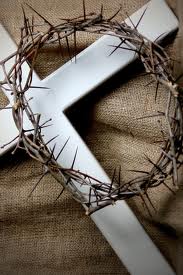
 

Now, having pictured the guards doing this, something rises up in us. Some would say that if they were there they would have stopped the guards, others that they should have been brought to justice for their crimes against an innocent man. Yet the truth is, we in our own sinful lives, placed those thorn’s upon the Lord’s head. Each and every time we sin, it is as though we are but adding a thorn to the crown our King did wear.


Have we ever stopped for a moment to realize that Jesus endured it all for us? That every blow, every snap of the whip taring flesh off from His body, every thorn on that crown was because of “our sins”


We must ask the question daily – Am I re crowning the King of kings today with a crown of thorns? Or am I brightening the Glory of His eternal crown with my life, lived according to His Will.


Can the Lord look at our lives today and say that He has heard our prayers and that He is consecrating our bodies, these earthen temples for which He has filled with His Holy Spirit?


Do we glory over the Lord’s eyes and heart being upon us? Or are there moment when we wish He would turn His head because of the shame in our lives.


Ask Holy Spirit to search your life today, to see if there be anything that would once again place that crown of thorns upon the Masters head. If the light of His Holiness point’s to something, repent of it and turn away from, He will give you the grace to over-come what ever sin you may be struggling with. But you must first desire to walk away from it.


Our God is the greatest example of love in all the universe, there is none like our God. The lover of our soul’s, the guardian of our eternal destiny, to victor of our salvation, He who not only destroyed the power of sin over our lives, but He who paid the penalty of such sin with the surrender of His right’s, with the humiliation, shame, beating, whipping ,and the nailing of His precious flesh to the cross.


Let us today and every day forward awake with the commitment that today we shall not re-crown of King with the thorns of our sin’s! Ask for the abundance of His Grace to flow into our lives empowering us to live lives free of sin!


For our God is an Awesome God!!!!!!

~Russ Welch


When a rich young man came to Jesus and asked if there’s “anything else” he needed to do, Jesus presented him with “one more thing” that to the young man was seemingly impossible.

Biblical discipleship would truly involve “forsaking all.”    This post appeared in July at TruthSource.Net While I agree with what it says, I can think of instances where I wouldn’t want to see this used.   Or would I?   I remember hearing a speaker saying that “small demands will produce small results; great demands will produce great results.”   Didn’t Jesus seem to be “waving people off” following Him at times with “difficult sayings?”  Have we watered down the gospel?

Because of horrible evangelism, religious lies, and itching ears, a majority of people have been led to believe that becoming a Christian is as easy as praying a simple prayer and requires very little cost or no cost at all. However, the Lord Jesus Christ has declared very clearly in the Bible that it will indeed cost you—it will cost you everything.

You will have to turn away from all your sins

Being a Christian will cost you your sins; you cannot be a Christian if you’re unwilling to forsake them. This is called repentance, and Jesus declared that unless you repent, you will perish in Hell. We are called by God to repent of our sins and turn to Him because He has fixed a day on which He will judge the world. You don’t have to clean up your life before you come to Christ; no, my dear friend, come to Him now as you are. You just have to make up your mind about giving up your sins. You must stop, turn around from following after sinful lusts, and begin following after Christ, calling upon Him to help and He will remove sin from your life as you follow His lead and obey His word.

You will have to forsake your desires and affections

Being a Christian will cost you all desires and affections which oppose the will and word of God. You will have to continually be on guard to rid your life of all the things that God hates and declares to be wicked. If you are unwilling to give up these unrighteous desires, you cannot be a Christian. God commands His people to hate evil and love good; to abstain from every form or appearance of evil; to flee from immorality, lust, idolatry, and greed. We are commanded to pursue righteousness, justice, and godliness. And this means all the things we fill our lives with will be determined by God’s word—the movies or television we watch, music we listen to, clothes we wear, and everything else on which we may set our affections.

You will have to surrender over your dreams and aspirations

Being a Christian will cost you all dreams and aspirations you may have that do not align with the will of God for your life. If you’re unwilling to completely shift the focus of your life away from yourself and your previous aspirations and toward Christ and doing His will, you cannot be a Christian. We are commanded to do absolutely everything—down to something as small as taking a drink of water—with the focus of bringing God glory. We are even called to take every thought captive and make them obedient to the will of Christ. That means if you’re worrying about becoming rich, well-off, famous, or whatever, you’re going to have to cast this behind you. Jesus declared that our primary and preeminent focus is to be on His kingdom above all else. We serve the Lord, not vice versa; and He calls His people to carry out His will, not theirs; we pray for His kingdom come, His will be done, not ours. He is Lord over our life, and His disciples must live their lives accordingly.

You will have to give up all your finances and possessions

Being a Christian will cost you all your finances and possessions. If you’re not willing to transfer all ownership of your money and possessions over to Jesus Christ, you cannot be His disciple. He owns everything in your life—including your life—and as a Christian you must acknowledge and submit to this. All that you have, you no longer use it for yourself but for Him—for His sake, His glory, His kingdom. And the things which cannot be used for these things must go. The money you have, which itself comes from God, you no longer use to buy foolish things for yourself but for the things which He approves and is glorified in. Christ commands us not to store up treasures on earth, but to store up treasure in Heaven. Your treasure will reveal your heart. If you’re all about money or heaping up this world’s goods, then your heart is with this world which will pass away. What will it profit you if you gain the whole world but lose your soul? If you seek to keep this world’s goods, you will lose both them and your soul. You cannot serve both God and wealth.

You will have to leave behind your family & friends

If you love your parents, siblings, spouse, children, family, friends, or even your own life more than Christ, you cannot be His disciple. Your love for Christ must be so extreme and preeminent that it makes your love for everyone else, in comparison, look like hatred. Jesus declared that He had not come to bring peace and tolerance amongst one another on the earth…He came, rather, to bring a sword of division, to set a person against the members of his own household for the sake of obedience and loyalty to Him. If your family criticizes you in regard to following Christ, or pressures you to go on a route that opposes the will of God, you will have oppose them for Christ’s sake. If you have friends who love to sin and could care less about Christ, you’re going to have to leave them behind…but if you are true to the Lord and serious about following Him, they’ll end up hating you eventually anyway. However, Jesus promises that whoever has left houses or parents or siblings or friends or spouses or children for His name’s sake will receive many times as much and will inherit eternal life.

You will have to renounce your reputation and status

If you are unwilling to count as loss for Christ’s sake your reputation and status, and what people think of you, you cannot be a Christian. You must count all these things as rubbish in view of the surpassing value of knowing the Lord Jesus Christ. You must cast off any false notion that you are someone important, someone of worth, one with wisdom and strength, and realize you indeed are one who is broken, lowly, foolish, and weak. The message of the cross is foolishness to the world, and in coming to Christ, believing His word, and obeying His commands, you will also be esteemed utterly foolish by them. But you must embrace the reproach of Christ that will come your way. If you hold faithfully to Christ, you will be ridiculed, despised, mocked, and slandered.

You will have to abandon your comforts & easy living

If you are unwilling to take on the demanding lifestyle of a disciple of Christ, you cannot be a Christian. Jesus declared that the vast majority of mankind will end up in Hell, and that there are many who desire to enter into eternal life but will not be able to. He exhorted His disciples to strive to enter into the kingdom of God, because only those who violently press into it will enter. The Christian life is not one of luxury or complacency, but one of self-denial and discipline, vigilance, always being on the alert, always taking heed and being careful, always striving, pursuing Christ, fighting the good fight of faith, and laying hold on eternal life. The Bible says we must enter the kingdom of God through many trials and tribulations, and all who desire to live godly in Christ will suffer persecution. You will be hated, excluded, insulted, scorned, slandered, and abused on account of Christ—you may even be killed—but be of good cheer, for these things you are blessed, and your reward will be great in Heaven.

Luke 6:22-23; 13:23-24; Matthew 7:13-14; 11:12; John 15:19; 1 John 3:13; Acts 13:40; 14:22; 2 Timothy 3:12; 1 Peter 5:8; 1 Timothy 6:12; Mark 13:33; 1 Corinthians 9:27; 10:12

By ~paulthinkingoutloud via http://www.truthsource.net/topics/Salvation/cost.php

WHEN TOLERANCE IS SIN

Posted: January 16, 2012 in Uncategorized

Tolerance can be a virtue, but it can also betray an inexcusable weakness of character. We admire the person who tolerates differences where no great issue is at stake. He allows for a variety of preferences, methods, and unimportant viewpoints. He would rather be killed for a sheep than for a lamb.

But there is another form of tolerance that is despicable. That is the willingness to remain silent when God’s name is blasphemed or Christ is dishonored. It is the treachery of silence when truth is on the scaffold. It is the unwillingness to speak out against evil. Tolerance that condones deceit and unrighteousness is sin.

Those who think that Jesus was always tolerant should read Matthew 23, a denunciation of hypocrisy. This passage proves forever that our Lord was capable of scathing indignation at the pretense of religious leaders. Or they should read Revelation 2:20, where he condemned the Church in Thyatira for tolerating a woman teacher named Jezebel.

Paul, too, was intolerant of evil. He even mentioned names, something that is considered unacceptable in evangelical circles today. He delivered Hymenaeus and Alexander to Satan, that they might learn not to blaspheme (1 Timothy 1:20). He didn’t hesitate to single out Hymenaeus and Philetus as false teachers (2 Timothy 2:17). And he denounced Alexander the coppersmith by name for his evil behavior (2 Timothy 4:14).

John also had the courage to name Diotrephes as one who loved to have the pre-eminence (3 John 9). It seems that the church today has lost its capacity for godly intolerance. As Robert G Lee said, “We live in a world of invertebrate theology, jellyfish mortality, seesaw religion, India rubber convictions, somersault philosophy that tells us what we already know in words which we do not understand.”

The writings of William Barclay are another case in point. Barclay denies the deity of Christ, the inspiration of the Scriptures, the miracles of Jesus and his substitutionary atonement. He believes in the eventual salvation of all mankind.

Yet his books are sold in the majority of Christian bookstores. He is widely quoted by prominent evangelical leaders. And multitudes of Christians study his books on the specious excuse that ‘they contain such valuable background information’. The fact that he is a heretic, a blasphemer and a deceiver is not important. Neither, apparently, is the honor of our Lord Jesus Christ.

A missionary to India was right on target when he wrote, “Toleration has become so tolerant, that evil is included in that tolerance. We are in danger of becoming ‘moral cows’ in our plump comfortableness.”

It is an ungodly tolerance that has allowed so many pulpits in America to be filled with “false apostles and deceitful workers, transforming themselves into apostle’s of Christ.”

Detecting a resemblance to conditions in Elijah’s day, J. Sidlow Baxter writes, ‘Such are the people who today, with sickly kindness, will tolerate teachers of errors in our pulpits because they are such smooth-mannered and amiable gentlemen. They would rather allow error to be preached and souls to be deceived than hurt the preacher’s feelings. Let Baal be worshiped rather than drought come! Let the cancer kill its victim rather than the cruel surgeon use the knife! …The best thing that could happen to some so-called Christian ministers of today is that they should be denounced in God’s name by their hearers.’

It is a sinful tolerance…

[1] that refuses to castigate a false church system that leads millions to eternal destruction with its perverted gospel.

[2] That honors its head as a great evangelist at the same time that he is condemning evangelicals as wolves.

[3] That labels God’s prophets as divisive when they denounce its idolatry, its immorality and its other heresies.

[4] That sends converts back into its deadening clutches.

…What has happened to the church of the martyrs?

We have an enormous craving for popularity. This is the stuff of which false prophets are made. We have a desire to avoid unpleasantness at all cost. A desire like this keeps us from confronting, from intervening when we should. We have a distaste for being different. We find it easier to move along with the crowd, to drift with the tide. It is all too easy to remain silent when we are in an adverse theological climate. We are ‘slaves who dare not to be right with two or three.’

We have lost the capacity for being angry. We are not easily enough disturbed. We are in the sorry state of having no capacity for indignation. We are experts at putting off decisiveness simply because we don’t want to act.

Sometimes we are too blinded by friendship to stand against wrong. When a Christian spoke out against E J Carnell’s book ‘The Case For Orthodoxy’ because it argued against the inspiration of the Scriptures, a friend of the author said ‘Well you do not know him personally as I do. He is a gracious gentleman, a godly man.’

Jay Adams was right when he said ‘In some circles, the fear of controversy is so great that preachers and congregations following after them will settle for peace at any cost – even the cost of the truth – God’s truth. The idea is that peace is all- important. Peace is a biblical ideal … but so is purity. The peace of the church may never be bought at the price of the purity of the church. The price is too dear.’

Let’s all get together. Don’t do or say anything to rock the boat. Doctrine divides, they say. What we need is unity. What we really need is to contend earnestly for the faith in a day when it is being attacked, diluted and denied. We will be tolerant in matters of indifference but intolerant of departure from the truth of God. With Luther, ‘Here we stand. We can do no other.’

Bishop J C Ryle also wrote:

Controversy in religion is a hateful thing. It is hard enough to fight the devil, the world and the flesh without private differences in our own camp – but there is one thing which is even worse than controversy and that is false doctrine being tolerated, allowed and permitted without protest or molestation …

Three things there are which men ought never to trifle with:

A little poison

A little false doctrine

A little sin.

~by William MacDonald


“Put on the New Man, created in God’s own Righteousness and true Holiness” (Ephesians 4:24).

What is the Christian Life? It is leaving our ground altogether and coming onto the ground of Christ. It is deeper than a changed life – it is an exchanged life. Over time we can accomplish a change, but we can do nothing to exchange our life for His Life. This, from start to finish, is God’s work, and it is a work of grace.

What, after all, is Righteousness? What is true Holiness? Christ is not righteous because He does righteous things; He does righteous things because He is Righteousness. Christ is not holy because He does holy things; He does holy things because He is Holiness. His “doing” flows out of His “being” – and OUR “doing” flows out of His “being” as well.

I some times wonder why so many Christians never walk in victory. It is as though they have it but for a season and then cycle back into their old life style. There are time I wonder, Lord why are so many people still trapped, week after week they go into churches hurt and they leave hurt. Recently the Lord was speaking to me about this and Holy Spirit showed me some pretty ugly things. Things even in my own life that when the light of His truth shown upon them I was in shock to the point of fallen on my knees and repenting.

Friends there is no freedom in religion and what appears on the outside as good does not always have the truth as the heart of its source. Much of what is being passed around in the church today is nothing more than religion all clothed with make up, curls and bows to appear as holy, yet again it is just that plain ole spirit of religion.

Some would say well this can’t be right – for the enemy would never hang around with holy people, or they, having the images of Hollywood’s portrayal of”church in their thoughts think “no your wrong, Satan wont enter a church for it is Holy ground”. Maybe its time to get away from what the worlds picture of the church is, get away from being bottle feed immature Christians addicted to allowing their pastors to do all the studying and presenting them with the interpretation of the word and get into the word themselves allowing Holy Spirit to be the very lead teacher in their lives. The Bible paints the true picture of the Bride of Christ that we must become.

The enemy can work through even good people and be at work in the middle of a “church” service as an apparent angel of light, enslaving his hearers with religious chains.

Look at what the Bible says:

“And it is no wonder, for Satan himself masquerades as an angel of light; So it is not surprising if his servants also masquerade as ministers of righteousness. [But] their end will correspond with their deeds”. (2 Cor 11:14-15)

Listen to what Watchman Nee had to say in regard to this:

” The prince of the air also goes about as an ANGEL OF LIGHT. As a lion he seeks to DEVOUR, as an angel of light he seeks to deceive. Satan is a deceiver. If he can appear clothed in light—the very nature of God—then your “vision” can be no protection to you. When Satan makes a roar behind the voices of men your ears are no protection to you, and when he comes as an angel of light, vision is not enough to detect him. You say “it was ALL LIGHT” so it must be “of God;” yet the prince of darkness can appear as “light” i.e., as God. You must therefore have more ways of detecting and testing him than by vision, i.e., eyesight (even spiritual eyesight) and hearing. The safest detecting test is “fruit” (Matt. vii, 20), and KNOWLEDGE OF BASIC PRINCIPLES WHICH ETERNALLY DIVIDE BETWEEN GOD AND SATAN. Between Him who is truth itself, and Satan, the “father of lies.”

we see how the adversary goes about as A TORMENTOR of the most godly and saintly servants of God. He “buffeted” Paul—and he did it with God’s permission—”A MESSENGER OF SATAN TO BUFFET ME.” Paul’s resource was prayer, “I besought the Lord,” he said, and then came strength to “glory in his weakness.” we see also he goes about as a sifter of the children of God. He attacks them in all these varied ways, “as a roaring lion,” an “angel of light,” a buffeter and a sifter”.

So do you want true freedom? Come out from the religious things and turn to Jesus, completely. Let Him be your sole (soul) source – let your gatherings be for edifying one another,praying for one another, building up one another s faith, giving testimonies of your victories, singing of Psalms together, reading the scriptures to one another. But we must stop playing church, we must stop the addiction of “let this show be better than the last one”. There is but one level the Christian needs to strive for and that is one of “Holy Righteousness”.

A spirit of deception is at work in the Body today – many have been lured into the den of religion with the teaching that mere programs will set you free – you need to go to this program or conference to get free from this, another for that and on the list goes. In reality according to the scriptures it is a one step program – having turned to the Lord, repented an laying it down at the cross and receive your freedom – from there Holy Spirit will lead us from glory to glory.

Religion will not change any one into a Holy vessel of righteousness as a true worker for the Kingdom of God. It will give the appearance thereof, yet lacking in the power of the true Christ. Holy Spirit can and His whole desire is to point us to Jesus, our liberator, the very source of our freedom.

So friends, if you want true freedom today, then call out to God, repent for being deceived by men when He has given us Holy Spirit and the Word to teach us. Ask Him to remove your religious garments and replace them with robes of righteousness. surrender all to Christ that you may truly experience the victorious Christian life He has purchased for you.

Be free today, stop the retreat from religious program to religious program adding more layers of religion and today, having stepped up to the cross – move forward as a changed vessel, walking forward as the New Creation the Lord has called us to be!


Hebrews 12:8 If you are not disciplined (and everyone undergoes discipline), then you are illegitimate children and not true sons.

I was thinking about the cheerleader Gospel messages I have witnessed both recently and over the years. You know the rah, rah, rah stuff that pumps people up for a little while, then at the end when they look up at the score board, the hyped up emotional state comes crashing down. I was thinking about this morning and was reminded of an ole Dick Van Dyke show where he boxed with a real boxer. His corner pumped him up to believe he could really win with no training and he went out and gave it all he had and wham, knocked out cold.

I see many preachers out there and other cheerleaders who believe that by simply giving people a cheer-leader message they will now be set to live a victorious life. Yet as I watch, these preacher fall left and right, and the other messengers lives roll on a roller coaster that has so many twist and turns one would get sick just watching it. Now, when I look at the teaching’s of Paul, Peter, John and James and there is no rah, rah messages. Messages such as:

Be on the alert, stand firm in the faith, act like men, be strong. Let all that you do be done in love.” (1 Cor 6:13-14)

“Be patient and stand firm” (James 5:8)

Stand against him, therefore, being firm in your faith, and know also that sufferings come against your brethren who are in the world. (1 Peter 5:9)

Let that therefore abide in you, which ye have heard from the beginning. If that which ye have heard from the beginning shall remain in you, ye also shall continue in the Son, and in the Father. And this is the promise that he hath promised us, even eternal life. “ (1 John 2:24-25)

Jesus never gave such messages.

“All men will hate you because of me, but he who stands firm to the end will be saved.” (Matt 10:22)……”But the person who endures to the end will be saved” (Matt 24:13)………I do not think Jesus was talking about hanging His name over our door post and living like the world here. In fact He prophesied exactly what we are dealing with in this day right before verse 24:13 – “Because of the increase of wickedness, the love of most will grow cold,” (Matt 24:12)

No where in the teaching of the Lord will a disciples find the right to compromise with the world…So this means most are half heatedly following the Way of the Master……So what “man made gospel” does one believe in order to live a life of compromise? I said Jesus was Lord so I am now saved? Or what Jesus taught…he who endures….he who obeys all my commands…?

Of course the nay sayers, those who believe in a Kingdom with out laws will cry out “legalism” yet what of the author of Romans statement where he writes…”“ To them who by patient continuance in well doing seek for glory and honour and immortality, eternal life:” (Rom 2:27)

Doing right, obeying the gospel of Jesus Christ and His commandments has nothing to do with ” legalism.”

You will find that there is much criticism against followers of Jesus who try to please Him within evangelical preaching these days, using the term “ legalism “ against these followers of Jesus who try to obey Jesus’ commands as a copout excuse for condoning living in sin in their own life and in others, while following Jesus Christ.

Now I look back at the men God put in my life when I was younger, men who have weathered the storms of life, weathered to onslaught of doctrines and have stood strong, not wavering in their faith. These men have not wavered and been tossed to and fro with every “new teaching” that has come out. I am reminded of the disciples of the first Church, men and women who were battle hardened and would lay down their lives before they would deny the Lord.

I fear that today we have but house filled with illegitimate children, foster children who have come into the Church with their worldly ways and rather than submit to the order of the House, they have sought ( and successfully in many ways) to right new house rules. What we have ended up with is a batch of dough that have been filled to the core with worldly leaven.

“”Because of the increase of wickedness, the love of most will grow cold,”

Now, one can look at gunpowder and think that it is ugly in it’s blackened form. And believing such one decides to pretty it up and add some color so they mix in some colored baby powder. At first they add a little and the powder still has it power, but over time, as they add a little here and a little there, the gun powder looses its power and before long it is completely powerless. That awesome powder in it’s natural state could send a canon ball ½ mile, yet now it can barely get a B.B. to roll out of its barrel.

And now you have a picture of what the watered down gospel message that has been a defiling, ugly leaven in the Church has produced. A people who long to see the power of God, yet have never learned the process of a disciplined life which renders the Heaven to release such power. Like the fast-food generation we live in, they desire short-cuts and instantaneous results or they will move onto to the next big thing.

The good news is that it is not too late…there is still time to repent, fall upon our faces and turn whole hearted to the Lord Jesus Christ.

Let us raise up true disciples of Jesus, those who surrender to His Will and follow His teachings and not those of men that we might rid the house of God of false teachers and illegitimate sons and daughters and at the same time not be found as such ourselves.

~Russ Welch


Probably all of us are feeling an intensification of the shift taking place in our world as it comes into the next season or phase of the major transformation God is bringing in our world. This article follows the previous one on “The Transformational Love of God,” and deals with the transformation of a world without love to a world ordered by the love of God.

“Unlove” is the absence of God and His love.

Life in the fallen world is based in and derived from unlove. Every aspect of natural man’s life in the fallen world is guided by the ways of unlove.

Mankind is designed to abide in God and God in him.

Great emptiness characterizes the lives of people whose inherent need for God’s love is unfulfilled.

The neediness in mankind can never be fulfilled without the continuing experience of the reality of God’s love filling our lives by the Holy Spirit.

Man’s desperate need for more and more of something to fill the emptiness without God leads to inordinate affections such as lust for romantic activity, substance addictions, depression, and other negative disorders, including things such as, competition, greed, strife, fear, pride, and every negative, stressful, destructive force known to man. The entire world becomes filled with disorder and strife. War is everywhere as people compete against one another. People fall into bondage to inordinate sex, drugs, alcohol, religious deception, and many other entanglements in an attempt to satisfy the emptiness of unlove. All of the problems of the world stem from the basic lack of God’s love in mankind.

Husbands and wives fight and divorce. Employees strive against and deceive employers. Employers exploit employees. People climb over one another in a competitive effort to attain a higher position. Customers strive with merchants and merchandisers take advantage of customers. Law enforcement fights with criminals in an attempt to enforce thousands of laws enacted in an attempt to control the deceit and violence of the people. The whole world becomes a battlefield.

Everything in business and all of life revolves around trying to get more while giving the least possible to get it. Even the highest of charitable human motives are mixed with hypocritical values of “What’s in it for me?” All this and much more exist because of the lack of love abiding in mankind.

Are you beginning to see how that God’s love in man can alleviate needs and stop strife in the world? No more wars, no more crime, and, eventually, no more sickness, no more disease. Some would say, “Yes, but it is not possible for man to love and live this way,” and they would almost be right, if Jesus had not come.

Jesus made a way where there was no way. He provided all that is needed for us to be fully redeemed into life in God and His love. Christ Jesus did what others did not do and lived as one with God in the Holy Spirit. The GOOD NEWS is that Christ Jesus can now live in us by the Holy Spirit. Thus, the potential now exists for all to have Christ’s life abiding within. Through Christ everyone can now abide in God and His love. We can now bring the transforming power of God’s love into practical reality in the world through Christ in us by the Holy Spirit. Christ in His people can destroy the works of the devil.

1 John 3:8: For this purpose the Son of God was manifested, that He might destroy the works of the devil.

The greatest mystery of the kingdom, the transformational power of love is changing our world. The world has already been greatly affected by the love of God expressed in the cross of Christ Jesus. No other person in all of the world’s history has had as great a transformational effect as Christ Jesus. Now, the LIFE OF JESUS is set to transform every area of life in the world through Christ Jesus living in us

By love, individuals filled with Christ Jesus by the Holy Spirit, can transform families, businesses, schools, media, cities, nations, and the world.

The End of “Unlove” – The “Day of the Lord”

Perhaps one of the most dramatic interventions of God ever to take place in our world is soon coming upon the entire world to destroy unlove and all the works it has produced. For many years, God has been pouring out His Spirit and His pure holy love into His people producing the life of Christ within His holy people. This will increase and continue through the season of the ending of the rule of unlove. God has prepared and is preparing a pure and holy people filled with His love to bring forth the kingdom of God on earth as it is in heaven.

The next big intervention of God is the great cleansing work of destruction of the wicked and all that lifts itself against God, all that will not turn to God.

What is the “Day of the Lord”? (For a very enlightening and more detailed biblical study of the answer to this question follow the link to Kingdom Growth Guides and scroll down to (#038). http://www.openheaven.com/forums/forum_posts.asp?TID=12550&a mp;PN=1

There have been many “Day of the Lord” judgments throughout biblical history. The “Day of the Lord” would come against an area or nation for destruction of evil.

The “Day of the Lord” that we are entering now is part of the process of purification leading to a godly kingdom people ruling on earth God’s way. The chastening and purging is aimed at the pride and loftiness of man, the ways of man that are exalted over the ways of God. “Day of the Lord” judgment brings chastening for cleansing of God’s people, those who will repent and turn from their ways of mixture to God’s way. The day of the Lord is always chastening for God’s people. It is not intended for their total destruction. Rather, it is for their purification. No matter how severe the chastening, there will always be a purified remnant. It is not so among the ungodly. The “Day of the Lord” can bring total destruction and annihilation to the evil and ungodly of the world.

In both the Old and New Testament the “Day of the Lord” is a season of destruction for the ungodly and a purification of God’s people resulting in the shining forth of God’s ways to govern the world. The focus is not only fire but also the beautiful kingdom of God brought forth from the ashes.

Isa 61:3: To console those who mourn in Zion, To give them beauty for ashes, The oil of joy for mourning, The garment of praise for the spirit of heaviness; That they may be called trees of righteousness, The planting of the LORD, that He may be glorified.

Mat 13:40-43 “Therefore as the tares are gathered and burned in the fire, so it will be at the end of this age.”The Son of Man will send out His angels, and they will gather out of His kingdom all things that offend, and those who practice lawlessness, “and will cast them into the furnace of fire. There will be wailing and gnashing of teeth. “Then the righteous will shine forth as the sun in the kingdom of their Father. He who has ears to hear, let him hear!

Personal “Day of the Lord”

Like me, probably many reading this have gone through a personal “Day of the Lord” when great devastation and despair came upon our lives. Some may be going through a personal “Day of the Lord” time of reckoning now. Sons of God, those whom God loves, He will chasten, and it never seems good at the time. When all that once sustained us stops working for us and all we have built crumbles around us, the pain may seem unbearable. Brokenness of our ways turns us to His ways, and we are further purified and made more holy vessels for His use.

Corporate day of the Lord

Just as individuals may meet the “Day of the Lord,” so it is for families, tribes, nations, and the entire world.

The great and dreadful “Day of the Lord” for the entire world is now at hand.

After the destruction has done away with the loftiness (pride) of man, after everything high and lifted up is thrown down and only God remains exalted, the purification is accomplished and restoration begins. The new life of restoration is always more righteous, more holy, more filled with peace and joy than the old life. The kingdom of God is righteousness, peace, and joy in the Holy Spirit.

Father, Your kingdom come and your will be done on earth as it is in heaven. Amen.

The Sword of the Lord Comes.

Ron McGatlin

Obscure role models

Posted: January 11, 2012 in disciples life, teaching, wilderness

First century Christians as disciples had no problem witnessing and publicly testifying about the faith for they had true examples in the Apostles themselves. They watched them get beating, hauled off to prison and executed for their faith. What examples does the Church have today when the media builds false hero’s and the true hero’s, the unknowns to the rank of earthen popularity, the missionaries abroad, the street pastors, those who have forsaken all for the glory of God yet are fully known in Heaven go unnoticed or ignored often looked down upon as to radical or to heavenly minded to be any good here on earth.

While many look to the likes of TD Jakes, Benny Hinn, Paula White, Creflo Dollar, Joel Osteen and Joyce Meyer’s as their hero’s -When the truth be told the disciples following the likes of Paul, Peter and John wouldn’t even recognize these men and women as true followers of the Lord Jesus Christ for their public persona is all about prosperity, popularity, greed and a watered down, showmanship Gospel.