Archive for the ‘teaching’ Category


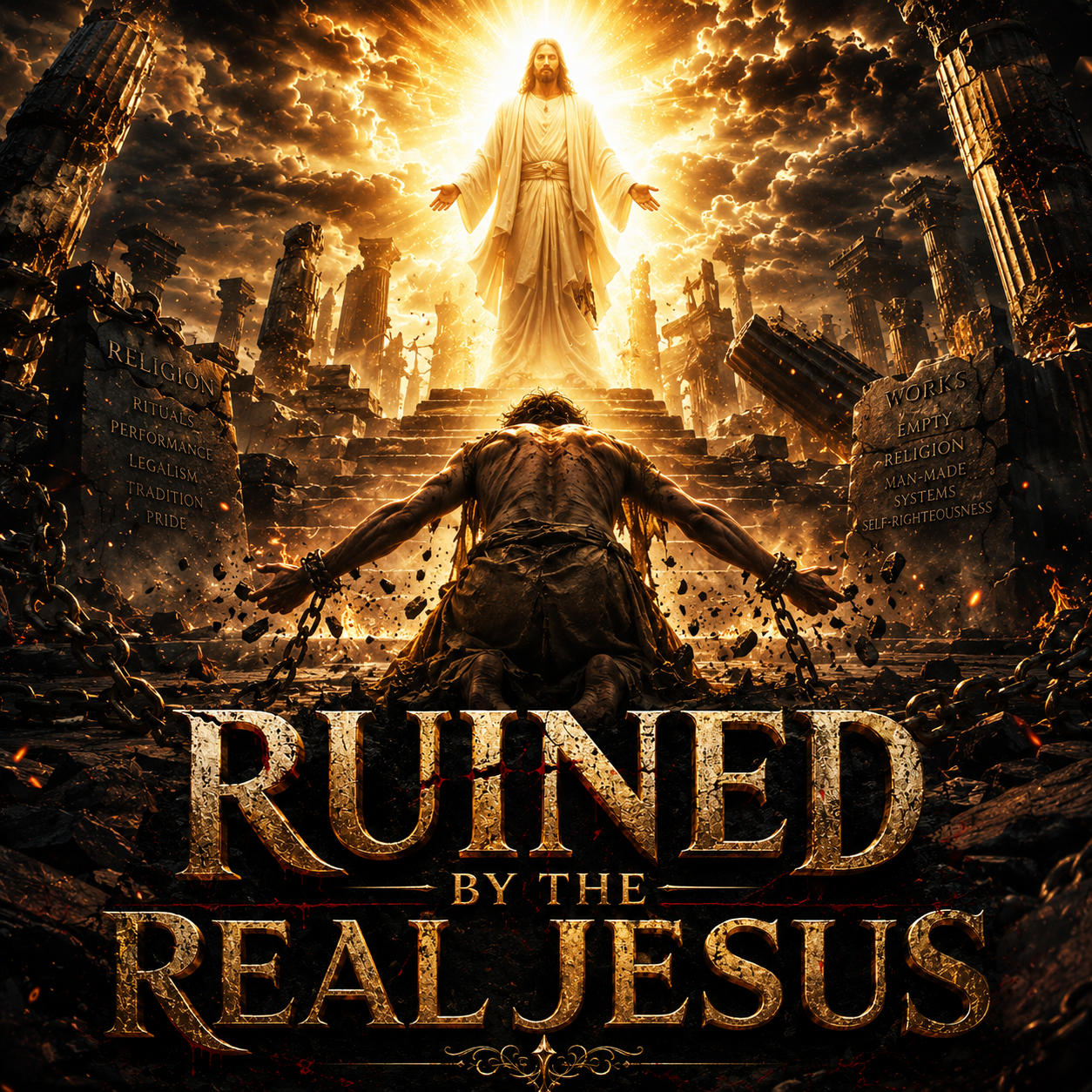
When the Real Jesus Ruins You for Religion

“If we do not have the Spirit of God, it were better to shut the churches, to nail up the doors, to put a black cross on them, and say, ‘God have mercy on us!” ~Charles Spurgeon

If Jesus Isn’t In It, I’m Not Interested

I have reached a place in my walk where I can say this without apology: if Jesus is not in it, I am not interested.

If He is not the center, I do not need the platform.
If He is not being exalted, I do not need the invitation.
If He is not being honored, I do not need the applause.
If His presence is not welcomed, I do not need the room.

Christ must be center stage.

Not the preacher.
Not the personality.
Not the movement.
Not the brand.
Not the building.
Not the denomination.
Not the religious machine.

Jesus.

The One crucified.
The One risen.
The One seated at the right hand of the Father.
The One whose eyes are like flames of fire.
The One whose voice still calls men out of darkness and into the Kingdom of His glorious light.

“The Church right now has more fashion than passion, is more pathetic than prophetic, is more superficial than supernatural.” ~Leonard Ravenhill

I spent too many years inside the religious system to be impressed by religious performance. I have seen enough church activity without Kingdom authority. I have heard enough sermons that mention Jesus but never surrender the room to Him. I have watched enough religious machinery keep moving while the presence of the Lord was standing outside the door knocking.

Then in 2016, my life was turned upside down.

I did not simply have a better church experience.
I did not simply learn a new theological concept.
I did not simply get excited about ministry again.

I encountered Jesus.

Not the polished American version.
Not the convenient version.
Not the marketable version.
Not the manageable version.
Not the version shaped by culture, politics, religion, or seeker-sensitive comfort.

I encountered the real Jesus.

The Jesus the Bible reveals.
The Jesus the prophets pointed toward.
The Jesus the apostles preached.
The Jesus demons trembled before.
The Jesus who rebuked religious hypocrisy, healed the broken, delivered the bound, cleansed the leper, overturned tables, called disciples, confronted systems, and announced the arrival of the Kingdom of God.

That encounter ruined me for anything less.

It ruined me for dead religion.
It ruined me for powerless Christianity.
It ruined me for celebrity ministry.
It ruined me for performance without presence.
It ruined me for platforms that celebrate man while treating Jesus like a sermon accessory.

“So many people get happy and blessed when they’re in an association or fellowship… [but] they’ve ‘lived on meetings’ instead of ‘living on Christ.’ ~Leonard Ravenhill

Beloved, Jesus is not a topic.

He is Lord.

He is not an add-on to our ministry plans.
He is not a brand enhancer.
He is not a religious slogan.
He is not a Sunday morning decoration.
He is not the mascot of American Christianity.

He is King.

And if the Church is going to be restored to Kingdom power, Jesus must be brought back to the center. Not verbally. Not symbolically. Not as a theological statement buried on a website.

Center stage.

Celebrated.
Exalted.
Obeyed.
Feared.
Loved.
Followed.
Preached.
Honored.
Enthroned.

The Remnant is not rising to build another religious empire. The Remnant is rising because the real Jesus is calling His people back to Himself. He is calling us out of mixture, out of compromise, out of man-centered ministry, out of religious ambition, and back into the fire of first love.

So let me say it again:

If Jesus is not in it, I am not interested.

Because once you encounter the real Jesus, nothing else can satisfy.

Stay tuned, the journey continues…..

— Dr. Russell Welch

Dr. Russell Welch is a published author, prophetic teacher, apostolic builder, author, and founder of faith-driven publishing and media initiatives. He is known for crafting bold, Kingdom-centered messages that call the Ecclesia into maturity, doctrinal clarity, and governmental authority. With a passion for equipping the Remnant and honoring generational legacy, Dr. Welch writes and teaches at the intersection of Scripture, history, and spiritual governance, challenging believers to live as sons and daughters who legislate Heaven on earth through truth, holiness, and unwavering fidelity to Christ.

Be sure to check out his book: Restoring God’s Watchmen: Modern-day Jeremiah’s walking in the authority & power of His Glory, available exclusively on Amazon … here

Amazon Author Page


The Remnant Flame Still Burns in Jacksonville

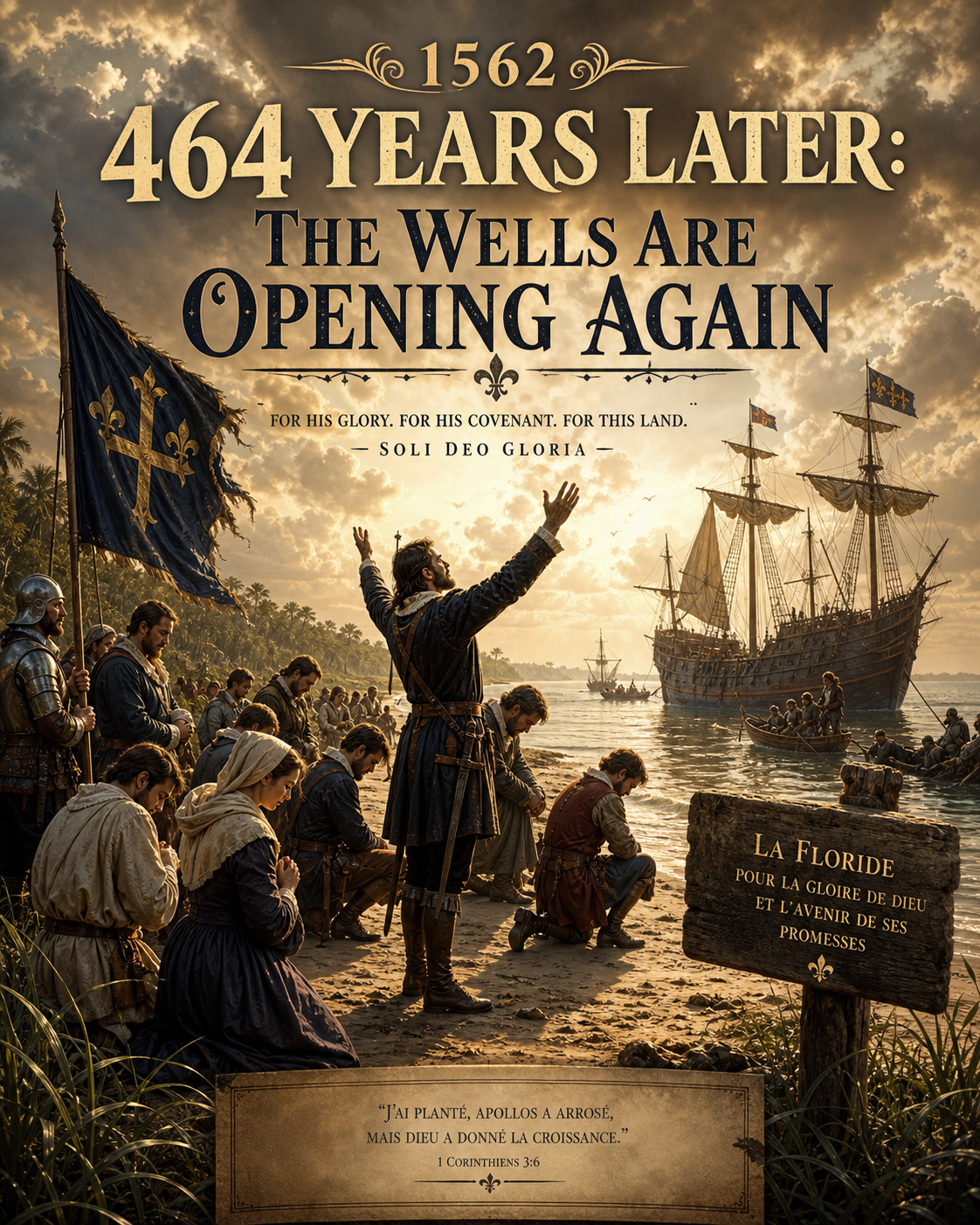
Today we remember the 464th anniversary of the French Reformed landing in the free world, right here at the head of what was then known as the Welaka River, the “River of Lakes,” now known as the St. Johns River. Men may forget dates, nations may bury memory beneath monuments of another story, and history books may reduce sacred moments to footnotes, but Heaven does not forget what was consecrated in prayer, sealed in covenant, and watered with the sweat and blood of faithful disciples of Christ. There are moments in time that are not merely historical; they are prophetic markers written into the eternal scrolls of the Kingdom. The landing of those French Protestant believers on these shores was not just an expedition. It was a seed.

Many today know them as the Huguenots, yet it is worth remembering that they rarely, if ever, called themselves by that name. The word “Huguenot” was born as an insult from their Catholic opponents, a name of mockery placed upon those who would not bow to the religious powers of their age. They preferred to call themselves simply the Reformed, les Réformés, those who had been awakened by the truth of Scripture and called back to the purity of the Gospel of Jesus Christ. They were not seeking fame, empire, or religious celebrity. They were seeking a land where Christ could be worshiped, Scripture could be honored, and conscience could stand before God without the chains of persecution.

When they arrived on these shores in 1562, they were not merely stepping onto sand and soil; they were stepping into a divine appointment. They came from a Europe trembling under religious war, ecclesiastical corruption, political manipulation, and the violent clash between truth and control. Yet here, on the edge of what would become North Florida, they saw more than wilderness. They saw possibility, covenant, refuge, and holy ground. In their hearts burned the ancient cry of Psalm 127:1, “Unless the Lord builds the house, they labor in vain who build it.”

Their story was not without suffering, and their witness was not without blood. The French Reformed believers who came to this land carried the cost of discipleship in their bones, and many would later pay for their faith with their lives. Jesus said in Matthew 5:10, “Blessed are those who have been persecuted for the sake of righteousness, for theirs is the kingdom of heaven.” The blood of the martyrs never disappears into the ground as forgotten tragedy. It becomes testimony, seed, witness, and a legal cry before the courts of Heaven.

I believe the prayers they prayed, the covenant they carried, and the blood they shed did not expire with their generation. Revelation 6:10 gives us a sobering picture of the martyrs crying out before God, and though we do not build doctrine on imagination, we must remember that Heaven is fully aware of righteous blood. The Lord told Cain that Abel’s blood was crying out from the ground, and that means the earth has memory before God. The ground can testify. The land can hold the witness of what was done upon it.

To me, it is no small thing that 123 years later, in another stream of history, Heaven would continue to stir restoration, awakening, and apostolic authority within the Church. Many voices in the 1700s and 1800s saw the awakenings of their age as Heaven’s counter-response to the exaltation of human reason, human philosophy, and man-centered doctrines that entered deeply into the life of nations and churches. The Renaissance opened doors of learning, but it also gave room for humanism to crown man where only Christ should reign. From such streams, many doctrines were seeded that continue to influence the Church even today, including religious systems that confuse compassion with compromise and justice with ideologies detached from the government of Christ. But Heaven has never surrendered the Ecclesia to the philosophies of men.

Last year, as I stood at Huguenot Park and celebrated this anniversary, I found myself in prayer over the land, the waters, the blood, and the forgotten testimony of these faithful ones. As I prayed and looked up, I saw what appeared to be a portal, and there was an amassing of angels. I do not share that lightly, nor do I offer it as spectacle, but as a prophetic witness to what I believe Holy Spirit has continued to speak in the secret place. Over this past year, in many moments of prayer, I have sensed the Lord saying that the dedication of this land as a kind of New Zion by those faithful men and women was not ignored by Heaven. Their prayers, sealed by martyr blood, are still before the courts of the Lord.

For me personally, I believe we are entering a year where we will begin to witness a move of God in this city, this county, this region, and this state. I believe Heaven is preparing to vindicate the blood of the innocent and uncap wells of revival across North Florida and into Georgia. I especially sense the stirring of healing revival, a line of glory stretching from Jacksonville toward Pensacola, across the North Florida and Georgia borderlands. The wells are not dead; they have been covered. The Lord of the harvest knows exactly where they are buried.

Last month, the Lord sent me to a Remnant group in Ocala to prophesy concerning one of many wells in that horse country that I believe are about to be uncapped. I believe Ocala is not random in this hour, Jacksonville is not random, the St. Johns River is not random, and North Florida is not random. There are places where Heaven planted seed long before we arrived, and now Holy Spirit is breathing upon those ancient deposits again. Isaiah 43:19 declares, “Behold, I am going to do something new, now it will spring up; will you not be aware of it?” The new thing is often the ancient thing being awakened under the breath of God.

These are powerful days for the Ecclesia, especially for those who have stepped away from that which is common and laid hold of that which is sacred and holy. This is not the hour for casual Christianity, religious entertainment, or powerless language dressed up as spirituality. This is the hour for consecration, discernment, covenant, apostolic order, prophetic fire, and holy obedience. Hebrews 12:1 reminds us that we are surrounded by a great cloud of witnesses, and I believe there are witnesses in Heaven who remember the prayers prayed over this land before America ever knew what she would become. The Remnant must now take its place.

So today, I celebrate the memory of those faithful French Reformed disciples of Christ who arrived here 464 years ago and planted something deeper than history can fully explain. I honor the sweat, the blood, the courage, the prayers, the Scripture, the covenant, and the costly obedience they carried to these shores. I believe the God who remembers covenant is answering what men forgot, and the Spirit of the Lord is beginning to stir the waters again. Jacksonville, North Florida, Georgia, and this whole region must prepare for the sound of old wells being uncapped and fresh fire being released. Let the Ecclesia awaken, for the land remembers, Heaven remembers, and the King still reigns.

For those who want to know more about these faithful servants of Christ and the spiritual history connected to their witness, I wrote The Remnant Flame: The Spiritual History of the French Huguenots from 1562 to the Mayflower and Beyond. This book traces the fire, sacrifice, persecution, courage, and Kingdom witness of the French Reformed believers whose story still speaks today. Their history is not dead; it is a flame waiting to instruct a new generation of the Remnant. You can find it here: https://www.amazon.com/dp/196415541X. May the Lord cause the forgotten fires of covenant faithfulness to burn again.

Stay tuned, the journey continues…..

— Dr. Russell Welch

Dr. Russell Welch is a published author, prophetic teacher, apostolic builder, author, and founder of faith-driven publishing and media initiatives. He is known for crafting bold, Kingdom-centered messages that call the Ecclesia into maturity, doctrinal clarity, and governmental authority. With a passion for equipping the Remnant and honoring generational legacy, Dr. Welch writes and teaches at the intersection of Scripture, history, and spiritual governance, challenging believers to live as sons and daughters who legislate Heaven on earth through truth, holiness, and unwavering fidelity to Christ.

Be sure to check out his book: The Consecrated Firebrand: A Warrior’s Guide to Holy Living, available exclusively on Amazon … here

Amazon Author Page


The Radical Road to Spiritual Freedom

When I entered into my doctoral studies through Trinity Seminary, I did so with hesitation, knowing full well that it was an ultra-Calvinist institution and sensing from the start that I would be stepping into a place where sharp doctrinal tensions would challenge me deeply. Yet looking back now, I can see that the hand of God was all over that season, because it drove me into the Scriptures with a depth, intensity, and desperation I had never known before.

What the enemy may have hoped to use for confusion, the Lord used to press me deeper into His Word, for “the entrance of thy words giveth light” and “giveth understanding unto the simple” (Psalm 119:130). I was reading, praying, studying, writing, wrestling, and pressing, and in many ways I truly believed I was pursuing truth with all my heart. But somewhere in that journey, something dark fastened itself to me like a hidden hitchhiker, cloaked in the language of zeal and conviction, yet breathing with the venom of bondage. Holy Spirit later showed me that what had attached itself was not merely theological rigidity, but the spirit of religion, subtle, cruel, and deeply parasitic.

Holy Spirit showed me years ago that this invasion did not begin in seminary, nor did it come because of the doctrines of the school itself. The real doorway had opened much earlier, when I was only around three years old, at a time when innocence should have been protected but instead was pierced by fracture and loss. My mother divorced my father, a violent alcoholic, and in the aftermath my grandmother determined that if her son could not have his children, neither would his wife.

In that storm, the enemy planted something sinister in the soil of a little boy’s heart, and through that wound there entered the spirit of rejection and the orphan spirit. It is just like hell to place doorjams in the soul of a child, preparing access points for later invasions while the heart is too tender and too young to understand what has been done. Scripture says, “Neither give place to the devil” (Ephesians 4:27), yet many wounds are suffered before a child even knows what a door is. That early pain became more than memory; it became an unhealed breach through which lying spirits would later try to define my worth, my identity, and even my picture of God.

As I grew older, Holy Spirit revealed how that rejection did not remain alone, because rejection rarely travels by itself. It opened the door to pride, and when pride joins itself to rejection and the orphan spirit, it begins to forge one of the most devastating character assassins a person can battle. It whispers that you must prove your worth, earn your acceptance, defend your value, and establish your place through performance, intellect, striving, and visible success.

Worse still, it projects that distortion onto God Himself, making you believe that when you fail, His walls of rejection only rise higher and higher against you. Of course, this is a lie from the pit, because Scripture declares that we are “accepted in the beloved” (Ephesians 1:6), not tolerated through performance and not loved in proportion to our success. But territorial lies do not feel weak when they are entrenched in the soul; they feel like truth because they have been living there so long. That is why strongholds can operate in stealth mode, hiding behind intellect, discipline, achievement, and even ministry while the heart remains shackled to a false identity.

I had powerful men in my life, men who knew warfare, men who loved God, men who carried authority in many areas. Yet because some of them themselves were bound by the same spirit in subtler ways, they could not discern it working in me. Such is the cruelty of hidden bondage: what is tolerated in one vessel is rarely confronted in another. Spiritual captivity often survives not because no one around us loves God, but because the enemy has cloaked the chain with language that sounds holy.

Religion is especially vile in this way, because it can make bondage appear like maturity, harshness look like conviction, and self-defense feel like righteousness. Jesus rebuked the religious spirit more fiercely than any other because it honored God with the lips while the heart remained far from Him (Matthew 15:8). It was that same spirit that began to ride the wounds of rejection in me, seeking to transform pain into a false righteousness and insecurity into spiritual combativeness.

So what did that look like in practice while I was spirit-filled and sitting in a Baptist setting that denied much of what I knew the Word revealed? Instead of allowing the love and meekness of Christ to anchor me, I developed a prideful warrior mentality. I was determined to prove they were wrong and I was right, not merely because I loved truth, but because somewhere deep inside I needed victory in the argument to validate my worth. Rather than laying down a foundation of truth with patience, humility, and the hope that blinded eyes might be opened, I built a defensive wall designed to protect my wounded soul.

My academic strength became a weapon, not merely a tool, and I was fighting not only for doctrine, but for self-justification. What I called zeal was in part a cry of an orphaned heart still trying to earn what can only be received. “Knowledge puffeth up, but charity edifieth” (1 Corinthians 8:1), and though I possessed truth in many areas, I was still learning how deeply truth must be married to love if it is to look like Christ.

Yet this is where I can now see the hand of God with even greater clarity, because even in the middle of my mixture, He was building something in me that would remain long after the bondage was broken. Though pride had found a place to operate, my obedience in the study of His Word was real. The long hours of reading, praying, reading again, writing, and then returning once more to prayer became the very foundation upon which I still live daily.

God, in His mercy, was using even that troubled season to anchor me in Scripture, to train my mind to search deeply, and to teach me how to tarry before Him until truth opened. The enemy rode in through a wound, but he could not stop the Lord from laying a foundation beneath my feet. What hell meant to twist into religion, God still worked into hunger for His voice, reverence for His Word, and a life formed around seeking Him. That foundation remains one of the great mercies of God in my story.

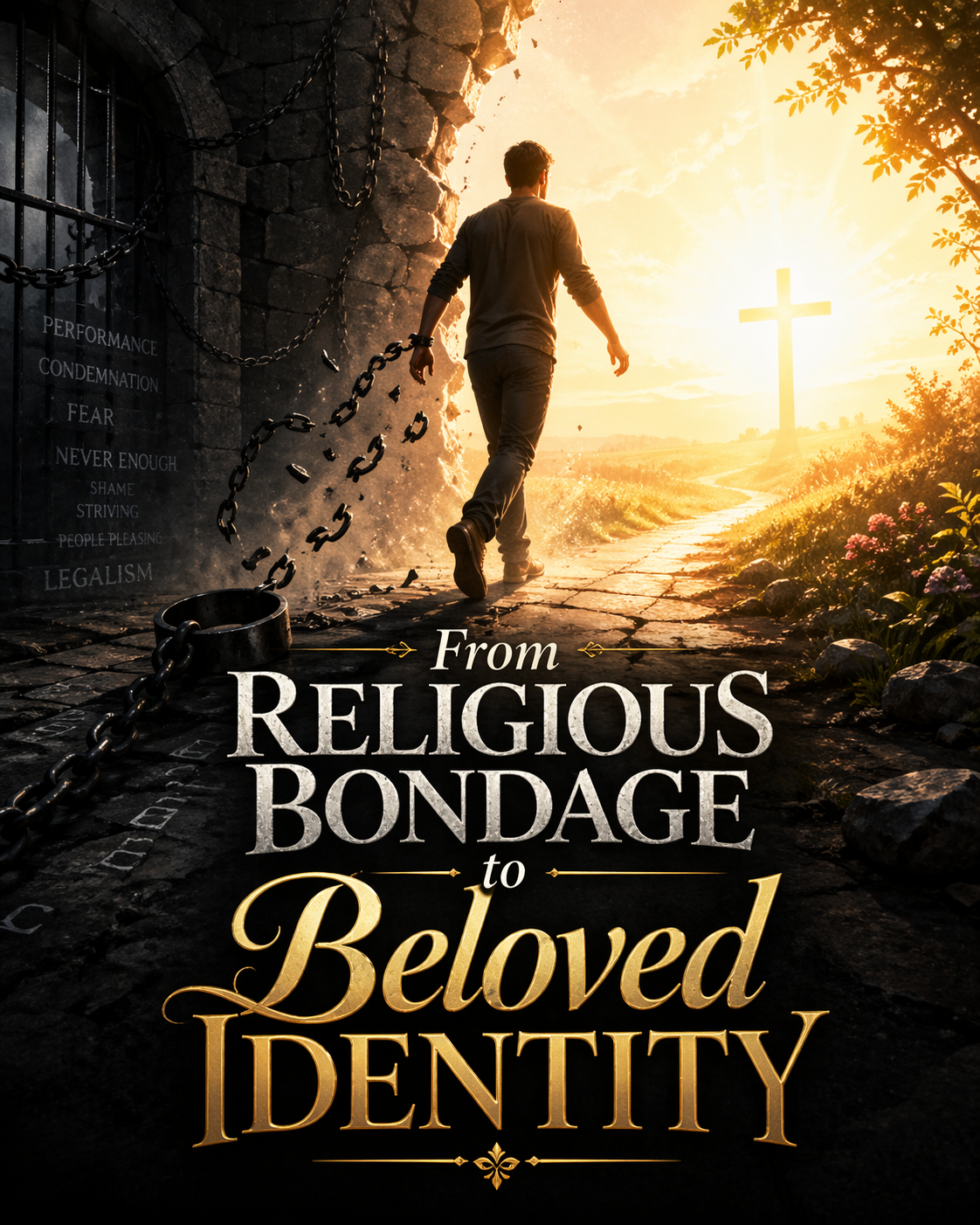
The spirit of religion is the nastiest of them all because it does not merely torment the mind or oppress the emotions; it seeks to reshape the believer’s image of the Father. It tells you that God is perpetually disappointed, reluctantly tolerant, and forever measuring your spiritual value by your latest success or failure. It teaches you to labor like a servant in the house while never resting as a son in the Father’s embrace. It will let you preach, study, argue, labor, and even suffer, so long as you never come into the freedom of beloved identity. But Scripture does not say we have received the spirit of bondage again to fear; it says we have received “the Spirit of adoption, whereby we cry, Abba, Father” (Romans 8:15).

Beloved identity is terrifying to the spirit of religion because once a son knows he is loved, he no longer needs to perform for affection or strive for approval. The orphan heart says, “I must become enough,” but the beloved heart says, “In Christ, I am received, and from that place I now obey.”

The freedom itself came instantly in 2016 through a face-to-face encounter with the Lord. In that holy moment, the chains were broken, the lie was exposed, and the power of those spirits lost their grip under the weight of His presence. What years of hidden bondage had built, one encounter with the living Christ shattered in a moment, because whom the Son sets free is free indeed (John 8:36). There are deliverances that unfold slowly, but this freedom came as a decisive act of the Lord, sudden, undeniable, and deeply personal. He did not merely inform me that I was bound; He met me and broke what had held me. It was not theory, and it was not emotionalism, but a real invasion of divine mercy into the history of my soul. In that encounter, the prisoner in me met the Deliverer face to face.

Yet while the freedom was instant, the revelation of that freedom, especially the revelation of beloved identity, has been a nine-year unfolding that is still continuing even now. The chains broke in a moment, but the renewing of the mind, the healing of perception, and the deeper understanding of what it means to live as one accepted in the Beloved has been a sacred process. “Behold, what manner of love the Father hath bestowed upon us, that we should be called the sons of God” (1 John 3:1), and I am still learning the depths of that love.

The Cross did not merely forgive my sin; it shattered the lie that I had to spend my life proving my worth, and ever since then Holy Spirit has been teaching me how to live from sonship rather than striving. So this testimony is not merely about being delivered from the spirit of religion, rejection, pride, and the orphan spirit. It is about being brought into the lifelong unfolding revelation that the Father is not holding me at a distance behind walls of rejection, but has drawn me near in Christ, called me beloved, and is still teaching my heart how to live free.

I wish that school were still in operation, though it closed down during the Covid season, because there is now a part of me that would gladly return, not to win an argument, but to reveal the love I wish I had carried back then. I would not go back to prove them wrong, nor to display what I believed I knew, but to lay before them the same mercy that Christ has so patiently laid before me.

Where I once came armed with a wall of defense, I would now desire to come clothed in humility, tenderness, and truth wrapped in love. The heart of Christ is not driven by the need to conquer men, but by the desire to open blind eyes and call hearts into freedom. I look back now and realize that while I may have had truth in certain areas, I did not yet carry it with the fragrance of the Father’s heart. And if given that opportunity today, I would count it an honor to return and share not only truth more clearly, but love more deeply.

Stay tuned, the journey continues…..

— Dr. Russell Welch

Dr. Russell Welch is a published author, prophetic teacher, apostolic builder, author, and founder of faith-driven publishing and media initiatives. He is known for crafting bold, Kingdom-centered messages that call the Ecclesia into maturity, doctrinal clarity, and governmental authority. With a passion for equipping the Remnant and honoring generational legacy, Dr. Welch writes and teaches at the intersection of Scripture, history, and spiritual governance, challenging believers to live as sons and daughters who legislate Heaven on earth through truth, holiness, and unwavering fidelity to Christ.

Be sure to check out his book: The Consecrated Firebrand: A Warrior’s Guide to Holy Living, available exclusively on Amazon … here

Amazon Author Page


Holy Spirit is Reclaiming the Church – With Fire”

The early Celtic believers, especially in Ireland and later in Scotland, carried a revelation of the Holy Spirit that burned far beyond the boundaries of institutional religion. They refused to reduce Him to a doctrine, a ritual, or a polite dove perched quietly on the shoulder of the Church. To them, He was the Wild Goose—untamable, unpredictable, fiercely free, and impossible to domesticate. This imagery was not born from superstition but from deep encounters with the God who moves “wherever He wills,” just as Jesus told Nicodemus in John 3:8. The Celts understood that the Spirit of God is not confined to human order but breaks into human history with holy disruption.

These Celtic followers of Christ lived in a rugged land where the wind could shift without warning, and they saw in that wildness a picture of the Spirit’s leading. They believed that following God meant embracing risk, pilgrimage, and obedience without a map. Their missionaries would literally set sail in small coracles without oars, trusting the Spirit to carry them to the place of their assignment. This embodied the truth of Acts 1:8, where Jesus promised power to be His witnesses “to the ends of the earth,” even when those ends were unknown. Their faith was not built on comfort but on the conviction that the Spirit leads boldly, not safely.

The Wild Goose became a symbol of a faith that refused to be tamed by religious systems. A goose is loud, bold, and impossible to ignore—much like the Spirit who descended in Acts 2 with the sound “of a rushing mighty wind.” The Celts saw this as a divine affirmation that the Spirit does not come quietly into human structures but arrives with force, fire, and holy interruption. They believed that when the Spirit moves, He overturns the tables of tradition and awakens the slumbering hearts of God’s people. Their spirituality was marked by a fierce expectation that God would break in suddenly.

This stands in stark contrast to the later religious systems that sought to confine the Spirit to ceremony and liturgy. The Celts read the Scriptures and saw a God who led Abraham into the unknown, who called Moses through a burning bush, and who empowered David with supernatural courage. They saw a pattern of divine unpredictability that aligned perfectly with their Wild Goose imagery. They believed that the Spirit’s leading was not meant to be controlled but embraced with reverent fear and joyful surrender. Their writings reflect a deep awareness that God’s presence disrupts before it transforms.

The Celtic believers also understood that the Spirit’s fire was not optional but essential for victorious Christian living. They pointed to John the Baptist’s declaration in Matthew 3:11 that Jesus would baptize His people “with the Holy Spirit and with fire.” This fire was not symbolic but experiential, igniting courage, purity, and supernatural power in the hearts of believers. They believed that without this baptism of fire, the Church would drift into cold religion and powerless ritual. Their communities were marked by signs, wonders, and a deep sense of God’s nearness.

Historically, the Celtic Church operated outside the influence of Rome for centuries, which allowed them to cultivate a raw, Spirit‑led Christianity. Their monasteries were not centers of academic detachment but hubs of prayer, mission, and supernatural encounter. They trained believers to listen for the voice of the Spirit in the wind, the waves, and the quiet places of solitude. Their leaders, like St. Columba and St. Brigid, were known for prophetic insight, healing, and bold evangelism. They lived out the reality of Galatians 5:25—“If we live by the Spirit, let us also walk by the Spirit.”

This Wild Goose revelation also shaped their understanding of spiritual warfare. They believed the Spirit led them into dark places not to survive but to conquer. Their missionaries confronted pagan strongholds, demonic oppression, and cultural darkness with fearless authority. They saw the Spirit as the One who empowers believers to tear down strongholds, echoing Paul’s words in 2 Corinthians 10:4. Their victories were not won through strategy alone but through surrender to the unpredictable leading of the Spirit.

Today, this ancient Celtic revelation speaks prophetically to a modern Church that often prefers order over obedience and structure over surrender. The Wild Goose reminds us that the Holy Spirit is not a tame dove but the fierce, holy presence of God who leads us into the unknown with fire in His wings. He is calling this generation back to a faith that is alive, risky, Spirit‑driven, and uncontainable. He is awakening the Remnant to the baptism of fire that Jesus promised and the early Church experienced. And He is inviting us to follow Him—not with fear, but with the boldness of those who know the wind of Heaven is at their back.

— Dr. Russell Welch

Dr. Russell Welch is a published author, prophetic teacher, apostolic builder, author, and founder of faith-driven publishing and media initiatives. He is known for crafting bold, Kingdom-centered messages that call the Ecclesia into maturity, doctrinal clarity, and governmental authority. With a passion for equipping the Remnant and honoring generational legacy, Dr. Welch writes and teaches at the intersection of Scripture, history, and spiritual governance, challenging believers to live as sons and daughters who legislate Heaven on earth through truth, holiness, and unwavering fidelity to Christ.

Be sure to check out his book: The Consecrated Firebrand: A Warrior’s Guide to Holy Living, available exclusively on Amazon … here

Amazon Author Page


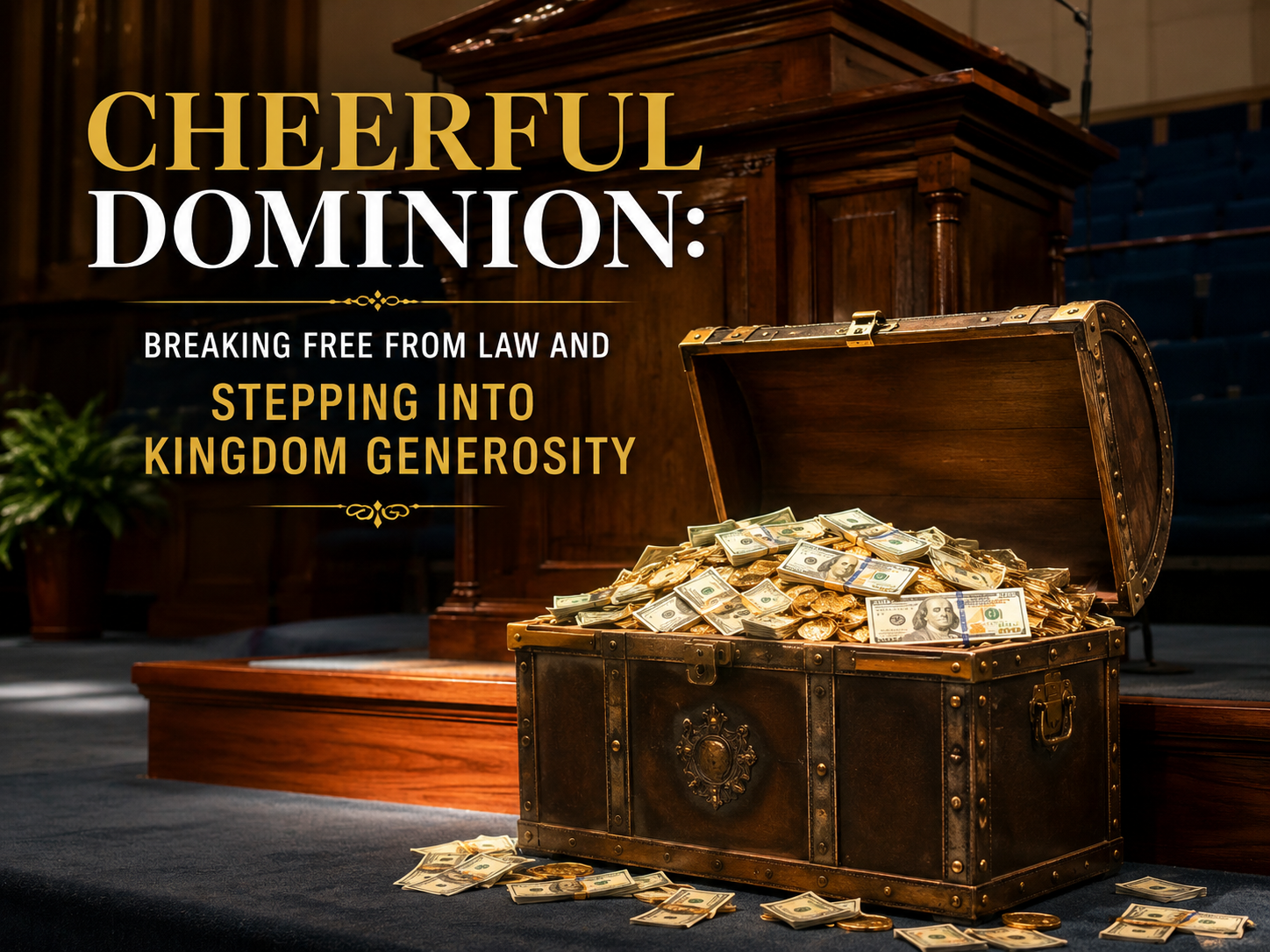
There is a shaking moving through the Body of Christ in this Kingdom Age, and it is not subtle. Heaven is drawing a line between what is built by the Spirit and what has been constructed by the hands of men.

For too long, ministries have treated the people of God as financial fuel for their personal empires, viewing the saints not as sons and daughters but as cash cows to be milked for the maintenance of lifestyles, brands, and platforms.

But the Lord says that the days of exploiting His people are coming to an abrupt end. The financial drought that is forming in the spirit will not touch the faithful, but it will suffocate every ministry that has fed on manipulation instead of faith, and on pressure instead of purity.

This exposure is not limited to tithes and offerings — it reaches into the very heart of discipleship. A growing number of man‑made ministries have begun charging fees for discipleship, placing price tags on what Jesus commanded us to give freely.

They have turned equipping into events, spiritual formation into subscription models, and Kingdom training into a marketplace of religious products. Yet there is zero biblical precedent for charging God’s people to be discipled, trained, or formed into the image of Christ.

The apostles never charged for impartation. Jesus never demanded payment for access. The early Church never monetized spiritual growth. But today, a system has arisen that treats discipleship like a business model, and the Lord is now confronting it with the full weight of His holiness.

Jesus taught His disciples to trust in the Father’s provision, not the manipulation of His followers. In Luke 10:4, He commanded them to carry no purse, no bag, no sandals — a radical call to dependence on Heaven. And in Luke 22:35–36, He reminded them that when they obeyed, they lacked nothing.

This was not a lesson in poverty; it was a lesson in trust. It was a Kingdom principle: God funds what God authors.

But the American religious system has inverted this truth, teaching leaders to depend on the people instead of the Father, and teaching the people to depend on the institution instead of Christ. This inversion has produced a culture where ministries manipulate, pressure, and guilt the saints into supporting visions that Heaven never initiated.

But the Spirit of the Lord says that the shaking has already begun. The ground beneath the celebrity pulpits is trembling. The platforms built on personality rather than presence are cracking.

The ministries that have fed on the sheep instead of feeding the sheep are about to feel the weight of divine interruption. And just as a beaver builds a dam to stop the flow of a stream, so is Heaven now constructing spiritual dams to cut off the financial flow into corrupt houses.

These dams are not punishment — they are protection. They are Heaven’s mercy shielding the sons and daughters of Yahweh from being misled, drained, and treated like personal banks for leaders who refuse to walk by faith.

This divine redirection of resources is not random. It is strategic. The Lord is reclaiming the wealth of His people and redirecting it into the hands of those who steward His presence, honor His Word, and equip His saints without exploitation. The drought will strike the systems built on greed, but the streams of provision will increase for the houses built on obedience.

The ministries that have charged for discipleship will see their influence wane, while the ministries that disciple freely will see their impact multiply. Heaven is exposing every structure that has monetized what Jesus made sacred, and the Spirit is dismantling every altar built to religious capitalism.

This is not judgment for destruction — it is judgment for reformation. The Lord is tearing down what has wounded His people so He can raise up what will heal them. He is purifying His Bride, cleansing His house, and restoring the ancient paths of Kingdom discipleship. The Ecclesia that emerges from this shaking will not be built on branding, marketing, or financial manipulation.

It will be built on presence, purity, honor, and the uncompromised Word of the Lord. It will be a people who trust in the Father’s provision, walk in the authority of Christ, and refuse to commercialize the Gospel.

The drought is coming — but it will not touch the Remnant. It will not touch the obedient. It will not touch the houses built on Christ.

Only the empires built on manipulation will wither. Only the ministries built on greed will collapse. Only the systems built on exploitation will run dry. For the Lord says, “I am reclaiming My Church. I am restoring My order. I am raising up My Ecclesia. And My glory will not fund what My Spirit is not in.”

— Dr. Russell Welch

Dr. Russell Welch is a published author, prophetic teacher, apostolic builder, author, and founder of faith-driven publishing and media initiatives. He is known for crafting bold, Kingdom-centered messages that call the Ecclesia into maturity, doctrinal clarity, and governmental authority. With a passion for equipping the Remnant and honoring generational legacy, Dr. Welch writes and teaches at the intersection of Scripture, history, and spiritual governance, challenging believers to live as sons and daughters who legislate Heaven on earth through truth, holiness, and unwavering fidelity to Christ.

Be sure to check out his book: The Consecrated Firebrand: A Warrior’s Guide to Holy Living, available exclusively on Amazon … here

Amazon Author Page


“A Scriptural and Constitutional Defense of National Sovereignty.”

In every generation, nations face the question of identity and responsibility: what does it mean to protect the people within our borders while remaining compassionate to those who seek refuge beyond them? The debate over immigration and border enforcement is not merely political; it is deeply moral and spiritual. Scripture and the Constitution of the United States point toward the same conclusion — that order, law, and justice are essential expressions of love, not contradictions of it.

1. God and the Principle of Boundaries

From Genesis forward, boundaries are part of creation’s design. Genesis 1 portrays God separating light from darkness, land from sea — establishing distinction for the sake of life and harmony. Later, in Acts 17:26, Paul declares that God “determined the times before appointed, and the bounds of their habitation.” The existence of nations with borders is not an accident of history but a reflection of divine order.

Biblical Israel understood this clearly. The borders of the promised land were set and guarded (Numbers 34), and foreigners who entered were welcomed under defined laws (Leviticus 19:33–34). The obligation to protect and regulate entry did not oppose compassion; rather, it ensured that justice to the “stranger” could function within a stable framework. Without boundaries, mercy itself becomes impossible to administer.

2. The Constitutional Mandate for Rule of Law

America’s founders, long students of Scripture, built the same concept of ordered liberty into the Constitution. Article I, Section 8 assigns Congress the authority to “establish a uniform rule of naturalization,” making immigration a national responsibility rather than a state or private one. The executive branch, under Article II, is charged to enforce these laws faithfully.

This framework mirrors biblical stewardship: authority delegated by God requires both compassion and accountability. When government neglects enforcement or abandons clear processes, two injustices occur. First, the lawful immigrant who follows the rules sees those efforts devalued. Second, the citizen — whose security and resources the state must guard — bears the weight of disorder.

3. Law Enforcement as a Ministry of Order

Romans 13 calls civil government “the minister of God … for good,” assigned to restrain evil and promote peace. A coherent immigration‑enforcement agency fulfills that role by preserving dignity for both citizens and newcomers. The goal is not hostility toward the foreigner but stewardship of national trust — a structured process that allows mercy to flow without chaos.

Scripture never confuses compassion with abdication. Nehemiah rebuilt Jerusalem’s walls not to keep people out forever, but to create safe space for worship, commerce, and community to flourish. Likewise, modern nations must maintain secure, lawful entry points so generosity can function wisely.

4. Justice and Mercy in Partnership

The prophets consistently tied mercy to justice. Isaiah 1:17 commands, “Seek justice, relieve the oppressed, judge the fatherless, plead for the widow.” Justice requires systems — laws applied consistently by accountable people. When enforcement dissolves, exploitation increases: smugglers profit, migrants suffer, citizens fear. A nation that values human life cannot outsource border policy to chaos.

A biblically informed policy therefore calls for:

  • Clear laws and consistent enforcement.
  • Compassionate pathways for legitimate asylum and citizenship.
  • Accountability for governmental agencies tasked with stewardship of resources and security.

These principles serve both Scripture and Constitution, two documents that presume moral order over anarchy.

5. The Moral Center of Sovereignty

Sovereignty is not supremacy. It is responsibility — the duty of leaders to care for those within their charge. Jesus rebuked shepherds who scatter the flock (Ezekiel 34 echoed the same reprimand). Open borders without order produce suffering that masquerades as kindness. Secure borders administered with truth and justice safeguard those inside and dignify those who enter lawfully.

The heart of the matter is stewardship: how do we manage what God has entrusted to us? Just as families steward their homes, nations steward their land and laws. To fail in that calling is to neglect biblical responsibility and constitutional oath alike.

A Nation’s Defense: The Biblical and Constitutional Mandate for a Military

Scripture affirms that peace is best preserved when righteousness is protected by strength. From Israel’s earliest history, the defense of a people was not left to chance or sentiment but organized under divine direction. In Numbers 1, Moses was commanded to “take a census of all the congregation … every male by their divisions, all who are able to go out to war.” Defense was one of the nation’s sacred responsibilities, established by God’s instruction, not human ambition.

In the Old Testament, Israel’s armies were never portrayed as instruments of aggression but as ministries of protection—guarding covenant land, families, and worship from those who sought to destroy them. Deuteronomy 20 outlines moral rules of engagement, proving that God values justice even in warfare. The soldiers were consecrated, not celebrated for violence but commissioned to preserve peace through obedience and courage.

In the New Testament, the pattern of legitimate force continues. Romans 13 describes the governing authority as “the servant of God, an avenger who carries out God’s wrath on the wrongdoer.” This grants civil government the right—and duty—to restrain evil, protect citizens, and preserve order. The Apostle John did not condemn soldiers for bearing arms; instead, he instructed them to act with integrity (Luke 3:14). A properly disciplined and moral military is therefore a biblical extension of leadership under divine accountability.

In American constitutional design, that same principle is embedded with remarkable clarity. Article I, Section 8 assigns Congress the power “to raise and support Armies” and “to provide and maintain a Navy,” ensuring that national defense is governed by elected representatives—not kings or generals. The Constitution’s checks and balances were created precisely so that necessary force would never become abusive force. Defense, in the American framework, is stewardship of life and liberty.

To neglect defense is to misunderstand peace. Psalm 144 opens with David’s prayer: “Blessed be the Lord my rock, who trains my hands for war, and my fingers for battle.” This is not the cry of a warmonger but of a shepherd‑king acknowledging that freedom without vigilance is naïve. Peace requires preparation; safety demands structure.

A biblical view of military power therefore holds three truths in tension:

1. War is never the goal; peace is the mandate. (Romans 12:18)
2. Strength is a trust from God, not a tool for pride. (Deuteronomy 8:17 – 18)
3. Defense of the innocent is a moral obligation. (Psalm 82:4 – “Rescue the weak and the needy; deliver them from the hand of the wicked.”)

When a nation uses its armed forces to deter aggression, protect borders, and defend allies against tyranny, it is living out a timeless theological truth: righteous power in right hands serves the cause of peace. Our military, governed by the Constitution and guided by moral restraint, stands not as a symbol of domination but as an instrument of justice—a hedge around freedom so that faith, family, and conscience may flourish within its safety.

Conclusion

A stable nation rests on three pillars of stewardship: secure borders, just law enforcement, and a disciplined military. Each reflects divine and constitutional order working in harmony. Boundaries protect identity; laws preserve justice; strength defends peace.

Scripture teaches that God Himself “set the boundaries of nations” (Acts 17:26) and commanded leaders to govern fairly within them. To protect those boundaries through lawful processes is an act of obedience, not fear. When civil authority enforces immigration statutes with truth and equity, it honors both the foreigner seeking refuge and the citizen whose safety must be ensured. Compassion without order descends into chaos; order without compassion becomes tyranny. The biblical balance is law tempered by mercy and mercy protected by law.

In the same way, a nation’s military exists by design, not accident. Romans 13 recognizes rulers as “servants of God” commissioned to restrain evil. The Constitution echoes this charge, empowering Congress to raise and support armies—not for conquest, but to guarantee liberty for future generations. A moral people defend their freedom precisely so that virtue and hospitality can survive within it.

Together, these institutions—law‑enforcement at the gates and a just military at the borders—form the hedge of peace around the Republic. They translate timeless biblical wisdom into practical governance: men and women under authority, protecting a people under God. Secure borders affirm sovereignty; righteous enforcement upholds justice; and an honorable military ensures that the peace we enjoy remains defended. To preserve these duties faithfully is to honor both the Word of God and the Constitution of the United States—the two covenants that call us to steward what has been entrusted to our hands.

America’s immigration debate must recover its spiritual compass. Secure borders and lawful enforcement are not acts of fear but of faith — faith that justice and mercy can co‑exist, that discipline is a form of love, and that a nation governed by law honors God more than one governed by emotion.

In a time of confusion, the ancient wisdom still applies: build the wall, open the gate, and judge rightly at the gate. Boundaries make compassion possible; law turns kindness into policy; and together they reflect both the Word of God and the Constitution of this Republic.

— Dr. Russell Welch

Dr. Russell Welch is a published author, prophetic teacher, apostolic builder, author, and founder of faith-driven publishing and media initiatives. He is known for crafting bold, Kingdom-centered messages that call the Ecclesia into maturity, doctrinal clarity, and governmental authority. With a passion for equipping the Remnant and honoring generational legacy, Dr. Welch writes and teaches at the intersection of Scripture, history, and spiritual governance, challenging believers to live as sons and daughters who legislate Heaven on earth through truth, holiness, and unwavering fidelity to Christ.

Be sure to check out his book: America at War: The Spiritual Battle for a Nation’s Soul , available exclusively on Amazon … here

Amazon Author Page


There are moments in our walk with God when obedience becomes the doorway to revelation. Leaving the celebrity church culture was one of those moments for me. I didn’t leave the Church — I left a system that had drifted far from the New Covenant blueprint Jesus established. And the moment I stepped out of that system, the Holy Spirit began unveiling deeper layers of the Kingdom that I had never been able to hear inside the noise, pressure, and performance of the American Church Model. It was as if Heaven had been waiting for me to step out so it could begin speaking again.

But the truth is, the seeds of this shift were planted long before I ever walked away from the system. There was a moment in 2016 when the Lord encountered me so radically that it altered the trajectory of my life. That encounter didn’t just touch me — it dismantled me. It drove me to the altar for years, not moments. In that sacred place, the fire of God began burning through everything religion had ever planted in me — every false identity, every performance-driven mindset, every trace of man-made Christianity. I was stripped down to nothing but hunger.

And in that long season of surrender, the Holy Spirit rebuilt me from the inside out. He awakened in me a compassion that beats in rhythm with the heart of Jesus for the lost — but even deeper than that, He ignited an unquenchable longing for the Presence of the Father. Not ministry. Not platforms. Not applause. Presence. That encounter didn’t just change me — it re-created me into a man who refuses to live without the fire that fell on that altar.

Long before “Remnant” became a Christian buzzword, I was teaching it, living it, and calling people into it. I remember preaching about consecration, holiness, Kingdom identity, and spiritual alignment when most people didn’t even know what “the Remnant” meant outside of the Old Testament. This wasn’t a trend for me — it was a burden. A prophetic assignment. A fire the Holy Spirit placed in my spirit decades ago. So when I stepped away from the celebrity system, it wasn’t a shift in message; it was a shift in soil. The Remnant message didn’t change — the environment did.

For years, I watched sincere, hungry believers get battered and bruised by a system that elevated personalities over presence, platforms over people, and charisma over character. I saw hundreds of saints wounded by a model that entertained crowds but did not equip disciples. And after immersing myself in Scripture, studying the writings of the early Church Fathers, and sitting with seasoned generals who have walked faithfully with the Lord for more than fifty years, I realized the American Church Model had become something the apostles would not recognize. It had become a religious institution rather than a Kingdom movement.

Even while I was still inside that system, I was warning about what it would produce. I was teaching that a generation would rise who refused to bow to the spirit of the age. I was calling believers out of passive Christianity and into Kingdom assignment. I was speaking about the shaking that would expose ministries built on personality instead of presence. What many are just now discovering, the Holy Spirit had been speaking to me for years — and I carried that message even when it wasn’t welcomed or understood.

Jesus said, “I will build My Church, and the gates of hell shall not prevail against it” (Matthew 16:18). He never asked men to build what only He could build. But the modern system has tried to construct something in His name that He never authored.

It was only after I stepped away that the Holy Spirit began revealing the depth of the problem — and the beauty of the solution. In the quiet, away from the lights and the noise, He began showing me the ancient blueprint of the Ecclesia: a people formed around presence, holiness, honor, and Kingdom authority. He began showing me how the Remnant has always been called out of institutional structures and into gatherings where Jesus alone is the center. And He began stirring something in me I never expected — a mandate to write.

The writing didn’t come from ambition — it came from obedience. The deeper the revelation, the stronger the urgency to put it into words. And as I wrote, I realized these books were not simply teachings — they were reformation tools.

They are invitations for the Remnant to retreat from religious institutions and rediscover the safety, identity, and authority of true Ecclesia gatherings. They are Kingdom maps for sons and daughters who know they were born for more than Sunday morning productions and celebrity‑driven spirituality. They are blueprints for believers who have been wounded by the system but still long for the purity and power of the early Church.

The Ecclesia the Holy Spirit is raising today does not depend on buildings, stages, or production value. It can gather in a sanctuary, a living room, a coffee shop, or on a street corner. What matters is not the location — it is the alignment. When believers gather under the Lordship of Jesus, honor one another, and allow the Holy Spirit to train, equip, and send them, the Kingdom advances. This is where disciples are formed. This is where spiritual authority is restored. This is where the Remnant finds healing from the wounds inflicted by the institutional system.

And again — this is the very thing I was preaching before it became fashionable. I was calling for house gatherings, street‑level discipleship, and presence‑driven community long before the modern “micro‑church” trend. I was teaching about Kingdom advancement through small, consecrated communities before it became a strategy. The Holy Spirit had been preparing me for this moment long before the language caught up. What others now call “innovative,” Heaven had already been whispering for years.

The shaking has already begun. The celebrity houses — the ones built on branding rather than the Chief Cornerstone — are beginning to feel the tremors of Heaven’s correction. This shaking is not punishment; it is mercy. It is the tearing of the religious veil, just as the veil in the Temple was torn from top to bottom when Jesus breathed His last breath (Matthew 27:51). That tearing declared once and for all that access to God would never again be controlled by religious systems, but by Christ Himself — the Cornerstone of His Ecclesia.

This is why I left the celebrity church culture. This is why I walked away from the American Church Model. And this is why I am fully committed to writing, equipping, and building the Remnant Ecclesia.

Because I refuse to build on any foundation other than Christ Himself. Because I refuse to support a system that wounds the sheep while protecting the platform. Because I refuse to participate in a model that entertains the masses but ignores the mandate.

The Remnant is rising. The Ecclesia is reforming. And this is the movement I am giving my life to.

— Dr. Russell Welch

Dr. Russell Welch is a published author, prophetic teacher, apostolic builder, author, and founder of faith-driven publishing and media initiatives. He is known for crafting bold, Kingdom-centered messages that call the Ecclesia into maturity, doctrinal clarity, and governmental authority. With a passion for equipping the Remnant and honoring generational legacy, Dr. Welch writes and teaches at the intersection of Scripture, history, and spiritual governance, challenging believers to live as sons and daughters who legislate Heaven on earth through truth, holiness, and unwavering fidelity to Christ.

Be sure to check out his book: The Consecrated Firebrand: A Warrior’s Guide to Holy Living, available exclusively on Amazon … here

Amazon Author Page


For decades, America has been discipled by a lie — a lie so widespread, so aggressively repeated, and so deeply embedded in the national psyche that many Christians accept it without question. The lie is simple, seductive, and spiritually devastating:

“Prayer in schools is against the Constitution.”

This statement has been weaponized to silence believers, intimidate educators, and pressure students into hiding their faith. It has been used to push God out of classrooms, out of public life, and out of the next generation’s worldview. But here is the truth — the truth the enemy hopes you never discover:

👉 The U.S. Constitution does not forbid prayer in schools. 👉 The Constitution does not contain the phrase “separation of Church and State.” 👉 That phrase appears nowhere in the founding documents.

The entire argument is built on a myth — a cultural narrative repeated so often that it feels authoritative, even though it has no legal foundation. And like all effective deceptions, it hides in plain sight.

📜 The Real Origin of “Separation of Church and State”

To understand how this myth took root, we must go back to 1802. Thomas Jefferson wrote a private letter — not a law, not an amendment, not a constitutional clause — to the Danbury Baptist Association. In that letter, he used the phrase “a wall of separation between Church and State.”

But Jefferson’s intent has been twisted beyond recognition.

Jefferson was not restricting the Church. He was protecting it.

His message was clear:

  • The government has no authority to interfere with the Church.
  • The “wall” was designed to keep the State out of the Church — not the Church out of society.

Jefferson feared government intrusion into religious life, not religious influence in public life. He was guarding the Church from political control, not banning prayer from classrooms.

Yet today, that phrase — ripped from context, stripped of meaning, and weaponized by secular ideology — is used to silence the very people Jefferson sought to protect.

This is not constitutional law. This is cultural engineering.

🧠 The Deeper Issue: A Spiritual Deception

The battle over prayer in schools is not primarily legal. It is spiritual. The enemy understands something many believers have forgotten: prayer is power. Prayer invites Heaven into earthly spaces. Prayer shifts atmospheres. Prayer disrupts darkness.

So what better strategy than to convince a generation that prayer is inappropriate, illegal, or unwelcome?

For decades, students have been conditioned to believe:

  • God is distant
  • Faith is private
  • Prayer is disruptive
  • The Church must stay silent
  • Christians must retreat from culture

This is not neutrality — it is indoctrination. This is not constitutional literacy — it is spiritual warfare.

What we are witnessing is deism disguised as civics — the belief that God created the world but no longer intervenes in it. And once people believe God is uninvolved, they naturally believe His people should be uninvolved too.

But Scripture refuses to bow to this deception.

📖 What the Bible Actually Commands

The Word of God is not ambiguous about the role of prayer, the responsibility of parents, or the authority of the Ekklesia.

  • “Let the little children come to Me…”Matthew 19:14
  • “Teach them diligently to your children…”Deuteronomy 6:7
  • “Your Kingdom come, Your will be done on earth…”Matthew 6:10
  • “The Ekklesia… will bind and loose on earth what is bound and loosed in Heaven.”Matthew 16:18–19

The Ekklesia is not a passive audience. It is a governing body.

The Church is not a private club. It is Heaven’s legislative assembly on earth.

To forbid prayer is to forbid obedience to Christ. To silence prayer is to silence Heaven’s voice in the earth. To remove prayer from schools is to remove spiritual covering from children.

This is not a political issue — it is a Kingdom issue.

🔥 Why This Matters for Our Children

When a culture removes prayer from its schools, it is not protecting freedom. It is not upholding neutrality. It is not defending constitutional integrity.

It is removing the voice of Heaven from the next generation.

It is teaching children that God is irrelevant. It is discipling them into secularism. It is shaping their worldview without the influence of truth.

But here is the reality the enemy fears:

Students can pray. Teachers can pray. Parents can pray.

Prayer is not illegal. Faith is not forbidden. The Constitution does not silence the Church.

The only thing that stops prayer in schools is fear — not the law.

🔥 The Remnant Response

The Remnant does not retreat. The Remnant does not bow to cultural myths. The Remnant does not surrender spiritual authority to secular narratives.

This is the moment to reclaim what was never lost. This is the moment to expose the lie. This is the moment to re‑establish the truth:

Prayer is not unconstitutional. Prayer is not prohibited. Prayer is not optional.

It is a mandate. It is a weapon. It is a lifeline for the next generation.

And no cultural myth, no activist agenda, no misquoted letter, and no intimidation campaign can silence the Kingdom of God.

— Dr. Russell Welch

Dr. Russell Welch is a published author, prophetic teacher, apostolic builder, author, and founder of faith-driven publishing and media initiatives. He is known for crafting bold, Kingdom-centered messages that call the Ecclesia into maturity, doctrinal clarity, and governmental authority. With a passion for equipping the Remnant and honoring generational legacy, Dr. Welch writes and teaches at the intersection of Scripture, history, and spiritual governance, challenging believers to live as sons and daughters who legislate Heaven on earth through truth, holiness, and unwavering fidelity to Christ.

Be sure to check out his book: The Consecrated Firebrand: A Warrior’s Guide to Holy Living, available exclusively on Amazon … here

Amazon Author Page


A holy reformation is erupting in the earth, and it begins with the sons and daughters who refuse to bow to the idols of modern religion. The spirit of religion has long sought to suffocate the Church with lifeless rituals, hollow traditions, and counterfeit spirituality, but its grip is breaking under the weight of divine truth. It hurled its fiercest accusations at Jesus, yet “the Son of God appeared to destroy the works of the devil” (1 John 3:8), and destroy them He did. Leonard Ravenhill once said, “The early Church was married to persecution; today’s Church is married to prosperity,” and that contrast exposes the very battlefield of this hour. But the Remnant is rising with a resolve that cannot be bought, bribed, or broken.

This reformation is not a rebellion against the Church—it is a return to the Church Jesus birthed. It is a movement away from the polished performances of religious institutions and back to the raw power of the upper room. It is a turning from celebrity pulpits to the crucified Christ, from entertainment to encounter, from programs to Presence. Mario Murillo has warned, “The greatest threat to the Church is not the world—it is a lukewarm Church,” and the Remnant refuses to be lukewarm any longer. They are awakening to the truth that the Kingdom of God is not a show but a fire.

The spirit of religion has built altars to comfort, convenience, and compromise, but the Remnant is tearing them down. They see through the fog machines, the choreographed worship sets, and the motivational sermons that never confront sin or awaken destiny. They discern the difference between charisma and character, between gifting and anointing, between noise and authority. David Wilkerson once said, “A holy Church is a powerful Church,” and holiness is becoming the anthem of this rising generation. They are returning to the fear of the Lord, which is the beginning of wisdom and the foundation of true power.

This reformation is fueled by a hunger that cannot be satisfied by religious substitutes. The Remnant longs for the Word of God, not as a script to recite but as a sword to wield. They crave the fire of the Holy Spirit, not the flicker of stage lights. They desire the presence of Jesus more than the approval of men. Ravenhill once asked, “Are the things you are living for worth Christ dying for?” and the Remnant answers with consecration, surrender, and obedience.

The shaking of the last three years has been Heaven’s invitation to return to the ancient paths. It has exposed the cracks in religious systems, revealed the motives of leaders, and confronted the idols hidden in the hearts of believers. It has been a divine reset, a holy interruption, a mercy disguised as disruption. Mario Murillo declared, “When God shakes the Church, it is not to destroy it but to restore it,” and restoration is exactly what is unfolding. The Remnant is stepping into a purity and power the world has not seen in generations.

Heaven is partnering with this reformation in unprecedented ways. The Host of the Heavenly Armies has been dispatched to war against every stronghold of deception, apathy, and religious bondage. The Captain of the Lord’s Armies is once again standing with drawn sword, confronting every structure that has exalted itself against the knowledge of God. The cry of Heaven is echoing across the nations: “Let My people go.” This is not a suggestion—it is a divine decree.

The Remnant is rising with a boldness that cannot be silenced. They refuse to bow to the idols of culture, the pressures of society, or the expectations of religious systems. They stand like Daniel in Babylon, like Elijah on Mount Carmel, like Peter on the day of Pentecost. Wilkerson once said, “God always has a people who will not bow,” and that people is emerging again. They are the sons and daughters who carry the fire of reformation.

This movement is marked by a return to spiritual warfare, discernment, and holiness. The Remnant understands that “we wrestle not against flesh and blood” (Ephesians 6:12), and they are reclaiming the authority Christ gave them. They are training their senses to discern good from evil, truth from deception, and Spirit from spectacle. Ravenhill once said, “A man who is intimate with God is not intimidated by man,” and intimacy is becoming the Remnant’s greatest weapon. They are learning to war from the secret place.

This reformation is not about numbers—it is about purity. It is not about influence—it is about obedience. It is not about platforms—it is about altars. Mario Murillo has said, “God is raising up a people who care more about His presence than their reputation,” and that people is rising now. They are the ones who will carry the torch of revival into the darkest corners of the earth.

And now, to those who feel the stirring in their spirit—those who have grown weary of empty religion, hollow rituals, and powerless Christianity—hear this invitation: the door to reformation stands open. The Spirit of God is calling you out of the shadows of performance and into the light of identity. You were not created to be a spectator in the Kingdom; you were born to be a son, a daughter, a warrior, a priest. Shake off the chains that have held you. Step into the reformation Christ purchased for you, for the same Jesus who defeated religion then is defeating it now in you.

— Dr. Russell Welch

Dr. Russell Welch is a published author, prophetic teacher, apostolic builder, author, and founder of faith-driven publishing and media initiatives. He is known for crafting bold, Kingdom-centered messages that call the Ecclesia into maturity, doctrinal clarity, and governmental authority. With a passion for equipping the Remnant and honoring generational legacy, Dr. Welch writes and teaches at the intersection of Scripture, history, and spiritual governance, challenging believers to live as sons and daughters who legislate Heaven on earth through truth, holiness, and unwavering fidelity to Christ.

Be sure to check out his book: The Consecrated Firebrand: A Warrior’s Guide to Holy Living, available exclusively on Amazon … here

Amazon Author Page


A move of God often begins long before anyone realizes it. For me, it began with a holy disruption—a stirring in my spirit that refused to be quieted, a longing that no sermon outline, ministry routine, or theological framework could satisfy. I knew the Holy Spirit was calling me deeper, but I didn’t yet understand that He was also calling me to write. What I didn’t know then was that this stirring would become the book that launched my journey as a Christian author: God’s Wind Walkers: A Life Governed by the Wind of Holy Spirit.

The Moment Eveything Shifted

There comes a point in every believer’s life when the familiar rhythms of Christianity no longer carry the weight they once did. You can love God, serve faithfully, and still feel the ache of something missing—something Jesus promised but many never fully experience.

For me, that ache became a divine invitation.

I began to see that the Spirit‑filled life Jesus described in John 3:8 wasn’t poetic language. It was a blueprint. A calling. A way of life. A life where the wind of the Spirit becomes the governing force—unpredictable, undeniable, and beautifully disruptive.

As I surrendered to that call, the Holy Spirit began to teach, correct, awaken, and lead me in ways I had never known. And in the middle of that journey, He whispered something that changed everything:

“Write what I’m teaching you.”

When Obedience Turns Into Assignment

I didn’t set out to become an author. I set out to obey.

But obedience has a way of unlocking assignments you never imagined.

As I wrote, I realized the message wasn’t just for me. It was for every believer who longed for more than predictable Christianity. It was for those who felt stuck, stagnant, or spiritually numb. It was for those who sensed the Holy Spirit calling them into a life marked by clarity, intimacy, and supernatural leading.

That message became God’s Wind Walkers: A Life Governed by the Wind of Holy Spirit — a book rooted in Scripture, shaped by encounter, and forged in surrender.

Why Wind Walkers Resonated So Deeply

From the moment it released, something unusual happened. Messages began pouring in from Bible study groups, classrooms, pastors, and everyday believers who said the same thing in different words:

“This book brought me closer to the Lord.” “I’m hearing the Holy Spirit again.” “My walk with God feels alive.” “This unlocked something in me.”

People weren’t just reading it—they were encountering God through it.

And that’s when I realized: this wasn’t just a book. It was a doorway. A catalyst. A wind that carried people into the life Jesus always intended for them.

The Heart Behind the Message

Wind Walkers is built on three unshakable truths:

  • The Holy Spirit still leads His people with clarity.
  • Identity is discovered through surrender, not striving.
  • The supernatural life is not for the few—it’s the birthright of every believer.

Through Scripture-rich teaching and practical guidance, the book helps believers:

  • Recognize the voice of the Spirit
  • Break free from spiritual stagnation
  • Walk confidently as sons and daughters
  • Live in daily sensitivity to God’s movements
  • Experience the supernatural life Jesus promised

It’s not theory. It’s not hype. It’s the life Jesus modeled and the early Church lived.

A Book That Became a Beginning

Looking back, I see now that Wind Walkers didn’t just launch my writing career—it launched a movement in my own heart. It set the foundation for every book that followed, every message I’ve preached, and every assignment God has entrusted to me.

It taught me that when you yield to the Wind of the Spirit, He will take you places you never planned to go—yet always where you were created to be.

And for countless readers, it has become the beginning of their own Spirit‑governed journey.

If you’re longing for a deeper walk with the Holy Spirit… if you’re hungry for clarity, intimacy, and supernatural leading… if you know there is more to your faith than what you’ve experienced so far…

Your journey can begin today.

👉 Start your Wind Walker journey: https://www.amazon.com/dp/B0CR1WTJZN

— Dr. Russell Welch

Dr. Russell Welch is a published author, prophetic teacher, apostolic builder, author, and founder of faith-driven publishing and media initiatives. He is known for crafting bold, Kingdom-centered messages that call the Ecclesia into maturity, doctrinal clarity, and governmental authority. With a passion for equipping the Remnant and honoring generational legacy, Dr. Welch writes and teaches at the intersection of Scripture, history, and spiritual governance, challenging believers to live as sons and daughters who legislate Heaven on earth through truth, holiness, and unwavering fidelity to Christ.

Be sure to check out his book: The Consecrated Firebrand: A Warrior’s Guide to Holy Living, available exclusively on Amazon … here

Amazon Author Page