Posts Tagged ‘#SpiritOfReligionExposed’


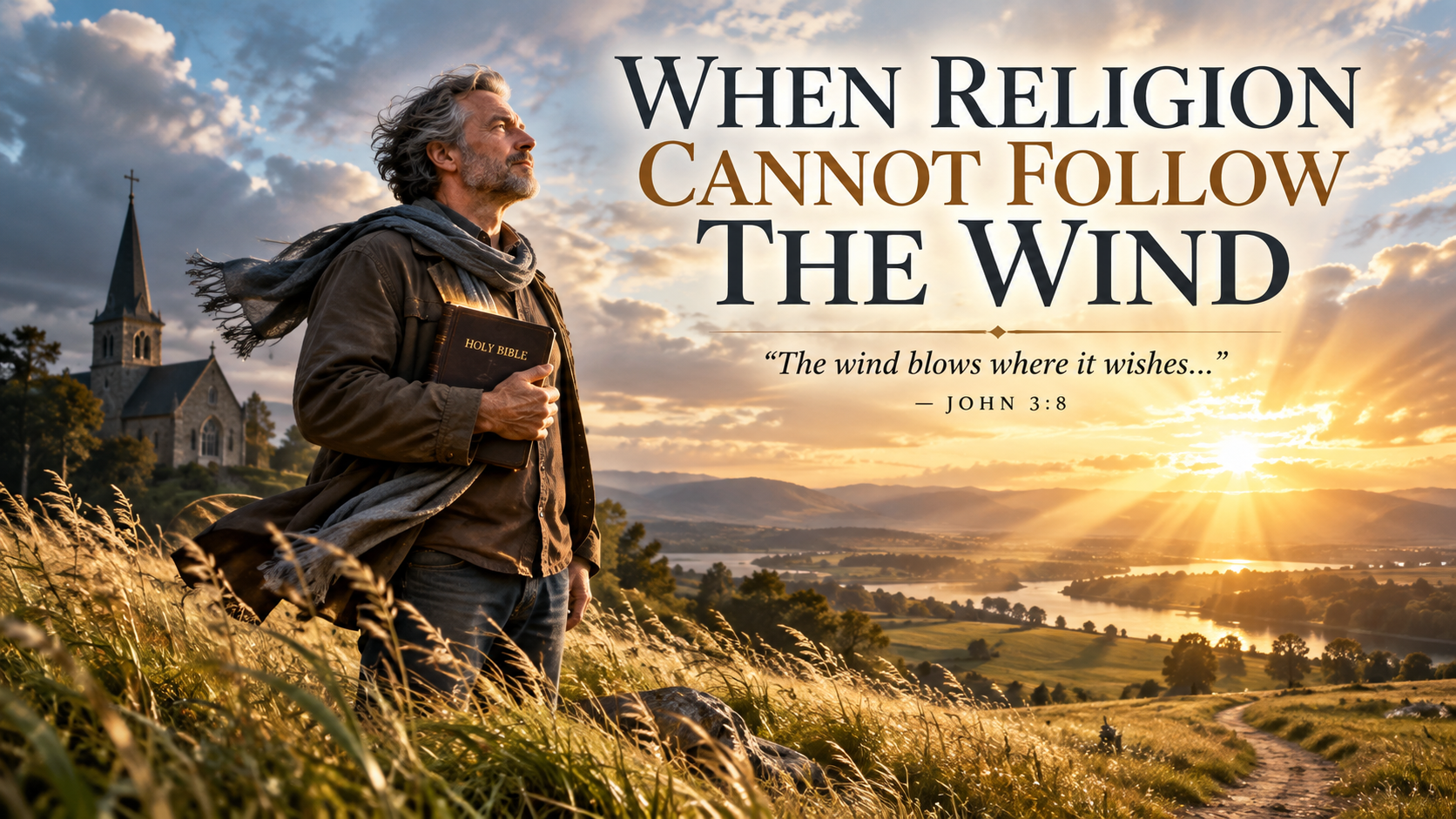
There is a profound difference between knowing how to function inside a religious system and knowing how to move with Holy Spirit. Religious systems thrive on predictability because predictability can be managed, scheduled, repeated, and controlled. Holy Spirit, however, is not subject to human management. Jesus made this unmistakably clear when He said, “The wind blows where it wishes, and you hear its sound, but you do not know where it comes from or where it goes. So it is with everyone who is born of the Spirit” (John 3:8). Spirit-born people are not called into chaos, but neither are they called to live within the suffocating boundaries of human control.

The Church has often become highly skilled at building structures that can continue functioning whether Holy Spirit is moving or not. Services can be timed, programs can be organized, sermons can be delivered, music can be performed, and calendars can remain full while spiritual sensitivity slowly diminishes. None of these things are inherently wrong, but they become dangerous when structure begins replacing dependence. The issue is not whether we have order, but whether our order still makes room for the One who is supposed to be leading us. A ministry can be organized and still be alive, but it can also become so organized that interruption by Holy Spirit feels inconvenient.

This is one of the reasons religious systems frequently struggle when God begins moving outside familiar patterns. When Jesus healed on the Sabbath, touched lepers, ate with sinners, spoke openly with women, challenged established interpretations, and refused to conform to the expectations of religious leaders, He was not rebelling against the Father. He was perfectly obeying the Father. The conflict existed because religious expectation had become more authoritative in the minds of men than the present movement of God. Jesus revealed the painful truth that people can become so committed to what God did yesterday that they resist what He is doing today.

That same danger remains with us. It is possible to defend a pattern so fiercely that we fail to recognize when the cloud has moved. Israel knew this tension well. In the wilderness, the people were not permitted to choose the timing of their movement. When the cloud lifted, they moved. When the cloud remained, they stayed. Their security was not found in having a predictable itinerary but in remaining aligned with the presence of God. The great challenge of Spirit-led living is that it requires continual attentiveness, because yesterday’s direction cannot replace today’s obedience.

This does not mean every sudden impulse should be labeled Holy Spirit. Spiritual maturity requires discernment, and discernment is formed through Scripture, prayer, submission, wisdom, and the fruit produced by what we believe we are hearing. Galatians 5:25 says, “If we live by the Spirit, let us also keep in step with the Spirit.” Keeping in step implies both movement and alignment. We are not running ahead of Him, and we are not standing still after He has moved. The mature believer learns to recognize His pace.

One of the clearest warning signs that religious structure has begun replacing spiritual dependence is when interruption becomes irritating. If Holy Spirit changing the direction of a service feels like a problem, we should ask who the service was truly built around. If God redirecting our personal plans creates resentment, we should ask whether surrender was ever more than a theological idea. If we cannot obey until every detail is explained, we may be depending more heavily on control than faith. The life of the Spirit constantly exposes our desire to know the entire route before taking the next step.

Jesus described new wine requiring new wineskins because some structures cannot carry what God is presently pouring out. The answer is not to despise structure, because Scripture itself reveals order, leadership, discipline, and accountability. The answer is to ensure that structure remains servant rather than master. Healthy structure protects what God is doing without attempting to control Him. Unhealthy structure eventually becomes an institution defending its own continuity.

Paul wrote, “Where the Spirit of the Lord is, there is liberty” (2 Corinthians 3:17). Biblical liberty does not mean lawlessness, emotionalism, or spiritual recklessness. It means freedom from the bondage of human systems that attempt to replace the living leadership of God. Holy Spirit never leads us away from the character of Christ or the authority of Scripture. He does, however, regularly lead us beyond human expectations.

The early Church learned this quickly. Philip was experiencing fruitful ministry in Samaria when the angel of the Lord directed him toward a desert road. From a human perspective, leaving a place of visible success for an isolated road would have seemed irrational. Yet on that road he encountered the Ethiopian official whose conversion would carry the Gospel far beyond what Philip could have planned. Spirit-led obedience often looks inefficient until we understand the assignment hidden inside it.

Peter experienced something similar in Acts 10. His religious formation had given him clear categories concerning who was clean and who was unclean. Then God interrupted those categories through a vision and directed him to the household of Cornelius. Peter had to choose between defending his inherited understanding and obeying the fresh direction of God. His obedience opened a historic door for the Gospel among the Gentiles. The wind was blowing beyond the boundaries Peter had known.

There are moments when Holy Spirit will lead us into things that make perfect sense, and there are moments when obedience will precede understanding. Abraham left without knowing exactly where he was going. Philip ran toward a chariot before knowing what conversation awaited him. Paul was forbidden from entering certain regions before being redirected toward Macedonia. None of these men were spiritually unstable; they were spiritually responsive.

That distinction matters. Spirit-led people are not flighty people who constantly abandon responsibility because they claim God told them something new. Stability and sensitivity belong together. True responsiveness to Holy Spirit produces deeper obedience, greater humility, stronger character, and increasing conformity to Christ. If what we call spiritual leading repeatedly produces confusion, pride, broken commitments, or disregard for Scripture, we should question the source.

One of the tragedies of religious culture is that people can learn how to perform spiritual activity without spiritual dependence. We can learn when to lift our hands, when to say amen, when to pray loudly, when to quote Scripture, and how to sound spiritually mature. Yet none of those behaviors prove that we are presently listening. The question is not whether we know the language of the Spirit, but whether we still recognize His voice.

The remedy is not rebellion against all tradition. Some traditions carry wisdom, continuity, and testimony from generations of faithful believers. The remedy is refusing to allow tradition to become untouchable. Jesus said that men could make the Word of God ineffective through their traditions when those traditions became more authoritative than obedience. Every structure, method, and ministry pattern must remain subject to the Lordship of Christ.

This begins personally before it ever becomes institutional. We should regularly ask whether there are places in our lives where routine has replaced relationship. Have we become so familiar with our devotional pattern that we no longer expect Holy Spirit to speak? Have we become so committed to our ministry calendar that there is no room for divine redirection? Have we mistaken predictability for maturity?

A genuinely Spirit-led life requires surrender because surrender removes our demand to control the outcome. Holy Spirit may lead us to stay when we want to leave, speak when we would rather remain silent, wait when we are ready to move, or move when we are comfortable remaining where we are. The issue is never novelty for novelty’s sake. The issue is obedience.

The remnant the Lord is raising in this hour cannot be governed primarily by religious momentum. Yesterday’s encounter cannot substitute for today’s communion. Yesterday’s strategy cannot automatically determine today’s assignment. Yesterday’s word cannot become an excuse for ignoring what Holy Spirit is presently emphasizing. We honor what God has done while remaining available for what He desires to do next.

There is a generation of believers who are learning again what it means to be moved by the impulses of Holy Spirit. They are not rejecting Scripture, order, or accountability. They are rejecting the idea that human control is the same thing as spiritual maturity. They want to become a people who are deeply rooted in truth and yet responsive enough to move when the Wind begins to blow.

That is the heart behind my book, Spirit Wind People: Those Who Are Moved by the Impulses of Holy Spirit. It is an invitation to move beyond religious predictability and into the biblical reality of a life genuinely led by the Spirit of God. If you sense Holy Spirit calling you into deeper sensitivity, obedience, and surrender, this book was written to help you explore what it means to become one of those who truly follows the Wind.

Stay tuned, the journey continues…..

A voice of fire to the Remnant,
— Dr. Russell Welch

Dr. Russell Welch is a published author, prophetic teacher, apostolic builder, and founder of faith-driven publishing and media initiatives. His ministry carries a strong call to equip the Ecclesia for maturity, biblical clarity, spiritual discernment, and Kingdom assignment. Through his writing and teaching, he brings together Scripture, Church history, theology, and spiritual governance while challenging believers to move beyond religious tradition and into the mature life of sons and daughters who are led by Holy Spirit, established in truth, and wholly surrendered to Jesus Christ.

At the heart of this ministry is a burden to prepare and equip the Lord’s Remnant—to awaken identity, restore biblical order, strengthen spiritual maturity, and help believers recognize the assignments God has placed before them. The vision is not simply to produce messages, books, or media, but to help form a people who carry the character of Christ, hear the voice of Holy Spirit, and faithfully advance the Kingdom of God wherever the Father sends them.

To learn more about Remnant Warrior Ministries, the vision, and the assignment of the Remnant, visit:

https://radical-disciples.org/the-assignment-of-the-remnant/

You can learn more about Spirit Wind People here:

The Radical Road to Spiritual Freedom

When I entered into my doctoral studies through Trinity Seminary, I did so with hesitation, knowing full well that it was an ultra-Calvinist institution and sensing from the start that I would be stepping into a place where sharp doctrinal tensions would challenge me deeply. Yet looking back now, I can see that the hand of God was all over that season, because it drove me into the Scriptures with a depth, intensity, and desperation I had never known before.

What the enemy may have hoped to use for confusion, the Lord used to press me deeper into His Word, for “the entrance of thy words giveth light” and “giveth understanding unto the simple” (Psalm 119:130). I was reading, praying, studying, writing, wrestling, and pressing, and in many ways I truly believed I was pursuing truth with all my heart. But somewhere in that journey, something dark fastened itself to me like a hidden hitchhiker, cloaked in the language of zeal and conviction, yet breathing with the venom of bondage. Holy Spirit later showed me that what had attached itself was not merely theological rigidity, but the spirit of religion, subtle, cruel, and deeply parasitic.

Holy Spirit showed me years ago that this invasion did not begin in seminary, nor did it come because of the doctrines of the school itself. The real doorway had opened much earlier, when I was only around three years old, at a time when innocence should have been protected but instead was pierced by fracture and loss. My mother divorced my father, a violent alcoholic, and in the aftermath my grandmother determined that if her son could not have his children, neither would his wife.

In that storm, the enemy planted something sinister in the soil of a little boy’s heart, and through that wound there entered the spirit of rejection and the orphan spirit. It is just like hell to place doorjams in the soul of a child, preparing access points for later invasions while the heart is too tender and too young to understand what has been done. Scripture says, “Neither give place to the devil” (Ephesians 4:27), yet many wounds are suffered before a child even knows what a door is. That early pain became more than memory; it became an unhealed breach through which lying spirits would later try to define my worth, my identity, and even my picture of God.

As I grew older, Holy Spirit revealed how that rejection did not remain alone, because rejection rarely travels by itself. It opened the door to pride, and when pride joins itself to rejection and the orphan spirit, it begins to forge one of the most devastating character assassins a person can battle. It whispers that you must prove your worth, earn your acceptance, defend your value, and establish your place through performance, intellect, striving, and visible success.

Worse still, it projects that distortion onto God Himself, making you believe that when you fail, His walls of rejection only rise higher and higher against you. Of course, this is a lie from the pit, because Scripture declares that we are “accepted in the beloved” (Ephesians 1:6), not tolerated through performance and not loved in proportion to our success. But territorial lies do not feel weak when they are entrenched in the soul; they feel like truth because they have been living there so long. That is why strongholds can operate in stealth mode, hiding behind intellect, discipline, achievement, and even ministry while the heart remains shackled to a false identity.

I had powerful men in my life, men who knew warfare, men who loved God, men who carried authority in many areas. Yet because some of them themselves were bound by the same spirit in subtler ways, they could not discern it working in me. Such is the cruelty of hidden bondage: what is tolerated in one vessel is rarely confronted in another. Spiritual captivity often survives not because no one around us loves God, but because the enemy has cloaked the chain with language that sounds holy.

Religion is especially vile in this way, because it can make bondage appear like maturity, harshness look like conviction, and self-defense feel like righteousness. Jesus rebuked the religious spirit more fiercely than any other because it honored God with the lips while the heart remained far from Him (Matthew 15:8). It was that same spirit that began to ride the wounds of rejection in me, seeking to transform pain into a false righteousness and insecurity into spiritual combativeness.

So what did that look like in practice while I was spirit-filled and sitting in a Baptist setting that denied much of what I knew the Word revealed? Instead of allowing the love and meekness of Christ to anchor me, I developed a prideful warrior mentality. I was determined to prove they were wrong and I was right, not merely because I loved truth, but because somewhere deep inside I needed victory in the argument to validate my worth. Rather than laying down a foundation of truth with patience, humility, and the hope that blinded eyes might be opened, I built a defensive wall designed to protect my wounded soul.

My academic strength became a weapon, not merely a tool, and I was fighting not only for doctrine, but for self-justification. What I called zeal was in part a cry of an orphaned heart still trying to earn what can only be received. “Knowledge puffeth up, but charity edifieth” (1 Corinthians 8:1), and though I possessed truth in many areas, I was still learning how deeply truth must be married to love if it is to look like Christ.

Yet this is where I can now see the hand of God with even greater clarity, because even in the middle of my mixture, He was building something in me that would remain long after the bondage was broken. Though pride had found a place to operate, my obedience in the study of His Word was real. The long hours of reading, praying, reading again, writing, and then returning once more to prayer became the very foundation upon which I still live daily.

God, in His mercy, was using even that troubled season to anchor me in Scripture, to train my mind to search deeply, and to teach me how to tarry before Him until truth opened. The enemy rode in through a wound, but he could not stop the Lord from laying a foundation beneath my feet. What hell meant to twist into religion, God still worked into hunger for His voice, reverence for His Word, and a life formed around seeking Him. That foundation remains one of the great mercies of God in my story.

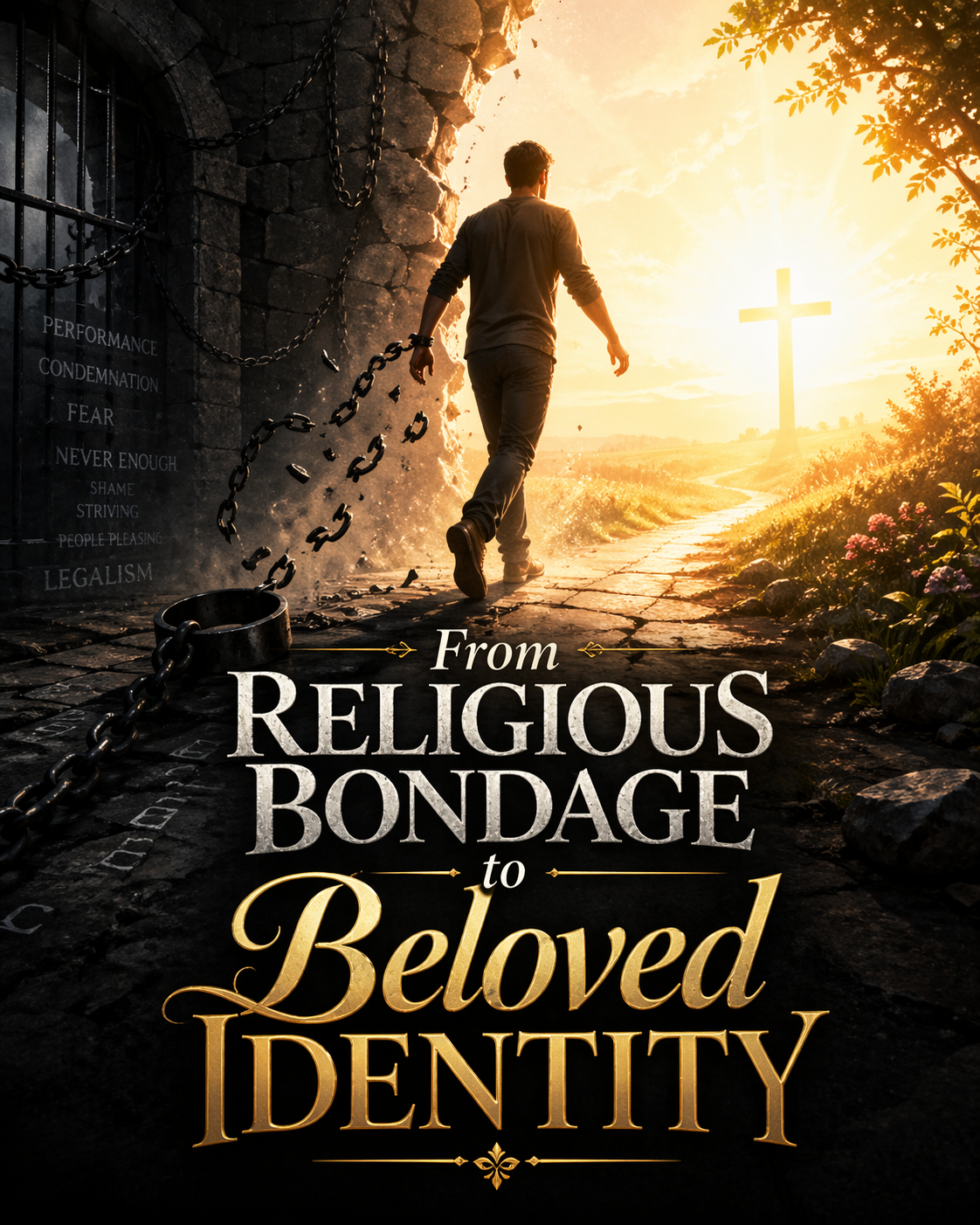
The spirit of religion is the nastiest of them all because it does not merely torment the mind or oppress the emotions; it seeks to reshape the believer’s image of the Father. It tells you that God is perpetually disappointed, reluctantly tolerant, and forever measuring your spiritual value by your latest success or failure. It teaches you to labor like a servant in the house while never resting as a son in the Father’s embrace. It will let you preach, study, argue, labor, and even suffer, so long as you never come into the freedom of beloved identity. But Scripture does not say we have received the spirit of bondage again to fear; it says we have received “the Spirit of adoption, whereby we cry, Abba, Father” (Romans 8:15).

Beloved identity is terrifying to the spirit of religion because once a son knows he is loved, he no longer needs to perform for affection or strive for approval. The orphan heart says, “I must become enough,” but the beloved heart says, “In Christ, I am received, and from that place I now obey.”

The freedom itself came instantly in 2016 through a face-to-face encounter with the Lord. In that holy moment, the chains were broken, the lie was exposed, and the power of those spirits lost their grip under the weight of His presence. What years of hidden bondage had built, one encounter with the living Christ shattered in a moment, because whom the Son sets free is free indeed (John 8:36). There are deliverances that unfold slowly, but this freedom came as a decisive act of the Lord, sudden, undeniable, and deeply personal. He did not merely inform me that I was bound; He met me and broke what had held me. It was not theory, and it was not emotionalism, but a real invasion of divine mercy into the history of my soul. In that encounter, the prisoner in me met the Deliverer face to face.

Yet while the freedom was instant, the revelation of that freedom, especially the revelation of beloved identity, has been a nine-year unfolding that is still continuing even now. The chains broke in a moment, but the renewing of the mind, the healing of perception, and the deeper understanding of what it means to live as one accepted in the Beloved has been a sacred process. “Behold, what manner of love the Father hath bestowed upon us, that we should be called the sons of God” (1 John 3:1), and I am still learning the depths of that love.

The Cross did not merely forgive my sin; it shattered the lie that I had to spend my life proving my worth, and ever since then Holy Spirit has been teaching me how to live from sonship rather than striving. So this testimony is not merely about being delivered from the spirit of religion, rejection, pride, and the orphan spirit. It is about being brought into the lifelong unfolding revelation that the Father is not holding me at a distance behind walls of rejection, but has drawn me near in Christ, called me beloved, and is still teaching my heart how to live free.

I wish that school were still in operation, though it closed down during the Covid season, because there is now a part of me that would gladly return, not to win an argument, but to reveal the love I wish I had carried back then. I would not go back to prove them wrong, nor to display what I believed I knew, but to lay before them the same mercy that Christ has so patiently laid before me.

Where I once came armed with a wall of defense, I would now desire to come clothed in humility, tenderness, and truth wrapped in love. The heart of Christ is not driven by the need to conquer men, but by the desire to open blind eyes and call hearts into freedom. I look back now and realize that while I may have had truth in certain areas, I did not yet carry it with the fragrance of the Father’s heart. And if given that opportunity today, I would count it an honor to return and share not only truth more clearly, but love more deeply.

Stay tuned, the journey continues…..

— Dr. Russell Welch

Dr. Russell Welch is a published author, prophetic teacher, apostolic builder, author, and founder of faith-driven publishing and media initiatives. He is known for crafting bold, Kingdom-centered messages that call the Ecclesia into maturity, doctrinal clarity, and governmental authority. With a passion for equipping the Remnant and honoring generational legacy, Dr. Welch writes and teaches at the intersection of Scripture, history, and spiritual governance, challenging believers to live as sons and daughters who legislate Heaven on earth through truth, holiness, and unwavering fidelity to Christ.

Be sure to check out his book: The Consecrated Firebrand: A Warrior’s Guide to Holy Living, available exclusively on Amazon … here

Amazon Author Page


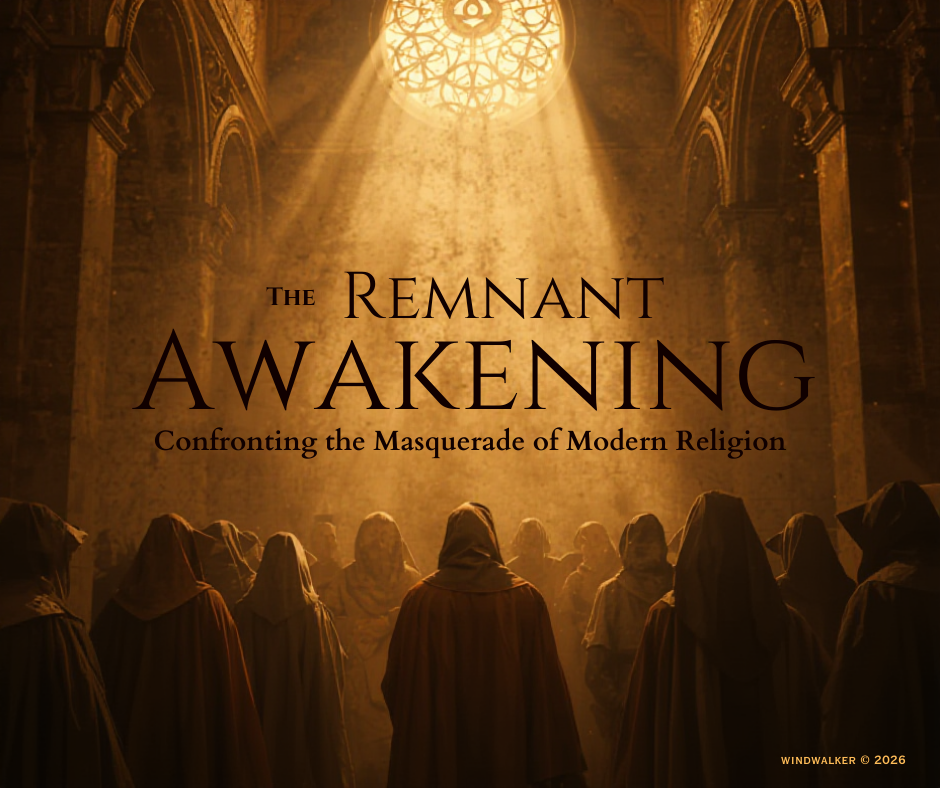
A fierce awakening is shaking the foundations of the modern Church, for the Lord is exposing the ancient masquerade that has long impersonated His voice. The spirit of religion has always feared the rise of true sons and daughters because once they awaken, its reign collapses instantly. It hurled its fiercest weapons at Jesus—legalism, accusation, manipulation, and the machinery of religious power—yet “having disarmed principalities and powers, He made a public spectacle of them” (Colossians 2:15). Leonard Ravenhill once said, “The only reason we don’t have revival is because we are willing to live without it,” and that indictment now confronts a generation lulled by religious performance. But the Remnant is no longer willing to live without the fire of God.

This spirit has not merely opposed the Church; it has counterfeited it with frightening precision. It has built sanctuaries that resemble theaters more than temples, pulpits that resemble stages more than altars, and ministries that resemble corporations more than Kingdom outposts. It has trained leaders to become performers, shepherds to become celebrities, and congregations to become consumers. Mario Murillo has warned, “The greatest threat to the Church is not persecution—it is imitation,” and the imitation is now being unmasked. Scripture commands, “Do not be conformed to this world, but be transformed by the renewing of your mind” (Romans 12:2), yet religion has conformed many to the world’s methods while denying the Spirit’s power.

The Remnant sees through the façade with eyes sharpened by the Spirit. They have grown weary of fog machines that replace the cloud of glory, weary of choreographed worship that replaces surrendered hearts, weary of polished sermons that replace prophetic truth. They recognize that the spirit of religion has offered a Christianity that requires no repentance, no consecration, no cross, and no fire. David Wilkerson once said, “A gospel that does not confront sin is not the gospel,” and the Remnant refuses to settle for a message that comforts the flesh while starving the spirit. They hunger for the Word that pierces soul and spirit, dividing joint and marrow.

The shaking of the last three years has been a divine intervention, a mercy disguised as disruption. The Lord has been dismantling the altars of man-made religion, exposing motives, revealing cracks, and calling His people back to the ancient paths. Ravenhill once thundered, “The Church used to be a lifeboat rescuing the perishing; now she is a cruise ship recruiting the promising,” and the shaking has revealed just how accurate that warning remains. But the shaking is not meant to destroy—it is meant to awaken. It is the trumpet blast calling the Remnant to rise.

The Remnant Ecclesia is emerging from this shaking with a resolve that cannot be manipulated. They are stepping out of the tombs of tradition, shaking off the grave clothes of performance, and walking in the authority of true sonship. They are rediscovering the power of prayer that shakes nations, the authority of fasting that breaks chains, and the fire of holiness that exposes darkness. Mario Murillo declared, “When the Church stops playing games, the fire of God will fall,” and the Remnant has stopped playing. They are contending for the faith that turns the world upside down.

Heaven is not silent in this hour. The Host of the Heavenly Armies has been dispatched to partner with the Remnant, to war against every stronghold of religion, deception, and spiritual apathy. The Captain of the Lord’s Armies is once again standing with drawn sword, confronting every structure that has exalted itself against the knowledge of God. The cry of Heaven is reverberating across the nations: “Let My people go.” This is not a suggestion; it is a divine command.

This awakening is not fueled by rebellion but by revelation. The Remnant is not rejecting the Church—they are restoring it. They are not abandoning leadership—they are demanding purity. They are not despising order—they are rejecting manipulation. Wilkerson once said, “God’s greatest judgments begin in His own house,” and the Remnant understands that judgment is not destruction but purification.

The Remnant is rising with a hunger that cannot be satisfied by entertainment. They long for the presence of God more than the approval of men, for the fire of the Spirit more than the lights of the stage, for the truth of Scripture more than the applause of crowds. They are returning to the secret place, where the fear of the Lord is restored and the voice of God is heard. Ravenhill once asked, “Is the world crucified to you, or does it fascinate you?” and the Remnant answers with consecration. They are crucified to the world and alive to Christ.

This awakening is producing a generation that refuses to bow to the idols of modern religion. They are not impressed by charisma—they are drawn to character. They are not moved by performance—they are moved by Presence. They are not captivated by personalities—they are captivated by Jesus. Mario Murillo has said, “The moment you stop needing the approval of man, you become dangerous to hell,” and the Remnant has become dangerous indeed.

And now, to those who feel the stirring in their spirit—those who have grown weary of empty religion, hollow rituals, and powerless Christianity—hear this invitation: the door to awakening stands open. The Spirit of God is calling you out of the shadows of performance and into the light of identity. You were not created to be a spectator in the Kingdom; you were born to be a son, a daughter, a warrior, a priest. Shake off the chains that have held you. Step into the awakening that Christ purchased for you, for the same Jesus who defeated religion then is defeating it now in you.

— Dr. Russell Welch

Dr. Russell Welch is a published author, prophetic teacher, apostolic builder, author, and founder of faith-driven publishing and media initiatives. He is known for crafting bold, Kingdom-centered messages that call the Ecclesia into maturity, doctrinal clarity, and governmental authority. With a passion for equipping the Remnant and honoring generational legacy, Dr. Welch writes and teaches at the intersection of Scripture, history, and spiritual governance, challenging believers to live as sons and daughters who legislate Heaven on earth through truth, holiness, and unwavering fidelity to Christ.

Be sure to check out his book: The Consecrated Firebrand: A Warrior’s Guide to Holy Living, available exclusively on Amazon … here

Amazon Author Page