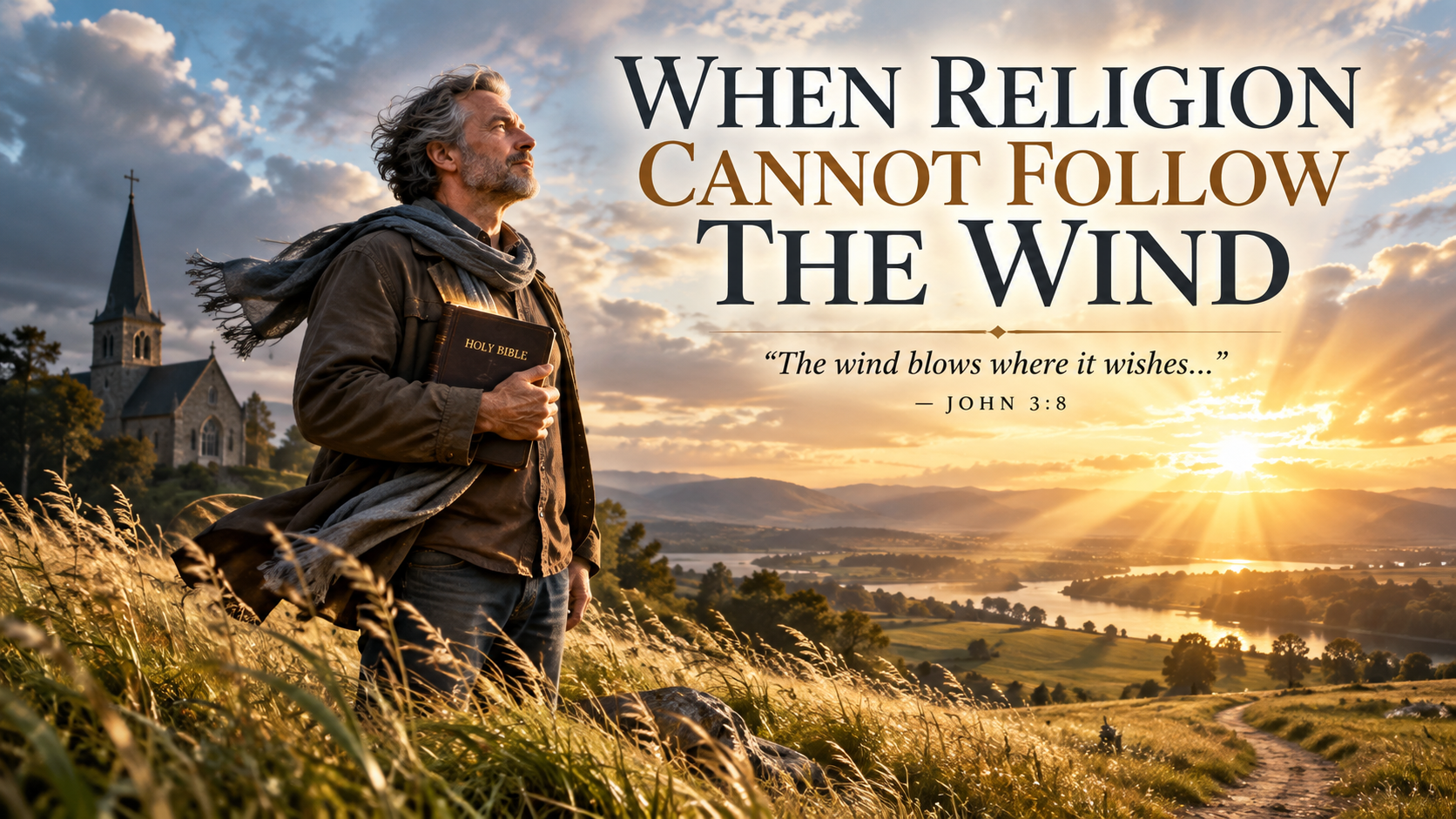
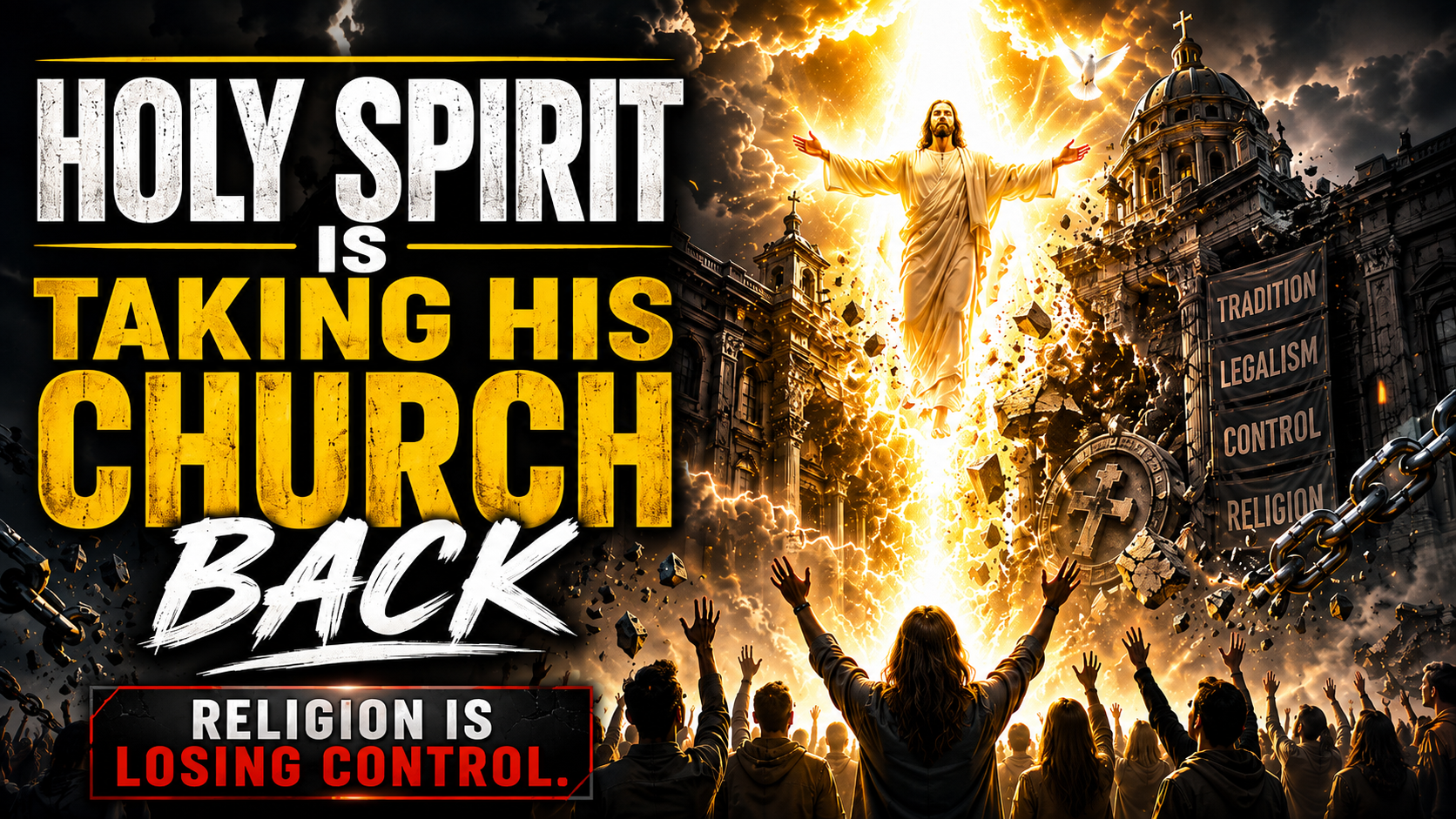
There is a profound difference between knowing how to function inside a religious system and knowing how to move with Holy Spirit. Religious systems thrive on predictability because predictability can be managed, scheduled, repeated, and controlled. Holy Spirit, however, is not subject to human management. Jesus made this unmistakably clear when He said, “The wind blows where it wishes, and you hear its sound, but you do not know where it comes from or where it goes. So it is with everyone who is born of the Spirit” (John 3:8). Spirit-born people are not called into chaos, but neither are they called to live within the suffocating boundaries of human control.
The Church has often become highly skilled at building structures that can continue functioning whether Holy Spirit is moving or not. Services can be timed, programs can be organized, sermons can be delivered, music can be performed, and calendars can remain full while spiritual sensitivity slowly diminishes. None of these things are inherently wrong, but they become dangerous when structure begins replacing dependence. The issue is not whether we have order, but whether our order still makes room for the One who is supposed to be leading us. A ministry can be organized and still be alive, but it can also become so organized that interruption by Holy Spirit feels inconvenient.
This is one of the reasons religious systems frequently struggle when God begins moving outside familiar patterns. When Jesus healed on the Sabbath, touched lepers, ate with sinners, spoke openly with women, challenged established interpretations, and refused to conform to the expectations of religious leaders, He was not rebelling against the Father. He was perfectly obeying the Father. The conflict existed because religious expectation had become more authoritative in the minds of men than the present movement of God. Jesus revealed the painful truth that people can become so committed to what God did yesterday that they resist what He is doing today.
That same danger remains with us. It is possible to defend a pattern so fiercely that we fail to recognize when the cloud has moved. Israel knew this tension well. In the wilderness, the people were not permitted to choose the timing of their movement. When the cloud lifted, they moved. When the cloud remained, they stayed. Their security was not found in having a predictable itinerary but in remaining aligned with the presence of God. The great challenge of Spirit-led living is that it requires continual attentiveness, because yesterday’s direction cannot replace today’s obedience.
This does not mean every sudden impulse should be labeled Holy Spirit. Spiritual maturity requires discernment, and discernment is formed through Scripture, prayer, submission, wisdom, and the fruit produced by what we believe we are hearing. Galatians 5:25 says, “If we live by the Spirit, let us also keep in step with the Spirit.” Keeping in step implies both movement and alignment. We are not running ahead of Him, and we are not standing still after He has moved. The mature believer learns to recognize His pace.
One of the clearest warning signs that religious structure has begun replacing spiritual dependence is when interruption becomes irritating. If Holy Spirit changing the direction of a service feels like a problem, we should ask who the service was truly built around. If God redirecting our personal plans creates resentment, we should ask whether surrender was ever more than a theological idea. If we cannot obey until every detail is explained, we may be depending more heavily on control than faith. The life of the Spirit constantly exposes our desire to know the entire route before taking the next step.
Jesus described new wine requiring new wineskins because some structures cannot carry what God is presently pouring out. The answer is not to despise structure, because Scripture itself reveals order, leadership, discipline, and accountability. The answer is to ensure that structure remains servant rather than master. Healthy structure protects what God is doing without attempting to control Him. Unhealthy structure eventually becomes an institution defending its own continuity.
Paul wrote, “Where the Spirit of the Lord is, there is liberty” (2 Corinthians 3:17). Biblical liberty does not mean lawlessness, emotionalism, or spiritual recklessness. It means freedom from the bondage of human systems that attempt to replace the living leadership of God. Holy Spirit never leads us away from the character of Christ or the authority of Scripture. He does, however, regularly lead us beyond human expectations.
The early Church learned this quickly. Philip was experiencing fruitful ministry in Samaria when the angel of the Lord directed him toward a desert road. From a human perspective, leaving a place of visible success for an isolated road would have seemed irrational. Yet on that road he encountered the Ethiopian official whose conversion would carry the Gospel far beyond what Philip could have planned. Spirit-led obedience often looks inefficient until we understand the assignment hidden inside it.
Peter experienced something similar in Acts 10. His religious formation had given him clear categories concerning who was clean and who was unclean. Then God interrupted those categories through a vision and directed him to the household of Cornelius. Peter had to choose between defending his inherited understanding and obeying the fresh direction of God. His obedience opened a historic door for the Gospel among the Gentiles. The wind was blowing beyond the boundaries Peter had known.
There are moments when Holy Spirit will lead us into things that make perfect sense, and there are moments when obedience will precede understanding. Abraham left without knowing exactly where he was going. Philip ran toward a chariot before knowing what conversation awaited him. Paul was forbidden from entering certain regions before being redirected toward Macedonia. None of these men were spiritually unstable; they were spiritually responsive.
That distinction matters. Spirit-led people are not flighty people who constantly abandon responsibility because they claim God told them something new. Stability and sensitivity belong together. True responsiveness to Holy Spirit produces deeper obedience, greater humility, stronger character, and increasing conformity to Christ. If what we call spiritual leading repeatedly produces confusion, pride, broken commitments, or disregard for Scripture, we should question the source.
One of the tragedies of religious culture is that people can learn how to perform spiritual activity without spiritual dependence. We can learn when to lift our hands, when to say amen, when to pray loudly, when to quote Scripture, and how to sound spiritually mature. Yet none of those behaviors prove that we are presently listening. The question is not whether we know the language of the Spirit, but whether we still recognize His voice.
The remedy is not rebellion against all tradition. Some traditions carry wisdom, continuity, and testimony from generations of faithful believers. The remedy is refusing to allow tradition to become untouchable. Jesus said that men could make the Word of God ineffective through their traditions when those traditions became more authoritative than obedience. Every structure, method, and ministry pattern must remain subject to the Lordship of Christ.
This begins personally before it ever becomes institutional. We should regularly ask whether there are places in our lives where routine has replaced relationship. Have we become so familiar with our devotional pattern that we no longer expect Holy Spirit to speak? Have we become so committed to our ministry calendar that there is no room for divine redirection? Have we mistaken predictability for maturity?
A genuinely Spirit-led life requires surrender because surrender removes our demand to control the outcome. Holy Spirit may lead us to stay when we want to leave, speak when we would rather remain silent, wait when we are ready to move, or move when we are comfortable remaining where we are. The issue is never novelty for novelty’s sake. The issue is obedience.
The remnant the Lord is raising in this hour cannot be governed primarily by religious momentum. Yesterday’s encounter cannot substitute for today’s communion. Yesterday’s strategy cannot automatically determine today’s assignment. Yesterday’s word cannot become an excuse for ignoring what Holy Spirit is presently emphasizing. We honor what God has done while remaining available for what He desires to do next.
There is a generation of believers who are learning again what it means to be moved by the impulses of Holy Spirit. They are not rejecting Scripture, order, or accountability. They are rejecting the idea that human control is the same thing as spiritual maturity. They want to become a people who are deeply rooted in truth and yet responsive enough to move when the Wind begins to blow.
That is the heart behind my book, Spirit Wind People: Those Who Are Moved by the Impulses of Holy Spirit. It is an invitation to move beyond religious predictability and into the biblical reality of a life genuinely led by the Spirit of God. If you sense Holy Spirit calling you into deeper sensitivity, obedience, and surrender, this book was written to help you explore what it means to become one of those who truly follows the Wind.
Stay tuned, the journey continues…..
A voice of fire to the Remnant, — Dr. Russell Welch
Dr. Russell Welch is a published author, prophetic teacher, apostolic builder, and founder of faith-driven publishing and media initiatives. His ministry carries a strong call to equip the Ecclesia for maturity, biblical clarity, spiritual discernment, and Kingdom assignment. Through his writing and teaching, he brings together Scripture, Church history, theology, and spiritual governance while challenging believers to move beyond religious tradition and into the mature life of sons and daughters who are led by Holy Spirit, established in truth, and wholly surrendered to Jesus Christ.
At the heart of this ministry is a burden to prepare and equip the Lord’s Remnant—to awaken identity, restore biblical order, strengthen spiritual maturity, and help believers recognize the assignments God has placed before them. The vision is not simply to produce messages, books, or media, but to help form a people who carry the character of Christ, hear the voice of Holy Spirit, and faithfully advance the Kingdom of God wherever the Father sends them.
To learn more about Remnant Warrior Ministries, the vision, and the assignment of the Remnant, visit:
There is a danger in awakening if awakening becomes the destination. We can become increasingly aware of what is wrong around us, increasingly discerning of the condition of the Church, increasingly troubled by the direction of the culture, and yet never become the people God awakened us to become. Awareness is not maturity. Discernment is not obedience. Revelation that never becomes transformation can leave a believer informed while remaining largely unchanged.
The trumpet of God does not sound merely to make sleeping people aware that they have been asleep. It sounds because there is an assignment waiting on the other side of awakening. Holy Spirit awakens us so that He can form us, and He forms us so that He can entrust us with His purposes in the earth. Awakening must therefore become formation, formation must become obedience, and obedience must eventually become assignment.
This is where the Remnant must resist the temptation to define itself merely by what it sees wrong in others. The Remnant is not called to become an angry reaction to a compromised culture or a passive Church. We are called to become a people whose lives have been shaped by the presence of God, governed by Holy Spirit, anchored in the Word, and made trustworthy enough to carry the heart of the King into the places He sends us.
THE SECRET PLACE MUST TRAVEL WITH US
The Secret Place was never meant to become a hiding place from assignment. Psalm 91 speaks of dwelling in the secret place of the Most High. Psalm 27 reveals the heart that seeks the face of God. John 15 calls us to abide in Christ. These passages do not describe temporary spiritual retreats from real life. They reveal a way of living in which the presence of God becomes the source from which everything else flows.
There comes a point in our formation when the Secret Place must travel with us. We cannot leave His presence in the prayer room and then step into our families, workplaces, communities, churches, and cities operating from anxiety, offense, ambition, or fleshly strength. The mature believer learns to carry the inward government of God into outward assignment.
That means we do not merely visit His presence when the battle becomes difficult. We learn to live from His presence before the battle ever begins. We do not enter prayer simply because we need an answer. We remain with Him because He is our life. The goal is not merely to have powerful encounters with God, but to become a people whose lives reveal that we have learned to dwell with Him.
PRAYER MUST EVENTUALLY BECOME OBEDIENCE
There is a form of prayer that becomes a substitute for obedience. We can pray for reconciliation while refusing to make the telephone call. We can pray for the poor while keeping our hands closed. We can pray for our cities while remaining disconnected from the people who live in them. We can pray for truth while refusing to speak truth when it costs us something.
Jesus told His disciples that the harvest was plentiful and the laborers were few. He instructed them to pray that the Lord of the harvest would send laborers into His harvest. Then in the very next movement of the Gospel, those disciples became part of the answer to their own prayer. The ones who prayed were the ones who were sent.
This is a lesson the Remnant must recover. The harvest often turns intercession into assignment. There are prayers God answers by changing circumstances, but there are also prayers He answers by changing the person who prayed them and then sending that person into the very situation they carried before Him.
We must therefore listen carefully when we pray. The answer may not always be something God does around us. Sometimes His answer is, “Go.”
FIRST THE ALTAR, THEN THE TERRITORY
The order matters. Before we talk about taking territory, confronting darkness, transforming culture, reforming the Church, or changing cities, the altar must first be established within us. God deals with the heart before He enlarges the assignment. He forms the messenger before He entrusts the message.
The first territory most of us will ever be asked to steward is our own inner life. Then our homes. Then our relationships. Then the places where God has actually planted us. It is easy to speak prophetically about nations while neglecting the person living across the street. It is possible to speak about spiritual authority over cities while refusing to practice integrity in our own homes.
The Remnant must become local enough that its theology leaves footprints. If our understanding of the Kingdom never touches our marriages, our finances, our neighborhoods, our churches, our workplaces, and the broken people sitting in front of us, then something is missing.
First the altar. Then the territory.
And when the altar has done its work, we do not enter territory as conquerors seeking recognition. We enter as servants carrying the presence, truth, compassion, and authority of Jesus Christ.
WE ARE RISING FOR PEOPLE, NOT AGAINST PEOPLE
The final harvest is not a slogan. It is people.
It is men and women who do not yet know Christ. It is the addicted person fighting through another night. It is the family coming apart behind closed doors. It is the wounded believer who no longer trusts the Church. It is the new disciple who needs someone patient enough to walk with them. It is the person who has fallen again and needs restoration rather than abandonment.
The Remnant must never become so fascinated with spiritual warfare that we forget what the warfare is ultimately about. We are not rising against flesh and blood. We are rising against the works of darkness that keep people blinded, bound, wounded, deceived, divided, and separated from the life of God.
The Secret Place is not an escape from people. Consecration is not spiritual self-improvement. Authority is not a platform for display. Warfare is not our identity. Ecclesia is not an exclusive club. Watchmanship is not permission to become a professional critic. Territory is not possession.
The harvest is people.
That truth must continually bring the Remnant back to the heart of Christ. If what we call revelation makes us contemptuous of people, something has gone wrong. If what we call discernment produces pride rather than compassion, we have left the heart of the King somewhere along the road.
THE REMNANT MUST RISE WITHOUT NEEDING THE SPOTLIGHT
Much of what Heaven calls significant will never trend.
A mother discipling her children may be accomplishing more for the Kingdom than someone speaking to thousands. A father restoring integrity to his household may be tearing down generational strongholds no platform will ever recognize. A recovering addict who turns around and walks patiently with another struggling person may be carrying resurrection life into a place few people will ever see.
An intercessor praying faithfully in obscurity, a teacher refusing to compromise truth, a business owner refusing corruption, a pastor caring for a small congregation with integrity, a believer serving quietly in a difficult neighborhood—these things matter in the Kingdom.
Heaven records obedience that algorithms never notice.
The Remnant must be willing to rise without applause, recognition, invitations, platforms, or titles. Our assignment is not to become visible. Our assignment is to become faithful. When God chooses visibility for an assignment, we receive it as stewardship. When He chooses obscurity, we remain just as obedient.
WE MUST RISE AS ECCLESIA
The Remnant is not being awakened into isolation. Christ is forming a people.
The biblical Ecclesia is not a collection of independent spiritual personalities each carrying their own private revelation. It is a covenant people gathered under the Lordship of Jesus Christ, governed by His Spirit, anchored in His Word, equipped for ministry, and sent into the world as a visible witness of His Kingdom.
We need one another. We need correction. We need accountability. We need the gifts Christ placed within His Body. We need apostles, prophets, evangelists, pastors, and teachers functioning according to His design. We need mature fathers and mothers. We need intercessors, servants, disciplers, watchmen, encouragers, teachers, and those who quietly carry burdens no one else sees.
The Remnant cannot call the Church back to Kingdom order while refusing order itself.
If we are going to represent the King, then we must learn to live as His people rather than merely as gifted individuals. The coming harvest will require more than platforms. It will require a functioning Ecclesia capable of receiving people, discipling them, healing wounds, confronting bondage, forming believers, and sending mature sons and daughters back into assignment.
THE FINAL QUESTION IS NOT WHETHER WE AGREE
There comes a point when another sermon will not answer the question. Another book will not answer it. Another prophetic word will not answer it. Another conference will not answer it.
The question becomes obedience.
We know enough to take the next step.
If God has called you back to the Secret Place, return. If He has exposed something on the altar, surrender it. If reconciliation is required, pursue it. If He has given you an assignment, stop waiting for perfect conditions. If He has called you to serve, serve. If He has placed a burden for people in your heart, move toward them. If He has called you to speak, speak with humility and courage. If He has called you to remain hidden for a season, remain hidden faithfully.
The Remnant must rise, but we must understand what that means. We do not rise from offense. We rise from the altar. We do not rise from rejection. We rise from beloved identity. We do not rise from speculation. We rise from the Word. We do not rise from emotional impulse. We rise under the government of Holy Spirit. We do not rise in isolation. We rise as Ecclesia. And we do not rise for self-importance. We rise for the harvest.
The King is not searching for celebrities. He is forming faithful witnesses.
Do not rise to become famous. Rise to become faithful. Do not rise to prove that you belong to some spiritual elite. Rise because the King has called. Do not rise against people. Rise against the works that keep people bound. Do not rise in your own authority. Rise under the authority of Jesus Christ.
Awakening was never the destination.
Awakening must become assignment.
CLOSING PRAYER
Father, thank You for awakening us, but do not allow us to become satisfied merely with being awake. Form us into people You can trust. Draw us deeper into Your presence until the Secret Place becomes the place from which we live. Search our hearts, establish Your altar within us, and remove everything that would corrupt the assignment You have placed before us.
Holy Spirit, govern us. Teach us to discern without becoming proud, to war without becoming fascinated with darkness, to speak truth without losing compassion, and to carry authority without abandoning humility. Show us where our prayers must now become obedience. Show us the people, places, and assignments You have already placed before us.
Jesus, form Your Ecclesia. Make us faithful watchmen, servants, disciplers, intercessors, teachers, fathers, mothers, and witnesses. Give us Your heart for the harvest. Keep us from seeking recognition when You have called us to faithfulness, and teach us to carry Your presence wherever You send us.
The harvest is before us. The King is on the throne. We answer Your call.
The Remnant must rise.
In the name of Jesus Christ, amen.
The trumpet has sounded, and now the Ecclesia must move. We were prepared to carry Heaven’s answer into it.
— Dr. Russell Welch A Watchman & Voice to the Remnant
Dr. Russell Welch is a published author, prophetic teacher, apostolic builder, and founder of faith-driven publishing and media initiatives. He is known for crafting bold, Kingdom-centered messages that call the Ecclesia into maturity, doctrinal clarity, and governmental authority. With a passion for equipping the Remnant and honoring generational legacy, Dr. Welch writes and teaches at the intersection of Scripture, history, and spiritual governance, challenging believers to live as sons and daughters who legislate Heaven on earth through truth, holiness, and unwavering fidelity to Christ.
The Lord’s Remnant Warriors: Awakened and Rising As God’s Chosen in the Final Harvest
THE REMNANT REVOLUTION CONTINUES! Explore our growing collection of Scripture-centered teachings dedicated to awakening, training, equipping, and raising up the Remnant. Discover A Remnant Revolution and subscribe to walk with us in this Kingdom assignment.
Jesus is not calling us to preserve a religious system, but to become the Spirit-governed, Christ-centered Ecclesia He intended from the beginning.
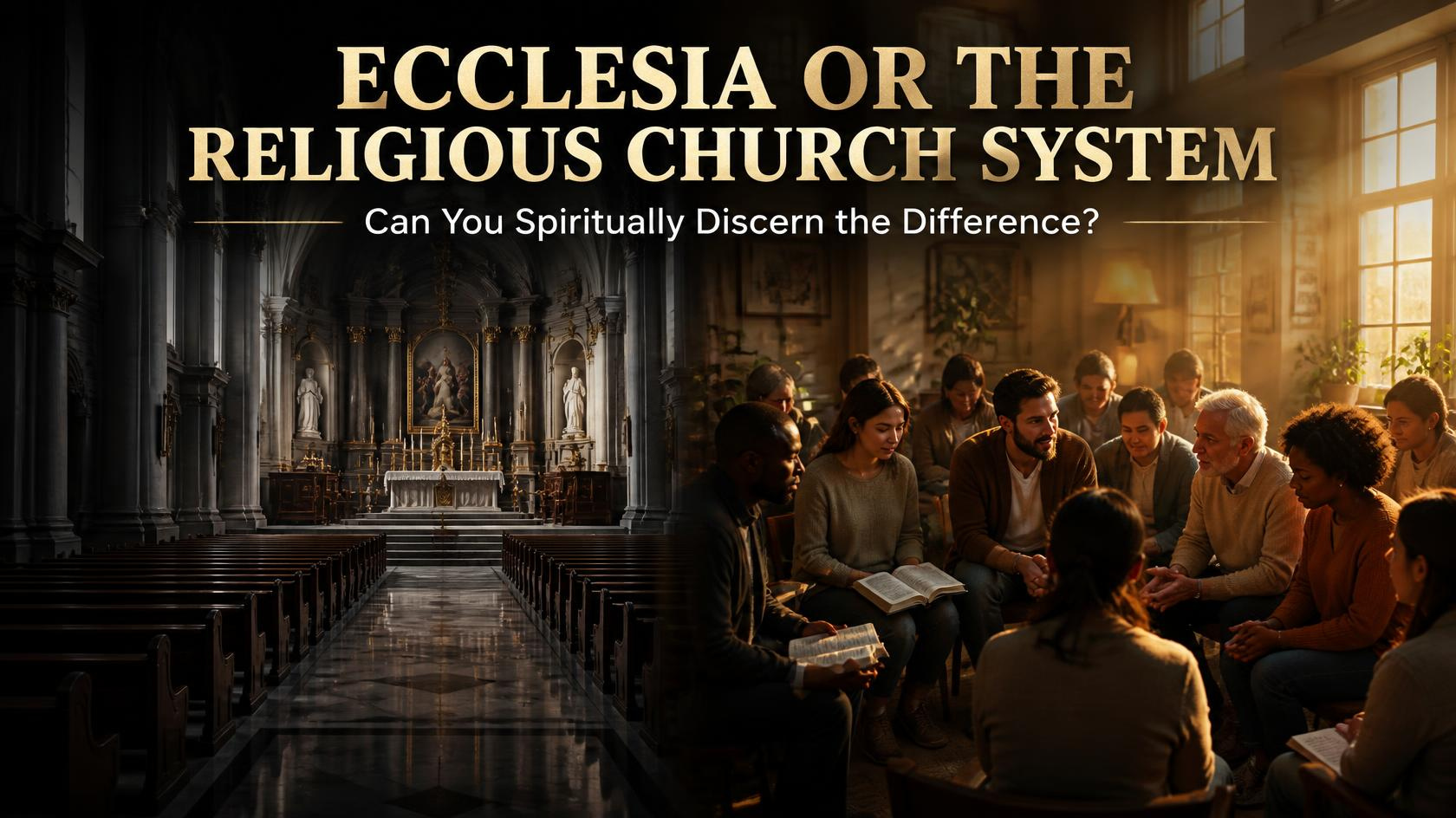
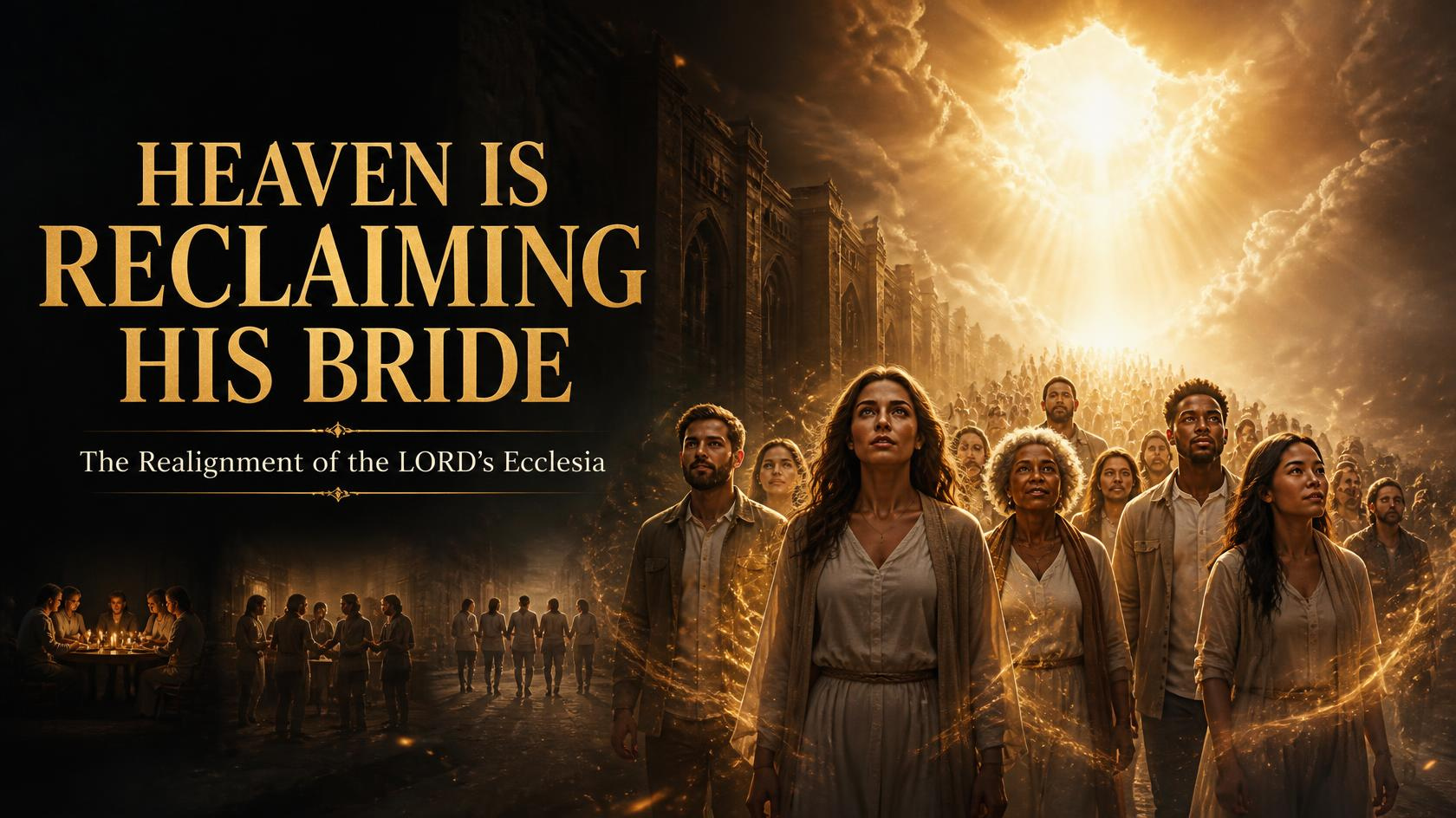
There is a question rising in the hearts of serious believers across the Body of Christ, and it is not a small one. Can we actually discern the difference between the Ecclesia Jesus is building and a religious system that bears His Name, uses Christian language, gathers people in church buildings, and yet no longer functions under His true headship? Scripture gives us every reason to believe that we can, and more than that, that mature believers should be able to recognize the difference.
Hebrews 5:14 says that “strong meat belongeth to them that are of full age, even those who by reason of use have their senses exercised to discern both good and evil.” The Greek word translated “exercised” is gymnazō, a word that speaks of training through repeated use. Discernment is therefore not spiritual suspicion, emotional reaction, or a mystical impression that is never tested. It is a developed spiritual capacity formed through Scripture, obedience, intimacy with Christ, and sensitivity to the Holy Spirit. Mature believers learn to distinguish truth from error, spiritual life from religious imitation, and the government of Christ from structures that may speak His Name while resisting His rule.
This question lies close to the heart of my book, The Father’s House: Restoring the Church to Her Apostolic Blueprint. The burden of that book is not simply that the modern Church needs improvement, better programs, stronger leadership, or more effective methods. The deeper issue is one of identity and order. What did Jesus actually intend His Church to be, and how far have we drifted from that design?
The Ecclesia Jesus Said He Would Build
Jesus declared in Matthew 16:18, “I will build my church; and the gates of hell shall not prevail against it.” The Greek word translated “church” is ekklēsia. In the broader Greek-speaking world, the word referred to an assembly or gathering of people who had been called together. It could even describe a civic assembly, as Acts 19 demonstrates. We should therefore be careful not to force every modern governmental concept into the lexical meaning of the word itself, but the context in which Jesus used it is profoundly significant.
Jesus was not announcing the creation of another religious institution. He was declaring that He would build a people who belonged to Him, confessed Him as Messiah, lived under His Lordship, received His authority, and represented His Kingdom in the earth. Matthew 16:19 immediately moves into the language of the keys of the Kingdom and binding and loosing, showing us that whatever authority the Ecclesia possesses flows from Christ Himself. He builds it, He defines it, He governs it, and He remains its living Head.
That is the first major line of discernment between the Ecclesia and a religious system. Buildings are not the problem, organization is not the problem, and leadership structure is not automatically the problem. The New Testament demonstrates order, recognized leadership, financial stewardship, discipline, teaching, mission, and accountability. The problem begins when the structure stops serving the life of Christ and begins demanding that the life of Christ serve the structure.
That is where a church can remain active while becoming spiritually hollow. It can continue to hold services, raise money, operate ministries, produce media, and maintain a recognizable Christian identity while slowly shifting from the headship of Christ to the preservation of the institution. From the outside, the difference may not always be obvious. Spiritually, however, the difference is profound.
Life, Fruit, and the Headship of Christ
Paul warned Timothy of those who would have “a form of godliness” while denying its power. His warning does not mean that every form is wrong. Every congregation develops habits, traditions, rhythms, and patterns of worship. The issue is whether spiritual life still fills the form or whether the outward shell remains after the substance has departed.
A congregation can possess excellent music, beautiful facilities, polished branding, sophisticated media, gifted speakers, and strong programming while failing to form people into mature disciples of Jesus Christ. In the same way, informality, emotional intensity, or rejection of traditional structure does not automatically prove that the Holy Spirit is present. The real question is whether Christ is forming His people. Are believers growing in holiness, repentance, prayer, biblical understanding, love, obedience, and spiritual maturity? Are the wounded being restored? Are believers learning how to minister rather than merely consume ministry? Is the presence of God producing transformation?
Jesus gave us another important measure when He said, “Ye shall know them by their fruits.” Biblical fruit includes transformed character, faithfulness, repentance, generosity, reconciliation, endurance, obedience, compassion, and mature disciples who become capable of strengthening others. A religious system can produce consumers who continually require another service, another conference, another message, and another experience. The Ecclesia, however, equips believers to walk with Christ, discern truth, pray, minister, resist evil, serve others, endure hardship, and function as mature members of the Body.
This is one of the central recoveries emphasized in The Father’s House. The Church was never designed to become a perpetual audience gathered around a gifted personality. The apostolic pattern is one of equipping, formation, spiritual family, and participation. Leaders serve the maturity of the Body, and the Body grows as every part functions under Christ.
Colossians 1:18 declares that Christ “is the head of the body, the church.” That is not ceremonial language. Jesus is not merely the founder whose Name remains on the institution while others control its actual direction. He is the living Head of His Body. Healthy spiritual leadership therefore never replaces His headship but serves it.
One of the most revealing questions any ministry can ask is whether Scripture is still permitted to correct the institution. Can the Word confront long-standing traditions? Can the Holy Spirit interrupt established plans? Can leadership acknowledge that a direction needs to change? When titles, reputations, finances, or institutional survival become untouchable, the structure begins to protect itself from the very Lord it claims to serve.
The Ecclesia must always remain correctable by the Word and governable by Christ.
Truth, Equipping, and Holy Spirit Governance
Paul warned Timothy that a time would come when people would no longer endure sound doctrine but would gather teachers who told them what they wanted to hear. That warning remains deeply relevant because there is constant pressure upon spiritual leaders to preach what keeps people comfortable rather than what brings them into maturity.
Grace must be preached, but repentance must also be preached. Love must be preached, but so must holiness. Identity in Christ must be taught, but so must obedience. The goodness of God must be proclaimed, but His righteousness and judgment cannot be removed from the message without distorting the Gospel.
A faithful Church cannot edit Jesus in order to retain an audience. Christianity becomes spiritually hollow when it is reduced to motivational encouragement supported by selected Bible verses. A religious system asks what message will preserve the crowd. The Ecclesia asks what the Lord has said and then seeks to proclaim it with courage, love, and integrity.
Ephesians 4:11–13 further reveals the difference. Christ gave apostles, prophets, evangelists, pastors, and teachers for the equipping of the saints, the work of ministry, and the building up of the Body of Christ. The ministry gifts were never intended to create a permanent divide between a gifted few and a passive congregation. Their purpose is to equip the saints so that the whole Body matures and functions.
The biblical pattern is therefore participatory. Leaders equip, believers mature, the saints minister, and Christ is glorified. When Christianity becomes little more than a weekly performance produced by professionals for spectators, we have moved far from the pattern described in Ephesians 4.
Ephesians 2:20 says that the household of God is built upon the foundation of the apostles and prophets, with Jesus Christ Himself as the chief cornerstone. In its immediate New Testament setting, this speaks especially to the foundational apostolic and prophetic witness through which the Gospel of Christ was established. Christians may differ over how apostolic and prophetic ministry should function today, but the central principle is unmistakable: the Church must remain grounded in the apostolic Gospel, prophetic Scripture, and Christ as the cornerstone.
This is also where Holy Spirit governance becomes more than a slogan. First John teaches that believers have received an anointing from the Holy One and that this anointing abides in them. These verses do not eliminate teachers, because John himself was teaching the believers to whom he wrote. His concern was deception, and his message was that believers who possess the Spirit of God are not spiritually helpless before falsehood.
At the same time, spiritual discernment cannot simply become a matter of saying, “I felt something was wrong.” Feelings can mislead us, personal wounds can distort our perception, and preferences can masquerade as revelation. The inner witness of the Spirit must remain anchored to Scripture, the character of Christ, and fruit that can be observed over time. Yet believers must not be trained to ignore the Holy Spirit simply because an institution appears respectable.
A church that speaks often about the Holy Spirit but never permits Him to convict, correct, direct, equip, or interrupt may acknowledge Him doctrinally while resisting Him functionally. A Father’s House cannot merely hold correct beliefs about the Spirit. It must remain responsive to His activity.
Religious Corruption and the Call to Restoration
Revelation 17 and 18 present one of Scripture’s most sobering portraits of corrupted power in the image of Babylon the Great. Throughout Church history, interpreters have understood Babylon in different ways. Some have emphasized imperial Rome, others have seen a broader picture of political, economic, and religious systems opposed to God, while still others understand the passage primarily in an eschatological sense.
For that reason, it is unwise to reduce Babylon to a simplistic label for every church structure we dislike. Nevertheless, the spiritual principle remains clear. Systems can become so corrupted by power, greed, idolatry, compromise, and opposition to God that His people must refuse participation in their sins.
Revelation 18:4 says, “Come out of her, my people, that ye be not partakers of her sins.” Separation from corruption is not abandonment of Christ’s Church. There are times when faithfulness to Christ requires refusing participation in structures that have repeatedly chosen self-preservation over obedience.
There is a profound difference between rejecting the Body of Christ and rejecting religious corruption. The answer, however, is not bitterness, isolation, rebellion, or the rejection of all spiritual authority. Those reactions simply create another form of disorder. The answer is restoration. The answer is biblical order. The answer is a return to the Father’s design for His household.
This is where The Father’s House becomes more than a title. The biblical Church is not merely an organization with religious branding. It is a household in which Christ is Head, the Holy Spirit governs, leaders equip, sons and daughters mature, gifts are activated, and every believer is called into participation.
Acts gives us glimpses of that life. Believers devoted themselves to the apostles’ teaching, fellowship, breaking of bread, and prayer. They cared for one another, shared generously, worshiped together, bore witness to Christ, and lived with a strong awareness of the Holy Spirit’s activity among them. Their life was not perfect, and the New Testament itself records conflict, immaturity, error, and correction, but the pattern still reveals a Church that functioned as a living spiritual community rather than a religious corporation.
The twenty-first-century Church does not need to reproduce every cultural feature of first-century Jerusalem, but it desperately needs to recover the spiritual DNA. The Church must again become a family rather than merely an audience, a people of presence rather than performance, a place of equipping rather than perpetual dependency, and a community governed by Christ rather than institutional preservation.
That is the heart of The Father’s House: Restoring the Church to Her Apostolic Blueprint. It is a call back to intimacy, holiness, spiritual family, biblical order, Holy Spirit governance, Kingdom authority, and the active participation of every believer.
The Discernment Begins With Us
Jesus said in John 10:27, “My sheep hear my voice, and I know them, and they follow me.” That statement takes us back to the heart of discernment because discernment grows through relationship. The more deeply believers know Scripture, the more readily they recognize distortion. The more intimately they know Christ, the more clearly they recognize what contradicts His character. The more consistently they obey the Holy Spirit, the more sensitive they become to His leading.
Spiritual maturity also frees believers from being overly impressed by appearances. A large crowd proves nothing, but neither does a small one. A beautiful building proves nothing, but neither does meeting in a home. A title proves nothing, but rejecting all titles proves nothing either. Signs and wonders alone are not the final test, and intellectual orthodoxy without spiritual life is not enough. The real issue is whether Christ is functioning as Lord, His Word is honored as truth, the Holy Spirit is accomplishing His work, biblical leadership is equipping rather than controlling, and believers are being transformed into mature disciples who bear the character and carry the mission of Jesus.
The question, therefore, is not simply whether we attend church. The deeper question is whether we are being formed as part of the Ecclesia Jesus Christ is building. That is a question that requires humility because true discernment must first examine us before it examines everyone else.
We should ask the Lord to train our spiritual senses and expose religious habits we may have mistaken for biblical Christianity. We should ask Him to reveal where tradition has replaced truth, where personality has replaced headship, where performance has replaced equipping, where control has replaced spiritual fathering, and where institutional preservation has replaced obedience. We must also be willing to ask what needs to change within us.
It is easy to identify religious systems when we are only looking outward. True reformation begins when the Holy Spirit is permitted to search the heart first.
Jesus is still building His Ecclesia, and the gates of Hades will not prevail against it. The great need of this hour is not merely for believers who can identify what is wrong with religious systems. It is for mature sons and daughters who are willing to become what Christ intended His Church to be: a living people under His headship, formed by His Word, governed by His Spirit, rooted in spiritual family, and equipped to carry His Kingdom into the world.
For those who sense that same burden, The Father’s House: Restoring the Church to Her Apostolic Blueprint develops this call much further. It examines the need for reformation, Holy Spirit governance, biblical leadership, spiritual family, the equipping of believers, and the recovery of divine order within the Church. It is not a call to abandon the Church, but to recover her.
The Father’s House: Restoring the Church to Her Apostolic Blueprint A Prophetic Call to Reformation, Revival, and the Return of Divine Order
Go Deeper: The Father’s House
The Father’s House: Restoring the Church to Her Apostolic Blueprint A Prophetic Call to Reformation, Revival, and the Return of Divine Order
The Father’s House is a call to believers, pastors, intercessors, reformers, and Kingdom builders who recognize that the Church cannot be restored merely through better programs or stronger institutions. It must recover the headship of Christ, the government of the Holy Spirit, biblical spiritual order, genuine family, the equipping of the saints, and the active participation of every believer in the life and mission of the Ecclesia.
This is not a call to abandon the Church. It is a call to recover her.
— Dr. Russell Welch A Watchman & Voice to the Remnant
About Dr. Russell Welch
Dr. Russell Welch, widely known as “Doc. Russ,” is an author, pastor, apostolic teacher, and founder of Remnant Warrior Ministries and Kingdom War College. He serves as Senior Pastor of Highway to Heaven Church in Jacksonville, Florida, where his ministry centers on the recovery of the biblical Ecclesia, spiritual formation, discipleship, prayer, spiritual warfare, and equipping believers for Kingdom service.
He is the author of numerous books and teaching resources addressing Scripture, theology, Christian discipleship, spiritual warfare, the Ecclesia, and the recovery of biblical Christianity. Through his writing, teaching, and ministry, Dr. Welch carries a continuing burden to call believers beyond religious Christianity into mature discipleship, deeper biblical understanding, intimacy with Christ, and active participation in the life and mission of His Ecclesia.
THE REMNANT REVOLUTION CONTINUES! Explore our growing collection of Scripture-centered teachings dedicated to awakening, training, equipping, and raising up the Remnant. Discover A Remnant Revolution and subscribe to walk with us in this Kingdom assignment.
“As My Father hath sent Me, even so send I you.” — John 20:21
In Part One, the trumpet sounded with a necessary warning: before the Remnant confronts the darkness around us, Holy Spirit must be permitted to confront everything within us that does not belong beneath the Lordship of Jesus Christ. Consecration must precede confrontation because spiritual authority cannot be safely carried by an ungoverned vessel. Purity, surrender, repentance, and obedience are not secondary matters for those who desire to stand in Kingdom authority; they are the foundation upon which that authority rests.
Yet consecration is not the destination. God does not cleanse a people merely so they can remain separated from the battle, nor does He sanctify them so they can become a spiritual class set apart from everyone else. He purifies them because He intends to send them, and He forms them because they must be capable of carrying His nature, His Word, and His authority into the places where darkness has established influence.
There is a danger in discussing the Remnant only in terms of separation, preservation, or distinction. Scripture certainly reveals that God preserves a faithful people in seasons of compromise. Elijah discovered that God had preserved seven thousand who had not bowed the knee to Baal, Isaiah spoke repeatedly of a remnant that would return, and Paul carried the principle into the New Testament when he declared that there remained a remnant according to the election of grace. However, biblical remnant theology never presents God’s faithful people as an isolated religious club congratulating itself for seeing what everyone else has missed.
The Remnant is preserved for purpose. God preserves a people because He intends to demonstrate His faithfulness through them, and He separates them from corruption so they can become useful to His Kingdom. He refines them because unrefined vessels cannot faithfully represent a holy King, and He awakens them because sleeping believers cannot fulfill active assignments in the earth.
The Remnant must therefore move beyond simply recognizing that something is wrong with the present condition of the Church. Discernment that never matures into obedience eventually becomes criticism, and revelation that produces no response becomes spiritual information rather than Kingdom transformation. If Holy Spirit truly allows us to see where compromise, weakness, confusion, or religious structure has displaced the government of Christ, then the question can no longer remain only, “What is wrong?” The greater question must become, “Lord, what are You requiring of us?”
That question moves us from consecration to commission.
A REMNANT UNDER GOVERNMENT
The greatest need of this hour is not louder Christianity, but governed Christianity. Jesus never commissioned His disciples to operate independently of Him, nor did He hand them spiritual authority and instruct them to use it according to personal instinct, anger, ambition, political frustration, or religious tradition. Authority in the Kingdom always remains under authority because all legitimate Kingdom authority flows from the rule of the King.
Jesus Himself demonstrated this pattern perfectly. He declared that the Son could do nothing of Himself except what He saw the Father doing, and He testified that He always did those things that pleased the Father. The One who possessed all authority lived in perfect submission, which immediately exposes the weakness of any understanding of spiritual authority that separates power from surrender.
Authority is not primarily demonstrated by how forcefully someone speaks, how many declarations they issue, how frequently they confront demonic powers, or how large their platform becomes. Kingdom authority is revealed through alignment with Christ. It is possible to speak loudly and still be ungoverned, to possess gifting and still lack maturity, or to carry revelation and still operate from pride, offense, insecurity, or self-will.
The centurion in Matthew 8 understood something many believers still fail to grasp. Before he spoke about exercising authority, he spoke about being under authority. He understood that legitimate authority functions because it is connected to a greater government, and Jesus marveled at his faith because the man recognized the operating structure of the Kingdom.
The Remnant cannot rise through spiritual independence. We do not need another generation of self-appointed apostles, unsubmitted prophets, angry watchmen, isolated intercessors, or believers who assume that receiving revelation removes their need for accountability, fellowship, humility, correction, and submission to Christ. Genuine authority never produces lawlessness because the deeper our authority becomes, the deeper our surrender must become.
The Remnant that rises in this hour must therefore be a governed people. The Word of God must govern our beliefs, Holy Spirit must govern our direction, the character of Christ must govern our conduct, and the Lordship of Jesus must reach into our speech, motives, relationships, finances, sexuality, ambitions, priorities, and assignments. If Jesus is truly Lord, His government cannot be confined to the portions of our lives we are comfortable surrendering.
THE REMNANT MUST RECOVER THE ECCLESIA
For too long, many believers have understood church primarily as a place they attend rather than a people Christ governs. The New Testament reveals something far deeper, because when Jesus declared, “I will build My church; and the gates of hell shall not prevail against it,” He was not describing a religious building, a weekly service, a denominational organization, or a Christian entertainment system. He was declaring His intention to build His Ecclesia, a covenant people gathered beneath His Lordship and entrusted with the witness and administration of His Kingdom.
This distinction matters because spectators attend religious events, while disciples receive assignments. Consumers evaluate whether the service satisfied them, whether the preaching held their attention, whether the music moved them, or whether the programs met their needs. Disciples ask different questions because their primary concern is whether Christ was obeyed, whether His people were equipped, and whether the Body is functioning according to the purposes of the Head.
Paul presents this clearly in Ephesians 4, where apostles, prophets, evangelists, pastors, and teachers are given for the equipping of the saints for the work of ministry and for the building up of the Body of Christ. The objective was never to create a few professional ministers surrounded by passive believers. The purpose was to mature the saints until the Body became capable of functioning according to Christ, who remains the Head of His Church.
The recovery of the Remnant must therefore include the recovery of the Ecclesia. We must rediscover that every believer is called into the life of the Body, that every genuine gift exists for the strengthening and maturity of others, and that no member was designed to function permanently in isolation. The Church was never intended to become a collection of independent personalities gathering periodically in the same room; it is a spiritual body whose members are joined together beneath the authority of Christ.
This is especially important in an age that celebrates individual platforms and digital influence. Technology can carry the Gospel across nations, and it has created extraordinary opportunities to teach, evangelize, encourage, and equip believers who might otherwise never encounter sound biblical instruction. However, technology can also create the illusion that consuming Christian content is equivalent to covenant fellowship.
Watching sermons is not the same as being joined relationally to believers who know us, walk with us, pray with us, challenge us, forgive us, correct us, encourage us, and stand beside us. The enemy understands the danger of a properly functioning Body, which is one reason isolation remains such an effective strategy. Separated believers are easier to discourage, easier to deceive, easier to offend, and easier to pull away from active assignment.
The rising Remnant must reject the lie that spiritual maturity means needing nobody. Mature believers understand precisely the opposite because they recognize that Christ intentionally joined His people together, not out of weakness, but because His fullness is revealed corporately through His Body.
FROM DISCERNMENT TO DEPLOYMENT
Many within the Remnant possess strong discernment. They recognize compromise, theological drift, cultural deception, manipulation, spiritual mixture, and the gradual erosion of biblical conviction. Such discernment is necessary, but discernment alone does not fulfill the Great Commission.
A watchman who identifies the enemy but never warns or prepares the people has not completed the assignment. In the same manner, a believer who continually identifies what is broken within the Church but never participates in rebuilding what has been damaged has confused observation with obedience.
Nehemiah provides a powerful pattern. When he learned that Jerusalem was in ruins, he did not merely analyze the destruction or develop a theology of broken walls. He wept, fasted, prayed, sought God, obtained permission, traveled to Jerusalem, examined the damage, gathered the people, organized the work, and rebuilt what had been destroyed. His response combined prayer with action, warfare with construction, and discernment with deployment.
This is where portions of the modern Remnant conversation must mature. We cannot become known primarily for cataloging everything that is wrong with the Church because Christ has called us to participate in what He is building. If discipleship has weakened, then disciples must be formed. If prayer has disappeared, the altar of prayer must be rebuilt. If biblical literacy has collapsed, the Word must be taught with clarity, depth, and faithfulness.
Where families are fractured, mature believers must help strengthen homes. Where young Christians have never learned spiritual warfare, they must be trained carefully and biblically rather than sensationally. Where wounded people have been neglected, the Church must become a place where truth, healing, accountability, forgiveness, and restoration are allowed to work together.
The same applies to communities marked by addiction, poverty, violence, fatherlessness, despair, and spiritual oppression. The Remnant cannot simply announce that darkness exists; we must seek Holy Spirit for the form obedience should take in those places and then begin walking it out with wisdom, courage, and compassion.
The Book of Acts did not advance because the apostles continually discussed the darkness of Rome. They proclaimed Christ, made disciples, healed the sick, confronted demonic oppression, cared for the vulnerable, planted communities of believers, appointed elders, corrected error, endured persecution, and continued carrying the Gospel wherever Holy Spirit sent them. They understood that darkness is displaced when the Kingdom of God becomes visibly present through obedient people.
The Remnant must recover that conviction.
THE BATTLE IS FOR PEOPLE, NOT AGAINST THEM
One of the most important corrections the Remnant must recover concerns the identity of the enemy. Paul makes the distinction unmistakable when he writes that we wrestle not against flesh and blood, but against principalities, powers, rulers of darkness, and spiritual wickedness in high places.
People are not the enemy. The deceived, the addicted, the prodigal, the atheist, the person trapped within false religion, the political opponent, the broken family member, and even those who ridicule, reject, or persecute believers remain human beings for whom Christ died. Spiritual warfare becomes dangerous when we forget that distinction.
This does not require the Church to become passive toward error. Jesus confronted hypocrisy, exposed deception, rebuked religious corruption, cast out demons, called sinners to repentance, and refused to compromise truth for the sake of public approval. Yet the same Jesus who confronted Jerusalem also wept over it, which means His confrontation was never separated from His redemptive purpose.
The moment spiritual warfare produces hatred toward people, contempt for the lost, enjoyment in another person’s downfall, or an appetite for condemnation, we have moved outside the character of the One whose authority we claim to represent. The weapons of our warfare are not carnal because the Kingdom we represent does not advance through fleshly hostility.
The Remnant must therefore learn how to confront darkness without becoming dark in the process. We must speak truth without surrendering love, exercise discernment without becoming suspicious of everyone, expose deception without celebrating another person’s collapse, and contend for righteousness without allowing anger to become our identity.
Jesus did not send us into the world merely to win arguments. He sent us to make disciples, which means even our confrontation must remain governed by the redemptive heart of God.
THE POWER OF GOD MUST RETURN TO THE CENTER
Paul warned Timothy about those who would possess a form of godliness while denying its power. That warning should trouble a Church that can conduct thousands of services every week while expecting very little supernatural intervention from God.
The early Ecclesia expected Holy Spirit to act because they understood that Christianity was not merely a theological system, but life under the active rule of the risen Christ. They prayed until buildings shook, laid hands upon the sick and expected healing, confronted demonic spirits and expected deliverance, asked for boldness under persecution and received it, and received prophetic direction concerning mission and ministry.
Holy Spirit interrupted plans, redirected journeys, exposed deception, distributed gifts, appointed leaders, and demonstrated the risen Christ through ordinary men and women who had yielded themselves completely to Him. None of this made Scripture unnecessary, because Holy Spirit inspired the Word and never contradicts what He has spoken. Neither did supernatural activity eliminate wisdom, doctrine, character, accountability, or order.
Power and truth were never intended to become enemies. The false choice between biblical depth and Holy Spirit power has weakened the Church for generations because we do not need powerless scholarship, nor do we need undisciplined spirituality detached from sound doctrine. We need the Word and the Spirit functioning together beneath the Lordship of Christ.
The Remnant must therefore refuse counterfeit manifestations while also refusing a Christianity that has explained away everything it cannot control. Paul declared that the Kingdom of God is not in word only, but in power, because the Gospel is not merely a message concerning a historical teacher; it is the proclamation of a risen, enthroned, and reigning King.
Jesus Christ is alive, and Holy Spirit is still empowering surrendered believers. Where Christ is genuinely present among His people, bondage is broken, lies are exposed, conviction produces repentance, wounds begin to heal, identity is restored, gifts awaken, callings become clear, families experience reconciliation, and people who once lived beneath the domination of darkness discover what it means to come under the government of another Kingdom.
THIS RISING WILL COST US SOMETHING
We must also reject romantic ideas about awakening because genuine reformation is rarely comfortable. When God restores truth, cherished traditions are challenged. When He restores holiness, compromise becomes uncomfortable. When He restores spiritual authority, false authority becomes threatened, and when He restores the priesthood of believers, spectators must become participants.
The restoration of prayer affects schedules, the restoration of discipleship demands relationships, and the restoration of Christ’s government requires personal ambition to die. This is why many desire revival until revival begins touching the structures, habits, preferences, and identities they intended to preserve.
We often want fire so long as the fire warms us but does not consume anything we wanted to keep. Yet the God who answered Elijah by fire did not send fire merely to create an impressive spiritual experience. The fire consumed the sacrifice and turned the hearts of the people back toward the Lord.
Every genuine awakening eventually confronts lordship because the central question is always the same: who governs us? Revival forces that question into every area of life because Christ does not come merely to inspire His people; He comes to rule them.
John the Baptist articulated the posture that must govern every genuine move of God when he declared that Christ must increase while he decreased. That is more than a statement about personal humility; it is the architecture of Kingdom advancement. Christ increases where self-government decreases, and His authority becomes visible where our ambition, pride, control, and hunger for recognition are brought beneath His Lordship.
The Remnant that rises in this hour cannot become obsessed with being called the Remnant. It must become obsessed with Jesus Christ.
FROM THE SECRET PLACE INTO THE HARVEST
There is a movement within genuine spiritual formation that must be understood correctly. God calls His people inward before He sends them outward because the secret place is where motives are purified, identity is established, hearing is sharpened, wounds are exposed, pride is confronted, and dependence upon Him becomes more than theological language.
Prayer must precede proclamation, and presence must precede deployment. Yet preparation was never intended to become a hiding place from assignment. Jesus called the disciples first to be with Him, but He also sent them out, which means both formation and mission belong within the pattern of discipleship.
Those who are sent without learning His presence often attempt Kingdom work through human strength, while those who continually remain in preparation without accepting assignment misunderstand why they were trained. The secret place is not an escape from the harvest; it is the place where we are prepared to enter it correctly.
The harvest requires laborers because there are homes waiting for reconciliation, addicts waiting to discover freedom, children growing up without spiritual fathers and mothers, believers starving for the Word while surrounded by religious noise, and entire communities where despair has become normal. There are prodigals who believe they have traveled beyond the reach of grace and nations filled with people who have heard Christianity discussed but have never encountered the transforming reality of Jesus Christ.
This is why the Remnant must rise. We do not rise to prove that we were right, demonstrate that we were more discerning, or construct another religious movement around ourselves. We rise because the King has given His people an assignment, and that assignment remains rooted in His compassion for those who are weary, scattered, deceived, wounded, and lost.
Jesus looked upon the multitudes and was moved with compassion because they were like sheep without a shepherd. His response was not contempt for their condition but a declaration that the harvest was plentiful and the laborers were few. The same harvest remains before us, and the question facing the Remnant is whether we will merely recognize the hour or become obedient within it.
Consecration must therefore lead to commission. Those who have been awakened must become available, those who have been trained must become deployable, and those who have received from God must be willing to pour themselves out for the sake of others. The teacher must teach, the evangelist must go, the shepherd must protect and nurture, the watchman must faithfully sound the alarm, and apostolic builders must build according to Heaven’s pattern rather than personal ambition.
The believer must mature into a disciple, and the disciple must eventually learn to make disciples. This is how the Remnant rises correctly: not through self-exaltation, isolation, anger, religious performance, or fascination with darkness, but through surrendered obedience beneath the Lordship of Jesus Christ.
Part One called the Remnant back to consecration. Part Two calls that consecrated people into commission. The King is still building His Ecclesia, the harvest remains plentiful, and the gates of hell have not received new authority over what Christ has determined to establish.
Jesus Christ still possesses all authority in heaven and earth, Holy Spirit still empowers surrendered believers, and the Gospel of the Kingdom still carries the power to transform human lives. The Remnant must rise under His authority, filled with His Spirit, governed by His Word, joined to His Body, formed in His presence, and sent into His harvest.
The trumpet has sounded, and now the Ecclesia must move. We were prepared to carry Heaven’s answer into it.
— Dr. Russell Welch A Watchman & Voice to the Remnant
Dr. Russell Welch is a published author, prophetic teacher, apostolic builder, and founder of faith-driven publishing and media initiatives. He is known for crafting bold, Kingdom-centered messages that call the Ecclesia into maturity, doctrinal clarity, and governmental authority. With a passion for equipping the Remnant and honoring generational legacy, Dr. Welch writes and teaches at the intersection of Scripture, history, and spiritual governance, challenging believers to live as sons and daughters who legislate Heaven on earth through truth, holiness, and unwavering fidelity to Christ.
The Lord’s Remnant Warriors: Awakened and Rising As God’s Chosen in the Final Harvest
THE REMNANT REVOLUTION CONTINUES! Explore our growing collection of Scripture-centered teachings dedicated to awakening, training, equipping, and raising up the Remnant. Discover A Remnant Revolution and subscribe to walk with us in this Kingdom assignment.
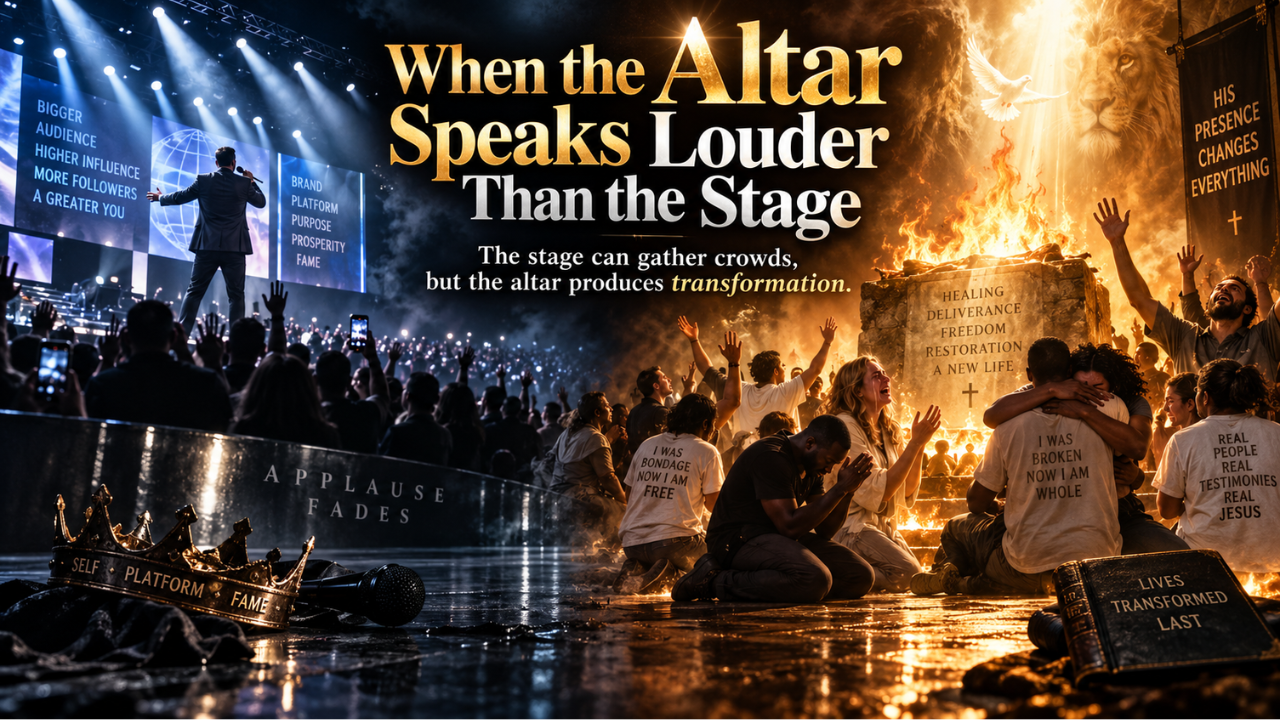
The stage may gather the crowd, but the altar carries the testimony.
The stages of men are filled with celebrities, personalities, and carefully crafted brands, but the altar of the Lord is becoming crowded with the testimonies of those who have truly been set free. While men have built platforms to magnify themselves, God is raising a people whose only boast is the blood of Jesus Christ and the mercy that pulled them out of darkness. The next move of God will not be carried by polished image, religious performance, or ministries built around human fame. It will be carried by the unmistakable evidence of transformed lives.
The current trend of selling the Gospel is about to run headlong into a remnant whose eyes burn with the same fire that burned in Jesus when He cleansed His Father’s house. The tables of religious commerce have stood too long. The Gospel has been packaged, marketed, and used to build empires around men, but the Spirit of the Lord is rising to expose what religion tried to hide. Religion has dealt its hand, and now Heaven is revealing that it never held the winning one. The Father is about to confront everything built in His name that does not reflect His heart.
What is coming will not be sustained by applause. It will be sustained by deliverance. Not by celebrity, but by testimony. Not by hype, but by holy fire. The altar of the Lord is filling up with the voices of those who have been rescued, healed, delivered, and restored. Addicts are going to testify. The broken are going to testify. Those who were bound by shame, religion, torment, perversion, fear, and despair are going to testify. And their testimony will carry more weight than the voices of a thousand polished personalities, because what God delivers, Hell cannot deny.
The stage can gather crowds, but the altar produces transformation. The stage can impress people for a moment, but the altar is where chains break, hearts melt, demons flee, and sons and daughters remember who they are. That is why the enemy has worked so hard to replace the altar with performance and presence with production. But the Lord is calling His house back to holiness, back to power, back to truth, and back to the fire of His presence.
Do not be surprised when Holy Spirit begins overturning tables again. Do not be shocked when the Lord disrupts systems that men thought untouchable. He is purifying His house, and He is raising up men and women who cannot be bought, seduced by recognition, or silenced by religious machinery. Their eyes are fixed on the King. Their hearts burn with zeal for His house. Their message is not self-promotion, but surrender. Their evidence is not branding, but breakthrough.
The hour is coming, and now is, when the altar will speak louder than the stage. The testimony of the redeemed will rise above the noise of celebrity religion. The fire is returning to the house, and it is coming through a remnant that still believes Jesus did not die to create a marketplace, but to redeem a people filled with His Spirit, His power, and His truth.
“For zeal for Your house has consumed Me.” John 2:17. “They overcame him by the blood of the Lamb and by the word of their testimony.” Revelation 12:11.
The Remnant was not refined merely to survive the changing world.
We were prepared to carry Heaven’s answer into it.
A voice of fire to the Remnant,
— Dr. Russell Welch
Dr. Russell Welch is a published author, prophetic teacher, apostolic builder, and founder of faith-driven publishing and media initiatives. He is known for crafting bold, Kingdom-centered messages that call the Ecclesia into maturity, doctrinal clarity, and governmental authority. With a passion for equipping the Remnant and honoring generational legacy, Dr. Welch writes and teaches at the intersection of Scripture, history, and spiritual governance, challenging believers to live as sons and daughters who legislate Heaven on earth through truth, holiness, and unwavering fidelity to Christ.
Go Deeper
Calling those who hunger to go deeper in the Spirit…
“For all who are led by the Spirit of God are sons of God.” — Romans 8:14
There is a life in God that many believers have heard about, preached about, and even prayed for — yet too few have learned how to walk in it daily.
It is the Spirit-led life.
This is not a mystical add-on for a handful of unusual Christians. It is not reserved for prophets, intercessors, pastors, or those with public ministry platforms. According to Scripture, being led by the Spirit of God is the evidence of mature sonship. It is the normal life of those who have been born from above. and you want to explore the biblical identity of the Remnant, its preparation, spiritual weapons, and victorious assignment more deeply, I invite you to continue the journey in the book.
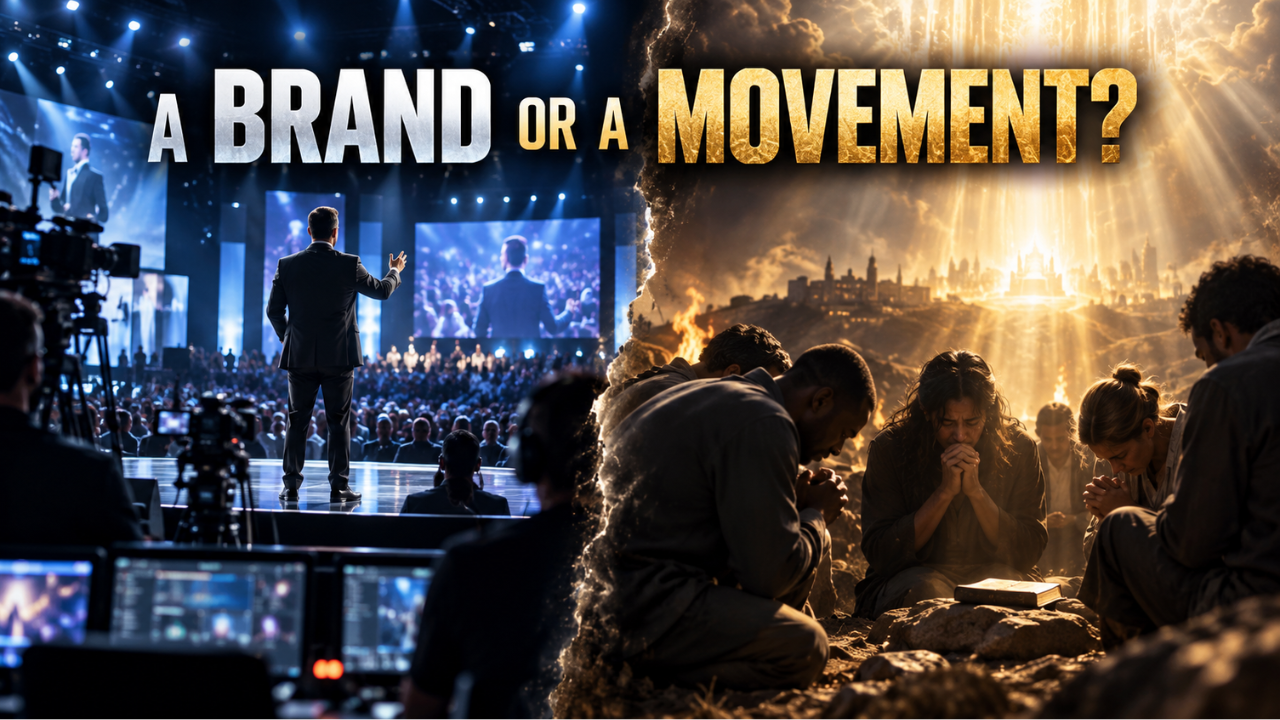
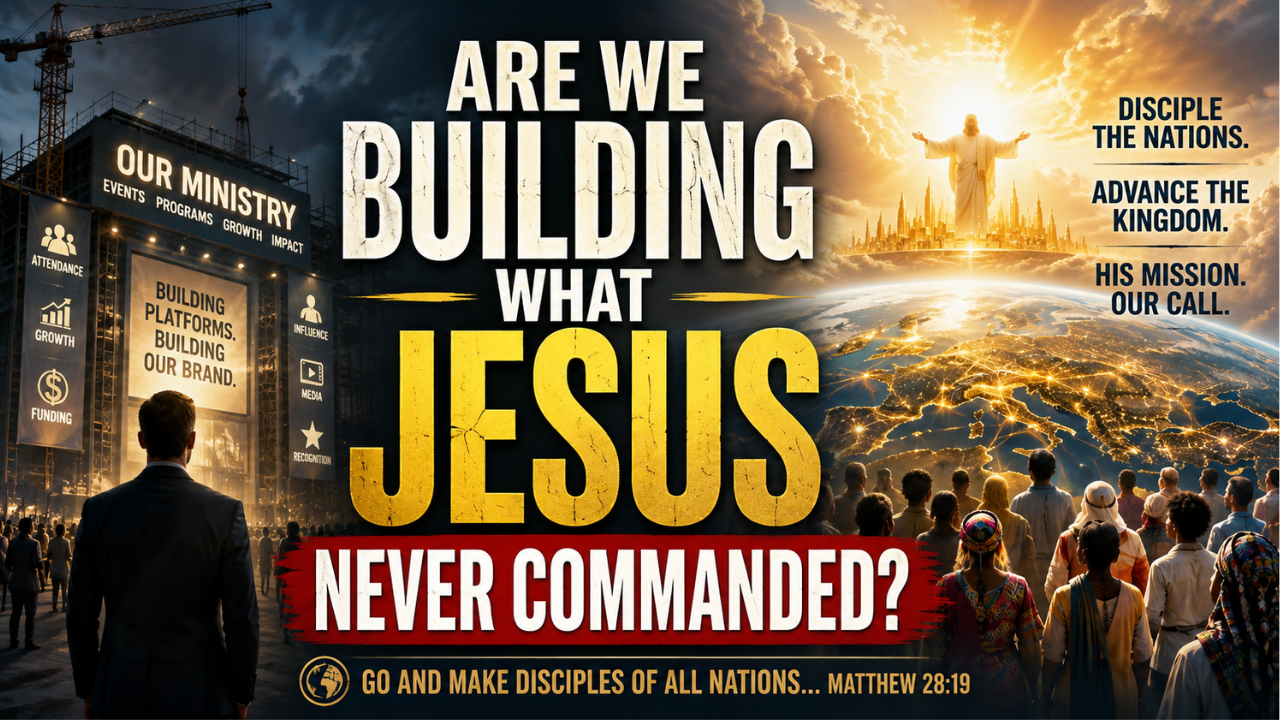
Many are laboring to build a brand around their ministry while, at the same time, the Lord is positioning His Ecclesia Remnant to carry something far greater than a recognizable name, a polished platform, or a growing audience. There is a difference between something that is built through human strength and something that is born in the fire of the throne room. One may attract followers, increase visibility, and expand influence, but the other carries the breath, weight, and authority of Heaven.
Zechariah 4:6 gives us the dividing line: “Not by might, nor by power, but by my spirit, saith the LORD of hosts.” That word was spoken in the context of building, so the issue was never whether the people of God were called to build. The issue was the source of the building. Is what we are creating being sustained by personality, promotion, money, strategy, and the strength of human hands, or is it flowing out of surrender, obedience, prayer, and the Holy Ghost?
That question deserves serious attention in this hour because, over the past decade, we have watched ministry culture become increasingly wrapped around personalities rather than Christ. In some places, ministries have grown into massive religious organizations requiring enormous amounts of money simply to sustain the machinery that has been created around them. The concern is not that a ministry is large, well funded, organized, or influential. The concern is what happens when the structure becomes so important that preserving the structure begins to overshadow the original assignment.
This is where conviction must search every one of us before judgment is ever aimed at someone else. The question is not, “How large has the ministry become?” The real question is, “Who is at the center of it?” Does the ministry still point people toward Jesus Christ, equip the saints, reach the broken, strengthen families, feed the hungry, advance the Gospel, confront darkness, and send people into their Kingdom assignments? Or has the organization itself become the thing that must now be constantly financed, protected, promoted, and preserved?
Jesus confronted this same danger when He entered the temple and declared, “My house shall be called the house of prayer.” What had been created for worship, communion, and the purposes of God had become entangled with religious commerce and human systems. The building was still standing, religious activity was still taking place, and people were still gathering, but Jesus exposed the deeper issue: the purpose of the house had been distorted.
That should sober us today. The Storehouse was never intended merely to sustain religious machinery while the saints remain unequipped, the poor remain overlooked, the broken remain untouched, and Jesus becomes secondary to the institution carrying His name. Kingdom resources should always serve Kingdom purposes, because whenever the resources begin serving the machine more than the mission, something has moved away from the heart of the King.
The great awakenings of the past remind us of this. Evan Roberts did not enter the Welsh Revival seeking to build a personal brand. His heart was marked by surrender, prayer, repentance, obedience, and a desire to see Christ glorified. The cry associated with his awakening was not, “Make me known,” but “O God, bend me.” That is the language of a surrendered vessel, and surrendered vessels are dangerous to Hell because they are no longer driven by the need to be seen.
Andrew Murray carried the same conviction when he emphasized the believer’s absolute dependence upon the living Christ. His ministry continually pointed people away from self-effort and toward the indwelling life of Jesus. That is a truth the modern Ecclesia desperately needs to recover, because once Christ becomes merely the subject of our ministry rather than the living Head of it, we begin trying to manufacture through effort what can only be produced through abiding.
The early Pentecostal generation understood this in another way. Men and women such as Smith Wigglesworth believed that a believer filled with the Holy Ghost could walk into a place carrying enough of God’s presence to disturb darkness, awaken faith, and create an atmosphere for transformation. The power was not in a stage, a logo, or a production system. The power was in a surrendered life carrying the Spirit of the Living God.
That is why Revelation 12:11 speaks so powerfully concerning the overcoming people of God: “And they overcame him by the blood of the Lamb, and by the word of their testimony; and they loved not their lives unto the death.” That verse describes a people who have moved beyond self-preservation. When a person has already surrendered reputation, recognition, applause, and personal ambition, the enemy loses many of the tools he normally uses to control them.
This is one of the reasons I believe the Remnant will increasingly look different from religious systems built around celebrity culture. You cannot intimidate someone who has already settled the issue of obedience. You cannot buy someone whose heart is anchored in the secret place. You cannot control someone through applause when they have learned to live before an Audience of One.
The Remnant is being trained to ask a different question. Instead of constantly asking, “How can I grow my ministry?” we must return to asking, “Father, what are You building, and where do You want me to lay down my life?” Those are two very different questions because one begins with our vision while the other begins with His.
Jesus said in Matthew 16:18, “I will build my church.” That statement places ownership where it belongs. The Ecclesia belongs to Christ, the assignment belongs to Christ, the people belong to Christ, the resources belong to Christ, and the glory belongs to Christ. We are not owners of the Kingdom; we are stewards within it.
This is why I believe the Holy Ghost is bringing a fresh conviction upon leaders and believers alike. We must allow Him to search the motive behind what we build, the method by which we build it, and the purpose for which we are sustaining it. If something has become more important than the presence of God, more expensive than the mission requires, or more centered upon a personality than the person of Jesus Christ, then we should have enough humility to place it back on the altar.
Psalm 127:1 says, “Except the LORD build the house, they labour in vain that build it.” That verse does not condemn labor; it confronts independent labor. We can work hard, plan carefully, build skillfully, and still discover that we have created something God never asked us to sustain.
The difference between a brand and a movement will become increasingly clear in the days ahead. What has been built primarily through human strength will require human strength to keep it alive. What has been built around personality will become vulnerable when the personality fades. What has been built through manipulation will require continued manipulation to sustain it. But what is truly born of the Spirit carries within it the breath of Heaven.
That is the kind of movement the Remnant must hunger for. Not something that makes our name known, but something that makes Jesus unavoidable. Not something that builds followers around a personality, but something that produces mature sons and daughters who know the voice of God, walk in obedience, carry His presence, and advance His Kingdom wherever He sends them.
So perhaps the question before all of us is not, “How successful has the ministry become?” Perhaps the deeper question is, “Does Jesus still have the freedom to interrupt it?” Can the Holy Ghost change the schedule, challenge the structure, redirect the resources, expose the motive, and call us back to the altar without us defending what we have built?
That is where true reformation begins.
The Remnant is not being prepared to protect a brand. The Remnant is being prepared to carry a move of God that was conceived in prayer, refined in fire, shaped through surrender, and empowered by the Holy Ghost. When Heaven breathes upon a yielded people, no marketing strategy can manufacture it, no religious system can contain it, and no power of darkness can stop it.
This is the hour to return to the altar, return to prayer, return to Scripture, return to the secret place, and return to the simplicity of Christ. Let every platform become a place where Jesus is exalted, every resource become a tool for Kingdom purpose, every leader become a servant again, and every ministry become willing to decrease so that Christ may increase.
That is the revolution I believe the Lord is awakening in His Ecclesia.
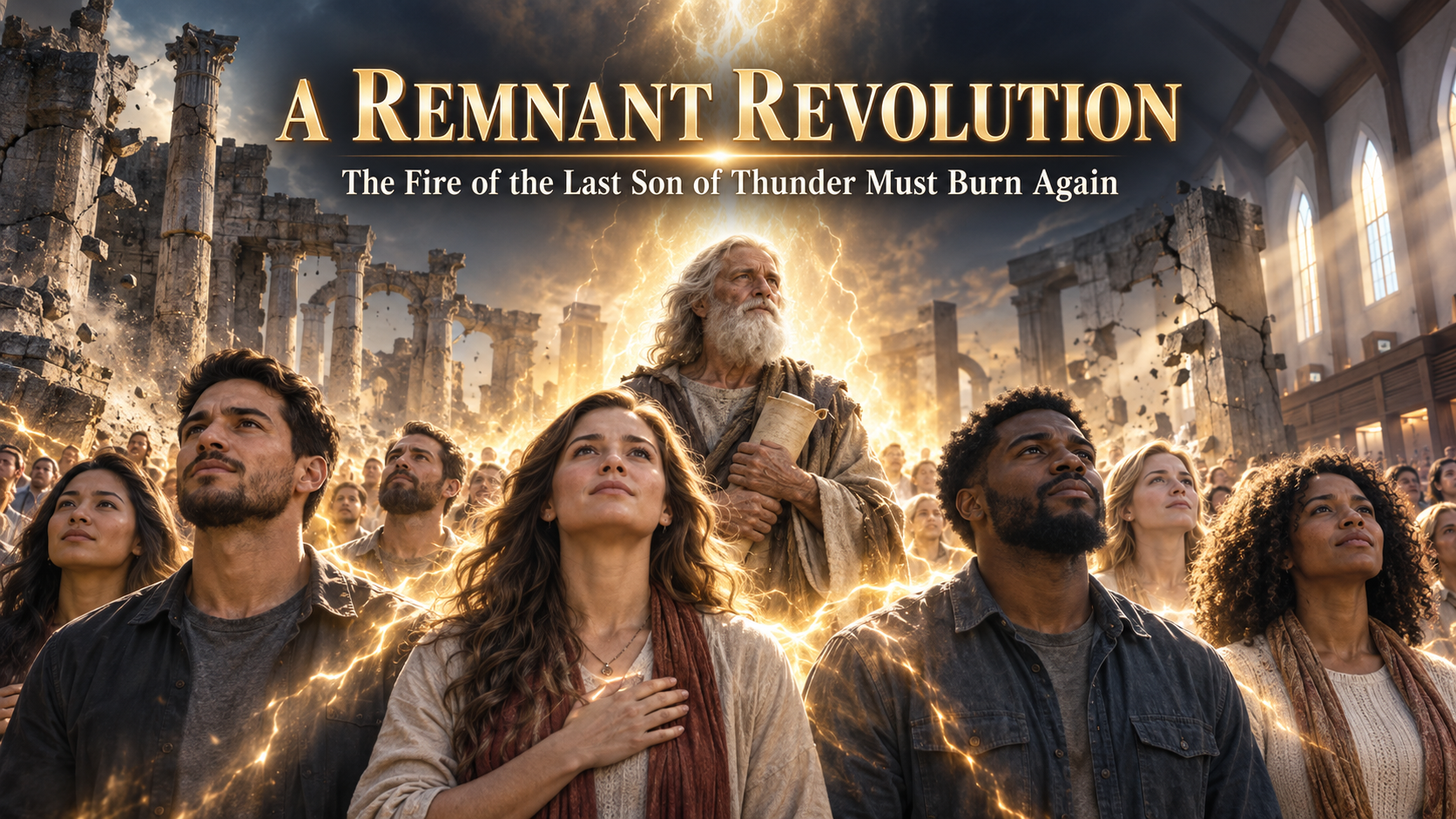
A Remnant Revolution.
Not built by might. Not sustained by human power. But carried by the Spirit of the Living God.
A voice of fire to the Remnant,
— Dr. Russell Welch
Dr. Russell Welch is a published author, prophetic teacher, apostolic builder, and founder of faith-driven publishing and media initiatives. He is known for crafting bold, Kingdom-centered messages that call the Ecclesia into maturity, doctrinal clarity, and governmental authority. With a passion for equipping the Remnant and honoring generational legacy, Dr. Welch writes and teaches at the intersection of Scripture, history, and spiritual governance, challenging believers to live as sons and daughters who legislate Heaven on earth through truth, holiness, and unwavering fidelity to Christ.
Go Deeper
This article develops themes from my book “Spirit Unchained: Reviving the Church’s True Identity”
In the final part of this series, we will confront the present-hour assignment of the R
THE REMNANT REVOLUTION CONTINUES! Explore our growing collection of Scripture-centered teachings dedicated to awakening, training, equipping, and raising up the Remnant. Discover A Remnant Revolution and subscribe to walk with us in this Kingdom assignment.
The Fire of the Last Son of Thunder Must Burn Again
The American Church does not need another religious trend, another polished production, or another carefully branded movement designed to make Christianity more acceptable to the surrounding culture. We need a Remnant Revolution—a holy uprising of surrendered sons and daughters who know they are loved by the Father, carry the fire of Holy Spirit, and refuse to surrender the authority of Jesus Christ to the systems and traditions of men.
This is the urgent message burning within this classic book, The Last Son of Thunder: John, the Beloved Identity, and the Fire That Outlived the Apostolic Age. It is not merely a historical examination of the apostle John. It is a prophetic summons to a generation that must rediscover what John discovered: the deepest fires of reformation do not flow from rejection, ambition, anger, or religious striving. They flow from a heart that has learned to rest against the breast of Jesus and receive its identity from His love.
John began as a son of thunder, but he became known as the disciple whom Jesus loved. His fire was not extinguished; it was purified. The young disciple who once wanted to call fire down upon a Samaritan village became the apostolic father who proclaimed, “Beloved, let us love one another.” Yet this transformation did not make John passive, weak, or tolerant of darkness. The man who wrote so tenderly about love also drew some of the clearest lines in Scripture between truth and deception, light and darkness, Christ and antichrist.
John’s thunder survived, but it no longer came from wounded zeal. It came from beloved identity.
The Fire That Outlived the Apostolic Age
John outlived the other original apostles. He witnessed the birth of the Ecclesia, the outpouring of Holy Spirit, the persecution of believers, the destruction of Jerusalem, and the rise of false teachings that threatened to corrupt the apostolic witness. He watched an entire generation pass from the earth, yet he continued carrying the testimony of the One whose glory he had personally beheld.
According to John chapter 1 verse 14, “The Word became flesh, and dwelt among us, and we saw His glory, glory as of the only begotten from the Father, full of grace and truth.” John did not preach a Christ he had merely studied. He testified of the Christ he had encountered, touched, followed, and loved. The truth he carried had been forged through relationship, suffering, endurance, and revelation.
Even exile could not extinguish that fire. Rome could isolate John on Patmos, but it could not separate him from the presence of the risen King. The empire attempted to silence his witness, yet Heaven opened before him, and the last son of thunder received the Revelation of Jesus Christ. What appeared to be abandonment became an apostolic encounter, and what looked like the end of his ministry became a prophetic message that continues to awaken the Church.
The fire upon John’s life outlived emperors, institutions, persecutions, and religious counterfeits because its source was not human enthusiasm. It was the presence of Jesus Christ revealed through Holy Spirit. That same fire still burns, and it is searching for a people who will carry it without compromise.
Beloved Identity Is Not Passive Christianity
Much of the American Church has misunderstood the love of God. We have sometimes reduced it to a message that comforts people without transforming them, affirms them without confronting darkness, and promises acceptance without calling for surrender. John knew nothing of such a powerless love.
The love John encountered was holy, consuming, and transformational. It brought him close enough to hear the heartbeat of Jesus, but it also carried him all the way to the foot of the Cross. While others scattered in fear, the beloved disciple remained near the suffering Christ. Beloved identity did not excuse John from sacrifice; it gave him the security to remain faithful when discipleship became costly.
This is the identity the Remnant must recover. We are not religious orphans desperately performing for Heaven’s approval. We are sons and daughters who have been received through Christ, filled with Holy Spirit, and commissioned to represent the King. When our identity is rooted in the Father’s love, we no longer need the applause of religious systems or the approval of the surrounding culture.
A believer who knows they are loved cannot easily be controlled by rejection. A disciple who has heard the heartbeat of Jesus cannot be satisfied with hollow religion. An Ecclesia established in beloved identity will carry both the tenderness of the Lamb and the authority of the Lion.
Darkness Has Found Hiding Places in Church Culture
There are dark and hidden places within American Church culture that must be exposed. These are not merely the failures of individuals; they are deeply rooted patterns that have been protected by tradition, personalities, platforms, money, fear, and institutional self-preservation.
We have sometimes built organizations around gifted personalities while neglecting the lordship of Christ. We have measured success by attendance, influence, buildings, budgets, and online reach while overlooking repentance, holiness, discipleship, spiritual maturity, and transformed lives. In too many places, the name of Jesus is proclaimed while His governing authority is quietly replaced by boards, brands, business models, religious hierarchies, and the ambitions of men.
This darkness is not overcome through carnal accusation, uncontrolled anger, or public destruction masquerading as discernment. It is exposed when the light of Christ shines through a people who have nothing to hide, nothing to prove, and nothing to protect except the purity of His name and the integrity of His house.
Ephesians chapter 5 verses 11 through 13 commands believers not to participate in the fruitless works of darkness, but to expose them. This exposure must begin in our own hearts before it reaches our pulpits, institutions, and ministries. The Remnant cannot confront corruption in the house while secretly protecting pride, jealousy, manipulation, impurity, or ambition within itself.
The revolution must begin at the altar.
Expose, Tear Down, and Re-establish
The prophetic assignment given to Jeremiah provides a clear pattern for genuine reformation. In Jeremiah chapter 1 verse 10, the Lord appointed him “to uproot and tear down, to destroy and overthrow, to build and to plant.” Heaven’s order matters. What is corrupt cannot be decorated; it must be uprooted. What has replaced the government of Christ cannot simply be renamed; it must be torn down so that what belongs to the King can be established.
The Remnant is not being raised to destroy the Body of Christ. We are being raised to confront those things that have wounded, weakened, divided, and misrepresented her. True reformers do not hate the Bride—they love her too much to remain silent while darkness stains her garments and religious systems restrain her Kingdom assignment.
We must expose every structure that places human authority above the voice of Holy Spirit. We must tear down doctrines that produce fear, bondage, spiritual infancy, and dependence upon religious gatekeepers. We must confront platforms that celebrate charisma without character, gifting without government, and influence without accountability.
But tearing down is only part of the assignment. Heaven is calling us to rebuild communities in which Jesus Christ is not merely mentioned but obeyed; where Holy Spirit is not scheduled but welcomed; where Scripture is not manipulated to preserve institutions but honored as the governing truth of God’s Kingdom. We must re-establish prayer, communion, discipleship, spiritual family, mature sonship, the ministry of every believer, and the uncompromised lordship of Jesus within His Ecclesia.
The Ecclesia Belongs to Jesus
Jesus never surrendered ownership of His Ecclesia to denominations, governments, corporations, celebrities, or religious professionals. In Matthew chapter 16 verse 18, He declared, “I will build My church; and the gates of Hades will not overpower it.” The Ecclesia belongs to Him, is built by Him, and receives its authority from Him.
The Church was never intended to become a passive audience gathered around a weekly performance. The Ecclesia is a called-out, Spirit-filled, Kingdom-governed people commissioned to represent Heaven within the earth. We have been sent to proclaim the Gospel, make disciples, heal the broken, confront darkness, deliver captives, care for the forgotten, and demonstrate the life and authority of the risen Christ.
First John chapter 3 verse 8 declares that the Son of God appeared “to destroy the works of the devil.” If we are His Body, then His assignment must become our assignment. We cannot remain content to manage religious services while addiction, deception, occultism, sexual bondage, fatherlessness, fear, and hopelessness consume the people outside—and sometimes inside—our buildings.
Christ must again become the functional Head of His Ecclesia, not merely the symbolic name attached to our ministries.
Remnant, Rise and Shine
Isaiah chapter 60 verses 1 and 2 declares, “Arise, shine; for your light has come, and the glory of the Lord has risen upon you. For behold, darkness will cover the earth and deep darkness the peoples; but the Lord will rise upon you and His glory will appear upon you.”
The command to arise was given in the presence of darkness. God did not tell His people to wait until conditions improved, culture became friendly, or opposition disappeared. He commanded them to rise because His glory had come upon them.
This is the hour for the Remnant to shine within the dark and hidden places of American Church culture. We must carry light into rooms where truth has been silenced, into systems where control has replaced covenant, and into pulpits where reputation has become more valuable than repentance. We must shine within our homes, communities, workplaces, and cities until the presence and character of Jesus become visible again.
This shining is not self-promotion. It is not the rise of another religious celebrity class. It is the emergence of surrendered vessels whose lives make Jesus impossible to ignore. The greatest threat to darkness is not a powerful institution—it is a consecrated Remnant filled with Holy Spirit.
The Return of Holy Thunder
The last son of thunder speaks to us across the centuries. John reminds us that intimacy and authority are not enemies, love and truth cannot be separated, and tenderness does not require compromise. The disciple who rested upon the breast of Jesus was also the apostle who looked into an open Heaven and beheld the glorified Christ with eyes like flames of fire.
The Remnant must carry that same balance. We must speak truth without becoming cruel, demonstrate love without tolerating darkness, exercise authority without seeking control, and pursue holiness without returning to religious bondage. Our thunder must flow from the heart of Jesus rather than the wounds of our past.
America does not need an angrier Church. It needs a purified Ecclesia. It needs sons and daughters whose zeal has passed through the fire of God’s love, whose identity has been secured in Christ, and whose voices carry the sound of Heaven rather than the noise of religious outrage.
The hour has come for a Remnant Revolution. Let every false foundation be shaken. Let every hidden work of darkness be exposed. Let the structures that have displaced the lordship of Jesus be torn down, and let the authority of Christ be re-established within His Ecclesia.
Remnant of God, arise. Come out of the shadows, return to the feet of Jesus, and listen again to the heartbeat of the King. Receive His love, carry His fire, speak His truth, and shine His glory into the darkest places.
The thunder has not died.
The fire still burns.
And the last son of thunder is calling a new generation to carry it.
Stay tuned, the journey continues…..
A voice of fire to the Remnant,
— Dr. Russell Welch
Dr. Russell Welch is a published author, prophetic teacher, apostolic builder, and founder of faith-driven publishing and media initiatives. He is known for crafting bold, Kingdom-centered messages that call the Ecclesia into maturity, doctrinal clarity, and governmental authority. With a passion for equipping the Remnant and honoring generational legacy, Dr. Welch writes and teaches at the intersection of Scripture, history, and spiritual governance, challenging believers to live as sons and daughters who legislate Heaven on earth through truth, holiness, and unwavering fidelity to Christ.
THE REMNANT REVOLUTION CONTINUES! Explore our growing collection of Scripture-centered teachings dedicated to awakening, training, equipping, and raising up the Remnant. Discover A Remnant Revolution and subscribe to walk with us in this Kingdom assignment.
About twenty years ago, I was listening to my spiritual father, the late Dr. Don Lynch, share something the Lord had shown him concerning the Bride of Christ. He spoke of a season in which the Lord was reclaiming His Bride and freeing her from the captivity of a religious spirit that had convinced many believers that they somehow belonged to a church leader, a ministry brand, a denomination, or an organization more than they belonged to Jesus Himself. Over the years I have watched that word remain alive in me, and lately it has come back with a fresh weight. I believe we are entering an hour where Heaven is not merely correcting a few excesses in the Church, but is realigning the Ecclesia to her original design.
Somewhere along the way, ministry became far too comfortable measuring the favor of God by the same standards the world uses to measure success. Bigger crowds, larger buildings, stronger brands, greater visibility, and expanding organizations began to look like proof that the hand of the Lord was upon something. Yet Heaven does not weigh people or ministries the way men do. A crowd can be large and still be spiritually shallow. A building can be full and yet carry very little of the fear of the Lord. A ministry can be recognized around the world and still be operating from motives Heaven is trying to confront. On the other hand, a handful of believers gathered in a living room may carry a purity, hunger, obedience, and presence that Heaven finds far more precious than anything that can be measured by attendance.
As I have been mulling over what Dr. Lynch shared all those years ago, I have felt as though Holy Spirit is emphasizing something even deeper: the Lord is restoring the discipleship methods of Christ Himself. Jesus ministered to crowds, and there were moments when thousands gathered around Him, but He did not build His Kingdom on crowds alone. He formed disciples through relationship, proximity, correction, example, shared life, and obedience. They watched Him pray. They watched Him heal. They watched Him confront darkness. They watched Him love people religion had pushed aside. They watched how He handled opposition, rejection, authority, compassion, and the Father’s will. Then He sent them to do what they had seen Him do. That kind of discipleship cannot be mass-produced from a stage. It is life poured into life.
I believe that is part of what Heaven is restoring in this hour. Not that large gatherings will disappear, and not that every conference or large ministry is wrong. That would be an unfair and careless conclusion. But I do believe the day is coming when large crowds will no longer be accepted as automatic proof that the glory of God is present. We have confused numbers with favor, charisma with anointing, influence with authority, and activity with intimacy for far too long. There is a difference between being busy for God and being governed by God.
Ezekiel gives us one of the most sobering pictures of this in Scripture. In Ezekiel chapter 10, the glory of the Lord begins to move away from the temple. The structure was still standing. The religious system had not yet stopped functioning. The priests, rituals, schedules, and activity were still there, but the glory was moving. “Then the glory of the LORD departed from off the threshold of the house…” That passage has carried a deep warning for me because it reveals something religion rarely wants to admit: it is possible for the machinery to keep running after Heaven is no longer endorsing what is taking place.
Not to long ago, I remember watching an organization announce that a particular date had been marked by Heaven as the day America would experience the greatest revival in its history. People were charged to attend the event, expectations were built, the prophetic language was strong, and the claims were bold. Then the date came and went. The moment that had been advertised as Heaven’s appointed hour was apparently not on Heaven’s calendar after all. That moment did not make me cynical about prophecy or revival, but it did deepen something in me concerning the fear of the Lord. We must be very careful when we begin selling what belongs to God, marketing what belongs to Holy Spirit, or turning the anointing into something that can be packaged, promoted, and purchased.
That is where compassion must remain in this conversation, because this is not about attacking the Church. I love the Church. I have given my life to serve the Bride of Christ. This is not about throwing stones at pastors, leaders, ministries, or conferences. It is about asking whether the systems we have built are still serving the purposes of Jesus or whether, without realizing it, we have begun asking Jesus to serve the systems we built. There is a world of difference between the two.
What I sense beginning to happen is that fire-filled believers are quietly walking away from religious society clubs and from structures that have become more concerned with maintaining themselves than forming disciples. They are not necessarily angry people. Many are deeply hungry people. They are longing for something real, something relational, something that smells less like polished religion and more like the Book of Acts. They are gathering in homes, coffee houses, storefronts, rented spaces, multipurpose buildings, and simple places where the financial burden of maintaining an empire does not consume the resources that could be going toward people, mission, mercy, discipleship, and the advancement of the Gospel.
I am not against buildings, and I am not against ownership. A building can be a wonderful tool when it serves the assignment. The danger comes when the assignment begins serving the building. When a ministry becomes so financially burdened by its structure that the storehouse is consumed by maintenance, debt, presentation, and expansion, something has become disordered. Jesus did not die for buildings. He died for people. Buildings may assist the mission, but they must never become the mission.
I believe we are going to see many small fires beginning to burn across communities and nations. Men discipling men. Women discipling women. Older believers pouring wisdom into younger believers, and younger believers awakening fresh hunger in those who have grown tired. Small groups breaking bread together, praying until darkness breaks, opening Scripture without pretense, and learning once again how to carry one another’s burdens. These gatherings may not have a recognizable brand, and they may not be connected to a famous personality, but they may carry something Heaven deeply values: obedience, humility, family, presence, and the willingness to follow Jesus wherever He leads.
Some of these believers will gather in the streets and serve their communities. Some will minister in prisons, hospitals, neighborhoods, workplaces, and places the institutional Church has often struggled to reach. They will not be known primarily by the logo on their shirt or the organization on their social media profile. They will be known because they carry Jesus. They will not be trying to build followers for themselves. They will be making disciples of Christ.
Perhaps this is one of the great realignments of our time. Not the death of the Church, but the recovery of the Ecclesia. Not rebellion against godly leadership, but freedom from spiritual ownership. Not the end of gathering, but the restoration of genuine fellowship. Not the rejection of order, but the recovery of Christ as the Head. Not hatred toward institutions, but the refusal to allow institutions to replace relationship, obedience, discipleship, and the living presence of God.
I believe Holy Spirit is calling all of us, leaders and believers alike, to allow Him to search our hearts. Before we point at anyone else, we should ask Him to expose every place where ambition has replaced obedience, where recognition has become more important than presence, where people have become resources for a vision instead of sons and daughters to be loved, equipped, and released. The fire of God is not sent merely to expose others. It comes first to purify us.
And that may be one of the greatest mercies of Heaven in this hour. The Lord is reclaiming what has always belonged to Him. His Bride. His people. His glory. His Gospel. His Kingdom. If He has to shake what we built in order to restore what He intended, then may we have the humility to let Him do it.
The Bride belongs to Jesus, and I believe He is reminding us of that again.
May the American Church once again become what Christ intended her to be: not an audience gathered around a brand, but a living, equipped, discerning Ecclesia standing under the absolute lordship of Jesus Christ.
Stay tuned, the journey continues…..
A voice of fire to the Remnant,
— Dr. Russell Welch
Dr. Russell Welch is a published author, prophetic teacher, apostolic builder, and founder of faith-driven publishing and media initiatives. He is known for crafting bold, Kingdom-centered messages that call the Ecclesia into maturity, doctrinal clarity, and governmental authority. With a passion for equipping the Remnant and honoring generational legacy, Dr. Welch writes and teaches at the intersection of Scripture, history, and spiritual governance, challenging believers to live as sons and daughters who legislate Heaven on earth through truth, holiness, and unwavering fidelity to Christ.
Be sure to check out his book, The Consecrated Firebrand: A Warrior’s Guide to Holy Living, available exclusively on Amazon
There is a shift taking place in the Church, and it is far greater than a change of style, structure, or generation. Holy Spirit is asserting His rightful authority over systems that religion has spent generations constructing, and Heaven is resetting the governing order of the Ekklesia back upon the foundation Christ Himself established.
There is a question the Church must be willing to ask: Have we become so busy building our ministries that we have neglected the command of Christ to disciple the nations?
Jesus never commissioned us to build personal platforms, protect religious institutions, or measure success by attendance, followers, buildings, budgets, or recognition. He said, “Go therefore and make disciples of all nations” (Matthew 28:19). He taught us to pray, “Your kingdom come. Your will be done on earth as it is in heaven” (Matthew 6:10).