Posts Tagged ‘#EcclesiaAwakening’


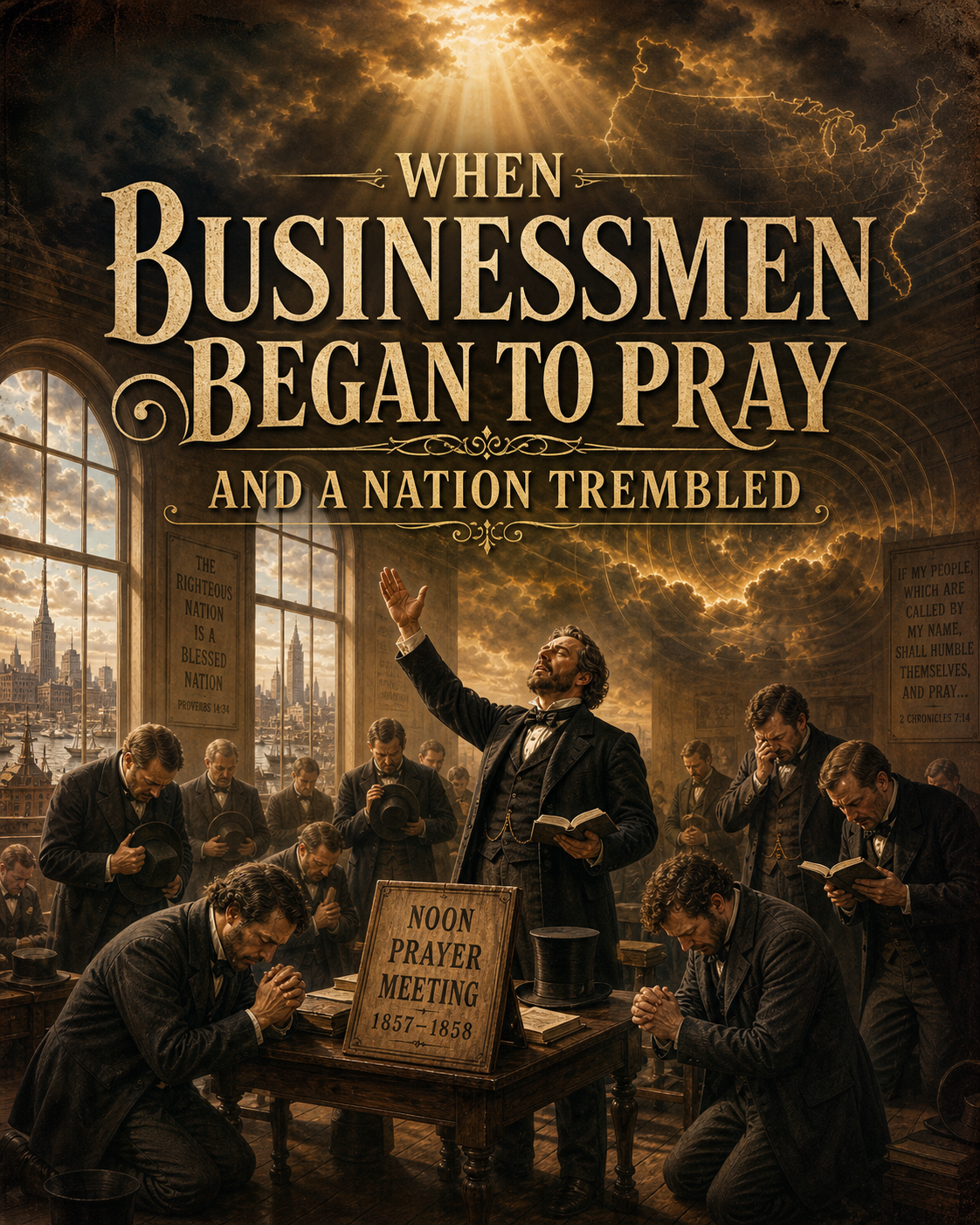
When the Noon Hour Became an Altar

There are moments in history when revival does not begin with a thunderous sermon, a famous preacher, a massive platform, or a carefully branded movement. Sometimes Heaven chooses an upper room, a hidden prayer meeting, a burdened intercessor, and a few hungry souls who still believe God answers when His people humble themselves and pray. The Prayer Revival of 1857–1858 reminds us that true awakening is not always announced by the sound of religious machinery. Sometimes it begins quietly, almost unnoticed, until the breath of God turns a small flame into a consuming fire.

This revival did not begin because America was spiritually healthy. It began because the nation was trembling. Financial instability, moral decline, spiritual coldness, and cultural unrest had settled over the land. The Church had become familiar with religion but was in desperate need of fresh visitation. The nation did not need another clever method. It needed the mercy of God to interrupt the course of history.

In September of 1857, a simple noon prayer meeting began in New York City. It was not designed as entertainment. It was not built around personality. It did not need a stage, a spotlight, or a celebrity voice. It was a call to prayer. At first, only a few attended. But Heaven has never needed a crowd to begin a movement; He only needs surrender, hunger, and obedience.

The meeting was held during the lunch hour so businessmen, workers, and ordinary people could come and pray. That detail matters. Revival broke into the rhythm of daily life. It was not confined to Sunday services. It was not limited to professional clergy. Men left their business dealings, their ledgers, their offices, and their responsibilities to meet with God in the middle of the day. Commerce paused because eternity was calling.

Before long, the prayer meetings began to multiply. What started with a handful of seekers became a movement of intercession. Churches opened their doors for noon prayer. Crowds gathered not to be entertained, but to seek the face of the Lord. Reports began to spread of people being convicted, converted, restored, and awakened. The atmosphere of cities began to shift under the weight of prayer.

This is one of the great lessons of the Prayer Revival: when prayer returns to the center, the Church begins to recover its true authority. Prayer is not religious filler. Prayer is not the soft opening before the “real ministry” begins. Prayer is the place where human strength bows, Heaven’s government is acknowledged, and the will of God is invited to invade the earth. The praying Ecclesia is a governing Ecclesia.

Jesus said, “My house shall be called a house of prayer” (Matthew 21:13, NKJV). He did not say His house would primarily be known as a house of performance, marketing, entertainment, political commentary, or religious professionalism. He called it a house of prayer. When prayer becomes secondary, the Church may still have motion, but it begins to lose oil. When prayer is restored, the altar begins to burn again.

The Prayer Revival also confronts our modern addiction to personality-driven ministry. There was no single preacher who could claim ownership of this awakening. There was no central platform strong enough to control it. There was no ministry brand that could contain it. The movement belonged to God. It spread because prayer spread. It burned because hunger burned.

This is difficult for the modern Church because we often want revival to arrive in a form we can promote, platform, measure, package, and monetize. But the Prayer Revival came as a rebuke to religious celebrity culture before such culture even had its modern machinery. It reminded the Church that Heaven does not need the approval of famous men to move in power. God can shake a nation through nameless intercessors who know how to travail before Him.

The spiritual power of this revival was not found in novelty. It was found in simplicity. People prayed. People confessed sin. People sought mercy. People cried out for salvation. People carried burdens for the lost. The Church did not need to make prayer fashionable. It needed to make prayer central. That is still the issue today.

We must be honest: much of the modern Church has tried to build influence without travail. We have tried to reach culture without first being conquered by God. We have attempted to produce spiritual momentum through strategies while neglecting the prayer closet. We have asked for revival while refusing the altar that births it. But revival that does not come through prayer will not be sustained by programs.

The Prayer Revival teaches us that a nation can be touched when ordinary believers recover extraordinary dependence on God. It was not built on giftedness alone. It was not fueled by human charisma. It was not carried by emotional hype. It was born in the holy place where men and women admitted their need, bent their knees, and cried out to the Lord.

There is a kind of prayer that is polite, predictable, and powerless. Then there is the kind of prayer that comes from spiritual desperation. The Prayer Revival was marked by desperation. It was the sound of a people who understood that if God did not move, the nation would continue to decay. That kind of prayer does not ask God to bless human ambition. It asks God to interrupt everything that is out of alignment with His will.

The Scripture declares, “If My people who are called by My name will humble themselves, and pray and seek My face, and turn from their wicked ways, then I will hear from heaven, and will forgive their sin and heal their land” (2 Chronicles 7:14, NKJV). Notice the order. Humility comes before healing. Prayer comes before restoration. Seeking His face comes before national repair. Turning from wicked ways comes before the land is healed.

This is why true revival cannot be separated from repentance. Prayer that refuses repentance becomes religious noise. Intercession without humility becomes spiritual presumption. A people cannot ask God to heal the land while defending the sins that wounded it. The Prayer Revival carried power because it was not merely a request for blessing; it was a cry for mercy.

In that season, prayer meetings were not built around polished programs. They were marked by short exhortations, Scripture, confession, intercession, and urgent appeals to God. The focus was not on man’s eloquence but on Heaven’s response. That is a vital lesson for us now. The Church does not need more impressive meetings if those meetings do not lead us back to the fear of the Lord.

The Prayer Revival also reveals the power of unity around the burden of God. People from different backgrounds gathered around one central reality: the need for God to move. The altar became larger than personal preference. The burden became stronger than denominational pride. The cry became louder than religious division. When the people of God humble themselves together, spiritual authority is released in ways human organization cannot manufacture.

We should not romanticize revival history as though those generations were perfect. They were not. Every revival season has human weakness, cultural limitation, and imperfect vessels. But we must still learn from what Heaven touched. God was revealing something through this movement: when prayer becomes the engine instead of the ornament, awakening can spread with force.

The Prayer Revival became a witness that God can move outside the expected channels. He can raise up prayer meetings in business districts. He can interrupt lunch hours with eternity. He can turn ordinary rooms into altars. He can place the burden of revival on people who do not carry famous names. He can breathe on the simple obedience of a few and call an entire nation to attention.

This should encourage every intercessor who feels hidden. Heaven sees the prayer closet. Heaven hears the groaning. Heaven remembers the tears. Heaven knows the names of those who labor unseen while others stand under the lights. Many movements that appear public were first conceived in secret by those who had no desire to be known, only a desire for Christ to be glorified.

The modern Church must recover this conviction. Prayer is not weakness. Prayer is warfare. Prayer is legislation from the place of surrender. Prayer is how the Ecclesia agrees with Heaven against the rebellion of darkness. Prayer is how atmospheres are confronted, strongholds are weakened, souls are awakened, and divine order is invited into the earth.

When businessmen began to pray in 1857, it was more than a devotional exercise. It was a prophetic interruption. It was Heaven calling a nation to remember that money cannot save, markets cannot redeem, politics cannot regenerate, and human progress cannot cleanse the soul. The nation needed God. The Church needed fire. The altar needed to be rebuilt.

That word is alive again in our generation. We are surrounded by noise, platforms, crisis, confusion, corruption, and spiritual fatigue. Yet the answer is not found in panic. It is found in return. Return to prayer. Return to repentance. Return to the fear of the Lord. Return to the altar. Return to the government of Holy Spirit.

The question is not whether God can send revival again. The question is whether the Church is willing to become the kind of people through whom revival can be stewarded. Are we willing to pray when no one is watching? Are we willing to repent when no one is applauding? Are we willing to carry the burden of the Lord without turning it into personal promotion? Are we willing to let prayer become the furnace again?

The Prayer Revival of 1857–1858 stands as a holy witness to every generation that has grown weary, distracted, and overly impressed with human methods. A nation can tremble when the people of God begin to pray. Cities can shift when altars are restored. Hearts can awaken when intercession becomes travail. Culture can be confronted when the Ecclesia stops performing and starts seeking the face of God.

This is not a call to nostalgia. It is a summons. The same God who moved in prayer meetings then is still looking for praying people now. The same Holy Spirit who awakened hearts through humble intercession is still able to breathe upon dry bones. The same Lord who honored hidden obedience is still searching for those who will stand in the gap.

Remnant, the hour is too late for prayer to remain a religious accessory. Prayer must become the fire at the center again. Not polished prayer. Not performative prayer. Not prayer as a transition between songs and sermons. But the kind of prayer that humbles the soul, confronts sin, carries the burden of Heaven, and refuses to release the altar until the fire falls.

The Prayer Revival reminds us that when a people pray, Heaven listens. When a people repent, mercy moves. When a people seek His face, atmospheres shift. And when the Ecclesia returns to the altar, nations can still tremble under the weight of God.

To be continued in Part 4: The Welsh Revival — When a Nation Was Bent Low Before God

Stay tuned, the journey continues…..

— Dr. Russell Welch

Dr. Russell Welch is a published author, prophetic teacher, apostolic builder, author, and founder of faith-driven publishing and media initiatives. He is known for crafting bold, Kingdom-centered messages that call the Ecclesia into maturity, doctrinal clarity, and governmental authority. With a passion for equipping the Remnant and honoring generational legacy, Dr. Welch writes and teaches at the intersection of Scripture, history, and spiritual governance, challenging believers to live as sons and daughters who legislate Heaven on earth through truth, holiness, and unwavering fidelity to Christ.

Be sure to check out his book: The Consecrated Firebrand: A Warrior’s Guide to Holy Living, available exclusively on Amazon … here

Amazon Author Page


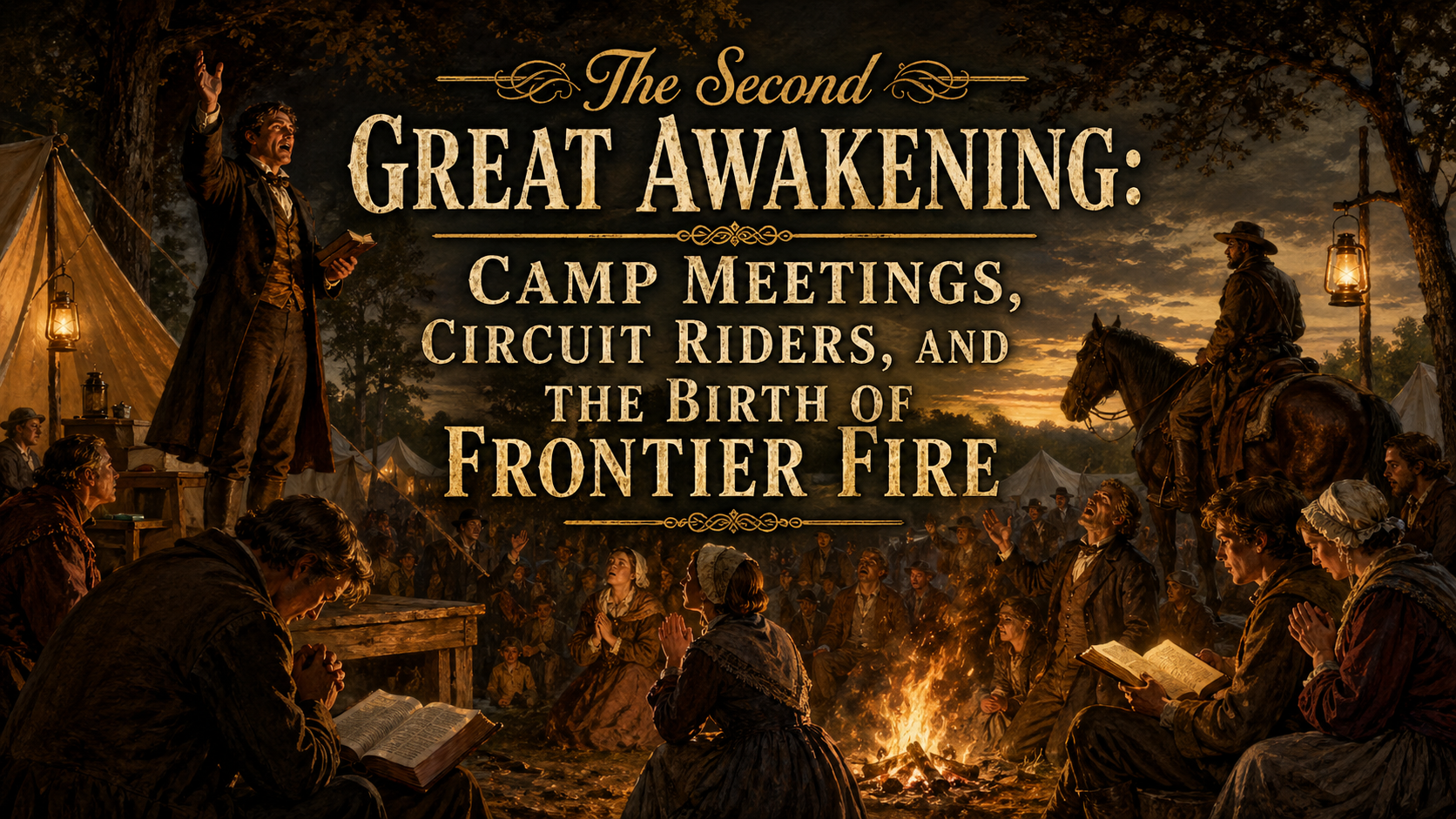
When the wilderness became an altar, the fire of God began riding through the frontier

The Second Great Awakening rose in America as a holy answer to a young nation wrestling with expansion, moral drift, frontier disorder, and spiritual hunger. After the First Great Awakening shook the colonies with the fear of the Lord, the second awakening carried revival into the wilderness, the camp meeting, the college, the village, and the public square. It was not merely a season of emotional religion; it became a furnace where conviction, repentance, evangelism, reform, and discipleship were pressed into the conscience of a nation. The cry of Acts 3:19 seemed to thunder again: “Repent ye therefore, and be converted, that your sins may be blotted out.” Revival came not to entertain the people, but to bring them under the searching eye of God until sin was confessed, Christ was exalted, and lives were visibly changed.

One of the early flames came through men like Timothy Dwight at Yale, who preached Christ into an environment where unbelief and skepticism had gained dangerous ground among the young. Revival among students revealed that the Father was not only reaching the wilderness settler, but also the intellectual class being discipled by the spirit of the age. This was a direct rebuke to the lie that education must be separated from the fear of the Lord. Proverbs 1:7 declares, “The fear of the LORD is the beginning of knowledge: but fools despise wisdom and instruction.” The Second Great Awakening therefore did not begin as a polished movement of religious celebrity, but as a work of conviction, prayer, preaching, and holy disruption among souls who had drifted from God.

The camp meetings became one of the great marks of this awakening, especially on the American frontier, where families traveled for miles and gathered under the open heavens to hear the Word preached with fire. Peter Cartwright, the Methodist circuit rider, described the Cane Ridge atmosphere by saying, “The heavenly fire spread in almost every direction,” and he recorded that the noise of praise and conviction could be heard for miles. These meetings were rugged, imperfect, and often controversial, but they carried a raw hunger that challenged cold formalism and lifeless religion. The wilderness itself became an altar, and the cry of Luke 14:23 seemed to rise across the frontier: “Go out into the highways and hedges, and compel them to come in, that my house may be filled.” The Lord was showing America that the Gospel was not chained to stained glass, polished pulpits, or religious respectability.

Francis Asbury, Peter Cartwright, Barton W. Stone, and countless lesser-known circuit riders carried the message through mud, danger, sickness, exhaustion, and opposition. These men were not building brands; they were carrying burdens. Their ministry reminds us of Paul’s charge in 2 Timothy 4:2: “Preach the word; be instant in season, out of season; reprove, rebuke, exhort with all longsuffering and doctrine.” They rode into regions where churches were scarce, Bibles were treasured, sin was public, and souls were starving. The power of the movement was not convenience, but consecration; not applause, but assignment. The Second Great Awakening teaches the modern Ecclesia that true revival always produces workers willing to go where comfort refuses to travel.

Charles Grandison Finney became one of the most recognized voices of the later Second Great Awakening, especially through his preaching in the burned-over district of New York and his later writings on revival. In his Lectures on Revivals of Religion, Finney pressed the Church to understand that revival required cooperation with God through prayer, repentance, preaching, and obedience, not passive waiting while sin remained untouched. Whether one agrees with every element of Finney’s theology or not, his urgency exposed a sleeping Church that had too often mistaken inactivity for reverence. Romans 12:11 gives the spirit of that burden: “Not slothful in business; fervent in spirit; serving the Lord.” Finney’s voice helped shape a generation that believed revival must move beyond the altar into moral action, public righteousness, and visible reform.

Lyman Beecher also stood as a significant voice in this era, particularly in the moral reform movements that grew out of revival conviction. His work against intemperance reflected a broader awakening truth: when God revives a people, He does not merely touch their church attendance; He confronts their habits, appetites, public sins, and private compromises. Beecher’s temperance sermons exposed the destructive nature of indulgence in a society where drunkenness was tearing families, communities, and souls apart. This connects powerfully with Titus 2:11–12, which declares that grace teaches us to deny “ungodliness and worldly lusts” and to live “soberly, righteously, and godly, in this present world.” Revival that does not discipline the flesh will soon become emotion without transformation.

The Second Great Awakening also gave birth to, or powerfully strengthened, many reform movements, including missions, Bible societies, abolitionist efforts, temperance work, and renewed concern for the poor and the enslaved. This does not mean every stream of the movement was pure, nor does it mean every leader carried equal theological soundness, but it does show that awakened hearts began to wrestle with public righteousness. James 2:17 says, “Even so faith, if it hath not works, is dead, being alone.” The fire of God was never meant to remain locked in a meeting; it was meant to walk into homes, businesses, laws, communities, and nations. When revival is genuine, it reforms the conscience before it reforms culture. The order is critical, because flesh will try to change society without first bowing before the Lordship of Christ.

The lesson for Radical Disciples today is that the Second Great Awakening was both a warning and a witness. It warns us that a nation can drift quickly when the fear of the Lord is neglected, but it also witnesses that God can raise a holy fire among ordinary people when repentance, preaching, prayer, and obedience return to the center. Joel 2:28 declares, “I will pour out my spirit upon all flesh,” yet the same prophetic atmosphere calls the people to fasting, weeping, mourning, and returning to the Lord with all the heart. America does not need a revival that merely fills tents, stages, churches, or stadiums; she needs a revival that produces crucified disciples. The Second Great Awakening reminds us that when the fire of God truly falls, the altar is restored, the wilderness begins to worship, and a generation is summoned out of compromise into obedience.

Stay tuned, the journey continues…..

— Dr. Russell Welch

Dr. Russell Welch is a published author, prophetic teacher, apostolic builder, author, and founder of faith-driven publishing and media initiatives. He is known for crafting bold, Kingdom-centered messages that call the Ecclesia into maturity, doctrinal clarity, and governmental authority. With a passion for equipping the Remnant and honoring generational legacy, Dr. Welch writes and teaches at the intersection of Scripture, history, and spiritual governance, challenging believers to live as sons and daughters who legislate Heaven on earth through truth, holiness, and unwavering fidelity to Christ.

Be sure to check out his book: The Consecrated Firebrand: A Warrior’s Guide to Holy Living, available exclusively on Amazon … here

Amazon Author Page


The transition from the Church Age into the Kingdom Age has not been subtle—it has been a divine upheaval, a holy recalibration, and a trumpet blast to the global body of Christ. From 2020 through the end of 2025, Heaven extended a five‑year window of grace, urging believers to awaken, mature, and step out of spiritual infancy. Those years were not random; they were a divine countdown. Now the Kingdom Age stands before us, demanding a different posture, a different identity, and a different level of obedience.

The Church Age emphasized salvation, personal faith, and gathering within the safety of religious structures. It was an age where God tolerated immaturity and cycles of complacency because the foundation was still being laid. People were trained to attend, receive, and survive. But the Kingdom Age calls us to govern, steward, and manifest Heaven’s reality on earth.

In the Church Age, believers were often shaped into members; in the Kingdom Age, the Spirit is forging sons and daughters who carry governmental authority. Membership culture is giving way to Ecclesia culture. Titles and traditions can no longer hide spiritual passivity. The King is summoning a people who understand their assignment to influence, occupy, and transform.

What worked in the Church Age will not necessarily work in the Kingdom Age because the objectives have shifted. The Church Age prepared us; the Kingdom Age deploys us. The Church Age emphasized being blessed; the Kingdom Age emphasizes becoming a blessing that shifts atmospheres and territories. Grace is no longer covering immaturity—it is empowering maturity.

During the five‑year transition, many discovered that old wineskins could not contain the new wine. Systems that once felt comfortable began to feel restrictive and powerless. Messages that once satisfied began to feel incomplete. The Spirit was gently but firmly pushing the global body toward Kingdom understanding.

The Kingdom Age is not about escaping the world but transforming it. It is about bringing Heaven’s culture into earthly systems—family, government, education, media, business, and beyond. The Ecclesia is rising as a governing family, not a passive audience. This requires courage, clarity, and a renewed mind.

In the Church Age, the focus was often on getting people into the building; in the Kingdom Age, the focus is on getting the Kingdom into people. The mission has expanded beyond Sunday gatherings into daily assignments. Every believer becomes a carrier of divine influence. Every sphere becomes a potential altar.

The Kingdom Age demands discernment because the battles are no longer surface‑level. Cultural strongholds, ideological thrones, and anti‑Christ systems are being exposed. The Ecclesia is being trained to confront darkness with wisdom, authority, and purity. This is not warfare from emotion but warfare from identity.

As sons and daughters mature, creation itself responds. Romans 8 declares that creation groans for the manifestation of the children of God, and that groan has intensified in our generation. The Kingdom Age is Heaven’s answer to that groan. The earth is waiting for mature sons to rise.

The Church Age taught us how to believe; the Kingdom Age teaches us how to rule under Christ’s leadership. Belief without authority is incomplete. Authority without character is dangerous. The Kingdom Age brings belief, authority, and character into divine alignment.

This new era requires believers to walk in the revelation of righteousness, not religious performance. The Kingdom does not operate through striving but through alignment with the King. When we seek first His Kingdom and His righteousness, everything else finds its proper order. This is Matthew 6:33 becoming a lived reality, not a memory verse.

The extended grace from 2020–2025 was not a delay but a divine invitation. God was giving His people time to shift, repent, and awaken. Those who responded are now stepping into acceleration. Those who resisted are feeling the tension of misalignment.

The Kingdom Age is marked by clarity, boldness, and supernatural demonstration. The days of powerless Christianity are over. The Spirit is restoring the original blueprint of the Ecclesia—a governing body that carries Heaven’s authority into earthly realms. This is the era of manifestation, not mere expectation.

As we move forward, the call is simple: embrace the Kingdom, not the comfort of the past. Let go of what no longer fits the assignment. Step into the maturity the Father has been cultivating in you. The Kingdom Age is here, and the sons and daughters of God are rising to meet it.

— Dr. Russell Welch

Dr. Russell Welch is a published author, prophetic teacher, apostolic builder, author, and founder of faith-driven publishing and media initiatives. He is known for crafting bold, Kingdom-centered messages that call the Ecclesia into maturity, doctrinal clarity, and governmental authority. With a passion for equipping the Remnant and honoring generational legacy, Dr. Welch writes and teaches at the intersection of Scripture, history, and spiritual governance, challenging believers to live as sons and daughters who legislate Heaven on earth through truth, holiness, and unwavering fidelity to Christ.

Be sure to check out his book: America at War: The Spiritual Battle for a Nation’s Soul , available exclusively on Amazon … here

Amazon Author Page