Archive for the ‘Watchmen of the Lord’ Category


The Battle for a Nation’s Destiny and the Remnant That Will Not Bow

We need to face reality.

The dangerous rise of socialist candidates in this nation cannot be stopped politically — not by moderate Democrats, if there are any left, and not even by the most conservative Republicans.

Why would I say that?

Because what is fueling this rise of socialism is not merely political. It is spiritual.

Socialism, at its root, carries the fingerprints of demonic systems that seek to take people captive, rob them of personal responsibility, weaken families, silence truth, and steal not only the destinies of individuals, but the destinies of entire nations.

The only true answer is not another political slogan.

The answer is the Remnant.

I am talking about the Remnant who have weighed the cost and found that nothing is worthy of their full allegiance but the King, His Kingdom, and His righteousness.

This is a spiritual battle.

And the compromised, complacent, Americanized Church has neither the power to stop it nor the discernment to recognize what is really taking place.

But history has always shown us one thing:

Every time light encounters darkness, light wins.

The hour is late, but the King still has a people.

And when the true Remnant rises, darkness does not get the final word.

We must become the altar where the fire falls again.

Stay tuned, the journey continues…..

A voice of fire to the Remnant,

— Dr. Russell Welch

Dr. Russell Welch is a published author, prophetic teacher, apostolic builder, and founder of faith-driven publishing and media initiatives. He is known for crafting bold, Kingdom-centered messages that call the Ecclesia into maturity, doctrinal clarity, and governmental authority. With a passion for equipping the Remnant and honoring generational legacy, Dr. Welch writes and teaches at the intersection of Scripture, history, and spiritual governance, challenging believers to live as sons and daughters who legislate Heaven on earth through truth, holiness, and unwavering fidelity to Christ.

Be sure to check out his book, “America at War: The Spiritual Battle for a Nation’s Soul” available exclusively on Amazon.

Amazon Author Page


As a student of the Word, I have looked at a number of Bible translations over the years. I have read them, compared them, prayed through them, and weighed them against the greater witness of Scripture. I have also been blessed to meet three men connected to modern translation work: Brian Simmons of The Passion Translation, Francois du Toit of The Mirror Translation, and Russell Stendal of the Jubilee Bible.

I do not say this lightly, and I do not say it simply because I have met Russell Stendal on numerous occasions or shared good, healthy Kingdom conversations with him concerning the Word of God. I say it because, out of the three, I have found that Russell Stendal has held more faithfully to a place of honoring the integrity, weight, and origins of Scripture.

In my view, this matters deeply.

We are living in a time when many voices want to reshape Scripture around personal revelation, cultural pressure, emotional comfort, or modern ideological movements. But the Word of God was never given to be edited until the flesh could tolerate it. It was given to pierce, purify, correct, convict, restore, and transform.

I appreciated The Passion Translation in certain areas, especially where its language stirred devotion and affection toward the Lord. Yet over time, I could not treat it as a primary translation for doctrine, preaching, or serious biblical study because of how interpretive and expanded it often becomes.

I also came out in support of The Mirror Translation for a time, based in part upon the recommendation of a pastor I trusted. But not long into reading and studying it, I found that, in my view, it began to stray from biblical truth and leaned too heavily into the personal beliefs and convictions of the editor. This became especially concerning to me where the translation appeared to support modern cultural positions that I could not reconcile with the full counsel of Scripture.

The Jubilee Bible has been different for me.

Out of the three, the Jubilee Bible is the one I use daily. It is the one I have come to respect because of the way it seeks to hold true to the Word of God, and in some places, I have found it to carry a clarity and textual weight that feels even closer to the original intent than what we sometimes find in the King James Version.

That is not a statement made to diminish the KJV. The King James Version, first published in 1611, has carried tremendous influence in the English-speaking world. It stands as one of the great translation works of the Reformation-era English Bible stream and has shaped preaching, doctrine, worship, prayer, and Christian language for more than four centuries.

But the Jubilee Bible reaches into a stream that is often overlooked by English-speaking believers.

The Jubilee Bible is modern in its English publication, but its roots go back into the Reformation Bible movement of the 1500s. It is especially connected to Casiodoro de Reina’s 1569 Spanish Bible, known as the Bear Bible, and Cipriano de Valera’s 1602 revision. It also carries connection to earlier Reformation witnesses such as Francisco de Enzinas, Juan Pérez de Pineda, William Tyndale, and the Authorized Version tradition.

This means the Jubilee Bible is not merely another modern translation trying to appeal to the religious marketplace. It is an English work that seeks to recover and preserve something from the Scriptures of the Reformation.

That phrase matters: From the Scriptures of the Reformation.

The Reformation was not built upon men trying to make the Word of God more fashionable. It was built upon men who trembled before the authority of Scripture and were willing to suffer so the people could hear the Word in their own language. These were not editors trying to soften the sword. These were men trying to place the sword back into the hands of the people.

That is one of the reasons I honor the Jubilee Bible.

What I respect about Russell Stendal’s work is not merely a translation preference. It is the posture behind the work. There appears to be a deep concern for preserving the strength, consistency, and covenant weight of the biblical text. There is an effort to let Scripture define Scripture, rather than allowing modern trends to redefine biblical language.

In an age when many translations appear to soften words connected to repentance, holiness, judgment, obedience, covenant, fear of the Lord, and separation from sin, the Jubilee Bible often allows those words to stand with the authority they were meant to carry.

That is important.

The Word of God is not a self-help manual. It is not a motivational script. It is not a religious poem to make us feel better while leaving us unchanged. It is living. It is sharp. It is holy. It confronts before it comforts. It wounds in order to heal. It exposes in order to redeem.

No translation should ever replace prayer, humility, study, and a willingness to return to the Hebrew, Greek, and the greater witness of Scripture. No translation should be placed above the Word itself. But I do believe the Jubilee Bible deserves to be taken seriously by those who love Scripture, honor the Reformation stream, and refuse to see the Bible reduced to a softened devotional thought for the modern age.

For me, the Jubilee Bible has become a trusted daily companion in the Word.

I honor the labor behind it.

I honor its connection to the Reformation witness.

And I honor the desire to preserve the integrity of what God has spoken.

May the Lord continue to raise up scribes, teachers, translators, and watchmen who tremble at His Word, guard its truth, and refuse to trade holy conviction for comfortable religion.

We must become the altar where the fire falls again.

Stay tuned, the journey continues…..

A voice of fire to the Remnant,

— Dr. Russell Welch

Dr. Russell Welch is a published author, prophetic teacher, apostolic builder, and founder of faith-driven publishing and media initiatives. He is known for crafting bold, Kingdom-centered messages that call the Ecclesia into maturity, doctrinal clarity, and governmental authority. With a passion for equipping the Remnant and honoring generational legacy, Dr. Welch writes and teaches at the intersection of Scripture, history, and spiritual governance, challenging believers to live as sons and daughters who legislate Heaven on earth through truth, holiness, and unwavering fidelity to Christ.

Be sure to check out his book, “America at War: The Spiritual Battle for a Nation’s Soul” available exclusively on Amazon.

Amazon Author Page


This isn’t a left vs. right fight. It never was. It’s freedom vs. domination. And the door being used… may not be the one you’d expect.


To My Fellow Americans — All of You

Before you read another word, I need you to know something: this is not an attack on you.

If you’ve voted Democrat your entire life — because you believe in helping the poor, protecting the vulnerable, expanding opportunity, and fighting against inequality — those are not bad values. They are, in many ways, profoundly American values.

This is a warning for you. Because good people, with good intentions, are sometimes handed a flag they didn’t design — and don’t fully see yet.


The Oldest Strategy in the Art of War

There is a reason the story of the Trojan Horse has survived thousands of years. It is not remembered because it was a great military victory. It is remembered because it revealed a timeless truth about how power is truly taken:

Not by force at the front gate. But by invitation through the side door.

No movement in history that sought to dominate a free people has ever announced itself honestly. They have always arrived wearing the language of liberation. They have always spoken the words that good-hearted people most want to hear:

Equality. Justice. Progress. The people.

And history — without a single exception — shows us what comes next when those words are used not as destinations, but as vehicles.


What Is Actually Happening in America Right Now

There is a faction — not the whole of the Democratic Party, but a loud, organized, and strategically placed faction within it — that is pushing an agenda that goes well beyond traditional liberal or progressive values.

This is not about raising taxes or expanding healthcare. Reasonable people can debate those things. This is something different.

This faction has pushed, with remarkable consistency, for:

  • The dismantling of local law enforcement — not reform, dismantling — leaving communities, particularly the most vulnerable ones, without protection
  • The systematic erosion of free speech, rebranded as “harm reduction” and “misinformation control”
  • The redefinition of merit, due process, and equal protection under the law based on group identity rather than individual rights
  • An open hostility toward Judeo-Christian faith in the public square, while simultaneously treating any criticism of other ideological or religious systems as bigotry
  • The rewriting of American history not to add nuance, but to fundamentally delegitimize the very foundations of constitutional self-governance

These are not liberal policies. They are the preconditions — tested and proven across the 20th century — for the collapse of free societies.


The Useful Door

Here is what history teaches us that most people never learn until it is too late:

Radical movements rarely build their own door. They use the one that’s already open.

The early Bolsheviks rode in on the legitimate grievances of starving Russian workers. They did not announce a gulag. They announced bread and land.

The early Iranian Revolution rode in on legitimate anger at a corrupt Shah. They did not announce the crushing of women’s rights. They announced liberation from oppression.

In both cases — and in every similar case — the people who opened the door were not the ones who walked through it last.

The socialists who helped bring the Ayatollah Khomeini to power were among the first people he imprisoned and executed once control was secured. They were useful. Then they were not.

This is not a conspiracy theory. This is a pattern, documented in university history courses, written in the blood of millions, and ignored in every generation by people who were certain their revolution was different.


A Question Every Democrat Deserves to Be Asked

If you are a Democrat who believes in:

  • Women’s rights and equality
  • LGBTQ+ dignity and protection
  • Free expression and artistic freedom
  • A secular government that does not impose religious law
  • The right to leave or critique any religion without fear

Then you need to ask yourself one honest question:

Which of those values would survive under a theocratic system?

Not rhetorically. Historically. Concretely.

Because the radical ideological current that has embedded itself within progressive spaces — particularly on university campuses, in activist networks, and increasingly in municipal politics — has formed a tactical alliance with political Islam that cannot be explained by shared values. These ideologies are, at their core, incompatible on almost every social issue the left claims to hold dear.

The only thing they share is a common short-term enemy: the constitutional American order.

The alliance is tactical. It is temporary. And the people being used as the vehicle will not be the ones who determine what happens at the destination.


This Is Not About Hating Muslims

Let this be absolutely clear: this is not an indictment of Muslim Americans.

The overwhelming majority of Muslim Americans are exactly what every immigrant group in American history has been — people who came here, or were born here, seeking the same freedom, opportunity, and dignity that every American deserves. They are doctors, soldiers, teachers, neighbors, and patriots.

This is about a specific political ideology — not a faith, but a theo-political movement — that has openly and repeatedly stated its intention to replace constitutional governance with religious law. That movement exists. It has funders, strategists, and a long game. And it is not shy about its goals in its own literature, even when it is careful about its language in public.

The distinction between a Muslim American neighbor and a radical theo-political movement is not complicated. It is the same distinction between a Christian American neighbor and a theocratic movement that would impose its interpretation of Scripture on every citizen by force of law.

Both extremes are a threat to the same Constitution. Both must be named honestly.


The Voting Booth Is Still There — For Now

Here is the most urgent thing this moment demands you understand:

The ballot is the last peaceful tool a free people possesses.

Not social media. Not protests. Not petitions. The vote.

And it is not guaranteed. Not because of some shadowy plan to cancel elections — but because a people that stops using freedom will, eventually, stop having it. Apathy is its own form of surrender.

Every generation of Americans has faced a moment when the cost of engagement felt too high, the choices felt too corrupt, the system felt too broken. Every generation that walked away from that moment paid a price the next generation inherited.

We are at that moment again.


The Call

This is not a call to become Republican. This is not a call to abandon every value you’ve held.

This is a call to wake up to the difference between:

  • The party you thought you were supporting
  • And the faction within it that is using your good intentions as cover for an agenda you did not sign up for

Ask the hard questions. Demand honest answers from your candidates and your leaders. Watch what they do when they have power, not just what they say when they want it.

Look at the cities where these policies have been most aggressively implemented. Look at the outcomes — not through a partisan lens, but through the eyes of the people who actually live there.

And then vote. Vote like someone who understands that the booth you walk into today exists because someone before you was willing to fight for it — and that someone after you is counting on you not to waste it.


The Bottom Line

This is not left versus right.

This is not Democrat versus Republican.

This is the oldest battle in human history:

Freedom versus Domination. Light versus Darkness. The dignity of the individual versus the machinery of control.

Every true American — regardless of party, regardless of background — was made for this moment.

The question is simply whether we will be awake enough to meet it.


Share this with someone who needs to hear it — especially someone you disagree with. The people most worth reaching are not the ones already in your corner.

We must become the altar where the fire falls again.

Stay tuned, the journey continues…..

A voice of fire to the Remnant,

— Dr. Russell Welch

Dr. Russell Welch is a published author, prophetic teacher, apostolic builder, and founder of faith-driven publishing and media initiatives. He is known for crafting bold, Kingdom-centered messages that call the Ecclesia into maturity, doctrinal clarity, and governmental authority. With a passion for equipping the Remnant and honoring generational legacy, Dr. Welch writes and teaches at the intersection of Scripture, history, and spiritual governance, challenging believers to live as sons and daughters who legislate Heaven on earth through truth, holiness, and unwavering fidelity to Christ.

Be sure to check out his book, “America at War: The Spiritual Battle for a Nation’s Soul” available exclusively on Amazon.

Amazon Author Page


The old warriors carried swords into battle, but the Ecclesia Remnant carries the indwelling fire of Holy Spirit into a war no darkness can win.

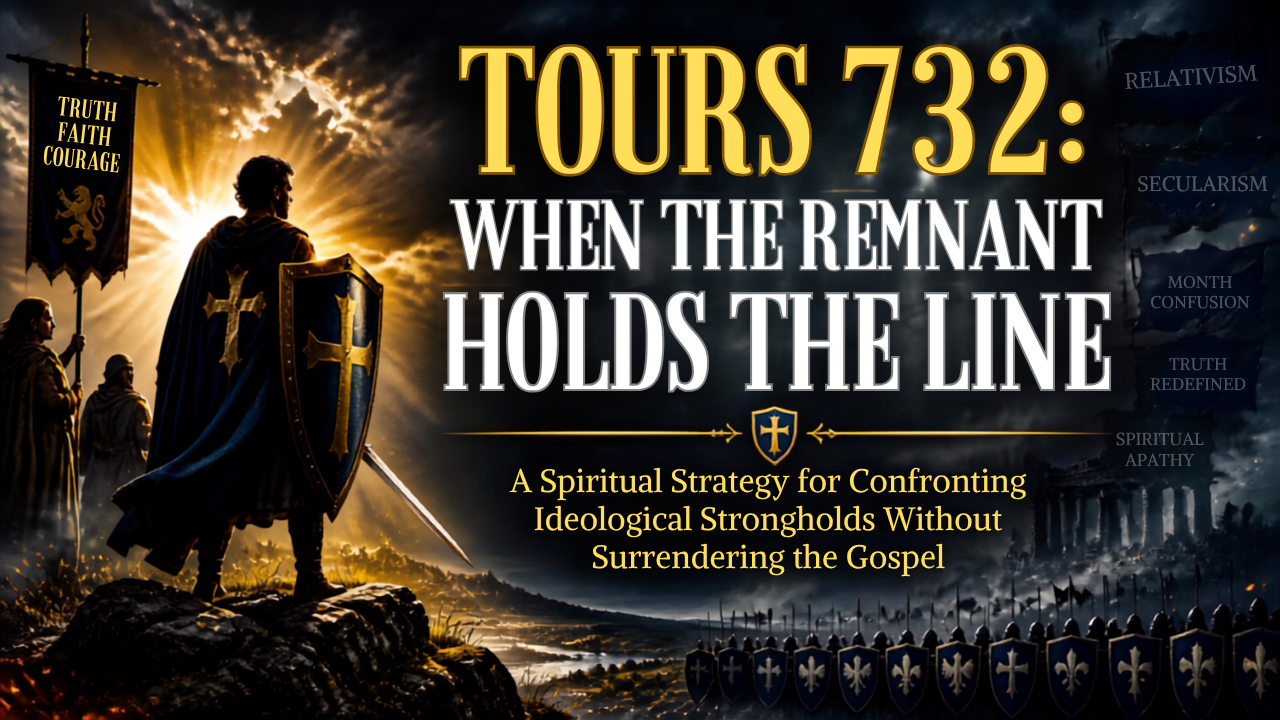
The Knights Templar rose in an hour when Christianity and the advancing forces of Islam were locked in a very real conflict over land, pilgrimage routes, holy sites, and the future of nations. Their war was not merely political; it was wrapped in the language of faith, kingdom, sacrifice, and allegiance. They took vows, carried swords, wore the cross upon their garments, and stood as warrior-monks under the authority of religious institutions.

But today, Heaven is raising up another kind of warrior.

The Ecclesia Remnant Warriors of this hour are not called to wage war flesh against flesh. We are not called to lift the sword against men, women, nations, or people groups. Our battle is higher, deeper, and far more dangerous to the kingdom of darkness. For we do not wrestle against flesh and blood, but against principalities, powers, rulers of darkness, and spiritual wickedness in high places.

The Templars carried steel.
The Remnant carries fire.

The Templars fought for territories.
The Remnant wars for souls, bloodlines, cities, nations, and the restoration of Heaven’s order in the earth.

The Templars swore allegiance beneath the covering of religious institutions.
The Ecclesia Remnant has sworn allegiance to the King of kings and Lord of lords.

This is the great distinction. We are not bound by the fear of man, the approval of systems, or the permission of religious machinery. We stand beneath the government of Christ Himself. Our weapons are not carnal, but mighty through God for the pulling down of strongholds. We overcome by the Blood of the Lamb, the word of His testimony working in us, the Word of God, prayer, fasting, obedience, holiness, and the power of Holy Spirit.

And here is what separates the warriors of this hour from even the mighty warriors of the Old Testament.

David had the anointing come upon him.
Samson had the Spirit move upon him.
Gideon was clothed with divine courage.
Elijah stood under prophetic fire.

But the born-again sons and daughters of the Kingdom carry something greater than visitation. We carry habitation.

Holy Spirit does not merely come upon us for a moment and then lift. He indwells us twenty-four hours a day, seven days a week. The same Spirit who raised Christ from the dead now lives inside the surrendered believer. That means the Ecclesia Remnant does not fight from desperation, but from inheritance. We do not war for victory; we war from victory. We do not fight as orphans trying to prove ourselves; we stand as sons and daughters who have been seated in Christ.

The war today is not against people. It is against every spirit, doctrine, ideology, deception, and stronghold that exalts itself against the knowledge of God. We do not hate the lost; we contend for their deliverance. We do not curse people; we confront the darkness that has blinded them. We do not advance with swords of iron; we advance with the Sword of the Spirit, which is the Word of God.

This is not the hour for passive Christianity.

This is the hour for the Ecclesia Remnant to rise, take their place, legislate in prayer what Heaven has decreed, and stand in holy allegiance to Christ alone.

The old warriors carried shields into battle.

The warriors of this hour carry the indwelling fire of Holy Spirit.

And that fire cannot be stopped.

Stay tuned, the journey continues…..

A voice of fire to the Remnant,

— Dr. Russell Welch

Dr. Russell Welch is a published author, prophetic teacher, apostolic builder, and founder of faith-driven publishing and media initiatives. He is known for crafting bold, Kingdom-centered messages that call the Ecclesia into maturity, doctrinal clarity, and governmental authority. With a passion for equipping the Remnant and honoring generational legacy, Dr. Welch writes and teaches at the intersection of Scripture, history, and spiritual governance, challenging believers to live as sons and daughters who legislate Heaven on earth through truth, holiness, and unwavering fidelity to Christ.

Be sure to check out his book, Spirit Wind People: Those Who are Moved by the Impulses of Holy Spirit, available exclusively on Amazon.

Amazon Author Page


The Language of Resurrection, Royal Arrival, and Public Appearing

The faithful do not need to fear careful study. Truth does not tremble when the Greek text is opened. Truth does not panic when the words of Scripture are examined in their covenant setting, historical setting, and apostolic context. If a doctrine is truly built upon the Word of God, then the original language will strengthen it, not weaken it. But if a doctrine has been built by removing words from context, forcing phrases into a modern prophetic system, and then asking the text to serve a chart instead of the King, then the light of Scripture will expose the weakness of that system.

This is where we must begin with humility and courage. The issue is not whether sincere people have believed the Rapture doctrine. Many have. The issue is not whether good men and women have preached it. Many have. The issue is whether the doctrine itself can survive the careful examination of the language used by the Holy Spirit through the apostles. We are not called to protect a tradition because it is familiar. We are called to test all things, hold fast that which is good, and allow Scripture to correct our assumptions.

The Greek text must be allowed to speak for itself. When it does, the language of the New Testament points us toward resurrection, royal arrival, public appearing, covenant gathering, and final victory. It does not naturally point us toward a secret evacuation of the Church before the visible triumph of Christ. The hope of the saints is not escape from the battlefield while darkness increases. The hope of the saints is the appearing of the King, the resurrection of the dead, the transformation of the living, and the fullness of His Kingdom being revealed in victory.

The first word that must be examined is the word often placed at the center of the Rapture doctrine: ἁρπάζω, harpazō. In 1 Thessalonians 4:17, Paul says that those who are alive and remain shall be “caught up” together with the resurrected saints in the clouds to meet the Lord in the air. The phrase “caught up” is real. We must not deny it, weaken it, or explain it away. The Greek word carries the idea of being seized, snatched, taken, or carried by force. It is a strong word. It speaks of divine action, not human effort.

However, the presence of the word “caught up” does not automatically create a secret Rapture doctrine. This is where many have made a serious interpretive mistake. They have taken one word, isolated it from the passage, and then built an entire end-time system around it. Paul is not writing in 1 Thessalonians 4 to reveal a secret evacuation. He is comforting grieving believers concerning those who have died in Christ. The entire passage is framed by resurrection hope. Paul says the dead in Christ shall rise first. Then those who are alive and remain will be caught up together with them. The emphasis is not disappearance. The emphasis is resurrection reunion.

This matters deeply. Paul is answering the fear that deceased believers would somehow miss the coming glory of Christ. His answer is not, “Do not worry, the Church will escape seven years before trouble begins.” His answer is, “The dead in Christ will rise first.” That places the passage in the resurrection category, not the evacuation category. The faithful are not being told to expect a hidden removal from the earth. They are being told that when the Lord comes, the dead will be raised, the living faithful will be gathered with them, and all will be with the Lord.

The details in 1 Thessalonians 4 are anything but secret. Paul speaks of the Lord Himself descending from heaven with a shout, with the voice of the archangel, and with the trumpet of God. These are not images of silence, secrecy, or hidden activity. These are royal, public, victorious, covenantal sounds. A shout, an archangelic voice, and the trumpet of God do not describe Heaven trying to sneak the Church out of history. They describe the King arriving in glory.

The second word we must examine is παρουσία, parousia, commonly translated “coming.” This word does not merely describe movement from one place to another. It carries the sense of arrival and presence. In the world of the New Testament, parousia could be used for the arrival or visitation of a ruler, king, or dignitary. When the New Testament uses this word for Christ, it is not presenting Him as a nervous rescuer slipping His people out the back door. It is presenting Him as the reigning Lord whose arrival changes everything.

This becomes especially clear when we compare Scripture with Scripture. In Matthew 24:27, Jesus says that as lightning comes from the east and shines unto the west, so also shall the coming, the parousia, of the Son of Man be. That is not hidden language. That is visible language. That is not private language. That is public language. Lightning does not ask permission to be noticed. It tears across the sky and announces itself. Jesus used this kind of imagery to guard His disciples from secret-coming claims.

Paul uses the same family of expectation when he writes in 2 Thessalonians. In 2 Thessalonians 2:1, he speaks of “the coming of our Lord Jesus Christ” and “our gathering together unto Him.” He does not separate these into two unrelated events. He joins them together. The coming and the gathering are linked. Then, in the same chapter, Paul says the lawless one will be destroyed by the brightness, or appearing, of the Lord’s coming. This is crucial. The appearing of His coming destroys the lawless one. That is not the language of a secret evacuation before confrontation. That is the language of royal manifestation and victory.

The third word we must examine is ἀπάντησις, apantēsis, translated “to meet.” In 1 Thessalonians 4:17, the saints are caught up “to meet the Lord in the air.” This phrase has often been treated as though it means the saints meet Jesus in the air and then immediately depart with Him away from the earth for a hidden period of time. But the word itself does not demand that conclusion. In the New Testament, this word carries the idea of going out to meet someone who is arriving. It is the language of reception, honor, and welcome.

This becomes powerful when we consider the royal imagery. In the ancient world, when a king or dignitary approached a city, the people would go out to meet him and escort him in with honor. The meeting was not an escape from the city. It was a reception of the arriving ruler. That background fits the passage naturally. The saints rise to meet the arriving King. The Church does not flee because the devil is winning. The faithful rise in resurrection victory because the King is appearing.

This also fits Matthew 25, where the virgins go out to meet the bridegroom. The bridegroom is arriving. The wise are prepared. The meeting is connected to readiness, not evacuation. In Acts 28, believers go out to meet Paul as he approaches Rome. They do not meet him and then take him away from Rome. They meet him and accompany him toward his destination. This does not mean every usage must be pressed beyond measure, but it does show that the word “meet” does not naturally require the modern Rapture storyline. It fits a royal reception far better than a hidden escape.

The fourth word group we must examine is the language of appearing and unveiling. The New Testament uses words such as ἐπιφάνεια, epiphaneia, and ἀποκάλυψις, apokalypsis. Epiphaneia speaks of appearing, manifestation, or brightness. Apokalypsis speaks of revelation or unveiling. These words do not move us toward secrecy. They move us toward visibility. They do not hide Christ. They reveal Christ.

Titus 2:13 calls the faithful to look for the blessed hope and the glorious appearing of our great God and Savior, Jesus Christ. The blessed hope is not described as a secret disappearance. It is described as an appearing. Paul tells Timothy of the appearing of Christ. Peter speaks of grace being brought at the revelation of Jesus Christ. John opens Revelation by declaring that every eye shall see Him. The consistent direction of the New Testament is not concealment but manifestation.

This is where we must challenge the modern prophetic imagination. Many have been taught to think of the hope of the Church as vanishing before trouble reaches its fullness. But the apostolic hope is not rooted in fear of tribulation. It is rooted in the appearing of Christ. The early believers were not told, “Comfort one another because you will never face pressure.” They were told to endure, overcome, remain faithful, and look for the appearing of the King. The hope of the saints is not that darkness gets the final word on earth while the Church escapes. The hope of the saints is that Jesus appears in glory, raises the dead, judges evil, vindicates the faithful, and fills all things with the authority of His Kingdom.

The fifth word we must examine is ἐπισυναγωγή, episynagōgē, translated “gathering together.” This word appears in 2 Thessalonians 2:1, where Paul says, “concerning the coming of our Lord Jesus Christ, and our gathering together unto Him.” Again, Paul links the coming and the gathering. He does not tell the Thessalonians to separate them into two different prophetic events divided by years of hidden history. The gathering belongs to the coming.

This gathering language carries deep covenant echoes. The prophets spoke of God gathering His people. Jesus spoke of angels gathering His elect from the four winds. The language of gathering is not foreign to Israel’s covenant story. It is restoration language. It is harvest language. It is Kingdom language. It is the language of God bringing His people into the fullness of what He promised.

In Matthew 24:31, Jesus says that after the tribulation of those days, the Son of Man will send His angels with a great sound of a trumpet, and they will gather together His elect from the four winds. Whether one wrestles with the immediate historical setting of Jerusalem, the wider prophetic horizon, or the fullness of future fulfillment, the language is still public, cosmic, and covenantal. It is not the language of a secret Church removal hidden from the nations. It is the language of divine gathering under the authority of the Son of Man.

This is where the modern Rapture system often creates confusion. It takes gathering language, trumpet language, coming language, and appearing language, then assigns them to different events based on a pre-built chart. But the New Testament itself does not demand those separations. In fact, the natural reading often moves in the opposite direction. The coming, the gathering, the resurrection, the trumpet, the appearing, and the victory of Christ belong together in the apostolic witness.

This does not mean every passage is simple. It does not mean every question is answered in one verse. It does not mean we should be careless with prophecy, history, or fulfillment. But it does mean we must stop forcing Scripture to speak the language of modern end-time fiction. The apostles were not writing from a twenty-first-century prophecy conference. They were writing from the world of covenant, empire, persecution, resurrection hope, and the enthronement of Jesus Christ as Lord.

The sixth issue is context. Words do not live in isolation. A Greek word must be interpreted within its sentence, its paragraph, its letter, and the larger biblical story. When a word is removed from its setting, it can be made to serve almost any system. This has happened repeatedly with the Rapture doctrine. “Caught up” is removed from resurrection. “Coming” is removed from appearing. “Meeting” is removed from royal arrival. “Gathering” is removed from covenant restoration. “Clouds” are removed from biblical glory imagery. “Trumpet” is removed from public announcement and divine intervention.

Once those words are detached from their biblical setting, they can be rearranged into a doctrine the apostles never plainly taught. But when they are returned to their context, the picture becomes far stronger and far more victorious. The King descends. The dead are raised. The living faithful are transformed. The saints meet the Lord. The gathering takes place in connection with His coming. His appearing destroys lawlessness. His revelation brings vindication. His Kingdom triumphs.

This is not bad news. This is glorious news. The removal of a false escape doctrine does not weaken the hope of the Church. It strengthens it. It calls the faithful back to endurance. It calls the Ecclesia back to authority. It calls the saints back to the victorious Gospel of the Kingdom. It reminds us that Jesus did not commission a defeated people waiting for darkness to get bad enough so they could leave. He commissioned a governing body, filled with the Spirit, clothed with authority, and sent into the nations to disciple, baptize, teach, overcome, and bear witness until the King is revealed in glory.

The Greek text does not ask us to build a doctrine of fear. It calls us to behold the victory of Christ. It does not train the Church to pray for escape from responsibility. It summons the faithful to stand in resurrection hope. The language of the New Testament is not the language of abandonment. It is the language of arrival. It is not the language of defeat. It is the language of appearing. It is not the language of panic. It is the language of gathering. It is not the language of darkness winning history. It is the language of the King coming in glory.

The faithful must therefore return to the text with clean hands and honest hearts. We must be willing to lay down charts when they contradict Scripture. We must be willing to surrender traditions when they weaken the Gospel of the Kingdom. We must be willing to admit that some doctrines have survived not because they were deeply biblical, but because they were emotionally comforting and constantly repeated.

But repetition does not equal revelation. Familiarity does not equal truth. Popularity does not equal apostolic doctrine. The question is not, “How many have believed this?” The question is, “What does the Word of God actually say?” The question is not, “Does this make me feel safe?” The question is, “Does this agree with the language, context, and covenant witness of Scripture?”

When the Greek text is allowed to speak, it does not present a Church secretly evacuated from the earth while darkness inherits the nations. It presents the resurrecting, gathering, appearing, conquering Christ. It presents the saints meeting the King in the atmosphere of His glory. It presents the public vindication of the faithful. It presents the destruction of lawlessness by the brightness of His coming. It presents the blessed hope as the appearing of our great God and Savior, Jesus Christ.

The conclusion is simple: the Church should not fear the Greek text. The faithful should welcome it. The original language does not belong to scholars alone. It belongs to the household of faith as a servant of truth. When rightly handled, it does not make Scripture cold. It makes Scripture burn. It turns a verse into a meal. It breaks open the bread of revelation and feeds the spirit with substance.

Therefore, let every doctrine be tested. Let every chart bow. Let every tradition come under the authority of Scripture. Let the Greek text speak in context. Let the covenant story be restored. Let the saints be strengthened with resurrection hope. Let the faithful stop looking for evacuation and start looking for the appearing of the King.

Jesus is not returning as a thief who lost the earth and came back only to rescue survivors. He is returning as the victorious King, the risen Lord, the One who disarmed principalities and powers, the One who is seated far above all rule and authority, the One before whom every knee shall bow and every tongue shall confess that He is Lord.

The gathering of the saints is not the confession of a defeated Church. It is the reception of a victorious King.

Stay tuned, the journey continues…..

A voice of fire to the Remnant,

— Dr. Russell Welch

Dr. Russell Welch is a published author, prophetic teacher, apostolic builder, and founder of faith-driven publishing and media initiatives. He is known for crafting bold, Kingdom-centered messages that call the Ecclesia into maturity, doctrinal clarity, and governmental authority. With a passion for equipping the Remnant and honoring generational legacy, Dr. Welch writes and teaches at the intersection of Scripture, history, and spiritual governance, challenging believers to live as sons and daughters who legislate Heaven on earth through truth, holiness, and unwavering fidelity to Christ.

Be sure to check out his book, The Vanishing Gospel: Exposing False End‑Time Doctrine and Restoring the Kingdom Gospel, available exclusively on Amazon.

Amazon Author Page


Enforcing the Victory of Christ Over a Defeated Enemy

One of the most important revelations the faithful must recover in this hour is the difference between power and authority. The enemy still has power, but he no longer possesses lawful authority over those who are in Christ. This distinction is not theological wordplay; it is foundational to victorious spiritual warfare. Many believers are exhausted because they are trying to defeat a devil that Jesus has already defeated, rather than standing in the authority of the victory Christ already secured.

Colossians 2:15 declares that Jesus “disarmed principalities and powers” and made a public spectacle of them, triumphing over them through the cross. That means the cross was not merely a place of forgiveness; it was a battlefield of conquest. Jesus did not walk out of the tomb negotiating terms with darkness. He rose as the victorious King, holding all authority in heaven and on earth. This is why He could declare in Matthew 28:18, “All authority has been given to Me in heaven and on earth.”

If all authority belongs to Christ, then Satan does not possess rightful authority over the redeemed. He may still accuse. He may still tempt. He may still resist. He may still roar. He may still attempt to intimidate, deceive, and oppress. But he no longer operates as a lawful ruler over those who have been translated out of the kingdom of darkness and into the Kingdom of God’s dear Son.

This is where the Church must become wise. The enemy’s power becomes a threat when he deceives a believer, a family, a church, a city, or even a nation into surrendering authority through agreement. Satan cannot overthrow the authority of Christ, but he can exploit human agreement when people give place to fear, rebellion, compromise, unbelief, bitterness, deception, idolatry, or sin. He does not need to possess authority if he can convince man to misuse, abandon, or surrender his.

This pattern is first revealed in Eden. The serpent did not overpower Adam and Eve. He deceived them. He did not take dominion by force; he gained access through agreement. Adam had been given a governmental assignment in the earth, but through disobedience he yielded ground to the serpent’s lie. The enemy’s weapon was not superior power. His weapon was deception that produced agreement.

That same strategy continues today. Satan is not looking for a fair fight; he is looking for an open door. He seeks agreement because agreement gives access. He wants believers to agree with fear instead of faith, accusation instead of identity, offense instead of forgiveness, compromise instead of holiness, and deception instead of truth. He knows that the believer who stands submitted to God and clothed in the authority of Christ is not someone he can lawfully rule.

James 4:7 gives the pattern clearly: “Submit yourselves therefore to God. Resist the devil, and he will flee from you.” Notice the order. Submission to God comes before resistance against the devil. Authority flows from alignment. The believer does not resist the enemy through human emotion, religious noise, or spiritual pride. The believer resists from the place of surrendered authority under the Lordship of Jesus Christ.

This is why Luke 10:19 is so powerful. Jesus said, “Behold, I give you authority… over all the power of the enemy.” He did not say the enemy had no power. He said His disciples had authority over the enemy’s power. That means the issue is not whether darkness can move; the issue is whether the people of God understand the authority they carry in Christ. Power without authority must depend on deception, intimidation, and illegal access. Authority in Christ stands on legal victory.

The devil’s greatest strategy is to convince believers that they are still victims of a power Jesus already conquered. He wants the Church to fight from fear instead of victory. He wants the faithful to believe they are trying to win a battle that Christ has already won. But spiritual warfare is not the believer attempting to secure victory; it is the believer enforcing the victory of the risen King.

This is where many believers lose ground. They do not lose because Jesus failed. They do not lose because the cross was incomplete. They do not lose because the devil has more authority than Christ. They lose ground when they agree with what Christ defeated. Fear becomes powerful when we agree with it. Sin becomes a stronghold when we submit to it. Lies become chains when we believe them. Offense becomes a prison when we nurse it. Darkness gains influence where human agreement gives it permission.

Yet the good news is just as powerful: what agreement opened, repentance can close. What deception gained, truth can expose. What fear occupied, faith can reclaim. What compromise yielded, obedience can restore. The believer does not need to beg for authority; he must return to alignment with the One who holds all authority.

The authority of the believer is not independent authority. It is delegated authority. It flows from union with Christ, submission to Christ, obedience to Christ, and agreement with Christ. A believer walking in rebellion cannot claim to be operating in kingdom authority while resisting the King who gave it. Authority is not a religious slogan; it is the governmental backing of Heaven upon those who stand under the rule of Jesus.

This is why holiness matters. This is why obedience matters. This is why discernment matters. The enemy is not merely trying to make believers behave badly; he is trying to get them to surrender authority. He wants their mouths to agree with accusation. He wants their hearts to agree with bitterness. He wants their minds to agree with confusion. He wants their lives to agree with compromise. Every agreement with darkness becomes a place where his power seeks expression.

But when the faithful stand in Christ, submit to God, resist the devil, and refuse agreement with darkness, the enemy’s power loses its operating room. He may still roar, but he cannot rule. He may still threaten, but he cannot govern. He may still accuse, but he cannot condemn those who are in Christ Jesus. He may still tempt, but he cannot force obedience to his lie.

The cross stripped the enemy of legal authority. The resurrection announced the enthronement of the victorious Christ. The ascension revealed the King seated far above all principality, power, might, dominion, and every name that is named. The Church must now stop treating the devil as though he still holds what Jesus already took from him.

The faithful are not called to survive under the shadow of a defeated devil. They are called to stand in the authority of the risen Christ, enforce the finished work of the cross, and refuse every agreement with darkness. The enemy’s power becomes dangerous only where authority is surrendered. But when authority remains submitted to Christ, the power of the enemy is exposed for what it truly is: illegal, defeated, and dependent upon deception.

Therefore, the call in this hour is clear. Guard your agreement. Guard your mouth. Guard your thoughts. Guard your doctrine. Guard your obedience. Do not give the enemy a room in your house, a seat at your table, or a voice in your decisions. Jesus has already triumphed. Now the faithful must stand, resist, and enforce the victory of the King.

The devil does not need to defeat Christ to gain ground in a believer’s life. He only needs to deceive the believer into surrendering agreement. But the believer who stands in truth, walks in obedience, and remains submitted to the Lordship of Jesus becomes a living witness that the enemy is defeated, Christ is enthroned, and the Kingdom of God is advancing.

Stay tuned, the journey continues…..

A voice of fire to the Remnant,

— Dr. Russell Welch

Dr. Russell Welch is a published author, prophetic teacher, apostolic builder, and founder of faith-driven publishing and media initiatives. He is known for crafting bold, Kingdom-centered messages that call the Ecclesia into maturity, doctrinal clarity, and governmental authority. With a passion for equipping the Remnant and honoring generational legacy, Dr. Welch writes and teaches at the intersection of Scripture, history, and spiritual governance, challenging believers to live as sons and daughters who legislate Heaven on earth through truth, holiness, and unwavering fidelity to Christ.

Be sure to check out his book, Spirit Wind People: Those Who are Moved by the Impulses of Holy Spirit, available exclusively on Amazon.

Amazon Author Page


Dismantling Replacement Theology with the Light of Truth and the Unbroken Covenant of God with Israel

Replacement Theology is not merely a harmless doctrinal difference. It becomes dangerous when it teaches the Church to boast against the very root that carries her. It becomes toxic when it suggests that God cast away Israel in order to replace her with a Gentile Church. It becomes deceptive when it takes the promises, covenants, prophetic destiny, and covenant identity given to Israel and transfers them in such a way that the Jewish people are treated as abandoned, rejected, or irrelevant to God’s redemptive plan.

Romans 11 stands as one of the clearest apostolic rebukes against this error.

Paul opens Romans 11 with a question that leaves no room for confusion: “Has God cast away His people?” His answer is immediate and forceful: “God forbid.” In Greek, Paul uses the phrase mē genoito, which carries the sense of “May it never be,” “Absolutely not,” or “Let such a thing never be thought.” This is not a soft disagreement. This is Paul slamming the door on the idea that God has rejected Israel.

Romans 11:1 says, “I say then, Hath God cast away his people? God forbid. For I also am an Israelite, of the seed of Abraham, of the tribe of Benjamin.”

The Greek word translated “cast away” is apōtheō, meaning to push away, reject, thrust aside, or repudiate. Paul is directly confronting the idea that God has shoved Israel out of His covenant purpose. His answer is no. God has not repudiated His people. God has not divorced Himself from the covenant promises given to Abraham, Isaac, Jacob, and their descendants.

The Aramaic/Syriac Peshitta carries the same force. The question reads with the sense of whether God has rejected or cast off His people, and the response is emphatic: “Far be it.” The Syriac witness strengthens the same apostolic conclusion: God’s covenant people have not been discarded. Israel has experienced a partial hardening, but not covenant abandonment.

This distinction matters.

Paul does not say Israel has been replaced.
Paul says Israel has experienced a partial hardening.
Paul does not say the Church became Israel in a way that erases Israel.
Paul says Gentiles have been grafted into the covenant blessing through Messiah.
Paul does not say the root now depends on the branches.
Paul says the branches depend on the root.

Romans 11:2 declares, “God hath not cast away his people which he foreknew.”

The Greek word foreknew is proginōskō, meaning to know beforehand, to set covenantal knowledge upon, to recognize in advance. This is more than God having information ahead of time. It speaks of covenant recognition and divine intention. The people God foreknew, He did not abandon. The covenant God initiated, He did not cancel. The promises God swore, He did not break.

The Aramaic witness preserves this same covenant logic. God has not rejected the people He knew from before. This is covenant language. This is faithfulness language. This is the language of divine remembrance.

Replacement Theology collapses because Romans 11 is built upon the faithfulness of God.

If God can break His covenant with Israel, then what confidence does the Church have that He will keep His covenant promises to us? If God can revoke His oath to Abraham, then how can we trust His promises in Christ? Paul’s entire argument is not merely about Israel. It is about the character of God. The issue is not only Israel’s destiny; the issue is whether God is faithful to His own Word.

Romans 11:11 says, “Have they stumbled that they should fall? God forbid.”

Again Paul uses mē genoito: absolutely not. Israel stumbled, but Israel did not fall beyond recovery. Their stumbling opened a door of mercy to the nations, but the mercy shown to the nations was never meant to become arrogance against Israel. Gentile inclusion was designed to provoke Israel to holy jealousy, not to create Gentile superiority.

Paul then gives the olive tree picture.

Romans 11:17–18 says, “And if some of the branches be broken off, and thou, being a wild olive tree, wert grafted in among them… boast not against the branches. But if thou boast, thou bearest not the root, but the root thee.”

This is devastating to Replacement Theology.

The Greek word for “grafted in” is enkentrizō. It speaks of inserting a branch into a living tree so it may draw life from the root. Gentile believers are not planted as a separate replacement tree. They are grafted into the existing covenantal olive tree. The tree existed before the Gentile branches were added. The root is not Gentile. The root is covenantal. The root runs through the patriarchs, the promises, the covenants, the prophets, and ultimately Messiah Himself, who came according to the flesh from Israel.

The Aramaic/Syriac Peshitta also presents the Gentiles as branches grafted in among the natural branches. The image remains the same: the Gentile believer receives life by being joined into what God had already cultivated. The wild branch does not become the root. The wild branch does not own the tree. The wild branch does not replace the natural branches. The wild branch is sustained by mercy.

Paul’s warning is sharp: “Boast not against the branches.”

The Greek word for boast carries the idea of exalting oneself over another. Paul is warning Gentile believers not to become arrogant toward Jewish unbelief. He is not giving the Church permission to mock Israel, erase Israel, spiritualize away Israel’s promises, or claim Israel’s identity in a way that denies Israel’s future restoration.

Romans 11:20 says, “Be not highminded, but fear.”

In Greek, the phrase carries the force of, “Do not think lofty thoughts about yourself, but stand in reverent fear.” Replacement Theology often produces the very attitude Paul warned against. It becomes high-minded. It assumes that Gentile believers now possess the covenant in such a way that Israel no longer matters. Paul says that attitude is not faith. It is arrogance.

Then Paul brings the argument to its covenant climax.

Romans 11:25 says, “Blindness in part is happened to Israel, until the fulness of the Gentiles be come in.”

The Greek phrase pōrōsis apo merous means “hardening in part.” This is critical. Paul does not say total blindness. He does not say permanent blindness. He does not say covenant rejection. He says partial hardening. The phrase “until the fullness of the Gentiles” means there is a divine timetable. Israel’s present condition is not the final word. God is still moving toward covenant fulfillment.

The Aramaic witness also speaks of a measure of blindness or dullness coming upon Israel until the fullness of the nations enters. Again, the idea is not replacement. The idea is sequence, mystery, timing, mercy, and restoration.

Romans 11:26 then says, “And so all Israel shall be saved.”

This verse must not be handled carelessly. Paul is not teaching salvation apart from Messiah. He is not saying Jewish identity alone saves. He is saying that God’s covenant dealings with Israel are not finished and that a future turning of Israel to Messiah belongs to the mystery of God’s redemptive plan.

The Greek word houtōs, translated “so,” means “in this manner” or “in this way.” Paul is explaining the divine pattern: partial hardening has come upon Israel, fullness is coming among the Gentiles, and then Israel’s restoration will unfold according to God’s covenant faithfulness.

Romans 11:27 says, “For this is my covenant unto them, when I shall take away their sins.”

The Greek word diathēkē means covenant. Paul grounds Israel’s future salvation not in human merit, but in divine covenant. God made promises. God swore by Himself. God does not lie. God does not revoke His covenant oath because of Gentile misunderstanding.

The Aramaic/Syriac Peshitta also holds the covenant language strongly. The taking away of sins is tied to God’s covenant action. Israel’s restoration is not sentimental nationalism. It is covenantal redemption through the mercy of God in Messiah.

Then Paul makes the statement that should end the replacement argument:

Romans 11:28–29 says, “As concerning the gospel, they are enemies for your sakes: but as touching the election, they are beloved for the fathers’ sakes. For the gifts and calling of God are without repentance.”

The Greek word for “election” is eklogē, meaning divine choosing. Israel remains beloved because of the fathers. Which fathers? Abraham, Isaac, and Jacob. Paul does not say Israel used to be beloved. He says they are beloved. Present tense covenant affection remains upon them because of patriarchal promise.

The phrase “without repentance” comes from the Greek ametamelēta, meaning irrevocable, not to be regretted, not taken back. God does not regret His covenant gifts. God does not withdraw His calling. God does not erase Israel from His redemptive purpose.

The Aramaic witness carries the same meaning: the gifts and calling of God are not reversed. They are not subject to cancellation. God’s covenant faithfulness remains intact.

This means Replacement Theology collapses under the weight of Romans 11.

The Church is not “the new Israel” in a way that erases ethnic Israel. The Church is the one new man in Messiah, made up of believing Jews and believing Gentiles, reconciled through the cross, sharing in covenant blessing by grace. Gentiles are not outsiders anymore, but neither are they covenant thieves. We have been brought near by the blood of Messiah. We have been grafted in by mercy. We have become fellow heirs, not replacement heirs.

The land of Israel also cannot be casually dismissed as though the biblical covenants were merely metaphors with no earthly consequence. The Abrahamic covenant included seed, blessing, nations, and land. The prophets repeatedly tie Israel’s restoration to both spiritual renewal and covenantal return. While salvation is only through Messiah, and while the modern political state of Israel must still be judged by righteousness and truth like every nation, the biblical land promise cannot be erased by Gentile theology without doing violence to the text.

The issue is not blind political worship of a nation-state. The issue is the integrity of God’s covenant Word.

We do not worship Israel.
We worship the God of Israel.
We do not preach salvation through ethnicity.
We preach salvation through Jesus the Messiah.
We do not deny the Church’s glorious identity in Christ.
We deny the arrogant doctrine that says the Church replaced Israel and inherited her promises by erasing her future.

Paul’s warning must be heard again in this generation: “Do not boast against the branches.”

Replacement Theology is dangerous because it teaches the grafted-in branch to boast against the natural branch. It teaches the wild olive branch to act like it owns the root. It forgets that Jesus is Jewish according to the flesh, the apostles were Jewish, the prophets were Jewish, the covenants were given to Israel, the Scriptures came through Israel, and the Messiah came through Israel.

Romans 11 is not a side issue. It is a covenant courtroom. Paul brings the Gentile Church before the witness stand and asks: Will you stand in mercy, or will you boast in arrogance?

The true apostolic position is clear.

God has not cast away Israel.
Israel’s hardening is partial, not total.
Israel’s stumbling is temporary, not final.
Gentiles are grafted in, not installed as replacements.
The root supports us; we do not support the root.
Israel remains beloved for the fathers’ sake.
The gifts and calling of God are irrevocable.
The covenant-keeping God will finish what He started.

Therefore, the Remnant Ecclesia must reject the false replacement gospel and recover the fear of the Lord concerning Israel. We bless what God has blessed. We honor what God has covenanted. We pray for the peace of Jerusalem. We preach Messiah to Jew and Gentile alike. We stand against antisemitism, arrogance, and theological theft. And we proclaim with Paul that the mercy of God is wide enough to gather the nations without abandoning Israel.

The light of truth dismantles the lie.

God’s covenant with Israel has not been broken.
God’s Word has not failed.
God’s promises have not expired.
God’s election has not been revoked.
And the God of Abraham, Isaac, and Jacob will be faithful to His covenant until the fullness of His redemptive plan is complete.

Stay tuned, the journey continues…..

A voice of fire to the Remnant,

— Dr. Russell Welch

Dr. Russell Welch is a published author, prophetic teacher, apostolic builder, author, and founder of faith-driven publishing and media initiatives. He is known for crafting bold, Kingdom-centered messages that call the Ecclesia into maturity, doctrinal clarity, and governmental authority. With a passion for equipping the Remnant and honoring generational legacy, Dr. Welch writes and teaches at the intersection of Scripture, history, and spiritual governance, challenging believers to live as sons and daughters who legislate Heaven on earth through truth, holiness, and unwavering fidelity to Christ.

Be sure to check out his book: Restoring God’s Prophetic Voice: Unleashing the Watchman’s Power in the Church’s Guide to Holy Living, available exclusively on Amazon … here

Amazon Author Page


Separated, Consecrated, and SentThe True Remnant Will Not Bow

There are many in the Remnant in this hour who must understand that the call of God will not always allow you to continue walking with everyone you once walked with. There comes a moment when assignment begins to separate what fellowship once held together. It is not always because someone is wicked, and it is not always because someone has become your enemy. Sometimes the call simply reveals that you are no longer drinking from the same stream, marching under the same sound, or being governed by the same fire.

It reminds me of Gideon’s army in Judges 7, when the Lord separated the men by how they drank water. What looked like a small detail became a divine distinction. God was not looking for the largest crowd; He was marking the company He could trust in the battle. In this hour, Heaven is still separating those who are alert, surrendered, and ready from those who are present but not prepared.

Your devotion to Christ alone will send fear through the dark realms, especially where the spirit of religion has built comfortable thrones. Religion can tolerate talent, titles, programs, and performance, but it trembles when it encounters a son or daughter who cannot be bought, branded, silenced, or controlled. The spirit of religion does not fear church activity; it fears surrendered obedience. It fears those who have decided that Jesus is Lord, and no man-made system gets to sit on His throne.

Many will call your refusal to bend “rebellion,” but Heaven may be calling it obedience. Your unwillingness to bow to dead traditions, powerless rituals, sacred cow doctrines, and church customs that Holy Spirit never authorized may be misunderstood by those who have mistaken control for covering. They may say you are difficult, unteachable, dishonoring, or out of order. But sometimes what they call “out of order” is actually a life finally coming under the order of the King.

There will be some who find themselves faced with a painful choice: bend the knee to the system or quietly take the exit. Bow to the brand or follow the Lamb. Keep the seat or keep the fire. Preserve the approval of men or obey the voice of the One who called you from before the foundation of the world.

Jesus said, “Follow Me,” and that call has always carried separation within it. Peter and Andrew left their nets. Matthew left the tax booth. Abraham left his country. Elisha left the plow. There is always a leaving attached to the higher call, because you cannot fully step into what God is assigning while clinging to what He is telling you to release.

This is not a call to arrogance, bitterness, dishonor, or reckless independence. This is a call to holy allegiance. The Remnant must walk low before God, clean in heart, quick to forgive, slow to accuse, and unwilling to let offense become the fuel of their departure. But they must also refuse to let fear, false loyalty, or religious intimidation keep them chained to a place where the fire of God is being quenched.

Paul said, “If I yet pleased men, I should not be the servant of Christ” (Galatians 1:10). That verse must become a sword in the hand of every son and daughter who is being pulled between obedience and acceptance. There comes a time when you must decide whose approval governs your yes. If pleasing men becomes your master, obedience to Christ will always be negotiated.

So to the Remnant who feel the separation happening, do not panic. Do not let grief convince you that you missed God. Do not let the accusations of others define the purity of your obedience. Sometimes the narrow road gets even narrower right before the assignment becomes clearer.

Stand in love, but do not bow to fear. Walk in humility, but do not surrender your assignment to religious control. Honor people, but worship Christ alone. And when Heaven says move, move — because your obedience may be the very thing that breaks the chains off someone else who has been too afraid to step out.

The Remnant is not being separated so they can become isolated.

They are being separated so they can be consecrated.

And once consecrated, they can be sent with fire.

Stay tuned, the journey continues…..

A voice of fire to the Remnant,

— Dr. Russell Welch

Dr. Russell Welch is a published author, prophetic teacher, apostolic builder, author, and founder of faith-driven publishing and media initiatives. He is known for crafting bold, Kingdom-centered messages that call the Ecclesia into maturity, doctrinal clarity, and governmental authority. With a passion for equipping the Remnant and honoring generational legacy, Dr. Welch writes and teaches at the intersection of Scripture, history, and spiritual governance, challenging believers to live as sons and daughters who legislate Heaven on earth through truth, holiness, and unwavering fidelity to Christ.

Be sure to check out his book: Restoring God’s Prophetic Voice: Unleashing the Watchman’s Power in the Church’s Guide to Holy Living, available exclusively on Amazon … here

Amazon Author Page


“Some words are not meant to be rushed — they are meant to be seasoned in the secret place”

As a chef, I learned something very early: if you want a good steak, you do not simply pull it out of the refrigerator, slap it on the grill, throw a little salt and pepper on it, and expect greatness. You may end up with something edible. You may even end up with something that has a little flavor. But if you want depth, tenderness, richness, and excellence, you season it properly and let it marinate.

Twelve hours is good. Twenty-four hours is even better.

Why? Because time allows the seasoning to penetrate beneath the surface.

And over the years, Holy Spirit has shown me that prophetic words often work the same way.

Not every word you receive from Heaven is meant to be instantly released. Some words are born for the moment, yes. There are times when the fire of God comes upon a messenger and the word must be released immediately. Jeremiah said the word of the Lord was like fire shut up in his bones, and he could not hold it in. But there are also words that are not meant to be thrown onto the public grill the moment they arrive. Some words must remain in the birthing chamber of prayer until the holy oils of the Throne Room have fully saturated them.

Habakkuk was told, “Write the vision, and make it plain,” but he was also told, “the vision is yet for an appointed time” (Habakkuk 2:2–3). That means not every true word is an immediate word. Some words are accurate in content but premature in timing. Some words are from Heaven, but they must first be seasoned in intercession, purified in surrender, tested in humility, and weighed before the Lord.

This is why the prophetic life must be governed by Holy Spirit, not by the hunger for a platform.

Jesus said, “My sheep hear My voice, and I know them, and they follow Me” (John 10:27). The mature prophetic vessel does not merely hear; the mature vessel follows. Following means we do not just ask, “Lord, what are You saying?” We also ask, “Lord, when do You want this spoken? Who is this for? Is this for public release, private intercession, personal obedience, or a decree in the secret place?”

Paul instructed the Church, “Do not despise prophecies, but test everything; hold fast what is good” (1 Thessalonians 5:20–21). He also wrote, “Let two or three prophets speak, and let the others weigh what is said” (1 Corinthians 14:29). In other words, the New Testament prophetic culture was never meant to be reckless, sensational, or entertainment-driven. It was meant to be submitted, weighed, holy, and governed by the Spirit of God.

Much of what is called prophetic today has been shaped more by stage production than by the secret place. It has created a false hunger in many people to chase the next word, the next dramatic declaration, the next emotional high, the next public spectacle. But the Kingdom does not operate by spiritual entertainment. The Kingdom operates through obedience, consecration, discernment, timing, purity, and the fear of the Lord.

The early Church understood this tension. The Didache, one of the earliest Christian writings outside the New Testament, warned believers not to simply accept every person who claimed prophetic speech, but to discern the life and fruit of the messenger. Irenaeus, writing in the second century, defended the reality of prophetic gifts in the Church, yet also warned against false prophets who spoke from vanity, personal gain, or a spirit not from God. The ancient Church did not throw away the prophetic, but neither did they allow it to become lawless.

That is the balance we must recover.

The prophetic must be honored, but it must also be purified.

The gifts must be received, but the vessel must be consecrated.

The voice must be released, but only under the government of Holy Spirit.

Throughout Church history, those who walked deeply with God understood that the word of the Lord is not a toy for the gifted; it is a sacred trust for the surrendered. The desert fathers spoke often of silence, purity of heart, and the danger of spiritual pride. The mystics of the Church understood that deep revelation must be held in humility. Andrew Murray wrote powerfully about waiting on God, reminding the saints that spiritual life is not sustained by human striving but by God Himself working within the soul. Oswald Chambers would later call believers into absolute surrender, warning that the life of faith is not driven by self-importance but by yieldedness to the One who leads.

And this is exactly what Holy Spirit is restoring in this hour.

He is raising up a new breed of Watchmen.

Not performers.

Not spiritual celebrities.

Not prophetic entertainers.

Not men and women addicted to applause, platforms, followers, or public affirmation.

He is raising up Watchmen who know how to hear in the secret place before they speak in the public place. Watchmen who understand that some words are not sermons; they are assignments. Some words are not posts; they are intercessions. Some words are not for the crowd; they are for the altar. Some words are not meant to impress men; they are meant to move mountains in the unseen realm.

These are the spiritual mystics of the Kingdom—not in the sense of confusion, New Age mixture, or unbiblical imagination, but in the holy biblical sense of men and women drawn into the mysteries of God. Like Isaiah, who saw the Lord high and lifted up. Like Jeremiah, who carried the burden of the word of the Lord. Like Daniel, who received mysteries in the night. Like Ezekiel, who saw visions of God by the river. Like John on Patmos, who was caught up in the Spirit and shown what earthly eyes could never manufacture.

But there is a doorway into that realm, and Scripture tells us who may enter.

“Who shall ascend the hill of the Lord? And who shall stand in His holy place? He who has clean hands and a pure heart” (Psalm 24:3–4).

This is why everything must come under the Lordship of Holy Spirit: your life, your marriage, your finances, your ministry, your gifts, your ambition, your tongue, your timing, your motives, and your desire to be seen. Because the prophetic word is not truly safe in the mouth of an unsubmitted vessel.

A true Watchman does not only ask for more revelation.

A true Watchman asks for cleaner hands.

A true Watchman asks for a purer heart.

A true Watchman asks for the fear of the Lord.

A true Watchman is willing to let the word marinate in the secret place until Heaven says, “Now release it.”

Because when a word has been saturated in prayer, seasoned by obedience, tenderized by humility, purified by fire, and released under the authority of Holy Spirit, it does not merely carry information.

It carries weight.

It carries oil.

It carries fire.

It carries the fragrance of the Throne.

And in this hour, the Ecclesia does not need more raw words thrown onto the grill of public opinion.

We need seasoned voices.

We need surrendered messengers.

We need Watchmen who know the difference between hearing something from God and being authorized to release it.

The altar must be guarded.

The prophetic must be purified.

The secret place must be restored.

And the new breed of Watchmen must arise with clean hands, pure hearts, burning eyes, and tongues governed by the Lordship of Holy Spirit.

Stay tuned, the journey continues…..

A voice of fire to the Remnant,

— Dr. Russell Welch

Dr. Russell Welch is a published author, prophetic teacher, apostolic builder, author, and founder of faith-driven publishing and media initiatives. He is known for crafting bold, Kingdom-centered messages that call the Ecclesia into maturity, doctrinal clarity, and governmental authority. With a passion for equipping the Remnant and honoring generational legacy, Dr. Welch writes and teaches at the intersection of Scripture, history, and spiritual governance, challenging believers to live as sons and daughters who legislate Heaven on earth through truth, holiness, and unwavering fidelity to Christ.

Be sure to check out his book: Restoring God’s Prophetic Voice: Unleashing the Watchman’s Power in the Church’s Guide to Holy Living, available exclusively on Amazon … here

Amazon Author Page


Pip: Radical Disciples – A Remnant Revolution is not here to take the temperature of the room — it’s here to raise it considerably.

Mara: This episode covers ground from radicaldisciples across three connected territories: what it means to be a spiritual watchman in this hour, what the Church loses when it surrenders holy language, and what Azusa Street still has to say to a generation hungry for fire.

Pip: Let’s start with the watchmen — who they are, what they see, and why the wall they’re standing on is not the one you’d expect.

Watchmen And Spiritual Vigilance

Mara: The central question here is what distinguishes a New Covenant watchman from the ancient sentinels of Israel’s walls — and whether that distinction carries real weight or is just theological decoration.

Pip: The post draws the line sharply. Paul’s letter to the Ephesians is the hinge: “God raised us up together, and made us sit together in heavenly places in Christ Jesus.”

Mara: So the upshot is that the watchman’s vantage point has fundamentally shifted — from a stone wall scanning the horizon for armies to a seated position in Christ, discerning spiritual movements across families, regions, and nations.

Pip: And the post is careful to separate that authority from noise. There’s a distinction drawn between the alarmist, who reacts to darkness and spreads fear, and the watchman, who responds to Heaven and releases clarity. One magnifies the enemy; the other magnifies the Lord.

Mara: The companion piece, “The Watchmen Arise: Dismantling the Shadows to Restore the Flame,” develops this further — describing a company of what it calls Fire-Brand Watchmen Seers, forged in secret communion, tasked with exposing the rotten foundations of religious performance so the true house of God can be rebuilt.

Pip: Both posts agree: the watchtower is a place of isolation, and that’s precisely where the vital work happens. That same hidden formation feeds directly into what the next segment calls reclaiming holy language.

Mystics And Reclaiming Holy Fire

Mara: The tension driving this segment is whether the Church can recover words and practices the world has stolen and redefined — and what it costs to try.

Pip: The post names the strategy plainly. The enemy, it argues, has been running the same play since Eden — steal the language, rebrand it, then convince the Church the word is now unclean.

Mara: The post frames the recovery directly: “Heaven is reclaiming the word mystic, not as a strange, lawless, extra-biblical spirituality, but as the holy pursuit of the deep things of God.”

Pip: What this means in practice is that the biblical mystic is not someone chasing shadows or spiritual novelty — the post defines him as someone buried in Scripture until the Word becomes fire in his bones, pressing through doctrine until it becomes living encounter.

Mara: A.W. Tozer anchors the argument here. The post quotes him: “The world is perishing for lack of the knowledge of God and the Church is famishing for want of His Presence.” Programs without presence, sermons without trembling — the post reads that sentence as a current diagnosis, not a historical one.

Pip: Leonard Ravenhill gets a turn too: “No man is greater than his prayer life.” The mystic Remnant, the post argues, is being forged in secret — hidden obedience, fasting, repentance — before it ever stands before men.

Mara: The second piece in this segment, “The Remnant Ecclesia and the Fire of Reformation,” extends the argument from individual hunger to corporate structure. Reformation, it insists, is never carried by a celebrity platform — it’s carried by a consecrated people. The fire of Pentecost fell on the whole company, not one preacher.

Pip: Reformation as governmental alignment rather than emotional visitation — that’s the phrase that lands. Which is a useful frame for what happened at a particular address in Los Angeles in 1906.

Azusa And Pentecostal Revival

Mara: Azusa Street is the historical case study for everything the previous segments argue in theological terms — fire that fell outside respectable religion, through a vessel the systems of the day would not have chosen.

Pip: William Seymour: son of formerly enslaved parents, African American holiness preacher, and apparently the wrong résumé for the moment — except Heaven was not consulting the shortlist.

Mara: The post quotes Frank Bartleman’s testimony directly: “the color line was washed away in the blood.” In a segregated America, the integrated room at Azusa was not sentiment — the post calls it a prophetic rebuke against the powers of the age.

Pip: And Seymour himself understood the fire could be counterfeited. His warning was that tongues without love, humility, and holiness were not the fullness of Spirit-filled life. The post frames that as the thing the Remnant most needs to recover — not performance, not noise, but burning love formed in a holy people.

Mara: The post also carries a sober note: receiving fire is one thing, walking worthy of it is another. Division came from within Azusa even as the flame spread outward. The lesson the post draws is that the altar must be rebuilt before the fire falls again.


Pip: Watchmen seated in heavenly places, mystics reclaiming stolen language, a revival that broke racial walls in 1906 — the thread running through all of it is the same: fire belongs to the surrendered, not the platformed.

Mara: And the posts are clear that this is not nostalgia — it’s a present summons. The next episode will show us where that summons goes next. So stay hungry. Stay Alrert. Stay Burning.

Pip: This has been Pip and Mara and we will see you, our fellow Remnant Warriors next week. The Christ alone be the Glory!