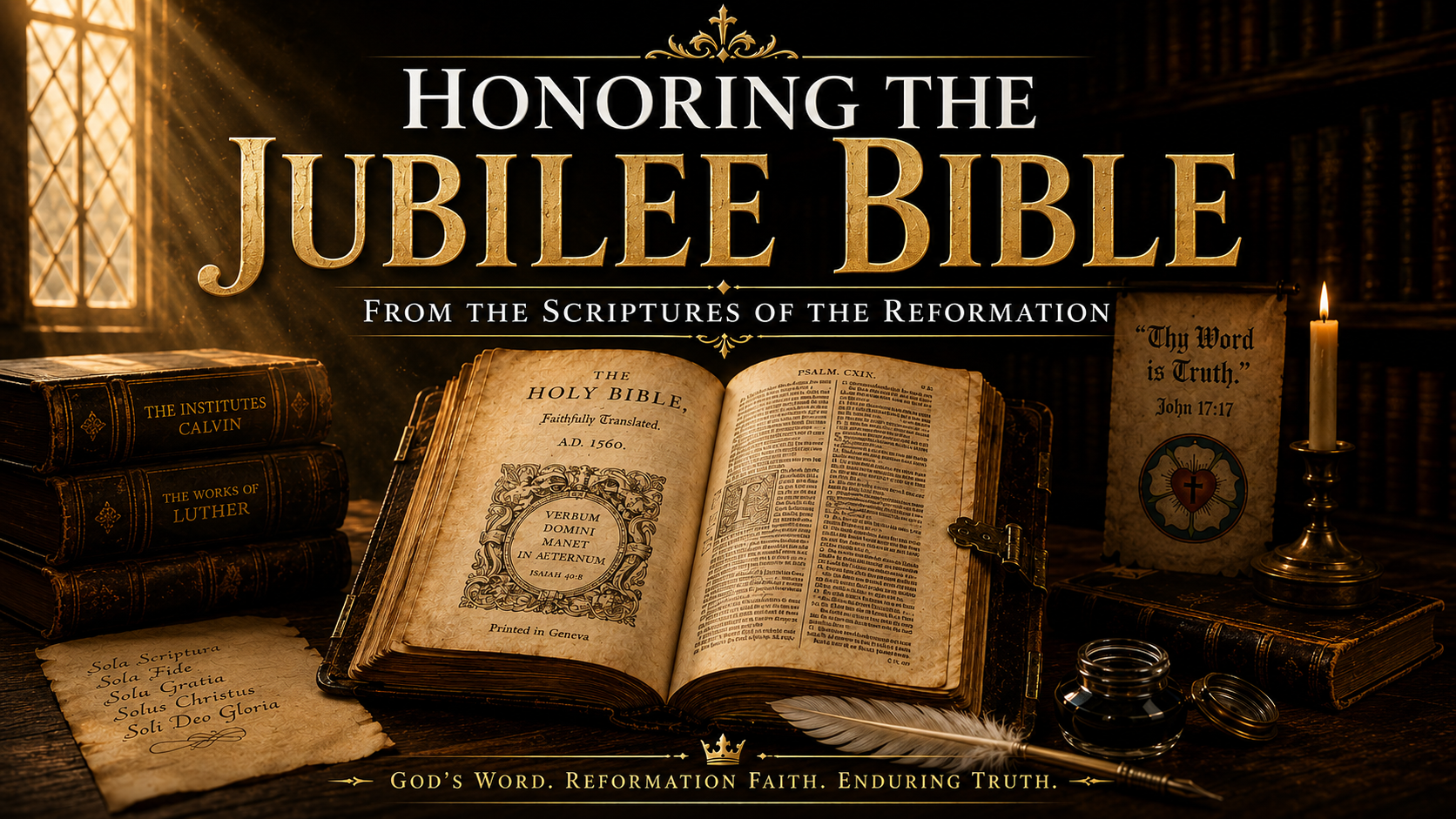
As a student of the Word, I have looked at a number of Bible translations over the years. I have read them, compared them, prayed through them, and weighed them against the greater witness of Scripture. I have also been blessed to meet three men connected to modern translation work: Brian Simmons of The Passion Translation, Francois du Toit of The Mirror Translation, and Russell Stendal of the Jubilee Bible.
I do not say this lightly, and I do not say it simply because I have met Russell Stendal on numerous occasions or shared good, healthy Kingdom conversations with him concerning the Word of God. I say it because, out of the three, I have found that Russell Stendal has held more faithfully to a place of honoring the integrity, weight, and origins of Scripture.
In my view, this matters deeply.
We are living in a time when many voices want to reshape Scripture around personal revelation, cultural pressure, emotional comfort, or modern ideological movements. But the Word of God was never given to be edited until the flesh could tolerate it. It was given to pierce, purify, correct, convict, restore, and transform.
I appreciated The Passion Translation in certain areas, especially where its language stirred devotion and affection toward the Lord. Yet over time, I could not treat it as a primary translation for doctrine, preaching, or serious biblical study because of how interpretive and expanded it often becomes.
I also came out in support of The Mirror Translation for a time, based in part upon the recommendation of a pastor I trusted. But not long into reading and studying it, I found that, in my view, it began to stray from biblical truth and leaned too heavily into the personal beliefs and convictions of the editor. This became especially concerning to me where the translation appeared to support modern cultural positions that I could not reconcile with the full counsel of Scripture.
The Jubilee Bible has been different for me.
Out of the three, the Jubilee Bible is the one I use daily. It is the one I have come to respect because of the way it seeks to hold true to the Word of God, and in some places, I have found it to carry a clarity and textual weight that feels even closer to the original intent than what we sometimes find in the King James Version.
That is not a statement made to diminish the KJV. The King James Version, first published in 1611, has carried tremendous influence in the English-speaking world. It stands as one of the great translation works of the Reformation-era English Bible stream and has shaped preaching, doctrine, worship, prayer, and Christian language for more than four centuries.
But the Jubilee Bible reaches into a stream that is often overlooked by English-speaking believers.
The Jubilee Bible is modern in its English publication, but its roots go back into the Reformation Bible movement of the 1500s. It is especially connected to Casiodoro de Reina’s 1569 Spanish Bible, known as the Bear Bible, and Cipriano de Valera’s 1602 revision. It also carries connection to earlier Reformation witnesses such as Francisco de Enzinas, Juan Pérez de Pineda, William Tyndale, and the Authorized Version tradition.
This means the Jubilee Bible is not merely another modern translation trying to appeal to the religious marketplace. It is an English work that seeks to recover and preserve something from the Scriptures of the Reformation.
That phrase matters: From the Scriptures of the Reformation.
The Reformation was not built upon men trying to make the Word of God more fashionable. It was built upon men who trembled before the authority of Scripture and were willing to suffer so the people could hear the Word in their own language. These were not editors trying to soften the sword. These were men trying to place the sword back into the hands of the people.
That is one of the reasons I honor the Jubilee Bible.
What I respect about Russell Stendal’s work is not merely a translation preference. It is the posture behind the work. There appears to be a deep concern for preserving the strength, consistency, and covenant weight of the biblical text. There is an effort to let Scripture define Scripture, rather than allowing modern trends to redefine biblical language.
In an age when many translations appear to soften words connected to repentance, holiness, judgment, obedience, covenant, fear of the Lord, and separation from sin, the Jubilee Bible often allows those words to stand with the authority they were meant to carry.
That is important.
The Word of God is not a self-help manual. It is not a motivational script. It is not a religious poem to make us feel better while leaving us unchanged. It is living. It is sharp. It is holy. It confronts before it comforts. It wounds in order to heal. It exposes in order to redeem.
No translation should ever replace prayer, humility, study, and a willingness to return to the Hebrew, Greek, and the greater witness of Scripture. No translation should be placed above the Word itself. But I do believe the Jubilee Bible deserves to be taken seriously by those who love Scripture, honor the Reformation stream, and refuse to see the Bible reduced to a softened devotional thought for the modern age.
For me, the Jubilee Bible has become a trusted daily companion in the Word.
I honor the labor behind it.
I honor its connection to the Reformation witness.
And I honor the desire to preserve the integrity of what God has spoken.
May the Lord continue to raise up scribes, teachers, translators, and watchmen who tremble at His Word, guard its truth, and refuse to trade holy conviction for comfortable religion.
We must become the altar where the fire falls again.
Stay tuned, the journey continues…..
A voice of fire to the Remnant,
— Dr. Russell Welch
Dr. Russell Welch is a published author, prophetic teacher, apostolic builder, and founder of faith-driven publishing and media initiatives. He is known for crafting bold, Kingdom-centered messages that call the Ecclesia into maturity, doctrinal clarity, and governmental authority. With a passion for equipping the Remnant and honoring generational legacy, Dr. Welch writes and teaches at the intersection of Scripture, history, and spiritual governance, challenging believers to live as sons and daughters who legislate Heaven on earth through truth, holiness, and unwavering fidelity to Christ.
Be sure to check out his book, “America at War: The Spiritual Battle for a Nation’s Soul” available exclusively on Amazon.

