Posts Tagged ‘God’


Enforcing the Victory of Christ Over a Defeated Enemy

One of the most important revelations the faithful must recover in this hour is the difference between power and authority. The enemy still has power, but he no longer possesses lawful authority over those who are in Christ. This distinction is not theological wordplay; it is foundational to victorious spiritual warfare. Many believers are exhausted because they are trying to defeat a devil that Jesus has already defeated, rather than standing in the authority of the victory Christ already secured.

Colossians 2:15 declares that Jesus “disarmed principalities and powers” and made a public spectacle of them, triumphing over them through the cross. That means the cross was not merely a place of forgiveness; it was a battlefield of conquest. Jesus did not walk out of the tomb negotiating terms with darkness. He rose as the victorious King, holding all authority in heaven and on earth. This is why He could declare in Matthew 28:18, “All authority has been given to Me in heaven and on earth.”

If all authority belongs to Christ, then Satan does not possess rightful authority over the redeemed. He may still accuse. He may still tempt. He may still resist. He may still roar. He may still attempt to intimidate, deceive, and oppress. But he no longer operates as a lawful ruler over those who have been translated out of the kingdom of darkness and into the Kingdom of God’s dear Son.

This is where the Church must become wise. The enemy’s power becomes a threat when he deceives a believer, a family, a church, a city, or even a nation into surrendering authority through agreement. Satan cannot overthrow the authority of Christ, but he can exploit human agreement when people give place to fear, rebellion, compromise, unbelief, bitterness, deception, idolatry, or sin. He does not need to possess authority if he can convince man to misuse, abandon, or surrender his.

This pattern is first revealed in Eden. The serpent did not overpower Adam and Eve. He deceived them. He did not take dominion by force; he gained access through agreement. Adam had been given a governmental assignment in the earth, but through disobedience he yielded ground to the serpent’s lie. The enemy’s weapon was not superior power. His weapon was deception that produced agreement.

That same strategy continues today. Satan is not looking for a fair fight; he is looking for an open door. He seeks agreement because agreement gives access. He wants believers to agree with fear instead of faith, accusation instead of identity, offense instead of forgiveness, compromise instead of holiness, and deception instead of truth. He knows that the believer who stands submitted to God and clothed in the authority of Christ is not someone he can lawfully rule.

James 4:7 gives the pattern clearly: “Submit yourselves therefore to God. Resist the devil, and he will flee from you.” Notice the order. Submission to God comes before resistance against the devil. Authority flows from alignment. The believer does not resist the enemy through human emotion, religious noise, or spiritual pride. The believer resists from the place of surrendered authority under the Lordship of Jesus Christ.

This is why Luke 10:19 is so powerful. Jesus said, “Behold, I give you authority… over all the power of the enemy.” He did not say the enemy had no power. He said His disciples had authority over the enemy’s power. That means the issue is not whether darkness can move; the issue is whether the people of God understand the authority they carry in Christ. Power without authority must depend on deception, intimidation, and illegal access. Authority in Christ stands on legal victory.

The devil’s greatest strategy is to convince believers that they are still victims of a power Jesus already conquered. He wants the Church to fight from fear instead of victory. He wants the faithful to believe they are trying to win a battle that Christ has already won. But spiritual warfare is not the believer attempting to secure victory; it is the believer enforcing the victory of the risen King.

This is where many believers lose ground. They do not lose because Jesus failed. They do not lose because the cross was incomplete. They do not lose because the devil has more authority than Christ. They lose ground when they agree with what Christ defeated. Fear becomes powerful when we agree with it. Sin becomes a stronghold when we submit to it. Lies become chains when we believe them. Offense becomes a prison when we nurse it. Darkness gains influence where human agreement gives it permission.

Yet the good news is just as powerful: what agreement opened, repentance can close. What deception gained, truth can expose. What fear occupied, faith can reclaim. What compromise yielded, obedience can restore. The believer does not need to beg for authority; he must return to alignment with the One who holds all authority.

The authority of the believer is not independent authority. It is delegated authority. It flows from union with Christ, submission to Christ, obedience to Christ, and agreement with Christ. A believer walking in rebellion cannot claim to be operating in kingdom authority while resisting the King who gave it. Authority is not a religious slogan; it is the governmental backing of Heaven upon those who stand under the rule of Jesus.

This is why holiness matters. This is why obedience matters. This is why discernment matters. The enemy is not merely trying to make believers behave badly; he is trying to get them to surrender authority. He wants their mouths to agree with accusation. He wants their hearts to agree with bitterness. He wants their minds to agree with confusion. He wants their lives to agree with compromise. Every agreement with darkness becomes a place where his power seeks expression.

But when the faithful stand in Christ, submit to God, resist the devil, and refuse agreement with darkness, the enemy’s power loses its operating room. He may still roar, but he cannot rule. He may still threaten, but he cannot govern. He may still accuse, but he cannot condemn those who are in Christ Jesus. He may still tempt, but he cannot force obedience to his lie.

The cross stripped the enemy of legal authority. The resurrection announced the enthronement of the victorious Christ. The ascension revealed the King seated far above all principality, power, might, dominion, and every name that is named. The Church must now stop treating the devil as though he still holds what Jesus already took from him.

The faithful are not called to survive under the shadow of a defeated devil. They are called to stand in the authority of the risen Christ, enforce the finished work of the cross, and refuse every agreement with darkness. The enemy’s power becomes dangerous only where authority is surrendered. But when authority remains submitted to Christ, the power of the enemy is exposed for what it truly is: illegal, defeated, and dependent upon deception.

Therefore, the call in this hour is clear. Guard your agreement. Guard your mouth. Guard your thoughts. Guard your doctrine. Guard your obedience. Do not give the enemy a room in your house, a seat at your table, or a voice in your decisions. Jesus has already triumphed. Now the faithful must stand, resist, and enforce the victory of the King.

The devil does not need to defeat Christ to gain ground in a believer’s life. He only needs to deceive the believer into surrendering agreement. But the believer who stands in truth, walks in obedience, and remains submitted to the Lordship of Jesus becomes a living witness that the enemy is defeated, Christ is enthroned, and the Kingdom of God is advancing.

Stay tuned, the journey continues…..

A voice of fire to the Remnant,

— Dr. Russell Welch

Dr. Russell Welch is a published author, prophetic teacher, apostolic builder, and founder of faith-driven publishing and media initiatives. He is known for crafting bold, Kingdom-centered messages that call the Ecclesia into maturity, doctrinal clarity, and governmental authority. With a passion for equipping the Remnant and honoring generational legacy, Dr. Welch writes and teaches at the intersection of Scripture, history, and spiritual governance, challenging believers to live as sons and daughters who legislate Heaven on earth through truth, holiness, and unwavering fidelity to Christ.

Be sure to check out his book, Spirit Wind People: Those Who are Moved by the Impulses of Holy Spirit, available exclusively on Amazon.

Amazon Author Page


Part One

There comes a moment when every generation must decide whether it will be governed by Scripture or by the traditions it inherited. Not every tradition is false, and not every theological framework is automatically corrupt. But every doctrine must eventually stand beneath the searching light of the Word of God. If it cannot survive the testimony of Scripture, it must not be allowed to rule the conscience of the Church.

This is where we must begin the conversation concerning what is commonly called “the Rapture.”

For many believers, the word itself carries deep emotional weight. It has been preached through charts, movies, novels, prophecy conferences, timelines, fear-based altar calls, and countless sermons warning the Church of sudden disappearance, global chaos, and an escape from tribulation. Many sincere believers have built their entire understanding of the end times around this doctrine. Others have never studied it deeply but assumed it must be biblical because it was handed to them by trusted voices.

But sincerity does not make a doctrine true. Popularity does not make a teaching apostolic. Repetition does not turn assumption into revelation. The real question is not, “What have we always heard?” The real question is, “What does the text actually say?”

That question must govern this entire series.

The issue before us is not whether Jesus Christ is returning. He is. The testimony of Scripture is clear, glorious, and immovable. Christ will return bodily, visibly, triumphantly, and in power. The kingdoms of this world will become the kingdoms of our Lord and of His Christ. The dead in Christ will be raised. The living faithful will be gathered. The enemies of God will be judged. Creation itself will witness the unveiling of the sons of God and the full manifestation of the reign of Christ.

The issue is also not whether the saints will be gathered unto the Lord. Scripture plainly speaks of a gathering. The Lord Himself taught that He would send His angels to gather His elect. Paul wrote of the coming of our Lord Jesus Christ and our gathering together unto Him. The resurrection, the appearing of Christ, and the gathering of His people are biblical realities.

The question is whether the modern secret-escape doctrine accurately reflects the testimony of Scripture.

That is where the dividing line must be drawn.

Modern Rapture teaching often presents the return of Christ in separated stages: first, a secret coming for the Church, where believers vanish from the earth before tribulation; then later, a public coming with the saints to establish His Kingdom. This framework has become so embedded in certain circles that many now read it back into the Bible without realizing they are doing so.

But when we come to Scripture, we must be careful not to force the text to serve a system. The Word of God must be allowed to speak for itself. Doctrine must be born from Scripture, not imposed upon Scripture. The people of God are not called to protect prophecy charts; we are called to contend for truth.

The biblical writers did not present the return of Christ as an escape fantasy for a defeated Church. They proclaimed it as the triumphant appearing of the King. They did not call the faithful to abandon the battlefield. They called them to endure, overcome, watch, remain sober, stand firm, and be found faithful at His appearing.

Jesus never trained His disciples to expect evacuation from trouble. He prepared them to overcome it. In John 17:15, He prayed, “I do not pray that You should take them out of the world, but that You should keep them from the evil one.” That prayer does not sound like a theology of escape. It sounds like a theology of preservation, victory, and faithful witness in the midst of a hostile world.

This does not mean the people of God are appointed to wrath. They are not. Paul clearly said that God has not appointed us to wrath, but to obtain salvation through our Lord Jesus Christ. But tribulation and wrath are not the same thing. The faithful have always faced tribulation, persecution, pressure, and warfare. The wrath of God is reserved for the rebellious, the unrepentant, and the systems of darkness that oppose His Kingdom.

The modern error is often found in confusing tribulation with divine wrath. Because of that confusion, many have assumed that if God loves His people, He must remove them before the hour of pressure. But Scripture shows something different. God does not always remove His people from the fire; He often reveals His glory through them in the fire.

Noah was preserved through the flood. Israel was preserved through the plagues in Egypt. Daniel was preserved in Babylon. Shadrach, Meshach, and Abednego were preserved in the furnace. The early Church was preserved in witness through persecution, not by escape from it. The pattern of Scripture is not the removal of the faithful from every conflict, but the keeping power of God in the midst of conflict.

That distinction matters.

When Jesus spoke of the end of the age in Matthew 24, He warned of deception, wars, persecution, false prophets, lawlessness, and endurance. He said, “He who endures to the end shall be saved.” He did not say, “He who escapes before trouble begins.” He then declared that this gospel of the Kingdom would be preached in all the world as a witness to all nations, and then the end would come.

The emphasis of Jesus was not abandonment of mission. It was endurance in mission.

That alone should make us pause.

If our end-time doctrine produces fear, passivity, escapism, and disengagement from Kingdom assignment, we must ask whether it carries the same spirit as the words of Christ. If our theology teaches the Church to wait for removal instead of preparing for maturity, dominion, holiness, witness, and victory, then something has been misaligned.

The return of Christ is not a doctrine of panic. It is the hope of the faithful.

The appearing of Christ is not meant to produce spiritual retreat. It is meant to produce purity, courage, and steadfastness. John wrote that everyone who has this hope in Him purifies himself, just as He is pure. The blessed hope is not a license to abandon cultural responsibility or prophetic assignment. It is a holy expectation that the King will come, that righteousness will prevail, and that the faithful must be found ready.

Readiness, biblically, is not mere curiosity about timelines. Readiness is faithfulness.

This is why we must separate the biblical gathering of the saints from the modern secret-escape doctrine. The biblical gathering is tied to the visible coming of Christ, the resurrection of the dead, the sound of the trumpet, the appearing of the Son of Man, and the consummation of the age. It is majestic, public, cosmic, and victorious.

The modern secret-escape doctrine often places the gathering before the final conflict, before the public appearing, and before the full unveiling of Christ’s victory in the earth. It can unintentionally train believers to see tribulation as something the Church must avoid rather than something the faithful must overcome through Christ.

But the book of Revelation does not say, “To him who escapes.” It repeatedly says, “To him who overcomes.”

That word must return to the center of our theology.

The faithful are not called to be fear-driven spectators of the end times. We are called to be witnesses, watchmen, sons and daughters, priests and kings, ambassadors of the Kingdom, and a holy people who refuse to bow to the spirit of the age. The end-time Church is not portrayed as weak, confused, and waiting helplessly for extraction. The faithful are called to endure with the testimony of Jesus, the commandments of God, and the faith once delivered to the saints.

This does not mean every believer who holds to a Rapture view is rebellious or deceived. Many love Jesus deeply. Many are sincere. Many have simply inherited a framework and never questioned it. This series is not written to mock people, dishonor believers, or attack the Body of Christ. It is written to call us back to the authority of Scripture.

Truth does not fear examination.

If a doctrine is biblical, it can withstand the full weight of biblical scrutiny. If it is not biblical, then we must love Christ enough to let it fall. The Church cannot afford to build its hope on assumptions, no matter how popular they have become. Our hope must be anchored in the testimony of Christ, the apostles, and the prophets.

The foundation of this series is simple: Scripture must govern doctrine.

We are going to examine the major passages commonly used to support the modern Rapture doctrine. We are going to ask what they actually say in context. We are going to look at the language, the audience, the flow of thought, and the larger biblical witness. We are going to distinguish between the public return of Christ, the resurrection of the righteous, the gathering of the saints, the wrath of God, the endurance of the faithful, and the Kingdom hope proclaimed by Jesus and the apostles.

We are not beginning with fear. We are beginning with Scripture.

We are not beginning with charts. We are beginning with the text.

We are not beginning with what modern prophecy culture has told us. We are beginning with the voice of the Word.

The Church must become noble like the Bereans, who searched the Scriptures daily to see whether the things they were taught were true. That is not rebellion. That is spiritual maturity. That is not dishonor. That is faithfulness to God.

The Lord is not intimidated by our questions when our questions are submitted to His Word. He is not offended when His people test doctrine by Scripture. In fact, He commands us to test all things and hold fast to what is good.

So let us begin there.

Let us lay down inherited fear. Let us lay down religious pressure. Let us lay down the intimidation that says we are not allowed to question what has been handed to us. Let us come humbly, boldly, and honestly before the Word of God.

Christ is returning.

The saints will be gathered.

The dead in Christ will rise.

The faithful who remain will be caught up together with them to meet the Lord.

The Kingdom will come in fullness.

The glory of the Lord will cover the earth.

But the question we must answer is this: does the modern secret-escape Rapture doctrine truly reflect the testimony of Scripture, or has it reshaped the biblical hope into something the apostles never preached?

That is the journey before us.

And if we are willing to let Scripture speak, we may find that the hope of the Church is far greater, far stronger, and far more victorious than the doctrine of escape has allowed many to see.

Stay tuned, the journey continues…..

A voice of fire to the Remnant,

— Dr. Russell Welch

Dr. Russell Welch is a published author, prophetic teacher, apostolic builder, and founder of faith-driven publishing and media initiatives. He is known for crafting bold, Kingdom-centered messages that call the Ecclesia into maturity, doctrinal clarity, and governmental authority. With a passion for equipping the Remnant and honoring generational legacy, Dr. Welch writes and teaches at the intersection of Scripture, history, and spiritual governance, challenging believers to live as sons and daughters who legislate Heaven on earth through truth, holiness, and unwavering fidelity to Christ.

Be sure to check out his book, The Vanishing Gospel: Exposing False End‑Time Doctrine and Restoring the Kingdom Gospel, available exclusively on Amazon.

Amazon Author Page


The Post-War Hunger for Divine Healing and the Restoration of Holy Spirit Expectancy

The Healing Revival
When Signs and Wonders Returned to the Public Square

After the fires of war had swept across the earth, the world stepped into the late 1940s carrying wounds deeper than statistics could measure. Nations had been shaken. Families had buried sons. Bodies had returned from battlefields carrying scars, trauma, amputations, sickness, and grief. The human soul had seen what modern machinery could do when separated from righteousness. Into that atmosphere, God began to awaken something that many parts of the Church had allowed to grow dim: the expectancy that Jesus Christ still heals, still delivers, still moves in power, and still confirms His Word with signs following.

The Healing Revival that emerged in the post-war years is commonly associated with the late 1940s through the 1950s. Many historians connect its rise with large-scale healing campaigns, tent meetings, radio broadcasts, prayer lines, and evangelistic gatherings where divine healing was proclaimed publicly again. This movement helped renew the Church’s expectation for the supernatural and became one of the major streams that later fed into the broader Charismatic movement.

This was not merely a season of emotional meetings. It was a response to a deep spiritual hunger. People were tired of religion that had language without power, structure without presence, and doctrine without demonstration. They wanted to know whether the Jesus who opened blind eyes, cleansed lepers, healed the lame, cast out demons, and raised the dead was still moving through His Church. The Healing Revival answered that hunger with a thunderous declaration: “Jesus Christ is the same yesterday, today, and forever” (Hebrews 13:8).

The public square began to hear again that sickness was not beyond the reach of Christ. Pain was not greater than the cross. Torment was not stronger than the blood. Disease was not more authoritative than the name of Jesus. In an age marked by grief, loss, and medical limitation, healing evangelists stepped into tents, auditoriums, churches, radio programs, and crusade platforms declaring that the living Christ still stretched out His hand toward the broken.

Names such as Oral Roberts, William Branham, Gordon Lindsay, F. F. Bosworth, Jack Coe, A. A. Allen, and others became associated with this era. Some carried powerful healing testimonies. Some drew massive crowds. Some helped awaken faith in entire regions. Gordon Lindsay’s Voice of Healing became a major publication connected to the movement, helping spread testimonies and reports of healing campaigns across Pentecostal and evangelical circles.

But to understand the Healing Revival rightly, we must look deeper than personalities. The true issue was not the platform. The true issue was the restoration of expectancy. The Church was being confronted with a question that every generation must answer: Do we only believe in the miracles of the Bible as historical memories, or do we believe the same Holy Spirit still empowers the Ecclesia to minister in the authority of Jesus Christ?

The book of Acts never presents signs and wonders as entertainment. They are not spiritual theater. They are not religious performance. They are the mercy of God breaking into human suffering and the authority of the Kingdom confronting the works of darkness. Acts 4:29–30 records the prayer of the early Church: “Lord, behold their threatenings: and grant unto thy servants, that with all boldness they may speak thy word, by stretching forth thine hand to heal; and that signs and wonders may be done by the name of thy holy child Jesus.”

Notice the order. They asked for boldness to speak the Word, and they asked God to stretch forth His hand to heal. The miracle was not meant to replace the message. The miracle was meant to bear witness to the message. Healing was never supposed to become the center; Jesus was always the center. But where Jesus is truly preached in fullness, the compassion and power of His Kingdom cannot remain theoretical.

This is where the Healing Revival carried a necessary correction to much of the Western Church. Many believers had settled into a powerless form of Christianity. They believed God could heal, but they no longer expected Him to. They honored the miracles of Scripture, but quietly treated them as if they belonged only to a former age. The Healing Revival challenged that unbelief. It forced the Church to wrestle again with Mark 16:17–18, James 5:14–15, 1 Corinthians 12, Acts 3, Acts 5, Acts 8, Acts 10, and Acts 19.

The message was simple but disruptive: the Gospel of the Kingdom is not word only. Paul wrote in 1 Corinthians 4:20, “For the kingdom of God is not in word, but in power.” That does not mean power without truth. It means truth confirmed by the living presence of God. It means the Kingdom is not merely explained; it is demonstrated through surrendered vessels who carry the authority of the King.

Yet we must also be honest. Like many moves of God, the Healing Revival carried both glory and warning. There were genuine miracles, salvations, deliverances, and awakenings. There were also controversies, exaggerations, doctrinal errors, financial abuses, personality-driven ministries, exhaustion among leaders, and places where the gift became more visible than the Giver. Some Pentecostal leaders and denominations eventually became concerned about sensationalism, questionable fundraising practices, doctrinal conflict, and lack of accountability within parts of the movement.

This matters because the Remnant must learn from history without dishonoring what God truly did. We do not need to throw away the fire because some men mishandled the altar. We also do not need to excuse disorder simply because miracles were reported. The mature Ecclesia must be able to say both things at once: God truly restored healing expectancy in that generation, and the Church must never allow signs and wonders to become separated from holiness, humility, truth, character, and the Lordship of Jesus Christ.

The Healing Revival reminds us that power without character becomes dangerous, but character without power can become religiously respectable unbelief. The biblical pattern is not one or the other. The biblical pattern is Spirit and truth. Jesus moved in perfect compassion, perfect holiness, perfect obedience, and perfect authority. He did not heal to build a brand. He healed because the Kingdom had come near. He healed because the Father’s heart was being revealed. He healed because the works of the devil were being destroyed.

Acts 10:38 declares that “God anointed Jesus of Nazareth with the Holy Ghost and with power,” and that He “went about doing good, and healing all that were oppressed of the devil; for God was with him.” This verse gives us a Kingdom lens. Healing is not merely physical relief. It is the collision between Heaven’s government and the oppression of darkness. It reveals the goodness of God, the authority of Christ, and the nearness of the Kingdom.

That is why the Healing Revival belongs in the story of revival history. It reintroduced the public square to the possibility that God was not silent, distant, or retired from supernatural intervention. It reminded post-war America that Heaven was not intimidated by trauma, sickness, grief, or despair. It brought people into tents and meetings where they heard the Gospel, received prayer, witnessed testimonies, and encountered a dimension of Christianity many had only read about.

But now the question comes to our generation.

Will we recover healing without hype?

Will we recover signs and wonders without celebrity?

Will we recover miracle faith without manipulation?

Will we recover public demonstrations of the Kingdom while remaining deeply submitted to Scripture, holiness, humility, and the government of Holy Spirit?

The Remnant must understand this: signs and wonders were never given so the Church could become impressive. They were given so Christ would be revealed. Healing is not a marketing strategy. Deliverance is not a platform tool. Miracles are not spiritual entertainment. They are acts of mercy from the King, bearing witness that the Gospel is alive, the Kingdom is present, and Jesus still destroys the works of the devil.

The Healing Revival showed us what can happen when divine expectancy returns to the public square. But it also warned us what happens when gifting runs faster than formation. The next healing movement must not be built around personalities. It must be carried by purified sons and daughters who know how to steward power from a place of surrender. The next wave must not be tent-centered, platform-centered, or personality-centered. It must be Christ-centered, Spirit-governed, Scripture-rooted, and holiness-anchored.

The Church does not need a return to yesterday’s methods. We need a return to biblical expectancy. We need prayer rooms where the sick are not treated as interruptions. We need altars where torment is confronted with compassion and authority. We need believers who lay hands on the sick in faith, not because they are chasing a name, but because they are obeying the Word. We need pastors, teachers, evangelists, prophets, apostles, intercessors, and everyday disciples who once again believe that the same Spirit who raised Christ from the dead dwells in the people of God.

Romans 8:11 declares that if the Spirit of Him who raised Jesus from the dead dwells in us, He who raised Christ shall also quicken our mortal bodies by His Spirit. That is not weak language. That is resurrection language. That is Kingdom language. That is the language of divine life invading mortal limitation.

The Healing Revival was a trumpet blast to a wounded generation. It declared that Jesus still heals. Jesus still delivers. Jesus still saves. Jesus still moves in power. But the Remnant must now carry that revelation with greater purity, greater maturity, and greater accountability. We must refuse both dead religion and reckless sensationalism. We must refuse unbelief dressed as discernment, and we must refuse hype dressed as faith.

The true healing ministry of Jesus flows from intimacy with the Father, obedience to Holy Spirit, compassion for the broken, hatred for the works of darkness, and submission to the Word of God. When those things are in order, healing does not become a show. It becomes a witness.

The public square still needs that witness.

Hospitals are full. Homes are broken. Minds are tormented. Bodies are afflicted. Families are grieving. Addictions are destroying destinies. Trauma is locking people in invisible prisons. And the Church cannot answer this hour with religious language alone. The Gospel must be preached. The Kingdom must be demonstrated. The sick must be prayed for. The oppressed must be delivered. The broken must encounter the living Christ.

The Healing Revival reminds us that post-war hunger opened a door for supernatural expectancy. But our generation carries its own wounds, its own wars, its own trauma, its own despair, and its own desperate need for the healing power of Jesus Christ.

So let the Remnant rise with clean hands and burning hearts.

Let the Ecclesia recover the courage to pray for the sick.

Let the altar be purified from performance.

Let the gifts of the Spirit operate under the Lordship of Christ.

Let healing return without hype, miracles return without manipulation, and signs and wonders return as witnesses to the supremacy of Jesus.

Because the same Jesus who healed then still heals now.

The same Holy Spirit who moved then still moves now.

And the same Kingdom that broke into the public square in the book of Acts is still advancing through surrendered sons and daughters today.

Scripture for Reflection:

“And these signs shall follow them that believe; In my name shall they cast out devils; they shall speak with new tongues… they shall lay hands on the sick, and they shall recover.”
Mark 16:17–18

“How God anointed Jesus of Nazareth with the Holy Ghost and with power: who went about doing good, and healing all that were oppressed of the devil; for God was with him.”
Acts 10:38

“For the kingdom of God is not in word, but in power.”
1 Corinthians 4:20

Prayer:

Father, restore holy expectancy to Your people. Purify our motives, cleanse our altars, and deliver us from both unbelief and performance. Teach us to carry the healing ministry of Jesus with humility, compassion, authority, and obedience. Let signs and wonders return as witnesses to the Gospel of the Kingdom, and let every miracle point back to the Lordship of Jesus Christ. Amen.

Stay tuned, the journey continues…..

A voice of fire to the Remnant,

— Dr. Russell Welch

Dr. Russell Welch is a published author, prophetic teacher, apostolic builder, author, and founder of faith-driven publishing and media initiatives. He is known for crafting bold, Kingdom-centered messages that call the Ecclesia into maturity, doctrinal clarity, and governmental authority. With a passion for equipping the Remnant and honoring generational legacy, Dr. Welch writes and teaches at the intersection of Scripture, history, and spiritual governance, challenging believers to live as sons and daughters who legislate Heaven on earth through truth, holiness, and unwavering fidelity to Christ.

Be sure to check out his book: Restoring God’s Prophetic Voice: Unleashing the Watchman’s Power in the Church’s Guide to Holy Living, available exclusively on Amazon … here

Amazon Author Page


“Some words are not meant to be rushed — they are meant to be seasoned in the secret place”

As a chef, I learned something very early: if you want a good steak, you do not simply pull it out of the refrigerator, slap it on the grill, throw a little salt and pepper on it, and expect greatness. You may end up with something edible. You may even end up with something that has a little flavor. But if you want depth, tenderness, richness, and excellence, you season it properly and let it marinate.

Twelve hours is good. Twenty-four hours is even better.

Why? Because time allows the seasoning to penetrate beneath the surface.

And over the years, Holy Spirit has shown me that prophetic words often work the same way.

Not every word you receive from Heaven is meant to be instantly released. Some words are born for the moment, yes. There are times when the fire of God comes upon a messenger and the word must be released immediately. Jeremiah said the word of the Lord was like fire shut up in his bones, and he could not hold it in. But there are also words that are not meant to be thrown onto the public grill the moment they arrive. Some words must remain in the birthing chamber of prayer until the holy oils of the Throne Room have fully saturated them.

Habakkuk was told, “Write the vision, and make it plain,” but he was also told, “the vision is yet for an appointed time” (Habakkuk 2:2–3). That means not every true word is an immediate word. Some words are accurate in content but premature in timing. Some words are from Heaven, but they must first be seasoned in intercession, purified in surrender, tested in humility, and weighed before the Lord.

This is why the prophetic life must be governed by Holy Spirit, not by the hunger for a platform.

Jesus said, “My sheep hear My voice, and I know them, and they follow Me” (John 10:27). The mature prophetic vessel does not merely hear; the mature vessel follows. Following means we do not just ask, “Lord, what are You saying?” We also ask, “Lord, when do You want this spoken? Who is this for? Is this for public release, private intercession, personal obedience, or a decree in the secret place?”

Paul instructed the Church, “Do not despise prophecies, but test everything; hold fast what is good” (1 Thessalonians 5:20–21). He also wrote, “Let two or three prophets speak, and let the others weigh what is said” (1 Corinthians 14:29). In other words, the New Testament prophetic culture was never meant to be reckless, sensational, or entertainment-driven. It was meant to be submitted, weighed, holy, and governed by the Spirit of God.

Much of what is called prophetic today has been shaped more by stage production than by the secret place. It has created a false hunger in many people to chase the next word, the next dramatic declaration, the next emotional high, the next public spectacle. But the Kingdom does not operate by spiritual entertainment. The Kingdom operates through obedience, consecration, discernment, timing, purity, and the fear of the Lord.

The early Church understood this tension. The Didache, one of the earliest Christian writings outside the New Testament, warned believers not to simply accept every person who claimed prophetic speech, but to discern the life and fruit of the messenger. Irenaeus, writing in the second century, defended the reality of prophetic gifts in the Church, yet also warned against false prophets who spoke from vanity, personal gain, or a spirit not from God. The ancient Church did not throw away the prophetic, but neither did they allow it to become lawless.

That is the balance we must recover.

The prophetic must be honored, but it must also be purified.

The gifts must be received, but the vessel must be consecrated.

The voice must be released, but only under the government of Holy Spirit.

Throughout Church history, those who walked deeply with God understood that the word of the Lord is not a toy for the gifted; it is a sacred trust for the surrendered. The desert fathers spoke often of silence, purity of heart, and the danger of spiritual pride. The mystics of the Church understood that deep revelation must be held in humility. Andrew Murray wrote powerfully about waiting on God, reminding the saints that spiritual life is not sustained by human striving but by God Himself working within the soul. Oswald Chambers would later call believers into absolute surrender, warning that the life of faith is not driven by self-importance but by yieldedness to the One who leads.

And this is exactly what Holy Spirit is restoring in this hour.

He is raising up a new breed of Watchmen.

Not performers.

Not spiritual celebrities.

Not prophetic entertainers.

Not men and women addicted to applause, platforms, followers, or public affirmation.

He is raising up Watchmen who know how to hear in the secret place before they speak in the public place. Watchmen who understand that some words are not sermons; they are assignments. Some words are not posts; they are intercessions. Some words are not for the crowd; they are for the altar. Some words are not meant to impress men; they are meant to move mountains in the unseen realm.

These are the spiritual mystics of the Kingdom—not in the sense of confusion, New Age mixture, or unbiblical imagination, but in the holy biblical sense of men and women drawn into the mysteries of God. Like Isaiah, who saw the Lord high and lifted up. Like Jeremiah, who carried the burden of the word of the Lord. Like Daniel, who received mysteries in the night. Like Ezekiel, who saw visions of God by the river. Like John on Patmos, who was caught up in the Spirit and shown what earthly eyes could never manufacture.

But there is a doorway into that realm, and Scripture tells us who may enter.

“Who shall ascend the hill of the Lord? And who shall stand in His holy place? He who has clean hands and a pure heart” (Psalm 24:3–4).

This is why everything must come under the Lordship of Holy Spirit: your life, your marriage, your finances, your ministry, your gifts, your ambition, your tongue, your timing, your motives, and your desire to be seen. Because the prophetic word is not truly safe in the mouth of an unsubmitted vessel.

A true Watchman does not only ask for more revelation.

A true Watchman asks for cleaner hands.

A true Watchman asks for a purer heart.

A true Watchman asks for the fear of the Lord.

A true Watchman is willing to let the word marinate in the secret place until Heaven says, “Now release it.”

Because when a word has been saturated in prayer, seasoned by obedience, tenderized by humility, purified by fire, and released under the authority of Holy Spirit, it does not merely carry information.

It carries weight.

It carries oil.

It carries fire.

It carries the fragrance of the Throne.

And in this hour, the Ecclesia does not need more raw words thrown onto the grill of public opinion.

We need seasoned voices.

We need surrendered messengers.

We need Watchmen who know the difference between hearing something from God and being authorized to release it.

The altar must be guarded.

The prophetic must be purified.

The secret place must be restored.

And the new breed of Watchmen must arise with clean hands, pure hearts, burning eyes, and tongues governed by the Lordship of Holy Spirit.

Stay tuned, the journey continues…..

A voice of fire to the Remnant,

— Dr. Russell Welch

Dr. Russell Welch is a published author, prophetic teacher, apostolic builder, author, and founder of faith-driven publishing and media initiatives. He is known for crafting bold, Kingdom-centered messages that call the Ecclesia into maturity, doctrinal clarity, and governmental authority. With a passion for equipping the Remnant and honoring generational legacy, Dr. Welch writes and teaches at the intersection of Scripture, history, and spiritual governance, challenging believers to live as sons and daughters who legislate Heaven on earth through truth, holiness, and unwavering fidelity to Christ.

Be sure to check out his book: Restoring God’s Prophetic Voice: Unleashing the Watchman’s Power in the Church’s Guide to Holy Living, available exclusively on Amazon … here

Amazon Author Page


In this hour, the Lord is sovereignly raising up a company of Fire-Brand Watchmen Seers to pierce the thick veil of spiritual slumber. These are not mere observers of the status quo, but those who have been forged in the crucible of secret communion to discern the shifting tides of the spirit. Just as the prophet Ezekiel was appointed as a watchman to the house of Israel, these sentinels are charged with sounding a clarion call that cannot be ignored (Ezekiel 3:17). Their eyes are fixed upon the horizon of heaven, catching glimpses of divine strategy that remain hidden from those entangled in worldly systems. They arise with a holy burden to see what is truly transpiring behind the polished veneer of modern religious performance.

We are witnessing a profound dismantling of the shadows of religion that have long obscured the radiance of the true Gospel. These Watchmen Seers possess a gift of discernment that acts like a refiner’s fire, exposing the “broken cisterns” that hold no water (Jeremiah 2:13). The deception that has infiltrated the mainstream Church often hides in plain sight, masquerading as progress while stripping away the power of the Cross. As the reformer Martin Luther once declared, the true treasure of the Church is the most holy Gospel of the glory and grace of God; anything less is merely a human construct. These seers are not here to tear down the building, but to expose the rotten foundations so that the true house of God may be rebuilt.

There is a movement occurring today that demands we cease viewing the Church as a mere collection of institutions or organizations. Martyn Lloyd-Jones famously noted that revival is a sovereign act of God that happens to the Church, shaking her from her lethargy and refocusing her gaze upon Christ. These Fire-Brand Watchmen are the heralds of this reality, calling the Body to abandon the comfort of religious façade. They are the ones who refuse to be silent about the compromises that have allowed the “mystery of lawlessness” to take root (2 Thessalonians 2:7). Their mandate is to sound the alarm, knowing that failing to warn the people carries a heavy, eternal weight of accountability.

This is a time for the spirit-led remnant to be stirred to a new fervor, leaving behind the dead orthodoxy that fails to realize the glorious possibilities of the Christian life. As Duncan Campbell once urged during the Lewis Awakening, revival begins when God’s own people are touched anew by the Holy Spirit. These seers are catalysts for that touch, refusing to settle for shallow emotionalism or man-made programs that lack the fire of His presence. They understand that true transformation requires a “whole church on its knees,” rather than a church distracted by the glittering distractions of this age. Their testimony is one of unwavering commitment to the truth, regardless of the personal cost.

The watchtower of this hour is a place of profound isolation, yet it is where the most vital battles are won. While the world and even parts of the Church are caught in a web of “strong delusion,” these seers remain anchored in the Word (2 Thessalonians 2:11). They are not swayed by the shifting opinions of men, but are tethered to the heartbeat of the Father. They are the ones who, like the ancient watchmen, stand in the gap to plead for divine intervention when the foundations of truth are under siege. It is in this place of constant, vigilant prayer that the secrets of the Lord are entrusted to them.

These Fire-Brand Watchmen are tasked with restoring the prophetic mandate to declare the “whole counsel of God,” refusing to shrink back in the face of opposition (Acts 20:27). They recognize that deception thrives in the absence of absolute truth, and they are committed to upholding the standard of righteousness in every sphere. By identifying the subtle influence of religious spirits, they provide the necessary guidance for the Body to navigate toward genuine spiritual maturity. They are the spiritual navigators of this season, helping others to distinguish between the artificial light of human wisdom and the true fire of the Holy Spirit.

There is an urgency to this hour that cannot be overstated, as the “last hour” approaches and the call to vigilance becomes more critical than ever. The apostle Peter urged believers to be “sober-minded and alert,” a mandate that these seers carry as a fundamental identity (1 Peter 5:8). They serve as the conscience of the Church, lovingly but firmly confronting the apathy that has allowed deception to flourish. Their voices are not intended to condemn, but to clear the path for a move of God that is pure, undefiled, and untainted by religious tradition. They labor so that the flock may be guarded from the wolves that come dressed in the clothing of sheep.

This company is defined by their intimacy with Christ, for they know that without such depth, the spirit of discernment remains dormant. They are not chasing signs and wonders, but are chasing the King who grants them the sight to see into the eternal realm. When the eyes of the heart are flooded with light, as Paul prayed in Ephesians 1:18, the reality of the spirit-world becomes clearer than the physical surroundings. This divine perspective is what enables them to minister with the precision required to pierce through the hardness of hearts. Their strength is found in the secret place, where they are repeatedly renewed for the assignment at hand.

The shadows of religion are fading as the light of these Watchmen Seers begins to spread across the landscape. They represent a shift away from the “professionalism” of ministry and back toward the raw, organic power of the early Church. This movement is characterized by a refusal to prioritize numbers and influence over the transformative truth of the Gospel. It is a return to the basics: the Word, the Spirit, and the unadulterated passion for the presence of the Living God. As they arise, they carry with them the promise of a refreshing that will revive the weary and restore the broken.

We must pay attention to the alarm that is currently sounding, for it is not the sound of conflict, but the sound of an approaching visitation. The Fire-Brand Watchmen are calling us to prepare the way of the Lord by sweeping away the remnants of religious deception. Their message is a catalyst for repentance, a turning away from the idols of success and status back toward the simplicity of devotion to Christ. They are inviting the Body to step out of the shadows and into the glorious light of a new day of reformation. The time for business-as-usual has passed; the time for a radical, truth-centered walk has arrived.

The Lord is calling every one of His children to a greater level of discernment in this hour, but He has uniquely equipped this company of Watchmen to lead the charge. They bear the marks of the cross—humility, sacrificial love, and an uncompromising stance against falsehood. Their lives are living testimonies to the fact that God is still speaking, still working, and still preparing a people for Himself. As we align ourselves with the truth they proclaim, we position ourselves to be part of the move of God that will change the face of the Church. The fire is falling, and it is burning away everything that cannot stand the heat of His glory.

Finally, let us embrace this season with courage and expectation, knowing that the God who began a good work will surely bring it to completion. The Fire-Brand Watchmen Seers are not merely a phenomenon of the present; they are the manifestation of a historic, enduring promise to always keep a remnant who will not bow to the gods of this age. Their call is our invitation to wake up, stand up, and align our hearts with the heartbeat of heaven. May we be found among those who hear the trumpet, heed the warning, and walk into the fullness of the reformation God is orchestrating in this hour.

Stay tuned, the journey continues…..

A voice of fire to the Remnant,

— Dr. Russell Welch

Dr. Russell Welch is a published author, prophetic teacher, apostolic builder, author, and founder of faith-driven publishing and media initiatives. He is known for crafting bold, Kingdom-centered messages that call the Ecclesia into maturity, doctrinal clarity, and governmental authority. With a passion for equipping the Remnant and honoring generational legacy, Dr. Welch writes and teaches at the intersection of Scripture, history, and spiritual governance, challenging believers to live as sons and daughters who legislate Heaven on earth through truth, holiness, and unwavering fidelity to Christ.

Be sure to check out his book: Restoring God’s Prophetic Voice: Unleashing the Watchman’s Power in the Church’s Guide to Holy Living, available exclusively on Amazon … here

Amazon Author Page


The Kingdom is roaring again. And no building can contain its sound.

The word ekklesia carries a meaning far deeper than what most modern believers imagine, because in the ancient world it described a governing assembly rather than a religious gathering. When Jesus used this word, He was intentionally drawing from the language of civic authority, not temple worship or ritual practice. His listeners would have immediately understood that He was speaking about a people called out to legislate, deliberate, and represent the will of a king. This means the identity of His followers was rooted in Kingdom function, not institutional membership or weekly attendance. The shift from ekklesia to “church” dramatically altered how generations interpreted their role in the world, creating a gap between what Jesus intended and what many believers experience today. Recovering this meaning is essential for restoring the authority Jesus entrusted to His people.

The English word “church” comes from a completely different linguistic stream, one tied to buildings, sacred spaces, and religious structures. This translation redirected the focus from a governing people to a physical location, which reshaped the imagination of the Christian world for centuries. Instead of seeing themselves as a Kingdom assembly with authority, many believers came to see themselves as attendees of a religious service or members of an organization. This shift weakened the sense of mission and responsibility Jesus intended for His followers, replacing Kingdom identity with institutional loyalty. It also contributed to a passive culture where the institution became central rather than the Kingdom itself. The result was a people who gathered faithfully but rarely governed spiritually.

When Jesus said, “I will build My ekklesia,” He was not describing a future network of buildings or denominations. He was announcing the formation of a ruling body that would operate under His authority to enforce the will of Heaven on the earth. This governing identity was meant to be active, engaged, and transformative in every sphere of society, not confined to religious spaces. The ekklesia was designed to carry the culture of the Kingdom into the world, influencing systems, structures, and environments with Heaven’s values. Understanding this restores the original power of Jesus’ words and reawakens the authority He entrusted to His followers. It calls the people of God back into their rightful place as Heaven’s representatives.

The Gospels reinforce this emphasis by highlighting the Kingdom far more than the concept of the church. Jesus spoke of the Kingdom over a hundred times, revealing it as the central theme of His message, His parables, and His mission. He described its nature, its power, its values, and its arrival in the midst of humanity, making it clear that the Kingdom was His primary focus. In contrast, He mentioned the ekklesia only twice, and both times in the context of authority, governance, and spiritual jurisdiction. This contrast shows that the Kingdom is the message, and the ekklesia is the instrument through which that message advances into the earth. The Kingdom is the foundation; the ekklesia is the expression.

When the word ekklesia was replaced with “church,” the mission of the people of God was unintentionally narrowed. Instead of functioning as ambassadors and representatives of a Kingdom, many believers were trained to become spectators in a religious system. This shift created a divide between sacred and secular, even though Jesus never taught such a separation or encouraged His followers to retreat from society. The ekklesia was meant to operate in the world, influencing culture, justice, economics, and community life with the authority of Heaven. The translation change contributed to a mindset that confined spiritual life to a building rather than a lifestyle of Kingdom engagement. This misunderstanding weakened the impact of the Gospel for generations.

The early believers understood themselves as a Kingdom assembly empowered to carry out the will of their King. They gathered to strengthen one another, but they scattered to govern, influence, and transform their environments with the authority Jesus gave them. Their identity was rooted in authority, not attendance, and they saw themselves as participants in a divine mission rather than consumers of spiritual content. This understanding fueled the explosive growth and impact of the early movement, which spread rapidly despite persecution and opposition. Their power came from alignment with the Kingdom, not from institutional structures. They lived as citizens of Heaven, not members of an organization.

Recovering the meaning of ekklesia is essential for the Remnant rising in this generation. It restores the sense of divine assignment that Jesus intended for His followers and reawakens the authority that has been dormant in many believers. It calls disciples out of passive religion and into active Kingdom engagement, where their presence carries weight and influence. It awakens the understanding that every believer carries governmental authority in the spiritual realm and is called to enforce Heaven’s agenda. This revelation shifts the church from maintenance mode to mission mode and prepares the Remnant for effective Kingdom advancement. It is a call to rise, govern, and occupy.

The Remnant is rediscovering that the ekklesia is not a place you go but a people you become. It is not defined by architecture but by authority, and it is not measured by attendance but by influence. It is not centered on programs but on purpose, and it is not limited to Sunday gatherings but expressed in daily Kingdom living. This restoration is bringing clarity to the identity and assignment of God’s people in a time of global shaking and transition. As this understanding spreads, the Remnant is stepping into its rightful place with boldness and clarity. They are reclaiming what religion buried and what the Spirit is now resurrecting.

Understanding the difference between ekklesia and church helps believers reclaim their original mandate. It breaks the limitations imposed by centuries of institutional thinking and restores the boldness of Kingdom identity that Jesus intended. It empowers disciples to step into their roles as ambassadors, legislators, and representatives of Heaven, carrying divine authority into every sphere of influence. It also aligns the modern movement with the message Jesus actually preached, which was the Gospel of the Kingdom. This alignment is essential for advancing the purposes of God with power, accuracy, and spiritual authority. It is the restoration of the original blueprint.

As this revelation spreads, the people of God are awakening to their true calling and stepping into a higher dimension of purpose. They are recognizing that Jesus never intended a passive religious system but a powerful governing assembly that would represent Heaven on earth. They are stepping into their authority with renewed confidence and clarity, understanding that they are part of a divine strategy. They are embracing the Kingdom as their message and the ekklesia as their identity, which brings strength and unity to their mission. This restoration is preparing the Remnant to advance the purposes of God with precision, courage, and unstoppable momentum. The days of passive Christianity are ending.

As this restoration continues, the Holy Spirit is unveiling a Remnant that has been hidden in plain sight, concealed from the eyes of the religious spirit that has long sought to domesticate the people of God. This Remnant has not been shaped by institutional expectations but by the refining fire of consecration, obedience, and secret history with God. They carry a watchman anointing that discerns the times, exposes deception, and guards the gates of the Kingdom with clarity and courage. Their ears are tuned to the voice of the Spirit, not the noise of religious tradition, and they move with a precision that comes only from intimacy with the King. As the Gospel of the Kingdom is being revived in this hour, these hidden ones are emerging with authority to confront the systems that diluted the meaning of ekklesia and reduced it to something Jesus never intended. They rise not by permission of man but by commissioning of Heaven.

The Spirit of God is now dismantling layer after layer of the religious interpretations that buried the original power of the ekklesia. What once seemed immovable is being toppled, not by human strategy but by the breath of the Lord awakening His people to their true identity. The Remnant is rising with boldness, carrying a revelation that cannot be contained within old wineskins or institutional frameworks. They are stepping into their assignment as watchmen, reformers, and Kingdom ambassadors who will not bow to the traditions of men. This is the hour when the true ekklesia stands up, shakes off the dust of religion, and walks in the authority Jesus declared from the beginning — a governing people advancing the Gospel of the Kingdom with fire, clarity, and unstoppable momentum. The river is rising, and nothing built on the sand of religion will withstand its flow.

Stay tuned, the journey continues…..

— Dr. Russell Welch

Dr. Russell Welch is a published author, prophetic teacher, apostolic builder, author, and founder of faith-driven publishing and media initiatives. He is known for crafting bold, Kingdom-centered messages that call the Ecclesia into maturity, doctrinal clarity, and governmental authority. With a passion for equipping the Remnant and honoring generational legacy, Dr. Welch writes and teaches at the intersection of Scripture, history, and spiritual governance, challenging believers to live as sons and daughters who legislate Heaven on earth through truth, holiness, and unwavering fidelity to Christ.

Be sure to check out his book: The Consecrated Firebrand: A Warrior’s Guide to Holy Living, available exclusively on Amazon … here

Amazon Author Page


Call to Me and I will answer you and show you great and mighty things, fenced in andhidden, which you do not know (do not distinguish and recognize, have knowledge of and understand). Jeremiah 33:3 AMPC

There is a stirring in the Spirit where the Lord is calling His people to break free from the limitations imposed by religious tradition and return to the fullness of revelation He has preserved for His Remnant. For too long, many have been taught to fear the ancient writings, letters, and testimonies that shaped the early Church, while simultaneously being encouraged to read the canonized Scriptures through denominational filters rather than through the illumination of the Holy Spirit. Yet Jesus Himself warned that the traditions of men can make the Word of God “of no effect” (Mark 7:13). The danger has never been in reading

ancient texts; the danger has always been in reading any text without the breath of God guiding the heart. When the Spirit is silenced, revelation becomes restricted, and the wells of truth become capped.

Before the New Testament was ever compiled, the people of God drew from libraries of sacred writings—histories, prophetic visions, wisdom texts, and letters that shaped their understanding of the Kingdom. These writings were not threats to the faith; they were testimonies of God’s dealings with His people, treasured by the early Church for centuries. Even after the councils of men attempted to narrow the stream, the Remnant in every generation preserved what religion tried to bury. The Holy Spirit has always been the Guardian of truth, not the institutions of men. As Paul reminded Timothy, “All Scripture is God‑breathed” (2 Timothy 3:16), but he never limited Scripture to a future table of contents.

In our day, many have come to worship the canon more than the Christ it reveals, elevating the structure above the Spirit and unknowingly repeating the same pattern Jesus confronted in the Pharisees. The canon is a gift, but it is not God; it is a witness, not the Source. When believers cling to the letter while resisting the breath that gave it life, they lose the ability to discern the deeper things of the Kingdom. Jesus said the Spirit would “guide you into all truth” (John 16:13), not merely remind you of the truths already written. Revelation was never meant to be confined; it was meant to be ongoing, living, and Spirit‑breathed.

We are now standing in the dawning of the Kingdom Age, where Jeremiah 33:3 and Isaiah 45:3 converge as a prophetic invitation to uncover what has been hidden. “Call to Me, and I will answer you, and show you great and mighty things which you do not know,” the Lord declares. Isaiah echoes this promise: “I will give you the treasures of darkness and hidden riches of secret places.” These are not new truths; they are ancient wells sealed for a time when the Remnant would be mature enough to steward them. The Lord is reopening what religion tried to seal, restoring what councils tried to restrict, and awakening what generations longed to see.

This unveiling is not about replacing Scripture but about recovering the depth, context, and revelation that religion attempted to bury. The Spirit is restoring the fullness of the Kingdom, calling His people to read with spiritual eyes rather than denominational ones. The early Church walked in power because they trusted the Spirit more than the structures around them. They discerned truth not by institutional approval but by the witness of the Holy Ghost. That same witness is rising again in the sons and daughters of this hour.

The Remnant is awakening—not to rebellion, but to restoration. Not to abandon the canon, but to see beyond the limitations imposed by man‑made boundaries. The wells are opening, the treasures are emerging, and the Spirit is breathing fresh revelation upon those who refuse to bow to the spirit of religion. This is the generation that will drink from the ancient streams and walk in the fullness of Kingdom revelation. The Lord has preserved these truths for “such a time as this.”

Stay Tuned…

— Dr. Russell Welch

Dr. Russell Welch is a published author, prophetic teacher, apostolic builder, author, and founder of faith-driven publishing and media initiatives. He is known for crafting bold, Kingdom-centered messages that call the Ecclesia into maturity, doctrinal clarity, and governmental authority. With a passion for equipping the Remnant and honoring generational legacy, Dr. Welch writes and teaches at the intersection of Scripture, history, and spiritual governance, challenging believers to live as sons and daughters who legislate Heaven on earth through truth, holiness, and unwavering fidelity to Christ.

Be sure to check out his book: The Consecrated Firebrand: A Warrior’s Guide to Holy Living, available exclusively on Amazon … here

Amazon Author Page


How spiritual decline, powerful preaching, and deep conviction prepared the ground for one of the greatest revivals in American history

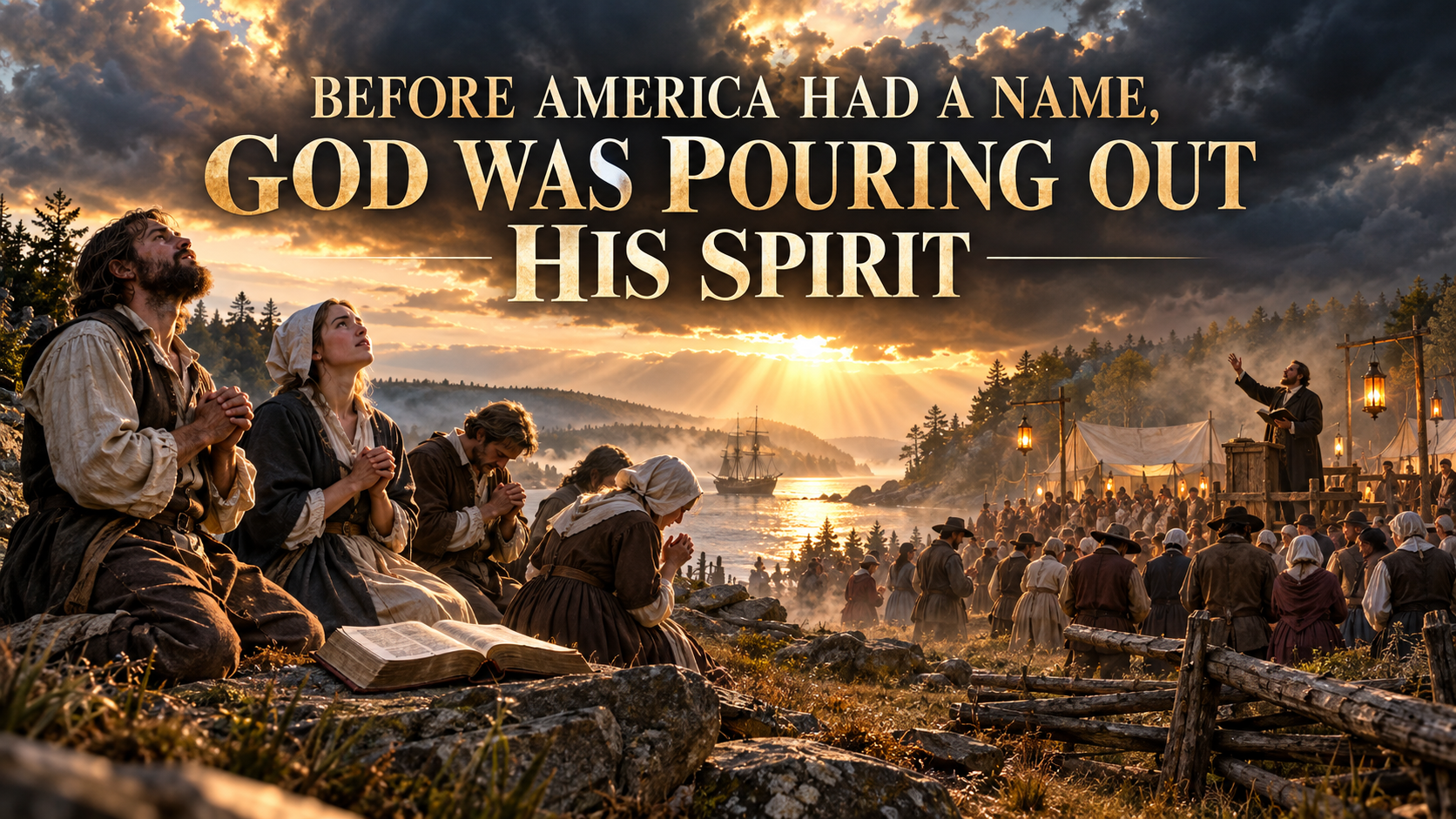
Long before America became a republic, the colonies were already experiencing the kind of spiritual shaking that only Heaven can produce. In the early eighteenth century, much of colonial religious life had grown formal, predictable, and spiritually cold. Church attendance may have remained outwardly respectable in many places, but inward fire was often fading. Into that environment, God began to breathe again. What history now calls the First Great Awakening unfolded primarily in the 1730s and 1740s across the American colonies, and it became one of the earliest and most significant revival movements in American history.

A Climate of Spiritual Formality and Moral Drift

The First Great Awakening did not erupt because the colonies were spiritually healthy. It came because many communities had settled into religious routine without the power of living faith. Historians commonly describe the period as one marked by concerns over declining piety, increasing worldliness, and a religion that for many had become more formal than transformational. The outward structures of church life remained, but deep conviction, heartfelt repentance, and spiritual vitality were often lacking. That pattern should sound familiar to any generation that knows how easily religious form can remain while spiritual fire fades.

This is one of the enduring lessons of revival history: God often moves most powerfully where complacency has settled in. When truth becomes familiar but no longer burns, when worship becomes routine but no longer trembles with awe, and when people know religious language without living under the weight of divine reality, the stage is often being set for awakening. The colonies did not simply need better organization or more polished sermons. They needed visitation. They needed the Spirit of God to arrest hearts, confront sin, and awaken spiritual hunger once again.

Jonathan Edwards and the Awakening of Deep Conviction

One of the earliest and most influential figures in this awakening was Jonathan Edwards, the pastor-theologian from Northampton, Massachusetts. Edwards witnessed seasons of unusual spiritual response in his congregation and became one of the clearest interpreters of what was taking place. He emphasized the necessity of genuine conversion, the reality of sin, the beauty of Christ, and the transforming work of God in the soul. His preaching and writing helped frame revival not as emotional excitement for its own sake, but as a profound work of grace that brought people into deep conviction and living faith.

Edwards understood something the modern Church must recover: revival is not measured first by crowds, noise, or outward movement, but by whether hearts are truly being brought under the weight of God’s presence. Conviction is not the enemy of awakening. It is often one of its first signs. When Holy Spirit begins to move, He does not flatter the flesh. He confronts it. He brings men and women face to face with eternity, with their need for mercy, and with the majesty of Christ. That is what began happening in the colonies as revival fires spread.

George Whitefield and the Voice That Stirred the Colonies

If Edwards helped interpret the awakening, George Whitefield helped ignite it across the land. Whitefield, the powerful itinerant preacher from England, traveled widely through the American colonies in the late 1730s and 1740s, preaching to enormous crowds in cities, towns, and open fields. His preaching drew thousands, crossing colonial boundaries and stirring widespread response. Historians often point to Whitefield’s tours as a major catalyst in spreading revival consciousness throughout the colonies.

Whitefield’s ministry carried urgency, directness, and deep appeal to the new birth. He was not content to leave people resting in religious identity while lacking spiritual life. He pressed the necessity of regeneration, calling hearers to real conversion and living faith in Christ. Under such preaching, many were deeply moved, and communities across the colonies began experiencing unusual spiritual concern. The awakening spread not merely because Whitefield was gifted, but because Heaven had set its breath upon the land.

The Marks of the First Great Awakening

The First Great Awakening was not without controversy, but its central marks were unmistakable. There was renewed emphasis on the new birth, intensified preaching on sin and salvation, deep emotional and spiritual response among hearers, and a growing sense that religion must be heartfelt and personal rather than merely inherited or formal. It also helped break down some old denominational and regional barriers, creating a wider sense of shared spiritual experience across the colonies.

That is one of the striking things about real awakening: it reminds people that God is not confined to routine, tradition, or the comfortable structures men build around Him. When Holy Spirit begins to move, He disturbs the settled places. He awakens hunger where there was apathy. He brings tears where there had been indifference. He creates spiritual urgency where there had been delay. Revival reintroduces a people to the living reality of God.

Why the First Great Awakening Still Matters

The First Great Awakening matters because it established a pattern that would echo through American history. It showed that spiritual decline does not have to have the final word. It proved that when a people become cold, compromised, or complacent, God is still able to breathe upon dry ground and bring life where form alone had remained. It demonstrated that powerful preaching, deep conviction, repentance, and hunger for God can alter the course of communities and even shape the spiritual culture of a nation.

It also reminds us that revival is not born in comfort. It is born where the people of God become dissatisfied with dead form and begin to cry out for living fire. The same God who visited the colonies in the eighteenth century has not changed. The same Holy Spirit who confronted cold religion, awakened hearts, and brought men and women under the weight of eternity is still able to do so again. History is not merely something to admire. It is something to learn from. The fires of past awakening should not become museum pieces. They should become reminders that God still moves in desperate times through yielded people.

A Word for the Remnant Today

The lesson for the Remnant Ecclesia is clear. If the First Great Awakening teaches us anything, it is that spiritual decline is not the end of the story when God’s people begin to hunger again. The answer to cold religion is not better branding. It is burning altars. The answer to moral drift is not more polished performance. It is true repentance and renewed visitation. The answer to a sleeping church is not activity without presence, but the restoring breath of Holy Spirit moving again upon hearts, homes, and congregations.

So let this history do more than inform us. Let it search us. Let it ask whether we, too, have become too familiar with religious form while lacking spiritual fire. Let it awaken in us a fresh cry for real conversion, deep repentance, and holy visitation. The God who shook the colonies is still able to shake the land again.

Stay Tuned: Revival on the Frontier

In the next article, we will move forward into The Second Great Awakening: Revival Fires Across a Young Nation, where we will see how Holy Spirit moved again through camp meetings, frontier preaching, and widespread spiritual awakening in a growing America. If the First Great Awakening shook the colonies, the Second Great Awakening helped set the young nation ablaze. Stay tuned.

Stay tuned……

— Dr. Russell Welch

Dr. Russell Welch is a published author, prophetic teacher, apostolic builder, author, and founder of faith-driven publishing and media initiatives. He is known for crafting bold, Kingdom-centered messages that call the Ecclesia into maturity, doctrinal clarity, and governmental authority. With a passion for equipping the Remnant and honoring generational legacy, Dr. Welch writes and teaches at the intersection of Scripture, history, and spiritual governance, challenging believers to live as sons and daughters who legislate Heaven on earth through truth, holiness, and unwavering fidelity to Christ.

Be sure to check out his book: The Consecrated Firebrand: A Warrior’s Guide to Holy Living, available exclusively on Amazon … here

Amazon Author Page


The Christ many forgot is not weak, passive, or shaped by culture—He is the risen Lord of glory, clothed in fire, crowned in authority, and returning to awaken a Remnant who will walk in truth, power, and holy boldness.

Recently, I have been studying the life of Elijah, and one truth continues to rise to the surface—his life, in many ways, foreshadows the coming of Christ. Elijah was not shaped by the approval of men, but by obedience to the voice of the Father, standing firm even when misunderstood, rejected, or opposed. His life confronts our modern preferences, because he walked in a raw, unfiltered authority that refused to bow to culture. In the same way, Christ did not come to fit into human expectations, but to fulfill the will of the Father in power and truth. Yet much of what is presented today as Jesus bears little resemblance to the One revealed in Scripture. There is a growing need to rediscover the true nature of Christ as He is, not as He has been reimagined.

In much of the modern Church, there exists a softened and diluted image of Jesus that aligns more with cultural comfort than biblical revelation. Many have embraced a version of Christ that is passive, non-confrontational, and agreeable to every perspective. But this is not the Christ who overturned tables, rebuked hypocrisy, and spoke with divine authority. Nor is it the Christ revealed in glory after the resurrection. The Church must come to terms with the reality that Jesus is both the Lamb and the Lion, both compassionate and consuming. When we reduce Him to one dimension, we distort the fullness of His nature. And when the image of Christ is distorted, the identity and authority of His people are diminished.

If Elijah were to walk into many churches today, he would likely not be welcomed, because he does not conform to the mold that Western Christianity has created. He was not polished, predictable, or controlled by institutional expectations. He carried fire, confrontation, and uncompromising obedience. In the same way, the true expression of Christ often disrupts systems that prioritize comfort over transformation. Many leaders today measure effectiveness by acceptance rather than obedience, but Elijah’s life exposes that standard as false. The Kingdom has never advanced through conformity, but through consecration. And those who carry the spirit of Elijah will always challenge the status quo.

There is a caution that must be sounded in this hour, because the image of Christ embraced by many is not the resurrected Christ revealed in Scripture. When John the Apostle encountered Jesus on the island of Patmos, it was not a gentle, cultural image that he saw. It was the glorified Christ, whose eyes were like flames of fire and whose voice carried the sound of many waters, as written in Book of Revelation 1:12–16. This was the Lord of glory, the One who holds authority over every realm, visible and invisible. This revelation did not comfort John—it overwhelmed him. It brought him to a place of awe, reverence, and surrender. This is the Christ the early Church knew, feared, and followed.

History reveals that over time, this image of Christ was gradually softened and reshaped, particularly following the Council of Laodicea, where certain expressions of truth were diminished or removed from teaching. While this may surprise some, it aligns with the warning given to the Church in Book of Revelation 3:14–21, where the Spirit confronts lukewarmness and calls for repentance. The Church was never meant to operate in a diluted state, but in the fullness of truth and fire. Yet today, many systems continue to uphold a version of faith that resists the refining presence of God. This has created environments where control replaces freedom, and structure suppresses the movement of the Spirit. And in the midst of it, the enemy finds room to operate.

What we are witnessing in many places is a form of leadership that competes for recognition rather than contends for truth. There is a striving among voices, each seeking validation, while the deeper work of the Spirit is often neglected. It resembles a performance rather than a surrender, and it produces exhaustion rather than transformation. Meanwhile, the adversary continues to exploit religious systems that lack true authority. When the Church operates without the fire of God, it becomes vulnerable to deception and stagnation. But the answer is not to abandon the Church—it is to return to the authentic Christ and the power of His Spirit.

Yet there is good news for those who have felt the stirring within—the Remnant is rising. God is not finished, and He is not limited by the structures of men. There is a fresh movement of the Spirit being released upon those who are willing to walk in obedience, regardless of cost. Just as Elijah carried the anointing of heaven, there are those now who will walk in a double portion, as Elisha did. This is not about platform or position, but about presence and power. The same authority that flows from the risen Christ is being entrusted to those who will carry His heart and His fire.

The Christ who is seated at the right hand of the Father is not distant—He is active, ruling over all spiritual realms with unmatched authority. The fire that John witnessed is still burning, and it is being released to purify, awaken, and restore. Every lie, every deception, and every chain that has held the Bride captive is being confronted by His truth. This is a season of unveiling, where false images are falling and the true Christ is being revealed again. It is not a time for passive belief, but for awakened identity. The Spirit is calling the Church out of limitation and into dominion.

We are entering a season that carries the weight of Jubilee—not as a concept, but as a reality. Prison doors are not just opening; they are being torn from their hinges. Sons and daughters of Yahweh are being set free from religious confinement and restored to their rightful place. This is a moment of divine reversal, where what has been bound is loosed, and what has been silenced begins to speak again. The fire of God is not coming to destroy His people, but to refine and empower them. Those who respond will walk in a level of freedom and authority that cannot be contained.

The call now is simple, but it is not easy—return to the true Christ. Not the version shaped by culture, but the One revealed in Scripture, full of glory, fire, and authority. Let His voice redefine your understanding, and let His presence reshape your life. The days of passive Christianity are coming to an end, and a remnant is being prepared to walk in truth and power. This is not a moment to observe—it is a moment to respond. The fire is here, and it is calling you deeper.

Stay tuned……

— Dr. Russell Welch

Dr. Russell Welch is a published author, prophetic teacher, apostolic builder, author, and founder of faith-driven publishing and media initiatives. He is known for crafting bold, Kingdom-centered messages that call the Ecclesia into maturity, doctrinal clarity, and governmental authority. With a passion for equipping the Remnant and honoring generational legacy, Dr. Welch writes and teaches at the intersection of Scripture, history, and spiritual governance, challenging believers to live as sons and daughters who legislate Heaven on earth through truth, holiness, and unwavering fidelity to Christ.

Be sure to check out his book: The Consecrated Firebrand: A Warrior’s Guide to Holy Living, available exclusively on Amazon … here

Amazon Author Page


The transition from the Church Age into the Kingdom Age has not been subtle—it has been a divine upheaval, a holy recalibration, and a trumpet blast to the global body of Christ. From 2020 through the end of 2025, Heaven extended a five‑year window of grace, urging believers to awaken, mature, and step out of spiritual infancy. Those years were not random; they were a divine countdown. Now the Kingdom Age stands before us, demanding a different posture, a different identity, and a different level of obedience.

The Church Age emphasized salvation, personal faith, and gathering within the safety of religious structures. It was an age where God tolerated immaturity and cycles of complacency because the foundation was still being laid. People were trained to attend, receive, and survive. But the Kingdom Age calls us to govern, steward, and manifest Heaven’s reality on earth.

In the Church Age, believers were often shaped into members; in the Kingdom Age, the Spirit is forging sons and daughters who carry governmental authority. Membership culture is giving way to Ecclesia culture. Titles and traditions can no longer hide spiritual passivity. The King is summoning a people who understand their assignment to influence, occupy, and transform.

What worked in the Church Age will not necessarily work in the Kingdom Age because the objectives have shifted. The Church Age prepared us; the Kingdom Age deploys us. The Church Age emphasized being blessed; the Kingdom Age emphasizes becoming a blessing that shifts atmospheres and territories. Grace is no longer covering immaturity—it is empowering maturity.

During the five‑year transition, many discovered that old wineskins could not contain the new wine. Systems that once felt comfortable began to feel restrictive and powerless. Messages that once satisfied began to feel incomplete. The Spirit was gently but firmly pushing the global body toward Kingdom understanding.

The Kingdom Age is not about escaping the world but transforming it. It is about bringing Heaven’s culture into earthly systems—family, government, education, media, business, and beyond. The Ecclesia is rising as a governing family, not a passive audience. This requires courage, clarity, and a renewed mind.

In the Church Age, the focus was often on getting people into the building; in the Kingdom Age, the focus is on getting the Kingdom into people. The mission has expanded beyond Sunday gatherings into daily assignments. Every believer becomes a carrier of divine influence. Every sphere becomes a potential altar.

The Kingdom Age demands discernment because the battles are no longer surface‑level. Cultural strongholds, ideological thrones, and anti‑Christ systems are being exposed. The Ecclesia is being trained to confront darkness with wisdom, authority, and purity. This is not warfare from emotion but warfare from identity.

As sons and daughters mature, creation itself responds. Romans 8 declares that creation groans for the manifestation of the children of God, and that groan has intensified in our generation. The Kingdom Age is Heaven’s answer to that groan. The earth is waiting for mature sons to rise.

The Church Age taught us how to believe; the Kingdom Age teaches us how to rule under Christ’s leadership. Belief without authority is incomplete. Authority without character is dangerous. The Kingdom Age brings belief, authority, and character into divine alignment.

This new era requires believers to walk in the revelation of righteousness, not religious performance. The Kingdom does not operate through striving but through alignment with the King. When we seek first His Kingdom and His righteousness, everything else finds its proper order. This is Matthew 6:33 becoming a lived reality, not a memory verse.

The extended grace from 2020–2025 was not a delay but a divine invitation. God was giving His people time to shift, repent, and awaken. Those who responded are now stepping into acceleration. Those who resisted are feeling the tension of misalignment.

The Kingdom Age is marked by clarity, boldness, and supernatural demonstration. The days of powerless Christianity are over. The Spirit is restoring the original blueprint of the Ecclesia—a governing body that carries Heaven’s authority into earthly realms. This is the era of manifestation, not mere expectation.

As we move forward, the call is simple: embrace the Kingdom, not the comfort of the past. Let go of what no longer fits the assignment. Step into the maturity the Father has been cultivating in you. The Kingdom Age is here, and the sons and daughters of God are rising to meet it.

— Dr. Russell Welch

Dr. Russell Welch is a published author, prophetic teacher, apostolic builder, author, and founder of faith-driven publishing and media initiatives. He is known for crafting bold, Kingdom-centered messages that call the Ecclesia into maturity, doctrinal clarity, and governmental authority. With a passion for equipping the Remnant and honoring generational legacy, Dr. Welch writes and teaches at the intersection of Scripture, history, and spiritual governance, challenging believers to live as sons and daughters who legislate Heaven on earth through truth, holiness, and unwavering fidelity to Christ.

Be sure to check out his book: America at War: The Spiritual Battle for a Nation’s Soul , available exclusively on Amazon … here

Amazon Author Page