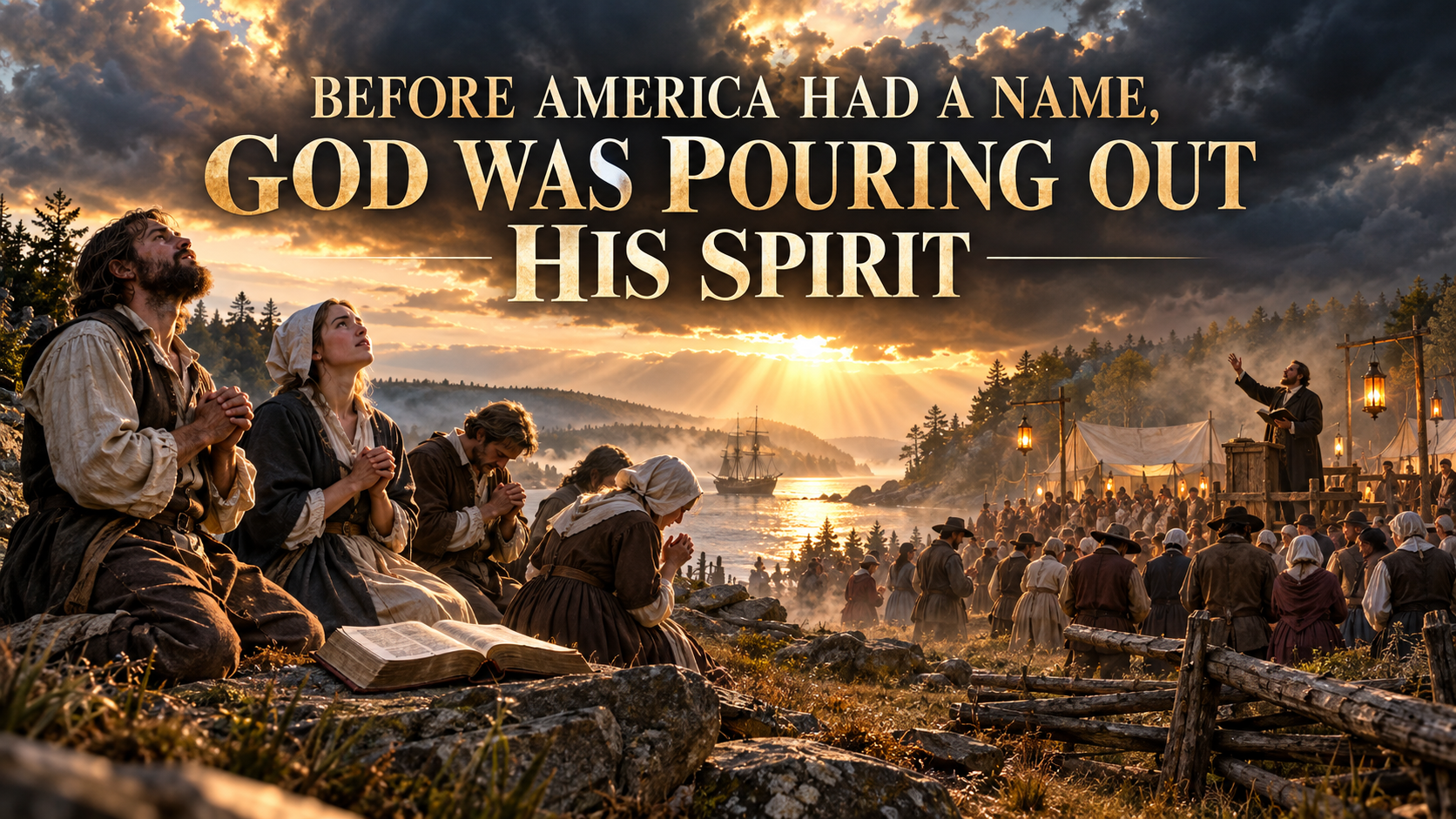
Long before America had a Constitution, a flag, or even a national name, men and women were already crossing oceans because they believed faith was worth suffering for. The spiritual history of this land did not begin in Washington, Philadelphia, or Boston, and it certainly did not begin with political power. It began with people fleeing persecution, carrying Bibles, convictions, prayers, and the dangerous belief that obedience to God mattered more than comfort. Before there was an American republic, there were already altars being built upon this soil. Before America had a name, God was already drawing men and women into costly surrender.
One of the earliest and most overlooked chapters unfolded in 1564 when French Huguenots established Fort Caroline along the St. Johns River in what is now northeast Florida. These French Protestants came from a Europe torn apart by religious conflict, and many had known what it meant to live beneath the threat of persecution because of their convictions. Fort Caroline was not simply another colonial outpost; it represented, at least in part, the hope of creating a place where Protestants could live and worship beyond the reach of the pressures that had consumed France. Their story would end violently when Spanish forces attacked the settlement in 1565, yet the significance of their presence should not be missed. Generations before the United States existed, the soil of this continent was already being marked by the blood, prayer, and spiritual struggle of those who believed faith was worth the cost.
We must be careful not to romanticize every part of early colonial history, because ambition, violence, empire, conquest, and religious persecution were all tangled together in the formation of the New World. Yet woven through that complicated history were men and women who genuinely believed that God was calling them to something greater than survival. Their stories remind us that Christianity in America did not begin as a comfortable cultural inheritance. It was carried here through sacrifice, conviction, hardship, and sometimes blood. That truth alone should challenge a generation that has often reduced faith to convenience, branding, and personal preference.
By the early eighteenth century, another spiritual crisis had begun to emerge. Churches were established, religious language had become familiar, and Christianity increasingly risked becoming something people inherited rather than something that transformed them. The outward structures of faith remained, yet many pastors and theologians recognized that spiritual vitality was fading beneath routine and respectability. Into that atmosphere came what history would later call the First Great Awakening. In places such as Northampton, Massachusetts, people began encountering a message that confronted complacency and demanded more than inherited religion.
Jonathan Edwards became one of the best-known voices connected with that awakening, while George Whitefield carried revival preaching throughout the colonies before enormous crowds. Yet the awakening was never truly about Edwards or Whitefield, and it did not belong to Northampton, Boston, or any particular denomination. People were being confronted with the holiness of God, the seriousness of sin, the necessity of conversion, and the reality that Christianity could not merely be received secondhand from parents or culture. Churches were shaken because the message demanded response rather than admiration. The awakening reminded America that God does not pour out His presence because religious institutions have become impressive; He moves where people become hungry enough to surrender.
That same pattern appeared again as the nation expanded westward and frontier communities spread across the interior. Life was harsh, isolated, and often spiritually barren, yet those very conditions created a hunger that polished religion could not satisfy. Camp meetings began drawing thousands of settlers who traveled for miles to gather beneath open skies, hear preaching, pray, sing, repent, and seek God together. The wilderness became a sanctuary, rough-hewn platforms became pulpits, and ordinary ground became holy when people began crying out for Heaven. Once again, God was proving that revival does not require impressive architecture; it requires surrendered hearts.
Then came Cane Ridge in 1801, one of the most significant revival gatherings in early American history. Thousands gathered in Kentucky, and ministers from different backgrounds preached while people prayed, wept, confessed sin, worshiped, and responded across the sprawling grounds. The gathering became so large and so spiritually intense that it could no longer be neatly contained within a single congregation or denominational structure. Whatever disagreements may remain about particular manifestations that occurred there, the broader impact is undeniable. Cane Ridge became another witness that when spiritual hunger reaches a certain depth, institutional boundaries begin to look very small.
The lesson of Cane Ridge is not that every generation should attempt to recreate an outdoor camp meeting. The lesson is that revival always begins to die when men try to possess what belongs only to God. When leaders begin building monuments to where God moved yesterday, they can easily miss where He is moving today. When a preacher begins believing the fire came because of him, the altar has already begun turning into a stage. When a ministry protects its reputation more fiercely than it protects the presence of God, decline has already entered the house.
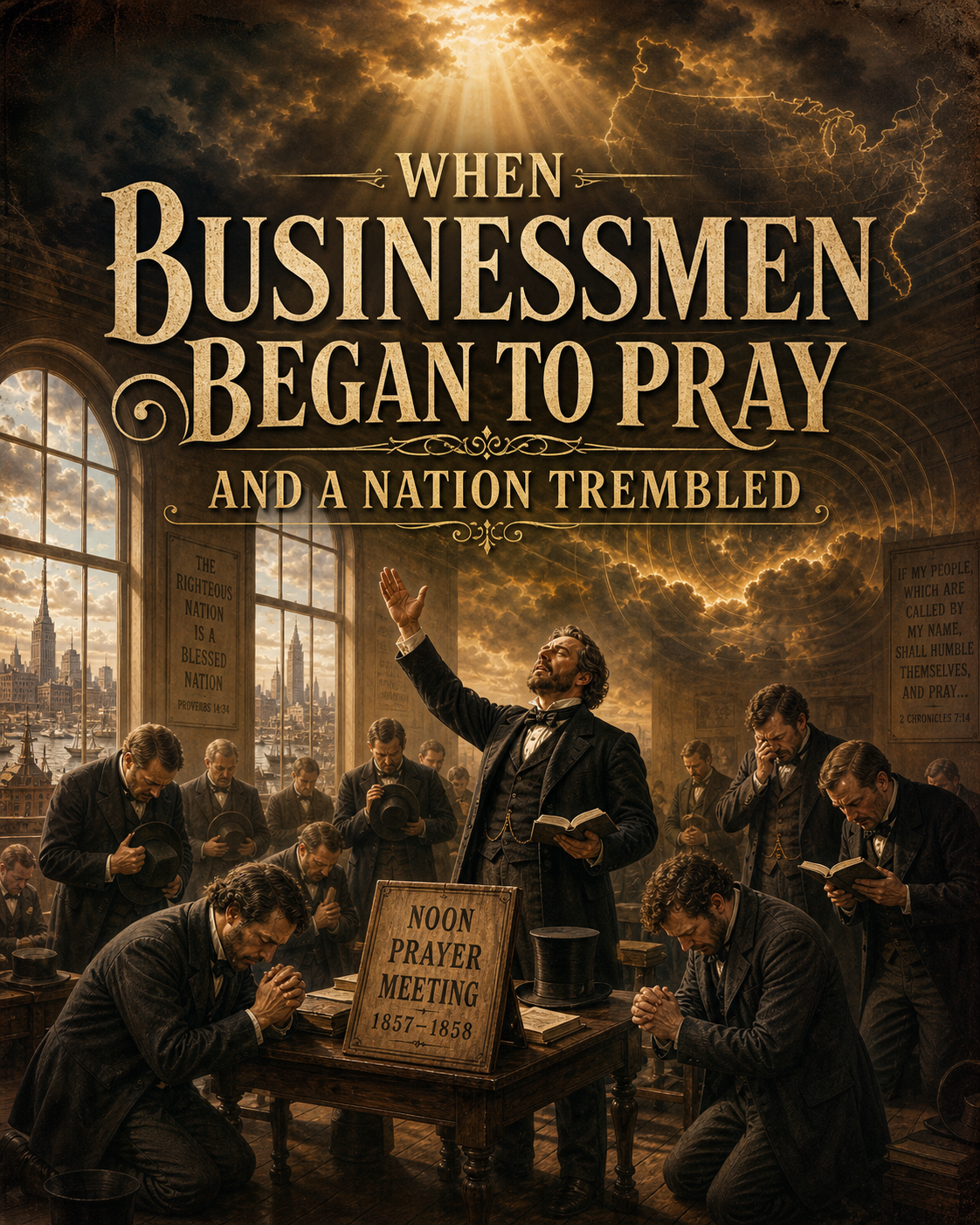
The nineteenth century continued to produce seasons of awakening through prayer movements, evangelistic campaigns, missionary societies, and grassroots ministry. Ordinary believers began carrying the gospel into communities that established clergy could never reach alone. Prayer meetings multiplied because people believed that Heaven could be moved by men and women who were willing to seek God persistently. The great revivals of that era were not flawless, and neither were the people who participated in them. Yet again and again, spiritual renewal appeared where people stopped asking how to preserve religious comfort and started asking what obedience demanded.
As the twentieth century began, the river surfaced again in a different form. In Topeka, Kansas, believers associated with Charles Parham intensely studied the book of Acts and prayed about the work of the Holy Spirit. A few years later in Los Angeles, a humble Black holiness preacher named William J. Seymour became central to what would become known as the Azusa Street Revival. The meetings took place in an unimpressive building that lacked nearly everything religious culture might have expected a great movement to possess. Yet people came from different races, nations, denominations, and social backgrounds because they were hungry for an encounter with God.
Azusa became powerful not because the building was impressive but because the hunger was real. People prayed, repented, worshiped, tarried before God, and crossed social barriers that the surrounding culture insisted should remain intact. Men and women left those meetings carrying testimonies that helped ignite Pentecostal movements around the world. The fire did not remain in Los Angeles because the people who encountered God carried what they received into other cities and nations. Azusa was never meant to become a religious museum; it was meant to become a sending place.
That distinction is critical for the Church today. Northampton was not the destination, Cane Ridge was not the destination, Topeka was not the destination, and Azusa Street was not the destination. God Himself was the destination, and every historical location was only a place where desperate people encountered Him. The ground became memorable because Heaven touched earth there, but the ground never owned the river. The names became famous because God moved through them, but the names were never the source of the fire.
This is precisely where modern Christianity must recover discernment. We have become remarkably skilled at branding what previous generations trembled before, and we often speak of revival as though it were a ministry product that can be scheduled, marketed, and promoted. We announce revival conferences, create graphics, organize campaigns, and sometimes behave as though Heaven is obligated to arrive because the advertising says it will. Yet no man can schedule Pentecost, no denomination can command awakening, and no ministry can guarantee the fire of God. We can prepare an altar, preach truth, repent, pray, surrender, and obey, but the fire still belongs to God.
True revival has never existed merely to validate ministries. It comes to confront them, purify them, and call them back to the lordship of Jesus Christ. Revival does not descend so that Christian personalities can become more famous; it exposes flesh, dismantles pride, awakens conscience, restores holiness, and places Christ back at the center. It comforts the surrendered while disturbing everything that refuses surrender. Whenever genuine revival comes, mercy and judgment walk into the room together.
That is why the great question before this generation is not simply where the next revival will happen. The greater question is whether there are still people willing to become the kindling. Are there believers who will repent without defending themselves, leaders who will disappear behind the glory of Christ, and churches willing to abandon programs God is no longer breathing upon? Are there intercessors who will pray when nobody is watching and families willing to rebuild altars in their homes? Are there men and women willing to become holy in a generation that has learned to celebrate compromise?
The Church must also ask whether pastors are willing to preach truth when truth may reduce attendance, whether prophets will speak without becoming intoxicated by platforms, and whether apostolic leaders will build what belongs to Christ rather than empires carrying their own names. Revival cannot be sustained where ambition is protected more carefully than consecration. It cannot thrive where leaders hunger to be known more than they hunger to know God. The fire falls where surrender becomes more important than recognition. That has always been the pattern, and Heaven has not changed.
We must therefore resist the temptation to turn revival history into religious nostalgia. We can honor Edwards, Whitefield, Seymour, the frontier preachers, the praying saints, and countless unnamed believers without treating their stories as relics from a spiritual age that will never return. Their lives should provoke us, their sacrifices should disturb us, and their hunger should expose the shallowness of Christianity that is satisfied merely with activity. The purpose of studying revival is not to admire yesterday’s fire. It is to ask why our own altars have grown cold.
Perhaps we have spent too much time asking God to repeat the past when He is looking for a generation willing to carry the same surrender into a different hour. America is once again standing in a season of profound shaking, and institutions once considered immovable are trembling. Cultural assumptions are collapsing, political divisions are deepening, and spiritual darkness is becoming increasingly bold. Yet at the same time, hunger is rising among people who recognize that politics, wealth, entertainment, technology, and human power cannot heal the soul of a nation. If awakening comes again, it will not begin in Washington, Wall Street, Hollywood, or Silicon Valley; it will begin wherever surrendered people rebuild the altar.
The Remnant must understand the weight of this moment. We are not being called merely to become spectators of another spiritual awakening, nor are we being positioned simply to analyze the failures of the culture around us. We are being called to become a people through whom Heaven can answer. Across cities, rural communities, churches, homes, workplaces, and nations, the same summons is beginning to emerge: come out of compromise, return to holiness, restore prayer, preach Christ, walk in the Spirit, and love truth more than acceptance. The issue is no longer whether we can identify what is wrong with the world; the issue is whether God can trust us with what He desires to pour out.
Perhaps this is why the shaking feels so intense. God is not merely exposing nations; He is searching hearts. The fire we are asking Him to release upon the world will first burn within His own house. Before revival confronts corruption in government, it will confront compromise behind pulpits, in ministries, and within the hidden chambers of believers’ hearts. Before God deals with Babylon outside the Church, He will deal with Babylonian appetites inside those who claim His name.
This is why the biblical call to revival has always begun with the people of God. Second Chronicles 7:14 declares, “If my people, which are called by my name, shall humble themselves, and pray, and seek my face, and turn from their wicked ways; then will I hear from heaven, and will forgive their sin, and will heal their land.” The command does not begin with pagans, politicians, or cultural enemies; it begins with “my people.” The first cry of revival is therefore not, “Lord, fix them,” but, “Lord, search us.” Until the Church is willing to pray that prayer, much of our talk about national awakening is little more than religious noise.
God must search our pulpits, ministries, ambitions, loyalties, motives, secret compromises, and appetite for recognition. He must expose every place where we have used His name to build something He never commanded. He must confront the places where popularity has been mistaken for anointing, influence has been confused with authority, and polished performance has replaced trembling before Christ. Revival does not merely add spiritual excitement to what already exists. It burns away what cannot survive the presence of God.
Northampton, Red River, Cane Ridge, Maine, Topeka, and Azusa may mark moments where the river broke through the surface, but the river has always belonged to God. No generation owns revival, no denomination possesses it, no preacher can patent it, and no city can claim permanent rights to it. Heaven chooses vessels, but the glory remains the Lord’s. History only records the places where surrendered people became available to Him.
Perhaps the river is rising again, and perhaps the increasing shaking is not evidence that Heaven has abandoned us but that God is exposing what cannot enter the next season. Perhaps generations of intercessors have prayed more than we realize, and perhaps the tears shed in hidden rooms have not been forgotten. Scripture speaks of bowls in Heaven filled with the prayers of the saints, and every generation must consider whether its cries have reached a tipping point. If Heaven is preparing to answer again, the greater question is whether the Church is prepared for the answer. Genuine revival rarely arrives in the comfortable form religious systems would prefer.
When God truly comes, He overturns tables, exposes motives, confronts systems, restores the fear of the Lord, awakens prodigals, heals the broken, raises unknown voices, and sends unlikely messengers. He disturbs comfortable churches because His goal is not the preservation of religious routine but the formation of a people who look like Christ. He crosses boundaries men have spent generations defending, and He unites people who never would have chosen one another apart from His presence. He tears down the walls required to protect religious pride and makes Jesus impossible to ignore. That is the revival worth crying out for.
So let the prayer of the Remnant rise again, but let it rise with understanding. We are not asking God merely to validate our ministries, expand our platforms, fill our buildings, or make our names recognizable. We are asking Him to consume our altars, purify our motives, fill His people, and make Jesus known again in the earth. We are not asking for another movement that historians can someday name while the Church remains unchanged. We are asking for a generation that Heaven can trust.
Have not the tears of the righteous once again filled the bowls in Heaven? Have not intercessors cried out in hidden places while nations shook and churches struggled to discern the hour? Have not fathers and mothers prayed for sons and daughters to return, and have not faithful saints asked God for one more visitation before their race is finished? Then let the cry rise again with humility, trembling, and holy expectation. Lord, send Your fire once again, and begin with us.
Stay tuned, the journey continues…..
A voice of fire to the Remnant,
— Dr. Russell Welch
Dr. Russell Welch is a published author, prophetic teacher, apostolic builder, and founder of faith-driven publishing and media initiatives. His ministry carries a strong call to equip the Ecclesia for maturity, biblical clarity, spiritual discernment, and Kingdom assignment. Through his writing and teaching, he brings together Scripture, Church history, theology, and spiritual governance while challenging believers to move beyond religious tradition and into the mature life of sons and daughters who are led by Holy Spirit, established in truth, and wholly surrendered to Jesus Christ.
For readers who desire a deeper study into the formation of our faith in America and the spiritual forces that shaped its development, I invite you to continue the journey through my book. It explores the historical, theological, and spiritual foundations that helped form the Christian witness in this nation and provides broader context for understanding the movements, conflicts, and convictions that shaped American faith. You can find it here: https://www.amazon.com/dp/1964155665. History is not merely something we study to understand where we have been; rightly understood, it helps us discern what God may be asking of us now.