Posts Tagged ‘Apostolic Teaching’


Returning to the Ancient Path as the Lord’s Ecclesia

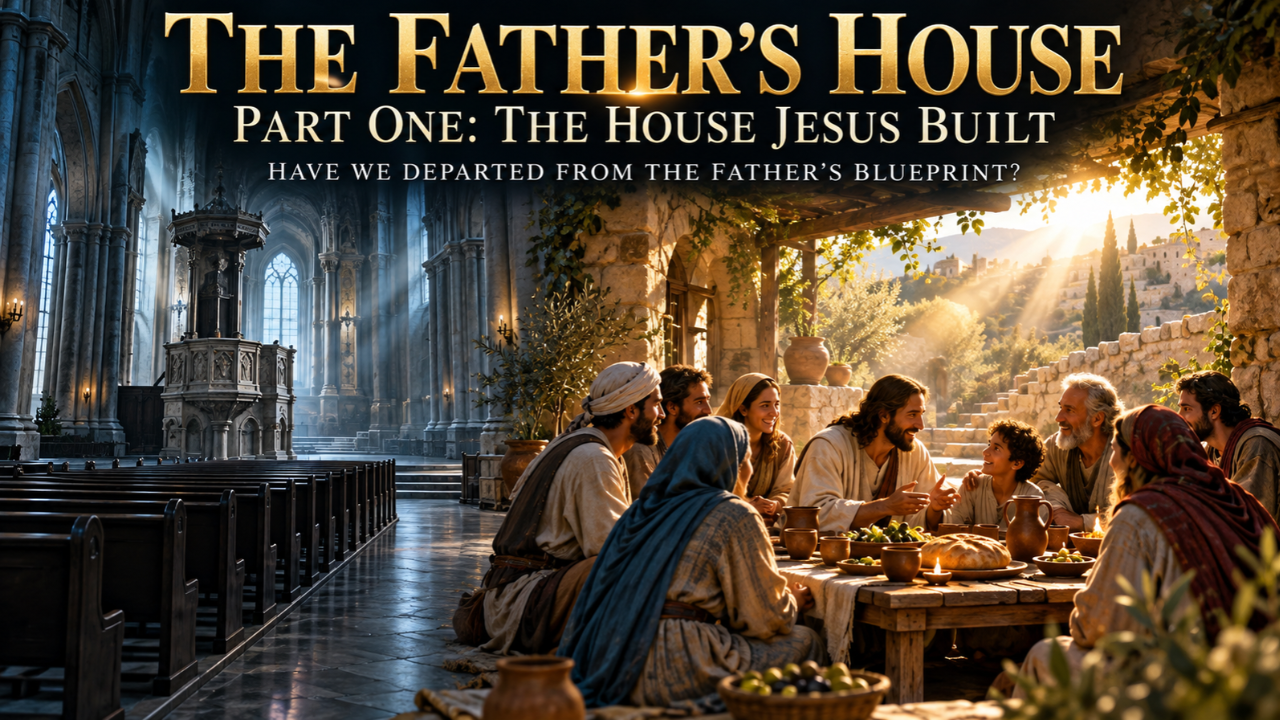
There is a question that has burned within my spirit for more than two decades, one that I believe the Body of Christ can no longer afford to ignore: Have we faithfully continued building what Jesus Christ established, or have we gradually constructed something that bears His name while increasingly reflecting the ambitions, traditions, and organizational preferences of men?

This is not a question born out of bitterness toward the Church, nor is it an indictment against the countless faithful men and women who have devoted their lives to serving the Lord. It arises from a deep burden for the Father’s household and a conviction that the Holy Spirit is calling His people to examine what we have inherited, what we have built, and what we have accepted as normal Christianity. We must possess enough humility to acknowledge that something can be familiar, longstanding, and sincerely practiced without necessarily reflecting the fullness of the Father’s original intention.

Throughout the centuries, Christianity has developed magnificent buildings, sophisticated theological institutions, impressive organizational structures, and elaborate systems of religious administration. Many of these have served worthwhile purposes, and the Lord has undoubtedly worked through imperfect structures to accomplish His purposes. Yet the existence of religious activity, institutional success, or numerical growth does not automatically establish that we are walking in the pattern revealed through Jesus Christ and His apostles. The question before us is not whether God has worked within the structures we have inherited. The question is whether those structures accurately express the nature, purpose, and government of the Ecclesia He established.

What Did Jesus Actually Promise to Build?

In Matthew 16:18, Jesus declared, “And I say also unto thee, That thou art Peter, and upon this rock I will build my church; and the gates of hell shall not prevail against it” (KJV).

The word translated “church” in this passage is the Greek word ekklēsia, a term commonly associated in the ancient world with an assembly of people. Although the word itself does not automatically communicate every dimension of Kingdom government, its use within the teachings of Jesus and the writings of His apostles reveals something considerably greater than a religious institution. The Ecclesia is a people called into relationship with the Father through Jesus Christ, brought together by His Spirit, established upon His truth, and commissioned to bear witness to His Kingdom.

Notice carefully that Jesus did not promise to build an institution that would ultimately become dependent upon human ingenuity, religious performance, or organizational machinery for its survival. He declared that He would build His Ecclesia. The distinction is foundational because the identity of the builder determines the nature of the building. When Christ is truly building His household, everything must remain surrendered to His authority, aligned with His Word, and responsive to the government of the Holy Spirit.

Paul reinforces this understanding in Ephesians 2:19–22, where he describes believers as members of the household of God, built upon the foundation of the apostles and prophets, with Jesus Christ Himself being the chief cornerstone. The apostle then explains that this spiritual structure is being joined together and grows into a holy temple in the Lord, becoming a dwelling place of God through the Spirit.

The significance of this passage cannot be overstated. The Father’s dwelling place under the New Covenant is not ultimately defined by architectural magnificence, denominational identity, or the administrative strength of a religious organization. His dwelling is a redeemed people joined together in Christ and inhabited by His Spirit. Buildings may provide a place for the Ecclesia to gather, and organizations may assist believers in carrying out legitimate responsibilities, but neither should be confused with the living household itself.

The Father’s Desire Has Always Been a People for His Presence

From Genesis through Revelation, we encounter the unfolding revelation of a Father desiring communion with those created in His image. In Eden, humanity was created for fellowship with God. Through Israel, the Lord revealed His desire to dwell among a covenant people. In Jesus Christ, the eternal Word became flesh and dwelt among us, revealing the Father and opening the way for redeemed humanity to become His children.

The New Covenant brings this divine intention into extraordinary clarity. Through the finished work of Jesus Christ, believers are reconciled to the Father, receive the indwelling Holy Spirit, and are brought into a spiritual family whose identity is established in Christ. The Ecclesia is therefore far more than a gathering of individuals who share religious beliefs. It is the corporate expression of a redeemed household being transformed into the likeness of the Son.

This is why Romans 8:14 has become such a foundational passage in my understanding of the Father’s eternal purpose: “For as many as are led by the Spirit of God, they are the sons of God” (KJV).

The mature expression of the Father’s household is not measured primarily by how successfully believers participate in religious programs, but by the degree to which their lives are surrendered to the leadership and government of the Holy Spirit. Spiritual maturity is revealed through obedience, transformed character, love, holiness, discernment, and an increasing conformity to Jesus Christ. These are not optional additions to the Christian experience; they are essential expressions of the life of the Son being formed within His people.

Yet we must ask whether much of modern Christianity has unintentionally trained believers to become dependent upon religious systems while neglecting the cultivation of spiritual maturity and personal responsiveness to the Holy Spirit. Have we taught people how to attend services without adequately teaching them how to walk with the Father? Have we emphasized organizational loyalty while failing to equip sons and daughters to discern His voice, understand His Word, and obey His leading?

These questions deserve serious consideration because the Lord never intended His people to remain spiritually dependent upon a select few who perform ministry on their behalf. According to Ephesians 4:11–16, the ministry gifts Christ gave to His Ecclesia exist to equip the saints for the work of ministry and bring the Body toward maturity in Him. The purpose of spiritual leadership is therefore not to create permanent dependence upon human personalities, but to cultivate a people increasingly established in Christ.

When Gathering Becomes a Substitute for Being His Ecclesia

One of the most concerning developments within contemporary Christianity is the subtle assumption that faithfully attending religious gatherings is equivalent to fulfilling the calling of the Ecclesia. Corporate worship, biblical teaching, prayer, fellowship, and the gathering of believers are indispensable expressions of Christian life. Hebrews 10:25 plainly reminds believers not to forsake assembling together. However, gathering is intended to strengthen and express the life of the Ecclesia, not become a substitute for that life.

The believers described in Acts 2:42–47 continued steadfastly in the apostles’ doctrine, fellowship, breaking of bread, and prayers. Their shared life extended beyond scheduled meetings into homes, relationships, generosity, worship, and daily devotion to the Lord. The Holy Spirit was not treated as a ceremonial presence invited into a predetermined religious program. His work was central to their identity, their witness, and their obedience to Christ.

This does not mean that the early believers experienced a flawless spiritual community. The New Testament openly records disputes, doctrinal confusion, immaturity, hypocrisy, and failures requiring apostolic correction. Nevertheless, the apostolic writings reveal a consistent vision: the Ecclesia was to be a living Body under the headship of Christ, with every member contributing according to the grace and gifts given by the Spirit.

Paul’s teaching in 1 Corinthians 12 makes clear that the Body consists of many members, each possessing significance and purpose. No member can legitimately declare independence from the others, and no human leader possesses the authority to replace Christ as the Head. In 1 Corinthians 14, we also encounter instructions governing the participation of believers in their gatherings, demonstrating that spiritual expression was expected to operate with both freedom and godly order.

The concern, therefore, is not whether Christian gatherings should possess leadership, structure, or accountability. Scripture plainly establishes the importance of all three. The concern arises when structure begins to displace spiritual life, when administration becomes more influential than obedience, and when the gathered Body becomes little more than an audience observing religious activity performed by a designated few.

A Spirit-governed Ecclesia does not eliminate biblical leadership. It restores leadership to its proper assignment beneath the Lordship of Jesus Christ.

The Danger of Preserving What Heaven Never Commanded

Religious traditions frequently begin as sincere attempts to organize, protect, or communicate matters of spiritual importance. Over time, however, practices can become so deeply embedded within a community that questioning them is interpreted as rebellion against God. The danger emerges when inherited customs acquire an authority that Scripture never assigned to them.

Jesus confronted this problem in Mark 7:8 when He rebuked religious leaders for laying aside the commandments of God while holding tightly to the traditions of men. His confrontation was not a rejection of all tradition or orderly religious practice. It exposed the spiritual danger of allowing human customs to override the revealed will of the Father.

Every generation of believers must therefore possess the courage to distinguish between biblical convictions and inherited religious preferences. The fact that something has been practiced for centuries does not, by itself, establish divine authorization. Likewise, the fact that a practice developed after the apostolic age does not automatically make it sinful. The necessary examination is whether it remains consistent with Scripture, honors the Lordship of Christ, and serves the spiritual formation and mission of His people.

This distinction is especially important when discussing the restoration of the Ecclesia. The objective is not to romanticize the first century or pretend that returning to ancient cultural practices will automatically produce spiritual transformation. Neither is it to condemn every expression of organized Christianity. The objective is to recover the biblical foundations that must govern the Father’s household regardless of culture, geography, or historical period.

I believe we have reached an hour when the Holy Spirit is inviting the Body of Christ into precisely this kind of examination. We must be willing to ask difficult questions without becoming accusatory, confront genuine departures without abandoning grace, and pursue restoration without allowing frustration to become the foundation of our message.

The Father is not calling His people into another movement built upon dissatisfaction with the institutional Church. He is calling us into a deeper surrender to His Son.

Returning to the Government of the Holy Spirit

The greatest need within the Ecclesia is not a new organizational model, an improved ministry strategy, or another generation of charismatic personalities. Our greatest need is a genuine restoration of surrender to the Lordship of Jesus Christ and the active government of the Holy Spirit.

Jesus told His disciples in John 16:13 that the Spirit of truth would guide them into all truth. Throughout the book of Acts, we witness the Holy Spirit directing missionary assignments, setting apart servants, guiding decisions, distributing gifts, and empowering believers to bear witness to the risen Christ. The Spirit’s presence was not merely an emotional dimension of their gatherings; His leadership was essential to their understanding of how the Lord intended His people to live and minister.

We must recover this reality without confusing spiritual government with disorder, private ambition, or unaccountable claims of revelation. The Holy Spirit never contradicts the character of Christ or the truth of the Scriptures He inspired. Genuine spiritual government produces humility, holiness, love, obedience, discernment, and the willingness to submit to biblical correction.

A gathering governed by the Holy Spirit is not simply one in which spiritual gifts are permitted. It is one in which the people and their leaders genuinely submit their purposes, decisions, relationships, and ministry expressions to the Lord. The question is no longer merely what we have scheduled, what we have planned, or what will strengthen our organization. We must also ask what the Father desires to accomplish among His people and whether we are willing to obey Him when His direction challenges our preferences.

This requires more than a change in vocabulary. It demands a transformation of our understanding of spiritual authority, leadership, fellowship, discipleship, and the purpose of gathering together.

The Invitation Before This Generation

I am persuaded that we are living in a moment when the Lord is stirring a deeper hunger among believers who recognize that something essential has been neglected within much of contemporary Christianity. They are not necessarily searching for another denomination, congregation, or spiritual movement. Many are longing for a genuine expression of the life of Christ among His people, where the Father’s presence is treasured, His Word is honored, His Spirit is obeyed, and His sons and daughters are equipped to fulfill their Kingdom assignments.

Yet hunger alone will not bring restoration. Neither will criticism of existing religious structures. The recovery of the Father’s intention begins with repentance, humility, biblical examination, and a willingness to surrender everything that competes with the Lordship of Jesus Christ.

We cannot demand that the Ecclesia be restored while remaining unwilling to allow the Holy Spirit to transform our own lives. We cannot call others away from the traditions of men while secretly preserving our own preferences as though they were commandments from Heaven. Genuine apostolic restoration begins when the people of God acknowledge that the household belongs to the Father, the Ecclesia belongs to Jesus Christ, and the Holy Spirit must be permitted to govern what we have too often attempted to control.

This is the burden behind my book, The Father’s House: Restoring the Church to Her Apostolic Blueprint. After more than twenty years of studying the Lord’s Remnant Ecclesia, I remain convinced that the greatest reformation before us is not fundamentally architectural, denominational, or organizational. It is a restoration of the Father’s original intention through a people wholly surrendered to His Son and governed by His Spirit.

The invitation is not to abandon the Body of Christ, but to rediscover what it truly means to belong to Him. It is not a call to rebellion against biblical authority, but a call for every expression of spiritual authority to return beneath the Headship of Christ. It is not an invitation to despise the generations that preceded us, but to honor their faithfulness while possessing the courage to examine what history has handed down.

Perhaps the most important question facing the Ecclesia today is not whether our buildings are full, our ministries are growing, or our programs are successful. Perhaps the question is whether the Father recognizes His original intention in what we have become.

If we will humble ourselves, return to His Word, and surrender our gatherings and our lives to the government of the Holy Spirit, I believe this generation can become a people through whom the Lord restores a living expression of His Ecclesia.

The Father has not abandoned His purpose. Jesus Christ has not surrendered His position as Head. The Holy Spirit has not ceased leading those who belong to Him.

The question is whether we are willing to follow.


Coming in Part Two: When the Father’s House Became an Institution

How did the living, participatory gatherings of the early believers develop into the institutional structures that eventually came to dominate much of Christianity? What changed during the centuries following the apostles, and how did the political and religious developments of the fourth century reshape the Church’s public identity?

In Part Two, we will examine the historical record, including the early Christian communities, the development of ecclesiastical authority, the Constantinian transformation, and the centuries of reform that followed. Our purpose will not be to condemn the past, but to understand it so that we can discern what must be recovered.


Dr. Russell Welch
A Watchman & Voice to the Remnant

Author of The Father’s House: Restoring the Church to Her Apostolic Blueprint
Returning to the Ancient Path as the Lord’s Ecclesia


This article is Part One of a three-part prophetic series drawn from the biblical and historical foundations of The Father’s House: Returning to the Ancient Path as the Lord’s Ecclesia, by Dr. Russell Welch. You can optain a copy of this book HERE
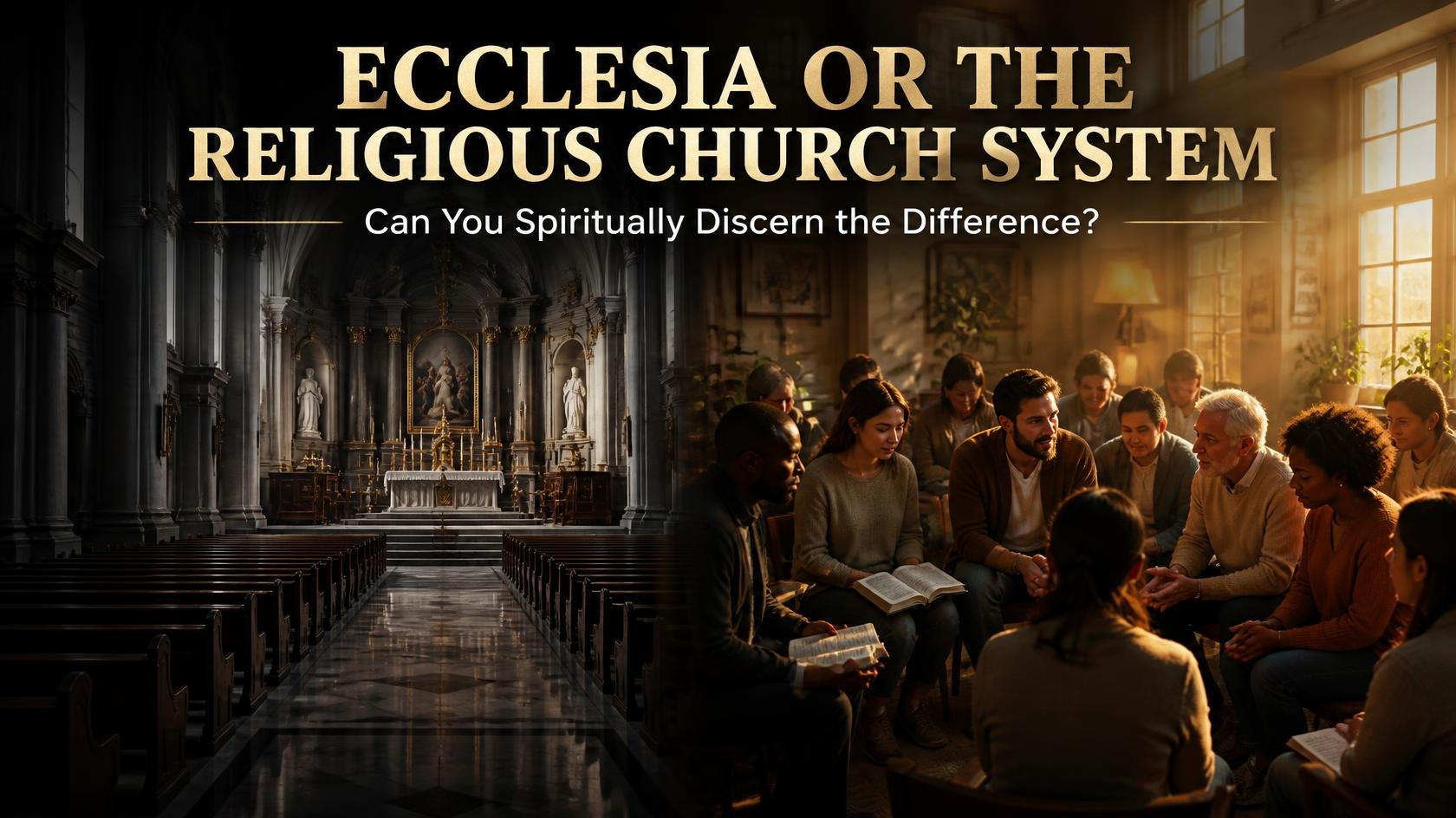

Jesus is not calling us to preserve a religious system, but to become the Spirit-governed, Christ-centered Ecclesia He intended from the beginning.

There is a question rising in the hearts of serious believers across the Body of Christ, and it is not a small one. Can we actually discern the difference between the Ecclesia Jesus is building and a religious system that bears His Name, uses Christian language, gathers people in church buildings, and yet no longer functions under His true headship? Scripture gives us every reason to believe that we can, and more than that, that mature believers should be able to recognize the difference.

Hebrews 5:14 says that “strong meat belongeth to them that are of full age, even those who by reason of use have their senses exercised to discern both good and evil.” The Greek word translated “exercised” is gymnazō, a word that speaks of training through repeated use. Discernment is therefore not spiritual suspicion, emotional reaction, or a mystical impression that is never tested. It is a developed spiritual capacity formed through Scripture, obedience, intimacy with Christ, and sensitivity to the Holy Spirit. Mature believers learn to distinguish truth from error, spiritual life from religious imitation, and the government of Christ from structures that may speak His Name while resisting His rule.

This question lies close to the heart of my book, The Father’s House: Restoring the Church to Her Apostolic Blueprint. The burden of that book is not simply that the modern Church needs improvement, better programs, stronger leadership, or more effective methods. The deeper issue is one of identity and order. What did Jesus actually intend His Church to be, and how far have we drifted from that design?

The Ecclesia Jesus Said He Would Build

Jesus declared in Matthew 16:18, “I will build my church; and the gates of hell shall not prevail against it.” The Greek word translated “church” is ekklēsia. In the broader Greek-speaking world, the word referred to an assembly or gathering of people who had been called together. It could even describe a civic assembly, as Acts 19 demonstrates. We should therefore be careful not to force every modern governmental concept into the lexical meaning of the word itself, but the context in which Jesus used it is profoundly significant.

Jesus was not announcing the creation of another religious institution. He was declaring that He would build a people who belonged to Him, confessed Him as Messiah, lived under His Lordship, received His authority, and represented His Kingdom in the earth. Matthew 16:19 immediately moves into the language of the keys of the Kingdom and binding and loosing, showing us that whatever authority the Ecclesia possesses flows from Christ Himself. He builds it, He defines it, He governs it, and He remains its living Head.

That is the first major line of discernment between the Ecclesia and a religious system. Buildings are not the problem, organization is not the problem, and leadership structure is not automatically the problem. The New Testament demonstrates order, recognized leadership, financial stewardship, discipline, teaching, mission, and accountability. The problem begins when the structure stops serving the life of Christ and begins demanding that the life of Christ serve the structure.

That is where a church can remain active while becoming spiritually hollow. It can continue to hold services, raise money, operate ministries, produce media, and maintain a recognizable Christian identity while slowly shifting from the headship of Christ to the preservation of the institution. From the outside, the difference may not always be obvious. Spiritually, however, the difference is profound.

Life, Fruit, and the Headship of Christ

Paul warned Timothy of those who would have “a form of godliness” while denying its power. His warning does not mean that every form is wrong. Every congregation develops habits, traditions, rhythms, and patterns of worship. The issue is whether spiritual life still fills the form or whether the outward shell remains after the substance has departed.

A congregation can possess excellent music, beautiful facilities, polished branding, sophisticated media, gifted speakers, and strong programming while failing to form people into mature disciples of Jesus Christ. In the same way, informality, emotional intensity, or rejection of traditional structure does not automatically prove that the Holy Spirit is present. The real question is whether Christ is forming His people. Are believers growing in holiness, repentance, prayer, biblical understanding, love, obedience, and spiritual maturity? Are the wounded being restored? Are believers learning how to minister rather than merely consume ministry? Is the presence of God producing transformation?

Jesus gave us another important measure when He said, “Ye shall know them by their fruits.” Biblical fruit includes transformed character, faithfulness, repentance, generosity, reconciliation, endurance, obedience, compassion, and mature disciples who become capable of strengthening others. A religious system can produce consumers who continually require another service, another conference, another message, and another experience. The Ecclesia, however, equips believers to walk with Christ, discern truth, pray, minister, resist evil, serve others, endure hardship, and function as mature members of the Body.

This is one of the central recoveries emphasized in The Father’s House. The Church was never designed to become a perpetual audience gathered around a gifted personality. The apostolic pattern is one of equipping, formation, spiritual family, and participation. Leaders serve the maturity of the Body, and the Body grows as every part functions under Christ.

Colossians 1:18 declares that Christ “is the head of the body, the church.” That is not ceremonial language. Jesus is not merely the founder whose Name remains on the institution while others control its actual direction. He is the living Head of His Body. Healthy spiritual leadership therefore never replaces His headship but serves it.

One of the most revealing questions any ministry can ask is whether Scripture is still permitted to correct the institution. Can the Word confront long-standing traditions? Can the Holy Spirit interrupt established plans? Can leadership acknowledge that a direction needs to change? When titles, reputations, finances, or institutional survival become untouchable, the structure begins to protect itself from the very Lord it claims to serve.

The Ecclesia must always remain correctable by the Word and governable by Christ.

Truth, Equipping, and Holy Spirit Governance

Paul warned Timothy that a time would come when people would no longer endure sound doctrine but would gather teachers who told them what they wanted to hear. That warning remains deeply relevant because there is constant pressure upon spiritual leaders to preach what keeps people comfortable rather than what brings them into maturity.

Grace must be preached, but repentance must also be preached. Love must be preached, but so must holiness. Identity in Christ must be taught, but so must obedience. The goodness of God must be proclaimed, but His righteousness and judgment cannot be removed from the message without distorting the Gospel.

A faithful Church cannot edit Jesus in order to retain an audience. Christianity becomes spiritually hollow when it is reduced to motivational encouragement supported by selected Bible verses. A religious system asks what message will preserve the crowd. The Ecclesia asks what the Lord has said and then seeks to proclaim it with courage, love, and integrity.

Ephesians 4:11–13 further reveals the difference. Christ gave apostles, prophets, evangelists, pastors, and teachers for the equipping of the saints, the work of ministry, and the building up of the Body of Christ. The ministry gifts were never intended to create a permanent divide between a gifted few and a passive congregation. Their purpose is to equip the saints so that the whole Body matures and functions.

The biblical pattern is therefore participatory. Leaders equip, believers mature, the saints minister, and Christ is glorified. When Christianity becomes little more than a weekly performance produced by professionals for spectators, we have moved far from the pattern described in Ephesians 4.

Ephesians 2:20 says that the household of God is built upon the foundation of the apostles and prophets, with Jesus Christ Himself as the chief cornerstone. In its immediate New Testament setting, this speaks especially to the foundational apostolic and prophetic witness through which the Gospel of Christ was established. Christians may differ over how apostolic and prophetic ministry should function today, but the central principle is unmistakable: the Church must remain grounded in the apostolic Gospel, prophetic Scripture, and Christ as the cornerstone.

This is also where Holy Spirit governance becomes more than a slogan. First John teaches that believers have received an anointing from the Holy One and that this anointing abides in them. These verses do not eliminate teachers, because John himself was teaching the believers to whom he wrote. His concern was deception, and his message was that believers who possess the Spirit of God are not spiritually helpless before falsehood.

At the same time, spiritual discernment cannot simply become a matter of saying, “I felt something was wrong.” Feelings can mislead us, personal wounds can distort our perception, and preferences can masquerade as revelation. The inner witness of the Spirit must remain anchored to Scripture, the character of Christ, and fruit that can be observed over time. Yet believers must not be trained to ignore the Holy Spirit simply because an institution appears respectable.

A church that speaks often about the Holy Spirit but never permits Him to convict, correct, direct, equip, or interrupt may acknowledge Him doctrinally while resisting Him functionally. A Father’s House cannot merely hold correct beliefs about the Spirit. It must remain responsive to His activity.

Religious Corruption and the Call to Restoration

Revelation 17 and 18 present one of Scripture’s most sobering portraits of corrupted power in the image of Babylon the Great. Throughout Church history, interpreters have understood Babylon in different ways. Some have emphasized imperial Rome, others have seen a broader picture of political, economic, and religious systems opposed to God, while still others understand the passage primarily in an eschatological sense.

For that reason, it is unwise to reduce Babylon to a simplistic label for every church structure we dislike. Nevertheless, the spiritual principle remains clear. Systems can become so corrupted by power, greed, idolatry, compromise, and opposition to God that His people must refuse participation in their sins.

Revelation 18:4 says, “Come out of her, my people, that ye be not partakers of her sins.” Separation from corruption is not abandonment of Christ’s Church. There are times when faithfulness to Christ requires refusing participation in structures that have repeatedly chosen self-preservation over obedience.

There is a profound difference between rejecting the Body of Christ and rejecting religious corruption. The answer, however, is not bitterness, isolation, rebellion, or the rejection of all spiritual authority. Those reactions simply create another form of disorder. The answer is restoration. The answer is biblical order. The answer is a return to the Father’s design for His household.

This is where The Father’s House becomes more than a title. The biblical Church is not merely an organization with religious branding. It is a household in which Christ is Head, the Holy Spirit governs, leaders equip, sons and daughters mature, gifts are activated, and every believer is called into participation.

Acts gives us glimpses of that life. Believers devoted themselves to the apostles’ teaching, fellowship, breaking of bread, and prayer. They cared for one another, shared generously, worshiped together, bore witness to Christ, and lived with a strong awareness of the Holy Spirit’s activity among them. Their life was not perfect, and the New Testament itself records conflict, immaturity, error, and correction, but the pattern still reveals a Church that functioned as a living spiritual community rather than a religious corporation.

The twenty-first-century Church does not need to reproduce every cultural feature of first-century Jerusalem, but it desperately needs to recover the spiritual DNA. The Church must again become a family rather than merely an audience, a people of presence rather than performance, a place of equipping rather than perpetual dependency, and a community governed by Christ rather than institutional preservation.

That is the heart of The Father’s House: Restoring the Church to Her Apostolic Blueprint. It is a call back to intimacy, holiness, spiritual family, biblical order, Holy Spirit governance, Kingdom authority, and the active participation of every believer.

The Discernment Begins With Us

Jesus said in John 10:27, “My sheep hear my voice, and I know them, and they follow me.” That statement takes us back to the heart of discernment because discernment grows through relationship. The more deeply believers know Scripture, the more readily they recognize distortion. The more intimately they know Christ, the more clearly they recognize what contradicts His character. The more consistently they obey the Holy Spirit, the more sensitive they become to His leading.

Spiritual maturity also frees believers from being overly impressed by appearances. A large crowd proves nothing, but neither does a small one. A beautiful building proves nothing, but neither does meeting in a home. A title proves nothing, but rejecting all titles proves nothing either. Signs and wonders alone are not the final test, and intellectual orthodoxy without spiritual life is not enough. The real issue is whether Christ is functioning as Lord, His Word is honored as truth, the Holy Spirit is accomplishing His work, biblical leadership is equipping rather than controlling, and believers are being transformed into mature disciples who bear the character and carry the mission of Jesus.

The question, therefore, is not simply whether we attend church. The deeper question is whether we are being formed as part of the Ecclesia Jesus Christ is building. That is a question that requires humility because true discernment must first examine us before it examines everyone else.

We should ask the Lord to train our spiritual senses and expose religious habits we may have mistaken for biblical Christianity. We should ask Him to reveal where tradition has replaced truth, where personality has replaced headship, where performance has replaced equipping, where control has replaced spiritual fathering, and where institutional preservation has replaced obedience. We must also be willing to ask what needs to change within us.

It is easy to identify religious systems when we are only looking outward. True reformation begins when the Holy Spirit is permitted to search the heart first.

Jesus is still building His Ecclesia, and the gates of Hades will not prevail against it. The great need of this hour is not merely for believers who can identify what is wrong with religious systems. It is for mature sons and daughters who are willing to become what Christ intended His Church to be: a living people under His headship, formed by His Word, governed by His Spirit, rooted in spiritual family, and equipped to carry His Kingdom into the world.

For those who sense that same burden, The Father’s House: Restoring the Church to Her Apostolic Blueprint develops this call much further. It examines the need for reformation, Holy Spirit governance, biblical leadership, spiritual family, the equipping of believers, and the recovery of divine order within the Church. It is not a call to abandon the Church, but to recover her.

The Father’s House: Restoring the Church to Her Apostolic Blueprint
A Prophetic Call to Reformation, Revival, and the Return of Divine Order


Go Deeper: The Father’s House

The Father’s House: Restoring the Church to Her Apostolic Blueprint
A Prophetic Call to Reformation, Revival, and the Return of Divine Order

The Father’s House is a call to believers, pastors, intercessors, reformers, and Kingdom builders who recognize that the Church cannot be restored merely through better programs or stronger institutions. It must recover the headship of Christ, the government of the Holy Spirit, biblical spiritual order, genuine family, the equipping of the saints, and the active participation of every believer in the life and mission of the Ecclesia.

This is not a call to abandon the Church. It is a call to recover her.

Read The Father’s House here:
The Father’s House

— Dr. Russell Welch
A Watchman & Voice to the Remnant

About Dr. Russell Welch

Dr. Russell Welch, widely known as “Doc. Russ,” is an author, pastor, apostolic teacher, and founder of Remnant Warrior Ministries and Kingdom War College. He serves as Senior Pastor of Highway to Heaven Church in Jacksonville, Florida, where his ministry centers on the recovery of the biblical Ecclesia, spiritual formation, discipleship, prayer, spiritual warfare, and equipping believers for Kingdom service.

He is the author of numerous books and teaching resources addressing Scripture, theology, Christian discipleship, spiritual warfare, the Ecclesia, and the recovery of biblical Christianity. Through his writing, teaching, and ministry, Dr. Welch carries a continuing burden to call believers beyond religious Christianity into mature discipleship, deeper biblical understanding, intimacy with Christ, and active participation in the life and mission of His Ecclesia.


THE REMNANT REVOLUTION CONTINUES! Explore our growing collection of Scripture-centered teachings dedicated to awakening, training, equipping, and raising up the Remnant. Discover A Remnant Revolution and subscribe to walk with us in this Kingdom assignment.