Posts Tagged ‘Ecclesia’


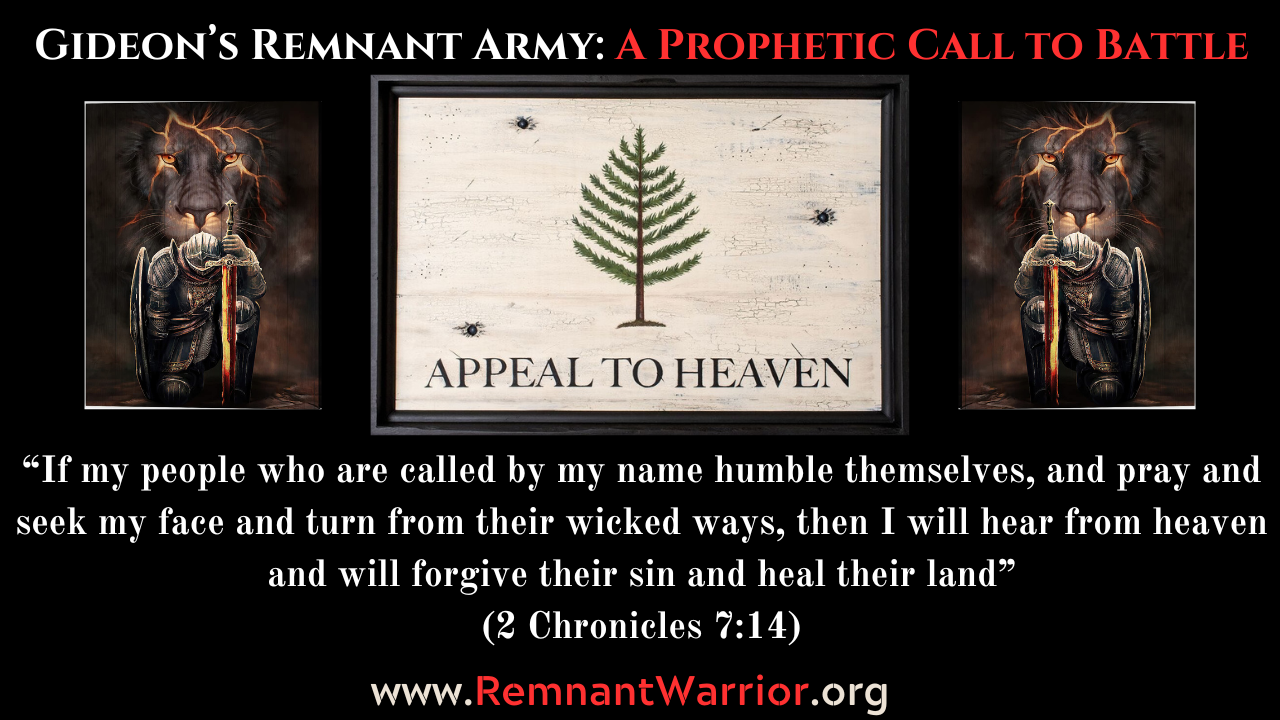
For several weeks, more specifically, since November 5, 2024, I have been resonating with a profound phrase in my spirit: “Gideon’s remnant army is arising!”

This declaration evokes the Biblical tale of Gideon, found in Judges 7, where the Israelites, hardened by their own transgressions, find themselves oppressed by the Midianites. After seven years of tyranny, they are reduced to hiding in the mountains and caves, stripped of their strength and dignity.

In this dire situation, God calls upon Gideon to rally an army, but the Lord, in His divine wisdom, reduces Gideon’s forces from 32,000 warriors to a mere 300. This seemingly small number against the vast Midianite army symbolizes a powerful truth: God’s strength is made perfect in our weakness.

God’s intention in this narrative was not solely to confront the Midianites but also to challenge the Israelites’ idolatry and reliance on false gods. The Israelites had turned away from the very foundation of their strength—faith in God.

As we reflect on the current state of our nation, it is impossible to ignore the parallels. A country that once proclaimed, “In God We Trust” now grapples with moral confusion, celebrating darkness as light and heralding evil as good.

The flag that once signified freedom and divine dependence is increasingly overshadowed by symbols that represent depravity and disorientation. In this context, the remnant—those who remain steadfast in faith amidst chaos—becomes a beacon of hope.

Returning to Gideon’s narrative, the Lord equips him and his 300 men with unconventional weapons: clay pots, torches, and ram’s horns. These instruments of warfare defy human logic and convention.

Yet, God instructs Gideon to act in unison with his men, demonstrating the power of unity and obedience to divine command. When they break the clay pots and reveal the blazing torches, they signal not only their presence but also the manifestation of God’s power in the midst of overwhelming odds.

The Midianites, caught in confusion and panic, turn on one another, resulting in a victory that no human strength could claim. This ancient story serves as a prophetic reminder for the church today.

The body of Christ finds itself facing an expansive “enemy army” that appears insurmountable. The mainstream media, which I humorously refer to as “Mediaites,” has become a formidable force, spreading misinformation and fostering division among the people.

Yet, even in this bleak landscape, there remains a remnant—those who refuse to bow to the pressures of the world and continue to wield the light of truth against the shadows of deceit.

The assurance from 2 Kings 6:16 resounds with clarity: “Don’t be afraid… Those who are with us are more than those who are with them.” The battle may seem daunting, but the heavenly hosts stand firm alongside the remnant.

We are called to carry the blazing torch of truth and declare the victory of Yahweh with the sound of our voices. The time is approaching when the clay jars will shatter, and the light will shine forth, illuminating the darkness and instilling fear in the hearts of the oppressors.

As we navigate the societal unrest and chaos that characterize our current era, it is crucial to recognize that the conflict extends beyond physical manifestations.

It is a spiritual battle—a Civil War of ideologies, morals, and truths. The remnant army, empowered by faith, will rise up, uniting their voices to strike fear into the hearts of the wicked.

The message is clear: tyranny will not triumph, and the oppressors will not prevail. Gideon’s army, a testament of faith and divine intervention, will once again emerge victorious. In conclusion, the tale of Gideon’s remnant army is not merely a historical account; it is a prophetic call to action for believers today.

We are reminded that it is not by human might or power that we achieve victory, but by the Spirit of the Lord. As we embrace our roles as warriors in this spiritual battle, let us remain steadfast, united, and resolute in carrying the light of truth into the darkness.

The remnant is rising, and with it, the promise of victory in the face of overwhelming odds.

~Dr. Russell Welch
Elder / Apostolic Teacher: Highway to Heaven Church and Founder and Shepherd of Remnant Warrior Ministries / Remnant Warrior School of Spiritual Warfare.
The landscape of the American Church has become a topic of significant discussion and debate in recent years. With the rise of mega churches, some may argue that the church is thriving and expanding.

However, a closer examination reveals a more complex reality. While it is true that mega churches attract substantial attendance and resources, this growth often comes at the expense of smaller congregations, which struggle to maintain their presence in a world dominated by aggressive marketing and cookie-cutter models of worship.

The question remains: has the American Church experienced genuine growth, or has it merely become stagnant in its methods and outcomes? The emergence of mega churches has undeniably transformed the religious landscape, with many individuals pointing to their expansive outreach and community engagement as evidence of success.

Yet, this perspective often overlooks the underlying issues associated with such growth. As these large congregations flourish, smaller churches find themselves unable to compete, leading to a decline in diversity within the Church.

The homogenization of worship experiences can erode the unique expressions of faith that smaller congregations offer, creating an environment where spiritual depth is sacrificed for numbers. Moreover, while mega churches may present the illusion of growth, the reality is that their attendance can be highly transient.

Many individuals who flock to these large gatherings may be seeking a temporary fix for their spiritual hunger, often referred to as “wandering sheep.” This phenomenon raises significant concerns about the authenticity of the engagement being offered.

Are mega churches genuinely reproducing the Kingdom of God, or are they merely providing a polished entertainment experience that lacks the transformative power of true discipleship? Interestingly, a pattern emerges when examining cities with a high concentration of mega churches and franchise churches.

These urban areas also often experience rising addiction, homelessness, and crime rates. This correlation challenges the narrative that the mere presence of large congregations equates to spiritual and social health.

It prompts one to consider the impact of church models on the communities they inhabit. In contrast, smaller, more authentic ecclesia—congregations grounded in genuine relationships and spiritual accountability—tend to foster a positive influence in their neighborhoods.

Where these ecclesia are active, there is often a noticeable decrease in the social ills that plague areas dominated by mega churches. One of the reasons behind the effectiveness of these ecclesia lies in their approach to spiritual warfare and their understanding of their inherited identity in Christ.

These communities empower their members to recognize their roles as the Father’s righteous ones on Earth, equipping them to engage in meaningful acts of service and outreach. This revelation sparks a movement of “Remnant Warriors”—individuals who take their rightful positions within the Father’s house and actively seek to fulfill His will, much like Christ did.

Their efforts produce lasting change that transcends the superficial growth metrics often celebrated by mega churches. In conclusion, while the rise of mega churches in America may outwardly suggest that the Church is thriving, a deeper look reveals a landscape marked by stagnation and spiritual superficiality.

The authentic growth of the Church is not measured solely by attendance numbers or marketing prowess but by the transformative impact it has on individuals and communities. As we navigate this complex reality, it is essential to prioritize spiritual depth, genuine relationships, and a commitment to the mission of the Kingdom over mere numerical success. In doing so, the American Church can aspire to a growth that is rooted in authenticity and reflective of the true body of Christ.

In their quest to become culturally relevant, they have in reality allowed the enemy to make major advances within the culture, claiming spheres of influence that the Church once possessed. And because of the enemy has allowed the advance of alternatives to Church explode throughout society, cause deep divisions across the board from Education to government, even to where a once truth seeking media has now come under the rule of the kingdom of darkness evolving into a lie spewing subculture.

 In conclusion, while the rise of mega-churches may suggest numerical growth, a closer examination reveals an underlying stagnation in authentic spiritual engagement and community impact. The juxtaposition of these large congregations with smaller Ecclesia communities highlights the need for a reevaluation of what it means to be the Church in America today.

By embracing a model that prioritizes genuine relationships, spiritual warfare, and community transformation, the Church can move beyond mere attendance metrics and fulfill its divine mandate to be a beacon of hope and healing in a broken world. Ultimately, the health and vitality of the American Church will not be determined by the size of its buildings but by the depth of its commitment to living out the Gospel in every sphere of life.


~Dr. Russell Welch
Elder / Apostolic Teacher: Highway to Heaven Church and Founder and Shepherd of Remnant Warrior Ministries / Remnant Warrior School of Spiritual Warfare.
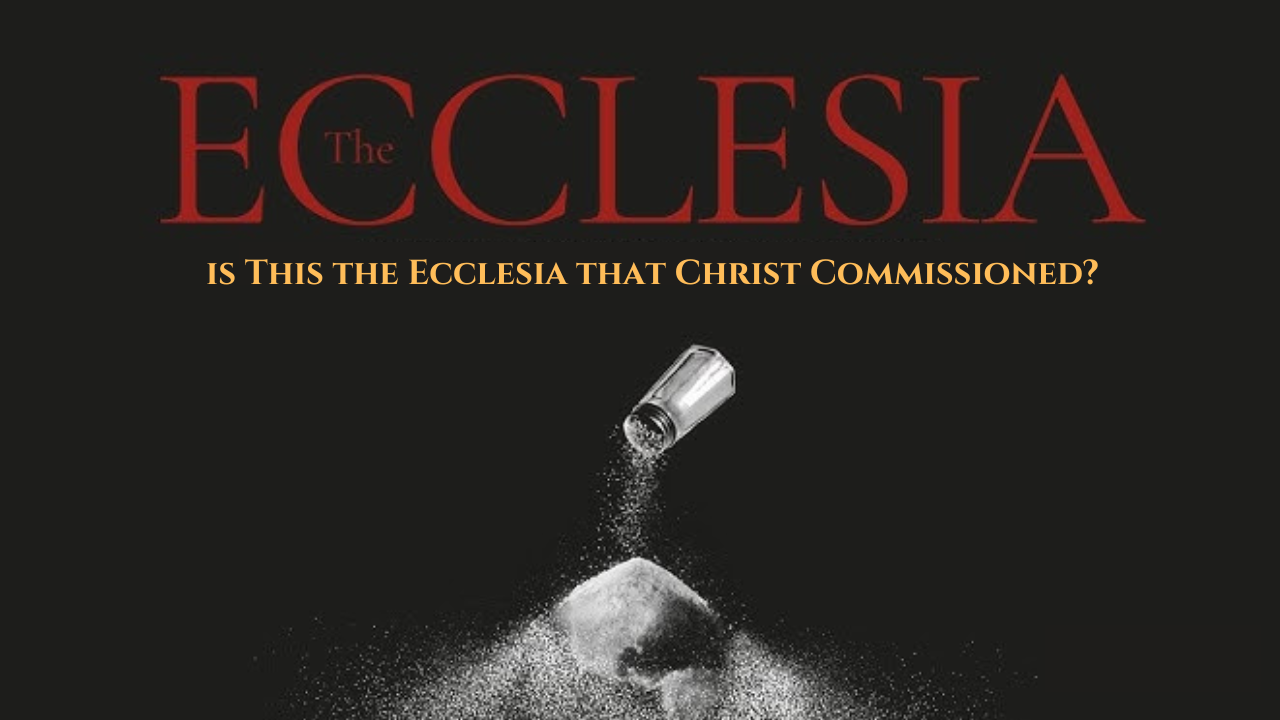
Check out Dr. Welch’s newest book, “Dare to Sin no More – Breaking Free from Sin’s Grasp“


In the heart of the Christian faith lies a profound promise articulated by the Lord Jesus in Matthew 16:18, where He declares, “… thou art Peter, and upon this rock I will build my church; and the gates of hell shall not prevail against it.”

This assertion highlights not only the foundational role of Peter but also emphasizes Christ’s personal involvement in the establishment and nurturing of His ecclesia. The term “ecclesia,” often translated as “church,” signifies more than just a physical gathering; it embodies the spiritual community of believers united under Christ’s authority.

As we dive into this text, we discover that the inception of the ecclesia is intricately linked to Jesus’ death and resurrection, which serves as the cornerstone for a new covenant with humanity. The imagery of the temple plays a significant role in understanding this relationship.

In John 2:19, Jesus prophesies, “Destroy this temple, and in three days I will raise it up,” referring to His body as the true temple. The physical temple, built by human hands, would ultimately be replaced by a spiritual edifice, symbolizing the ecclesia—a community where God dwells not in brick and mortar but in the hearts of believers.

This transition from a physical to a spiritual temple signifies a monumental shift in how God relates to humanity. While the Jewish leaders misunderstood His words, the essence of Christ’s message underscores His mission to form a new covenant community of faith. As we progress into the Acts of the Apostles, the active hand of Jesus is unmistakably present.

Historically, this book could aptly be titled “The Acts of Jesus Christ After His Ascension,” as it details how the risen Lord continues to work through His apostles. Luke introduces this narrative by referencing his previous writings, emphasizing that what Jesus “began both to do and teach” is merely the precursor to the ongoing work of Christ through the Spirit.

Notably, in Acts 2:33, we learn that Jesus has poured out Holy Spirit upon His followers, a clear indication that He is intimately involved in guiding and empowering His ecclesia. Furthermore, Acts 2:47 states, “the Lord added to the church daily such as should be saved.” This raises intriguing questions about the identity of “the Lord” in this verse—whether it refers to God or Jesus.

Given the context of Jesus’ promise to build His ecclesia, it is plausible to interpret this as a reference to Christ’s direct involvement in the growth and vitality of the church. As believers are added to the ecclesia, it becomes evident that Jesus is not a distant figure but an active participant in the life of His followers.

The narrative progresses as we encounter Stephen, who sees Jesus standing at the right hand of God (Acts 7:56). This posture is significant; it implies that Jesus is not merely a passive observer but an active advocate for His people.

When Paul encounters Jesus on the road to Damascus, he learns that the persecutions of the ecclesia are, in essence, persecutions of Christ Himself (Acts 9:4-5). This deep connection reinforces the idea that Jesus is not detached but rather profoundly engaged with His body, the church.

The promise of Jesus in Matthew 28:20, “I am with you always, even unto the end of the world,” resonates powerfully in the context of His ongoing relationship with the ecclesia. He is present, active, and engaged with His people, reminding us that His commitment to the church transcends time and space.

The imagery of Jesus in Revelation presents Him not as a distant deity but as the glorified Son of Man, actively walking among the seven candlesticks—representing the ecclesia—symbolizing His intimate knowledge of their struggles and triumphs. In this light, believers are invited to consider the reality of Christ’s presence within their midst.

The book of Revelation serves as a vivid reminder that Jesus is not just a historical figure but an active and living presence in the ecclesia today. The solemnity of the judgment that awaits the ecclesia, collectively, urges us to foster a deeper awareness of His ongoing work among us. In conclusion, the promise of Jesus to build His ecclesia is a testament to His unwavering commitment to His followers.

It is a call to recognize that He is not a distant observer but an active participant in the life of the church. As we open our eyes to this reality, we are encouraged to live in the light of His presence, understanding that He walks among us, knowing our works and guiding us in our mission to embody His love and truth in the world.

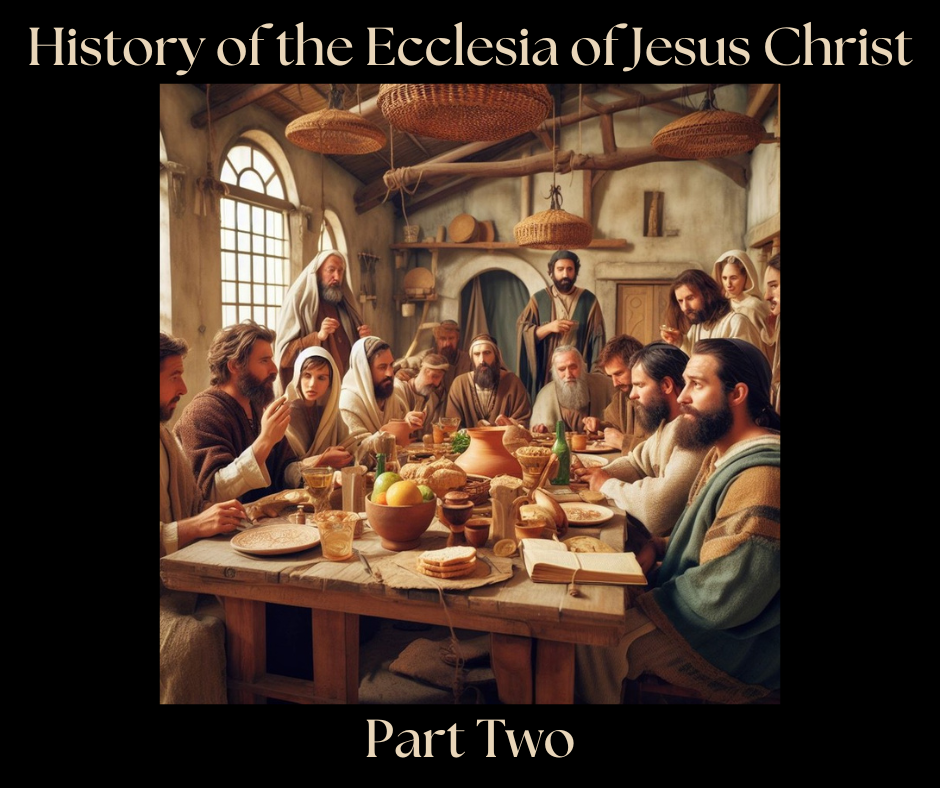
As we continue to study the Word, particularly the NT, we cannot help but see that the journey of the early ecclesia as depicted in the Acts of the Apostles invites contemporary believers to reflect on their own faith communities. The initial gathering of 120 disciples in an upper room, united in “prayer and supplication” (Acts 1:14), serves as a powerful reminder of the strength found in communal commitment.

This sense of unity, encapsulated in the Greek term “homothumadon,” meaning “one mind” or “same passion,” set the tone for the ecclesia’s development throughout the Acts.

The early believers exemplified a model of unity that is not only a historical account but also a guiding principle for modern ecclesial life. As we explore how the early church operated, we recognize that their reliance on doctrine, fellowship, breaking of bread, and prayer remains pertinent today.

The early ecclesia’s steadfast commitment to four foundational practices, as noted in Acts 2:42, offers insights for contemporary faith communities. The apostles’ doctrine served as the lampstand, illuminating their spiritual path; fellowship fostered a sense of belonging akin to the mercy seat, where grace abounded; the breaking of bread became their table of showbread, symbolizing nourishment and community; and prayers ascended like incense from the altar, connecting them with the divine.

These practices were not mere rituals but essential pillars that defined their identity as the new temple in Christ. The ecclesia was a living testament to the spiritual priesthood, and their actions resonated with the tabernacle’s significance in the wilderness—a reminder that worship and community are intertwined.

 As growth marked the journey of the early church, it also brought challenges that tested their unity. The initial explosion of faith in Jerusalem, captured in Acts 2:47, reflects an active Lord adding to the ecclesia daily.

This growth, however, was not without trials. As the number of believers increased, so did the complexities of community life. Conflicts arose, both from within and outside the ecclesia, as illustrated in Acts 6 and 15.

These incidents reveal that growth comes with growing pains, prompting believers to navigate disputes and challenges with wisdom and grace. The early church faced persecution from the Sanhedrin, internal strife, and even doctrinal controversies regarding the law of Moses and the inclusion of Gentile believers.

 Each of these moments called for discernment and leadership, showcasing the necessity of working through differences rather than avoiding them. The ecclesia’s response to these internal and external pressures is a reminder for modern believers that conflict can lead to clarity and cohesion when addressed with intentionality.

Paul’s words in 1 Corinthians 11:18-19 emphasize the inevitability of divisions, suggesting that challenges can serve as catalysts for growth and a deeper understanding of faith. The ecclesia’s ability to engage in difficult conversations and find consensus is a testament to their commitment to unity amid diversity.

As they navigated their shared faith, they learned that overcoming challenges together not only strengthened their bonds but also solidified their witness to the world. With that, we see the narrative of the ecclesia in the Acts of the Apostles serves as both a historical account and a roadmap for contemporary Christian communities.

As we reflect on their practices of doctrine, fellowship, breaking of bread, and prayer, we are encouraged to cultivate a spirit of unity that transcends our differences. The early church teaches us that while the journey of faith is marked by challenges, it is also rich with opportunities for growth, healing, and deeper connection to one another and to God.

Just as the Lord added to their number, may our communities continuously strive for unity and purpose, embodying the essence of the ecclesia as we navigate our own journeys of faith.

~Dr. Russell Welch
Elder / Teacher: Highway to Heaven Church and Founder and Shepherd of Remnant Warrior Ministries / Remnant Warrior School of Spiritual Warfare.

If you feel lead to support this ministry you can do so thru this link: Donate


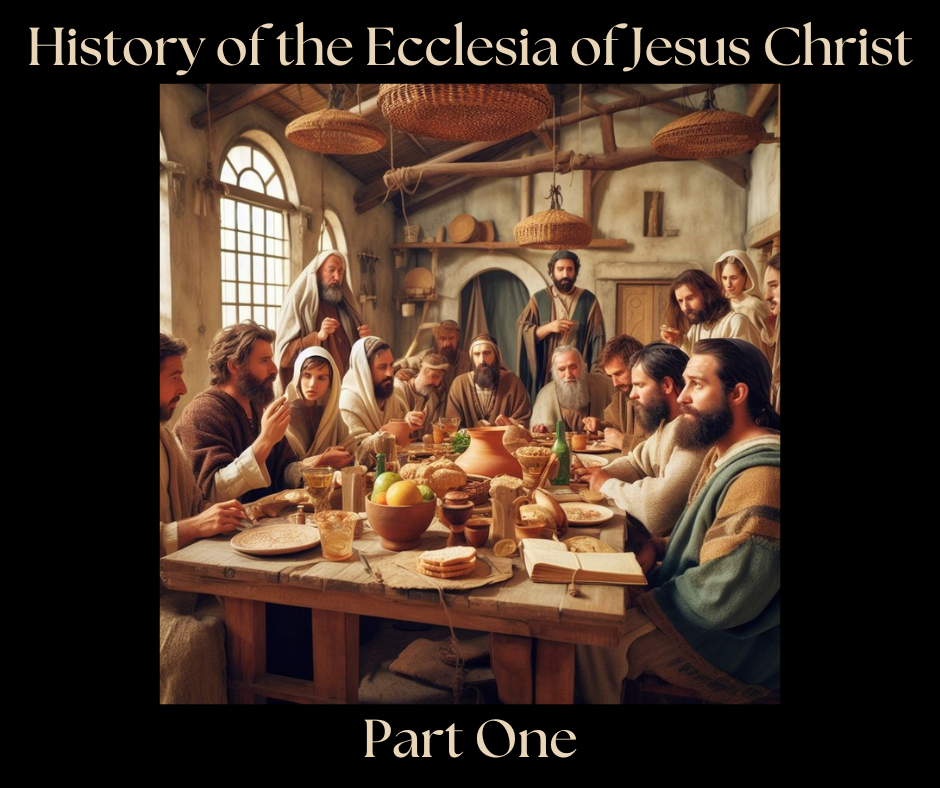
Part one of a three part series………

The Ecclesia in the Acts: Understanding Its Meaning and Significance

The term “ecclesia” has long been embraced by Christadelphians as a replacement for the word “church,” and rightly so. “Ecclesia” carries with it a rich tapestry of meaning and significance, rooted in both history and theology.

However, as with any term that becomes commonplace, there is a risk that its vitality may diminish over time. This raises an important question for believers: How do we truly perceive our ecclesia?

Exploring the depth of this term invites us to consider its historical context and its implications for our communal and individual faith experiences. In the New Testament, particularly in Hebrews 12:18-24, the ecclesia is compared to the Israelites at Mount Sinai, a momentous event in biblical history.

The writer starkly contrasts the terrifying experience of the Israelites with their encounter with God—a scene filled with fire, darkness, and fear—with the ecclesia’s arrival at Mount Zion, the city of the living God. Here, the ecclesia is depicted as part of a celestial assembly, a gathering of angels, just men made perfect, and Jesus, the mediator of a new covenant.

This imagery elevates the ecclesia beyond mere physical assembly, positioning it as an ongoing spiritual reality steeped in divine presence and purpose. The historical roots of the term “ecclesia” can be traced back to ancient Greece, particularly around the fourth century BC.

 It was in this context that a constitution emerged to formalize the governing assembly of Athens, known as the ecclesia. This assembly was comprised of citizens who convened to deliberate on matters of policy, declare war, elect officials, and administer justice.

The term literally means “the called-out ones,” reflecting a sense of community and responsibility among its members. This democratic assembly emphasized ideals of “freedom and equality,” principles that resonate with the communal aspects of the ecclesia in a spiritual sense.

The relevance of the ecclesia transcends its political connotations, extending into the framework of the early Christian community as depicted in the Acts of the Apostles. When Christ spoke to Peter and the apostles in Matthew 16:18, declaring, “Upon this rock, I will build my ecclesia,” He was not introducing a new concept, but rather recontextualizing a term imbued with collective significance.

The early ecclesia, much like the Greek assembly, was called to convene, support one another, and collectively navigate the challenges of faith in a world rife with opposition.

In the Book of Acts, we see the ecclesia in action, as believers come together in unity, sharing resources, and spreading the gospel. However, it is also evident that the term “ecclesia” was not limited to a mere physical gathering.

The events in Acts 19 illustrate how the word “ecclesia” was used to denote both official assemblies and, at times, chaotic gatherings driven by mob mentality.

The case of Demetrius, who incited a riot against Paul and the believers in Ephesus, serves as a cautionary tale about the potential for distortion in communal settings.

Thus, examining the ecclesia through both its historical and biblical lenses reveals a multifaceted understanding of what it means to be part of this assembly.

It challenges believers to recognize their role as part of a larger spiritual community, one that calls for engagement, mutual support, and a commitment to the teachings of Christ.

 As we reflect on our own ecclesia today, we must strive to keep its meaning alive and vibrant. It invites us to ponder how we gather, support one another, and ultimately, how we embody the values and principles established on Sinai and exemplified in the Acts of the Apostles.

By embracing the fullness of the ecclesia, we ensure that it remains a dynamic force for spiritual growth, unity, and service in a world that often seeks to divide. In doing so, we honor its profound legacy and reaffirm our commitment to being the “called-out ones” in every aspect of our lives.

The term “ecclesia,” with its richness in historical and cultural significance, serves as a bridge between the Judaic roots of early Christianity and its evolution into a distinct faith.

With its origins in the Septuagint (LXX), the Greek translation of the Hebrew Bible, ecclesia encapsulates the essence of a gathered community—a concept that resonated deeply with both Jews and early Christians. As we explore its implications, we uncover how this term shaped the understanding of community, authority, and divine purpose in the formative years of the Christian faith.

The Septuagint was created in the 3rd century BC by Jewish scholars in Alexandria, Egypt, who sought to make their sacred texts accessible to a Greek-speaking audience. In this translation, ecclesia appears as a noun seventy-seven times, establishing its foundational role in the relationship between God and His people.

Notably, it was in the context of divine assembly that the term first emerged, as documented in Deuteronomy 4:10, where Moses addresses the Israelites at Mount Sinai, urging them to remember the day of the assembly (ecclesia).

This moment was not merely a historical event; it signified the establishment of a covenant community called to hear God’s words and pass them on to future generations, thereby reinforcing the importance of collective worship and obedience.

Jesus’s use of the word “ecclesia” in Matthew 16:18, where He declares, “upon this rock I will build my ecclesia,” is particularly poignant. His choice of terminology indicates a deliberate connection to the rich history of the term as found in the Septuagint.

By employing ecclesia, Jesus indicated the creation of a new community—the body of believers—rooted in the same principles that defined the assembly of Israel.

The Apostles, familiar with the LXX, understood the weight of this word choice and its implications for their mission. They viewed the ecclesia as a continuation of God’s covenant with His people, tasked with embodying His teachings and spreading the message of salvation.

The comparative study of ecclesia and its Hebrew equivalent, “qahal,” further elucidates its significance. While both terms imply a gathering of people, “qahal” emphasizes the act of being called together by God.

This divine summoning establishes a deeper relationship between the community and their Creator, reflecting a commitment to live in accordance with His will. Barclay’s observation highlights this distinction, noting that ecclesia is not just a congregation that happens to come together; it is a body of people called into action by God.

This understanding is crucial for grasping the nature of the early Christian community, which saw itself as divinely commissioned to fulfill God’s mission on Earth.

Moreover, the early church’s identity was distinct from that of the synagogue, which had become a community space for Jewish worship separate from the temple. While synagogues served an essential role in the Jewish faith, they lacked the transformative purpose that Jesus attributed to His ecclesia.

By establishing a new community, Jesus redefined the concept of worship and fellowship, moving beyond the physical confines of the synagogue to create a spiritual temple made up of believers—an idea echoed in 1 Peter 2:5, where Christians are described as “living stones” being built into a spiritual house.

Thus, we see that the term ecclesia as found in the Septuagint serves as a critical link connecting the Jewish heritage of early Christians to the foundation of their faith.

By understanding its historical context and significance, we can appreciate the profound implications of Jesus’s declaration to build His ecclesia. The early church, rooted in the traditions of Israel, embraced its role as a living embodiment of God’s purpose on Earth, fostering a community designed not only for worship but also for action and outreach.

As we reflect on the rich history of ecclesia, we recognize the enduring call for believers to gather, listen, and respond to God’s voice, thereby continuing the legacy of faith that began millennia ago.

~Dr. Russell Welch
Elder / Teacher: Highway to Heaven Church and Founder and Shepherd of Remnant Warrior Ministries / Remnant Warrior School of Spiritual Warfare.


The concept of ecclesia, often translated as “church,” holds profound significance within its original context, intricately tied to the notion of the Kingdom of God. To fully grasp the authentic meaning of ecclesia, one must acknowledge its relationship with the Kingdom.

When ecclesia is divorced from this context, it risks becoming a mere construct, shaped by human interpretation and desires, rather than a true reflection of its divine intent. In such a scenario, the church can be molded into any form that suits our preferences, effectively sidelining the authority and guidance of Jesus, the King.

Dismissing the Kingdom in our understanding of ecclesia leads us down a perilous path where the essence of the church is distorted. It implies a presumption that we, rather than Christ, can dictate the parameters of what church should be. This attitude not only undermines the foundation of the Kingdom but also negates the promise of Christ’s abiding presence: “Lo, I am with you always, to the end of the age.”

By ignoring this commitment, we arrogantly suggest that the church can operate independently, free from Holy Spirit oversight. The implications of such a mindset extend beyond semantics; they strike at the very heart of our collective identity as the Body of Christ.

When the church is left to decide its own identity and purpose without the Kingdom context, we risk creating a situation where personal or collective whims dictate doctrine and practice. This approach is antithetical to the foundational principles of Christianity and can be deemed as false.

This reality is evident not only in discussions about ecclesia but also in interpretations surrounding apostles, prophets, and the teachings of Scripture. Moreover, echoing the sentiments of the Reformation, the current state of ecclesia devoid of Kingdom authority could lead us back to a form of spiritual darkness reminiscent of the Dark Ages.

It represents a departure from the authority of Scripture and an embrace of a man-made system—a trend that surfaced during the Reformation as a reaction against ecclesiastical corruption. We find ourselves at a crucial juncture where a spiritual reset is not just desirable, but necessary. The call for a Revolutionary Holy Spirit led Reformation is imperative; we must allow Holy Spirit to guide us toward a renewed understanding of the Kingdom and its intended expression through ecclesia.

As we take a step back we can clearly that the ecclesia’s true meaning is intimately linked to the Kingdom of God. To recognize this relationship is to honor the original intent of Jesus and to embrace a church that reflects His authority and purpose.

The journey toward this understanding requires humility and a willingness to step back, allowing Holy Spirit to breathe fresh life into our concept of church, ensuring it aligns with the divine blueprint established by the King. It is only through this alignment that we can hope to fulfill our calling as the authentic Body of Christ in the world today.

~Dr. Russell Welch
Lead Elder and Apostolic Teacher: Highway to Heaven Church and Founder and Shepherd of Remnant Warrior Ministries / Remnant Warrior School of Spiritual Warfare.