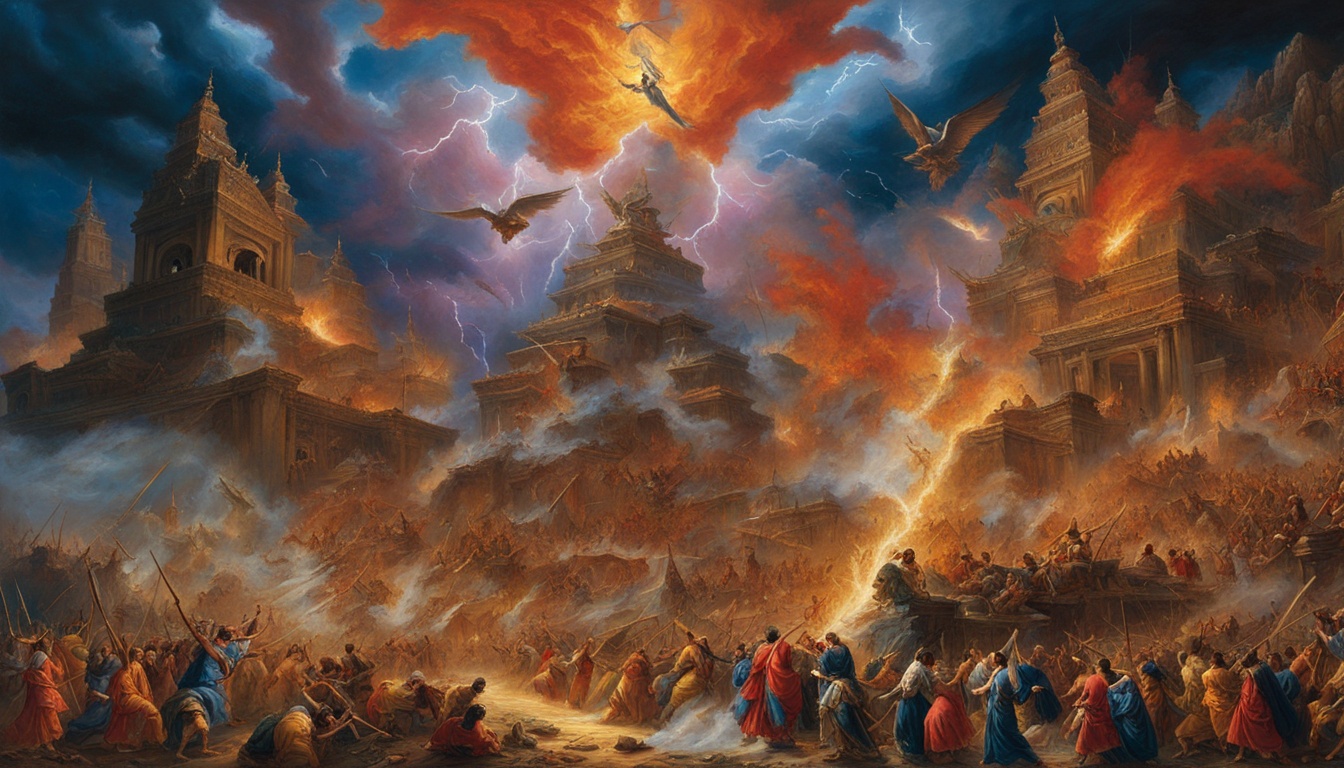
The concept of ecclesia, often translated as “church,” holds profound significance within its original context, intricately tied to the notion of the Kingdom of God. To fully grasp the authentic meaning of ecclesia, one must acknowledge its relationship with the Kingdom.
When ecclesia is divorced from this context, it risks becoming a mere construct, shaped by human interpretation and desires, rather than a true reflection of its divine intent. In such a scenario, the church can be molded into any form that suits our preferences, effectively sidelining the authority and guidance of Jesus, the King.
Dismissing the Kingdom in our understanding of ecclesia leads us down a perilous path where the essence of the church is distorted. It implies a presumption that we, rather than Christ, can dictate the parameters of what church should be. This attitude not only undermines the foundation of the Kingdom but also negates the promise of Christ’s abiding presence: “Lo, I am with you always, to the end of the age.”
By ignoring this commitment, we arrogantly suggest that the church can operate independently, free from Holy Spirit oversight. The implications of such a mindset extend beyond semantics; they strike at the very heart of our collective identity as the Body of Christ.
When the church is left to decide its own identity and purpose without the Kingdom context, we risk creating a situation where personal or collective whims dictate doctrine and practice. This approach is antithetical to the foundational principles of Christianity and can be deemed as false.
This reality is evident not only in discussions about ecclesia but also in interpretations surrounding apostles, prophets, and the teachings of Scripture. Moreover, echoing the sentiments of the Reformation, the current state of ecclesia devoid of Kingdom authority could lead us back to a form of spiritual darkness reminiscent of the Dark Ages.
It represents a departure from the authority of Scripture and an embrace of a man-made system—a trend that surfaced during the Reformation as a reaction against ecclesiastical corruption. We find ourselves at a crucial juncture where a spiritual reset is not just desirable, but necessary. The call for a Revolutionary Holy Spirit led Reformation is imperative; we must allow Holy Spirit to guide us toward a renewed understanding of the Kingdom and its intended expression through ecclesia.
As we take a step back we can clearly that the ecclesia’s true meaning is intimately linked to the Kingdom of God. To recognize this relationship is to honor the original intent of Jesus and to embrace a church that reflects His authority and purpose.
The journey toward this understanding requires humility and a willingness to step back, allowing Holy Spirit to breathe fresh life into our concept of church, ensuring it aligns with the divine blueprint established by the King. It is only through this alignment that we can hope to fulfill our calling as the authentic Body of Christ in the world today.
~Dr. Russell Welch Lead Elder and Apostolic Teacher: Highway to Heaven Church and Founder and Shepherd of Remnant Warrior Ministries / Remnant Warrior School of Spiritual Warfare.
While driving the other day I felt Holy Spirit speaking to my spirit about the spiritual battles that are being waged in the Supernatural Reset that is taking place in the Heavenlies and on Earth, for the destinies of nations and especially for the reformation of the Lord’s Ecclesia.
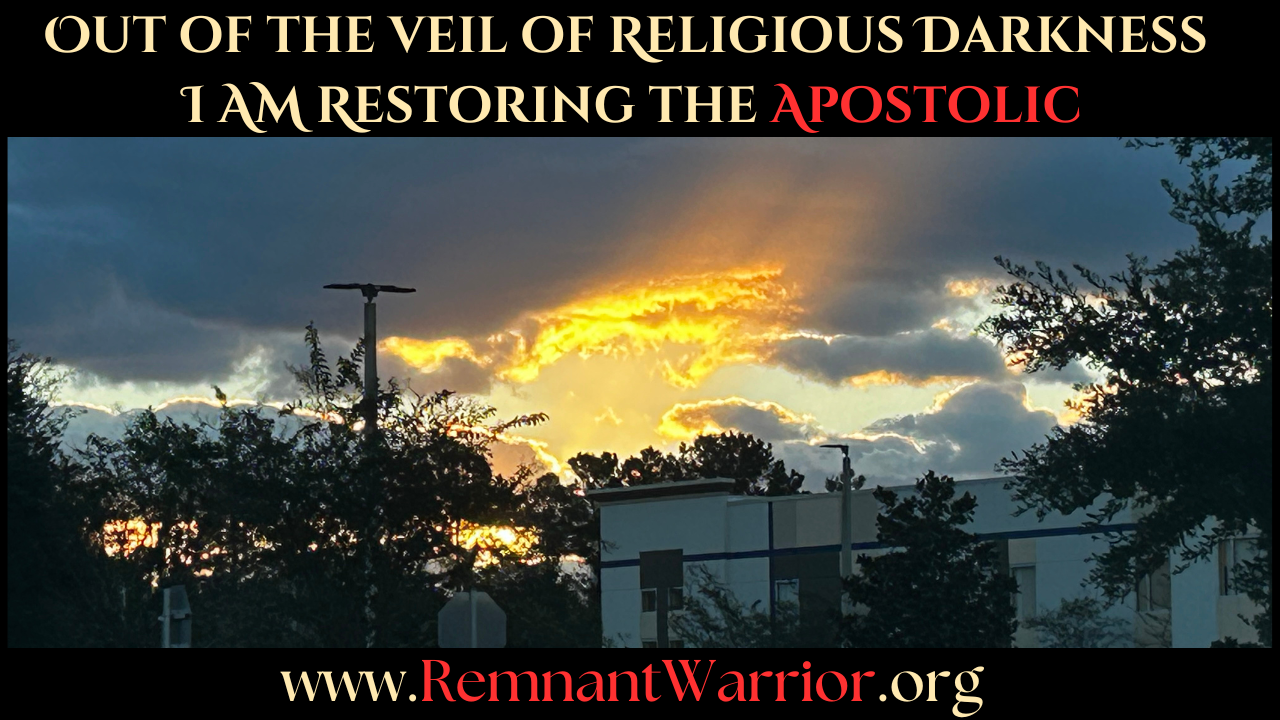
In that conversation I believe I heard Him sharing a word that He was re-birthing a restoration to the Apostolic, liberating it from the restrictive confines of religion. I have had several conversations with seasoned warriors of the faith about this and feel led to write about it.
Now, over the years in my walk with Holy Spirit, I have found that He often speaks to me by showing me dreams, visions, pictures, and images as visual confirmations, and right as I heard Him making the statement about the Apostolic I looked up and saw in the sky, and immediately took a photo, which is in the banner below.
So here it goes……….
In today’s society, where religious language often seems diluted and commercialized, the term “Apostolic” has become a buzzword that many use to lend legitimacy to their ministries or personal identities. However, this trend has precipitated a crisis of understanding regarding the authentic meaning of the term.
Once grounded in the teachings and authority of the Apostles, the word “Apostolic” now risks being reduced to a mere Christian catchphrase, devoid of its powerful theological implications. To navigate this confusion, we must return to the scriptural roots and examine what it truly means to identify with the Apostolic.
At its core, being Apostolic signifies a commitment to uphold the orthodoxy of the Apostles’ teachings—a Christ-centric doctrine that emphasizes the life, death, and resurrection of Jesus as central to the Christian faith. In a world increasingly characterized by self-promotion and elitism, this return to foundational teachings is essential.
The tendency for individuals and ministries to label themselves as “Apostolic” often stems from a desire to assert themselves as God’s chosen representatives, creating an exclusive club that undermines the universal nature of the Gospel. However, Scripture reminds us that God has hidden His Remnant within every culture and community—those who genuinely bow to Him and adhere to His truth.
The proliferation of Christian platitudes—trite phrases and hollow expressions—has become commonplace, akin to free drinks at a cheap wedding, readily available but lacking substance. Yet, in this critical hour, the Holy Spirit is actively revealing the authentic from the fraudulent. The current spiritual climate is akin to a divine reset, where truth is being separated from deception, and the Church is being called to a deeper understanding of its purpose and identity.
The global Church, often perceived as divided and weak, is, in fact, witnessing the separation of wheat from tares, a fulfillment of biblical prophecy that we are indeed the generation destined to witness the emergence of the sons and daughters of God. However, this journey toward authenticity is not without challenges. Hell is also at work, attempting to stall the profound movements God has ordained for this time.
The enemy’s patterns of deception are increasingly sophisticated, aiming to mislead believers and stifle the Church’s destiny. Yet, as God assured Elijah during times of uncertainty, He has reserved thousands who remain faithful to Him. This assurance is pivotal as we navigate a world filled with competing ideologies and diluted truths.
The Lord’s authentic Ecclesia—His true body of believers—will prevail. The Remnant, those who cling to the teachings of the Apostles and engage in a genuine relationship with Christ, will break forth in victory.
As we embrace our identity as part of this Remnant, we must resist the temptation to merely adopt labels for the sake of recognition. Instead, we should pursue an understanding of what it means to be truly Apostolic, rooted in the orthodoxy of faith and a commitment to live out the teachings of Christ.
So, in understanding that while “Apostolic” may be a term that has been co-opted in contemporary Christian discourse, it still holds profound significance. It calls us back to the core teachings of the Apostles and challenges us to examine our motives and actions as we navigate our faith journeys.
As we strive to embody the authentic spirit of the Apostolic, we can participate in the divine narrative that God is weaving through history, confident that His Remnant will rise and prevail against the forces of darkness.
The true meaning of being Apostolic is not about elitism or status, but about faithful adherence to the truth of the Gospel and the transformative power it holds for our lives and communities.
Yes, we can see where the term “Apostolic” often conjures images of elitism, exclusivity, and a sense of higher status among those who claim the title. However, the essence of being Apostolic is far more profound and inclusive. It is not merely a badge of honor but a commitment to faithfully adhere to the teachings of the Gospel and an acknowledgment of the transformative power it holds not only for individual lives but also for communities as a whole.
Understanding this true meaning is essential for fostering genuine faith and connection in a diverse society. At its core, being Apostolic means following the teachings and practices established by the apostles—those early followers of Christ who carried His message to the world. The apostles exemplified a life of humility, service, and unwavering dedication to their faith, often facing persecution and hardship for the sake of spreading the Gospel.
Their legacy serves as a reminder that the call to be Apostolic is not about personal glory or social standing; it is about embodying the principles of love, grace, and sacrifice that Christ demonstrated during His life. Faithful adherence to the truth of the Gospel is a vital aspect of being Apostolic.
The Gospel, which translates to “good news,” offers a message of hope, redemption, and reconciliation with God. It presents a narrative of love that transcends boundaries and invites all individuals into a relationship with the Creator. By embracing this truth, Apostolic individuals commit themselves to a way of living that reflects the teachings of Christ, fostering an environment where love and understanding flourish. This adherence is not a rigid set of rules but a dynamic relationship with God that transforms both the individual and the community.
The transformative power of the Gospel cannot be overstated. It has the capacity to change hearts, heal wounds, and bring people together across divides. When individuals experience the love and grace inherent in the Gospel, they are empowered to extend that same love and grace to others. This creates a ripple effect, transforming communities and fostering unity among diverse groups of people.
The true Apostolic spirit encourages believers to act as agents of change, advocating for justice, compassion, and understanding in a world that often prioritizes division and discord. Moreover, the Apostolic calling challenges believers to look beyond themselves and their immediate circles. It encourages outreach to those who are marginalized, oppressed, or searching for hope.
Being Apostolic means actively engaging in the struggles of others, standing in solidarity with those who suffer, and working tirelessly toward the common good. It is an invitation to be part of a larger narrative—one that seeks to bring the Gospel’s transformative message to every corner of society.
This, with a better understanding that the true meaning of being Apostolic is not grounded in elitism or status but rather in a faithful adherence to the truth of the Gospel. It invites individuals to embrace the transformative power of Christ’s message and to live it out in their daily lives. By doing so, they become instruments of change, fostering love, unity, and hope in their communities.
As we strive to embody this Apostolic spirit, we open ourselves to the profound impact of the Gospel, not only on our lives but also on the world around us. In this pursuit, we find not just our true identity as believers but also a shared mission that transcends boundaries and brings us closer to the heart of God.
~Dr. Russell Welch Lead Elder and Apostolic Teacher: Highway to Heaven Church and Founder and Shepherd of Remnant Warrior Ministries / Remnant Warrior School of Spiritual Warfare.
In today’s world, we often focus on power, wealth, and our own interests. But, there are forces we can’t see that aim to harm our nation. The Apostle Paul tells us in Ephesians 6:12, “our struggle is not against flesh and blood, but against the rulers, against the authorities, against the powers of this dark world and against the spiritual forces of evil in the heavenly realms.” This message shows us the spiritual battle our nation is in. It’s about protecting our values, keeping our nation safe, and defending our freedoms.
Key Takeaways
Our nation faces a spiritual battle against unseen forces that seek to destroy it.
Ephesians 6:12 reminds us that our struggle is not against flesh and blood, but against spiritual entities.
Understanding the unseen battle is critical to defending our nation’s values and security.
Engaging in spiritual warfare is a vital part of preserving our nation’s heritage and future.
The biblical perspective on spiritual warfare provides a framework for responding to this existential threat.
The Spiritual War Against Our Nation
Our nation is in a constant battle that we can’t see. This fight is not against people but against evil spirits that want to harm our country. The apostle Paul told us in Ephesians 6:12, “our struggle is not against flesh and blood, but against the rulers, against the authorities, against the powers of this dark world and against the spiritual forces of evil in the heavenly realms.”
Understanding the Unseen Battle
This spiritual war may not be visible, but it affects our society deeply. Evil forces try to cause trouble, weaken our beliefs, and break our spirit. We see this in the decline of moral values, the spread of harmful ideas, and attacks on our Christian roots.
Ephesians 6:12 – A Profound Truth
Ephesians 6:12 tells us a powerful truth. It says our fight is not against each other but against evil spirits that aim to control us. Knowing this helps us fight back and protect what makes our nation strong.
“For our struggle is not against flesh and blood, but against the rulers, against the authorities, against the powers of this dark world and against the spiritual forces of evil in the heavenly realms.” – Ephesians 6:12
Spiritual Entities: The Hidden Adversaries
In our fight against forces that aim to weaken our nation, we face enemies we can’t see. These spiritual entities are our hidden enemies, as Ephesians 6:12 tells us. They are the ones we battle, not with physical strength but with spiritual might.
Demonic forces work hard to destroy our values and security. They use sneaky ways to cause division and weaken our beliefs. This spiritual warfare is a silent fight that needs us to be alert and true to God’s Word.
Identify the specific spiritual entities that threaten our nation.
Learn how these demonic forces try to harm us.
See why spiritual warfare is key to protecting our nation from these hidden foes.
Spiritual Entities
Tactics
Potential Impact
Principalities and powers
Sow division, promote moral relativism
Undermine national unity and stability
Rulers of the darkness
Corrupt institutions, manipulate public opinion
Weaken the foundations of our society
Spiritual hosts of wickedness
Attack biblical values, erode moral fiber
Compromise national security and resilience
As we fight this unseen battle, staying alert, praying, and strong in our beliefs is key. By understanding our war against spiritual entities, we can win and keep our nation’s values alive.
“For we do not wrestle against flesh and blood, but against the rulers, against the authorities, against the cosmic powers over this present darkness, against the spiritual forces of evil in the heavenly places.” – Ephesians 6:12
Demonic Forces: A Threat to National Security
Our nation is facing a serious threat from demonic forces in the spiritual realm. These forces aim to destroy our security and stability. The Apostle Paul warned us in Ephesians 6:12, “our struggle is not against flesh and blood, but against the rulers, against the authorities, against the powers of this dark world and against the spiritual forces of evil in the heavenly realms.” These evil entities are working hard to cause discord, division, and chaos in our country.
Recognizing the Enemy’s Tactics
To fight these spiritual enemies, we must know their tactics and how they operate. Demonic forces use deception, manipulation, and our weaknesses to harm us. They try to influence public opinion, spread doubt and fear, or even take over our government and institutions.
Disinformation campaigns: Spreading false stories and propaganda to confuse and mislead people.
Spiritual warfare: Attacking our faith and moral values.
Undermining national unity: Using divisions to cause discord among us.
Infiltrating positions of power: Putting agents in key roles.
Knowing these tactics helps us prepare to defend our nation’s spiritual and moral integrity. This way, we can protect our national security.
“For we do not wrestle against flesh and blood, but against the rulers, against the authorities, against the cosmic powers over this present darkness, against the spiritual forces of evil in the heavenly places.” – Ephesians 6:12
The battle we’re in is not just physical but spiritual. By understanding our enemies and their tactics, we can defend our nation against those who want to destroy our foundations.
our war is against spiritual entities that seek to destroy our nation, Eph 6:12
Looking into the spiritual battle our nation faces, we find a deep truth in Ephesians 6:12. It says, “For we do not wrestle against flesh and blood, but against the spiritual forces of evil in the heavenly places.” This reminds us our fight isn’t with people, but with spiritual enemies that aim to destroy our country.
These evil forces work in secret, affecting people, groups, and even governments. They try to cause trouble, division, and chaos. Their goal is to break down our nation’s moral and spiritual strength.
“For we do not wrestle against flesh and blood, but against the spiritual forces of evil in the heavenly places.” – Ephesians 6:12
Understanding this spiritual battle helps us see what we’re up against. It’s not a fight with other humans, but against spiritual entities trying to control our thoughts and actions.
By seeing the spiritual side of the conflict, we can better understand our enemy. This lets us stand strong and fight the spiritual battles needed to protect our nation. The fight is tough, but with God’s help, we can win.
The Biblical Perspective on Spiritual Warfare
Our fight is not against people, but against spiritual enemies that aim to destroy us. Ephesians 6:12 tells us, “For we do not wrestle against flesh and blood, but against the rulers, against the authorities, against the cosmic powers over this present darkness, against the spiritual forces of evil in the heavenly places.” This shows us the true nature of the spiritual warfare we face.
This battle is not just physical or political. It’s a spiritual fight of huge importance. The enemies we face are spiritual entities, as mentioned in Ephesians 6:12. They aim to weaken our nation’s values, unity, and determination.
To fight this spiritual battle, we must look beyond what we can see. We need to put on the armor of God, as talked about in Ephesians 6. With this armor, we can stand strong against the devil’s tricks. This is how we can win the fight for our nation’s soul.
“For we do not wrestle against flesh and blood, but against the rulers, against the authorities, against the cosmic powers over this present darkness, against the spiritual forces of evil in the heavenly places.” – Ephesians 6:12
Understanding spiritual warfare through the Bible helps us see the real battle we’re in. This knowledge lets us fight more effectively. It helps protect the values and principles that make our nation great.
Putting on the Whole Armor of God
As we face the spiritual war against forces that aim to destroy our nation, we must be armed with God’s protection and wisdom. Ephesians 6:12 tells us to wear the full spiritual armor of God. This prepares us for the battle that is happening out of sight.
The Belt of Truth
The belt of truth is the first armor piece we need. It stands for God’s Word, our guide and anchor against lies. By holding onto this truth, we can resist the enemy’s false words that threaten our nation.
The Breastplate of Righteousness
Then, we must wear the breastplate of righteousness. This protects our hearts and lives. It’s about the righteousness we get from believing in Christ, keeping us safe from the enemy’s attacks. With God’s righteousness, we can face the spiritual attacks that try to weaken our beliefs.
Wearing the whole armor of God is key in the spiritual warfare against spiritual entities threatening our nation. With the belt of truth and the breastplate of righteousness, we can stand strong in our ephesians 6:12 call. We defend our nation against the our war is against spiritual entities that seek to destroy our nation.
Spiritual Deliverance: Preserving Our Values
In the spiritual battle for our nation’s soul, spiritual deliverance is key. We fight against spiritual forces that aim to destroy us, as Ephesians 6:12 tells us. To keep our nation’s values, we must fight spiritually and ask for divine help.
Spiritual deliverance means freeing ourselves from demonic forces and taking back lost spiritual ground. It’s vital to protect our nation’s moral and ethical base. Through this, we can keep our nation’s heritage alive and ensure freedom, justice, and righteousness guide us.
The fight isn’t against people but against spiritual powers of darkness that attack our values. Knowing this spiritual warfare and using God’s armor helps us stand strong against the enemy. We can win this battle.
Keeping our values is a spiritual need, not just a political or social task. As we fight spiritually, remember that the cross has already won the victory. With faith, prayer, and commitment to our founding principles, we can beat the forces trying to destroy us. Our values will last for future generations.
“For we do not wrestle against flesh and blood, but against the rulers, against the authorities, against the cosmic powers over this present darkness, against the spiritual forces of evil in the heavenly places.” (Ephesians 6:12)
Strategies for Spiritual Deliverance
Benefits of Preserving Our Values
Engage in fervent prayer Seek spiritual guidance and counseling Renounce any ungodly influences or agreements Cultivate a lifestyle of holiness and righteousness
Strengthens the moral fabric of our society Protects our national identity and heritage Fosters a culture of integrity and respect Inspires future generations to uphold our values
By following spiritual deliverance and keeping our values, we can stand strong against forces trying to destroy our nation. Let’s stay true to the truth and defend the principles that make our nation a beacon of hope and freedom for the world.
Combating Anti-Israel and Pro-Hamas Protests
Our nation’s support for Israel and its allies has faced spiritual attacks. These attacks aim to weaken our bond with Israel. The protests against Israel and for Hamas are backed by spiritual forces that want to divide us.
Standing Firm Against Hatred
We fight not against people but against evil spirits that attack our nation (Ephesians 6:12). When faced with anti-Israel and pro-Hamas protests, we must stand strong. By wearing God’s armor, we can fight the spiritual battle and keep our nation’s values alive.
Through prayer, understanding, and sticking to God’s Word, we can beat the spiritual enemies. We must speak out for our ally Israel and against lies and hate that try to divide us.
FAQ
What is the spiritual battle our nation faces?
Our nation is fighting a spiritual battle against forces that want to harm it. This fight is based on a deep truth from Ephesians 6:12. It tells us our enemies are not human but spiritual forces of evil in the heavenly realms.
What are the spiritual entities that seek to destroy our nation?
Evil spirits and hidden enemies aim to weaken our nation. They work secretly to destroy our values and security.
How do demonic forces pose a threat to our national security?
Demons threaten our security by attacking our values and causing division. It’s important to know their tactics and resist these attacks.
What is the biblical perspective on spiritual warfare?
The Bible says our fight is against spiritual enemies, not people. This view helps us understand the spiritual nature of the battle and how to fight it.
How can we equip ourselves for the spiritual battle?
Ephesians 6:12 teaches us to wear God’s armor, like the belt of truth and the breastplate of righteousness. This armor helps us fight the enemy’s plans and stay strong in the battle.
Why is spiritual deliverance important for preserving our nation’s values?
Spiritual deliverance keeps our nation’s moral and ethical base strong. By fighting the spiritual battle, we protect the values that make our nation great.
How should we respond to anti-Israel and pro-Hamas protests?
We must stand against hate and division in protests against Israel or supporting Hamas. This battle is about seeing and fighting the spiritual forces behind these events, supporting Israel, and its allies.
The United States is at a critical point in its history. Christian voters play a key role now more than ever. This article urges believers to take part in the election process. It’s vital for Christians to protect America’s core values and shape its future.
Key Takeaways
The moral imperative for Christians to engage in the political process and vote
Defending religious freedom and conservative values as a matter of faith
Protecting America’s future by shaping the nation’s direction through informed, faith-based voting
The power of the Christian vote to impact crucial moral issues like abortion and gender ideology
A call for Christians to exercise their civic duty and become politically active
The Moral Imperative for Christians to Vote
As Christians, we have a sacred duty to take part in the democratic process. It’s not just a right, but a moral duty. By voting, we defend religious freedom and uphold Christian values that have shaped our nation.
Faith-Based Civic Engagement
Christianity tells us to be stewards of our society. We’re called to be salt and light, shaping the world and fighting for what’s right. Voting lets us act on our faith and make sure our leaders and laws reflect our values.
Defending Religious Freedom
With threats to religious liberty always there, it’s key for Christians to vote. Our votes can protect our freedom to live and worship as we believe. This keeps the foundation of our country strong.
Importance of Faith-Based Civic Engagement
Threats to Religious Freedom
Aligning our nation’s policies with Christian values Fulfilling our moral duty as stewards of society Exercising our God-given rights and responsibilities
Increasing restrictions on religious expression Attempts to remove faith-based organizations from public life Legislation that undermines traditional moral values
As Christians, we must take an active role in democracy. By voting, we defend our religious freedom and make sure our nation follows our faith’s moral compass. It’s a duty we can’t ignore.
“We have a moral responsibility to be engaged in the political process and to vote in accordance with our Christian values. Our faith must inform our civic duty.”
Conservative Values: Upholding Tradition and Morality
As Christians, we have a duty to keep the conservative values and traditional morality that have kept our nation strong for years. In a world that often goes against our faith, we must stand strong. We need to protect the customs and principles that match our beliefs.
At the core of conservative values is a deep respect for the family, the purity of marriage, and faith’s role in our lives. We must fight against forces that try to weaken these important parts of our society. They are the foundation of our communities and country.
Protecting traditions is not just looking back; it’s key to keeping our moral compass. By using the wisdom of the past and the eternal truths of our faith, we can deal with today’s challenges. This way, we can build a future that reflects our cherished values.
Conservative Values
Traditional Morality
Protecting Traditions
Family-centered
Respect for life
Upholding marriage
Respect for authority
Commitment to faith
Preserving cultural heritage
Limited government
Moral integrity
Defending religious freedom
As we move through today’s complex society, let’s stick to the principles our ancestors followed. By keeping to conservative values and traditional morality, we can make sure our nation’s heritage stays strong. This way, we honor the sacrifices of those who came before us.
“The preservation of our national traditions and institutions is the very first duty of every patriotic citizen.”
America’s Destiny is at Stake
As Christian voters, we must see the big picture. Our nation’s future is uncertain, and our votes will shape it. It’s our duty to protect our future and guide our country with faith-based values.
Protecting the Nation’s Future
Our choices today affect tomorrow. We must protect the values that make America a symbol of hope and freedom. By voting with our faith, we ensure a better future for our kids and grandkids.
Shaping the Country’s Direction
The Christian vote is powerful. Our voices can change the course of the nation. By making political choices based on our beliefs, we can shape laws and leadership. This is a big responsibility we must take seriously.
Key Factors
Importance
America’s Destiny at Stake
The decisions made by Christian voters will profoundly shape the future of our nation.
Protecting the Nation’s Future
By voting our faith, we can safeguard the principles that have made America great.
Shaping the Country’s Direction
The Christian vote holds the power to influence the leadership and policies that will guide America’s future.
“The destiny of America is always the destiny of Christianity.” – Alexis de Tocqueville
As we head into the election, let’s remember the importance of our choices. Our nation’s future, our values, and its direction depend on our votes. It’s time for us, as Christian citizens, to stand up and vote with conviction.
Christians Must Vote: A Call to Political Activism
As Christians, we have a duty to take part in politics. Political activism is a key part of our faith. By voting, we can shape our nation’s future and make sure our faith-based values guide its laws.
Voting is a sacred act of civic duty that matches our beliefs. As elections come up, we must speak up and vote based on our morals. Our votes can protect religious freedom, support traditional values, and secure our country’s future.
“Let your light shine before others, so that they may see your good works and give glory to your Father who is in heaven.” (Matthew 5:16)
This verse tells us to let our faith shine publicly, not just privately. By taking part in politics, we guide our nation towards rightness and truth. Political activism is a call from God that we can’t ignore.
As Christians, we’re called to be the salt and light of the world (Matthew 5:13-14). This means we must be active in politics. By voting with our faith-based values, we can protect religious freedom, support traditional values, and help those in need.
Moral Issues at the Forefront
As Christian voters, we must think deeply about the moral issues in politics. The debate over abortion rights and restrictions is at the center. These topics are personal and split people. They need careful thought and a strong commitment to biblical values.
Abortion Rights and Restrictions
The debate on abortion rights has gone on for years, with strong feelings on both sides. Christians need to think about the moral sides of this issue. We must protect the unborn and respect life’s sanctity. Yet, we should also help women in tough situations and support policies that value all human life.
Recently, there’s been a push for abortion restrictions in many states. These aim to limit or control abortion. As Christians, we must talk about this, making sure our leaders follow our faith’s core values.
Abortion Rights
Abortion Restrictions
Advocates for the legal right to abortion as a personal choice
Seeks to limit or regulate the practice of abortion through legislation
Emphasizes a woman’s autonomy and reproductive freedom
Prioritizes the protection of the unborn and the sanctity of life
Argues that abortion is a fundamental human right
Contends that abortion is a moral and ethical violation
As Christians, we must approach these moral issues with care and prayer. We should stand by our faith while showing kindness and understanding to those dealing with these hard choices.
The Power of the Christian Vote
As Christians, we have a big responsibility to vote and make our voices heard. The Christian vote is very powerful and can shape our nation’s future. By being active citizens, we can make sure our values are in the policies and leadership.
Exercising Civic Duty
Voting is a big deal for Christians who want to be salt and light in our society. Our faith tells us to be part of the political process. We should use our influence to support causes that match God’s will. This includes protecting the unborn and defending religious freedom.
Understand the importance of your vote and its impact on the future of our country.
Research candidates and their platforms to ensure they align with your Christian values.
Encourage fellow believers to register and participate in every election, from local to national.
Pray for wisdom and discernment as you cast your ballot, asking God to guide your decision.
It’s time for Christians to stand up and take our civic duty seriously. We should be committed to the principles that have made America great. By using the Christian vote, we can make sure our faith is respected and our values are kept safe.
Key Factors
Voter Turnout
Impact on Election Outcomes
Christian Voters
78% in 2020 presidential election
Crucial in swing states and close races
Evangelical Christians
76% in 2020 presidential election
Decisive voting bloc in many elections
Faith-Based Voters
Increasing in recent elections
Shaping the political landscape
The Christian vote is very strong, and now is the time to act. By being active citizens, we can make sure our values are in the leadership and policies of our nation.
Faith-Based Voting: A Principled Approach
As Christians, we are called to look at politics through our faith. Faith-based voting means we use our beliefs to guide our political choices. It’s not just about picking a party or candidate. It’s about standing for the values that are key to our Christian faith.
Aligning Faith and Politics
When we think about aligning faith and politics, we must remember our faith is sacred. It deeply affects our political decisions. Our faith should shape how we see the world and our role in it.
Seek guidance from Scripture and prayer to discern the right course of action.
Prioritize issues that are in line with biblical teachings, such as the sanctity of life, the protection of traditional family values, and the promotion of religious freedom.
Reject any political agenda that contradicts or undermines our core Christian beliefs.
By choosing a principled approach in politics, we can make a big difference. Our faith can guide our votes and help shape our country. This way, we work towards a future that matches God’s plan for America.
“Let your light shine before others, so that they may see your good works and give glory to your Father who is in heaven.”
– Matthew 5:16
Principles for Faith-Based Voting
Description
Sanctity of Life
Protecting the unborn and supporting policies that uphold the value of human life.
Traditional Family Values
Preserving the institution of marriage between one man and one woman, and promoting policies that strengthen families.
Religious Freedom
Defending the right of Christians to freely practice their faith in the public square without fear of discrimination or persecution.
Conclusion
Looking at the big issues in our nation, we see that America’s future is uncertain. Christians must use their right to vote to shape our country’s future. By keeping our values, traditions, and vision, we keep the U.S. a symbol of faith, freedom, and success.
Being active in civic life is key to this goal. As believers, we should take part in politics with our beliefs and a strong commitment to our communities. Together, we can protect the rights and freedoms that are key to our lives. This keeps the values that have shaped America for so long alive.
The moment to act is now. Christians must vote for our nation’s future and for those who will come after us. By standing by our beliefs and fighting for a future that matches our moral compass, we can guide our country. Let’s take this important role, knowing that our faith and votes can truly change things.
FAQ
Why is it crucial for Christians to vote in the upcoming elections?
Christians have a duty to vote because our choices affect our nation’s future. Our votes shape the policies that impact our lives. It’s important to vote for leaders who share our values.
How can faith-based civic engagement help to defend religious freedom?
By voting, Christians can protect our right to practice our faith freely. We must choose candidates who respect our religious beliefs. This helps keep our religious freedoms safe.
What are the key conservative values that Christians should prioritize when voting?
Christians should vote for values that match our faith. This means supporting life, family, and traditional values. We must stand against changes that harm our society’s moral standards.
How is America’s destiny at stake in the upcoming elections?
Our future is shaped by the choices we make in elections. Christians must take an active role in guiding our country. We should vote for policies that reflect our values.
What is the role of political activism for Christians in the current climate?
Christians must be active in politics today. This means voting, advocating for our beliefs, and supporting the causes we care about. We should also hold our leaders accountable to our values.
What are the key moral issues that Christian voters should prioritize?
Life and protecting the vulnerable are key Christian values. Issues like abortion and gender identity laws are important. We should vote based on these beliefs.
How can the power of the Christian vote shape the nation’s future?
Christian votes can greatly influence our country’s direction. By voting based on our faith, we can ensure America reflects our Christian values. This shapes our nation’s future positively.
What does it mean to approach voting from a faith-based perspective?
Faith-based voting means making choices based on our beliefs. We look at candidates’ platforms and see if they match our Christian values. This way, we can live out our faith in our votes.
For centuries, the role of Freemasonry in religious groups, especially the Christian church, has sparked debate. This ancient, secretive group has faced accusations of having too much political and religious power. They often seem to go against traditional Christian values. This piece looks into the Masonic movement’s history, its symbols, and how it affects religious groups. It also explores the differences between Masonic beliefs and Christianity.
Key Takeaways
The Freemasons have a long and complex history, with roots dating back to medieval stonemasons’ guilds.
Masonic symbols and rituals often incorporate esoteric and occult elements, which some have interpreted as contradictory to Christian beliefs.
Freemasonry has been accused of infiltrating religious institutions, particularly the Christian church, and exerting political and ideological influence.
The clash between Masonic beliefs and traditional Christian teachings has led to ongoing tensions and controversies within the church.
Strategies for countering the Masonic influence and reclaiming religious purity within the church are being explored by religious leaders and scholars.
Understanding the Freemasons
The Freemasons, or Freemasonry, is a very old group with a rich history. It started with medieval stonemason guilds. Now, it’s a worldwide network of men sharing rituals, symbols, and moral values.
Origins and History of Freemasonry
Freemasonry’s beginnings are still debated among scholars. But, it’s widely believed to have started with stonemason and cathedral builder guilds in the Middle Ages. These guilds took in non-operative members, setting the stage for modern Freemasonry.
The oldest Masonic text, the Regius Poem, goes back to the early 1400s. This shows Freemasonry’s long history. Over time, Freemasonry spread globally, with lodges popping up on every continent.
Symbols and Rituals of the Freemasons
Freemasonry is famous for its symbols and rituals. These teach members moral and philosophical lessons. Symbols like the compass, square, all-seeing eye, and beehive hold deep meanings.
The rituals, or “degrees,” include initiation ceremonies and reenactments. They aim to help members grow personally and morally. They also foster a strong sense of brotherhood.
Masonic Symbol
Symbolic Meaning
Compass
Represents moral and spiritual discernment
Square
Symbolizes honesty, integrity, and the search for truth
All-Seeing Eye
Denotes the watchful presence of the divine or universal intelligence
Beehive
Signifies the importance of industriousness, cooperation, and community
Learning about Freemasonry’s origins, history, symbols, and rituals helps us understand this mysterious group. It shows how it influences our world.
The Masonic Influence in Religion
Freemasonry’s impact on Christian churches is a hot topic. Many think Freemasons have sneaked into the heart of these places, mixing Masonic ideas with traditional faith practices.
Masons have blended into religious settings by adding Masonic symbols and rituals to church events. Masonic influence on churches shows up in certain gestures, ceremonies, and even the design of religious buildings.
Masonic Symbols in Religious Institutions
Prevalence
The All-Seeing Eye
Commonly found in church stained glass windows and other religious artwork
The Square and Compass
Frequently incorporated into church designs and decorations
The Beehive
Symbolizing industriousness, often found in religious settings
Some Christians worry about the Freemasons in religion and their effect on churches. They see a clash between Masonic and Christian beliefs. Religious institutions and Freemasonry have a complex relationship, with debates on how these beliefs mix.
“The Masonic influence in religion has been a subject of much debate and controversy, with some arguing that it represents a dangerous blending of spiritual beliefs and practices.”
As the debate on Masonic influence on churches goes on, religious leaders and followers must look closely at how Masonic ideas have mixed into their places. They should think about what this means for their spiritual and theological roots.
Freemasons – The Host of the Religious Political Spirit in the Church
The Masonic influence in church politics has been a topic of debate for centuries. It shows how Masonic ideas and practices have entered church leadership. This has changed the way churches make decisions and lead their members.
The Infiltration of Masonic Ideologies
Freemasonry has been a part of churches for a long time, both openly and quietly. It brings its own symbols, rituals, and beliefs into church life. This has changed what churches focus on and decide.
History shows how Freemasonry has mixed with church politics. This mix is quite deep.
Using Masonic symbols like the compass and square in church has worried some. They see it as mixing the sacred with the secret.
Some high-ranking church leaders join Masonic lodges. This makes people wonder if they can balance their spiritual duties with Masonic activities.
Freemasonry’s lasting impact in some churches shows its strong influence. It aims to change how churches think about theology and politics.
Masonic Influence in Church Politics
Religious Political Spirit
Freemasonry in Church Leadership
Documented historical accounts
Integration of Masonic symbols and practices
Prominent clergy as active Masonic participants
Blurring of the line between the sacred and the esoteric
Shaping of theological and political narratives
Compatibility of spiritual responsibilities and Masonic affiliations
“The Masonic influence in church politics has been a subject of intense scrutiny and debate for centuries.”
Exposing the Masonic Agenda
The Masonic movement is full of mystery, often seen as having a secret plan in religious places. We will look into Freemasonry’s secret actions and goals. We’ll see how they try to change traditional Christian teachings and push their own ideas and political goals.
Freemasons want to replace Christianity’s basic beliefs with a deeper, mysterious view. They use special rituals, symbols, and rites to teach their members. This slowly makes them question traditional Christian beliefs and adopt a mix of pagan and Gnostic ideas.
Freemasons have tried to get into the church by getting high-ranking members on their side. This way, they can slowly change the church’s teachings to fit their Masonic agenda.
“The Masonic movement has long been accused of attempting to subvert traditional Christianity, replacing it with a more eclectic, Freemasonry’s hidden goals that draw from a variety of esoteric and occult traditions.”
Freemasons have slowly changed the church’s core beliefs. They support progressive social ideas and a more personal way of looking at faith. As they’ve gotten more influence, they’ve weakened the Christian faith. This opens the door for a new era of faith shaped by Masonic ideas.
Masonic Ideology
Christian Doctrine
Belief in a Universal Creative Force
Belief in the Triune God of Christianity
Emphasis on Symbolic Rituals and Initiation
Emphasis on Faith, Grace, and Salvation
Acceptance of Multiple Religious Traditions
Commitment to the Exclusivity of Christian Teachings
The fight between Freemasonry and traditional Christianity is ongoing. It’s important for believers to watch out for the Masonic agenda. By revealing these secret plans and showing Masonic influence in the church, we can protect our faith.
The Clash Between Freemasonry and Christianity
Freemasonry and Christianity have very different beliefs and practices. Freemasonry is seen as a group focused on philosophy and helping others. Yet, its teachings and rituals have caused controversy among many Christian groups.
Biblical Perspectives on Freemasonry
Many Christians see Freemasonry with concern. They believe Masonic teachings and symbols clash with the Bible. They worry about the focus on Freemasonry vs Christianity and the use of secret symbols.
They also worry about the unique role of Jesus Christ in Christianity. Freemasonry seems to offer a different view of faith.
Freemasonry’s secret rituals and complex structure add to the unease. Some Christians fear Masonic ideas have crept into the Church. This could threaten the true teachings of Christian teachings and Masonic beliefs.
“Freemasonry is incompatible with Christianity because it denies the unique role of Jesus Christ as the sole mediator between God and man.”
This statement from a Christian scholar shows the deep divide between Masonic and Christian beliefs. It has sparked a long debate between the two.
Christian Teachings
Masonic Beliefs
Salvation through Jesus Christ
Salvation through personal enlightenment
Monotheistic view of God
Belief in a “Supreme Architect” or “Grand Architect of the Universe”
Emphasis on faith and grace
Emphasis on ritual, symbolism, and personal progression
This table shows the main differences between Christian teachings and Masonic beliefs. It points out the big clash between these two views.
The Impact of Freemasonry on Church Leadership
Freemasonry has deeply affected the leadership of many churches. It has changed their beliefs and politics. Masonic leaders have used their power to shape their churches.
Now, Freemasons are becoming pastors and clergy. They use their Masonic beliefs to make decisions in the church. This has changed the church’s focus, making it more about the secret and mysterious parts of Freemasonry than Christianity.
Masonic Influence on Church Leadership
Impact on Church Governance
Freemasons in senior church positions
Skewed theological and political agendas
Masonic rituals and symbolism in church services
Blending of Freemasonry and Christian doctrine
Promotion of Masonic values and ideologies
Marginalization of traditional Christian teachings
This Masonic influence on church leaders is very concerning. Freemasons are becoming more powerful in the church. This threatens the spiritual and theological core of the church.
It’s important to expose and fight against Masonic influence in the church. We must keep Christian teachings true and protect the spiritual health of the congregation. We need to be very careful and stick to the real teachings of Christianity.
Overcoming the Masonic Influence
The Masonic influence is growing in religious places, making it vital to fight back. Church leaders and believers must act to stop this and bring back their faith’s true spirit.
Strategies for Reclaiming Religious Purity
To beat the Masonic influence in churches, we need a strong plan. Here are some steps church leaders and members can take:
Educate and Inform: Teach the congregation about Freemasonry’s history, symbols, and beliefs. This helps spot and tackle Masonic elements in the church.
Conduct Audits: Check church leaders, rules, and actions for Masonic ties. This finds and fixes any weak spots.
Implement Transparency: Encourage honest talks about Masonic issues in the church. Make a place where people can share and solve problems.
Strengthen Biblical Foundations: Focus on studying and applying the Bible. Make sure the church’s teachings and actions are based on the Bible.
Engage in Intercessory Prayer: Pray hard for the church and its leaders. Ask for God’s help and protection against Masonic threats.
By doing these things, church leaders and members can fight the Masonic influence. They can make their religious places safe for real spiritual growth and faith.
“The church must be the conscience of the state, not its echo.” – Martin Luther King Jr.
The Future of the Church and Freemasonry
The relationship between Freemasonry and the Christian church is changing. The Future of Freemasonry in churches, the church’s response to Masonic influence, and the evolving relationship between Freemasonry and religion will shape what comes next.
One possible future is that Freemasonry will keep its influence in the church. Even with concerns, Freemasonry might continue to affect some Christian groups. This could cause tension as the church tries to balance its beliefs with Masonic ideas.
Another option is for the church to stand up against Freemasonry. Church leaders might work to remove Masonic ideas from their communities. This could lead to a tense relationship, with the church trying to separate itself from Freemasonry.
Yet, there’s also a chance for peace between Freemasonry and the church. Both sides might learn to respect and understand each other better. This could mean open talks, respect, and a shared focus on moral and spiritual values.
Potential Scenario
Implications
Persistent Masonic Influence
Ongoing tension and conflict within the church
Confrontational Stance Against Freemasonry
Adversarial relationship and increased efforts to eliminate Masonic influences
Newfound Reconciliation
Harmonious coexistence and mutual understanding between Freemasonry and the church
The future of the church and Freemasonry is still up in the air. With different paths ahead, the church will keep dealing with Freemasonry’s impact. This will affect the spiritual world for many years to come.
Conclusion
Throughout this article, we’ve looked at how Freemasonry affects religious groups, especially the Christian church. The debate about Freemasonry’s place in the church is complex. It’s about whether Masonic symbols and beliefs fit with Christianity.
Understanding Freemasonry’s history and principles is key. We’ve seen how Masonic beliefs sometimes conflict with Christian teachings. This helps us see the challenges church leaders and members face.
The church’s future with Freemasonry is still up in the air. Yet, moving forward requires a deep understanding of the issues. The effort to keep the church true to its beliefs is ongoing. It needs a strong commitment to Christianity in a world of many influences.
FAQ
What is the history and origin of Freemasonry?
Freemasonry started with medieval stonemason guilds in Europe. It evolved, adding spiritual and philosophical elements. Now, it’s a secretive group with its own rituals and symbols.
What are the core symbols and rituals of Freemasonry?
Freemasonry uses symbols like the compass, square, and the all-seeing eye. They also have secret initiation ceremonies and rituals.
How has Freemasonry infiltrated religious institutions, particularly the Christian church?
Freemasonry has entered religious groups, including the Christian church. Its ideas and practices blend into many religious settings. This sometimes conflicts with traditional Christian beliefs.
What is the Masonic influence on church leadership and politics?
Many church leaders and influential figures are Masons. This lets Masonic ideas shape religious and political church policies.
How do the beliefs and practices of Freemasonry conflict with Christianity?
Freemasonry and Christianity have different core beliefs. Masonic secrecy and rituals don’t match Christian values. This creates tension between the two.
What strategies can be used to counter the Masonic influence in the church?
To fight Masonic influence, church leaders and members should expose Masonry. They should teach about Masonic vs. Christian beliefs. And, they should work to keep the church true to its faith.
What is the future of the relationship between Freemasonry and the Christian church?
The future of Freemasonry and the Christian church is unclear. Masonic influence might stay in some places. Yet, there’s a push to challenge this, leading to possible changes in their relationship.
In recent times, the Church has faced profound challenges that extend beyond the physical realm; a strong religious political spirit has emerged, sowing chaos and division among believers.
This phenomenon, often characterized by manipulation and deception, is a call to action for the Spiritual Warriors within the Lord’s Remnant.
Their mission is to confront and dismantle this insidious force before it can do further damage to the faith community and the world at large.
“The political spirit is an invisible demonic mastermind that strategizes ways to thwart God’s plans; to achieve its corrupt goals, it enters into alliances with religious spirits and institutions often backed by mammon. The political spirit will always try to buy off, corrupt, manipulate and dominate leaders and groups of people. It mesmerizes people into false loyalties while issuing demands of uniformity through the pressures of fear, shame and control.“ ~James Goll
Rooted in ancient Egypt, this deceptive spirit seeks to undermine the destinies of individuals and entire nations, perpetuating a cycle of spiritual bondage that can only be broken through awareness, discernment, and proactive engagement.
The historical context of this religious political spirit can be traced back to the ancient Egyptians, who were known for their polytheistic beliefs and practices that often blurred the lines between spiritual authority and political power.
One of the key organizations that these spirits rule from is the Masonic order and there are certain denominations who are gateways into this demonic organization. It is time for the Remnant to cast aside ALL fear of man and begin to war against these evil forces in the spirit realm where we have been equipped with superior spiritual armor and weapons.
This intertwining of religion and governance gave rise to a system where spiritual leaders wield significant influence over the populace, often leading to manipulation and control.
In modern times, echoes of this ancient spirit can be observed in various religious and political institutions that prioritize power dynamics over genuine spiritual conviction.
This creates an environment ripe for division, where personal agendas overshadow the core tenets of faith, ultimately leading to disillusionment and discord among followers. The ramifications of this spirit’s influence are severe.
Many within the Church find themselves ensnared by deceptive delusions that distort their understanding of truth and righteousness.
These delusions manifest in various forms, from misguided teachings that stray from biblical principles to a culture of fear that silences dissenting voices.
As a result, believers may become pawns in a larger game of religious political maneuvering, undermining their spiritual growth and eroding their connection to God.
The call to action for the Spiritual Warriors is clear: they must rise to the occasion, utilizing their spiritual gifts and authority to confront this spirit head-on.
To effectively combat this chaos, the Lord’s Remnant must first engage in self-examination and prayer, seeking divine guidance to discern the workings of this spirit.
By fostering a culture of love, unity, and transparency, they can create an environment that counters the divisive nature of the religious political spirit.
This involves encouraging open dialogue, embracing a variety of thought within the framework of biblical truth, and actively participating in community outreach that reflects the heart of Christ.
Through these actions, the Church can reclaim its position as a beacon of hope and truth in a world yearning for genuine connection and purpose. Moreover, education plays a pivotal role in preventing the rise of deceptive delusions.
By equipping believers with sound theological knowledge and critical thinking skills, they can better navigate the complexities of faith in a modern world.
Strategic prayer meetings and small group discussions can serve as platforms for fostering healthy discourse and spiritual growth, empowering individuals to challenge false narratives and embrace their God-given destinies.
The more informed and anchored believers are in their faith, the better equipped they will be to recognize and resist the influence of the religious political spirit. In conclusion, the call to action for the Church is urgent and necessary.
The strong religious political spirit that has infiltrated the sacred spaces must be addressed by the Spiritual Warriors within the Lord’s Remnant.
By engaging in prayer, fostering unity, and emphasizing education, the Church can mitigate the chaos and division caused by this spirit, ultimately liberating many from its deceptive delusions.
“Particularly in these days of instant social messaging, we need to be alert to the influence of the political spirit around us. We have to work hard to keep our focus on God and not on the troubling and divisive contemporary issues unfolding around us, lest we react to them by joining the toxic fray, rather than being part of the solution. While we should fulfill our civic responsibilities and keep a level head while participating in our representative government, the best thing we can do is to pray and intercede in order to break the power of the demonic political spirit that causes divisions, animosity, and strife.” ~James Goll
The task is daunting, but with divine guidance and collective effort, the Church can reclaim its mission of love and truth, ushering in a season of healing and restoration that honors God and empowers His people.
We must determine once again to heed God’s word and wisdom, as found in verses like these ones – “Seek those things which are above, where Christ sits on the right hand of God. Set your affection on things above, not on things on the earth” (Col 3:1, 2). “And the peace of God, which transcends all understanding, will guard your hearts and your minds in Christ Jesus. Finally, brothers, whatever is true, whatever is noble, whatever is right, whatever is pure, whatever is lovely, whatever is admirable–if anything is excellent or praiseworthy–think about such things” (Phil 4:8).
We must pray and ask God for His peace and His wisdom in how to walk forward from this point, where to put our focus and energy in doing His will and releasing His Kingdom. We work on reframing how we see people, how we love them etc. so that we do so from a godly, righteous perspective.
Let us never forget that one of our greatest weapons is prayer, especially when it is in line with the scriptures and will of the Father.
Lord, I repent of being in agreement with a political spirit and allowing it to influence my life. I see the truth and come into agreement with Your perspective on this, and I come out of agreement with that spirit. I ask you to renew my mind. I separate myself from that spirit now, breaking its power over my life in Jesus’ name.
Lord help me to give no place in my heart to this spirit in the future. Give me Your love for people, even those that I strongly disagree with. Teach me how to hear their concerns and listen from the heart to their cries. Show me how to be a father or mother, a sister or brother, one who loves all of the people in my nation. Give me insights on how to be honoring and righteous, holding to righteous convictions while being patient with those who are living by a different standard. Give me a love for them, help me to see them through Your eyes and to pray for them, that they may have a revelation of Your love and Your plans for them.
If you would like to learn how to war against this demonic spirit and or equip your small group or Congregation, our ministry school offers the following powerful lesson book for only $4.00
At the heart of my latest offering lies a profound exploration into the very essence of spiritual fulfillment—living a life moved and shaped by the Holy Spirit. This book delves deep into the teachings of Romans Chapter 8, unfolding the rich tapestry of guidance it offers for navigating daily life under the influence of the Spirit.
Driven by a personal mission to bridge the gap between biblical teachings and practical, everyday application, I have penned this book to serve as a beacon for those seeking clarity and direction. The journey through these pages aims to equip you with knowledge and insights necessary to lead a life that not only adheres to spiritual doctrines but is also dynamically led by the Holy Spirit.
Over the years, in my role as Senior Pastor at Highway to Heaven Church, I’ve encountered numerous individuals who earnestly seek deeper spiritual engagement but grapple with the practicalities of such a commitment. Their struggles and triumphs alike have inspired me to craft a narrative that is not just instructive but also deeply empathetic to the spiritual dilemmas faced by believers today.
I am immensely grateful for the diverse experiences that have shaped my understanding and approach to ministry—from pest control management where I learned about persistence and attention to detail, to leading discipleship training which honed my skills in nurturing and guiding others. These experiences have enriched my perspective, allowing me to approach the writing of this book with both practical wisdom and spiritual depth.
This book would not have been possible without the inspiration drawn from various corners of my life—my early days of being saved at a David Wilkerson crusade, the impactful years spent ministering in jails and nursing homes, and not least, the supportive community at our church. Their stories and insights have been instrumental in shaping the narratives and strategies discussed in this book.
To every reader who has chosen to embark on this journey through these pages, your time and engagement are deeply appreciated. This book is crafted for anyone who feels a disconnect between their spiritual beliefs and their day-to-day actions. It’s for those who desire not just to understand but to practically live out their faith under the guidance of the Holy Spirit.
As we proceed, remember that this is more than just reading; it’s about transformation and empowerment. It’s about taking actionable steps towards a life vibrantly led by the Spirit. Thank you for trusting me to guide you through this journey. Let us step forward together into a deeper understanding and practice of living by the Spirit Wind.
Embark on this journey with an open heart, and may you find both enlightenment and practical strategies within these pages that resonate with your spiritual aspirations. Let’s continue our exploration together.
The sun had just begun its descent, casting long shadows across the narrow streets of the small coastal town. Maria walked slowly, her shoes scuffing against the cobblestones. The scent of saltwater mixed with the aroma of fresh bread from a nearby bakery. She clutched her worn leather bag closer, feeling the weight of decisions she needed to make.
Maria’s mind drifted back to earlier that morning when she’d knelt by her bedside, whispering prayers for guidance. Her grandmother used to say that the Holy Spirit was like a gentle breeze, always ready to steer you if you were willing to feel its touch. But today, Maria felt more like a ship adrift than one guided by any divine wind.
She stopped at a small café, its tables spilling out onto the street. The clinking of cups and low hum of conversations mingled with the distant cry of seagulls. Sitting down, she ordered a coffee and gazed out at the sea, its waves rhythmic and unending. She thought about Manuel, her fiancé, who wanted them to move to the city for better opportunities. Yet her heart tugged towards staying here where life was simple and familiar.
As she sipped her coffee, Maria recalled a recent conversation with Father Luis at church. He’d spoken about how sometimes the Holy Spirit’s guidance comes not as a clear voice but as an inner peace or restlessness. “When your spirit is uneasy,” he had said, “it might be because you’re ignoring what you know deep down is right.” His words echoed in her mind now as she watched children playing by the shore.
A gust of wind swept through the café’s terrace, rustling napkins and carrying away stray bits of conversation. Maria closed her eyes briefly and tried to listen—not just with her ears but with her heart—hoping for some sign or clarity amidst the chaos inside her head.
Suddenly, an old woman approached selling handmade trinkets. She reminded Maria of her grandmother with wrinkled hands and kind eyes that seemed to see right through her worries. As Maria purchased a small wooden cross from the woman’s basket, she wondered: Could this chance encounter be more than it seemed? Was it possible that even in this fleeting moment lay an answer waiting to be discovered?
Could it be that recognizing and responding to these subtle nudges was precisely how one learned to navigate life’s uncertainties?
The Holy Spirit is more than an abstract concept; it functions as a dynamic guide, steering believers towards their spiritual destinations. This chapter delves into the profound role of the Holy Spirit as a divine compass, much like the wind guiding a ship. Unlike static guides, the Holy Spirit offers guidance that is both responsive and attuned to our circumstances and choices. This introductory chapter sets the stage for understanding how to live a life moved by the impulses of the Holy Spirit.
The first key takeaway from this chapter is understanding the role of the Holy Spirit as a dynamic guide. Think of it not as a rigid map but as an ever-present companion, adjusting to your path and providing direction in real-time. This responsive nature makes it essential for believers to remain open and attentive to its promptings. The Holy Spirit’s guidance is not merely about avoiding pitfalls but about navigating toward spiritual growth and fulfillment.
Secondly, we will explore how the Holy Spirit can direct your decisions and spiritual journey. Many believers often find themselves at crossroads, unsure of which path aligns with their divine purpose. By tuning into the Holy Spirit, you can receive clarity and direction in making choices that resonate with your faith and values. Whether it’s career decisions, personal relationships, or moments of moral dilemma, the Holy Spirit offers insights that transcend human wisdom.
The third focus will be on recognizing and responding to the Holy Spirit’s guidance daily. It’s one thing to understand that guidance exists; it’s another to actively seek and follow it. Practical strategies will be shared on how to cultivate an awareness of the Holy Spirit’s presence in everyday life. From daily prayer routines to mindfulness practices, these approaches help you stay connected and receptive to divine direction.
As we delve deeper into this book, we aim to address the lack of in-depth understanding about living a life governed by the Holy Spirit, as depicted in Romans Chapter 8. Many struggle with comprehending what it means to be led by the Holy Spirit practically. This book seeks to bridge that gap by providing clear, actionable insights into integrating this divine guidance into every facet of life.
By exploring Romans Chapter 8, readers will gain not only a theological understanding but also practical applications of living under the influence of the Holy Spirit. Apostle Paul emphasized that living according to the Spirit leads to life and peace—a stark contrast to living according to fleshly desires which lead to death. Our goal is to equip you with knowledge and spiritual tools necessary for this transformative way of life.
Living a Holy Spirit-led life involves surrender—a concept often fraught with confusion and uncertainty. Through this chapter and subsequent ones, we will break down what true surrender looks like without losing personal agency or feeling lost in ambiguity. Surrendering is about aligning your will with divine purposes, allowing yourself to be guided rather than controlled.
Ultimately, this chapter serves as both an introduction and a roadmap for those seeking a deeper connection with the Holy Spirit. By understanding its role as a dynamic guide, identifying ways it can direct your path, and learning how to recognize its presence daily, you are setting yourself up for a spiritually enriched journey that aligns closely with divine intent. This foundation will empower you throughout this book’s exploration of living as Spirit Wind People, moving harmoniously under the impulses of the Holy Spirit.
This journey promises not just knowledge but transformation—leading you toward a life characterized by spiritual depth, purpose, and peace.
The role of the Holy Spirit in the life of a believer is often likened to that of a navigator in the vast ocean of existence. Just as a navigator provides direction, the Holy Spirit guides individuals through the complexities of life. This guidance is not static or rigid; it adapts and responds to the situations each person faces. The Holy Spirit’s role is crucial in helping believers make decisions that align with their faith and values.
Imagine you are sailing across an uncharted sea. Without a compass, your journey could quickly lead to confusion or even danger. Similarly, without the Holy Spirit, believers might find themselves lost in their spiritual journey. The Holy Spirit acts like an internal compass, pointing towards the north star of divine will. This metaphor helps us grasp how essential the Holy Spirit is in navigating life’s moral and spiritual challenges.
It is important to recognize that this guidance is highly personalized. What works for one individual may not be the same for another because everyone’s life journey is unique. The Holy Spirit understands these differences and tailors guidance to suit each person’s specific circumstances and spiritual maturity.
This personalized guidance encourages growth and development in faith. Believers are urged to remain sensitive to these divine prompts, which often come during moments of prayer or reflection. By tuning into this guidance, believers can make choices that foster spiritual growth and deeper connection with their faith community.
The Holy Spirit serves as a dynamic guide, offering tailored spiritual navigation for each believer’s unique journey.
The influence of the Holy Spirit in decision-making can often be subtle yet profound. Believers might experience this as a sudden insight during prayer, an unexplainable peace about a particular decision, or even through advice that resonates deeply when shared by others in their community.
This influence extends beyond personal comfort or assurance; it involves steering believers toward actions that uphold spiritual truths and ethical integrity. For instance, when faced with moral dilemmas, believers may feel an inner conviction that guides them to act honorably and justly.
Consider the scenario where you must choose between two job offers. One position pays more but requires compromising on values you hold dear; the other pays less but aligns with your ethical beliefs. In such cases, believers might sense the Holy Spirit nudging them towards the choice that maintains their integrity, even if it seems less beneficial at surface level.
Engaging with scripture is another vital way through which the Holy Spirit directs decisions. Scriptures can often offer timely wisdom and clarity, acting as a mirror reflecting God’s will in various circumstances.
To deepen understanding of this divine direction, believers are encouraged to cultivate a regular prayer life and engage actively with their faith community. These practices help maintain an open heart and mind, which are essential for discerning the Holy Spirit’s guidance accurately.
What might change if you viewed every decision as an opportunity to experience divine guidance?
Recognizing the guidance of the Holy Spirit involves developing a heightened sense of spiritual sensitivity. This can be likened to tuning into a specific radio frequency where divine signals are broadcasted clearly amidst life’s noise.
Daily practices such as prayer, meditation on scriptures, and moments of quiet reflection contribute significantly to this spiritual attunement. Over time, these practices enhance one’s ability to perceive subtle promptings which might otherwise go unnoticed amidst daily routines.
Responding effectively to these promptings involves courage and trust. It requires acting on divine insights even when they contradict conventional wisdom or personal desires. For example, being led to forgive someone who has wronged you might seem difficult from a human standpoint but could be a clear directive from the Holy Spirit towards healing and freedom.
A practical step-by-step approach can aid in this process:
Pause: Take time regularly to quiet your mind and listen.
Perceive: Pay attention to feelings, thoughts, or scriptures that resonate during these times.
Ponder: Consider what these promptings might mean practically.
Proceed: Take actionable steps based on this understanding while maintaining openness for further guidance.
By consistently applying these steps, believers can more readily recognize when they are being guided by the Holy Spirit and respond appropriately.
The key learning objectives converge here: recognizing our dynamic guide in everyday decisions leads us into deeper communion with our spiritual selves through attentive discernment and active response—this is how we live guided by the Holy Spirit every day.
As we wrap up this first chapter, it’s vital to grasp the immense significance of recognizing the Holy Spirit as a dynamic guide in your life. The Holy Spirit isn’t a passive observer but an active participant, constantly steering and guiding you through the complexities of your spiritual journey. By understanding this role, you unlock a profound resource that offers wisdom, direction, and comfort in every situation.
Identifying how the Holy Spirit directs your decisions is not just beneficial—it’s transformative. This divine guidance empowers you to make choices aligned with higher purposes and deeper truths. Embracing this can lead to more meaningful experiences and a heightened sense of purpose in your daily life.
Moreover, learning to recognize and respond to the Holy Spirit’s guidance daily is a practice that can enrich every aspect of your existence. It’s about being attuned to subtle prompts and bold directives alike, ensuring that you remain on a path that is both fulfilling and divinely orchestrated. This practice fosters a closer relationship with the divine and cultivates a life marked by peace, clarity, and purposeful action.
As you journey through this book, you’ll delve deeper into these themes and discover even more ways to harness the power of the Holy Spirit in your life. Each chapter builds on these foundational insights, offering practical advice, inspiring stories, and actionable steps to help you become more attuned to this divine compass.
You’ll explore how others have experienced transformative guidance from the Holy Spirit and learn strategies for overcoming obstacles that may impede your spiritual growth. The chapters ahead are designed to equip you with tools and wisdom that will empower you to live a life moved by divine impulses.
Get ready for an exciting adventure! The pages that follow promise not just knowledge but transformation. By fully engaging with the content, you’ll find yourself increasingly aware of the Holy Spirit’s presence and guidance in your daily life. This awareness will lead to decisions imbued with wisdom, actions driven by love, and a heart open to divine inspiration.
Stay engaged, stay curious, and most importantly, stay open. The journey ahead holds incredible potential for growth and discovery. Embrace it wholeheartedly, knowing that you’re being guided every step of the way by an unfailing divine presence.
Let this be just the beginning of an exhilarating exploration into what it truly means to be moved by the impulses of the Holy Spirit. Your spiritual adventure awaits!
~Dr. Russell Welch
Chapter Two will be released on Tuesday, June June 11, 2024
A Spirit-Wind People according to John 3:8 and Romans 8:14
As Spirit-Wind People, we embrace the divine transformation ignited by God’s breath of life, aligning our lives with the Spirit’s guidance according to John 3:8 and Romans 8:14. Through spiritual rebirth, we experience inner renewal and a profound connection with the unseen yet powerful wind of the Holy Spirit. This Spirit-led living empowers us to live in alignment with God’s purposes and impact the world for His glory.
Key Takeaways
We embrace the divine transformation ignited by God’s breath of life.
Through spiritual rebirth, we experience inner renewal and a connection with the Holy Spirit.
Spirit-led living empowers us to align with God’s purposes and impact the world.
The concept of a Spirit-Wind People is rooted in John 3:8 and Romans 8:14.
Ongoing spiritual renewal is necessary for Spirit-filled living.
Embracing the Breath of God’s Spirit
As Spirit-Wind People, we wholeheartedly embrace the transformative power of God’s breath of life. Through spiritual rebirth, we experience a divine transformation that goes beyond mere outward change, penetrating the depths of our being. This process of inner renewal aligns us with the regeneration by the Spirit, as described in Romans 8:14 and John 3:8.
Divine Transformation through Spiritual Rebirth
When we are born of the Spirit, we become a new creation, no longer defined by the flesh but by the spirit-filled living that the Holy Spirit ignites within us. This divine transformation is not a superficial change, but a profound work of the Spirit that renews our hearts and minds, aligning us with God’s purposes for our lives.
The Wind of the Spirit: Powerful and Unseen
Like the wind, the Spirit of God moves in powerful yet unseen ways, guiding and empowering us to live as spirit-led people. We may not always comprehend the full extent of the Spirit’s work, but we can trust in His sovereign and divine direction, allowing ourselves to be carried by the wind-driven force of God’s breath of life.
The Essence of a Spirit-Wind People
At the heart of being a Spirit-Wind People is the understanding that we are a new creation, born of the Spirit. Our identity is no longer defined by the flesh, but by the transformative work of the Holy Spirit within us. Through the power of the wind-like Spirit, we have experienced a divine transformation that has stripped away our old nature and ushered in a profound regeneration by the Spirit.
Born of the Spirit: A New Creation
As Spirit-Wind People, we have been born of the Spirit, no longer shackled by the constraints of the flesh. Our spiritual rebirth has made us a new creation, empowered by the wind-drivenGod’s breath of life. We are no longer defined by the inner renewal of the world, but by the divine transformation that the Holy Spirit has wrought within us.
Living by the Spirit’s Leading
As we embrace our identity as Spirit-Wind People, we discover the freedom and power to fulfill God’s purposes and bear fruit for His Kingdom. By living by the Spirit’s leading, we are spirit-filled and spirit-led, empowered to navigate the challenges of life with the unseen, wind-driven force of the Holy Spirit. Our spirit-filled living becomes a testament to the transformative power of the regeneration by the Spirit.
A Spirit-Wind People according to John 3:8 and Romans 8:14
The concept of a Spirit-Wind People finds its roots in the biblical passages of John 3:8 and Romans 8:14. In John 3:8, Jesus speaks of the Spirit as the wind that blows where it wills, emphasizing the unpredictable yet powerful nature of the Holy Spirit. Similarly, Romans 8:14 declares that those who are led by the Spirit of God are the children of God, affirming the Spirit’s central role in guiding and empowering believers.
As we embrace our identity as a Spirit-Wind People, we are called to walk in step with the divine wind of God’s breath of life, aligning our lives with the regeneration by the Spirit and the born of the Spirit experience. This spirit-filled living and spirit-led way of being empowers us to undergo divine transformation and experience inner renewal, becoming a people marked by the power of the wind-driven Spirit.
“The wind blows where it wishes, and you hear its sound, but you do not know where it comes from or where it goes. So it is with everyone who is born of the Spirit.” – John 3:8
Our spiritual rebirth into this Spirit-Wind People is a testament to the God’s breath of life that breathes new life into us, empowering us to live in alignment with the leading of the Spirit and fulfill the purposes of God’s Kingdom. As we embrace this Spirit-Wind identity, we are transformed from the inside out, becoming a people who bear fruit for the glory of God.
As we do, we open ourselves to the power of the Holy Spirit, embracing the that breathes new life into our souls. This empowers us to live in freedom, no longer bound by the limitations of the flesh, but empowered to walk in the fullness of the ‘s identity.
Walking in the Wind of the Spirit
As Spirit-Wind People, we are called to walk in the wind of the Spirit, attuned to His promptings and yielding to His guidance. This requires a deep sensitivity and responsiveness to the movements of the Holy Spirit, allowing ourselves to be led and empowered by the unseen yet powerful force of God’s Spirit.
By aligning our lives with the Spirit’s direction, we experience the fullness of the abundant life that Christ has promised. We must be ever vigilant, discerning the Spirit’s subtle whispers amidst the noise and distractions of the world, and boldly stepping out in faith to follow where He leads.
Sensitivity to the Spirit’s Promptings
Cultivating a sensitive heart and attunement to the Holy Spirit’s promptings is essential for Spirit-Wind living. We must learn to quiet our souls, to still the chatter of our minds, and to discern the gentle stirrings of God’s Spirit within us. As we become more attuned to the wind of the Spirit, we discover the profound joy of walking in step with the divine, being led and empowered by the very breath of the Almighty.
Yielding to the Spirit’s Guidance
Once we have sensitized our hearts to the Spirit’s promptings, the next step is to yield ourselves fully to His guidance. This requires an unwavering trust in the wisdom and leading of the Holy Spirit, even when His path seems to challenge our own desires or understanding. As we learn to submit our will to the Spirit’s direction, we unlock the transformative power of God’s Spirit to work in and through us, accomplishing His purposes in ways that far exceed our own limited vision.
At the core of being a spirit-wind people is the cultivation of a heart that is fully surrendered to the leading of the Holy Spirit. This involves a daily, intentional process of aligning our thoughts, desires, and actions with the spirit’s promptings, allowing Him to shape and guide us in all areas of our lives. As we cultivate this spirit-led heart, we experience the profound joy and fruitfulness that comes from walking in harmony with the divine wind of God’s breath of life.
Through regeneration by the Spirit, we are born of the Spirit, becoming a new creation in Christ. This spiritual rebirth empowers us to live according to the spirit’s leading, rather than the dictates of the flesh. As we yield to the Spirit’s guidance, we discover the freedom and power to fulfill God’s purposes, bearing spirit-filled living that glorifies His name.
Cultivating a spirit-led heart requires a deep sensitivity and responsiveness to the wind-driven movements of the Holy Spirit. We must be ever-attentive to the divine transformation He is working within us, allowing Him to renew our inner being and align our lives with His God’s breath of life. This spirit-filled way of living equips us to overcome obstacles, walk in the Spirit, and bear abundant fruit for the Kingdom.
As we cultivate a spirit-led heart, we discover the profound joy and purpose that comes from being a Spirit-Wind People, empowered by the unseen yet powerful wind of the Holy Spirit. Let us embrace this divine transformation and live in harmony with the Romans 8:14 and John 3:8 principles that define our identity as God’s spirit-filled and spirit-led people.
The Joys of Spirit-Wind Living
The journey of being a spirit-wind people is marked by the profound joys that come from walking in step with the Holy Spirit. We experience the liberating freedom found in Christ, no longer bound by the constraints of the flesh. Through our intimate connection with the divine, we are empowered to make a lasting impact on the world around us, fulfilling God’s purposes and bringing glory to His name.
As we embrace the calling to be a Spirit-Wind People, we commit ourselves to a life of deep spiritual rebirth and divine transformation, guided and empowered by the unseen yet mighty wind of the Holy Spirit. By aligning our lives with the Spirit’s leading, we discover the abundant joy, freedom, and purpose that comes from walking in harmony with the divine.
Let us continue to cultivate a Spirit-led heart, boldly living out our identity as a people ignited by God’s breath of life, and impacting the world for His glory. As we surrender ourselves to the regeneration by the Spirit and the wind-driven power of the Spirit-filled living, we will experience the fullness of inner renewal and the transformative impact of being a born of the Spirit community, according to the timeless truths found in John 3:8 and Romans 8:14.
May our journey as a Spirit-Wind People continue to inspire and empower us to live with unwavering spirit-led conviction, radiating the God’s breath of life to all those around us. Together, let us rise up as a people of the wind-driven Spirit, bringing divine transformation and impacting the world for His glory.
FAQ
What does it mean to be a “Spirit-Wind People” according to the Bible?
As a Spirit-Wind People, we embrace the divine transformation ignited by God’s breath of life, aligning our lives with the Spirit’s guidance according to John 3:8 and Romans 8:14. Through spiritual rebirth, we experience inner renewal and a profound connection with the unseen yet powerful wind of the Holy Spirit.
How does spiritual rebirth lead to divine transformation?
Through spiritual rebirth, we experience a divine transformation that goes beyond mere outward change, penetrating the depths of our being. This inner renewal empowers us to live in alignment with God’s will, as we are no longer defined by the flesh, but by the transformative work of the Holy Spirit within us.
What does it mean to live by the Spirit’s leading as a Spirit-Wind People?
As we live by the Spirit’s leading, we discover the freedom and power to fulfill God’s purposes, bearing fruit for His Kingdom. This involves a continual process of letting go of the flesh and embracing the life-giving breath of God’s Spirit, allowing ourselves to be empowered and guided by the unseen yet mighty wind of the Holy Spirit.
How can we cultivate a Spirit-led heart?
Cultivating a Spirit-led heart is a daily, intentional process of aligning our thoughts, desires, and actions with the Spirit’s promptings. This requires a deep sensitivity and responsiveness to the movements of the Holy Spirit, allowing Him to shape and guide us in all areas of our lives.
What are the joys of being a Spirit-Wind People?
The journey of being a Spirit-Wind People is marked by the profound joys of experiencing the liberating freedom found in Christ, the intimate connection with the divine, and the empowerment to make a lasting impact on the world around us, fulfilling God’s purposes and bringing glory to His name.
In the fast-paced, often demanding world of professional life, maintaining our Christian faith can feel like a daunting challenge. How to maintain your Christian faith in a work environment is a question that many of us grapple with, as we strive to balance the competing priorities of our careers and our spiritual well-being. However, with God’s guidance and an unwavering commitment to our beliefs, we can uphold our faith-based professionalism and integrate it seamlessly into our professional lives.
This comprehensive guide will explore practical strategies and biblical principles that will help us cultivate a Christ-centered work culture, find spiritual nourishment, and inspire others through our Christian workplace ethics. By embracing these principles, we can not only preserve our own spiritual resilience at work but also contribute to the creation of a Christian leadership principles-driven work environment that honors God.
Key Takeaways
Maintain a Christ-centered mindset in the workplace.
Integrate spiritual practices into your daily routine.
Navigate workplace challenges with grace and integrity.
Build a supportive community of like-minded colleagues.
Lead by example and inspire others through your faith-based conduct.
Understanding the Importance of Faith at Work
As Christians, our faith should not be confined to our personal lives but should be the foundation that guides us in all aspects of our lives, including our professional endeavors. By cultivating a Christ-centered mindset, we can approach our work with a deeper sense of purpose, recognizing that our careers are an extension of our calling to glorify God.
Cultivating a Christ-Centered Mindset
When we approach our work with a Christ-centered mindset, we acknowledge that our professional responsibilities are not merely a means to an end but rather a sacred trust bestowed upon us by our heavenly Father. This perspective empowers us to view our careers as a platform to uphold values in the workplace and maintain spiritual integrity through our faith-based conduct.
The Role of Faith in Professional Excellence
Our Christian workplace ethics and faith-based professionalism can also play a vital role in driving us toward professional excellence. As we strive to honor God through the quality of our work and the way we interact with our colleagues, our Christian leadership principles become a powerful catalyst for success, ultimately contributing to a Christ-centered work culture.
Integrating Faith into Your Daily Routine
Maintaining our Christian faith in the workplace requires intentional effort and a commitment to integrating spiritual practices into our daily routines. By starting our workday with prayer, we can set the tone for the day and ask God to guide us in our professional responsibilities. This simple act of devotion can help us remain grounded in our faith and approach our work with a renewed sense of purpose.
In addition to morning prayer, we can also find Moments for spiritual reflection throughout the day, such as during our lunch breaks or commutes. Whether it’s reading a devotional, listening to an uplifting podcast, or simply taking a few minutes to meditate on God’s Word, these intentional pauses can help us stay connected to our faith and draw strength from our relationship with God. By integrating these spiritual practices into our daily routines, we can cultivate the spiritual resilience necessary to navigate the challenges of the workplace while balancing our faith and career responsibilities.
As we diligently uphold our values in the workplace and maintain our spiritual integrity, these daily moments of prayer and reflection will serve as anchors, grounding us in our faith and empowering us to be witnesses for Christ within our professional spheres.
Navigating Workplace Challenges with Grace
As Christians navigating the professional landscape, we will inevitably face various challenges and difficulties in the workplace. From dealing with criticism to navigating complex ethical situations, these trials have the potential to test our faith and our resolve. However, by responding with grace, humility, and a steadfast commitment to our spiritual beliefs, we can set an example of Christ-like behavior and maintain our integrity, even in the midst of adversity.
Responding to Criticism with Humility
Criticism, whether constructive or unjustified, can be a difficult pill to swallow in the workplace. Yet, as people of faith, we are called to respond with humility and a spirit of understanding. By approaching criticism with an open mind, we can use it as an opportunity for personal growth and to demonstrate our commitment to continuous improvement. This not only honors God but can also inspire our colleagues to reconsider their own biases and foster a more positive, collaborative work environment.
Maintaining Integrity in Difficult Situations
Navigating complex ethical dilemmas in the workplace can be a true test of our faith-based professionalism. When faced with difficult choices, we must remain steadfast in our commitment to upholding values in the workplace and maintaining spiritual integrity. By seeking guidance from the Scriptures, engaging in prayer, and relying on the Holy Spirit to lead us, we can make decisions that glorify God and demonstrate the transformative power of our Christian faith, even in the face of adversity.
Throughout these challenges, it is essential that we approach them with grace, humility, and a spirit of resilience. This not only honors God but can also inspire our colleagues, foster a Christ-centered work culture, and contribute to our long-term spiritual resilience at work.
How to maintain your Christian Faith in a work work environment
Maintaining our Christian faith in a work environment can be challenging, as we navigate the pressures, distractions, and competing priorities that often come with professional life. However, by intentionally and consistently applying the strategies and principles outlined in this guide, we can cultivate a strong, unwavering faith that shapes every aspect of our work.
One key aspect of maintaining our faith-based professionalism is to foster a Christ-centered mindset. This means approaching our work with the understanding that our careers are an extension of our calling to glorify God, rather than simply a means to an end. By recognizing the divine purpose behind our professional responsibilities, we can infuse our work with spiritual resilience and a deep sense of purpose.
Additionally, it is crucial to balance our faith and career by prioritizing time for spiritual growth. This could involve starting our workday with prayer, finding moments for reflection throughout the day, or engaging in regular Bible study and fellowship with like-minded colleagues. By nourishing our relationship with God, we can maintain the spiritual integrity necessary to navigate the workplace challenges that may arise.
Strategies for Maintaining Christian Faith in the Workplace
Benefits
Cultivating a Christ-Centered Mindset
Infuses work with divine purpose, fosters spiritual resilience
Prioritizing Time for Spiritual Growth
Maintains spiritual integrity, provides strength to navigate challenges
Engaging in Workplace Evangelism with Wisdom
Shares the Gospel while respecting diversity, builds bridges
Embodying Christian Values in Professional Conduct
Sets a powerful example, contributes to a Christ-centered work culture
By diligently applying these principles and strategies, we can uphold our values in the workplace, maintain our spiritual integrity, and inspire our colleagues through our faith-based professionalism and Christian leadership principles. Ultimately, our goal is to cultivate a Christ-centered work culture that glorifies God and reflects His love and grace.
Building a Supportive Community
One of the most powerful ways to maintain our Christian faith in the how to maintain your Christian faith in a work environment is to build a supportive community of like-minded believers. By connecting with colleagues who share our faith, we can encourage one another, pray together, and find strength in our shared commitment to a Christ-centered work culture.
Connecting with Like-Minded Colleagues
Seeking out and cultivating relationships with coworkers who share our Christian workplace ethics can be a game-changer in our journey to uphold our faith-based professionalism in the workplace. Through these meaningful connections, we can find a sense of spiritual belonging, offer mutual support, and challenge one another to grow in our workplace evangelism.
Participating in Faith-Based Workplace Groups
In addition to building individual relationships, we can further reinforce our Christian workplace ethics by engaging in faith-based workplace groups, whether formal or informal. These spaces provide opportunities for fellowship, accountability, and spiritual growth, equipping us to navigate the unique challenges we face as believers in a professional setting. By participating in these groups, we can deepen our connection with the body of Christ and find renewed strength to maintain our how to maintain your Christian faith in a work environment.
Leading by Example
As Christians in the workplace, we are called to be salt and light, influencing our colleagues and the broader work culture through the way we conduct ourselves.
By embodying Christian values such as integrity, compassion, and humility in our daily interactions, we can set a powerful example that inspires others to follow suit. Furthermore, by embracing a servant leadership approach that prioritizes the needs of our team and the greater good, we can demonstrate the transformative power of our faith-based principles, ultimately contributing to the creation of a more Christ-centered work environment.
Embodying Christian Values in Your Conduct
When we uphold values like honesty, diligence, and respect in our professional conduct, we not only honor God but also earn the trust and admiration of our colleagues. By maintaining spiritual integrity even in the face of workplace challenges, we show that our faith is not just a personal conviction, but a living, breathing part of who we are.
Inspiring Others Through Servant Leadership
As Christian leaders, we have the opportunity to model a distinctive style of leadership that is rooted in humility, service, and a genuine concern for the well-being of our team. By prioritizing the needs of others and empowering them to succeed, we can inspire our colleagues to embrace a faith-based professionalism that transforms the workplace culture.
Balancing Faith and Professional Responsibilities
Maintaining a healthy balance between our faith and professional responsibilities is crucial for preserving our spiritual well-being in the workplace. As we navigate the demands of our careers, it is essential to establish healthy boundaries that protect our time for prayer, Bible study, and other spiritual practices, ensuring that our work does not consume or overtake our relationship with God.
Setting Healthy Boundaries
One of the keys to balancing faith and career is setting clear boundaries that prioritize our spiritual growth and well-being. This may involve carving out dedicated time for devotions, limiting after-hours work, or stepping away from work-related activities during our Sabbath. By establishing these boundaries, we can uphold our values in the workplace and maintain our spiritual integrity without sacrificing our commitment to professional excellence.
Prioritizing Time for Spiritual Growth
In addition to setting healthy boundaries, it is essential that we make time for spiritual growth amidst the demands of our work. Whether it’s through regular Bible study, prayer, or fellowship with other believers, dedicating intentional time to nurture our relationship with God will help us maintain our Christian faith in a work environment and approach our work with a renewed sense of purpose and divine inspiration.
By striking a careful balance between our faith and professional responsibilities, we can maintain our Christian values in the workplace and serve as beacons of hope and integrity in the often-challenging world of business.
Sharing Your Faith with Wisdom
As Christians, we are called to share the good news of the Gospel, but in the workplace, this must be done with wisdom, sensitivity, and respect for the diverse perspectives and beliefs of our colleagues. By approaching faith-based conversations with an open and compassionate mindset, we can engage in meaningful dialogue that fosters understanding, builds bridges, and creates opportunities to demonstrate the transformative power of our faith.
Respecting Diversity in the Workplace
Our workplaces are often microcosms of the broader society, reflecting a wide range of religious, cultural, and personal backgrounds. As we strive to maintain our Christian faith in this environment, it is essential that we approach our interactions with a spirit of humility and respect for the diversity around us. This means actively listening to our colleagues, seeking to understand their beliefs and experiences, and avoiding any language or behavior that could be perceived as dismissive or judgmental.
Engaging in Meaningful Dialogue
When opportunities arise to discuss our faith, we must do so with wisdom and discernment. Rather than engaging in confrontational or argumentative conversations, we should focus on building relationships and creating an atmosphere of trust and openness. By asking thoughtful questions, sharing our personal experiences, and highlighting the positive impact our faith has had on our lives, we can invite our colleagues to consider the transformative power of Christ-centered living, all while respecting their own beliefs and journeys.
Conclusion
Maintaining our Christian faith in the work environment is a journey that requires unwavering commitment, intentionality, and a steadfast reliance on God’s guidance. By cultivating a Christ-centered mindset, integrating spiritual practices into our daily routines, navigating challenges with grace, building a supportive community, leading by example, and balancing our faith and professional responsibilities, we can fulfill our calling to be salt and light in the professional realm.
As we continue to walk this path, may our faith-based conduct and witness inspire our colleagues, transform the work culture, and ultimately bring glory to our heavenly Father. Through our commitment to upholding values in the workplace, demonstrating spiritual resilience at work, and fostering a Christ-centered work culture, we can serve as beacons of faith-based professionalism and Christian leadership principles in the ever-evolving workplace.
Let us embrace this journey with unwavering faith, moral integrity, and a deep desire to balance faith and career, all while remaining firmly rooted in the Christian workplace ethics that define our identity as followers of Christ. Together, we can navigate the complexities of the work environment and maintain our Christian faith with boldness, grace, and a steadfast commitment to God’s plan for our professional lives.
FAQ
How can we cultivate a Christ-centered mindset in the workplace?
By recognizing that our careers are an extension of our calling to glorify God, we can approach our work with a deeper sense of purpose. This Christ-centered mindset will help us strive for professional excellence and honor God through the quality of our work and our interactions with colleagues.
Why is it important to integrate spiritual practices into our daily work routines?
Starting the workday with prayer and finding moments for spiritual reflection throughout the day can help us stay grounded in our faith and draw strength from our relationship with God. This intentional effort to integrate our faith into our daily routines is crucial for maintaining our spiritual well-being in the workplace.
How can we respond to workplace challenges with grace and humility?
By responding to criticism with humility and maintaining our integrity in difficult situations, we can set an example of Christ-like behavior and honor God, even in the midst of adversity. This approach not only preserves our spiritual integrity but can also inspire our colleagues and foster a positive, faith-based work culture.
What are the benefits of building a supportive community of like-minded colleagues?
Connecting with colleagues who share our faith can provide us with encouragement, accountability, and opportunities for fellowship and spiritual growth. Participating in faith-based workplace groups can further reinforce our ability to uphold our beliefs in a professional setting.
How can we lead by example and inspire others through our faith-based conduct?
By embodying Christian values such as integrity, compassion, and humility in our daily interactions, we can set a powerful example that inspires others to follow suit. Furthermore, embracing a servant leadership approach that prioritizes the needs of our team and the greater good can demonstrate the transformative power of our faith-based principles.
How can we balance our faith and professional responsibilities in a healthy way?
Setting healthy boundaries that protect our time for prayer, Bible study, and other spiritual practices is crucial for preserving our spiritual well-being in the workplace. By prioritizing time for spiritual growth, we can continually renew our minds, deepen our connection with the Lord, and approach our work with a renewed sense of purpose and divine inspiration.
How can we share our faith with wisdom and respect in the workplace?
By approaching faith-based conversations with an open and compassionate mindset, we can engage in meaningful dialogue that fosters understanding, builds bridges, and creates opportunities to demonstrate the transformative power of our faith. This delicate balance between evangelism and cultural awareness is essential for maintaining our Christian witness in a professional setting.
For more on this topic check out my newest book coming out on July 4, 2024;
May the Lord greatly bless you in your faith walk, and may Holy Spirit empower you every day with the boldness and courage to continue being a perfect reflection of the Father, in Christ, to the world.
The Book “Entering God’s Rest: Transformed Lives Through the Finished Works of Christ on the Cross” was written by Dr. Russell Welch
“The Christian does not think God will love us because we are good, but that God will make us good because He loves us.” – C.S. Lewis
As the dawn breaks and the struggles of daily life loom large, it is easy for the faithful to forget the depth of God’s promises and the completion of His works through Jesus Christ. This book is an invitation to rediscover the transformative power of those promises and the richness of living in the fullness of God’s rest, as secured through the victory of Christ on the cross. It is written for those who yearn to experience a deeper, more meaningful connection with their creator, beyond the routine of religious obligations.
Drawing from a reservoir of biblical teachings, pastoral experiences, and real-life testimonies, this book offers both mind and heart an expedition into the profound simplicity of what it means to live by faith in the finished works of Christ. I have embarked on this writing journey moved by the numerous encounters with individuals whose spiritual walk mirrored the deserts I once wandered—a landscape of rituals devoid of power, and knowledge without transformation.
I have seen firsthand the transformation that unfolds when a believer grasps the full implication of Christ’s sacrifice—when what was known is made real, and faith moves from the mind to the marrow. Students in my discipleship programs, people I’ve ministered to in jails, nursing homes, and street corners all share a common thread; a thirst for something more, something deeper, something transformative. This echoed my past struggles and how, through grace, I discovered the inexhaustible power vested in the Gospel.
This narrative is not without acknowledgments to the mighty cloud of witnesses whose teachings and lives have inspired the content within these pages. The words of renowned theologians, the enduring faith of the persecuted church, and the unwavering spirit of my spiritual forebears have been a compass. I owe immense gratitude to my family, my congregation at Highway to Heaven Church, and the thousands of disciples from the Rushing Mighty Wind School of Ministry, whose journeys of faith have enriched this manuscript in uncountable ways.
Thank you for making the choice to embark on this journey through these pages. You are among those who seek not just to know of God but to know God—in the most intimate, transformative way. Whether you consider yourself a diligent seeker, a weary pilgrim, or a curious onlooker, this book is for you if your heart longs for rest, purpose, and a touch from the eternal.
By the conclusion of this manuscript, you will not only understand but cherish the reality of Christ’s victory as your very own. You will find strategies and insights necessary to navigate life’s battles, armored in the assurance of His finished works. More than concepts, you will discover testimonies of lives radically changed, minds renewed, and spirits rejuvenated—all testimony to the grace that calls us to enter and dwell in God’s rest.
Thank you for inviting me into your quest for depth, for truth, for rest. The pages that follow are much more than ink on paper; they are an entrance into the transformative presence of God. I invite you to journey with an open heart and an expectant faith, ready to be surprised by the boundless grace and unfailing love of our God.
Let us journey forth with the assurance that the best is not behind us, but that in Christ, it perpetually lies before us. Welcome to the discovery of your life’s greatest adventure—the transformative journey into the rest of God.
A Gateway to Serenity: Unveiling the True Essence of Christ’s Sacrifice
Are You Drifting Through Life Thirsty for Purpose?
Pause for a moment. Can you recall the last time life gifted you a breath of tranquility—a sense that in Christ’s eternal narrative, your chapter gleams with meaning? Might it be possible that the same hands that were pierced centuries ago are still outstretched, inviting you into a sacred rest?
A Voyage of Discovery: How Christ’s Triumph Unveils Your Path
“Entering God’s Rest” is not merely a title; it is an odyssey designed for those ready to unfurl the sails of their soul upon the deeps of faith.
On this voyage, you will traverse beyond mere knowledge, wading into the reflective waters of Christ’s profound victory. With each page, you embark upon a personal odyssey to find solace within His grace.
More Than Readers: Become Pursuers of a Higher Calling
Imagine transforming your life’s chaos into a harmonious symphony, attune with the heartbeat of divine purpose.
Envision releasing burdens at the foot of the cross and rising in the light of newfound freedom. This tome offers a treasure trove of wisdom, with practical navigational charts guiding the way to incorporate biblical truths in the every day.
Uncover Strategies for a Faith-Filled Life
Delve into time-honored techniques that bind us with gratitude, polish our perspective with praise, and redefine our very identity in the reflection of Christ. Herein lies the blueprint for life’s grand design, offering sanctuary for your restless heart.
Embark on the Trail to Triumph and Purpose
Are you ready to discard the shroud of the mundane, to exchange it for a tapestry woven with divine threads? Today marks the threshold where “what if” transforms into “what is.” ’Entering God’s Rest’ calls to the spirits yearning for more than whispers of faith—in its pages, your spirit will sing with the truth of victory, of purpose, and of unrestrained joy.
Step Through the Doorway That Awaits
No more shall you idly wonder about the abundant life that trembles at the edges of your faith. Become the protagonist in a masterpiece crafted by divine hands. It begins with one decision—the courage to open the cover and let your journey of transformation and victory commence.
Are you inclined to embrace the life you were destined to live? To grasp the divine story that beckons your presence? Then, brave seeker of heavenly peace, allow “Entering God’s Rest” to be your guide to the haven of God’s eternal contentment.