Archive for the ‘teaching’ Category


Is There a Biblical Precedent for Emotional Appeals for Ministry Funds?
The Apostle Paul’s Model of Labor, Provision, and Fundraising in the New Testament

Introduction
The question of how Christian ministry should be funded is as old as the church itself. In contemporary contexts, appeals for ministry funds often employ emotional rhetoric, urgent pleas, or even guilt-inducing tactics. This raises a critical question for churches and Christian leaders: Is there a biblical precedent for emotional appeals for ministry funds, or does the New Testament—especially the life and teaching of the Apostle Paul—offer a different model, one rooted in labor, voluntary generosity, and dependence on God? This report examines key New Testament passages, especially Paul’s letters and the book of Acts, to discern the biblical pattern for ministry support. It contrasts emotional fundraising appeals with Paul’s approach of tentmaking, voluntary giving, and trust in divine provision. The analysis integrates scholarly commentary, historical context, and practical implications for modern ministry.

I. New Testament Teaching on Financial Support for Ministry


A. The Biblical Foundation of Generosity and Ministry Support
The New Testament consistently affirms the importance of supporting those who labor in ministry. This principle is rooted in the Old Testament, where the Levites were supported by the tithes and offerings of Israel (Numbers 18:21–24; Leviticus 27:30–32). In the early church, believers shared possessions so that “no one among them was in need” (Acts 2:44–45), and Jesus Himself was supported by the gifts of others (Luke 8:1–3).


Paul, in his letters, repeatedly acknowledges and encourages financial support for ministry. He commends the Philippians for their partnership in giving (Philippians 4:15–18), instructs the Corinthians on systematic giving (1 Corinthians 16:1–2), and appeals for collections to aid the poor in Jerusalem (Romans 15:26; 2 Corinthians 8–9).


Key Principle:
Support for ministry is not merely a financial transaction but a spiritual act—an expression of worship, gratitude, and partnership in the gospel.


B. The Heart Attitude in Giving
The New Testament places strong emphasis on the attitude of the giver. Paul writes, “Each one should give what he has decided in his heart to give, not out of regret or compulsion. For God loves a cheerful giver” (2 Corinthians 9:7). This principle is echoed throughout the New Testament, where giving is to be voluntary, joyful, and motivated by love—not by external pressure or emotional manipulation.


Scholarly Perspective:
Ray Stedman notes, “True giving always originates with the grace of God… In the New Testament giving is never legislated upon us. It is not laid on us as a duty… It is given to us, rather, as a privilege that we can partake of to express the gratitude of our hearts for the grace that God has already given”.


C. Accountability, Integrity, and Transparency

Paul is equally concerned with the integrity of financial dealings in ministry. He insists on transparency and accountability in the handling of funds (2 Corinthians 8:20–21), appointing trustworthy individuals to oversee collections and delivery. This model is echoed in early Christian writings such as the Didache, which warns against itinerant ministers who exploit hospitality or demand money.


Modern Application:
Churches are called to maintain robust accountability structures, ensuring that funds are used righteously and that the witness of the church is not compromised by financial scandal.

II. Paul’s Tentmaking and Labor for Ministry Support


A. Acts 18 and Acts 20: Paul as Tentmaker
Paul’s practice of tentmaking is central to understanding his approach to ministry support. In Acts 18:2–3, Paul is described as working with Aquila and Priscilla as a tentmaker in Corinth. This was not merely a pragmatic choice but a deliberate strategy to avoid being a financial burden on new converts and to distinguish himself from itinerant philosophers who charged fees for their teaching.
In his farewell address to the Ephesian elders, Paul declares, “You yourselves know that these hands of mine have ministered to my own needs and those of my companions” (Acts 20:34). He ties this labor to the words of Jesus: “It is more blessed to give than to receive” (Acts 20:35).


Historical Context:
Tentmaking (Greek: skenopoios) was a respected trade, and rabbinic tradition required every rabbi to learn a manual craft. Archaeological evidence from Corinth and Tarsus confirms the presence of leather-working guilds and tools from Paul’s era.


Theological Significance:
Paul’s labor was not a “second-class” activity but an integral part of his witness. As the Theology of Work Project notes, “Paul is a witness when he preaches and when he makes tents and uses his earnings to benefit the broader community. This fits directly into Luke’s view that the Spirit empowers Christians to use their resources for the sake of the whole community, which in turn becomes witness to the gospel”.


B. Paul’s Refusal and Acceptance of Support: Thessalonian Correspondence
Paul’s letters to the Thessalonians provide further insight into his funding model. In 1 Thessalonians 2:9, he writes, “We worked night and day so that we would not be a burden to any of you, while we proclaimed to you the gospel of God”. Similarly, in 2 Thessalonians 3:7–8, he emphasizes, “We did not eat anyone’s bread without paying for it, but with toil and labor we worked night and day, that we might not be a burden to any of you.”


Motivation:
Paul’s refusal to accept support in Thessalonica was not because he lacked the right, but to set an example of diligence and to avoid any appearance of profiteering. He also sought to correct idleness among some believers who had misunderstood the imminence of Christ’s return.


Scholarly Commentary:
Kenneth Berding summarizes, “In Paul’s ministry in Thessalonica and Corinth (and probably other places where he sought to establish new churches), he tried not to confuse the mission and to burden new converts by asking for money, and thus either worked with his own hands to pay his way or received money from a distant church to supply his needs”.


C. Paul’s Teaching on Rights to Support: 1 Corinthians 9 and 16
In 1 Corinthians 9, Paul mounts a robust defense of the right of ministers to receive support: “If we have sown spiritual things among you, is it too much if we reap material things from you?… The Lord commanded that those who proclaim the gospel should get their living by the gospel” (1 Corinthians 9:11, 14).


Yet, Paul immediately adds, “But I have made no use of any of these rights. Nor am I writing these things to secure any such provision. For I would rather die than have anyone deprive me of my ground for boasting… What then is my reward? That in my preaching I may present the gospel free of charge, so as not to make full use of my right in the gospel” (1 Corinthians 9:15, 18).


Key Insight:
Paul’s refusal to claim support was a voluntary sacrifice, motivated by a desire to remove any obstacle to the gospel and to model selfless service. He did not want to be mistaken for a “peddler of God’s word” (2 Corinthians 2:17).


Systematic Giving:
In 1 Corinthians 16:1–2, Paul instructs the Corinthians to set aside a portion of their income weekly for the collection for the saints, emphasizing regular, proportional, and planned giving.

III. The Jerusalem Collection: 2 Corinthians 8–9 and Romans 15


A. The Purpose and Significance of the Collection
Paul’s most extensive fundraising effort was the collection for the poor in Jerusalem. This project, spanning more than a decade, was not merely a relief effort but a theological statement about the unity of Jewish and Gentile believers, the fulfillment of Old Testament prophecy, and the practical outworking of the gospel.


Historical Background:
The Jerusalem church faced chronic poverty due to famine, persecution, and the depletion of communal resources (Acts 11:28–30; Josephus, Antiquities 20.51). Paul saw the collection as a way for Gentile churches to express gratitude for their spiritual inheritance and to foster unity across ethnic and geographic lines (Romans 15:25–27).


B. Paul’s Rhetorical Strategy: Avoiding Compulsion, Promoting Voluntary Giving
Paul’s approach to fundraising in 2 Corinthians 8–9 is instructive. He appeals to the example of the Macedonians, who gave “according to their means and beyond their means, of their own free will, begging us earnestly for the favor of taking part in the relief of the saints” (2 Corinthians 8:3–4).
He explicitly avoids commanding the Corinthians: “I say this not as a command, but to test the genuineness of your love” (2 Corinthians 8:8). He urges them to give “not reluctantly or under compulsion, for God loves a cheerful giver” (2 Corinthians 9:7).


Scholarly Analysis:
Ray Stedman observes, “Notice how carefully [Paul] avoids pressure. He is not putting the arm on these people. He does not say they have to give. He does not lay a guilt trip on them… There is no pressure. ‘I don’t say this as a command,’ he says”.


Paul’s rhetorical strategy includes:

  • Appealing to grace (the example of Christ’s self-giving, 2 Corinthians 8:9)
  • Highlighting the voluntary generosity of others (the Macedonians)
  • Emphasizing equality and mutual support (2 Corinthians 8:13–15)
  • Ensuring transparency and accountability (2 Corinthians 8:19–21)

  • C. Theological and Pastoral Implications
    Paul frames giving as a response to God’s grace, not as a legalistic obligation. He writes, “For you know the grace of our Lord Jesus Christ, that though he was rich, yet for your sake he became poor, so that you by his poverty might become rich” (2 Corinthians 8:9). The ultimate model for generosity is Christ Himself.

  • Equality, Not Socialism:
    Paul clarifies that the goal is not enforced equality but mutual care: “Your abundance at the present time should supply their need, so that their abundance may supply your need, that there may be equality” (2 Corinthians 8:14).

IV. Philippians and Paul’s Gratitude for Gifts


A. The Philippians’ Partnership
The church at Philippi stands out for its consistent and sacrificial support of Paul’s ministry. Paul writes, “And you Philippians yourselves know that in the beginning of the gospel, when I left Macedonia, no church entered into partnership with me in giving and receiving, except you only. Even in Thessalonica, you sent me help for my needs once and again” (Philippians 4:15–16).


When Paul was imprisoned, the Philippians sent Epaphroditus with a gift to meet his needs (Philippians 2:25; 4:18). Paul describes their gift as “a fragrant offering, a sacrifice acceptable and pleasing to God” (Philippians 4:18).


B. Paul’s Attitude: Contentment and Trust
Paul is careful to express gratitude without appearing dependent or manipulative: “Not that I seek the gift, but I seek the fruit that increases to your credit. I have received full payment, and more. I am well supplied… And my God will supply every need of yours according to his riches in glory in Christ Jesus” (Philippians 4:17–19).


Key Insight:
Paul’s gratitude is genuine, but he maintains a posture of contentment and trust in God’s provision, regardless of material circumstances. He does not use emotional appeals or crisis tactics to elicit support.

V. Emotional Appeals in New Testament Fundraising: Examples and Tone


A. Emotional Responses in Ministry: Biblical Examples
The New Testament acknowledges a range of emotional responses in ministry—joy, compassion, frustration, sorrow, and even righteous anger. Paul often expresses deep affection for his churches (Philippians 1:4; 1 Thessalonians 2:7–8), and Jesus Himself was moved with compassion (Matthew 9:36).


However, when it comes to fundraising or financial appeals, the tone is markedly different. The emphasis is on voluntary, cheerful giving, not on guilt, fear, or manipulation.


B. Absence of Manipulative or Coercive Appeals
Nowhere in the New Testament do we find apostles or church leaders employing emotional manipulation, crisis rhetoric, or guilt-based appeals to extract funds. Paul’s appeals are reasoned, transparent, and grounded in theological conviction.


Scholarly Perspective:
Marc Pitman notes, “Paul uses powerful writing skills that seem to me to border on manipulation but is quick to note… that giving to God’s work is to be done willingly and generously (2 Cor 8:8; 9:5, 7). He claims to not be commanding them to give but ‘testing the genuineness of their love’ (2 Cor 8:8). He even states that giving is a sign of ‘your obedience to your confession in the gospel of Christ’ (2 Cor 9:13)”.


Ethical Considerations:
Modern fundraising experts warn that emotional appeals, while effective in the short term, can cross ethical lines if they exploit donors’ vulnerabilities or misrepresent needs. Authenticity, transparency, and respect for the donor’s autonomy are essential.

VI. Paul’s Rhetorical Strategy: Voluntary Giving, Avoiding Compulsion


A. Key Passages

  • 2 Corinthians 9:7: “Each one must give as he has decided in his heart, not reluctantly or under compulsion, for God loves a cheerful giver.”
  • 2 Corinthians 8:8: “I say this not as a command, but to test the genuineness of your love by your concern for others.”
  • 1 Corinthians 16:2: “On the first day of every week, each of you should set aside a portion of his income…”
    Paul’s strategy is to inspire generosity by appealing to grace, the example of Christ, and the voluntary response of the heart—not by external pressure or emotional manipulation.

  • B. Scholarly Commentary
    Ben Witherington argues that Paul’s refusal to accept support from the Corinthians was a deliberate strategy to avoid being seen as a professional philosopher or rhetorician, and to maintain the integrity of the gospel.

  • Douglas Moo notes that Paul’s letter to the Romans, which includes a request for support for his mission to Spain, is carefully constructed to assure the Roman church of his orthodoxy and trustworthiness before making any financial appeal.

VII. Historical and Extra-Biblical Evidence for Tentmaking and Support Practices


A. Early Christian Practice
The Didache, an early Christian manual, provides detailed instructions on how to receive itinerant ministers. It warns against those who overstay their welcome or demand money, stating, “If he remains three days, he is a false prophet… If he asks for money, he is a false prophet” (Didache 11:5–6).
It also affirms the principle that those who labor in ministry may receive support, but only in a manner consistent with humility, integrity, and the teachings of Christ.


B. Archaeological and Documentary Corroboration
Archaeological finds in Corinth and Tarsus confirm the presence of leather-working guilds and tools from Paul’s era, supporting the historical plausibility of his tentmaking activities.

VIII. Contrasting Emotional Fundraising Appeals with Paul’s Model: Ethics and Pastoral Implications


A. The Dangers of Emotional Manipulation
Modern fundraising often employs emotional appeals—stories of urgent need, images of suffering, or appeals to guilt. While these can be effective, they risk crossing ethical boundaries if they manipulate donors or obscure the true nature of the need.


Biblical Caution:
Scripture warns against manipulative or greedy methods that exploit believers (1 Peter 5:2). Any fundraising campaign that provokes guilt, fear, or exploitation is not aligned with biblical principles.


B. Paul’s Model: Labor, Voluntary Giving, and Trust in God
Paul’s approach stands in stark contrast. He:

  • Labors with his own hands when necessary to avoid being a burden or to silence critics.
  • Accepts support only from established, trusted partners (e.g., the Philippians), not from new converts or those who might misunderstand his motives.
  • Appeals to voluntary, cheerful giving grounded in grace, not compulsion.
  • Maintains transparency and accountability in all financial dealings.
  • Trusts God for provision, recognizing that ultimately, all resources come from Him.
    Case Study: George Müller
    The 19th-century evangelist George Müller exemplified this model. He refused to solicit funds directly, relying instead on prayer and voluntary gifts. Müller’s orphanages cared for thousands of children, and he never went into debt or asked anyone for money, believing that God would move people’s hearts to give as needed.

IX. Implications for Modern Ministry Practices


A. Bi-Vocational Ministry and Tentmaking
Paul’s example has inspired generations of “tentmakers”—ministers who support themselves through secular work while engaging in ministry. This model is especially relevant in contexts where full-time support is not feasible or where financial independence enhances credibility and witness.


Modern Application:
Bi-vocational ministry is not “part-time” ministry but a strategic, holistic approach to serving Christ with undivided devotion, as James Powell argues: “Bi-vocationalism is glorious because it is a means of God strategically deploying and providing for those he calls. Through it we get to be the aroma of Christ in places and ways that an exclusively church-employed vocational minister is unable”.


B. Fundraising Ethics and Transparency
Churches and ministries must prioritize transparency, accountability, and integrity in all financial matters.

This includes:

  • Clear communication about how funds are used
  • Multiple trustworthy individuals overseeing collections and disbursements
  • Regular reporting to donors and stakeholders.
  • C. Voluntary, Cheerful Giving
    The biblical model calls for voluntary, cheerful giving, motivated by gratitude and love, not by guilt or compulsion. Churches should teach the principles of stewardship, generosity, and partnership in the gospel, while avoiding manipulative tactics.
    D. Practical Guidelines for Churches
  • Encourage voluntary, joyful giving as an act of worship.
  • Avoid emotional manipulation or guilt-based appeals.
  • Teach the difference between almsgiving (giving “down”) and fellowship sharing (giving “across”).
  • Use donor stories to inspire generosity, not to pressure.
  • Maintain robust accountability and transparency in all financial dealings.
  • Support bi-vocational ministry where appropriate.
  • Emphasize the spiritual benefits of giving and partnership in ministry.

X. Case Studies: Historical Figures and Movements Following Paul’s Example


A. George Müller
Müller’s orphanages in 19th-century England were funded entirely by voluntary gifts, received in answer to prayer. He never solicited funds directly, believing that God would move people’s hearts to give as needed. His life is a powerful testimony to dependence on God for provision and the effectiveness of non-coercive fundraising.


B. Modern Tentmakers
Today, millions of Christians serve as “tentmakers” or bi-vocational ministers, especially in contexts where traditional missionary support is not possible. These workers combine secular employment with ministry, following Paul’s example of labor and witness.

XI. Practical Guidelines for Churches: Applying Pauline Principles Today

Elaboration:
These principles, drawn from Paul’s teaching and example, provide a framework for ethical, effective, and spiritually grounded ministry funding. They challenge churches to move beyond transactional or manipulative models and to embrace a vision of stewardship, partnership, and trust in God.

Conclusion
The New Testament, and especially the life and teaching of the Apostle Paul, offers a clear and compelling model for ministry support. There is no biblical precedent for emotional, manipulative appeals for funds. Instead, the pattern is one of voluntary, cheerful giving, grounded in grace, motivated by love, and marked by transparency and accountability. Paul’s own example—laboring with his hands, refusing support when it might hinder the gospel, accepting gifts only from trusted partners, and always trusting God for provision—stands in stark contrast to many modern fundraising practices.
For contemporary churches and ministries, the challenge is to recover this biblical vision. This means teaching and modeling stewardship, fostering genuine partnership in the gospel, supporting bi-vocational ministry where appropriate, and maintaining the highest standards of integrity and transparency. Above all, it means trusting God as the ultimate provider, confident that “my God will supply every need of yours according to his riches in glory in Christ Jesus” (Philippians 4:19).

Key Takeaways:

  • Paul’s model is not one of emotional fundraising appeals but of labor, voluntary giving, and trust in God.
  • The New Testament upholds the right of ministers to receive support, but always within the framework of voluntary, cheerful, and accountable giving.
  • Modern ministry should avoid manipulative tactics and instead cultivate a culture of generosity, partnership, and integrity, following the example of Paul and the early church.

Implications for Modern Ministry:

  • Re-examine fundraising practices in light of biblical principles.
  • Prioritize voluntary, cheerful giving and robust accountability.
  • Support and honor bi-vocational ministers.
  • Teach stewardship as a spiritual discipline and act of worship.
  • Trust God for provision, avoiding manipulative or crisis-driven appeals.
    By embracing these principles, the church can honor God, advance the gospel, and bear witness to the world of a better way—a way marked by grace, generosity, and trust in the faithful provision of the Lord.

Dr. Russell Welch, Th.D. Senior Elder/ Apostolic Teacher Highay to Heaven Church Author of Faith Based Book and Biblical Commentaries Co-Founder Remnant Warrior Ministries / Warrior’s Discipleship School


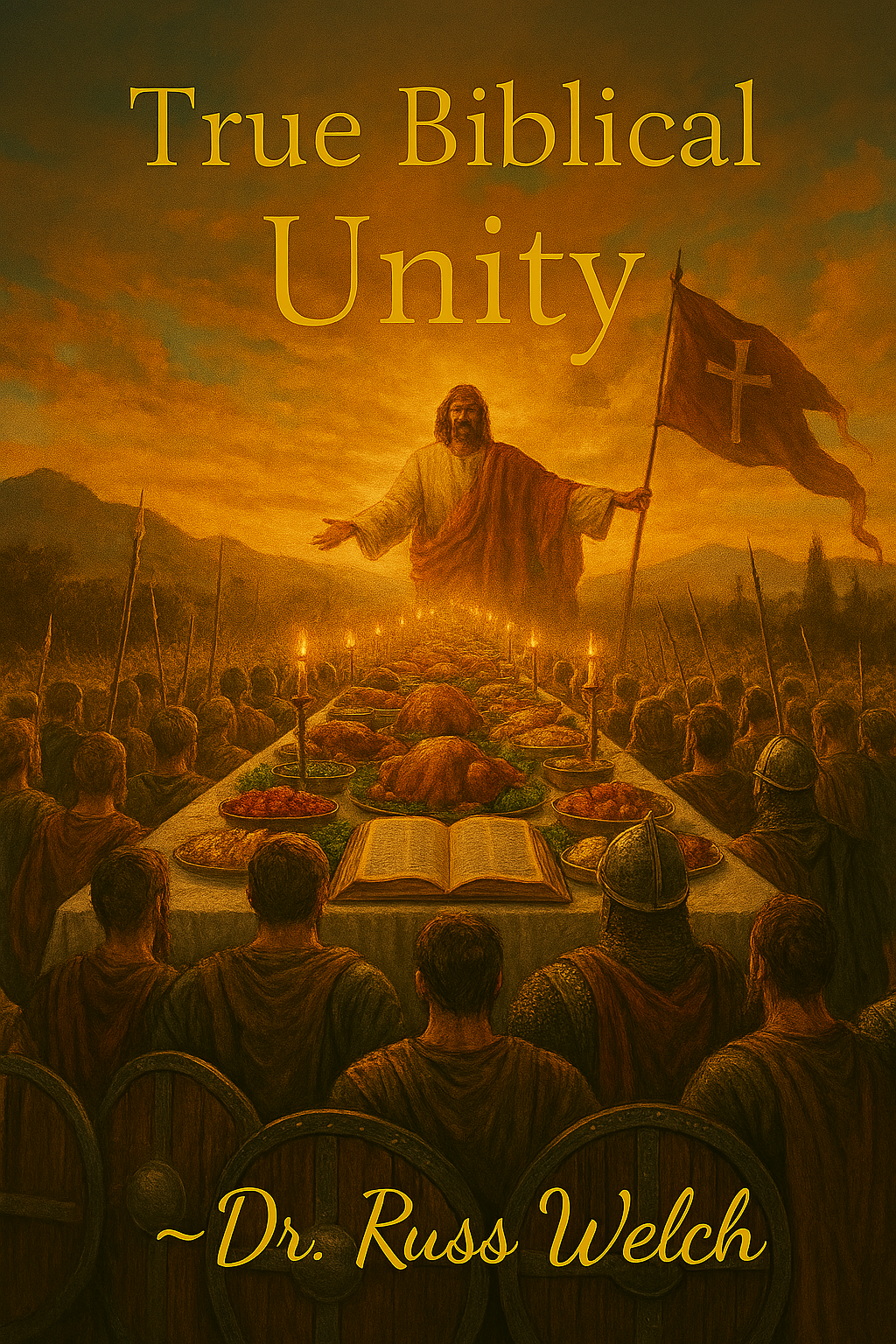
I declare to you today — unity in the Body of Christ is not a man‑made agreement, not a shallow handshake of tolerance, and not the silencing of truth for the sake of peace. True unity is born of the Spirit, forged in the fire of love, and anchored in the unshakable truth of God’s Word.


Jesus prayed, “Father, that they all may be one, as You, Father, are in Me, and I in You, that they also may be one in Us, so that the world may believe that You sent Me” (John 17:21). This is not a suggestion — it is the cry of the Son of God, and Heaven will not rest until it is fulfilled.


We are one Body with one Spirit, called to one hope, serving one Lord, holding to one faith, sealed in one baptism, under one God and Father of all (Ephesians 4:4‑6). This unity is not uniformity — it is the harmony of many members moving as one under the Headship of Christ.


I call the Church to put on love, “which binds everything together in perfect harmony” (Colossians 3:14). I call us to lay down pride, offense, and self‑promotion, and to take up humility, honor, and servanthood. For where pride rules, division thrives — but where humility reigns, the Spirit commands His blessing (Psalm 133:1‑3).


The days of agreeing just to avoid arguing must be exiled from the Ecclesia. The early Church did not sweep disagreements under the rug; they brought them before the council, and the council brought them before the Holy Spirit — and He alone settled the matter, witnessed and confirmed by the majority present (Acts 15:28).

The enemy of unity is the spirit that says, “My feelings override everyone else’s. You only respect me if you agree with me. If you don’t do what I want, I will break fellowship.” My brothers and sisters, that is not only the opposite of unity — it is the spiritual murder of unity.


This unity is not built on compromise with darkness, for “what fellowship has light with darkness?” (2 Corinthians 6:14). It is anchored in truth, for Jesus prayed, “Sanctify them by the truth; Your Word is truth” (John 17:17). We will not trade truth for comfort, nor holiness for popularity.


I decree that the walls of division — denominational pride, racial prejudice, political idolatry, and personal offense — are coming down in Jesus’ name. I declare that the love of God will be the bond that holds us, the truth of God will be the foundation that steadies us, and the mission of God will be the fire that drives us.


The world will know we are His disciples not by our buildings, our programs, or our branding, but by our love for one another (John 13:35). And when the Church walks in this Spirit‑born unity, hell will tremble, the lost will believe, and the Kingdom will advance with unstoppable force.


So I say — rise up, Ecclesia! Lock shields, join ranks, and march as one. For the glory of the King, for the harvest of the nations, and for the day when every tribe, tongue, and nation will feast together at the marriage supper of the Lamb.

~Dr. Russell Welch
Elder / Apostolic Teacher: Highway to Heaven Church and Founder and Shepherd of Remnant Warrior Ministries / Warrior’s Discipleship School

“They overcame him by the blood of the Lamb and by the word of their testimony…” — Revelation 12:11

There are stories—and then there are weapons.

When a child of God begins to testify—not just with words, but from the deep well of lived redemption—something violent happens in the spirit realm.

We aren’t reciting nice Christian clichés or sweet Sunday school memories. We are dropping bunker busters into the hidden bunkers of darkness. And the enemy knows it.
See, Satan can argue with doctrine. He can twist Scripture. He can even mimic religion. But what he cannot do is unwrite your story.

He cannot edit your encounter. He cannot mute the voice of the one who has seen the face of Jesus in the fire and come out clean.
Every blood-bought, Spirit-ignited testimony carries the residue of heaven’s authority.

It’s not just a memory—it’s a missile. Because when you speak what the Lord has done for you, it tears through lies, shame, and demonic strongholds like a bomb detonating beneath the enemy’s feet. He flees not just because you’re shouting—but because the Spirit backs up every word with power.

Your story—yes, yours—when surrendered to Jesus, carries the same Spirit that raised Him from the dead. So don’t hold it back. Don’t sanitize it.

Let it thunder. Let it shake the gates of hell and remind the darkness that its grip on you has been forever broken.
Every time we testify, we’re not just telling people what happened—we’re announcing what’s possible.

So release it. Declare it. Prophesy with your history. Because your testimony isn’t just a story…

…it’s a supernatural detonation that leaves no hiding place for the enemy.

The following testimony is one that I have in my own life, that everytime it is shared, I can litteraly since the devil seeking a place to hide from it it’s power….

________________________________________________________________

There are moments that divide your life in two. March 28, 2016 was that moment for me.

It was 1:43 in the morning. I was sleeping in a quiet room in a historic inn in Saluda, North Carolina, when a voice—clear and undeniable—spoke into the silence: “Wake up.”

It wasn’t a nudge from the subconscious or the remnants of a dream. It was a holy disruption, slicing through the stillness like lightning. I sat up, heart pounding. The clock confirmed the time. I turned on the light and searched the room. Empty. I stepped into the hallway—stillness. No footsteps. No voices. Nothing. But something within me had already shifted. I was awake in a way I hadn’t been in years.

Then the voice came again, even more weighted: “Open the Bible.”
I walked over to the desk where a Bible sat, worn and waiting, almost like it had been placed there for this very night. As I opened it, the pages fell to the Gospel of John, and my eyes were immediately drawn to John 3:16. It wasn’t just printed on the page—it glowed in my spirit.

Again, the voice spoke: “Read.” I pushed back: “I’ve read this a thousand times.” But the command came once more, unwavering: “Read.”

And so, out of simple obedience—or maybe exhaustion—I read: “For God so loved the world…” And with those words, heaven invaded.

In an instant, I was no longer in that room. I was back in the kitchen of my childhood home. I was three years old. My father, in a fit of drunking rage, had just struck my mother. He was gripping my brother’s arm, dragging him toward the mechanical ringer of an old washing machine. I, somehow, had escaped my high chair and crawled into the cabinet under the sink—my hiding place. My refuge. My prison.

That memory had haunted me my entire life. But this time, the scene was different. I wasn’t alone.
Jesus was under the sink with me.

He didn’t speak. He didn’t preach. He simply was. Present. Near. Unshaken by my fear, yet fully attentive to it. That one moment rewrote decades of belief. I had always thought I was abandoned in that kitchen. But now I saw—He was with me even then.

Then, like a movie reel spooled by grace, moment after moment from my life unfolded before me. Every scar. Every failure. Every hidden sin. Every silent scream. With each scene, I turned to Jesus and asked, “What about this? Surely this disqualifies me. Surely this is the moment where Your love stops.”

And every time, He looked at me—not with disappointment, but with eyes blazing like mercy—and asked, “Who told you that lie?”
Over and over: “Who told you that lie?”

That question shattered me. Because for the first time, I saw the architecture of my shame—not as truth, but as deception. I had built an entire identity on the idea that I was barely tolerated by God. That I was accepted only because He had to. That the cross was more obligation than desire.

But now I knew: I was never barely tolerated. I was deeply wanted. Loved beyond comprehension. Not in spite of my brokenness, but pursued through it.

When the vision ended, I looked at the clock. 1:45 a.m. Only two minutes had passed. But in those two minutes, I was born again—again. Not to a new set of religious rules, but to a new identity entirely.

The final words of the encounter echoed like a commissioning: “Study the Book of John until you get the revelation of My life for you.”

That invitation became the doorway to a new way of living.

For over nine years now, I’ve lived in the deep waters of the Book of John, learning not just the teachings of Jesus, but the tone of His heart.

And like the Apostle John—who referred to himself not by his achievements, but by how Jesus saw him—I began to claim the truth for myself: “I am the disciple whom Jesus loves.”

Not just forgiven—transformed.

Not just surviving—reborn.

God’s love didn’t simply bandage me—it recreated me. It didn’t just comfort my wounds—it removed my shame. It revealed that I wasn’t a sinner struggling for grace, I was a new creation, born of divine affection. I didn’t have to earn what had already been poured out. I had only to receive.

This wasn’t behavior modification. This was spiritual resurrection.

The love of God is not abstract. It’s not poetic sentiment.

It’s a force more potent than trauma, more healing than time, more trustworthy than logic. It finds you in the most hidden places and refuses to leave you unchanged. It sits with you under the sink, and then walks with you out of it—into light, into identity, into freedom.

I am no longer hiding. I am no longer orphaned. I am no longer lost in the echo of old lies. I am found in the voice that still whispers to this day: “Wake up.”

And I’ll never be the same.

I pray this stirs boldness in your spirit to no longer silence the song of your story. Your testimony—every scar kissed by grace, every moment redeemed by mercy—is not a mark of shame, but a weapon of wonder.

Don’t let the enemy keep your voice buried beneath fear or regret. You carry keys wrapped in hope—keys that can unlock chains in others. So speak, not just for your own freedom, but for theirs. Hell trembles when you remember who you are.

_Dr. Russ Welch
Remnant Warrior Ministries
www.RemnantWarrior.org


For generations, religious institutions built by man have stood as towering structures—grand in appearance, massive in influence, and seemingly unshakable. Yet beneath the surface, many of these institutions have traded holiness for human strategies, exchanged divine encounters for market-driven growth, and embraced cultural relevance at the cost of biblical truth. But God’s answer has never been found in religious empires. His answer is found in His Holy Remnant.

The Religious Institution: Form Without Power

Religious institutions often function as well-oiled machines, designed to captivate the masses with polished sermons, well-organized programs, and marketing strategies that mirror the corporate world. The focus is often placed on numbers—church attendance, social influence, financial expansion—measuring success by worldly standards rather than spiritual depth.

Many of these institutions, though outwardly thriving, are inwardly compromised. They cling to seeker-sensitive models that dilute the truth of the gospel to make it more palatable to the modern culture. Messages become motivational rather than transformational, appealing rather than convicting. The presence of God, once sought in desperation, is now scheduled into services with precision, yet rarely truly encountered.

In the name of relevance, many have abandoned reverence. Truth is softened, repentance is overlooked, and holiness is dismissed as outdated. They operate on strategy instead of Spirit, elevating human wisdom over divine guidance. Growth is pursued not through revival, but through consultants and business models. And while these institutions expand in influence, they lack the power that was evident in the early Church—the kind of power that shakes foundations, heals the sick, and overturns the works of the enemy.

The Holy Remnant: Marked by God’s Presence

In stark contrast, the Holy Remnant is not defined by numbers, grandeur, or influence. They are hidden, set apart, refined by fire, and consumed by an unshakable devotion to Christ. They are not concerned with appearance but with presence—the presence of God that cannot be fabricated or manipulated but must be earnestly pursued.

Unlike the institution built by man, the remnant does not bow to cultural trends. They refuse to compromise truth for popularity, choosing instead to stand firm even when the world rejects them. They are governed by the Holy Spirit, not church boards or leadership strategies. Their gatherings are not orchestrated performances but sacred assemblies where the power of God moves freely.

The Holy Remnant understands the urgency of the hour. They are aware of the deception infiltrating the Church and the spiritual battle raging over nations. While many within institutionalized Christianity are distracted by programs and social status, the remnant is interceding, discerning, and advancing the Kingdom in ways unseen by the masses.

They carry the fire of revival—a fire that cannot be extinguished by opposition, persecution, or rejection. Like the early Church, they gather in small groups, in secret places, wherever the Spirit leads. They may not have the platforms of religious leaders, but they have the favor of God. And it is through them that true transformation is coming.

God’s Answer Is Found in His Remnant

At this critical hour, God is not looking for institutions; He is looking for surrendered hearts. The answer to the crisis facing the Church and the world is not found in larger congregations or refined religious systems—it is found in the humble, devoted, Spirit-led believers who carry the mantle of the remnant.

God has always used a remnant to shift history. When Israel turned away from Him, He preserved a remnant. When wickedness ruled, He raised up prophets. When the religious leaders rejected Christ, He birthed the early Church through a small group of radical followers. And today, in the shadows of religious empires, He is once again raising up His remnant.

The remnant is His answer. They walk in kingdom authority, speak with prophetic clarity, and live in unwavering faith. They are not concerned with trends or titles but with the advancement of God’s will on the earth. Where religion has failed, the remnant will prevail. Where institutions have compromised, the remnant will stand. And through them, revival will come.

The Call to the Remnant

Are you among them? Will you choose to be set apart rather than blend in? Will you stand in truth, walk in holiness, and seek His presence above all else?

Now is the time. The remnant is rising. Will you answer the call?

~Dr. Russell Welch

Elder/ Apostolic Teacher: Highway to Heaven Church and Founder and Shepherd of Remnant Warrior Ministries / Remnant Warrior School of Spiritual Warfare.


The Church is engaged in a war—not a battle of flesh and blood, but a spiritual war against unseen forces. This war is not fought with earthly weapons, nor is it waged in fear or uncertainty. It is a war from victory, not for victory, because the triumph has already been won by our Lord Jesus Christ on the cross.

Through His death and resurrection, Jesus disarmed the powers of darkness, making a public spectacle of them and securing eternal victory for His people. We do not fight to gain ground—we fight to enforce the victory that has already been established. The enemy seeks to deceive, distract, and discourage, but we stand firm, clothed in the armor of God, wielding the sword of the Spirit, and advancing in the authority of Christ.

Our battle is not against people, governments, or institutions. It is against spiritual beings without bodies—principalities, powers, rulers of darkness, and forces of evil in the heavenly realms. But we do not war alone. The Spirit of God empowers us, the Word of God guides us, and the victory of Christ assures us that the enemy has already been defeated.

So, Church, rise up! Stand firm in the truth. Pray with boldness. Declare the victory of Jesus. Walk in the authority given to you by the King of Kings. The war is real, but the outcome is certain—Christ has won, and we enforce His triumph!

Enforcing Christ’s victory in our daily lives means living in the authority He has given us and standing firm against spiritual opposition. Here are some practical ways to do that:

  • Walk in Faith, Not Fear – Trust in the finished work of Christ and refuse to be intimidated by the enemy’s schemes.
  • Declare God’s Word – Speak and pray Scripture over your life, your family, and your circumstances. The Word of God is a powerful weapon.
  • Live in Holiness – Sin gives the enemy a foothold. Pursue righteousness and obedience to God’s commands.
  • Pray with Authority – Engage in spiritual warfare through prayer, interceding for yourself, others, and the world.
  • Put on the Armor of God – Daily equip yourself with truth, righteousness, faith, salvation, the Word, and prayer (Ephesians 6:10-18).
  • Resist the Enemy – When temptation or spiritual attacks come, stand firm and rebuke them in Jesus’ name.
  • Advance the Kingdom – Share the Gospel, love others, and serve in ways that bring light into darkness.

These steps help us live from the victory Christ has already won, ensuring that His triumph is enforced in our lives and the world around us. Our Identity in these Promises Keep Us pressing forward—With Holy Spirit’s whispers of Victory is yours!

Time tested real life experiences testify that applying these steps in your daily routine requires intentionality and consistency. Here’s how you can integrate them into your everyday life:

  • Start Your Day with Prayer – Before anything else, dedicate time to seek God’s presence, express gratitude, and ask for His guidance.
  • Read and Meditate on Scripture – Set aside time to study the Bible, whether through a reading plan, devotionals, or memorizing key verses.
  • Speak Life and Truth – Declare God’s promises over your life, your family, and your circumstances throughout the day.
  • Stay Spiritually Alert – Be mindful of spiritual battles and resist temptation by standing firm in faith.
  • Engage in Worship – Listen to worship music, sing praises, or simply express gratitude to God in your daily activities.
  • Serve Others – Look for opportunities to show Christ’s love through acts of kindness, encouragement, and generosity.
  • End Your Day in Reflection – Take time to review your day, repent if needed, and thank God for His faithfulness.

By making these practices a habit, you actively enforce Christ’s victory in your life and walk in His authority daily. Keep pressing forward—God is with you!

Applying these steps daily can transform your life in powerful ways. Here are some benefits you can expect:

  • Spiritual Strength – You’ll grow in faith and resilience, standing firm against challenges.
  • Peace and Confidence – Knowing Christ’s victory is already won brings deep peace and assurance.
  • Greater Discernment – You’ll recognize spiritual attacks and respond with wisdom.
  • Closer Relationship with God – Spending time in prayer and Scripture strengthens your connection with Him.
  • Victory Over Temptation – Living in holiness and resisting the enemy helps you overcome struggles.
  • Impact on Others – Your faith and obedience will inspire and encourage those around you.

These benefits help you walk in Christ’s victory daily, ensuring that His triumph is reflected in your life and the world around you. Keep pressing forward—Christ Jesus is Always with and in you!

~Dr. Russell Welch
Elder / Apostolic Teacher: Highway to Heaven Church and Founder and Shepherd of Remnant Warrior Ministries / Remnant Warrior School of Spiritual Warfare.

For more info on Spiritual Warfare check out my book “Warrior’s Arsenal: Equiping Prayer Warriors with the Armor of God”


Apostolic Authority
Apostolic Authority differs fundamentally from hierarchical or positional power structures. In the New Testament, apostolic leaders functioned primarily as spiritual parents who earned influence through relationship, demonstrated character, and proven ministry effectiveness.

They led through service rather than control, modeling Christ’s approach to leadership as exemplified in washing His disciples’ feet.

This servant-leadership paradigm contrasts sharply with ecclesiastical systems that confer authority through formal titles or institutional positions.

The essence of apostolic authority lies in its Holy Ghost inspired influence rather than its control. Apostolic leaders in the early church extended their ministry through relationship networks rather than organizational structures.

Their authority was recognized by Holy Ghost, and voluntarily by those who benefited from their ministry rather than imposed through ecclesiastical sanctions or denominational mandates.

This relational foundation creates a more organic, resilient connection than institutional affiliations that may dissolve when organizational politics or priorities shift.

Apostolic authority manifests primarily through equipping and releasing others rather than consolidating power. Paul’s ministry exemplifies this approach—he established communities, developed local leadership, and then moved on to new territories.

His ongoing relationship with these churches focused on encouraging their growth toward maturity rather than maintaining dependent connections. This pattern stands in marked contrast to modern systems that often foster dependency on professional ministers.

Participatory Community
Participatory Community reflects the New Testament vision of church as an active body rather than a passive audience. The biblical metaphor of the church as a body presupposes that every member has a vital function to perform.

This understanding transforms gatherings from spectator events into collaborative expressions where diverse gifts operate for mutual edification. Such participation extends beyond token involvement to meaningful contribution in worship, ministry, and decision-making processes.

The experience of community in apostolic churches transcends casual social connection to covenant relationship. Members understand themselves as spiritually joined to one another, sharing a common identity and purpose that shapes their priorities and commitments.

This covenant relationship creates the necessary foundation for genuine accountability, conflict resolution, and shared life that extends beyond weekly services into daily interaction and practical support.

Community engagement in the apostolic model extends beyond internal fellowship to active engagement with the surrounding society. Rather than creating Christian subcultures isolated from their neighbors, early believers remained embedded in their communities as salt and light.

They demonstrated Kingdom values through practical service, ethical business practices, and compassionate response to societal needs. This engagement provided both credibility for their message and opportunities for witness that institutional isolation cannot produce.

Practical Spirituality
Practical Spirituality characterizes the apostolic approach to faith, emphasizing tangible expression of spiritual realities in everyday life. Unlike religious systems that separate sacred from secular domains, apostolic Christianity integrates faith into all aspects of human experience.

Believers are equipped to exercise their spiritual authority in family relationships, workplace environments, and community involvement rather than compartmentalizing spirituality to religious activities.

The supernatural dimension remains central to apostolic spirituality. The New Testament presents a faith characterized by divine healing, prophetic guidance, angelic assistance, and spiritual warfare as normal aspects of Christian experience rather than exceptional phenomena.

This practical supernatural ministry emerged from intimate relationship with God rather than formulaic techniques or specialized gifting limited to professional ministers.

All believers were expected to manifest spiritual gifts as the Spirit directed.

Holistic development marks apostolic approaches to discipleship. Rather than focusing exclusively on intellectual knowledge or emotional experiences, apostolic ministry addresses the whole person—spirit, soul, and body.

Character formation receives as much attention as gifting development. Financial stewardship and vocational excellence are considered spiritual matters alongside prayer and Bible study. This comprehensive approach produces believers equipped to represent Christ effectively in every dimension of life.

Leadership Multiplication
Leadership Multiplication distinguishes apostolic movements from institutional maintenance. Paul instructed Timothy to entrust what he had learned to faithful individuals who would teach others also, creating a four-generation multiplication process (2 Timothy 2:2).

This intentional reproduction stands in stark contrast to centralized systems that channel potential leaders through institutional bottlenecks like seminary training or denominational ordination processes that often restrict rather than accelerate leadership development.

Mentoring relationships provide the primary context for leadership development in apostolic systems. Emerging leaders learn through life-on-life impartation rather than merely academic instruction, absorbing values, developing character, and acquiring practical ministry skills through observation and guided experience.

This relational approach transmits both formal teaching and tacit knowledge—the unspoken wisdom that comes only through proximity to experienced practitioners demonstrating ministry in real-life contexts.

Apostolic leadership development emphasizes character formation alongside skill acquisition. While contemporary systems often credential individuals based primarily on academic achievement or speaking ability, apostolic communities recognize that lasting leadership influence flows from integrity, humility, and proven faithfulness.

The qualifications for elders outlined in 1 Timothy 3 and Titus 1 focus overwhelmingly on character qualities rather than professional competencies, establishing a pattern that apostolic reformation seeks to restore.

Evangelical Mission

Evangelical Mission drives apostolic movements, maintaining the outward focus that prevents communities from becoming self-absorbed and maintenance-oriented. The Great Commission remains central rather than peripheral, shaping priorities, resource allocation, and ministry structures. This mission orientation ensures that churches exist primarily for those not yet part of them rather than primarily serving the preferences of existing members.

Kingdom advancement rather than institutional growth distinguishes truly apostolic mission. While many modern churches measure success by attendance, buildings, and budgets, apostolic leaders evaluate effectiveness by transformed lives, disciples made, and new communities established. This kingdom perspective enables cooperation across organizational boundaries, as leaders recognize fellow workers contributing to the same divine purpose rather than competing for market share in the religious economy.

Contextual adaptation characterizes apostolic mission strategy. Paul became “all things to all people” to effectively reach diverse cultural groups. This principled flexibility stands in contrast to standardized approaches that export cultural forms alongside the gospel message. Apostolic movements distinguish between unchanging biblical principles and adaptable methodologies, allowing indigenous expressions of Christianity to develop in each cultural context rather than importing foreign practices that create unnecessary barriers to reception of the gospel.

The modern church faces a pivotal choice: continue maintaining inherited traditions and structures that increasingly fail to engage contemporary culture, or embrace the challenging but revitalizing path of apostolic reformation that returns to foundational principles while contextualizing their expression for today’s world. Recognizing these deviations represents the first step toward restoration, requiring both honest assessment of current practices and courageous commitment to biblical patterns regardless of institutional resistance.

Reclaiming the Essence

The Apostolic Reformation ultimately represents a recalibration—aligning modern church expressions with timeless biblical principles. This movement challenges believers to distinguish between cultural accommodations that have accumulated over centuries and the essential, unchanging foundations of authentic Christianity. Such discernment requires both historical awareness and scriptural literacy, understanding how and why the church evolved away from its original pattern while maintaining clear vision of the apostolic blueprint.

Throughout church history, reformation movements have consistently emerged when dedicated believers recognized the gap between contemporary practices and biblical patterns. From the Waldensians to the Protestant Reformers to the Methodist revival, these movements sought to recover lost aspects of New Testament Christianity. The current Apostolic Reformation stands in this historic tradition, addressing areas where even previous reformations left work unfinished. Like those earlier movements, it faces institutional resistance while offering renewed vitality and relevance to a changing world.

The restoration of apostolic Christianity does not imply simplistic attempts to recreate first-century cultural forms or practices. Rather, it involves discerning the underlying principles and values that animated the early church and applying them within contemporary contexts. Just as the apostolic communities contextualized the gospel message for diverse cultural settings in their day, modern apostolic reformation seeks relevant expressions for today’s world while maintaining fidelity to foundational truths and values.

This reformation journey requires both courage and humility—courage to challenge entrenched systems and practices that have deviated from biblical patterns, and humility to acknowledge that no individual or group possesses complete understanding. The process involves collaborative discovery, experimental application, and continuous refinement as communities learn together what apostolic Christianity looks like in their particular context. Such humble courage characterizes genuine reformers throughout church history.

Apostolic Reformation calls believers to rediscover the dynamic, relational, Spirit-empowered essence of original Christianity, understanding the historical context that shaped the early church, and courageously addressing modern deviations from this pattern to create authentic expressions of biblical community suitable for reaching today’s world.

Returning to Our Apostolic Foundation

The journey of rediscovering our apostolic roots isn’t simply an academic exercise—it’s a vital spiritual awakening. As we’ve explored throughout this chapter, the essence of Apostolic Reformation lies in reconnecting with the vibrant, Spirit-led practices that defined the early church. This reconnection isn’t about nostalgic longing for the past, but about reclaiming the power, authority, and effectiveness that Christ intended for His Body.

When we examine the foundational principles of Apostolic Reformation, we find a blueprint not created by human ingenuity but designed by divine wisdom. The five-fold ministry—Apostles, Prophets, Evangelists, Pastors, and Teachers—wasn’t established as an organizational chart but as the living structure through which the Holy Spirit would equip believers for works of service.

The early church understood this dynamic. They lived it daily. Their gatherings weren’t mere religious exercises but transformative encounters with God’s presence. Their governance wasn’t bureaucratic but Spirit-led. Their impact wasn’t measured by building size but by kingdom advancement. They changed their world not through political power but through spiritual authority.

Today’s deviations from this pattern haven’t been without consequence. As we’ve seen, when we replace biblical patterns with human traditions, we inadvertently limit the flow of God’s power and purposes through His church. The institutional frameworks, hierarchical leadership models, and program-driven approaches that characterize many modern churches often bear little resemblance to what we see in Acts and the Epistles.

Yet there is hope. The winds of Apostolic Reformation are blowing across the global Church. Believers everywhere are hearing the Spirit’s invitation to return to the ancient pathways—not to recreate the first-century church in its cultural expression, but to recapture its spiritual essence and apostolic power.

~Dr. Russell Welch
Elder / Apostolic Teacher: Highway to Heaven Church and Founder and Shepherd of Remnant Warrior Ministries / Remnant Warrior School of Spiritual Warfare.


In January of 2022, as the Lord freed me from my service as director at a rescue and recovery mission in Jacksonville beach, to that of the lead Elder at a Church my wife and I had been in relationship with since 2012. As I accepted the role of leadership at Highway to Heaven Church, I did so not just by my inclination but the wise council of a couple of apostolic elders the Lord has placed in my life.

Before I accepted it, having received the council from others,  I continued to seek the Lord for several more days. On the seventh day I listened as Holy Spirit delivered the Lord’s mandate on this transition. “You must follow My lead and return this congregation back to the original intent for my Ecclesia, and allow Me to teach them through you to reset the house to where it stands on the foundational teaching of the Gospel of my Kingdom.

 Until it is established on that foundation, you will see no increase, but when that foundation is established, I will begin sending those for whom I ordained to co-labor with this Kingdom family.

But heed this warning, do not teach them to follower you, or to listen to your voice alone. You must allow Holy Spirit to train them to follow the One true God who dwells in you, even as He dwells in them”.

Ever since I received that commissioning, I have not strayed from the mandate He gave me.

If we are honest we can discern that the vast majority of the Church today struggles in the area of leadership in many ways. Take for example, how often have you heard someone quoting their pastor more than they do the scriptures? Or have you ever attended a “Gathering” where they claim there is no leadership needed in the New Testament Church?

Now a true student of the Word would be lead by the Spirit to interpret Paul’s writings in the New Testament that emphasize submitting to Christ and His teachings, but do not emphasis to submit completely to Paul himself or to any other human authority, even within the church.

While Paul serves as an apostle and a teacher of the gospel, the ultimate authority in the Christian faith and practice is Christ.

Elaboration:

Submission to Christ:

Paul’s writings, particularly in Ephesians, encourage Christians to “submit to one another out of reverence for Christ”. This implies that Christians should submit to one another, reflecting the love and humility of Christ, rather than prioritizing their own opinions or desires.

Paul as an Apostle and Teacher:

Paul is recognized as a key apostle and teacher of the gospel, and his writings offer valuable guidance for Christians. However, his authority comes from his position as an apostle and teacher, not from a claim to ultimate authority over the Christian faith.

Christ as the Head of the Church:

Paul often uses the metaphor of the Church as the body of Christ, with Christ as the Head. This implies that Christ’s teachings and leadership should be the guiding principles for the Church, not the teachings of any particular apostle or human leader.

Avoiding Human Authority:

Paul’s writings also caution against elevating any individual or group to a position of excessive authority, even within the church. Instead, Christians are encouraged to seek guidance from Holy Spirit and rthe the scriptures as well as to cultivate humility and respect for one another, reflecting the humility and service of Christ.

Submission to One Another:

Paul’s writings in Ephesians and other letters also emphasize the importance of mutual submission among Christians. This means that Christians should willingly defer to one another’s needs, opinions, and gifts, rather than seeking to dominate or control others.

Focus on Christ’s Love and Sacrifice:

Paul’s writings consistently highlight the love and sacrifice of Christ as the foundation of the Christian faith. Christians are called to love and serve one another, mirroring Christ’s own love and self-sacrifice.

Now I am in no way implying that there are NO leaders in the Church. In fact, I have witnessed the restoration of true Ecclesia leadership over the past 2 decades as Holy Spirit has been restoring the Apostolic leadership in the Church.

What does this mean?

With a renewed revelation of the Christ centered and led leadership,  it’s also very important that we understand that while this re-alignment has been taking place, satan has been busy infiltrating the Church with his own false apostles, those who are power hungry and seek not just the adoration of the people, but almost demand their loyalty to them and them alone.

 Such are they who twist such scriptures such that speak of the power of Christ, to that of their own power. Case in point Revelation 12:11, which in the KJV reads:

 “And they overcame him by the blood of the Lamb, and by the word of their testimony; and they loved not their lives unto the death”.

 Their twist in this passage of scripture is they prefer to re-direct the attention of the people by replacing the focus as not so much on the Blood of the Lamb but on them and their leadership by the boasting of what “they’ve” done, thus everyone needs to die to their own needs so that they can attend to the needs of the Church leadership.

I have found that out of all the translations out there I am most keen to the passion translation, especially with regard to this passage of scripture as I believe it turns it into something that one could actually hear Jesus telling John:

 “They conquered him completely through the blood of the Lamb and the powerful word of his testimony. They triumphed because they did not love and cling to their own lives, even when faced with death”.

Wow, this brings it home with no room for misinterpretation as to being about Christ, and the powerful deeds that He has done in and through our lives. Even when the enemy comes to try and boost your ego and stir up your pride, the response of the child of God immediately deflates the enemy’s attempt as they respond with. “No you have it all wrong, it was not me that did this, but He who dwells in me, the Lord God”.

Now, if you find yourself under such a leader, pause, and seek the Lord, ask Him if this individual is of His Kingdom or that of the enemy. Holy Spirit will guide you. I have found that true leaders in the Body of Christ are just like the Lord, desiring that those they are discipling to grow and mature into doing even greater deeds than they themselves. They guide, correct and direct from the resevour of Christ’s love in them, never to boost their own image but to encourage the very image of the Lord in others to shine brightly.

~Dr. Russell Welch
Elder / Apostolic Teacher: Highway to Heaven Church and Founder and Shepherd of Remnant Warrior Ministries / Remnant Warrior School of Spiritual Warfare.


The Foundation of the Church: Understanding the Apostolic Office

In the realm of architecture, no one would dispute the significance of a building’s foundation. It is the bedrock upon which the entire structure rests, ensuring stability and longevity.

This analogy finds a profound reflection in the biblical context, particularly in Ephesians 2:20, where the Apostle Paul emphasizes that the church’s foundation is built upon the apostles and prophets, with Christ as the chief cornerstone.

This metaphor not only highlights the vital role of unity within the church but also invites an exploration of the nature and implications of the apostolic office. The apostolic office serves as a crucial element in the establishment and nurturing of the church.

The apostles were not merely historical figures; they were divinely appointed leaders who played an essential role in spreading the teachings of Jesus Christ and laying the groundwork for the early Christian community.

Their firsthand experiences with Christ provided them with unique insights and revelations that shaped the beliefs and practices of the church. This foundational leadership was instrumental in creating a unified body of believers that transcended cultural, social, and geographical barriers.

Paul’s assertion in Ephesians 4:12-13 further expands upon the significance of the apostles in the contemporary church. He writes, “For the perfecting of the saints, for the work of the ministry, for the edifying of the body of Christ: Till we all come in the unity of the faith, and of the knowledge of the Son of God, unto a perfect man, unto the measure of the stature of the fullness of Christ.”

This passage underscores the ongoing role of the apostolic office, suggesting that the church has not yet fully achieved the maturity and unity envisioned by Paul. The work of the apostles in perfecting the saints and edifying the body of Christ remains essential, as it fosters an environment where believers can grow in faith and knowledge.

In today’s world, the implications of Paul’s teachings are profound. The church is called to recognize and embrace the presence of modern-day apostles who continue to guide and equip the body of Christ.

These leaders play a pivotal role in addressing contemporary challenges, promoting unity, and ensuring the church remains aligned with its foundational values. As society evolves and new crises emerge, the need for apostolic leadership becomes increasingly evident.

Moreover, the apostolic office serves as a reminder of the importance of mentorship and discipleship within the church. Just as the original apostles mentored early Christians, today’s leaders must invest in the spiritual growth of their congregations.

This commitment to nurturing future generations of believers ensures that the church continues to thrive and adapt while remaining firmly rooted in its foundational truths.

In conclusion, the apostolic office is not merely a relic of the past; it is a living and active force within the church today. Understanding this role is vital for fostering unity, maturity, and growth in the body of Christ.

As we reflect on Paul’s teachings, may we be inspired to seek out and support apostolic leadership in our communities, ensuring that our foundation remains strong as we build a vibrant church that honors Christ as the chief cornerstone.

The journey toward spiritual maturity and unity is ongoing, and it is through the guidance of apostles that we can navigate the challenges of our time with wisdom and grace.

~Dr. Russell Welch
Elder / Apostolic Teacher: Highway to Heaven Church and Founder and Shepherd of Remnant Warrior Ministries / Remnant Warrior School of Spiritual Warfare.


In 1 Corinthians 3:11, the Apostle Paul asserts, “For no one can lay a foundation other than that which is laid, which is Jesus Christ.” This verse emphasizes the importance of grounding our faith and church practices in the truth of Scripture, particularly in the teachings and person of Jesus Christ.

In light of this biblical foundation, the emergence of the franchise church model raises critical questions about the authenticity and integrity of modern church practices. These franchise churches, often characterized by their corporate-like structure and marketing strategies, may represent a departure from the scriptural truths that should govern the life of the church.

The franchise church model often prioritizes growth and brand recognition over spiritual depth and community. Marketing strategies are employed to attract congregants, focusing on appealing aesthetics, entertainment, and consumer-driven experiences rather than the transformative power of the Gospel.

While there is nothing inherently wrong with utilizing modern tools to reach people, the risk lies in the potential dilution of the message. When churches operate like franchises, they may inadvertently build “houses of flesh,” as Paul might describe—structures focused on human ingenuity and appeal rather than divine truth.

This model can lead to an environment where the teachings of Scripture are secondary to the success of the church as a business. The emphasis shifts from discipleship and deep-rooted faith to numbers and profits. In an effort to cater to the preferences of a diverse audience, core biblical tenets may be bent or even abandoned, compromising the very foundation upon which the church should stand.

When congregations prioritize convenience and entertainment, they risk losing the rich tapestry of community, accountability, and spiritual growth that comes from a church firmly rooted in Scripture.

Moreover, the franchise church model often promotes a consumer mentality among congregants, who may view their relationship with the church as transactional. Instead of engaging in a commitment to a faith community characterized by mutual support and accountability, individuals may flit between congregations, seeking the latest program or the most engaging sermon.

This transient approach can undermine the biblical understanding of the church as the body of Christ, where believers are called to be active participants in each other’s lives and spiritual journeys. In contrast, a church established upon the foundation of Christ and anchored in Scripture fosters an environment of authenticity, growth, and genuine community.

When a church prioritizes biblical teaching, worship, and discipleship, it cultivates a space where believers can explore their faith deeply, encourage one another, and engage in the mission of the church with a sense of purpose.

These churches can create lasting impacts that resonate far beyond numerical growth, fostering spiritual maturity and resilience in their congregations. In conclusion, as we reflect on the implications of 1 Corinthians 3:11, it is crucial to evaluate the rise of the franchise church model with discernment.

While the desire to reach people and spread the Gospel is commendable, we must ensure that our methods align with the truth of Scripture and the foundational teachings of Jesus Christ.

By prioritizing spiritual depth over numerical success, we can build churches that reflect the heart of God and fulfill the mission of His kingdom. It is in this commitment to authenticity and Scriptural truth that we find the true essence of what it means to be the Church, the body of Christ in a world that desperately needs His light.

Once could look at our nation as a whole and rightly come to the conclusion that every area of moral decline is aspects of society that the Church compromised on. The Church of Jesus Christ is one that is purposed to transform cultures, not be transformed by them.

In conclusion, the analysis of the franchise model’s societal effects in contrast to the historical impact of the early Church poses critical questions about cultural engagement today. The challenges faced by contemporary communities necessitate a strong, uncompromised Church that understands its mission—one of transformation, dedication to God’s Kingdom, and reflection of Christ’s love and righteousness.

If you were to study cities that have seen a increasing rise of the Franchise model, would you find a change in the culture? Stats show that is not the case, in fact in many of those communities crime, poverty, corrupt governments, increasing levels of high school drop out just to name a few which inherently connected to the cultures that evil fosters.

Yet when you take a look at the societal impact that the early Church had, you will notice that they were able to impact the culture with the Kingdom, to were after 300 plus years, the Emperor Constantine took notice at how they were a people who walked in the extraordinary favor of the Lord God.

As this generation anticipates a profound move of God within society, there lies an invitation for believers to engage prayerfully and actively in culture, reclaiming the Kingdom of God’s values for their communities. Through repentance and renewed commitment to Christ’s principles, there is hope that the Church can again be a transformative influence, showing the world how to walk in the righteous and godly ways for which they were created.

I believe that we are on the verge of witnessing Heaven addressing these issues and our generation at this time in history is about to have a front row to Heaven’s invasion of the cultures of this world, and that is going to happen via the Houses of God that repent and turn back to the Cristo-centric foundation of Church governance, with a red-line distinction between those who remain compromised and those who turn back to seeking the King’s Kingdom and His Righteousness.

~Dr. Russell Welch
Elder / Teacher: Highway to Heaven Church and Founder and Shepherd of Remnant Warrior Ministries / Remnant Warrior School of Spiritual Warfare.

If you feel lead to support this ministry you can do so thru this link: Donate


Closing out the debate: Jesus on the Rapture

As we have seen in the previous two post, the concept of the “rapture” has stirred theological debate and speculation among Christians for generations. Many of these discussions often draw from passages like 1 Thessalonians 4, leading to the assumption that Jesus’ teachings in the “Olivet Discourse” (found in Mark 13, Luke 21, and Matthew 24) endorse this notion.

However, an in-depth examination reveals that this interpretation may be fundamentally misaligned with Jesus’ historical context and intent. During Jesus’ life, the sociopolitical landscape of Judea was dominated by the Roman Empire, which ruled with an iron fist.

This oppressive regime fueled a yearning among many Jews for liberation and a militaristic messiah who could lead them to victory over their oppressors. Within this context, the idea of escape, or rapture, may seem appealing to those living under such duress.

However, Jesus presented a radical departure from these expectations, advocating for a message of love and reconciliation rather than rebellion and violence. Consider the subversive nature of Jesus’ teachings, particularly his instruction to “love your enemies and pray for those who persecute you” (Matthew 5).

In a society where conflicts were common and the threat of violence was ever-present, such a message was revolutionary. Rather than inciting his followers to take up arms against the Romans, Jesus urged them to respond to oppression with love and grace.

This approach not only challenged the prevailing notions of power and leadership but also illuminated a spiritual path that transcended physical conflict.

Moreover, when Jesus instructed his followers to “put away your sword” (Matthew 26:52), he directly confronted the hopes of those who sought a warrior savior.

The expectation for a militant messiah was prevalent, yet Jesus embodied a different kind of leadership—one that centered on humility, service, and forgiveness. His mission was not to incite a rebellion but to cultivate a spirit of peace amidst turmoil.

It’s imperative to recognize that rapture, as a concept, was not part of Jesus’ worldview. For him, the notion of resurrection was firmly rooted in the context of this world, not an escape to another realm.

 His teachings reflected a vision of renewal and restoration for the earth, rather than its destruction. The anticipated resurrection was intertwined with the hope of a transformed existence within the same physical reality, emphasizing continuity rather than abandonment.

Thus far, we can see that the idea that Jesus’ teachings support the concept of rapture is a misinterpretation of his message and a misunderstanding of the historical context in which he lived.

Jesus called for an active engagement with the world, advocating for love in the face of hatred and urging his followers to seek peace rather than conflict. By reexamining these teachings, we can appreciate the depth of Jesus’ message—one that invites us to embrace our circumstances with love, rather than seek an escape.

The true essence of his teachings lies in the promise of resurrection and transformation, not in a fleeting notion of rapture. It encourages believers to remain grounded in their faith, embracing the challenges of the present while looking forward to the hope of renewal in the future.

Jesus and the Destruction of Jerusalem: Not “Rapture”

The very mention of the notion of the “rapture” often sparks fervent debate among theologians and laypeople alike. However, it is essential to examine the scriptural basis of these teachings critically, especially regarding Jesus’ prophecies found in Mark 13 and their implications for understanding the destruction of Jerusalem in 70 CE.

While I affirm the belief in a future second coming of Christ, it is crucial to recognize that the central focus of Jesus’ prophetic discourse was not an abstract concept of the rapture but the imminent destruction of the Temple—a significant event in the history of Israel.

Let us go a little further and explore how interpreting Jesus’ teachings in the context of the destruction of Jerusalem offers insights into the urgency of his message, the fulfillment of prophecy, and the implications for contemporary faith.

In Mark 13, Jesus prophesies the ruin of the Temple in Jerusalem, a statement that shocked his disciples and prompted their inquiries about the signs and timing of such catastrophic events. When Jesus states that “not one stone will be left unturned,” he is not merely speaking metaphorically; he is foretelling a tragic reality that would befall the city within “this generation” (Mark 13:30).

This phrase is pivotal; it anchors the prophecy within a historical timeframe relevant to the disciples who heard it. The urgency of Jesus’ message becomes apparent when we consider the signs he enumerates: false messiahs, wars, food shortages, earthquakes, and persecution.

These were not abstract predictions but tangible occurrences that characterized the tumultuous years leading up to the destruction of the Temple in 70 CE. Understanding the prophetic language employed by Jesus is vital for a comprehensive interpretation.

The cosmic signs—such as the sun darkening and the moon dimming—are not to be taken literally but are symbolic of political upheaval and divine judgment. This prophetic style, rooted in Hebrew tradition, serves to convey the gravity of the impending disaster.

Just as modern language employs phrases like “earth-shattering event” to denote significant historical moments without suggesting literal geological upheaval, Jesus uses similar rhetorical devices to communicate the magnitude of Jerusalem’s impending doom.

 Moreover, the emotional weight of Jesus’ prediction cannot be overlooked. His lamentation over the city illustrates that his prophecy was not one of vindictive glee but of profound sorrow.

Jesus deeply cared for Jerusalem and its people, recognizing that their unfaithfulness would lead to their destruction. His declaration that he would be the ultimate Temple in the wake of the physical Temple’s destruction signifies a transformative moment in the relationship between God and humanity.

 Following the destruction, Jesus would stand as the living embodiment of God’s presence—a radical shift in the understanding of worship and divine connection.

As we consider the implications of these prophetic statements for today’s believers, it is crucial to confront the dangers of misinterpretation. The fixation on a “rapture” can lead to escapism, fostering a mentality that neglects the responsibility Christians have to care for creation and engage with the world meaningfully.

 If we envision the world as inherently doomed, we may inadvertently foster apathy toward pressing social and environmental issues. In conclusion, the focus on the destruction of Jerusalem rather than a speculative rapture provides a more profound understanding of Jesus’ message and its urgency.

His prophecies about the Temple’s destruction were fulfilled within the lifetime of his contemporaries, serving as a poignant reminder of the consequences of unfaithfulness.

Rather than viewing this as a distant, nebulous event, we are called to engage with the realities of our world, maintaining a posture of responsibility and hope.

By recognizing the significance of Jesus’ message in its historical context, we can foster a faith that is both grounded in the teachings of Scripture and responsive to the needs of our present day.

Rapture or Resurrection?

The concepts of rapture and resurrection often spark profound discussions among believers and theologians alike, raising questions about the nature of our ultimate fate as described in the New Testament.

At the heart of this discourse lies a vision shared by Jesus, Paul, and the early church—a vision steeped not in the notion of escaping this world but in the promise of resurrection.

This perspective offers a transformative understanding of our embodied future, one that is fundamentally anchored in hope and renewal rather than abandonment. I believe that as a true student of the Word,  it is crucial to recognize that the New Testament presents resurrection as an integral part of the Christian hope.

This is not merely a spiritual or ethereal existence in a distant heaven; rather, it is an embodied future that affirms our physical existence. In 1 Thessalonians 4, Paul articulates the assurance that those who are in Christ will rise, signifying a restored and transformed state of being.

This promise extends beyond humanity to encompass all of creation, affirming that God’s redemptive plan includes liberating the natural world from its “bondage to decay” (Romans 8:21).

This vision of resurrection reaffirms the inherent goodness of the physical world and emphasizes that God’s ultimate design is not destruction but renewal.

Moreover, the idea of a future rapture contrasts sharply with the New Testament’s portrayal of Christ’s return. Instead of anticipating chaos and tribulation, as some interpretations suggest, the early church understood Jesus’ predictions of tribulation as events that had already transpired, particularly with the destruction of Jerusalem and the temple by Rome.

This historical context is pivotal; it shifts the focus from a future panic to a promise of restoration. Revelation, often misinterpreted as a foretelling of doom, when viewed through its historical lens, aligns with this hopeful narrative.

The concluding verses of Revelation encapsulate this assurance: “He will wipe every tear from their eyes. There will be no more death or mourning or crying or pain” (Revelation 21:4).

Such promises underscore the belief that God’s kingdom will triumph over suffering and death. The ultimate hope presented by the New Testament writers is not merely about individual salvation but the collective restoration of creation—a world made right.

This renewed world is destined to be our eternal home, inviting believers to actively participate in manifesting this reality in our present lives. The notion of rapture promotes a mindset of escape, suggesting that believers should look away from the world rather than engage with it.

In contrast, Jesus’ teachings emphasize bringing heaven to earth, embodying His kingdom in our actions and relationships. The Lord’s Prayer itself encapsulates this desire for unity between heaven and earth: “On earth as in heaven.”

 Lastly, it is essential to acknowledge that neither Paul, Jesus, nor any figures of the New Testament supported the idea of the rapture as it is popularly understood today.

This absence of rapture in their teachings invites believers to reconsider their own understanding of the afterlife. The call to embrace resurrection rather than rapture invites a profound shift in perspective—one that encourages living with hope, purpose, and engagement with the world around us.

In conclusion, the hope of resurrection as depicted in the New Testament is a powerful affirmation of life, renewal, and the goodness of creation. This vision challenges the idea of rapture and instead calls for an active participation in the unfolding of God’s kingdom here on earth.

As we navigate our lives, let us hold fast to this promise of resurrection, embodying the hope that, indeed, our world’s future is bright and filled with potential for renewal.

Why?

Because neither Paul nor Jesus believed in the rapture. Neither did any of other New Testament author or figure, and neither should you.

~Dr. Russell Welch
Elder / Teacher: Highway to Heaven Church and Founder and Shepherd of Remnant Warrior Ministries / Remnant Warrior School of Spiritual Warfare.

For further study, you are invited to purchase Dr. Welch’s book “Beyond the Clouds: Unveiling the Rapture Illusion“, Available exclusively on Amazon

If you feel lead to support this ministry you can do so thru this link: Donate