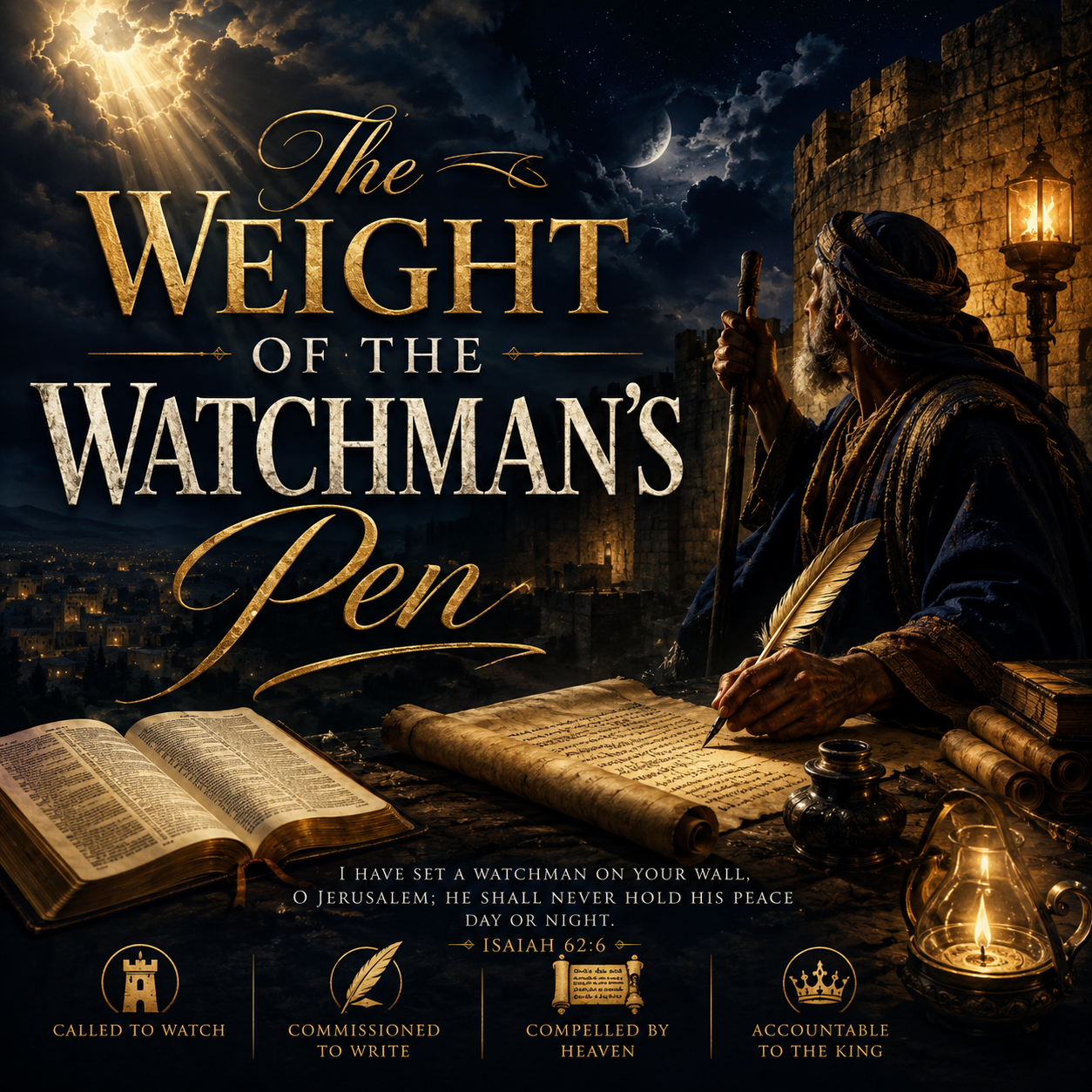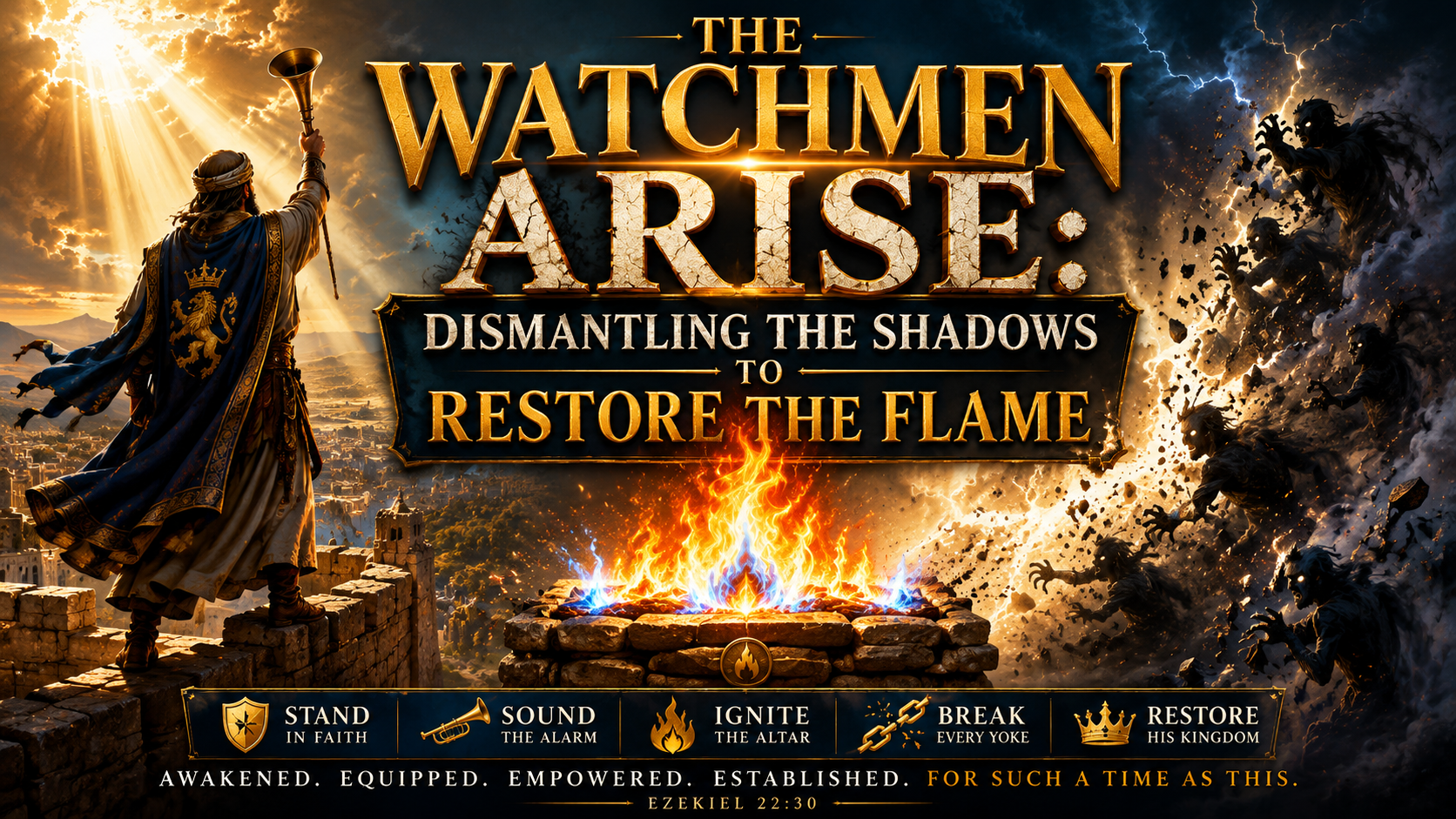
In this hour, the Lord is sovereignly raising up a company of Fire-Brand Watchmen Seers to pierce the thick veil of spiritual slumber. These are not mere observers of the status quo, but those who have been forged in the crucible of secret communion to discern the shifting tides of the spirit. Just as the prophet Ezekiel was appointed as a watchman to the house of Israel, these sentinels are charged with sounding a clarion call that cannot be ignored (Ezekiel 3:17). Their eyes are fixed upon the horizon of heaven, catching glimpses of divine strategy that remain hidden from those entangled in worldly systems. They arise with a holy burden to see what is truly transpiring behind the polished veneer of modern religious performance.
We are witnessing a profound dismantling of the shadows of religion that have long obscured the radiance of the true Gospel. These Watchmen Seers possess a gift of discernment that acts like a refiner’s fire, exposing the “broken cisterns” that hold no water (Jeremiah 2:13). The deception that has infiltrated the mainstream Church often hides in plain sight, masquerading as progress while stripping away the power of the Cross. As the reformer Martin Luther once declared, the true treasure of the Church is the most holy Gospel of the glory and grace of God; anything less is merely a human construct. These seers are not here to tear down the building, but to expose the rotten foundations so that the true house of God may be rebuilt.
There is a movement occurring today that demands we cease viewing the Church as a mere collection of institutions or organizations. Martyn Lloyd-Jones famously noted that revival is a sovereign act of God that happens to the Church, shaking her from her lethargy and refocusing her gaze upon Christ. These Fire-Brand Watchmen are the heralds of this reality, calling the Body to abandon the comfort of religious façade. They are the ones who refuse to be silent about the compromises that have allowed the “mystery of lawlessness” to take root (2 Thessalonians 2:7). Their mandate is to sound the alarm, knowing that failing to warn the people carries a heavy, eternal weight of accountability.
This is a time for the spirit-led remnant to be stirred to a new fervor, leaving behind the dead orthodoxy that fails to realize the glorious possibilities of the Christian life. As Duncan Campbell once urged during the Lewis Awakening, revival begins when God’s own people are touched anew by the Holy Spirit. These seers are catalysts for that touch, refusing to settle for shallow emotionalism or man-made programs that lack the fire of His presence. They understand that true transformation requires a “whole church on its knees,” rather than a church distracted by the glittering distractions of this age. Their testimony is one of unwavering commitment to the truth, regardless of the personal cost.
The watchtower of this hour is a place of profound isolation, yet it is where the most vital battles are won. While the world and even parts of the Church are caught in a web of “strong delusion,” these seers remain anchored in the Word (2 Thessalonians 2:11). They are not swayed by the shifting opinions of men, but are tethered to the heartbeat of the Father. They are the ones who, like the ancient watchmen, stand in the gap to plead for divine intervention when the foundations of truth are under siege. It is in this place of constant, vigilant prayer that the secrets of the Lord are entrusted to them.
These Fire-Brand Watchmen are tasked with restoring the prophetic mandate to declare the “whole counsel of God,” refusing to shrink back in the face of opposition (Acts 20:27). They recognize that deception thrives in the absence of absolute truth, and they are committed to upholding the standard of righteousness in every sphere. By identifying the subtle influence of religious spirits, they provide the necessary guidance for the Body to navigate toward genuine spiritual maturity. They are the spiritual navigators of this season, helping others to distinguish between the artificial light of human wisdom and the true fire of the Holy Spirit.
There is an urgency to this hour that cannot be overstated, as the “last hour” approaches and the call to vigilance becomes more critical than ever. The apostle Peter urged believers to be “sober-minded and alert,” a mandate that these seers carry as a fundamental identity (1 Peter 5:8). They serve as the conscience of the Church, lovingly but firmly confronting the apathy that has allowed deception to flourish. Their voices are not intended to condemn, but to clear the path for a move of God that is pure, undefiled, and untainted by religious tradition. They labor so that the flock may be guarded from the wolves that come dressed in the clothing of sheep.
This company is defined by their intimacy with Christ, for they know that without such depth, the spirit of discernment remains dormant. They are not chasing signs and wonders, but are chasing the King who grants them the sight to see into the eternal realm. When the eyes of the heart are flooded with light, as Paul prayed in Ephesians 1:18, the reality of the spirit-world becomes clearer than the physical surroundings. This divine perspective is what enables them to minister with the precision required to pierce through the hardness of hearts. Their strength is found in the secret place, where they are repeatedly renewed for the assignment at hand.
The shadows of religion are fading as the light of these Watchmen Seers begins to spread across the landscape. They represent a shift away from the “professionalism” of ministry and back toward the raw, organic power of the early Church. This movement is characterized by a refusal to prioritize numbers and influence over the transformative truth of the Gospel. It is a return to the basics: the Word, the Spirit, and the unadulterated passion for the presence of the Living God. As they arise, they carry with them the promise of a refreshing that will revive the weary and restore the broken.
We must pay attention to the alarm that is currently sounding, for it is not the sound of conflict, but the sound of an approaching visitation. The Fire-Brand Watchmen are calling us to prepare the way of the Lord by sweeping away the remnants of religious deception. Their message is a catalyst for repentance, a turning away from the idols of success and status back toward the simplicity of devotion to Christ. They are inviting the Body to step out of the shadows and into the glorious light of a new day of reformation. The time for business-as-usual has passed; the time for a radical, truth-centered walk has arrived.
The Lord is calling every one of His children to a greater level of discernment in this hour, but He has uniquely equipped this company of Watchmen to lead the charge. They bear the marks of the cross—humility, sacrificial love, and an uncompromising stance against falsehood. Their lives are living testimonies to the fact that God is still speaking, still working, and still preparing a people for Himself. As we align ourselves with the truth they proclaim, we position ourselves to be part of the move of God that will change the face of the Church. The fire is falling, and it is burning away everything that cannot stand the heat of His glory.
Finally, let us embrace this season with courage and expectation, knowing that the God who began a good work will surely bring it to completion. The Fire-Brand Watchmen Seers are not merely a phenomenon of the present; they are the manifestation of a historic, enduring promise to always keep a remnant who will not bow to the gods of this age. Their call is our invitation to wake up, stand up, and align our hearts with the heartbeat of heaven. May we be found among those who hear the trumpet, heed the warning, and walk into the fullness of the reformation God is orchestrating in this hour.
Stay tuned, the journey continues…..
A voice of fire to the Remnant,
— Dr. Russell Welch
Dr. Russell Welch is a published author, prophetic teacher, apostolic builder, author, and founder of faith-driven publishing and media initiatives. He is known for crafting bold, Kingdom-centered messages that call the Ecclesia into maturity, doctrinal clarity, and governmental authority. With a passion for equipping the Remnant and honoring generational legacy, Dr. Welch writes and teaches at the intersection of Scripture, history, and spiritual governance, challenging believers to live as sons and daughters who legislate Heaven on earth through truth, holiness, and unwavering fidelity to Christ.
Be sure to check out his book: Restoring God’s Prophetic Voice: Unleashing the Watchman’s Power in the Church’s Guide to Holy Living, available exclusively on Amazon … here