Posts Tagged ‘rapture’


Closing out the debate: Jesus on the Rapture

As we have seen in the previous two post, the concept of the “rapture” has stirred theological debate and speculation among Christians for generations. Many of these discussions often draw from passages like 1 Thessalonians 4, leading to the assumption that Jesus’ teachings in the “Olivet Discourse” (found in Mark 13, Luke 21, and Matthew 24) endorse this notion.

However, an in-depth examination reveals that this interpretation may be fundamentally misaligned with Jesus’ historical context and intent. During Jesus’ life, the sociopolitical landscape of Judea was dominated by the Roman Empire, which ruled with an iron fist.

This oppressive regime fueled a yearning among many Jews for liberation and a militaristic messiah who could lead them to victory over their oppressors. Within this context, the idea of escape, or rapture, may seem appealing to those living under such duress.

However, Jesus presented a radical departure from these expectations, advocating for a message of love and reconciliation rather than rebellion and violence. Consider the subversive nature of Jesus’ teachings, particularly his instruction to “love your enemies and pray for those who persecute you” (Matthew 5).

In a society where conflicts were common and the threat of violence was ever-present, such a message was revolutionary. Rather than inciting his followers to take up arms against the Romans, Jesus urged them to respond to oppression with love and grace.

This approach not only challenged the prevailing notions of power and leadership but also illuminated a spiritual path that transcended physical conflict.

Moreover, when Jesus instructed his followers to “put away your sword” (Matthew 26:52), he directly confronted the hopes of those who sought a warrior savior.

The expectation for a militant messiah was prevalent, yet Jesus embodied a different kind of leadership—one that centered on humility, service, and forgiveness. His mission was not to incite a rebellion but to cultivate a spirit of peace amidst turmoil.

It’s imperative to recognize that rapture, as a concept, was not part of Jesus’ worldview. For him, the notion of resurrection was firmly rooted in the context of this world, not an escape to another realm.

 His teachings reflected a vision of renewal and restoration for the earth, rather than its destruction. The anticipated resurrection was intertwined with the hope of a transformed existence within the same physical reality, emphasizing continuity rather than abandonment.

Thus far, we can see that the idea that Jesus’ teachings support the concept of rapture is a misinterpretation of his message and a misunderstanding of the historical context in which he lived.

Jesus called for an active engagement with the world, advocating for love in the face of hatred and urging his followers to seek peace rather than conflict. By reexamining these teachings, we can appreciate the depth of Jesus’ message—one that invites us to embrace our circumstances with love, rather than seek an escape.

The true essence of his teachings lies in the promise of resurrection and transformation, not in a fleeting notion of rapture. It encourages believers to remain grounded in their faith, embracing the challenges of the present while looking forward to the hope of renewal in the future.

Jesus and the Destruction of Jerusalem: Not “Rapture”

The very mention of the notion of the “rapture” often sparks fervent debate among theologians and laypeople alike. However, it is essential to examine the scriptural basis of these teachings critically, especially regarding Jesus’ prophecies found in Mark 13 and their implications for understanding the destruction of Jerusalem in 70 CE.

While I affirm the belief in a future second coming of Christ, it is crucial to recognize that the central focus of Jesus’ prophetic discourse was not an abstract concept of the rapture but the imminent destruction of the Temple—a significant event in the history of Israel.

Let us go a little further and explore how interpreting Jesus’ teachings in the context of the destruction of Jerusalem offers insights into the urgency of his message, the fulfillment of prophecy, and the implications for contemporary faith.

In Mark 13, Jesus prophesies the ruin of the Temple in Jerusalem, a statement that shocked his disciples and prompted their inquiries about the signs and timing of such catastrophic events. When Jesus states that “not one stone will be left unturned,” he is not merely speaking metaphorically; he is foretelling a tragic reality that would befall the city within “this generation” (Mark 13:30).

This phrase is pivotal; it anchors the prophecy within a historical timeframe relevant to the disciples who heard it. The urgency of Jesus’ message becomes apparent when we consider the signs he enumerates: false messiahs, wars, food shortages, earthquakes, and persecution.

These were not abstract predictions but tangible occurrences that characterized the tumultuous years leading up to the destruction of the Temple in 70 CE. Understanding the prophetic language employed by Jesus is vital for a comprehensive interpretation.

The cosmic signs—such as the sun darkening and the moon dimming—are not to be taken literally but are symbolic of political upheaval and divine judgment. This prophetic style, rooted in Hebrew tradition, serves to convey the gravity of the impending disaster.

Just as modern language employs phrases like “earth-shattering event” to denote significant historical moments without suggesting literal geological upheaval, Jesus uses similar rhetorical devices to communicate the magnitude of Jerusalem’s impending doom.

 Moreover, the emotional weight of Jesus’ prediction cannot be overlooked. His lamentation over the city illustrates that his prophecy was not one of vindictive glee but of profound sorrow.

Jesus deeply cared for Jerusalem and its people, recognizing that their unfaithfulness would lead to their destruction. His declaration that he would be the ultimate Temple in the wake of the physical Temple’s destruction signifies a transformative moment in the relationship between God and humanity.

 Following the destruction, Jesus would stand as the living embodiment of God’s presence—a radical shift in the understanding of worship and divine connection.

As we consider the implications of these prophetic statements for today’s believers, it is crucial to confront the dangers of misinterpretation. The fixation on a “rapture” can lead to escapism, fostering a mentality that neglects the responsibility Christians have to care for creation and engage with the world meaningfully.

 If we envision the world as inherently doomed, we may inadvertently foster apathy toward pressing social and environmental issues. In conclusion, the focus on the destruction of Jerusalem rather than a speculative rapture provides a more profound understanding of Jesus’ message and its urgency.

His prophecies about the Temple’s destruction were fulfilled within the lifetime of his contemporaries, serving as a poignant reminder of the consequences of unfaithfulness.

Rather than viewing this as a distant, nebulous event, we are called to engage with the realities of our world, maintaining a posture of responsibility and hope.

By recognizing the significance of Jesus’ message in its historical context, we can foster a faith that is both grounded in the teachings of Scripture and responsive to the needs of our present day.

Rapture or Resurrection?

The concepts of rapture and resurrection often spark profound discussions among believers and theologians alike, raising questions about the nature of our ultimate fate as described in the New Testament.

At the heart of this discourse lies a vision shared by Jesus, Paul, and the early church—a vision steeped not in the notion of escaping this world but in the promise of resurrection.

This perspective offers a transformative understanding of our embodied future, one that is fundamentally anchored in hope and renewal rather than abandonment. I believe that as a true student of the Word,  it is crucial to recognize that the New Testament presents resurrection as an integral part of the Christian hope.

This is not merely a spiritual or ethereal existence in a distant heaven; rather, it is an embodied future that affirms our physical existence. In 1 Thessalonians 4, Paul articulates the assurance that those who are in Christ will rise, signifying a restored and transformed state of being.

This promise extends beyond humanity to encompass all of creation, affirming that God’s redemptive plan includes liberating the natural world from its “bondage to decay” (Romans 8:21).

This vision of resurrection reaffirms the inherent goodness of the physical world and emphasizes that God’s ultimate design is not destruction but renewal.

Moreover, the idea of a future rapture contrasts sharply with the New Testament’s portrayal of Christ’s return. Instead of anticipating chaos and tribulation, as some interpretations suggest, the early church understood Jesus’ predictions of tribulation as events that had already transpired, particularly with the destruction of Jerusalem and the temple by Rome.

This historical context is pivotal; it shifts the focus from a future panic to a promise of restoration. Revelation, often misinterpreted as a foretelling of doom, when viewed through its historical lens, aligns with this hopeful narrative.

The concluding verses of Revelation encapsulate this assurance: “He will wipe every tear from their eyes. There will be no more death or mourning or crying or pain” (Revelation 21:4).

Such promises underscore the belief that God’s kingdom will triumph over suffering and death. The ultimate hope presented by the New Testament writers is not merely about individual salvation but the collective restoration of creation—a world made right.

This renewed world is destined to be our eternal home, inviting believers to actively participate in manifesting this reality in our present lives. The notion of rapture promotes a mindset of escape, suggesting that believers should look away from the world rather than engage with it.

In contrast, Jesus’ teachings emphasize bringing heaven to earth, embodying His kingdom in our actions and relationships. The Lord’s Prayer itself encapsulates this desire for unity between heaven and earth: “On earth as in heaven.”

 Lastly, it is essential to acknowledge that neither Paul, Jesus, nor any figures of the New Testament supported the idea of the rapture as it is popularly understood today.

This absence of rapture in their teachings invites believers to reconsider their own understanding of the afterlife. The call to embrace resurrection rather than rapture invites a profound shift in perspective—one that encourages living with hope, purpose, and engagement with the world around us.

In conclusion, the hope of resurrection as depicted in the New Testament is a powerful affirmation of life, renewal, and the goodness of creation. This vision challenges the idea of rapture and instead calls for an active participation in the unfolding of God’s kingdom here on earth.

As we navigate our lives, let us hold fast to this promise of resurrection, embodying the hope that, indeed, our world’s future is bright and filled with potential for renewal.

Why?

Because neither Paul nor Jesus believed in the rapture. Neither did any of other New Testament author or figure, and neither should you.

~Dr. Russell Welch
Elder / Teacher: Highway to Heaven Church and Founder and Shepherd of Remnant Warrior Ministries / Remnant Warrior School of Spiritual Warfare.

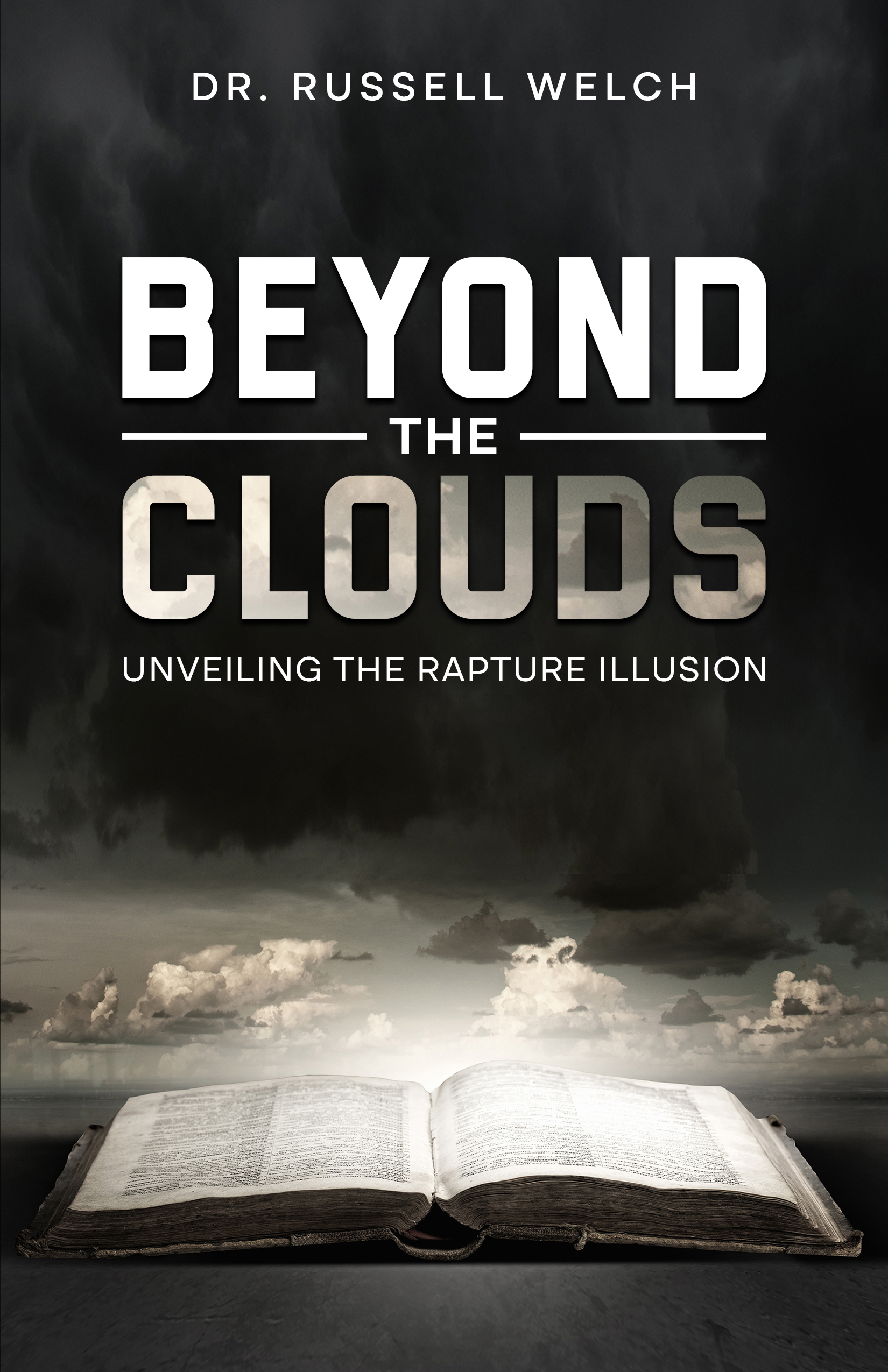
For further study, you are invited to purchase Dr. Welch’s book “Beyond the Clouds: Unveiling the Rapture Illusion“, Available exclusively on Amazon

If you feel lead to support this ministry you can do so thru this link: Donate

Jesus on “Rapture”:

Understanding Context and Meaning** The concept of the “rapture” has been a topic of considerable debate within Christian circles, particularly when examining scriptural references such as 1 Thessalonians 4. Many believers look to Jesus’ teachings in the Olivet Discourse—found in Mark 13, Luke 21, and Matthew 24—as a basis for their understanding of this event.

 However, a careful analysis reveals that this interpretation is a departure from the historical and cultural context in which Jesus spoke. Living in the first century, during the height of Roman dominance, Jesus encountered a world rife with turmoil and political oppression. Many Jews, especially those with zealous expectations of a messiah, anticipated a savior who would overthrow Roman rule and establish an earthly kingdom.

 In stark contrast to these expectations, Jesus advocated for a radical message of love and forgiveness, urging his followers to “love your enemies and pray for those who persecute you” (Matthew 5).

This subversive teaching was revolutionary, challenging the prevailing notion of a militaristic messiah and calling for a different kind of engagement with adversaries—one marked by compassion rather than violence. Jesus’ instruction to “put away your sword” served as a profound rebuke to the desire for a warrior king, illustrating that his mission was not to incite rebellion or violence against Rome, but rather to transform hearts.

In this context, it becomes evident that Jesus did not preach an impending escape from earthly woes, but instead sought to address the immediate struggles of his followers and the larger socio-political landscape. The idea of the “rapture”—a sudden removal of believers from the world—was not a concept rooted in his teachings or the understanding of his contemporaries.

Moreover, the apocalyptic language in Mark 13 should not be misconstrued as a prophetic roadmap for a future rapture. Jesus spoke directly to the realities facing his audience, prophesying the destruction of the Temple in 70 CE—a monumental event that fulfilled his warnings about the consequences of unfaithfulness within Israel.

The phrase “this generation” (Mark 13:30) indicates that Jesus’ prophecies were directed toward those who were alive at that time, not a distant future event. The signs he described—wars, persecution, and cosmic upheaval—were all part of the historical context surrounding the impending collapse of Jerusalem, not signs of an eschatological rapture.

The parallel between Jesus’ warnings and the subsequent events of the Jewish War serves to ground his message in reality. The false messiahs, wars, famine, and natural disasters he foretold were not mere symbols but tangible occurrences that would affect the people of his time.

 By understanding these prophecies as reflections of the sociopolitical climate of first-century Judea, we gain a clearer perspective on Jesus’ teachings and their implications. Additionally, the emotive language used by Jesus, which included cosmic imagery, was a rhetorical device rooted in Jewish prophetic tradition.

Such language was not to be taken literally but served to convey the catastrophic impact of political upheaval. Just as contemporary language can describe events in hyperbolic terms—such as calling 9/11 an “earth-shattering event” without implying a literal earthquake—Jesus employed similar expressions to communicate the magnitude of the coming changes.

In conclusion, while belief in a future second coming remains integral to Christian theology, associating Jesus’ teachings in the Olivet Discourse with the modern concept of the rapture misinterprets his message and the historical context in which it was given.

Jesus did not offer a vision of escape; rather, he called his followers to engage with the world through love, compassion, and resilience in the face of adversity. Understanding this distinction enriches our comprehension of his teachings and reinforces the call to address the pressing issues of our time, rather than retreating into a desire for an escape from reality.

Jesus Wept Over His Prediction of Destruction: A Reflection on Hope and Resurrection The image of Jesus weeping over Jerusalem serves as a profound testament to the tension between divine prophecy and human compassion.

This poignant moment, marked by grief and foresight, encapsulates the essence of Christ’s mission on earth. As he gazes upon the city, Jesus is acutely aware of the destructive path that the people have chosen, driven by zeal and misunderstanding.

His tears are not merely for the physical destruction looming on the horizon but resonate with a deeper sorrow for the spiritual blindness that leads to such ruin. This act of lament reveals a heart that longs for redemption and restoration instead of annihilation, inviting us to reflect on the broader implications of his tears.

In the context of Jesus’s lament, it is essential to recognize the significance of the Temple’s destruction. For the Jewish people, the Temple represented the very dwelling place of God, a sacred space that facilitated their relationship with the divine.

However, Jesus’s prediction of its demise marks a pivotal moment in the divine narrative, symbolizing the transition from a physical locus of God’s presence to a new spiritual reality embodied in Christ himself. By referring to himself as the “Son of Man,” an allusion to the prophetic vision found in Daniel 7, Jesus positions himself at the intersection of suffering and vindication, revealing the duality of his identity as both the suffering servant and the glorious Messiah.

The implications of this transition are immense. The destruction of the Temple signifies the end of an era, laying the groundwork for the establishment of a new covenant that transcends geographical and cultural boundaries.

In this new paradigm, Jesus becomes the ultimate Temple, inviting believers into a direct and personal relationship with God. This transformation is not merely prophetic; it serves as a declaration of hope amidst despair. While Jesus weeps for what will be lost, he simultaneously embodies the prophetic truth of resurrection and renewal that is to follow.

The message of hope embedded in Jesus’s lament is echoed in the writings of Paul, particularly in Romans 8, where liberation from decay and the restoration of the world are intimately connected to the resurrection of believers.

Contrary to popular eschatological narratives that emphasize fear and withdrawal, the biblical story exhorts us to engage with the present moment and work toward the transformation of our world. The historical context of the Roman siege of Jerusalem in 70 CE serves as a reminder that tribulation is not to be escaped but confronted with resilience and hope.

Furthermore, the imagery presented in the Book of Revelation underscores this theme of renewal. The culmination of God’s redemptive plan is characterized by the wiping away of tears and the eradication of death and pain.

Rather than envisioning a future that invites us to escape worldly struggles, this vision calls believers to embrace the transformative work of God, actively participating in the renewal of creation. The contrast between the desire for a rapture—a yearning to flee from earthly difficulties—and Jesus’s mission to incarnate hope amidst struggle could not be starker.

His call is to embrace the world and reflect the future glory of God’s kingdom in our present lives. In conclusion, the profound emotional response of Jesus toward Jerusalem invites us to reevaluate our understanding of eschatology.

Our focus should shift from anticipating a distant, chaotic end to embracing a narrative steeped in resurrection and restoration. The hope embedded in Jesus’s teachings and the overarching New Testament message paints a picture of a renewed world where justice flourishes and life abounds.

As we navigate the complexities of our challenges, we must remember that our future is not one of abandonment but divine fulfillment—an invitation to reflect this truth in our current actions and attitudes.

Therefore, like Jesus, we, too, can weep for the brokenness of our world while remaining steadfast in our hope for renewal that lies ahead. Our tears can become seeds of hope, inspiring us to work towards a transformed future defined by love, justice, and grace.

Fellow students of the Word, as we navigate the complexities of theological beliefs, it is essential to return to the foundational teachings of Scripture and reevaluate our understanding of key concepts like the rapture in light of the Apostle Paul’s timeless message.

In the end we find that the doctrine of the Rapture, when examined through a critical lens, reveals itself to be both unbiblical and illogical. The lack of scriptural foundation, coupled with internal contradictions, suggests that this doctrine may not merely be an alternative interpretation but rather a belief that should be rejected.

Whether viewed through the lens of biblical integrity or logical consistency, the Rapture raises profound questions that challenge its acceptance within Christian doctrine. As believers, it is essential to engage in thoughtful discourse and discernment, seeking clarity on theological matters that shape our understanding of faith and salvation.

Ultimately, the examination of the Rapture presents an opportunity for deeper reflection on the nature of God’s promises and the true meaning of Christ’s return.

~Dr. Russell Welch
Elder / Teacher: Highway to Heaven Church and Founder and Shepherd of Remnant Warrior Ministries / Remnant Warrior School of Spiritual Warfare.


The doctrine of the Rapture, a widely debated topic within Christian eschatology, raises profound questions regarding its scriptural basis and logical coherence. After engaging in discussions about the Rapture, it becomes apparent that there are significant issues surrounding its interpretation.

Over the next two days I will lay out the argument that I have used in several debates (which I was considered the winner) that aims to explore whether the Rapture is simply an error of interpretation, a matter of differing viewpoints, or a doctrine that should be firmly rejected. Through a critical analysis, it becomes evident that the Rapture is not only unbiblical but also illogical, prompting a reevaluation of its legitimacy in the context of Christian belief.

First and foremost, the argument that the Rapture is unbiblical is compelling. A fundamental issue is the absence of any explicit mention of a distinct Rapture event in the Scriptures, separate from the Second Coming of Jesus Christ. Proponents of the doctrine often dissect various biblical passages, claiming that some refer to the Rapture while others pertain to the Second Coming.

Yet, this division is made without clear scriptural justification. The assumption that there exists a Rapture necessitates a prior belief in its existence, which leads to a circular interpretation of Scripture. To accept the Rapture, one must first impose the concept onto the biblical text rather than deriving it from a straightforward reading of scripture itself.

This poses a fundamental challenge to its validity as a doctrine grounded in scriptural truth. Moreover, the illogical nature of the Rapture doctrine further undermines its credibility. The doctrine presents a series of contradictions that defy rational thought.

For instance, proponents claim that the Rapture is the coming of Christ yet argue that it is not the Second Coming. This paradox begs the question: how can an event that is described as a coming of Christ not be acknowledged as His return?

Such semantic gymnastics create confusion and render the doctrine incoherent. Additionally, the assertion that the Rapture occurs on the “Last Day,” while simultaneously suggesting it can happen years prior, raises further questions regarding its consistency.

If the Rapture is indeed the resurrection of believers, it cannot logically occur before the Last Day, as Scripture explicitly states that resurrection takes place then. This inconsistency highlights a fundamental flaw in the doctrine’s framework.

Furthermore, the implications of the Rapture doctrine raise significant theological concerns. If believers are to be taken up in a Rapture before the end of the world, what becomes of Christ’s promises regarding eternal life and resurrection on the Last Day?

The biblical promise that those who believe in Him will be raised on the Last Day appears to contradict the Rapture narrative. This contradiction not only challenges the reliability of Jesus’ words but also calls into question whether the doctrine diminishes the integrity of the biblical message.

If Christ’s promises are rendered obsolete for those who come to faith after the supposed Rapture, the doctrine potentially transforms the nature of salvation and the promises of God.

But again, lets take a closer look at one of the key passage the escapist like to stand on which is 1 Thessalonians 4:15-17, where the Apostle Paul addresses the concerns of the Christian community in Thessalonica regarding the fate of those who have died before Christ’s return.

However, upon closer examination, it becomes apparent that Paul’s intent was not to outline an escapist theology but to articulate a hope grounded in bodily resurrection and the ultimate reunion of believers at Christ’s return to earth. For a brief moment, let us dive into the nuances of Paul’s language, the Greek terminology he employed, and the broader implications of his teachings, ultimately arguing that the rapture, as commonly understood, is a misinterpretation of the biblical text.

To grasp Paul’s message in 1 Thessalonians, it is essential to recognize the context in which he wrote. The Thessalonian church was grappling with questions surrounding death and the second coming of Christ.

Paul reassures them that those who have died—referred to metaphorically as “fallen asleep”—are not lost or forsaken but will be resurrected at the Lord’s coming. He emphasizes a shared destiny for both the living and the deceased, portraying the return of Christ as a joyous event marked by a physical resurrection, rather than a sudden evacuation from the earth.

The phrase “caught up together with them in the clouds to meet the Lord in the air” has often been interpreted as a promise of escaping earthly existence. However, when viewed in the larger context of Pauline theology, particularly in tandem with his writings in 1 Corinthians 15 and Romans 8, it becomes evident that the emphasis is not on leaving the earth but on the transformation and glorification of believers at Christ’s return.

 One focal point of this analysis is the interpretation of the Greek term “ἀήρ” (air), which Paul uses in this passage. Many contemporary interpretations associate this term with “sky,” suggesting a heavenly ascent. However, a closer examination reveals that “ἀήρ” refers specifically to the lower and denser atmosphere.

This distinction is critical; it indicates that Paul was not advocating for a departure into the upper realms of heaven but rather a transformative encounter in the earthly atmosphere.

Contrastingly, the Greek term for heaven, “οὐρανός,” connotes a higher, transcendent space. By choosing “ἀήρ” over “οὐρανός,” Paul highlights a connection to the earthly realm, reinforcing the notion that the ultimate goal is not escape but resurrection and reuniting with Christ, who is returning to earth.

Furthermore, the mixed metaphors present in Paul’s language complicate the rapture narrative. The imagery of being “caught up” is not indicative of a one-time event but rather a communal experience that celebrates the fulfillment of God’s promise of resurrection.

Paul’s use of metaphoric language reflects his intent to convey hope and assurance rather than a detailed blueprint of end-time events. It is vital to acknowledge that Paul, like Jesus, did not envision a distant future characterized by a Great Tribulation or a need for believers to be evacuated from the planet. Instead, both figures shared a vision of God’s kingdom coming to fruition on earth, culminating in a physical resurrection that included all believers.

Thus we find that the belief in the rapture, as popularly understood, seems to diverge significantly from the teachings of Paul and the intentions of the biblical text.

By analyzing the linguistic choices and the broader context of 1 Thessalonians, it becomes clear that Paul’s message centers on resurrection, hope, and the ultimate fulfillment of God’s promises in the physical realm.

Rather than an escape to the heavens, Paul offers a vision of restoration and reunion that invites believers to embrace their earthly existence while looking forward to a transformative encounter with Christ.

But let us continue in the realm of biblical interpretation, Paul’s use of mixed metaphors serves as a powerful tool for conveying profound theological concepts. His connections to the Old Testament, particularly through the figures of Moses and the imagery from Daniel, illuminate his understanding of God’s relationship with humanity and the nature of Christ’s return.

By examining these metaphors, we can grasp the depth of Paul’s message and its implications for the early Christian community, particularly in the face of persecution.

The first metaphor Paul employs is that of Moses descending from Mount Sinai with the Law, heralded by the blast of a trumpet. This powerful image evokes the moment when God descended to meet Moses, establishing a divine-human connection that highlights God’s initiative to engage with humanity.

In this context, God’s trajectory is downward, symbolizing His willingness to come to us, rather than demanding that we ascend to Him. This downward motion invites reflection on the nature of divine authority and the responsibilities of those who receive God’s revelation.

Moses’s ascent to the mountaintop signifies a moment of divine encounter, yet it is the act of coming down that emphasizes the importance of service and accessibility. Paul’s metaphor encourages believers to embody this same movement—leaving behind the heights of spiritual privilege to serve and uplift those who are “below.”

The second image Paul draws upon originates from the Book of Daniel, where the “one like the son of man” represents the vindication of God’s people over their adversaries. Here, clouds symbolize divine authority and judgment, reinforcing the idea that God’s intervention is both powerful and redemptive.

In applying this metaphor to the early Christian community, Paul reassures believers facing persecution that their suffering is not in vain. Rather, it is a part of a larger narrative in which God will ultimately rescue and restore His people.

This theme resonates deeply with those who find themselves marginalized or oppressed, offering hope in the promise of vindication and divine justice.

Moreover, Paul introduces a third image that transcends the biblical narrative—an emperor visiting a city, welcomed by a jubilant procession.

This metaphor captures the anticipation of Christ’s return and the role of the church as an active participant in ushering in the Kingdom of God. The imagery of a royal procession implies a sense of communal expectation and celebration, inviting believers to envision themselves as heralds of a new creation.

Again, contrary to popular interpretations of the “rapture,” Paul’s portrayal emphasizes a collective, rather than individualistic, experience of Christ’s return. This understanding aligns with his broader theological framework, where resurrection and restoration take precedence over mere escape from earthly trials.

Ultimately, Paul’s mixed metaphors paint a rich tapestry of hope and purpose for the Christian community. Through these images, he articulates a vision of God’s kingdom that transcends the temporal and physical confines of our world.

Rather than promoting a theology centered on escaping the earth, Paul envisions a future where heaven and earth unite in harmony, establishing a perpetual, divine reign on this planet. This eschatological view emphasizes resurrection, healing, and the establishment of God’s eternal kingdom, fostering a sense of belonging and mission within the community of believers.

In exploring Paul’s metaphors, we are reminded that he is not the sole voice in this conversation—Jesus’ teachings and actions also warrant consideration. As we engage with the broader narrative of scripture, we can deepen our understanding of the profound implications of Christ’s return and what it means for our lives today.

Through this exploration, we are called not only to anticipate the future but to actively participate in the unfolding of God’s kingdom in the here and now, embodying the love and grace that reflect the heart of the divine.

In the part two of this thread, we will dive into the scriptures and look at what Jesus taught or didn’t teach about the rapture.

~Dr. Russell Welch
Elder / Teacher: Highway to Heaven Church and Founder and Shepherd of Remnant Warrior Ministries / Remnant Warrior School of Spiritual Warfare.


Release date set for June 4, 2024
Embark on a Quest for Biblical Clarity
The Path to Unveiling Spiritual Mysteries Begins Here

Have you ever stood at the edge of your faith, gazing up at doctrines towering like cloud-capped towers, and wondered if they might be illusions? “Beyond the Clouds: Unveiling the Rapture Illusion” written b y Dr. Russell Welch, is your invitation to a transformative journey—one that will navigate through the mists of misconception and ascend into the clear expanse of truth.

Dare to Question What You Know

Has a whisper of doubt ever rustled the pages of your beliefs about the end times? It’s a whisper that beckons you towards a voyage of courage and conviction, inviting you to not only question but also earnestly seek what lies beyond.

The Courage to Embrace Authentic Faith

Delve into this exploration with an open heart. Like a trusted friend who guides you through uncharted territories, this book offers a warm hand as you traverse the rugged terrain of theological understanding.

A Tapestry of Truth Woven with Scholarly Threads
Rediscovering Foundations in Faith’s Great Tapestry

“Beyond the Clouds” unfolds a rich tapestry that interweaves historical scholarship with scriptural insight. This is no mere critique; it’s a quest that revisits the origins and implications of Pre-Tribulation Rapture theory, beckoning believers to align their eschatological vision with the cornerstone of scripture.

Themes That Resonate with Heart and Mind
  • Embark on an odyssey through time to challenge established doctrines.
  • Traverse the landscapes of history to unearth theological roots.
  • Redefine your horizon with reimagined perspectives on what’s to come.
For Seekers and Shepherds Alike

Whether you stand at the pulpit or sit in the pews, if your spirit yearns for a deeper dive into biblical waters, this book extends its hand. To those who teach, those who ponder, and all who seek alignment between belief and biblical truth—this journey is for you.

Discoveries Await Within These Pages
A Compass Pointing Towards Scriptural North

Navigate through theological fog with newfound clarity. “Beyond the Clouds” is both map and compass, guiding readers away from faulty interpretations towards an enriched faith anchored in scripture.

Highlights That Illuminate Your Path
  • Traverse comprehensive explorations into beliefs about what lies ahead.
  • Find companionship in personal stories that mirror your own quest for truth.
  • Gain practical wisdom for respectful dialogue within your spiritual community.
Equip Yourself for The Journey Ahead
  • Forge resilience in faith when faced with doctrinal challenges.
  • Learn strategies for meaningful conversations about theology.
  • Align personal beliefs more closely with biblical teachings.
Chart Your Course Toward Spiritual Enlightenment
Heed the Call Towards Truth and Transformation

The voyage into “Beyond the Clouds: Unveiling the Rapture Illusion” is an embarkation point toward spiritual growth. It’s where curiosity meets revelation—where each page turned is a step further on your pilgrimage.

Set Sail Into Engaging Realms of Reflection
  1. Contemplate Theological Mysteries: Engage with a thought-provoking discourse on doctrine, history, and faith.
  2. Savor Words That Stir The Soul: Immerse yourself in narratives that blend critical thought with heartfelt insight.
  3. Journey Through Transformative Chapters: Encounter moments that challenge comfort zones and foster humility.
  4. Awaken an Insatiable Curiosity: Leave each chapter with an ignited passion for exploring deeper truths.

Embark on this expedition not just as a reader but as a seeker. Let “Beyond the Clouds: Unveiling the Rapture Illusion” be both your guidebook and companion. Order your copy today—and together, let us step out from shadows into light, from echoes into voice, from illusion into clarity.

~Remnant Warrior Publishing