Posts Tagged ‘Spirit led life’


When the people of God lean upon the wisdom of this age, they inevitably diminish the wisdom that descends from above, the very wisdom James describes as “pure, peaceable, gentle, and full of mercy” (James 3:17). Earthly wisdom promises efficiency, relevance, and applause, yet it blinds the heart to the counsel of the Spirit. Scripture warns that “the wisdom of this world is foolishness with God” (1 Corinthians 3:19), for it cannot perceive the mysteries of the Kingdom. To exchange divine insight for human strategy is to trade gold for dust. It is to silence the whisper of heaven in favor of the noise of men.

A religious system that trims Scripture to fit its preferences reveals a tragically diminished vision of the One who sits enthroned above the circle of the earth (Isaiah 40:22). When leaders extract only the verses that serve their programs and discard the rest as inconvenient, they fashion a god in their own image rather than bow before the Holy One. The whole counsel of God is not a buffet from which we select what suits us; it is a revelation that confronts, corrects, and transforms. To treat Scripture as optional is to forget that “man shall not live by bread alone, but by every word that proceeds from the mouth of God” (Matthew 4:4). A truncated Bible produces a truncated faith.

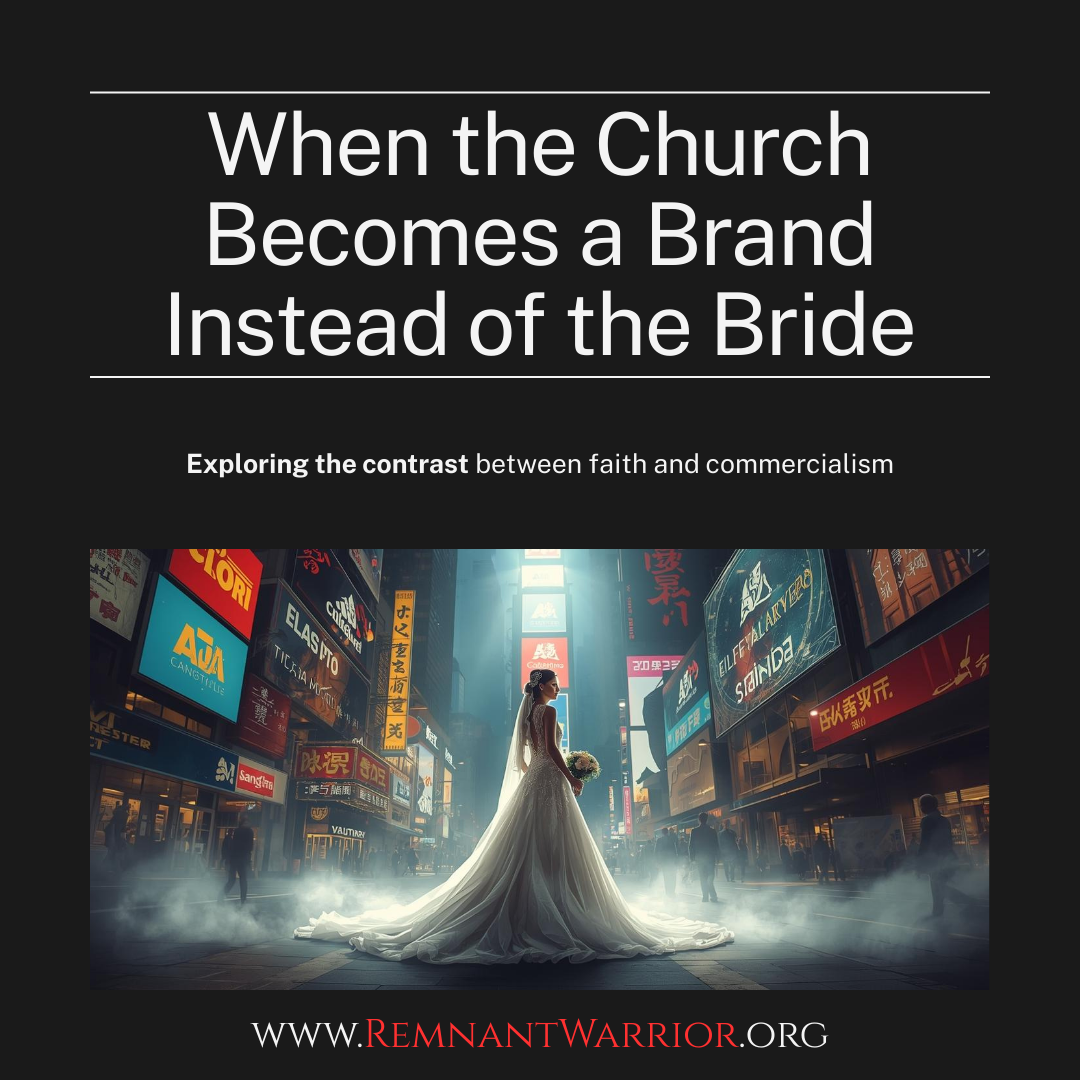
In many places, churches and ministries have adopted the identity of consumer culture, shaping their methods around trends, metrics, and market appeal. They hire consultants to craft branding strategies, as though the Church were merely another enterprise competing for attention. Yet the Kingdom does not advance by the mechanisms of commerce, nor does the Spirit move according to quarterly projections. Jesus did not say, “Build My brand,” but “Follow Me.” When ministry becomes indistinguishable from business, the cross is replaced by a logo and discipleship by customer retention.

Such practices will not stand in the dawning of the Kingdom Age, for the Word of God does not bend to preference, popularity, or personal taste. Whether a Scripture is comfortable or confrontational has no bearing on its authority, for “the word of the Lord endures forever” (1 Peter 1:25). To rely on the strength of the flesh is to declare to God that His power is unnecessary, His guidance optional, and His glory secondary. This posture mirrors the rebuke spoken through Jeremiah: “Cursed is the man who trusts in man and makes flesh his strength” (Jeremiah 17:5). When we ask God to bless what we have built in our own strength so the world may admire us, we reveal that we seek greatness before men rather than faithfulness before the King.

Dr. Russell Welch
Co-Founder, Remnant Warrior Ministries
Warrior’s Discipleship School
www.RemnantWarrior.org


There is a sobering question before us: why are so few shepherds addressing the spiritual threats shaping our generation, especially on advancing threat of Islam in our nation? When voices fall silent, it is often because ears have grown dull to the directives of the Holy Spirit, or because fear of backlash has eclipsed obedience.

Yet Scripture reminds us, “God has not given us a spirit of fear, but of power, love, and a sound mind” (2 Timothy 1:7). The Remnant must discern the times with courage, refusing to bow to intimidation or cultural pressure.

It has become painfully clear that much of the mainstream Church has redirected its spiritual warfare toward building platforms, gathering crowds, and crafting messages that are palatable and popular. This pursuit of relevance has come at the expense of the true Gospel of the Kingdom being proclaimed and the expansion of Christ’s rule within the cultures of this world.

But the Kingdom does not advance through applause—it advances through truth, obedience, and the bold proclamation of Christ. “Seek first the Kingdom of God and His righteousness” (Matthew 6:33) remains the mandate, not the pursuit of influence.

If hesitation is rooted in weak theology, then now is the hour to return to the revelation of the God we serve—the One who sits enthroned above the circle of the earth (Isaiah 40:22), who has no rival, no equal, and no threat to His dominion. Jesus declared, “All authority in heaven and on earth has been given to Me” (Matthew 28:18). The Father watches over His children with fierce tenderness, “like a hen gathering her chicks under her wings” (Matthew 23:37). A people who know their God will never tremble before the schemes of men.

Therefore, Remnant Ecclesia, rise. Shake off the slumber of passive Christianity and stand firm in the courage of the Kingdom. This is the hour to speak truth with love, to war with wisdom, and to shine with unshakable confidence in the supremacy of Christ. “Arise, shine, for your light has come, and the glory of the Lord rises upon you” (Isaiah 60:1). Let the true sons and daughters take their place.

This is the hour to take back the houses of the Lord—not with anger or fleshly striving, but with the authority of sons and daughters who know the voice of their King.

We have been commissioned to reoccupy what rightfully belongs to Jesus the Messiah, the One to whom “all authority in heaven and on earth has been given” (Matthew 28:18). The enemy has squatted long enough in places meant for truth, holiness, and the uncompromised Gospel of the Kingdom.

Let the Remnant stand firm, clothed in the armor of God, discerning the times, and refusing to yield sacred ground to cultural pressure or spiritual apathy. “Those who know their God shall be strong and do exploits” (Daniel 11:32), and this is such a moment. The King is calling His warriors to rise—not in fear, but in faith, reclaiming His territory with humility, boldness, and unwavering allegiance to His Word.

Dr. Russell Welch Co-Founder Remnant Warrior Ministries Warrior’s Discipleship School

Link to Dr. Welch’s books


Blessed indeed are we, this chosen generation, appointed to behold the restoration of the Gospel of the Kingdom—the very message our Lord Jesus Christ proclaimed and embodied. This is the true Gospel, the everlasting Word sealed in Heaven, bearing the authority of the Throne. It comes forth with the manifestation of Holy Fire, consuming the dross and exposing every counterfeit gospel as illegitimate.

For it is written: ‘For our God is a consuming fire’ (Hebrews 12:29), and ‘If anyone preaches another gospel than the one you received, let him be accursed’ (Galatians 1:8). This Gospel of the Kingdom is the power of God unto salvation (Romans 1:16), the eternal decree recognized in Heaven and now revealed on earth with glory and fire.

The religious spirit that has enthroned entertainment and performance in the modern church is crumbling. Its intoxication is fading, leaving behind empty structures that cannot sustain the weight of God’s glory. The Lord is exposing gatherings that “have a form of godliness but deny its power” (2 Timothy 3:5), and He is calling His people to return to the altar of fire. This is not about buildings or programs, but about the Bride being purified to carry His presence. The Ecclesia must awaken, for the Kingdom of God is not in word only but in power (1 Corinthians 4:20).

The Remnant is rising, a people marked not by denominational labels but by their allegiance to the Lamb. They are those who “follow the Lamb wherever He goes” (Revelation 14:4), refusing to bow to powerless traditions. The Spirit is forming them into living stones, a spiritual house built for His glory (1 Peter 2:5).

Their gatherings are not spectacles but encounters, where the dunamis of God heals, delivers, and transforms. As the prophet declared, “Is not My word like fire, says the Lord, and like a hammer that breaks the rock in pieces?” (Jeremiah 23:29). This Remnant is being forged in fire to shatter the strongholds of religion and release the Kingdom.

Now the Spirit is stirring the youth of this generation, igniting a holy hunger that cannot be satisfied by entertainment or theory. They long for the tangible presence of the Living God, and the Lord is answering with an outpouring: “I will pour out My Spirit on all flesh; your sons and your daughters shall prophesy” (Joel 2:28).

This is a rallying cry to the Ecclesia: rise up, cast off the garments of religion, and clothe yourselves with Christ. The Spirit and the Bride together cry, “Come!” (Revelation 22:17), for the hour has come to stand as a prophetic witness in the earth. The Lord is raising His Remnant to legislate His will, to declare His Word, and to manifest His Kingdom in power and glory.

The trumpet of the Lord is sounding, and the Spirit is igniting a holy blaze within His chosen ones. This is the hour for the Remnant to arise with boldness, declaring, “Our God is a consuming fire” (Hebrews 12:29). No longer will the Bride be lulled by powerless religion or silenced by the spirit of compromise, for the Lion of Judah is roaring through His Ecclesia.

The fire of Pentecost is not history but present reality, and the same Spirit who raised Christ from the dead is quickening His people to stand as witnesses of resurrection power. Let the Remnant burn with unquenchable zeal, for the nations will see the glory of the Lord revealed through a people ablaze with His presence.

Dr. Russell Welch
Co-Founder Remanant Warrior Ministries
Warrior’s Discipleship School


When I was seventeen, the Lord gave me a dream of a vast farm filled with people clothed as in the days of Jesus, with long hair and beards, ministering to others who were dressed in combat gear. At the time, I did not understand the meaning, nor did I grasp the prophetic nature of what was being shown.

Yet the Word reminds us, “In the last days, God says, I will pour out my Spirit on all people. Your sons and daughters will prophesy, your young men will see visions, your old men will dream dreams” (Acts 2:17). This dream was a seed planted by the Spirit, waiting for its appointed time to unfold. I would dream this dream again and again over the course of the next 37 years.

Years later, in 2018, I dreamed again, and upon waking, the Holy Spirit began to speak. He revealed that the farm represented a community devoted to bringing in homeless veterans, offering healing, and discipling them into warriors for Christ. I asked why they remained in combat gear, and He said, “Because it was in that season the enemy took them captive.”

Yet I saw disciples tending to them, and the Spirit declared, “These too were once wounded, but now they are healed and restored, and they are dedicated to discipling their fellow veterans.” Truly, this is the fulfillment of Isaiah 61:1, “He has sent me to bind up the brokenhearted, to proclaim freedom for the captives and release from darkness for the prisoners.”

In 2019, the dream returned, and this time I was entering the property. At the gate was a sign that read, “New Creation Ranch – A Veteran Restoration Community.” The name itself echoed the promise of 2 Corinthians 5:17, “Therefore, if anyone is in Christ, the new creation has come: The old has gone, the new is here!” This was no ordinary farm; it was a prophetic picture of restoration, a place where the broken would be made whole, and where warriors would rise again—not for earthly battles, but for the Kingdom of God.

More recently, the dream shifted to a graduating class. Each disciple who had been healed and trained was being commissioned to go forth and establish house churches. As I awoke, the Spirit reminded me of my long-held conviction for the home fellowship model. In July, a father in the faith prophesied that my wife and I would begin planting house churches, and since then I have heard the Spirit whisper, “Glory Houses – Ecclesia Government Houses.”

This aligns with the promise of Matthew 16:18-19, where Jesus declares, “I will build my church, and the gates of Hades will not overcome it. I will give you the keys of the kingdom of heaven.” The ranch and the house church movement are not separate—they are one prophetic assignment.

Last night I had the dream again, and when I awoke I could literally smell the farm. When I started praying about it, Holy Spirit spoke boldly: “This is the Father’s calling on your life. You and your wife have been commissioned for this assignment.”

As you have sought first His Kingdom and His righteousness, He has matured you through seasons of trials, refining fire and revelation. Now the fullness of the vision is coming forth—land titles are being transferred, checks are being written, and laborers are being called from across the nation: farmers, mechanics, and skilled tradesmen.

The promise of Matthew 6:33 resounds, “Seek first the kingdom of God and His righteousness, and all these things will be added to you.” The hour is approaching, and as we remain faithful, we shall see the dream manifest before our very eyes.

Let’s pray and decree that this dream will become a reality in 2026. Thousands of veterans are in dire need of assistance, many are taking their own lives, and the government of this world has no answers or solutions. In contrast, the Government of our King and His Kingdom does, and everyone who is called by His name, is granted the authority to legislate His Will.

~Dr. Russell Welch Co-Founder Remnant Warrior Ministries Warrior’s Discipleship School

New Creation Ranch


Is There a Biblical Precedent for Emotional Appeals for Ministry Funds?
The Apostle Paul’s Model of Labor, Provision, and Fundraising in the New Testament

Introduction
The question of how Christian ministry should be funded is as old as the church itself. In contemporary contexts, appeals for ministry funds often employ emotional rhetoric, urgent pleas, or even guilt-inducing tactics. This raises a critical question for churches and Christian leaders: Is there a biblical precedent for emotional appeals for ministry funds, or does the New Testament—especially the life and teaching of the Apostle Paul—offer a different model, one rooted in labor, voluntary generosity, and dependence on God? This report examines key New Testament passages, especially Paul’s letters and the book of Acts, to discern the biblical pattern for ministry support. It contrasts emotional fundraising appeals with Paul’s approach of tentmaking, voluntary giving, and trust in divine provision. The analysis integrates scholarly commentary, historical context, and practical implications for modern ministry.

I. New Testament Teaching on Financial Support for Ministry


A. The Biblical Foundation of Generosity and Ministry Support
The New Testament consistently affirms the importance of supporting those who labor in ministry. This principle is rooted in the Old Testament, where the Levites were supported by the tithes and offerings of Israel (Numbers 18:21–24; Leviticus 27:30–32). In the early church, believers shared possessions so that “no one among them was in need” (Acts 2:44–45), and Jesus Himself was supported by the gifts of others (Luke 8:1–3).


Paul, in his letters, repeatedly acknowledges and encourages financial support for ministry. He commends the Philippians for their partnership in giving (Philippians 4:15–18), instructs the Corinthians on systematic giving (1 Corinthians 16:1–2), and appeals for collections to aid the poor in Jerusalem (Romans 15:26; 2 Corinthians 8–9).


Key Principle:
Support for ministry is not merely a financial transaction but a spiritual act—an expression of worship, gratitude, and partnership in the gospel.


B. The Heart Attitude in Giving
The New Testament places strong emphasis on the attitude of the giver. Paul writes, “Each one should give what he has decided in his heart to give, not out of regret or compulsion. For God loves a cheerful giver” (2 Corinthians 9:7). This principle is echoed throughout the New Testament, where giving is to be voluntary, joyful, and motivated by love—not by external pressure or emotional manipulation.


Scholarly Perspective:
Ray Stedman notes, “True giving always originates with the grace of God… In the New Testament giving is never legislated upon us. It is not laid on us as a duty… It is given to us, rather, as a privilege that we can partake of to express the gratitude of our hearts for the grace that God has already given”.


C. Accountability, Integrity, and Transparency

Paul is equally concerned with the integrity of financial dealings in ministry. He insists on transparency and accountability in the handling of funds (2 Corinthians 8:20–21), appointing trustworthy individuals to oversee collections and delivery. This model is echoed in early Christian writings such as the Didache, which warns against itinerant ministers who exploit hospitality or demand money.


Modern Application:
Churches are called to maintain robust accountability structures, ensuring that funds are used righteously and that the witness of the church is not compromised by financial scandal.

II. Paul’s Tentmaking and Labor for Ministry Support


A. Acts 18 and Acts 20: Paul as Tentmaker
Paul’s practice of tentmaking is central to understanding his approach to ministry support. In Acts 18:2–3, Paul is described as working with Aquila and Priscilla as a tentmaker in Corinth. This was not merely a pragmatic choice but a deliberate strategy to avoid being a financial burden on new converts and to distinguish himself from itinerant philosophers who charged fees for their teaching.
In his farewell address to the Ephesian elders, Paul declares, “You yourselves know that these hands of mine have ministered to my own needs and those of my companions” (Acts 20:34). He ties this labor to the words of Jesus: “It is more blessed to give than to receive” (Acts 20:35).


Historical Context:
Tentmaking (Greek: skenopoios) was a respected trade, and rabbinic tradition required every rabbi to learn a manual craft. Archaeological evidence from Corinth and Tarsus confirms the presence of leather-working guilds and tools from Paul’s era.


Theological Significance:
Paul’s labor was not a “second-class” activity but an integral part of his witness. As the Theology of Work Project notes, “Paul is a witness when he preaches and when he makes tents and uses his earnings to benefit the broader community. This fits directly into Luke’s view that the Spirit empowers Christians to use their resources for the sake of the whole community, which in turn becomes witness to the gospel”.


B. Paul’s Refusal and Acceptance of Support: Thessalonian Correspondence
Paul’s letters to the Thessalonians provide further insight into his funding model. In 1 Thessalonians 2:9, he writes, “We worked night and day so that we would not be a burden to any of you, while we proclaimed to you the gospel of God”. Similarly, in 2 Thessalonians 3:7–8, he emphasizes, “We did not eat anyone’s bread without paying for it, but with toil and labor we worked night and day, that we might not be a burden to any of you.”


Motivation:
Paul’s refusal to accept support in Thessalonica was not because he lacked the right, but to set an example of diligence and to avoid any appearance of profiteering. He also sought to correct idleness among some believers who had misunderstood the imminence of Christ’s return.


Scholarly Commentary:
Kenneth Berding summarizes, “In Paul’s ministry in Thessalonica and Corinth (and probably other places where he sought to establish new churches), he tried not to confuse the mission and to burden new converts by asking for money, and thus either worked with his own hands to pay his way or received money from a distant church to supply his needs”.


C. Paul’s Teaching on Rights to Support: 1 Corinthians 9 and 16
In 1 Corinthians 9, Paul mounts a robust defense of the right of ministers to receive support: “If we have sown spiritual things among you, is it too much if we reap material things from you?… The Lord commanded that those who proclaim the gospel should get their living by the gospel” (1 Corinthians 9:11, 14).


Yet, Paul immediately adds, “But I have made no use of any of these rights. Nor am I writing these things to secure any such provision. For I would rather die than have anyone deprive me of my ground for boasting… What then is my reward? That in my preaching I may present the gospel free of charge, so as not to make full use of my right in the gospel” (1 Corinthians 9:15, 18).


Key Insight:
Paul’s refusal to claim support was a voluntary sacrifice, motivated by a desire to remove any obstacle to the gospel and to model selfless service. He did not want to be mistaken for a “peddler of God’s word” (2 Corinthians 2:17).


Systematic Giving:
In 1 Corinthians 16:1–2, Paul instructs the Corinthians to set aside a portion of their income weekly for the collection for the saints, emphasizing regular, proportional, and planned giving.

III. The Jerusalem Collection: 2 Corinthians 8–9 and Romans 15


A. The Purpose and Significance of the Collection
Paul’s most extensive fundraising effort was the collection for the poor in Jerusalem. This project, spanning more than a decade, was not merely a relief effort but a theological statement about the unity of Jewish and Gentile believers, the fulfillment of Old Testament prophecy, and the practical outworking of the gospel.


Historical Background:
The Jerusalem church faced chronic poverty due to famine, persecution, and the depletion of communal resources (Acts 11:28–30; Josephus, Antiquities 20.51). Paul saw the collection as a way for Gentile churches to express gratitude for their spiritual inheritance and to foster unity across ethnic and geographic lines (Romans 15:25–27).


B. Paul’s Rhetorical Strategy: Avoiding Compulsion, Promoting Voluntary Giving
Paul’s approach to fundraising in 2 Corinthians 8–9 is instructive. He appeals to the example of the Macedonians, who gave “according to their means and beyond their means, of their own free will, begging us earnestly for the favor of taking part in the relief of the saints” (2 Corinthians 8:3–4).
He explicitly avoids commanding the Corinthians: “I say this not as a command, but to test the genuineness of your love” (2 Corinthians 8:8). He urges them to give “not reluctantly or under compulsion, for God loves a cheerful giver” (2 Corinthians 9:7).


Scholarly Analysis:
Ray Stedman observes, “Notice how carefully [Paul] avoids pressure. He is not putting the arm on these people. He does not say they have to give. He does not lay a guilt trip on them… There is no pressure. ‘I don’t say this as a command,’ he says”.


Paul’s rhetorical strategy includes:

  • Appealing to grace (the example of Christ’s self-giving, 2 Corinthians 8:9)
  • Highlighting the voluntary generosity of others (the Macedonians)
  • Emphasizing equality and mutual support (2 Corinthians 8:13–15)
  • Ensuring transparency and accountability (2 Corinthians 8:19–21)

  • C. Theological and Pastoral Implications
    Paul frames giving as a response to God’s grace, not as a legalistic obligation. He writes, “For you know the grace of our Lord Jesus Christ, that though he was rich, yet for your sake he became poor, so that you by his poverty might become rich” (2 Corinthians 8:9). The ultimate model for generosity is Christ Himself.

  • Equality, Not Socialism:
    Paul clarifies that the goal is not enforced equality but mutual care: “Your abundance at the present time should supply their need, so that their abundance may supply your need, that there may be equality” (2 Corinthians 8:14).

IV. Philippians and Paul’s Gratitude for Gifts


A. The Philippians’ Partnership
The church at Philippi stands out for its consistent and sacrificial support of Paul’s ministry. Paul writes, “And you Philippians yourselves know that in the beginning of the gospel, when I left Macedonia, no church entered into partnership with me in giving and receiving, except you only. Even in Thessalonica, you sent me help for my needs once and again” (Philippians 4:15–16).


When Paul was imprisoned, the Philippians sent Epaphroditus with a gift to meet his needs (Philippians 2:25; 4:18). Paul describes their gift as “a fragrant offering, a sacrifice acceptable and pleasing to God” (Philippians 4:18).


B. Paul’s Attitude: Contentment and Trust
Paul is careful to express gratitude without appearing dependent or manipulative: “Not that I seek the gift, but I seek the fruit that increases to your credit. I have received full payment, and more. I am well supplied… And my God will supply every need of yours according to his riches in glory in Christ Jesus” (Philippians 4:17–19).


Key Insight:
Paul’s gratitude is genuine, but he maintains a posture of contentment and trust in God’s provision, regardless of material circumstances. He does not use emotional appeals or crisis tactics to elicit support.

V. Emotional Appeals in New Testament Fundraising: Examples and Tone


A. Emotional Responses in Ministry: Biblical Examples
The New Testament acknowledges a range of emotional responses in ministry—joy, compassion, frustration, sorrow, and even righteous anger. Paul often expresses deep affection for his churches (Philippians 1:4; 1 Thessalonians 2:7–8), and Jesus Himself was moved with compassion (Matthew 9:36).


However, when it comes to fundraising or financial appeals, the tone is markedly different. The emphasis is on voluntary, cheerful giving, not on guilt, fear, or manipulation.


B. Absence of Manipulative or Coercive Appeals
Nowhere in the New Testament do we find apostles or church leaders employing emotional manipulation, crisis rhetoric, or guilt-based appeals to extract funds. Paul’s appeals are reasoned, transparent, and grounded in theological conviction.


Scholarly Perspective:
Marc Pitman notes, “Paul uses powerful writing skills that seem to me to border on manipulation but is quick to note… that giving to God’s work is to be done willingly and generously (2 Cor 8:8; 9:5, 7). He claims to not be commanding them to give but ‘testing the genuineness of their love’ (2 Cor 8:8). He even states that giving is a sign of ‘your obedience to your confession in the gospel of Christ’ (2 Cor 9:13)”.


Ethical Considerations:
Modern fundraising experts warn that emotional appeals, while effective in the short term, can cross ethical lines if they exploit donors’ vulnerabilities or misrepresent needs. Authenticity, transparency, and respect for the donor’s autonomy are essential.

VI. Paul’s Rhetorical Strategy: Voluntary Giving, Avoiding Compulsion


A. Key Passages

  • 2 Corinthians 9:7: “Each one must give as he has decided in his heart, not reluctantly or under compulsion, for God loves a cheerful giver.”
  • 2 Corinthians 8:8: “I say this not as a command, but to test the genuineness of your love by your concern for others.”
  • 1 Corinthians 16:2: “On the first day of every week, each of you should set aside a portion of his income…”
    Paul’s strategy is to inspire generosity by appealing to grace, the example of Christ, and the voluntary response of the heart—not by external pressure or emotional manipulation.

  • B. Scholarly Commentary
    Ben Witherington argues that Paul’s refusal to accept support from the Corinthians was a deliberate strategy to avoid being seen as a professional philosopher or rhetorician, and to maintain the integrity of the gospel.

  • Douglas Moo notes that Paul’s letter to the Romans, which includes a request for support for his mission to Spain, is carefully constructed to assure the Roman church of his orthodoxy and trustworthiness before making any financial appeal.

VII. Historical and Extra-Biblical Evidence for Tentmaking and Support Practices


A. Early Christian Practice
The Didache, an early Christian manual, provides detailed instructions on how to receive itinerant ministers. It warns against those who overstay their welcome or demand money, stating, “If he remains three days, he is a false prophet… If he asks for money, he is a false prophet” (Didache 11:5–6).
It also affirms the principle that those who labor in ministry may receive support, but only in a manner consistent with humility, integrity, and the teachings of Christ.


B. Archaeological and Documentary Corroboration
Archaeological finds in Corinth and Tarsus confirm the presence of leather-working guilds and tools from Paul’s era, supporting the historical plausibility of his tentmaking activities.

VIII. Contrasting Emotional Fundraising Appeals with Paul’s Model: Ethics and Pastoral Implications


A. The Dangers of Emotional Manipulation
Modern fundraising often employs emotional appeals—stories of urgent need, images of suffering, or appeals to guilt. While these can be effective, they risk crossing ethical boundaries if they manipulate donors or obscure the true nature of the need.


Biblical Caution:
Scripture warns against manipulative or greedy methods that exploit believers (1 Peter 5:2). Any fundraising campaign that provokes guilt, fear, or exploitation is not aligned with biblical principles.


B. Paul’s Model: Labor, Voluntary Giving, and Trust in God
Paul’s approach stands in stark contrast. He:

  • Labors with his own hands when necessary to avoid being a burden or to silence critics.
  • Accepts support only from established, trusted partners (e.g., the Philippians), not from new converts or those who might misunderstand his motives.
  • Appeals to voluntary, cheerful giving grounded in grace, not compulsion.
  • Maintains transparency and accountability in all financial dealings.
  • Trusts God for provision, recognizing that ultimately, all resources come from Him.
    Case Study: George Müller
    The 19th-century evangelist George Müller exemplified this model. He refused to solicit funds directly, relying instead on prayer and voluntary gifts. Müller’s orphanages cared for thousands of children, and he never went into debt or asked anyone for money, believing that God would move people’s hearts to give as needed.

IX. Implications for Modern Ministry Practices


A. Bi-Vocational Ministry and Tentmaking
Paul’s example has inspired generations of “tentmakers”—ministers who support themselves through secular work while engaging in ministry. This model is especially relevant in contexts where full-time support is not feasible or where financial independence enhances credibility and witness.


Modern Application:
Bi-vocational ministry is not “part-time” ministry but a strategic, holistic approach to serving Christ with undivided devotion, as James Powell argues: “Bi-vocationalism is glorious because it is a means of God strategically deploying and providing for those he calls. Through it we get to be the aroma of Christ in places and ways that an exclusively church-employed vocational minister is unable”.


B. Fundraising Ethics and Transparency
Churches and ministries must prioritize transparency, accountability, and integrity in all financial matters.

This includes:

  • Clear communication about how funds are used
  • Multiple trustworthy individuals overseeing collections and disbursements
  • Regular reporting to donors and stakeholders.
  • C. Voluntary, Cheerful Giving
    The biblical model calls for voluntary, cheerful giving, motivated by gratitude and love, not by guilt or compulsion. Churches should teach the principles of stewardship, generosity, and partnership in the gospel, while avoiding manipulative tactics.
    D. Practical Guidelines for Churches
  • Encourage voluntary, joyful giving as an act of worship.
  • Avoid emotional manipulation or guilt-based appeals.
  • Teach the difference between almsgiving (giving “down”) and fellowship sharing (giving “across”).
  • Use donor stories to inspire generosity, not to pressure.
  • Maintain robust accountability and transparency in all financial dealings.
  • Support bi-vocational ministry where appropriate.
  • Emphasize the spiritual benefits of giving and partnership in ministry.

X. Case Studies: Historical Figures and Movements Following Paul’s Example


A. George Müller
Müller’s orphanages in 19th-century England were funded entirely by voluntary gifts, received in answer to prayer. He never solicited funds directly, believing that God would move people’s hearts to give as needed. His life is a powerful testimony to dependence on God for provision and the effectiveness of non-coercive fundraising.


B. Modern Tentmakers
Today, millions of Christians serve as “tentmakers” or bi-vocational ministers, especially in contexts where traditional missionary support is not possible. These workers combine secular employment with ministry, following Paul’s example of labor and witness.

XI. Practical Guidelines for Churches: Applying Pauline Principles Today

Elaboration:
These principles, drawn from Paul’s teaching and example, provide a framework for ethical, effective, and spiritually grounded ministry funding. They challenge churches to move beyond transactional or manipulative models and to embrace a vision of stewardship, partnership, and trust in God.

Conclusion
The New Testament, and especially the life and teaching of the Apostle Paul, offers a clear and compelling model for ministry support. There is no biblical precedent for emotional, manipulative appeals for funds. Instead, the pattern is one of voluntary, cheerful giving, grounded in grace, motivated by love, and marked by transparency and accountability. Paul’s own example—laboring with his hands, refusing support when it might hinder the gospel, accepting gifts only from trusted partners, and always trusting God for provision—stands in stark contrast to many modern fundraising practices.
For contemporary churches and ministries, the challenge is to recover this biblical vision. This means teaching and modeling stewardship, fostering genuine partnership in the gospel, supporting bi-vocational ministry where appropriate, and maintaining the highest standards of integrity and transparency. Above all, it means trusting God as the ultimate provider, confident that “my God will supply every need of yours according to his riches in glory in Christ Jesus” (Philippians 4:19).

Key Takeaways:

  • Paul’s model is not one of emotional fundraising appeals but of labor, voluntary giving, and trust in God.
  • The New Testament upholds the right of ministers to receive support, but always within the framework of voluntary, cheerful, and accountable giving.
  • Modern ministry should avoid manipulative tactics and instead cultivate a culture of generosity, partnership, and integrity, following the example of Paul and the early church.

Implications for Modern Ministry:

  • Re-examine fundraising practices in light of biblical principles.
  • Prioritize voluntary, cheerful giving and robust accountability.
  • Support and honor bi-vocational ministers.
  • Teach stewardship as a spiritual discipline and act of worship.
  • Trust God for provision, avoiding manipulative or crisis-driven appeals.
    By embracing these principles, the church can honor God, advance the gospel, and bear witness to the world of a better way—a way marked by grace, generosity, and trust in the faithful provision of the Lord.

Dr. Russell Welch, Th.D. Senior Elder/ Apostolic Teacher Highay to Heaven Church Author of Faith Based Book and Biblical Commentaries Co-Founder Remnant Warrior Ministries / Warrior’s Discipleship School


I declare to you today — unity in the Body of Christ is not a man‑made agreement, not a shallow handshake of tolerance, and not the silencing of truth for the sake of peace. True unity is born of the Spirit, forged in the fire of love, and anchored in the unshakable truth of God’s Word.


Jesus prayed, “Father, that they all may be one, as You, Father, are in Me, and I in You, that they also may be one in Us, so that the world may believe that You sent Me” (John 17:21). This is not a suggestion — it is the cry of the Son of God, and Heaven will not rest until it is fulfilled.


We are one Body with one Spirit, called to one hope, serving one Lord, holding to one faith, sealed in one baptism, under one God and Father of all (Ephesians 4:4‑6). This unity is not uniformity — it is the harmony of many members moving as one under the Headship of Christ.


I call the Church to put on love, “which binds everything together in perfect harmony” (Colossians 3:14). I call us to lay down pride, offense, and self‑promotion, and to take up humility, honor, and servanthood. For where pride rules, division thrives — but where humility reigns, the Spirit commands His blessing (Psalm 133:1‑3).


The days of agreeing just to avoid arguing must be exiled from the Ecclesia. The early Church did not sweep disagreements under the rug; they brought them before the council, and the council brought them before the Holy Spirit — and He alone settled the matter, witnessed and confirmed by the majority present (Acts 15:28).

The enemy of unity is the spirit that says, “My feelings override everyone else’s. You only respect me if you agree with me. If you don’t do what I want, I will break fellowship.” My brothers and sisters, that is not only the opposite of unity — it is the spiritual murder of unity.


This unity is not built on compromise with darkness, for “what fellowship has light with darkness?” (2 Corinthians 6:14). It is anchored in truth, for Jesus prayed, “Sanctify them by the truth; Your Word is truth” (John 17:17). We will not trade truth for comfort, nor holiness for popularity.


I decree that the walls of division — denominational pride, racial prejudice, political idolatry, and personal offense — are coming down in Jesus’ name. I declare that the love of God will be the bond that holds us, the truth of God will be the foundation that steadies us, and the mission of God will be the fire that drives us.


The world will know we are His disciples not by our buildings, our programs, or our branding, but by our love for one another (John 13:35). And when the Church walks in this Spirit‑born unity, hell will tremble, the lost will believe, and the Kingdom will advance with unstoppable force.


So I say — rise up, Ecclesia! Lock shields, join ranks, and march as one. For the glory of the King, for the harvest of the nations, and for the day when every tribe, tongue, and nation will feast together at the marriage supper of the Lamb.

~Dr. Russell Welch
Elder / Apostolic Teacher: Highway to Heaven Church and Founder and Shepherd of Remnant Warrior Ministries / Warrior’s Discipleship School


There is a shift in the order of the house, and I feel it burning in my bones. The Chair of the Father is not empty; the scepter has not fallen; the mantle has not lost its weight. Heaven has issued a decree, and I cannot ignore it. I hear the sound clearly in my spirit: the Father is Fathering again in the earth, and I am answering His call.


In 2020, I watched a son seated where a father once stood. The oil did not flow by seniority but by assignment. The mantle searched the house and found the youngest, and Heaven did not apologize. Animosity rose, but rebellion did not prevail. As I witnessed the apostolic order measure the house, I realized this was not a man receiving a chair—it was a generation bowing under the government of fatherhood.


That night, while my wife slept peacefully in our hotel room, I wrestled. In the stillness, the restlessness in me met the gentleness of the Ancient of Days. Then I heard the distinct voice of the Father—different from Holy Spirit and different from the Son, as I have always known it to be. He said to me, “I will father you now, even as I fathered Abraham.” The word did not merely soothe me; it established me. Peace rolled over me like a river and washed away the residue of striving, and a fresh covenant was cut in my heart.


I asked, “What about me, Lord?” and the answer was not explanation but alignment. It became clear that He was calling me to step fully into leadership and to separate from the one under whom I had been raised. The reasons are written in Heaven; I need not publish them on earth. What I do know is this: His order overruled my questions, and His Fathering steadied my feet.


The Father then made His wisdom unmistakable to me: He would father me through many voices. Not through one pedestal or personality, but through several He Himself would appoint. I would recognize them by the way the atmosphere shifts when they enter a room, by the weight of holiness that hushes the mind and steadies the heart, by the fear of the Lord that bends the knees of angels and rattles the bones of demons. I am not chasing fame; I am embracing sonship saturated in glory.


For years I have marveled at men whose very presence changes the temperature of a room—men in their late eighties, nineties, and even beyond a hundred. I wondered who fathered them, or if they had reached a maturity where there was no disruption to the frequencies of Heaven within them. Today I believe it is the latter. There is a maturity where the inner climate remains unbroken by the winds of earth. In that place, one walks with the Host of Heaven while still breathing earthly air. This is the path the Father is leading me to walk.


I also see the contrast with painful clarity. Some have rejected counsel, correction, and direction, and have enthroned themselves on seats that ooze with pride. Their words multiply even as their authority withers. They grow louder in the courts of men while remaining silent in the courts of Heaven. The result is confusion, division, and a loss of holy fear. I renounce those patterns and refuse that seat.


In recent months I have heard seasoned generals speak with one witness: if I will not walk under authority, I will not carry the authority of the Throne. This is not about control; it is about alignment. This is not the silencing of sons; it is the amplification of the Father through sons. I honor authority not to idolize people, but to recognize the King in the order He has established, and to bend before Him when He speaks through those He appoints.


I have learned to honor and to discern. I recognize the voices the Father assigns—not by fame, signatures, or platforms, but by the atmosphere that shifts when they speak, by the fragrance of Heaven that lingers when they depart, by the plumb line that appears within my soul when their words land. When Holy Spirit whispers to me, “Listen—the Father’s voice is coming from that one,” I choose willing submission and joyful obedience.

What I’m about to write is not intended to offend any of the seasoned voices connected to my walk, past or present; I honor each one of you.


Heaven bears witness in my life to vessels through whom the thunder of the Throne is clean: Arthur Burt, Ron McGatlin, and Samuel Brassfield. Rooms changed temperature when they entered; the fear of the Lord rose like incense when they spoke. Arthur now stands among the great cloud, yet his echo continues to instruct me to remain small enough for God to be great. The others remain as living plumb lines before me, proving that age under the anointing is not decay but depth, not retreat but rootedness, not an ending but a finishing well.


This is my charge and my confession: I am a son under governance. The Father is restoring His house with order and tenderness—apostles who truly father, prophets who truly weep, pastors who truly tend, teachers who truly anchor, evangelists who truly burn—all braided under the Headship of Christ. I am being separated, not from love but from misalignment, not from people but from patterns. The reason is written in Heaven, and my answer on earth is obedience without apology.


I step into the place where the frequencies of Heaven run unhindered through a yielded life. I choose to walk with the Host while I breathe earth’s air. I ask for steps that keep time with the Throne, and words that are few yet foundational. I honor the seating of sons even when mantles fall contrary to human order, and I bless those whom Heaven chooses without jealousy or resentment. In this posture of holy submission, I open my mouth to the thunder of the Father and I refuse to let the scepter pass me by.


The Father is thundering again in the earth, and I bow to bear the roar. I will walk under authority to carry authority. I will welcome many fathers that reveal the One Father. And I will remain small in my own eyes that I might become great in the hands of the King.

~Dr. Russell Welch
Elder/ Apostolic Teacher Founder and Shepherd of Remnant Warrior Ministries / Remnant Warrior School of Spiritual Warfare.

www.remnantwarrior.org


The re-Birth of a Heavenly ordained Vision

I write this post burning with Holy Ghost fire, stirred by a dream that thundered through my spirit Sunday night—my spiritual father, now in glory, met me in a coffee shop drenched in the fragrance of divine appointment, and with eyes blazing like coals from the altar, he handed me a scroll pulsing with heavenly weight; I asked, “What is this?” and he declared with authority, “It is the deed to the vision—the legacy sealed in the Spirit, the mandate forged in fire, and I now release it into your hands,” and in that moment, I felt the mantle descend, the commissioning roar, and the breath of God surge through my bones like lightning—this is not nostalgia, this is inheritance, and the scroll is not paper, it is prophecy.

In 2022, I started hearing a still, small voice stirring the depths of my spirit, whispering with ancient authority: “Remember the commissioning.” This sound echoed like a trumpet blast in the halls of heaven, calling me back to the threshold of destiny. Today I realize that it is the Spirit’s gentle wind, unrelenting in its pursuit, beckoning me to reclaim the original fire that burned within my bones. In each breath, I sense the weight of Heaven leaning toward me, poised to ignite anew what time has tried to dim. The call is piercing, the tone prophetic, and I know I stand at the cusp of a renewed mandate.

At first, I bowed my head to the memory of Chuck Pierce’s commissioning, grateful for the mantle of Apostolic teacher that descended upon me three years ago. Yet as the whisper repeated, a holy disquiet rose within me—a knowing that this call was deeper than any earthly ordination. I plunged into the realm of Kingdom pedagogy, devouring truths about teaching in the Church, yet my heart remained restless. The study refreshed my soul but did not satisfy the yearning in my spirit. I sensed there was more, a hidden pathway that Holy Spirit sought to reveal.

In December of 2024, the fog lifted as dreams transported me back to the early 2000’s, to days when my wife and I were part of a ministry that had the vision of launching a movement of home fellowships across North Florida, a Matrix of Ecclesia house Fellowships. For the first year we witnessed faces gathered around kitchen tables, lives intertwined by intimate worship and raw confession.

Those gatherings were embers of a sacred fire, burning bright in the corners of that region. Holy Spirit began through the Bibles and studies of the early Church fathers, exposing me to the  vision of the early Church, birthed at Pentecost, which heaven was beckoning to come alive once more, as Holy Spirit continued drawing me into a much deeper in depth study that reached from 33 A.D. to the rise of Constantine in 325 A.D.

I discovered that the flame kindled on the Temple steps grew into an organic network of over 400,000 house churches across the known world. The very presence of the Lord permeated their gatherings, and Heaven’s favor clothed them like a royal mantle. Even in the furnace of persecution, they prospered in body, in resources, and above all, in holiness. This revelation ignited hope within me, as if the heartbeat of the first Ecclesia pulsed in my own chest.

Yet the vision dimmed within a few short years when Sunday “Church” services overshadowed those home fellowships. The clarion call of intimate community was drowned out by four walls and a steeple. The momentum that once rushed through living rooms and back porches was rerouted into auditoriums, and the homes lay silent. I wept for the church that once danced in living rooms now lulled itself to sleep in sanctuaries.

Around 2010, my wife and I surrendered to a fresh assignment: street ministry, nursing home outreach, and stewardship of ministry schools in distant nations. We worshiped among the homeless and the elderly, and Holy Spirit led me to write lessons that were used to teach emerging leaders in lands we had never seen. Our hearts stretched across oceans, our voices lifted in broken streets, but still the whisper pulsed beneath it all: “Remember the commissioning.”

In 2015, Heaven opened a new door and led us to co-lead a ministry birthed in a 1906 riverfront home overlooking the majestic St. Johns. The “RiverHouse” became a sanctuary of signs, wonders, and unrestrained glory. Every corner of that old house trembled with miracle testimonies—hearts healed, chains broken, and glory unveiled. For over four years, Heaven’s presence made the house a river of living water, overflowing into every life that entered.

Then, as seasons often change, the RiverHouse era drew to a close. Yet in the ashes of its ending, the ancient vision kindled again like a phoenix rising. My spirit surged forward, reminded that every closed door testifies a new portal waiting to swing wide. I embraced the call to lead a homeless mission and then stepped into my current role at Highway to Heaven Church, each assignment a breadcrumb on the path to my true landing.

At the close of my first year as senior pastor, the whisper crescendoed. No longer an occasional breeze, the call now came at least once each month: “Remember the commissioning.” The urgency grew, as if the Spirit were trumpeting through eternity, demanding my full attention. I discerned that the hidden mandate was not lost but patiently waiting within my very marrow.

In February of this year, a prophetic friend called with thunder in his voice: “The Lord is transferring the mantle of that ancient vision to you. Heaven has commissioned you to run with it.” His words dropped like lightning bolts, illuminating the darkness around me. I paused, wrestling with doubt, for another who was trained up under the one who had received original mantle had begun his own work, launching his own ministry.

But something deep within me asked the question: Could this still be my portion?

I confessed my uncertainty and immediately I heard the Spirit warn against clinging to a man-made mantle. “Mantles are issued by My Spirit alone,” He thundered. “A borrowed mantle may appear authentic, but it will unravel as another religious enterprise, cloaked in imitation.” I trembled at the gravity of His word, understanding that my call must be heaven-endowed, untainted by human ambition.

Several days later, that friend returned with fire in his eyes: “I prayed, and the Lord confirmed—He has truly bestowed the mantle upon you. The other man received only what he settled for, like Terah, who never pressed toward the promised land.” His report burned in my spirit, a divine seal on what the whisper had long promised. A few days later a second witness spoke, as this word was confirmed by an Apostle who stated the same message that the Lord has transferred the mantle to me.

Now I stand in holy expectancy, watching a fresh wind blow across my life. I record every answer to prayer, every sign of shifting seasons. It feels as though the fiery trial of refinement has reached its climax, and as Abraham emerged purified, so I sense my own spirit girded for breakthrough. The gates of Kingdom authority are swinging wide before me.

During a recent prayer walk, the Lord broke the stillness and asked, “Do you see what has brought you to this place?” I lifted my eyes and answered, “You alone, Lord.” He laughed with uncontainable delight and spoke again: “It is because you refused to settle when others said, ‘This is it.’ You have never bowed to lesser promises.” His affirmation settled in my bones like honey, sweet and irrevocable.

I may not see the full landscape of what lies ahead, but I hold fast to one unshakable truth: I will walk so close to Him that even the dust of His footprints cannot fall between us. My soul vows to cling to His every whisper, every nuance of His voice, until the commissioning unfolds in its fullness. The prophetic call rings out, and I step forward, commissioned by grace, clad in heaven’s fire, ready to awaken the pilgrim-exiles to their own destiny.

To be continued…..

~Dr. Russell Welch
Elder / Apostolic Teacher: Highway to Heaven Church and Founder and Shepherd of Remnant Warrior Ministries / Remnant Warrior School of Spiritual Warfare.

Much of what I have studied with regard to the Ecclesia and house church is shared in two books I’ve authored: The Father’s House: Returning to the Ancient Path as the Lord’s Ecclesia and Ancient Paths – Modern Gates: The Kingdom Blue-Print for House Churches


Governing Righteously from the Gate of the City – Including Spiritual Warfare Strategies

Introduction

Throughout the biblical narrative, the “gate of the city” represents the seat of decision-making, justice, and authority. It was at the gates where elders and leaders convened to resolve disputes, enact judgments, and determine the course of communal life. In the modern context, the “mountain of Government” symbolizes the sphere of societal authority and civil leadership—a realm that shapes laws, influences culture, and stewards justice. For Christians called to political engagement, reclaiming this mountain is not a pursuit of power for power’s sake, but a divine mandate to govern righteously, in alignment with God’s principles, and for the flourishing of all people.

This document sets forth a scriptural strategy for Christians who feel called to influence government, equipping them to govern from the gate of their city with integrity, wisdom, a kingdom perspective, and proven spiritual warfare principles drawn from the Bible.

Biblical Foundations for Engagement in Government

1. The Call to Influence and Stewardship

From the beginning, God entrusted humankind with stewardship over creation (Genesis 1:26-28). This mandate includes the wise management of societal structures, including governance. Joseph governed Egypt with wisdom and foresight (Genesis 41), Daniel served with distinction in Babylon (Daniel 6), and Esther’s courage influenced the destiny of a nation (Esther 4:14). These accounts point toward a divine pattern: God places His people in positions of authority to bless, protect, and guide nations.

2. The Principle of Righteous Rule

Scripture repeatedly emphasizes the necessity of justice and righteousness in leadership. Proverbs 29:2 states, “When the righteous are in authority, the people rejoice.” Conversely, unrighteous leadership brings suffering. Psalm 89:14 proclaims, “Righteousness and justice are the foundation of Your throne.” Christians called to government are thus compelled to seek just laws, equitable policies, and compassionate governance.

3. The Position at the Gate

In biblical cities, the gate was the epicenter of authority (Ruth 4:1-11; Proverbs 31:23). Leaders, judges, and elders gathered there to hear cases and give rulings. To “govern from the gate” means to shape policy and culture at the point of influence, ensuring godly values permeate the fabric of society.

Scriptural Strategy for Reclaiming the Mountain of Government

1. Personal Preparation and Character Formation

  • Consecration: Like Daniel (Daniel 1:8), resolve not to defile yourself with the ways of a corrupt system. Pursue holiness, humility, and a servant’s heart.
  • Prayer and Fasting: Commit to regular seasons of prayer and fasting (Nehemiah 1:4-11) to seek God’s wisdom and favor. Form prayer groups with other believers to intercede for your city or nation.
  • Biblical Literacy: Immerse yourself in God’s Word (Psalm 119:105), allowing it to shape your worldview and guide your decisions. Study biblical examples of leadership and governance.
  • Accountability: Surround yourself with wise counselors who will hold you accountable to godly standards (Proverbs 11:14).

2. Entering and Occupying the Gate

  • Engage Locally: Start by serving in local governance—city councils, school boards, community organizations. Faithfulness in smaller assignments opens doors to greater influence (Luke 16:10).
  • Advocate for Righteous Policies: Promote justice, mercy, and integrity in all matters (Micah 6:8). Be a voice for the voiceless, upholding the cause of the poor, marginalized, and oppressed (Proverbs 31:8-9).
  • Operate with Excellence: Like Daniel and Joseph, distinguish yourself by excellence, integrity, and wisdom (Daniel 6:3; Genesis 41:39-40). Let your work reflect the character of Christ.
  • Build Coalitions: Partner with others—both believers and people of goodwill—who seek the common good. Unity strengthens influence and impact (Ecclesiastes 4:9-12).

3. Advancing Kingdom Values in Government

  • Promote Justice and Equity: Champion the biblical vision of justice, ensuring laws are fair and protect the dignity of all people (Isaiah 1:17).
  • Speak Truth to Power: Like Nathan before David (2 Samuel 12), speak truth courageously, even when it is costly. Uphold biblical convictions with grace and respect.
  • Pursue Reconciliation and Peace: Strive to be a peacemaker (Matthew 5:9), reconciling divided groups and healing societal wounds.
  • Resist Corruption: Refuse to participate in bribery, favoritism, or unjust practices (Exodus 23:8). Expose and confront corruption wherever it appears.

4. Governing from the Gate: Practical Steps

  • Discern the Spiritual Atmosphere: Recognize and address spiritual strongholds influencing your city (Ephesians 6:12). Deploy prayer strategies that target these forces.
  • Establish a Prayer Canopy: Organize ongoing prayer for government leaders and public servants (1 Timothy 2:1-2). Invite the presence and wisdom of God into the halls of power.
  • Articulate a Vision for Human Flourishing: Develop and communicate policies rooted in biblical principles that promote life, liberty, and the well-being of all citizens (Jeremiah 29:7).
  • Mentor Future Leaders: Invest in the next generation, equipping them for public service with integrity and a kingdom mindset (2 Timothy 2:2).

5. Perseverance and Endurance

  • Expect Opposition: Like Nehemiah rebuilding Jerusalem’s walls, anticipate resistance (Nehemiah 4). Stand firm, relying on God for strength and wisdom.
  • Endure Disappointment: Not all efforts will yield immediate fruit. Remain faithful, knowing that your labor in the Lord is not in vain (1 Corinthians 15:58).
  • Celebrate Victories: Recognize and give thanks for progress, no matter how incremental. Share testimonies to encourage others to engage.

Spiritual Warfare Strategies from the Bible

  • Put on the Whole Armor of God: Ephesians 6:10-18 outlines spiritual armor—truth, righteousness, readiness from the gospel of peace, faith, salvation, and the Word of God. Stand firm against spiritual opposition by daily “putting on” these attributes in prayer and practice.
  • Use the Weapon of Praise: In 2 Chronicles 20, Jehoshaphat’s army led with worship and praise, causing confusion among their enemies. Begin meetings, campaigns, and personal prayer times with worship, inviting God’s presence and victory.
  • Declare God’s Word: Jesus countered temptation by declaring Scripture (Matthew 4:1-11). Speak out God’s promises and truths over governmental systems, city gates, and policy decisions.
  • Binding and Loosing: Jesus gives authority to bind and loose in prayer (Matthew 16:19; 18:18). Use this authority to bind corruption, division, and ungodliness, and loose righteousness, unity, and justice.
  • Intercessory Prayer: Stand in the gap for your city and leaders, as Abraham did for Sodom (Genesis 18:22-33), and Moses for Israel (Exodus 32:11-14). Intercede fervently for godly wisdom, protection, and breakthrough.
  • Fasting for Breakthrough: Daniel fasted to seek revelation and open spiritual doors (Daniel 10). Regular fasting enhances spiritual sensitivity and brings breakthrough in difficult government matters.
  • Discerning Spirits: Ask for discernment (1 Corinthians 12:10) to recognize spiritual influences behind policies, people, and decisions, so you can pray and act with insight.
  • Persistent Prayer: Like the widow in Luke 18:1-8, pray persistently and do not lose heart. Long-term change in government often comes through sustained intercession.

Conclusion: Reigning with Christ’s Authority

To reclaim the mountain of Government and govern righteously from the gate of a city is to fulfill God’s ancient mandate to steward creation and seek the shalom of the community. It is a task that requires humility, courage, prayer, and unwavering commitment to biblical justice. As you stand in the gate, may you echo the words of King Jehoshaphat: “Believe in the Lord your God, and you shall be established; believe His prophets, and you shall prosper” (2 Chronicles 20:20). Let your service be marked by Christlike character, unyielding faith, strategic spiritual warfare, and a vision for God’s kingdom to come “on earth as it is in heaven.”

May your city be transformed as you govern—not with the sword of power, but with the scepter of righteousness and the mantle of servant leadership.

~Dr. Russell Welch

Elder/ Apostolic Teacher: Highway to Heaven Church and Founder and Shepherd of Remnant Warrior Ministries / Remnant Warrior School of Spiritual Warfare.

www.remnantwarrior.org


Peeling Back Tradition to Reveal Our True Calling

For centuries, the Church has served as a gathering place, a source of comfort, a beacon of hope. Yet, beneath layers of tradition and centuries of cultural adaptation, a profound and urgent identity waits to be rediscovered—the Ecclesia, Heaven’s original blueprint for God’s people on Earth. In this exploration, we journey back to the roots of the Church, seeking to understand its true nature as a governing body, intentionally designed to do far more than assemble: it exists to shift atmospheres, impact nations, and bring the reality of Heaven to earth.

Peeling Back Tradition: What is Ecclesia?

Ecclesia is a word that, for many, conjures images of solemn liturgies, stained glass windows, and pews lined with worshipers. But when Jesus spoke of the Ecclesia, He called forth something far greater—a dynamic assembly with authority, purpose, and a mandate to transform the world. The term “ecclesia” itself was borrowed from the political realm of ancient Greece and Rome, referring to a governmental assembly of citizens called out to legislate, deliberate, and make decisions that shaped their society.

The first-century followers of Jesus understood that He was not simply founding a new religion, but was restoring Heaven’s design for an empowered, Spirit-filled body that would steward authority on Earth. The Ecclesia was never meant to be passive; it is, by nature, outward-facing, called to influence culture, confront injustice, and steward the Kingdom of God.

God’s Blueprint: The Church as a Governing Body

Imagine the Church, not as a static sanctuary but as a vibrant council—an assembly of those called to rule and reign with Christ. This is God’s original design, one that is both daring and deeply rooted in His heart for humanity. The Ecclesia was intended to be Heaven’s governmental agency on earth, entrusted with the authority to bind and loose, to open and shut, and to wield the keys of the Kingdom.

When Jesus declared in Matthew 16:18–19, “I will build my church, and the gates of Hades will not prevail against it,” He immediately followed with a promise of authority: “I will give you the keys of the kingdom of heaven.” These words were not symbolic; they were literal assignments to exercise spiritual authority, to enact change, and to carry the will of Heaven into every sphere of life. The Ecclesia was never meant to be silent; it was meant to govern, to declare, and to shift the spiritual terrain.

Centuries of Tradition: How Identity Became Obscured

As the centuries passed, the Church absorbed the customs and structures of surrounding cultures. What began as a revolutionary, world-shifting movement gradually became institutionalized. Clergy and laity divisions, hierarchical models, and elaborate rituals took precedence, often at the expense of the Ecclesia’s identity as Heaven’s governing body.

The result was a church that gathered faithfully but often relinquished its authority to influence society. The radical spirit that marked the earliest believers—the willingness to confront injustice, to heal the sick, to speak truth to power—was submerged beneath layers of tradition. The Church became known for what it did within its walls, rather than for its impact beyond them.

Yet, echoes of the original Ecclesia remain. Whenever believers gather to pray for governments, advocate for the vulnerable, or speak prophetically over nations, the ancient calling surfaces. There is a growing hunger to reclaim the Church’s true identity, to peel back the traditions that veil the Ecclesia’s authority, and to step into the fullness of our mandate.

Rediscovering: Why the Ecclesia Is Urgently Needed Today

The urgency to rediscover the Ecclesia is palpable in our current age. The world groans under the weight of division, injustice, and spiritual confusion, longing for communities that can discern Heaven’s will and release it on Earth. The time has come for the Church to move beyond comfort and into commission—to embrace the original blueprint and operate as a governing body, called and equipped to shift atmospheres and transform societies.

This is not a call to abandon gathering, worship, or fellowship, but to recognize that these are means to a much greater end. The Ecclesia brings Heaven’s solutions to earthly problems, standing in the gap for those who cannot speak for themselves, confronting darkness with light, and shaping culture through prayer, proclamation, and service.

Stepping Into Fullness: Remembering Who We Are

Before the Church can step into the fullness of its calling, it must remember who it truly is. This remembrance is not an intellectual exercise, but a spiritual awakening—a call to stand, to speak, and to govern with the authority entrusted to us. The Ecclesia is not defined by buildings, programs, or traditions, but by hearts yielded to Christ and hands ready to enact His will.

To rediscover the Ecclesia is to return to the radical roots of faith, to recapture the courage of the early believers, and to embody the Kingdom of God in tangible ways. It is to realize that every believer carries authority—not just to gather, but to govern. It is to embrace the reality that the Church is Heaven’s legislative assembly, called out to shift nations, heal lands, and bring the reality of Heaven to earth.

Practical Steps to Reclaiming the Ecclesia’s Identity

  • Study the Word: Dive into the Scriptures with fresh eyes, seeking out God’s original design for His people. Focus on passages that highlight authority, governance, and calling.
  • Pray with Authority: Move beyond requests to declarations, releasing Heaven’s will into your city, nation, and spheres of influence. Intercession shifts atmospheres.
  • Engage Culture: Step outside the four walls of the church and seek opportunities to bring Kingdom solutions to societal issues—poverty, injustice, division. The Ecclesia is called to shape culture.
  • Gather to Govern: When believers come together, let it be more than fellowship—let it be strategic, intentional, and focused on hearing God’s voice for the world.
  • Embrace Your Calling: Recognize and step into the authority you carry as part of the Ecclesia, knowing that Heaven backs your words, prayers, and actions.

Conclusion: The Church for Today—and Tomorrow

Rediscovering the Ecclesia isn’t just a nostalgic return to ancient history; it is a prophetic invitation for the Church today. In a world desperate for hope, truth, and transformation, Heaven’s design for the Church is more relevant than ever. The Ecclesia is called to rise—not merely as a gathering of the faithful, but as a governing body, empowered to shift atmospheres, change nations, and bring the reality of Heaven to earth.

As we peel back tradition and step into our true identity, we answer the call of Heaven: not just to gather, but to govern. Let us remember who we are—and let the Ecclesia, in all its fullness, shape the destiny of generations to come.

Part-Two coming next week: The Mantle of Apostolic Leadership – Authority, Function, and the Difference from Modern Leadership Models

~Dr. Russ Welch
Remnant Warrior Ministries
www.Radical-Disciples.org

If you are interested in more about this topic, check out my book:

The Father’s House: Returning to the Ancient Path as the Lord’s Ecclesia