Archive for the ‘Spirit-Wind People’ Category


When the Church trades truth for approval, culture becomes the pulpit

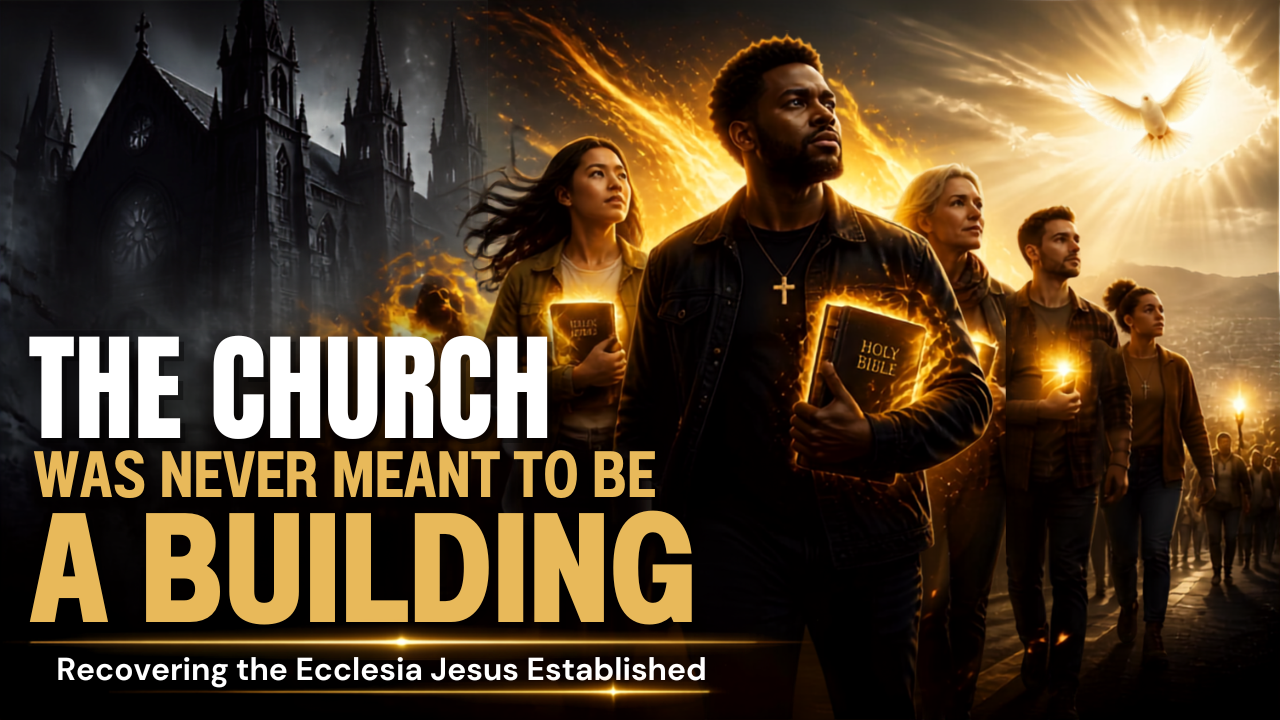
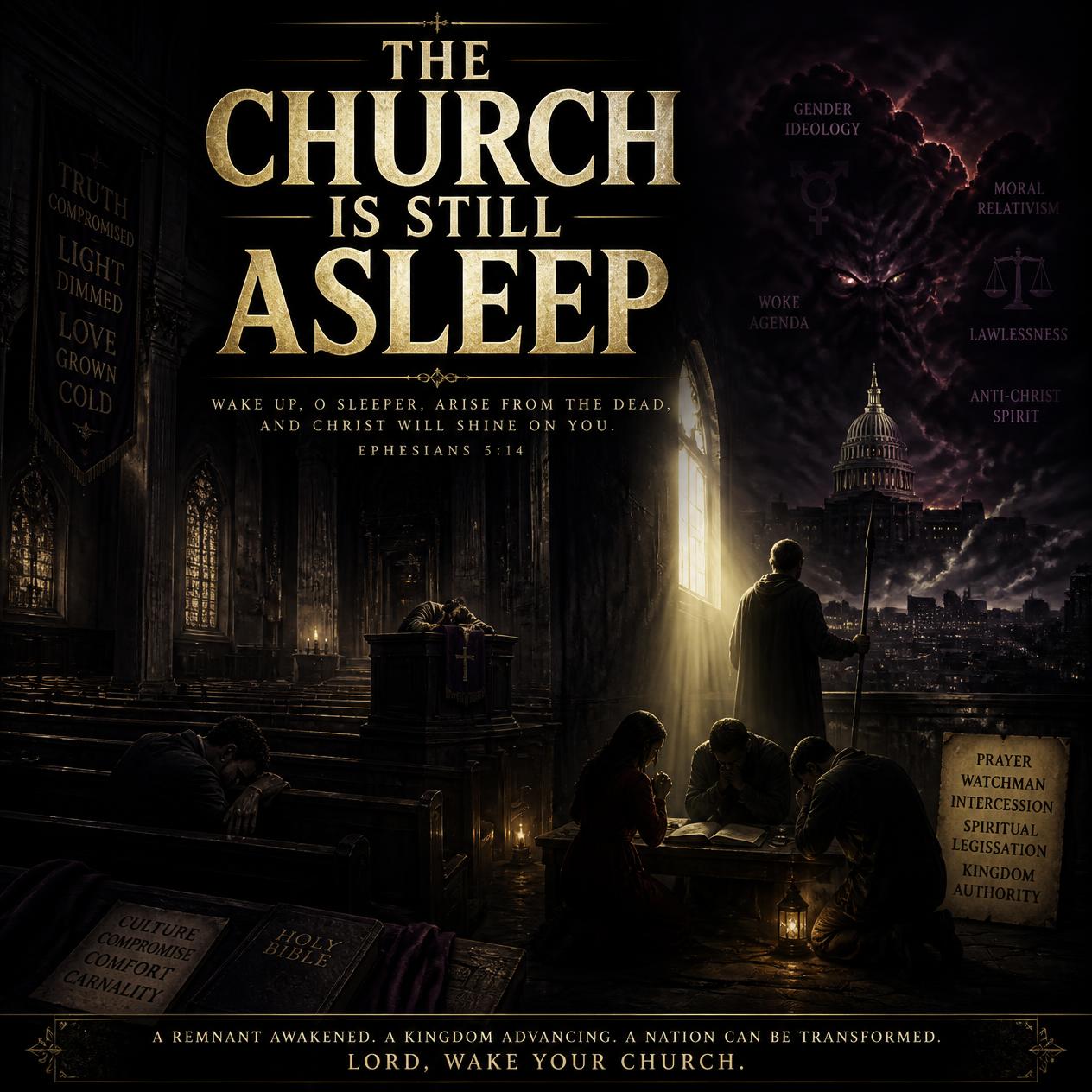
We are living in a day when much of the Church has grown silent on issues that openly oppose the Word of God. In large part, this silence has been fueled by the fear of man, the desire to be accepted by mainstream culture, and the pressure to appear tolerant in a generation that has redefined compassion apart from truth. Yet Scripture never calls the people of God to be cruel, hateful, or arrogant — but neither does it call us to be silent, cowardly, or compromised.

Paul warned the Church, “Do not be conformed to this world, but be transformed by the renewing of your mind” (Romans 12:2). That word is not a suggestion for private spirituality only; it is a command to the Ecclesia not to take on the mold, values, language, approval systems, and moral confusion of the age. When the Church begins to measure truth by what culture permits, applauds, or celebrates, culture has become her master.

Because of this silence, many pulpits have unintentionally given permission to lifestyles, ideologies, and spiritual compromises that Scripture clearly confronts. What previous generations would have discerned as rebellion against God is now often celebrated under the banner of love, inclusion, and cultural progress. But biblical love does not rejoice in iniquity; it rejoices in the truth (1 Corinthians 13:6). Love without truth becomes sentiment. Truth without love becomes harshness. But the Kingdom carries both — mercy that reaches and holiness that transforms.

Jesus never taught His Church to seek acceptance from the world. He said, “If the world hates you, know that it has hated Me before it hated you” (John 15:18). He also warned, “Woe to you, when all people speak well of you, for so their fathers did to the false prophets” (Luke 6:26). The approval of culture has never been the evidence of faithfulness. Often, it is the first warning sign that the Church has softened the message until offense has been removed from the cross.

This is why the letters to the seven churches in Revelation are so urgent for our hour. Jesus did not only rebuke the lost world; He rebuked His own churches when they drifted from faithfulness. To Ephesus, He said they had abandoned their first love, even though they still had works, labor, and doctrine (Revelation 2:2–5). That means a church can be busy, active, structured, and even doctrinally aware, yet still lose the burning love that keeps obedience alive.

To Pergamum, the Lord rebuked the toleration of corrupt teaching and mixture, saying there were those among them who held to the teaching of Balaam, leading God’s people into compromise (Revelation 2:14–16). Pergamum reveals a terrifying truth: a church can dwell in a hostile culture and still survive persecution, yet begin tolerating mixture from within. External pressure is dangerous, but internal compromise is often deadlier.

To Thyatira, Jesus confronted the toleration of Jezebel, a spirit of seduction, false prophecy, and moral compromise that led His servants into defilement (Revelation 2:20–23). The issue was not merely that wickedness existed in the culture around them. The issue was that the church tolerated what the Lord commanded them to confront. Tolerance becomes treason when it protects what Jesus died to deliver people from.

To Sardis, the Lord said, “You have the reputation of being alive, but you are dead” (Revelation 3:1). That word should shake the modern Church. Reputation is not resurrection. Crowds are not necessarily life. Platforms are not necessarily presence. A church can have activity, branding, influence, buildings, music, and motion, yet be spiritually dead because it has lost the voice, fire, holiness, and government of Holy Spirit.

To Laodicea, Jesus rebuked lukewarmness, self-sufficiency, and spiritual blindness. They said, “I am rich, I have prospered, and I need nothing,” but the Lord said they were “wretched, pitiable, poor, blind, and naked” (Revelation 3:17). This is the danger of a Church that has become comfortable with cultural success. It can mistake wealth for favor, influence for authority, and self-confidence for spiritual maturity.

Yet the mercy of Jesus is seen in the fact that He rebukes because He loves. He said, “Those whom I love, I reprove and discipline, so be zealous and repent” (Revelation 3:19). The rebuke of the Lord is not the rejection of the Church; it is His call to awaken her before judgment hardens what mercy was sent to correct. The Lord does not expose compromise to destroy His people, but to purify them.

The tragedy of our hour is that while many in the Church are shaking hands with the very systems that oppose the Lord’s authority, the doors of persecution continue to open against those who still refuse to bow. The same culture that demands the Church’s silence will not be satisfied until the Church also gives its agreement. First it asks for tolerance. Then it demands celebration. Then it punishes refusal.

But the apostles already told us this day would come. Paul wrote that in the last days people would be “lovers of self, lovers of money, proud, arrogant,” and “lovers of pleasure rather than lovers of God,” while still having “the appearance of godliness” but denying its power (2 Timothy 3:1–5). That is not merely a description of the world; it is a warning about religious forms that remain visible after holiness has departed.

The Church must recover the courage to say what God has said. Not with hatred. Not with cruelty. Not with religious arrogance. But with tears, conviction, authority, and holy fear. “We must obey God rather than men” (Acts 5:29). When the fear of man governs the pulpit, the fear of the Lord departs from the house.

The Remnant must understand this clearly: silence in the face of deception is not wisdom. Compromise in the name of acceptance is not love. Agreement with culture at the expense of obedience to Christ is not ministry — it is surrender. The Church was never called to be mastered by Babylon, trained by Jezebel, celebrated by Rome, or shaped by the spirit of the age. She was called to be the Bride of Christ, washed by the Word, clothed in righteousness, and governed by Holy Spirit.

Now is the time for the Ecclesia to recover her voice, cleanse her garments, and stand once again as a witness to the truth, the holiness, and the government of the Kingdom of God. The Lord is still saying, “He who has an ear, let him hear what the Spirit says to the churches” (Revelation 2:7).

The question before us is not whether culture will approve of the Church. The question is whether Jesus will.

Stay tuned, the journey continues…..

— Dr. Russell Welch

Dr. Russell Welch is a published author, prophetic teacher, apostolic builder, author, and founder of faith-driven publishing and media initiatives. He is known for crafting bold, Kingdom-centered messages that call the Ecclesia into maturity, doctrinal clarity, and governmental authority. With a passion for equipping the Remnant and honoring generational legacy, Dr. Welch writes and teaches at the intersection of Scripture, history, and spiritual governance, challenging believers to live as sons and daughters who legislate Heaven on earth through truth, holiness, and unwavering fidelity to Christ.

Be sure to check out his book: Restoring God’s Watchmen: Modern-day Jeremiah’s walking in the authority & power of His Glory, available exclusively on Amazon … here

Amazon Author Page


When Heaven’s fire enters the room, every false system loses its authority

How many of you have ever felt like a religious disrupter — not because you were trying to be difficult, offensive, or disruptive, but because the Spirit of God in you refused to bow to the atmosphere in the room? You walk into certain meetings, and suddenly the religious spirit begins to make noise, create disturbance, stir suspicion, or even launch an outright attack against you. The fact is, it is seldom your fault; more often than not, you are not purposely causing a problem at all. Many times, what is really happening is that something holy in you has entered a room where something counterfeit has been comfortable for far too

Jesus said in John 15:18, “If the world hates you, you know that it hated Me before it hated you.” The same King who healed the sick, cast out devils, preached the Kingdom, and restored the broken was also hated by religious systems that loved order more than obedience. He did not disrupt Heaven; He disrupted religious control. He did not violate the Father’s heart; He exposed the hearts of men who had built systems without the Father.

We must understand this: sons and daughters who have surrendered all at the altar will carry a presence that unsettles anything not submitted to Christ. When a life comes under the government of Holy Spirit, it no longer carries the fragrance of religious performance. It carries the fire of consecration, the authority of truth, and the sound of another Kingdom. That kind of life does not blend easily into atmospheres built on compromise, control, fear, pride, or spiritual appearance.

The early believers understood this holy tension. The Epistle to Diognetus said Christians “dwell in their own countries, but simply as sojourners,” and that they live on earth while their citizenship is in Heaven. That is the strange glory of the true Ecclesia: present in the world, yet governed from another realm. We are not here to be strange for attention; we are here to be so surrendered that Heaven becomes visible through our obedience.

The religious spirit always gets loud when it can no longer control the room. It will accuse what it cannot discern, criticize what it cannot carry, and attack what it cannot govern. That same spirit called Jesus demonized, accused the apostles of rebellion, and resisted the move of God whenever the wineskin of Heaven threatened the comfort of man-made religion. But Acts 5:29 still thunders through the ages: “We ought to obey God rather than men.”

Beloved, we are anointed with the same Spirit that rested upon our King. Acts 10:38 says God anointed Jesus of Nazareth with Holy Spirit and power, and He went about doing good and healing all who were oppressed by the devil. That means the anointing does not merely make us emotional; it makes us dangerous to darkness. It makes us compassionate toward the broken, but confrontational toward bondage.

When you carry the anointing of Christ, you will not always be celebrated in religious rooms. Some will love the gift but reject the fire. Some will want the healing but resist the government. Some will enjoy the language of revival but hate the repentance that true revival demands.

Ignatius of Antioch is often remembered for the thought that Christianity shows its strength when it is hated by the world, and whether quoted in exact form or summarized through his martyr-witness, the meaning carries a sharp truth. The true faith has never needed cultural applause to prove its power. The blood of martyrs, the prayers of saints, the holiness of surrendered vessels, and the boldness of Spirit-filled witnesses have always shaken empires more than polished religious performance ever could.

Do not confuse rejection with failure. Jeremiah was rejected, yet he carried the burden of the Lord. John the Baptist was dismissed by the polished religious establishment, yet Jesus said there had not risen one greater among those born of women. Stephen was stoned, yet his face shone like an angel because Heaven was standing open over him.

Athanasius famously taught that Christ became what we are so that He might bring us into what He is, and while we never become God in essence, the point is powerful: redemption restores union, image, sonship, and holy participation in the life of Christ. We are not carrying a lesser religious brand; we are carrying the life of the risen Lord within us. The same Christ who overturned tables also washed feet. The same Christ who rebuked devils also wept over cities.

So when the religious spirit begins making noise around you, do not immediately shrink, apologize for the fire, or assume you missed God. Test your own heart, yes. Walk in humility, yes. But do not surrender your assignment just because the atmosphere became uncomfortable.

Romans 8:14 says, “For as many as are led by the Spirit of God, these are sons of God.” That means the sons and daughters of the Lord are not governed by applause, titles, committees, platforms, or religious intimidation. We are governed by Holy Spirit. When He leads, we follow; when He speaks, we obey; when He burns, we become the altar.

The Bride of Christ is not being prepared to entertain Babylon or appease religious systems. She is being washed with the water of the Word, clothed in righteousness, filled with oil, and made ready for the Bridegroom. Ephesians 5 tells us Christ is sanctifying His Bride, cleansing her, and presenting her glorious, without spot or wrinkle. That means the fire you carry is not rebellion; it may be the sound of consecration confronting mixture.

Remnant, do not be surprised when your surrender disrupts what others have normalized. Do not be shocked when your hunger exposes spiritual complacency. Do not be offended when your obedience makes comfortable religion uncomfortable. The sons and daughters who live under the government of Holy Spirit will always carry the fragrance of Christ, and to some it will smell like life, while to others it will expose death.

So stand in love, but stand. Walk in humility, but do not bow to control. Carry mercy, but do not compromise truth. The King has placed His Spirit within you, and when Holy Ghost fire burns in a surrendered vessel, religious systems may tremble, demons may cry out, and atmospheres may shift — but the Bride will be purified, the Kingdom will be preached, and Jesus Christ will be glorified.

Stay tuned, the journey continues…..

— Dr. Russell Welch

Dr. Russell Welch is a published author, prophetic teacher, apostolic builder, author, and founder of faith-driven publishing and media initiatives. He is known for crafting bold, Kingdom-centered messages that call the Ecclesia into maturity, doctrinal clarity, and governmental authority. With a passion for equipping the Remnant and honoring generational legacy, Dr. Welch writes and teaches at the intersection of Scripture, history, and spiritual governance, challenging believers to live as sons and daughters who legislate Heaven on earth through truth, holiness, and unwavering fidelity to Christ.

Be sure to check out his book: Restoring God’s Watchmen: Modern-day Jeremiah’s walking in the authority & power of His Glory, available exclusively on Amazon … here

Amazon Author Page


“When Heaven speaks, the watchman’s pen must not tremble, soften, or go silent”

The spiritual weight of the watchman has never been light, casual, or easily understood by those who have not been required by God to stand between Heaven’s burden and earth’s rebellion. In Scripture, the watchman was not merely an observer of events, but one stationed by divine appointment to see, hear, discern, warn, record, and proclaim what others either could not see or refused to acknowledge. Ezekiel was told, “Son of man, I have made you a watchman for the house of Israel,” and with that appointment came accountability not only for what he saw, but for whether he faithfully released the warning entrusted to him.

This is why the watchman’s mantle is often misunderstood even among the Remnant, because many recognize warfare, prayer, and prophetic utterance, but lack discernment concerning the governmental burden that rests upon those assigned to carry the Lord’s warning with accuracy. The watchman does not speak because he enjoys confrontation; he speaks because silence would make him unfaithful to the One who stationed him.

The religious institutional system has always despised the true watchman because the watchman exposes what polished religion works so hard to conceal. Jeremiah did not become hated because he lacked love; he became hated because his love was governed by obedience to God rather than loyalty to the comfort of the religious establishment. The same spirit that resisted Jeremiah still operates within much of the Americanized Church, where image is often protected more fiercely than truth, platforms are guarded more carefully than altars, and institutional preservation is treated as though it were Kingdom faithfulness.

Yet Heaven does not measure faithfulness by popularity, applause, or denominational acceptance, but by obedience to the voice of the Lord. The true watchman is dangerous to religious systems because he does not take dictation from committees, cultural trends, or institutional fear. Jeremiah 1:5 reveals the depth of this calling when the Lord declared, “Before I formed you in the womb I knew you; before you were born I sanctified you; I ordained you a prophet to the nations.” This was not poetic encouragement; it was divine jurisdiction. Jeremiah’s authority did not begin with public recognition, religious ordination, or institutional approval, but with the eternal counsel of God before he ever breathed air in the earth.

This is the same prophetic current carried by modern-day watchmen who are not trying to become voices, but who have been marked by God to speak what Heaven has authorized. Such watchmen walk under an anointing that cannot be manufactured, borrowed, branded, or controlled by religious machinery.

The weight of the watchman’s pen is one of the most misunderstood dimensions of the calling. The pen of the watchman is not merely literary, devotional, or inspirational; it is governmental, judicial, and prophetic. Like a court reporter or stenographer, the watchman must not alter the testimony, soften the record, decorate the burden, or manipulate the message to make it more acceptable to the audience. He must write what Holy Spirit is saying, not what flesh desires to hear. This is why the watchman’s pen often carries tears, trembling, warfare, isolation, and deep inward accountability before God.

The early Church understood that truth could not be separated from holy witness. Ignatius of Antioch urged believers to remain steadfast in Christ and not be seduced by false doctrine, knowing that mixture was not harmless but destructive to the life of the Church. Irenaeus contended earnestly against deception because he understood that false teaching does not merely confuse minds; it corrupts the apostolic witness entrusted to the Ecclesia. Tertullian warned with forceful clarity that truth does not need permission from error in order to stand. These early witnesses remind us that the watchman’s burden is not a modern invention, but a continuation of Heaven’s insistence that His people be guarded from deception, compromise, and spiritual seduction.

The cost of the watchman’s anointing is heavy because the watchman must remain true while being misunderstood, resisted, criticized, and at times rejected by the very people he is called to warn. Jeremiah wept over the people who despised his message, interceded for those who resisted him, and still could not betray the word burning in his bones. He said, “His word was in my heart like a burning fire shut up in my bones,” and he became weary of holding it back. That is the cry of every true watchman who has tried to remain silent, tried to avoid conflict, tried to soften the burden, and yet found the fire of God stronger than the fear of man. The watchman does not carry a message; the message carries him.

This is why discernment is essential within the Remnant. Not every loud voice is a watchman, and not every confrontational voice is carrying the burden of the Lord. Some speak from offense, bitterness, ambition, rejection, or religious pride, but the true watchman speaks from surrender, consecration, fear of the Lord, and union with Holy Spirit. The watchman’s authority is not proven by volume, anger, or controversy, but by alignment with Scripture, purity of motive, spiritual accuracy, and the fruit of holy obedience. A true watchman may sound severe, but severity under Holy Spirit is never cruelty; it is mercy arriving before judgment.

The Americanized Church often struggles with the watchman because the watchman interrupts the machinery of comfort-driven Christianity. A system built on entertainment, marketing, personality, and institutional survival will usually call discernment divisive and warning unloving. Yet Scripture never presents warning as hatred; it presents warning as covenant mercy. Paul told Timothy to “preach the word,” to be ready in season and out of season, and to reprove, rebuke, and exhort with all longsuffering and doctrine. The watchman stands in that same apostolic stream, refusing to let the people of God be lulled to sleep by a gospel stripped of holiness, authority, repentance, and Kingdom government.

“A word of warning to the Old Wine skins, those who are from the old school thinking of the Church Age”

To those anchored in the old wineskins of religious tradition, take heed that you do not speak against, condemn, or attempt to silence the watchmen the Lord is raising in this hour. What functioned in the Church Age under institutional control, denominational preservation, and religious machinery will not carry the weight of the Kingdom Age now breaking forth in the earth.

Do not mistake the flow of Heaven’s grace for rebellion simply because it refuses to bow to systems Holy Spirit is no longer breathing upon, for grace is not lawlessness, pride, or disorder; Grace Himself has been revealed in Christ, “the Word became flesh and dwelt among us,” and His glory was seen as “the only Son from the Father, full of grace and truth,” while John bore witness that the One coming after him ranked before him because He was before him (John 1:14-15, ESV)

In this hour, the watchmen are not rising to tear down what God built, but to expose what man preserved after the glory departed. So let the fear of the Lord return before you put your mouth on those whom Heaven has stationed at the gates, and allow Holy Spirit to strip you of those old wineskins so you may step into the new wineskins of the Kingdom Age.

The watchman’s pen must remain clean because the message is too sacred to be polluted by flesh. When Holy Spirit entrusts a burden to a writer, teacher, prophet, or intercessor, that burden must not be edited by insecurity, ambition, fear, or the desire to be celebrated. The watchman must live close enough to the altar that the fire purifies the vessel before the word ever reaches the page. This is where the cost becomes deeply personal, because the one who writes must first be written upon by God. The pen becomes weighty because the man carrying it has been pressed, broken, refined, and disciplined by the very word he releases.

Listen Closely, Kingdom Watchmen

To today’s Kingdom watchmen, do not allow the old wine schools of religious control to lock you beneath the weighted chains of man-made submission to their authority. Like Jeremiah, you have been marked, called, and commissioned by God, not to become rebellious, lawless, or unteachable, but to answer first and foremost to the King Himself. Your assignment is not governed by institutional permission, denominational fear, or the approval of those still trying to preserve systems Holy Spirit has already moved beyond. You are called to live under the yoke of Holy Spirit’s governmental authority in and over this generation’s Ecclesia, just as He has governed the people of God since the day of Pentecost. So stand clean, write faithfully, speak accurately, walk humbly, and never allow the chains of religious intimidation to silence what Heaven has commanded you to release.

That is the spiritual heart behind my book, Restoring God’s Watchmen: Modern-day Jeremiah’s Walking in the Authority & Power of His Glory. This book was written for those who know they have been marked by God to see, discern, warn, intercede, write, speak, and stand in an hour of great deception and great awakening. It is not a casual teaching for religious spectators, but a call to those who feel the fire of Jeremiah in their bones and the burden of Ezekiel upon their shoulders.

The Lord is restoring His watchmen because the Ecclesia cannot afford blind leadership, silent prophets, sleeping intercessors, or compromised voices in the gate. In this hour, Heaven is raising modern-day Jeremiahs who will not bow to the Americanized Church system, will not flatter rebellion, will not sell the burden, and will not surrender the pen.

The watchman’s life is costly, but it is holy. The watchman’s pen is heavy, but it is entrusted. The watchman’s voice may be resisted, but when it is governed by Holy Spirit, it carries the authority of Heaven into places where religion has tried to silence truth. The Remnant must learn to discern these voices, pray for them, honor the weight they carry, and test their words by Scripture rather than dismissing them because they disturb comfort. For when God restores His watchmen, He is not merely raising writers, prophets, intercessors, or preachers; He is restoring sentinels at the gates of a generation.

Stay tuned, the journey continues…..

— Dr. Russell Welch

Dr. Russell Welch is a published author, prophetic teacher, apostolic builder, author, and founder of faith-driven publishing and media initiatives. He is known for crafting bold, Kingdom-centered messages that call the Ecclesia into maturity, doctrinal clarity, and governmental authority. With a passion for equipping the Remnant and honoring generational legacy, Dr. Welch writes and teaches at the intersection of Scripture, history, and spiritual governance, challenging believers to live as sons and daughters who legislate Heaven on earth through truth, holiness, and unwavering fidelity to Christ.

Be sure to check out his book: Restoring God’s Watchmen: Modern-day Jeremiah’s walking in the authority & power of His Glory, available exclusively on Amazon … here

Amazon Author Page


“Advancing in holy fire, the Remnant carries the Light of Truth until every gate of darkness buckles before the Kingdom of Christ”

As Heaven continues to raise up a Remnant who will not bow to the golden calves of religious performance, the spirit of religion will rise up with a polished voice and a counterfeit compassion. It will sound tender while tightening chains, speak of unity while protecting mixture, and accuse the Watchmen of the Lord of carrying a critical spirit. Yet Jesus never called blindness love, and He never called compromise mercy. He said, “You shall know the truth, and the truth shall make you free” (John 8:32). Truth does not come to decorate bondage; truth comes to break it.

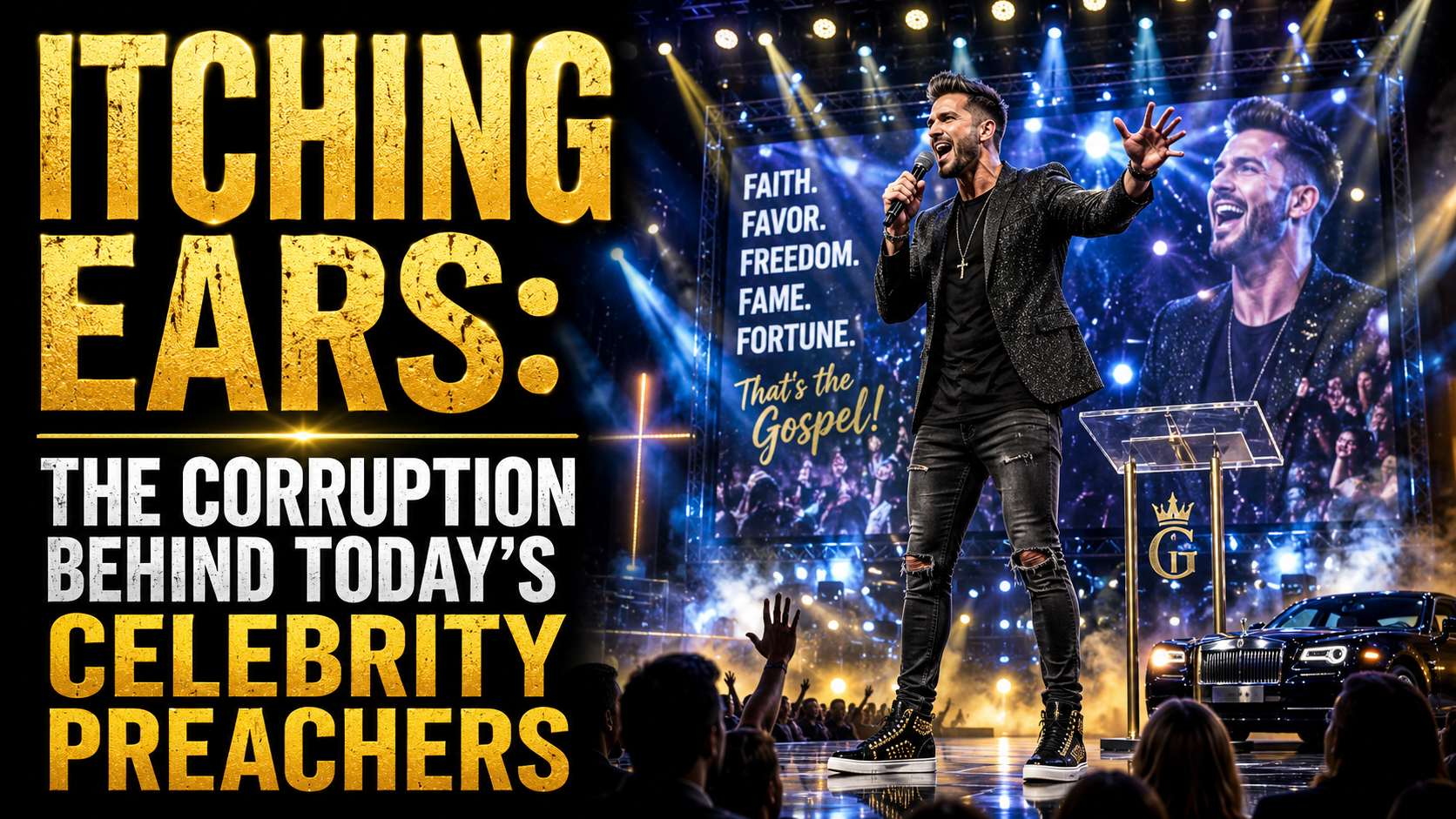
There is a generation being awakened by Holy Spirit who can no longer sit quietly under the spell of entertainment while the foundations of the Ecclesia are being traded for applause. Paul warned that “the time will come when they will not endure sound doctrine,” but would gather teachers who satisfy itching ears (2 Timothy 4:3). That hour is no longer approaching; that hour is here. The stage has replaced the altar in many places, and charisma has been mistaken for consecration. But Heaven is answering with a Remnant who would rather carry fire than manage a crowd.

The religious system always knows how to sound wounded when it is being exposed. It will say, “You are too harsh,” while Jesus called certain leaders “blind guides,” “hypocrites,” and “whitewashed tombs” (Matthew 23:24–27). It will accuse the prophetic voice of lacking love, while Paul said, “Have I therefore become your enemy because I tell you the truth?” (Galatians 4:16). The issue is not whether truth sounds pleasant to the flesh. The issue is whether truth agrees with the King.

Jesus did not come to preserve a religious machine; He came to reveal the Father and establish the Kingdom. When He entered the temple and overturned the tables, He was not having an emotional outburst; He was demonstrating holy judgment against a system that had turned His Father’s house into a marketplace (Matthew 21:12–13). The modern spirit of religion still does the same thing, selling platforms, personalities, and performances while calling it ministry. But the Lord is still jealous for His house. He will not share His Bride with Babylon.

The enemy has always twisted Scripture to protect deception, and he has been doing so since the garden. He came to Jesus in the wilderness quoting Scripture, yet Jesus answered him with the rightly divided Word of God (Matthew 4:1–11). That same serpent still whispers through religious voices, using partial truths to defend full rebellion. But those anchored in the Word and led by Holy Spirit will discern the difference between the voice of the Shepherd and the hiss of the deceiver. Jesus said, “My sheep hear My voice, and I know them, and they follow Me” (John 10:27).

The gospel of entertainment has no Kingdom foundation beneath it. It may have lights, crowds, branding, applause, and emotional moments, but if it does not produce repentance, holiness, obedience, deliverance, and transformation, it is not the Gospel Jesus preached. Paul said the Kingdom of God is “not in word, but in power” (1 Corinthians 4:20). He also declared that he did not come with persuasive words of human wisdom, but in demonstration of the Spirit and power (1 Corinthians 2:4). Heaven is not impressed by what attracts the flesh if it does not conform souls to Christ.

The Watchmen of the Lord are not called to flatter the city while the walls are burning. Ezekiel was told that if the watchman sees the sword coming and does not blow the trumpet, the blood will be required at his hand (Ezekiel 33:6). This is why true prophetic voices cannot remain silent when deception dresses itself in ministry garments. Love does not whisper while wolves feed on sheep. Love cries aloud because the Bride belongs to Christ.

Even in my own life, I have witnessed the pull of systems that looked spiritual but were fueled by the methods of the world. Holy Spirit had to call me out, separate me, cleanse my vision, and teach me to love the Church without bowing to the counterfeit. Separation is not hatred when it is obedience to God. Paul said, “Come out from among them and be separate, says the Lord” (2 Corinthians 6:17). Yet even as we separate from mixture, we still pray with tears that the scales would fall from blinded eyes.

This is not the hour for timid Christianity, polished compromise, or passive agreement with religious deception. This is the hour to stand, speak, discern, and burn with holy jealousy for the purity of the Bride. Jesus is not returning for a theater audience; He is returning for a holy people, washed, prepared, and loyal to the Lamb. Paul said Christ gave Himself for the Church “that He might sanctify and cleanse her” and present her to Himself glorious, without spot or wrinkle (Ephesians 5:25–27). Therefore, let the Remnant rise with fire in their bones, truth in their mouth, mercy in their heart, and no agreement with the systems that have tried to crown themselves where only Jesus belongs.

This is why the Remnant of the Lord must not settle for merely standing their ground. We were not commissioned to survive in a corner while darkness boasts at the gates; we were filled with the Spirit of the Living God to advance the government of Christ into every territory the enemy has illegally occupied. Jesus said, “I will build My Ecclesia, and the gates of hell shall not prevail against it” (Matthew 16:18), which means the gates of hell are not advancing against a retreating Church, but buckling under the pressure of an advancing Kingdom people.

The Bride belongs to the Lamb, and the zeal of the Lord still burns for her purity, her freedom, and her full inheritance. Therefore, let the Remnant rise with holy fire, move forward with apostolic authority, extend the influence of the Kingdom, and watch the darkness tremble as the Light of Truth exposes, confronts, and overthrows every counterfeit standing in the way of Christ’s glory.

Stay tuned, the journey continues…..

— Dr. Russell Welch

Dr. Russell Welch is a published author, prophetic teacher, apostolic builder, author, and founder of faith-driven publishing and media initiatives. He is known for crafting bold, Kingdom-centered messages that call the Ecclesia into maturity, doctrinal clarity, and governmental authority. With a passion for equipping the Remnant and honoring generational legacy, Dr. Welch writes and teaches at the intersection of Scripture, history, and spiritual governance, challenging believers to live as sons and daughters who legislate Heaven on earth through truth, holiness, and unwavering fidelity to Christ.

Be sure to check out his book: The Consecrated Firebrand: A Warrior’s Guide to Holy Living, available exclusively on Amazon … here

Amazon Author Page

Rate this:


How spiritual decline, powerful preaching, and deep conviction prepared the ground for one of the greatest revivals in American history

Long before America became a republic, the colonies were already experiencing the kind of spiritual shaking that only Heaven can produce. In the early eighteenth century, much of colonial religious life had grown formal, predictable, and spiritually cold. Church attendance may have remained outwardly respectable in many places, but inward fire was often fading. Into that environment, God began to breathe again. What history now calls the First Great Awakening unfolded primarily in the 1730s and 1740s across the American colonies, and it became one of the earliest and most significant revival movements in American history.

A Climate of Spiritual Formality and Moral Drift

The First Great Awakening did not erupt because the colonies were spiritually healthy. It came because many communities had settled into religious routine without the power of living faith. Historians commonly describe the period as one marked by concerns over declining piety, increasing worldliness, and a religion that for many had become more formal than transformational. The outward structures of church life remained, but deep conviction, heartfelt repentance, and spiritual vitality were often lacking. That pattern should sound familiar to any generation that knows how easily religious form can remain while spiritual fire fades.

This is one of the enduring lessons of revival history: God often moves most powerfully where complacency has settled in. When truth becomes familiar but no longer burns, when worship becomes routine but no longer trembles with awe, and when people know religious language without living under the weight of divine reality, the stage is often being set for awakening. The colonies did not simply need better organization or more polished sermons. They needed visitation. They needed the Spirit of God to arrest hearts, confront sin, and awaken spiritual hunger once again.

Jonathan Edwards and the Awakening of Deep Conviction

One of the earliest and most influential figures in this awakening was Jonathan Edwards, the pastor-theologian from Northampton, Massachusetts. Edwards witnessed seasons of unusual spiritual response in his congregation and became one of the clearest interpreters of what was taking place. He emphasized the necessity of genuine conversion, the reality of sin, the beauty of Christ, and the transforming work of God in the soul. His preaching and writing helped frame revival not as emotional excitement for its own sake, but as a profound work of grace that brought people into deep conviction and living faith.

Edwards understood something the modern Church must recover: revival is not measured first by crowds, noise, or outward movement, but by whether hearts are truly being brought under the weight of God’s presence. Conviction is not the enemy of awakening. It is often one of its first signs. When Holy Spirit begins to move, He does not flatter the flesh. He confronts it. He brings men and women face to face with eternity, with their need for mercy, and with the majesty of Christ. That is what began happening in the colonies as revival fires spread.

George Whitefield and the Voice That Stirred the Colonies

If Edwards helped interpret the awakening, George Whitefield helped ignite it across the land. Whitefield, the powerful itinerant preacher from England, traveled widely through the American colonies in the late 1730s and 1740s, preaching to enormous crowds in cities, towns, and open fields. His preaching drew thousands, crossing colonial boundaries and stirring widespread response. Historians often point to Whitefield’s tours as a major catalyst in spreading revival consciousness throughout the colonies.

Whitefield’s ministry carried urgency, directness, and deep appeal to the new birth. He was not content to leave people resting in religious identity while lacking spiritual life. He pressed the necessity of regeneration, calling hearers to real conversion and living faith in Christ. Under such preaching, many were deeply moved, and communities across the colonies began experiencing unusual spiritual concern. The awakening spread not merely because Whitefield was gifted, but because Heaven had set its breath upon the land.

The Marks of the First Great Awakening

The First Great Awakening was not without controversy, but its central marks were unmistakable. There was renewed emphasis on the new birth, intensified preaching on sin and salvation, deep emotional and spiritual response among hearers, and a growing sense that religion must be heartfelt and personal rather than merely inherited or formal. It also helped break down some old denominational and regional barriers, creating a wider sense of shared spiritual experience across the colonies.

That is one of the striking things about real awakening: it reminds people that God is not confined to routine, tradition, or the comfortable structures men build around Him. When Holy Spirit begins to move, He disturbs the settled places. He awakens hunger where there was apathy. He brings tears where there had been indifference. He creates spiritual urgency where there had been delay. Revival reintroduces a people to the living reality of God.

Why the First Great Awakening Still Matters

The First Great Awakening matters because it established a pattern that would echo through American history. It showed that spiritual decline does not have to have the final word. It proved that when a people become cold, compromised, or complacent, God is still able to breathe upon dry ground and bring life where form alone had remained. It demonstrated that powerful preaching, deep conviction, repentance, and hunger for God can alter the course of communities and even shape the spiritual culture of a nation.

It also reminds us that revival is not born in comfort. It is born where the people of God become dissatisfied with dead form and begin to cry out for living fire. The same God who visited the colonies in the eighteenth century has not changed. The same Holy Spirit who confronted cold religion, awakened hearts, and brought men and women under the weight of eternity is still able to do so again. History is not merely something to admire. It is something to learn from. The fires of past awakening should not become museum pieces. They should become reminders that God still moves in desperate times through yielded people.

A Word for the Remnant Today

The lesson for the Remnant Ecclesia is clear. If the First Great Awakening teaches us anything, it is that spiritual decline is not the end of the story when God’s people begin to hunger again. The answer to cold religion is not better branding. It is burning altars. The answer to moral drift is not more polished performance. It is true repentance and renewed visitation. The answer to a sleeping church is not activity without presence, but the restoring breath of Holy Spirit moving again upon hearts, homes, and congregations.

So let this history do more than inform us. Let it search us. Let it ask whether we, too, have become too familiar with religious form while lacking spiritual fire. Let it awaken in us a fresh cry for real conversion, deep repentance, and holy visitation. The God who shook the colonies is still able to shake the land again.

Stay Tuned: Revival on the Frontier

In the next article, we will move forward into The Second Great Awakening: Revival Fires Across a Young Nation, where we will see how Holy Spirit moved again through camp meetings, frontier preaching, and widespread spiritual awakening in a growing America. If the First Great Awakening shook the colonies, the Second Great Awakening helped set the young nation ablaze. Stay tuned.

Stay tuned……

— Dr. Russell Welch

Dr. Russell Welch is a published author, prophetic teacher, apostolic builder, author, and founder of faith-driven publishing and media initiatives. He is known for crafting bold, Kingdom-centered messages that call the Ecclesia into maturity, doctrinal clarity, and governmental authority. With a passion for equipping the Remnant and honoring generational legacy, Dr. Welch writes and teaches at the intersection of Scripture, history, and spiritual governance, challenging believers to live as sons and daughters who legislate Heaven on earth through truth, holiness, and unwavering fidelity to Christ.

Be sure to check out his book: The Consecrated Firebrand: A Warrior’s Guide to Holy Living, available exclusively on Amazon … here

Amazon Author Page


Examining the moral conditions that preceded past awakenings and the urgent call for the Remnant Ecclesia to rise again

America is not unfamiliar with seasons of divine visitation. Our history bears witness to repeated moments when Holy Spirit stepped into a nation groaning under spiritual decline, moral confusion, and social upheaval. From the First Great Awakening in the colonial era, to the Second Great Awakening on the expanding frontier, to the Prayer Revival of 1857–1858, revival during the Civil War, the Jesus Movement, and the more recent Asbury Outpouring of 2023, this nation has known what it is to be interrupted by Heaven. These movements did not emerge because the culture was healthy, the Church was strong, or society was morally stable. They broke forth in moments of need, fracture, and desperation.

Revival Often Comes When a Nation Is in Trouble

One of the great lessons of history is that revival rarely comes at the height of moral strength. More often, it comes when the land is troubled, when truth is dimmed, and when the people of God begin to feel the weight of what has been lost. The First Great Awakening rose in a time of spiritual coldness and formal religion in the colonies. The Second Great Awakening emerged during the turbulence of frontier expansion and widespread concern over moral decay in the young republic. The 1857 Prayer Revival broke out in a season marked by financial panic and growing national instability, and the Civil War revivals unfolded while America was being torn apart by bloodshed and grief. Revival came not because the nation was righteous, but because the nation was desperate.

The Moral Conditions That Often Precede a Move of God

When we look back across American history, a pattern begins to appear. Before many of these awakenings, there was spiritual complacency, moral confusion, public unrest, and a growing inability of the culture to heal itself. The Jesus Movement took shape amid the upheaval of the late 1960s and early 1970s, when a restless generation was searching for meaning beyond drugs, rebellion, and broken systems. The Asbury Outpouring of 2023 likewise came in an age marked by anxiety, polarization, confusion, and deep spiritual hunger among many young people. Again and again, the backdrop to awakening has often been a society straining under the weight of its own darkness.

Why This Matters for America Right Now

That is why the present condition of America should not only alarm us. It should also awaken us. We are watching moral boundaries collapse in real time. Confusion is celebrated, corruption is normalized, compromise is excused, and truth is increasingly treated as something negotiable. Much of the visible church is distracted, performance-driven, politically entangled, or spiritually asleep. Yet history reminds us that such conditions do not mean revival is impossible. In many cases, they become the very setting in which Holy Spirit chooses to move with extraordinary power.

The real question is not whether America is in trouble. That much is evident. The deeper question is whether the Remnant Ecclesia discerns the hour. Can we see that in the midst of shaking, Holy Spirit may once again be preparing to breathe upon this nation? Can we recognize that spiritual desperation has often preceded divine visitation? Can we believe that the darkness of this hour may yet become the backdrop for another Heaven-birthed awakening?

The Remnant Ecclesia Must Rise

If America is on the verge of another Holy Spirit-birthed revival, then this is not the hour for passivity. This is not the hour for the Church to sit back and merely comment on culture, critique darkness, or lament the decline of the nation. This is the hour for the Remnant Ecclesia to rise.

The intercessors must rise again. The seers must take their place once more. The watchmen must return to the walls and begin sounding the alarm with clarity, authority, and tears. This is not the hour for a sleepy church, a distracted bride, or a compromised pulpit. It is the hour for those who can discern the times, hear what Holy Spirit is saying, and begin blowing upon the flames of awakening until the winds of Heaven stir this nation once again.

Every true revival has carried a hidden history before it became a public event. There were always men and women in the secret place before there were crowds in the sanctuary. There were always tears before there was triumph. There were always altars before there was awakening. Before the fire spread publicly, someone was already crying out privately. Before reformation touched communities, consecration had already touched hearts.

America Needs More Than Inspiration

America does not merely need another emotional moment. America needs a power-filled, revolutionary, reformational revival. We need more than religious activity. We need more than inspirational language. We need more than conference excitement and shallow momentum. We need a move of God that convicts sin, restores holiness, awakens the Church, confronts darkness, breaks spiritual bondage, and reforms lives, families, communities, and institutions.

We need revival that does not stop at tears in the altar, but continues into transformation in the home, purity in the pulpit, boldness in the public square, and righteousness in the land. We need the kind of awakening that does not merely stir emotion, but reorders lives under the government of God. America is in desperate need of a Holy Spirit-birthed move that is not only powerful, but reformational.

A Final Call to the Watchmen

So let the Remnant hear the call. Let intercessors arise in the midnight hour. Let seers lift up their eyes and declare what they discern on the horizon. Let watchmen stand at the gates and refuse to be silenced by fear, intimidation, or fatigue. Let pastors, prophets, and praying saints begin to fan the embers. Let consecration return. Let repentance deepen. Let altars be rebuilt. Let the cry rise again from churches, campuses, homes, hidden prayer rooms, and small gatherings of hungry believers: “Lord, do it again.”

If history teaches us anything, it is this: when a nation drifts deep into moral confusion, and when the people of God humble themselves and cry out, Holy Spirit has a way of stepping into history with extraordinary power. America may indeed be on the verge of another Holy Spirit-birthed revival. But if it comes, it will not be because the times were easy. It will be because the hour was desperate, and because a praying Remnant refused to let the flames die.

Stay Tuned: Where Revival in America Began…….

In the next article, we will begin looking more closely at the great historical moves of God that have shaped this nation, starting with The First Great Awakening: When God Shook the American Colonies. Before America was a republic, Holy Spirit was already stirring the land, confronting spiritual deadness, and awakening hearts through powerful preaching, deep conviction, and widespread hunger for God. That first great move of revival set a pattern that would echo through generations. Stay tuned as we begin tracing the holy fires that have visited this nation before—and may yet do so again.

— Dr. Russell Welch

Dr. Russell Welch is a published author, prophetic teacher, apostolic builder, author, and founder of faith-driven publishing and media initiatives. He is known for crafting bold, Kingdom-centered messages that call the Ecclesia into maturity, doctrinal clarity, and governmental authority. With a passion for equipping the Remnant and honoring generational legacy, Dr. Welch writes and teaches at the intersection of Scripture, history, and spiritual governance, challenging believers to live as sons and daughters who legislate Heaven on earth through truth, holiness, and unwavering fidelity to Christ.

Be sure to check out his book: The Consecrated Firebrand: A Warrior’s Guide to Holy Living, available exclusively on Amazon … here

Amazon Author Page


Remnant Warrior Ministries stands as the spiritual covering and apostolic headquarters of a global movement birthed by the Spirit of God. It is not merely an organization—it is a mantle, a governing house, and a clarion call to the Remnant across the nations. From this apostolic center flows every ministry expression entrusted to our care: Highway to Heaven Church, Kingdom War College, Remnant Warrior India, and Remnant Warrior Philippines—each one carrying the same DNA, the same fire, and the same mandate to awaken, equip, and send forth Kingdom warriors into every sphere of influence.

This is the heartbeat of our assignment: to raise sons and daughters who know their identity, walk in authority, and advance the Kingdom with purity and power. We are not building programs; we are building people. We are not chasing platforms; we are establishing altars. Every sermon, every training, every outreach is a weapon of transformation forged in the presence of God.

WindWalker Enterprise LLC — The Kingdom Business Arm

Out of this spiritual foundation, the Holy Spirit birthed WindWalker Enterprise LLC—a Kingdom-based business designed to steward resources, creativity, and influence with integrity and excellence. It is the business framework that carries the prophetic vision into the marketplace, ensuring that every endeavor remains aligned with Heaven’s order.

Under WindWalker Enterprise resides Remnant Warrior Publishing, the prophetic voice in print, and WindWalker Book Writing Consultation, the equipping arm for authors and messengers called to release truth into the earth. These are not commercial ventures—they are Kingdom assignments. Every book, every consultation, every creative project is a seed of revelation planted to awaken hearts and restore identity.

WindWalker Enterprise is where business becomes ministry, and ministry becomes movement. It is the bridge between revelation and execution—the place where Kingdom vision becomes Kingdom impact.

Our Unified Mandate

Together, these expressions form one living organism—a unified Kingdom ecosystem advancing under a single banner:

Publishing Truth. Training Warriors. Advancing the Kingdom.

We exist to awaken the Remnant, equip the called, disciple nations, and establish Kingdom government in every sphere. We publish truth to confront deception. We train warriors to stand in authority. We advance the Kingdom to fulfill Heaven’s agenda on earth.

This is not a brand—it is a covenant. This is not a business—it is obedience. This is not a ministry—it is a movement.

The Declaration

Remnant Warrior Ministries — the covering, the mantle, the movement. Highway to Heaven Church — the altar. Kingdom War College — the training ground. Remnant Warrior India & Philippines — the global outposts. WindWalker Enterprise LLC — the Kingdom business foundation. Remnant Warrior Publishing — the prophetic voice in print. WindWalker Consultation — the equipping of future authors and messengers.

Together, we march under one banner, one mandate, one Spirit. We are the Remnant. We are the builders. We are the warriors. We are the ones advancing the Kingdom.

— Dr. Russell Welch

Dr. Russell Welch is a published author, prophetic teacher, apostolic builder, author, and founder of faith-driven publishing and media initiatives. He is known for crafting bold, Kingdom-centered messages that call the Ecclesia into maturity, doctrinal clarity, and governmental authority. With a passion for equipping the Remnant and honoring generational legacy, Dr. Welch writes and teaches at the intersection of Scripture, history, and spiritual governance, challenging believers to live as sons and daughters who legislate Heaven on earth through truth, holiness, and unwavering fidelity to Christ.

Be sure to check out his book: The Consecrated Firebrand: A Warrior’s Guide to Holy Living, available exclusively on Amazon … here

Amazon Author Page


The Christ many forgot is not weak, passive, or shaped by culture—He is the risen Lord of glory, clothed in fire, crowned in authority, and returning to awaken a Remnant who will walk in truth, power, and holy boldness.

Recently, I have been studying the life of Elijah, and one truth continues to rise to the surface—his life, in many ways, foreshadows the coming of Christ. Elijah was not shaped by the approval of men, but by obedience to the voice of the Father, standing firm even when misunderstood, rejected, or opposed. His life confronts our modern preferences, because he walked in a raw, unfiltered authority that refused to bow to culture. In the same way, Christ did not come to fit into human expectations, but to fulfill the will of the Father in power and truth. Yet much of what is presented today as Jesus bears little resemblance to the One revealed in Scripture. There is a growing need to rediscover the true nature of Christ as He is, not as He has been reimagined.

In much of the modern Church, there exists a softened and diluted image of Jesus that aligns more with cultural comfort than biblical revelation. Many have embraced a version of Christ that is passive, non-confrontational, and agreeable to every perspective. But this is not the Christ who overturned tables, rebuked hypocrisy, and spoke with divine authority. Nor is it the Christ revealed in glory after the resurrection. The Church must come to terms with the reality that Jesus is both the Lamb and the Lion, both compassionate and consuming. When we reduce Him to one dimension, we distort the fullness of His nature. And when the image of Christ is distorted, the identity and authority of His people are diminished.

If Elijah were to walk into many churches today, he would likely not be welcomed, because he does not conform to the mold that Western Christianity has created. He was not polished, predictable, or controlled by institutional expectations. He carried fire, confrontation, and uncompromising obedience. In the same way, the true expression of Christ often disrupts systems that prioritize comfort over transformation. Many leaders today measure effectiveness by acceptance rather than obedience, but Elijah’s life exposes that standard as false. The Kingdom has never advanced through conformity, but through consecration. And those who carry the spirit of Elijah will always challenge the status quo.

There is a caution that must be sounded in this hour, because the image of Christ embraced by many is not the resurrected Christ revealed in Scripture. When John the Apostle encountered Jesus on the island of Patmos, it was not a gentle, cultural image that he saw. It was the glorified Christ, whose eyes were like flames of fire and whose voice carried the sound of many waters, as written in Book of Revelation 1:12–16. This was the Lord of glory, the One who holds authority over every realm, visible and invisible. This revelation did not comfort John—it overwhelmed him. It brought him to a place of awe, reverence, and surrender. This is the Christ the early Church knew, feared, and followed.

History reveals that over time, this image of Christ was gradually softened and reshaped, particularly following the Council of Laodicea, where certain expressions of truth were diminished or removed from teaching. While this may surprise some, it aligns with the warning given to the Church in Book of Revelation 3:14–21, where the Spirit confronts lukewarmness and calls for repentance. The Church was never meant to operate in a diluted state, but in the fullness of truth and fire. Yet today, many systems continue to uphold a version of faith that resists the refining presence of God. This has created environments where control replaces freedom, and structure suppresses the movement of the Spirit. And in the midst of it, the enemy finds room to operate.

What we are witnessing in many places is a form of leadership that competes for recognition rather than contends for truth. There is a striving among voices, each seeking validation, while the deeper work of the Spirit is often neglected. It resembles a performance rather than a surrender, and it produces exhaustion rather than transformation. Meanwhile, the adversary continues to exploit religious systems that lack true authority. When the Church operates without the fire of God, it becomes vulnerable to deception and stagnation. But the answer is not to abandon the Church—it is to return to the authentic Christ and the power of His Spirit.

Yet there is good news for those who have felt the stirring within—the Remnant is rising. God is not finished, and He is not limited by the structures of men. There is a fresh movement of the Spirit being released upon those who are willing to walk in obedience, regardless of cost. Just as Elijah carried the anointing of heaven, there are those now who will walk in a double portion, as Elisha did. This is not about platform or position, but about presence and power. The same authority that flows from the risen Christ is being entrusted to those who will carry His heart and His fire.

The Christ who is seated at the right hand of the Father is not distant—He is active, ruling over all spiritual realms with unmatched authority. The fire that John witnessed is still burning, and it is being released to purify, awaken, and restore. Every lie, every deception, and every chain that has held the Bride captive is being confronted by His truth. This is a season of unveiling, where false images are falling and the true Christ is being revealed again. It is not a time for passive belief, but for awakened identity. The Spirit is calling the Church out of limitation and into dominion.

We are entering a season that carries the weight of Jubilee—not as a concept, but as a reality. Prison doors are not just opening; they are being torn from their hinges. Sons and daughters of Yahweh are being set free from religious confinement and restored to their rightful place. This is a moment of divine reversal, where what has been bound is loosed, and what has been silenced begins to speak again. The fire of God is not coming to destroy His people, but to refine and empower them. Those who respond will walk in a level of freedom and authority that cannot be contained.

The call now is simple, but it is not easy—return to the true Christ. Not the version shaped by culture, but the One revealed in Scripture, full of glory, fire, and authority. Let His voice redefine your understanding, and let His presence reshape your life. The days of passive Christianity are coming to an end, and a remnant is being prepared to walk in truth and power. This is not a moment to observe—it is a moment to respond. The fire is here, and it is calling you deeper.

Stay tuned……

— Dr. Russell Welch

Dr. Russell Welch is a published author, prophetic teacher, apostolic builder, author, and founder of faith-driven publishing and media initiatives. He is known for crafting bold, Kingdom-centered messages that call the Ecclesia into maturity, doctrinal clarity, and governmental authority. With a passion for equipping the Remnant and honoring generational legacy, Dr. Welch writes and teaches at the intersection of Scripture, history, and spiritual governance, challenging believers to live as sons and daughters who legislate Heaven on earth through truth, holiness, and unwavering fidelity to Christ.

Be sure to check out his book: The Consecrated Firebrand: A Warrior’s Guide to Holy Living, available exclusively on Amazon … here

Amazon Author Page


Holy Spirit is Reclaiming the Church – With Fire”

The early Celtic believers, especially in Ireland and later in Scotland, carried a revelation of the Holy Spirit that burned far beyond the boundaries of institutional religion. They refused to reduce Him to a doctrine, a ritual, or a polite dove perched quietly on the shoulder of the Church. To them, He was the Wild Goose—untamable, unpredictable, fiercely free, and impossible to domesticate. This imagery was not born from superstition but from deep encounters with the God who moves “wherever He wills,” just as Jesus told Nicodemus in John 3:8. The Celts understood that the Spirit of God is not confined to human order but breaks into human history with holy disruption.

These Celtic followers of Christ lived in a rugged land where the wind could shift without warning, and they saw in that wildness a picture of the Spirit’s leading. They believed that following God meant embracing risk, pilgrimage, and obedience without a map. Their missionaries would literally set sail in small coracles without oars, trusting the Spirit to carry them to the place of their assignment. This embodied the truth of Acts 1:8, where Jesus promised power to be His witnesses “to the ends of the earth,” even when those ends were unknown. Their faith was not built on comfort but on the conviction that the Spirit leads boldly, not safely.

The Wild Goose became a symbol of a faith that refused to be tamed by religious systems. A goose is loud, bold, and impossible to ignore—much like the Spirit who descended in Acts 2 with the sound “of a rushing mighty wind.” The Celts saw this as a divine affirmation that the Spirit does not come quietly into human structures but arrives with force, fire, and holy interruption. They believed that when the Spirit moves, He overturns the tables of tradition and awakens the slumbering hearts of God’s people. Their spirituality was marked by a fierce expectation that God would break in suddenly.

This stands in stark contrast to the later religious systems that sought to confine the Spirit to ceremony and liturgy. The Celts read the Scriptures and saw a God who led Abraham into the unknown, who called Moses through a burning bush, and who empowered David with supernatural courage. They saw a pattern of divine unpredictability that aligned perfectly with their Wild Goose imagery. They believed that the Spirit’s leading was not meant to be controlled but embraced with reverent fear and joyful surrender. Their writings reflect a deep awareness that God’s presence disrupts before it transforms.

The Celtic believers also understood that the Spirit’s fire was not optional but essential for victorious Christian living. They pointed to John the Baptist’s declaration in Matthew 3:11 that Jesus would baptize His people “with the Holy Spirit and with fire.” This fire was not symbolic but experiential, igniting courage, purity, and supernatural power in the hearts of believers. They believed that without this baptism of fire, the Church would drift into cold religion and powerless ritual. Their communities were marked by signs, wonders, and a deep sense of God’s nearness.

Historically, the Celtic Church operated outside the influence of Rome for centuries, which allowed them to cultivate a raw, Spirit‑led Christianity. Their monasteries were not centers of academic detachment but hubs of prayer, mission, and supernatural encounter. They trained believers to listen for the voice of the Spirit in the wind, the waves, and the quiet places of solitude. Their leaders, like St. Columba and St. Brigid, were known for prophetic insight, healing, and bold evangelism. They lived out the reality of Galatians 5:25—“If we live by the Spirit, let us also walk by the Spirit.”

This Wild Goose revelation also shaped their understanding of spiritual warfare. They believed the Spirit led them into dark places not to survive but to conquer. Their missionaries confronted pagan strongholds, demonic oppression, and cultural darkness with fearless authority. They saw the Spirit as the One who empowers believers to tear down strongholds, echoing Paul’s words in 2 Corinthians 10:4. Their victories were not won through strategy alone but through surrender to the unpredictable leading of the Spirit.

Today, this ancient Celtic revelation speaks prophetically to a modern Church that often prefers order over obedience and structure over surrender. The Wild Goose reminds us that the Holy Spirit is not a tame dove but the fierce, holy presence of God who leads us into the unknown with fire in His wings. He is calling this generation back to a faith that is alive, risky, Spirit‑driven, and uncontainable. He is awakening the Remnant to the baptism of fire that Jesus promised and the early Church experienced. And He is inviting us to follow Him—not with fear, but with the boldness of those who know the wind of Heaven is at their back.

— Dr. Russell Welch

Dr. Russell Welch is a published author, prophetic teacher, apostolic builder, author, and founder of faith-driven publishing and media initiatives. He is known for crafting bold, Kingdom-centered messages that call the Ecclesia into maturity, doctrinal clarity, and governmental authority. With a passion for equipping the Remnant and honoring generational legacy, Dr. Welch writes and teaches at the intersection of Scripture, history, and spiritual governance, challenging believers to live as sons and daughters who legislate Heaven on earth through truth, holiness, and unwavering fidelity to Christ.

Be sure to check out his book: The Consecrated Firebrand: A Warrior’s Guide to Holy Living, available exclusively on Amazon … here

Amazon Author Page


“A Scriptural and Constitutional Defense of National Sovereignty.”

In every generation, nations face the question of identity and responsibility: what does it mean to protect the people within our borders while remaining compassionate to those who seek refuge beyond them? The debate over immigration and border enforcement is not merely political; it is deeply moral and spiritual. Scripture and the Constitution of the United States point toward the same conclusion — that order, law, and justice are essential expressions of love, not contradictions of it.

1. God and the Principle of Boundaries

From Genesis forward, boundaries are part of creation’s design. Genesis 1 portrays God separating light from darkness, land from sea — establishing distinction for the sake of life and harmony. Later, in Acts 17:26, Paul declares that God “determined the times before appointed, and the bounds of their habitation.” The existence of nations with borders is not an accident of history but a reflection of divine order.

Biblical Israel understood this clearly. The borders of the promised land were set and guarded (Numbers 34), and foreigners who entered were welcomed under defined laws (Leviticus 19:33–34). The obligation to protect and regulate entry did not oppose compassion; rather, it ensured that justice to the “stranger” could function within a stable framework. Without boundaries, mercy itself becomes impossible to administer.

2. The Constitutional Mandate for Rule of Law

America’s founders, long students of Scripture, built the same concept of ordered liberty into the Constitution. Article I, Section 8 assigns Congress the authority to “establish a uniform rule of naturalization,” making immigration a national responsibility rather than a state or private one. The executive branch, under Article II, is charged to enforce these laws faithfully.

This framework mirrors biblical stewardship: authority delegated by God requires both compassion and accountability. When government neglects enforcement or abandons clear processes, two injustices occur. First, the lawful immigrant who follows the rules sees those efforts devalued. Second, the citizen — whose security and resources the state must guard — bears the weight of disorder.

3. Law Enforcement as a Ministry of Order

Romans 13 calls civil government “the minister of God … for good,” assigned to restrain evil and promote peace. A coherent immigration‑enforcement agency fulfills that role by preserving dignity for both citizens and newcomers. The goal is not hostility toward the foreigner but stewardship of national trust — a structured process that allows mercy to flow without chaos.

Scripture never confuses compassion with abdication. Nehemiah rebuilt Jerusalem’s walls not to keep people out forever, but to create safe space for worship, commerce, and community to flourish. Likewise, modern nations must maintain secure, lawful entry points so generosity can function wisely.

4. Justice and Mercy in Partnership

The prophets consistently tied mercy to justice. Isaiah 1:17 commands, “Seek justice, relieve the oppressed, judge the fatherless, plead for the widow.” Justice requires systems — laws applied consistently by accountable people. When enforcement dissolves, exploitation increases: smugglers profit, migrants suffer, citizens fear. A nation that values human life cannot outsource border policy to chaos.

A biblically informed policy therefore calls for:

  • Clear laws and consistent enforcement.
  • Compassionate pathways for legitimate asylum and citizenship.
  • Accountability for governmental agencies tasked with stewardship of resources and security.

These principles serve both Scripture and Constitution, two documents that presume moral order over anarchy.

5. The Moral Center of Sovereignty

Sovereignty is not supremacy. It is responsibility — the duty of leaders to care for those within their charge. Jesus rebuked shepherds who scatter the flock (Ezekiel 34 echoed the same reprimand). Open borders without order produce suffering that masquerades as kindness. Secure borders administered with truth and justice safeguard those inside and dignify those who enter lawfully.

The heart of the matter is stewardship: how do we manage what God has entrusted to us? Just as families steward their homes, nations steward their land and laws. To fail in that calling is to neglect biblical responsibility and constitutional oath alike.

A Nation’s Defense: The Biblical and Constitutional Mandate for a Military

Scripture affirms that peace is best preserved when righteousness is protected by strength. From Israel’s earliest history, the defense of a people was not left to chance or sentiment but organized under divine direction. In Numbers 1, Moses was commanded to “take a census of all the congregation … every male by their divisions, all who are able to go out to war.” Defense was one of the nation’s sacred responsibilities, established by God’s instruction, not human ambition.

In the Old Testament, Israel’s armies were never portrayed as instruments of aggression but as ministries of protection—guarding covenant land, families, and worship from those who sought to destroy them. Deuteronomy 20 outlines moral rules of engagement, proving that God values justice even in warfare. The soldiers were consecrated, not celebrated for violence but commissioned to preserve peace through obedience and courage.

In the New Testament, the pattern of legitimate force continues. Romans 13 describes the governing authority as “the servant of God, an avenger who carries out God’s wrath on the wrongdoer.” This grants civil government the right—and duty—to restrain evil, protect citizens, and preserve order. The Apostle John did not condemn soldiers for bearing arms; instead, he instructed them to act with integrity (Luke 3:14). A properly disciplined and moral military is therefore a biblical extension of leadership under divine accountability.

In American constitutional design, that same principle is embedded with remarkable clarity. Article I, Section 8 assigns Congress the power “to raise and support Armies” and “to provide and maintain a Navy,” ensuring that national defense is governed by elected representatives—not kings or generals. The Constitution’s checks and balances were created precisely so that necessary force would never become abusive force. Defense, in the American framework, is stewardship of life and liberty.

To neglect defense is to misunderstand peace. Psalm 144 opens with David’s prayer: “Blessed be the Lord my rock, who trains my hands for war, and my fingers for battle.” This is not the cry of a warmonger but of a shepherd‑king acknowledging that freedom without vigilance is naïve. Peace requires preparation; safety demands structure.

A biblical view of military power therefore holds three truths in tension:

1. War is never the goal; peace is the mandate. (Romans 12:18)
2. Strength is a trust from God, not a tool for pride. (Deuteronomy 8:17 – 18)
3. Defense of the innocent is a moral obligation. (Psalm 82:4 – “Rescue the weak and the needy; deliver them from the hand of the wicked.”)

When a nation uses its armed forces to deter aggression, protect borders, and defend allies against tyranny, it is living out a timeless theological truth: righteous power in right hands serves the cause of peace. Our military, governed by the Constitution and guided by moral restraint, stands not as a symbol of domination but as an instrument of justice—a hedge around freedom so that faith, family, and conscience may flourish within its safety.

Conclusion

A stable nation rests on three pillars of stewardship: secure borders, just law enforcement, and a disciplined military. Each reflects divine and constitutional order working in harmony. Boundaries protect identity; laws preserve justice; strength defends peace.

Scripture teaches that God Himself “set the boundaries of nations” (Acts 17:26) and commanded leaders to govern fairly within them. To protect those boundaries through lawful processes is an act of obedience, not fear. When civil authority enforces immigration statutes with truth and equity, it honors both the foreigner seeking refuge and the citizen whose safety must be ensured. Compassion without order descends into chaos; order without compassion becomes tyranny. The biblical balance is law tempered by mercy and mercy protected by law.

In the same way, a nation’s military exists by design, not accident. Romans 13 recognizes rulers as “servants of God” commissioned to restrain evil. The Constitution echoes this charge, empowering Congress to raise and support armies—not for conquest, but to guarantee liberty for future generations. A moral people defend their freedom precisely so that virtue and hospitality can survive within it.

Together, these institutions—law‑enforcement at the gates and a just military at the borders—form the hedge of peace around the Republic. They translate timeless biblical wisdom into practical governance: men and women under authority, protecting a people under God. Secure borders affirm sovereignty; righteous enforcement upholds justice; and an honorable military ensures that the peace we enjoy remains defended. To preserve these duties faithfully is to honor both the Word of God and the Constitution of the United States—the two covenants that call us to steward what has been entrusted to our hands.

America’s immigration debate must recover its spiritual compass. Secure borders and lawful enforcement are not acts of fear but of faith — faith that justice and mercy can co‑exist, that discipline is a form of love, and that a nation governed by law honors God more than one governed by emotion.

In a time of confusion, the ancient wisdom still applies: build the wall, open the gate, and judge rightly at the gate. Boundaries make compassion possible; law turns kindness into policy; and together they reflect both the Word of God and the Constitution of this Republic.

— Dr. Russell Welch

Dr. Russell Welch is a published author, prophetic teacher, apostolic builder, author, and founder of faith-driven publishing and media initiatives. He is known for crafting bold, Kingdom-centered messages that call the Ecclesia into maturity, doctrinal clarity, and governmental authority. With a passion for equipping the Remnant and honoring generational legacy, Dr. Welch writes and teaches at the intersection of Scripture, history, and spiritual governance, challenging believers to live as sons and daughters who legislate Heaven on earth through truth, holiness, and unwavering fidelity to Christ.

Be sure to check out his book: America at War: The Spiritual Battle for a Nation’s Soul , available exclusively on Amazon … here

Amazon Author Page