Archive for the ‘teaching’ Category


For generations, religious institutions built by man have stood as towering structures—grand in appearance, massive in influence, and seemingly unshakable. Yet beneath the surface, many of these institutions have traded holiness for human strategies, exchanged divine encounters for market-driven growth, and embraced cultural relevance at the cost of biblical truth. But God’s answer has never been found in religious empires. His answer is found in His Holy Remnant.

The Religious Institution: Form Without Power

Religious institutions often function as well-oiled machines, designed to captivate the masses with polished sermons, well-organized programs, and marketing strategies that mirror the corporate world. The focus is often placed on numbers—church attendance, social influence, financial expansion—measuring success by worldly standards rather than spiritual depth.

Many of these institutions, though outwardly thriving, are inwardly compromised. They cling to seeker-sensitive models that dilute the truth of the gospel to make it more palatable to the modern culture. Messages become motivational rather than transformational, appealing rather than convicting. The presence of God, once sought in desperation, is now scheduled into services with precision, yet rarely truly encountered.

In the name of relevance, many have abandoned reverence. Truth is softened, repentance is overlooked, and holiness is dismissed as outdated. They operate on strategy instead of Spirit, elevating human wisdom over divine guidance. Growth is pursued not through revival, but through consultants and business models. And while these institutions expand in influence, they lack the power that was evident in the early Church—the kind of power that shakes foundations, heals the sick, and overturns the works of the enemy.

The Holy Remnant: Marked by God’s Presence

In stark contrast, the Holy Remnant is not defined by numbers, grandeur, or influence. They are hidden, set apart, refined by fire, and consumed by an unshakable devotion to Christ. They are not concerned with appearance but with presence—the presence of God that cannot be fabricated or manipulated but must be earnestly pursued.

Unlike the institution built by man, the remnant does not bow to cultural trends. They refuse to compromise truth for popularity, choosing instead to stand firm even when the world rejects them. They are governed by the Holy Spirit, not church boards or leadership strategies. Their gatherings are not orchestrated performances but sacred assemblies where the power of God moves freely.

The Holy Remnant understands the urgency of the hour. They are aware of the deception infiltrating the Church and the spiritual battle raging over nations. While many within institutionalized Christianity are distracted by programs and social status, the remnant is interceding, discerning, and advancing the Kingdom in ways unseen by the masses.

They carry the fire of revival—a fire that cannot be extinguished by opposition, persecution, or rejection. Like the early Church, they gather in small groups, in secret places, wherever the Spirit leads. They may not have the platforms of religious leaders, but they have the favor of God. And it is through them that true transformation is coming.

God’s Answer Is Found in His Remnant

At this critical hour, God is not looking for institutions; He is looking for surrendered hearts. The answer to the crisis facing the Church and the world is not found in larger congregations or refined religious systems—it is found in the humble, devoted, Spirit-led believers who carry the mantle of the remnant.

God has always used a remnant to shift history. When Israel turned away from Him, He preserved a remnant. When wickedness ruled, He raised up prophets. When the religious leaders rejected Christ, He birthed the early Church through a small group of radical followers. And today, in the shadows of religious empires, He is once again raising up His remnant.

The remnant is His answer. They walk in kingdom authority, speak with prophetic clarity, and live in unwavering faith. They are not concerned with trends or titles but with the advancement of God’s will on the earth. Where religion has failed, the remnant will prevail. Where institutions have compromised, the remnant will stand. And through them, revival will come.

The Call to the Remnant

Are you among them? Will you choose to be set apart rather than blend in? Will you stand in truth, walk in holiness, and seek His presence above all else?

Now is the time. The remnant is rising. Will you answer the call?

~Dr. Russell Welch

Elder/ Apostolic Teacher: Highway to Heaven Church and Founder and Shepherd of Remnant Warrior Ministries / Remnant Warrior School of Spiritual Warfare.


The Church is engaged in a war—not a battle of flesh and blood, but a spiritual war against unseen forces. This war is not fought with earthly weapons, nor is it waged in fear or uncertainty. It is a war from victory, not for victory, because the triumph has already been won by our Lord Jesus Christ on the cross.

Through His death and resurrection, Jesus disarmed the powers of darkness, making a public spectacle of them and securing eternal victory for His people. We do not fight to gain ground—we fight to enforce the victory that has already been established. The enemy seeks to deceive, distract, and discourage, but we stand firm, clothed in the armor of God, wielding the sword of the Spirit, and advancing in the authority of Christ.

Our battle is not against people, governments, or institutions. It is against spiritual beings without bodies—principalities, powers, rulers of darkness, and forces of evil in the heavenly realms. But we do not war alone. The Spirit of God empowers us, the Word of God guides us, and the victory of Christ assures us that the enemy has already been defeated.

So, Church, rise up! Stand firm in the truth. Pray with boldness. Declare the victory of Jesus. Walk in the authority given to you by the King of Kings. The war is real, but the outcome is certain—Christ has won, and we enforce His triumph!

Enforcing Christ’s victory in our daily lives means living in the authority He has given us and standing firm against spiritual opposition. Here are some practical ways to do that:

  • Walk in Faith, Not Fear – Trust in the finished work of Christ and refuse to be intimidated by the enemy’s schemes.
  • Declare God’s Word – Speak and pray Scripture over your life, your family, and your circumstances. The Word of God is a powerful weapon.
  • Live in Holiness – Sin gives the enemy a foothold. Pursue righteousness and obedience to God’s commands.
  • Pray with Authority – Engage in spiritual warfare through prayer, interceding for yourself, others, and the world.
  • Put on the Armor of God – Daily equip yourself with truth, righteousness, faith, salvation, the Word, and prayer (Ephesians 6:10-18).
  • Resist the Enemy – When temptation or spiritual attacks come, stand firm and rebuke them in Jesus’ name.
  • Advance the Kingdom – Share the Gospel, love others, and serve in ways that bring light into darkness.

These steps help us live from the victory Christ has already won, ensuring that His triumph is enforced in our lives and the world around us. Our Identity in these Promises Keep Us pressing forward—With Holy Spirit’s whispers of Victory is yours!

Time tested real life experiences testify that applying these steps in your daily routine requires intentionality and consistency. Here’s how you can integrate them into your everyday life:

  • Start Your Day with Prayer – Before anything else, dedicate time to seek God’s presence, express gratitude, and ask for His guidance.
  • Read and Meditate on Scripture – Set aside time to study the Bible, whether through a reading plan, devotionals, or memorizing key verses.
  • Speak Life and Truth – Declare God’s promises over your life, your family, and your circumstances throughout the day.
  • Stay Spiritually Alert – Be mindful of spiritual battles and resist temptation by standing firm in faith.
  • Engage in Worship – Listen to worship music, sing praises, or simply express gratitude to God in your daily activities.
  • Serve Others – Look for opportunities to show Christ’s love through acts of kindness, encouragement, and generosity.
  • End Your Day in Reflection – Take time to review your day, repent if needed, and thank God for His faithfulness.

By making these practices a habit, you actively enforce Christ’s victory in your life and walk in His authority daily. Keep pressing forward—God is with you!

Applying these steps daily can transform your life in powerful ways. Here are some benefits you can expect:

  • Spiritual Strength – You’ll grow in faith and resilience, standing firm against challenges.
  • Peace and Confidence – Knowing Christ’s victory is already won brings deep peace and assurance.
  • Greater Discernment – You’ll recognize spiritual attacks and respond with wisdom.
  • Closer Relationship with God – Spending time in prayer and Scripture strengthens your connection with Him.
  • Victory Over Temptation – Living in holiness and resisting the enemy helps you overcome struggles.
  • Impact on Others – Your faith and obedience will inspire and encourage those around you.

These benefits help you walk in Christ’s victory daily, ensuring that His triumph is reflected in your life and the world around you. Keep pressing forward—Christ Jesus is Always with and in you!

~Dr. Russell Welch
Elder / Apostolic Teacher: Highway to Heaven Church and Founder and Shepherd of Remnant Warrior Ministries / Remnant Warrior School of Spiritual Warfare.

For more info on Spiritual Warfare check out my book “Warrior’s Arsenal: Equiping Prayer Warriors with the Armor of God”


Apostolic Authority
Apostolic Authority differs fundamentally from hierarchical or positional power structures. In the New Testament, apostolic leaders functioned primarily as spiritual parents who earned influence through relationship, demonstrated character, and proven ministry effectiveness.

They led through service rather than control, modeling Christ’s approach to leadership as exemplified in washing His disciples’ feet.

This servant-leadership paradigm contrasts sharply with ecclesiastical systems that confer authority through formal titles or institutional positions.

The essence of apostolic authority lies in its Holy Ghost inspired influence rather than its control. Apostolic leaders in the early church extended their ministry through relationship networks rather than organizational structures.

Their authority was recognized by Holy Ghost, and voluntarily by those who benefited from their ministry rather than imposed through ecclesiastical sanctions or denominational mandates.

This relational foundation creates a more organic, resilient connection than institutional affiliations that may dissolve when organizational politics or priorities shift.

Apostolic authority manifests primarily through equipping and releasing others rather than consolidating power. Paul’s ministry exemplifies this approach—he established communities, developed local leadership, and then moved on to new territories.

His ongoing relationship with these churches focused on encouraging their growth toward maturity rather than maintaining dependent connections. This pattern stands in marked contrast to modern systems that often foster dependency on professional ministers.

Participatory Community
Participatory Community reflects the New Testament vision of church as an active body rather than a passive audience. The biblical metaphor of the church as a body presupposes that every member has a vital function to perform.

This understanding transforms gatherings from spectator events into collaborative expressions where diverse gifts operate for mutual edification. Such participation extends beyond token involvement to meaningful contribution in worship, ministry, and decision-making processes.

The experience of community in apostolic churches transcends casual social connection to covenant relationship. Members understand themselves as spiritually joined to one another, sharing a common identity and purpose that shapes their priorities and commitments.

This covenant relationship creates the necessary foundation for genuine accountability, conflict resolution, and shared life that extends beyond weekly services into daily interaction and practical support.

Community engagement in the apostolic model extends beyond internal fellowship to active engagement with the surrounding society. Rather than creating Christian subcultures isolated from their neighbors, early believers remained embedded in their communities as salt and light.

They demonstrated Kingdom values through practical service, ethical business practices, and compassionate response to societal needs. This engagement provided both credibility for their message and opportunities for witness that institutional isolation cannot produce.

Practical Spirituality
Practical Spirituality characterizes the apostolic approach to faith, emphasizing tangible expression of spiritual realities in everyday life. Unlike religious systems that separate sacred from secular domains, apostolic Christianity integrates faith into all aspects of human experience.

Believers are equipped to exercise their spiritual authority in family relationships, workplace environments, and community involvement rather than compartmentalizing spirituality to religious activities.

The supernatural dimension remains central to apostolic spirituality. The New Testament presents a faith characterized by divine healing, prophetic guidance, angelic assistance, and spiritual warfare as normal aspects of Christian experience rather than exceptional phenomena.

This practical supernatural ministry emerged from intimate relationship with God rather than formulaic techniques or specialized gifting limited to professional ministers.

All believers were expected to manifest spiritual gifts as the Spirit directed.

Holistic development marks apostolic approaches to discipleship. Rather than focusing exclusively on intellectual knowledge or emotional experiences, apostolic ministry addresses the whole person—spirit, soul, and body.

Character formation receives as much attention as gifting development. Financial stewardship and vocational excellence are considered spiritual matters alongside prayer and Bible study. This comprehensive approach produces believers equipped to represent Christ effectively in every dimension of life.

Leadership Multiplication
Leadership Multiplication distinguishes apostolic movements from institutional maintenance. Paul instructed Timothy to entrust what he had learned to faithful individuals who would teach others also, creating a four-generation multiplication process (2 Timothy 2:2).

This intentional reproduction stands in stark contrast to centralized systems that channel potential leaders through institutional bottlenecks like seminary training or denominational ordination processes that often restrict rather than accelerate leadership development.

Mentoring relationships provide the primary context for leadership development in apostolic systems. Emerging leaders learn through life-on-life impartation rather than merely academic instruction, absorbing values, developing character, and acquiring practical ministry skills through observation and guided experience.

This relational approach transmits both formal teaching and tacit knowledge—the unspoken wisdom that comes only through proximity to experienced practitioners demonstrating ministry in real-life contexts.

Apostolic leadership development emphasizes character formation alongside skill acquisition. While contemporary systems often credential individuals based primarily on academic achievement or speaking ability, apostolic communities recognize that lasting leadership influence flows from integrity, humility, and proven faithfulness.

The qualifications for elders outlined in 1 Timothy 3 and Titus 1 focus overwhelmingly on character qualities rather than professional competencies, establishing a pattern that apostolic reformation seeks to restore.

Evangelical Mission

Evangelical Mission drives apostolic movements, maintaining the outward focus that prevents communities from becoming self-absorbed and maintenance-oriented. The Great Commission remains central rather than peripheral, shaping priorities, resource allocation, and ministry structures. This mission orientation ensures that churches exist primarily for those not yet part of them rather than primarily serving the preferences of existing members.

Kingdom advancement rather than institutional growth distinguishes truly apostolic mission. While many modern churches measure success by attendance, buildings, and budgets, apostolic leaders evaluate effectiveness by transformed lives, disciples made, and new communities established. This kingdom perspective enables cooperation across organizational boundaries, as leaders recognize fellow workers contributing to the same divine purpose rather than competing for market share in the religious economy.

Contextual adaptation characterizes apostolic mission strategy. Paul became “all things to all people” to effectively reach diverse cultural groups. This principled flexibility stands in contrast to standardized approaches that export cultural forms alongside the gospel message. Apostolic movements distinguish between unchanging biblical principles and adaptable methodologies, allowing indigenous expressions of Christianity to develop in each cultural context rather than importing foreign practices that create unnecessary barriers to reception of the gospel.

The modern church faces a pivotal choice: continue maintaining inherited traditions and structures that increasingly fail to engage contemporary culture, or embrace the challenging but revitalizing path of apostolic reformation that returns to foundational principles while contextualizing their expression for today’s world. Recognizing these deviations represents the first step toward restoration, requiring both honest assessment of current practices and courageous commitment to biblical patterns regardless of institutional resistance.

Reclaiming the Essence

The Apostolic Reformation ultimately represents a recalibration—aligning modern church expressions with timeless biblical principles. This movement challenges believers to distinguish between cultural accommodations that have accumulated over centuries and the essential, unchanging foundations of authentic Christianity. Such discernment requires both historical awareness and scriptural literacy, understanding how and why the church evolved away from its original pattern while maintaining clear vision of the apostolic blueprint.

Throughout church history, reformation movements have consistently emerged when dedicated believers recognized the gap between contemporary practices and biblical patterns. From the Waldensians to the Protestant Reformers to the Methodist revival, these movements sought to recover lost aspects of New Testament Christianity. The current Apostolic Reformation stands in this historic tradition, addressing areas where even previous reformations left work unfinished. Like those earlier movements, it faces institutional resistance while offering renewed vitality and relevance to a changing world.

The restoration of apostolic Christianity does not imply simplistic attempts to recreate first-century cultural forms or practices. Rather, it involves discerning the underlying principles and values that animated the early church and applying them within contemporary contexts. Just as the apostolic communities contextualized the gospel message for diverse cultural settings in their day, modern apostolic reformation seeks relevant expressions for today’s world while maintaining fidelity to foundational truths and values.

This reformation journey requires both courage and humility—courage to challenge entrenched systems and practices that have deviated from biblical patterns, and humility to acknowledge that no individual or group possesses complete understanding. The process involves collaborative discovery, experimental application, and continuous refinement as communities learn together what apostolic Christianity looks like in their particular context. Such humble courage characterizes genuine reformers throughout church history.

Apostolic Reformation calls believers to rediscover the dynamic, relational, Spirit-empowered essence of original Christianity, understanding the historical context that shaped the early church, and courageously addressing modern deviations from this pattern to create authentic expressions of biblical community suitable for reaching today’s world.

Returning to Our Apostolic Foundation

The journey of rediscovering our apostolic roots isn’t simply an academic exercise—it’s a vital spiritual awakening. As we’ve explored throughout this chapter, the essence of Apostolic Reformation lies in reconnecting with the vibrant, Spirit-led practices that defined the early church. This reconnection isn’t about nostalgic longing for the past, but about reclaiming the power, authority, and effectiveness that Christ intended for His Body.

When we examine the foundational principles of Apostolic Reformation, we find a blueprint not created by human ingenuity but designed by divine wisdom. The five-fold ministry—Apostles, Prophets, Evangelists, Pastors, and Teachers—wasn’t established as an organizational chart but as the living structure through which the Holy Spirit would equip believers for works of service.

The early church understood this dynamic. They lived it daily. Their gatherings weren’t mere religious exercises but transformative encounters with God’s presence. Their governance wasn’t bureaucratic but Spirit-led. Their impact wasn’t measured by building size but by kingdom advancement. They changed their world not through political power but through spiritual authority.

Today’s deviations from this pattern haven’t been without consequence. As we’ve seen, when we replace biblical patterns with human traditions, we inadvertently limit the flow of God’s power and purposes through His church. The institutional frameworks, hierarchical leadership models, and program-driven approaches that characterize many modern churches often bear little resemblance to what we see in Acts and the Epistles.

Yet there is hope. The winds of Apostolic Reformation are blowing across the global Church. Believers everywhere are hearing the Spirit’s invitation to return to the ancient pathways—not to recreate the first-century church in its cultural expression, but to recapture its spiritual essence and apostolic power.

~Dr. Russell Welch
Elder / Apostolic Teacher: Highway to Heaven Church and Founder and Shepherd of Remnant Warrior Ministries / Remnant Warrior School of Spiritual Warfare.


In January of 2022, as the Lord freed me from my service as director at a rescue and recovery mission in Jacksonville beach, to that of the lead Elder at a Church my wife and I had been in relationship with since 2012. As I accepted the role of leadership at Highway to Heaven Church, I did so not just by my inclination but the wise council of a couple of apostolic elders the Lord has placed in my life.

Before I accepted it, having received the council from others,  I continued to seek the Lord for several more days. On the seventh day I listened as Holy Spirit delivered the Lord’s mandate on this transition. “You must follow My lead and return this congregation back to the original intent for my Ecclesia, and allow Me to teach them through you to reset the house to where it stands on the foundational teaching of the Gospel of my Kingdom.

 Until it is established on that foundation, you will see no increase, but when that foundation is established, I will begin sending those for whom I ordained to co-labor with this Kingdom family.

But heed this warning, do not teach them to follower you, or to listen to your voice alone. You must allow Holy Spirit to train them to follow the One true God who dwells in you, even as He dwells in them”.

Ever since I received that commissioning, I have not strayed from the mandate He gave me.

If we are honest we can discern that the vast majority of the Church today struggles in the area of leadership in many ways. Take for example, how often have you heard someone quoting their pastor more than they do the scriptures? Or have you ever attended a “Gathering” where they claim there is no leadership needed in the New Testament Church?

Now a true student of the Word would be lead by the Spirit to interpret Paul’s writings in the New Testament that emphasize submitting to Christ and His teachings, but do not emphasis to submit completely to Paul himself or to any other human authority, even within the church.

While Paul serves as an apostle and a teacher of the gospel, the ultimate authority in the Christian faith and practice is Christ.

Elaboration:

Submission to Christ:

Paul’s writings, particularly in Ephesians, encourage Christians to “submit to one another out of reverence for Christ”. This implies that Christians should submit to one another, reflecting the love and humility of Christ, rather than prioritizing their own opinions or desires.

Paul as an Apostle and Teacher:

Paul is recognized as a key apostle and teacher of the gospel, and his writings offer valuable guidance for Christians. However, his authority comes from his position as an apostle and teacher, not from a claim to ultimate authority over the Christian faith.

Christ as the Head of the Church:

Paul often uses the metaphor of the Church as the body of Christ, with Christ as the Head. This implies that Christ’s teachings and leadership should be the guiding principles for the Church, not the teachings of any particular apostle or human leader.

Avoiding Human Authority:

Paul’s writings also caution against elevating any individual or group to a position of excessive authority, even within the church. Instead, Christians are encouraged to seek guidance from Holy Spirit and rthe the scriptures as well as to cultivate humility and respect for one another, reflecting the humility and service of Christ.

Submission to One Another:

Paul’s writings in Ephesians and other letters also emphasize the importance of mutual submission among Christians. This means that Christians should willingly defer to one another’s needs, opinions, and gifts, rather than seeking to dominate or control others.

Focus on Christ’s Love and Sacrifice:

Paul’s writings consistently highlight the love and sacrifice of Christ as the foundation of the Christian faith. Christians are called to love and serve one another, mirroring Christ’s own love and self-sacrifice.

Now I am in no way implying that there are NO leaders in the Church. In fact, I have witnessed the restoration of true Ecclesia leadership over the past 2 decades as Holy Spirit has been restoring the Apostolic leadership in the Church.

What does this mean?

With a renewed revelation of the Christ centered and led leadership,  it’s also very important that we understand that while this re-alignment has been taking place, satan has been busy infiltrating the Church with his own false apostles, those who are power hungry and seek not just the adoration of the people, but almost demand their loyalty to them and them alone.

 Such are they who twist such scriptures such that speak of the power of Christ, to that of their own power. Case in point Revelation 12:11, which in the KJV reads:

 “And they overcame him by the blood of the Lamb, and by the word of their testimony; and they loved not their lives unto the death”.

 Their twist in this passage of scripture is they prefer to re-direct the attention of the people by replacing the focus as not so much on the Blood of the Lamb but on them and their leadership by the boasting of what “they’ve” done, thus everyone needs to die to their own needs so that they can attend to the needs of the Church leadership.

I have found that out of all the translations out there I am most keen to the passion translation, especially with regard to this passage of scripture as I believe it turns it into something that one could actually hear Jesus telling John:

 “They conquered him completely through the blood of the Lamb and the powerful word of his testimony. They triumphed because they did not love and cling to their own lives, even when faced with death”.

Wow, this brings it home with no room for misinterpretation as to being about Christ, and the powerful deeds that He has done in and through our lives. Even when the enemy comes to try and boost your ego and stir up your pride, the response of the child of God immediately deflates the enemy’s attempt as they respond with. “No you have it all wrong, it was not me that did this, but He who dwells in me, the Lord God”.

Now, if you find yourself under such a leader, pause, and seek the Lord, ask Him if this individual is of His Kingdom or that of the enemy. Holy Spirit will guide you. I have found that true leaders in the Body of Christ are just like the Lord, desiring that those they are discipling to grow and mature into doing even greater deeds than they themselves. They guide, correct and direct from the resevour of Christ’s love in them, never to boost their own image but to encourage the very image of the Lord in others to shine brightly.

~Dr. Russell Welch
Elder / Apostolic Teacher: Highway to Heaven Church and Founder and Shepherd of Remnant Warrior Ministries / Remnant Warrior School of Spiritual Warfare.


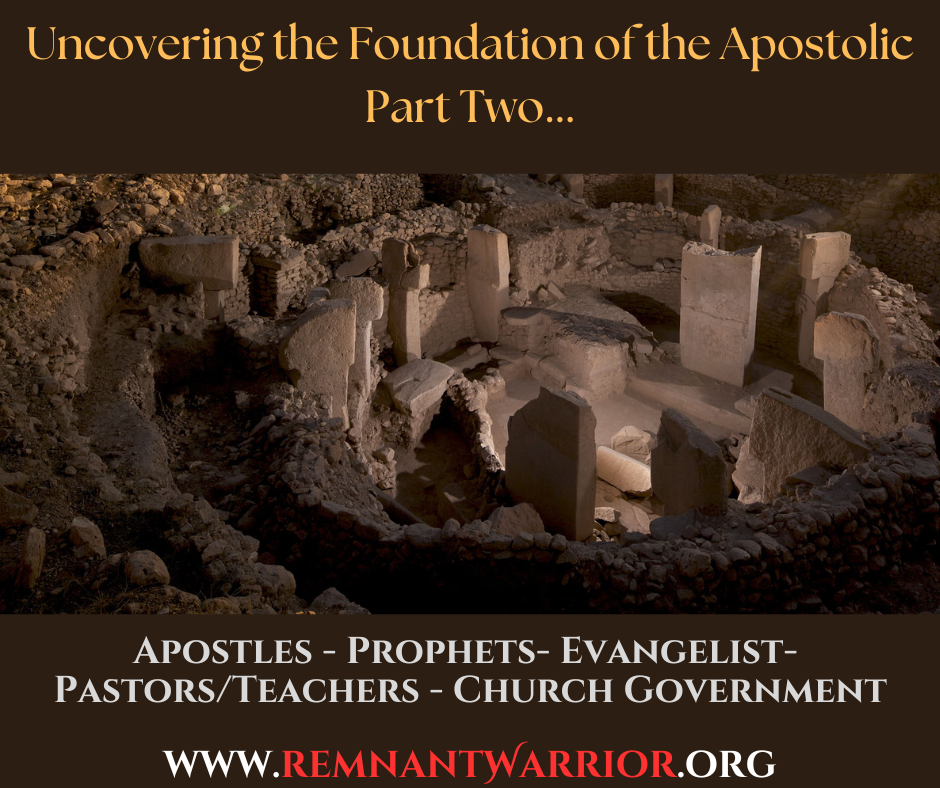
The Foundation of the Church: Understanding the Apostolic Office

In the realm of architecture, no one would dispute the significance of a building’s foundation. It is the bedrock upon which the entire structure rests, ensuring stability and longevity.

This analogy finds a profound reflection in the biblical context, particularly in Ephesians 2:20, where the Apostle Paul emphasizes that the church’s foundation is built upon the apostles and prophets, with Christ as the chief cornerstone.

This metaphor not only highlights the vital role of unity within the church but also invites an exploration of the nature and implications of the apostolic office. The apostolic office serves as a crucial element in the establishment and nurturing of the church.

The apostles were not merely historical figures; they were divinely appointed leaders who played an essential role in spreading the teachings of Jesus Christ and laying the groundwork for the early Christian community.

Their firsthand experiences with Christ provided them with unique insights and revelations that shaped the beliefs and practices of the church. This foundational leadership was instrumental in creating a unified body of believers that transcended cultural, social, and geographical barriers.

Paul’s assertion in Ephesians 4:12-13 further expands upon the significance of the apostles in the contemporary church. He writes, “For the perfecting of the saints, for the work of the ministry, for the edifying of the body of Christ: Till we all come in the unity of the faith, and of the knowledge of the Son of God, unto a perfect man, unto the measure of the stature of the fullness of Christ.”

This passage underscores the ongoing role of the apostolic office, suggesting that the church has not yet fully achieved the maturity and unity envisioned by Paul. The work of the apostles in perfecting the saints and edifying the body of Christ remains essential, as it fosters an environment where believers can grow in faith and knowledge.

In today’s world, the implications of Paul’s teachings are profound. The church is called to recognize and embrace the presence of modern-day apostles who continue to guide and equip the body of Christ.

These leaders play a pivotal role in addressing contemporary challenges, promoting unity, and ensuring the church remains aligned with its foundational values. As society evolves and new crises emerge, the need for apostolic leadership becomes increasingly evident.

Moreover, the apostolic office serves as a reminder of the importance of mentorship and discipleship within the church. Just as the original apostles mentored early Christians, today’s leaders must invest in the spiritual growth of their congregations.

This commitment to nurturing future generations of believers ensures that the church continues to thrive and adapt while remaining firmly rooted in its foundational truths.

In conclusion, the apostolic office is not merely a relic of the past; it is a living and active force within the church today. Understanding this role is vital for fostering unity, maturity, and growth in the body of Christ.

As we reflect on Paul’s teachings, may we be inspired to seek out and support apostolic leadership in our communities, ensuring that our foundation remains strong as we build a vibrant church that honors Christ as the chief cornerstone.

The journey toward spiritual maturity and unity is ongoing, and it is through the guidance of apostles that we can navigate the challenges of our time with wisdom and grace.

~Dr. Russell Welch
Elder / Apostolic Teacher: Highway to Heaven Church and Founder and Shepherd of Remnant Warrior Ministries / Remnant Warrior School of Spiritual Warfare.


In 1 Corinthians 3:11, the Apostle Paul asserts, “For no one can lay a foundation other than that which is laid, which is Jesus Christ.” This verse emphasizes the importance of grounding our faith and church practices in the truth of Scripture, particularly in the teachings and person of Jesus Christ.

In light of this biblical foundation, the emergence of the franchise church model raises critical questions about the authenticity and integrity of modern church practices. These franchise churches, often characterized by their corporate-like structure and marketing strategies, may represent a departure from the scriptural truths that should govern the life of the church.

The franchise church model often prioritizes growth and brand recognition over spiritual depth and community. Marketing strategies are employed to attract congregants, focusing on appealing aesthetics, entertainment, and consumer-driven experiences rather than the transformative power of the Gospel.

While there is nothing inherently wrong with utilizing modern tools to reach people, the risk lies in the potential dilution of the message. When churches operate like franchises, they may inadvertently build “houses of flesh,” as Paul might describe—structures focused on human ingenuity and appeal rather than divine truth.

This model can lead to an environment where the teachings of Scripture are secondary to the success of the church as a business. The emphasis shifts from discipleship and deep-rooted faith to numbers and profits. In an effort to cater to the preferences of a diverse audience, core biblical tenets may be bent or even abandoned, compromising the very foundation upon which the church should stand.

When congregations prioritize convenience and entertainment, they risk losing the rich tapestry of community, accountability, and spiritual growth that comes from a church firmly rooted in Scripture.

Moreover, the franchise church model often promotes a consumer mentality among congregants, who may view their relationship with the church as transactional. Instead of engaging in a commitment to a faith community characterized by mutual support and accountability, individuals may flit between congregations, seeking the latest program or the most engaging sermon.

This transient approach can undermine the biblical understanding of the church as the body of Christ, where believers are called to be active participants in each other’s lives and spiritual journeys. In contrast, a church established upon the foundation of Christ and anchored in Scripture fosters an environment of authenticity, growth, and genuine community.

When a church prioritizes biblical teaching, worship, and discipleship, it cultivates a space where believers can explore their faith deeply, encourage one another, and engage in the mission of the church with a sense of purpose.

These churches can create lasting impacts that resonate far beyond numerical growth, fostering spiritual maturity and resilience in their congregations. In conclusion, as we reflect on the implications of 1 Corinthians 3:11, it is crucial to evaluate the rise of the franchise church model with discernment.

While the desire to reach people and spread the Gospel is commendable, we must ensure that our methods align with the truth of Scripture and the foundational teachings of Jesus Christ.

By prioritizing spiritual depth over numerical success, we can build churches that reflect the heart of God and fulfill the mission of His kingdom. It is in this commitment to authenticity and Scriptural truth that we find the true essence of what it means to be the Church, the body of Christ in a world that desperately needs His light.

Once could look at our nation as a whole and rightly come to the conclusion that every area of moral decline is aspects of society that the Church compromised on. The Church of Jesus Christ is one that is purposed to transform cultures, not be transformed by them.

In conclusion, the analysis of the franchise model’s societal effects in contrast to the historical impact of the early Church poses critical questions about cultural engagement today. The challenges faced by contemporary communities necessitate a strong, uncompromised Church that understands its mission—one of transformation, dedication to God’s Kingdom, and reflection of Christ’s love and righteousness.

If you were to study cities that have seen a increasing rise of the Franchise model, would you find a change in the culture? Stats show that is not the case, in fact in many of those communities crime, poverty, corrupt governments, increasing levels of high school drop out just to name a few which inherently connected to the cultures that evil fosters.

Yet when you take a look at the societal impact that the early Church had, you will notice that they were able to impact the culture with the Kingdom, to were after 300 plus years, the Emperor Constantine took notice at how they were a people who walked in the extraordinary favor of the Lord God.

As this generation anticipates a profound move of God within society, there lies an invitation for believers to engage prayerfully and actively in culture, reclaiming the Kingdom of God’s values for their communities. Through repentance and renewed commitment to Christ’s principles, there is hope that the Church can again be a transformative influence, showing the world how to walk in the righteous and godly ways for which they were created.

I believe that we are on the verge of witnessing Heaven addressing these issues and our generation at this time in history is about to have a front row to Heaven’s invasion of the cultures of this world, and that is going to happen via the Houses of God that repent and turn back to the Cristo-centric foundation of Church governance, with a red-line distinction between those who remain compromised and those who turn back to seeking the King’s Kingdom and His Righteousness.

~Dr. Russell Welch
Elder / Teacher: Highway to Heaven Church and Founder and Shepherd of Remnant Warrior Ministries / Remnant Warrior School of Spiritual Warfare.

If you feel lead to support this ministry you can do so thru this link: Donate


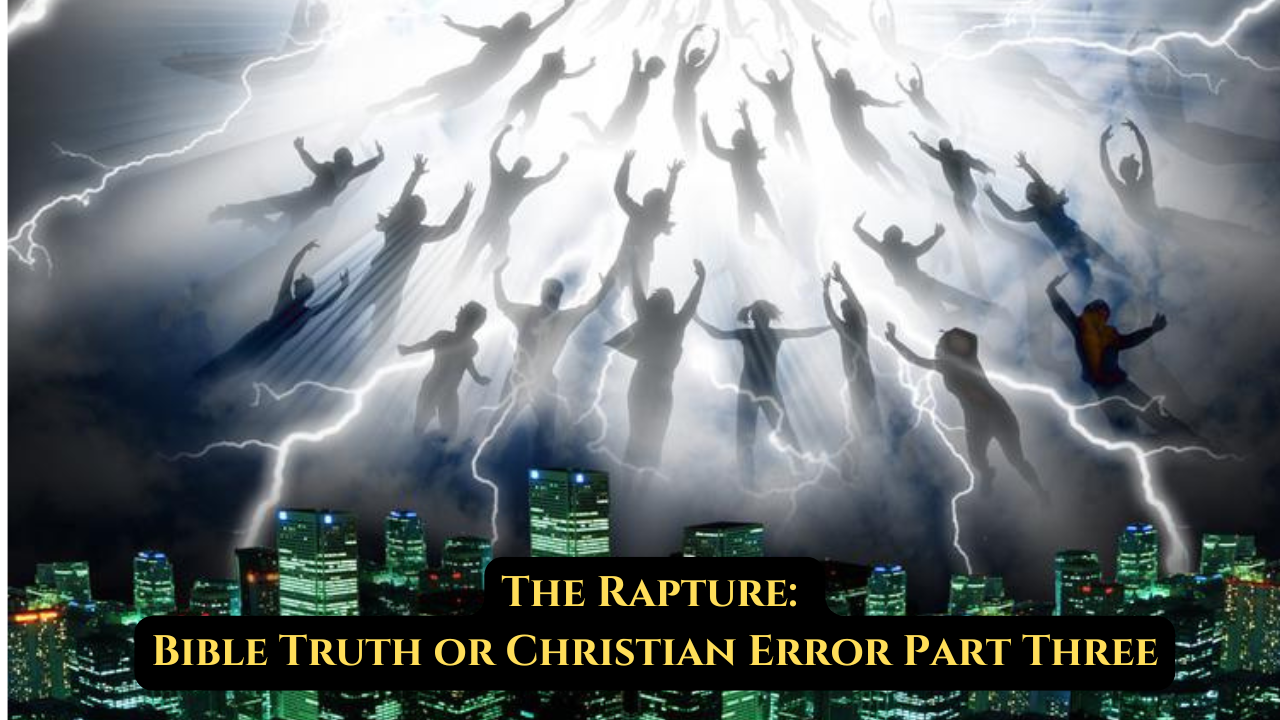
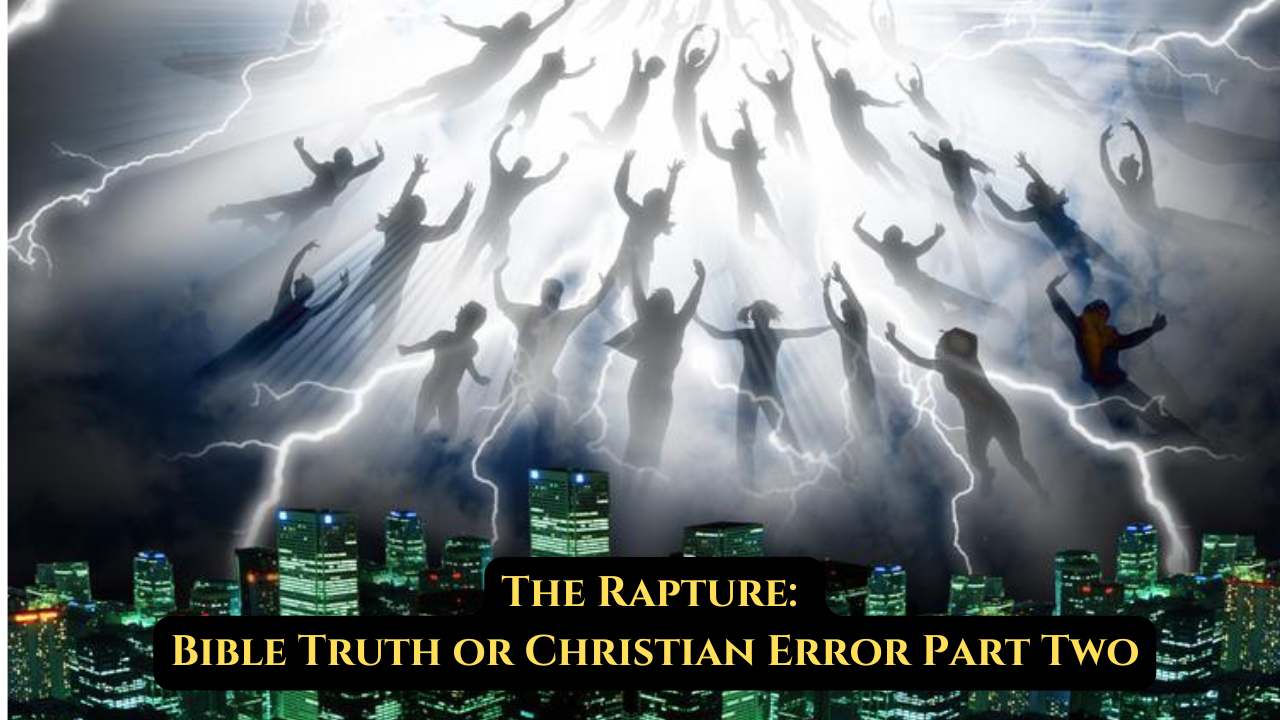
Closing out the debate: Jesus on the Rapture

As we have seen in the previous two post, the concept of the “rapture” has stirred theological debate and speculation among Christians for generations. Many of these discussions often draw from passages like 1 Thessalonians 4, leading to the assumption that Jesus’ teachings in the “Olivet Discourse” (found in Mark 13, Luke 21, and Matthew 24) endorse this notion.

However, an in-depth examination reveals that this interpretation may be fundamentally misaligned with Jesus’ historical context and intent. During Jesus’ life, the sociopolitical landscape of Judea was dominated by the Roman Empire, which ruled with an iron fist.

This oppressive regime fueled a yearning among many Jews for liberation and a militaristic messiah who could lead them to victory over their oppressors. Within this context, the idea of escape, or rapture, may seem appealing to those living under such duress.

However, Jesus presented a radical departure from these expectations, advocating for a message of love and reconciliation rather than rebellion and violence. Consider the subversive nature of Jesus’ teachings, particularly his instruction to “love your enemies and pray for those who persecute you” (Matthew 5).

In a society where conflicts were common and the threat of violence was ever-present, such a message was revolutionary. Rather than inciting his followers to take up arms against the Romans, Jesus urged them to respond to oppression with love and grace.

This approach not only challenged the prevailing notions of power and leadership but also illuminated a spiritual path that transcended physical conflict.

Moreover, when Jesus instructed his followers to “put away your sword” (Matthew 26:52), he directly confronted the hopes of those who sought a warrior savior.

The expectation for a militant messiah was prevalent, yet Jesus embodied a different kind of leadership—one that centered on humility, service, and forgiveness. His mission was not to incite a rebellion but to cultivate a spirit of peace amidst turmoil.

It’s imperative to recognize that rapture, as a concept, was not part of Jesus’ worldview. For him, the notion of resurrection was firmly rooted in the context of this world, not an escape to another realm.

 His teachings reflected a vision of renewal and restoration for the earth, rather than its destruction. The anticipated resurrection was intertwined with the hope of a transformed existence within the same physical reality, emphasizing continuity rather than abandonment.

Thus far, we can see that the idea that Jesus’ teachings support the concept of rapture is a misinterpretation of his message and a misunderstanding of the historical context in which he lived.

Jesus called for an active engagement with the world, advocating for love in the face of hatred and urging his followers to seek peace rather than conflict. By reexamining these teachings, we can appreciate the depth of Jesus’ message—one that invites us to embrace our circumstances with love, rather than seek an escape.

The true essence of his teachings lies in the promise of resurrection and transformation, not in a fleeting notion of rapture. It encourages believers to remain grounded in their faith, embracing the challenges of the present while looking forward to the hope of renewal in the future.

Jesus and the Destruction of Jerusalem: Not “Rapture”

The very mention of the notion of the “rapture” often sparks fervent debate among theologians and laypeople alike. However, it is essential to examine the scriptural basis of these teachings critically, especially regarding Jesus’ prophecies found in Mark 13 and their implications for understanding the destruction of Jerusalem in 70 CE.

While I affirm the belief in a future second coming of Christ, it is crucial to recognize that the central focus of Jesus’ prophetic discourse was not an abstract concept of the rapture but the imminent destruction of the Temple—a significant event in the history of Israel.

Let us go a little further and explore how interpreting Jesus’ teachings in the context of the destruction of Jerusalem offers insights into the urgency of his message, the fulfillment of prophecy, and the implications for contemporary faith.

In Mark 13, Jesus prophesies the ruin of the Temple in Jerusalem, a statement that shocked his disciples and prompted their inquiries about the signs and timing of such catastrophic events. When Jesus states that “not one stone will be left unturned,” he is not merely speaking metaphorically; he is foretelling a tragic reality that would befall the city within “this generation” (Mark 13:30).

This phrase is pivotal; it anchors the prophecy within a historical timeframe relevant to the disciples who heard it. The urgency of Jesus’ message becomes apparent when we consider the signs he enumerates: false messiahs, wars, food shortages, earthquakes, and persecution.

These were not abstract predictions but tangible occurrences that characterized the tumultuous years leading up to the destruction of the Temple in 70 CE. Understanding the prophetic language employed by Jesus is vital for a comprehensive interpretation.

The cosmic signs—such as the sun darkening and the moon dimming—are not to be taken literally but are symbolic of political upheaval and divine judgment. This prophetic style, rooted in Hebrew tradition, serves to convey the gravity of the impending disaster.

Just as modern language employs phrases like “earth-shattering event” to denote significant historical moments without suggesting literal geological upheaval, Jesus uses similar rhetorical devices to communicate the magnitude of Jerusalem’s impending doom.

 Moreover, the emotional weight of Jesus’ prediction cannot be overlooked. His lamentation over the city illustrates that his prophecy was not one of vindictive glee but of profound sorrow.

Jesus deeply cared for Jerusalem and its people, recognizing that their unfaithfulness would lead to their destruction. His declaration that he would be the ultimate Temple in the wake of the physical Temple’s destruction signifies a transformative moment in the relationship between God and humanity.

 Following the destruction, Jesus would stand as the living embodiment of God’s presence—a radical shift in the understanding of worship and divine connection.

As we consider the implications of these prophetic statements for today’s believers, it is crucial to confront the dangers of misinterpretation. The fixation on a “rapture” can lead to escapism, fostering a mentality that neglects the responsibility Christians have to care for creation and engage with the world meaningfully.

 If we envision the world as inherently doomed, we may inadvertently foster apathy toward pressing social and environmental issues. In conclusion, the focus on the destruction of Jerusalem rather than a speculative rapture provides a more profound understanding of Jesus’ message and its urgency.

His prophecies about the Temple’s destruction were fulfilled within the lifetime of his contemporaries, serving as a poignant reminder of the consequences of unfaithfulness.

Rather than viewing this as a distant, nebulous event, we are called to engage with the realities of our world, maintaining a posture of responsibility and hope.

By recognizing the significance of Jesus’ message in its historical context, we can foster a faith that is both grounded in the teachings of Scripture and responsive to the needs of our present day.

Rapture or Resurrection?

The concepts of rapture and resurrection often spark profound discussions among believers and theologians alike, raising questions about the nature of our ultimate fate as described in the New Testament.

At the heart of this discourse lies a vision shared by Jesus, Paul, and the early church—a vision steeped not in the notion of escaping this world but in the promise of resurrection.

This perspective offers a transformative understanding of our embodied future, one that is fundamentally anchored in hope and renewal rather than abandonment. I believe that as a true student of the Word,  it is crucial to recognize that the New Testament presents resurrection as an integral part of the Christian hope.

This is not merely a spiritual or ethereal existence in a distant heaven; rather, it is an embodied future that affirms our physical existence. In 1 Thessalonians 4, Paul articulates the assurance that those who are in Christ will rise, signifying a restored and transformed state of being.

This promise extends beyond humanity to encompass all of creation, affirming that God’s redemptive plan includes liberating the natural world from its “bondage to decay” (Romans 8:21).

This vision of resurrection reaffirms the inherent goodness of the physical world and emphasizes that God’s ultimate design is not destruction but renewal.

Moreover, the idea of a future rapture contrasts sharply with the New Testament’s portrayal of Christ’s return. Instead of anticipating chaos and tribulation, as some interpretations suggest, the early church understood Jesus’ predictions of tribulation as events that had already transpired, particularly with the destruction of Jerusalem and the temple by Rome.

This historical context is pivotal; it shifts the focus from a future panic to a promise of restoration. Revelation, often misinterpreted as a foretelling of doom, when viewed through its historical lens, aligns with this hopeful narrative.

The concluding verses of Revelation encapsulate this assurance: “He will wipe every tear from their eyes. There will be no more death or mourning or crying or pain” (Revelation 21:4).

Such promises underscore the belief that God’s kingdom will triumph over suffering and death. The ultimate hope presented by the New Testament writers is not merely about individual salvation but the collective restoration of creation—a world made right.

This renewed world is destined to be our eternal home, inviting believers to actively participate in manifesting this reality in our present lives. The notion of rapture promotes a mindset of escape, suggesting that believers should look away from the world rather than engage with it.

In contrast, Jesus’ teachings emphasize bringing heaven to earth, embodying His kingdom in our actions and relationships. The Lord’s Prayer itself encapsulates this desire for unity between heaven and earth: “On earth as in heaven.”

 Lastly, it is essential to acknowledge that neither Paul, Jesus, nor any figures of the New Testament supported the idea of the rapture as it is popularly understood today.

This absence of rapture in their teachings invites believers to reconsider their own understanding of the afterlife. The call to embrace resurrection rather than rapture invites a profound shift in perspective—one that encourages living with hope, purpose, and engagement with the world around us.

In conclusion, the hope of resurrection as depicted in the New Testament is a powerful affirmation of life, renewal, and the goodness of creation. This vision challenges the idea of rapture and instead calls for an active participation in the unfolding of God’s kingdom here on earth.

As we navigate our lives, let us hold fast to this promise of resurrection, embodying the hope that, indeed, our world’s future is bright and filled with potential for renewal.

Why?

Because neither Paul nor Jesus believed in the rapture. Neither did any of other New Testament author or figure, and neither should you.

~Dr. Russell Welch
Elder / Teacher: Highway to Heaven Church and Founder and Shepherd of Remnant Warrior Ministries / Remnant Warrior School of Spiritual Warfare.

For further study, you are invited to purchase Dr. Welch’s book “Beyond the Clouds: Unveiling the Rapture Illusion“, Available exclusively on Amazon

If you feel lead to support this ministry you can do so thru this link: Donate



In the heart of the Christian faith lies a profound promise articulated by the Lord Jesus in Matthew 16:18, where He declares, “… thou art Peter, and upon this rock I will build my church; and the gates of hell shall not prevail against it.”

This assertion highlights not only the foundational role of Peter but also emphasizes Christ’s personal involvement in the establishment and nurturing of His ecclesia. The term “ecclesia,” often translated as “church,” signifies more than just a physical gathering; it embodies the spiritual community of believers united under Christ’s authority.

As we dive into this text, we discover that the inception of the ecclesia is intricately linked to Jesus’ death and resurrection, which serves as the cornerstone for a new covenant with humanity. The imagery of the temple plays a significant role in understanding this relationship.

In John 2:19, Jesus prophesies, “Destroy this temple, and in three days I will raise it up,” referring to His body as the true temple. The physical temple, built by human hands, would ultimately be replaced by a spiritual edifice, symbolizing the ecclesia—a community where God dwells not in brick and mortar but in the hearts of believers.

This transition from a physical to a spiritual temple signifies a monumental shift in how God relates to humanity. While the Jewish leaders misunderstood His words, the essence of Christ’s message underscores His mission to form a new covenant community of faith. As we progress into the Acts of the Apostles, the active hand of Jesus is unmistakably present.

Historically, this book could aptly be titled “The Acts of Jesus Christ After His Ascension,” as it details how the risen Lord continues to work through His apostles. Luke introduces this narrative by referencing his previous writings, emphasizing that what Jesus “began both to do and teach” is merely the precursor to the ongoing work of Christ through the Spirit.

Notably, in Acts 2:33, we learn that Jesus has poured out Holy Spirit upon His followers, a clear indication that He is intimately involved in guiding and empowering His ecclesia. Furthermore, Acts 2:47 states, “the Lord added to the church daily such as should be saved.” This raises intriguing questions about the identity of “the Lord” in this verse—whether it refers to God or Jesus.

Given the context of Jesus’ promise to build His ecclesia, it is plausible to interpret this as a reference to Christ’s direct involvement in the growth and vitality of the church. As believers are added to the ecclesia, it becomes evident that Jesus is not a distant figure but an active participant in the life of His followers.

The narrative progresses as we encounter Stephen, who sees Jesus standing at the right hand of God (Acts 7:56). This posture is significant; it implies that Jesus is not merely a passive observer but an active advocate for His people.

When Paul encounters Jesus on the road to Damascus, he learns that the persecutions of the ecclesia are, in essence, persecutions of Christ Himself (Acts 9:4-5). This deep connection reinforces the idea that Jesus is not detached but rather profoundly engaged with His body, the church.

The promise of Jesus in Matthew 28:20, “I am with you always, even unto the end of the world,” resonates powerfully in the context of His ongoing relationship with the ecclesia. He is present, active, and engaged with His people, reminding us that His commitment to the church transcends time and space.

The imagery of Jesus in Revelation presents Him not as a distant deity but as the glorified Son of Man, actively walking among the seven candlesticks—representing the ecclesia—symbolizing His intimate knowledge of their struggles and triumphs. In this light, believers are invited to consider the reality of Christ’s presence within their midst.

The book of Revelation serves as a vivid reminder that Jesus is not just a historical figure but an active and living presence in the ecclesia today. The solemnity of the judgment that awaits the ecclesia, collectively, urges us to foster a deeper awareness of His ongoing work among us. In conclusion, the promise of Jesus to build His ecclesia is a testament to His unwavering commitment to His followers.

It is a call to recognize that He is not a distant observer but an active participant in the life of the church. As we open our eyes to this reality, we are encouraged to live in the light of His presence, understanding that He walks among us, knowing our works and guiding us in our mission to embody His love and truth in the world.

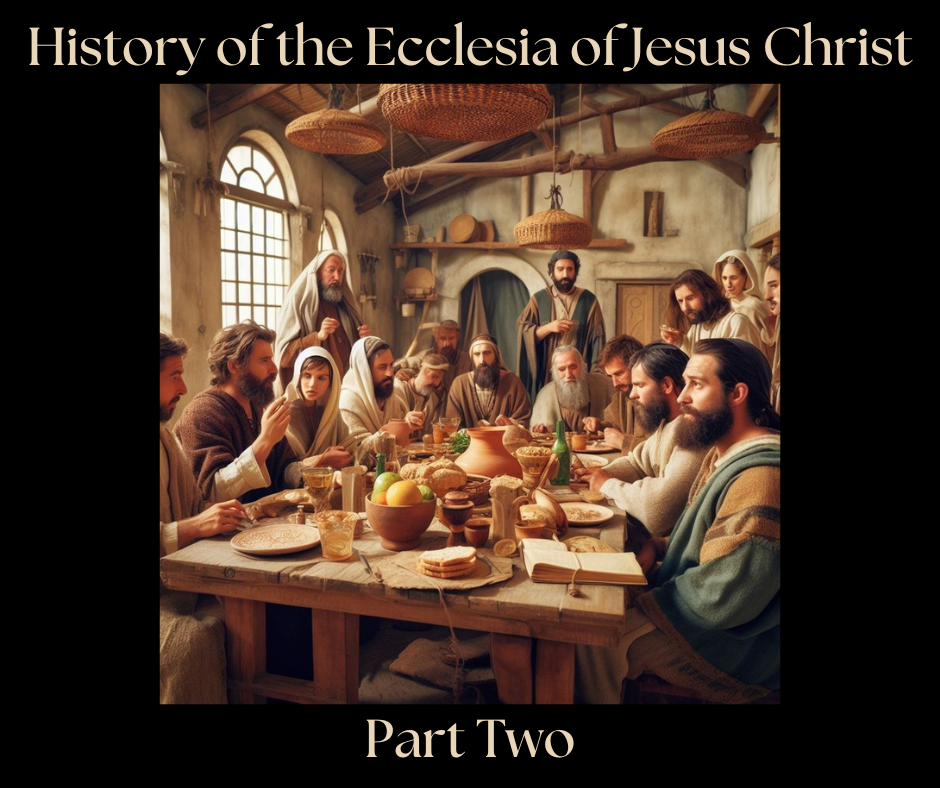
As we continue to study the Word, particularly the NT, we cannot help but see that the journey of the early ecclesia as depicted in the Acts of the Apostles invites contemporary believers to reflect on their own faith communities. The initial gathering of 120 disciples in an upper room, united in “prayer and supplication” (Acts 1:14), serves as a powerful reminder of the strength found in communal commitment.

This sense of unity, encapsulated in the Greek term “homothumadon,” meaning “one mind” or “same passion,” set the tone for the ecclesia’s development throughout the Acts.

The early believers exemplified a model of unity that is not only a historical account but also a guiding principle for modern ecclesial life. As we explore how the early church operated, we recognize that their reliance on doctrine, fellowship, breaking of bread, and prayer remains pertinent today.

The early ecclesia’s steadfast commitment to four foundational practices, as noted in Acts 2:42, offers insights for contemporary faith communities. The apostles’ doctrine served as the lampstand, illuminating their spiritual path; fellowship fostered a sense of belonging akin to the mercy seat, where grace abounded; the breaking of bread became their table of showbread, symbolizing nourishment and community; and prayers ascended like incense from the altar, connecting them with the divine.

These practices were not mere rituals but essential pillars that defined their identity as the new temple in Christ. The ecclesia was a living testament to the spiritual priesthood, and their actions resonated with the tabernacle’s significance in the wilderness—a reminder that worship and community are intertwined.

 As growth marked the journey of the early church, it also brought challenges that tested their unity. The initial explosion of faith in Jerusalem, captured in Acts 2:47, reflects an active Lord adding to the ecclesia daily.

This growth, however, was not without trials. As the number of believers increased, so did the complexities of community life. Conflicts arose, both from within and outside the ecclesia, as illustrated in Acts 6 and 15.

These incidents reveal that growth comes with growing pains, prompting believers to navigate disputes and challenges with wisdom and grace. The early church faced persecution from the Sanhedrin, internal strife, and even doctrinal controversies regarding the law of Moses and the inclusion of Gentile believers.

 Each of these moments called for discernment and leadership, showcasing the necessity of working through differences rather than avoiding them. The ecclesia’s response to these internal and external pressures is a reminder for modern believers that conflict can lead to clarity and cohesion when addressed with intentionality.

Paul’s words in 1 Corinthians 11:18-19 emphasize the inevitability of divisions, suggesting that challenges can serve as catalysts for growth and a deeper understanding of faith. The ecclesia’s ability to engage in difficult conversations and find consensus is a testament to their commitment to unity amid diversity.

As they navigated their shared faith, they learned that overcoming challenges together not only strengthened their bonds but also solidified their witness to the world. With that, we see the narrative of the ecclesia in the Acts of the Apostles serves as both a historical account and a roadmap for contemporary Christian communities.

As we reflect on their practices of doctrine, fellowship, breaking of bread, and prayer, we are encouraged to cultivate a spirit of unity that transcends our differences. The early church teaches us that while the journey of faith is marked by challenges, it is also rich with opportunities for growth, healing, and deeper connection to one another and to God.

Just as the Lord added to their number, may our communities continuously strive for unity and purpose, embodying the essence of the ecclesia as we navigate our own journeys of faith.

~Dr. Russell Welch
Elder / Teacher: Highway to Heaven Church and Founder and Shepherd of Remnant Warrior Ministries / Remnant Warrior School of Spiritual Warfare.

If you feel lead to support this ministry you can do so thru this link: Donate
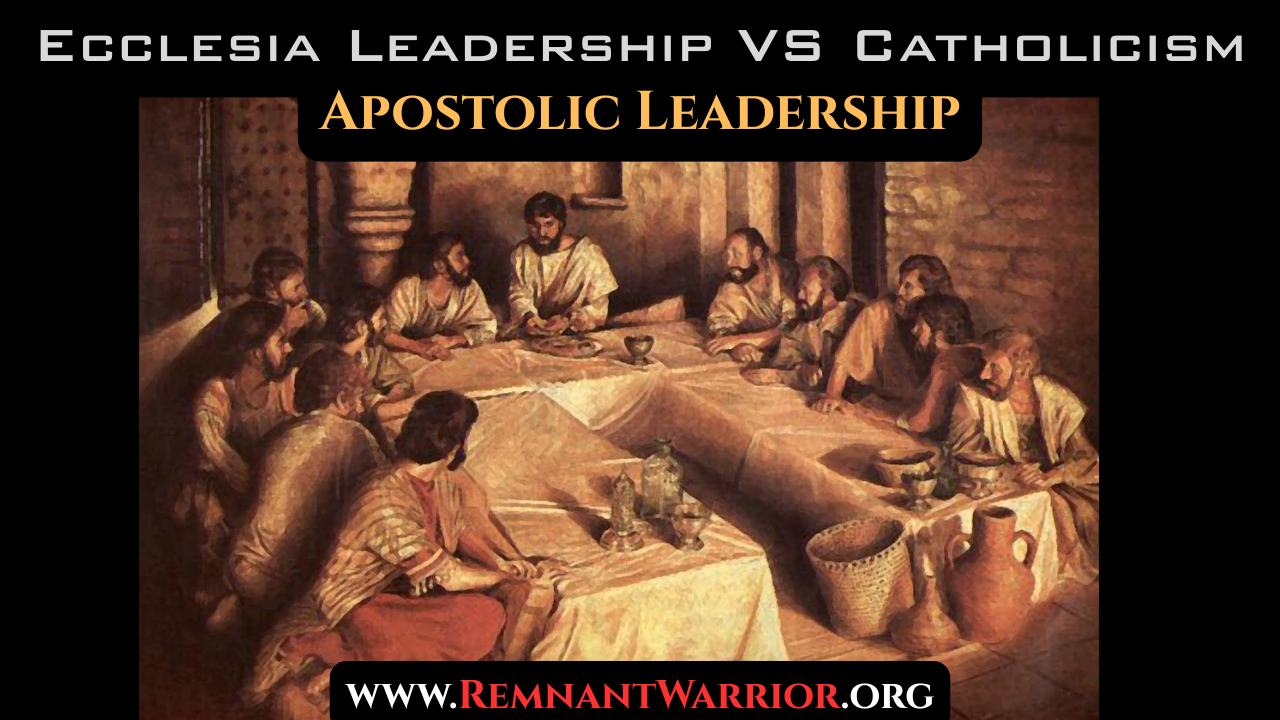

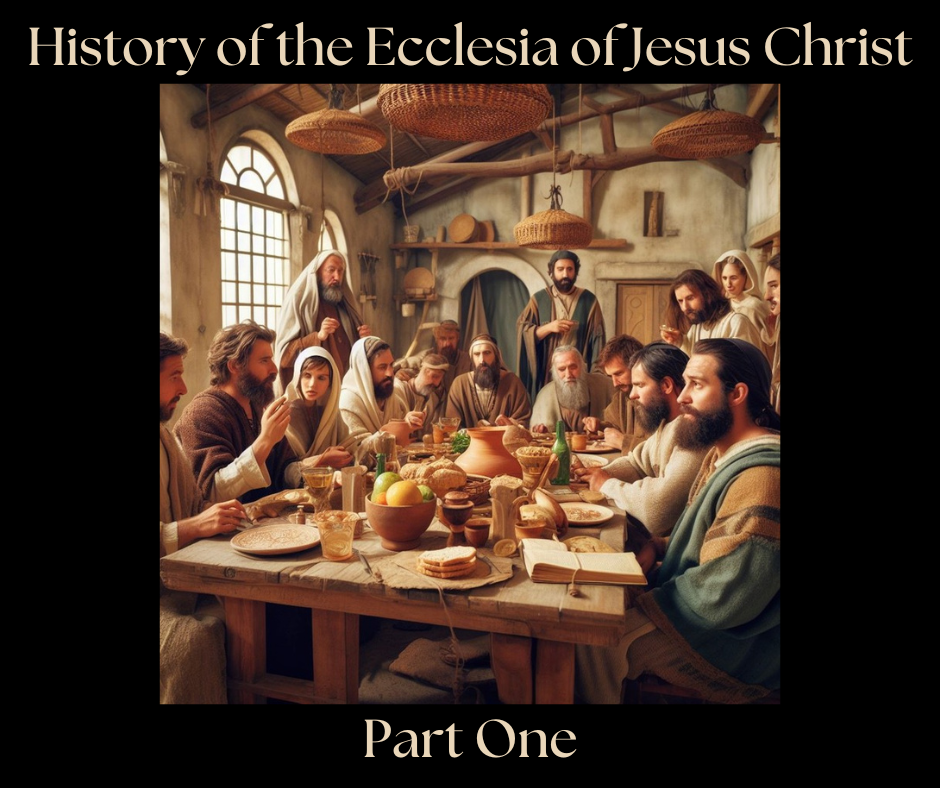
Part one of a three part series………

The Ecclesia in the Acts: Understanding Its Meaning and Significance

The term “ecclesia” has long been embraced by Christadelphians as a replacement for the word “church,” and rightly so. “Ecclesia” carries with it a rich tapestry of meaning and significance, rooted in both history and theology.

However, as with any term that becomes commonplace, there is a risk that its vitality may diminish over time. This raises an important question for believers: How do we truly perceive our ecclesia?

Exploring the depth of this term invites us to consider its historical context and its implications for our communal and individual faith experiences. In the New Testament, particularly in Hebrews 12:18-24, the ecclesia is compared to the Israelites at Mount Sinai, a momentous event in biblical history.

The writer starkly contrasts the terrifying experience of the Israelites with their encounter with God—a scene filled with fire, darkness, and fear—with the ecclesia’s arrival at Mount Zion, the city of the living God. Here, the ecclesia is depicted as part of a celestial assembly, a gathering of angels, just men made perfect, and Jesus, the mediator of a new covenant.

This imagery elevates the ecclesia beyond mere physical assembly, positioning it as an ongoing spiritual reality steeped in divine presence and purpose. The historical roots of the term “ecclesia” can be traced back to ancient Greece, particularly around the fourth century BC.

 It was in this context that a constitution emerged to formalize the governing assembly of Athens, known as the ecclesia. This assembly was comprised of citizens who convened to deliberate on matters of policy, declare war, elect officials, and administer justice.

The term literally means “the called-out ones,” reflecting a sense of community and responsibility among its members. This democratic assembly emphasized ideals of “freedom and equality,” principles that resonate with the communal aspects of the ecclesia in a spiritual sense.

The relevance of the ecclesia transcends its political connotations, extending into the framework of the early Christian community as depicted in the Acts of the Apostles. When Christ spoke to Peter and the apostles in Matthew 16:18, declaring, “Upon this rock, I will build my ecclesia,” He was not introducing a new concept, but rather recontextualizing a term imbued with collective significance.

The early ecclesia, much like the Greek assembly, was called to convene, support one another, and collectively navigate the challenges of faith in a world rife with opposition.

In the Book of Acts, we see the ecclesia in action, as believers come together in unity, sharing resources, and spreading the gospel. However, it is also evident that the term “ecclesia” was not limited to a mere physical gathering.

The events in Acts 19 illustrate how the word “ecclesia” was used to denote both official assemblies and, at times, chaotic gatherings driven by mob mentality.

The case of Demetrius, who incited a riot against Paul and the believers in Ephesus, serves as a cautionary tale about the potential for distortion in communal settings.

Thus, examining the ecclesia through both its historical and biblical lenses reveals a multifaceted understanding of what it means to be part of this assembly.

It challenges believers to recognize their role as part of a larger spiritual community, one that calls for engagement, mutual support, and a commitment to the teachings of Christ.

 As we reflect on our own ecclesia today, we must strive to keep its meaning alive and vibrant. It invites us to ponder how we gather, support one another, and ultimately, how we embody the values and principles established on Sinai and exemplified in the Acts of the Apostles.

By embracing the fullness of the ecclesia, we ensure that it remains a dynamic force for spiritual growth, unity, and service in a world that often seeks to divide. In doing so, we honor its profound legacy and reaffirm our commitment to being the “called-out ones” in every aspect of our lives.

The term “ecclesia,” with its richness in historical and cultural significance, serves as a bridge between the Judaic roots of early Christianity and its evolution into a distinct faith.

With its origins in the Septuagint (LXX), the Greek translation of the Hebrew Bible, ecclesia encapsulates the essence of a gathered community—a concept that resonated deeply with both Jews and early Christians. As we explore its implications, we uncover how this term shaped the understanding of community, authority, and divine purpose in the formative years of the Christian faith.

The Septuagint was created in the 3rd century BC by Jewish scholars in Alexandria, Egypt, who sought to make their sacred texts accessible to a Greek-speaking audience. In this translation, ecclesia appears as a noun seventy-seven times, establishing its foundational role in the relationship between God and His people.

Notably, it was in the context of divine assembly that the term first emerged, as documented in Deuteronomy 4:10, where Moses addresses the Israelites at Mount Sinai, urging them to remember the day of the assembly (ecclesia).

This moment was not merely a historical event; it signified the establishment of a covenant community called to hear God’s words and pass them on to future generations, thereby reinforcing the importance of collective worship and obedience.

Jesus’s use of the word “ecclesia” in Matthew 16:18, where He declares, “upon this rock I will build my ecclesia,” is particularly poignant. His choice of terminology indicates a deliberate connection to the rich history of the term as found in the Septuagint.

By employing ecclesia, Jesus indicated the creation of a new community—the body of believers—rooted in the same principles that defined the assembly of Israel.

The Apostles, familiar with the LXX, understood the weight of this word choice and its implications for their mission. They viewed the ecclesia as a continuation of God’s covenant with His people, tasked with embodying His teachings and spreading the message of salvation.

The comparative study of ecclesia and its Hebrew equivalent, “qahal,” further elucidates its significance. While both terms imply a gathering of people, “qahal” emphasizes the act of being called together by God.

This divine summoning establishes a deeper relationship between the community and their Creator, reflecting a commitment to live in accordance with His will. Barclay’s observation highlights this distinction, noting that ecclesia is not just a congregation that happens to come together; it is a body of people called into action by God.

This understanding is crucial for grasping the nature of the early Christian community, which saw itself as divinely commissioned to fulfill God’s mission on Earth.

Moreover, the early church’s identity was distinct from that of the synagogue, which had become a community space for Jewish worship separate from the temple. While synagogues served an essential role in the Jewish faith, they lacked the transformative purpose that Jesus attributed to His ecclesia.

By establishing a new community, Jesus redefined the concept of worship and fellowship, moving beyond the physical confines of the synagogue to create a spiritual temple made up of believers—an idea echoed in 1 Peter 2:5, where Christians are described as “living stones” being built into a spiritual house.

Thus, we see that the term ecclesia as found in the Septuagint serves as a critical link connecting the Jewish heritage of early Christians to the foundation of their faith.

By understanding its historical context and significance, we can appreciate the profound implications of Jesus’s declaration to build His ecclesia. The early church, rooted in the traditions of Israel, embraced its role as a living embodiment of God’s purpose on Earth, fostering a community designed not only for worship but also for action and outreach.

As we reflect on the rich history of ecclesia, we recognize the enduring call for believers to gather, listen, and respond to God’s voice, thereby continuing the legacy of faith that began millennia ago.

~Dr. Russell Welch
Elder / Teacher: Highway to Heaven Church and Founder and Shepherd of Remnant Warrior Ministries / Remnant Warrior School of Spiritual Warfare.


Jesus on “Rapture”:

Understanding Context and Meaning** The concept of the “rapture” has been a topic of considerable debate within Christian circles, particularly when examining scriptural references such as 1 Thessalonians 4. Many believers look to Jesus’ teachings in the Olivet Discourse—found in Mark 13, Luke 21, and Matthew 24—as a basis for their understanding of this event.

 However, a careful analysis reveals that this interpretation is a departure from the historical and cultural context in which Jesus spoke. Living in the first century, during the height of Roman dominance, Jesus encountered a world rife with turmoil and political oppression. Many Jews, especially those with zealous expectations of a messiah, anticipated a savior who would overthrow Roman rule and establish an earthly kingdom.

 In stark contrast to these expectations, Jesus advocated for a radical message of love and forgiveness, urging his followers to “love your enemies and pray for those who persecute you” (Matthew 5).

This subversive teaching was revolutionary, challenging the prevailing notion of a militaristic messiah and calling for a different kind of engagement with adversaries—one marked by compassion rather than violence. Jesus’ instruction to “put away your sword” served as a profound rebuke to the desire for a warrior king, illustrating that his mission was not to incite rebellion or violence against Rome, but rather to transform hearts.

In this context, it becomes evident that Jesus did not preach an impending escape from earthly woes, but instead sought to address the immediate struggles of his followers and the larger socio-political landscape. The idea of the “rapture”—a sudden removal of believers from the world—was not a concept rooted in his teachings or the understanding of his contemporaries.

Moreover, the apocalyptic language in Mark 13 should not be misconstrued as a prophetic roadmap for a future rapture. Jesus spoke directly to the realities facing his audience, prophesying the destruction of the Temple in 70 CE—a monumental event that fulfilled his warnings about the consequences of unfaithfulness within Israel.

The phrase “this generation” (Mark 13:30) indicates that Jesus’ prophecies were directed toward those who were alive at that time, not a distant future event. The signs he described—wars, persecution, and cosmic upheaval—were all part of the historical context surrounding the impending collapse of Jerusalem, not signs of an eschatological rapture.

The parallel between Jesus’ warnings and the subsequent events of the Jewish War serves to ground his message in reality. The false messiahs, wars, famine, and natural disasters he foretold were not mere symbols but tangible occurrences that would affect the people of his time.

 By understanding these prophecies as reflections of the sociopolitical climate of first-century Judea, we gain a clearer perspective on Jesus’ teachings and their implications. Additionally, the emotive language used by Jesus, which included cosmic imagery, was a rhetorical device rooted in Jewish prophetic tradition.

Such language was not to be taken literally but served to convey the catastrophic impact of political upheaval. Just as contemporary language can describe events in hyperbolic terms—such as calling 9/11 an “earth-shattering event” without implying a literal earthquake—Jesus employed similar expressions to communicate the magnitude of the coming changes.

In conclusion, while belief in a future second coming remains integral to Christian theology, associating Jesus’ teachings in the Olivet Discourse with the modern concept of the rapture misinterprets his message and the historical context in which it was given.

Jesus did not offer a vision of escape; rather, he called his followers to engage with the world through love, compassion, and resilience in the face of adversity. Understanding this distinction enriches our comprehension of his teachings and reinforces the call to address the pressing issues of our time, rather than retreating into a desire for an escape from reality.

Jesus Wept Over His Prediction of Destruction: A Reflection on Hope and Resurrection The image of Jesus weeping over Jerusalem serves as a profound testament to the tension between divine prophecy and human compassion.

This poignant moment, marked by grief and foresight, encapsulates the essence of Christ’s mission on earth. As he gazes upon the city, Jesus is acutely aware of the destructive path that the people have chosen, driven by zeal and misunderstanding.

His tears are not merely for the physical destruction looming on the horizon but resonate with a deeper sorrow for the spiritual blindness that leads to such ruin. This act of lament reveals a heart that longs for redemption and restoration instead of annihilation, inviting us to reflect on the broader implications of his tears.

In the context of Jesus’s lament, it is essential to recognize the significance of the Temple’s destruction. For the Jewish people, the Temple represented the very dwelling place of God, a sacred space that facilitated their relationship with the divine.

However, Jesus’s prediction of its demise marks a pivotal moment in the divine narrative, symbolizing the transition from a physical locus of God’s presence to a new spiritual reality embodied in Christ himself. By referring to himself as the “Son of Man,” an allusion to the prophetic vision found in Daniel 7, Jesus positions himself at the intersection of suffering and vindication, revealing the duality of his identity as both the suffering servant and the glorious Messiah.

The implications of this transition are immense. The destruction of the Temple signifies the end of an era, laying the groundwork for the establishment of a new covenant that transcends geographical and cultural boundaries.

In this new paradigm, Jesus becomes the ultimate Temple, inviting believers into a direct and personal relationship with God. This transformation is not merely prophetic; it serves as a declaration of hope amidst despair. While Jesus weeps for what will be lost, he simultaneously embodies the prophetic truth of resurrection and renewal that is to follow.

The message of hope embedded in Jesus’s lament is echoed in the writings of Paul, particularly in Romans 8, where liberation from decay and the restoration of the world are intimately connected to the resurrection of believers.

Contrary to popular eschatological narratives that emphasize fear and withdrawal, the biblical story exhorts us to engage with the present moment and work toward the transformation of our world. The historical context of the Roman siege of Jerusalem in 70 CE serves as a reminder that tribulation is not to be escaped but confronted with resilience and hope.

Furthermore, the imagery presented in the Book of Revelation underscores this theme of renewal. The culmination of God’s redemptive plan is characterized by the wiping away of tears and the eradication of death and pain.

Rather than envisioning a future that invites us to escape worldly struggles, this vision calls believers to embrace the transformative work of God, actively participating in the renewal of creation. The contrast between the desire for a rapture—a yearning to flee from earthly difficulties—and Jesus’s mission to incarnate hope amidst struggle could not be starker.

His call is to embrace the world and reflect the future glory of God’s kingdom in our present lives. In conclusion, the profound emotional response of Jesus toward Jerusalem invites us to reevaluate our understanding of eschatology.

Our focus should shift from anticipating a distant, chaotic end to embracing a narrative steeped in resurrection and restoration. The hope embedded in Jesus’s teachings and the overarching New Testament message paints a picture of a renewed world where justice flourishes and life abounds.

As we navigate the complexities of our challenges, we must remember that our future is not one of abandonment but divine fulfillment—an invitation to reflect this truth in our current actions and attitudes.

Therefore, like Jesus, we, too, can weep for the brokenness of our world while remaining steadfast in our hope for renewal that lies ahead. Our tears can become seeds of hope, inspiring us to work towards a transformed future defined by love, justice, and grace.

Fellow students of the Word, as we navigate the complexities of theological beliefs, it is essential to return to the foundational teachings of Scripture and reevaluate our understanding of key concepts like the rapture in light of the Apostle Paul’s timeless message.

In the end we find that the doctrine of the Rapture, when examined through a critical lens, reveals itself to be both unbiblical and illogical. The lack of scriptural foundation, coupled with internal contradictions, suggests that this doctrine may not merely be an alternative interpretation but rather a belief that should be rejected.

Whether viewed through the lens of biblical integrity or logical consistency, the Rapture raises profound questions that challenge its acceptance within Christian doctrine. As believers, it is essential to engage in thoughtful discourse and discernment, seeking clarity on theological matters that shape our understanding of faith and salvation.

Ultimately, the examination of the Rapture presents an opportunity for deeper reflection on the nature of God’s promises and the true meaning of Christ’s return.

~Dr. Russell Welch
Elder / Teacher: Highway to Heaven Church and Founder and Shepherd of Remnant Warrior Ministries / Remnant Warrior School of Spiritual Warfare.