Posts Tagged ‘bible’


What transformation might occur in our churches if leaders pursued the faithful integrity of Zadok and Joseph rather than the metrics of corporate success?

Kingdom Leadership

Leadership in God’s economy has always been distinct from worldly patterns of authority. When Jesus declared, “You know that the rulers of the Gentiles lord it over them, and their great ones exercise authority over them. It shall not be so among you” (Matthew 20:25-26), He established a fundamental principle: authentic spiritual leadership operates from a different framework than secular power structures. The examples of Zadok and Joseph illustrate this divine blueprint in action.

Scripture presents leadership not primarily as position or privilege but as stewardship—temporary responsibility for resources and people ultimately belonging to God. Joseph recognized this reality when managing both Potiphar’s household and later Egypt’s resources during famine. At no point did he treat his authority as personal possession or platform for self-advancement. Similarly, Zadok fulfilled his priestly duties as sacred trust rather than personal territory. This stewardship mindset transforms how leaders approach their roles, creating accountability that transcends human oversight.

Consider the difference between renters and caretakers. A renter occupies space temporarily with minimal investment, often focused on extracting maximum benefit for minimum cost. A caretaker, however, manages property on behalf of the owner, making decisions based on the owner’s priorities rather than personal preference. Too many contemporary leaders function as renters in their ministries—utilizing resources, people, and platforms for personal advancement without deep investment in the community’s long-term flourishing. Zadok and Joseph exemplify caretaker leadership, recognizing their responsibility to the true Owner of all they managed.

The Apostle Paul emphasized alignment with biblical teachings when he instructed Timothy to “follow the pattern of the sound words that you have heard from me” (2 Timothy 1:13). This commitment to scriptural fidelity must guide every leadership decision, from organizational structures to worship practices to community engagement. When leaders substitute cultural relevance, pragmatic effectiveness, or personal preference for biblical principles, they abandon the very foundation that legitimizes their spiritual authority.

Biblical alignment requires more than occasional scripture references attached to predetermined strategies. It demands allowing God’s Word to shape our fundamental understanding of success, methods, and goals. Joseph could have implemented Egyptian methods of governance without reference to covenant principles, but his leadership reflected deeper values rooted in his faith heritage. Today’s leaders must likewise allow scripture to critique their assumptions about growth, programming, and measurement rather than merely justifying existing approaches with selected texts.

Leadership that reflects scriptural principles prioritizes character formation over program expansion. Both Zadok and Joseph underwent years of testing before assuming their most significant leadership roles. Joseph spent thirteen years as slave and prisoner before his governmental appointment; Zadok served faithfully under previous priests before assuming the high priesthood. This pattern of preparation through trials appears consistently throughout scripture, from Moses’ forty years in Midian to David’s wilderness wanderings to Paul’s years in Arabia. Contemporary ministry’s obsession with rapid advancement often shortcircuits this essential formation process.

The consistent pattern of scripture shows that God measures leadership success differently than humans do. While we often count attendance, facilities, budgets, and influence, biblical evaluation focuses on faithfulness, integrity, spiritual fruit, and alignment with divine purposes. Jesus Himself warned against equating visible results with spiritual success when He described impressive ministries that would ultimately hear, “I never knew you; depart from me” (Matthew 7:23). Leaders must resist the temptation to substitute worldly metrics for divine approval.

Worldly leadership models often emphasize positional authority and hierarchical control. By contrast, scriptural leadership operates through servant influence and moral authority. Joseph led through wisdom and integrity rather than dominance; Zadok’s influence flowed from his faithfulness rather than asserting priestly prerogatives. Jesus crystallized this distinction when He declared, “Whoever would be great among you must be your servant” (Matthew 20:26). When contemporary leaders attempt to control through position rather than influence through character, they abandon biblical leadership principles.

The faithful leadership exemplified by Zadok and Joseph provides a timeless blueprint that challenges and corrects our modern ministry paradigms. Their examples show us that leadership aligned with biblical teachings prioritizes character over charisma, faithfulness over fame, and divine approval over human acclaim. The church today desperately needs leaders who will embody these principles, standing firmly in the righteous tradition of Zadok and the faithful wisdom of Joseph.

The Countercultural Path of Righteous Leadership

The paths walked by Zadok and Joseph diverged sharply from those traveled by many of their contemporaries. While others sought positional advantage, personal comfort, or public acclaim, these men oriented their lives around a different axis—unwavering commitment to God’s ways regardless of personal cost. Their countercultural journeys offer profound insight for today’s leaders navigating equally challenging terrain.

Zadok’s steadfast loyalty to David during Absalom’s rebellion represents a pivotal moment revealing the priest’s character. The politically expedient choice would have been aligning with Absalom, whose forces had gained significant momentum and whose victory seemed likely. Many religious leaders throughout history have compromised their convictions to remain close to power. Yet Zadok recognized a higher principle—God had chosen David, and human rebellion couldn’t nullify divine appointment. His loyalty wasn’t primarily to David personally but to the role David occupied as God’s anointed leader.

What remarkable transformation might occur if contemporary Christian leaders approached their calling with similar clarity! When ministry decisions revolve around maintaining institutional stability, preserving donor relationships, or avoiding controversy rather than pursuing divine directives, we abandon the path Zadok walked. True spiritual leadership often requires standing against prevailing trends—even religious ones—when they contradict God’s revealed truth. Zadok’s example calls today’s leaders to evaluate each decision not by its popularity or practicality but by its alignment with God’s established order.

Joseph’s response to sexual temptation with Potiphar’s wife establishes another countercultural marker for godly leadership. Unlike many powerful men who view sexual access as a perk of position, Joseph recognized that his authority brought responsibility rather than entitlement. “How then could I do this great wickedness, and sin against God?” he asked—revealing that his decision flowed not from fear of discovery but from awareness of divine presence. This integration of sexuality and spirituality stands sharply counter to both ancient and modern separations between religious performance and personal conduct.

Contemporary church culture has been repeatedly wounded by leaders who compartmentalize their lives—maintaining public ministry personas disconnected from private moral failures. The devastating impact of such hypocrisy extends far beyond individual ministries, undermining trust in spiritual leadership broadly. Joseph’s example calls leaders to recognize that no aspect of life stands outside spiritual accountability—that private choices reveal true character more accurately than public performances. His integrity challenges the modern tendency to separate “professional” ministry from personal morality.

Zadok’s commitment to proper worship procedures during politically volatile circumstances demonstrated another countercultural principle: faithful leaders prioritize divine standards over expedient alternatives. When David fled Jerusalem during Absalom’s rebellion, Zadok initially brought the Ark of the Covenant with him—but David instructed him to return it to its proper place. Despite the uncertainty of the situation, Zadok maintained proper worship practices rather than using sacred objects as political tools or personal protection. His example challenges leaders to maintain doctrinal and practical integrity even when circumstances suggest compromise might yield better outcomes.

In a religious climate where methodology often trumps theology—where “what works” frequently displaces “what’s true”—Zadok’s commitment to proper worship provides crucial correction. Authentic spiritual leadership remains faithful to fundamental truths and practices even when innovation promises greater response. This doesn’t preclude thoughtful contextualization, but it establishes non-negotiable boundaries around essentials. Leaders walking in Zadok’s footsteps distinguish between cultural preferences and covenant commitments, willing to adapt methods while preserving core truths.

Joseph’s administrative wisdom during Egypt’s famine crisis illustrates another countercultural leadership principle: preparation for future challenges rather than optimization for present comfort. While others might have consumed available resources immediately, Joseph implemented systems to preserve resources through anticipated hardship. This long-term perspective often conflicts with contemporary expectations for immediate results and constant growth. In ministry contexts driven by quarterly metrics and annual reports, the patience required for sustainable impact frequently succumbs to pressure for visible outcomes.

Leaders following Joseph’s example recognize that meaningful impact rarely aligns with artificial reporting periods. Character development, discipleship maturation, and community transformation operate on God’s timeline rather than institutional calendars. The leader committed to lasting rather than immediate impact may appear less successful by conventional metrics but produces fruit that remains. Joseph’s willingness to implement unpopular policies during plenty to prepare for future famine challenges today’s leaders to prioritize long-term faithfulness over short-term popularity.

Both Zadok and Joseph demonstrate perhaps the most countercultural leadership characteristic: genuine humility expressed through faithful service rather than position or recognition. Despite their significant roles, neither man’s narrative focuses on personal accomplishment or acclaim. Joseph explicitly redirected credit to God when interpreting dreams; Zadok performed his duties without seeking the spotlight. This self-effacing approach stands in stark contrast to contemporary leadership cultures celebrating personality and platform. The path walked by these biblical exemplars leads away from self-promotion toward faithful stewardship.

In an age where ministry success often equates with personal brand development, social media following, and platform expansion, the quiet faithfulness modeled by Zadok and Joseph offers profound correction. Their examples remind us that spiritual authority flows not from visibility but from integrity—not from acclaim but from alignment with divine purposes. Leaders walking in their footsteps measure impact not by personal recognition but by community transformation, not by platform size but by faithfulness to divine calling.

~Dr. Russell Welch
Elder / Apostolic Teacher: Highway to Heaven Church and Founder and Shepherd of Remnant Warrior Ministries / Remnant Warrior School of Spiritual Warfare.

Apostolic Authority
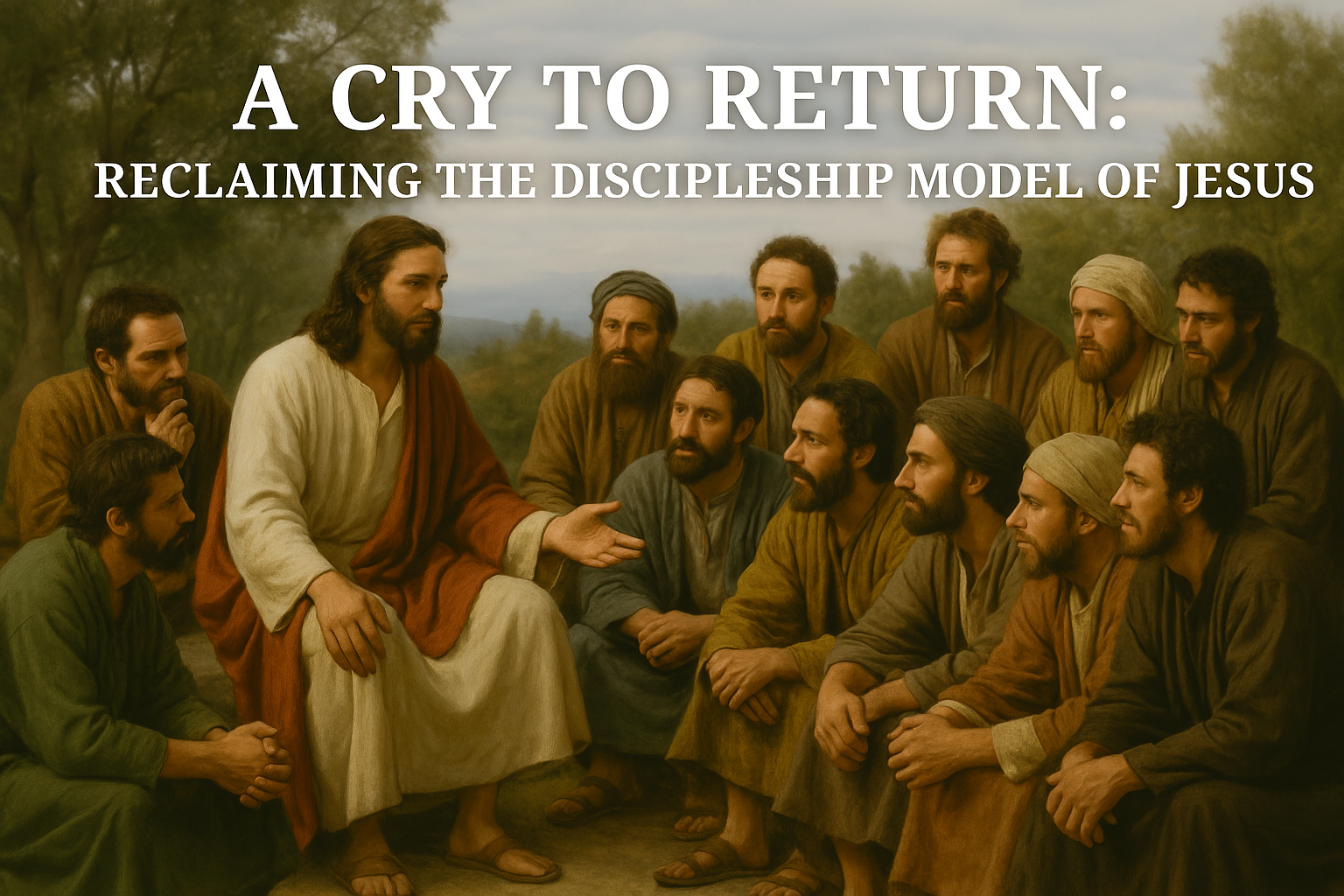
Apostolic Authority differs fundamentally from hierarchical or positional power structures. In the New Testament, apostolic leaders functioned primarily as spiritual parents who earned influence through relationship, demonstrated character, and proven ministry effectiveness.

They led through service rather than control, modeling Christ’s approach to leadership as exemplified in washing His disciples’ feet.

This servant-leadership paradigm contrasts sharply with ecclesiastical systems that confer authority through formal titles or institutional positions.

The essence of apostolic authority lies in its Holy Ghost inspired influence rather than its control. Apostolic leaders in the early church extended their ministry through relationship networks rather than organizational structures.

Their authority was recognized by Holy Ghost, and voluntarily by those who benefited from their ministry rather than imposed through ecclesiastical sanctions or denominational mandates.

This relational foundation creates a more organic, resilient connection than institutional affiliations that may dissolve when organizational politics or priorities shift.

Apostolic authority manifests primarily through equipping and releasing others rather than consolidating power. Paul’s ministry exemplifies this approach—he established communities, developed local leadership, and then moved on to new territories.

His ongoing relationship with these churches focused on encouraging their growth toward maturity rather than maintaining dependent connections. This pattern stands in marked contrast to modern systems that often foster dependency on professional ministers.

Participatory Community
Participatory Community reflects the New Testament vision of church as an active body rather than a passive audience. The biblical metaphor of the church as a body presupposes that every member has a vital function to perform.

This understanding transforms gatherings from spectator events into collaborative expressions where diverse gifts operate for mutual edification. Such participation extends beyond token involvement to meaningful contribution in worship, ministry, and decision-making processes.

The experience of community in apostolic churches transcends casual social connection to covenant relationship. Members understand themselves as spiritually joined to one another, sharing a common identity and purpose that shapes their priorities and commitments.

This covenant relationship creates the necessary foundation for genuine accountability, conflict resolution, and shared life that extends beyond weekly services into daily interaction and practical support.

Community engagement in the apostolic model extends beyond internal fellowship to active engagement with the surrounding society. Rather than creating Christian subcultures isolated from their neighbors, early believers remained embedded in their communities as salt and light.

They demonstrated Kingdom values through practical service, ethical business practices, and compassionate response to societal needs. This engagement provided both credibility for their message and opportunities for witness that institutional isolation cannot produce.

Practical Spirituality
Practical Spirituality characterizes the apostolic approach to faith, emphasizing tangible expression of spiritual realities in everyday life. Unlike religious systems that separate sacred from secular domains, apostolic Christianity integrates faith into all aspects of human experience.

Believers are equipped to exercise their spiritual authority in family relationships, workplace environments, and community involvement rather than compartmentalizing spirituality to religious activities.

The supernatural dimension remains central to apostolic spirituality. The New Testament presents a faith characterized by divine healing, prophetic guidance, angelic assistance, and spiritual warfare as normal aspects of Christian experience rather than exceptional phenomena.

This practical supernatural ministry emerged from intimate relationship with God rather than formulaic techniques or specialized gifting limited to professional ministers.

All believers were expected to manifest spiritual gifts as the Spirit directed.

Holistic development marks apostolic approaches to discipleship. Rather than focusing exclusively on intellectual knowledge or emotional experiences, apostolic ministry addresses the whole person—spirit, soul, and body.

Character formation receives as much attention as gifting development. Financial stewardship and vocational excellence are considered spiritual matters alongside prayer and Bible study. This comprehensive approach produces believers equipped to represent Christ effectively in every dimension of life.

Leadership Multiplication
Leadership Multiplication distinguishes apostolic movements from institutional maintenance. Paul instructed Timothy to entrust what he had learned to faithful individuals who would teach others also, creating a four-generation multiplication process (2 Timothy 2:2).

This intentional reproduction stands in stark contrast to centralized systems that channel potential leaders through institutional bottlenecks like seminary training or denominational ordination processes that often restrict rather than accelerate leadership development.

Mentoring relationships provide the primary context for leadership development in apostolic systems. Emerging leaders learn through life-on-life impartation rather than merely academic instruction, absorbing values, developing character, and acquiring practical ministry skills through observation and guided experience.

This relational approach transmits both formal teaching and tacit knowledge—the unspoken wisdom that comes only through proximity to experienced practitioners demonstrating ministry in real-life contexts.

Apostolic leadership development emphasizes character formation alongside skill acquisition. While contemporary systems often credential individuals based primarily on academic achievement or speaking ability, apostolic communities recognize that lasting leadership influence flows from integrity, humility, and proven faithfulness.

The qualifications for elders outlined in 1 Timothy 3 and Titus 1 focus overwhelmingly on character qualities rather than professional competencies, establishing a pattern that apostolic reformation seeks to restore.

Evangelical Mission

Evangelical Mission drives apostolic movements, maintaining the outward focus that prevents communities from becoming self-absorbed and maintenance-oriented. The Great Commission remains central rather than peripheral, shaping priorities, resource allocation, and ministry structures. This mission orientation ensures that churches exist primarily for those not yet part of them rather than primarily serving the preferences of existing members.

Kingdom advancement rather than institutional growth distinguishes truly apostolic mission. While many modern churches measure success by attendance, buildings, and budgets, apostolic leaders evaluate effectiveness by transformed lives, disciples made, and new communities established. This kingdom perspective enables cooperation across organizational boundaries, as leaders recognize fellow workers contributing to the same divine purpose rather than competing for market share in the religious economy.

Contextual adaptation characterizes apostolic mission strategy. Paul became “all things to all people” to effectively reach diverse cultural groups. This principled flexibility stands in contrast to standardized approaches that export cultural forms alongside the gospel message. Apostolic movements distinguish between unchanging biblical principles and adaptable methodologies, allowing indigenous expressions of Christianity to develop in each cultural context rather than importing foreign practices that create unnecessary barriers to reception of the gospel.

The modern church faces a pivotal choice: continue maintaining inherited traditions and structures that increasingly fail to engage contemporary culture, or embrace the challenging but revitalizing path of apostolic reformation that returns to foundational principles while contextualizing their expression for today’s world. Recognizing these deviations represents the first step toward restoration, requiring both honest assessment of current practices and courageous commitment to biblical patterns regardless of institutional resistance.

Reclaiming the Essence

The Apostolic Reformation ultimately represents a recalibration—aligning modern church expressions with timeless biblical principles. This movement challenges believers to distinguish between cultural accommodations that have accumulated over centuries and the essential, unchanging foundations of authentic Christianity. Such discernment requires both historical awareness and scriptural literacy, understanding how and why the church evolved away from its original pattern while maintaining clear vision of the apostolic blueprint.

Throughout church history, reformation movements have consistently emerged when dedicated believers recognized the gap between contemporary practices and biblical patterns. From the Waldensians to the Protestant Reformers to the Methodist revival, these movements sought to recover lost aspects of New Testament Christianity. The current Apostolic Reformation stands in this historic tradition, addressing areas where even previous reformations left work unfinished. Like those earlier movements, it faces institutional resistance while offering renewed vitality and relevance to a changing world.

The restoration of apostolic Christianity does not imply simplistic attempts to recreate first-century cultural forms or practices. Rather, it involves discerning the underlying principles and values that animated the early church and applying them within contemporary contexts. Just as the apostolic communities contextualized the gospel message for diverse cultural settings in their day, modern apostolic reformation seeks relevant expressions for today’s world while maintaining fidelity to foundational truths and values.

This reformation journey requires both courage and humility—courage to challenge entrenched systems and practices that have deviated from biblical patterns, and humility to acknowledge that no individual or group possesses complete understanding. The process involves collaborative discovery, experimental application, and continuous refinement as communities learn together what apostolic Christianity looks like in their particular context. Such humble courage characterizes genuine reformers throughout church history.

Apostolic Reformation calls believers to rediscover the dynamic, relational, Spirit-empowered essence of original Christianity, understanding the historical context that shaped the early church, and courageously addressing modern deviations from this pattern to create authentic expressions of biblical community suitable for reaching today’s world.

Returning to Our Apostolic Foundation

The journey of rediscovering our apostolic roots isn’t simply an academic exercise—it’s a vital spiritual awakening. As we’ve explored throughout this chapter, the essence of Apostolic Reformation lies in reconnecting with the vibrant, Spirit-led practices that defined the early church. This reconnection isn’t about nostalgic longing for the past, but about reclaiming the power, authority, and effectiveness that Christ intended for His Body.

When we examine the foundational principles of Apostolic Reformation, we find a blueprint not created by human ingenuity but designed by divine wisdom. The five-fold ministry—Apostles, Prophets, Evangelists, Pastors, and Teachers—wasn’t established as an organizational chart but as the living structure through which the Holy Spirit would equip believers for works of service.

The early church understood this dynamic. They lived it daily. Their gatherings weren’t mere religious exercises but transformative encounters with God’s presence. Their governance wasn’t bureaucratic but Spirit-led. Their impact wasn’t measured by building size but by kingdom advancement. They changed their world not through political power but through spiritual authority.

Today’s deviations from this pattern haven’t been without consequence. As we’ve seen, when we replace biblical patterns with human traditions, we inadvertently limit the flow of God’s power and purposes through His church. The institutional frameworks, hierarchical leadership models, and program-driven approaches that characterize many modern churches often bear little resemblance to what we see in Acts and the Epistles.

Yet there is hope. The winds of Apostolic Reformation are blowing across the global Church. Believers everywhere are hearing the Spirit’s invitation to return to the ancient pathways—not to recreate the first-century church in its cultural expression, but to recapture its spiritual essence and apostolic power.

~Dr. Russell Welch
Elder / Apostolic Teacher: Highway to Heaven Church and Founder and Shepherd of Remnant Warrior Ministries / Remnant Warrior School of Spiritual Warfare.

In January of 2022, as the Lord freed me from my service as director at a rescue and recovery mission in Jacksonville beach, to that of the lead Elder at a Church my wife and I had been in relationship with since 2012. As I accepted the role of leadership at Highway to Heaven Church, I did so not just by my inclination but the wise council of a couple of apostolic elders the Lord has placed in my life.

Before I accepted it, having received the council from others,  I continued to seek the Lord for several more days. On the seventh day I listened as Holy Spirit delivered the Lord’s mandate on this transition. “You must follow My lead and return this congregation back to the original intent for my Ecclesia, and allow Me to teach them through you to reset the house to where it stands on the foundational teaching of the Gospel of my Kingdom.

 Until it is established on that foundation, you will see no increase, but when that foundation is established, I will begin sending those for whom I ordained to co-labor with this Kingdom family.

But heed this warning, do not teach them to follower you, or to listen to your voice alone. You must allow Holy Spirit to train them to follow the One true God who dwells in you, even as He dwells in them”.

Ever since I received that commissioning, I have not strayed from the mandate He gave me.

If we are honest we can discern that the vast majority of the Church today struggles in the area of leadership in many ways. Take for example, how often have you heard someone quoting their pastor more than they do the scriptures? Or have you ever attended a “Gathering” where they claim there is no leadership needed in the New Testament Church?

Now a true student of the Word would be lead by the Spirit to interpret Paul’s writings in the New Testament that emphasize submitting to Christ and His teachings, but do not emphasis to submit completely to Paul himself or to any other human authority, even within the church.

While Paul serves as an apostle and a teacher of the gospel, the ultimate authority in the Christian faith and practice is Christ.

Elaboration:

Submission to Christ:

Paul’s writings, particularly in Ephesians, encourage Christians to “submit to one another out of reverence for Christ”. This implies that Christians should submit to one another, reflecting the love and humility of Christ, rather than prioritizing their own opinions or desires.

Paul as an Apostle and Teacher:

Paul is recognized as a key apostle and teacher of the gospel, and his writings offer valuable guidance for Christians. However, his authority comes from his position as an apostle and teacher, not from a claim to ultimate authority over the Christian faith.

Christ as the Head of the Church:

Paul often uses the metaphor of the Church as the body of Christ, with Christ as the Head. This implies that Christ’s teachings and leadership should be the guiding principles for the Church, not the teachings of any particular apostle or human leader.

Avoiding Human Authority:

Paul’s writings also caution against elevating any individual or group to a position of excessive authority, even within the church. Instead, Christians are encouraged to seek guidance from Holy Spirit and rthe the scriptures as well as to cultivate humility and respect for one another, reflecting the humility and service of Christ.

Submission to One Another:

Paul’s writings in Ephesians and other letters also emphasize the importance of mutual submission among Christians. This means that Christians should willingly defer to one another’s needs, opinions, and gifts, rather than seeking to dominate or control others.

Focus on Christ’s Love and Sacrifice:

Paul’s writings consistently highlight the love and sacrifice of Christ as the foundation of the Christian faith. Christians are called to love and serve one another, mirroring Christ’s own love and self-sacrifice.

Now I am in no way implying that there are NO leaders in the Church. In fact, I have witnessed the restoration of true Ecclesia leadership over the past 2 decades as Holy Spirit has been restoring the Apostolic leadership in the Church.

What does this mean?

With a renewed revelation of the Christ centered and led leadership,  it’s also very important that we understand that while this re-alignment has been taking place, satan has been busy infiltrating the Church with his own false apostles, those who are power hungry and seek not just the adoration of the people, but almost demand their loyalty to them and them alone.

 Such are they who twist such scriptures such that speak of the power of Christ, to that of their own power. Case in point Revelation 12:11, which in the KJV reads:

 “And they overcame him by the blood of the Lamb, and by the word of their testimony; and they loved not their lives unto the death”.

 Their twist in this passage of scripture is they prefer to re-direct the attention of the people by replacing the focus as not so much on the Blood of the Lamb but on them and their leadership by the boasting of what “they’ve” done, thus everyone needs to die to their own needs so that they can attend to the needs of the Church leadership.

I have found that out of all the translations out there I am most keen to the passion translation, especially with regard to this passage of scripture as I believe it turns it into something that one could actually hear Jesus telling John:

 “They conquered him completely through the blood of the Lamb and the powerful word of his testimony. They triumphed because they did not love and cling to their own lives, even when faced with death”.

Wow, this brings it home with no room for misinterpretation as to being about Christ, and the powerful deeds that He has done in and through our lives. Even when the enemy comes to try and boost your ego and stir up your pride, the response of the child of God immediately deflates the enemy’s attempt as they respond with. “No you have it all wrong, it was not me that did this, but He who dwells in me, the Lord God”.

Now, if you find yourself under such a leader, pause, and seek the Lord, ask Him if this individual is of His Kingdom or that of the enemy. Holy Spirit will guide you. I have found that true leaders in the Body of Christ are just like the Lord, desiring that those they are discipling to grow and mature into doing even greater deeds than they themselves. They guide, correct and direct from the resevour of Christ’s love in them, never to boost their own image but to encourage the very image of the Lord in others to shine brightly.

~Dr. Russell Welch
Elder / Apostolic Teacher: Highway to Heaven Church and Founder and Shepherd of Remnant Warrior Ministries / Remnant Warrior School of Spiritual Warfare.

May 1, 2025 will be the 463rd Anniversary of the French Huguenots arriving in America, more specifically, right here in Jacksonville Florida in a park resting at the head of the St. Johns River, called Huguenot Park.

I was first introduced to the history of the Huguenots while attending Heritage School of Ministry located here in Jacksonville back in 2003, through a man that would go onto to be my spiritual father, Dr. Don Lynch.

For some reason, the story resonated within me, compelling me to study their history. Then in and around 2014, I met a man that I would later start a ministry called the RiverHouse which was a prophetic and Healing ministry, which included the North Florida healing rooms. He had been studying them for a number of years, and offered a great wealth of knowledge pertaining to them.

In 2018, we were blessed to have Ana Mendez Ferrell join us and lead us in a meeting of repentance, and reconciliation with regard to the slaughter of these precious followers of Jesus Christ, whose only desire was to establish a land (country) where Christ could be worshipped freely and in truth.

In celebration of this anniversary, I would like to share a bit about the Huguenot history, especially with the historical records of the flames of revival that they carried and brought here to North America.

But also to prayerfully light a flame in the prayer warriors in this region that read this and encourage them to join me is asking the Father to “Do it again Abba, do it again” …. For I know the Lord is about to do something here in Jacksonville and the State of Florida, as I can feel the intensity that is stirring in the spiritual realm and considering this is a “Open Door” year, let our decrees be heard on Earth and in Heaven…

The Unexpected Vessels
The dawn of the Huguenot revival unveiled a phenomenon that defied conventional understanding. Children, some barely able to form complete sentences in everyday conversation, stood before congregations delivering impassioned sermons with eloquence that stunned witnesses.

Records from the early 18th century document hundreds of cases where young children, between the ages of three and twelve, spontaneously began to preach with a depth of theological understanding that seemed impossible given their limited education and life experience.

These children emerged primarily in the Cévennes region of France, where Huguenot communities faced increasing persecution following the revocation of the Edict of Nantes in 1685.

Like morning dew collecting on the smallest, most overlooked blades of grass, divine inspiration settled upon the least expected members of the Huguenot community.

These tiny vessels, overlooked by authorities and often dismissed even by their own families, suddenly became conduits for messages that both comforted the faithful and challenged the religious establishment.

Their small frames would tremble, their eyes would close, and from their lips would flow words carrying the weight of centuries of theological tradition, yet delivered with a freshness that reinvigorated waning faith.

Historical accounts reveal that these child preachers typically entered trance-like states before delivering their messages. Witnesses described physical manifestations accompanying these episodes: trembling, falling to the ground, and speaking with altered voices that carried unusual power and resonance.

Jean Cavalier, who later became a military leader in the Camisard rebellion, recorded seeing his young cousin “taken by the Spirit” at age six, delivering a sermon on repentance that moved hardened adults to tears.

The child had no recollection of the event afterward, supporting the community’s belief that these were genuine divine interventions rather than rehearsed performances. The phenomenon spread rapidly through the Protestant communities of southern France.

Contemporary accounts suggest that by 1701, in some villages, nearly every child from certain families exhibited these preaching abilities at some point. Catholic authorities and skeptics attributed the occurrences to mass hysteria, parental coaching, or even demonic possession.

However, the consistency of theological content across sermons delivered by children who had never met, combined with the impossibility of such young minds comprehending the complex biblical allusions they referenced, convinced many observers that something extraordinary was occurring.

These child preachers offered hope during a period of intense persecution. Following Louis XIV’s campaign to eliminate Protestantism from France, Huguenot pastors were exiled or executed, churches demolished, and religious gatherings forbidden. Into this spiritual vacuum stepped children who could not possibly have been formally trained in theology, yet who spoke with authority on matters of faith.

Their messages typically focused on themes of perseverance, divine justice, and the importance of maintaining faith despite persecution. One particularly remarkable case involved a four-year-old girl named Marie Dalière who, in 1702, delivered a series of sermons warning of impending judgment against persecutors while offering comfort to the faithful.

The physical toll of these preaching episodes was evident. Children often collapsed afterward, exhausted and unable to remember what they had said. Parents reported that their children maintained ordinary childlike behavior before and after these episodes, showing no special religious inclination in their day-to-day lives.

This stark contrast between their normal childish behavior and their transformed state during preaching sessions reinforced the community’s belief that these were genuine instances of divine inspiration rather than practiced performances.

What makes this phenomenon particularly remarkable is the sharp contrast between these children’s limited cognitive development and the sophisticated content of their preaching. Developmental psychology tells us that children at ages three to seven typically struggle with abstract concepts and complex language.

Their thinking remains concrete, their vocabulary limited, and their grasp of metaphorical language minimal. Yet these young Huguenot preachers employed complex theological concepts, referenced obscure biblical passages, and used rhetorical devices that would challenge educated adults.

Like uncarved blocks of marble suddenly revealing masterful sculptures without the touch of a human chisel, these children displayed abilities that transcended ordinary developmental processes. Their messages emerged fully formed, articulate and profound, without the gradual learning curve that characterizes normal skill acquisition.

This inexplicable leap in capability convinced witnesses they were observing something beyond natural explanation—a divine intervention that purposefully used the weakest members of society to deliver the strongest messages.

If God could speak profound truths through the mouths of three-year-olds who could barely form sentences in everyday conversation, what does this reveal about our fundamental assumptions regarding who is qualified to convey divine wisdom?

Tongues of Fire
Among the most extraordinary aspects of the child prophets’ phenomenon was their apparent ability to speak in languages they had never learned. Historical records document numerous instances of young Huguenot children suddenly able to deliver messages in languages including Latin, Greek, Hebrew, and various dialects they had never been exposed to.

This manifestation, reminiscent of the biblical account of Pentecost, became known as xenoglossia—speaking in actual, identifiable languages unknown to the speaker.

Antoine Court, a Huguenot pastor who initially approached the child prophet phenomenon with skepticism, documented several verified cases where children with no educational background suddenly spoke in perfect Latin or Greek, languages that even most adults in their communities could not understand.

The significance of these unlearned languages extended far beyond mere linguistic curiosity. In an era when Latin remained the language of scholarship and Greek and Hebrew were considered essential for serious biblical study, the sudden ability of uneducated children to speak these languages carried profound theological implications.

The educated elite had long maintained their religious authority partly through their exclusive access to these sacred languages. When illiterate children suddenly began quoting Hebrew scripture with perfect pronunciation and explaining Greek theological concepts with precision, the boundaries between the learned and unlearned dramatically collapsed.

Witnesses frequently documented their amazement at this linguistic phenomenon. Jean-Pierre Maurice, a Swiss pastor who visited the Cévennes region in 1707 to investigate reports of child prophets, recorded hearing an eight-year-old shepherd boy deliver a complex theological argument in flawless Latin, then switch to what appeared to be ancient Hebrew for several minutes of prophetic utterance.

Maurice, who was himself educated in classical languages, wrote: “Having tested the boy afterward, I can attest he has no knowledge of Latin in his normal state, nor can he recognize even the most basic Hebrew characters. Yet in his inspired condition, his command of these tongues exceeds that of many university scholars.”

Imagine a butterfly emerging from its chrysalis with the ability to navigate precisely to a destination it has never seen, guided by instincts it cannot explain.

Similarly, these children emerged from their ordinary consciousness into prophetic states carrying linguistic abilities that transcended their natural capacities, speaking with a fluency and depth that suggested access to knowledge beyond their personal experience or education.

Let us peition Heaven to pour this powerful anointing out upon His faithful in this generation in the mighty name of Yeshua

~Dr. Russell Welch
Elder / Apostolic Teacher: Highway to Heaven Church and Founder and Shepherd of Remnant Warrior Ministries / Remnant Warrior School of Spiritual Warfare.

Version 1.0.0

The following is an excerpt from my book “Warrior’s Arsenal: Equipping Prayer Warriors with the Armor of God”.

Inside this book with its close to 400 pages you will find, what I believe is, Holy Spirit inspired steps to becoming a Victorious Prayer warrior, through a wealth of battle hardened wisdom that comes from many victories, as well as many defeats.

The insights within theses pages come from my own experiences of not just my 23 years in ministry but also include the close to 45 years of being saved (Including my back-slidden years).

For one of the places I garnered the most necessary experience pertaining to Spiritual Warfare was in times of defeat, for there, I was my found myself in the deepest places of humbly asking Holy Spirit what went wrong, and in His gentle manner, He taugt me not just the error of my warfare but more importantly, what ajustments needed to be made so that I did not repeat the mistakes.

When I first wrote this book, I did so with a hope and prayer that it would find its way into the hands of youth, as they transitioned from High school, either into college or the work places, to be a took that would equip them in ways regarding Spiritual Warfre and how to hold onto to their Faith that sadly most Churches do not.

_____________________________________________________________________

From Stumbling Novice to Battle-Ready Warrior: Why Some Triumph While Others Falter

When facing an unseen enemy, preparation is everything. The inexperienced believer often approaches spiritual warfare with either naive enthusiasm or paralyzing fear—both equally ineffective on the battlefield of the spirit.

Perhaps you’ve felt that surge of determination after a moving sermon, only to find yourself overwhelmed and retreating when the first real skirmish arrives. Or maybe you’ve wondered why some believers seem unshakable during spiritual attacks while others crumble under the same pressure.

The answer lies not in inherent spiritual gifting but in deliberate, consistent development. Just as no soldier earns their stripes without rigorous training, no prayer warrior becomes effective through occasional, halfhearted efforts.

The most formidable spiritual warriors are not born—they are forged through discipline, instruction, and experience. This developmental process forms the foundation of spiritual fortitude, that rare and precious quality that enables believers to stand firm when everything within them wants to flee.

What many fail to recognize is that spiritual warfare mastery follows the same principles as any other significant skill acquisition. The martial artist doesn’t perfect their technique overnight, nor does the master musician develop their craft in a week.

Similarly, spiritual warfare capabilities mature through stages—from awkward beginner to seasoned veteran—each with its own challenges and victories. Understanding this progression prevents the discouragement that causes many to abandon their post before they’ve truly begun to fight.

The spiritual warrior’s path is neither mysterious nor arbitrary; it follows discernible patterns that, once understood, make growth both predictable and achievable.

Perhaps most importantly, we’ll address the patience required in this process. In an age of instant gratification, the gradual development of spiritual fortitude can feel frustratingly slow. Many abandon their training during plateaus or after setbacks, not realizing these are essential parts of the journey.

The prayer warriors who ultimately prevail aren’t necessarily those with the most dramatic spiritual experiences, but those who persevere through the unglamorous daily work of spiritual discipline. This steadfast commitment—more than any specific technique—distinguishes effective spiritual warriors from those who remain perpetually unprepared.

Spiritual warfare requires consistent practice and discipline. Just as a soldier doesn’t become battle-ready overnight, spiritual fortitude develops through regular training in spiritual disciplines. Prayer, Scripture reading, meditation, and fasting aren’t just activities—they’re training exercises that strengthen your spiritual muscles.

When practiced daily, these disciplines sharpen your spiritual senses, making you more attuned to God’s voice and more resistant to the enemy’s tactics.

You can order a copy of “Warrior’s Arsenal” here on Amazon

~Dr. Russell Welch
Elder / Apostolic Teacher: Highway to Heaven Church and Founder and Shepherd of Remnant Warrior Ministries / Remnant Warrior School of Spiritual Warfare.


The American aspiration for “bigger and better,” while often a driver of progress, casts a long shadow on spiritual leadership within the church. 

We’ve subtly, and perhaps unintentionally, morphed servants into superstars, a concept jarringly at odds with the New Testament’s model. The early church understood leadership through the lens of sacrifice, often marked by persecution and rejection, a stark contrast to today’s perceived pathway to acclaim and influence. 

This elevation of individuals to celebrity status within the church carries the insidious risk of idolatry. While the ability to reach millions through a platform is a blessing, the transformation into a “celebrity Christian” is a perilous shift. 

Pastoring a congregation, large or small, is a sacred trust, but fostering personal adoration veers dangerously towards self-worship. Superstar leaders often crave affirmation, allowing their identity to be defined by fame, creating an environment of untouchability and diminished accountability. 

This culture of celebrity ministry stands in stark contrast to scripture and opens doors for profound spiritual danger. Our purpose is to offer worship, not to receive it. 

True spiritual leaders should find contentment in obscurity, magnifying Christ rather than their own personalities. The most gifted and anointed among us are simply servants of all, recognizing that He is everything, and we are nothing. 

Therefore, those in positions of influence must vigilantly guard their hearts against the seductive allure of applause, recognition, prosperity, and power. We must embrace the cross, actively killing the desire for celebrity, and instead, directing all attention and adoration to the only One who is truly worthy. 

As the American church undergoes a period of shaking and refinement, let us embrace humility and recognize that anything less than complete devotion to Christ is spiritual folly. The Lord is purifying His bride, signaling the definitive end of celebrity Christianity.

The subtle shift from relying on scripture to revering a specific pastor as the ultimate authority is a concerning trend within modern congregations. When “It is written…” is replaced with “Pastor So-and-So says…”, red flags should immediately be raised. 

This elevation of individual leaders to near-infallible status fosters a dangerous environment, mirroring the pitfalls of celebrity culture and potentially obscuring the true message of faith. 

The rise of these “celebrity pastors” represents a subtle but pervasive leaven within the American church, often unseen and undiscerned. The emphasis shifts from personal interpretation and engagement with the Bible to blindly following the pronouncements of a charismatic figure. 

This dependence can stifle critical thinking, discourage individual spiritual growth, and ultimately create a culture of unquestioning obedience. The danger lies not necessarily in having respected leaders, but in placing them above the very foundation of the faith. 

The Bible serves as the ultimate source of truth and guidance, and its teachings should be the primary focus of any congregation. When the words of a pastor, however eloquent or inspiring, begin to supersede scripture, the potential for manipulation and doctrinal drift increases significantly. 

Discernment is crucial. It requires a commitment to studying scripture independently, engaging in thoughtful discussion with fellow believers, and holding leaders accountable to biblical principles. 

By fostering a culture of critical thinking and emphasizing the supremacy of scripture, congregations can guard against the insidious influence of personality-driven leadership and maintain a focus on the true message of faith.

An Ordained shift in the Ecclesia Leadership

The heavens weep, not with sorrow for what is lost, but with a fervent plea, a desperate cry for the Bride to return to her first love. Like ancient Israel, seduced by the allure of earthly power and placing their faith in King Saul, humanity has too often turned away from the divine embrace, choosing instead to worship the idols of man. 

We have built monuments to ourselves, placing our trust in fleeting achievements and the hollow promises of earthly kings, forgetting the eternal covenant we have with the Lord God, the source of all creation. 

The air crackles with anticipation, a divine tension pregnant with possibility. The hour has struck, a now word echoing through the corridors of eternity, for a supernatural revival fire to descend. This is not a gentle warming; this is a consuming blaze, designed to purge and cleanse the House of God, to burn away the dross of complacency and lukewarm faith that has choked the life from the Church. 

No longer can we afford to be passive observers, content with the embers of yesterday’s revelation. Right now, in this very moment, the Holy Spirit is not simply whispering; He is roaring. 

He is fanning the flames of a long-awaited reformation, an earth-shaking movement that will not leave a single stone unturned. This is a call to radical obedience, a summons to abandon the comfort of the familiar and embrace the unknown depths of God’s will. 

It is a time to tear down the idols we have erected in our hearts, to cast off the shackles of human approval, and to surrender completely to the transformative power of the Holy Spirit. 

The Bride must awaken, shake off the dust of slumber, and prepare to meet her Bridegroom with a heart ablaze with passion and a spirit wholly devoted to His glory. The time for lukewarmness is over. The time for fire is now.

A Supernatural Spiritual Reset has begun….

From the dawn of creation, an hour was decreed, a moment etched into the very fabric of the cosmos. It is upon us now – the hour of ascension, the moment when the Holy Spirit-fired sons and daughters of the Lord God arise. 

The universe itself has held its breath, poised on tiptoe, in fervent anticipation. Every star, every planet, every swirling nebula has been a silent witness to the unfolding drama, a cosmic stage set for this momentous occasion. 

Even the ancient trees, rooted deep within the earth, stir with excitement, their branches reaching skyward in a silent, verdant applause. They herald the arrival of the Lord’s Holy and Righteous Remnant Army, a force of nature empowered by divine grace, marching forth with unwavering conviction. 

Clothed in the Garments of Warfare, they stand resolute, each piece of their spiritual armor forged in the fires of faith and righteousness, imbued with the power of their Father in Heaven. 

They are not warriors of earthly conquest, but guardians of spiritual truth, protectors of divine purpose. Their mission is not one of destruction, but of reclamation. 

They march under the Command of the Captain of the Host of Heaven’s Army, Lord Sabaoth, Holy Spirit with His directive to first reclaim the seven mountains of influence, and once they have secured and taking possession of these Spiritual Gates, they march on to re-take the House of our God, a sanctuary tarnished by the shadows of worldly influence. 

They are the beacon of hope, accompanied by the Mighty Warriors of Heaven Army, the vanguard of a spiritual revolution, driven by an unshakeable devotion to their Lord and a burning desire to restore the sanctity of His divine dwelling. 

The hour has arrived. The army marches on. The world holds its breath. The restoration begins.

The question is my dear brothers and sisters of the faith, are you going to sit this one out, positioned in a place of idle complacency? Or are you ready to WAR?

~Dr. Russell Welch
Elder / Apostolic Teacher: Highway to Heaven Church and Founder and Shepherd of Remnant Warrior Ministries / Remnant Warrior School of Spiritual Warfare.

If Brother David Wilkerson were alive today, I believe he would address the Church with the following message:

 In a world saturated with cultural trends and societal norms, the call to spiritual transformation stands as a beacon for the faithful. Romans 12:2 urges believers to cease conforming to the ideals and opinions of the surrounding culture and to experience a profound inward transformation through the Holy Spirit.

This transformation is not merely about personal improvement; it holds the power to discern God’s will and live a life that is pleasing and perfect in His eyes. The challenge lies not only in personal reflection but also in how the Church embodies the essence of the Kingdom of God amidst an ever-changing cultural landscape.

The leadership within the Church faces a critical juncture where the temptation to reflect worldly values threatens the authenticity of the Gospel. The allure of trendy beards, tattoos, and modern aesthetics may be appealing, yet they do not inherently represent the Kingdom of God. Instead, these external markers can distract from the deeper, transformative work that God desires in the hearts of His people.

The Gospel of the Kingdom serves as a powerful agent, capable of delivering those lost in darkness into the marvelous light of God’s love. It is crucial for church leaders to recognize that true representation of the Kingdom cannot be achieved through superficial means; rather, it stems from a life empowered by the Holy Spirit.

The Apostle Paul addresses this issue with clarity, reminding the Corinthians that the essence of the Christian faith is rooted in purity, patience, kindness, and spiritual insight. True leadership and influence come from living according to the principles of the Kingdom, armed with the “mighty weapons of righteousness.”

This means being steadfast even in the face of dishonor and rejection, understanding that worldly accolades hold no value compared to the richness of spiritual legacy. The Apostle’s message highlights the importance of distinguishing between the values of the Kingdom and the trends of the world, urging believers to make room in their hearts for the transformative love of God.

Furthermore, the call to separate from worldly alliances is echoed in 2 Corinthians 6:14-18. This scripture challenges the idea of blending in with a culture that often stands in opposition to God’s truth. The partnership between righteousness and rebellion is inherently incompatible; light cannot coalesce with darkness.

The command to be separate isn’t a call to isolation but an invitation to embrace an identity rooted in divine purpose. As the Temple of the Living God, believers are reminded of their identity and position before God.

The promise of God’s presence among His people serves as a reminder of the high calling to which they are summoned. While external expressions such as beards or tattoos are not inherently wrong, they should never serve as a measure of one’s anointing or acceptance.

The heart’s condition is what truly matters; it is the heart that ought to be marked by the Word of God, resonating with surrender and obedience. If the Church is to impact the surrounding culture meaningfully, it must be fully surrendered to the Holy Spirit’s leading.

As declared in the scripture, “Not by might, nor by power, but by My Spirit, says the Lord of Hosts,” the emphasis on Spirit-led transformation cannot be overstated. Thus, the hope for the Church lies not in adopting worldly characteristics but in being renewed and transformed by the Holy Spirit.

The prayer for a cleansing fire to sweep across the nation is a call to return to the foundational truths of the Gospel. It is an appeal for believers to awaken to their true identity as reflections of the Father, Son, and Holy Spirit.

As the Church aligns itself with the Kingdom of God and embraces the transformative power of the Holy Spirit, it can rise to meet the cultural challenges of our time, illuminating the path for others to follow.

In this journey of faith, let us remember that the beauty of a life lived in accordance with God’s will is the most powerful testimony of all.


~Dr. Russell Welch
Elder / Apostolic Teacher: Highway to Heaven Church and Founder and Shepherd of Remnant Warrior Ministries / Remnant Warrior School of Spiritual Warfare.

A radical transformation, from the Seed of Faith to a Seasoned Warrior

From the first time I heard the phrase “Spiritual Warfare” from Derek Prince at a meeting in Portland, Maine in 1983, it planted a Spiritual seed in me. This moment was a defining point in my spiritual journey, marking the beginning of a profound transformation.

In 2002, under the mentoring of Dr. Don Lynch, the Lord poured into my life what I interpreted as a “Miracle Grow Anointing.” This anointing catalyzed a significant shift in my spiritual life, empowering me in ways I hadn’t previously experienced. Looking back, I can see how I have been in the fires of that Warfare ever since.

Some of this warfare came from the Father, in the form of pruning, purging, and purifying my walk before Him. These periods were challenging, yet they were essential in refining my character and fortifying my faith. The Father’s hand was evident in these trials, shaping me into a vessel that could withstand greater battles.

At other times, the warfare was instigated by the enemy, testing my resolve and faith in the most trying of circumstances. There were also instances when, in my immaturity, I brought warfare upon myself. These self-inflicted battles were perhaps the hardest, as they required me to confront my own weaknesses and grow beyond them.

Although I understand now that not all battles were ordained by the Father, each one was permitted by Him. The Holy Spirit has shown me how the Father has taken what the enemy meant for destruction in my life and repurposed it for my good. Each battle, regardless of its origin, has been a tool in the Father’s hands to strengthen and equip me, bringing me to where I stand today – as a seasoned warrior.

I remember the days when my prayers were full of my own words, telling the Father what I wanted Him to do. Those prayers often felt like they hit the ceiling and bounced back. It was a humbling realization that true prayer is not about directing God but aligning oneself with His will and listening to His voice.

This journey has been one of learning and unlearning, of falling and rising, and of being broken and remade. Each step, each battle, and each moment of pruning has drawn me closer to the Father and solidified my dependence on Him. Today, I stand not only as a warrior but as a testament to His grace, mercy, and unfailing love.

Through all the fires of warfare, the Father has been faithful, turning every trial into a testimony and every struggle into a stepping stone towards a deeper understanding of His purpose for my life.

And I believe that is part of my calling, to not only war in the Spirit but to teach and train-up other Warriors with Christ-like discipleship of pouring in their lives, everything the Father has poured into mine.

Which is why I can see the aspects of Spiritual Warfare being included in all the books I have written, am writing and shall write in the future.

As the lead Elder and Apostolic teacher at Highway to Heaven Church, I have spent hours praying to the Father, as just the word “Church” troubles me in the sense that He has called me to teach and train-up Warriors, I lean more towards the name Remnant Warrior Boot camp.

However, Holy Spirit keeps reminding me that even though many have been drawn to and now sit encamped in the religious meaning of “Church”, under the control of the religious spirit, which has been around since the fall of the first Adam. We must understand that there is nothing that can stand in the way of the Father’s ability to work around whatever the enemy attempts to use to slow down, or even to ultimately stop Him from reaching His Children.

I have had a number of people ask me, “Why do you always talk about Spiritual Warfare?” The answer is simple: “Because that is the spiritual lane the Father has ordained me to walk in.”

It has come with a cost; at least three times that I am aware of, the enemy sought to take me out. The first was in 2007, with a heart attack, the second was in 2020 via COVID-19, and the third was on November 13, 2023, with a stroke.

Which ironically was on the same day that I committed to the Father’s which I received a prophetic meeting, calling me to join in with other Spiritual Warriors across the nation to retake and occupy the “Spiritual Gates of Government and the Church”

Now, I have no idea how many times the Angels assigned to me have foiled the attempts of the enemy, only they and the Father know. However, I am hoping that when I finally cross through the spiritual veil of this life, to live in Paradise (Garden of Eden), I can view the replay.

So to answer the question of why I write so much about Spiritual Warfare, and the Remnant Warriors, is because that is where the Father has me, confirmed by the fact that Holy Spirit is consistently speaking to me with regard to the Remnant and Spiritual Warfare.

Over the years I have attempted to walk in a different calling, evangelist, preacher and such, however the anointing have never flowed in those areas, I didn’t not discern the Father’s hand in those positions, however when I am teaching, counseling, and writing about the Remnant and Spiritual Warfare, I can feel the passion of the Lord in and over my life.

And in all the books I have read, of those who did great exploits for the Kingdom, they all knew and had accepted the calling of the Father on their lives. And with that, the day that I accepted my calling, the realm of the spiritual opened to me, and in spite of all the attempts of satan on my life, and in time where the battle was so fierce, I have never not once felt His presence with me. 

I have never had an ounce of fear overtake me during these times of engaging in Spiritual Warfare, nor the times of when the enemy attacking me physically, but rather the Spirit which cries out victory, overcomer, and more than a conqueror has risen up in me.

Friends, if you do not know what you’re calling is, or if you are attempting to operate in someone else’s calling, take some time to seek the Lord, pray and ask Him what His calling is on your life. mediate on the Word, and if Holy Spirit leads you to fast, then fast. Trust me, the Father so loves to share with His children, what His calling and ordained destiny is.

A word of caution in closing, when I say pray, I mean have a two-way conversation, ask the Father, and give Him time to respond. Holy Spirit showed me this aspect early in my walk. Remember, He had offered the Israelites the opportunity to enter into an intimate personal relationship with Him, but the rejected that offer, having still the slave mentality telling Moses, you talk to Him, and then tell us what He said, and we can see where that got them


The following is a picture into the 20 years of life and ministry which includes set backs, detours, road blocks and many course corrections, written from a humble heart filled with gratefulness to a loving God..

This morning during my walk with Holy Spirt and the SkyBear (my German Shepherd) I was led to look back on my life since 2001.

On December 31 of that year I decided to get a fresh start and moved to Jacksonville for what I thought would be a short stay, as I came here to attend a school to get my CDL.

But Holy Spirit pointed out that it was a path ordained of the Father, for little did I know that it would lead to me attending a Church service where I would repent and rededicate my life to the Lord after 20 some years of living in rebellion.

 I came down to attend a school to my CDL, which I did and started driving for a company based in Jacksonville with plans of driving around the country.

But Holy Spirt showed me that because I was avoiding the call on my life to preach the Gospel, which the Father called me to do when I was just 10 years old while sitting in a Methodist Church in Patten Maine

My plans of driving around the country, however that thought came to an abrupt end when I fell off the top of a load and messed up my right knee. This took place in the spring of 2002 Holy Spirit then showed me that the Father allowed an accident to happen so as to redirect my life to the steps that would lead me to fulfill His calling on my life.

 During my recovery I decided to attend ministry school and met a man of God, Dr. Don Lynch, who became my Spiritual father.

Also during that time, I found myself looking a the Christian Mingle dating website where I happened across this beautiful Filipino, who just happened to be here on a student visa and was attending Brownsville Revival School of Ministry in Pensacola Florida.

We began chatting and during the Thanksgiving break she came to Jacksonville to visit her former pastor and his wife who had pastored a Church in Hong Kong, where she was the Sunday School teacher.

We began dating and I would drive to Pensacola where the school was and attended a number of powerful revival meetings. Then at the beginning of  February (2003) I had a dream where Jesus led me to an ocean beach, He bent down and picked up two small stones and said “One of these stones has been brought here from another nation having flowed with the currents of the ocean, for the Father purposed the time when they would be joined together.

So has He brought Emilie (My wife’s name, for those who know her by her nick name Millette) to be joined with you in marriage. I was overwhelmed and went out a bought an engagement ring and decided to ask her to marry me while I visited her for Valentine’s Day.

Now do to a past of many rejections, I had to muster up all the courage I had and drive over from Jacksonville. When I arrived at the home she was staying in I got down on one knee and proposed to her.

Her answer was, No, followed by I don’t even like you that way. Well let’s just say the wind was taking out of my sails. However I had this inner peace where I knew what the Lord had said, so I simply turned it over to Him.

A couple months later while she was visiting a friend in San Diego, she called me and said she had a dream and the Lord told her she was to marry me. We made plans and she graduated in May of 2003, and we got married on June 14th of 2003.

I had a full-time job while at the same time I continued my schooling. We had some struggles but the Lord always saw us through them. Then on June 6, 2004 we were blessed with a beautiful gift from God. For on that day, my wife gave birth to our son, Joshua Karsten Welch.

The Lord had given me his first name which in Hebrew means “Yahweh is salvation” and He gave my wife his second name, which in Greek means “Anointed”. The Lord shared with me why I was to call him Joshua, for he would be the first in many generation of our family to serve him and not be taking captives to addictions or any other curse that was in our family line.

In fact He said that the anpointing He was going to place on His life, would be like the blast shofars sounding, and the sounds of the people, that saw the walls of Jericho come crumbling down. So would the generational curses be cut of by my son, Joshua obedience to the Lord’s call on his life.

Let me take a moment to share a powerful testimony. I had always suffered with migraine headaches from my childhood all the way into my adulthood. Migraines were a curse which had plagued our family for several generation. When Josh was five years old, there was a day when I was unable to do anything because of a migraine, and he begged me to take him to the park. I said your going to have to ask Jesus to take daddy’s headache away.

He leaned over me, placed his little hand on my forehead and said “Jesus, take this stupid headache off my daddy, and tell it to never return”. That headache went away instantly and I have never had a migraine since that humble, innocent hearted prayer offered up by my son.

After graduating with an associate degree in the fall of 2004, I was ordained in February of 2005 and we were led by Holy Spirit to start a ministry called Mighty Arm Ministries, which at the time primarily focused on the elderly in nursing homes.

The Lord said this is a call to be a Spiritual Gatekeeper, as these are those who are about to enter their eternal destiny. Glory to God, for during that time we witnessed a number of people accepting the Lord. My son at 6 years old played a part, as every Sunday he would go with me, knock on the doors, and say “You wanna come here Jesus”. There was a man named Doc, who every week would say “Not today preacher boy”

Then one Sunday to our surprise, he came down, then came back for several more weeks. Then one Sunday, he asked the Lord Jesus Christ to be His Lord. The very next week, he passed in his sleep, but praise the Lord, we know we will see him again one day.

In the spring of 2005 something happened that caused us to leave the Church we had attended since getting married, and I had attended since 2002. Holy Spirt showed me that the Father had allowed this so that we would start holding a Church service in a local nursing home.

Holy Spirit at the time, showed me that many in that home had the desire to go to church but none would pick them up, so the Lord said “Bring my Church to them”.

In the fall of 2005, my Spiritual father (Dr. Don Lynch) who had also left the Church, invited my wife and into attend a weekly meeting they were hosting in their home under the Ministry name the Father had given him called “Ministry Matrix”. Shortly thereafter the Lord led me to take the position known which is referred to as an “Armor Bearer”. Then in November of 2007, we were ordained as leaders in that ministry.

Thing happened that caused us to leave in the beginning of 2010, which Holy Spirt showed me this morning, that the Father had allowed, even though left due to a spirit of rebellion. We went back into doing Sunday services at the nursing home and then in the fall of that year we were invited to be part of the leadership team to launch a new Church start.

 In the spring of 2013, the Lord called me to leave that Church as He had an assignment for me at a local bikers Church, pastored by Chet “Preacher man” Harden. I became the associate pastor there from 2013 up until the Spring of 2016, shortly after having a powerful life changing encounter with the Lord , which stripped me of all the religious garments I had allowed the spirit of religion to put on me, and to be honest, that encounter literally changed my whole theology.

In December of 2015, we were part of the leadership team that founded the “Riverhouse” ministry. After resigning from Highway to Heaven (On a friendly note) in the fall of 2016, I started leading a Sunday service at the Riverhouse.

In 2018 we launched the North Florida Healing rooms” which my wife and I we co-directors. Then, jumping to the fall of 2019, the enemy had some how caused division between me and the other founding leader which led my wife and I to leave that ministry.

However, again looking back on that situation this morning, Holy Spirit showed me that the Father had allowed this to happen as He had a new assignment for me. Ultimately that ministry shut down after the founder went to be with the Lord after a long battle with cancer(lesson in that for a later date).

That assignment was to become the director of a homeless rescue mission in Jacksonville Beach, which lasted until February of 2022. On August 19, 2020, my son and I visited the place of a powerful nation changing revival, Cane Ridge in Kentucky with my son. That date was actually the 219th year anniversary of that revival. We spent about 2 hours walking around, reading the grave stones, and soaking in the presence of the Lord.

 Holy Spirit spoke to me about 30 minutes after leaving there and said “The Father wants you to go back and start discipling His Children even as Jesus discipled His. I immediately said cool.

But then about an hour later, I said what does that even look like, as I have come to believe the Church as a whole has wander away from Christ-like discipleship.

 He began downloading what that looked like, which started with “Jesus discipled the men who followed Him by pouring into them, everything the Father had poured into Him. So unlike giving discipleship teaching from the pulpit, or even holding weekly discipleship meeting, the style Jesus displayed was relational, interacting with each other pretty much on a daily basis.

I started to implement this at the mission, and witnessed the Lord doing some powerful works in the disciple who were at the mission. But then, in the fall of 2021, a spirit of Jezebel, jealousy, and offense took hold of a few members of the leadership. And they began conspiring again with me in the secret place of darkness.

Now, what was happening at the mission up to that point can only be described in a way that gives Glory to the Father, as a portal of Heaven was opened up there. One lesson I learned during that time was I neglected to gather intercessor for me and the mission as a whole.

 Now, looking back at the time I left Highway to Heaven Church, which I previously mentioned that I  left on good terms. I had actually started preaching back there once a month in 2018, then it transitioned into twice per month in 2021.

 In the fall of that year, pastor Chet approached me and said he was considering retiring and wanted me to take his place. This was troubling to me, as I felt the Lord wanted me at the mission.

However, Holy Spirt showed me that I never actually asked the Father. He then showed me that during a Thanksgiving visit to Maine, He had allowed a coup to take place at the mission. What He had allowed to transpire was do to a door I unknowingly opened a door, as having been in a major spiritual battle over the mission for close to 6 months had taking its toll on me, and I began to respond out of the flesh.

This open door gave access to the spirit of disobedience to take place to where the Father’s call to make disciples as had His Son, was put on a shelf. However, having witnessed to results while the discipleship like Jesus was taking place, Holy Spirit said that it was but a foreshadow of what would be the mark of my wife and my calling.

He then shared with me that the mission was not prepared for what He desired to do there. Now from November of 2021 through January of 2022, the spiritual battle I faced every day got uglier and uglier.

I had previously mentioned my departure from the ministry led by Dr. Don Lynch. Shortly after my encounter with the Lord on March 28, 2016, Holy Spirit opened the door for Dr. Don and I for reconciliation After which I was led to lean into his mentorship more and more while at the same time, having been seated by the Lord in the spring of 2016, under the teachings of Apostle Damon Thompson. Holy Spirit also led me to attend many of the Under the Oaks meetings he has held over the years, which I still attend.

But back to the mission and Dr. Don Lynch. In January of 2022, I had multiple conversations with him regarding what was happening at the mission, then at the start of February I had a dream where the Lord said He was calling me to Shepherd the people at Highway to Heaven Church.

I shared this dream with Dr. Don who not only said he felt a witness to the dream but as he put it in classic Apostle Don Lynch fashion “Son, if God told you he wants you to do that, you’d better do it”. We ended the conversation with a “let’s get together after my heart surgery as I have somethings to share with you that I received while praying for you and your wife.

Needless to say that meeting, as a few days after his surgery, he went to be with the Lord. I took is wise advice, resigned from the mission and accepted the position of Senior Pastor at the Church.

However, I felt a loss in my life, not having a Spiritual father to run things by and on occasions have a heart check. Yes, I am most certainly matured enough to lead a Church, and even though I have spiritual sons myself, I understand and fully grasp the importance of having an Apostolic covering, as it is one of the spiritual guard rails the Lord has equipped the Church with.

Needless to say, if was a powerful meeting with Holy Spirit. If I could draw a map of what has taken place over the past 20 years, it would show my stepping off the ordained path, a series of roadblocks which lead to course corrections. In spite of the many times, in which I rebelled failing to ask the Father His desire, and took hold of the spiritual steering wheel of my life, the grace and mercy of the Father has always brought a course correction which I have to be honest almost always came with a hand of discipline.

Today, having just entered a new year, I have committed to dealing with things on a daily basis, leaving tomorrow in the wise hands of the Father. For did not our Lord say: Refuse to worry about tomorrow, but deal with each challenge that comes your way, one day at a time.  Tomorrow will take care of itself.” (Matthew 6:34, TPT)

One of the early lessons Dr. Don taught me was maintaining the ability of never leave a place with offense, but rather leave with the gold that you received – meaning we are to take the good things (lessons, revelations and Kingdom truths) with us, and  a heart of forgiveness and even repentance, leave the negative things behind.

So with that in mind, I am committed to living my life and all the tomorrows it has, under the governing authority of the One whom the Father sent, to lead us into all Spiritual truths, Holy Spirit.

~Dr. Russell Welch
Elder / Apostolic Teacher: Highway to Heaven Church and Founder and Shepherd of Remnant Warrior Ministries / Remnant Warrior School of Spiritual Warfare.

For several weeks, more specifically, since November 5, 2024, I have been resonating with a profound phrase in my spirit: “Gideon’s remnant army is arising!”

This declaration evokes the Biblical tale of Gideon, found in Judges 7, where the Israelites, hardened by their own transgressions, find themselves oppressed by the Midianites. After seven years of tyranny, they are reduced to hiding in the mountains and caves, stripped of their strength and dignity.

In this dire situation, God calls upon Gideon to rally an army, but the Lord, in His divine wisdom, reduces Gideon’s forces from 32,000 warriors to a mere 300. This seemingly small number against the vast Midianite army symbolizes a powerful truth: God’s strength is made perfect in our weakness.

God’s intention in this narrative was not solely to confront the Midianites but also to challenge the Israelites’ idolatry and reliance on false gods. The Israelites had turned away from the very foundation of their strength—faith in God.

As we reflect on the current state of our nation, it is impossible to ignore the parallels. A country that once proclaimed, “In God We Trust” now grapples with moral confusion, celebrating darkness as light and heralding evil as good.

The flag that once signified freedom and divine dependence is increasingly overshadowed by symbols that represent depravity and disorientation. In this context, the remnant—those who remain steadfast in faith amidst chaos—becomes a beacon of hope.

Returning to Gideon’s narrative, the Lord equips him and his 300 men with unconventional weapons: clay pots, torches, and ram’s horns. These instruments of warfare defy human logic and convention.

Yet, God instructs Gideon to act in unison with his men, demonstrating the power of unity and obedience to divine command. When they break the clay pots and reveal the blazing torches, they signal not only their presence but also the manifestation of God’s power in the midst of overwhelming odds.

The Midianites, caught in confusion and panic, turn on one another, resulting in a victory that no human strength could claim. This ancient story serves as a prophetic reminder for the church today.

The body of Christ finds itself facing an expansive “enemy army” that appears insurmountable. The mainstream media, which I humorously refer to as “Mediaites,” has become a formidable force, spreading misinformation and fostering division among the people.

Yet, even in this bleak landscape, there remains a remnant—those who refuse to bow to the pressures of the world and continue to wield the light of truth against the shadows of deceit.

The assurance from 2 Kings 6:16 resounds with clarity: “Don’t be afraid… Those who are with us are more than those who are with them.” The battle may seem daunting, but the heavenly hosts stand firm alongside the remnant.

We are called to carry the blazing torch of truth and declare the victory of Yahweh with the sound of our voices. The time is approaching when the clay jars will shatter, and the light will shine forth, illuminating the darkness and instilling fear in the hearts of the oppressors.

As we navigate the societal unrest and chaos that characterize our current era, it is crucial to recognize that the conflict extends beyond physical manifestations.

It is a spiritual battle—a Civil War of ideologies, morals, and truths. The remnant army, empowered by faith, will rise up, uniting their voices to strike fear into the hearts of the wicked.

The message is clear: tyranny will not triumph, and the oppressors will not prevail. Gideon’s army, a testament of faith and divine intervention, will once again emerge victorious. In conclusion, the tale of Gideon’s remnant army is not merely a historical account; it is a prophetic call to action for believers today.

We are reminded that it is not by human might or power that we achieve victory, but by the Spirit of the Lord. As we embrace our roles as warriors in this spiritual battle, let us remain steadfast, united, and resolute in carrying the light of truth into the darkness.

The remnant is rising, and with it, the promise of victory in the face of overwhelming odds.

~Dr. Russell Welch
Elder / Apostolic Teacher: Highway to Heaven Church and Founder and Shepherd of Remnant Warrior Ministries / Remnant Warrior School of Spiritual Warfare.