Posts Tagged ‘Spiritual warfare’


FROM CONSECRATION TO COMMISSION

“As My Father hath sent Me, even so send I you.” — John 20:21

In Part One, the trumpet sounded with a necessary warning: before the Remnant confronts the darkness around us, Holy Spirit must be permitted to confront everything within us that does not belong beneath the Lordship of Jesus Christ. Consecration must precede confrontation because spiritual authority cannot be safely carried by an ungoverned vessel. Purity, surrender, repentance, and obedience are not secondary matters for those who desire to stand in Kingdom authority; they are the foundation upon which that authority rests.

Yet consecration is not the destination. God does not cleanse a people merely so they can remain separated from the battle, nor does He sanctify them so they can become a spiritual class set apart from everyone else. He purifies them because He intends to send them, and He forms them because they must be capable of carrying His nature, His Word, and His authority into the places where darkness has established influence.

There is a danger in discussing the Remnant only in terms of separation, preservation, or distinction. Scripture certainly reveals that God preserves a faithful people in seasons of compromise. Elijah discovered that God had preserved seven thousand who had not bowed the knee to Baal, Isaiah spoke repeatedly of a remnant that would return, and Paul carried the principle into the New Testament when he declared that there remained a remnant according to the election of grace. However, biblical remnant theology never presents God’s faithful people as an isolated religious club congratulating itself for seeing what everyone else has missed.

The Remnant is preserved for purpose. God preserves a people because He intends to demonstrate His faithfulness through them, and He separates them from corruption so they can become useful to His Kingdom. He refines them because unrefined vessels cannot faithfully represent a holy King, and He awakens them because sleeping believers cannot fulfill active assignments in the earth.

The Remnant must therefore move beyond simply recognizing that something is wrong with the present condition of the Church. Discernment that never matures into obedience eventually becomes criticism, and revelation that produces no response becomes spiritual information rather than Kingdom transformation. If Holy Spirit truly allows us to see where compromise, weakness, confusion, or religious structure has displaced the government of Christ, then the question can no longer remain only, “What is wrong?” The greater question must become, “Lord, what are You requiring of us?”

That question moves us from consecration to commission.

A REMNANT UNDER GOVERNMENT

The greatest need of this hour is not louder Christianity, but governed Christianity. Jesus never commissioned His disciples to operate independently of Him, nor did He hand them spiritual authority and instruct them to use it according to personal instinct, anger, ambition, political frustration, or religious tradition. Authority in the Kingdom always remains under authority because all legitimate Kingdom authority flows from the rule of the King.

Jesus Himself demonstrated this pattern perfectly. He declared that the Son could do nothing of Himself except what He saw the Father doing, and He testified that He always did those things that pleased the Father. The One who possessed all authority lived in perfect submission, which immediately exposes the weakness of any understanding of spiritual authority that separates power from surrender.

Authority is not primarily demonstrated by how forcefully someone speaks, how many declarations they issue, how frequently they confront demonic powers, or how large their platform becomes. Kingdom authority is revealed through alignment with Christ. It is possible to speak loudly and still be ungoverned, to possess gifting and still lack maturity, or to carry revelation and still operate from pride, offense, insecurity, or self-will.

The centurion in Matthew 8 understood something many believers still fail to grasp. Before he spoke about exercising authority, he spoke about being under authority. He understood that legitimate authority functions because it is connected to a greater government, and Jesus marveled at his faith because the man recognized the operating structure of the Kingdom.

The Remnant cannot rise through spiritual independence. We do not need another generation of self-appointed apostles, unsubmitted prophets, angry watchmen, isolated intercessors, or believers who assume that receiving revelation removes their need for accountability, fellowship, humility, correction, and submission to Christ. Genuine authority never produces lawlessness because the deeper our authority becomes, the deeper our surrender must become.

The Remnant that rises in this hour must therefore be a governed people. The Word of God must govern our beliefs, Holy Spirit must govern our direction, the character of Christ must govern our conduct, and the Lordship of Jesus must reach into our speech, motives, relationships, finances, sexuality, ambitions, priorities, and assignments. If Jesus is truly Lord, His government cannot be confined to the portions of our lives we are comfortable surrendering.

THE REMNANT MUST RECOVER THE ECCLESIA

For too long, many believers have understood church primarily as a place they attend rather than a people Christ governs. The New Testament reveals something far deeper, because when Jesus declared, “I will build My church; and the gates of hell shall not prevail against it,” He was not describing a religious building, a weekly service, a denominational organization, or a Christian entertainment system. He was declaring His intention to build His Ecclesia, a covenant people gathered beneath His Lordship and entrusted with the witness and administration of His Kingdom.

This distinction matters because spectators attend religious events, while disciples receive assignments. Consumers evaluate whether the service satisfied them, whether the preaching held their attention, whether the music moved them, or whether the programs met their needs. Disciples ask different questions because their primary concern is whether Christ was obeyed, whether His people were equipped, and whether the Body is functioning according to the purposes of the Head.

Paul presents this clearly in Ephesians 4, where apostles, prophets, evangelists, pastors, and teachers are given for the equipping of the saints for the work of ministry and for the building up of the Body of Christ. The objective was never to create a few professional ministers surrounded by passive believers. The purpose was to mature the saints until the Body became capable of functioning according to Christ, who remains the Head of His Church.

The recovery of the Remnant must therefore include the recovery of the Ecclesia. We must rediscover that every believer is called into the life of the Body, that every genuine gift exists for the strengthening and maturity of others, and that no member was designed to function permanently in isolation. The Church was never intended to become a collection of independent personalities gathering periodically in the same room; it is a spiritual body whose members are joined together beneath the authority of Christ.

This is especially important in an age that celebrates individual platforms and digital influence. Technology can carry the Gospel across nations, and it has created extraordinary opportunities to teach, evangelize, encourage, and equip believers who might otherwise never encounter sound biblical instruction. However, technology can also create the illusion that consuming Christian content is equivalent to covenant fellowship.

Watching sermons is not the same as being joined relationally to believers who know us, walk with us, pray with us, challenge us, forgive us, correct us, encourage us, and stand beside us. The enemy understands the danger of a properly functioning Body, which is one reason isolation remains such an effective strategy. Separated believers are easier to discourage, easier to deceive, easier to offend, and easier to pull away from active assignment.

The rising Remnant must reject the lie that spiritual maturity means needing nobody. Mature believers understand precisely the opposite because they recognize that Christ intentionally joined His people together, not out of weakness, but because His fullness is revealed corporately through His Body.

FROM DISCERNMENT TO DEPLOYMENT

Many within the Remnant possess strong discernment. They recognize compromise, theological drift, cultural deception, manipulation, spiritual mixture, and the gradual erosion of biblical conviction. Such discernment is necessary, but discernment alone does not fulfill the Great Commission.

A watchman who identifies the enemy but never warns or prepares the people has not completed the assignment. In the same manner, a believer who continually identifies what is broken within the Church but never participates in rebuilding what has been damaged has confused observation with obedience.

Nehemiah provides a powerful pattern. When he learned that Jerusalem was in ruins, he did not merely analyze the destruction or develop a theology of broken walls. He wept, fasted, prayed, sought God, obtained permission, traveled to Jerusalem, examined the damage, gathered the people, organized the work, and rebuilt what had been destroyed. His response combined prayer with action, warfare with construction, and discernment with deployment.

This is where portions of the modern Remnant conversation must mature. We cannot become known primarily for cataloging everything that is wrong with the Church because Christ has called us to participate in what He is building. If discipleship has weakened, then disciples must be formed. If prayer has disappeared, the altar of prayer must be rebuilt. If biblical literacy has collapsed, the Word must be taught with clarity, depth, and faithfulness.

Where families are fractured, mature believers must help strengthen homes. Where young Christians have never learned spiritual warfare, they must be trained carefully and biblically rather than sensationally. Where wounded people have been neglected, the Church must become a place where truth, healing, accountability, forgiveness, and restoration are allowed to work together.

The same applies to communities marked by addiction, poverty, violence, fatherlessness, despair, and spiritual oppression. The Remnant cannot simply announce that darkness exists; we must seek Holy Spirit for the form obedience should take in those places and then begin walking it out with wisdom, courage, and compassion.

The Book of Acts did not advance because the apostles continually discussed the darkness of Rome. They proclaimed Christ, made disciples, healed the sick, confronted demonic oppression, cared for the vulnerable, planted communities of believers, appointed elders, corrected error, endured persecution, and continued carrying the Gospel wherever Holy Spirit sent them. They understood that darkness is displaced when the Kingdom of God becomes visibly present through obedient people.

The Remnant must recover that conviction.

THE BATTLE IS FOR PEOPLE, NOT AGAINST THEM

One of the most important corrections the Remnant must recover concerns the identity of the enemy. Paul makes the distinction unmistakable when he writes that we wrestle not against flesh and blood, but against principalities, powers, rulers of darkness, and spiritual wickedness in high places.

People are not the enemy. The deceived, the addicted, the prodigal, the atheist, the person trapped within false religion, the political opponent, the broken family member, and even those who ridicule, reject, or persecute believers remain human beings for whom Christ died. Spiritual warfare becomes dangerous when we forget that distinction.

This does not require the Church to become passive toward error. Jesus confronted hypocrisy, exposed deception, rebuked religious corruption, cast out demons, called sinners to repentance, and refused to compromise truth for the sake of public approval. Yet the same Jesus who confronted Jerusalem also wept over it, which means His confrontation was never separated from His redemptive purpose.

The moment spiritual warfare produces hatred toward people, contempt for the lost, enjoyment in another person’s downfall, or an appetite for condemnation, we have moved outside the character of the One whose authority we claim to represent. The weapons of our warfare are not carnal because the Kingdom we represent does not advance through fleshly hostility.

The Remnant must therefore learn how to confront darkness without becoming dark in the process. We must speak truth without surrendering love, exercise discernment without becoming suspicious of everyone, expose deception without celebrating another person’s collapse, and contend for righteousness without allowing anger to become our identity.

Jesus did not send us into the world merely to win arguments. He sent us to make disciples, which means even our confrontation must remain governed by the redemptive heart of God.

THE POWER OF GOD MUST RETURN TO THE CENTER

Paul warned Timothy about those who would possess a form of godliness while denying its power. That warning should trouble a Church that can conduct thousands of services every week while expecting very little supernatural intervention from God.

The early Ecclesia expected Holy Spirit to act because they understood that Christianity was not merely a theological system, but life under the active rule of the risen Christ. They prayed until buildings shook, laid hands upon the sick and expected healing, confronted demonic spirits and expected deliverance, asked for boldness under persecution and received it, and received prophetic direction concerning mission and ministry.

Holy Spirit interrupted plans, redirected journeys, exposed deception, distributed gifts, appointed leaders, and demonstrated the risen Christ through ordinary men and women who had yielded themselves completely to Him. None of this made Scripture unnecessary, because Holy Spirit inspired the Word and never contradicts what He has spoken. Neither did supernatural activity eliminate wisdom, doctrine, character, accountability, or order.

Power and truth were never intended to become enemies. The false choice between biblical depth and Holy Spirit power has weakened the Church for generations because we do not need powerless scholarship, nor do we need undisciplined spirituality detached from sound doctrine. We need the Word and the Spirit functioning together beneath the Lordship of Christ.

The Remnant must therefore refuse counterfeit manifestations while also refusing a Christianity that has explained away everything it cannot control. Paul declared that the Kingdom of God is not in word only, but in power, because the Gospel is not merely a message concerning a historical teacher; it is the proclamation of a risen, enthroned, and reigning King.

Jesus Christ is alive, and Holy Spirit is still empowering surrendered believers. Where Christ is genuinely present among His people, bondage is broken, lies are exposed, conviction produces repentance, wounds begin to heal, identity is restored, gifts awaken, callings become clear, families experience reconciliation, and people who once lived beneath the domination of darkness discover what it means to come under the government of another Kingdom.

THIS RISING WILL COST US SOMETHING

We must also reject romantic ideas about awakening because genuine reformation is rarely comfortable. When God restores truth, cherished traditions are challenged. When He restores holiness, compromise becomes uncomfortable. When He restores spiritual authority, false authority becomes threatened, and when He restores the priesthood of believers, spectators must become participants.

The restoration of prayer affects schedules, the restoration of discipleship demands relationships, and the restoration of Christ’s government requires personal ambition to die. This is why many desire revival until revival begins touching the structures, habits, preferences, and identities they intended to preserve.

We often want fire so long as the fire warms us but does not consume anything we wanted to keep. Yet the God who answered Elijah by fire did not send fire merely to create an impressive spiritual experience. The fire consumed the sacrifice and turned the hearts of the people back toward the Lord.

Every genuine awakening eventually confronts lordship because the central question is always the same: who governs us? Revival forces that question into every area of life because Christ does not come merely to inspire His people; He comes to rule them.

John the Baptist articulated the posture that must govern every genuine move of God when he declared that Christ must increase while he decreased. That is more than a statement about personal humility; it is the architecture of Kingdom advancement. Christ increases where self-government decreases, and His authority becomes visible where our ambition, pride, control, and hunger for recognition are brought beneath His Lordship.

The Remnant that rises in this hour cannot become obsessed with being called the Remnant. It must become obsessed with Jesus Christ.

FROM THE SECRET PLACE INTO THE HARVEST

There is a movement within genuine spiritual formation that must be understood correctly. God calls His people inward before He sends them outward because the secret place is where motives are purified, identity is established, hearing is sharpened, wounds are exposed, pride is confronted, and dependence upon Him becomes more than theological language.

Prayer must precede proclamation, and presence must precede deployment. Yet preparation was never intended to become a hiding place from assignment. Jesus called the disciples first to be with Him, but He also sent them out, which means both formation and mission belong within the pattern of discipleship.

Those who are sent without learning His presence often attempt Kingdom work through human strength, while those who continually remain in preparation without accepting assignment misunderstand why they were trained. The secret place is not an escape from the harvest; it is the place where we are prepared to enter it correctly.

The harvest requires laborers because there are homes waiting for reconciliation, addicts waiting to discover freedom, children growing up without spiritual fathers and mothers, believers starving for the Word while surrounded by religious noise, and entire communities where despair has become normal. There are prodigals who believe they have traveled beyond the reach of grace and nations filled with people who have heard Christianity discussed but have never encountered the transforming reality of Jesus Christ.

This is why the Remnant must rise. We do not rise to prove that we were right, demonstrate that we were more discerning, or construct another religious movement around ourselves. We rise because the King has given His people an assignment, and that assignment remains rooted in His compassion for those who are weary, scattered, deceived, wounded, and lost.

Jesus looked upon the multitudes and was moved with compassion because they were like sheep without a shepherd. His response was not contempt for their condition but a declaration that the harvest was plentiful and the laborers were few. The same harvest remains before us, and the question facing the Remnant is whether we will merely recognize the hour or become obedient within it.

Consecration must therefore lead to commission. Those who have been awakened must become available, those who have been trained must become deployable, and those who have received from God must be willing to pour themselves out for the sake of others. The teacher must teach, the evangelist must go, the shepherd must protect and nurture, the watchman must faithfully sound the alarm, and apostolic builders must build according to Heaven’s pattern rather than personal ambition.

The believer must mature into a disciple, and the disciple must eventually learn to make disciples. This is how the Remnant rises correctly: not through self-exaltation, isolation, anger, religious performance, or fascination with darkness, but through surrendered obedience beneath the Lordship of Jesus Christ.

Part One called the Remnant back to consecration. Part Two calls that consecrated people into commission. The King is still building His Ecclesia, the harvest remains plentiful, and the gates of hell have not received new authority over what Christ has determined to establish.

Jesus Christ still possesses all authority in heaven and earth, Holy Spirit still empowers surrendered believers, and the Gospel of the Kingdom still carries the power to transform human lives. The Remnant must rise under His authority, filled with His Spirit, governed by His Word, joined to His Body, formed in His presence, and sent into His harvest.

The trumpet has sounded, and now the Ecclesia must move. We were prepared to carry Heaven’s answer into it.

— Dr. Russell Welch
A Watchman & Voice to the Remnant

Dr. Russell Welch is a published author, prophetic teacher, apostolic builder, and founder of faith-driven publishing and media initiatives. He is known for crafting bold, Kingdom-centered messages that call the Ecclesia into maturity, doctrinal clarity, and governmental authority. With a passion for equipping the Remnant and honoring generational legacy, Dr. Welch writes and teaches at the intersection of Scripture, history, and spiritual governance, challenging believers to live as sons and daughters who legislate Heaven on earth through truth, holiness, and unwavering fidelity to Christ.

The Lord’s Remnant Warriors: Awakened and Rising As God’s Chosen in the Final Harvest


THE REMNANT REVOLUTION CONTINUES! Explore our growing collection of Scripture-centered teachings dedicated to awakening, training, equipping, and raising up the Remnant. Discover A Remnant Revolution and subscribe to walk with us in this Kingdom assignment.

Part Two of the Demonic Designs Series

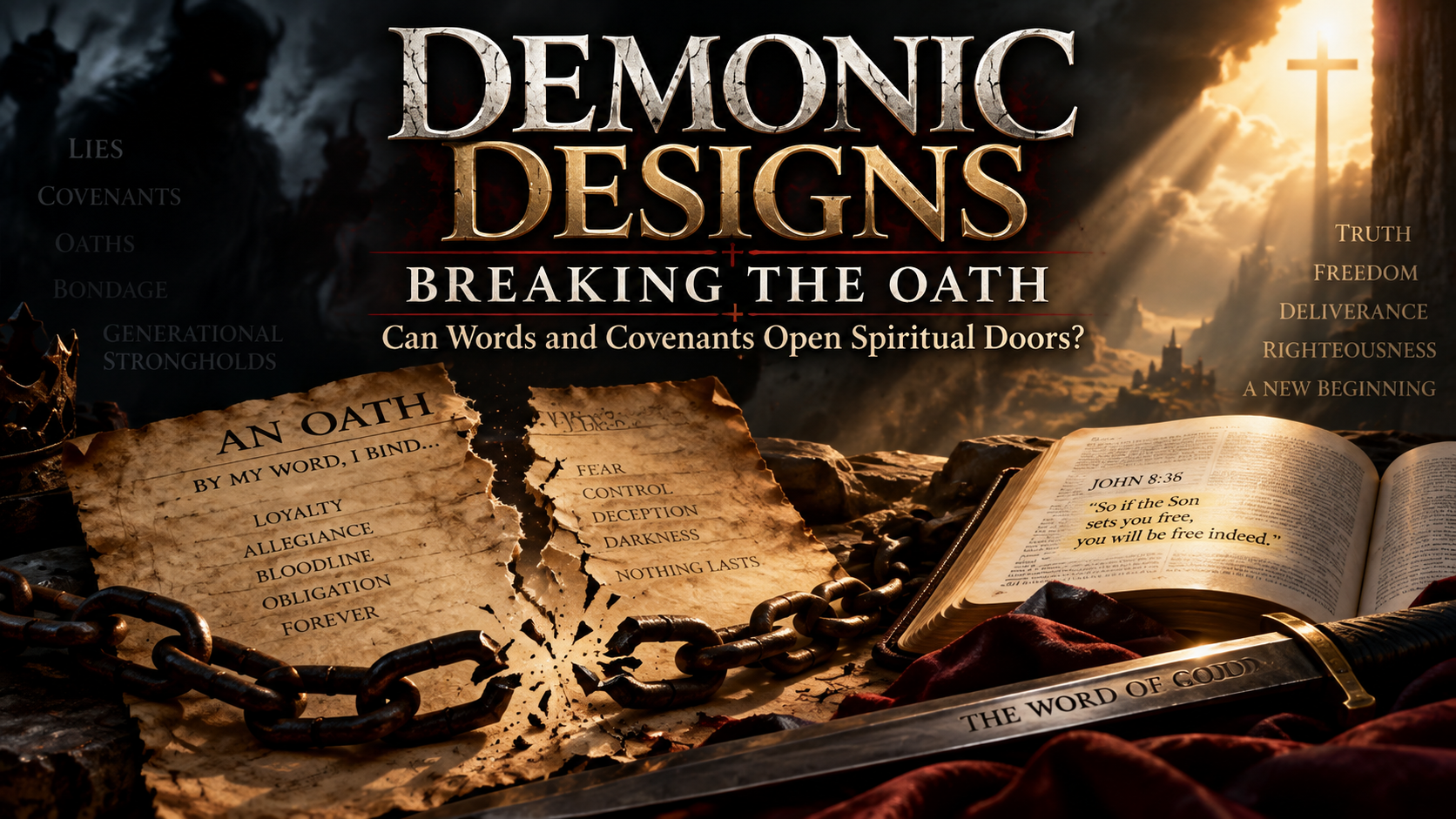
When allegiance is divided, freedom begins by bringing every oath into the light of Christ

There are moments when the Church becomes so determined to avoid sensationalism that it begins dismissing things Scripture clearly treats as serious. Oaths, vows, covenants, agreements, and spoken allegiances fall into that category. Modern culture often treats words as ceremonial or symbolic, but Scripture repeatedly presents words as expressions of agreement, responsibility, identity, and allegiance.

That does not mean every careless statement creates some kind of spiritual contract. Scripture does not teach believers to live in fear of accidentally speaking themselves into bondage. It does, however, show that deliberate vows, sworn loyalties, covenantal language, spiritual invocations, and formal pledges should never be treated casually. When a person knowingly binds himself through an oath, especially one connected to secrecy, spiritual symbolism, or divided allegiance, the matter deserves biblical examination.

Jesus addressed the seriousness of speech when He warned that people would give account for careless words in Matthew 12:36–37. James later instructed believers not to swear casually, but to let their yes be yes and their no be no. Ecclesiastes 5:4–5 also warns against making vows lightly. These passages are not teaching superstition. They are revealing that words carry moral and spiritual weight because words reveal the heart and often establish agreement.

THE BIBLE DOES NOT TREAT COVENANT LANGUAGE AS EMPTY SPEECH

Covenant runs throughout the entire biblical story. God established covenants with Noah, Abraham, Israel, David, and ultimately with His people through Jesus Christ. Biblical covenant is not merely a promise. It establishes relationship, obligation, belonging, identity, and authority.

That is why any ritual involving vows, sworn loyalty, hidden knowledge, penalties, spiritual witnesses, or binding secrecy should concern a follower of Christ. The issue is not whether the participant personally considers the ceremony meaningful. The issue is whether the language and structure of the ceremony carry the kind of covenantal weight Scripture warns believers to handle carefully.

Exodus 23:32 warned Israel not to make covenants with pagan nations or their gods. The danger was not merely political association. God understood that covenant could become a pathway into compromise, participation, and eventually worship. Israel’s history repeatedly demonstrates this pattern. What began as accommodation often became agreement, and agreement eventually reshaped obedience.

The same principle still matters. Believers should not assume that participation becomes spiritually harmless simply because a ritual is ancient, respected, symbolic, charitable, or socially accepted. Scripture teaches us to examine what we are agreeing with, what we are affirming, and where our allegiance is being directed.

AGREEMENT HAS SPIRITUAL CONSEQUENCES

Amos 3:3 asks, “Can two walk together, except they be agreed?” The immediate context concerns agreement between God and His prophet, but the principle remains clear. Agreement influences direction. What a person repeatedly agrees with will eventually shape the path he walks.

Paul makes a similar distinction in 1 Corinthians 10 when addressing pagan sacrificial systems. He explains that believers could not drink the cup of the Lord and the cup associated with demons. Paul was not claiming that meat itself possessed supernatural power, because elsewhere he makes clear that an idol is nothing. His concern was participation, fellowship, identification, and divided spiritual allegiance.

That distinction is important. Christians should not fear objects, symbols, buildings, or ceremonies as though they possess independent authority. At the same time, believers should not ignore the spiritual meaning of willingly entering fellowship with systems that use religious language, invoke spiritual ideas, or demand allegiance that conflicts with Christ.

Paul asks in 2 Corinthians 6:15–16 what agreement the temple of God has with idols. His language is relational and covenantal. The believer belongs to Christ, has been bought with a price, and is the temple of the Holy Spirit. Because of that, the believer should not seek spiritual identity through competing oaths, secret rites, mystical brotherhoods, or religious systems.

THE LORDSHIP OF CHRIST DOES NOT SHARE THE THRONE

Romans 10:9 declares that salvation includes confessing Jesus as Lord. That confession is far more than a conversion formula. It is a declaration of government. Jesus Christ becomes the believer’s highest authority, deepest allegiance, and final standard of truth.

This is why the early Christians faced persecution when they refused to confess Caesar as lord. Rome was willing to tolerate many religions, but the Christian confession created a collision of authority. The issue was not merely private belief. The issue was ultimate allegiance.

The same principle must govern believers today. Anything that asks for an allegiance that competes with Christ should be examined carefully. Any ceremony that requires secrecy, loyalty, spiritual submission, brotherhood, or obedience that cannot be brought openly beneath Scripture deserves scrutiny.

Jesus said in Matthew 6:24 that no one can serve two masters. His immediate subject was God and wealth, but the principle of divided mastery is unmistakable. Christ does not negotiate His lordship. A believer may belong to civic organizations, professional associations, clubs, fraternities, or other forms of community without automatically violating Scripture, but the moment participation requires spiritual compromise, the issue changes.

WHY SECRET OATHS SHOULD CONCERN BELIEVERS

Secrecy by itself is not automatically sinful. Governments protect confidential information, pastoral counseling requires discretion, and private matters do not always belong in public view. The biblical concern begins when secrecy is enforced through spiritual obligation, sworn loyalty, symbolic penalty, or a demand for obedience that supersedes truth.

Jesus consistently brought darkness into the light. John 3:20–21 describes evil as avoiding the light because exposure reveals its deeds. Paul similarly instructed believers in Ephesians 5:11 to have no fellowship with the unfruitful works of darkness, but rather to expose them.

Christianity is fundamentally open in its proclamation. The Gospel is preached publicly. Scripture is available for examination. Baptism publicly identifies the believer with Christ. Communion openly proclaims the Lord’s death. Christian doctrine is not reserved for progressively initiated elites who gain hidden truth through secret levels of spiritual advancement.

That does not mean every organization with private ceremonies is automatically demonic. It does mean secrecy becomes spiritually dangerous when increasing allegiance is demanded while increasing truth is withheld. No believer should be asked to bind himself to something before fully understanding what he is being asked to affirm.

WHAT ABOUT OATHS ALREADY TAKEN?

This is where balance matters. One error says that because Jesus defeated Satan at the Cross, a believer never needs to address former spiritual agreements. The opposite error teaches that Christians remain trapped until they identify and verbally cancel every possible curse, vow, ancestral covenant, symbolic act, or forgotten spiritual association.

Neither extreme reflects the emphasis of the New Testament.

The Cross is completely sufficient. Colossians 2:13–15 declares that Christ forgave us, canceled the record against us, and disarmed principalities and powers. The believer does not defeat darkness through superior ritual language. Jesus Christ has already triumphed.

At the same time, Scripture repeatedly shows believers making practical breaks with their former way of life. Acts 19 records believers in Ephesus publicly destroying books associated with magical practices. Their freedom did not come from the fire consuming the books. Their freedom came from Christ, but their repentance produced a visible separation from the system they had left behind.

That is an important distinction. Repentance is not merely feeling regret. Biblical repentance changes direction. When someone recognizes that a former oath, ritual, organization, or allegiance contradicted the Lordship of Christ, renouncing that agreement can become a clear expression of repentance and renewed obedience.

RENUNCIATION IS NOT MAGIC

Some deliverance teaching has made renunciation unnecessarily complicated. People are sometimes told that unless they identify every hidden ancestral oath, every generational agreement, every forgotten declaration, and every spiritual technicality, demons still retain legal rights over their lives. That kind of teaching can create fear, introspection, and obsession instead of freedom.

The New Testament does not teach believers to spend their lives searching family histories for hidden curses. Its emphasis is on repentance, faith, truth, obedience, renewal of the mind, and submission to Christ. Renunciation is not a magic formula. It is simply the verbal expression of a changed allegiance.

A person who practiced witchcraft may openly reject witchcraft because Jesus Christ is now Lord. Someone who belonged to an occult group may renounce the vows and spiritual practices associated with that group. Someone who participated in a secret fraternity may reject any oath, doctrine, ritual, or spiritual allegiance that contradicts Scripture.

The power is not in the wording. The power is in Christ. The declaration matters because it gives voice to repentance, truth, and renewed allegiance.

THE BLOOD OF JESUS SPEAKS A BETTER WORD

Hebrews 12:24 says that the blood of Jesus speaks better things than the blood of Abel. Abel’s blood cried out concerning injustice, while the blood of Christ proclaims redemption, reconciliation, forgiveness, and covenant.

This truth should completely change the way believers think about former spiritual agreements. A Christian does not renounce a past oath because Satan possesses equal authority to Christ. A Christian renounces it because Jesus has established a greater covenant.

At the Last Supper, Jesus declared that the cup represented the New Covenant in His blood. That means the believer’s identity is not finally defined by old agreements, former affiliations, sinful vows, secret ceremonies, or past deception. The believer is defined by the covenant established through Christ.

No secret oath outranks the blood of Jesus. No ritual allegiance possesses greater authority than the Lordship of Christ. No former agreement is stronger than Calvary.

BREAKING AGREEMENT BEGINS WITH TRUTH

Jesus said in John 8:31–32 that those who continue in His word will know the truth, and the truth will make them free. Spiritual freedom is not built upon fear of demons. It grows through agreement with truth.

That is why anyone examining former participation in a questionable spiritual system should begin with Scripture rather than sensational stories. The important questions are straightforward. Did the organization require an oath? Did it require sworn secrecy or allegiance? Did it invoke spiritual language, penalties, religious symbols, other gods, spiritual intermediaries, or concepts contrary to biblical Christianity? Did participation require affirming something that conflicted with the Lordship of Christ?

If the answer is yes, the response does not need to become complicated. Confess the compromise before God, renounce the agreement, withdraw from ongoing participation, affirm the Lordship of Jesus Christ, and remove anything that still represents intentional spiritual allegiance to the former system.

Then move forward in freedom.

Believers should not spend years wondering whether some forgotten word or overlooked technicality still holds them captive. Christ did not save His people into a new form of bondage where they live terrified of their past. Jesus said that if the Son makes you free, you are free indeed.

CHRISTIANS SHOULD NOT LIVE TERRIFIED OF CURSES

Fear-based teaching often gives curses more attention than Christ. It can leave believers more conscious of demons, bloodlines, rituals, symbols, and hidden agreements than they are of the finished work of Jesus.

That is not healthy spiritual warfare.

Galatians 3:13 declares that Christ redeemed us from the curse of the law by becoming a curse for us. Colossians 1:13 says that God has delivered believers from the power of darkness and transferred them into the kingdom of His Son. These passages establish the believer’s position.

This does not mean Christians should deliberately participate in darkness because grace will protect them. Paul rejected that kind of reasoning in Romans 6. Grace calls believers into holiness and obedience. Freedom in Christ is not permission to compromise.

At the same time, Christians should refuse to live as though every symbol, handshake, ceremony, ancestor, word, or former mistake possesses more authority than Jesus. Christ is Lord, and that confession must remain the center of Christian spiritual warfare.

THE REAL BATTLE IS OVER ALLEGIANCE

The deeper issue behind spiritual oaths is not merely vocabulary. The deeper issue is allegiance.

Throughout Scripture, the enemy continually seeks to redirect worship, loyalty, identity, and obedience away from God. Sometimes that comes through obvious idolatry. At other times it comes through power, secrecy, ambition, spiritual curiosity, brotherhood, ideology, tradition, or the desire to belong.

The appearance changes, but the strategy remains consistent. Darkness seeks agreement.

That is why spiritual warfare cannot be reduced to shouting at demons or performing deliverance rituals. Paul writes in 2 Corinthians 10:4–5 that the weapons of our warfare are mighty through God for pulling down strongholds, casting down arguments, and bringing thoughts into obedience to Christ. The battlefield includes beliefs, arguments, knowledge, imagination, agreement, and obedience.

Many strongholds survive because people continue agreeing with lies. Freedom begins when those lies are exposed, rejected, and replaced with truth.

SECRET SYSTEMS MUST BE TESTED BY SCRIPTURE

Christians should not become conspiracy-driven, but neither should they become spiritually naive. Scripture gives believers a clear standard for examination.

First John 4:1 instructs believers not to believe every spirit, but to test the spirits. First Thessalonians 5:21 says to test all things and hold fast what is good. Biblical discernment requires examination rather than assumption.

That means every spiritual claim should be tested. Every ceremony should be tested. Every oath should be tested. Every doctrine should be tested. Every demand for allegiance should be tested.

Discernment is not paranoia. Discernment asks whether something agrees with Scripture, exalts Jesus Christ, produces righteous fruit, and keeps the believer’s allegiance undivided.

An organization may possess respected members, impressive buildings, charitable programs, historical prestige, and elaborate ceremonies. None of those things prove spiritual truth. Appearance has never been the final biblical standard.

Truth is.

BREAKING THE OATH

If you have participated in a ritual, organization, spiritual practice, or secret system that required vows contrary to your allegiance to Jesus Christ, you do not need to respond with fear. You need to respond with truth.

Bring the matter honestly before the Lord. Repent of any compromise. Renounce what contradicted Scripture. Withdraw from any continuing participation that divides your allegiance. Forgive anyone who misled or pressured you. Then stand confidently in the covenant established through the blood of Jesus.

Your identity is not determined by an old oath. Your future is not controlled by a past ritual. Your spiritual standing is not defined by a former organization. You were bought with a price, and if you belong to Jesus Christ, your highest allegiance now belongs to Him.

A PRAYER OF RENUNCIATION

Father, I come before You in the name of Jesus Christ, acknowledging Jesus as my Lord, my Savior, and my highest authority. I repent of every oath, agreement, vow, ritual, or spiritual allegiance I knowingly entered that contradicted Your Word or divided my loyalty to Christ.

I renounce every agreement that competes with my covenant relationship with Jesus. I reject every former declaration, spiritual association, or act of allegiance that was contrary to His Lordship. I do not place my confidence in a formula, but in the finished work of Jesus Christ.

Thank You that through the blood of Jesus I have been forgiven, redeemed, and brought into the New Covenant. My identity, loyalty, worship, and obedience belong to Christ. Holy Spirit, expose anything in my life that remains out of alignment with Your truth, and give me the courage to walk away from anything that dishonors Jesus.

I declare that Jesus Christ is Lord over my life, my home, my family, and my future. I choose truth, obedience, and undivided allegiance to Him. In Jesus’ name, amen.

COMING IN PART THREE

The final article in this series will move from the biblical principles of covenant, agreement, and allegiance into a direct examination of Freemasonry itself. We will look more closely at its rituals, symbols, degrees, spiritual language, secrecy, and theological claims, and we will compare those elements with the exclusive Lordship of Jesus Christ.

The question at the center of Part Three will be simple but unavoidable: Can a follower of Jesus Christ participate in Freemasonry without compromising biblical allegiance to Christ?

That question should not be answered through rumor, emotional reaction, family tradition, cultural respectability, or conspiracy theories. It should be answered by bringing the system into the light of Scripture and allowing truth to speak for itself.

The Remnant was not refined merely to survive the changing world.

We were prepared to carry Heaven’s answer into it.

— Dr. Russell Welch
A Watchman & Voice to the Remnant

Dr. Russell Welch is a published author, prophetic teacher, apostolic builder, and founder of faith-driven publishing and media initiatives. He is known for crafting bold, Kingdom-centered messages that call the Ecclesia into maturity, doctrinal clarity, and governmental authority. With a passion for equipping the Remnant and honoring generational legacy, Dr. Welch writes and teaches at the intersection of Scripture, history, and spiritual governance, challenging believers to live as sons and daughters who legislate Heaven on earth through truth, holiness, and unwavering fidelity to Christ.

If you are ready to examine Freemasonry through the light of Scripture and seek greater biblical clarity concerning its spiritual implications, Demonic Designs: The Christian’s Guide to Unmasking Freemasonry is available now.

When allegiance is divided, freedom begins by bringing every oath into the light of Christ.

Get your copy here: https://www.amazon.com/dp/1964155215


A HOLY REMNANT | PART 3 OF 3

Heaven’s answer to darkness is a consecrated people carrying the presence of Jesus into it.

Primary Scripture: Isaiah 60:1–2

Before We Go Any Further, We Remember

Before speaking about warfare, nations, darkness, or the assignment of the Remnant, we must first remember. September 11, 2001, began as an ordinary morning for thousands of people who had no idea that before the day was over, their families, their nation, and the course of history would be permanently changed.

Men and women went to work. Parents said goodbye to children, husbands and wives kissed one another before leaving home, passengers boarded airplanes, and first responders began their shifts expecting the responsibilities of another normal day. Then, in a matter of hours, violence and terror tore through that ordinary morning and left wounds that would remain for generations.

Today, we remember those who lost their lives at the World Trade Center, at the Pentagon, and aboard the aircraft that were taken that morning. We remember the passengers and crew members, the firefighters and police officers, the emergency workers and military personnel, and the ordinary citizens who suddenly found themselves standing in the middle of extraordinary danger.

We also remember the families who received phone calls no family ever wants to receive, the children who grew up without a parent, the spouses who returned home to an empty chair, and those who survived but carried the emotional and physical scars of that day for years afterward. September 11 should never become merely another date on the calendar, because behind every number was a human life, a family, a story, and someone deeply loved.

We remember because human life bears the image of God. We remember because courage deserves honor, sacrifice deserves gratitude, and grief should never be treated casually. We also remember because that day revealed something Scripture has never attempted to hide from us: evil is real, hatred is real, deception is real, and human beings can become so surrendered to destructive ideologies that murder is eventually interpreted as righteousness.

Yet twenty-five years later, the Church must also remember another truth. If darkness succeeds in teaching us to hate people, then darkness has gained territory inside the very people who were called to overcome it. Jesus never commissioned His Ekklesia to become a Christian version of the hatred it was confronting; He called us to carry another Kingdom entirely.

The Remnant Was Not Preserved Merely to Survive

The language of the Remnant can easily become the language of retreat. We see darkness increasing, deception spreading, hostility toward biblical truth becoming more visible, nations shaking, violence erupting, and cultural foundations shifting beneath our feet. The natural response is to withdraw inward, protect what remains, and wait for Jesus to remove His people from a world that appears to be unraveling.

Endurance is biblical, holiness is biblical, separation from compromise is biblical, and courage under persecution must never be minimized. However, mere survival has never been the complete assignment of the Ekklesia. God does not preserve a people simply so they can hide safely from the hour in which He placed them; He preserves them so His nature, authority, truth, compassion, holiness, and power can become visible through them.

That is why Isaiah’s words carry such weight in a dark hour: “Arise, shine; for thy light is come, and the glory of the LORD is risen upon thee. For, behold, the darkness shall cover the earth, and gross darkness the people: but the LORD shall arise upon thee.” The prophet does not pretend the darkness is insignificant, nor does he tell the people of God to ignore what is happening around them. He acknowledges the darkness and then declares that darkness does not possess the final word.

The command is not retreat. The command is arise.

The Remnant has not been prepared to remain safely behind church walls discussing how terrible the world has become. Heaven is forming a people who can enter the very places darkness claims to own while carrying the presence, truth, love, and authority of Jesus Christ.

Our Warfare Is Spiritual, but People Are Not the Ultimate Enemy

September 11 confronted America with the devastating fruit of radical Islamist ideology and religiously justified terrorism. There is no spiritual maturity in pretending that destructive ideologies are harmless, and biblical love does not require us to deny the reality of violence, domination, deception, or systems that teach human beings to kill in the name of God.

At the same time, Scripture forces us to make an important distinction. Paul writes in Ephesians chapter 6 verse 12 that “we wrestle not against flesh and blood, but against principalities, against powers, against the rulers of the darkness of this world.” Human beings can participate in evil, governments can institutionalize evil, religious movements can justify evil, and ideologies can become vehicles through which spiritual darkness operates, but the person standing in front of us is still someone Jesus desires to redeem.

That distinction protects the Remnant from becoming what it is fighting. We can confront radicalization without hating Muslims, expose religious deception without despising those who have been deceived, defend the innocent without abandoning the command of Jesus to love our enemies, and pray for justice while simultaneously praying for salvation.

Discernment identifies what is operating behind a conflict, but love remembers the value of the person caught within it. The moment we lose that distinction, warfare can become hatred, discernment can become suspicion, and righteous conviction can slowly become another expression of the flesh.

Heaven’s Answer Is Not Another Form of Hatred

Jesus said in Matthew chapter 5 verse 44, “Love your enemies, bless them that curse you, do good to them that hate you, and pray for them which despitefully use you.” Those words do not describe weak Christianity; they describe supernatural Christianity, because the human instinct is retaliation, while the nature of Christ is capable of confronting evil without becoming infected by it.

Hatred already understands how to respond to hatred. Violence knows how to answer violence, and darkness is perfectly comfortable when everyone begins speaking its language. What darkness cannot reproduce is a believer who remains uncompromising in truth while refusing to surrender compassion, a believer who can oppose an ideology without despising the person trapped beneath its influence, and a believer who can stand for justice without allowing bitterness to take possession of the heart.

This is where divine love becomes warfare. Feeding an enemy, praying for a persecutor, serving a stranger, forgiving someone who wounded us, and speaking truth without dehumanizing another person are not acts of weakness. They reveal the government of another Kingdom.

The Remnant’s First Assignment Is Presence

Before the Remnant speaks to the culture, it must remain before the Lord. Presence is not decoration for ministry, and it is not merely the emotional atmosphere surrounding worship; it is the place where the heart of a believer becomes aligned with the heart of the King.

Prayer, Scripture, worship, Communion, repentance, listening, and quiet surrender are not spiritual exercises we eventually outgrow. They are the place where our motives are purified, our discernment is sharpened, our wounds are healed, and our reactions are brought beneath the lordship of Jesus Christ.

A believer who speaks constantly about warfare but neglects intimacy can become fascinated with darkness, suspicious of everyone, easily offended, and increasingly reactionary. A believer who remains in the presence of Jesus learns how to discern without hatred, confront without pride, exercise authority without becoming controlling, and speak truth without losing compassion.

The secret place keeps the public assignment clean. Heaven is not searching for spiritual performers who can create impressive moments; Heaven is forming men and women so yielded that the compassion, holiness, courage, wisdom, and power of Jesus can flow through them without being contaminated by ego.

Part One of this series established that the Remnant is not a spiritual elite, but a faithful people whose allegiance belongs to God even when compromise becomes easier and more rewarding. Part Two showed that the furnace can expose what comfort conceals and form a believer whose confidence rests increasingly in Christ rather than in human strength. Now we arrive at the reason for that preparation: the Remnant is refined so it can carry something into the darkness.

Pray Beyond Your Own Borders

The Remnant must recover strategic intercession. Too much prayer remains trapped within the boundaries of personal emergencies, and while the Father certainly cares about our families, bodies, finances, churches, and immediate circumstances, He is also calling His people to carry burdens larger than themselves.

We must learn again to stand in the gap for cities, leaders, communities, persecuted believers, unreached peoples, nations caught in spiritual conflict, and generations being discipled into hatred before they ever encounter the Gospel. We must pray for America, not merely for protection or prosperity, but for repentance, awakening, righteousness, justice, and an Ekklesia that remembers why it exists.

We must pray for the Middle East, for Israel, for Muslims who have never encountered the Jesus revealed in Scripture, for those being radicalized, for those living under oppressive systems, and even for those who currently see Christians as their enemies. Kingdom intercession does not require us to deny danger; it requires us to ask Holy Spirit how Heaven intends to respond to it.

Strategic intercession begins with listening. The Remnant cannot allow fear, social media, political outrage, or the news cycle to write its prayer agenda. Prayer becomes governmental when it begins agreeing with the purposes of Heaven rather than simply repeating the anxieties of earth.

Tell the Testimony Hell Could Not Erase

Revelation chapter 12 verse 11 joins the blood of the Lamb with the word of testimony. The Remnant does not overcome by pretending it has never been wounded; it overcomes by declaring what Jesus has accomplished in the very places the enemy attempted to destroy.

A transformed life possesses an authority an argument does not always carry. When someone encounters a person whose chains were broken, whose shame was removed, whose identity was restored, whose bitterness was healed, or whose life was rescued from destruction, they encounter living evidence that the Gospel still possesses power.

The enemy therefore works relentlessly to bury testimony beneath condemnation and embarrassment. He reminds believers of who they once were and attempts to convince them that their past permanently removed their right to speak. Yet the very place he points toward as proof of disqualification may become the place where someone else discovers that redemption is possible.

The story is never supposed to glorify the darkness we survived. It glorifies the Savior who entered that darkness and refused to surrender His claim upon us.

Discern the Spirit, but Love the Person

We desperately need discernment in this generation. Not every spiritual voice speaks for God, not everything called prophetic comes from Holy Spirit, not every ideology wrapped in compassionate language produces righteous fruit, and not every movement carrying Christian terminology actually reflects the nature of Jesus.

The Remnant must test voices, motives, fruit, prophetic impressions, cultural movements, and spiritual claims against Scripture. We cannot afford gullibility simply because something sounds spiritual, emotional, patriotic, compassionate, or prophetic.

However, discernment without love quickly becomes suspicion, and truth without humility can become a weapon of the flesh. Jesus consistently demonstrated the ability to expose what was operating spiritually while still seeing the human being standing in front of Him.

That must become the posture of the Remnant. We expose bondage because captives deserve freedom, confront deception because people matter, resist spiritual darkness because Jesus desires to rescue those living beneath its influence, and proclaim truth because truth leads people toward freedom.

Our goal is not merely to win arguments. Our desire must be that people encounter the King.

Stand Together, Not Alone

The isolated believer is easier to discourage, deceive, exhaust, and eventually silence. The Remnant is not a collection of spiritual lone wolves wandering independently through the wilderness; it is a body in which diverse gifts operate beneath one Head, Jesus Christ.

Watchmen need shepherds, intercessors need teachers, prophetic voices need mature community and biblical accountability, and teachers need evangelists who remind them that truth must eventually leave the classroom and reach the lost. Even strong leaders need people around them who possess enough love and courage to speak truth when correction is necessary.

Unity does not require the absence of differences, but it does require shared allegiance. When believers pray together, serve together, carry one another’s burdens, and refuse the competition that has weakened so much of modern ministry, their collective witness becomes far more difficult to dismiss.

For too long, portions of modern Christianity have celebrated personalities while neglecting people. Platforms have been protected, brands have been built, audiences have been gathered, and resources have been consumed while the harvest continued waiting outside the walls.

The Remnant cannot reproduce the very system Heaven is attempting to reform. The Kingdom advances through a people surrendered to Christ, not through personalities fighting to preserve individual influence.

From Survival to Holy Advance

The destiny of the Remnant is not personal fame, political domination, institutional power, or escape from every difficult season. It is faithful participation in the advance of the Kingdom of God, where surrendered men and women make the reign of Christ visible through prayer, obedience, compassion, truth, holiness, and courageous love.

Jesus said He would build His Ekklesia and that the gates of hell would not prevail against it. Gates are defensive structures, which means the picture is not primarily of a Church desperately trying to survive while hell pounds against its doors; it is the picture of an advancing Kingdom against which the defenses of darkness cannot ultimately stand.

Our assignment is not to manufacture victory because Jesus already secured the decisive victory through His Cross and resurrection. Our calling is to stand within that victory and carry it into everyday life through intercession, testimony, discipleship, healing, service, proclamation of the Gospel, defense of the vulnerable, forgiveness of enemies, and obedience to whatever the King places before us.

This is where the Remnant must become radically different from the systems surrounding it. We confront deception without becoming deceptive, resist hatred without becoming hateful, exercise authority without becoming controlling, carry conviction without losing compassion, and expose darkness without becoming obsessed with it.

When a holy people live this way, seemingly ordinary acts begin carrying Kingdom weight. Hidden prayer changes atmospheres, faithful testimony opens hearts, sacrificial love interrupts cycles of hostility, biblical truth exposes deception, and quiet obedience becomes a doorway through which Jesus enters homes, communities, workplaces, churches, cities, and nations.

The Remnant was not preserved to hide from history. It was preserved to carry Christ into it.

Twenty-Five Years Later, What Will the Church Become?

September 11 showed the world what can happen when people become deeply surrendered to an ideology of destruction. Twenty-five years later, perhaps one of the most important questions facing the Church is not simply what darkness is doing in the world, but what could happen if an entire generation became deeply surrendered to Jesus Christ.

Imagine believers who refuse to measure spiritual influence primarily by audience size, titles, buildings, or online reach, and instead measure faithfulness through obedience, holiness, prayer, courage, compassion, and intimacy with God. Imagine pastors who raise disciples rather than audiences, intercessors who carry the burdens of cities and nations, leaders who build Kingdom families instead of personal empires, and believers who enter workplaces, neighborhoods, schools, government, business, media, and communities carrying the actual nature of Christ.

What would happen if the Church became known again for holiness without self-righteousness, truth without cruelty, authority without domination, conviction without hatred, supernatural power without spectacle, and love without compromise? What if the world encountered believers who possessed enough discernment to recognize darkness, enough courage to confront it, and enough intimacy with Jesus to refuse becoming contaminated by it?

Perhaps Heaven’s answer to the darkness of this generation is already being formed in hidden places. It may be developing in prayer rooms no one knows about, in believers who are learning obedience through difficult seasons, in pastors who have refused the pressure to build around personality, in young disciples who hunger for truth, and in wounded people whom Jesus is healing and preparing for new assignments.

That is the Holy Remnant: not a frightened people waiting for history to end, but a consecrated people prepared to reveal the Kingdom of God in the middle of it.

A Commissioning Prayer

Father, as we remember September 11, 2001, we honor the lives that were taken, the families that were forever changed, the first responders who ran toward danger, and the countless men and women who carried the wounds of that day long after the smoke disappeared. Comfort those who still grieve, strengthen those whose memories remain painful, and keep us from ever becoming casual about the value of human life.

At the same time, awaken Your Ekklesia in this hour. Deliver us from fear, passivity, hatred, compromise, isolation, spiritual pride, and the temptation to retreat from the very generation You have called us to reach. Draw us deeply into the secret place until Your heart shapes our response to everything happening around us.

Teach us to recognize the spirit behind the conflict without despising the people caught within it. Give us discernment without suspicion, conviction without cruelty, authority without control, holiness without self-righteousness, and courage that refuses to bow before intimidation.

Raise intercessors who will stand in the gap for cities and nations, witnesses who will boldly tell what Jesus has done, pastors who will form disciples rather than audiences, and believers who cannot be purchased by comfort, silenced by fear, manipulated by offense, or corrupted by applause. Put Your Word in our mouths, Your compassion in our hearts, Your fire in our bones, and Your authority upon our obedience.

Where hatred has produced division, make us carriers of reconciliation without compromising truth. Where deception has produced bondage, allow Your truth to bring freedom. Where fear has silenced the Church, release holy courage again, and where spiritual darkness has attempted to claim territory, send Your people carrying the light and presence of Jesus Christ.

Make us steadfast, discerning, compassionate, holy, courageous, and completely yielded to You. Let the testimony of Jesus become undeniable through our lives, and prepare us to faithfully carry Your Kingdom into the hour for which we were born.

In Jesus’ name, amen.

The Invitation

These three articles have carried one continuing message. The Remnant is not a spiritual elite reserved for unusually gifted people; it is a faithful people whose allegiance remains with Jesus when compromise becomes easier. The furnace did not automatically disqualify you; in many cases, God has used difficult seasons to expose false strength, deepen dependence, purify motives, and prepare His people to carry greater Kingdom weight.

Now the final truth becomes clear: you were not refined merely to survive. You were prepared to carry the presence and purposes of Jesus into a generation desperately searching for truth, identity, freedom, hope, healing, and something genuine enough to withstand the shaking of the age. That movement from identity, through refinement, and finally into assignment is the direction established throughout this three-part series.

Darkness is real, but darkness is not sovereign. Ideologies may rise, nations may shake, deception may spread, and spiritual conflict may intensify, but Jesus Christ remains Lord, His Kingdom remains unshaken, and His Ekklesia still carries an assignment in the earth.

The Remnant was never preserved to hide. It was preserved to carry the presence, truth, love, authority, and fire of God into the hour for which it was born.

The Remnant was not refined merely to survive the changing world.

We were prepared to carry Heaven’s answer into it.

A voice of fire to the Remnant,

— Dr. Russell Welch

Dr. Russell Welch is a published author, prophetic teacher, apostolic builder, and founder of faith-driven publishing and media initiatives. He is known for crafting bold, Kingdom-centered messages that call the Ecclesia into maturity, doctrinal clarity, and governmental authority. With a passion for equipping the Remnant and honoring generational legacy, Dr. Welch writes and teaches at the intersection of Scripture, history, and spiritual governance, challenging believers to live as sons and daughters who legislate Heaven on earth through truth, holiness, and unwavering fidelity to Christ.

Go Deeper

This three-part series develops themes from my book A Holy Remnant: Heaven’s Answer to Jihad. If these articles have awakened something within you and you want to explore the biblical identity of the Remnant, its preparation, spiritual weapons, and victorious assignment more deeply, I invite you to continue the journey in the book.

A Holy Remnant: Heaven’s Answer to Jihad
Amazon: https://www.amazon.com/dp/1964155606


We are living in a time where the enemy’s strategy has become more brazen, more desperate. He is no longer simply trying to distract or discourage—he is waging all-out war against the Remnant. But what he doesn’t realize is this: the pressure he applies only provokes the manifestation of the overcomers he fears the most.

As the battle intensifies, the Remnant must rise—not with natural strength, but clothed in the full armor of the Father, every piece fastened by our Robe of Righteousness, inherited through Christ.

This robe is not decorative—it is functional. It anchors our armor, identifies us as sons and daughters of the King, and testifies that the Blood of the Lamb has made us holy, whole, and battle-ready.

But before we can wear the robe, we must shed the grave clothes.

Religion cannot fight this war.

Soulish reactions will fail in this fight.

The grave clothes—those remnants of the old man—must be stripped away. We must allow the Holy Spirit, the Divine Surgeon, to lovingly yet firmly remove the wrappings of ego, fear, bitterness, self-preservation, and emotional woundedness.

The Lord is not ashamed of our wounds, but neither will He allow them to become excuses that delay destiny.

In this hour, He is saying, “Let Me unwind what death wrapped around you so you can be clothed in what My resurrection has prepared for you.”

We must surrender past traumas, betrayals, offenses, rejections, and abandonments—not just once, but continually, bringing them to the altar where Christ’s victory made permanent defeat of the old nature.

The spirit of rejection is a particularly vile vice of the enemy. It lurks in wounded souls and amplifies the voice of isolation and unworthiness, hoping to convince warriors they are disqualified before they even engage.

But here’s the truth: what the enemy calls weakness, Heaven often sees as the perfect place for glory to rest.

And the weapons formed against the righteous cannot prevail—not when we are rightly armored, aligned, and anchored in identity.

Like the elite warriors of the natural world—Navy SEALs, Green Berets, specialized operatives—the Remnant must train to move light, quick, precise, using every weapon the Spirit has forged in secret. Some wield intercession like thunder.

Others operate with prophetic clarity or apostolic strategy. Some bring healing. Some break chains. But none of us carry it all. That’s why unity is not a luxury—it’s a necessity.

We must recognize our spiritual platoon. The ones the Lord has assigned us to war with in this season. Isolation isn’t holiness.

Connection isn’t compromise.

The Lord is strategically aligning sons and daughters into divine battle formations, where every weapon sharpens, every voice strengthens, and every life covers the other.

And as we stand together—armored not in self-effort, but in joy that confounds fear, peace that passes logic, and love that casts out torment—we become a force the enemy cannot penetrate.

Why? Because these are not abstract virtues… they are spiritual armor.

And they are impossible to counterfeit.

Joy unshaken by circumstances?

Peace unmoved by chaos?

Love unwavering in conflict?

The enemy has no access code to penetrate that kind of armor.

Why? Because it is anchored in righteousness.

And that righteousness has been washed in the Blood of the Lamb. And there is no technology in hell, no curse in the atmosphere, no accusation from the pit that can override or undo what the Blood has sealed.

So, Remnant… the time of partial surrender is over.

Burn the grave clothes.

Take up your armor.

Find your tribe.

And take your post.

The trumpet is not about to sound—it’s sounding now. And those who have ears to hear will not wait for permission. They will rise, robed in righteousness, and advance as those who know the outcome is already written:

The kingdoms of this world have become the Kingdom of our Lord and of His Christ… and He shall reign forever and ever. (Revelation 11:15)

Let the Remnant say, “Amen—and I take my place.”

~Dr. Russell Welch

Elder/ Apostolic Teacher: Highway to Heaven Church and Founder and Shepherd of Remnant Warrior Ministries / Remnant Warrior School of Spiritual Warfare.

www.remnantwarrior.org


Version 1.0.0

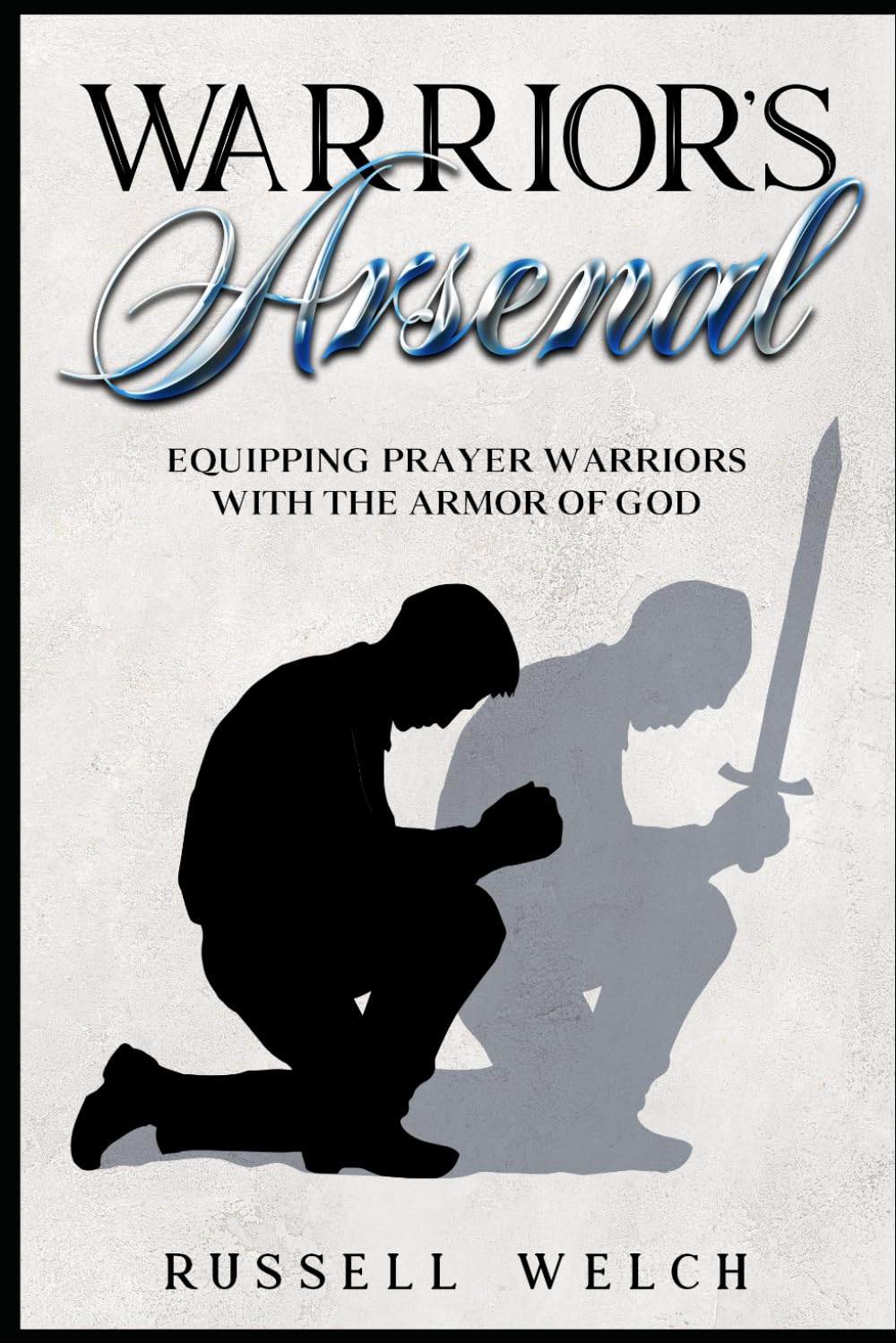
The following is an excerpt from my book “Warrior’s Arsenal: Equipping Prayer Warriors with the Armor of God”.

Inside this book with its close to 400 pages you will find, what I believe is, Holy Spirit inspired steps to becoming a Victorious Prayer warrior, through a wealth of battle hardened wisdom that comes from many victories, as well as many defeats.

The insights within theses pages come from my own experiences of not just my 23 years in ministry but also include the close to 45 years of being saved (Including my back-slidden years).

For one of the places I garnered the most necessary experience pertaining to Spiritual Warfare was in times of defeat, for there, I was my found myself in the deepest places of humbly asking Holy Spirit what went wrong, and in His gentle manner, He taugt me not just the error of my warfare but more importantly, what ajustments needed to be made so that I did not repeat the mistakes.

When I first wrote this book, I did so with a hope and prayer that it would find its way into the hands of youth, as they transitioned from High school, either into college or the work places, to be a took that would equip them in ways regarding Spiritual Warfre and how to hold onto to their Faith that sadly most Churches do not.

_____________________________________________________________________

From Stumbling Novice to Battle-Ready Warrior: Why Some Triumph While Others Falter

When facing an unseen enemy, preparation is everything. The inexperienced believer often approaches spiritual warfare with either naive enthusiasm or paralyzing fear—both equally ineffective on the battlefield of the spirit.

Perhaps you’ve felt that surge of determination after a moving sermon, only to find yourself overwhelmed and retreating when the first real skirmish arrives. Or maybe you’ve wondered why some believers seem unshakable during spiritual attacks while others crumble under the same pressure.

The answer lies not in inherent spiritual gifting but in deliberate, consistent development. Just as no soldier earns their stripes without rigorous training, no prayer warrior becomes effective through occasional, halfhearted efforts.

The most formidable spiritual warriors are not born—they are forged through discipline, instruction, and experience. This developmental process forms the foundation of spiritual fortitude, that rare and precious quality that enables believers to stand firm when everything within them wants to flee.

What many fail to recognize is that spiritual warfare mastery follows the same principles as any other significant skill acquisition. The martial artist doesn’t perfect their technique overnight, nor does the master musician develop their craft in a week.

Similarly, spiritual warfare capabilities mature through stages—from awkward beginner to seasoned veteran—each with its own challenges and victories. Understanding this progression prevents the discouragement that causes many to abandon their post before they’ve truly begun to fight.

The spiritual warrior’s path is neither mysterious nor arbitrary; it follows discernible patterns that, once understood, make growth both predictable and achievable.

Perhaps most importantly, we’ll address the patience required in this process. In an age of instant gratification, the gradual development of spiritual fortitude can feel frustratingly slow. Many abandon their training during plateaus or after setbacks, not realizing these are essential parts of the journey.

The prayer warriors who ultimately prevail aren’t necessarily those with the most dramatic spiritual experiences, but those who persevere through the unglamorous daily work of spiritual discipline. This steadfast commitment—more than any specific technique—distinguishes effective spiritual warriors from those who remain perpetually unprepared.

Spiritual warfare requires consistent practice and discipline. Just as a soldier doesn’t become battle-ready overnight, spiritual fortitude develops through regular training in spiritual disciplines. Prayer, Scripture reading, meditation, and fasting aren’t just activities—they’re training exercises that strengthen your spiritual muscles.

When practiced daily, these disciplines sharpen your spiritual senses, making you more attuned to God’s voice and more resistant to the enemy’s tactics.

You can order a copy of “Warrior’s Arsenal” here on Amazon

~Dr. Russell Welch
Elder / Apostolic Teacher: Highway to Heaven Church and Founder and Shepherd of Remnant Warrior Ministries / Remnant Warrior School of Spiritual Warfare.


A radical transformation, from the Seed of Faith to a Seasoned Warrior

From the first time I heard the phrase “Spiritual Warfare” from Derek Prince at a meeting in Portland, Maine in 1983, it planted a Spiritual seed in me. This moment was a defining point in my spiritual journey, marking the beginning of a profound transformation.

In 2002, under the mentoring of Dr. Don Lynch, the Lord poured into my life what I interpreted as a “Miracle Grow Anointing.” This anointing catalyzed a significant shift in my spiritual life, empowering me in ways I hadn’t previously experienced. Looking back, I can see how I have been in the fires of that Warfare ever since.

Some of this warfare came from the Father, in the form of pruning, purging, and purifying my walk before Him. These periods were challenging, yet they were essential in refining my character and fortifying my faith. The Father’s hand was evident in these trials, shaping me into a vessel that could withstand greater battles.

At other times, the warfare was instigated by the enemy, testing my resolve and faith in the most trying of circumstances. There were also instances when, in my immaturity, I brought warfare upon myself. These self-inflicted battles were perhaps the hardest, as they required me to confront my own weaknesses and grow beyond them.

Although I understand now that not all battles were ordained by the Father, each one was permitted by Him. The Holy Spirit has shown me how the Father has taken what the enemy meant for destruction in my life and repurposed it for my good. Each battle, regardless of its origin, has been a tool in the Father’s hands to strengthen and equip me, bringing me to where I stand today – as a seasoned warrior.

I remember the days when my prayers were full of my own words, telling the Father what I wanted Him to do. Those prayers often felt like they hit the ceiling and bounced back. It was a humbling realization that true prayer is not about directing God but aligning oneself with His will and listening to His voice.

This journey has been one of learning and unlearning, of falling and rising, and of being broken and remade. Each step, each battle, and each moment of pruning has drawn me closer to the Father and solidified my dependence on Him. Today, I stand not only as a warrior but as a testament to His grace, mercy, and unfailing love.

Through all the fires of warfare, the Father has been faithful, turning every trial into a testimony and every struggle into a stepping stone towards a deeper understanding of His purpose for my life.

And I believe that is part of my calling, to not only war in the Spirit but to teach and train-up other Warriors with Christ-like discipleship of pouring in their lives, everything the Father has poured into mine.

Which is why I can see the aspects of Spiritual Warfare being included in all the books I have written, am writing and shall write in the future.

As the lead Elder and Apostolic teacher at Highway to Heaven Church, I have spent hours praying to the Father, as just the word “Church” troubles me in the sense that He has called me to teach and train-up Warriors, I lean more towards the name Remnant Warrior Boot camp.

However, Holy Spirit keeps reminding me that even though many have been drawn to and now sit encamped in the religious meaning of “Church”, under the control of the religious spirit, which has been around since the fall of the first Adam. We must understand that there is nothing that can stand in the way of the Father’s ability to work around whatever the enemy attempts to use to slow down, or even to ultimately stop Him from reaching His Children.

I have had a number of people ask me, “Why do you always talk about Spiritual Warfare?” The answer is simple: “Because that is the spiritual lane the Father has ordained me to walk in.”

It has come with a cost; at least three times that I am aware of, the enemy sought to take me out. The first was in 2007, with a heart attack, the second was in 2020 via COVID-19, and the third was on November 13, 2023, with a stroke.

Which ironically was on the same day that I committed to the Father’s which I received a prophetic meeting, calling me to join in with other Spiritual Warriors across the nation to retake and occupy the “Spiritual Gates of Government and the Church”

Now, I have no idea how many times the Angels assigned to me have foiled the attempts of the enemy, only they and the Father know. However, I am hoping that when I finally cross through the spiritual veil of this life, to live in Paradise (Garden of Eden), I can view the replay.

So to answer the question of why I write so much about Spiritual Warfare, and the Remnant Warriors, is because that is where the Father has me, confirmed by the fact that Holy Spirit is consistently speaking to me with regard to the Remnant and Spiritual Warfare.

Over the years I have attempted to walk in a different calling, evangelist, preacher and such, however the anointing have never flowed in those areas, I didn’t not discern the Father’s hand in those positions, however when I am teaching, counseling, and writing about the Remnant and Spiritual Warfare, I can feel the passion of the Lord in and over my life.

And in all the books I have read, of those who did great exploits for the Kingdom, they all knew and had accepted the calling of the Father on their lives. And with that, the day that I accepted my calling, the realm of the spiritual opened to me, and in spite of all the attempts of satan on my life, and in time where the battle was so fierce, I have never not once felt His presence with me. 

I have never had an ounce of fear overtake me during these times of engaging in Spiritual Warfare, nor the times of when the enemy attacking me physically, but rather the Spirit which cries out victory, overcomer, and more than a conqueror has risen up in me.

Friends, if you do not know what you’re calling is, or if you are attempting to operate in someone else’s calling, take some time to seek the Lord, pray and ask Him what His calling is on your life. mediate on the Word, and if Holy Spirit leads you to fast, then fast. Trust me, the Father so loves to share with His children, what His calling and ordained destiny is.

A word of caution in closing, when I say pray, I mean have a two-way conversation, ask the Father, and give Him time to respond. Holy Spirit showed me this aspect early in my walk. Remember, He had offered the Israelites the opportunity to enter into an intimate personal relationship with Him, but the rejected that offer, having still the slave mentality telling Moses, you talk to Him, and then tell us what He said, and we can see where that got them


In a world increasingly marked by chaos and moral decay, the call to action for the church has never been more urgent. 

Several years ago, my wife and I were divinely guided to transition our ministry from Mighty Arm Ministries to Remnant Warrior Ministries. This change was not merely a rebranding; it came with a divine mandate to establish an online school of Spiritual Warfare.

 However, our commitment to this mission was met with unexpected resistance from various circles, including some ministries that I once revered. They dismissed the significance of spiritual warfare, claiming it to be unnecessary in today’s context. 

Yet, this sentiment stands in stark contrast to the extensive teachings of the apostle Paul, who devoted significant portions of his letters to instructing the early church on the importance of spiritual battle. 

As I reflect on the past several decades, I have witnessed an alarming trend: the neglect and, at times, outright ignorance of spiritual warfare within the church has rendered both the church and our nation vulnerable to the encroachment of the enemy. 

The societal cultures surrounding us have been infiltrated, and in many ways, the church has surrendered territory without the fight that was once characteristic of the body of Christ. 

However, the Holy Spirit has illuminated my path with the revelation that a movement is stirring—a resurgence of ministries and leaders passionately focusing on spiritual warfare. 

Many of these leaders carry the term “warrior” in their ministry names, signaling a collective awakening to the call of God. Listening to Bishop Bill Hamon’s prophetic word for 2025 solidified this realization. 

He spoke of a divine summons to establish an army of warriors, a clarion call for the Remnant Warriors to unite, connect, and reclaim the territories that have been lost. 

This prophetic insight aligns with other messages from trusted prophets, confirming that God is rallying His devoted followers to reinstate the Biblical Art of Spiritual Warfare. 

At the crux of this mission is the realization that a new elite unit within the body of Christ is being deployed to confront the end-time crises we face. 

This brave group, the Remnant Army of God, is characterized by radical commitment to the Lordship of Jesus Christ and a willingness to defend His Bride, even at great personal cost.

 As I penned the declaration for our ministry, I echoed the sentiments of the apostle Paul found in 2 Timothy 4:7-8. Paul’s testament to having fought the good fight and remained faithful serves as a clarion reminder of our ultimate goal—receiving the crown of righteousness reserved for those who eagerly await His return. 

It is not just a promise for Paul but a gracious invitation extended to all who dare to stand firm in their faith. 

In alignment with this mission, the Creed articulated by Judy Lamborn resonates deeply with the heart of every Remnant Warrior. 

It is a pledge of commitment, recognizing the gravity of our calling in this pivotal moment. 

As warriors, we acknowledge that we have been chosen for such a time as this, ready to lay down our lives for the cause of Christ. 

We vow to live according to the infallible Word of God, embracing our responsibility to fulfill the Great Commission. 

We commit to honoring Jesus Christ in our words and deeds, reflecting His love and truth in a world that desperately needs it. 

The time for action is now. The spiritual landscape demands our vigilance and commitment. 

As we stand united as Remnant Warriors, we must sanctify ourselves to a life of prayer and intercession, seeking an intimate relationship with God while fervently working to bring salvation to a lost world. 

Our mission is clear: we must reclaim the ground that has been surrendered and boldly declare the victory of Christ over every aspect of our lives and communities. 

In closing, I urge my brothers and sisters to heed this call. The spiritual battle is real, and the stakes are high. Let us rise as a united front, equipped with the knowledge of our authority in Christ and the unwavering resolve to fight the good fight of faith. 

Together, we will be found fulfilling our divine assignment when He returns, eagerly anticipating the words, “Well done, thou good and faithful servant, enter into the joy of your Lord.” The time for action is NOW. Let us answer the call and step into our destiny as Remnant Warriors.

~Dr. Russell Welch
Elder / Apostolic Teacher: Highway to Heaven Church and Founder and Shepherd of Remnant Warrior Ministries / Remnant Warrior School of Spiritual Warfare.

Dr. Welch has been writing a series of books related to the Lord’s Remnant with strong emphasis on Spirit Warfare and the mandate of the Lord’s Remnant Warriors. The first one written was “The Lord’s Remnant Warriors: Awakened and Rising As God’s Chosen in the Final Harvest” another one is set to be released om January 21, 2025 which is “Called to Conquer : Unveiling the Remnant Warrior Role within the Ecclesia“. He is working on several other to be published this year as well.


In a world overflowing with distractions and spiritual turmoil, the concept of spiritual warfare often feels daunting and distant for many. While we may not be engaged in epic battles of national importance, the reality remains that we are all fighting personal spiritual battles that require attention and strategy. Central to these struggles is the practice of fasting—a powerful yet often overlooked tool that can elevate our spiritual walk and bring us closer to God.

As believers, we can draw strength from the same weapons that great men of God utilized throughout the Bible, highlighting the importance of humbling ourselves before God and engaging in a lifestyle of fasting.

Fasting is not merely a ritual; it is an intentional act of surrendering to God. It is an acknowledgment of our vulnerabilities and a conscious effort to draw nearer to the divine. In my own life, I experienced the liberating power of fasting when I found myself ensnared by the chains of sin, including sexual sins.

Through humbling myself before God in fasting, I found that it was not my sacrifices that moved Him, but rather my willingness to step into His spiritual realm. God’s grace enveloped me, leading me toward freedom.

This personal testimony underscores the transformative power of fasting and its essential role in our spiritual journeys. Over the years I have joined in with other ministries and the communities that I was part of who adopted fasting as a fundamental practice.

For example, each January, for a number of years I joined in with Jentezen Franklin’s Church committing to 21 days of fasting, and other times I would fast the first three days of each month. This commitment stems from my understanding of the spiritual warfare we face and the Lord’s Chosen one’s—the calling to fulfill, calamities to overcome, and spiritual enemies to conquer.

Regular fasting not only strengthens our connection to God but equips us to face adversities with renewed faith and resilience. Recognizing that spiritual conflict is an ever-present reality compels us to adopt fasting as a regular habit.

As articulated in John 10:10, the spiritual adversary seeks to “steal, kill, or destroy” our God-given joy. By fasting and praying, we harness vital weapons to claim victories over these forces. Instead of merely addressing the symptoms of our struggles, we must dig deeper to confront the root causes of our spiritual issues.

This proactive approach allows us to engage with the unseen spiritual world that pervades our lives, thereby making prayer an indispensable part of our spiritual arsenal. It is essential to acknowledge that some within the Church argue that fasting is unnecessary under the New Covenant—an argument that seems to contradict the teachings of Jesus.

In Matthew 9:15, Jesus states, “Can the wedding guests mourn while the bridegroom is still with them? The days will come when the bridegroom is taken away from them, and then they will fast.” This statement reinforces the continued relevance and necessity of fasting in our spiritual lives.

As Spiritual Warriors for the Lord, we are called to uphold the orthodoxy of Scripture and embrace the practices that deepen our relationship with God. As we embark on a new year, I encourage you to seek God earnestly through prayer and fasting.

By doing so, you open yourself to the profound possibilities of divine intervention. Fasting is not a mere act of deprivation; it is a pathway to spiritual awakening and renewal. May you experience the power of fasting and witness the transformative answers to your prayers as you navigate the spiritual battles that lie ahead.

My prayer is that you, reader, will embrace this sacred practice, and allow God to lead you into a deeper, more victorious relationship with Him.

~Dr. Russell Welch
Elder / Apostolic Teacher: Highway to Heaven Church and Founder and Shepherd of Remnant Warrior Ministries / Remnant Warrior School of Spiritual Warfare.

Be sure to check out Dr. Welch’s newest book “Dare to Sin No More – Breaking free from Sin’s Grasp“”


In the intricate tapestry of faith and existence, the concept of divine redemption stands as a beacon of hope amidst an ongoing spiritual battle.

This spiritual warfare is not a distant or abstract notion; it is a fervent reality that wrestles against God’s plan of salvation, positioning believers in a crucial moment of history.

As the world continues to spiral into confusion, where virtues are inverted and true Christianity finds itself under siege, we must confront the challenges head-on.

 In the face of this adversity, the call to action resonates strongly: “Wake up the mighty men.” This rallying cry from the prophet Joel emphasizes the need for warriors within the faith to transform their tools of labor into weapons of spiritual resilience.

We are living in a time reflective of the insights shared by the Apostle Paul in 2 Timothy 3:1–9, a period characterized by perilous conditions.

The enemies of God are not limited to external forces; they manifest in the rise of counterfeit faiths and a burgeoning apostate church that distorts the essence of true belief.

The landscape is frightening, reminiscent of Gideon’s time, when doubt and fear clouded the vision of God’s people. Gideon’s encounter with God serves as a profound reminder that even in our weakest moments, divine strength can propel us to fulfill our purpose.

Just as God urged Gideon to embrace his existing strength and step into his calling, we too are invited to confront our spiritual battles with renewed resolve.

 It is essential for believers to realize that our victory does not stem from human strength or wisdom. This is a profound paradox of Christianity: while the world values power and intellect, God’s kingdom operates on a different paradigm.

He chooses the humble, the weak, and the seemingly insignificant to accomplish His will. Our strength lies not in our capabilities but in our willingness to lean into the divine.

The arm of flesh cannot provide the salvation we seek; only the power of God can secure our triumph over adversity. This moment calls for a radical awakening among the faithful.

We must reject discouragement and the temptation to retreat in fear. The challenges we face are not insurmountable; they are opportunities for God’s might to be revealed.

As we gather to confront the principalities and powers that wage war against the Body of Christ, we must resonate with confidence, knowing that the Lord is with us.

This assurance should embolden us to march forward, wielding the strength we possess and trusting in God’s overarching plan. In the current hour, we find ourselves at a critical juncture where the call to action is clear: awaken the mighty within us.

The battle is intense, but we are not alone. With the paradox of God’s wisdom and strength as our foundation, we can rise above the chaos and fulfill our divine purpose.

 As we engage in this spiritual warfare, let us remember that our victory lies not in human endeavors but in our commitment to God’s will and the power He provides. The time for action is now; let us not hesitate, for the world is watching, and the call from heaven is resounding.

Recently, during a moment of prayer, I felt a profound message from the Holy Spirit stating that the Father has commissioned the formation of the “Rapid Response Remnant Regiments.”

This group of spiritual warriors, reminiscent of the heroes who bravely confronted the aftermath of the violent attacks on our nation on September 11, 2001, embodies a proactive stance against the forces that threaten our peace and well-being.

Unlike those who remain passive, these valiant individuals take bold action to confront their adversaries, understanding the critical importance of their role in the spiritual realm.

The heroes of our past, such as the first responders on September 11, 2001, and all those who enlisted in our Military following this attack exemplify courage and determination.

They faced unprecedented circumstances head-on, unflinchingly entering chaos to provide aid and protection to others.

Similarly, the Rapid Response Remnant Regiments are called to engage in spiritual battles with the same fierce commitment. These warriors do not wait idly for threats to materialize; instead, they actively seek to dismantle the schemes of the enemy.

The urgency of their mission reflects a deep understanding of the authority bestowed upon them, as they operate under the commission of Holy and Divine purpose.

Central to the identity of these spiritual warriors is their awareness of the power they wield in prayer. Each member of the Remnant understands that their prayers are not merely verbal expressions but potent tools of warfare.

Backed by the very authority of the throne room stationed above the heavenly realm, their prayers become like precision guided missiles—targeted and effective in seeking out the enemy’s strongholds.

 With unwavering faith, they engage in prayer that transcends physical limitations, delving into the spiritual dimensions where true battles are fought.

As they pray, they invoke divine intervention, dismantling barriers and bringing forth liberation for those shackled by darkness.

The imagery of precision guided missiles is a powerful metaphor for the effectiveness of focused prayer.

Just as missiles are designed to strike specific targets, the prayers of the Rapid Response Remnant are aimed at particular strongholds established by the enemy.

These strongholds may manifest in various forms—oppression, despair, division, and fear—but through concentrated prayer, the Remnant can create waves of spiritual upheaval that disrupt the enemy’s plans.

This is not a call to arms in a physical sense, but rather an invitation to engage in a profound spiritual battle where faith becomes the weapon of choice.

My wife and I were blessed to have been trained up in such powerful abilities of prayer during our mentorship at Ministry Matrix under the fathering of Dr. Don Lynch, where he had established a powerful setting for Spiritual Warfare in our weekly prayer meetings called “David’s Mighty Army”.

It was during those meetings that we were trained in prayers to impact our families, neighborhoods, schools cities states, and nation government, and even into the revelation of our prayers impacting the nations.

In this hour, as the Father raises up these Remnant Spiritual Warriors, it is essential for individuals to recognize their own role in this movement. Each believer is invited to step into their God-given authority, understanding that every prayer, no matter how small, contributes to the larger fight against the forces of darkness.

The call to action is clear: the time for complacency has passed. We are urged to unite, to pray fervently, and to take our places as warriors on the spiritual frontlines.

The need for Rapid Response Remnant Regiments is not merely a reflection of societal challenges but a recognition of the spiritual realities that underpin our world.

As we navigate through tumultuous times, it becomes increasingly vital to engage in this spiritual warfare with the confidence that we are not alone. With the backing of the Holy Spirit and the authority of the Father, we can impact our communities, transform lives, and dismantle the strongholds that have taken root.

 In conclusion, the emergence of the Rapid Response Remnant Regiments serves as a clarion call for believers everywhere. It is an invitation to rise, to take up the mantle of spiritual warfare, and to act with intention and purpose.

As we engage in prayer with the authority given to us, let us remember that we are equipped for this battle. Our prayers are powerful, and together, we can bring about transformative change in a world that desperately needs hope and healing.

 The time to stand firm and fight is now; the Rapid Response Remnant is rising, and their mission is clear.

~Dr. Russell Welch
Elder / Teacher: Highway to Heaven Church and Founder and Shepherd of Remnant Warrior Ministries / Remnant Warrior School of Spiritual Warfare.

Remnant Warrior School of Spiritual Warfare

If you feel lead to support this ministry you can do so thru this link: Donate


In the face of a world consumed by false teachings and misleading doctrines, the Remnant, God’s Last Days Army, stands firm in their unwavering dedication to Jesus Christ. As dedicated followers of our Savior, we are called to be vigilant guardians of the truth, never swayed by the deceptive allure of false teaching.

Let us take a moment and delve into the Remnant’s response to these dangerous ideologies that threaten to dilute the purity of our faith. We understand that false teachings can deceive even the most devout believers, leading them astray from the path of righteousness.

The Remnant, however, is equipped with the necessary tools to combat such falsehoods. Our devotion to prayer, studying the Word of God, and relying on the guidance of Holy Spirit allows us to discern truth from deception. We do not simply accept every teaching that comes our way, but instead, we test them against the unchanging principles found in the Bible.

One of the key aspects of the Remnant’s response to false teachings is our commitment to sound doctrine. We understand that the foundation of our faith lies in the teachings of Jesus Christ and the apostles. Therefore, we are cautious of any teachings that deviate from the biblical truth.

Moreover, the Remnant is united in their rejection of compromise. We do not succumb to the pressure of conforming to popular beliefs or cultural norms. Instead, we hold fast to the standards set by God, even if they seem unpopular or outdated to the world.

The Remnant also understands the importance of remaining teachable. While we reject false teachings, we remain open to correction and instruction from trusted spiritual leaders and mentors. We recognize that none of us possess all knowledge, and there is always room for growth and refinement in our understanding of God’s Word.

Overall, the Remnant’s response to false teachings is rooted in unwavering faith, prayerful discernment, and a commitment to biblical truth. We refuse to be led astray by the seductive allure of deception, choosing instead to remain steadfast in our pursuit of Jesus Christ. As members of God’s Last Days Army, we are called to stand firm, unyielding in our dedication to the truth, and resolute in our mission to spread the Gospel to the ends of the earth.

Navigating Cultural Relativism and Moral Decay

Now we must understand that at this time in history, cultural relativism and moral decay have become prevalent, posing significant challenges to dedicated followers of Jesus Christ. As members of God’s Last Days Army – Remnant Uprising, we are called to navigate these treacherous waters while upholding our faith and remaining steadfast in our commitment to God’s teachings.

Cultural relativism is the belief that all cultural practices and beliefs should be accepted and respected, regardless of whether they align with moral principles or not. This relativistic mindset has infiltrated various aspects of society, leading to a moral decay that threatens the very fabric of our faith. As followers of Jesus Christ, it is crucial for us to recognize the dangers of cultural relativism and its potential to erode our moral compass.

One of the first steps in navigating cultural relativism is to firmly establish our foundation in God’s word. The Bible serves as our ultimate guide, providing timeless truths and moral absolutes that transcend cultural norms. By studying and meditating on Scripture, we equip ourselves with the tools necessary to discern right from wrong, even in a morally confused world.

Moreover, as members of the Remnant in this generation, we must actively engage with the culture around us. Rather than isolating ourselves from society, we should strive to be a light in the darkness, sharing God’s love and truth with those around us. In doing so, we can challenge cultural relativism by offering an alternative perspective rooted in God’s unchanging principles.

However, navigating cultural relativism requires discernment and wisdom. We must be cautious not to compromise our beliefs or dilute the truth in an attempt to be culturally relevant. Instead, we should seek to understand the underlying motivations and values of the culture while maintaining a firm stance on biblical truth. By doing so, we can effectively engage with the world without being swept away by its moral decay.

With this understanding, we press on knowing that as dedicated followers of Jesus Christ, we must be vigilant in navigating cultural relativism and moral decay. By grounding ourselves in God’s word, actively engaging with the culture, and maintaining a discerning spirit, we can uphold our faith and be a powerful force for positive change in a world that desperately needs it. Let us rise up as God’s Last Days Army – Remnant Uprising and boldly proclaim the truth in the face of cultural relativism and moral decay.

Overcoming Doubt and Staying Grounded in Truth

In the journey of faith, doubt often creeps in like a silent thief, threatening to dismantle our beliefs and shake the very foundation of our spirituality. As dedicated followers of Jesus Christ, we find ourselves facing numerous challenges and uncertainties, especially in these last days. However, it is crucial for us to learn how to overcome doubt and stay grounded in the unshakeable truths of our faith.

First and foremost, we must recognize that doubt is not a sign of weakness or lack of faith; rather, it is a natural part of our human experience. Even the most devout disciples have encountered moments of doubt, as seen in the biblical accounts of Thomas and Peter. Doubt does not define us; it is how we respond to it that matters.

To overcome doubt, we need to cultivate a deep and personal relationship with God. This involves spending quality time in prayer, studying His Word, and seeking His presence in our daily lives. By immersing ourselves in His truth, we equip ourselves with the spiritual armor necessary to combat doubt. The more we know God, the more we trust Him, and the less power doubt has over us.

Another powerful tool in overcoming doubt is the fellowship of like-minded believers. Surrounding ourselves with a community of dedicated followers of Jesus Christ provides us with encouragement, accountability, and wisdom. By sharing our doubts and struggles, we realize that we are not alone in our journey. We can learn from one another’s experiences, gaining fresh insights and perspectives that strengthen our faith and dispel doubt.

Furthermore, staying grounded in truth requires discernment. In these last days, false teachings and deceptive ideologies abound. We must be vigilant in testing everything against the infallible Word of God. Holy Spirit, our divine guide, will help us distinguish between truth and falsehood, enabling us to remain firm in our convictions.

Lastly, we must remember that doubt is not the enemy; it can be a catalyst for growth. When we confront our doubts head-on, seeking answers and seeking God, our faith becomes stronger. Doubt can lead us to a deeper understanding of God’s character, His promises, and His faithfulness. By embracing doubt as an opportunity for spiritual growth, we can emerge from the shadows of uncertainty with a renewed and unshakeable faith.

As members of God’s Last Days Remnant Army, let it be clear that we are called to stand firm in our faith, even in the face of doubt. By staying grounded in truth, nurturing our relationship with God, relying on the support of fellow believers, and exercising discernment, we can overcome doubt and continue to be a powerful force for God’s kingdom. Let us embrace this journey of faith, knowing that in our weakness, God’s strength is made perfect.

Russ G. Welch A.K.A WindWalker