Posts Tagged ‘Kingdom teaching’


There is a growing tendency in the American Church to chase what’s trending—adopting popular phrases, movements, and titles without first committing them to the Lord or seeking the counsel of the Holy Spirit. This spiritual bandwagoning can be subtle, but dangerous. A borrowed phrase without Heaven’s commissioning becomes an empty slogan.

Let’s take two words now circulating heavily within Church circles: “Kingdom” and “Remnant.” Both are deeply biblical. Both carry weighty spiritual implications. But when used apart from divine revelation and scriptural grounding, they lose their authority and risk becoming hollow marketing tools.

🛡️ Blending the Two: A Powerhouse of Purpose

When you blend the words into “Kingdom-Remnant”—now you’re standing on holy ground. But only if Scripture defines it. If we strip away the Word and elevate branding over spiritual fruit, we dilute the power—and worse, we position ourselves as counterfeit ambassadors.

Over the last two decades, I’ve searched the Scriptures, combed the pages from the early Church writings, and those from the past 500 years, with the Bible as a referance to their authenticty and prayed relentlessly to discern what Heaven’s original blueprint for the Kingdom truly is—and where the Remnant fits within that story. And beloved, I believe the Holy Spirit has and is continuely unveiling rich and vital truths to the Church that demand our attention.

🔥 The Measure of an Authentic Kingdom Assembly

Ask yourself: Is a ministry truly Kingdom if it is led exclusively by the intellect and charisma of men, with the Holy Spirit treated like a distant relative who’s only welcome on special occasions? According to the biblical witness, the answer is a sobering no. That structure is not Kingdom—it is a religious system outside the governance of Heaven. Holy Spirit is the Father’s seal of authenticity upon a people, a place, and a purpose.

📖 The Remnant: Not Just a Title, But a Calling

The Remnant isn’t simply a cool brand or a buzzword—it is a biblically defined company of laid-down lovers of God who have not bowed their knee to the idols of this age. But there is confusion—even deception—surrounding this identity.

A so-called “Remnant” that denies the gifts of the Spirit? That claims prophecy is obsolete or tongues demonic? That discounts apostolic authority and belittles deliverance? That refuses to equip the saints in warfare, discernment, healing, and territory-taking? That is not the Remnant of the Lord. That is a form of godliness, but denying its power.

📉 The Fracture of Fruitlessness

In cities like mine—Jacksonville Florida—you’ll find churches on every street corner, yet the atmosphere remains largely unchanged. Many churches are built on charisma, crowds, and social momentum. But the Kingdom is not measured by Sunday attendance—it’s measured by spiritual fruit. Jesus said we would know them not by how many gather, but by what kind of fruit they bear. And true Kingdom fruit cannot grow apart from the Vine—Jesus—which is witnessed by the active indwelling of Holy Spirit.

👑 Kingdom Requires Government

The Remnant lives under the governmental authority of Holy Spirit. That means the gifts are active. That means warfare is real. That means the Church is a training ground for righteousness—not a comfort zone of compromise.

And a true Kingdom gathering as wll as a true company of Remnant Warriors is governed first by Holy Spirit who has selceted an Apostolic council made up of, you guessed it, Apostles, Prophets, Evangelist (The Church needs to really discern how this gift operates as to its function, for it is for the growth and advancement of the kingdom, not to fill the seats of the man-made empires of relgion, and a fan base for the Celebrity preachers) and Apostolic teachers.

If these Heaven sent and ordained leaders are absent, you can pretty much discern that Holy Spirit is very limited in His government influenace and authority.

We must discern with clarity: Are we aligning ourselves with the House of Isaac—the promise birthed by the Spirit—or with the House of Ishmael—a religious counterfeit birthed by the flesh?

🛐 A Call to Reformation

It’s time for a new sound to rise—a cry from the altar. A roar from the Remnant. May the Church of this nation fall on its face in repentance and petition the Father to issue a decree of divine reformation. One encased in Revival Fire. One that strips off false garments and clothes the Bride in righteousness once again.

Let the true Kingdom Remnant rise—not by trend, but by truth. Not by popularity, but by power. And let it be known: the Holy Spirit is not optional. He is essential. And where He is Lord, there is the Kingdom.

~Dr. Russell Welch Elder/ Apostolic Teacher: Highway to Heaven Church and Founder and Shepherd of Remnant Warrior Ministries / Remnant Warrior School of Spiritual Warfare. www.remnantwarrior.org


We are living in a time where the enemy’s strategy has become more brazen, more desperate. He is no longer simply trying to distract or discourage—he is waging all-out war against the Remnant. But what he doesn’t realize is this: the pressure he applies only provokes the manifestation of the overcomers he fears the most.

As the battle intensifies, the Remnant must rise—not with natural strength, but clothed in the full armor of the Father, every piece fastened by our Robe of Righteousness, inherited through Christ.

This robe is not decorative—it is functional. It anchors our armor, identifies us as sons and daughters of the King, and testifies that the Blood of the Lamb has made us holy, whole, and battle-ready.

But before we can wear the robe, we must shed the grave clothes.

Religion cannot fight this war.

Soulish reactions will fail in this fight.

The grave clothes—those remnants of the old man—must be stripped away. We must allow the Holy Spirit, the Divine Surgeon, to lovingly yet firmly remove the wrappings of ego, fear, bitterness, self-preservation, and emotional woundedness.

The Lord is not ashamed of our wounds, but neither will He allow them to become excuses that delay destiny.

In this hour, He is saying, “Let Me unwind what death wrapped around you so you can be clothed in what My resurrection has prepared for you.”

We must surrender past traumas, betrayals, offenses, rejections, and abandonments—not just once, but continually, bringing them to the altar where Christ’s victory made permanent defeat of the old nature.

The spirit of rejection is a particularly vile vice of the enemy. It lurks in wounded souls and amplifies the voice of isolation and unworthiness, hoping to convince warriors they are disqualified before they even engage.

But here’s the truth: what the enemy calls weakness, Heaven often sees as the perfect place for glory to rest.

And the weapons formed against the righteous cannot prevail—not when we are rightly armored, aligned, and anchored in identity.

Like the elite warriors of the natural world—Navy SEALs, Green Berets, specialized operatives—the Remnant must train to move light, quick, precise, using every weapon the Spirit has forged in secret. Some wield intercession like thunder.

Others operate with prophetic clarity or apostolic strategy. Some bring healing. Some break chains. But none of us carry it all. That’s why unity is not a luxury—it’s a necessity.

We must recognize our spiritual platoon. The ones the Lord has assigned us to war with in this season. Isolation isn’t holiness.

Connection isn’t compromise.

The Lord is strategically aligning sons and daughters into divine battle formations, where every weapon sharpens, every voice strengthens, and every life covers the other.

And as we stand together—armored not in self-effort, but in joy that confounds fear, peace that passes logic, and love that casts out torment—we become a force the enemy cannot penetrate.

Why? Because these are not abstract virtues… they are spiritual armor.

And they are impossible to counterfeit.

Joy unshaken by circumstances?

Peace unmoved by chaos?

Love unwavering in conflict?

The enemy has no access code to penetrate that kind of armor.

Why? Because it is anchored in righteousness.

And that righteousness has been washed in the Blood of the Lamb. And there is no technology in hell, no curse in the atmosphere, no accusation from the pit that can override or undo what the Blood has sealed.

So, Remnant… the time of partial surrender is over.

Burn the grave clothes.

Take up your armor.

Find your tribe.

And take your post.

The trumpet is not about to sound—it’s sounding now. And those who have ears to hear will not wait for permission. They will rise, robed in righteousness, and advance as those who know the outcome is already written:

The kingdoms of this world have become the Kingdom of our Lord and of His Christ… and He shall reign forever and ever. (Revelation 11:15)

Let the Remnant say, “Amen—and I take my place.”

~Dr. Russell Welch

Elder/ Apostolic Teacher: Highway to Heaven Church and Founder and Shepherd of Remnant Warrior Ministries / Remnant Warrior School of Spiritual Warfare.
www.remnantwarrior.org


We are not just in another season—we’re in a spiritual epoch. A threshold moment where destinies are being either activated or aborted based on the alliances we allow. The warfare is no longer general—it’s surgical. The enemy isn’t throwing random attacks; he’s mapping out your relationships, stalking your alignments, and seeking access to your call through open doors of unchecked connection.

In this critical hour, the Lord has whispered a solemn charge to me: Let Me govern your alignments.”

This isn’t about becoming skeptical. It’s about becoming sanctified in how we align. The Holy Spirit is sounding an alarm across the Body: “Stop entertaining every handshake. Stop validating every olive branch.” Because not every invitation is from Heaven. Some are beautifully packaged assignments from hell.

I’ve seen firsthand how, when one demonic alignment is severed, the enemy will often send a carefully crafted replacement. A subtle infiltration. These substitutes don’t come how you’d expect—they come wrapped in familiarity, affirmation, and spiritual language. They quote the Word. They mention Jesus. They speak of unity and healing. But they carry the residue of what you were just delivered from.

He revealed to me that some of these connections—though outwardly peaceful—are actually bound to people or networks that God has clearly marked for disconnection. And if you’re not discerning, you will find yourself yoked to what you were once freed from.

This is why I’ve been relentlessly declaring the need for a radical awakening to the gift of discerning spirits. Not a shallow intuition. Not emotional skepticism. But Holy Spirit-led perception that pierces through soulish layers and unveils what spirit is truly operating behind the veil.

Discerning of spirits is not just a “side gift” for deliverance ministers—it is a survival gift for every believer, and a governing gift for those called to lead in this final hour. It’s the difference between partnering with destiny or falling into delay. Between building with living stones or mixing with strange fire.

This gift:

  • Divides between what’s anointed and what’s admired
  • Identifies spirits that mimic truth but operate in mixture
  • Protects against assignments disguised as assistance
  • Reads the frequency of a voice, not just the tone of their message

And we need this desperately. Because deception no longer looks demonic—it looks divine. The counterfeit has evolved. It doesn’t come yelling rebellion. It comes whispering agreement. It doesn’t knock down your door. It asks for a seat at your table. And if you are not governed by the Spirit, you’ll offer hospitality to sabotage.

Leaders, gatekeepers, intercessors: if ever there was a time to sharpen your discernment, it is now. Your ability to hear clearly in this hour will determine the purity of what you build. If you do not allow the Holy Spirit to inspect every alignment, you risk constructing with compromised materials.

Many are frustrated—not because of a lack of vision—but because of corrupted partnerships. You can’t build Zion with Babylonian bricks. You cannot steward the presence of God while partnering with those the Lord has marked as misaligned. There are connections that dilute your fire. Conversations that dull your hearing. Partnerships that make you question what God already made clear.

This is the hour to return to the altar of separation. To consecrate not only your actions, but your associations. The Holy Spirit is cleansing the camp, not out of harshness, but out of mercy. Because the rising Remnant cannot afford to walk with blinders on. We are being commissioned to build with precision, not popularity.

Let the gift of discerning spirits arise in you—not for judgment, but for governance. Not to puff up, but to protect the oil. To shield the pure thing God is birthing in this hour from mixture and manipulation.

The Lord is raising up shepherds who can smell the difference between sheep and wolves in sheep’s clothing. He’s commissioning watchmen who don’t just see danger—they feel it in their bones. He’s calling forth sons and daughters who will guard their gate with fasting, weeping, and authority.

So I say this with a trembling heart: Let Him govern your alignments. Let Him cleanse the prophetic gate. Let Him strip even the counterfeit covenants that once brought comfort. Because the price of tolerating mixture is the forfeiting of momentum.

You don’t need everyone. You need the right ones—those whose spirits resonate with what Heaven is building through you. Those whom the Father has assigned, not those whom the enemy has disguised.

This isn’t the hour of convenience. This is the hour of consecration.

The remnant is rising—and they will not be known by title or platform, but by purity, discernment, and unshakable alignment with the King.

~Dr. Russell Welch

Elder/ Apostolic Teacher: Highway to Heaven Church and Founder and Shepherd of Remnant Warrior Ministries / Remnant Warrior School of Spiritual Warfare.

www.remnantwarrior.org


“They overcame him by the blood of the Lamb and by the word of their testimony…” — Revelation 12:11

There are stories—and then there are weapons.

When a child of God begins to testify—not just with words, but from the deep well of lived redemption—something violent happens in the spirit realm.

We aren’t reciting nice Christian clichés or sweet Sunday school memories. We are dropping bunker busters into the hidden bunkers of darkness. And the enemy knows it.
See, Satan can argue with doctrine. He can twist Scripture. He can even mimic religion. But what he cannot do is unwrite your story.

He cannot edit your encounter. He cannot mute the voice of the one who has seen the face of Jesus in the fire and come out clean.
Every blood-bought, Spirit-ignited testimony carries the residue of heaven’s authority.

It’s not just a memory—it’s a missile. Because when you speak what the Lord has done for you, it tears through lies, shame, and demonic strongholds like a bomb detonating beneath the enemy’s feet. He flees not just because you’re shouting—but because the Spirit backs up every word with power.

Your story—yes, yours—when surrendered to Jesus, carries the same Spirit that raised Him from the dead. So don’t hold it back. Don’t sanitize it.

Let it thunder. Let it shake the gates of hell and remind the darkness that its grip on you has been forever broken.
Every time we testify, we’re not just telling people what happened—we’re announcing what’s possible.

So release it. Declare it. Prophesy with your history. Because your testimony isn’t just a story…

…it’s a supernatural detonation that leaves no hiding place for the enemy.

The following testimony is one that I have in my own life, that everytime it is shared, I can litteraly since the devil seeking a place to hide from it it’s power….

________________________________________________________________

There are moments that divide your life in two. March 28, 2016 was that moment for me.

It was 1:43 in the morning. I was sleeping in a quiet room in a historic inn in Saluda, North Carolina, when a voice—clear and undeniable—spoke into the silence: “Wake up.”

It wasn’t a nudge from the subconscious or the remnants of a dream. It was a holy disruption, slicing through the stillness like lightning. I sat up, heart pounding. The clock confirmed the time. I turned on the light and searched the room. Empty. I stepped into the hallway—stillness. No footsteps. No voices. Nothing. But something within me had already shifted. I was awake in a way I hadn’t been in years.

Then the voice came again, even more weighted: “Open the Bible.”
I walked over to the desk where a Bible sat, worn and waiting, almost like it had been placed there for this very night. As I opened it, the pages fell to the Gospel of John, and my eyes were immediately drawn to John 3:16. It wasn’t just printed on the page—it glowed in my spirit.

Again, the voice spoke: “Read.” I pushed back: “I’ve read this a thousand times.” But the command came once more, unwavering: “Read.”

And so, out of simple obedience—or maybe exhaustion—I read: “For God so loved the world…” And with those words, heaven invaded.

In an instant, I was no longer in that room. I was back in the kitchen of my childhood home. I was three years old. My father, in a fit of drunking rage, had just struck my mother. He was gripping my brother’s arm, dragging him toward the mechanical ringer of an old washing machine. I, somehow, had escaped my high chair and crawled into the cabinet under the sink—my hiding place. My refuge. My prison.

That memory had haunted me my entire life. But this time, the scene was different. I wasn’t alone.
Jesus was under the sink with me.

He didn’t speak. He didn’t preach. He simply was. Present. Near. Unshaken by my fear, yet fully attentive to it. That one moment rewrote decades of belief. I had always thought I was abandoned in that kitchen. But now I saw—He was with me even then.

Then, like a movie reel spooled by grace, moment after moment from my life unfolded before me. Every scar. Every failure. Every hidden sin. Every silent scream. With each scene, I turned to Jesus and asked, “What about this? Surely this disqualifies me. Surely this is the moment where Your love stops.”

And every time, He looked at me—not with disappointment, but with eyes blazing like mercy—and asked, “Who told you that lie?”
Over and over: “Who told you that lie?”

That question shattered me. Because for the first time, I saw the architecture of my shame—not as truth, but as deception. I had built an entire identity on the idea that I was barely tolerated by God. That I was accepted only because He had to. That the cross was more obligation than desire.

But now I knew: I was never barely tolerated. I was deeply wanted. Loved beyond comprehension. Not in spite of my brokenness, but pursued through it.

When the vision ended, I looked at the clock. 1:45 a.m. Only two minutes had passed. But in those two minutes, I was born again—again. Not to a new set of religious rules, but to a new identity entirely.

The final words of the encounter echoed like a commissioning: “Study the Book of John until you get the revelation of My life for you.”

That invitation became the doorway to a new way of living.

For over nine years now, I’ve lived in the deep waters of the Book of John, learning not just the teachings of Jesus, but the tone of His heart.

And like the Apostle John—who referred to himself not by his achievements, but by how Jesus saw him—I began to claim the truth for myself: “I am the disciple whom Jesus loves.”

Not just forgiven—transformed.

Not just surviving—reborn.

God’s love didn’t simply bandage me—it recreated me. It didn’t just comfort my wounds—it removed my shame. It revealed that I wasn’t a sinner struggling for grace, I was a new creation, born of divine affection. I didn’t have to earn what had already been poured out. I had only to receive.

This wasn’t behavior modification. This was spiritual resurrection.

The love of God is not abstract. It’s not poetic sentiment.

It’s a force more potent than trauma, more healing than time, more trustworthy than logic. It finds you in the most hidden places and refuses to leave you unchanged. It sits with you under the sink, and then walks with you out of it—into light, into identity, into freedom.

I am no longer hiding. I am no longer orphaned. I am no longer lost in the echo of old lies. I am found in the voice that still whispers to this day: “Wake up.”

And I’ll never be the same.

I pray this stirs boldness in your spirit to no longer silence the song of your story. Your testimony—every scar kissed by grace, every moment redeemed by mercy—is not a mark of shame, but a weapon of wonder.

Don’t let the enemy keep your voice buried beneath fear or regret. You carry keys wrapped in hope—keys that can unlock chains in others. So speak, not just for your own freedom, but for theirs. Hell trembles when you remember who you are.

_Dr. Russ Welch
Remnant Warrior Ministries
www.RemnantWarrior.org


The Epistle to the Galatians reveals a disturbing reality: the Galatian church, once vibrant with faith, had fallen prey to spiritual deception, seemingly bewitched away from the core tenets of the Gospel.

Paul, in a moment of raw frustration and disbelief, cries out, “O foolish Galatians, who has bewitched you, that you should not obey the truth, before whose eyes Jesus Christ has been evidently set forth, crucified among you?” (Galatians 3:1).

This poignant question unveils the depth of their deviation and begs examination of how such a spiritual catastrophe could unfold. Paul’s words underscore the clarity with which the Gospel had been presented.

The image of Jesus Christ, crucified and resurrected, was vividly etched in their minds. Yet, despite this profound exposure, the Galatians had wandered astray, embracing teachings that contradicted the foundational message of salvation through faith.

The explanation likely lies in the influence of false teachers, much like the situation Philip encountered in Samaria. These individuals, with their persuasive rhetoric and potentially charismatic personalities, subtly distorted the truth, presenting an alternative gospel that resonated with the Galatians’ desires.

Perhaps they emphasized adherence to the Law over grace, or introduced ritualistic practices that obscured the simplicity of faith in Christ. Furthermore, the Galatians themselves may have been susceptible to this deception.

Their spiritual immaturity could have left them vulnerable to manipulation and unable to discern truth from falsehood. As Paul elucidates in Romans 8:5-8, those who live according to the flesh, focused on earthly desires and self-gratification, are easily swayed.

“For those who live according to the flesh set their minds on the things of the flesh, but those who live according to the Spirit set their minds on the things of the Spirit…For the mind that is set on the flesh is hostile to God, for it does not submit to God’s law; indeed, it cannot.

Those who are in the flesh cannot please God.” This carnal mindset, focused on immediate gratification and worldly approval, made the Galatians easy targets for false doctrines that catered to their weaknesses, ultimately leading them away from the true path of spiritual life and peace.

The tragedy of the Galatian church serves as a stark warning: a fervent faith, constantly nurtured by the Spirit, is essential to resist the seductive allure of spiritual deception.

Busyness Is Not Brokenness Healed

When leaders walk with unhealed emotional wounds—especially rooted in rejection or abandonment—they often leave cracks in their spiritual discernment. Witchcraft doesn’t always enter through open rebellion; sometimes it creeps in through tolerated control, manipulation, and a deep need for affirmation.

Some of the loudest ministry feeds are driven not by an overflow of presence, but by a deficit of identity. Exploits get posted. Schedules stay packed. But behind the scenes, spiritual compromise is tolerated and discernment is dulled.

Authenticity isn’t proven by productivity. It’s revealed through alignment, healing, and wholeness.

Don’t mistake motion for maturity – Discern the spirit, not just the activity.

The hidden Wound That Harms the Flock
“Not every scar is visible. Not every battle is fought in the open. And not every leader is as free as they appear.”

One of the most dangerous leaders in the Christian faith is not the wolf in sheep’s clothing—but the shepherd unknowingly shackled by the spirit of rejection.

This spirit doesn’t announce itself with rebellion or heresy. It whispers in the silence, hiding beneath past wounds and childhood trauma, cloaking itself in the language of ministry and masquerading as passion for excellence.

Yet under pressure, it produces insecurity, performance-driven leadership, fear of man, and the constant hunger for validation.

When a leader hasn’t allowed the Holy Spirit to heal the roots of rejection, their call becomes intertwined with their need to be needed.

They preach the Word, but filter it through the lens of pain. They build ministries, but unconsciously craft them around self-worth.

They disciple people—but create codependent followers instead of empowered sons and daughters. The fruit looks good… until you taste it.

The danger is this: wounded leadership creates wounded culture.
It doesn’t matter how anointed they are—if their core identity is shaped by rejection, they may unconsciously replicate the very bondage they were called to break.

And perhaps the most tragic part? These leaders are often celebrated, platformed, and followed. Because rejection doesn’t always manifest as obvious dysfunction.

It can look like tireless service, passionate preaching, and unrelenting vision. But when applause is medicine and criticism is poison, that’s not leadership—that’s a soul crying out for healing.

We as the Body must pray for our leaders. Cover them. Discern well. And where necessary, lovingly confront the places where pain has been spiritualized rather than surrendered.

The Spirit of Rejection Attracts What It Echoes

The spirit of rejection doesn’t just wound—it signals. It becomes a magnet in the spirit, drawing more of what it fears. When unhealed, it can unknowingly pull in relationships, environments, and even spiritual attacks that mirror the pain it carries.

It becomes a vicious cycle: fear of abandonment leads to isolation, which then confirms the lie of being unwanted. The enemy doesn’t need new weapons—just recycled wounds.

Healing breaks the cycle. Identity silences the echo.

Until the lie is uprooted, rejection will keep finding its way back—wearing new faces, but bringing the same pain.

Leaders don’t need to be perfect—but they must be healed.

Let us raise up a generation of shepherds who lead from wholeness, not wounds; from sonship, not survival. Because healed leaders birth healthy churches—and healthy churches transform nations.

~Dr. Russell Welch

Elder/ Apostolic Teacher Highway to Heaven Church and Founder and Shepherd of Remnant Warrior Ministries / Remnant Warrior School of Spiritual Warfare.


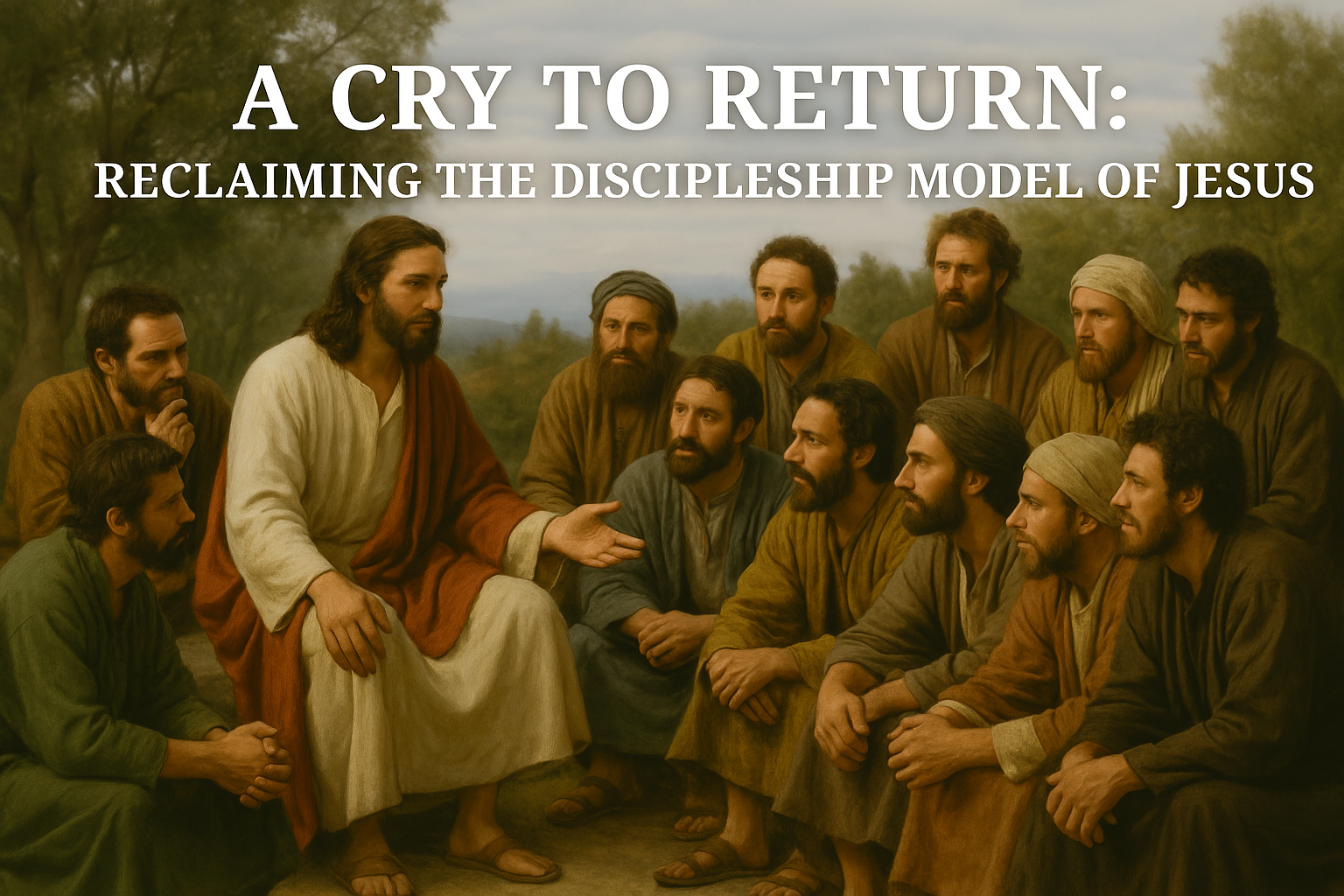
For generations, religious institutions built by man have stood as towering structures—grand in appearance, massive in influence, and seemingly unshakable. Yet beneath the surface, many of these institutions have traded holiness for human strategies, exchanged divine encounters for market-driven growth, and embraced cultural relevance at the cost of biblical truth. But God’s answer has never been found in religious empires. His answer is found in His Holy Remnant.

The Religious Institution: Form Without Power

Religious institutions often function as well-oiled machines, designed to captivate the masses with polished sermons, well-organized programs, and marketing strategies that mirror the corporate world. The focus is often placed on numbers—church attendance, social influence, financial expansion—measuring success by worldly standards rather than spiritual depth.

Many of these institutions, though outwardly thriving, are inwardly compromised. They cling to seeker-sensitive models that dilute the truth of the gospel to make it more palatable to the modern culture. Messages become motivational rather than transformational, appealing rather than convicting. The presence of God, once sought in desperation, is now scheduled into services with precision, yet rarely truly encountered.

In the name of relevance, many have abandoned reverence. Truth is softened, repentance is overlooked, and holiness is dismissed as outdated. They operate on strategy instead of Spirit, elevating human wisdom over divine guidance. Growth is pursued not through revival, but through consultants and business models. And while these institutions expand in influence, they lack the power that was evident in the early Church—the kind of power that shakes foundations, heals the sick, and overturns the works of the enemy.

The Holy Remnant: Marked by God’s Presence

In stark contrast, the Holy Remnant is not defined by numbers, grandeur, or influence. They are hidden, set apart, refined by fire, and consumed by an unshakable devotion to Christ. They are not concerned with appearance but with presence—the presence of God that cannot be fabricated or manipulated but must be earnestly pursued.

Unlike the institution built by man, the remnant does not bow to cultural trends. They refuse to compromise truth for popularity, choosing instead to stand firm even when the world rejects them. They are governed by the Holy Spirit, not church boards or leadership strategies. Their gatherings are not orchestrated performances but sacred assemblies where the power of God moves freely.

The Holy Remnant understands the urgency of the hour. They are aware of the deception infiltrating the Church and the spiritual battle raging over nations. While many within institutionalized Christianity are distracted by programs and social status, the remnant is interceding, discerning, and advancing the Kingdom in ways unseen by the masses.

They carry the fire of revival—a fire that cannot be extinguished by opposition, persecution, or rejection. Like the early Church, they gather in small groups, in secret places, wherever the Spirit leads. They may not have the platforms of religious leaders, but they have the favor of God. And it is through them that true transformation is coming.

God’s Answer Is Found in His Remnant

At this critical hour, God is not looking for institutions; He is looking for surrendered hearts. The answer to the crisis facing the Church and the world is not found in larger congregations or refined religious systems—it is found in the humble, devoted, Spirit-led believers who carry the mantle of the remnant.

God has always used a remnant to shift history. When Israel turned away from Him, He preserved a remnant. When wickedness ruled, He raised up prophets. When the religious leaders rejected Christ, He birthed the early Church through a small group of radical followers. And today, in the shadows of religious empires, He is once again raising up His remnant.

The remnant is His answer. They walk in kingdom authority, speak with prophetic clarity, and live in unwavering faith. They are not concerned with trends or titles but with the advancement of God’s will on the earth. Where religion has failed, the remnant will prevail. Where institutions have compromised, the remnant will stand. And through them, revival will come.

The Call to the Remnant

Are you among them? Will you choose to be set apart rather than blend in? Will you stand in truth, walk in holiness, and seek His presence above all else?

Now is the time. The remnant is rising. Will you answer the call?

~Dr. Russell Welch

Elder/ Apostolic Teacher: Highway to Heaven Church and Founder and Shepherd of Remnant Warrior Ministries / Remnant Warrior School of Spiritual Warfare.

What transformation might occur in our churches if leaders pursued the faithful integrity of Zadok and Joseph rather than the metrics of corporate success?

Kingdom Leadership

Leadership in God’s economy has always been distinct from worldly patterns of authority. When Jesus declared, “You know that the rulers of the Gentiles lord it over them, and their great ones exercise authority over them. It shall not be so among you” (Matthew 20:25-26), He established a fundamental principle: authentic spiritual leadership operates from a different framework than secular power structures. The examples of Zadok and Joseph illustrate this divine blueprint in action.

Scripture presents leadership not primarily as position or privilege but as stewardship—temporary responsibility for resources and people ultimately belonging to God. Joseph recognized this reality when managing both Potiphar’s household and later Egypt’s resources during famine. At no point did he treat his authority as personal possession or platform for self-advancement. Similarly, Zadok fulfilled his priestly duties as sacred trust rather than personal territory. This stewardship mindset transforms how leaders approach their roles, creating accountability that transcends human oversight.

Consider the difference between renters and caretakers. A renter occupies space temporarily with minimal investment, often focused on extracting maximum benefit for minimum cost. A caretaker, however, manages property on behalf of the owner, making decisions based on the owner’s priorities rather than personal preference. Too many contemporary leaders function as renters in their ministries—utilizing resources, people, and platforms for personal advancement without deep investment in the community’s long-term flourishing. Zadok and Joseph exemplify caretaker leadership, recognizing their responsibility to the true Owner of all they managed.

The Apostle Paul emphasized alignment with biblical teachings when he instructed Timothy to “follow the pattern of the sound words that you have heard from me” (2 Timothy 1:13). This commitment to scriptural fidelity must guide every leadership decision, from organizational structures to worship practices to community engagement. When leaders substitute cultural relevance, pragmatic effectiveness, or personal preference for biblical principles, they abandon the very foundation that legitimizes their spiritual authority.

Biblical alignment requires more than occasional scripture references attached to predetermined strategies. It demands allowing God’s Word to shape our fundamental understanding of success, methods, and goals. Joseph could have implemented Egyptian methods of governance without reference to covenant principles, but his leadership reflected deeper values rooted in his faith heritage. Today’s leaders must likewise allow scripture to critique their assumptions about growth, programming, and measurement rather than merely justifying existing approaches with selected texts.

Leadership that reflects scriptural principles prioritizes character formation over program expansion. Both Zadok and Joseph underwent years of testing before assuming their most significant leadership roles. Joseph spent thirteen years as slave and prisoner before his governmental appointment; Zadok served faithfully under previous priests before assuming the high priesthood. This pattern of preparation through trials appears consistently throughout scripture, from Moses’ forty years in Midian to David’s wilderness wanderings to Paul’s years in Arabia. Contemporary ministry’s obsession with rapid advancement often shortcircuits this essential formation process.

The consistent pattern of scripture shows that God measures leadership success differently than humans do. While we often count attendance, facilities, budgets, and influence, biblical evaluation focuses on faithfulness, integrity, spiritual fruit, and alignment with divine purposes. Jesus Himself warned against equating visible results with spiritual success when He described impressive ministries that would ultimately hear, “I never knew you; depart from me” (Matthew 7:23). Leaders must resist the temptation to substitute worldly metrics for divine approval.

Worldly leadership models often emphasize positional authority and hierarchical control. By contrast, scriptural leadership operates through servant influence and moral authority. Joseph led through wisdom and integrity rather than dominance; Zadok’s influence flowed from his faithfulness rather than asserting priestly prerogatives. Jesus crystallized this distinction when He declared, “Whoever would be great among you must be your servant” (Matthew 20:26). When contemporary leaders attempt to control through position rather than influence through character, they abandon biblical leadership principles.

The faithful leadership exemplified by Zadok and Joseph provides a timeless blueprint that challenges and corrects our modern ministry paradigms. Their examples show us that leadership aligned with biblical teachings prioritizes character over charisma, faithfulness over fame, and divine approval over human acclaim. The church today desperately needs leaders who will embody these principles, standing firmly in the righteous tradition of Zadok and the faithful wisdom of Joseph.

The Countercultural Path of Righteous Leadership

The paths walked by Zadok and Joseph diverged sharply from those traveled by many of their contemporaries. While others sought positional advantage, personal comfort, or public acclaim, these men oriented their lives around a different axis—unwavering commitment to God’s ways regardless of personal cost. Their countercultural journeys offer profound insight for today’s leaders navigating equally challenging terrain.

Zadok’s steadfast loyalty to David during Absalom’s rebellion represents a pivotal moment revealing the priest’s character. The politically expedient choice would have been aligning with Absalom, whose forces had gained significant momentum and whose victory seemed likely. Many religious leaders throughout history have compromised their convictions to remain close to power. Yet Zadok recognized a higher principle—God had chosen David, and human rebellion couldn’t nullify divine appointment. His loyalty wasn’t primarily to David personally but to the role David occupied as God’s anointed leader.

What remarkable transformation might occur if contemporary Christian leaders approached their calling with similar clarity! When ministry decisions revolve around maintaining institutional stability, preserving donor relationships, or avoiding controversy rather than pursuing divine directives, we abandon the path Zadok walked. True spiritual leadership often requires standing against prevailing trends—even religious ones—when they contradict God’s revealed truth. Zadok’s example calls today’s leaders to evaluate each decision not by its popularity or practicality but by its alignment with God’s established order.

Joseph’s response to sexual temptation with Potiphar’s wife establishes another countercultural marker for godly leadership. Unlike many powerful men who view sexual access as a perk of position, Joseph recognized that his authority brought responsibility rather than entitlement. “How then could I do this great wickedness, and sin against God?” he asked—revealing that his decision flowed not from fear of discovery but from awareness of divine presence. This integration of sexuality and spirituality stands sharply counter to both ancient and modern separations between religious performance and personal conduct.

Contemporary church culture has been repeatedly wounded by leaders who compartmentalize their lives—maintaining public ministry personas disconnected from private moral failures. The devastating impact of such hypocrisy extends far beyond individual ministries, undermining trust in spiritual leadership broadly. Joseph’s example calls leaders to recognize that no aspect of life stands outside spiritual accountability—that private choices reveal true character more accurately than public performances. His integrity challenges the modern tendency to separate “professional” ministry from personal morality.

Zadok’s commitment to proper worship procedures during politically volatile circumstances demonstrated another countercultural principle: faithful leaders prioritize divine standards over expedient alternatives. When David fled Jerusalem during Absalom’s rebellion, Zadok initially brought the Ark of the Covenant with him—but David instructed him to return it to its proper place. Despite the uncertainty of the situation, Zadok maintained proper worship practices rather than using sacred objects as political tools or personal protection. His example challenges leaders to maintain doctrinal and practical integrity even when circumstances suggest compromise might yield better outcomes.

In a religious climate where methodology often trumps theology—where “what works” frequently displaces “what’s true”—Zadok’s commitment to proper worship provides crucial correction. Authentic spiritual leadership remains faithful to fundamental truths and practices even when innovation promises greater response. This doesn’t preclude thoughtful contextualization, but it establishes non-negotiable boundaries around essentials. Leaders walking in Zadok’s footsteps distinguish between cultural preferences and covenant commitments, willing to adapt methods while preserving core truths.

Joseph’s administrative wisdom during Egypt’s famine crisis illustrates another countercultural leadership principle: preparation for future challenges rather than optimization for present comfort. While others might have consumed available resources immediately, Joseph implemented systems to preserve resources through anticipated hardship. This long-term perspective often conflicts with contemporary expectations for immediate results and constant growth. In ministry contexts driven by quarterly metrics and annual reports, the patience required for sustainable impact frequently succumbs to pressure for visible outcomes.

Leaders following Joseph’s example recognize that meaningful impact rarely aligns with artificial reporting periods. Character development, discipleship maturation, and community transformation operate on God’s timeline rather than institutional calendars. The leader committed to lasting rather than immediate impact may appear less successful by conventional metrics but produces fruit that remains. Joseph’s willingness to implement unpopular policies during plenty to prepare for future famine challenges today’s leaders to prioritize long-term faithfulness over short-term popularity.

Both Zadok and Joseph demonstrate perhaps the most countercultural leadership characteristic: genuine humility expressed through faithful service rather than position or recognition. Despite their significant roles, neither man’s narrative focuses on personal accomplishment or acclaim. Joseph explicitly redirected credit to God when interpreting dreams; Zadok performed his duties without seeking the spotlight. This self-effacing approach stands in stark contrast to contemporary leadership cultures celebrating personality and platform. The path walked by these biblical exemplars leads away from self-promotion toward faithful stewardship.

In an age where ministry success often equates with personal brand development, social media following, and platform expansion, the quiet faithfulness modeled by Zadok and Joseph offers profound correction. Their examples remind us that spiritual authority flows not from visibility but from integrity—not from acclaim but from alignment with divine purposes. Leaders walking in their footsteps measure impact not by personal recognition but by community transformation, not by platform size but by faithfulness to divine calling.

~Dr. Russell Welch
Elder / Apostolic Teacher: Highway to Heaven Church and Founder and Shepherd of Remnant Warrior Ministries / Remnant Warrior School of Spiritual Warfare.

Apostolic Authority
Apostolic Authority differs fundamentally from hierarchical or positional power structures. In the New Testament, apostolic leaders functioned primarily as spiritual parents who earned influence through relationship, demonstrated character, and proven ministry effectiveness.

They led through service rather than control, modeling Christ’s approach to leadership as exemplified in washing His disciples’ feet.

This servant-leadership paradigm contrasts sharply with ecclesiastical systems that confer authority through formal titles or institutional positions.

The essence of apostolic authority lies in its Holy Ghost inspired influence rather than its control. Apostolic leaders in the early church extended their ministry through relationship networks rather than organizational structures.

Their authority was recognized by Holy Ghost, and voluntarily by those who benefited from their ministry rather than imposed through ecclesiastical sanctions or denominational mandates.

This relational foundation creates a more organic, resilient connection than institutional affiliations that may dissolve when organizational politics or priorities shift.

Apostolic authority manifests primarily through equipping and releasing others rather than consolidating power. Paul’s ministry exemplifies this approach—he established communities, developed local leadership, and then moved on to new territories.

His ongoing relationship with these churches focused on encouraging their growth toward maturity rather than maintaining dependent connections. This pattern stands in marked contrast to modern systems that often foster dependency on professional ministers.

Participatory Community
Participatory Community reflects the New Testament vision of church as an active body rather than a passive audience. The biblical metaphor of the church as a body presupposes that every member has a vital function to perform.

This understanding transforms gatherings from spectator events into collaborative expressions where diverse gifts operate for mutual edification. Such participation extends beyond token involvement to meaningful contribution in worship, ministry, and decision-making processes.

The experience of community in apostolic churches transcends casual social connection to covenant relationship. Members understand themselves as spiritually joined to one another, sharing a common identity and purpose that shapes their priorities and commitments.

This covenant relationship creates the necessary foundation for genuine accountability, conflict resolution, and shared life that extends beyond weekly services into daily interaction and practical support.

Community engagement in the apostolic model extends beyond internal fellowship to active engagement with the surrounding society. Rather than creating Christian subcultures isolated from their neighbors, early believers remained embedded in their communities as salt and light.

They demonstrated Kingdom values through practical service, ethical business practices, and compassionate response to societal needs. This engagement provided both credibility for their message and opportunities for witness that institutional isolation cannot produce.

Practical Spirituality
Practical Spirituality characterizes the apostolic approach to faith, emphasizing tangible expression of spiritual realities in everyday life. Unlike religious systems that separate sacred from secular domains, apostolic Christianity integrates faith into all aspects of human experience.

Believers are equipped to exercise their spiritual authority in family relationships, workplace environments, and community involvement rather than compartmentalizing spirituality to religious activities.

The supernatural dimension remains central to apostolic spirituality. The New Testament presents a faith characterized by divine healing, prophetic guidance, angelic assistance, and spiritual warfare as normal aspects of Christian experience rather than exceptional phenomena.

This practical supernatural ministry emerged from intimate relationship with God rather than formulaic techniques or specialized gifting limited to professional ministers.

All believers were expected to manifest spiritual gifts as the Spirit directed.

Holistic development marks apostolic approaches to discipleship. Rather than focusing exclusively on intellectual knowledge or emotional experiences, apostolic ministry addresses the whole person—spirit, soul, and body.

Character formation receives as much attention as gifting development. Financial stewardship and vocational excellence are considered spiritual matters alongside prayer and Bible study. This comprehensive approach produces believers equipped to represent Christ effectively in every dimension of life.

Leadership Multiplication
Leadership Multiplication distinguishes apostolic movements from institutional maintenance. Paul instructed Timothy to entrust what he had learned to faithful individuals who would teach others also, creating a four-generation multiplication process (2 Timothy 2:2).

This intentional reproduction stands in stark contrast to centralized systems that channel potential leaders through institutional bottlenecks like seminary training or denominational ordination processes that often restrict rather than accelerate leadership development.

Mentoring relationships provide the primary context for leadership development in apostolic systems. Emerging leaders learn through life-on-life impartation rather than merely academic instruction, absorbing values, developing character, and acquiring practical ministry skills through observation and guided experience.

This relational approach transmits both formal teaching and tacit knowledge—the unspoken wisdom that comes only through proximity to experienced practitioners demonstrating ministry in real-life contexts.

Apostolic leadership development emphasizes character formation alongside skill acquisition. While contemporary systems often credential individuals based primarily on academic achievement or speaking ability, apostolic communities recognize that lasting leadership influence flows from integrity, humility, and proven faithfulness.

The qualifications for elders outlined in 1 Timothy 3 and Titus 1 focus overwhelmingly on character qualities rather than professional competencies, establishing a pattern that apostolic reformation seeks to restore.

Evangelical Mission

Evangelical Mission drives apostolic movements, maintaining the outward focus that prevents communities from becoming self-absorbed and maintenance-oriented. The Great Commission remains central rather than peripheral, shaping priorities, resource allocation, and ministry structures. This mission orientation ensures that churches exist primarily for those not yet part of them rather than primarily serving the preferences of existing members.

Kingdom advancement rather than institutional growth distinguishes truly apostolic mission. While many modern churches measure success by attendance, buildings, and budgets, apostolic leaders evaluate effectiveness by transformed lives, disciples made, and new communities established. This kingdom perspective enables cooperation across organizational boundaries, as leaders recognize fellow workers contributing to the same divine purpose rather than competing for market share in the religious economy.

Contextual adaptation characterizes apostolic mission strategy. Paul became “all things to all people” to effectively reach diverse cultural groups. This principled flexibility stands in contrast to standardized approaches that export cultural forms alongside the gospel message. Apostolic movements distinguish between unchanging biblical principles and adaptable methodologies, allowing indigenous expressions of Christianity to develop in each cultural context rather than importing foreign practices that create unnecessary barriers to reception of the gospel.

The modern church faces a pivotal choice: continue maintaining inherited traditions and structures that increasingly fail to engage contemporary culture, or embrace the challenging but revitalizing path of apostolic reformation that returns to foundational principles while contextualizing their expression for today’s world. Recognizing these deviations represents the first step toward restoration, requiring both honest assessment of current practices and courageous commitment to biblical patterns regardless of institutional resistance.

Reclaiming the Essence

The Apostolic Reformation ultimately represents a recalibration—aligning modern church expressions with timeless biblical principles. This movement challenges believers to distinguish between cultural accommodations that have accumulated over centuries and the essential, unchanging foundations of authentic Christianity. Such discernment requires both historical awareness and scriptural literacy, understanding how and why the church evolved away from its original pattern while maintaining clear vision of the apostolic blueprint.

Throughout church history, reformation movements have consistently emerged when dedicated believers recognized the gap between contemporary practices and biblical patterns. From the Waldensians to the Protestant Reformers to the Methodist revival, these movements sought to recover lost aspects of New Testament Christianity. The current Apostolic Reformation stands in this historic tradition, addressing areas where even previous reformations left work unfinished. Like those earlier movements, it faces institutional resistance while offering renewed vitality and relevance to a changing world.

The restoration of apostolic Christianity does not imply simplistic attempts to recreate first-century cultural forms or practices. Rather, it involves discerning the underlying principles and values that animated the early church and applying them within contemporary contexts. Just as the apostolic communities contextualized the gospel message for diverse cultural settings in their day, modern apostolic reformation seeks relevant expressions for today’s world while maintaining fidelity to foundational truths and values.

This reformation journey requires both courage and humility—courage to challenge entrenched systems and practices that have deviated from biblical patterns, and humility to acknowledge that no individual or group possesses complete understanding. The process involves collaborative discovery, experimental application, and continuous refinement as communities learn together what apostolic Christianity looks like in their particular context. Such humble courage characterizes genuine reformers throughout church history.

Apostolic Reformation calls believers to rediscover the dynamic, relational, Spirit-empowered essence of original Christianity, understanding the historical context that shaped the early church, and courageously addressing modern deviations from this pattern to create authentic expressions of biblical community suitable for reaching today’s world.

Returning to Our Apostolic Foundation

The journey of rediscovering our apostolic roots isn’t simply an academic exercise—it’s a vital spiritual awakening. As we’ve explored throughout this chapter, the essence of Apostolic Reformation lies in reconnecting with the vibrant, Spirit-led practices that defined the early church. This reconnection isn’t about nostalgic longing for the past, but about reclaiming the power, authority, and effectiveness that Christ intended for His Body.

When we examine the foundational principles of Apostolic Reformation, we find a blueprint not created by human ingenuity but designed by divine wisdom. The five-fold ministry—Apostles, Prophets, Evangelists, Pastors, and Teachers—wasn’t established as an organizational chart but as the living structure through which the Holy Spirit would equip believers for works of service.

The early church understood this dynamic. They lived it daily. Their gatherings weren’t mere religious exercises but transformative encounters with God’s presence. Their governance wasn’t bureaucratic but Spirit-led. Their impact wasn’t measured by building size but by kingdom advancement. They changed their world not through political power but through spiritual authority.

Today’s deviations from this pattern haven’t been without consequence. As we’ve seen, when we replace biblical patterns with human traditions, we inadvertently limit the flow of God’s power and purposes through His church. The institutional frameworks, hierarchical leadership models, and program-driven approaches that characterize many modern churches often bear little resemblance to what we see in Acts and the Epistles.

Yet there is hope. The winds of Apostolic Reformation are blowing across the global Church. Believers everywhere are hearing the Spirit’s invitation to return to the ancient pathways—not to recreate the first-century church in its cultural expression, but to recapture its spiritual essence and apostolic power.

~Dr. Russell Welch
Elder / Apostolic Teacher: Highway to Heaven Church and Founder and Shepherd of Remnant Warrior Ministries / Remnant Warrior School of Spiritual Warfare.

Version 1.0.0

The following is an excerpt from my book “Warrior’s Arsenal: Equipping Prayer Warriors with the Armor of God”.

Inside this book with its close to 400 pages you will find, what I believe is, Holy Spirit inspired steps to becoming a Victorious Prayer warrior, through a wealth of battle hardened wisdom that comes from many victories, as well as many defeats.

The insights within theses pages come from my own experiences of not just my 23 years in ministry but also include the close to 45 years of being saved (Including my back-slidden years).

For one of the places I garnered the most necessary experience pertaining to Spiritual Warfare was in times of defeat, for there, I was my found myself in the deepest places of humbly asking Holy Spirit what went wrong, and in His gentle manner, He taugt me not just the error of my warfare but more importantly, what ajustments needed to be made so that I did not repeat the mistakes.

When I first wrote this book, I did so with a hope and prayer that it would find its way into the hands of youth, as they transitioned from High school, either into college or the work places, to be a took that would equip them in ways regarding Spiritual Warfre and how to hold onto to their Faith that sadly most Churches do not.

_____________________________________________________________________

From Stumbling Novice to Battle-Ready Warrior: Why Some Triumph While Others Falter

When facing an unseen enemy, preparation is everything. The inexperienced believer often approaches spiritual warfare with either naive enthusiasm or paralyzing fear—both equally ineffective on the battlefield of the spirit.

Perhaps you’ve felt that surge of determination after a moving sermon, only to find yourself overwhelmed and retreating when the first real skirmish arrives. Or maybe you’ve wondered why some believers seem unshakable during spiritual attacks while others crumble under the same pressure.

The answer lies not in inherent spiritual gifting but in deliberate, consistent development. Just as no soldier earns their stripes without rigorous training, no prayer warrior becomes effective through occasional, halfhearted efforts.

The most formidable spiritual warriors are not born—they are forged through discipline, instruction, and experience. This developmental process forms the foundation of spiritual fortitude, that rare and precious quality that enables believers to stand firm when everything within them wants to flee.

What many fail to recognize is that spiritual warfare mastery follows the same principles as any other significant skill acquisition. The martial artist doesn’t perfect their technique overnight, nor does the master musician develop their craft in a week.

Similarly, spiritual warfare capabilities mature through stages—from awkward beginner to seasoned veteran—each with its own challenges and victories. Understanding this progression prevents the discouragement that causes many to abandon their post before they’ve truly begun to fight.

The spiritual warrior’s path is neither mysterious nor arbitrary; it follows discernible patterns that, once understood, make growth both predictable and achievable.

Perhaps most importantly, we’ll address the patience required in this process. In an age of instant gratification, the gradual development of spiritual fortitude can feel frustratingly slow. Many abandon their training during plateaus or after setbacks, not realizing these are essential parts of the journey.

The prayer warriors who ultimately prevail aren’t necessarily those with the most dramatic spiritual experiences, but those who persevere through the unglamorous daily work of spiritual discipline. This steadfast commitment—more than any specific technique—distinguishes effective spiritual warriors from those who remain perpetually unprepared.

Spiritual warfare requires consistent practice and discipline. Just as a soldier doesn’t become battle-ready overnight, spiritual fortitude develops through regular training in spiritual disciplines. Prayer, Scripture reading, meditation, and fasting aren’t just activities—they’re training exercises that strengthen your spiritual muscles.

When practiced daily, these disciplines sharpen your spiritual senses, making you more attuned to God’s voice and more resistant to the enemy’s tactics.

You can order a copy of “Warrior’s Arsenal” here on Amazon

~Dr. Russell Welch
Elder / Apostolic Teacher: Highway to Heaven Church and Founder and Shepherd of Remnant Warrior Ministries / Remnant Warrior School of Spiritual Warfare.


For several weeks, more specifically, since November 5, 2024, I have been resonating with a profound phrase in my spirit: “Gideon’s remnant army is arising!”

This declaration evokes the Biblical tale of Gideon, found in Judges 7, where the Israelites, hardened by their own transgressions, find themselves oppressed by the Midianites. After seven years of tyranny, they are reduced to hiding in the mountains and caves, stripped of their strength and dignity.

In this dire situation, God calls upon Gideon to rally an army, but the Lord, in His divine wisdom, reduces Gideon’s forces from 32,000 warriors to a mere 300. This seemingly small number against the vast Midianite army symbolizes a powerful truth: God’s strength is made perfect in our weakness.

God’s intention in this narrative was not solely to confront the Midianites but also to challenge the Israelites’ idolatry and reliance on false gods. The Israelites had turned away from the very foundation of their strength—faith in God.

As we reflect on the current state of our nation, it is impossible to ignore the parallels. A country that once proclaimed, “In God We Trust” now grapples with moral confusion, celebrating darkness as light and heralding evil as good.

The flag that once signified freedom and divine dependence is increasingly overshadowed by symbols that represent depravity and disorientation. In this context, the remnant—those who remain steadfast in faith amidst chaos—becomes a beacon of hope.

Returning to Gideon’s narrative, the Lord equips him and his 300 men with unconventional weapons: clay pots, torches, and ram’s horns. These instruments of warfare defy human logic and convention.

Yet, God instructs Gideon to act in unison with his men, demonstrating the power of unity and obedience to divine command. When they break the clay pots and reveal the blazing torches, they signal not only their presence but also the manifestation of God’s power in the midst of overwhelming odds.

The Midianites, caught in confusion and panic, turn on one another, resulting in a victory that no human strength could claim. This ancient story serves as a prophetic reminder for the church today.

The body of Christ finds itself facing an expansive “enemy army” that appears insurmountable. The mainstream media, which I humorously refer to as “Mediaites,” has become a formidable force, spreading misinformation and fostering division among the people.

Yet, even in this bleak landscape, there remains a remnant—those who refuse to bow to the pressures of the world and continue to wield the light of truth against the shadows of deceit.

The assurance from 2 Kings 6:16 resounds with clarity: “Don’t be afraid… Those who are with us are more than those who are with them.” The battle may seem daunting, but the heavenly hosts stand firm alongside the remnant.

We are called to carry the blazing torch of truth and declare the victory of Yahweh with the sound of our voices. The time is approaching when the clay jars will shatter, and the light will shine forth, illuminating the darkness and instilling fear in the hearts of the oppressors.

As we navigate the societal unrest and chaos that characterize our current era, it is crucial to recognize that the conflict extends beyond physical manifestations.

It is a spiritual battle—a Civil War of ideologies, morals, and truths. The remnant army, empowered by faith, will rise up, uniting their voices to strike fear into the hearts of the wicked.

The message is clear: tyranny will not triumph, and the oppressors will not prevail. Gideon’s army, a testament of faith and divine intervention, will once again emerge victorious. In conclusion, the tale of Gideon’s remnant army is not merely a historical account; it is a prophetic call to action for believers today.

We are reminded that it is not by human might or power that we achieve victory, but by the Spirit of the Lord. As we embrace our roles as warriors in this spiritual battle, let us remain steadfast, united, and resolute in carrying the light of truth into the darkness.

The remnant is rising, and with it, the promise of victory in the face of overwhelming odds.

~Dr. Russell Welch
Elder / Apostolic Teacher: Highway to Heaven Church and Founder and Shepherd of Remnant Warrior Ministries / Remnant Warrior School of Spiritual Warfare.