Archive for the ‘Revival History’ Category


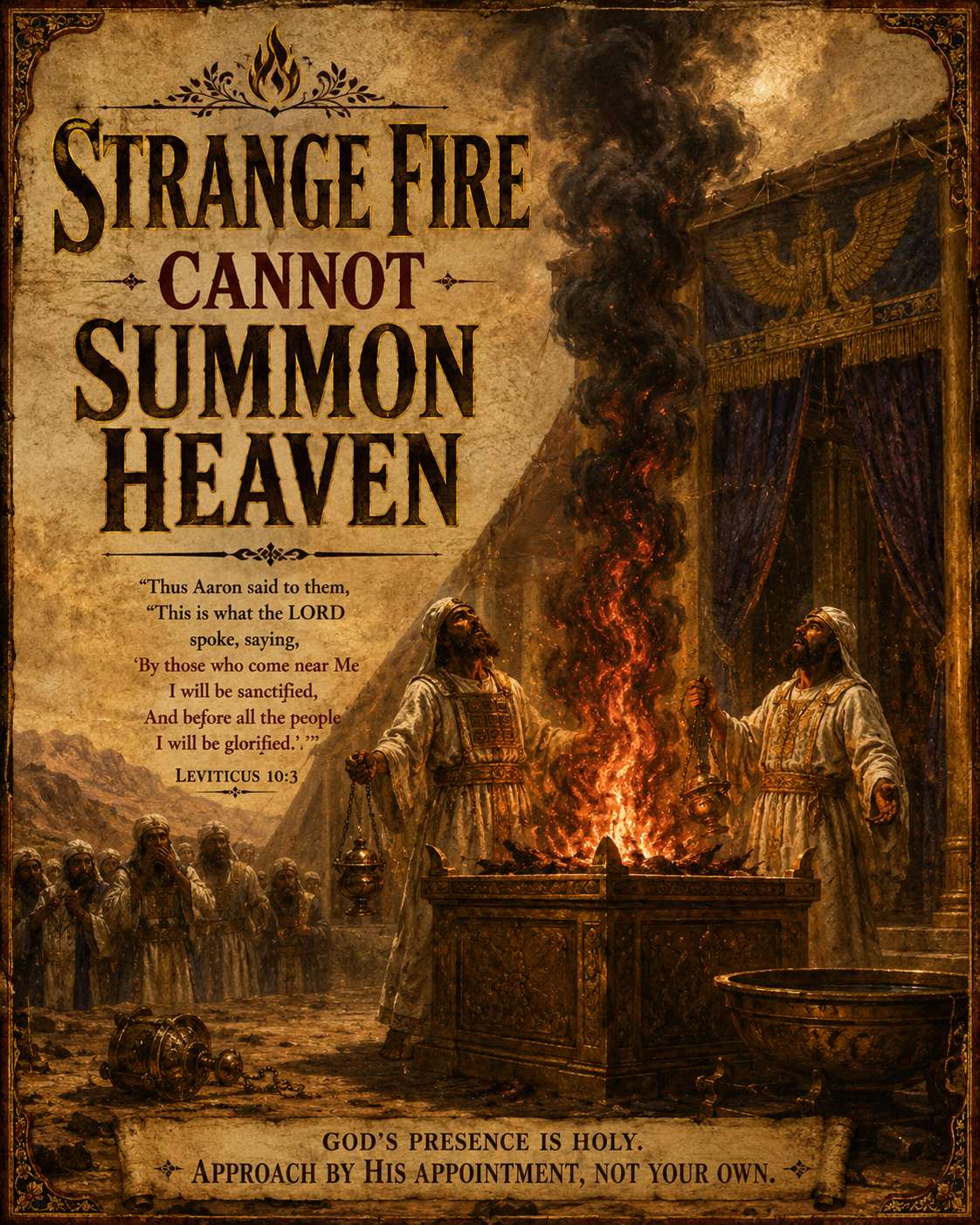
“Man can build the altar, schedule the event, and stir the crowd — but only Heaven can send the fire.”

Heaven does not respond to hype. Heaven does not bend because men built a stage, printed a flyer, gathered a crowd, named a movement, or declared a date God never spoke. The modern-day Church must learn again that fire from Heaven is not manufactured by human ambition. It is not produced by noise, branding, emotional pressure, or religious performance. Heaven responds to obedience, surrender, repentance, holiness, and broken hearts before the altar of the Lord.

One of the most sobering lessons in Scripture is found in Leviticus 10, when Nadab and Abihu, the sons of Aaron, offered “strange fire” before the Lord. They were not outsiders mocking the altar; they were priests standing near holy things. Yet nearness to sacred activity did not excuse unauthorized fire. They attempted to offer something God had not commanded, and the judgment of the Lord exposed the danger of imitation worship. This is a fearful warning to every generation that tries to substitute human flame for holy fire.

The Lord is not obligated to bless what He did not birth. Man may create an event, but only God can appoint a visitation. Man may schedule a gathering, but only Heaven can breathe upon it with glory. Man may stir emotion, but only Holy Spirit can pierce the heart with conviction. The difference between hype and holy fire is that hype moves the flesh for a moment, but holy fire produces repentance, transformation, and reverence before God.

Throughout history, the witness remains the same: Heaven responds to broken and repentant hearts. Psalm 51:17 declares, “The sacrifices of God are a broken spirit; a broken and a contrite heart, O God, You will not despise.” God does not despise the crushed heart that returns to Him in truth. He does not ignore the people who tremble at His Word. He does not turn away from the altar wet with repentance.

The problem with much of the modern Church is not that we lack activity. We have activity everywhere. We have conferences, campaigns, platforms, livestreams, strategies, and religious machinery moving at full speed. But the question is not whether we can gather people. The question is whether God has found a people low enough, clean enough, surrendered enough, and obedient enough to carry His fire.

Isaiah 66:2 gives us Heaven’s pattern: “But on this one will I look: on him who is poor and of a contrite spirit, and who trembles at My word.” The Lord tells us plainly where His eyes rest. Not first on the loudest room, the largest crowd, or the most polished production. His eyes rest on the one who trembles before Him. The Remnant must recover the holy tremble.

The early Church understood that repentance was not a side issue; it was part of the way of life. The Didache instructed believers to confess their sins and not come to prayer with an evil conscience. That is a far cry from a generation that often wants the blessing of God without the searching of God. The early believers knew that worship could not be pure while the heart remained unexamined. They understood that the altar of fellowship required clean hands and a surrendered conscience.

Tertullian wrote that repentance is “life,” because it is preferred to death. That is not religious gloom; that is Kingdom mercy. Repentance is not God trying to shame His people. Repentance is God throwing a rescue plank to the drowning soul. It is the doorway back into divine clemency, restored fellowship, and holy alignment with the King.

Ignatius of Antioch warned that where division and wrath are present, God does not dwell. That should make the modern Church tremble. We cannot produce Heaven’s fire while nurturing pride, bitterness, competition, jealousy, rebellion, and self-exaltation behind the scenes. Strange fire is not only false doctrine; it is also a wrong spirit trying to handle holy things. God will not endorse the flame of man’s ego and call it revival.

Revival is not proven by how many people attended. Revival is proven by how deeply hearts bowed. Revival is not proven by how loudly people shouted. Revival is proven by whether sin was confessed, idols were abandoned, forgiveness was released, holiness was restored, and Jesus was enthroned again. The true fire of God does not entertain the flesh. It consumes the sacrifice.

This is the hour for the Remnant to discern the difference between manufactured momentum and divine visitation. Not every flame is from the altar. Not every movement is birthed by Holy Spirit. Not every gathering carrying spiritual language has Heaven’s endorsement. The sons of Aaron teach us that holy things cannot be handled casually, and the altar must never be approached with imitation fire.

The Lord sets the dates. The Lord appoints the moments. The Lord decides when Heaven invades earth with glory, conviction, mercy, and awakening. Our assignment is not to hype the people into a moment, but to prepare the altar, humble our hearts, repent of our sins, tremble at His Word, and obey His voice. When the fire is truly from God, no man has to manufacture it, because Heaven itself will answer.

Stay tuned, the journey continues…..

— Dr. Russell Welch

Dr. Russell Welch is a published author, prophetic teacher, apostolic builder, author, and founder of faith-driven publishing and media initiatives. He is known for crafting bold, Kingdom-centered messages that call the Ecclesia into maturity, doctrinal clarity, and governmental authority. With a passion for equipping the Remnant and honoring generational legacy, Dr. Welch writes and teaches at the intersection of Scripture, history, and spiritual governance, challenging believers to live as sons and daughters who legislate Heaven on earth through truth, holiness, and unwavering fidelity to Christ.

Be sure to check out his book: The Consecrated Firebrand: A Warrior’s Guide to Holy Living, available exclusively on Amazon … here
Amazon Author Page


When a people bow low in repentance, Heaven can set an entire nation on fire with revival.

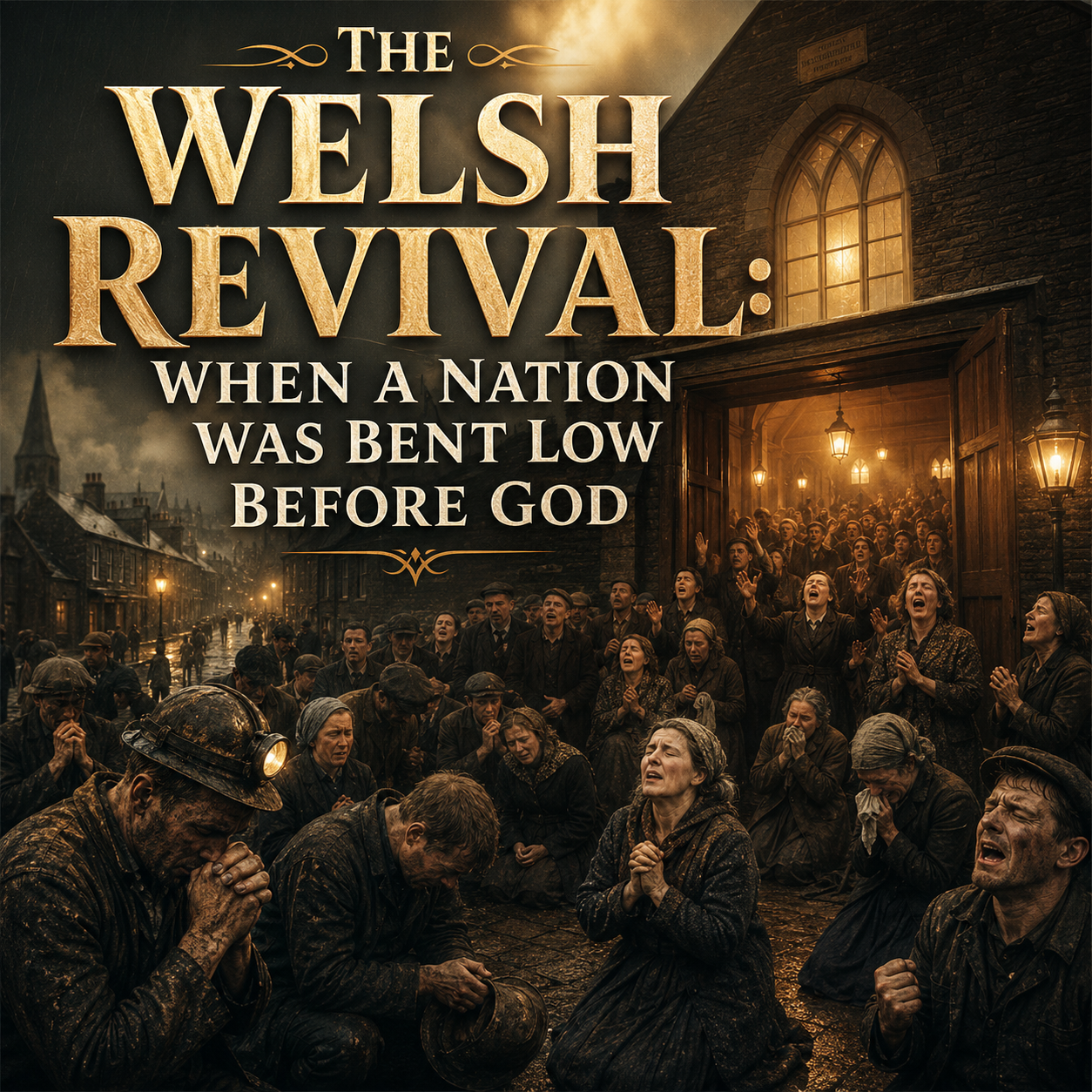
Revival does not begin when men become impressive; revival begins when men become broken. The Welsh Revival of 1904–1905 reminds us that a nation can be shaken when ordinary people come under extraordinary conviction. It was not launched by celebrity machinery, polished promotion, or religious entertainment, but by prayer, repentance, worship, and surrender. Wales became a testimony that when God bends a people low before Him, the fire that falls upon them can cross oceans. Historical accounts consistently connect this awakening with Evan Roberts, a young Welshman whose burden for souls became one of the defining sparks of the movement.

Evan Roberts was not a polished platform personality when the flame began to spread. He was a former coal miner and ministerial student, only in his mid-twenties, yet he carried a holy desperation that many established voices had lost. Scripture says, “Not by might, nor by power, but by my spirit, saith the LORD of hosts” (Zechariah 4:6). That verse seemed to breathe through Wales as meetings erupted not around human performance, but around the manifest dealings of God. The Lord often chooses hidden vessels so that no flesh can glory in His presence.

The heart of the Welsh Revival was conviction of sin. This was not shallow emotion, religious excitement, or temporary enthusiasm; people were pierced by the holiness of God. Jesus said Holy Spirit would “reprove the world of sin, and of righteousness, and of judgment” (John 16:8), and that is exactly what revival does when it is pure. It does not flatter the soul; it brings the soul into the light. Wales was not merely stirred — Wales was searched.

Historical reports describe prayer meetings, spontaneous worship, public confession, and deep repentance as marks of the revival. Many gatherings were not controlled by formal programs but moved with a holy sensitivity to the Spirit’s leading. One recurring watchword associated with Evan Roberts was the call to obey the Spirit, and that phrase captures the atmosphere of the movement. When Holy Spirit governs a room, man’s agenda bows, pride loses its seat, and the fear of the Lord becomes weightier than religious routine.

The Welsh Revival also carried a sound. It has often been remembered as a revival that moved through singing as much as through preaching. Worship became more than music; it became the cry of a nation bending its heart before God. The Psalms declare, “Let every thing that hath breath praise the LORD” (Psalm 150:6), and Wales seemed to answer with tears, hymns, prayers, and holy surrender. When worship is purified by repentance, it becomes a weapon that breaks atmospheres.

There was also a clear burden for souls. The testimony commonly repeated from the revival is that thousands upon thousands were converted in a short period of time, with some historical summaries estimating around 100,000 converts during the awakening. Whether one debates exact numbers or methods of counting, the undeniable record is that the movement deeply impacted Welsh religious life and sent shockwaves far beyond its borders. True revival does not merely fill buildings; it awakens consciences, transforms homes, and confronts society with eternity.

One of the most sobering features of the Welsh Revival was how deeply it touched ordinary life. The fire did not remain locked inside chapel walls. When conviction grips a people, business practices change, speech changes, relationships change, entertainment changes, and hidden sin loses its hiding place. Proverbs 14:34 declares, “Righteousness exalteth a nation: but sin is a reproach to any people.” Wales became a witness that national healing must begin with spiritual confrontation.

The revival was not born in comfort, but in hunger. Before the movement became widely known, there were years of prayer, local awakenings, and spiritual preparation in Wales. Men like Joseph Jenkins and Seth Joshua are often connected to the spiritual atmosphere that preceded Evan Roberts’ public role. This matters because revival rarely appears suddenly, even when it seems sudden to history. Beneath the visible flame, there are usually hidden altars, unseen tears, and nameless intercessors who have refused to let go of God.

The Welsh Revival reminds the modern Church that Holy Spirit does not need our machinery to move. He may use platforms, buildings, media, and organization, but He is never dependent upon them. Acts 2 shows us that when the Spirit was poured out, the sound from Heaven gathered the crowd before Peter ever preached the sermon. The first advertisement of Pentecost was not a campaign strategy; it was the presence of God. Wales, in its own hour, became another reminder that when Heaven breathes, people come.

Yet we must also speak with wisdom: revival history is never spotless because people are never flawless. The Welsh Revival carried glory, but it also carried strain, excess, controversy, and human weakness. Evan Roberts himself would later withdraw from public ministry, reminding us that vessels must be guarded even when the fire is real. The lesson is not to despise revival, but to steward it with Scripture, humility, rest, accountability, and obedience. Fire must be welcomed, but fire must also be tended at the altar of truth.

What crossed oceans from Wales was not merely a story, but a hunger. The revival influenced spiritual conversations far beyond Wales and is often discussed in connection with the wider awakening atmosphere that preceded and overlapped early Pentecostal stirrings, including movements that would soon emerge in other nations. When God ignites one place, the smoke of that altar can be smelled in another. Habakkuk 2:14 declares, “For the earth shall be filled with the knowledge of the glory of the LORD, as the waters cover the sea.” Wales became one burning witness that the glory of God was never meant to remain regional.

The cry of the Welsh Revival still speaks: bend low, confess fully, pray deeply, worship purely, obey Holy Spirit quickly, and burn for souls again. The Church does not need another performance-driven religious moment; she needs a holy visitation that restores the fear of the Lord. If God could shake mining towns, chapels, families, workers, students, and entire communities in Wales, He can shake our cities again. But the altar must be rebuilt before the fire falls. May the Lord bend us low until Christ is exalted high.

Stay tuned, the journey continues…..

— Dr. Russell Welch

Dr. Russell Welch is a published author, prophetic teacher, apostolic builder, author, and founder of faith-driven publishing and media initiatives. He is known for crafting bold, Kingdom-centered messages that call the Ecclesia into maturity, doctrinal clarity, and governmental authority. With a passion for equipping the Remnant and honoring generational legacy, Dr. Welch writes and teaches at the intersection of Scripture, history, and spiritual governance, challenging believers to live as sons and daughters who legislate Heaven on earth through truth, holiness, and unwavering fidelity to Christ.

Be sure to check out his book: The Consecrated Firebrand: A Warrior’s Guide to Holy Living, available exclusively on Amazon … here
Amazon Author Page


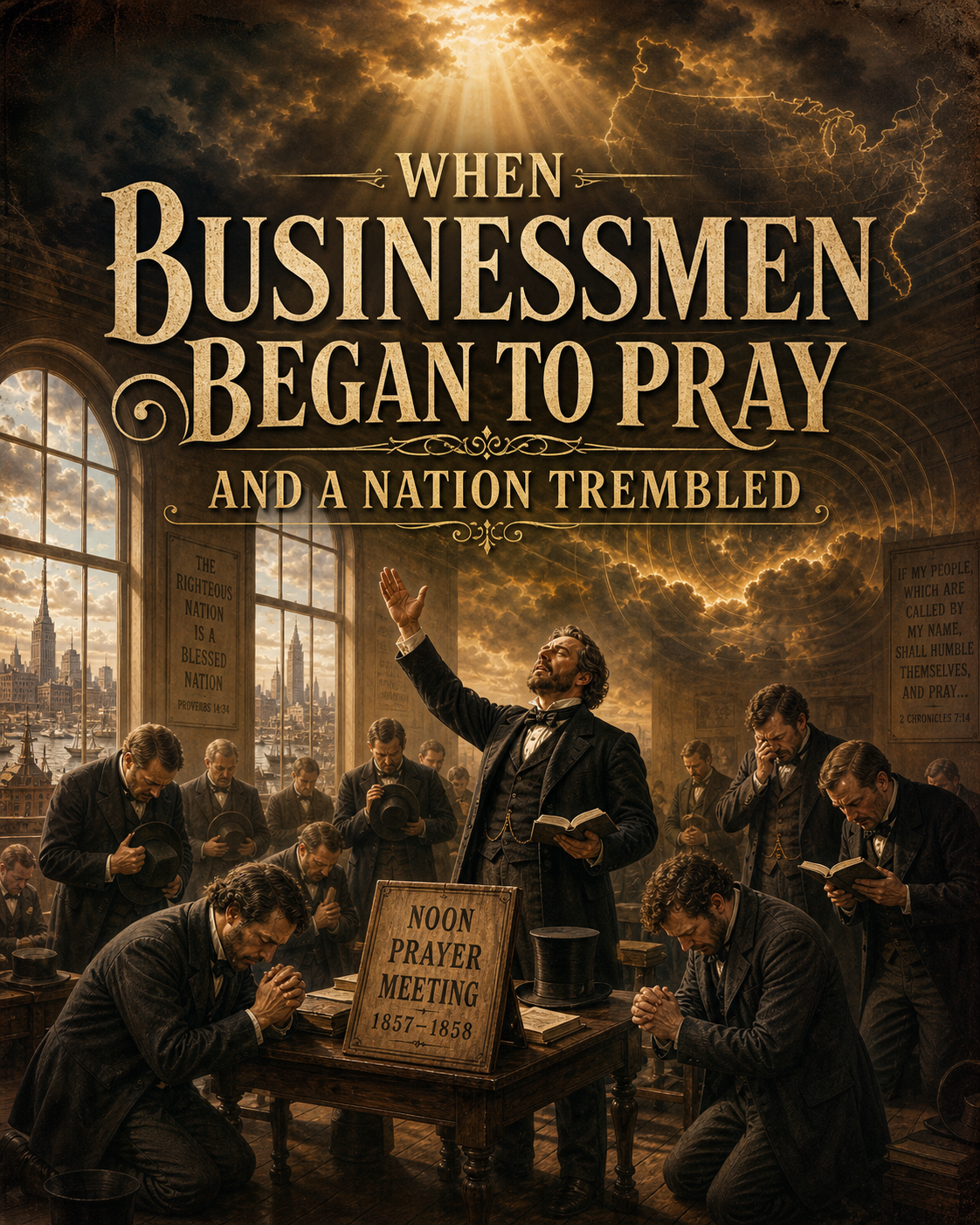
When the Noon Hour Became an Altar

There are moments in history when revival does not begin with a thunderous sermon, a famous preacher, a massive platform, or a carefully branded movement. Sometimes Heaven chooses an upper room, a hidden prayer meeting, a burdened intercessor, and a few hungry souls who still believe God answers when His people humble themselves and pray. The Prayer Revival of 1857–1858 reminds us that true awakening is not always announced by the sound of religious machinery. Sometimes it begins quietly, almost unnoticed, until the breath of God turns a small flame into a consuming fire.

This revival did not begin because America was spiritually healthy. It began because the nation was trembling. Financial instability, moral decline, spiritual coldness, and cultural unrest had settled over the land. The Church had become familiar with religion but was in desperate need of fresh visitation. The nation did not need another clever method. It needed the mercy of God to interrupt the course of history.

In September of 1857, a simple noon prayer meeting began in New York City. It was not designed as entertainment. It was not built around personality. It did not need a stage, a spotlight, or a celebrity voice. It was a call to prayer. At first, only a few attended. But Heaven has never needed a crowd to begin a movement; He only needs surrender, hunger, and obedience.

The meeting was held during the lunch hour so businessmen, workers, and ordinary people could come and pray. That detail matters. Revival broke into the rhythm of daily life. It was not confined to Sunday services. It was not limited to professional clergy. Men left their business dealings, their ledgers, their offices, and their responsibilities to meet with God in the middle of the day. Commerce paused because eternity was calling.

Before long, the prayer meetings began to multiply. What started with a handful of seekers became a movement of intercession. Churches opened their doors for noon prayer. Crowds gathered not to be entertained, but to seek the face of the Lord. Reports began to spread of people being convicted, converted, restored, and awakened. The atmosphere of cities began to shift under the weight of prayer.

This is one of the great lessons of the Prayer Revival: when prayer returns to the center, the Church begins to recover its true authority. Prayer is not religious filler. Prayer is not the soft opening before the “real ministry” begins. Prayer is the place where human strength bows, Heaven’s government is acknowledged, and the will of God is invited to invade the earth. The praying Ecclesia is a governing Ecclesia.

Jesus said, “My house shall be called a house of prayer” (Matthew 21:13, NKJV). He did not say His house would primarily be known as a house of performance, marketing, entertainment, political commentary, or religious professionalism. He called it a house of prayer. When prayer becomes secondary, the Church may still have motion, but it begins to lose oil. When prayer is restored, the altar begins to burn again.

The Prayer Revival also confronts our modern addiction to personality-driven ministry. There was no single preacher who could claim ownership of this awakening. There was no central platform strong enough to control it. There was no ministry brand that could contain it. The movement belonged to God. It spread because prayer spread. It burned because hunger burned.

This is difficult for the modern Church because we often want revival to arrive in a form we can promote, platform, measure, package, and monetize. But the Prayer Revival came as a rebuke to religious celebrity culture before such culture even had its modern machinery. It reminded the Church that Heaven does not need the approval of famous men to move in power. God can shake a nation through nameless intercessors who know how to travail before Him.

The spiritual power of this revival was not found in novelty. It was found in simplicity. People prayed. People confessed sin. People sought mercy. People cried out for salvation. People carried burdens for the lost. The Church did not need to make prayer fashionable. It needed to make prayer central. That is still the issue today.

We must be honest: much of the modern Church has tried to build influence without travail. We have tried to reach culture without first being conquered by God. We have attempted to produce spiritual momentum through strategies while neglecting the prayer closet. We have asked for revival while refusing the altar that births it. But revival that does not come through prayer will not be sustained by programs.

The Prayer Revival teaches us that a nation can be touched when ordinary believers recover extraordinary dependence on God. It was not built on giftedness alone. It was not fueled by human charisma. It was not carried by emotional hype. It was born in the holy place where men and women admitted their need, bent their knees, and cried out to the Lord.

There is a kind of prayer that is polite, predictable, and powerless. Then there is the kind of prayer that comes from spiritual desperation. The Prayer Revival was marked by desperation. It was the sound of a people who understood that if God did not move, the nation would continue to decay. That kind of prayer does not ask God to bless human ambition. It asks God to interrupt everything that is out of alignment with His will.

The Scripture declares, “If My people who are called by My name will humble themselves, and pray and seek My face, and turn from their wicked ways, then I will hear from heaven, and will forgive their sin and heal their land” (2 Chronicles 7:14, NKJV). Notice the order. Humility comes before healing. Prayer comes before restoration. Seeking His face comes before national repair. Turning from wicked ways comes before the land is healed.

This is why true revival cannot be separated from repentance. Prayer that refuses repentance becomes religious noise. Intercession without humility becomes spiritual presumption. A people cannot ask God to heal the land while defending the sins that wounded it. The Prayer Revival carried power because it was not merely a request for blessing; it was a cry for mercy.

In that season, prayer meetings were not built around polished programs. They were marked by short exhortations, Scripture, confession, intercession, and urgent appeals to God. The focus was not on man’s eloquence but on Heaven’s response. That is a vital lesson for us now. The Church does not need more impressive meetings if those meetings do not lead us back to the fear of the Lord.

The Prayer Revival also reveals the power of unity around the burden of God. People from different backgrounds gathered around one central reality: the need for God to move. The altar became larger than personal preference. The burden became stronger than denominational pride. The cry became louder than religious division. When the people of God humble themselves together, spiritual authority is released in ways human organization cannot manufacture.

We should not romanticize revival history as though those generations were perfect. They were not. Every revival season has human weakness, cultural limitation, and imperfect vessels. But we must still learn from what Heaven touched. God was revealing something through this movement: when prayer becomes the engine instead of the ornament, awakening can spread with force.

The Prayer Revival became a witness that God can move outside the expected channels. He can raise up prayer meetings in business districts. He can interrupt lunch hours with eternity. He can turn ordinary rooms into altars. He can place the burden of revival on people who do not carry famous names. He can breathe on the simple obedience of a few and call an entire nation to attention.

This should encourage every intercessor who feels hidden. Heaven sees the prayer closet. Heaven hears the groaning. Heaven remembers the tears. Heaven knows the names of those who labor unseen while others stand under the lights. Many movements that appear public were first conceived in secret by those who had no desire to be known, only a desire for Christ to be glorified.

The modern Church must recover this conviction. Prayer is not weakness. Prayer is warfare. Prayer is legislation from the place of surrender. Prayer is how the Ecclesia agrees with Heaven against the rebellion of darkness. Prayer is how atmospheres are confronted, strongholds are weakened, souls are awakened, and divine order is invited into the earth.

When businessmen began to pray in 1857, it was more than a devotional exercise. It was a prophetic interruption. It was Heaven calling a nation to remember that money cannot save, markets cannot redeem, politics cannot regenerate, and human progress cannot cleanse the soul. The nation needed God. The Church needed fire. The altar needed to be rebuilt.

That word is alive again in our generation. We are surrounded by noise, platforms, crisis, confusion, corruption, and spiritual fatigue. Yet the answer is not found in panic. It is found in return. Return to prayer. Return to repentance. Return to the fear of the Lord. Return to the altar. Return to the government of Holy Spirit.

The question is not whether God can send revival again. The question is whether the Church is willing to become the kind of people through whom revival can be stewarded. Are we willing to pray when no one is watching? Are we willing to repent when no one is applauding? Are we willing to carry the burden of the Lord without turning it into personal promotion? Are we willing to let prayer become the furnace again?

The Prayer Revival of 1857–1858 stands as a holy witness to every generation that has grown weary, distracted, and overly impressed with human methods. A nation can tremble when the people of God begin to pray. Cities can shift when altars are restored. Hearts can awaken when intercession becomes travail. Culture can be confronted when the Ecclesia stops performing and starts seeking the face of God.

This is not a call to nostalgia. It is a summons. The same God who moved in prayer meetings then is still looking for praying people now. The same Holy Spirit who awakened hearts through humble intercession is still able to breathe upon dry bones. The same Lord who honored hidden obedience is still searching for those who will stand in the gap.

Remnant, the hour is too late for prayer to remain a religious accessory. Prayer must become the fire at the center again. Not polished prayer. Not performative prayer. Not prayer as a transition between songs and sermons. But the kind of prayer that humbles the soul, confronts sin, carries the burden of Heaven, and refuses to release the altar until the fire falls.

The Prayer Revival reminds us that when a people pray, Heaven listens. When a people repent, mercy moves. When a people seek His face, atmospheres shift. And when the Ecclesia returns to the altar, nations can still tremble under the weight of God.

To be continued in Part 4: The Welsh Revival — When a Nation Was Bent Low Before God

Stay tuned, the journey continues…..

— Dr. Russell Welch

Dr. Russell Welch is a published author, prophetic teacher, apostolic builder, author, and founder of faith-driven publishing and media initiatives. He is known for crafting bold, Kingdom-centered messages that call the Ecclesia into maturity, doctrinal clarity, and governmental authority. With a passion for equipping the Remnant and honoring generational legacy, Dr. Welch writes and teaches at the intersection of Scripture, history, and spiritual governance, challenging believers to live as sons and daughters who legislate Heaven on earth through truth, holiness, and unwavering fidelity to Christ.

Be sure to check out his book: The Consecrated Firebrand: A Warrior’s Guide to Holy Living, available exclusively on Amazon … here
Amazon Author Page


The Remnant Flame Still Burns in Jacksonville

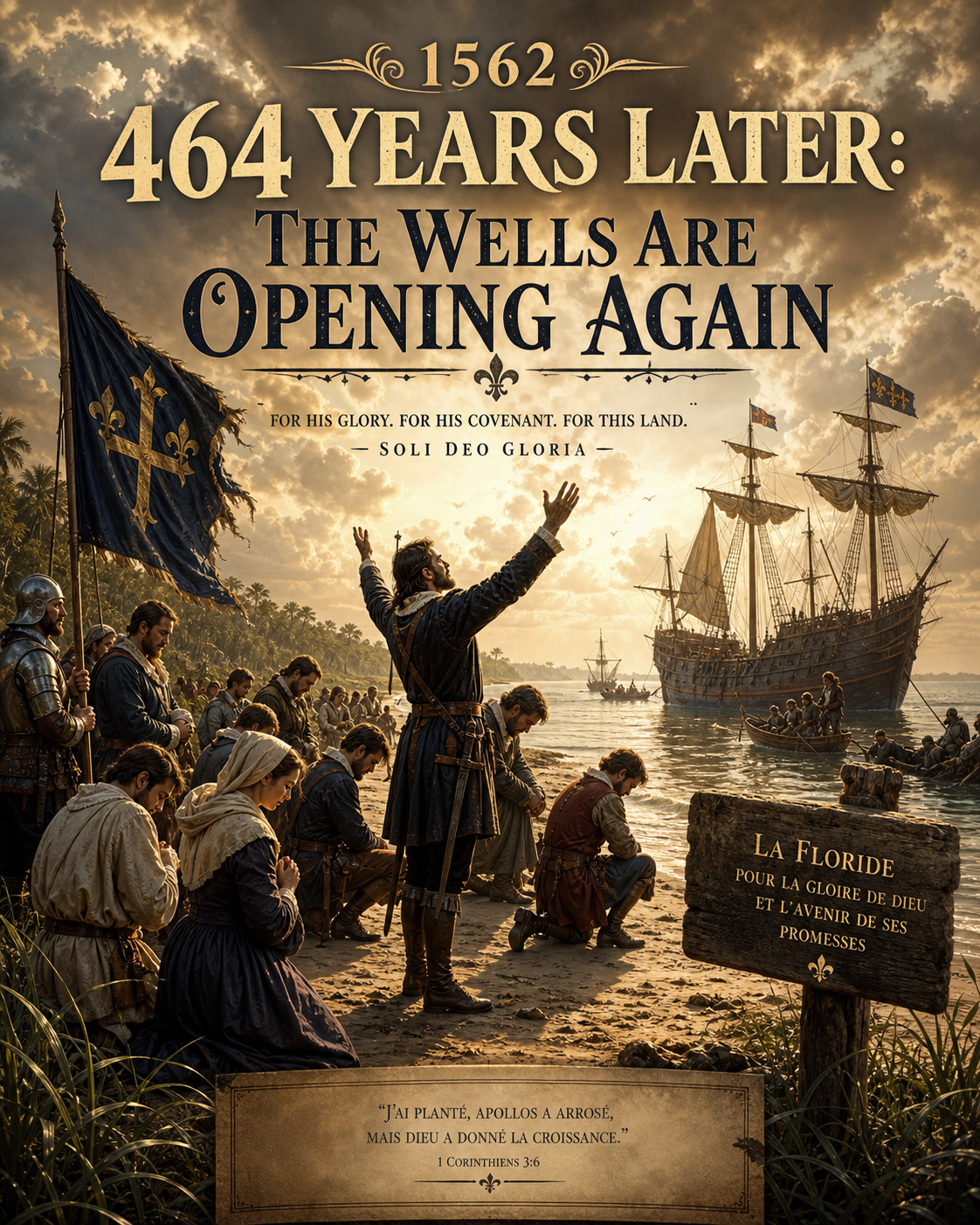
Today we remember the 464th anniversary of the French Reformed landing in the free world, right here at the head of what was then known as the Welaka River, the “River of Lakes,” now known as the St. Johns River. Men may forget dates, nations may bury memory beneath monuments of another story, and history books may reduce sacred moments to footnotes, but Heaven does not forget what was consecrated in prayer, sealed in covenant, and watered with the sweat and blood of faithful disciples of Christ. There are moments in time that are not merely historical; they are prophetic markers written into the eternal scrolls of the Kingdom. The landing of those French Protestant believers on these shores was not just an expedition. It was a seed.

Many today know them as the Huguenots, yet it is worth remembering that they rarely, if ever, called themselves by that name. The word “Huguenot” was born as an insult from their Catholic opponents, a name of mockery placed upon those who would not bow to the religious powers of their age. They preferred to call themselves simply the Reformed, les Réformés, those who had been awakened by the truth of Scripture and called back to the purity of the Gospel of Jesus Christ. They were not seeking fame, empire, or religious celebrity. They were seeking a land where Christ could be worshiped, Scripture could be honored, and conscience could stand before God without the chains of persecution.

When they arrived on these shores in 1562, they were not merely stepping onto sand and soil; they were stepping into a divine appointment. They came from a Europe trembling under religious war, ecclesiastical corruption, political manipulation, and the violent clash between truth and control. Yet here, on the edge of what would become North Florida, they saw more than wilderness. They saw possibility, covenant, refuge, and holy ground. In their hearts burned the ancient cry of Psalm 127:1, “Unless the Lord builds the house, they labor in vain who build it.”

Their story was not without suffering, and their witness was not without blood. The French Reformed believers who came to this land carried the cost of discipleship in their bones, and many would later pay for their faith with their lives. Jesus said in Matthew 5:10, “Blessed are those who have been persecuted for the sake of righteousness, for theirs is the kingdom of heaven.” The blood of the martyrs never disappears into the ground as forgotten tragedy. It becomes testimony, seed, witness, and a legal cry before the courts of Heaven.

I believe the prayers they prayed, the covenant they carried, and the blood they shed did not expire with their generation. Revelation 6:10 gives us a sobering picture of the martyrs crying out before God, and though we do not build doctrine on imagination, we must remember that Heaven is fully aware of righteous blood. The Lord told Cain that Abel’s blood was crying out from the ground, and that means the earth has memory before God. The ground can testify. The land can hold the witness of what was done upon it.

To me, it is no small thing that 123 years later, in another stream of history, Heaven would continue to stir restoration, awakening, and apostolic authority within the Church. Many voices in the 1700s and 1800s saw the awakenings of their age as Heaven’s counter-response to the exaltation of human reason, human philosophy, and man-centered doctrines that entered deeply into the life of nations and churches. The Renaissance opened doors of learning, but it also gave room for humanism to crown man where only Christ should reign. From such streams, many doctrines were seeded that continue to influence the Church even today, including religious systems that confuse compassion with compromise and justice with ideologies detached from the government of Christ. But Heaven has never surrendered the Ecclesia to the philosophies of men.

Last year, as I stood at Huguenot Park and celebrated this anniversary, I found myself in prayer over the land, the waters, the blood, and the forgotten testimony of these faithful ones. As I prayed and looked up, I saw what appeared to be a portal, and there was an amassing of angels. I do not share that lightly, nor do I offer it as spectacle, but as a prophetic witness to what I believe Holy Spirit has continued to speak in the secret place. Over this past year, in many moments of prayer, I have sensed the Lord saying that the dedication of this land as a kind of New Zion by those faithful men and women was not ignored by Heaven. Their prayers, sealed by martyr blood, are still before the courts of the Lord.

For me personally, I believe we are entering a year where we will begin to witness a move of God in this city, this county, this region, and this state. I believe Heaven is preparing to vindicate the blood of the innocent and uncap wells of revival across North Florida and into Georgia. I especially sense the stirring of healing revival, a line of glory stretching from Jacksonville toward Pensacola, across the North Florida and Georgia borderlands. The wells are not dead; they have been covered. The Lord of the harvest knows exactly where they are buried.

Last month, the Lord sent me to a Remnant group in Ocala to prophesy concerning one of many wells in that horse country that I believe are about to be uncapped. I believe Ocala is not random in this hour, Jacksonville is not random, the St. Johns River is not random, and North Florida is not random. There are places where Heaven planted seed long before we arrived, and now Holy Spirit is breathing upon those ancient deposits again. Isaiah 43:19 declares, “Behold, I am going to do something new, now it will spring up; will you not be aware of it?” The new thing is often the ancient thing being awakened under the breath of God.

These are powerful days for the Ecclesia, especially for those who have stepped away from that which is common and laid hold of that which is sacred and holy. This is not the hour for casual Christianity, religious entertainment, or powerless language dressed up as spirituality. This is the hour for consecration, discernment, covenant, apostolic order, prophetic fire, and holy obedience. Hebrews 12:1 reminds us that we are surrounded by a great cloud of witnesses, and I believe there are witnesses in Heaven who remember the prayers prayed over this land before America ever knew what she would become. The Remnant must now take its place.

So today, I celebrate the memory of those faithful French Reformed disciples of Christ who arrived here 464 years ago and planted something deeper than history can fully explain. I honor the sweat, the blood, the courage, the prayers, the Scripture, the covenant, and the costly obedience they carried to these shores. I believe the God who remembers covenant is answering what men forgot, and the Spirit of the Lord is beginning to stir the waters again. Jacksonville, North Florida, Georgia, and this whole region must prepare for the sound of old wells being uncapped and fresh fire being released. Let the Ecclesia awaken, for the land remembers, Heaven remembers, and the King still reigns.

For those who want to know more about these faithful servants of Christ and the spiritual history connected to their witness, I wrote The Remnant Flame: The Spiritual History of the French Huguenots from 1562 to the Mayflower and Beyond. This book traces the fire, sacrifice, persecution, courage, and Kingdom witness of the French Reformed believers whose story still speaks today. Their history is not dead; it is a flame waiting to instruct a new generation of the Remnant. You can find it here: https://www.amazon.com/dp/196415541X. May the Lord cause the forgotten fires of covenant faithfulness to burn again.

Stay tuned, the journey continues…..

— Dr. Russell Welch

Dr. Russell Welch is a published author, prophetic teacher, apostolic builder, author, and founder of faith-driven publishing and media initiatives. He is known for crafting bold, Kingdom-centered messages that call the Ecclesia into maturity, doctrinal clarity, and governmental authority. With a passion for equipping the Remnant and honoring generational legacy, Dr. Welch writes and teaches at the intersection of Scripture, history, and spiritual governance, challenging believers to live as sons and daughters who legislate Heaven on earth through truth, holiness, and unwavering fidelity to Christ.

Be sure to check out his book: The Consecrated Firebrand: A Warrior’s Guide to Holy Living, available exclusively on Amazon … here
Amazon Author Page