Archive for the ‘Spirit-Wind People’ Category


Something shifts in the spirit when your desires collide with God’s direction. There are seasons when your heart is set on one thing, yet the Lord—quietly, firmly, and sovereignly—redirects your steps. “A man’s heart plans his way, but the Lord directs his steps” (Proverbs 16:9). For years, Wyoming tugged at me. The mountains, the open land, the country rhythm that feels like home to someone raised in the woods of Maine. Opportunities came, doors cracked open, and the idea of pastoring out West stirred something deep.

Yet heaven remained silent. Not a whisper. Not a nudge. Just holy stillness.

As I continued pastoring the church I still shepherd today, I often asked the Lord for an exit plan. I prayed for clarity, for confirmation, for the green light to pack up and head toward the mountains. But the heavens stayed quiet, and sometimes silence is the loudest answer of all. Then, as 2024 closed and 2025 dawned, the voice of the Lord broke through the stillness with unmistakable clarity: “Disciple a Remnant here in Jacksonville. Take the city for the Kingdom.” Before I could fully process that assignment, He added, “Seek My will for the First Coast region.” Suddenly, the silence made sense—God had been waiting for the right moment to reveal His plan.

My first reaction wasn’t bold faith; it was hesitation. I told the Lord, “I’m not from here. Others born here have greater authority.” But the Holy Spirit confronted that lie instantly. “Who told you that? Wherever you go, you carry the authority of the Father. And when you stand in the place I have called you, that authority intensifies.” His words struck me like fire. Jesus declared, “All authority in heaven and on earth has been given to Me. Go therefore…” (Matthew 28:18–19).

Authority is not geographical—it is inherited. It is delegated. It is activated through obedience, not birthplace.

Stepping into 2026, I found myself asking the Lord, “Where is this Remnant You spoke of?” Our congregation is faithful, loving, and growing, but I wasn’t seeing the mountain‑moving disciples He described. They were maturing individually, but the corporate fire, the collective roar, the unified intercession that shakes cities—I wasn’t seeing it yet. And in that moment of frustration, the Holy Spirit whispered again: “Go to Hebrews 11:1 and stay there until the revelation consumes you.” So I went. And I stayed. And I’m still there.

Ever since fully and radically giving my life to the Lord on March 29, 2016, I’ve walked through a refining fire that has burned away self‑will and awakened holy purpose. It has been a season of dying to my own desires, surrendering dreams that once defined me, and embracing the crucible that shapes warriors. In that fire, something deep within me has been quickened—a cry that says, You were destined for this. You were born with a warrior’s heart. Every battle, every pruning, every delay has been forging the steel of obedience for the assignment unfolding now.

The Lord never wastes a surrendered life; He weaponizes it for His glory.

Now, as February 2026 approaches, I remain seated in the furnace of Hebrews 11:1: “Now faith is the substance of things hoped for, the evidence of things not seen.” I have revelation for books—check. I’m mentoring leaders afar—check. I’m walking in obedience—check. But the Lord is showing me that faith doesn’t begin with what you see; it begins with what He said. The Remnant is not missing. The Remnant is forming. The Remnant is awakening.

The Remnant is being summoned by the Word of the Lord, not by my natural eyes.

So what am I missing? Perhaps nothing at all. Perhaps this is the season where faith becomes substance, where unseen promises begin to take shape, where obedience becomes the birthplace of manifestation. Maybe the Remnant isn’t something I find—it’s something God forms through surrendered leadership, persistent prayer, and unwavering trust. And maybe, just maybe, the very thing I thought I lacked is already growing beneath the surface, waiting for the fullness of time. Because when God redirects your steps, He never wastes your longing—He transforms it into fuel for the assignment you were born to carry.

And now, to every warrior in the Jacksonville region whose spirit is burning even as you read this—this is your moment. If your heart has been crying out for something real, something weighty, something Kingdom, hear this call. If you’ve felt the ache of being underutilized, unseen, or spiritually misplaced… if you’ve carried gifts that others didn’t know what to do with… if you’ve longed for an apostolic family where fire, strategy, assignment, and honor flow together—your season of wandering is ending. The Lord is gathering His Remnant, and He is summoning those with a warrior’s heart to take their place in a movement that is rising with precision, purity, and power.

If your spirit leaps at the sound of this—if you know you were born for more than church-as-usual, if you hunger to be discipled, deployed, and developed in a Kingdom family that recognizes and honors what God placed inside you—reach out. The Remnant is forming. The warriors are awakening. The assignments are being released. And there is a place for you in what God is building here on the First Coast.

Give me a shout at remnantwarriors4christ@gmail.com. If your heart is burning, don’t ignore it. That fire is your confirmation.

— Dr. Russell Welch

Dr. Russell Welch is a prophetic teacher, apostolic builder, author, and founder of faith-driven publishing and media initiatives. He is known for crafting bold, Kingdom-centered messages that call the Ecclesia into maturity, doctrinal clarity, and governmental authority. With a passion for equipping the Remnant and honoring generational legacy, Dr. Welch writes and teaches at the intersection of Scripture, history, and spiritual governance, challenging believers to live as sons and daughters who legislate Heaven on earth through truth, holiness, and unwavering fidelity to Christ.

Be sure to check out his book: The Consecrated Firebrand: A Warrior’s Guide to Holy Living, available exclusively on Amazon … here


We are living in a day when every word we speak, every step we take, and every alliance we form carries Kingdom consequence. The Scriptures warn that life and death are in the power of the tongue (Proverbs 18:21), and Jesus taught that our words will justify or condemn us (Matthew 12:37). This is not sentimental rhetoric but legal, spiritual reality: the Ecclesia legislates by declaration when it stands in truth.

As sons and daughters led by the Spirit, we must recognize that casual words and careless alignments can open doors for darkness or release heaven’s purposes. Let us therefore weigh our speech with the fear of the Lord and the authority of Christ, knowing that our utterances have legislative effect in the unseen realms.

The unity we were graced for in a previous season was a gift from God, but grace is seasonally stewarded and must be tested by truth. Jesus prayed for oneness that is rooted in the Father’s truth (John 17), not a sentimental unity that ignores doctrine or moral clarity. In this hour, the same unity that once advanced revival may not carry the same covering if it compromises the faith once delivered to the saints (Jude 1:3).

Love covers a multitude of sins (1 Peter 4:8), yet love that abandons doctrine becomes a cloak for error and a pathway for deception. We must love fiercely and speak truth plainly, for genuine unity is forged in holiness and fidelity to the Word.

The enemy has infiltrated structures formed by men in subtle and overt ways, and his strategy is to blur doctrinal lines until truth is indistinguishable from error. Paul warned of those who would pervert the Gospel and teach another Jesus (2 Corinthians 11:4; Galatians 1:8), and we see that tactic replicated today through unequally yoked doctrinal alliances.

When teachers who preach different gospels embrace one another publicly, the watching world is confused and the testimony of Christ is weakened. The Ecclesia must therefore discern with apostolic clarity, exposing error while extending the gospel of repentance and restoration. Doctrine matters because doctrine shapes destiny; what we teach and whom we embrace determines the spiritual climate of our communities.

The enemy exploits compromise to make the world ask why the Church tolerates contradiction, and that question opens a door for unbelief to flourish. When those who claim Christ rub shoulders with those who deny foundational truth, the credibility of the Gospel is eroded and the lost are given reason to doubt. Scripture calls leaders to be shepherds who guard the flock and to be watchmen who sound the alarm (Acts 20:28; Ezekiel 33).

The Remnant Warrior refuses to be silent in such a time; he or she stands as a sentinel of doctrine, not out of pride but out of covenantal responsibility. Endurance, not popularity, is the mark of those who will finish the race and keep the faith (2 Timothy 4:7).

A Remnant Warrior holds fast to the Kingdom doctrines Christ taught—repentance, righteousness, the lordship of Jesus, and the authority of Scripture—and will not bow to cultural pressure or compromise for the sake of acceptance.

This is a call to courageous fidelity: to preach the whole counsel of God, to disciple with rigor, and to align only with those who honor the apostolic foundation. Even unto death, the true Ecclesia will not dilute the Word to be liked by men; rather, it will suffer gladly for the sake of Christ’s glory (Philippians 1:29). Rise up, therefore, in the authority of your sonship, speak with prophetic clarity, and let your life be a legislative act that advances Heaven’s rule on earth.

Many today dismiss doctrine as secondary, but the Word of God makes clear that it is central to the life and witness of the Church. Paul’s charge to Timothy was not to chase novelty or sentiment, but to “hold fast the pattern of sound words” (2 Timothy 1:13) and to guard the deposit of truth entrusted to him.

If the Apostle saw sound doctrine as essential for leadership and endurance, should it not also be woven into the very creed of the Remnant Warrior? For without truth, unity becomes fragile, and without doctrine, love loses its anchor.

I know personally that I would not want to march into spiritual battle alongside someone whose end-times doctrine leads them to retreat in fear, anticipating the rise of evil, rather than advancing in the confidence of Christ’s victory. The true disciples of Jesus understand that the Glory—the Light of Christ within—dispels darkness as they move forward in faith.

The Remnant Warrior must therefore be one who treasures sound doctrine, who refuses compromise, and who marches boldly under the banner of truth, knowing that the Word of God is both sword and shield. This is not optional—it is the foundation of victorious living and the creed of those who will endure to the end.

— Dr. Russell Welch

Dr. Russell Welch is a prophetic teacher, apostolic builder, author, and founder of faith-driven publishing and media initiatives. He is known for crafting bold, Kingdom-centered messages that call the Ecclesia into maturity, doctrinal clarity, and governmental authority. With a passion for equipping the Remnant and honoring generational legacy, Dr. Welch writes and teaches at the intersection of Scripture, history, and spiritual governance, challenging believers to live as sons and daughters who legislate Heaven on earth through truth, holiness, and unwavering fidelity to Christ.

Be sure to check out his book: The Consecrated Firebrand: A Warrior’s Guide to Holy Living, available exclusively on Amazon … here
Amazon Author Page: https://www.amazon.com/author/russellwelch


In 2015, my wife and I were graced to stand shoulder to shoulder with a leadership team that began laying the foundation of a home fellowship destined to burn with the manifest presence of the Lord for years to come. What was formed was not a program, but an altar, echoing the pattern of Acts where believers continued steadfastly in fellowship, breaking bread from house to house with glad and sincere hearts.

This work was birthed out of seasons of annual ministry retreats in the mountains of North Carolina, where for days at a time we learned to host His presence and live together as a true Kingdom family. In those sacred moments, the Lord knit hearts together and taught us that where two or three gather in His name, He is truly in their midst. What began in hidden places became a dwelling place for His glory.

Over the four years that this home fellowship met throughout the week, we witnessed the tangible presence and glory of God in undeniable ways. Miracles, signs, and wonders flowed freely, confirming the Word just as Jesus promised that these signs would follow those who believe. Lives were touched and transformed from across the nation, not by human effort, but by the Spirit of the living God moving among a surrendered people.

The atmosphere was marked by reverence, joy, and holy expectancy, as hearts were continually aligned with Heaven. This season planted a deep Kingdom seed, revealing what becomes possible when we fully yield to the leadership of the Holy Spirit and simply do life together as one body.

That season also became a refining fire for both of us, shaping our hearts to respond to opposition and difficulty with mercy, grace, and the spirit of forgiveness. We learned to walk in love as Christ loved us, bearing with one another and guarding unity as a precious trust. The Lord taught us that the fruit of the Spirit is not optional, but essential for sustaining His presence among His people.

As we look ahead to the future of the American Church, the timeline remains known only to the Father, yet the direction has been made clear. Through a chorus of faithful intercessors and prayer warriors, the Holy Spirit has confirmed a word that feels both ancient and urgent: the Father is returning the altar to the homes, preparing a remnant who will carry His fire from living rooms into the nation.

In this critical hour, as violence and disruption rise against the Lord’s Houses of Worship, the question before the Remnant Ecclesia is unmistakable: how will we respond? The Father saw this moment before the foundations of the world were laid, and He has not left His people unprepared. The Holy Spirit is awakening a holy remnant who will not bow at the presence of evil, but who instead walk boldly in the glorious light of the King—a light for which darkness has no answer.

We are not the meek of the world’s definition; we are the meek Jesus spoke of in Matthew 5:5—strength under divine authority, trained, disciplined, and submitted to the Master’s hand.

It is within this context that the Lord has entrusted us with a clear and compelling vision of Glory Houses being established across the North Florida and southern Georgia corridor, stretching from Jacksonville to Pensacola. These Glory Houses are living altars where His presence is hosted, His voice is honored, and Kingdom family is formed, just as the early church gathered from house to house in power and simplicity.

We believe this region has been marked by God for awakening, restoration, and apostolic sending, a strategic corridor where the fire of God will burn brightly in homes and communities. This is the Father returning the altar to the homes, raising up a people who carry His presence beyond the walls and into the heart of the land.

If you sense the Holy Spirit stirring your heart to plant such a fellowship, we invite you to reach out to us. We would be honored to share from the wisdom and experience the Lord has graciously given us over the past twenty‑three years, including the privilege of helping establish more than one hundred and twenty‑five house fellowships throughout India.

This is a rallying call to the Remnant—rise up, take your place, and become the Kingdom’s war horses, advancing the light of Christ where darkness has sought to prevail. The hour is now, the call is clear, and the Lord is gathering His people to stand, build, and burn for His glory.

—Dr. Russell Welch, prophetic teacher, apostolic builder, and author committed to awakening and equipping the Remnant to reclaim the spiritual gates of culture for the Kingdom of God.

If this message has stirred your spirit and you desire to go deeper, I invite you to explore my books available on Amazon. Each one is written to awaken, equip, and mobilize the Remnant with fresh revelation and practical Kingdom authority.

You can find them at amazon.com/author/russell.welch—resources crafted to strengthen your walk, ignite your faith, and empower you to reclaim the gates of influence for the glory of God.

To learn more about te vision the Lord has given to Dr. Russ & Emelie (Millette) Welch you can go to their website for Antioch House Church Netwok

Dr. Welch has also written several books on the topic of House Churches including his newest one Ancient Paths – Modern Gates: The Kingdom Blue-Print for House Churches  which is available excusively on Amazon:  https://kdp.amazon.com/en_US/bookshelf


There are moments in a believer’s life when the hand of God becomes unmistakably visible, and my journey as a writer has become one of those living testimonies. I began writing in 2007, unaware that the Lord was planting seeds for a future season, much like Habakkuk who was instructed to “write the vision and make it plain” (Habakkuk 2:2).

Though manuscripts remained unpublished due to lack of funds, the Lord was teaching me that delay is not denial, for He alone appoints the time of unveiling. Even when the flash drive containing years of work was lost through multiple moves, the Spirit reminded me that nothing surrendered to Him is ever truly buried. Like the hidden manna in Revelation 2:17, what God preserves in secret He reveals in His appointed time.

In 2018 or 2019 a prophetic word came that struck my spirit like a divine summons, declaring that God would begin to use me “as a pen in His hand.” That word aligned with Isaiah 49:2, where the prophet says, “He made my mouth like a sharp sword; in the shadow of His hand He hid me.” Between 2019 and 2023 I wrote several books and outlines, sensing the breath of God stirring dormant gifts back to life.

Then in November 2023 the enemy attempted to silence the call through a stroke, but Psalm 118:17 rose within me: “I shall not die, but live, and declare the works of the Lord.” The very next morning a family friend—unaware of my condition—released a prophetic word that the enemy had tried to place something on my brain, but the Lord Himself would remove it, and within minutes every symptom bowed to the authority of the Spirit of God.

Since that moment of divine intervention, the grace to write has flowed like a river that cannot be dammed, enabling me to complete at least a chapter a day on themes the Lord impresses upon my heart. Though the editing process requires patience—reviewing each word and correcting every error—I count it joy, for the One who healed me is the same One who anoints my hands to build.

Ephesians 2:10 declares that we are His workmanship, created for good works prepared beforehand, and I now walk in the reality of that truth with renewed strength. I stand in awe of the God who not only restored my body but reaffirmed my destiny, proving that His word does not return void (Isaiah 55:11). Prophetic words are not predictions but invitations into divine partnership, and when we align with them, they begin to bear the harvest the Father intended from the beginning.

There are moments when the mystery weigh heavily on me, such as when reread what I have written and stand in absolute awe, realizing that revelation flowed through me that I did not consciously know I had received. Often I discover insights that seem to have been whispered in dreams or planted through something I once read, now rising to the surface like Proverbs 20:5 declares, “Counsel in the heart of man is like deep water, but a man of understanding will draw it out.”

Even more astonishing is when I must look up a word I have written—one I did not previously know—and find that its meaning perfectly fits what the Spirit was conveying. It reminds me of John 14:26, where Jesus promised that the Holy Spirit would teach us all things and bring to remembrance what we did not even realize we carried. These moments humble me, for they reveal that I am not merely writing but being written through by the One who authors destiny.

—Dr. Russell Welch, prophetic teacher, apostolic builder, and author committed to awakening and equipping the Remnant to reclaim the spiritual gates of culture for the Kingdom of God.

If this message has stirred your spirit and you desire to go deeper, I invite you to explore my books available on Amazon. Each one is written to awaken, equip, and mobilize the Remnant with fresh revelation and practical Kingdom authority.

You can find them at amazon.com/author/russell.welch—resources crafted to strengthen your walk, ignite your faith, and empower you to reclaim the gates of influence for the glory of God.


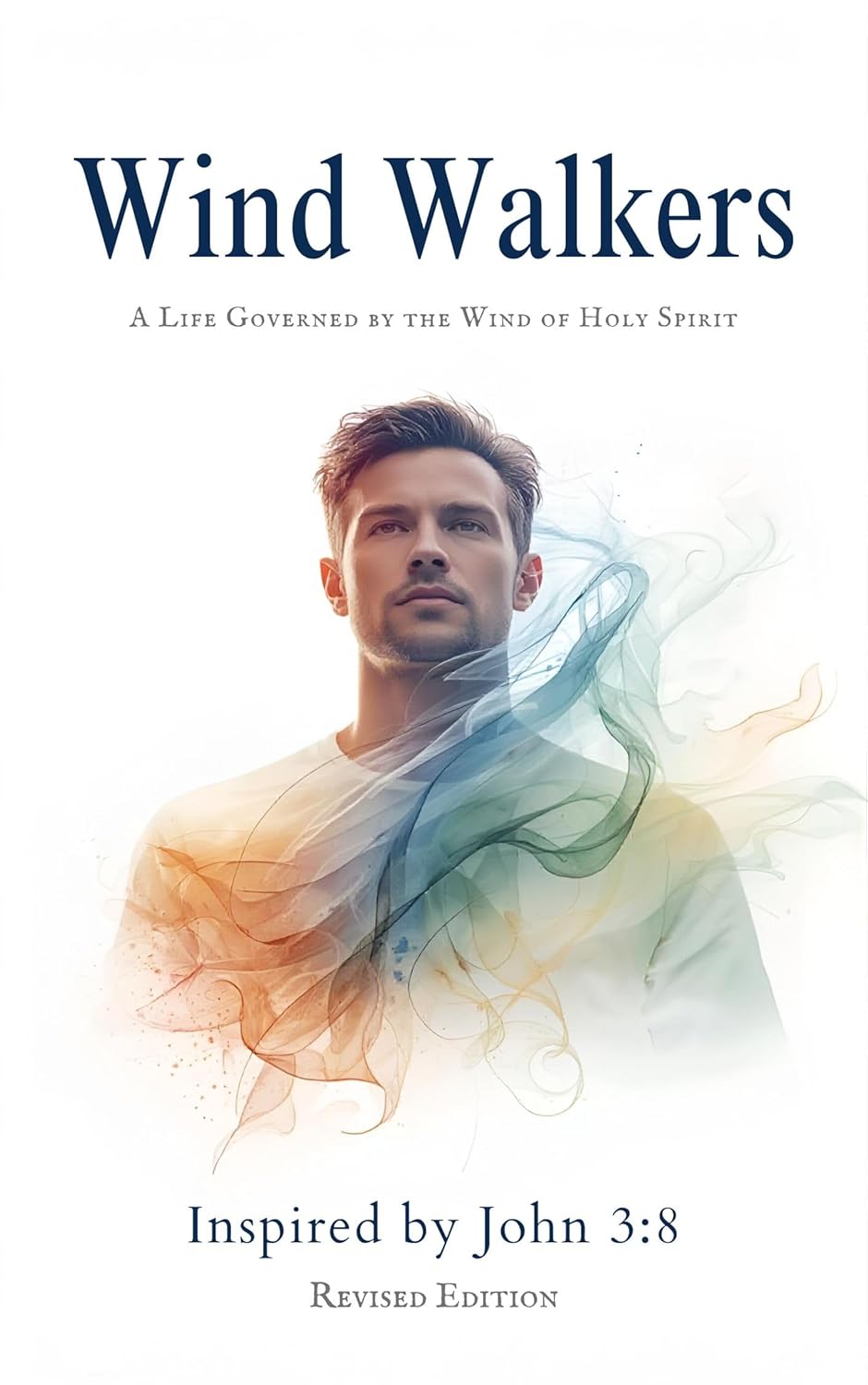
How my first published book “Wind Walkers A Life Governed by the Wind of Holy Spirit” was Born: A Testimony of Encounters, Breakthroughs, and Restoration…..

Over the years I wrote many books rooted in faith, the Kingdom of God, and even historical works that never found their way into publication. The cost of publishing always stood as a barrier, and like Ecclesiastes 11:4 says, “He who observes the wind will not sow,” I often felt stuck between vision and impossibility. Yet the desire to steward what God placed in me never left, because His word declares that “the gifts and calling of God are without repentance” (Romans 11:29). Even with degrees in theology and years of ministry, I sensed there was more the Lord wanted to reshape in me. What I did not know was that a divine interruption was coming that would dismantle everything I thought I understood.

In 2016 I encountered the Lord in a way that shattered the theological framework I had built through study and achievement. Like Paul on the road to Damascus in Acts 9, everything I thought I knew was brought into the light of His presence, and I realized how much of my understanding needed to be surrendered. Years later, on June 17, 2022, while studying John 3, Holy Spirit met me again with life‑altering clarity. After reading John 3:8, He whispered, “The Father wants you to become one of His WindWalkers,” and my spirit was stunned. As He often does, He confirmed His word through scripture, leading me to Romans 8:14, “For all who are led by the Spirit of God are sons of God,” and revelation ignited inside me.

I immediately began writing, and within eight months the manuscript for Wind Walkers: A Life Governed by the Wind of Holy Spirit was nearly complete. Yet the financial wall remained, and like the Israelites facing the Red Sea in Exodus 14, I could see no path forward. I knew there were unreliable publishing companies offering empty promises, but I longed for something trustworthy and proven. I wrestled with the reality of needing thousands of dollars to publish, trying to stretch every resource I had. Still, the vision would not leave me, because Habakkuk 2:3 reminds us that the vision awaits an appointed time and will not lie.

Everything shifted on November 13, 2023, during what seemed like an ordinary day. After stopping for gas on the way to an MRI, I bent to tie my shoe and collapsed as darkness overtook me, and when I awoke my speech was slurred. Hours later in the ER, the doctor told me I had suffered a stroke, and my blood pressure was dangerously high at 247/148. They transferred me to the hospital, running tests and explaining that the stroke had affected the area of the brain connected to memory. In that moment of uncertainty, Psalm 46:1 became real: “God is our refuge and strength, a very present help in trouble.”

The next morning, as the doctor explained the severity of the stroke, my phone rang. My friend and mentor, Paul Michel, told me the Lord had spoken to him in prayer, saying, “The enemy is trying to put something on his brain, but I am going to remove and restore him better than before.” As he decreed that word, the power of Isaiah 55:11 manifested, for God’s word does not return void. Within minutes of that prayer, the doctor looked at the monitor in disbelief as my blood pressure dropped to 107/77. What should have left me paralyzed or facing months of therapy instead became a testimony of the God who heals, because Jeremiah 30:17 declares, “I will restore you to health and heal your wounds.”

Two days after returning home, I came across a video about self‑publishing through Amazon KDP, and the Lord opened a door no man could shut. Within two months my first book was published, and I committed to the Lord that I would continue writing while trusting Holy Spirit to handle the marketing. This is how Wind Walkers: A Life Governed by the Wind of Holy Spirit came into the world, refined, expanded, and carried by His leading. The journey also birthed WindWalker Enterprise LLC and Remnant Warrior Publishing, establishing a foundation for the books yet to come. Truly, Ephesians 3:20 has proven faithful, for He has done exceedingly abundantly above all I could ask or imagine.

~Dr. Russell Welch

Christian Author/Apostolic Teacher


Kingdom-Centric Apostolic Alignment: A Framework for Ecclesial Mobilization

To operate in true spiritual authority, one must first learn to walk in submission to authority, for Scripture declares that “there is no authority except from God, and the authorities that exist are appointed by God” (Romans 13:1). Authority in the Kingdom is never self-generated but flows from alignment with Heaven’s order. Even after many years of ministry, submission remains essential, not as a limitation, but as a safeguard and source of strength. Jesus Himself modeled this posture, saying, “I do nothing of Myself, but as My Father taught Me” (John 8:28). Kingdom authority is sustained through humility and obedience to the voice of the Lord.

Though decades have passed in ministry, submission continues to shape my walk, particularly through the Word of the Lord released by trusted leaders. Scripture affirms that God places gifts within the Body for mutual edification and growth (Ephesians 4:11–13). When leaders speak by the Spirit, their words carry weight not because of position, but because of alignment with the Father’s heart. This kind of submission is not blind allegiance, but discerning obedience rooted in truth. It is through such alignment that authority matures and bears lasting fruit.

Many believers miss this Kingdom alignment because their churches operate outside the pattern of Heaven, functioning instead within the confines of religious tradition. Jesus rebuked such systems, declaring that they “make the word of God of no effect through tradition” (Mark 7:13). The spirit of religion builds prisons rather than pathways, substituting form for life and control for freedom. Though outwardly structured, these systems often resist the movement of the Spirit. As a result, many remain bound while believing they are secure.

For much of my early life in the Church, including years of ministry training, I unknowingly lived within that same confinement. Though sincere, my understanding was limited by inherited frameworks that emphasized performance over sonship. Yet Holy Spirit, faithful and patient, began striking those chains over many years. From 2002 through 2015, He steadily dismantled false foundations, preparing my heart for deeper revelation. What once felt immovable slowly began to loosen under His persistent work.

Everything changed in a defining encounter with the Lord Himself in the early hours of March 29, 2016. In that sacred moment, the chains of religious bondage were shattered, and the revelation of sonship was awakened within me. Scripture declares, “If the Son makes you free, you shall be free indeed” (John 8:36), and that freedom became tangible and real. This encounter marked the beginning of a deeper unveiling of the authentic Gospel of the Kingdom that Jesus proclaimed and entrusted to His disciples. From that moment forward, identity replaced striving, and intimacy replaced obligation.

There have been other encounters along the journey that can only be likened to the moment when John the Baptist leapt in his mother’s womb at the presence of Christ (Luke 1:41). Such moments carried a spiritual recognition beyond words, affirming divine alignment rather than human connection. These encounters were marked by joy, confirmation, and a deep stirring of the Spirit. They revealed that Heaven orchestrates relationships for purpose, not coincidence. Each encounter served as a signpost along the path of Kingdom understanding.

The first of these moments occurred in 2002 upon meeting the late Dr. Don Lynch, who the Lord assigned as my mentor for several years, training me in Kingdomleadership, My wife and I were two of the first ordained leaders under Ministry Matrix.

That encounter was followed by encounters with Ron McGatlin in 2011 and Dutch Sheets and Clay Nash in 2018. In a gathering hosted by Dr. Lynch, where both Dutch and Clay taught, the Lord spoke clearly, instructing me to sit under Dutch’s teaching to hear the Father’s heart. Obedience followed, leading to years of study, prayer, and attentiveness to the revelation being released. Scripture teaches that wisdom flows through those who walk closely with God (Proverbs 13:20). These relationships became conduits of Kingdom insight and confirmation.

Holy Spirit has described these connections as kindred, affirming that they belong to the same spiritual family, the household of Yahweh. Scripture declares that believers are “members of the household of God” (Ephesians 2:19), joined not by preference but by divine calling. During the RiverHouse season, the late Bill Johnson of Christian International, taught the concept of a prophetic thread, where revelation expands as it is stewarded and pursued. This principle reflects the Kingdom pattern of progressive unveiling. What is revealed grows as it is honored.

Much of the Kingdom has been hidden, not because it was new, but because it was obscured by the spirit of religion. Jesus said that the mysteries of the Kingdom are given to those who seek with humility and faith (Matthew 13:11).

Today, the Remnant Ecclesia stands in a Jeremiah 33:3 moment, where the Father invites His people to call upon Him so He may reveal hidden things. As alignment with the Remnant Ecclesia deepens, these revelations unfold with clarity and power. What was once concealed is now being restored, not for knowledge alone, but for transformation and Kingdom advance.

In January of 2022, Dr. Don introduced me to the teachings of Apostle Greg Hood only a few weeks before he went home to be with the Lord, a moment that now carries even greater weight and gratitude in my heart. He said, son you will want to hear this mans teachings as they align with what you have been hearing in the Spirit.

In September of that same year, I encountered an advertisement for Apostle Greg’s book The Gospel of the Kingdom, which I promptly ordered and read three times within a single month. Every page resonated with unmistakable clarity, confirming what the Holy Spirit had already been unveiling within me through prayer, study, and lived obedience. As Proverbs declares, “In the mouth of two or three witnesses every word shall be established” (Proverbs 18:22), and the witness of the Spirit was undeniable.

As additional books by Apostle Greg were released, I read them eagerly, each one further affirming the trajectory the Lord had set before me. The revelation of the Kingdom did not introduce something foreign, but rather illuminated what had long been hidden beneath layers of tradition. When I first read The Gospel of the Kingdom, it intensified the fire already burning within me, stirring a deep desire to teach these truths. Yet Holy Spirit restrained me, whispering with gentle authority, “Not yet.” That season became one of quiet formation, where revelation was not merely learned, but lived.

Apostle Greg’s teaching and revelation concerning the books of Enoch, such as Seed Wars: Unraveling the Hidden History of the Nephilim and Modern Deception, served as yet another profound confirmation, as his writings echoed what the Holy Spirit had long been whispering to me in the secret place. These insights illuminated truths rarely addressed from the pulpit, not because they lack substance, but because they require discernment, humility, and courage to steward rightly. In this, the Spirit affirmed that what is hidden is now being unveiled to those willing to listen beyond tradition and lean fully into revelation.

In the first week of October 2025, Apostle Ken Malone hosted a powerful conference where Apostle Greg was among the speakers. On the very first night, as Apostle Greg taught on the Kingdom, Holy Spirit spoke with unmistakable clarity, declaring, “This is your green light. You have spent the last three years living this revelation—now release it.” That moment marked a divine transition from preparation to proclamation, from hiddenness to obedience. The timing of Heaven was perfect, confirming that authority flows from submission and stewardship.

During this conference, I had the privilege of meeting Apostle Greg and his wife Joanne, discovering yet another divine connection, as Joanne, like my wife, was born in the Philippines. The moment I shook Apostle Greg’s hand, I experienced that familiar stirring of the Spirit, akin to John leaping in Elizabeth’s womb at the presence of Christ (Luke 1:41). In that instant, the Holy Spirit whispered, “The revelation of the Kingdom has connected you.” It was a sacred confirmation that this alignment was not accidental, but ordained, woven together by the Spirit for the advancement of the Kingdom and the awakening of the Remnant in this generation.

There are also Kingdom voices in this generation whose faithfulness, purity, and obedience have strengthened my life as well as that of the Body of Christ and helped shape the emerging Remnant.

I have been blessed to also listen to and meet of Kingdom men such as Apostle Ken Malone, Chuck Pierce, and Damon Thompson who each carry a distinct mantle that awaken, align, and advance the people of God into deeper realms of Kingdom understanding. Their ministries echo the pattern of Ephesians 4:11–12, equipping the saints for the work of ministry and calling the Church into maturity, purity, and prophetic clarity.

I can’t leave out to other men that Holy Spirit has used to speak into my life with such power and authority my life was shaken to the core, Samual Brassfield, and my dear friend and mentor Paul Michel.

Through each of these Kingdom fathers obedience, the Lord has released strategies, intercession, and revelation that have fortified the foundations of many and ignited fresh hunger for the authentic move of the Spirit. I honor these voices as faithful stewards of the mysteries of God, whose lives and ministries continue to strengthen the Remnant Ecclesia and call this generation into its rightful place in the purposes of the Father.

~Dr. Russell Welch

About the author:

Dr. Russell Welch is an esteemed Christian author and seasoned Kingdom leader who, alongside his wife Emelie (Millette) Welch, co‑founded Remnant Warrior Ministries and Warrior’s Discipleship School. With more than twenty‑five years of experience in Kingdom leadership, Dr. Welch has devoted his life to equipping believers with a deeper understanding of sonship, authority, and the Gospel of the Kingdom.

Together, Dr. and Mrs. Welch have also established two international ministry schools—one in India and another in Emelie’s home country of the Philippines—extending their commitment to discipleship and Kingdom formation across nations. He currently serves as Lead Elder and Apostolic Teacher at Highway to Heaven Church in Jacksonville, Florida, where his teaching carries both theological depth and prophetic clarity.

Throughout his ministry, Dr. Welch has traveled extensively along the East Coast, faithfully preaching and teaching the Gospel of the Kingdom with a passion to see the Ecclesia awakened, aligned, and mobilized for lasting Kingdom impact.

Books by Dr. Welch


Is There a Biblical Precedent for Emotional Appeals for Ministry Funds?
The Apostle Paul’s Model of Labor, Provision, and Fundraising in the New Testament

Introduction
The question of how Christian ministry should be funded is as old as the church itself. In contemporary contexts, appeals for ministry funds often employ emotional rhetoric, urgent pleas, or even guilt-inducing tactics. This raises a critical question for churches and Christian leaders: Is there a biblical precedent for emotional appeals for ministry funds, or does the New Testament—especially the life and teaching of the Apostle Paul—offer a different model, one rooted in labor, voluntary generosity, and dependence on God? This report examines key New Testament passages, especially Paul’s letters and the book of Acts, to discern the biblical pattern for ministry support. It contrasts emotional fundraising appeals with Paul’s approach of tentmaking, voluntary giving, and trust in divine provision. The analysis integrates scholarly commentary, historical context, and practical implications for modern ministry.

I. New Testament Teaching on Financial Support for Ministry


A. The Biblical Foundation of Generosity and Ministry Support
The New Testament consistently affirms the importance of supporting those who labor in ministry. This principle is rooted in the Old Testament, where the Levites were supported by the tithes and offerings of Israel (Numbers 18:21–24; Leviticus 27:30–32). In the early church, believers shared possessions so that “no one among them was in need” (Acts 2:44–45), and Jesus Himself was supported by the gifts of others (Luke 8:1–3).


Paul, in his letters, repeatedly acknowledges and encourages financial support for ministry. He commends the Philippians for their partnership in giving (Philippians 4:15–18), instructs the Corinthians on systematic giving (1 Corinthians 16:1–2), and appeals for collections to aid the poor in Jerusalem (Romans 15:26; 2 Corinthians 8–9).


Key Principle:
Support for ministry is not merely a financial transaction but a spiritual act—an expression of worship, gratitude, and partnership in the gospel.


B. The Heart Attitude in Giving
The New Testament places strong emphasis on the attitude of the giver. Paul writes, “Each one should give what he has decided in his heart to give, not out of regret or compulsion. For God loves a cheerful giver” (2 Corinthians 9:7). This principle is echoed throughout the New Testament, where giving is to be voluntary, joyful, and motivated by love—not by external pressure or emotional manipulation.


Scholarly Perspective:
Ray Stedman notes, “True giving always originates with the grace of God… In the New Testament giving is never legislated upon us. It is not laid on us as a duty… It is given to us, rather, as a privilege that we can partake of to express the gratitude of our hearts for the grace that God has already given”.


C. Accountability, Integrity, and Transparency

Paul is equally concerned with the integrity of financial dealings in ministry. He insists on transparency and accountability in the handling of funds (2 Corinthians 8:20–21), appointing trustworthy individuals to oversee collections and delivery. This model is echoed in early Christian writings such as the Didache, which warns against itinerant ministers who exploit hospitality or demand money.


Modern Application:
Churches are called to maintain robust accountability structures, ensuring that funds are used righteously and that the witness of the church is not compromised by financial scandal.

II. Paul’s Tentmaking and Labor for Ministry Support


A. Acts 18 and Acts 20: Paul as Tentmaker
Paul’s practice of tentmaking is central to understanding his approach to ministry support. In Acts 18:2–3, Paul is described as working with Aquila and Priscilla as a tentmaker in Corinth. This was not merely a pragmatic choice but a deliberate strategy to avoid being a financial burden on new converts and to distinguish himself from itinerant philosophers who charged fees for their teaching.
In his farewell address to the Ephesian elders, Paul declares, “You yourselves know that these hands of mine have ministered to my own needs and those of my companions” (Acts 20:34). He ties this labor to the words of Jesus: “It is more blessed to give than to receive” (Acts 20:35).


Historical Context:
Tentmaking (Greek: skenopoios) was a respected trade, and rabbinic tradition required every rabbi to learn a manual craft. Archaeological evidence from Corinth and Tarsus confirms the presence of leather-working guilds and tools from Paul’s era.


Theological Significance:
Paul’s labor was not a “second-class” activity but an integral part of his witness. As the Theology of Work Project notes, “Paul is a witness when he preaches and when he makes tents and uses his earnings to benefit the broader community. This fits directly into Luke’s view that the Spirit empowers Christians to use their resources for the sake of the whole community, which in turn becomes witness to the gospel”.


B. Paul’s Refusal and Acceptance of Support: Thessalonian Correspondence
Paul’s letters to the Thessalonians provide further insight into his funding model. In 1 Thessalonians 2:9, he writes, “We worked night and day so that we would not be a burden to any of you, while we proclaimed to you the gospel of God”. Similarly, in 2 Thessalonians 3:7–8, he emphasizes, “We did not eat anyone’s bread without paying for it, but with toil and labor we worked night and day, that we might not be a burden to any of you.”


Motivation:
Paul’s refusal to accept support in Thessalonica was not because he lacked the right, but to set an example of diligence and to avoid any appearance of profiteering. He also sought to correct idleness among some believers who had misunderstood the imminence of Christ’s return.


Scholarly Commentary:
Kenneth Berding summarizes, “In Paul’s ministry in Thessalonica and Corinth (and probably other places where he sought to establish new churches), he tried not to confuse the mission and to burden new converts by asking for money, and thus either worked with his own hands to pay his way or received money from a distant church to supply his needs”.


C. Paul’s Teaching on Rights to Support: 1 Corinthians 9 and 16
In 1 Corinthians 9, Paul mounts a robust defense of the right of ministers to receive support: “If we have sown spiritual things among you, is it too much if we reap material things from you?… The Lord commanded that those who proclaim the gospel should get their living by the gospel” (1 Corinthians 9:11, 14).


Yet, Paul immediately adds, “But I have made no use of any of these rights. Nor am I writing these things to secure any such provision. For I would rather die than have anyone deprive me of my ground for boasting… What then is my reward? That in my preaching I may present the gospel free of charge, so as not to make full use of my right in the gospel” (1 Corinthians 9:15, 18).


Key Insight:
Paul’s refusal to claim support was a voluntary sacrifice, motivated by a desire to remove any obstacle to the gospel and to model selfless service. He did not want to be mistaken for a “peddler of God’s word” (2 Corinthians 2:17).


Systematic Giving:
In 1 Corinthians 16:1–2, Paul instructs the Corinthians to set aside a portion of their income weekly for the collection for the saints, emphasizing regular, proportional, and planned giving.

III. The Jerusalem Collection: 2 Corinthians 8–9 and Romans 15


A. The Purpose and Significance of the Collection
Paul’s most extensive fundraising effort was the collection for the poor in Jerusalem. This project, spanning more than a decade, was not merely a relief effort but a theological statement about the unity of Jewish and Gentile believers, the fulfillment of Old Testament prophecy, and the practical outworking of the gospel.


Historical Background:
The Jerusalem church faced chronic poverty due to famine, persecution, and the depletion of communal resources (Acts 11:28–30; Josephus, Antiquities 20.51). Paul saw the collection as a way for Gentile churches to express gratitude for their spiritual inheritance and to foster unity across ethnic and geographic lines (Romans 15:25–27).


B. Paul’s Rhetorical Strategy: Avoiding Compulsion, Promoting Voluntary Giving
Paul’s approach to fundraising in 2 Corinthians 8–9 is instructive. He appeals to the example of the Macedonians, who gave “according to their means and beyond their means, of their own free will, begging us earnestly for the favor of taking part in the relief of the saints” (2 Corinthians 8:3–4).
He explicitly avoids commanding the Corinthians: “I say this not as a command, but to test the genuineness of your love” (2 Corinthians 8:8). He urges them to give “not reluctantly or under compulsion, for God loves a cheerful giver” (2 Corinthians 9:7).


Scholarly Analysis:
Ray Stedman observes, “Notice how carefully [Paul] avoids pressure. He is not putting the arm on these people. He does not say they have to give. He does not lay a guilt trip on them… There is no pressure. ‘I don’t say this as a command,’ he says”.


Paul’s rhetorical strategy includes:

  • Appealing to grace (the example of Christ’s self-giving, 2 Corinthians 8:9)
  • Highlighting the voluntary generosity of others (the Macedonians)
  • Emphasizing equality and mutual support (2 Corinthians 8:13–15)
  • Ensuring transparency and accountability (2 Corinthians 8:19–21)

  • C. Theological and Pastoral Implications
    Paul frames giving as a response to God’s grace, not as a legalistic obligation. He writes, “For you know the grace of our Lord Jesus Christ, that though he was rich, yet for your sake he became poor, so that you by his poverty might become rich” (2 Corinthians 8:9). The ultimate model for generosity is Christ Himself.

  • Equality, Not Socialism:
    Paul clarifies that the goal is not enforced equality but mutual care: “Your abundance at the present time should supply their need, so that their abundance may supply your need, that there may be equality” (2 Corinthians 8:14).

IV. Philippians and Paul’s Gratitude for Gifts


A. The Philippians’ Partnership
The church at Philippi stands out for its consistent and sacrificial support of Paul’s ministry. Paul writes, “And you Philippians yourselves know that in the beginning of the gospel, when I left Macedonia, no church entered into partnership with me in giving and receiving, except you only. Even in Thessalonica, you sent me help for my needs once and again” (Philippians 4:15–16).


When Paul was imprisoned, the Philippians sent Epaphroditus with a gift to meet his needs (Philippians 2:25; 4:18). Paul describes their gift as “a fragrant offering, a sacrifice acceptable and pleasing to God” (Philippians 4:18).


B. Paul’s Attitude: Contentment and Trust
Paul is careful to express gratitude without appearing dependent or manipulative: “Not that I seek the gift, but I seek the fruit that increases to your credit. I have received full payment, and more. I am well supplied… And my God will supply every need of yours according to his riches in glory in Christ Jesus” (Philippians 4:17–19).


Key Insight:
Paul’s gratitude is genuine, but he maintains a posture of contentment and trust in God’s provision, regardless of material circumstances. He does not use emotional appeals or crisis tactics to elicit support.

V. Emotional Appeals in New Testament Fundraising: Examples and Tone


A. Emotional Responses in Ministry: Biblical Examples
The New Testament acknowledges a range of emotional responses in ministry—joy, compassion, frustration, sorrow, and even righteous anger. Paul often expresses deep affection for his churches (Philippians 1:4; 1 Thessalonians 2:7–8), and Jesus Himself was moved with compassion (Matthew 9:36).


However, when it comes to fundraising or financial appeals, the tone is markedly different. The emphasis is on voluntary, cheerful giving, not on guilt, fear, or manipulation.


B. Absence of Manipulative or Coercive Appeals
Nowhere in the New Testament do we find apostles or church leaders employing emotional manipulation, crisis rhetoric, or guilt-based appeals to extract funds. Paul’s appeals are reasoned, transparent, and grounded in theological conviction.


Scholarly Perspective:
Marc Pitman notes, “Paul uses powerful writing skills that seem to me to border on manipulation but is quick to note… that giving to God’s work is to be done willingly and generously (2 Cor 8:8; 9:5, 7). He claims to not be commanding them to give but ‘testing the genuineness of their love’ (2 Cor 8:8). He even states that giving is a sign of ‘your obedience to your confession in the gospel of Christ’ (2 Cor 9:13)”.


Ethical Considerations:
Modern fundraising experts warn that emotional appeals, while effective in the short term, can cross ethical lines if they exploit donors’ vulnerabilities or misrepresent needs. Authenticity, transparency, and respect for the donor’s autonomy are essential.

VI. Paul’s Rhetorical Strategy: Voluntary Giving, Avoiding Compulsion


A. Key Passages

  • 2 Corinthians 9:7: “Each one must give as he has decided in his heart, not reluctantly or under compulsion, for God loves a cheerful giver.”
  • 2 Corinthians 8:8: “I say this not as a command, but to test the genuineness of your love by your concern for others.”
  • 1 Corinthians 16:2: “On the first day of every week, each of you should set aside a portion of his income…”
    Paul’s strategy is to inspire generosity by appealing to grace, the example of Christ, and the voluntary response of the heart—not by external pressure or emotional manipulation.

  • B. Scholarly Commentary
    Ben Witherington argues that Paul’s refusal to accept support from the Corinthians was a deliberate strategy to avoid being seen as a professional philosopher or rhetorician, and to maintain the integrity of the gospel.

  • Douglas Moo notes that Paul’s letter to the Romans, which includes a request for support for his mission to Spain, is carefully constructed to assure the Roman church of his orthodoxy and trustworthiness before making any financial appeal.

VII. Historical and Extra-Biblical Evidence for Tentmaking and Support Practices


A. Early Christian Practice
The Didache, an early Christian manual, provides detailed instructions on how to receive itinerant ministers. It warns against those who overstay their welcome or demand money, stating, “If he remains three days, he is a false prophet… If he asks for money, he is a false prophet” (Didache 11:5–6).
It also affirms the principle that those who labor in ministry may receive support, but only in a manner consistent with humility, integrity, and the teachings of Christ.


B. Archaeological and Documentary Corroboration
Archaeological finds in Corinth and Tarsus confirm the presence of leather-working guilds and tools from Paul’s era, supporting the historical plausibility of his tentmaking activities.

VIII. Contrasting Emotional Fundraising Appeals with Paul’s Model: Ethics and Pastoral Implications


A. The Dangers of Emotional Manipulation
Modern fundraising often employs emotional appeals—stories of urgent need, images of suffering, or appeals to guilt. While these can be effective, they risk crossing ethical boundaries if they manipulate donors or obscure the true nature of the need.


Biblical Caution:
Scripture warns against manipulative or greedy methods that exploit believers (1 Peter 5:2). Any fundraising campaign that provokes guilt, fear, or exploitation is not aligned with biblical principles.


B. Paul’s Model: Labor, Voluntary Giving, and Trust in God
Paul’s approach stands in stark contrast. He:

  • Labors with his own hands when necessary to avoid being a burden or to silence critics.
  • Accepts support only from established, trusted partners (e.g., the Philippians), not from new converts or those who might misunderstand his motives.
  • Appeals to voluntary, cheerful giving grounded in grace, not compulsion.
  • Maintains transparency and accountability in all financial dealings.
  • Trusts God for provision, recognizing that ultimately, all resources come from Him.
    Case Study: George Müller
    The 19th-century evangelist George Müller exemplified this model. He refused to solicit funds directly, relying instead on prayer and voluntary gifts. Müller’s orphanages cared for thousands of children, and he never went into debt or asked anyone for money, believing that God would move people’s hearts to give as needed.

IX. Implications for Modern Ministry Practices


A. Bi-Vocational Ministry and Tentmaking
Paul’s example has inspired generations of “tentmakers”—ministers who support themselves through secular work while engaging in ministry. This model is especially relevant in contexts where full-time support is not feasible or where financial independence enhances credibility and witness.


Modern Application:
Bi-vocational ministry is not “part-time” ministry but a strategic, holistic approach to serving Christ with undivided devotion, as James Powell argues: “Bi-vocationalism is glorious because it is a means of God strategically deploying and providing for those he calls. Through it we get to be the aroma of Christ in places and ways that an exclusively church-employed vocational minister is unable”.


B. Fundraising Ethics and Transparency
Churches and ministries must prioritize transparency, accountability, and integrity in all financial matters.

This includes:

  • Clear communication about how funds are used
  • Multiple trustworthy individuals overseeing collections and disbursements
  • Regular reporting to donors and stakeholders.
  • C. Voluntary, Cheerful Giving
    The biblical model calls for voluntary, cheerful giving, motivated by gratitude and love, not by guilt or compulsion. Churches should teach the principles of stewardship, generosity, and partnership in the gospel, while avoiding manipulative tactics.
    D. Practical Guidelines for Churches
  • Encourage voluntary, joyful giving as an act of worship.
  • Avoid emotional manipulation or guilt-based appeals.
  • Teach the difference between almsgiving (giving “down”) and fellowship sharing (giving “across”).
  • Use donor stories to inspire generosity, not to pressure.
  • Maintain robust accountability and transparency in all financial dealings.
  • Support bi-vocational ministry where appropriate.
  • Emphasize the spiritual benefits of giving and partnership in ministry.

X. Case Studies: Historical Figures and Movements Following Paul’s Example


A. George Müller
Müller’s orphanages in 19th-century England were funded entirely by voluntary gifts, received in answer to prayer. He never solicited funds directly, believing that God would move people’s hearts to give as needed. His life is a powerful testimony to dependence on God for provision and the effectiveness of non-coercive fundraising.


B. Modern Tentmakers
Today, millions of Christians serve as “tentmakers” or bi-vocational ministers, especially in contexts where traditional missionary support is not possible. These workers combine secular employment with ministry, following Paul’s example of labor and witness.

XI. Practical Guidelines for Churches: Applying Pauline Principles Today

Elaboration:
These principles, drawn from Paul’s teaching and example, provide a framework for ethical, effective, and spiritually grounded ministry funding. They challenge churches to move beyond transactional or manipulative models and to embrace a vision of stewardship, partnership, and trust in God.

Conclusion
The New Testament, and especially the life and teaching of the Apostle Paul, offers a clear and compelling model for ministry support. There is no biblical precedent for emotional, manipulative appeals for funds. Instead, the pattern is one of voluntary, cheerful giving, grounded in grace, motivated by love, and marked by transparency and accountability. Paul’s own example—laboring with his hands, refusing support when it might hinder the gospel, accepting gifts only from trusted partners, and always trusting God for provision—stands in stark contrast to many modern fundraising practices.
For contemporary churches and ministries, the challenge is to recover this biblical vision. This means teaching and modeling stewardship, fostering genuine partnership in the gospel, supporting bi-vocational ministry where appropriate, and maintaining the highest standards of integrity and transparency. Above all, it means trusting God as the ultimate provider, confident that “my God will supply every need of yours according to his riches in glory in Christ Jesus” (Philippians 4:19).

Key Takeaways:

  • Paul’s model is not one of emotional fundraising appeals but of labor, voluntary giving, and trust in God.
  • The New Testament upholds the right of ministers to receive support, but always within the framework of voluntary, cheerful, and accountable giving.
  • Modern ministry should avoid manipulative tactics and instead cultivate a culture of generosity, partnership, and integrity, following the example of Paul and the early church.

Implications for Modern Ministry:

  • Re-examine fundraising practices in light of biblical principles.
  • Prioritize voluntary, cheerful giving and robust accountability.
  • Support and honor bi-vocational ministers.
  • Teach stewardship as a spiritual discipline and act of worship.
  • Trust God for provision, avoiding manipulative or crisis-driven appeals.
    By embracing these principles, the church can honor God, advance the gospel, and bear witness to the world of a better way—a way marked by grace, generosity, and trust in the faithful provision of the Lord.

Dr. Russell Welch, Th.D. Senior Elder/ Apostolic Teacher Highay to Heaven Church Author of Faith Based Book and Biblical Commentaries Co-Founder Remnant Warrior Ministries / Warrior’s Discipleship School


I declare to you today — unity in the Body of Christ is not a man‑made agreement, not a shallow handshake of tolerance, and not the silencing of truth for the sake of peace. True unity is born of the Spirit, forged in the fire of love, and anchored in the unshakable truth of God’s Word.


Jesus prayed, “Father, that they all may be one, as You, Father, are in Me, and I in You, that they also may be one in Us, so that the world may believe that You sent Me” (John 17:21). This is not a suggestion — it is the cry of the Son of God, and Heaven will not rest until it is fulfilled.


We are one Body with one Spirit, called to one hope, serving one Lord, holding to one faith, sealed in one baptism, under one God and Father of all (Ephesians 4:4‑6). This unity is not uniformity — it is the harmony of many members moving as one under the Headship of Christ.


I call the Church to put on love, “which binds everything together in perfect harmony” (Colossians 3:14). I call us to lay down pride, offense, and self‑promotion, and to take up humility, honor, and servanthood. For where pride rules, division thrives — but where humility reigns, the Spirit commands His blessing (Psalm 133:1‑3).


The days of agreeing just to avoid arguing must be exiled from the Ecclesia. The early Church did not sweep disagreements under the rug; they brought them before the council, and the council brought them before the Holy Spirit — and He alone settled the matter, witnessed and confirmed by the majority present (Acts 15:28).

The enemy of unity is the spirit that says, “My feelings override everyone else’s. You only respect me if you agree with me. If you don’t do what I want, I will break fellowship.” My brothers and sisters, that is not only the opposite of unity — it is the spiritual murder of unity.


This unity is not built on compromise with darkness, for “what fellowship has light with darkness?” (2 Corinthians 6:14). It is anchored in truth, for Jesus prayed, “Sanctify them by the truth; Your Word is truth” (John 17:17). We will not trade truth for comfort, nor holiness for popularity.


I decree that the walls of division — denominational pride, racial prejudice, political idolatry, and personal offense — are coming down in Jesus’ name. I declare that the love of God will be the bond that holds us, the truth of God will be the foundation that steadies us, and the mission of God will be the fire that drives us.


The world will know we are His disciples not by our buildings, our programs, or our branding, but by our love for one another (John 13:35). And when the Church walks in this Spirit‑born unity, hell will tremble, the lost will believe, and the Kingdom will advance with unstoppable force.


So I say — rise up, Ecclesia! Lock shields, join ranks, and march as one. For the glory of the King, for the harvest of the nations, and for the day when every tribe, tongue, and nation will feast together at the marriage supper of the Lamb.

~Dr. Russell Welch
Elder / Apostolic Teacher: Highway to Heaven Church and Founder and Shepherd of Remnant Warrior Ministries / Warrior’s Discipleship School


Peeling Back Tradition to Reveal Our True Calling

For centuries, the Church has served as a gathering place, a source of comfort, a beacon of hope. Yet, beneath layers of tradition and centuries of cultural adaptation, a profound and urgent identity waits to be rediscovered—the Ecclesia, Heaven’s original blueprint for God’s people on Earth. In this exploration, we journey back to the roots of the Church, seeking to understand its true nature as a governing body, intentionally designed to do far more than assemble: it exists to shift atmospheres, impact nations, and bring the reality of Heaven to earth.

Peeling Back Tradition: What is Ecclesia?

Ecclesia is a word that, for many, conjures images of solemn liturgies, stained glass windows, and pews lined with worshipers. But when Jesus spoke of the Ecclesia, He called forth something far greater—a dynamic assembly with authority, purpose, and a mandate to transform the world. The term “ecclesia” itself was borrowed from the political realm of ancient Greece and Rome, referring to a governmental assembly of citizens called out to legislate, deliberate, and make decisions that shaped their society.

The first-century followers of Jesus understood that He was not simply founding a new religion, but was restoring Heaven’s design for an empowered, Spirit-filled body that would steward authority on Earth. The Ecclesia was never meant to be passive; it is, by nature, outward-facing, called to influence culture, confront injustice, and steward the Kingdom of God.

God’s Blueprint: The Church as a Governing Body

Imagine the Church, not as a static sanctuary but as a vibrant council—an assembly of those called to rule and reign with Christ. This is God’s original design, one that is both daring and deeply rooted in His heart for humanity. The Ecclesia was intended to be Heaven’s governmental agency on earth, entrusted with the authority to bind and loose, to open and shut, and to wield the keys of the Kingdom.

When Jesus declared in Matthew 16:18–19, “I will build my church, and the gates of Hades will not prevail against it,” He immediately followed with a promise of authority: “I will give you the keys of the kingdom of heaven.” These words were not symbolic; they were literal assignments to exercise spiritual authority, to enact change, and to carry the will of Heaven into every sphere of life. The Ecclesia was never meant to be silent; it was meant to govern, to declare, and to shift the spiritual terrain.

Centuries of Tradition: How Identity Became Obscured

As the centuries passed, the Church absorbed the customs and structures of surrounding cultures. What began as a revolutionary, world-shifting movement gradually became institutionalized. Clergy and laity divisions, hierarchical models, and elaborate rituals took precedence, often at the expense of the Ecclesia’s identity as Heaven’s governing body.

The result was a church that gathered faithfully but often relinquished its authority to influence society. The radical spirit that marked the earliest believers—the willingness to confront injustice, to heal the sick, to speak truth to power—was submerged beneath layers of tradition. The Church became known for what it did within its walls, rather than for its impact beyond them.

Yet, echoes of the original Ecclesia remain. Whenever believers gather to pray for governments, advocate for the vulnerable, or speak prophetically over nations, the ancient calling surfaces. There is a growing hunger to reclaim the Church’s true identity, to peel back the traditions that veil the Ecclesia’s authority, and to step into the fullness of our mandate.

Rediscovering: Why the Ecclesia Is Urgently Needed Today

The urgency to rediscover the Ecclesia is palpable in our current age. The world groans under the weight of division, injustice, and spiritual confusion, longing for communities that can discern Heaven’s will and release it on Earth. The time has come for the Church to move beyond comfort and into commission—to embrace the original blueprint and operate as a governing body, called and equipped to shift atmospheres and transform societies.

This is not a call to abandon gathering, worship, or fellowship, but to recognize that these are means to a much greater end. The Ecclesia brings Heaven’s solutions to earthly problems, standing in the gap for those who cannot speak for themselves, confronting darkness with light, and shaping culture through prayer, proclamation, and service.

Stepping Into Fullness: Remembering Who We Are

Before the Church can step into the fullness of its calling, it must remember who it truly is. This remembrance is not an intellectual exercise, but a spiritual awakening—a call to stand, to speak, and to govern with the authority entrusted to us. The Ecclesia is not defined by buildings, programs, or traditions, but by hearts yielded to Christ and hands ready to enact His will.

To rediscover the Ecclesia is to return to the radical roots of faith, to recapture the courage of the early believers, and to embody the Kingdom of God in tangible ways. It is to realize that every believer carries authority—not just to gather, but to govern. It is to embrace the reality that the Church is Heaven’s legislative assembly, called out to shift nations, heal lands, and bring the reality of Heaven to earth.

Practical Steps to Reclaiming the Ecclesia’s Identity

  • Study the Word: Dive into the Scriptures with fresh eyes, seeking out God’s original design for His people. Focus on passages that highlight authority, governance, and calling.
  • Pray with Authority: Move beyond requests to declarations, releasing Heaven’s will into your city, nation, and spheres of influence. Intercession shifts atmospheres.
  • Engage Culture: Step outside the four walls of the church and seek opportunities to bring Kingdom solutions to societal issues—poverty, injustice, division. The Ecclesia is called to shape culture.
  • Gather to Govern: When believers come together, let it be more than fellowship—let it be strategic, intentional, and focused on hearing God’s voice for the world.
  • Embrace Your Calling: Recognize and step into the authority you carry as part of the Ecclesia, knowing that Heaven backs your words, prayers, and actions.

Conclusion: The Church for Today—and Tomorrow

Rediscovering the Ecclesia isn’t just a nostalgic return to ancient history; it is a prophetic invitation for the Church today. In a world desperate for hope, truth, and transformation, Heaven’s design for the Church is more relevant than ever. The Ecclesia is called to rise—not merely as a gathering of the faithful, but as a governing body, empowered to shift atmospheres, change nations, and bring the reality of Heaven to earth.

As we peel back tradition and step into our true identity, we answer the call of Heaven: not just to gather, but to govern. Let us remember who we are—and let the Ecclesia, in all its fullness, shape the destiny of generations to come.

Part-Two coming next week: The Mantle of Apostolic Leadership – Authority, Function, and the Difference from Modern Leadership Models

~Dr. Russ Welch
Remnant Warrior Ministries
www.Radical-Disciples.org

If you are interested in more about this topic, check out my book:

The Father’s House: Returning to the Ancient Path as the Lord’s Ecclesia


There is a tremor in the spiritual realm—a holy unrest stirring across the landscape of the American Church. The divide between generations, especially between the yInstitutional Church and the ecclesia, is not a mere sociological trend. It is the result of decades of spiritual compromise, institutional misalignment, and a tragic departure from the guidance of Holy Spirit.

What we are witnessing today is not just a generational gap—it is a prophetic indictment against a system that has traded intimacy for influence, and traded the presence of God for the applause of men.

In recent conversations with Holy Spirit, I was taken back through the decades, invited to trace the spiritual fault lines that have led us here. In the 1960s and 70s, youth ministry began to shift. What was once rooted in deep Bible study and discipleship began to morph into entertainment-driven gatherings.

The Church, observing how the world seemed to captivate the attention of young people, attempted to mimic its methods—without discerning the spiritual consequences. In trying to “reach” the youth, the Church inadvertently built walls between them and the adults, creating separate spaces, separate cultures, and separate expectations.

Ministry was increasingly reserved for those deemed “mature,” while the youth were relegated to games, concerts, and shallow messages. The spiritual inheritance meant to be passed down was interrupted, and the generational synergy that should have marked the Body of Christ was fractured.

By the time the 1980s arrived, the Church had become increasingly dependent on marketing firms to design programs that could compete with secular culture. These companies, often devoid of spiritual discernment, began shaping the Church’s outreach strategies, branding, and even its identity. In the 1990s, the dependency deepened.

Churches began consulting these firms not only for programming, but for decisions about where to plant new congregations—choosing locations based on financial viability and demographic appeal rather than prophetic assignment or apostolic mandate. The wisdom of man had replaced the voice of the Spirit, and the Church began to resemble a corporation more than a consecrated community.

The early 2000s ushered in the era of multi-campus ministries, often built around the charisma of celebrity pastors. The Church became a franchise, and the pulpit became a platform for performance. Today, church marketing is a billion-dollar industry.

The metrics of success are no longer measured by transformation, repentance, or revival—but by attendance, revenue, and online engagement. The spiritual atmosphere has been traded for stage lighting. The altar has been replaced by analytics. And the presence of God has been substituted with production value.

In the midst of this shift, parents were led to believe that dropping their children off at church was sufficient to please the Father. They assumed that institutional involvement equated to spiritual formation. But the youth saw through the façade.

They discerned the superficiality. They recognized the disconnect between what was preached and what was lived. What they longed for was not a well-branded youth group, but a Holy Spirit-filled family. They craved authenticity, encounter, and legacy. And the Church, instead of repenting, doubled down—offering more entertainment, more programming, and more performance.

This pattern mirrors the ancient error in Eden. Adam and Eve chose the tree of knowledge over the tree of life. They opted to define good and evil by their own wisdom, rather than receiving divine instruction from the Throne. Likewise, the Church has chosen the wisdom of man over the guidance of Holy Spirit. It has built systems, strategies, and structures that are impressive to the world but invisible to Heaven.

Today, we are witnessing the rise of institutional churches that swallow up smaller houses—not to build the Kingdom, but to build empires. These mega-ministries claim Heaven’s endorsement based on growth, visibility, and financial success.

But Heaven does not measure by numbers—it measures by obedience, purity, and presence. The Father is not impressed by how much money a church can raise, but by how fully it depends on Him. And yet, millions of dollars are poured into maintaining the entertainment, keeping the performance fresh, and ensuring relevance to a culture that is spiritually bankrupt.

But Heaven has spoken.

In 2023, the Courts of Heaven issued a decree: Enough. The Father has had enough of the religious machine. He is exposing the spirit of religion that has hijacked His Church. He is shaking the systems, dismantling the idols, and recalibrating His house to walk in total dependence on His presence.

This is not a gentle nudge—it is a divine upheaval. The Spirit is confronting the counterfeit, calling out the compromise, and inviting the Remnant to rise.

This is the hour of divine reset. The Remnant must emerge—not with marketing strategies, but with prophetic fire. Not with celebrity pulpits, but with consecrated altars. Not with entertainment, but with encounter.

The youth are not waiting for a better show—they are crying out for a real God. And the Father is answering. He is raising up a generation that will not be impressed by lights and logos, but will be marked by glory and truth.

The Church must return to the tree of life. It must forsake the wisdom of man and embrace the guidance of Holy Spirit. It must become a house that draws Heaven’s attention—not because of its size, but because of its surrender. The shaking will continue. The recalibration has begun. And the Remnant will arise—not to entertain, but to legislate. Not to perform, but to prophesy. Not to build empires, but to establish the Kingdom.

Let every religious structure be exposed. Let every counterfeit be dismantled. Let every altar of performance be torn down. The Father is reclaiming His house. And the youth—those who were once sidelined—will be among the first to carry the fire.

This is the hour. This is the reckoning. This is the recalibration.

~Dr. Russ Welch

Elder/ Apostolic Teacher: Highway to Heaven Church and Founder and Shepherd of Remnant Warrior Ministries / Remnant Warrior School of Spiritual Warfare.

www.remnantwarrior.org