Archive for the ‘disciples life’ Category


When the people of God lean upon the wisdom of this age, they inevitably diminish the wisdom that descends from above, the very wisdom James describes as “pure, peaceable, gentle, and full of mercy” (James 3:17). Earthly wisdom promises efficiency, relevance, and applause, yet it blinds the heart to the counsel of the Spirit. Scripture warns that “the wisdom of this world is foolishness with God” (1 Corinthians 3:19), for it cannot perceive the mysteries of the Kingdom. To exchange divine insight for human strategy is to trade gold for dust. It is to silence the whisper of heaven in favor of the noise of men.

A religious system that trims Scripture to fit its preferences reveals a tragically diminished vision of the One who sits enthroned above the circle of the earth (Isaiah 40:22). When leaders extract only the verses that serve their programs and discard the rest as inconvenient, they fashion a god in their own image rather than bow before the Holy One. The whole counsel of God is not a buffet from which we select what suits us; it is a revelation that confronts, corrects, and transforms. To treat Scripture as optional is to forget that “man shall not live by bread alone, but by every word that proceeds from the mouth of God” (Matthew 4:4). A truncated Bible produces a truncated faith.

In many places, churches and ministries have adopted the identity of consumer culture, shaping their methods around trends, metrics, and market appeal. They hire consultants to craft branding strategies, as though the Church were merely another enterprise competing for attention. Yet the Kingdom does not advance by the mechanisms of commerce, nor does the Spirit move according to quarterly projections. Jesus did not say, “Build My brand,” but “Follow Me.” When ministry becomes indistinguishable from business, the cross is replaced by a logo and discipleship by customer retention.

Such practices will not stand in the dawning of the Kingdom Age, for the Word of God does not bend to preference, popularity, or personal taste. Whether a Scripture is comfortable or confrontational has no bearing on its authority, for “the word of the Lord endures forever” (1 Peter 1:25). To rely on the strength of the flesh is to declare to God that His power is unnecessary, His guidance optional, and His glory secondary. This posture mirrors the rebuke spoken through Jeremiah: “Cursed is the man who trusts in man and makes flesh his strength” (Jeremiah 17:5). When we ask God to bless what we have built in our own strength so the world may admire us, we reveal that we seek greatness before men rather than faithfulness before the King.

Dr. Russell Welch
Co-Founder, Remnant Warrior Ministries
Warrior’s Discipleship School
www.RemnantWarrior.org


Kingdom-Centric Apostolic Alignment: A Framework for Ecclesial Mobilization

To operate in true spiritual authority, one must first learn to walk in submission to authority, for Scripture declares that “there is no authority except from God, and the authorities that exist are appointed by God” (Romans 13:1). Authority in the Kingdom is never self-generated but flows from alignment with Heaven’s order. Even after many years of ministry, submission remains essential, not as a limitation, but as a safeguard and source of strength. Jesus Himself modeled this posture, saying, “I do nothing of Myself, but as My Father taught Me” (John 8:28). Kingdom authority is sustained through humility and obedience to the voice of the Lord.

Though decades have passed in ministry, submission continues to shape my walk, particularly through the Word of the Lord released by trusted leaders. Scripture affirms that God places gifts within the Body for mutual edification and growth (Ephesians 4:11–13). When leaders speak by the Spirit, their words carry weight not because of position, but because of alignment with the Father’s heart. This kind of submission is not blind allegiance, but discerning obedience rooted in truth. It is through such alignment that authority matures and bears lasting fruit.

Many believers miss this Kingdom alignment because their churches operate outside the pattern of Heaven, functioning instead within the confines of religious tradition. Jesus rebuked such systems, declaring that they “make the word of God of no effect through tradition” (Mark 7:13). The spirit of religion builds prisons rather than pathways, substituting form for life and control for freedom. Though outwardly structured, these systems often resist the movement of the Spirit. As a result, many remain bound while believing they are secure.

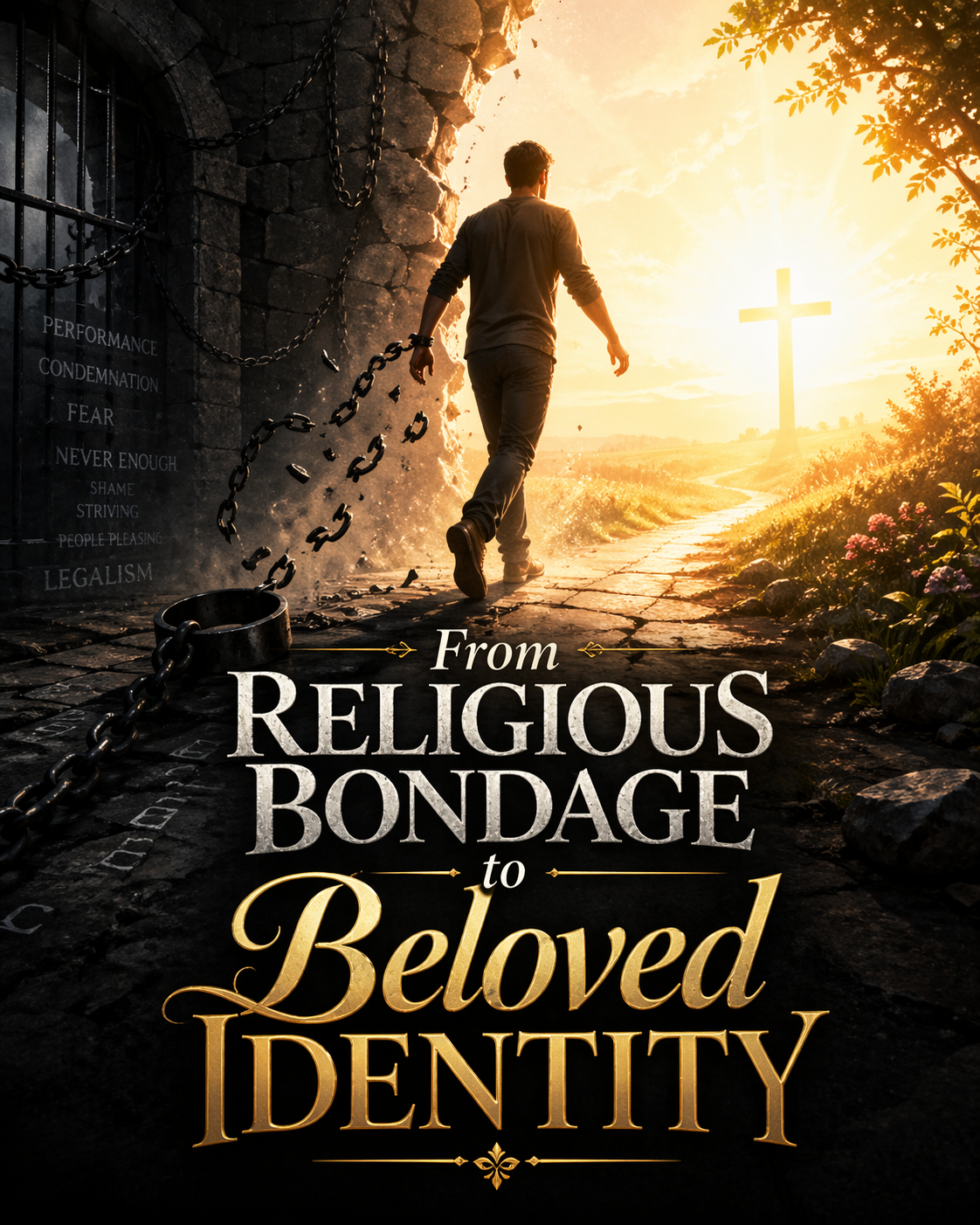
For much of my early life in the Church, including years of ministry training, I unknowingly lived within that same confinement. Though sincere, my understanding was limited by inherited frameworks that emphasized performance over sonship. Yet Holy Spirit, faithful and patient, began striking those chains over many years. From 2002 through 2015, He steadily dismantled false foundations, preparing my heart for deeper revelation. What once felt immovable slowly began to loosen under His persistent work.

Everything changed in a defining encounter with the Lord Himself in the early hours of March 29, 2016. In that sacred moment, the chains of religious bondage were shattered, and the revelation of sonship was awakened within me. Scripture declares, “If the Son makes you free, you shall be free indeed” (John 8:36), and that freedom became tangible and real. This encounter marked the beginning of a deeper unveiling of the authentic Gospel of the Kingdom that Jesus proclaimed and entrusted to His disciples. From that moment forward, identity replaced striving, and intimacy replaced obligation.

There have been other encounters along the journey that can only be likened to the moment when John the Baptist leapt in his mother’s womb at the presence of Christ (Luke 1:41). Such moments carried a spiritual recognition beyond words, affirming divine alignment rather than human connection. These encounters were marked by joy, confirmation, and a deep stirring of the Spirit. They revealed that Heaven orchestrates relationships for purpose, not coincidence. Each encounter served as a signpost along the path of Kingdom understanding.

The first of these moments occurred in 2002 upon meeting the late Dr. Don Lynch, who the Lord assigned as my mentor for several years, training me in Kingdomleadership, My wife and I were two of the first ordained leaders under Ministry Matrix.

That encounter was followed by encounters with Ron McGatlin in 2011 and Dutch Sheets and Clay Nash in 2018. In a gathering hosted by Dr. Lynch, where both Dutch and Clay taught, the Lord spoke clearly, instructing me to sit under Dutch’s teaching to hear the Father’s heart. Obedience followed, leading to years of study, prayer, and attentiveness to the revelation being released. Scripture teaches that wisdom flows through those who walk closely with God (Proverbs 13:20). These relationships became conduits of Kingdom insight and confirmation.

Holy Spirit has described these connections as kindred, affirming that they belong to the same spiritual family, the household of Yahweh. Scripture declares that believers are “members of the household of God” (Ephesians 2:19), joined not by preference but by divine calling. During the RiverHouse season, the late Bill Johnson of Christian International, taught the concept of a prophetic thread, where revelation expands as it is stewarded and pursued. This principle reflects the Kingdom pattern of progressive unveiling. What is revealed grows as it is honored.

Much of the Kingdom has been hidden, not because it was new, but because it was obscured by the spirit of religion. Jesus said that the mysteries of the Kingdom are given to those who seek with humility and faith (Matthew 13:11).

Today, the Remnant Ecclesia stands in a Jeremiah 33:3 moment, where the Father invites His people to call upon Him so He may reveal hidden things. As alignment with the Remnant Ecclesia deepens, these revelations unfold with clarity and power. What was once concealed is now being restored, not for knowledge alone, but for transformation and Kingdom advance.

In January of 2022, Dr. Don introduced me to the teachings of Apostle Greg Hood only a few weeks before he went home to be with the Lord, a moment that now carries even greater weight and gratitude in my heart. He said, son you will want to hear this mans teachings as they align with what you have been hearing in the Spirit.

In September of that same year, I encountered an advertisement for Apostle Greg’s book The Gospel of the Kingdom, which I promptly ordered and read three times within a single month. Every page resonated with unmistakable clarity, confirming what the Holy Spirit had already been unveiling within me through prayer, study, and lived obedience. As Proverbs declares, “In the mouth of two or three witnesses every word shall be established” (Proverbs 18:22), and the witness of the Spirit was undeniable.

As additional books by Apostle Greg were released, I read them eagerly, each one further affirming the trajectory the Lord had set before me. The revelation of the Kingdom did not introduce something foreign, but rather illuminated what had long been hidden beneath layers of tradition. When I first read The Gospel of the Kingdom, it intensified the fire already burning within me, stirring a deep desire to teach these truths. Yet Holy Spirit restrained me, whispering with gentle authority, “Not yet.” That season became one of quiet formation, where revelation was not merely learned, but lived.

Apostle Greg’s teaching and revelation concerning the books of Enoch, such as Seed Wars: Unraveling the Hidden History of the Nephilim and Modern Deception, served as yet another profound confirmation, as his writings echoed what the Holy Spirit had long been whispering to me in the secret place. These insights illuminated truths rarely addressed from the pulpit, not because they lack substance, but because they require discernment, humility, and courage to steward rightly. In this, the Spirit affirmed that what is hidden is now being unveiled to those willing to listen beyond tradition and lean fully into revelation.

In the first week of October 2025, Apostle Ken Malone hosted a powerful conference where Apostle Greg was among the speakers. On the very first night, as Apostle Greg taught on the Kingdom, Holy Spirit spoke with unmistakable clarity, declaring, “This is your green light. You have spent the last three years living this revelation—now release it.” That moment marked a divine transition from preparation to proclamation, from hiddenness to obedience. The timing of Heaven was perfect, confirming that authority flows from submission and stewardship.

During this conference, I had the privilege of meeting Apostle Greg and his wife Joanne, discovering yet another divine connection, as Joanne, like my wife, was born in the Philippines. The moment I shook Apostle Greg’s hand, I experienced that familiar stirring of the Spirit, akin to John leaping in Elizabeth’s womb at the presence of Christ (Luke 1:41). In that instant, the Holy Spirit whispered, “The revelation of the Kingdom has connected you.” It was a sacred confirmation that this alignment was not accidental, but ordained, woven together by the Spirit for the advancement of the Kingdom and the awakening of the Remnant in this generation.

There are also Kingdom voices in this generation whose faithfulness, purity, and obedience have strengthened my life as well as that of the Body of Christ and helped shape the emerging Remnant.

I have been blessed to also listen to and meet of Kingdom men such as Apostle Ken Malone, Chuck Pierce, and Damon Thompson who each carry a distinct mantle that awaken, align, and advance the people of God into deeper realms of Kingdom understanding. Their ministries echo the pattern of Ephesians 4:11–12, equipping the saints for the work of ministry and calling the Church into maturity, purity, and prophetic clarity.

I can’t leave out to other men that Holy Spirit has used to speak into my life with such power and authority my life was shaken to the core, Samual Brassfield, and my dear friend and mentor Paul Michel.

Through each of these Kingdom fathers obedience, the Lord has released strategies, intercession, and revelation that have fortified the foundations of many and ignited fresh hunger for the authentic move of the Spirit. I honor these voices as faithful stewards of the mysteries of God, whose lives and ministries continue to strengthen the Remnant Ecclesia and call this generation into its rightful place in the purposes of the Father.

~Dr. Russell Welch

About the author:

Dr. Russell Welch is an esteemed Christian author and seasoned Kingdom leader who, alongside his wife Emelie (Millette) Welch, co‑founded Remnant Warrior Ministries and Warrior’s Discipleship School. With more than twenty‑five years of experience in Kingdom leadership, Dr. Welch has devoted his life to equipping believers with a deeper understanding of sonship, authority, and the Gospel of the Kingdom.

Together, Dr. and Mrs. Welch have also established two international ministry schools—one in India and another in Emelie’s home country of the Philippines—extending their commitment to discipleship and Kingdom formation across nations. He currently serves as Lead Elder and Apostolic Teacher at Highway to Heaven Church in Jacksonville, Florida, where his teaching carries both theological depth and prophetic clarity.

Throughout his ministry, Dr. Welch has traveled extensively along the East Coast, faithfully preaching and teaching the Gospel of the Kingdom with a passion to see the Ecclesia awakened, aligned, and mobilized for lasting Kingdom impact.

Books by Dr. Welch


There is a sobering question before us: why are so few shepherds addressing the spiritual threats shaping our generation, especially on advancing threat of Islam in our nation? When voices fall silent, it is often because ears have grown dull to the directives of the Holy Spirit, or because fear of backlash has eclipsed obedience.

Yet Scripture reminds us, “God has not given us a spirit of fear, but of power, love, and a sound mind” (2 Timothy 1:7). The Remnant must discern the times with courage, refusing to bow to intimidation or cultural pressure.

It has become painfully clear that much of the mainstream Church has redirected its spiritual warfare toward building platforms, gathering crowds, and crafting messages that are palatable and popular. This pursuit of relevance has come at the expense of the true Gospel of the Kingdom being proclaimed and the expansion of Christ’s rule within the cultures of this world.

But the Kingdom does not advance through applause—it advances through truth, obedience, and the bold proclamation of Christ. “Seek first the Kingdom of God and His righteousness” (Matthew 6:33) remains the mandate, not the pursuit of influence.

If hesitation is rooted in weak theology, then now is the hour to return to the revelation of the God we serve—the One who sits enthroned above the circle of the earth (Isaiah 40:22), who has no rival, no equal, and no threat to His dominion. Jesus declared, “All authority in heaven and on earth has been given to Me” (Matthew 28:18). The Father watches over His children with fierce tenderness, “like a hen gathering her chicks under her wings” (Matthew 23:37). A people who know their God will never tremble before the schemes of men.

Therefore, Remnant Ecclesia, rise. Shake off the slumber of passive Christianity and stand firm in the courage of the Kingdom. This is the hour to speak truth with love, to war with wisdom, and to shine with unshakable confidence in the supremacy of Christ. “Arise, shine, for your light has come, and the glory of the Lord rises upon you” (Isaiah 60:1). Let the true sons and daughters take their place.

This is the hour to take back the houses of the Lord—not with anger or fleshly striving, but with the authority of sons and daughters who know the voice of their King.

We have been commissioned to reoccupy what rightfully belongs to Jesus the Messiah, the One to whom “all authority in heaven and on earth has been given” (Matthew 28:18). The enemy has squatted long enough in places meant for truth, holiness, and the uncompromised Gospel of the Kingdom.

Let the Remnant stand firm, clothed in the armor of God, discerning the times, and refusing to yield sacred ground to cultural pressure or spiritual apathy. “Those who know their God shall be strong and do exploits” (Daniel 11:32), and this is such a moment. The King is calling His warriors to rise—not in fear, but in faith, reclaiming His territory with humility, boldness, and unwavering allegiance to His Word.

Dr. Russell Welch Co-Founder Remnant Warrior Ministries Warrior’s Discipleship School

Link to Dr. Welch’s books


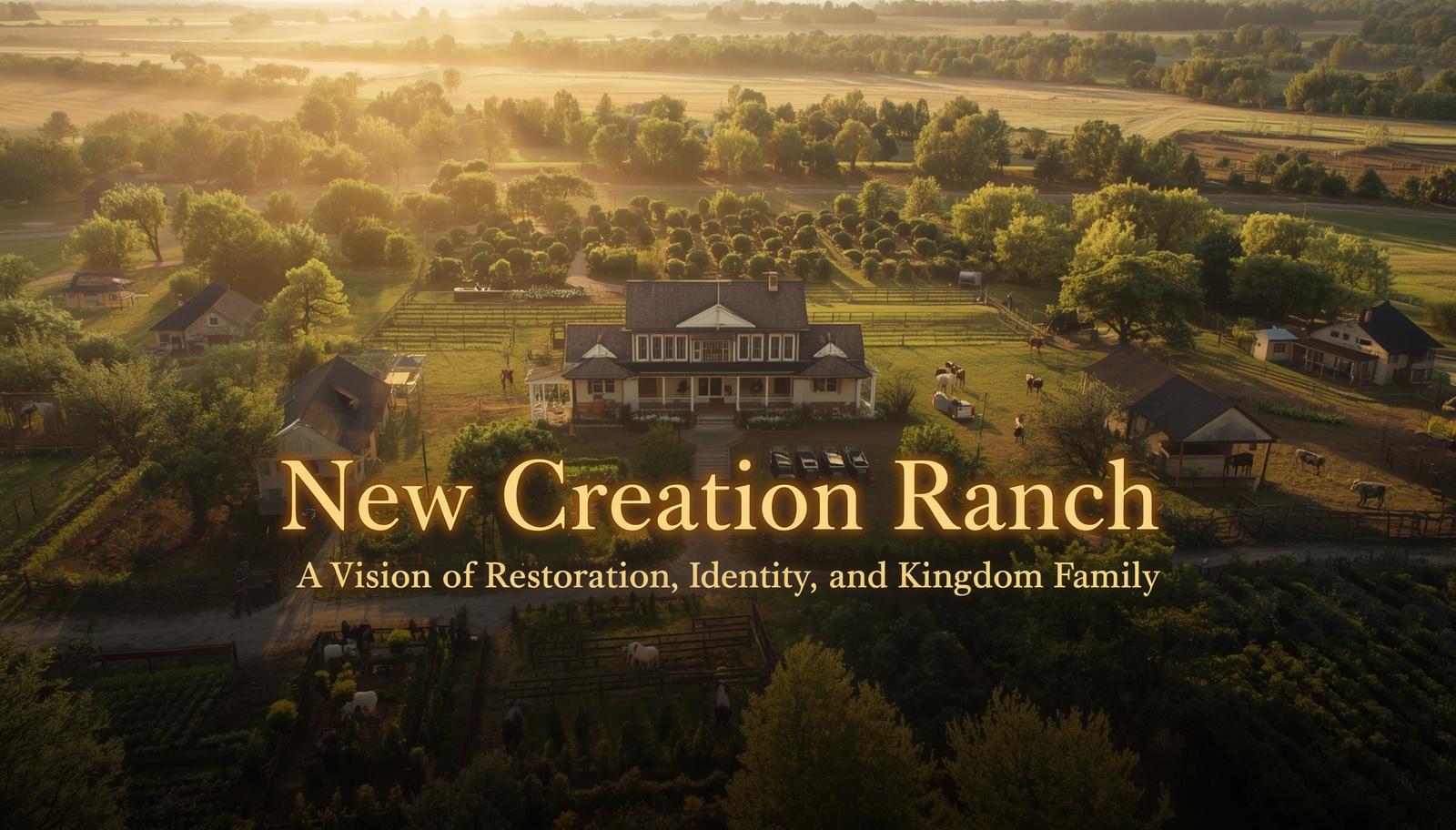
When I was seventeen, the Lord gave me a dream of a vast farm filled with people clothed as in the days of Jesus, with long hair and beards, ministering to others who were dressed in combat gear. At the time, I did not understand the meaning, nor did I grasp the prophetic nature of what was being shown.

Yet the Word reminds us, “In the last days, God says, I will pour out my Spirit on all people. Your sons and daughters will prophesy, your young men will see visions, your old men will dream dreams” (Acts 2:17). This dream was a seed planted by the Spirit, waiting for its appointed time to unfold. I would dream this dream again and again over the course of the next 37 years.

Years later, in 2018, I dreamed again, and upon waking, the Holy Spirit began to speak. He revealed that the farm represented a community devoted to bringing in homeless veterans, offering healing, and discipling them into warriors for Christ. I asked why they remained in combat gear, and He said, “Because it was in that season the enemy took them captive.”

Yet I saw disciples tending to them, and the Spirit declared, “These too were once wounded, but now they are healed and restored, and they are dedicated to discipling their fellow veterans.” Truly, this is the fulfillment of Isaiah 61:1, “He has sent me to bind up the brokenhearted, to proclaim freedom for the captives and release from darkness for the prisoners.”

In 2019, the dream returned, and this time I was entering the property. At the gate was a sign that read, “New Creation Ranch – A Veteran Restoration Community.” The name itself echoed the promise of 2 Corinthians 5:17, “Therefore, if anyone is in Christ, the new creation has come: The old has gone, the new is here!” This was no ordinary farm; it was a prophetic picture of restoration, a place where the broken would be made whole, and where warriors would rise again—not for earthly battles, but for the Kingdom of God.

More recently, the dream shifted to a graduating class. Each disciple who had been healed and trained was being commissioned to go forth and establish house churches. As I awoke, the Spirit reminded me of my long-held conviction for the home fellowship model. In July, a father in the faith prophesied that my wife and I would begin planting house churches, and since then I have heard the Spirit whisper, “Glory Houses – Ecclesia Government Houses.”

This aligns with the promise of Matthew 16:18-19, where Jesus declares, “I will build my church, and the gates of Hades will not overcome it. I will give you the keys of the kingdom of heaven.” The ranch and the house church movement are not separate—they are one prophetic assignment.

Last night I had the dream again, and when I awoke I could literally smell the farm. When I started praying about it, Holy Spirit spoke boldly: “This is the Father’s calling on your life. You and your wife have been commissioned for this assignment.”

As you have sought first His Kingdom and His righteousness, He has matured you through seasons of trials, refining fire and revelation. Now the fullness of the vision is coming forth—land titles are being transferred, checks are being written, and laborers are being called from across the nation: farmers, mechanics, and skilled tradesmen.

The promise of Matthew 6:33 resounds, “Seek first the kingdom of God and His righteousness, and all these things will be added to you.” The hour is approaching, and as we remain faithful, we shall see the dream manifest before our very eyes.

Let’s pray and decree that this dream will become a reality in 2026. Thousands of veterans are in dire need of assistance, many are taking their own lives, and the government of this world has no answers or solutions. In contrast, the Government of our King and His Kingdom does, and everyone who is called by His name, is granted the authority to legislate His Will.

~Dr. Russell Welch Co-Founder Remnant Warrior Ministries Warrior’s Discipleship School

New Creation Ranch


Examining the Roots and Rationale of the Modern House Church Movement

The landscape of Christian worship has seen a marked shift in recent years, with a growing number of believers drawn to the simplicity, intimacy, and shared responsibility found in house church models. Notably, leaders like Francis Chan—through the “We Are Church” movement—have catalyzed much of this momentum, calling for a return to practices reminiscent of the earliest Christian communities. But how closely does this model align with the ecclesia of the first century? Is the yearning for deeper fellowship, mutual edification, and mission-focused stewardship truly a recapturing of the spirit and practice of the New Testament church?

The Early Church: An Overview

In the earliest decades following Christ’s resurrection, Christians did not gather in grand sanctuaries or dedicated religious spaces. Instead, the ecclesia—literally the “called out ones”—met in the homes of believers, sharing meals, prayers, teaching, and the breaking of bread. These gatherings were intimate, familial, and participatory. The Apostle Paul greets several house churches in his letters (see Romans 16:5, 1 Corinthians 16:19, Colossians 4:15, Philemon 1:2), and the Book of Acts describes believers meeting “from house to house” (Acts 2:46; 20:20).

The Scale and Spread of House Churches

Scholars estimate that by the early fourth century, just before the conversion of Constantine and the legalization of Christianity, roughly 400,000 house churches may have existed throughout the Roman Empire. Early Christian gatherings were often limited by social and legal constraints—persecution made public worship risky, and believers relied on the hospitality of others to sustain their communal life. The structure of the house church provided protection, fostered strong relational bonds, and encouraged the active participation of all members.

Francis Chan and the “We Are Church” Movement

Francis Chan’s vision for the church echoes this ancient paradigm: small, reproducible communities where every believer is discipled and equipped to disciple others, where giving supports the needs of the poor and the progress of the gospel, rather than maintaining facilities or programs. This model intentionally removes the distance between leadership and laity, emphasizing shared spiritual responsibility and communal discernment. House churches, in Chan’s approach, are designed to multiply rather than accumulate members, keeping gatherings small enough for authentic fellowship and accountability.

Theological and Practical Resonances

The allure of the house church model lies in its resemblance to the early ecclesia in several key ways:

  • Mutual Edification: In smaller gatherings, believers can truly “walk together” in the faith, bearing one another’s burdens and spurring one another on toward love and good deeds (Hebrews 10:24-25).
  • Shared Leadership: Rather than relying on a single pastor or professional staff, leadership is distributed, echoing the plurality of elders and the priesthood of all believers seen in the New Testament.
  • Simplicity and Stewardship: Without the financial and logistical demands of maintaining a large building, house churches can direct more resources toward mission, mercy, and tangible needs.
  • Intimacy and Accountability: Smaller communities naturally foster deeper relationships and create space for honest confession, mutual encouragement, and genuine discipleship.
  • Missional Flexibility: Like the early church, house fellowships can adapt rapidly, meet in a variety of settings, and more easily multiply as new believers are added.

Challenges and Considerations

Of course, the house church model is not without its challenges. New Testament house churches functioned in a unique historical context—one shaped by persecution and social marginalization. Today, house churches must navigate questions of doctrinal oversight, sustainability, and unity within the broader body of Christ. And while intimacy can flourish, so too can insularity or division if not intentionally guarded against.

Modern Institutional Churches: Strengths and Struggles

Many believers, as mentioned, find connection difficult in larger, “corporate” congregations. While megachurches offer resources, programs, and opportunities for impact, some lament the loss of familial closeness and meaningful participation that marked the earliest gatherings. The yearning for something deeper—a place where everyone is known, needed, and able to contribute—is a legitimate call back to the roots of Christian community.

Chan’s description beautifully echoes the “Starfish” model advocated by Wolfgang Simson, a concept drawn from his influential writings on organic, decentralized church life. In this model, leadership is not centralized or hierarchical but is instead multiplied, much like the regenerative abilities of a starfish—if you cut off one of its arms, it grows another. The focus shifts from building institutions to cultivating people, and from collecting followers to equipping leaders who can, in turn, nurture new communities.

In practice, as this describes, a group of believers gathers in a home and intentionally mentors emerging leaders from within. Once the group reaches a size (for example, 15–20 members) that naturally limits intimacy and active participation, another gathering is launched—often in a nearby neighborhood or adjoining town—under the guidance of one of these mentored leaders. The process repeats, encouraging organic multiplication rather than dependence on a single “mother church.”

Periodically, these house fellowships unite in larger general assemblies—monthly or quarterly times of worship, testimony, celebration, and communal discernment. These gatherings strengthen the shared identity and broader unity of the movement without diminishing the intimacy of each local assembly. New baptisms, shared stories, and collective prayer for healing and mission become the heartbeat of this extended family, echoing the rhythms seen in Acts 2:42–47 and Acts 4:32–35.

Such a model is indeed closely aligned with the patterns described in the Book of Acts, where believers met from house to house, shared resources, and appointed elders in every place. The absence of heavy financial commitments to building maintenance frees up funds for tangible mission—caring for the poor, supporting local and overseas outreach, or responding generously to crises within the network. When a member faces hardship, the entire fellowship can rally support, embodying the mutual care that marked the earliest Christian communities.

In essence, the Starfish model resists institutional inertia by prioritizing mission, discipleship, and adaptability. It embodies the principle that every believer is a priest, that every home can become a hub of the Spirit’s work, and that leadership is a gift to be multiplied, not hoarded. While no model is without challenges—questions of doctrinal soundness, healthy accountability, and sustainable multiplication must all be addressed—this approach offers a compelling, deeply biblical vision for church as a living movement rather than a static organization.

On that note, back in 2004 I had a conversation with my spiritual father about this and he mentioned in India, where house churches have experience expodential growth, the set up the model as follows, when a member has been discipled amd they leave the group the become and elder, and these house are broken down into territories where each house group leader as an elder, walks in unity thte other elders, They wilo generally form thses into groups of twelve house Church. Then one elder is chosen by Holy Spirit, from which each elder gets a witness to, and that elder represent the twelve house Churches in a regional conferanmce of elders.

Ultimately, whether in rented halls, humble homes, or public spaces, what matters most is the living witness of Christ’s body—flexible, generous, Spirit-led, and fiercely devoted to one another and to the world God loves.

Conclusion: Returning to the Roots?

In sum, the contemporary house church movement, and models like Francis Chan’s “We Are Church,” are in many ways an intentional return to the rhythms and relationships of the first-century ecclesia. While not a perfect replication—history cannot be rewound—there is a powerful resonance between the early gatherings of believers and today’s house church fellowships: a longing to know Christ together, to serve one another, and to bear witness to the world in the context of simple, Spirit-empowered community. Whether in homes, sanctuaries, or under open skies, the heart of the church remains unchanged—the people of God, called together, living out the gospel in word and deed.

~Dr. Russell Welch

Elder/ Apostolic Teacher: Highway to Heaven Church and Founder and Shepherd of Remnant Warrior Ministries / Remnant Warrior School of Spiritual Warfare.

www.remnantwarrior.org


A Contemplation on Scripture, Church Culture, and the Call to Consecration

Romans 12:1-2, as rendered in the Amplified Bible, offers a powerful summons to believers: to dedicate ourselves wholly to God, presenting our bodies as living sacrifices, and refusing conformity to the patterns of this world. Rather, we are urged to pursue continual transformation through the renewal of our minds, testing and approving God’s good, acceptable, and perfect will.

Setting the Scriptural Foundation

At its heart, these verses call for a life of consecration—a holiness not merely of outward form but of inward devotion. The apostle Paul’s words reach across centuries, challenging each generation to discern the difference between what is genuinely God-honoring and what is merely the prevailing current of culture.

Cultural Expressions and the Pursuit of Holiness

Throughout history, the Church has found itself navigating tension between cultural adaptation and sacred distinction. In every era, believers have grappled with questions about clothing, music, adornment, and customs—seeking to understand where adaptation ends and compromise begins.

The example of tattoos among pastors in the modern American Church surfaces as one such point of conversation. For some, tattoos may represent a freedom in Christ, a canvas for testimony and artistic expression; for others, they may symbolize conformity to secular trends or a departure from traditional notions of reverence.

Yet, the deeper question extends beyond tattoos or any particular external marker. It invites each of us to ask: Are we, in our hearts and actions, offering ourselves fully to God? Are we seeking to align every aspect of our being—body, mind, and spirit—with Christ’s likeness? Or are we subtly reshaping the boundaries of holiness for the sake of convenience, acceptance, or personal preference?

The Challenge of Modernization and Scriptural Integrity

As the world shifts, there can be a temptation to reinterpret, dilute, or ignore certain scriptures to better fit the spirit of the age. Paul’s exhortation stands as a gentle but firm warning against this: “Do not be conformed to this world… but be transformed.” The transformation he describes is thorough, inward, and ongoing—a renewal that resists superficiality for the sake of true spiritual depth.

Scripture warns against selective obedience and self-serving reinterpretation. The story of humanity’s first fall, as recounted in Genesis, reminds us of the peril in choosing personal judgment over divine instruction. God’s call to holiness has always been an invitation to trust, surrender, and obedience, even when it stands in contrast to popular opinion.

Clean Hands, Pure Hearts, and Approaching the Holy

To “climb the mountain of the Lord”—to enter His presence—is not a matter of outward ritual alone, but of inward purity and integrity. Psalm 24 declares, “Who may ascend the hill of the Lord? Those with clean hands and a pure heart.” It is possible, as you note, to misinterpret God’s grace as license for continued rebellion, rather than as the power to walk in newness of life.

Holiness, then, is not about legalism nor about careless liberty; it is about being clothed in the righteousness of Christ, standing in humble awe before God’s consuming fire.

Inviting Self-Examination and Humble Seeking

Rather than passing judgment on others—whether pastors with tattoos or congregants without—it falls to each believer, each community, to prayerfully examine their motives and practices in the light of God’s Word. The altar is a place for honest questions, surrendered hearts, and listening for Heaven’s answer.

Conclusion

The words of Romans 12:1-2 challenge every generation to forsake superficial conformity, to resist the easy path of cultural accommodation, and to instead pursue a life marked by sacrificial worship, radical renewal, and unwavering devotion to God’s perfect will. May we, as the Remnant, respond not with self-righteousness but with humility, seeking clean hands, pure hearts, and the clothing of Christ’s righteousness as we navigate an ever-changing world.

We would love to hear your comments on this topic.

~Dr. Russell Welch

Elder/ Apostolic Teacher: Highway to Heaven Church and Founder and Shepherd of Remnant Warrior Ministries / Remnant Warrior School of Spiritual Warfare.

www.remnantwarrior.org


There is a groan rising from the heart of the Father—a cry echoing through the corridors of time, calling His Church back to the way of the Master. It is not a call to innovation, but to restoration. Not to strategy, but to surrender. Not to programs, but to people.

Jesus didn’t disciple from a pulpit. He discipled from a place of proximity. He didn’t build a brand—He built a brotherhood. He didn’t create consumers—He raised up carriers of the Kingdom. And He did it face to face.

From the twelve He called, He drew four into deeper intimacy—Peter, James, John, and Andrew. With them, He walked, wept, corrected, and commissioned. He poured into them everything the Father had poured into Him. And in turn, they poured into the others. This was not a hierarchy of control—it was a holy rhythm of impartation. It was the divine pattern: from the Father to the Son, from the Son to the disciple, and from the disciple to the world.

This model—relational, intentional, and incarnational—was the foundation of the early Church. For nearly four centuries after Pentecost, this was how the Gospel advanced. Not through cathedrals, but through kitchens. Not through institutions, but through intimacy. Disciples made disciples, and the world was turned upside down.

But then came Rome—and the fire became a form.
Then came Greece—and the mystery became a philosophy.
Then came America—and the mission became a marketplace.

What was once a movement became a monument.
What was once a family became a franchise.
What was once a fire became a formula.

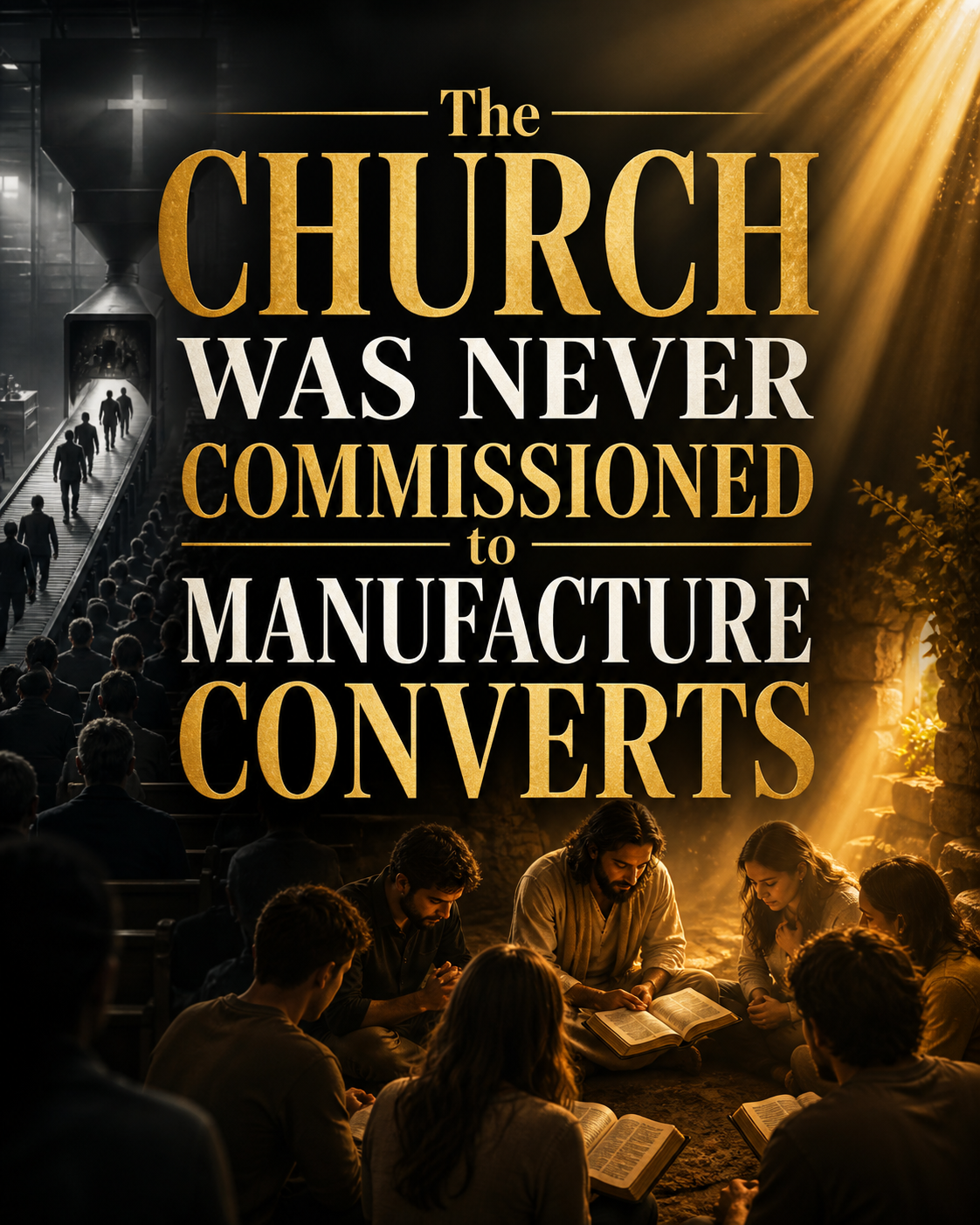
Today, many churches have traded the model of Christ for the methods of culture. Discipleship has been outsourced to programs, seminars, and branded curriculums. Pastors are treated like CEOs. Congregants are treated like customers. And the goal is no longer transformation—it’s retention.

We have built systems that are efficient but not eternal. We have created structures that are scalable but not spiritual. We have trained people to follow a church, a doctrine, a personality—but not a Person. We have made disciples of denominations, not disciples of Jesus.

And the fruit is evident.

We have churches full of attenders but empty of disciples.
We have leaders who are celebrated but not consecrated.
We have believers who know the language of faith but not the life of it.

But Heaven is not silent. The Spirit is not still.
The winds of reformation are blowing again.

The Holy Spirit is re-forming the Church—not around platforms, but around people. Not around programs, but around presence. He is calling us back to the table. Back to the fire. Back to the face-to-face.

This is not a nostalgic longing for the past. It is a prophetic summons for the future. The Church of tomorrow must be built on the foundation of Christ’s model—not man’s machinery. We must return to the way of the Master.

Jesus didn’t say, “Go and build churches.”
He said, “Go and make disciples.”
And He showed us how.

He walked with them.
He lived among them.
He taught them in the streets, in the fields, in the storms.
He corrected them in love.
He empowered them with truth.
And then He sent them with fire.

This is the model we must reclaim.
This is the fire we must rekindle.
This is the blueprint we must rebuild.

Religion builds hierarchy. It demands allegiance to a system. It creates disciples of doctrine, not disciples of Jesus. It elevates the pulpit and forgets the person. It teaches people to worship pastors and defend denominations, rather than to walk with the Lord of all creation.

But the Kingdom is different.
The Kingdom is relational.
The Kingdom is incarnational.
The Kingdom is built on love, not leverage.

So I plead with you, Church—return.
Return to the face-to-face.
Return to the fire.
Return to the way of the Master.

Let us raise up a generation who walk as Jesus walked.
Who disciple as Jesus discipled.
Who love as Jesus loved.

Let us build not with bricks, but with lives.
Not with programs, but with presence.
Not with systems, but with sons and daughters.

📖 “He appointed twelve that they might be with Him and that He might send them out…” — Mark 3:14
📖 “Go therefore and make disciples of all nations…” — Matthew 28:19

Let the Remnant decree:

We, the sons and daughters of the Most High God, stand in the authority of the blood of Jesus,
clothed in righteousness, armed with truth, and awakened by the Spirit of the Living God.

We decree this day:

That the Church shall return to the model of the Master—to the face-to-face, life-on-life, Spirit-led discipleship that Jesus Himself walked in and imparted.

We renounce the counterfeit systems of religion—discipleship built on programs, platforms, and personalities. We break agreement with the spirit of hierarchy, control, and celebrity. We cast down every model that exalts itself above the knowledge of Christ.

We declare:
The days of shallow Christianity are over.
The days of spectatorship are over.
The days of man-made disciples are over.

We call forth a reformation of discipleship—rooted in relationship, fueled by the fire of the Holy Spirit, and patterned after the life of Jesus.

We decree that the Remnant shall rise—
not as passive believers, but as burning ones.
Not as churchgoers, but as Kingdom carriers.
Not as consumers, but as commissioned sons and daughters.

We declare that the war is raging—and the time for preparation is now. We will not send untrained soldiers into battle. We will not raise orphans when Heaven has called us to raise heirs.

We prophesy:
That the wilderness shall become a training ground.
That the secret place shall become the strategy room.
That the table of fellowship shall become the altar of transformation.

We call the Church back to the fire.
Back to the feet of Jesus.
Back to the way of the cross.
Back to the face-to-face.

We decree that every disciple raised in this hour shall walk in the authority of Christ, carry the compassion of Christ, and manifest the character of Christ.

We declare that creation is groaning—not for more sermons, but for sons. Not for more buildings, but for builders. Not for more religion, but for revelation.

And we say:
Let the sons and daughters of Yahweh arise!
Let them be trained, tried, and transformed!
Let them be sent into the harvest fields with fire in their bones
and the Word of the Lord in their mouths!

We decree:
That the Church shall no longer make disciples of denominations, but disciples of the King. That we shall no longer raise up followers of men, but followers of the Lamb.

This is the hour.
This is the call.
This is the decree.

🔥 Return to Christ-like discipleship.
🔥 Prepare the Remnant for war.
🔥 Let the sons and daughters arise.

In the name of Yeshua, the Captain of the Lord’s Host, we seal this decree.

Amen and amen.

The time is now.
The call is clear.
The model is Christ.

Let us return.

~Dr. Russell Welch

Elder / Apostolic Teacher: Highway to Heaven Church and Founder and Shepherd of Remnant Warrior Ministries / Remnant Warrior School of Spiritual Warfare


We are not just in another season—we’re in a spiritual epoch. A threshold moment where destinies are being either activated or aborted based on the alliances we allow. The warfare is no longer general—it’s surgical. The enemy isn’t throwing random attacks; he’s mapping out your relationships, stalking your alignments, and seeking access to your call through open doors of unchecked connection.

In this critical hour, the Lord has whispered a solemn charge to me: Let Me govern your alignments.”

This isn’t about becoming skeptical. It’s about becoming sanctified in how we align. The Holy Spirit is sounding an alarm across the Body: “Stop entertaining every handshake. Stop validating every olive branch.” Because not every invitation is from Heaven. Some are beautifully packaged assignments from hell.

I’ve seen firsthand how, when one demonic alignment is severed, the enemy will often send a carefully crafted replacement. A subtle infiltration. These substitutes don’t come how you’d expect—they come wrapped in familiarity, affirmation, and spiritual language. They quote the Word. They mention Jesus. They speak of unity and healing. But they carry the residue of what you were just delivered from.

He revealed to me that some of these connections—though outwardly peaceful—are actually bound to people or networks that God has clearly marked for disconnection. And if you’re not discerning, you will find yourself yoked to what you were once freed from.

This is why I’ve been relentlessly declaring the need for a radical awakening to the gift of discerning spirits. Not a shallow intuition. Not emotional skepticism. But Holy Spirit-led perception that pierces through soulish layers and unveils what spirit is truly operating behind the veil.

Discerning of spirits is not just a “side gift” for deliverance ministers—it is a survival gift for every believer, and a governing gift for those called to lead in this final hour. It’s the difference between partnering with destiny or falling into delay. Between building with living stones or mixing with strange fire.

This gift:

  • Divides between what’s anointed and what’s admired
  • Identifies spirits that mimic truth but operate in mixture
  • Protects against assignments disguised as assistance
  • Reads the frequency of a voice, not just the tone of their message

And we need this desperately. Because deception no longer looks demonic—it looks divine. The counterfeit has evolved. It doesn’t come yelling rebellion. It comes whispering agreement. It doesn’t knock down your door. It asks for a seat at your table. And if you are not governed by the Spirit, you’ll offer hospitality to sabotage.

Leaders, gatekeepers, intercessors: if ever there was a time to sharpen your discernment, it is now. Your ability to hear clearly in this hour will determine the purity of what you build. If you do not allow the Holy Spirit to inspect every alignment, you risk constructing with compromised materials.

Many are frustrated—not because of a lack of vision—but because of corrupted partnerships. You can’t build Zion with Babylonian bricks. You cannot steward the presence of God while partnering with those the Lord has marked as misaligned. There are connections that dilute your fire. Conversations that dull your hearing. Partnerships that make you question what God already made clear.

This is the hour to return to the altar of separation. To consecrate not only your actions, but your associations. The Holy Spirit is cleansing the camp, not out of harshness, but out of mercy. Because the rising Remnant cannot afford to walk with blinders on. We are being commissioned to build with precision, not popularity.

Let the gift of discerning spirits arise in you—not for judgment, but for governance. Not to puff up, but to protect the oil. To shield the pure thing God is birthing in this hour from mixture and manipulation.

The Lord is raising up shepherds who can smell the difference between sheep and wolves in sheep’s clothing. He’s commissioning watchmen who don’t just see danger—they feel it in their bones. He’s calling forth sons and daughters who will guard their gate with fasting, weeping, and authority.

So I say this with a trembling heart: Let Him govern your alignments. Let Him cleanse the prophetic gate. Let Him strip even the counterfeit covenants that once brought comfort. Because the price of tolerating mixture is the forfeiting of momentum.

You don’t need everyone. You need the right ones—those whose spirits resonate with what Heaven is building through you. Those whom the Father has assigned, not those whom the enemy has disguised.

This isn’t the hour of convenience. This is the hour of consecration.

The remnant is rising—and they will not be known by title or platform, but by purity, discernment, and unshakable alignment with the King.

~Dr. Russell Welch

Elder/ Apostolic Teacher: Highway to Heaven Church and Founder and Shepherd of Remnant Warrior Ministries / Remnant Warrior School of Spiritual Warfare.

www.remnantwarrior.org


“They overcame him by the blood of the Lamb and by the word of their testimony…” — Revelation 12:11

There are stories—and then there are weapons.

When a child of God begins to testify—not just with words, but from the deep well of lived redemption—something violent happens in the spirit realm.

We aren’t reciting nice Christian clichés or sweet Sunday school memories. We are dropping bunker busters into the hidden bunkers of darkness. And the enemy knows it.
See, Satan can argue with doctrine. He can twist Scripture. He can even mimic religion. But what he cannot do is unwrite your story.

He cannot edit your encounter. He cannot mute the voice of the one who has seen the face of Jesus in the fire and come out clean.
Every blood-bought, Spirit-ignited testimony carries the residue of heaven’s authority.

It’s not just a memory—it’s a missile. Because when you speak what the Lord has done for you, it tears through lies, shame, and demonic strongholds like a bomb detonating beneath the enemy’s feet. He flees not just because you’re shouting—but because the Spirit backs up every word with power.

Your story—yes, yours—when surrendered to Jesus, carries the same Spirit that raised Him from the dead. So don’t hold it back. Don’t sanitize it.

Let it thunder. Let it shake the gates of hell and remind the darkness that its grip on you has been forever broken.
Every time we testify, we’re not just telling people what happened—we’re announcing what’s possible.

So release it. Declare it. Prophesy with your history. Because your testimony isn’t just a story…

…it’s a supernatural detonation that leaves no hiding place for the enemy.

The following testimony is one that I have in my own life, that everytime it is shared, I can litteraly since the devil seeking a place to hide from it it’s power….

________________________________________________________________

There are moments that divide your life in two. March 28, 2016 was that moment for me.

It was 1:43 in the morning. I was sleeping in a quiet room in a historic inn in Saluda, North Carolina, when a voice—clear and undeniable—spoke into the silence: “Wake up.”

It wasn’t a nudge from the subconscious or the remnants of a dream. It was a holy disruption, slicing through the stillness like lightning. I sat up, heart pounding. The clock confirmed the time. I turned on the light and searched the room. Empty. I stepped into the hallway—stillness. No footsteps. No voices. Nothing. But something within me had already shifted. I was awake in a way I hadn’t been in years.

Then the voice came again, even more weighted: “Open the Bible.”
I walked over to the desk where a Bible sat, worn and waiting, almost like it had been placed there for this very night. As I opened it, the pages fell to the Gospel of John, and my eyes were immediately drawn to John 3:16. It wasn’t just printed on the page—it glowed in my spirit.

Again, the voice spoke: “Read.” I pushed back: “I’ve read this a thousand times.” But the command came once more, unwavering: “Read.”

And so, out of simple obedience—or maybe exhaustion—I read: “For God so loved the world…” And with those words, heaven invaded.

In an instant, I was no longer in that room. I was back in the kitchen of my childhood home. I was three years old. My father, in a fit of drunking rage, had just struck my mother. He was gripping my brother’s arm, dragging him toward the mechanical ringer of an old washing machine. I, somehow, had escaped my high chair and crawled into the cabinet under the sink—my hiding place. My refuge. My prison.

That memory had haunted me my entire life. But this time, the scene was different. I wasn’t alone.
Jesus was under the sink with me.

He didn’t speak. He didn’t preach. He simply was. Present. Near. Unshaken by my fear, yet fully attentive to it. That one moment rewrote decades of belief. I had always thought I was abandoned in that kitchen. But now I saw—He was with me even then.

Then, like a movie reel spooled by grace, moment after moment from my life unfolded before me. Every scar. Every failure. Every hidden sin. Every silent scream. With each scene, I turned to Jesus and asked, “What about this? Surely this disqualifies me. Surely this is the moment where Your love stops.”

And every time, He looked at me—not with disappointment, but with eyes blazing like mercy—and asked, “Who told you that lie?”
Over and over: “Who told you that lie?”

That question shattered me. Because for the first time, I saw the architecture of my shame—not as truth, but as deception. I had built an entire identity on the idea that I was barely tolerated by God. That I was accepted only because He had to. That the cross was more obligation than desire.

But now I knew: I was never barely tolerated. I was deeply wanted. Loved beyond comprehension. Not in spite of my brokenness, but pursued through it.

When the vision ended, I looked at the clock. 1:45 a.m. Only two minutes had passed. But in those two minutes, I was born again—again. Not to a new set of religious rules, but to a new identity entirely.

The final words of the encounter echoed like a commissioning: “Study the Book of John until you get the revelation of My life for you.”

That invitation became the doorway to a new way of living.

For over nine years now, I’ve lived in the deep waters of the Book of John, learning not just the teachings of Jesus, but the tone of His heart.

And like the Apostle John—who referred to himself not by his achievements, but by how Jesus saw him—I began to claim the truth for myself: “I am the disciple whom Jesus loves.”

Not just forgiven—transformed.

Not just surviving—reborn.

God’s love didn’t simply bandage me—it recreated me. It didn’t just comfort my wounds—it removed my shame. It revealed that I wasn’t a sinner struggling for grace, I was a new creation, born of divine affection. I didn’t have to earn what had already been poured out. I had only to receive.

This wasn’t behavior modification. This was spiritual resurrection.

The love of God is not abstract. It’s not poetic sentiment.

It’s a force more potent than trauma, more healing than time, more trustworthy than logic. It finds you in the most hidden places and refuses to leave you unchanged. It sits with you under the sink, and then walks with you out of it—into light, into identity, into freedom.

I am no longer hiding. I am no longer orphaned. I am no longer lost in the echo of old lies. I am found in the voice that still whispers to this day: “Wake up.”

And I’ll never be the same.

I pray this stirs boldness in your spirit to no longer silence the song of your story. Your testimony—every scar kissed by grace, every moment redeemed by mercy—is not a mark of shame, but a weapon of wonder.

Don’t let the enemy keep your voice buried beneath fear or regret. You carry keys wrapped in hope—keys that can unlock chains in others. So speak, not just for your own freedom, but for theirs. Hell trembles when you remember who you are.

_Dr. Russ Welch
Remnant Warrior Ministries
www.RemnantWarrior.org


Apostolic Authority
Apostolic Authority differs fundamentally from hierarchical or positional power structures. In the New Testament, apostolic leaders functioned primarily as spiritual parents who earned influence through relationship, demonstrated character, and proven ministry effectiveness.

They led through service rather than control, modeling Christ’s approach to leadership as exemplified in washing His disciples’ feet.

This servant-leadership paradigm contrasts sharply with ecclesiastical systems that confer authority through formal titles or institutional positions.

The essence of apostolic authority lies in its Holy Ghost inspired influence rather than its control. Apostolic leaders in the early church extended their ministry through relationship networks rather than organizational structures.

Their authority was recognized by Holy Ghost, and voluntarily by those who benefited from their ministry rather than imposed through ecclesiastical sanctions or denominational mandates.

This relational foundation creates a more organic, resilient connection than institutional affiliations that may dissolve when organizational politics or priorities shift.

Apostolic authority manifests primarily through equipping and releasing others rather than consolidating power. Paul’s ministry exemplifies this approach—he established communities, developed local leadership, and then moved on to new territories.

His ongoing relationship with these churches focused on encouraging their growth toward maturity rather than maintaining dependent connections. This pattern stands in marked contrast to modern systems that often foster dependency on professional ministers.

Participatory Community
Participatory Community reflects the New Testament vision of church as an active body rather than a passive audience. The biblical metaphor of the church as a body presupposes that every member has a vital function to perform.

This understanding transforms gatherings from spectator events into collaborative expressions where diverse gifts operate for mutual edification. Such participation extends beyond token involvement to meaningful contribution in worship, ministry, and decision-making processes.

The experience of community in apostolic churches transcends casual social connection to covenant relationship. Members understand themselves as spiritually joined to one another, sharing a common identity and purpose that shapes their priorities and commitments.

This covenant relationship creates the necessary foundation for genuine accountability, conflict resolution, and shared life that extends beyond weekly services into daily interaction and practical support.

Community engagement in the apostolic model extends beyond internal fellowship to active engagement with the surrounding society. Rather than creating Christian subcultures isolated from their neighbors, early believers remained embedded in their communities as salt and light.

They demonstrated Kingdom values through practical service, ethical business practices, and compassionate response to societal needs. This engagement provided both credibility for their message and opportunities for witness that institutional isolation cannot produce.

Practical Spirituality
Practical Spirituality characterizes the apostolic approach to faith, emphasizing tangible expression of spiritual realities in everyday life. Unlike religious systems that separate sacred from secular domains, apostolic Christianity integrates faith into all aspects of human experience.

Believers are equipped to exercise their spiritual authority in family relationships, workplace environments, and community involvement rather than compartmentalizing spirituality to religious activities.

The supernatural dimension remains central to apostolic spirituality. The New Testament presents a faith characterized by divine healing, prophetic guidance, angelic assistance, and spiritual warfare as normal aspects of Christian experience rather than exceptional phenomena.

This practical supernatural ministry emerged from intimate relationship with God rather than formulaic techniques or specialized gifting limited to professional ministers.

All believers were expected to manifest spiritual gifts as the Spirit directed.

Holistic development marks apostolic approaches to discipleship. Rather than focusing exclusively on intellectual knowledge or emotional experiences, apostolic ministry addresses the whole person—spirit, soul, and body.

Character formation receives as much attention as gifting development. Financial stewardship and vocational excellence are considered spiritual matters alongside prayer and Bible study. This comprehensive approach produces believers equipped to represent Christ effectively in every dimension of life.

Leadership Multiplication
Leadership Multiplication distinguishes apostolic movements from institutional maintenance. Paul instructed Timothy to entrust what he had learned to faithful individuals who would teach others also, creating a four-generation multiplication process (2 Timothy 2:2).

This intentional reproduction stands in stark contrast to centralized systems that channel potential leaders through institutional bottlenecks like seminary training or denominational ordination processes that often restrict rather than accelerate leadership development.

Mentoring relationships provide the primary context for leadership development in apostolic systems. Emerging leaders learn through life-on-life impartation rather than merely academic instruction, absorbing values, developing character, and acquiring practical ministry skills through observation and guided experience.

This relational approach transmits both formal teaching and tacit knowledge—the unspoken wisdom that comes only through proximity to experienced practitioners demonstrating ministry in real-life contexts.

Apostolic leadership development emphasizes character formation alongside skill acquisition. While contemporary systems often credential individuals based primarily on academic achievement or speaking ability, apostolic communities recognize that lasting leadership influence flows from integrity, humility, and proven faithfulness.

The qualifications for elders outlined in 1 Timothy 3 and Titus 1 focus overwhelmingly on character qualities rather than professional competencies, establishing a pattern that apostolic reformation seeks to restore.

Evangelical Mission

Evangelical Mission drives apostolic movements, maintaining the outward focus that prevents communities from becoming self-absorbed and maintenance-oriented. The Great Commission remains central rather than peripheral, shaping priorities, resource allocation, and ministry structures. This mission orientation ensures that churches exist primarily for those not yet part of them rather than primarily serving the preferences of existing members.

Kingdom advancement rather than institutional growth distinguishes truly apostolic mission. While many modern churches measure success by attendance, buildings, and budgets, apostolic leaders evaluate effectiveness by transformed lives, disciples made, and new communities established. This kingdom perspective enables cooperation across organizational boundaries, as leaders recognize fellow workers contributing to the same divine purpose rather than competing for market share in the religious economy.

Contextual adaptation characterizes apostolic mission strategy. Paul became “all things to all people” to effectively reach diverse cultural groups. This principled flexibility stands in contrast to standardized approaches that export cultural forms alongside the gospel message. Apostolic movements distinguish between unchanging biblical principles and adaptable methodologies, allowing indigenous expressions of Christianity to develop in each cultural context rather than importing foreign practices that create unnecessary barriers to reception of the gospel.

The modern church faces a pivotal choice: continue maintaining inherited traditions and structures that increasingly fail to engage contemporary culture, or embrace the challenging but revitalizing path of apostolic reformation that returns to foundational principles while contextualizing their expression for today’s world. Recognizing these deviations represents the first step toward restoration, requiring both honest assessment of current practices and courageous commitment to biblical patterns regardless of institutional resistance.

Reclaiming the Essence

The Apostolic Reformation ultimately represents a recalibration—aligning modern church expressions with timeless biblical principles. This movement challenges believers to distinguish between cultural accommodations that have accumulated over centuries and the essential, unchanging foundations of authentic Christianity. Such discernment requires both historical awareness and scriptural literacy, understanding how and why the church evolved away from its original pattern while maintaining clear vision of the apostolic blueprint.

Throughout church history, reformation movements have consistently emerged when dedicated believers recognized the gap between contemporary practices and biblical patterns. From the Waldensians to the Protestant Reformers to the Methodist revival, these movements sought to recover lost aspects of New Testament Christianity. The current Apostolic Reformation stands in this historic tradition, addressing areas where even previous reformations left work unfinished. Like those earlier movements, it faces institutional resistance while offering renewed vitality and relevance to a changing world.

The restoration of apostolic Christianity does not imply simplistic attempts to recreate first-century cultural forms or practices. Rather, it involves discerning the underlying principles and values that animated the early church and applying them within contemporary contexts. Just as the apostolic communities contextualized the gospel message for diverse cultural settings in their day, modern apostolic reformation seeks relevant expressions for today’s world while maintaining fidelity to foundational truths and values.

This reformation journey requires both courage and humility—courage to challenge entrenched systems and practices that have deviated from biblical patterns, and humility to acknowledge that no individual or group possesses complete understanding. The process involves collaborative discovery, experimental application, and continuous refinement as communities learn together what apostolic Christianity looks like in their particular context. Such humble courage characterizes genuine reformers throughout church history.

Apostolic Reformation calls believers to rediscover the dynamic, relational, Spirit-empowered essence of original Christianity, understanding the historical context that shaped the early church, and courageously addressing modern deviations from this pattern to create authentic expressions of biblical community suitable for reaching today’s world.

Returning to Our Apostolic Foundation

The journey of rediscovering our apostolic roots isn’t simply an academic exercise—it’s a vital spiritual awakening. As we’ve explored throughout this chapter, the essence of Apostolic Reformation lies in reconnecting with the vibrant, Spirit-led practices that defined the early church. This reconnection isn’t about nostalgic longing for the past, but about reclaiming the power, authority, and effectiveness that Christ intended for His Body.

When we examine the foundational principles of Apostolic Reformation, we find a blueprint not created by human ingenuity but designed by divine wisdom. The five-fold ministry—Apostles, Prophets, Evangelists, Pastors, and Teachers—wasn’t established as an organizational chart but as the living structure through which the Holy Spirit would equip believers for works of service.

The early church understood this dynamic. They lived it daily. Their gatherings weren’t mere religious exercises but transformative encounters with God’s presence. Their governance wasn’t bureaucratic but Spirit-led. Their impact wasn’t measured by building size but by kingdom advancement. They changed their world not through political power but through spiritual authority.

Today’s deviations from this pattern haven’t been without consequence. As we’ve seen, when we replace biblical patterns with human traditions, we inadvertently limit the flow of God’s power and purposes through His church. The institutional frameworks, hierarchical leadership models, and program-driven approaches that characterize many modern churches often bear little resemblance to what we see in Acts and the Epistles.

Yet there is hope. The winds of Apostolic Reformation are blowing across the global Church. Believers everywhere are hearing the Spirit’s invitation to return to the ancient pathways—not to recreate the first-century church in its cultural expression, but to recapture its spiritual essence and apostolic power.

~Dr. Russell Welch
Elder / Apostolic Teacher: Highway to Heaven Church and Founder and Shepherd of Remnant Warrior Ministries / Remnant Warrior School of Spiritual Warfare.