Posts Tagged ‘Jesus’


There are moments in Church history when God’s people are forced to wrestle with a difficult question: What do we do when hunger for God, unusual manifestations, deep repentance, controversy, human weakness, and undeniable fruit all occupy the same room?

Toronto and Brownsville are two such moments.

One became known largely for renewal, joy, laughter, resting in the Father’s love, and unusual manifestations of the Spirit. The other became known for travail, repentance, altar calls, holiness preaching, and a deep cry for souls. Both stirred hunger. Both drew multitudes. Both produced testimonies. Both also raised questions. And both remind us that revival must never be measured only by the power of a moment, but by the fruit that remains after the moment has passed.

The Toronto outpouring began in January 1994 at Toronto Airport Vineyard Church, later known as Toronto Airport Christian Fellowship and now associated with Catch The Fire. The church itself describes that season as beginning in a small congregation near Pearson International Airport, where the Holy Spirit began to move in a way that quickly drew worldwide attention. The renewal became widely known as the “Toronto Blessing,” and reports centered around joy, laughter, weeping, shaking, falling under the power of God, healing, and a renewed experience of the Father’s love. Christianity Today later described Toronto as a charismatic revival that drew international attention and carried manifestations often compared by supporters to historic revival phenomena.

Then, on Father’s Day, June 18, 1995, another fire began to burn in Pensacola, Florida, at Brownsville Assembly of God. Brownsville’s own history identifies Evangelist Steve Hill, Pastor John Kilpatrick, and Worship Leader Lindell Cooley as central leaders during the revival, with services filling night after night. Brownsville became known as the Pensacola Revival, and its atmosphere was often marked by conviction, repentance, weeping, altar calls, deliverance, holiness, and a burning cry for the lost.

Toronto seemed to say, “Come receive the Father’s love.”
Brownsville seemed to say, “Come to the altar and get right with God.”

One emphasized joy.
The other emphasized travail.

One highlighted refreshing.
The other highlighted repentance.

One leaned into renewal.
The other leaned into holiness.

Yet both carried the same warning: when God visits a people, the visitation must be stewarded.

Revival is never merely about what happens in the meeting. Revival is about what happens in the people after the meeting. Did hearts become softer? Did prayer increase? Did holiness deepen? Did families heal? Did evangelism rise? Did the Word of God become more precious? Did worship become more surrendered? Did churches become more obedient to Christ? Did people leave more fascinated with manifestations, or more surrendered to Jesus?

That is the test.

Toronto stirred a generation to think again about intimacy with the Father. For many, the idea that God was not merely a distant Judge but a loving Father became deeply personal. People testified of healing from rejection, religious striving, orphan-hearted living, and emotional barrenness. Many left those meetings with a fresh hunger for the presence of God.

But Toronto also became controversial because of the unusual manifestations connected to the renewal. Laughter, shaking, falling, and other physical responses became a point of serious division among believers. Some saw them as expressions of the Spirit’s work. Others saw them as excess, emotionalism, or doctrinal danger. The Toronto movement also created tension with the Vineyard movement, and the Toronto church was eventually separated from Vineyard oversight in the mid-1990s amid concerns over emphasis, manifestations, and leadership oversight.

That does not mean every testimony was false. It does mean every movement must be judged by Scripture, fruit, humility, and long-term faithfulness.

Brownsville, on the other hand, carried a different spiritual sound. It was not primarily remembered for laughter but for tears. The altar became the center of the room. The preaching pressed upon sin, repentance, compromise, and the urgency of eternity. People lined up for hours. Many came under deep conviction. Others testified of salvation, deliverance, restored marriages, and renewed calling.

Brownsville reminded the Church that revival without repentance becomes shallow. The fire of God does not come only to make us feel something. It comes to make us holy. It comes to burn away mixture. It comes to awaken the conscience. It comes to restore the fear of the Lord.

Yet Brownsville also faced criticism and controversy. Some questioned its theology, methods, manifestations, leadership culture, emotional intensity, and long-term fruit. As with Toronto, the issue was not whether people were touched. Many clearly were. The deeper question was whether the movement could carry the weight of what had been released without allowing exaggeration, personality, pressure, or spectacle to overtake the purity of the altar.

This is where we must be honest.

Revival movements are tested in several ways.

They are tested by Scripture.
No movement is above the Word of God. The Holy Spirit will never contradict the written Word He inspired.

They are tested by fruit.
Jesus did not say we would know them by their excitement, crowds, manifestations, or music. He said we would know them by their fruit.

They are tested by humility.
When correction becomes impossible, danger is already present.

They are tested by stewardship.
A move of God can be received in purity and still mishandled by human vessels.

They are tested by focus.
If Jesus becomes secondary, the movement has already drifted.

They are tested by longevity.
The question is not simply, “What happened at the altar?” The question is, “What remained ten years later?”

This is where Toronto and Brownsville still speak to us.

Toronto teaches us not to despise joy. The Kingdom of God is righteousness, peace, and joy in the Holy Spirit. There is a holy laughter that comes when the Father’s love breaks shame, heaviness, and religious striving. Some people have only known God as a taskmaster. When the Father’s love breaks through, the soul may respond in ways that offend the religious mind.

But Toronto also warns us not to chase manifestations. Joy is a fruit of the Spirit, but spectacle is not. The presence of God is holy. If laughter, falling, shaking, or any outward response becomes the focus, we have moved from receiving God to studying the reaction. The manifestation must never become the message.

Brownsville teaches us not to despise travail. There are moments when the Church does not need another conference. She needs an altar. She needs tears again. She needs conviction again. She needs holiness again. She needs the fear of the Lord again. Brownsville reminded many that preaching on sin, repentance, and eternity is not outdated. It is mercy.

But Brownsville also warns us that intensity alone is not proof of revival. Tears must become transformation. Altar calls must become discipleship. Conviction must become obedience. Emotional breaking must become Spirit-formed character.

The Church today needs both lessons.

We need joy without foolishness.
We need repentance without religious cruelty.
We need manifestations without obsession.
We need holiness without pride.
We need hunger without gullibility.
We need discernment without cynicism.
We need revival without celebrity.
We need fire that leads us deeper into Jesus.

One of the greatest mistakes we make is treating revival history as though every movement must be placed into one of two categories: all God or all flesh. But revival history is rarely that neat. God moves through people, and people are still vessels in need of sanctification. The treasure is in earthen vessels. That means the treasure may be real while the vessel still needs correction.

The mature believer learns how to honor the fire without worshiping the fireplace.

We can honor what God did in Toronto without ignoring the need for discernment. We can honor what God did in Brownsville without pretending there were no concerns. We can receive the lessons without repeating the errors. We can bless the fruit while refusing to canonize the movement.

The question for us is not merely, “Was Toronto revival?” or “Was Brownsville revival?”

The better question is: What did God teach the Church through them?

Toronto showed us that many believers were starving for the Father’s love. Brownsville showed us that many believers were starving for the altar of repentance. Toronto revealed the hunger for intimacy. Brownsville revealed the hunger for holiness. Toronto exposed religious dryness. Brownsville exposed moral compromise. Toronto made room for refreshing. Brownsville made room for travail.

And perhaps the Church needs to learn from both.

We need the Father’s embrace, and we need the cleansing fire.
We need joy, and we need repentance.
We need renewal, and we need reformation.
We need the laughter of restored sons and daughters, and we need the tears of a people returning to the fear of the Lord.

But above all, we need Jesus.

Not revival as a brand.
Not revival as a memory.
Not revival as a movement we defend at all costs.
Not revival as a ministry platform.

Jesus.

The true test of revival is whether Christ becomes more central, sin becomes more hated, Scripture becomes more treasured, prayer becomes more natural, holiness becomes more beautiful, and the lost become more urgent to us.

Toronto and Brownsville were not the same stream, but both force us to ask whether we are hungry enough to be touched by God and humble enough to be corrected by God.

That is where revival is preserved.

Not in hype.
Not in nostalgia.
Not in defending everything.
Not in rejecting everything.

Revival is preserved in surrendered people who say, “Lord, give us all You desire to give, remove all You desire to remove, and make us faithful stewards of Your presence.”

May we receive joy without losing sobriety.
May we embrace repentance without losing tenderness.
May we hunger for revival without abandoning discernment.
May we steward the fire without touching the glory.

And may every true move of God bring us back to the same holy center:

Jesus Christ, exalted, obeyed, and glorified.

The Remnant must not merely study the renewal.

We must become the altar where the fire falls again.

Stay tuned, the journey continues…..

A voice of fire to the Remnant,

— Dr. Russell Welch

Dr. Russell Welch is a published author, prophetic teacher, apostolic builder, and founder of faith-driven publishing and media initiatives. He is known for crafting bold, Kingdom-centered messages that call the Ecclesia into maturity, doctrinal clarity, and governmental authority. With a passion for equipping the Remnant and honoring generational legacy, Dr. Welch writes and teaches at the intersection of Scripture, history, and spiritual governance, challenging believers to live as sons and daughters who legislate Heaven on earth through truth, holiness, and unwavering fidelity to Christ.

Be sure to check out his book, Spirit Wind People: Those Who are Moved by the Impulses of Holy Spirit, available exclusively on Amazon.


The Battle for a Nation’s Destiny and the Remnant That Will Not Bow

We need to face reality.

The dangerous rise of socialist candidates in this nation cannot be stopped politically — not by moderate Democrats, if there are any left, and not even by the most conservative Republicans.

Why would I say that?

Because what is fueling this rise of socialism is not merely political. It is spiritual.

Socialism, at its root, carries the fingerprints of demonic systems that seek to take people captive, rob them of personal responsibility, weaken families, silence truth, and steal not only the destinies of individuals, but the destinies of entire nations.

The only true answer is not another political slogan.

The answer is the Remnant.

I am talking about the Remnant who have weighed the cost and found that nothing is worthy of their full allegiance but the King, His Kingdom, and His righteousness.

This is a spiritual battle.

And the compromised, complacent, Americanized Church has neither the power to stop it nor the discernment to recognize what is really taking place.

But history has always shown us one thing:

Every time light encounters darkness, light wins.

The hour is late, but the King still has a people.

And when the true Remnant rises, darkness does not get the final word.

We must become the altar where the fire falls again.

Stay tuned, the journey continues…..

A voice of fire to the Remnant,

— Dr. Russell Welch

Dr. Russell Welch is a published author, prophetic teacher, apostolic builder, and founder of faith-driven publishing and media initiatives. He is known for crafting bold, Kingdom-centered messages that call the Ecclesia into maturity, doctrinal clarity, and governmental authority. With a passion for equipping the Remnant and honoring generational legacy, Dr. Welch writes and teaches at the intersection of Scripture, history, and spiritual governance, challenging believers to live as sons and daughters who legislate Heaven on earth through truth, holiness, and unwavering fidelity to Christ.

Be sure to check out his book, “America at War: The Spiritual Battle for a Nation’s Soul” available exclusively on Amazon.

Amazon Author Page


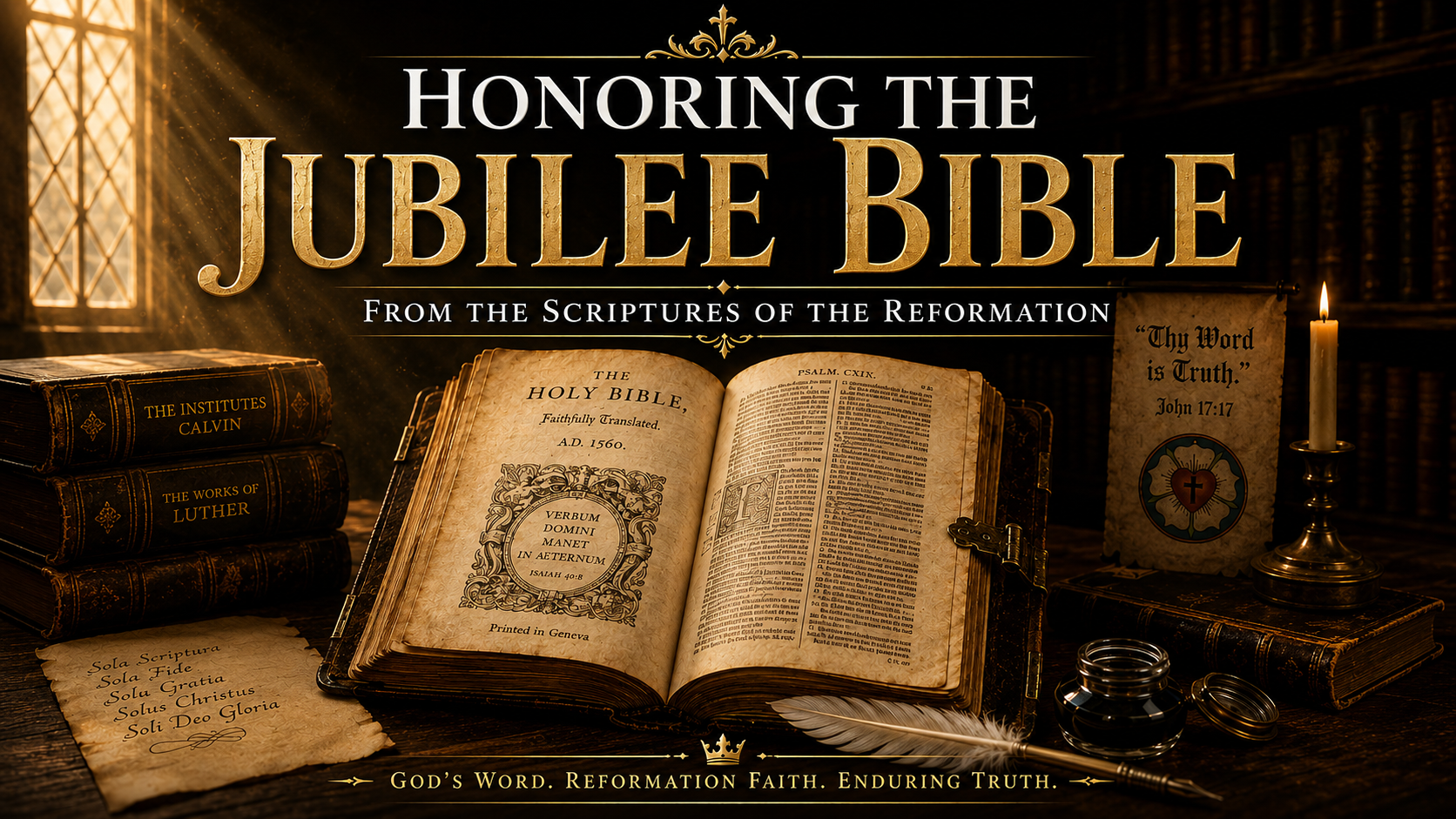
As a student of the Word, I have looked at a number of Bible translations over the years. I have read them, compared them, prayed through them, and weighed them against the greater witness of Scripture. I have also been blessed to meet three men connected to modern translation work: Brian Simmons of The Passion Translation, Francois du Toit of The Mirror Translation, and Russell Stendal of the Jubilee Bible.

I do not say this lightly, and I do not say it simply because I have met Russell Stendal on numerous occasions or shared good, healthy Kingdom conversations with him concerning the Word of God. I say it because, out of the three, I have found that Russell Stendal has held more faithfully to a place of honoring the integrity, weight, and origins of Scripture.

In my view, this matters deeply.

We are living in a time when many voices want to reshape Scripture around personal revelation, cultural pressure, emotional comfort, or modern ideological movements. But the Word of God was never given to be edited until the flesh could tolerate it. It was given to pierce, purify, correct, convict, restore, and transform.

I appreciated The Passion Translation in certain areas, especially where its language stirred devotion and affection toward the Lord. Yet over time, I could not treat it as a primary translation for doctrine, preaching, or serious biblical study because of how interpretive and expanded it often becomes.

I also came out in support of The Mirror Translation for a time, based in part upon the recommendation of a pastor I trusted. But not long into reading and studying it, I found that, in my view, it began to stray from biblical truth and leaned too heavily into the personal beliefs and convictions of the editor. This became especially concerning to me where the translation appeared to support modern cultural positions that I could not reconcile with the full counsel of Scripture.

The Jubilee Bible has been different for me.

Out of the three, the Jubilee Bible is the one I use daily. It is the one I have come to respect because of the way it seeks to hold true to the Word of God, and in some places, I have found it to carry a clarity and textual weight that feels even closer to the original intent than what we sometimes find in the King James Version.

That is not a statement made to diminish the KJV. The King James Version, first published in 1611, has carried tremendous influence in the English-speaking world. It stands as one of the great translation works of the Reformation-era English Bible stream and has shaped preaching, doctrine, worship, prayer, and Christian language for more than four centuries.

But the Jubilee Bible reaches into a stream that is often overlooked by English-speaking believers.

The Jubilee Bible is modern in its English publication, but its roots go back into the Reformation Bible movement of the 1500s. It is especially connected to Casiodoro de Reina’s 1569 Spanish Bible, known as the Bear Bible, and Cipriano de Valera’s 1602 revision. It also carries connection to earlier Reformation witnesses such as Francisco de Enzinas, Juan Pérez de Pineda, William Tyndale, and the Authorized Version tradition.

This means the Jubilee Bible is not merely another modern translation trying to appeal to the religious marketplace. It is an English work that seeks to recover and preserve something from the Scriptures of the Reformation.

That phrase matters: From the Scriptures of the Reformation.

The Reformation was not built upon men trying to make the Word of God more fashionable. It was built upon men who trembled before the authority of Scripture and were willing to suffer so the people could hear the Word in their own language. These were not editors trying to soften the sword. These were men trying to place the sword back into the hands of the people.

That is one of the reasons I honor the Jubilee Bible.

What I respect about Russell Stendal’s work is not merely a translation preference. It is the posture behind the work. There appears to be a deep concern for preserving the strength, consistency, and covenant weight of the biblical text. There is an effort to let Scripture define Scripture, rather than allowing modern trends to redefine biblical language.

In an age when many translations appear to soften words connected to repentance, holiness, judgment, obedience, covenant, fear of the Lord, and separation from sin, the Jubilee Bible often allows those words to stand with the authority they were meant to carry.

That is important.

The Word of God is not a self-help manual. It is not a motivational script. It is not a religious poem to make us feel better while leaving us unchanged. It is living. It is sharp. It is holy. It confronts before it comforts. It wounds in order to heal. It exposes in order to redeem.

No translation should ever replace prayer, humility, study, and a willingness to return to the Hebrew, Greek, and the greater witness of Scripture. No translation should be placed above the Word itself. But I do believe the Jubilee Bible deserves to be taken seriously by those who love Scripture, honor the Reformation stream, and refuse to see the Bible reduced to a softened devotional thought for the modern age.

For me, the Jubilee Bible has become a trusted daily companion in the Word.

I honor the labor behind it.

I honor its connection to the Reformation witness.

And I honor the desire to preserve the integrity of what God has spoken.

May the Lord continue to raise up scribes, teachers, translators, and watchmen who tremble at His Word, guard its truth, and refuse to trade holy conviction for comfortable religion.

We must become the altar where the fire falls again.

Stay tuned, the journey continues…..

A voice of fire to the Remnant,

— Dr. Russell Welch

Dr. Russell Welch is a published author, prophetic teacher, apostolic builder, and founder of faith-driven publishing and media initiatives. He is known for crafting bold, Kingdom-centered messages that call the Ecclesia into maturity, doctrinal clarity, and governmental authority. With a passion for equipping the Remnant and honoring generational legacy, Dr. Welch writes and teaches at the intersection of Scripture, history, and spiritual governance, challenging believers to live as sons and daughters who legislate Heaven on earth through truth, holiness, and unwavering fidelity to Christ.

Be sure to check out his book, “America at War: The Spiritual Battle for a Nation’s Soul” available exclusively on Amazon.

Amazon Author Page


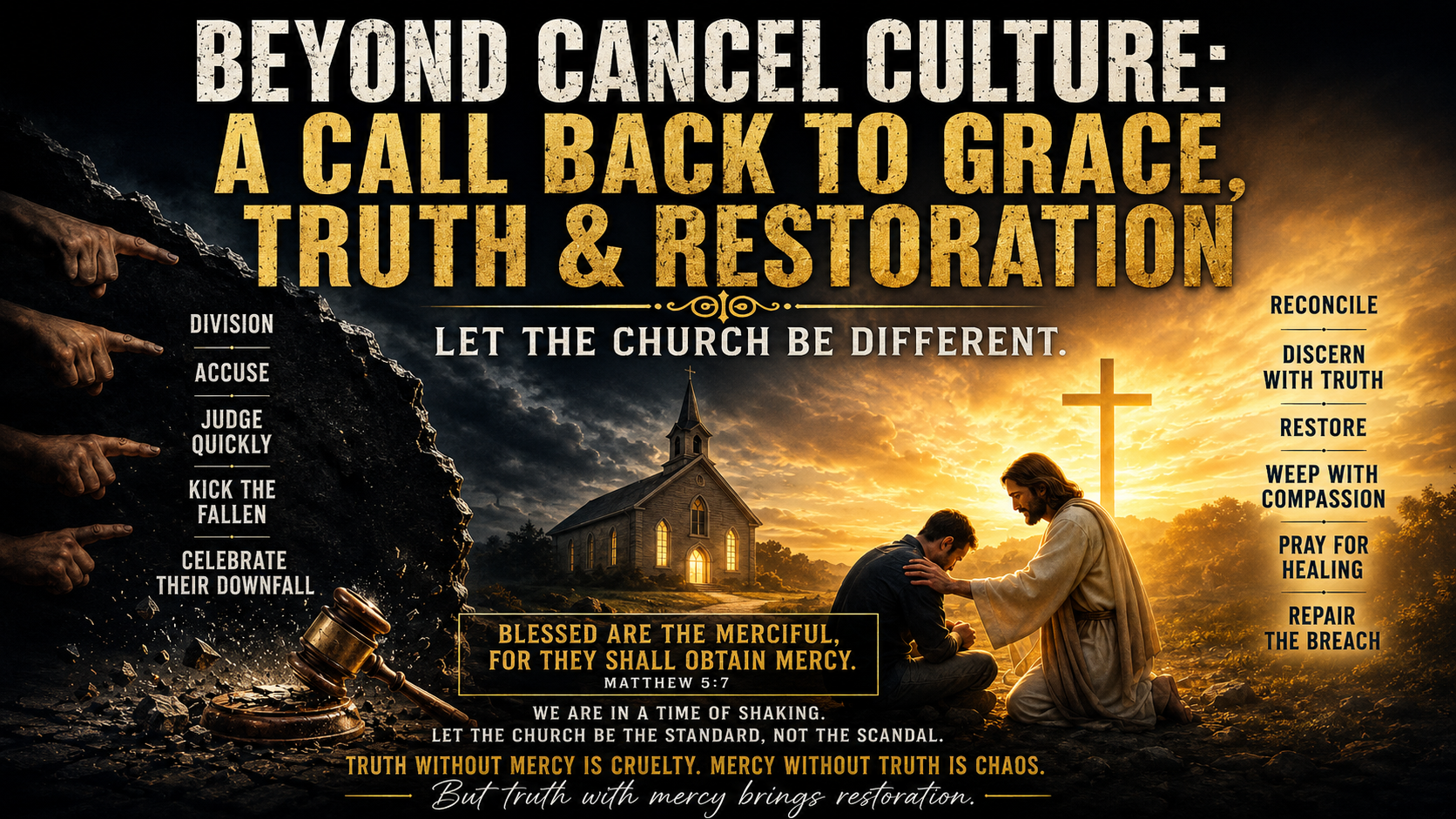
Maybe cancel culture won over the Church before it ever captured our society.

The enemy has used the same tricks for thousands of years, and you would think that a people who have access to Heaven’s security reports — discernment — would not only recognize his methods, but be ready to defend against them.

Two of his greatest weapons have always been division and accusation.

First, he turns one believer against another.

Then, he trains the saints to kick the wounded when they fall.

I can still remember when the feud between Jim Bakker and Jimmy Swaggart was unfolding back in the late 1980s. People literally stopped going to church over it. Many were wounded, confused, offended, and shaken. Yet behind much of it was the very thing the enemy loves to stir up among God’s people — jealousy, envy, pride, accusation, and a religious spirit dressed up as righteousness.

Today is no different.

When a well-known voice within the Church falls, there are always some who quickly assemble themselves into a religious jury pool. Before truth is fully known, before repentance has been measured, before wounds have been tended to, before families have even had time to breathe, some have already found them guilty, sentenced them publicly, and celebrated the collapse.

But wait a cotton-picking minute.

Did Paul not tell us that our first ministry is reconciliation?

Did Jesus not warn us that the measure we use will be measured back to us?

Did He not teach us to judge with the same mercy we desire to receive?

Sadly, when these moments happen, the enemy finds an open door to whisper to the world, “Look at the hypocrisy of those who claim to be righteous.” And too often, the Church helps him build the case.

Now, you may ask why I am saying this.

Because I was once one of those people.

There was a time when, if someone I did not like fell, I was quick to take my seat on the jury list. I knew how to sound spiritual while carrying an unhealed heart. I knew how to call it discernment when it was really offense. I knew how to call it righteousness when it was really pride.

Then Holy Spirit came after that thing in me.

He did not trim it.

He did not decorate it.

He pulled it out by the roots.

And I will be honest — at times, I went kicking and screaming.

But He replaced that ugly thing with a heart that mourns when someone falls. Not a heart that says, “Good, they had that coming.” Not a heart that looks for a way to capitalize on another person’s failure. Not a heart that secretly rejoices because someone I disagreed with has been exposed.

He gave me a heart that weeps and says, “Father, heal everyone involved. Restore what can be restored. Protect the innocent. Bring truth into the light. Let mercy triumph where repentance is real. Let the breach be repaired.”

I write this as one who has stood on both sides of this painful fence.

I have been the accuser, and I have also been the one accused.

I know what it is to have untruths formed in such a way that they appeared to be truth. I know what it is to have flaws magnified by the mouths of a false jury, made up not of strangers, but of fellow believers. I know what it is to watch people take fragments, assumptions, wounds, and whispers, then stitch them together into a narrative that sounds convincing to those who never asked for the whole story.

So yes, I know firsthand the bitterness that, for a moment, can taste sweet when you are the one doing the accusing.

And I also know the crushing cocktail of rejection, false accusation, betrayal, and spiritual pain when you are the one standing on the other side of the mob.

That is why I no longer desire a seat in the jury box when another believer falls.

I would rather be found at the altar, weeping for mercy, praying for truth, asking the Father to heal what is broken, expose what must be exposed, restore what can be restored, and keep my own heart clean before Him.

It is time for the Ecclesia to rise above the culture of this world.

We are not called to mirror the mob.

We are not called to copy the cruelty of Babylon.

We are not called to become spiritual spectators, watching another person bleed while we debate their worthiness from a distance.

We are called to walk in humility, integrity, mercy, truth, and the fear of the Lord.

We are called to be a people who carry the favor of Heaven in such a way that the world sees something different in us.

Today, people will ask me, “What do you think about so-and-so?”

My answer is simple:

“I don’t.”

I am too concerned with doing the work the Father has assigned to me.

I am too focused on shining light into darkness so captives can be set free.

I am too busy preaching the unadulterated Gospel that transforms lives, families, and generations.

We must understand the hour we are living in.

This is a time of shaking.

This is a time when judgment begins in the house of God.

And when another person falls, we had better not be found rejoicing over the wreckage. We had better be found praying for truth, repentance, healing, restoration, and the repair of the breach.

Because if we take our seat among the scornful, we should not be surprised when the shaking comes near our own house.

Let the Church be holy.

Let the Church be discerning.

Let the Church be truthful.

But Lord, deliver us from becoming accusers dressed in choir robes.

The world already has enough cancel culture.

The Kingdom must reveal something higher.

We must become the altar where the fire falls again.

Stay tuned, the journey continues…..

A voice of fire to the Remnant,

— Dr. Russell Welch

Dr. Russell Welch is a published author, prophetic teacher, apostolic builder, and founder of faith-driven publishing and media initiatives. He is known for crafting bold, Kingdom-centered messages that call the Ecclesia into maturity, doctrinal clarity, and governmental authority. With a passion for equipping the Remnant and honoring generational legacy, Dr. Welch writes and teaches at the intersection of Scripture, history, and spiritual governance, challenging believers to live as sons and daughters who legislate Heaven on earth through truth, holiness, and unwavering fidelity to Christ.

Be sure to check out his book, Spirit Wind People: Those Who are Moved by the Impulses of Holy Spirit, available exclusively on Amazon.
Amazon Author Page


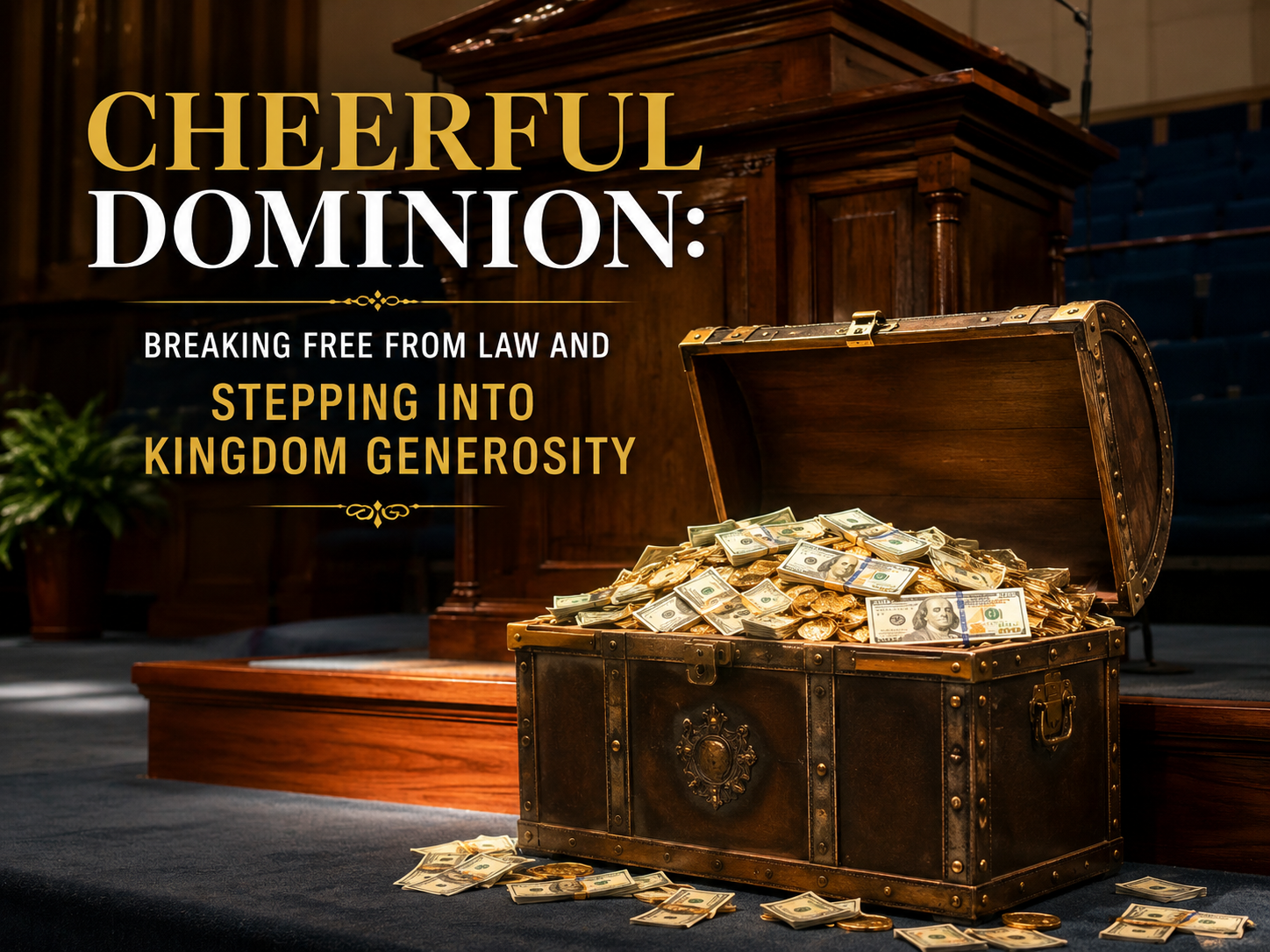
One of the teachings today’s Church has often kept locked inside an Old Testament framework is the tithe. Many have preached it as though the New Creation believer is still standing under Sinai, still trembling beneath the threat of a curse, still trying to buy Heaven’s favor through religious obligation.

But Jesus did not come to keep sons chained to fear.

He came to bring us into the Father’s house.

Jesus and the apostles brought giving into a higher revelation — not one rooted in lack, pressure, manipulation, or religious bondage, but one flowing from the heart of a cheerful giver who knows the goodness of the Father and lives under the leadership of Holy Spirit.

Under the Law, giving was measured by command.

Under grace, giving is governed by love.

Under the Law, men gave because they were required.

Under grace, sons and daughters give because their hearts have been captured by the generosity of Heaven.

The tithe may be seen as a basement-level teaching, but religion has turned that basement into a prison cell for many believers. Instead of leading people into the abundance of sonship, it has chained them to fear, lack, guilt, and condemnation. It has told them, “Give, or God will curse you,” when Christ has already redeemed us from the curse of the Law.

That is not Kingdom revelation.

That is spiritual manipulation dressed in Bible language.

The New Creation believer is not called to give because a preacher threatened them with Malachi. They are not called to sow because someone told them Heaven’s windows are locked until they pay their religious dues. They are not called to give out of anxiety, fear, or the terror of being punished by God.

They give because grace has awakened their heart.

They give because Holy Spirit is governing their life.

They give because they trust the Father who never runs dry.

They give because generosity is the nature of the Kingdom flowing through them.

Paul did not say, “Let each man give under pressure.”

He did not say, “Let each man give because he has been threatened.”

He did not say, “Let each man give because a preacher placed fear in his heart.”

He said, “Let each one give as he has purposed in his heart, not grudgingly or of necessity; for God loves a cheerful giver.”

That is the higher realm of Kingdom giving.

That is giving born from revelation, not compulsion.

That is generosity flowing from sonship, not slavery.

When a son or daughter gives from revelation, they step into a flow that religion can never manufacture. Heaven opens over cheerful generosity in ways religious obligation will never understand. They do not give to earn blessing. They give because they already know they are blessed. They do not sow to escape a curse. They sow because Christ has made them free. They do not release their seed from fear. They release it from joy.

This is where giving becomes worship.

This is where generosity becomes warfare.

This is where money loses its throne and Jesus takes His rightful place.

And let us be honest: some folks are not angry because people are not giving. They are angry because they can no longer control people through fear. But Holy Ghost is raising up sons and daughters who will not be manipulated by religious systems, yet will be more generous than those systems ever imagined — because grace always produces what law could never force.

The Law can demand a percentage.

Grace can capture the whole heart.

The Law can command the hand.

Grace transforms the man.

And here is the simple truth: you always tip well at the house that serves you well.

When the table is rich, when the Word is pure, when the presence of God is honored, when the Spirit of God is moving, when lives are being transformed, when families are being restored, when demons are being driven out, when sons and daughters are being equipped, generosity becomes a joy, not a burden.

You do not have to beg awakened sons to give.

You do not have to threaten Spirit-led daughters to sow.

When people are truly being fed, healed, delivered, equipped, and sent, generosity rises naturally from the heart.

That is not law.

That is not manipulation.

That is not religious fundraising.

That is grace in motion.

That is Kingdom generosity.

That is the cheerful dominion of a people who have broken free from fear and stepped into the overflowing nature of the Father.

We must become the altar where the fire falls again.

Stay tuned, the journey continues…..

A voice of fire to the Remnant,

— Dr. Russell Welch

Dr. Russell Welch is a published author, prophetic teacher, apostolic builder, and founder of faith-driven publishing and media initiatives. He is known for crafting bold, Kingdom-centered messages that call the Ecclesia into maturity, doctrinal clarity, and governmental authority. With a passion for equipping the Remnant and honoring generational legacy, Dr. Welch writes and teaches at the intersection of Scripture, history, and spiritual governance, challenging believers to live as sons and daughters who legislate Heaven on earth through truth, holiness, and unwavering fidelity to Christ.

Be sure to check out his book, Spirit Wind People: Those Who are Moved by the Impulses of Holy Spirit, available exclusively on Amazon.
Amazon Author Page


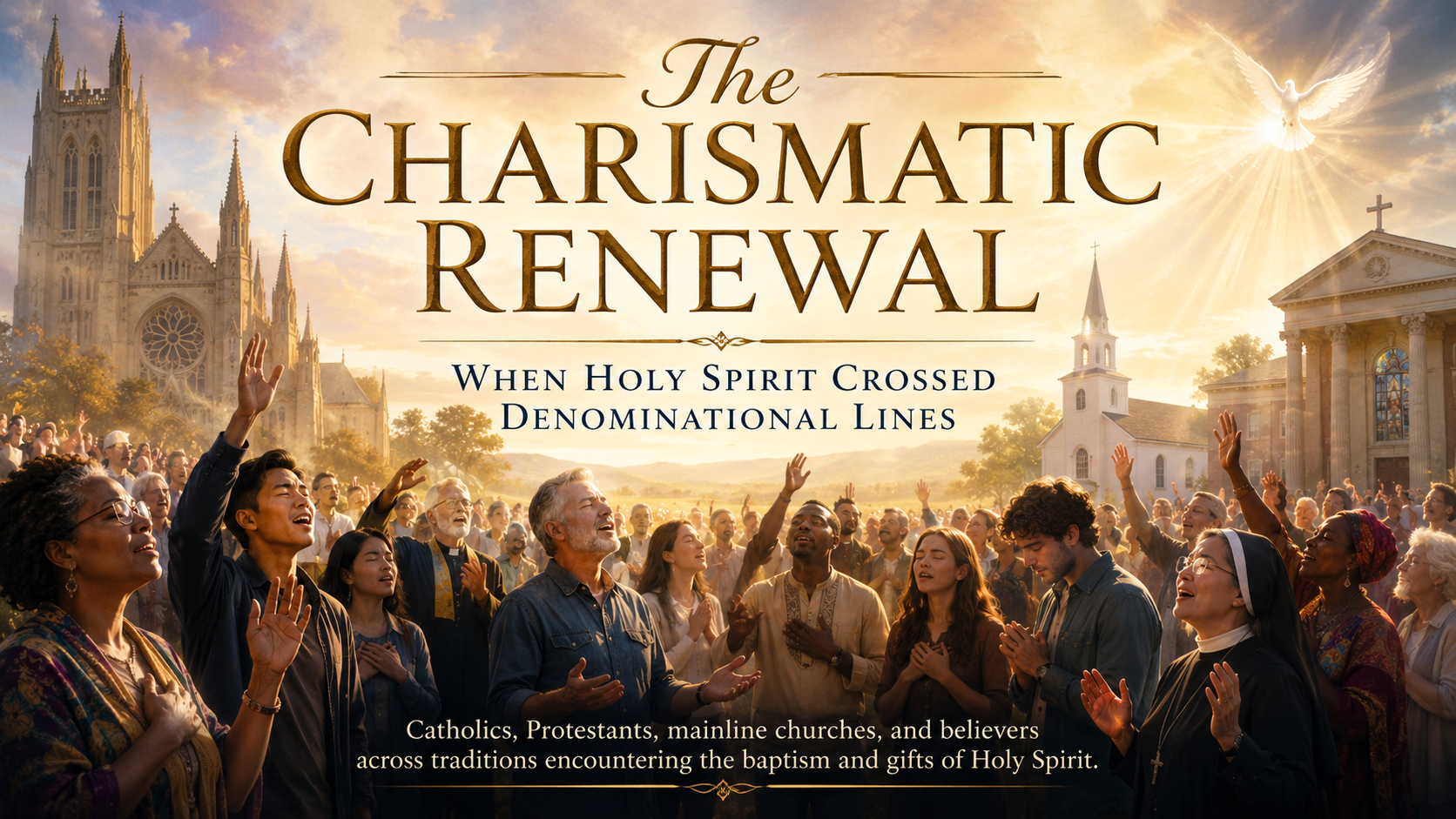
When Holy Spirit Crossed Denominational Lines

There are moments in Church history when Heaven seems to lean over the walls men have built and breathe again upon the Body of Christ. The Charismatic Renewal was one of those moments.

It was not birthed in one denomination. It was not confined to one stream. It was not owned by one theological camp, one worship style, one church tradition, or one ecclesiastical system. It was the wind of Holy Spirit moving where He desired, awakening Catholics, Protestants, Anglicans, Methodists, Presbyterians, Lutherans, Baptists, mainline believers, and countless others to the living reality of the baptism and gifts of Holy Spirit.

For many, Christianity had become respectable, organized, educated, and polished — but powerless. The language of faith remained, but the fire had grown cold. Churches still confessed the creed, sang the hymns, prayed the prayers, and preached the Scriptures, but deep within the hearts of many believers there was a cry for more. Not more religion. Not more programs. Not more committees. More of God.

And Holy Spirit answered.

He stepped across denominational lines and reminded the Church that He was never the property of one tradition. He was not bound to stained glass, pipe organs, revival tents, liturgies, seminaries, or Pentecostal storefronts. He was the Spirit of the living God, poured out upon sons and daughters, servants and handmaidens, old and young, rich and poor, clergy and laity.

This renewal became a divine interruption.

In places where the gifts of the Spirit had been explained away, people began praying in tongues. In churches where healing had been reduced to something God once did long ago, people began laying hands on the sick with fresh faith. In traditions where prophecy had been buried under suspicion, believers began to recover the reality that God still speaks. In communities where worship had become predictable, praise began to rise with tears, freedom, surrender, and holy hunger.

The Charismatic Renewal did not erase doctrinal differences. It did not make every tradition the same. It did something far more prophetic. It revealed that Holy Spirit could awaken hunger inside places many had already written off. He could set hearts on fire inside Catholic prayer groups, Episcopal churches, Methodist gatherings, Lutheran fellowships, Baptist homes, and Presbyterian Bible studies. He could visit people who did not yet have all their theology in perfect order, because revival has never waited for men to become impressive enough to deserve it.

This is one of the great lessons of the Charismatic Renewal: God is not nearly as nervous about crossing our lines as we are.

That does not mean truth no longer matters. It means Holy Spirit knows how to awaken people into truth. The fire of God does not come to flatter broken systems. It comes to awaken hungry hearts, expose dead religion, and call the people of God back to the living Christ.

For many believers in the 1960s and 1970s, this renewal felt like a second Pentecost in their personal lives. They had known about God, but now they were encountering Him. They had recited prayers, but now prayer became communion. They had heard sermons about Jesus, but now Jesus felt near, living, present, and personal. The Scriptures came alive. Worship became intimate. Evangelism became bold. Spiritual gifts became normal again.

And perhaps one of the most radical marks of this renewal was that ordinary believers began to realize they were not second-class citizens in the Kingdom.

The gifts of Holy Spirit were not reserved for famous evangelists, pulpit ministers, or denominational leaders. Mothers, fathers, college students, businessmen, priests, pastors, teenagers, and housewives began to discover that the same Spirit who moved in the book of Acts still moved through surrendered vessels.

The Church was being reminded that ministry was never meant to be locked behind a platform.

This was dangerous to religious systems because it awakened the priesthood of all believers. It reminded the people of God that every son and daughter carries a measure of Kingdom assignment. It restored holy expectation to the pews. People no longer came merely to observe church. They came ready to encounter God, hear His voice, receive His power, and carry His presence into the world.

This is what dead religion fears most: believers who wake up.

The Charismatic Renewal also carried an unmistakable witness to unity. Not the shallow unity that ignores truth. Not the compromised unity that says doctrine does not matter. But the kind of unity seen in Acts 10, when Holy Spirit fell upon Cornelius and his household, and Peter had to admit that God had given the same gift to people he had not expected to receive it.

That moment shook Peter’s categories.

The Charismatic Renewal shook the categories of many believers too.

Some Protestants had to wrestle with the fact that Catholics were encountering Holy Spirit in ways they could not deny. Some Catholics had to recognize that God had used Pentecostals and evangelicals to help open the door to renewed hunger for the Spirit. Mainline believers had to face the reality that the gifts of Holy Spirit were not dead relics of the past. Pentecostals had to recognize that Holy Spirit was moving beyond their own familiar camp.

Heaven was confronting pride on every side.

This is what revival does. It humbles the people who thought they owned the fire, and it awakens the people who thought the fire was no longer available.

Yet we must also be honest. Like every move of God, the Charismatic Renewal had its tensions, excesses, and immature expressions. Some chased gifts without developing character. Some pursued manifestations without surrendering to holiness. Some made emotional experience the center instead of Christ Himself. Some opened doors to confusion because they lacked grounding in Scripture and discipleship.

But we must never allow the abuses of a movement to make us despise the grace that was truly present in it.

The answer to wildfire is not to ban fire. The answer is to restore the altar.

The early Church did not separate the Word from the Spirit. They did not choose between doctrine and power. They did not believe holiness and spiritual gifts were enemies. They preached Christ crucified and risen, called men to repentance, healed the sick, cast out demons, prophesied, prayed in tongues, worshiped with fire, and lived under the government of Holy Spirit.

The Charismatic Renewal was, at its best, a divine reminder that the Church was never supposed to become a museum for memories of what God used to do. She was called to be a living temple, filled with the glory and power of the risen Christ.

This is why the renewal still matters.

We are living in another hour where many churches have form but little fire. Many have branding but little burden. Many have platforms but little presence. Many have teaching but little trembling. Many have religious activity but little evidence that the Spirit of God is resting in power upon the people.

The Charismatic Renewal asks us a dangerous question:

Have we made peace with a Christianity that can function without Holy Spirit?

Because if we can hold services, build organizations, preach sermons, sing songs, and manage ministries without desperate dependence upon the Spirit of God, then we have not built an upper room. We have built a machine.

And machines do not birth revival.

Only surrendered people do.

The Remnant in this hour must recover what the Charismatic Renewal helped restore: a living hunger for the fullness of Holy Spirit. Not hype. Not disorder. Not spiritual entertainment. Not gifts divorced from holiness. Not emotionalism without obedience. But the holy fire of God resting upon sons and daughters who know Jesus, love the Word, walk in purity, move in power, and refuse to reduce Christianity to intellectual agreement.

We need the baptism of Holy Spirit again.

We need prayer rooms where the presence of God becomes weighty.

We need churches where the gifts of the Spirit are welcomed with wisdom, tested by Scripture, and released through love.

We need believers who do not merely talk about the book of Acts, but become living witnesses that the same Spirit still fills, still speaks, still heals, still delivers, still empowers, and still sends.

The Charismatic Renewal was not the finish line. It was a signpost.

It pointed back to Pentecost and forward to a Church that must be both grounded and burning. It reminded us that the Father pours out His Spirit not so we can build movements around experiences, but so we can bear witness to the risen Son.

Holy Spirit did not cross denominational lines to create a new religious brand.

He crossed them to awaken the Body.

He crossed them to confront dead religion.

He crossed them to release hunger.

He crossed them to restore power.

He crossed them to remind the Church that Jesus did not leave His people as orphans.

And now, in our generation, the question remains.

Will we protect our systems, or will we prepare the altar?

Will we defend powerless religion, or will we cry out for fresh fire?

Will we settle for being historically correct about past revivals, or will we become living vessels of Holy Spirit in the present hour?

The Charismatic Renewal still speaks.

It tells us that Holy Spirit is not finished crossing lines, shaking rooms, filling vessels, awakening sons and daughters, and calling the Church back to the fire of Pentecost.

The Remnant must not merely study the renewal.

We must become the altar where the fire falls again.

Stay tuned, the journey continues…..

A voice of fire to the Remnant,

— Dr. Russell Welch

Dr. Russell Welch is a published author, prophetic teacher, apostolic builder, and founder of faith-driven publishing and media initiatives. He is known for crafting bold, Kingdom-centered messages that call the Ecclesia into maturity, doctrinal clarity, and governmental authority. With a passion for equipping the Remnant and honoring generational legacy, Dr. Welch writes and teaches at the intersection of Scripture, history, and spiritual governance, challenging believers to live as sons and daughters who legislate Heaven on earth through truth, holiness, and unwavering fidelity to Christ.

Be sure to check out his book, Spirit Wind People: Those Who are Moved by the Impulses of Holy Spirit, available exclusively on Amazon.
Amazon Author Page


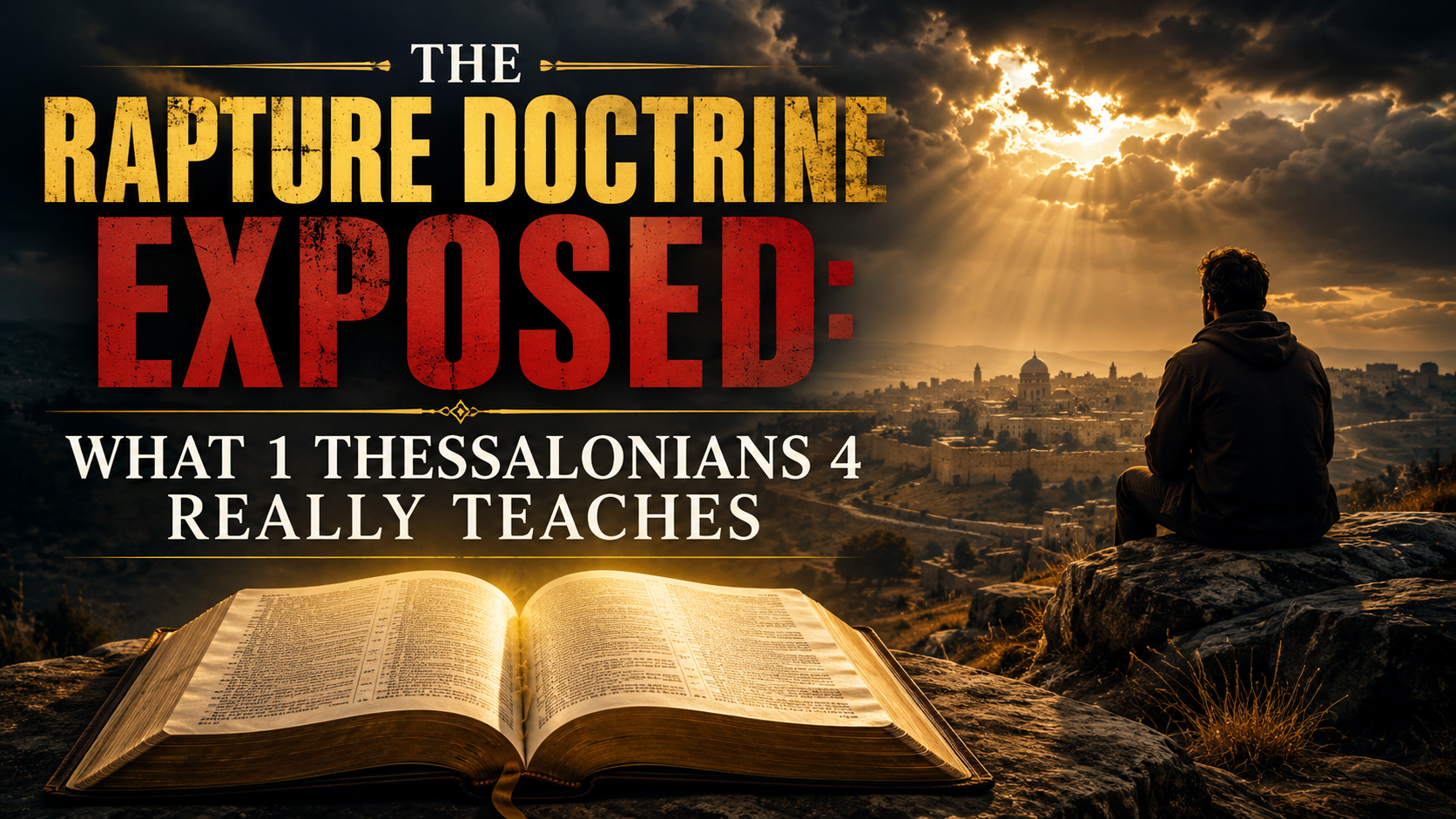
If you have ever sat through a sermon series on the end times, chances are you are incredibly familiar with 1 Thessalonians 4:14–18. It is the undisputed anchor text for the modern Rapture doctrine.

When read through a modern lens, it seems to paint a very specific picture: a sudden, quiet disappearance where millions vanish in the blink of an eye, escaping the trials of the world.

But if we pull back the layers of history, culture, and context, a very different picture emerges. Paul wasn’t writing a speculative timeline for a secret escape hatch; he was writing a letter of raw, pastoral comfort to a community deeply shaking with grief.


Grief, Not Geography: The Context of the Letter

To understand what Paul is saying, we have to look at why he is saying it. The young church in Thessalonica was panicking. They expected Jesus to return quickly, but in the meantime, some of their loved ones had died.

The Thessalonians were asking: Did our dead friends miss out on the kingdom? Will they be left behind when Jesus comes back?

Paul writes to answer this exact pastoral crisis:

“Brothers and sisters, we do not want you to be uninformed about those who sleep in death, so that you do not grieve like the rest of mankind, who have no hope.” (1 Thessalonians 4:13)

Notice the problem isn’t “how do we escape the earth?” The problem is “what happens to the believers who have already died?” Paul’s solution isn’t a secret relocation project; it is the resurrection of the dead.


The Loudest “Secret” in History

When we dive into verses 16 and 17, the language Paul uses is anything but secretive or quiet. Look at the specific cosmic announcements listed in the text:

  • A cry of command (or a shout)
  • The voice of an archangel
  • The trumpet call of God

Shouts, archangels, and trumpets are the biblical hallmarks of a public, monumental, and unmistakable event. Historically, a trumpet blast heralded the arrival of a king or assembled an army. This is the language of a public, triumphant entry—not a stealth operation.

Paul is reassuring the grieving Thessalonians that when Jesus returns, it will be so undeniably massive that even the dead will hear it. In fact, they will rise first.


The Cultural Clue: Meeting the King in the Air

The verse that often seals the “escape doctrine” interpretation for modern readers is verse 17: “Then we who are alive, who are left, will be caught up together with them in the clouds to meet the Lord in the air.”

To a modern reader, “meeting in the air” sounds like an exit strategy—we go up, and we keep going up to heaven. But to a first-century Roman citizen living in Thessalonica, the Greek word for “meeting” (apantesis) carried a specific political and cultural meaning.

In the ancient Greco-Roman world, when a king, emperor, or military general came to visit a city, it was called a parousia (the exact word Paul uses for the “coming” of the Lord). The citizens wouldn’t sit around inside the city walls waiting. Instead, the leading dignitaries and citizens would rush out outside the city gates to meet (apantesis) the approaching ruler on the road.

They didn’t meet the king outside the city to run away with him back to his capital. They met him outside to honor him, turn around, and escort him back into their city in a grand, triumphal procession.

Decoding the Imagery

When Paul uses this specific political imagery, his readers knew exactly what it meant.

Paul’s MetaphorFirst-Century Cultural Reality
The Coming (Parousia)The arrival of the ultimate King (Jesus) to Earth
Caught up in the airRushing out of the “city gates” (the earthly realm) to greet Him
Meeting (Apantesis) the LordJoining the royal welcoming party on the road
Evermore with the LordEscorting King Jesus back down to rule over a renewed creation

Paul is saying that the living and resurrected saints will form the ultimate welcoming committee. We aren’t being evacuated; we are greeting the arriving King to escort Him home to His kingdom on Earth.


Hope, Not an Escape Hatch

When we strip away modern presuppositions, 1 Thessalonians 4 ceases to be a timeline about a secret, two-stage return of Christ. Instead, it becomes what Paul intended it to be: a soaring declaration of hope.

The dead have not missed out. Death does not have the final word. When Jesus returns to set the world right, the dead and the living will be united to greet Him together.

Paul concludes the passage not by saying “therefore, look forward to escaping,” but rather:

“Therefore encourage one another with these words.” (1 Thessalonians 4:18)

The encouragement isn’t that we get to leave the building; the encouragement is that the King is finally coming back to the building, and even death can’t keep us from the welcoming party.

Stay tuned, the journey continues…..

A voice of fire to the Remnant,

— Dr. Russell Welch

Dr. Russell Welch is a published author, prophetic teacher, apostolic builder, and founder of faith-driven publishing and media initiatives. He is known for crafting bold, Kingdom-centered messages that call the Ecclesia into maturity, doctrinal clarity, and governmental authority. With a passion for equipping the Remnant and honoring generational legacy, Dr. Welch writes and teaches at the intersection of Scripture, history, and spiritual governance, challenging believers to live as sons and daughters who legislate Heaven on earth through truth, holiness, and unwavering fidelity to Christ.

Be sure to check out his book,The Vanishing Gospel: Exposing False End‑Time Doctrine and Restoring the Kingdom Gospel, available exclusively on Amazon.

Amazon Author Page


The old warriors carried swords into battle, but the Ecclesia Remnant carries the indwelling fire of Holy Spirit into a war no darkness can win.

The Knights Templar rose in an hour when Christianity and the advancing forces of Islam were locked in a very real conflict over land, pilgrimage routes, holy sites, and the future of nations. Their war was not merely political; it was wrapped in the language of faith, kingdom, sacrifice, and allegiance. They took vows, carried swords, wore the cross upon their garments, and stood as warrior-monks under the authority of religious institutions.

But today, Heaven is raising up another kind of warrior.

The Ecclesia Remnant Warriors of this hour are not called to wage war flesh against flesh. We are not called to lift the sword against men, women, nations, or people groups. Our battle is higher, deeper, and far more dangerous to the kingdom of darkness. For we do not wrestle against flesh and blood, but against principalities, powers, rulers of darkness, and spiritual wickedness in high places.

The Templars carried steel.
The Remnant carries fire.

The Templars fought for territories.
The Remnant wars for souls, bloodlines, cities, nations, and the restoration of Heaven’s order in the earth.

The Templars swore allegiance beneath the covering of religious institutions.
The Ecclesia Remnant has sworn allegiance to the King of kings and Lord of lords.

This is the great distinction. We are not bound by the fear of man, the approval of systems, or the permission of religious machinery. We stand beneath the government of Christ Himself. Our weapons are not carnal, but mighty through God for the pulling down of strongholds. We overcome by the Blood of the Lamb, the word of His testimony working in us, the Word of God, prayer, fasting, obedience, holiness, and the power of Holy Spirit.

And here is what separates the warriors of this hour from even the mighty warriors of the Old Testament.

David had the anointing come upon him.
Samson had the Spirit move upon him.
Gideon was clothed with divine courage.
Elijah stood under prophetic fire.

But the born-again sons and daughters of the Kingdom carry something greater than visitation. We carry habitation.

Holy Spirit does not merely come upon us for a moment and then lift. He indwells us twenty-four hours a day, seven days a week. The same Spirit who raised Christ from the dead now lives inside the surrendered believer. That means the Ecclesia Remnant does not fight from desperation, but from inheritance. We do not war for victory; we war from victory. We do not fight as orphans trying to prove ourselves; we stand as sons and daughters who have been seated in Christ.

The war today is not against people. It is against every spirit, doctrine, ideology, deception, and stronghold that exalts itself against the knowledge of God. We do not hate the lost; we contend for their deliverance. We do not curse people; we confront the darkness that has blinded them. We do not advance with swords of iron; we advance with the Sword of the Spirit, which is the Word of God.

This is not the hour for passive Christianity.

This is the hour for the Ecclesia Remnant to rise, take their place, legislate in prayer what Heaven has decreed, and stand in holy allegiance to Christ alone.

The old warriors carried shields into battle.

The warriors of this hour carry the indwelling fire of Holy Spirit.

And that fire cannot be stopped.

Stay tuned, the journey continues…..

A voice of fire to the Remnant,

— Dr. Russell Welch

Dr. Russell Welch is a published author, prophetic teacher, apostolic builder, and founder of faith-driven publishing and media initiatives. He is known for crafting bold, Kingdom-centered messages that call the Ecclesia into maturity, doctrinal clarity, and governmental authority. With a passion for equipping the Remnant and honoring generational legacy, Dr. Welch writes and teaches at the intersection of Scripture, history, and spiritual governance, challenging believers to live as sons and daughters who legislate Heaven on earth through truth, holiness, and unwavering fidelity to Christ.

Be sure to check out his book, Spirit Wind People: Those Who are Moved by the Impulses of Holy Spirit, available exclusively on Amazon.
Amazon Author Page


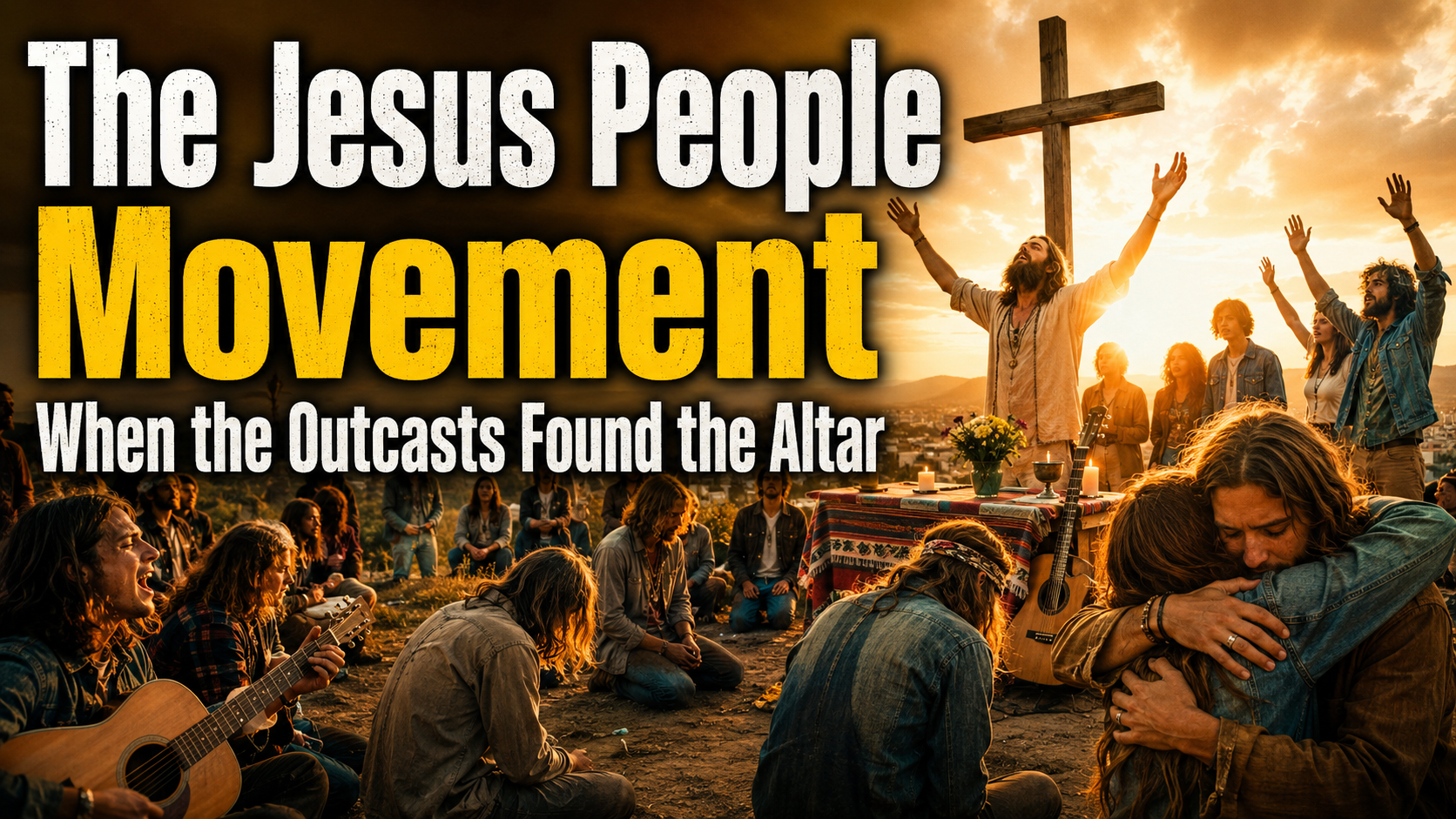
When the Outcasts Found the Altar

There are seasons in history when God refuses to move where religion expects Him to move. He steps outside the polished walls, beyond the managed platforms, past the respectable circles of religious comfort, and He begins breathing upon those the church has often misunderstood, ignored, rejected, or feared. The Jesus People Movement was one of those moments.

It did not begin in stained-glass respectability. It did not arrive dressed in the clothing of religious approval. It came in the middle of cultural shaking, generational confusion, rebellion, war protests, drug culture, broken families, spiritual hunger, and young people searching desperately for something real. America was trembling. A generation was asking questions the system could not answer. Many were running from the emptiness of materialism, the hypocrisy of dead religion, and the pain of homes that looked whole on the outside but were fractured within.

And into that chaos, Jesus stepped.

Not the religious caricature of Jesus. Not the domesticated Jesus of powerless tradition. Not the distant Jesus locked behind pulpits and programs. The living Christ walked into the highways and beaches, coffeehouses and street corners, communes and college campuses, and He began calling sons and daughters home. The outcasts found the altar, and the altar found them.

This is the scandal of revival. God often begins where the religious elite would never think to look.

The Jesus People Movement became a holy disruption. Hippies, seekers, musicians, addicts, runaways, intellectuals, broken youth, and spiritual wanderers began encountering the living Christ. Many had chased peace through drugs, freedom through rebellion, enlightenment through Eastern mysticism, and identity through counterculture. Yet when they met Jesus, they found what every false altar had failed to give them. They found forgiveness. They found deliverance. They found family. They found purpose. They found the burning reality of the Kingdom.

The world had called them lost. Religion had called them dangerous. Heaven called them beloved.

That is the heart of revival.

Jesus has always been drawn to those who know they are sick enough to need a Physician. In Matthew 9:12–13, Jesus said, “They that be whole need not a physician, but they that are sick.” Then He declared, “I will have mercy, and not sacrifice: for I am not come to call the righteous, but sinners to repentance.” That word shattered the religious arrogance of His day, and it still shatters ours.

The Jesus People Movement reminds us that revival is not born when the church becomes impressed with herself. Revival is born when the desperate cry out, the broken come near, the proud are humbled, and the altar becomes wet with repentance again. It is born when Jesus becomes more than a sermon topic. He becomes the obsession of a generation.

These young people were not looking for a better religious product. They were not asking for polished church branding, celebrity preachers, or spiritual entertainment. They were hungry for reality. They wanted the Jesus of the Gospels. They wanted the Christ who touched lepers, cast out devils, forgave prostitutes, confronted Pharisees, healed the sick, raised the dead, and announced a Kingdom that could not be shaken.

And when they found Him, they could not keep quiet.

Street evangelism became one of the sounds of the movement. Young converts took the Gospel into public spaces with boldness that embarrassed comfortable religion. They spoke of Jesus in parks, on sidewalks, on beaches, in coffeehouses, and in homes. They did not wait until they had a degree, a title, a platform, or a denominational endorsement. They had encountered Christ, and the fire of first love became their credential.

That does not mean everything was mature. It does not mean everything was balanced. It does not mean every stream that touched the movement remained pure. Every revival must be tested, shepherded, discipled, and brought under the lordship of Christ. Fire without formation can burn wildly. Zeal without truth can become unstable. Freedom without holiness can drift into deception. But we must never allow the imperfections of a move to blind us to the mercy of God within it.

The lesson is not that disorder should be celebrated. The lesson is that God is not afraid of messy beginnings.

The early church was messy. Corinth was messy. Peter was messy. The disciples were messy. The book of Acts was filled with glory, power, persecution, correction, conflict, miracles, deliverance, and apostolic order emerging in real time. God has never required polished people before He begins moving. He requires surrendered people.

The Jesus People Movement carried a sound of raw surrender. It helped renew worship in ways that still echo today. Songs became simpler, more intimate, more direct, and more accessible. Worship moved from performance into participation. Guitars, choruses, and heartfelt songs of devotion began rising from people who had once sung the anthems of rebellion but were now singing to the King.

The altar had taken their sound captive.

This is one of the great marks of true revival: the sound changes. When God moves upon a people, their language changes, their songs change, their desires change, their gatherings change, and their witness changes. What once glorified the flesh begins to glorify Christ. What once carried confusion begins to carry consecration. What once served rebellion becomes a weapon of worship.

That is redemption.

The enemy loves to convince people that their past disqualifies them. But the Gospel declares something far greater: whatever has been surrendered to Christ can become testimony. The very generation that had been labeled unreachable became a generation of witnesses. Those once enslaved by drugs began preaching freedom. Those once wandering through spiritual darkness began proclaiming the Light of the world. Those once looking for belonging in broken communities began forming households of faith.

The Father knows how to turn prodigals into preachers.

Luke 15 gives us the picture. The younger son wasted his inheritance, lost his dignity, and ended up in the pigpen. But when he came to himself and returned home, the father did not meet him with a lecture first. He met him with compassion. He ran. He embraced. He restored. The robe, the ring, the sandals, and the feast all testified that the son was not returning as a slave but as family.

That was the prophetic picture behind much of the Jesus People Movement. The Father was running toward a generation covered in the smell of the far country.

Religion often stands like the older brother, offended that mercy is being given to people who did not earn it. But revival never begins with what men think people deserve. Revival begins with the mercy of God breaking into places of despair and calling dead things back to life.

The outcasts found the altar because the Father had not forgotten their names.

This should shake the church in our hour. We are again living in a generation filled with confusion, addiction, anxiety, rebellion, spiritual hunger, identity crisis, broken homes, occult fascination, ideological deception, and deep distrust of institutions. Many young people are not rejecting the true Christ; they are rejecting the powerless version of Christianity they were shown. They are not always running from Jesus. Many are running from hypocrisy, dead religion, spiritual abuse, and a church culture that talked about power while living without presence.

The answer is not to entertain them into the Kingdom. The answer is not to dilute the Gospel until it becomes palatable to the flesh. The answer is not to replace holiness with relevance. The answer is to lift up the real Jesus again.

The Jesus People Movement reminds us that a generation can be swept into radical discipleship when Christ is preached with conviction, love, power, and authenticity. Not a Christ made in the image of culture. Not a Christ stripped of His demands. Not a Christ who saves without transforming. The real Jesus forgives sinners, but He also says, “Go, and sin no more.” He welcomes the broken, but He also calls them to take up the cross. He eats with outcasts, but He does not leave them bound.

True revival never excuses bondage. It breaks it.

This is where the church must recover both compassion and conviction. Compassion without conviction becomes sentimental weakness. Conviction without compassion becomes religious cruelty. Jesus carried both perfectly. He could weep over Jerusalem and still cleanse the temple. He could touch the leper and rebuke the Pharisee. He could forgive the woman caught in adultery and command her to leave her life of sin. He could welcome fishermen, tax collectors, zealots, and broken women into His company, then form them into witnesses of the Kingdom.

The Jesus People Movement carried this beautiful offense: Jesus was not ashamed to be found among the rejected.

That truth must burn in us again.

Some of the greatest harvest fields in our time are not sitting comfortably in pews. They are in recovery homes, college campuses, street corners, broken families, music scenes, prisons, homeless camps, online communities, and among young people who have been told by culture that they can invent themselves while their souls are collapsing under the weight of confusion. They do not need a religious system that simply condemns them from a distance. They need an Ecclesia filled with Holy Spirit, truth, mercy, deliverance, and fire.

They need fathers and mothers in the faith who will not compromise the Gospel, but also will not despise the broken when they come home smelling like the far country.

The altar must be ready.

The Jesus People Movement also confronts our obsession with appearances. Many churches of that era struggled to know what to do with long-haired, barefoot, unconventional converts. They did not look like church people. They did not speak the language of church culture. They brought questions, wounds, habits, and sounds that made religious people uncomfortable. Yet many of them were genuinely being saved, baptized, delivered, and discipled.

God was making sons and daughters out of those who did not fit the mold.

This is apostolic Christianity. The Kingdom does not advance by protecting religious comfort zones. It advances when Christ takes territory in human hearts, and then those transformed lives become living witnesses in the earth. The early church did not grow because it looked respectable to Rome. It grew because the dead were raised, demons were cast out, the poor were cared for, the Word of God spread, and believers loved not their lives unto death.

Radical discipleship is not a brand. It is the normal Christian life.

The tragedy of many revival movements is that the church celebrates the fire after history has made it safe, while resisting the same kind of fire when it appears in their own generation. We praise past revivals while rejecting the very kind of people those revivals reached. We speak fondly of transformed outcasts from decades ago while remaining suspicious of the outcasts standing in front of us today.

May God deliver us from romanticizing yesterday’s fire while refusing today’s harvest.

The Jesus People Movement should not merely make us nostalgic. It should provoke us. It should ask us hard questions. Where are the broken youth finding altars today? Where are the seekers encountering the real Jesus? Where are the saints carrying the Gospel outside the walls? Where are the worship sounds rising from redeemed lives instead of manufactured platforms? Where are the spiritual fathers and mothers willing to disciple messy converts into mature sons and daughters?

A movement becomes dangerous when converts are made but disciples are not formed. Jesus did not command us to gather crowds; He commanded us to make disciples. The fruit of revival must become formation, holiness, community, mission, and obedience. Fire must become faithfulness. Encounter must become endurance. Testimony must become transformation. Passion must become purity.

This is where the Jesus People Movement gives both inspiration and warning. It shows us what can happen when Jesus captures a generation, but it also reminds us that every move of God must be stewarded with truth, humility, accountability, and apostolic foundations. Revival is not a substitute for discipleship. Revival is the doorway into it.

The altar is not the finish line. It is the place of death and resurrection.

When the outcasts found the altar, they found more than emotional relief. They found a cross. They found a King. They found a Kingdom. They found a new life that demanded everything. The true Jesus does not simply add peace to our rebellion. He crucifies the old man and raises us into newness of life.

That is what our generation needs again.

We do not need a revival of religious excitement without repentance. We do not need gatherings that stir emotions but leave chains intact. We do not need another wave of spiritual language without holiness, deliverance, and obedience. We need a Jesus movement that is truly centered on Jesus: crucified, risen, reigning, and returning in glory.

We need the kind of move that finds the addict and makes him free. The kind that finds the runaway and brings her home. The kind that finds the seeker and fills him with truth. The kind that finds the worshiper buried beneath shame and releases a new song. The kind that finds the rebel and turns him into a witness. The kind that finds the broken youth and forms them into burning disciples.

The church must stop fearing the harvest because it does not arrive dressed for Sunday morning.

When Heaven moves, the nets often fill with fish that have not yet been cleaned. That is not a problem for the Kingdom. That is the work of discipleship. Fishermen catch the fish; the Lord cleanses, transforms, and prepares them for purpose. Too often, the church wants cleaned fish before it will cast the net. But Jesus said, “Follow me, and I will make you fishers of men.”

The Jesus People Movement was a net-casting moment.

It was a reminder that the Gospel still works in the streets. It was a reminder that worship can rise from the ashes of rebellion. It was a reminder that Christ can invade youth culture without surrendering His holiness to it. It was a reminder that the Spirit of God is not intimidated by chaos. He hovered over the waters in Genesis, and He still hovers over the deep places of human brokenness, ready to speak light into darkness.

Let there be light.

That is the cry for our hour.

Let there be light in the streets again. Let there be light in the schools again. Let there be light in the homes again. Let there be light in the churches again. Let there be light in the hearts of sons and daughters who have wandered into the far country. Let the altar be restored, not as a religious decoration, but as a place of surrender, repentance, fire, healing, and commissioning.

May the outcasts find the altar again.

May the church have enough love to receive them, enough truth to disciple them, enough holiness to confront what binds them, and enough fire to send them back into the world as witnesses of the risen King.

The Jesus People Movement was never meant to be a museum piece. It is a prophetic reminder. God can move among the unlikely. God can save the unreachable. God can turn seekers into saints. God can transform the sound of a generation. God can take what culture discarded and make it a vessel of glory.

The question is not whether God can do it again.

The question is whether the church is ready to carry the fire with clean hands, open arms, and uncompromising truth.

The altar is calling.

And somewhere, in the middle of the noise, the confusion, the rebellion, and the hunger of this generation, the Father is already watching the road for prodigals.

May they find the altar burning when they come home.

Stay tuned, the journey continues…..

A voice of fire to the Remnant,

— Dr. Russell Welch

Dr. Russell Welch is a published author, prophetic teacher, apostolic builder, and founder of faith-driven publishing and media initiatives. He is known for crafting bold, Kingdom-centered messages that call the Ecclesia into maturity, doctrinal clarity, and governmental authority. With a passion for equipping the Remnant and honoring generational legacy, Dr. Welch writes and teaches at the intersection of Scripture, history, and spiritual governance, challenging believers to live as sons and daughters who legislate Heaven on earth through truth, holiness, and unwavering fidelity to Christ.

Be sure to check out his book, Spirit Wind People: Those Who are Moved by the Impulses of Holy Spirit, available exclusively on Amazon.
Amazon Author Page


The Language of Resurrection, Royal Arrival, and Public Appearing

The faithful do not need to fear careful study. Truth does not tremble when the Greek text is opened. Truth does not panic when the words of Scripture are examined in their covenant setting, historical setting, and apostolic context. If a doctrine is truly built upon the Word of God, then the original language will strengthen it, not weaken it. But if a doctrine has been built by removing words from context, forcing phrases into a modern prophetic system, and then asking the text to serve a chart instead of the King, then the light of Scripture will expose the weakness of that system.

This is where we must begin with humility and courage. The issue is not whether sincere people have believed the Rapture doctrine. Many have. The issue is not whether good men and women have preached it. Many have. The issue is whether the doctrine itself can survive the careful examination of the language used by the Holy Spirit through the apostles. We are not called to protect a tradition because it is familiar. We are called to test all things, hold fast that which is good, and allow Scripture to correct our assumptions.

The Greek text must be allowed to speak for itself. When it does, the language of the New Testament points us toward resurrection, royal arrival, public appearing, covenant gathering, and final victory. It does not naturally point us toward a secret evacuation of the Church before the visible triumph of Christ. The hope of the saints is not escape from the battlefield while darkness increases. The hope of the saints is the appearing of the King, the resurrection of the dead, the transformation of the living, and the fullness of His Kingdom being revealed in victory.

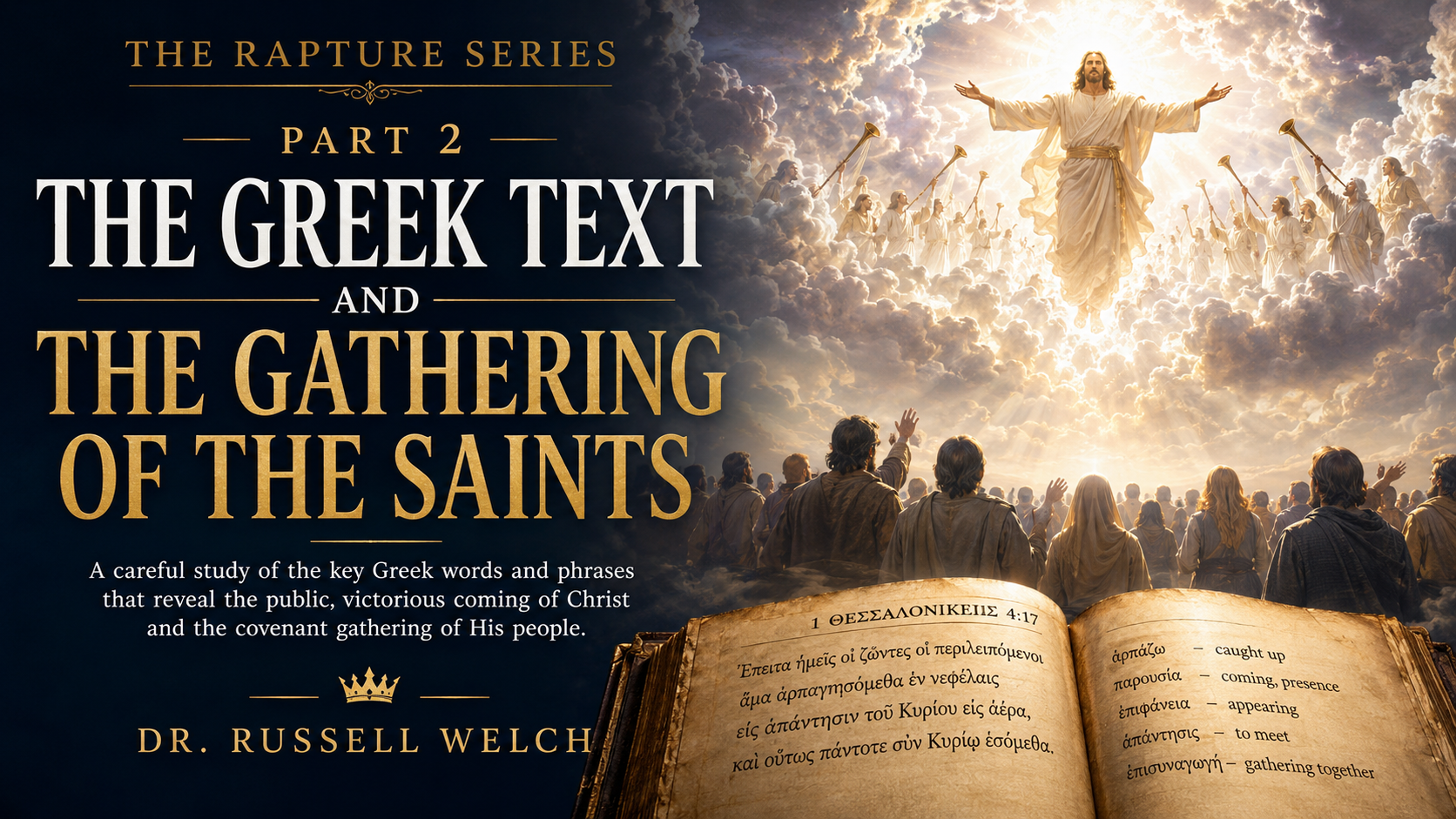
The first word that must be examined is the word often placed at the center of the Rapture doctrine: ἁρπάζω, harpazō. In 1 Thessalonians 4:17, Paul says that those who are alive and remain shall be “caught up” together with the resurrected saints in the clouds to meet the Lord in the air. The phrase “caught up” is real. We must not deny it, weaken it, or explain it away. The Greek word carries the idea of being seized, snatched, taken, or carried by force. It is a strong word. It speaks of divine action, not human effort.

However, the presence of the word “caught up” does not automatically create a secret Rapture doctrine. This is where many have made a serious interpretive mistake. They have taken one word, isolated it from the passage, and then built an entire end-time system around it. Paul is not writing in 1 Thessalonians 4 to reveal a secret evacuation. He is comforting grieving believers concerning those who have died in Christ. The entire passage is framed by resurrection hope. Paul says the dead in Christ shall rise first. Then those who are alive and remain will be caught up together with them. The emphasis is not disappearance. The emphasis is resurrection reunion.

This matters deeply. Paul is answering the fear that deceased believers would somehow miss the coming glory of Christ. His answer is not, “Do not worry, the Church will escape seven years before trouble begins.” His answer is, “The dead in Christ will rise first.” That places the passage in the resurrection category, not the evacuation category. The faithful are not being told to expect a hidden removal from the earth. They are being told that when the Lord comes, the dead will be raised, the living faithful will be gathered with them, and all will be with the Lord.

The details in 1 Thessalonians 4 are anything but secret. Paul speaks of the Lord Himself descending from heaven with a shout, with the voice of the archangel, and with the trumpet of God. These are not images of silence, secrecy, or hidden activity. These are royal, public, victorious, covenantal sounds. A shout, an archangelic voice, and the trumpet of God do not describe Heaven trying to sneak the Church out of history. They describe the King arriving in glory.

The second word we must examine is παρουσία, parousia, commonly translated “coming.” This word does not merely describe movement from one place to another. It carries the sense of arrival and presence. In the world of the New Testament, parousia could be used for the arrival or visitation of a ruler, king, or dignitary. When the New Testament uses this word for Christ, it is not presenting Him as a nervous rescuer slipping His people out the back door. It is presenting Him as the reigning Lord whose arrival changes everything.

This becomes especially clear when we compare Scripture with Scripture. In Matthew 24:27, Jesus says that as lightning comes from the east and shines unto the west, so also shall the coming, the parousia, of the Son of Man be. That is not hidden language. That is visible language. That is not private language. That is public language. Lightning does not ask permission to be noticed. It tears across the sky and announces itself. Jesus used this kind of imagery to guard His disciples from secret-coming claims.

Paul uses the same family of expectation when he writes in 2 Thessalonians. In 2 Thessalonians 2:1, he speaks of “the coming of our Lord Jesus Christ” and “our gathering together unto Him.” He does not separate these into two unrelated events. He joins them together. The coming and the gathering are linked. Then, in the same chapter, Paul says the lawless one will be destroyed by the brightness, or appearing, of the Lord’s coming. This is crucial. The appearing of His coming destroys the lawless one. That is not the language of a secret evacuation before confrontation. That is the language of royal manifestation and victory.

The third word we must examine is ἀπάντησις, apantēsis, translated “to meet.” In 1 Thessalonians 4:17, the saints are caught up “to meet the Lord in the air.” This phrase has often been treated as though it means the saints meet Jesus in the air and then immediately depart with Him away from the earth for a hidden period of time. But the word itself does not demand that conclusion. In the New Testament, this word carries the idea of going out to meet someone who is arriving. It is the language of reception, honor, and welcome.

This becomes powerful when we consider the royal imagery. In the ancient world, when a king or dignitary approached a city, the people would go out to meet him and escort him in with honor. The meeting was not an escape from the city. It was a reception of the arriving ruler. That background fits the passage naturally. The saints rise to meet the arriving King. The Church does not flee because the devil is winning. The faithful rise in resurrection victory because the King is appearing.

This also fits Matthew 25, where the virgins go out to meet the bridegroom. The bridegroom is arriving. The wise are prepared. The meeting is connected to readiness, not evacuation. In Acts 28, believers go out to meet Paul as he approaches Rome. They do not meet him and then take him away from Rome. They meet him and accompany him toward his destination. This does not mean every usage must be pressed beyond measure, but it does show that the word “meet” does not naturally require the modern Rapture storyline. It fits a royal reception far better than a hidden escape.

The fourth word group we must examine is the language of appearing and unveiling. The New Testament uses words such as ἐπιφάνεια, epiphaneia, and ἀποκάλυψις, apokalypsis. Epiphaneia speaks of appearing, manifestation, or brightness. Apokalypsis speaks of revelation or unveiling. These words do not move us toward secrecy. They move us toward visibility. They do not hide Christ. They reveal Christ.

Titus 2:13 calls the faithful to look for the blessed hope and the glorious appearing of our great God and Savior, Jesus Christ. The blessed hope is not described as a secret disappearance. It is described as an appearing. Paul tells Timothy of the appearing of Christ. Peter speaks of grace being brought at the revelation of Jesus Christ. John opens Revelation by declaring that every eye shall see Him. The consistent direction of the New Testament is not concealment but manifestation.

This is where we must challenge the modern prophetic imagination. Many have been taught to think of the hope of the Church as vanishing before trouble reaches its fullness. But the apostolic hope is not rooted in fear of tribulation. It is rooted in the appearing of Christ. The early believers were not told, “Comfort one another because you will never face pressure.” They were told to endure, overcome, remain faithful, and look for the appearing of the King. The hope of the saints is not that darkness gets the final word on earth while the Church escapes. The hope of the saints is that Jesus appears in glory, raises the dead, judges evil, vindicates the faithful, and fills all things with the authority of His Kingdom.

The fifth word we must examine is ἐπισυναγωγή, episynagōgē, translated “gathering together.” This word appears in 2 Thessalonians 2:1, where Paul says, “concerning the coming of our Lord Jesus Christ, and our gathering together unto Him.” Again, Paul links the coming and the gathering. He does not tell the Thessalonians to separate them into two different prophetic events divided by years of hidden history. The gathering belongs to the coming.

This gathering language carries deep covenant echoes. The prophets spoke of God gathering His people. Jesus spoke of angels gathering His elect from the four winds. The language of gathering is not foreign to Israel’s covenant story. It is restoration language. It is harvest language. It is Kingdom language. It is the language of God bringing His people into the fullness of what He promised.

In Matthew 24:31, Jesus says that after the tribulation of those days, the Son of Man will send His angels with a great sound of a trumpet, and they will gather together His elect from the four winds. Whether one wrestles with the immediate historical setting of Jerusalem, the wider prophetic horizon, or the fullness of future fulfillment, the language is still public, cosmic, and covenantal. It is not the language of a secret Church removal hidden from the nations. It is the language of divine gathering under the authority of the Son of Man.

This is where the modern Rapture system often creates confusion. It takes gathering language, trumpet language, coming language, and appearing language, then assigns them to different events based on a pre-built chart. But the New Testament itself does not demand those separations. In fact, the natural reading often moves in the opposite direction. The coming, the gathering, the resurrection, the trumpet, the appearing, and the victory of Christ belong together in the apostolic witness.

This does not mean every passage is simple. It does not mean every question is answered in one verse. It does not mean we should be careless with prophecy, history, or fulfillment. But it does mean we must stop forcing Scripture to speak the language of modern end-time fiction. The apostles were not writing from a twenty-first-century prophecy conference. They were writing from the world of covenant, empire, persecution, resurrection hope, and the enthronement of Jesus Christ as Lord.

The sixth issue is context. Words do not live in isolation. A Greek word must be interpreted within its sentence, its paragraph, its letter, and the larger biblical story. When a word is removed from its setting, it can be made to serve almost any system. This has happened repeatedly with the Rapture doctrine. “Caught up” is removed from resurrection. “Coming” is removed from appearing. “Meeting” is removed from royal arrival. “Gathering” is removed from covenant restoration. “Clouds” are removed from biblical glory imagery. “Trumpet” is removed from public announcement and divine intervention.

Once those words are detached from their biblical setting, they can be rearranged into a doctrine the apostles never plainly taught. But when they are returned to their context, the picture becomes far stronger and far more victorious. The King descends. The dead are raised. The living faithful are transformed. The saints meet the Lord. The gathering takes place in connection with His coming. His appearing destroys lawlessness. His revelation brings vindication. His Kingdom triumphs.

This is not bad news. This is glorious news. The removal of a false escape doctrine does not weaken the hope of the Church. It strengthens it. It calls the faithful back to endurance. It calls the Ecclesia back to authority. It calls the saints back to the victorious Gospel of the Kingdom. It reminds us that Jesus did not commission a defeated people waiting for darkness to get bad enough so they could leave. He commissioned a governing body, filled with the Spirit, clothed with authority, and sent into the nations to disciple, baptize, teach, overcome, and bear witness until the King is revealed in glory.

The Greek text does not ask us to build a doctrine of fear. It calls us to behold the victory of Christ. It does not train the Church to pray for escape from responsibility. It summons the faithful to stand in resurrection hope. The language of the New Testament is not the language of abandonment. It is the language of arrival. It is not the language of defeat. It is the language of appearing. It is not the language of panic. It is the language of gathering. It is not the language of darkness winning history. It is the language of the King coming in glory.

The faithful must therefore return to the text with clean hands and honest hearts. We must be willing to lay down charts when they contradict Scripture. We must be willing to surrender traditions when they weaken the Gospel of the Kingdom. We must be willing to admit that some doctrines have survived not because they were deeply biblical, but because they were emotionally comforting and constantly repeated.

But repetition does not equal revelation. Familiarity does not equal truth. Popularity does not equal apostolic doctrine. The question is not, “How many have believed this?” The question is, “What does the Word of God actually say?” The question is not, “Does this make me feel safe?” The question is, “Does this agree with the language, context, and covenant witness of Scripture?”

When the Greek text is allowed to speak, it does not present a Church secretly evacuated from the earth while darkness inherits the nations. It presents the resurrecting, gathering, appearing, conquering Christ. It presents the saints meeting the King in the atmosphere of His glory. It presents the public vindication of the faithful. It presents the destruction of lawlessness by the brightness of His coming. It presents the blessed hope as the appearing of our great God and Savior, Jesus Christ.

The conclusion is simple: the Church should not fear the Greek text. The faithful should welcome it. The original language does not belong to scholars alone. It belongs to the household of faith as a servant of truth. When rightly handled, it does not make Scripture cold. It makes Scripture burn. It turns a verse into a meal. It breaks open the bread of revelation and feeds the spirit with substance.

Therefore, let every doctrine be tested. Let every chart bow. Let every tradition come under the authority of Scripture. Let the Greek text speak in context. Let the covenant story be restored. Let the saints be strengthened with resurrection hope. Let the faithful stop looking for evacuation and start looking for the appearing of the King.

Jesus is not returning as a thief who lost the earth and came back only to rescue survivors. He is returning as the victorious King, the risen Lord, the One who disarmed principalities and powers, the One who is seated far above all rule and authority, the One before whom every knee shall bow and every tongue shall confess that He is Lord.

The gathering of the saints is not the confession of a defeated Church. It is the reception of a victorious King.

Stay tuned, the journey continues…..

A voice of fire to the Remnant,

— Dr. Russell Welch

Dr. Russell Welch is a published author, prophetic teacher, apostolic builder, and founder of faith-driven publishing and media initiatives. He is known for crafting bold, Kingdom-centered messages that call the Ecclesia into maturity, doctrinal clarity, and governmental authority. With a passion for equipping the Remnant and honoring generational legacy, Dr. Welch writes and teaches at the intersection of Scripture, history, and spiritual governance, challenging believers to live as sons and daughters who legislate Heaven on earth through truth, holiness, and unwavering fidelity to Christ.

Be sure to check out his book, The Vanishing Gospel: Exposing False End‑Time Doctrine and Restoring the Kingdom Gospel, available exclusively on Amazon.
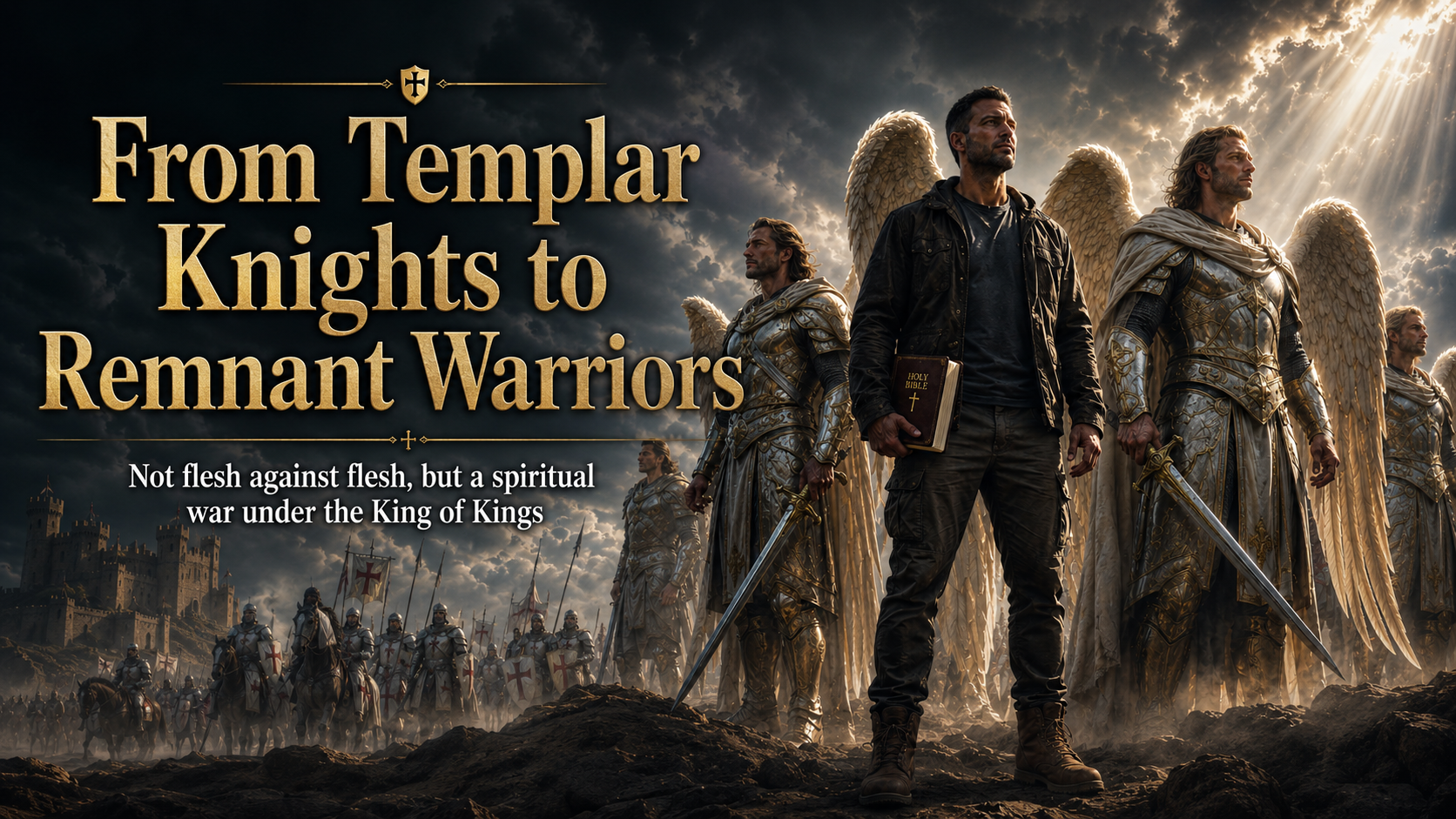
Amazon Author Page