Posts Tagged ‘Kingdom living’


As a student of the Word, I have looked at a number of Bible translations over the years. I have read them, compared them, prayed through them, and weighed them against the greater witness of Scripture. I have also been blessed to meet three men connected to modern translation work: Brian Simmons of The Passion Translation, Francois du Toit of The Mirror Translation, and Russell Stendal of the Jubilee Bible.

I do not say this lightly, and I do not say it simply because I have met Russell Stendal on numerous occasions or shared good, healthy Kingdom conversations with him concerning the Word of God. I say it because, out of the three, I have found that Russell Stendal has held more faithfully to a place of honoring the integrity, weight, and origins of Scripture.

In my view, this matters deeply.

We are living in a time when many voices want to reshape Scripture around personal revelation, cultural pressure, emotional comfort, or modern ideological movements. But the Word of God was never given to be edited until the flesh could tolerate it. It was given to pierce, purify, correct, convict, restore, and transform.

I appreciated The Passion Translation in certain areas, especially where its language stirred devotion and affection toward the Lord. Yet over time, I could not treat it as a primary translation for doctrine, preaching, or serious biblical study because of how interpretive and expanded it often becomes.

I also came out in support of The Mirror Translation for a time, based in part upon the recommendation of a pastor I trusted. But not long into reading and studying it, I found that, in my view, it began to stray from biblical truth and leaned too heavily into the personal beliefs and convictions of the editor. This became especially concerning to me where the translation appeared to support modern cultural positions that I could not reconcile with the full counsel of Scripture.

The Jubilee Bible has been different for me.

Out of the three, the Jubilee Bible is the one I use daily. It is the one I have come to respect because of the way it seeks to hold true to the Word of God, and in some places, I have found it to carry a clarity and textual weight that feels even closer to the original intent than what we sometimes find in the King James Version.

That is not a statement made to diminish the KJV. The King James Version, first published in 1611, has carried tremendous influence in the English-speaking world. It stands as one of the great translation works of the Reformation-era English Bible stream and has shaped preaching, doctrine, worship, prayer, and Christian language for more than four centuries.

But the Jubilee Bible reaches into a stream that is often overlooked by English-speaking believers.

The Jubilee Bible is modern in its English publication, but its roots go back into the Reformation Bible movement of the 1500s. It is especially connected to Casiodoro de Reina’s 1569 Spanish Bible, known as the Bear Bible, and Cipriano de Valera’s 1602 revision. It also carries connection to earlier Reformation witnesses such as Francisco de Enzinas, Juan Pérez de Pineda, William Tyndale, and the Authorized Version tradition.

This means the Jubilee Bible is not merely another modern translation trying to appeal to the religious marketplace. It is an English work that seeks to recover and preserve something from the Scriptures of the Reformation.

That phrase matters: From the Scriptures of the Reformation.

The Reformation was not built upon men trying to make the Word of God more fashionable. It was built upon men who trembled before the authority of Scripture and were willing to suffer so the people could hear the Word in their own language. These were not editors trying to soften the sword. These were men trying to place the sword back into the hands of the people.

That is one of the reasons I honor the Jubilee Bible.

What I respect about Russell Stendal’s work is not merely a translation preference. It is the posture behind the work. There appears to be a deep concern for preserving the strength, consistency, and covenant weight of the biblical text. There is an effort to let Scripture define Scripture, rather than allowing modern trends to redefine biblical language.

In an age when many translations appear to soften words connected to repentance, holiness, judgment, obedience, covenant, fear of the Lord, and separation from sin, the Jubilee Bible often allows those words to stand with the authority they were meant to carry.

That is important.

The Word of God is not a self-help manual. It is not a motivational script. It is not a religious poem to make us feel better while leaving us unchanged. It is living. It is sharp. It is holy. It confronts before it comforts. It wounds in order to heal. It exposes in order to redeem.

No translation should ever replace prayer, humility, study, and a willingness to return to the Hebrew, Greek, and the greater witness of Scripture. No translation should be placed above the Word itself. But I do believe the Jubilee Bible deserves to be taken seriously by those who love Scripture, honor the Reformation stream, and refuse to see the Bible reduced to a softened devotional thought for the modern age.

For me, the Jubilee Bible has become a trusted daily companion in the Word.

I honor the labor behind it.

I honor its connection to the Reformation witness.

And I honor the desire to preserve the integrity of what God has spoken.

May the Lord continue to raise up scribes, teachers, translators, and watchmen who tremble at His Word, guard its truth, and refuse to trade holy conviction for comfortable religion.

We must become the altar where the fire falls again.

Stay tuned, the journey continues…..

A voice of fire to the Remnant,

— Dr. Russell Welch

Dr. Russell Welch is a published author, prophetic teacher, apostolic builder, and founder of faith-driven publishing and media initiatives. He is known for crafting bold, Kingdom-centered messages that call the Ecclesia into maturity, doctrinal clarity, and governmental authority. With a passion for equipping the Remnant and honoring generational legacy, Dr. Welch writes and teaches at the intersection of Scripture, history, and spiritual governance, challenging believers to live as sons and daughters who legislate Heaven on earth through truth, holiness, and unwavering fidelity to Christ.

Be sure to check out his book, “America at War: The Spiritual Battle for a Nation’s Soul” available exclusively on Amazon.

Amazon Author Page


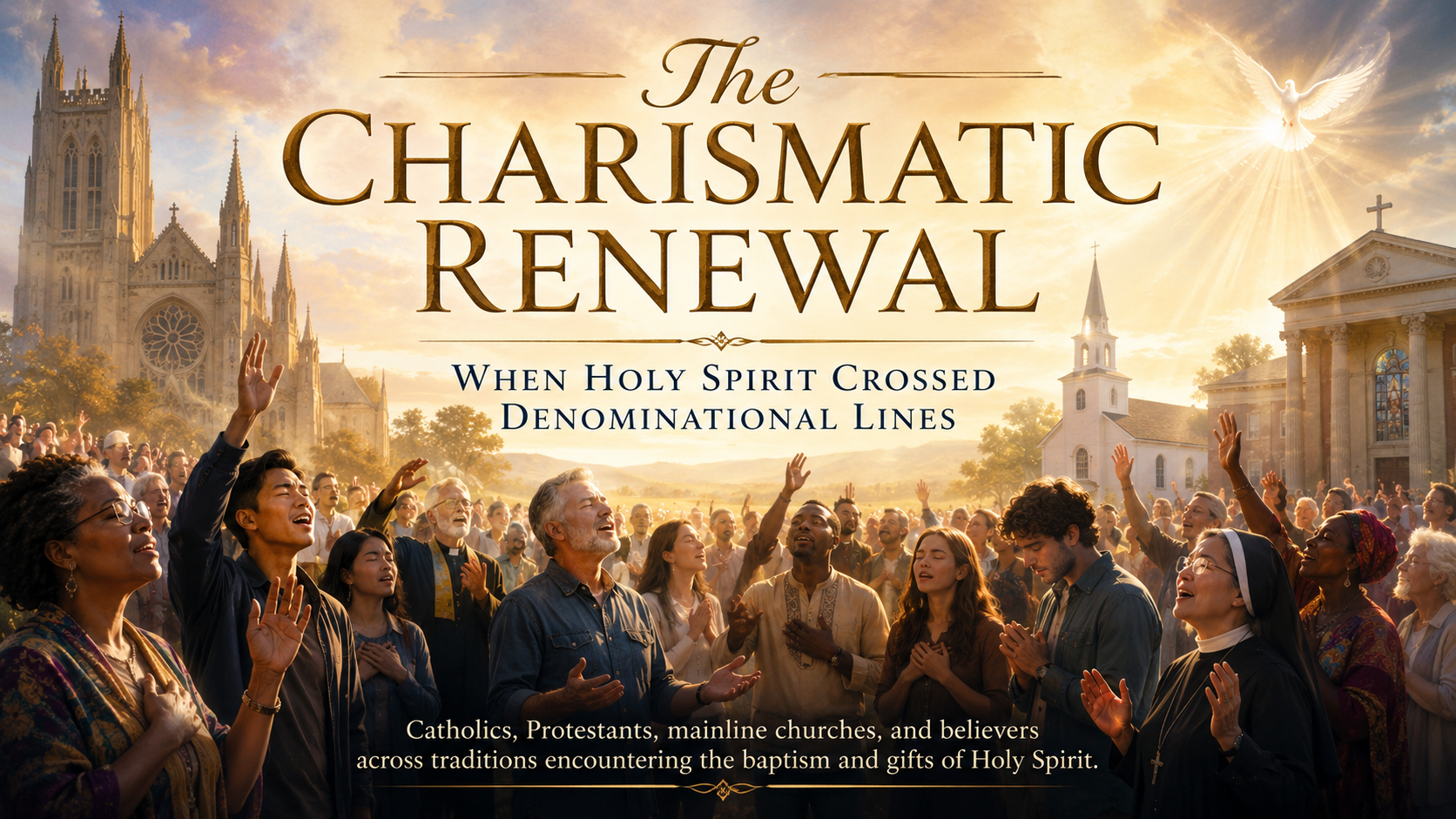
When Holy Spirit Crossed Denominational Lines

There are moments in Church history when Heaven seems to lean over the walls men have built and breathe again upon the Body of Christ. The Charismatic Renewal was one of those moments.

It was not birthed in one denomination. It was not confined to one stream. It was not owned by one theological camp, one worship style, one church tradition, or one ecclesiastical system. It was the wind of Holy Spirit moving where He desired, awakening Catholics, Protestants, Anglicans, Methodists, Presbyterians, Lutherans, Baptists, mainline believers, and countless others to the living reality of the baptism and gifts of Holy Spirit.

For many, Christianity had become respectable, organized, educated, and polished — but powerless. The language of faith remained, but the fire had grown cold. Churches still confessed the creed, sang the hymns, prayed the prayers, and preached the Scriptures, but deep within the hearts of many believers there was a cry for more. Not more religion. Not more programs. Not more committees. More of God.

And Holy Spirit answered.

He stepped across denominational lines and reminded the Church that He was never the property of one tradition. He was not bound to stained glass, pipe organs, revival tents, liturgies, seminaries, or Pentecostal storefronts. He was the Spirit of the living God, poured out upon sons and daughters, servants and handmaidens, old and young, rich and poor, clergy and laity.

This renewal became a divine interruption.

In places where the gifts of the Spirit had been explained away, people began praying in tongues. In churches where healing had been reduced to something God once did long ago, people began laying hands on the sick with fresh faith. In traditions where prophecy had been buried under suspicion, believers began to recover the reality that God still speaks. In communities where worship had become predictable, praise began to rise with tears, freedom, surrender, and holy hunger.

The Charismatic Renewal did not erase doctrinal differences. It did not make every tradition the same. It did something far more prophetic. It revealed that Holy Spirit could awaken hunger inside places many had already written off. He could set hearts on fire inside Catholic prayer groups, Episcopal churches, Methodist gatherings, Lutheran fellowships, Baptist homes, and Presbyterian Bible studies. He could visit people who did not yet have all their theology in perfect order, because revival has never waited for men to become impressive enough to deserve it.

This is one of the great lessons of the Charismatic Renewal: God is not nearly as nervous about crossing our lines as we are.

That does not mean truth no longer matters. It means Holy Spirit knows how to awaken people into truth. The fire of God does not come to flatter broken systems. It comes to awaken hungry hearts, expose dead religion, and call the people of God back to the living Christ.

For many believers in the 1960s and 1970s, this renewal felt like a second Pentecost in their personal lives. They had known about God, but now they were encountering Him. They had recited prayers, but now prayer became communion. They had heard sermons about Jesus, but now Jesus felt near, living, present, and personal. The Scriptures came alive. Worship became intimate. Evangelism became bold. Spiritual gifts became normal again.

And perhaps one of the most radical marks of this renewal was that ordinary believers began to realize they were not second-class citizens in the Kingdom.

The gifts of Holy Spirit were not reserved for famous evangelists, pulpit ministers, or denominational leaders. Mothers, fathers, college students, businessmen, priests, pastors, teenagers, and housewives began to discover that the same Spirit who moved in the book of Acts still moved through surrendered vessels.

The Church was being reminded that ministry was never meant to be locked behind a platform.

This was dangerous to religious systems because it awakened the priesthood of all believers. It reminded the people of God that every son and daughter carries a measure of Kingdom assignment. It restored holy expectation to the pews. People no longer came merely to observe church. They came ready to encounter God, hear His voice, receive His power, and carry His presence into the world.

This is what dead religion fears most: believers who wake up.

The Charismatic Renewal also carried an unmistakable witness to unity. Not the shallow unity that ignores truth. Not the compromised unity that says doctrine does not matter. But the kind of unity seen in Acts 10, when Holy Spirit fell upon Cornelius and his household, and Peter had to admit that God had given the same gift to people he had not expected to receive it.

That moment shook Peter’s categories.

The Charismatic Renewal shook the categories of many believers too.

Some Protestants had to wrestle with the fact that Catholics were encountering Holy Spirit in ways they could not deny. Some Catholics had to recognize that God had used Pentecostals and evangelicals to help open the door to renewed hunger for the Spirit. Mainline believers had to face the reality that the gifts of Holy Spirit were not dead relics of the past. Pentecostals had to recognize that Holy Spirit was moving beyond their own familiar camp.

Heaven was confronting pride on every side.

This is what revival does. It humbles the people who thought they owned the fire, and it awakens the people who thought the fire was no longer available.

Yet we must also be honest. Like every move of God, the Charismatic Renewal had its tensions, excesses, and immature expressions. Some chased gifts without developing character. Some pursued manifestations without surrendering to holiness. Some made emotional experience the center instead of Christ Himself. Some opened doors to confusion because they lacked grounding in Scripture and discipleship.

But we must never allow the abuses of a movement to make us despise the grace that was truly present in it.

The answer to wildfire is not to ban fire. The answer is to restore the altar.

The early Church did not separate the Word from the Spirit. They did not choose between doctrine and power. They did not believe holiness and spiritual gifts were enemies. They preached Christ crucified and risen, called men to repentance, healed the sick, cast out demons, prophesied, prayed in tongues, worshiped with fire, and lived under the government of Holy Spirit.

The Charismatic Renewal was, at its best, a divine reminder that the Church was never supposed to become a museum for memories of what God used to do. She was called to be a living temple, filled with the glory and power of the risen Christ.

This is why the renewal still matters.

We are living in another hour where many churches have form but little fire. Many have branding but little burden. Many have platforms but little presence. Many have teaching but little trembling. Many have religious activity but little evidence that the Spirit of God is resting in power upon the people.

The Charismatic Renewal asks us a dangerous question:

Have we made peace with a Christianity that can function without Holy Spirit?

Because if we can hold services, build organizations, preach sermons, sing songs, and manage ministries without desperate dependence upon the Spirit of God, then we have not built an upper room. We have built a machine.

And machines do not birth revival.

Only surrendered people do.

The Remnant in this hour must recover what the Charismatic Renewal helped restore: a living hunger for the fullness of Holy Spirit. Not hype. Not disorder. Not spiritual entertainment. Not gifts divorced from holiness. Not emotionalism without obedience. But the holy fire of God resting upon sons and daughters who know Jesus, love the Word, walk in purity, move in power, and refuse to reduce Christianity to intellectual agreement.

We need the baptism of Holy Spirit again.

We need prayer rooms where the presence of God becomes weighty.

We need churches where the gifts of the Spirit are welcomed with wisdom, tested by Scripture, and released through love.

We need believers who do not merely talk about the book of Acts, but become living witnesses that the same Spirit still fills, still speaks, still heals, still delivers, still empowers, and still sends.

The Charismatic Renewal was not the finish line. It was a signpost.

It pointed back to Pentecost and forward to a Church that must be both grounded and burning. It reminded us that the Father pours out His Spirit not so we can build movements around experiences, but so we can bear witness to the risen Son.

Holy Spirit did not cross denominational lines to create a new religious brand.

He crossed them to awaken the Body.

He crossed them to confront dead religion.

He crossed them to release hunger.

He crossed them to restore power.

He crossed them to remind the Church that Jesus did not leave His people as orphans.

And now, in our generation, the question remains.

Will we protect our systems, or will we prepare the altar?

Will we defend powerless religion, or will we cry out for fresh fire?

Will we settle for being historically correct about past revivals, or will we become living vessels of Holy Spirit in the present hour?

The Charismatic Renewal still speaks.

It tells us that Holy Spirit is not finished crossing lines, shaking rooms, filling vessels, awakening sons and daughters, and calling the Church back to the fire of Pentecost.

The Remnant must not merely study the renewal.

We must become the altar where the fire falls again.

Stay tuned, the journey continues…..

A voice of fire to the Remnant,

— Dr. Russell Welch

Dr. Russell Welch is a published author, prophetic teacher, apostolic builder, and founder of faith-driven publishing and media initiatives. He is known for crafting bold, Kingdom-centered messages that call the Ecclesia into maturity, doctrinal clarity, and governmental authority. With a passion for equipping the Remnant and honoring generational legacy, Dr. Welch writes and teaches at the intersection of Scripture, history, and spiritual governance, challenging believers to live as sons and daughters who legislate Heaven on earth through truth, holiness, and unwavering fidelity to Christ.

Be sure to check out his book, Spirit Wind People: Those Who are Moved by the Impulses of Holy Spirit, available exclusively on Amazon.

Amazon Author Page


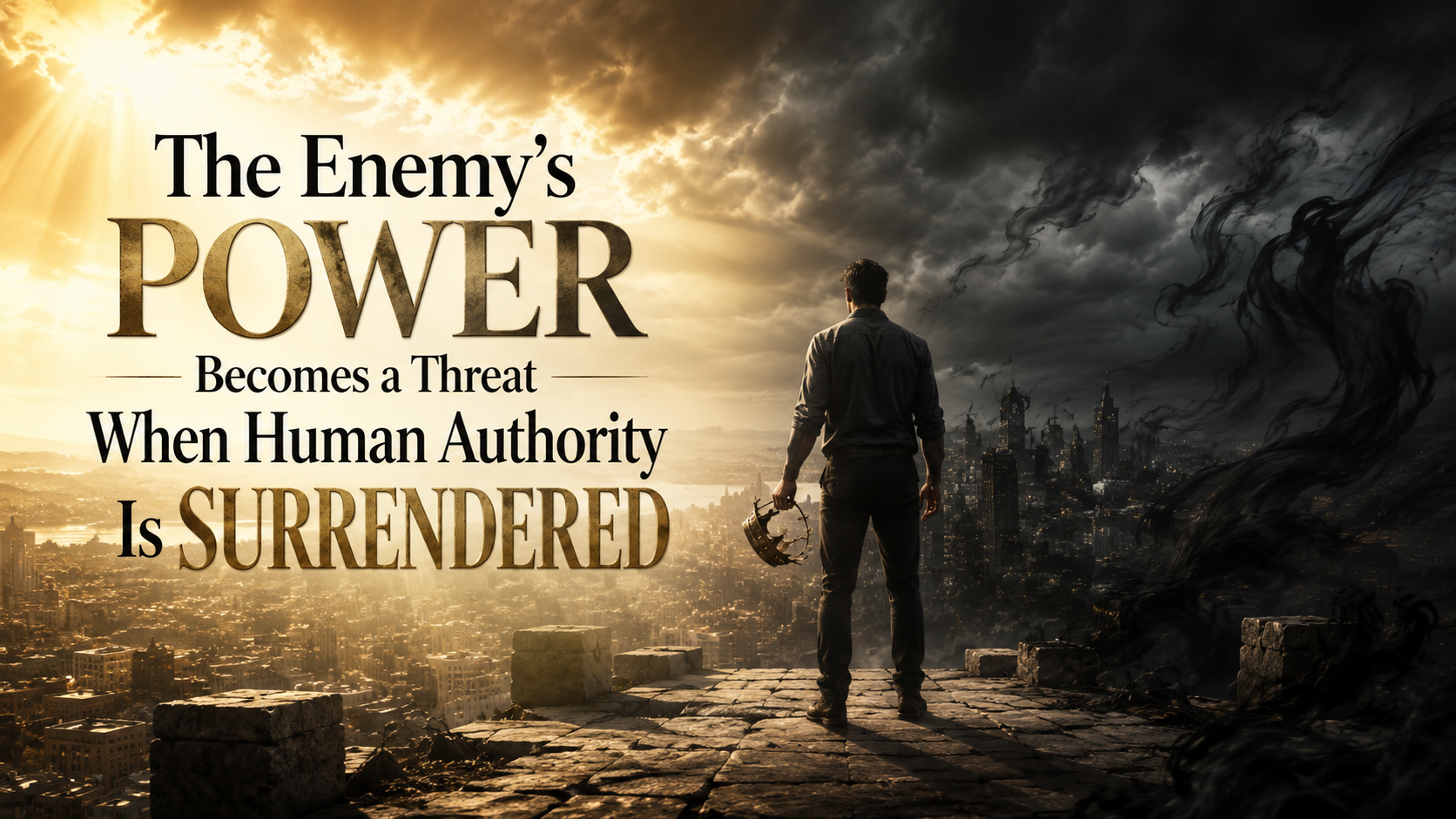
Enforcing the Victory of Christ Over a Defeated Enemy

One of the most important revelations the faithful must recover in this hour is the difference between power and authority. The enemy still has power, but he no longer possesses lawful authority over those who are in Christ. This distinction is not theological wordplay; it is foundational to victorious spiritual warfare. Many believers are exhausted because they are trying to defeat a devil that Jesus has already defeated, rather than standing in the authority of the victory Christ already secured.

Colossians 2:15 declares that Jesus “disarmed principalities and powers” and made a public spectacle of them, triumphing over them through the cross. That means the cross was not merely a place of forgiveness; it was a battlefield of conquest. Jesus did not walk out of the tomb negotiating terms with darkness. He rose as the victorious King, holding all authority in heaven and on earth. This is why He could declare in Matthew 28:18, “All authority has been given to Me in heaven and on earth.”

If all authority belongs to Christ, then Satan does not possess rightful authority over the redeemed. He may still accuse. He may still tempt. He may still resist. He may still roar. He may still attempt to intimidate, deceive, and oppress. But he no longer operates as a lawful ruler over those who have been translated out of the kingdom of darkness and into the Kingdom of God’s dear Son.

This is where the Church must become wise. The enemy’s power becomes a threat when he deceives a believer, a family, a church, a city, or even a nation into surrendering authority through agreement. Satan cannot overthrow the authority of Christ, but he can exploit human agreement when people give place to fear, rebellion, compromise, unbelief, bitterness, deception, idolatry, or sin. He does not need to possess authority if he can convince man to misuse, abandon, or surrender his.

This pattern is first revealed in Eden. The serpent did not overpower Adam and Eve. He deceived them. He did not take dominion by force; he gained access through agreement. Adam had been given a governmental assignment in the earth, but through disobedience he yielded ground to the serpent’s lie. The enemy’s weapon was not superior power. His weapon was deception that produced agreement.

That same strategy continues today. Satan is not looking for a fair fight; he is looking for an open door. He seeks agreement because agreement gives access. He wants believers to agree with fear instead of faith, accusation instead of identity, offense instead of forgiveness, compromise instead of holiness, and deception instead of truth. He knows that the believer who stands submitted to God and clothed in the authority of Christ is not someone he can lawfully rule.

James 4:7 gives the pattern clearly: “Submit yourselves therefore to God. Resist the devil, and he will flee from you.” Notice the order. Submission to God comes before resistance against the devil. Authority flows from alignment. The believer does not resist the enemy through human emotion, religious noise, or spiritual pride. The believer resists from the place of surrendered authority under the Lordship of Jesus Christ.

This is why Luke 10:19 is so powerful. Jesus said, “Behold, I give you authority… over all the power of the enemy.” He did not say the enemy had no power. He said His disciples had authority over the enemy’s power. That means the issue is not whether darkness can move; the issue is whether the people of God understand the authority they carry in Christ. Power without authority must depend on deception, intimidation, and illegal access. Authority in Christ stands on legal victory.

The devil’s greatest strategy is to convince believers that they are still victims of a power Jesus already conquered. He wants the Church to fight from fear instead of victory. He wants the faithful to believe they are trying to win a battle that Christ has already won. But spiritual warfare is not the believer attempting to secure victory; it is the believer enforcing the victory of the risen King.

This is where many believers lose ground. They do not lose because Jesus failed. They do not lose because the cross was incomplete. They do not lose because the devil has more authority than Christ. They lose ground when they agree with what Christ defeated. Fear becomes powerful when we agree with it. Sin becomes a stronghold when we submit to it. Lies become chains when we believe them. Offense becomes a prison when we nurse it. Darkness gains influence where human agreement gives it permission.

Yet the good news is just as powerful: what agreement opened, repentance can close. What deception gained, truth can expose. What fear occupied, faith can reclaim. What compromise yielded, obedience can restore. The believer does not need to beg for authority; he must return to alignment with the One who holds all authority.

The authority of the believer is not independent authority. It is delegated authority. It flows from union with Christ, submission to Christ, obedience to Christ, and agreement with Christ. A believer walking in rebellion cannot claim to be operating in kingdom authority while resisting the King who gave it. Authority is not a religious slogan; it is the governmental backing of Heaven upon those who stand under the rule of Jesus.

This is why holiness matters. This is why obedience matters. This is why discernment matters. The enemy is not merely trying to make believers behave badly; he is trying to get them to surrender authority. He wants their mouths to agree with accusation. He wants their hearts to agree with bitterness. He wants their minds to agree with confusion. He wants their lives to agree with compromise. Every agreement with darkness becomes a place where his power seeks expression.

But when the faithful stand in Christ, submit to God, resist the devil, and refuse agreement with darkness, the enemy’s power loses its operating room. He may still roar, but he cannot rule. He may still threaten, but he cannot govern. He may still accuse, but he cannot condemn those who are in Christ Jesus. He may still tempt, but he cannot force obedience to his lie.

The cross stripped the enemy of legal authority. The resurrection announced the enthronement of the victorious Christ. The ascension revealed the King seated far above all principality, power, might, dominion, and every name that is named. The Church must now stop treating the devil as though he still holds what Jesus already took from him.

The faithful are not called to survive under the shadow of a defeated devil. They are called to stand in the authority of the risen Christ, enforce the finished work of the cross, and refuse every agreement with darkness. The enemy’s power becomes dangerous only where authority is surrendered. But when authority remains submitted to Christ, the power of the enemy is exposed for what it truly is: illegal, defeated, and dependent upon deception.

Therefore, the call in this hour is clear. Guard your agreement. Guard your mouth. Guard your thoughts. Guard your doctrine. Guard your obedience. Do not give the enemy a room in your house, a seat at your table, or a voice in your decisions. Jesus has already triumphed. Now the faithful must stand, resist, and enforce the victory of the King.

The devil does not need to defeat Christ to gain ground in a believer’s life. He only needs to deceive the believer into surrendering agreement. But the believer who stands in truth, walks in obedience, and remains submitted to the Lordship of Jesus becomes a living witness that the enemy is defeated, Christ is enthroned, and the Kingdom of God is advancing.

Stay tuned, the journey continues…..

A voice of fire to the Remnant,

— Dr. Russell Welch

Dr. Russell Welch is a published author, prophetic teacher, apostolic builder, and founder of faith-driven publishing and media initiatives. He is known for crafting bold, Kingdom-centered messages that call the Ecclesia into maturity, doctrinal clarity, and governmental authority. With a passion for equipping the Remnant and honoring generational legacy, Dr. Welch writes and teaches at the intersection of Scripture, history, and spiritual governance, challenging believers to live as sons and daughters who legislate Heaven on earth through truth, holiness, and unwavering fidelity to Christ.

Be sure to check out his book, Spirit Wind People: Those Who are Moved by the Impulses of Holy Spirit, available exclusively on Amazon.
Amazon Author Page


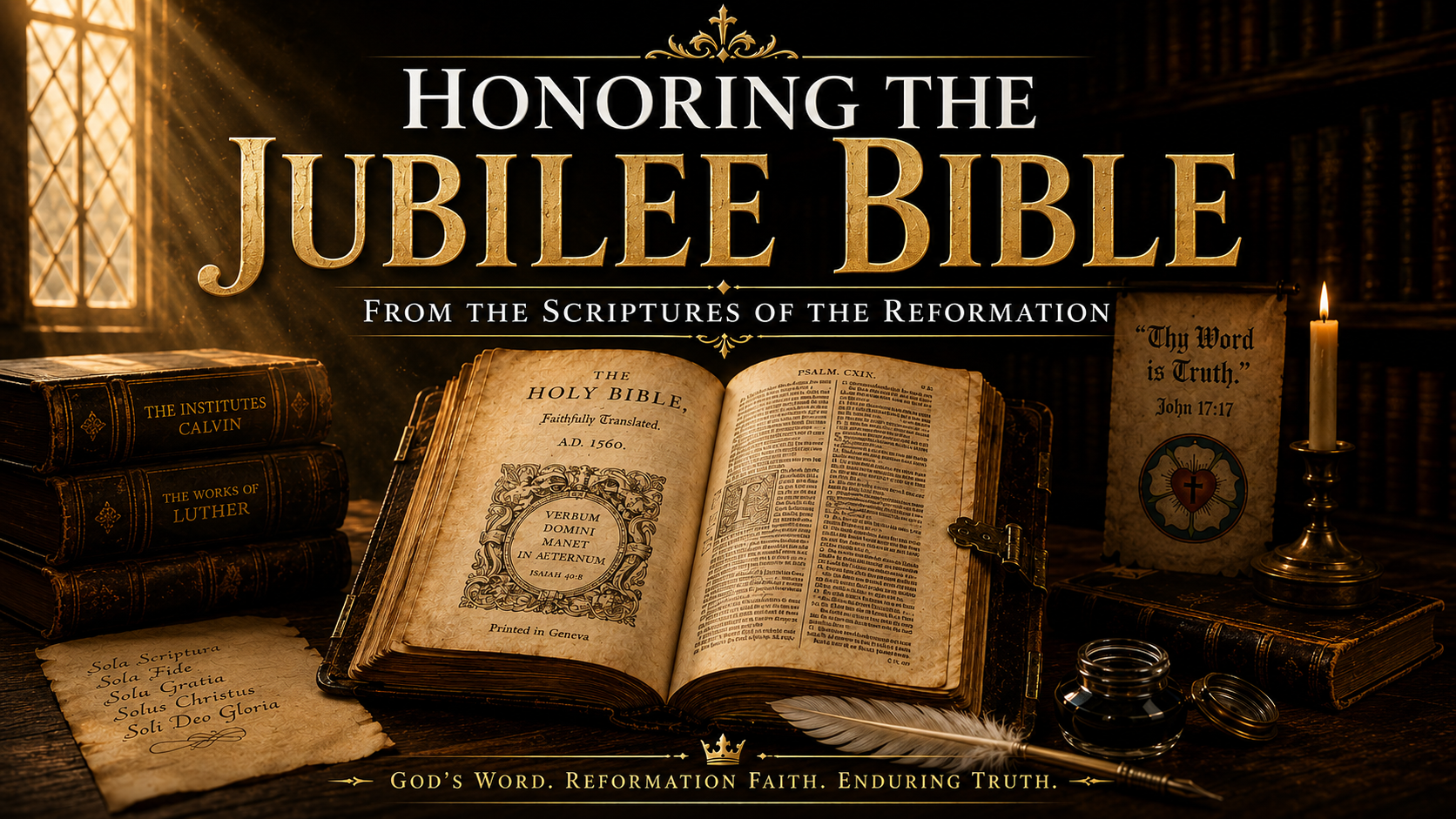
RADICAL DISCIPLES — A REMNANT REVOLUTION

Revival Series

The Glory, the Restoration, and the Warnings of Mixture

Prophetic restoration, laying on of hands, gifts of the Spirit, and the need for discernment when revival fire and human excess collide.

INTRODUCTION: WHEN HUNGER AND DISCERNMENT MUST WALK TOGETHER

Revival history must be approached with both hunger and sobriety. It is possible to honor what God restored through a movement without defending everything that eventually became associated with it. It is equally possible to identify doctrinal errors and human excesses without denying that sincere believers were seeking the presence and power of God. Mature discernment refuses the easy extremes of either romanticizing every manifestation or dismissing every spiritual experience. It asks where the Holy Spirit was genuinely at work, where biblical truth was recovered, where human ambition entered, and what the Church must learn from the mixture.

The Latter Rain Movement remains one of the clearest examples of this tension. Emerging in the aftermath of the Second World War, it carried a passionate expectation that God was restoring neglected dimensions of New Testament Christianity before the return of Jesus Christ. Its adherents emphasized prophecy, spiritual gifts, healing, the laying on of hands, spontaneous worship, the equipping of the saints, and the restoration of apostolic and prophetic ministry. Many of these subjects had either been neglected or confined within narrow denominational structures. The movement therefore appeared to many spiritually hungry believers as a fresh wind of restoration.

Yet the same movement also became associated with serious problems. Prophetic words were sometimes treated as unquestionable divine decrees. Leaders could exercise authority without sufficient accountability. Biblical truths concerning spiritual maturity were occasionally expanded into exaggerated teachings concerning perfected end-time believers. The laying on of hands could be treated as though gifts and offices were mechanically transmitted by human decree. The language of restoration sometimes produced elitism, and the expectation of supernatural power sometimes outran the formation of Christlike character.

The history of the Latter Rain Movement must therefore be studied as both a testimony and a warning. It reminds the Church that God does restore neglected truth, but it also demonstrates that genuine spiritual hunger does not eliminate the possibility of error. Revival fire must burn upon a biblical altar. The Holy Spirit never asks the Church to choose between power and truth, for He is the Spirit of both.

THE POSTWAR PENTECOSTAL SETTING

The Latter Rain Movement arose during a period of profound cultural and spiritual transition. The Second World War had left nations devastated, societies disoriented, and millions of people searching for meaning in the aftermath of extraordinary human suffering. Within the Church, Pentecostalism had already moved beyond its early beginnings and had developed denominations, educational institutions, missionary organizations, and established patterns of church government. This growth brought stability and legitimacy, but some believers feared that Pentecostal institutions were beginning to preserve the memory of revival more faithfully than the living experience of it.

Early Pentecostalism had been marked by prayer, spiritual hunger, expectation, sacrifice, missionary zeal, and an intense conviction that the gifts recorded in the New Testament remained available to the Church. By the 1940s, however, some younger ministers believed that institutional Pentecostalism had become cautious, predictable, and resistant to further restoration. They did not necessarily reject the earlier Pentecostal movement. Rather, they believed that Pentecostalism had stopped short of everything God intended to restore.

This dissatisfaction must be understood within the larger restorationist impulse that has repeatedly appeared throughout Church history. Restorationist movements begin with the conviction that some dimension of apostolic Christianity has been obscured, neglected, or lost and must therefore be recovered. Such movements can call the Church back to biblical truth, but they can also become dangerous when their leaders assume that they alone represent the final or complete work of God.

In February 1948, a revival emerged among teachers and students associated with Sharon Orphanage and Schools in North Battleford, Saskatchewan. The atmosphere had been prepared through prayer, fasting, Bible study, and exposure to the healing revival then taking place in North America. Participants reported prophetic utterances, healings, spiritual gifts, and intense experiences of the presence of God. The meetings soon drew ministers and seekers from outside the immediate community, and the teachings associated with the revival began spreading through independent Pentecostal congregations and ministerial networks.

The movement came to be called the “Latter Rain,” drawing upon the agricultural imagery found in the prophets. Its leaders and supporters believed that the outpouring at Pentecost had been an early rain connected to the planting of the Church, while a latter rain would prepare the Church for maturity and the final harvest at the end of the age. This interpretation produced a powerful sense of eschatological urgency. Participants believed they were not merely experiencing another local awakening but were witnessing the beginning of a divine restoration that would prepare the Body of Christ for the consummation of God’s purposes.

THE BIBLICAL IMAGERY OF THE LATTER RAIN

The expression “latter rain” arises from the agricultural rhythms of ancient Israel. The early rain softened the ground for planting, while the latter rain helped bring the crop toward maturity before harvest. Because Israel’s life depended upon these seasonal rains, the prophets could use the imagery to describe divine blessing, restoration, and covenant faithfulness.

Joel declared:

“Be glad then, ye children of Zion, and rejoice in the LORD your God: for he hath given you the former rain moderately, and he will cause to come down for you the rain, the former rain, and the latter rain.”

— Joel 2:23

The prophecy continues with the promise that God would pour out His Spirit upon all flesh, producing prophetic speech, dreams, and visions among sons and daughters, young and old, servants and handmaidens. On the Day of Pentecost, Peter interpreted the outpouring of the Holy Spirit through Joel’s prophetic language, declaring that the extraordinary events occurring in Jerusalem were connected to what the prophet had spoken.

The Latter Rain Movement correctly recognized that the Church must remain expectant for the activity of the Holy Spirit. Scripture does not present the Spirit as a theological concept to be confessed while His gifts, voice, and power are functionally excluded from congregational life. The New Testament Church was born in an atmosphere of divine visitation and remained dependent upon the Spirit for witness, direction, sanctification, ministry, and mission.

Nevertheless, great caution is required when turning biblical imagery into a rigid historical timetable. Joel’s prophecy found a decisive fulfillment at Pentecost, as Peter explicitly declared. While Scripture certainly teaches continued outpouring, refreshing, awakening, and spiritual empowerment, the distinction between an apostolic “early rain” and a separate end-time “latter rain” should not be treated as though every detail of that framework were plainly stated in the biblical text. Theological systems must be built upon careful exegesis rather than spiritual excitement.

The central truth remains secure: God pours out His Spirit, restores His people, and prepares a harvest. Yet the Church must resist constructing speculative doctrines that go beyond what Scripture clearly establishes. Biblical imagery may illuminate the activity of God, but it must not become a foundation for claims that cannot withstand careful examination.

THE RECOVERY OF THE MINISTRY OF THE BODY

One of the most important contributions associated with the Latter Rain Movement was its renewed emphasis upon the active participation of the whole Body of Christ. In many congregations, ministry had gradually become concentrated in the hands of a few ordained leaders. The pastor preached, prayed, counseled, visited, administered, and carried nearly every visible responsibility, while the congregation gathered primarily to listen and receive.

The New Testament presents a much broader vision. Paul taught that manifestations of the Spirit are given to believers for the common good and that every member of the Body has a function. The gathered Church was intended to be more than an audience watching a gifted minister. Believers were to bring psalms, teachings, revelations, tongues, interpretations, prayers, encouragement, service, and spiritual gifts under the ordered government of the Holy Spirit.

Paul wrote:

“But the manifestation of the Spirit is given to every man to profit withal.”

— 1 Corinthians 12:7

This principle challenged passive Christianity. The Latter Rain emphasis helped awaken believers to the conviction that the Holy Spirit desired to operate through the whole congregation. Prophecy was not restricted to the pulpit. Prayer for healing did not belong exclusively to a recognized evangelist. Worship was not merely a preliminary exercise before the sermon. The saints themselves were to be equipped and activated for the work of ministry.

This recovery would influence later charismatic and independent church movements, many of which embraced participatory worship, small-group ministry, healing prayer, prophetic encouragement, and the equipping of ordinary believers. The underlying biblical principle was sound: every believer has been called into the life and mission of Christ, and the gifts of the Spirit are distributed according to the sovereign will of God rather than human rank.

However, the recovery of participation must remain joined to order, maturity, and accountability. Paul’s correction of the Corinthian church demonstrates that spiritual participation can become chaotic when personal expression is not governed by love. The apostle did not silence spiritual gifts, but neither did he permit believers to exercise them without restraint. His instruction was that everything should be done unto edification and that the spirits of the prophets were subject to the prophets.

The Spirit does not produce disorder under the excuse of spontaneity. A genuine manifestation of God does not remove personal responsibility. The believer remains accountable for how, when, and why a gift is exercised. The recovery of congregational ministry is therefore not permission for every impulse to be presented as revelation. It is an invitation for the Body to mature in discerning and stewarding what the Holy Spirit gives.

PROPHECY AND THE RESTORATION OF THE VOICE OF GOD

Prophetic ministry occupied a central place within the Latter Rain Movement. Its advocates believed that God was restoring prophecy as a normal expression of the Spirit’s work within the Church. This challenged theological traditions that had either confined prophecy to the writing of Scripture or reduced it to inspired preaching.

The New Testament plainly teaches that prophecy continued within the apostolic Church. Prophets ministered in Antioch, Agabus foretold a coming famine, Philip’s daughters prophesied, and Paul devoted substantial attention to the proper exercise of prophetic gifts in Corinth. He wrote that prophecy speaks unto people for “edification, and exhortation, and comfort,” and he instructed believers not to despise prophetic utterances.

At the same time, Paul immediately joined openness to testing:

“Despise not prophesyings. Prove all things; hold fast that which is good.”

— 1 Thessalonians 5:20–21

These instructions establish the necessary balance. Prophecy must not be despised, but neither must it be accepted indiscriminately. The Church is not permitted to choose between spiritual receptivity and biblical discernment. Every prophetic word remains subject to evaluation.

The Latter Rain Movement helped recover the expectation that God could speak through prophetic ministry, bringing encouragement, conviction, direction, and confirmation. Many believers testified that prophetic words strengthened their faith and awakened a clearer sense of calling. Such ministry, when practiced humbly and biblically, can serve the Church by drawing attention to what the Holy Spirit is emphasizing.

The danger developed when prophetic utterance was allowed to carry more authority than Scripture permits. In some settings, prophets became functionally unchallengeable. A prophetic word could determine a person’s ministry, geographical assignment, marriage, church membership, or future direction. Those who questioned the word risked being accused of rebellion, unbelief, or resistance to the Holy Spirit.

This was not biblical prophetic ministry but spiritual control clothed in prophetic vocabulary. New Testament prophecy does not establish an alternative magisterium through which leaders rule the consciences of believers. Prophecy may confirm, warn, strengthen, or illuminate, but it must never replace the believer’s responsibility to know God, search Scripture, seek wisdom, and follow the inward witness of the Holy Spirit.

Furthermore, prophetic revelation must be distinguished from prophetic interpretation and application. A person may receive a genuine impression yet misunderstand its meaning. He may interpret the revelation correctly but apply it prematurely or to the wrong situation. Mature prophetic ministry recognizes these distinctions and therefore speaks with humility rather than presumption.

Those who prophesy must be willing to have their words judged. They must also accept responsibility when a public prediction fails. Prophetic accountability is not an attack upon the gifts of the Spirit; it is a defense of their integrity. Refusing correction does greater damage to prophetic ministry than admitting error ever could.

THE LAYING ON OF HANDS AND PROPHETIC PRESBYTERY

The laying on of hands became another prominent practice within the movement. Scripture provides substantial precedent for the practice. Hands were laid upon individuals in connection with blessing, healing, the reception of the Holy Spirit, commissioning, and the recognition of ministry.

Paul reminded Timothy:

“Neglect not the gift that is in thee, which was given thee by prophecy, with the laying on of the hands of the presbytery.”

— 1 Timothy 4:14

He later wrote:

“Wherefore I put thee in remembrance that thou stir up the gift of God, which is in thee by the putting on of my hands.”

— 2 Timothy 1:6

These texts demonstrate that prophetic ministry and the laying on of hands played a meaningful role in Timothy’s commissioning. The Latter Rain Movement therefore did not invent the practice. It recovered an element of apostolic ministry that had become unfamiliar in many portions of the Church.

Prophetic presbyteries prayed over believers, identified gifts, confirmed callings, and commissioned ministers. Many individuals experienced genuine encouragement and clarity as mature leaders prayed over them. The practice reinforced the biblical truth that ministry is recognized within the Body and that calling is not merely a matter of private ambition.

Problems arose when the laying on of hands was treated as an automatic mechanism through which spiritual gifts or ministerial offices could be transferred at human discretion. Some leaders appeared to assign gifts, titles, and destinies as though they possessed sovereign authority over the distribution of the Spirit. The biblical teaching that the Spirit distributes gifts “severally as he will” was sometimes overshadowed by the perceived authority of the presbytery.

The laying on of hands does not make human leaders the source of spiritual gifts. God may use prayer, prophecy, and commissioning as instruments of impartation, but the Holy Spirit remains sovereign. No apostle, prophet, bishop, pastor, or presbytery possesses the authority to manufacture a divine calling.

Paul’s caution to Timothy must also be remembered:

“Lay hands suddenly on no man, neither be partaker of other men’s sins: keep thyself pure.”

— 1 Timothy 5:22

Biblical ministry therefore includes both faith and restraint. It recognizes spiritual gifts while examining character. It commissions people without elevating them prematurely. It welcomes prophecy while refusing manipulation. The laying on of hands should confirm the work of God rather than create dependence upon the person performing the ceremony.

FIVEFOLD MINISTRY AND THE RESTORATION OF APOSTLES AND PROPHETS

The Latter Rain Movement placed particular emphasis upon Ephesians 4 and the ministries of apostles, prophets, evangelists, pastors, and teachers. Its advocates argued that Christ had given these ministries to equip the saints and that Scripture never explicitly declared that apostles and prophets would disappear from the Church.

Paul wrote:

“And he gave some, apostles; and some, prophets; and some, evangelists; and some, pastors and teachers;

“For the perfecting of the saints, for the work of the ministry, for the edifying of the body of Christ.”

— Ephesians 4:11–12

The recovery of fivefold language challenged church structures in which the pastor had become the single dominant office. It also emphasized that the purpose of ministry leadership was not to perform all ministry personally but to equip the saints. This was a necessary and biblical correction.

The apostolic and prophetic ministries contribute essential dimensions to the Church. Apostolic ministry establishes foundations, advances mission, confronts territorial limitations, and builds according to heavenly patterns. Prophetic ministry calls the Church into alignment, reveals the heart of God, brings warning and encouragement, and sharpens spiritual perception. Evangelists gather the lost, pastors care for the flock, and teachers establish believers in truth.

Yet titles can be restored more quickly than character. When apostolic language returned, some leaders claimed authority that their lives and ministries did not substantiate. Networks could become centered upon dominant personalities rather than mutual submission to Christ. The concept of spiritual covering was sometimes used to create hierarchical systems in which believers feared questioning or leaving a leader.

True apostolic ministry is recognized by foundation, sacrifice, endurance, fatherly care, sound doctrine, missionary fruit, and conformity to Christ. Paul did not establish his apostleship through ceremonial clothing, organizational rank, public admiration, or demands for honor. His apostolic life was marked by suffering, labor, tears, persecution, humility, and a consuming concern that Christ be formed within the churches.

Apostolic restoration without apostolic character produces religious empire. Prophetic restoration without prophetic accountability produces spiritual confusion. The offices of Christ cannot be separated from the nature of Christ.

WORSHIP, THE SONG OF THE LORD, AND THE PRESENCE OF GOD

The Latter Rain Movement also contributed to the development of spontaneous and participatory worship. Congregations began embracing prophetic songs, singing in the Spirit, extended seasons of praise, and musical expressions that moved beyond predetermined hymn selections. Worship was increasingly understood as ministry unto the Lord rather than merely preparation for preaching.

This emphasis drew upon passages concerning psalms, hymns, spiritual songs, and the worship patterns associated with David. The Church in Antioch was ministering to the Lord when the Holy Spirit spoke concerning the commissioning of Barnabas and Saul. Worship can therefore become a setting in which believers become attentive to God’s presence and responsive to His direction.

The recovery of spontaneous worship helped many congregations move beyond rigid formality. Musicians learned to listen rather than merely perform. Believers participated rather than observed. Scripture was sung, prophetic songs emerged, and worship became an extended encounter with God.

Nevertheless, worship is especially vulnerable to emotional manipulation. Music possesses tremendous power to affect the human soul. Repetition, volume, musical progression, lighting, and group expectation can produce intense emotional responses. Such responses are not necessarily false, but neither do they automatically prove that the Holy Spirit is moving.

The biblical test of worship is not simply what people feel during a service but what they become afterward. True worship produces surrender, obedience, holiness, reconciliation, humility, and love. If people fall to the floor but rise unchanged, the physical manifestation alone proves very little. If a congregation sings of total surrender while tolerating pride, exploitation, immorality, or injustice, the language of worship has not yet become the life of worship.

The Father seeks worshipers who worship in spirit and in truth. Spirit without truth can become emotional mysticism. Truth without the Spirit can become lifeless formality. Biblical worship requires both the transforming presence of God and obedience to His revealed Word.

THE MANIFEST SONS OF GOD AND THE DANGER OF EXAGGERATED RESTORATION

One of the most controversial developments associated with portions of the wider Latter Rain stream concerned teachings often identified with the “Manifest Sons of God.” These teachings drew heavily upon Romans 8, where creation is described as waiting for the manifestation of the sons of God.

The biblical doctrine of sonship is glorious. Believers have received the Spirit of adoption, are being conformed to the image of Christ, and will participate in the liberty of resurrection life. The Church must indeed mature beyond spiritual infancy. God intends His people to reveal the nature of His Son through holiness, love, authority, and obedience.

However, some expressions of the teaching moved beyond biblical maturity into speculation concerning an elite end-time company. Certain teachers anticipated a corporate body of perfected believers who would attain extraordinary spiritual power, overcome death, or exercise dominion before the bodily return of Jesus Christ.

Such claims shifted the center of eschatological hope away from the triumphant return of Christ and toward the spiritual attainment of a select company. The biblical promise of resurrection was in danger of being reconstructed as the achievement of superior revelation, impartation, or corporate maturity.

The sons of God reveal Christ; they do not replace Him. The Church participates in His victory; it does not become the independent source of that victory. Believers are being transformed into His image, but they do not become additional messiahs. The distinction between the Head and the Body must always remain clear.

Paul located the transformation of the saints within the victorious action of Christ:

“For the trumpet shall sound, and the dead shall be raised incorruptible, and we shall be changed.”

— 1 Corinthians 15:52

Christian maturity should therefore be pursued passionately, but it must not be confused with speculative claims of perfected immortality before the coming of the Lord. Every doctrine of sonship must remain centered upon union with Christ, dependence upon Christ, and submission to Christ.

WHEN RESTORATION PRODUCES ELITISM

Every restoration movement faces the temptation of spiritual superiority. Once believers become convinced that God is restoring truth through them, they may begin to view the wider Church with contempt. They no longer see themselves as servants called to strengthen the Body but as an advanced spiritual order possessing revelation others cannot understand.

This tendency can be reinforced by language concerning the elect, the overcomers, mature sons, the apostolic company, the remnant, or the final generation. Such biblical concepts can be used properly, but they become dangerous when they create a spiritual caste system.

The faithful are not identified by contempt for less mature believers. They are known by loyalty to Christ, endurance under pressure, obedience to Scripture, love for the brethren, and refusal to compromise. A true remnant does not boast in possessing hidden truth. It trembles before the responsibility of carrying truth faithfully.

Encounters with the glory of God should produce humility. Isaiah saw the Lord and became conscious of his uncleanness. Peter encountered the authority of Jesus and became aware of his sinfulness. John saw the glorified Christ and fell at His feet as dead. Scripture does not present divine glory as a means of enlarging human self-importance.

When revelation produces arrogance, something has become corrupted in its reception or interpretation. The closer believers come to the holiness of God, the less interested they become in advertising their spiritual rank.

PERSONALITY, POWER, AND THE LOSS OF ACCOUNTABILITY

Revival movements frequently grow around powerful personalities. God genuinely uses leaders, evangelists, teachers, prophets, intercessors, and apostolic pioneers. Biblical honor should be given to those who labor faithfully. The danger arises when honor becomes adoration and influence becomes immunity from correction.

Spiritual hunger can make people vulnerable to charismatic leaders. Believers may travel long distances to receive a touch, impartation, mantle, prophecy, or commissioning from a celebrated minister while neglecting prayer, Scripture, obedience, family responsibility, and service within their local congregation. They may come to believe that proximity to the gifted vessel guarantees spiritual advancement.

This personality-centered culture creates the conditions for abuse. A leader’s moral failures may be excused because of apparent miracles. Financial secrecy may be overlooked because the ministry appears fruitful. Manipulation may be defended as spiritual authority. Critics may be labeled rebellious, religious, or demonized.

The New Testament does not allow giftedness to excuse ungodliness. The qualifications for leadership recorded in the pastoral epistles focus primarily upon character, family life, self-control, reputation, doctrinal stability, and faithfulness. A person may possess a powerful gift while remaining immature, proud, or morally compromised.

The Corinthian church possessed abundant spiritual gifts, yet Paul still described its members as carnal. This distinction is indispensable. Giftedness is not maturity, manifestation is not character, and public power is not proof of divine approval.

THE CHURCH’S RESPONSE AND THE NEED FOR CAREFUL JUDGMENT

By 1949, concerns about Latter Rain teaching had become serious enough for established Pentecostal denominations to respond formally. Critics objected to what they considered unbiblical extremes involving personal prophecy, the impartation of gifts through laying on of hands, the restoration of apostolic offices, and practices that could undermine congregational and denominational order.

Some institutional opposition may have reflected legitimate concern for doctrine and accountability. Some may also have reflected the natural resistance of established organizations toward movements they could not control. Revival history demonstrates that institutions can condemn genuine renewal, while renewal movements can dismiss necessary correction as persecution.

The presence of institutional opposition therefore proves neither that a movement is false nor that it is true. Every criticism must be evaluated on its merits. Likewise, a movement cannot defend every error by claiming that religious systems always persecute revival.

The mature response is to examine doctrine, practice, fruit, leadership, and long-term consequences. Where biblical truth was restored, it should be received. Where excess entered, it should be rejected. Where people were wounded, the damage should be acknowledged. Where institutions responded out of fear, that should also be recognized.

Discernment is not strengthened by rewriting history into a simple conflict between heroes and villains. Human beings are more complicated, and revival movements often contain sincere faith, genuine anointing, theological error, personal ambition, and institutional reaction at the same time.

SEVEN TESTS FOR REVIVAL FIRE

The Latter Rain Movement provides the contemporary Church with essential tests for evaluating revival.

First, every doctrine and manifestation must remain subject to Scripture. The Holy Spirit does not contradict the written Word He inspired. No dream, prophecy, angelic visitation, vision, miracle, or spiritual experience possesses authority to overturn the testimony of Scripture.

Second, Jesus Christ must remain central. The Holy Spirit glorifies Christ. When the conversation becomes dominated by mantles, impartations, titles, angels, portals, prophetic personalities, hidden mysteries, or spiritual ranks while the cross and lordship of Jesus become secondary, the movement is drifting from its center.

Third, the fruit must be examined. Jesus taught that trees are known by their fruit. The relevant questions are not merely whether meetings are exciting or manifestations unusual. Does the movement produce holiness, humility, love, reconciliation, justice, compassion, fidelity, and obedience?

Fourth, leaders must remain accountable. A leader who cannot be questioned has become spiritually dangerous, regardless of how impressive his gift may appear. Biblical authority is not threatened by accountability because true authority remains under the government of Christ.

Fifth, prophetic words must be judged. The Church must resist both unbelief and gullibility. Prophecy should not be despised, but every word should be weighed, tested, and interpreted within the boundaries of Scripture.

Sixth, the vulnerable must be protected. The quality of a revival is revealed not only by what happens upon the platform but by how people are treated away from it. Financial integrity, moral accountability, care for wounded people, and protection from manipulation are spiritual matters.

Seventh, encounters must lead to discipleship. Revival is not sustained through endless meetings alone. Its lasting fruit is formed through repentance, obedience, doctrine, prayer, community, mission, and conformity to Christ.

CONCLUSION: WE NEED THE FIRE, BUT WE ALSO NEED THE ALTAR

The Latter Rain Movement cannot be understood responsibly as either an entirely pure revival or an entirely counterfeit movement. It arose from genuine spiritual hunger and helped recover important biblical emphases concerning the gifts of the Spirit, prophetic ministry, congregational participation, laying on of hands, worship, and the equipping of the saints. Its influence continued far beyond the original centers of the movement and contributed to later charismatic and apostolic expressions.

At the same time, its history reveals the dangers that arise when experience outruns exegesis, when revelation is not tested, when leaders become unaccountable, and when restoration produces elitism. Genuine fire can become mixed with human ambition. A true gift can be administered immaturely. A biblical truth can be extended into an unbiblical system.

The Church must not respond by extinguishing the Spirit. Fear of excess has often produced congregations that are doctrinally cautious but spiritually lifeless. The answer to false prophecy is not the rejection of prophecy. The answer to abusive authority is not the rejection of all authority. The answer to manipulated worship is not cold formalism. The answer to counterfeit fire is holy fire burning upon a biblical altar.

Paul’s command remains essential:

“Quench not the Spirit.

“Despise not prophesyings.

“Prove all things; hold fast that which is good.”

— 1 Thessalonians 5:19–21

These instructions belong together. The Church must not quench the Spirit, but it must test everything. It must remain open without becoming gullible, discerning without becoming cynical, and hungry without becoming careless.

The lesson of the Latter Rain is therefore not that the Church should retreat from the supernatural. It is that the supernatural must remain under the lordship of Jesus Christ, the authority of Scripture, and the government of holy character.

We need the rain.

We need the fire.

We need the gifts.

We need the prophetic voice.

We need apostolic foundations.

But above all, we need Jesus Christ enthroned over everything that bears His name.

When the fire falls, the altar must already belong to God.

Stay tuned, the journey continues…..

A voice of fire to the Remnant,

— Dr. Russell Welch

Dr. Russell Welch is a published author, prophetic teacher, apostolic builder, and founder of faith-driven publishing and media initiatives. He is known for crafting bold, Kingdom-centered messages that call the Ecclesia into maturity, doctrinal clarity, and governmental authority. With a passion for equipping the Remnant and honoring generational legacy, Dr. Welch writes and teaches at the intersection of Scripture, history, and spiritual governance, challenging believers to live as sons and daughters who legislate Heaven on earth through truth, holiness, and unwavering fidelity to Christ.

Be sure to check out his book, Spirit Wind People: Those Who are Moved by the Impulses of Holy Spirit, available exclusively on Amazon.
Amazon Author Page


Part One

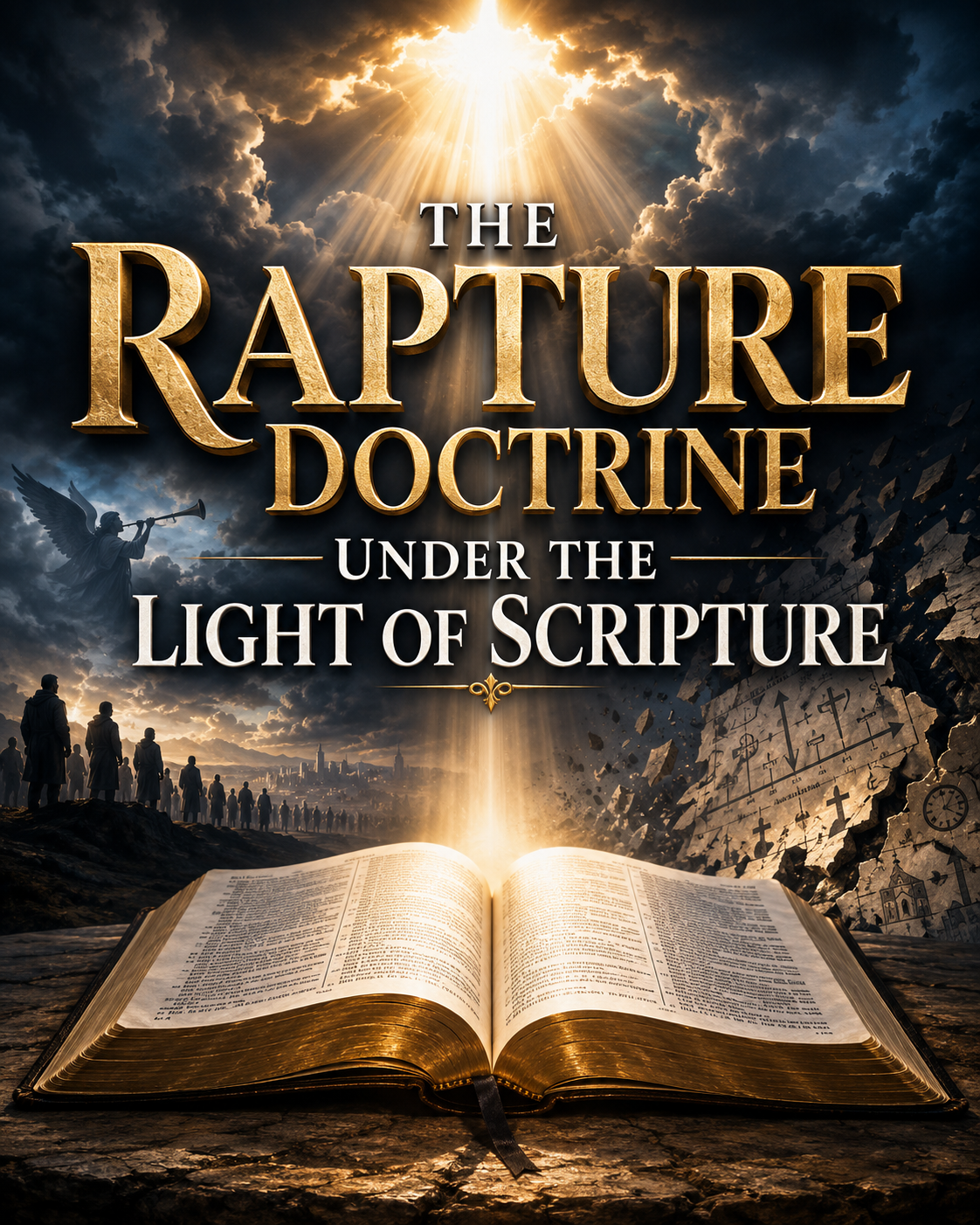
There comes a moment when every generation must decide whether it will be governed by Scripture or by the traditions it inherited. Not every tradition is false, and not every theological framework is automatically corrupt. But every doctrine must eventually stand beneath the searching light of the Word of God. If it cannot survive the testimony of Scripture, it must not be allowed to rule the conscience of the Church.

This is where we must begin the conversation concerning what is commonly called “the Rapture.”

For many believers, the word itself carries deep emotional weight. It has been preached through charts, movies, novels, prophecy conferences, timelines, fear-based altar calls, and countless sermons warning the Church of sudden disappearance, global chaos, and an escape from tribulation. Many sincere believers have built their entire understanding of the end times around this doctrine. Others have never studied it deeply but assumed it must be biblical because it was handed to them by trusted voices.

But sincerity does not make a doctrine true. Popularity does not make a teaching apostolic. Repetition does not turn assumption into revelation. The real question is not, “What have we always heard?” The real question is, “What does the text actually say?”

That question must govern this entire series.

The issue before us is not whether Jesus Christ is returning. He is. The testimony of Scripture is clear, glorious, and immovable. Christ will return bodily, visibly, triumphantly, and in power. The kingdoms of this world will become the kingdoms of our Lord and of His Christ. The dead in Christ will be raised. The living faithful will be gathered. The enemies of God will be judged. Creation itself will witness the unveiling of the sons of God and the full manifestation of the reign of Christ.

The issue is also not whether the saints will be gathered unto the Lord. Scripture plainly speaks of a gathering. The Lord Himself taught that He would send His angels to gather His elect. Paul wrote of the coming of our Lord Jesus Christ and our gathering together unto Him. The resurrection, the appearing of Christ, and the gathering of His people are biblical realities.

The question is whether the modern secret-escape doctrine accurately reflects the testimony of Scripture.

That is where the dividing line must be drawn.

Modern Rapture teaching often presents the return of Christ in separated stages: first, a secret coming for the Church, where believers vanish from the earth before tribulation; then later, a public coming with the saints to establish His Kingdom. This framework has become so embedded in certain circles that many now read it back into the Bible without realizing they are doing so.

But when we come to Scripture, we must be careful not to force the text to serve a system. The Word of God must be allowed to speak for itself. Doctrine must be born from Scripture, not imposed upon Scripture. The people of God are not called to protect prophecy charts; we are called to contend for truth.

The biblical writers did not present the return of Christ as an escape fantasy for a defeated Church. They proclaimed it as the triumphant appearing of the King. They did not call the faithful to abandon the battlefield. They called them to endure, overcome, watch, remain sober, stand firm, and be found faithful at His appearing.

Jesus never trained His disciples to expect evacuation from trouble. He prepared them to overcome it. In John 17:15, He prayed, “I do not pray that You should take them out of the world, but that You should keep them from the evil one.” That prayer does not sound like a theology of escape. It sounds like a theology of preservation, victory, and faithful witness in the midst of a hostile world.

This does not mean the people of God are appointed to wrath. They are not. Paul clearly said that God has not appointed us to wrath, but to obtain salvation through our Lord Jesus Christ. But tribulation and wrath are not the same thing. The faithful have always faced tribulation, persecution, pressure, and warfare. The wrath of God is reserved for the rebellious, the unrepentant, and the systems of darkness that oppose His Kingdom.

The modern error is often found in confusing tribulation with divine wrath. Because of that confusion, many have assumed that if God loves His people, He must remove them before the hour of pressure. But Scripture shows something different. God does not always remove His people from the fire; He often reveals His glory through them in the fire.

Noah was preserved through the flood. Israel was preserved through the plagues in Egypt. Daniel was preserved in Babylon. Shadrach, Meshach, and Abednego were preserved in the furnace. The early Church was preserved in witness through persecution, not by escape from it. The pattern of Scripture is not the removal of the faithful from every conflict, but the keeping power of God in the midst of conflict.

That distinction matters.

When Jesus spoke of the end of the age in Matthew 24, He warned of deception, wars, persecution, false prophets, lawlessness, and endurance. He said, “He who endures to the end shall be saved.” He did not say, “He who escapes before trouble begins.” He then declared that this gospel of the Kingdom would be preached in all the world as a witness to all nations, and then the end would come.

The emphasis of Jesus was not abandonment of mission. It was endurance in mission.

That alone should make us pause.

If our end-time doctrine produces fear, passivity, escapism, and disengagement from Kingdom assignment, we must ask whether it carries the same spirit as the words of Christ. If our theology teaches the Church to wait for removal instead of preparing for maturity, dominion, holiness, witness, and victory, then something has been misaligned.

The return of Christ is not a doctrine of panic. It is the hope of the faithful.

The appearing of Christ is not meant to produce spiritual retreat. It is meant to produce purity, courage, and steadfastness. John wrote that everyone who has this hope in Him purifies himself, just as He is pure. The blessed hope is not a license to abandon cultural responsibility or prophetic assignment. It is a holy expectation that the King will come, that righteousness will prevail, and that the faithful must be found ready.

Readiness, biblically, is not mere curiosity about timelines. Readiness is faithfulness.

This is why we must separate the biblical gathering of the saints from the modern secret-escape doctrine. The biblical gathering is tied to the visible coming of Christ, the resurrection of the dead, the sound of the trumpet, the appearing of the Son of Man, and the consummation of the age. It is majestic, public, cosmic, and victorious.

The modern secret-escape doctrine often places the gathering before the final conflict, before the public appearing, and before the full unveiling of Christ’s victory in the earth. It can unintentionally train believers to see tribulation as something the Church must avoid rather than something the faithful must overcome through Christ.

But the book of Revelation does not say, “To him who escapes.” It repeatedly says, “To him who overcomes.”

That word must return to the center of our theology.

The faithful are not called to be fear-driven spectators of the end times. We are called to be witnesses, watchmen, sons and daughters, priests and kings, ambassadors of the Kingdom, and a holy people who refuse to bow to the spirit of the age. The end-time Church is not portrayed as weak, confused, and waiting helplessly for extraction. The faithful are called to endure with the testimony of Jesus, the commandments of God, and the faith once delivered to the saints.

This does not mean every believer who holds to a Rapture view is rebellious or deceived. Many love Jesus deeply. Many are sincere. Many have simply inherited a framework and never questioned it. This series is not written to mock people, dishonor believers, or attack the Body of Christ. It is written to call us back to the authority of Scripture.

Truth does not fear examination.

If a doctrine is biblical, it can withstand the full weight of biblical scrutiny. If it is not biblical, then we must love Christ enough to let it fall. The Church cannot afford to build its hope on assumptions, no matter how popular they have become. Our hope must be anchored in the testimony of Christ, the apostles, and the prophets.

The foundation of this series is simple: Scripture must govern doctrine.

We are going to examine the major passages commonly used to support the modern Rapture doctrine. We are going to ask what they actually say in context. We are going to look at the language, the audience, the flow of thought, and the larger biblical witness. We are going to distinguish between the public return of Christ, the resurrection of the righteous, the gathering of the saints, the wrath of God, the endurance of the faithful, and the Kingdom hope proclaimed by Jesus and the apostles.

We are not beginning with fear. We are beginning with Scripture.

We are not beginning with charts. We are beginning with the text.

We are not beginning with what modern prophecy culture has told us. We are beginning with the voice of the Word.

The Church must become noble like the Bereans, who searched the Scriptures daily to see whether the things they were taught were true. That is not rebellion. That is spiritual maturity. That is not dishonor. That is faithfulness to God.

The Lord is not intimidated by our questions when our questions are submitted to His Word. He is not offended when His people test doctrine by Scripture. In fact, He commands us to test all things and hold fast to what is good.

So let us begin there.

Let us lay down inherited fear. Let us lay down religious pressure. Let us lay down the intimidation that says we are not allowed to question what has been handed to us. Let us come humbly, boldly, and honestly before the Word of God.

Christ is returning.

The saints will be gathered.

The dead in Christ will rise.

The faithful who remain will be caught up together with them to meet the Lord.

The Kingdom will come in fullness.

The glory of the Lord will cover the earth.

But the question we must answer is this: does the modern secret-escape Rapture doctrine truly reflect the testimony of Scripture, or has it reshaped the biblical hope into something the apostles never preached?

That is the journey before us.

And if we are willing to let Scripture speak, we may find that the hope of the Church is far greater, far stronger, and far more victorious than the doctrine of escape has allowed many to see.

Stay tuned, the journey continues…..

A voice of fire to the Remnant,

— Dr. Russell Welch

Dr. Russell Welch is a published author, prophetic teacher, apostolic builder, and founder of faith-driven publishing and media initiatives. He is known for crafting bold, Kingdom-centered messages that call the Ecclesia into maturity, doctrinal clarity, and governmental authority. With a passion for equipping the Remnant and honoring generational legacy, Dr. Welch writes and teaches at the intersection of Scripture, history, and spiritual governance, challenging believers to live as sons and daughters who legislate Heaven on earth through truth, holiness, and unwavering fidelity to Christ.

Be sure to check out his book, The Vanishing Gospel: Exposing False End‑Time Doctrine and Restoring the Kingdom Gospel, available exclusively on Amazon.
Amazon Author Page


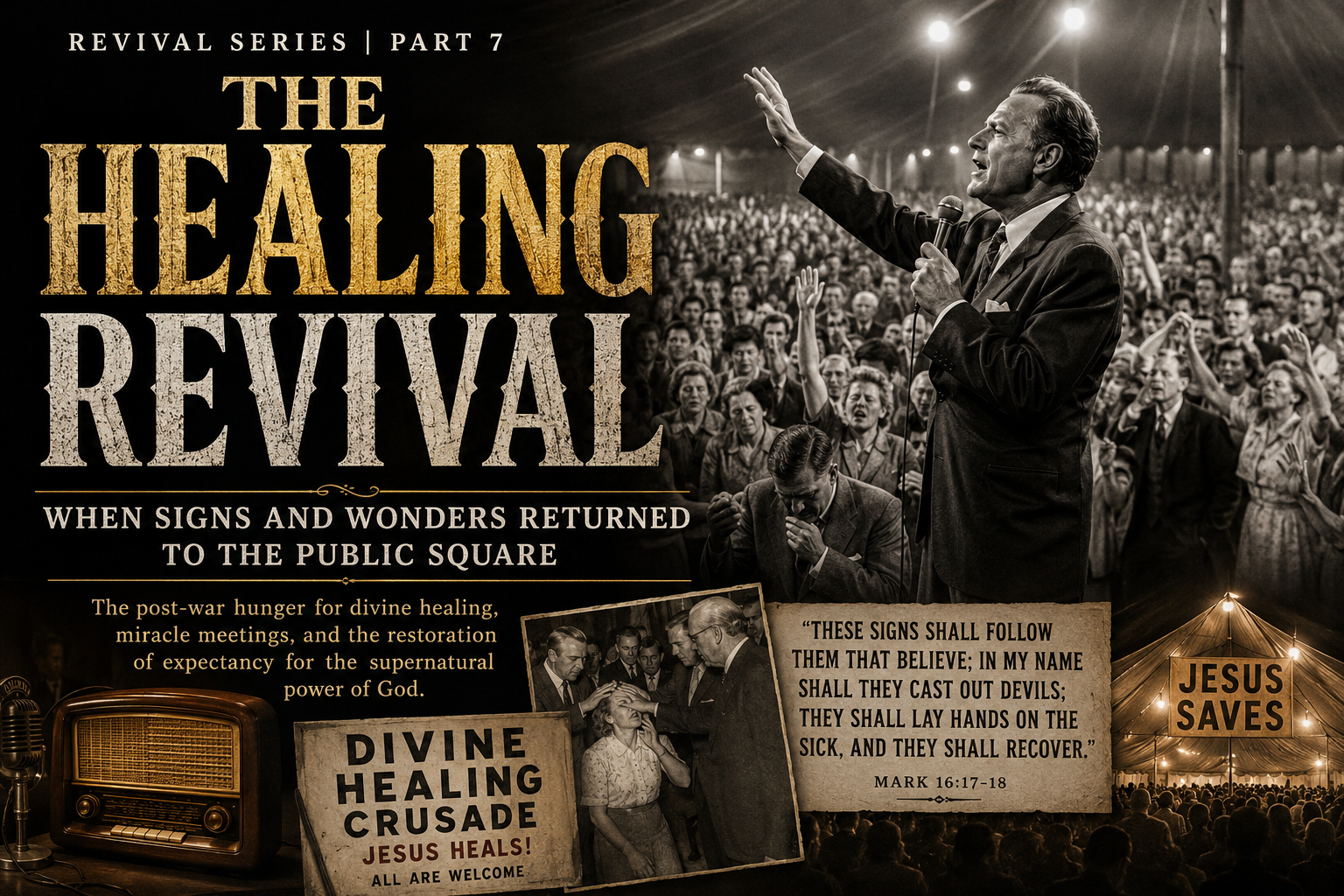
The Post-War Hunger for Divine Healing and the Restoration of Holy Spirit Expectancy

The Healing Revival
When Signs and Wonders Returned to the Public Square

After the fires of war had swept across the earth, the world stepped into the late 1940s carrying wounds deeper than statistics could measure. Nations had been shaken. Families had buried sons. Bodies had returned from battlefields carrying scars, trauma, amputations, sickness, and grief. The human soul had seen what modern machinery could do when separated from righteousness. Into that atmosphere, God began to awaken something that many parts of the Church had allowed to grow dim: the expectancy that Jesus Christ still heals, still delivers, still moves in power, and still confirms His Word with signs following.

The Healing Revival that emerged in the post-war years is commonly associated with the late 1940s through the 1950s. Many historians connect its rise with large-scale healing campaigns, tent meetings, radio broadcasts, prayer lines, and evangelistic gatherings where divine healing was proclaimed publicly again. This movement helped renew the Church’s expectation for the supernatural and became one of the major streams that later fed into the broader Charismatic movement.

This was not merely a season of emotional meetings. It was a response to a deep spiritual hunger. People were tired of religion that had language without power, structure without presence, and doctrine without demonstration. They wanted to know whether the Jesus who opened blind eyes, cleansed lepers, healed the lame, cast out demons, and raised the dead was still moving through His Church. The Healing Revival answered that hunger with a thunderous declaration: “Jesus Christ is the same yesterday, today, and forever” (Hebrews 13:8).

The public square began to hear again that sickness was not beyond the reach of Christ. Pain was not greater than the cross. Torment was not stronger than the blood. Disease was not more authoritative than the name of Jesus. In an age marked by grief, loss, and medical limitation, healing evangelists stepped into tents, auditoriums, churches, radio programs, and crusade platforms declaring that the living Christ still stretched out His hand toward the broken.

Names such as Oral Roberts, William Branham, Gordon Lindsay, F. F. Bosworth, Jack Coe, A. A. Allen, and others became associated with this era. Some carried powerful healing testimonies. Some drew massive crowds. Some helped awaken faith in entire regions. Gordon Lindsay’s Voice of Healing became a major publication connected to the movement, helping spread testimonies and reports of healing campaigns across Pentecostal and evangelical circles.

But to understand the Healing Revival rightly, we must look deeper than personalities. The true issue was not the platform. The true issue was the restoration of expectancy. The Church was being confronted with a question that every generation must answer: Do we only believe in the miracles of the Bible as historical memories, or do we believe the same Holy Spirit still empowers the Ecclesia to minister in the authority of Jesus Christ?

The book of Acts never presents signs and wonders as entertainment. They are not spiritual theater. They are not religious performance. They are the mercy of God breaking into human suffering and the authority of the Kingdom confronting the works of darkness. Acts 4:29–30 records the prayer of the early Church: “Lord, behold their threatenings: and grant unto thy servants, that with all boldness they may speak thy word, by stretching forth thine hand to heal; and that signs and wonders may be done by the name of thy holy child Jesus.”

Notice the order. They asked for boldness to speak the Word, and they asked God to stretch forth His hand to heal. The miracle was not meant to replace the message. The miracle was meant to bear witness to the message. Healing was never supposed to become the center; Jesus was always the center. But where Jesus is truly preached in fullness, the compassion and power of His Kingdom cannot remain theoretical.

This is where the Healing Revival carried a necessary correction to much of the Western Church. Many believers had settled into a powerless form of Christianity. They believed God could heal, but they no longer expected Him to. They honored the miracles of Scripture, but quietly treated them as if they belonged only to a former age. The Healing Revival challenged that unbelief. It forced the Church to wrestle again with Mark 16:17–18, James 5:14–15, 1 Corinthians 12, Acts 3, Acts 5, Acts 8, Acts 10, and Acts 19.

The message was simple but disruptive: the Gospel of the Kingdom is not word only. Paul wrote in 1 Corinthians 4:20, “For the kingdom of God is not in word, but in power.” That does not mean power without truth. It means truth confirmed by the living presence of God. It means the Kingdom is not merely explained; it is demonstrated through surrendered vessels who carry the authority of the King.

Yet we must also be honest. Like many moves of God, the Healing Revival carried both glory and warning. There were genuine miracles, salvations, deliverances, and awakenings. There were also controversies, exaggerations, doctrinal errors, financial abuses, personality-driven ministries, exhaustion among leaders, and places where the gift became more visible than the Giver. Some Pentecostal leaders and denominations eventually became concerned about sensationalism, questionable fundraising practices, doctrinal conflict, and lack of accountability within parts of the movement.

This matters because the Remnant must learn from history without dishonoring what God truly did. We do not need to throw away the fire because some men mishandled the altar. We also do not need to excuse disorder simply because miracles were reported. The mature Ecclesia must be able to say both things at once: God truly restored healing expectancy in that generation, and the Church must never allow signs and wonders to become separated from holiness, humility, truth, character, and the Lordship of Jesus Christ.

The Healing Revival reminds us that power without character becomes dangerous, but character without power can become religiously respectable unbelief. The biblical pattern is not one or the other. The biblical pattern is Spirit and truth. Jesus moved in perfect compassion, perfect holiness, perfect obedience, and perfect authority. He did not heal to build a brand. He healed because the Kingdom had come near. He healed because the Father’s heart was being revealed. He healed because the works of the devil were being destroyed.

Acts 10:38 declares that “God anointed Jesus of Nazareth with the Holy Ghost and with power,” and that He “went about doing good, and healing all that were oppressed of the devil; for God was with him.” This verse gives us a Kingdom lens. Healing is not merely physical relief. It is the collision between Heaven’s government and the oppression of darkness. It reveals the goodness of God, the authority of Christ, and the nearness of the Kingdom.

That is why the Healing Revival belongs in the story of revival history. It reintroduced the public square to the possibility that God was not silent, distant, or retired from supernatural intervention. It reminded post-war America that Heaven was not intimidated by trauma, sickness, grief, or despair. It brought people into tents and meetings where they heard the Gospel, received prayer, witnessed testimonies, and encountered a dimension of Christianity many had only read about.

But now the question comes to our generation.

Will we recover healing without hype?

Will we recover signs and wonders without celebrity?

Will we recover miracle faith without manipulation?

Will we recover public demonstrations of the Kingdom while remaining deeply submitted to Scripture, holiness, humility, and the government of Holy Spirit?

The Remnant must understand this: signs and wonders were never given so the Church could become impressive. They were given so Christ would be revealed. Healing is not a marketing strategy. Deliverance is not a platform tool. Miracles are not spiritual entertainment. They are acts of mercy from the King, bearing witness that the Gospel is alive, the Kingdom is present, and Jesus still destroys the works of the devil.

The Healing Revival showed us what can happen when divine expectancy returns to the public square. But it also warned us what happens when gifting runs faster than formation. The next healing movement must not be built around personalities. It must be carried by purified sons and daughters who know how to steward power from a place of surrender. The next wave must not be tent-centered, platform-centered, or personality-centered. It must be Christ-centered, Spirit-governed, Scripture-rooted, and holiness-anchored.

The Church does not need a return to yesterday’s methods. We need a return to biblical expectancy. We need prayer rooms where the sick are not treated as interruptions. We need altars where torment is confronted with compassion and authority. We need believers who lay hands on the sick in faith, not because they are chasing a name, but because they are obeying the Word. We need pastors, teachers, evangelists, prophets, apostles, intercessors, and everyday disciples who once again believe that the same Spirit who raised Christ from the dead dwells in the people of God.

Romans 8:11 declares that if the Spirit of Him who raised Jesus from the dead dwells in us, He who raised Christ shall also quicken our mortal bodies by His Spirit. That is not weak language. That is resurrection language. That is Kingdom language. That is the language of divine life invading mortal limitation.

The Healing Revival was a trumpet blast to a wounded generation. It declared that Jesus still heals. Jesus still delivers. Jesus still saves. Jesus still moves in power. But the Remnant must now carry that revelation with greater purity, greater maturity, and greater accountability. We must refuse both dead religion and reckless sensationalism. We must refuse unbelief dressed as discernment, and we must refuse hype dressed as faith.

The true healing ministry of Jesus flows from intimacy with the Father, obedience to Holy Spirit, compassion for the broken, hatred for the works of darkness, and submission to the Word of God. When those things are in order, healing does not become a show. It becomes a witness.

The public square still needs that witness.

Hospitals are full. Homes are broken. Minds are tormented. Bodies are afflicted. Families are grieving. Addictions are destroying destinies. Trauma is locking people in invisible prisons. And the Church cannot answer this hour with religious language alone. The Gospel must be preached. The Kingdom must be demonstrated. The sick must be prayed for. The oppressed must be delivered. The broken must encounter the living Christ.

The Healing Revival reminds us that post-war hunger opened a door for supernatural expectancy. But our generation carries its own wounds, its own wars, its own trauma, its own despair, and its own desperate need for the healing power of Jesus Christ.

So let the Remnant rise with clean hands and burning hearts.

Let the Ecclesia recover the courage to pray for the sick.

Let the altar be purified from performance.

Let the gifts of the Spirit operate under the Lordship of Christ.

Let healing return without hype, miracles return without manipulation, and signs and wonders return as witnesses to the supremacy of Jesus.

Because the same Jesus who healed then still heals now.

The same Holy Spirit who moved then still moves now.

And the same Kingdom that broke into the public square in the book of Acts is still advancing through surrendered sons and daughters today.

Scripture for Reflection:

“And these signs shall follow them that believe; In my name shall they cast out devils; they shall speak with new tongues… they shall lay hands on the sick, and they shall recover.”
Mark 16:17–18

“How God anointed Jesus of Nazareth with the Holy Ghost and with power: who went about doing good, and healing all that were oppressed of the devil; for God was with him.”
Acts 10:38

“For the kingdom of God is not in word, but in power.”
1 Corinthians 4:20

Prayer:

Father, restore holy expectancy to Your people. Purify our motives, cleanse our altars, and deliver us from both unbelief and performance. Teach us to carry the healing ministry of Jesus with humility, compassion, authority, and obedience. Let signs and wonders return as witnesses to the Gospel of the Kingdom, and let every miracle point back to the Lordship of Jesus Christ. Amen.

Stay tuned, the journey continues…..

A voice of fire to the Remnant,

— Dr. Russell Welch

Dr. Russell Welch is a published author, prophetic teacher, apostolic builder, author, and founder of faith-driven publishing and media initiatives. He is known for crafting bold, Kingdom-centered messages that call the Ecclesia into maturity, doctrinal clarity, and governmental authority. With a passion for equipping the Remnant and honoring generational legacy, Dr. Welch writes and teaches at the intersection of Scripture, history, and spiritual governance, challenging believers to live as sons and daughters who legislate Heaven on earth through truth, holiness, and unwavering fidelity to Christ.

Be sure to check out his book: Restoring God’s Prophetic Voice: Unleashing the Watchman’s Power in the Church’s Guide to Holy Living, available exclusively on Amazon … here

Amazon Author Page


Dismantling Replacement Theology with the Light of Truth and the Unbroken Covenant of God with Israel

Replacement Theology is not merely a harmless doctrinal difference. It becomes dangerous when it teaches the Church to boast against the very root that carries her. It becomes toxic when it suggests that God cast away Israel in order to replace her with a Gentile Church. It becomes deceptive when it takes the promises, covenants, prophetic destiny, and covenant identity given to Israel and transfers them in such a way that the Jewish people are treated as abandoned, rejected, or irrelevant to God’s redemptive plan.

Romans 11 stands as one of the clearest apostolic rebukes against this error.

Paul opens Romans 11 with a question that leaves no room for confusion: “Has God cast away His people?” His answer is immediate and forceful: “God forbid.” In Greek, Paul uses the phrase mē genoito, which carries the sense of “May it never be,” “Absolutely not,” or “Let such a thing never be thought.” This is not a soft disagreement. This is Paul slamming the door on the idea that God has rejected Israel.

Romans 11:1 says, “I say then, Hath God cast away his people? God forbid. For I also am an Israelite, of the seed of Abraham, of the tribe of Benjamin.”

The Greek word translated “cast away” is apōtheō, meaning to push away, reject, thrust aside, or repudiate. Paul is directly confronting the idea that God has shoved Israel out of His covenant purpose. His answer is no. God has not repudiated His people. God has not divorced Himself from the covenant promises given to Abraham, Isaac, Jacob, and their descendants.

The Aramaic/Syriac Peshitta carries the same force. The question reads with the sense of whether God has rejected or cast off His people, and the response is emphatic: “Far be it.” The Syriac witness strengthens the same apostolic conclusion: God’s covenant people have not been discarded. Israel has experienced a partial hardening, but not covenant abandonment.

This distinction matters.

Paul does not say Israel has been replaced.
Paul says Israel has experienced a partial hardening.
Paul does not say the Church became Israel in a way that erases Israel.
Paul says Gentiles have been grafted into the covenant blessing through Messiah.
Paul does not say the root now depends on the branches.
Paul says the branches depend on the root.

Romans 11:2 declares, “God hath not cast away his people which he foreknew.”

The Greek word foreknew is proginōskō, meaning to know beforehand, to set covenantal knowledge upon, to recognize in advance. This is more than God having information ahead of time. It speaks of covenant recognition and divine intention. The people God foreknew, He did not abandon. The covenant God initiated, He did not cancel. The promises God swore, He did not break.

The Aramaic witness preserves this same covenant logic. God has not rejected the people He knew from before. This is covenant language. This is faithfulness language. This is the language of divine remembrance.

Replacement Theology collapses because Romans 11 is built upon the faithfulness of God.

If God can break His covenant with Israel, then what confidence does the Church have that He will keep His covenant promises to us? If God can revoke His oath to Abraham, then how can we trust His promises in Christ? Paul’s entire argument is not merely about Israel. It is about the character of God. The issue is not only Israel’s destiny; the issue is whether God is faithful to His own Word.

Romans 11:11 says, “Have they stumbled that they should fall? God forbid.”

Again Paul uses mē genoito: absolutely not. Israel stumbled, but Israel did not fall beyond recovery. Their stumbling opened a door of mercy to the nations, but the mercy shown to the nations was never meant to become arrogance against Israel. Gentile inclusion was designed to provoke Israel to holy jealousy, not to create Gentile superiority.

Paul then gives the olive tree picture.

Romans 11:17–18 says, “And if some of the branches be broken off, and thou, being a wild olive tree, wert grafted in among them… boast not against the branches. But if thou boast, thou bearest not the root, but the root thee.”

This is devastating to Replacement Theology.

The Greek word for “grafted in” is enkentrizō. It speaks of inserting a branch into a living tree so it may draw life from the root. Gentile believers are not planted as a separate replacement tree. They are grafted into the existing covenantal olive tree. The tree existed before the Gentile branches were added. The root is not Gentile. The root is covenantal. The root runs through the patriarchs, the promises, the covenants, the prophets, and ultimately Messiah Himself, who came according to the flesh from Israel.

The Aramaic/Syriac Peshitta also presents the Gentiles as branches grafted in among the natural branches. The image remains the same: the Gentile believer receives life by being joined into what God had already cultivated. The wild branch does not become the root. The wild branch does not own the tree. The wild branch does not replace the natural branches. The wild branch is sustained by mercy.

Paul’s warning is sharp: “Boast not against the branches.”

The Greek word for boast carries the idea of exalting oneself over another. Paul is warning Gentile believers not to become arrogant toward Jewish unbelief. He is not giving the Church permission to mock Israel, erase Israel, spiritualize away Israel’s promises, or claim Israel’s identity in a way that denies Israel’s future restoration.

Romans 11:20 says, “Be not highminded, but fear.”

In Greek, the phrase carries the force of, “Do not think lofty thoughts about yourself, but stand in reverent fear.” Replacement Theology often produces the very attitude Paul warned against. It becomes high-minded. It assumes that Gentile believers now possess the covenant in such a way that Israel no longer matters. Paul says that attitude is not faith. It is arrogance.

Then Paul brings the argument to its covenant climax.

Romans 11:25 says, “Blindness in part is happened to Israel, until the fulness of the Gentiles be come in.”

The Greek phrase pōrōsis apo merous means “hardening in part.” This is critical. Paul does not say total blindness. He does not say permanent blindness. He does not say covenant rejection. He says partial hardening. The phrase “until the fullness of the Gentiles” means there is a divine timetable. Israel’s present condition is not the final word. God is still moving toward covenant fulfillment.

The Aramaic witness also speaks of a measure of blindness or dullness coming upon Israel until the fullness of the nations enters. Again, the idea is not replacement. The idea is sequence, mystery, timing, mercy, and restoration.

Romans 11:26 then says, “And so all Israel shall be saved.”

This verse must not be handled carelessly. Paul is not teaching salvation apart from Messiah. He is not saying Jewish identity alone saves. He is saying that God’s covenant dealings with Israel are not finished and that a future turning of Israel to Messiah belongs to the mystery of God’s redemptive plan.

The Greek word houtōs, translated “so,” means “in this manner” or “in this way.” Paul is explaining the divine pattern: partial hardening has come upon Israel, fullness is coming among the Gentiles, and then Israel’s restoration will unfold according to God’s covenant faithfulness.

Romans 11:27 says, “For this is my covenant unto them, when I shall take away their sins.”

The Greek word diathēkē means covenant. Paul grounds Israel’s future salvation not in human merit, but in divine covenant. God made promises. God swore by Himself. God does not lie. God does not revoke His covenant oath because of Gentile misunderstanding.

The Aramaic/Syriac Peshitta also holds the covenant language strongly. The taking away of sins is tied to God’s covenant action. Israel’s restoration is not sentimental nationalism. It is covenantal redemption through the mercy of God in Messiah.

Then Paul makes the statement that should end the replacement argument:

Romans 11:28–29 says, “As concerning the gospel, they are enemies for your sakes: but as touching the election, they are beloved for the fathers’ sakes. For the gifts and calling of God are without repentance.”

The Greek word for “election” is eklogē, meaning divine choosing. Israel remains beloved because of the fathers. Which fathers? Abraham, Isaac, and Jacob. Paul does not say Israel used to be beloved. He says they are beloved. Present tense covenant affection remains upon them because of patriarchal promise.

The phrase “without repentance” comes from the Greek ametamelēta, meaning irrevocable, not to be regretted, not taken back. God does not regret His covenant gifts. God does not withdraw His calling. God does not erase Israel from His redemptive purpose.

The Aramaic witness carries the same meaning: the gifts and calling of God are not reversed. They are not subject to cancellation. God’s covenant faithfulness remains intact.

This means Replacement Theology collapses under the weight of Romans 11.

The Church is not “the new Israel” in a way that erases ethnic Israel. The Church is the one new man in Messiah, made up of believing Jews and believing Gentiles, reconciled through the cross, sharing in covenant blessing by grace. Gentiles are not outsiders anymore, but neither are they covenant thieves. We have been brought near by the blood of Messiah. We have been grafted in by mercy. We have become fellow heirs, not replacement heirs.

The land of Israel also cannot be casually dismissed as though the biblical covenants were merely metaphors with no earthly consequence. The Abrahamic covenant included seed, blessing, nations, and land. The prophets repeatedly tie Israel’s restoration to both spiritual renewal and covenantal return. While salvation is only through Messiah, and while the modern political state of Israel must still be judged by righteousness and truth like every nation, the biblical land promise cannot be erased by Gentile theology without doing violence to the text.

The issue is not blind political worship of a nation-state. The issue is the integrity of God’s covenant Word.

We do not worship Israel.
We worship the God of Israel.
We do not preach salvation through ethnicity.
We preach salvation through Jesus the Messiah.
We do not deny the Church’s glorious identity in Christ.
We deny the arrogant doctrine that says the Church replaced Israel and inherited her promises by erasing her future.

Paul’s warning must be heard again in this generation: “Do not boast against the branches.”

Replacement Theology is dangerous because it teaches the grafted-in branch to boast against the natural branch. It teaches the wild olive branch to act like it owns the root. It forgets that Jesus is Jewish according to the flesh, the apostles were Jewish, the prophets were Jewish, the covenants were given to Israel, the Scriptures came through Israel, and the Messiah came through Israel.

Romans 11 is not a side issue. It is a covenant courtroom. Paul brings the Gentile Church before the witness stand and asks: Will you stand in mercy, or will you boast in arrogance?

The true apostolic position is clear.

God has not cast away Israel.
Israel’s hardening is partial, not total.
Israel’s stumbling is temporary, not final.
Gentiles are grafted in, not installed as replacements.
The root supports us; we do not support the root.
Israel remains beloved for the fathers’ sake.
The gifts and calling of God are irrevocable.
The covenant-keeping God will finish what He started.

Therefore, the Remnant Ecclesia must reject the false replacement gospel and recover the fear of the Lord concerning Israel. We bless what God has blessed. We honor what God has covenanted. We pray for the peace of Jerusalem. We preach Messiah to Jew and Gentile alike. We stand against antisemitism, arrogance, and theological theft. And we proclaim with Paul that the mercy of God is wide enough to gather the nations without abandoning Israel.

The light of truth dismantles the lie.

God’s covenant with Israel has not been broken.
God’s Word has not failed.
God’s promises have not expired.
God’s election has not been revoked.
And the God of Abraham, Isaac, and Jacob will be faithful to His covenant until the fullness of His redemptive plan is complete.

Stay tuned, the journey continues…..

A voice of fire to the Remnant,

— Dr. Russell Welch

Dr. Russell Welch is a published author, prophetic teacher, apostolic builder, author, and founder of faith-driven publishing and media initiatives. He is known for crafting bold, Kingdom-centered messages that call the Ecclesia into maturity, doctrinal clarity, and governmental authority. With a passion for equipping the Remnant and honoring generational legacy, Dr. Welch writes and teaches at the intersection of Scripture, history, and spiritual governance, challenging believers to live as sons and daughters who legislate Heaven on earth through truth, holiness, and unwavering fidelity to Christ.

Be sure to check out his book: Restoring God’s Prophetic Voice: Unleashing the Watchman’s Power in the Church’s Guide to Holy Living, available exclusively on Amazon … here

Amazon Author Page


The Remnant does not worship a nation; we war for the purposes of God within it.

Christian nationalism is often used as a broad accusation, but not everyone using the term means the same thing. At its worst, Christian nationalism becomes the attempt to fuse the Kingdom of God with a political party, an earthly nation, or a cultural tribe, as though the government of Christ depends on the machinery of man. That is not the Gospel. Jesus did not die to create a baptized empire; He came announcing a Kingdom not of this world, yet one that invades this world through surrendered sons and daughters who carry His righteousness, truth, justice, mercy, and authority.

But here is where the religious spirit twists the conversation. The mainstream Church, often ruled more by fear, respectability, denominational systems, political correctness, and the fear of man than by the Lordship of Holy Spirit, wrongly labels every believer who loves America, prays for America, honors America’s founding covenantal roots, defends righteousness, and believes God has had a redemptive purpose for this nation as a “Christian nationalist.” That is spiritual laziness. It is also a convenient accusation used to silence the Ecclesia Remnant who understand that nations matter to God, righteousness exalts a nation, and the Church is called to disciple nations, not hide from them.

There is a massive difference between worshiping America and believing America was founded under the providential hand of God. There is a massive difference between making an idol out of a nation and believing that a nation can be called to carry light, liberty, justice, and Gospel influence to the nations of the earth. Jesus said His people are “the light of the world” and “a city set on a hill” that cannot be hidden. The tragedy is that many religious voices have become so allergic to national calling that they cannot distinguish between idolatrous nationalism and covenantal responsibility.

The Ecclesia Remnant is not trying to replace Christ with America. The Remnant is calling America back under the authority of Christ. The Remnant is not bowing before a flag as an idol. The Remnant is standing beneath the Lordship of Jesus and saying, “This nation belongs to God, and we will not surrender it to darkness, lawlessness, perversion, corruption, violence, witchcraft, globalist control, or anti-Christ ideologies.” That is not Christian nationalism. That is prophetic responsibility.

The religious spirit distorts this because it always attacks what it cannot control. It attacked Jesus for healing on the Sabbath. It attacked the apostles for preaching in the name of Jesus. It accused the early Church of turning the world upside down when, in truth, they were turning it right side up. The religious spirit is not neutral; it hides behind polished language, theological caution, and institutional respectability while resisting the present movement of Holy Spirit.

Many religious individuals are deeply unaware that their rhetoric gives ammunition to those who already hate biblical righteousness. When they falsely accuse Spirit-led believers of extremism simply because they stand for truth, national security, borders, children, parental authority, biblical morality, religious liberty, and the freedom to preach Christ publicly, they are not being prophetic. They are helping frame the Church as dangerous. They are handing language to those who desire to persecute the Church and remove her from the battlefield.

This is not new. The enemy has always tried to rename obedience as rebellion, courage as hatred, discernment as extremism, and righteousness as oppression. But the Ecclesia must not be manipulated into silence. We are commanded to pray for kings and all in authority. We are commanded to occupy until He comes. We are commanded to make disciples of nations. We are commanded to expose the works of darkness. We are commanded to stand fast in the liberty wherewith Christ has made us free.

The true danger is not the Remnant praying for America to return to God. The danger is a compromised Church that has become more afraid of being called political than being found unfaithful. The danger is a religious system that condemns bold believers while remaining quiet as darkness advances through schools, government, media, courts, entertainment, and culture. The danger is not that the Ecclesia loves her nation too much. The danger is that much of the Church has forgotten that love must sometimes confront, contend, and cry aloud.

America does not need a Church that worships the nation. America needs an Ecclesia that worships Christ and refuses to abandon the nation. America does not need religious neutrality. America needs sons and daughters filled with Holy Ghost fire, carrying truth without compromise, love without cowardice, and authority without arrogance. The Remnant must rise with clean hands, pure hearts, biblical conviction, and Kingdom allegiance.

So let it be made clear: we do not bow to political idols, but neither will we bow to religious intimidation. We do not worship America, but we will war for her redemptive purpose. We do not place the flag above the cross, but we refuse to let those who hate the cross define our love for the nation. We are not Christian nationalists in the carnal sense; we are Kingdom citizens, born from above, assigned by God, standing as the Ecclesia of Jesus Christ in the land where He has planted us.

And if the religious spirit calls that dangerous, then perhaps it has finally recognized what Hell has known all along: a Spirit-filled, awakened, fearless Ecclesia is the one thing darkness cannot afford to leave on the battlefield.

The Holy Spirit-inspired strategy for the Remnant in this hour is not to war from anger, reaction, or political panic, but from the throne-room position of seated authority in Christ. We must begin with repentance where the Church has grown silent, intercession where the nation has grown dark, and decree where Hell has built illegal structures through fear, deception, lawlessness, and covenant-breaking. The Remnant must recover the altar, restore the prayer watch, bless what God has blessed, expose what darkness has hidden, and contend for this nation without allowing hatred, pride, or bitterness to corrupt the assignment. This is not a call to carnal war; this is a call to Spirit-led warfare, where worship becomes a weapon, truth becomes a sword, righteousness becomes a standard, and the blood of Jesus becomes the testimony that overthrows every accusation of the enemy.

We must also learn to discern the religious spirit by its fruit: it accuses what it cannot control, labels what it cannot understand, fears freedom, resists Holy Spirit government, and often uses biblical language while opposing biblical authority. The religious spirit will call boldness arrogance, conviction hatred, discernment division, and obedience rebellion, because it is more loyal to systems than to the present voice of God. To dismantle its hold on those who wrongly accuse the brethren, the Remnant must refuse retaliation, walk in clean authority, expose the lie without becoming infected by the same spirit, pray for the eyes of the deceived to open, and stand immovable in love, truth, and holiness. We overcome the religious spirit not by becoming louder accusers, but by becoming living witnesses of the Kingdom it cannot counterfeit.

Decree of the Ecclesia Remnant

Now in the mighty name of Jesus Christ, we decree that the Ecclesia Remnant is rising in this hour with clean hands, pure hearts, sharpened discernment, and holy fire from the altar of God. We decree that every false accusation, every religious label, every spirit of intimidation, and every demonic attempt to remove the Church from the battlefield is broken by the authority of the risen Christ. We decree that the sons and daughters of God will no longer hide, shrink back, or surrender the gates of influence to darkness, but will stand as ambassadors of the Kingdom, clothed in righteousness, filled with Holy Spirit, and governed by the Lordship of Jesus.

We decree that the Kingdom of our God is advancing through prayer, proclamation, obedience, repentance, justice, mercy, truth, and holy courage. We call the Remnant to rise from coast to coast and border to border, from pulpits to homes, from cities to rural fields, from government halls to schoolhouses, from marketplaces to prayer closets, until the knowledge of the glory of the Lord covers this nation as the waters cover the sea. America shall not be handed over quietly to darkness. The Ecclesia is rising, the altar is burning, the King is speaking, and the Kingdom of our God shall advance in this land for the glory of Jesus Christ.

Stay tuned, the journey continues…..

A voice of fire to the Remnant,

— Dr. Russell Welch

Dr. Russell Welch is a published author, prophetic teacher, apostolic builder, author, and founder of faith-driven publishing and media initiatives. He is known for crafting bold, Kingdom-centered messages that call the Ecclesia into maturity, doctrinal clarity, and governmental authority. With a passion for equipping the Remnant and honoring generational legacy, Dr. Welch writes and teaches at the intersection of Scripture, history, and spiritual governance, challenging believers to live as sons and daughters who legislate Heaven on earth through truth, holiness, and unwavering fidelity to Christ.

Be sure to check out his book: Restoring God’s Prophetic Voice: Unleashing the Watchman’s Power in the Church’s Guide to Holy Living, available exclusively on Amazon … here

Amazon Author Page


Separated, Consecrated, and SentThe True Remnant Will Not Bow

There are many in the Remnant in this hour who must understand that the call of God will not always allow you to continue walking with everyone you once walked with. There comes a moment when assignment begins to separate what fellowship once held together. It is not always because someone is wicked, and it is not always because someone has become your enemy. Sometimes the call simply reveals that you are no longer drinking from the same stream, marching under the same sound, or being governed by the same fire.

It reminds me of Gideon’s army in Judges 7, when the Lord separated the men by how they drank water. What looked like a small detail became a divine distinction. God was not looking for the largest crowd; He was marking the company He could trust in the battle. In this hour, Heaven is still separating those who are alert, surrendered, and ready from those who are present but not prepared.

Your devotion to Christ alone will send fear through the dark realms, especially where the spirit of religion has built comfortable thrones. Religion can tolerate talent, titles, programs, and performance, but it trembles when it encounters a son or daughter who cannot be bought, branded, silenced, or controlled. The spirit of religion does not fear church activity; it fears surrendered obedience. It fears those who have decided that Jesus is Lord, and no man-made system gets to sit on His throne.

Many will call your refusal to bend “rebellion,” but Heaven may be calling it obedience. Your unwillingness to bow to dead traditions, powerless rituals, sacred cow doctrines, and church customs that Holy Spirit never authorized may be misunderstood by those who have mistaken control for covering. They may say you are difficult, unteachable, dishonoring, or out of order. But sometimes what they call “out of order” is actually a life finally coming under the order of the King.

There will be some who find themselves faced with a painful choice: bend the knee to the system or quietly take the exit. Bow to the brand or follow the Lamb. Keep the seat or keep the fire. Preserve the approval of men or obey the voice of the One who called you from before the foundation of the world.

Jesus said, “Follow Me,” and that call has always carried separation within it. Peter and Andrew left their nets. Matthew left the tax booth. Abraham left his country. Elisha left the plow. There is always a leaving attached to the higher call, because you cannot fully step into what God is assigning while clinging to what He is telling you to release.

This is not a call to arrogance, bitterness, dishonor, or reckless independence. This is a call to holy allegiance. The Remnant must walk low before God, clean in heart, quick to forgive, slow to accuse, and unwilling to let offense become the fuel of their departure. But they must also refuse to let fear, false loyalty, or religious intimidation keep them chained to a place where the fire of God is being quenched.

Paul said, “If I yet pleased men, I should not be the servant of Christ” (Galatians 1:10). That verse must become a sword in the hand of every son and daughter who is being pulled between obedience and acceptance. There comes a time when you must decide whose approval governs your yes. If pleasing men becomes your master, obedience to Christ will always be negotiated.

So to the Remnant who feel the separation happening, do not panic. Do not let grief convince you that you missed God. Do not let the accusations of others define the purity of your obedience. Sometimes the narrow road gets even narrower right before the assignment becomes clearer.

Stand in love, but do not bow to fear. Walk in humility, but do not surrender your assignment to religious control. Honor people, but worship Christ alone. And when Heaven says move, move — because your obedience may be the very thing that breaks the chains off someone else who has been too afraid to step out.

The Remnant is not being separated so they can become isolated.

They are being separated so they can be consecrated.

And once consecrated, they can be sent with fire.

Stay tuned, the journey continues…..

A voice of fire to the Remnant,

— Dr. Russell Welch

Dr. Russell Welch is a published author, prophetic teacher, apostolic builder, author, and founder of faith-driven publishing and media initiatives. He is known for crafting bold, Kingdom-centered messages that call the Ecclesia into maturity, doctrinal clarity, and governmental authority. With a passion for equipping the Remnant and honoring generational legacy, Dr. Welch writes and teaches at the intersection of Scripture, history, and spiritual governance, challenging believers to live as sons and daughters who legislate Heaven on earth through truth, holiness, and unwavering fidelity to Christ.

Be sure to check out his book: Restoring God’s Prophetic Voice: Unleashing the Watchman’s Power in the Church’s Guide to Holy Living, available exclusively on Amazon … here

Amazon Author Page


When Heaven Invaded the Islands

There are moments in history when Heaven does not merely visit a people with encouragement, but invades a territory with the weight of divine presence. The Hebrides Revival of 1949–1952 was one of those moments, when the Isle of Lewis in the Outer Hebrides of Scotland became a trembling altar before the Lord. It was not built on entertainment, personality, or religious machinery, but on desperate intercession, deep conviction, and the sovereign movement of Holy Spirit. What happened there reminds us that when God truly comes, communities do not merely attend meetings; they come under the government of His presence.

The Scripture declares, “Wilt thou not revive us again: that thy people may rejoice in thee?” (Psalm 85:6, KJV). Revival is not man awakening God, but God awakening man. It is not the Church persuading Heaven to become interested in earth, but Heaven finding vessels on earth who are finally surrendered enough to carry what has always been in the heart of the Father. The Hebrides Revival teaches us that revival does not begin with crowds; it begins with hunger.

In the village of Barvas, two elderly sisters, Peggy and Christine Smith, became hidden instruments in the hand of God. Peggy was blind, Christine was severely afflicted with arthritis, and neither one stood on a public platform; yet their cottage became a throne-room chamber of intercession. Historical accounts repeatedly connect their prayer burden with Isaiah 44:3: “I will pour water upon him that is thirsty, and floods upon the dry ground.” Peggy and Christine Smith prayed in their cottage while ministers and others gathered for prayer in other places, crying out for God to come upon the island.

This is the kind of intercession Hell fears: not performance prayer, not polished prayer, not prayer that tries to impress men, but prayer that lays hold of the promise of God until the atmosphere begins to bend. James 5:16 says, “The effectual fervent prayer of a righteous man availeth much.” The Hebrides reminds us that Heaven does not need celebrities to birth revival; Heaven needs surrendered vessels who will not let go until the promise becomes manifestation. A hidden cottage can become more dangerous to darkness than a thousand decorated platforms.

Duncan Campbell would later become one of the most recognized voices connected to the revival, but he was not the source of the fire. He was an instrument who stepped into a field already plowed by travail. Campbell himself emphasized the seriousness of genuine revival, declaring, “If you want revival, get right with God.” That line carries the sharp edge of the Hebrides testimony, because this was not a movement of religious excitement but a movement of holy confrontation.

When Duncan Campbell arrived, he did not bring revival in a suitcase; he walked into a divine disturbance already underway. The people had been crying out, the elders had been searching their own hearts, and the intercessors had been wrestling with God for an outpouring. Acts 2:2 says, “Suddenly there came a sound from heaven as of a rushing mighty wind.” In the Hebrides, that sudden sound did not come to entertain a people; it came to arrest a people.

The accounts of the Hebrides Revival are marked by a holy conviction that fell upon entire communities. Men and women were not simply moved emotionally; they were pierced in conscience. John 16:8 says Holy Spirit will “reprove the world of sin, and of righteousness, and of judgment.” When Heaven invaded those islands, people became aware that God was not an idea to be discussed, but a holy King before whom every soul must answer.

This is what makes true revival different from religious enthusiasm. Enthusiasm can fill a room, but conviction can empty a heart of compromise. Enthusiasm can make people shout, but conviction makes people repent. Second Corinthians 7:10 says, “For godly sorrow worketh repentance to salvation not to be repented of.” The Hebrides Revival carried that kind of sorrow, the kind that does not lead to despair, but to cleansing, surrender, and life.

One of the remarkable features of this move of God was how far beyond the church building the presence of God seemed to reach. Historical accounts describe fishermen, young people, villagers, and entire communities being overtaken by the reality of God’s nearness. Campbell’s own testimony included accounts of people being drawn by the Spirit of God outside the normal structure of a meeting. This is what happens when the manifest presence of the Lord rests upon a region: the atmosphere becomes evangelistic.

We must understand this with spiritual clarity: revival is not merely God blessing church activity; revival is God reclaiming territory. Psalm 24:1 says, “The earth is the LORD’S, and the fulness thereof; the world, and they that dwell therein.” When Heaven came upon the Hebrides, it was as if the Lord reminded the islands that they belonged to Him. The pubs, the roads, the homes, the villages, the youth, the families, and the fields all came under the awareness that Jesus Christ is Lord.

This is why the Hebrides Revival remains such a needed prophetic witness for our own hour. We have learned how to build programs, brand ministries, market movements, and engineer religious momentum, but only God can send holy invasion. Zechariah 4:6 says, “Not by might, nor by power, but by my spirit, saith the LORD of hosts.” The Hebrides stands as a rebuke to man-made revival and a summons back to altar-born awakening.

There is also a warning in this revival: the fire of God does not come to decorate mixture. Holy Spirit does not descend to endorse compromise, carnality, and religious pride. Malachi 3:2 asks, “But who may abide the day of his coming? and who shall stand when he appeareth?” When the Lord comes as refining fire, He comes to purify the sons and daughters of covenant so they can carry His glory without corrupting His name.

The Hebrides Revival was deeply connected to prayer, but it was also connected to obedience. Intercession opened the heavens, but surrender gave Heaven room to remain. Jesus said in John 14:23, “If a man love me, he will keep my words: and my Father will love him, and we will come unto him, and make our abode with him.” Revival is not proven by how powerfully God visits; it is proven by whether His people make room for Him to dwell.

This is the word for the Remnant today: stop asking for revival while protecting the very altars that grieve Holy Spirit. If we want Heaven to invade our cities, we must let Heaven first invade our hearts. If we want conviction in the streets, we must welcome conviction in the sanctuary. If we want communities shaken, we must become a people who tremble at His Word again.

The Hebrides Revival cries across history like a trumpet: when hidden intercessors travail, when leaders humble themselves, when the Church returns to holiness, and when a people become desperate for God, Heaven can still invade a region. The same God who moved upon the islands has not lost His power, His holiness, His mercy, or His desire to pour water upon thirsty ground. May the Lord raise up Peggys and Christines again, hidden ones who shake regions from the place of prayer. May He raise up surrendered voices like Duncan Campbell, not to manufacture fire, but to steward what Heaven has already ignited.

And may we never forget this: revival is not an event we schedule; it is a holy invasion we must prepare for. When Heaven invaded the Hebrides, it did not come to entertain the islands, but to bring them under the weight of God’s presence. Let that same cry rise again in our generation: “Lord, rend the heavens and come down.” Let the islands testify, let the nations remember, and let the Remnant cry until our cities become altars beneath the feet of the King.

Stay tuned, the journey continues…..

A voice of fire to the Remnant,

— Dr. Russell Welch

Dr. Russell Welch is a published author, prophetic teacher, apostolic builder, author, and founder of faith-driven publishing and media initiatives. He is known for crafting bold, Kingdom-centered messages that call the Ecclesia into maturity, doctrinal clarity, and governmental authority. With a passion for equipping the Remnant and honoring generational legacy, Dr. Welch writes and teaches at the intersection of Scripture, history, and spiritual governance, challenging believers to live as sons and daughters who legislate Heaven on earth through truth, holiness, and unwavering fidelity to Christ.

Be sure to check out his book: Restoring God’s Prophetic Voice: Unleashing the Watchman’s Power in the Church’s Guide to Holy Living, available exclusively on Amazon … here

Amazon Author Page