Join the Remnant Revolution

There is a sound rising in the earth.

It is not the sound of comfortable religion, polished church culture, or powerless words dressed in spiritual language. It is the sound of radical disciples awakening to the call of the King. It is the cry of a Remnant who refuse to bow to compromise, mixture, fear, deception, or the spirit of the age.

Radical Disciples – A Remnant Revolution was created for believers who are hungry for more than routine Christianity. This blog exists to awaken, strengthen, challenge, and equip those who desire to walk in truth, holiness, spiritual discernment, Kingdom authority, and Holy Spirit-governed obedience.

When you subscribe, you will receive prophetic writings, Kingdom teachings, spiritual warfare insight, revival history, biblical encouragement, and present-hour exhortation designed to stir your faith, sharpen your discernment, and call you deeper into the life of a true disciple.

This is not a place for passive religion.

This is a gathering place for those who are ready to be awakened, refined, equipped, and sent.

What You Can Expect

When you subscribe to Radical Disciples, you can expect writings that call the Church back to the Gospel Jesus actually preached — the Gospel of the Kingdom. These posts are written to strengthen believers, confront deception, expose religious mixture, restore Kingdom identity, and help prepare the Remnant for the hour we are living in.

You will receive content focused on:

Spiritual warfare and discernment
Kingdom identity and sonship
Consecration and holiness
Revival and awakening
Prophetic insight for the present hour
Breaking free from powerless religion
Living under the government of Holy Spirit
The rise of the Remnant Ecclesia

Every post is written with one purpose: to call believers out of spiritual passivity and into radical surrender to Jesus Christ.

Why Subscribe?

Because this is not the hour to sleep.

The world is shaking. Darkness is growing louder. Deception is increasing. Many are drifting into compromise while others are awakening under the fire of Holy Spirit. The hour demands disciples who are rooted in truth, filled with the Spirit, governed by the King, and ready to stand.

Subscribing keeps you connected to fresh writings, prophetic encouragement, and Kingdom-centered teaching created to help you stay alert, strengthened, and aligned with what Holy Spirit is speaking to the Ecclesia.

Join the Movement

Radical Disciples is more than a blog.

It is a trumpet call.

It is a summons to the Remnant.

It is a written altar for those who are tired of powerless religion and hungry for the fire, purity, authority, and love of the Kingdom.

Subscribe today and become part of a growing company of believers who are choosing to follow Jesus without compromise, carry His light without apology, and stand as radical disciples in a generation desperate for truth.

Join the Remnant Revolution. Subscribe today.


“When Heaven speaks, the watchman’s pen must not tremble, soften, or go silent”

The spiritual weight of the watchman has never been light, casual, or easily understood by those who have not been required by God to stand between Heaven’s burden and earth’s rebellion. In Scripture, the watchman was not merely an observer of events, but one stationed by divine appointment to see, hear, discern, warn, record, and proclaim what others either could not see or refused to acknowledge. Ezekiel was told, “Son of man, I have made you a watchman for the house of Israel,” and with that appointment came accountability not only for what he saw, but for whether he faithfully released the warning entrusted to him.

This is why the watchman’s mantle is often misunderstood even among the Remnant, because many recognize warfare, prayer, and prophetic utterance, but lack discernment concerning the governmental burden that rests upon those assigned to carry the Lord’s warning with accuracy. The watchman does not speak because he enjoys confrontation; he speaks because silence would make him unfaithful to the One who stationed him.

The religious institutional system has always despised the true watchman because the watchman exposes what polished religion works so hard to conceal. Jeremiah did not become hated because he lacked love; he became hated because his love was governed by obedience to God rather than loyalty to the comfort of the religious establishment. The same spirit that resisted Jeremiah still operates within much of the Americanized Church, where image is often protected more fiercely than truth, platforms are guarded more carefully than altars, and institutional preservation is treated as though it were Kingdom faithfulness.

Yet Heaven does not measure faithfulness by popularity, applause, or denominational acceptance, but by obedience to the voice of the Lord. The true watchman is dangerous to religious systems because he does not take dictation from committees, cultural trends, or institutional fear. Jeremiah 1:5 reveals the depth of this calling when the Lord declared, “Before I formed you in the womb I knew you; before you were born I sanctified you; I ordained you a prophet to the nations.” This was not poetic encouragement; it was divine jurisdiction. Jeremiah’s authority did not begin with public recognition, religious ordination, or institutional approval, but with the eternal counsel of God before he ever breathed air in the earth.

This is the same prophetic current carried by modern-day watchmen who are not trying to become voices, but who have been marked by God to speak what Heaven has authorized. Such watchmen walk under an anointing that cannot be manufactured, borrowed, branded, or controlled by religious machinery.

The weight of the watchman’s pen is one of the most misunderstood dimensions of the calling. The pen of the watchman is not merely literary, devotional, or inspirational; it is governmental, judicial, and prophetic. Like a court reporter or stenographer, the watchman must not alter the testimony, soften the record, decorate the burden, or manipulate the message to make it more acceptable to the audience. He must write what Holy Spirit is saying, not what flesh desires to hear. This is why the watchman’s pen often carries tears, trembling, warfare, isolation, and deep inward accountability before God.

The early Church understood that truth could not be separated from holy witness. Ignatius of Antioch urged believers to remain steadfast in Christ and not be seduced by false doctrine, knowing that mixture was not harmless but destructive to the life of the Church. Irenaeus contended earnestly against deception because he understood that false teaching does not merely confuse minds; it corrupts the apostolic witness entrusted to the Ecclesia. Tertullian warned with forceful clarity that truth does not need permission from error in order to stand. These early witnesses remind us that the watchman’s burden is not a modern invention, but a continuation of Heaven’s insistence that His people be guarded from deception, compromise, and spiritual seduction.

The cost of the watchman’s anointing is heavy because the watchman must remain true while being misunderstood, resisted, criticized, and at times rejected by the very people he is called to warn. Jeremiah wept over the people who despised his message, interceded for those who resisted him, and still could not betray the word burning in his bones. He said, “His word was in my heart like a burning fire shut up in my bones,” and he became weary of holding it back. That is the cry of every true watchman who has tried to remain silent, tried to avoid conflict, tried to soften the burden, and yet found the fire of God stronger than the fear of man. The watchman does not carry a message; the message carries him.

This is why discernment is essential within the Remnant. Not every loud voice is a watchman, and not every confrontational voice is carrying the burden of the Lord. Some speak from offense, bitterness, ambition, rejection, or religious pride, but the true watchman speaks from surrender, consecration, fear of the Lord, and union with Holy Spirit. The watchman’s authority is not proven by volume, anger, or controversy, but by alignment with Scripture, purity of motive, spiritual accuracy, and the fruit of holy obedience. A true watchman may sound severe, but severity under Holy Spirit is never cruelty; it is mercy arriving before judgment.

The Americanized Church often struggles with the watchman because the watchman interrupts the machinery of comfort-driven Christianity. A system built on entertainment, marketing, personality, and institutional survival will usually call discernment divisive and warning unloving. Yet Scripture never presents warning as hatred; it presents warning as covenant mercy. Paul told Timothy to “preach the word,” to be ready in season and out of season, and to reprove, rebuke, and exhort with all longsuffering and doctrine. The watchman stands in that same apostolic stream, refusing to let the people of God be lulled to sleep by a gospel stripped of holiness, authority, repentance, and Kingdom government.

“A word of warning to the Old Wine skins, those who are from the old school thinking of the Church Age”

To those anchored in the old wineskins of religious tradition, take heed that you do not speak against, condemn, or attempt to silence the watchmen the Lord is raising in this hour. What functioned in the Church Age under institutional control, denominational preservation, and religious machinery will not carry the weight of the Kingdom Age now breaking forth in the earth.

Do not mistake the flow of Heaven’s grace for rebellion simply because it refuses to bow to systems Holy Spirit is no longer breathing upon, for grace is not lawlessness, pride, or disorder; Grace Himself has been revealed in Christ, “the Word became flesh and dwelt among us,” and His glory was seen as “the only Son from the Father, full of grace and truth,” while John bore witness that the One coming after him ranked before him because He was before him (John 1:14-15, ESV)

In this hour, the watchmen are not rising to tear down what God built, but to expose what man preserved after the glory departed. So let the fear of the Lord return before you put your mouth on those whom Heaven has stationed at the gates, and allow Holy Spirit to strip you of those old wineskins so you may step into the new wineskins of the Kingdom Age.

The watchman’s pen must remain clean because the message is too sacred to be polluted by flesh. When Holy Spirit entrusts a burden to a writer, teacher, prophet, or intercessor, that burden must not be edited by insecurity, ambition, fear, or the desire to be celebrated. The watchman must live close enough to the altar that the fire purifies the vessel before the word ever reaches the page. This is where the cost becomes deeply personal, because the one who writes must first be written upon by God. The pen becomes weighty because the man carrying it has been pressed, broken, refined, and disciplined by the very word he releases.

Listen Closely, Kingdom Watchmen

To today’s Kingdom watchmen, do not allow the old wine schools of religious control to lock you beneath the weighted chains of man-made submission to their authority. Like Jeremiah, you have been marked, called, and commissioned by God, not to become rebellious, lawless, or unteachable, but to answer first and foremost to the King Himself. Your assignment is not governed by institutional permission, denominational fear, or the approval of those still trying to preserve systems Holy Spirit has already moved beyond. You are called to live under the yoke of Holy Spirit’s governmental authority in and over this generation’s Ecclesia, just as He has governed the people of God since the day of Pentecost. So stand clean, write faithfully, speak accurately, walk humbly, and never allow the chains of religious intimidation to silence what Heaven has commanded you to release.

That is the spiritual heart behind my book, Restoring God’s Watchmen: Modern-day Jeremiah’s Walking in the Authority & Power of His Glory. This book was written for those who know they have been marked by God to see, discern, warn, intercede, write, speak, and stand in an hour of great deception and great awakening. It is not a casual teaching for religious spectators, but a call to those who feel the fire of Jeremiah in their bones and the burden of Ezekiel upon their shoulders.

The Lord is restoring His watchmen because the Ecclesia cannot afford blind leadership, silent prophets, sleeping intercessors, or compromised voices in the gate. In this hour, Heaven is raising modern-day Jeremiahs who will not bow to the Americanized Church system, will not flatter rebellion, will not sell the burden, and will not surrender the pen.

The watchman’s life is costly, but it is holy. The watchman’s pen is heavy, but it is entrusted. The watchman’s voice may be resisted, but when it is governed by Holy Spirit, it carries the authority of Heaven into places where religion has tried to silence truth. The Remnant must learn to discern these voices, pray for them, honor the weight they carry, and test their words by Scripture rather than dismissing them because they disturb comfort. For when God restores His watchmen, He is not merely raising writers, prophets, intercessors, or preachers; He is restoring sentinels at the gates of a generation.

Stay tuned, the journey continues…..

— Dr. Russell Welch

Dr. Russell Welch is a published author, prophetic teacher, apostolic builder, author, and founder of faith-driven publishing and media initiatives. He is known for crafting bold, Kingdom-centered messages that call the Ecclesia into maturity, doctrinal clarity, and governmental authority. With a passion for equipping the Remnant and honoring generational legacy, Dr. Welch writes and teaches at the intersection of Scripture, history, and spiritual governance, challenging believers to live as sons and daughters who legislate Heaven on earth through truth, holiness, and unwavering fidelity to Christ.

Be sure to check out his book: Restoring God’s Watchmen: Modern-day Jeremiah’s walking in the authority & power of His Glory, available exclusively on Amazon … here

Amazon Author Page


The Church does not need another system built around winning souls

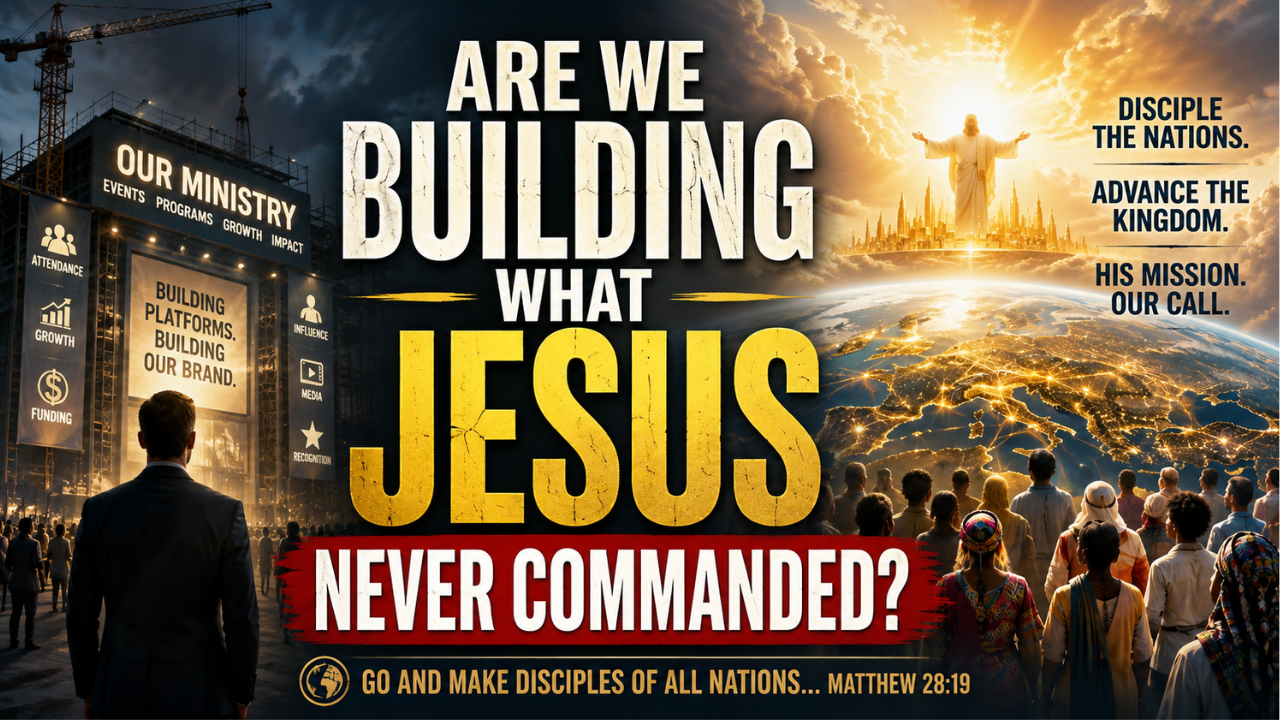
Somewhere along the way, much of the modern evangelical Church began measuring success by how many souls it could “win,” while losing sight of the actual commission Christ gave. The language of “winning souls” may sound biblical, and Proverbs 11:30 certainly says, “The fruit of the righteous is a tree of life, and he who wins souls is wise.” Yet when that verse is detached from the whole counsel of Scripture, it can be twisted into a religious system of numbers, decisions, emotional responses, altar calls, and spiritual production lines. The Church was never commissioned to manufacture converts. The Church was commissioned to make disciples.

In the Hebrew, Proverbs 11:30 reads, “Peri-tsaddiq etz chayyim, ve-loqe’ach nefashot chakam.” The phrase “fruit of the righteous” speaks of the produce, outcome, and harvest of a life that has been brought into right order with God. The righteous person does not merely carry religious language; his life produces something that nourishes others. His walk becomes fruit-bearing. His obedience becomes life-giving. His nature becomes evidence that he is rooted in the Lord.

The phrase “tree of life” is etz chayyim, and the word chayyim carries the sense of lives, life, fullness, and ongoing vitality. This means the righteous life becomes a place where others can encounter the life of God. The fruit of the righteous is not manipulation. It is not pressure. It is not religious performance. It is not a spiritual sales pitch. It is a life so governed by God that it becomes a tree of life to those who are wounded, wandering, hungry, and searching.

Then the verse says, “he who wins souls is wise.” But the Hebrew phrase is deeper than the modern English expression. Loqe’ach nefashot comes from the idea of taking, receiving, gathering, laying hold of, or bringing in lives. Nefashot speaks of souls, lives, persons, inner beings. It does not present a man as the savior of another man’s soul. It speaks of wisdom that knows how to gather lives toward the way of God. It speaks of righteous influence, holy persuasion, rescue, shepherding, and life-giving formation.

That means Proverbs 11:30 must not be used to suggest that man has the power to save what only Christ can redeem. Only the Lord can win the soul in the deepest sense. Only Holy Spirit can convict the heart. Only the Father can draw men to the Son. Jesus said, “No one can come to Me unless the Father who sent Me draws him” (John 6:44). Paul said, “I planted, Apollos watered, but God gave the increase” (1 Corinthians 3:6). These Scriptures should humble every religious system that has tried to turn salvation into a humanly managed result.

The Church has a role, but it is not the role of Holy Spirit. We preach Christ. We proclaim the Gospel of the Kingdom. We bear witness to the resurrection. We call men to repentance. We teach the commands of Jesus. We pray, labor, warn, exhort, and model the life of the Kingdom. But we do not regenerate the dead heart. We do not give new birth. We do not transfer men from darkness into light by the strength of our programs. God alone gives life.

This is where much of the modern Church needs correction and redirection. We have spent enormous energy trying to produce converts while often neglecting the long, costly, holy labor of making disciples. We have celebrated decisions without always forming obedience. We have counted responses without always cultivating transformation. We have built systems that know how to gather crowds but often fail to raise sons and daughters who carry the nature of Christ. That is not apostolic Christianity. That is religious machinery dressed in spiritual language.

Jesus did not say, “Go therefore and collect converts.” He said, “Go therefore and make disciples of all the nations, baptizing them…and teaching them to observe all things that I have commanded you” (Matthew 28:19–20). The command is not merely to bring people to a moment of response, but to bring them into a life of surrender, baptism, teaching, obedience, formation, and Kingdom allegiance. The Great Commission is not complete when someone repeats a prayer. The commission moves toward maturity, fruitfulness, obedience, and Christlikeness.

This is why the Church must recover the difference between a convert and a disciple. A convert may acknowledge a message, but a disciple submits to a Master. A convert may be counted in a meeting, but a disciple is formed in the way. A convert may respond emotionally, but a disciple learns obedience when no crowd is watching. A convert may be attracted to blessing, but a disciple takes up the cross. Jesus said, “If anyone desires to come after Me, let him deny himself, and take up his cross daily, and follow Me” (Luke 9:23).

The early Ecclesia did not build itself around religious marketing, entertainment, or spiritual consumerism. Acts 2:42 says, “They continued steadfastly in the apostles’ doctrine and fellowship, in the breaking of bread, and in prayers.” That was not a shallow system of religious attendance. That was a discipling culture. Doctrine shaped them. Fellowship joined them. Prayer governed them. The table formed them. Their lives became a witness because the life of Christ was being reproduced among them.

This is the foundation we must return to. The Church does not need better machinery for producing outward responses. It needs a return to the ancient path of forming Christ in people. Paul said, “My little children, for whom I labor in birth again until Christ is formed in you” (Galatians 4:19). That is discipleship. It is not merely informing the mind. It is the travail of seeing the nature, obedience, humility, holiness, and love of Christ formed in the life of another person.

The tragedy of much modern evangelical culture is that it has often placed more emphasis on getting people into buildings than getting Christ formed in people. It has often become more skilled at building platforms than building altars. It has often become more committed to expanding visibility than cultivating spiritual maturity. But Jesus never told us to create religious spectators. He called us to form obedient followers who hear His voice, keep His Word, walk in His Spirit, love one another, and bear fruit that remains.

John 15:5 gives us the true foundation: “I am the vine, you are the branches. He who abides in Me, and I in him, bears much fruit; for without Me you can do nothing.” Fruit does not come from religious pressure. Fruit comes from abiding. The Church cannot disciple nations while detached from the Vine. We cannot produce Kingdom life through fleshly systems. We cannot manufacture what only abiding can bear. A Church that is disconnected from the presence and government of Christ may still gather crowds, but it cannot produce the fruit of the Kingdom.

This brings us back to Proverbs 11:30 with a clearer understanding. The wise do not try to replace God in the salvation of souls. The wise become trees of life through righteousness and then gather lives toward the Lord through truth, love, wisdom, witness, and discipleship. The wise understand that soul-winning is not religious conquest. It is not the triumph of human persuasion. It is the overflow of a righteous life cooperating with the drawing, convicting, saving, and sanctifying work of God.

The Church must repent where it has trusted systems more than Spirit, methods more than presence, decisions more than discipleship, and crowds more than formation. We must stop confusing numerical response with Kingdom fruit. We must stop believing that a moment of public agreement is the same as a life being brought under the Lordship of Jesus Christ. Christ did not die to create religious attenders. He died to redeem, restore, indwell, transform, and conform a people into His image.

This does not mean we stop preaching to the lost. God forbid. It means we preach with purity, without manipulation. It means we witness with boldness, without pretending we are the ones who save. It means we call men to repentance, while depending fully upon Holy Spirit to convict. It means we labor in the field, plant the seed, water with prayer and truth, and trust God for the increase. It means we understand our assignment without trespassing into the Lord’s office.

Only the Lord can truly win the soul.

Only Holy Spirit can convict the heart.

Only the Father can draw men to the Son.

Only Christ can redeem, regenerate, deliver, and make a dead man alive.

The correction is simple, but it is weighty: Christ wins the soul; the Ecclesia disciples the life. Christ saves; we witness. Holy Spirit draws; we shepherd those He brings. The Father gives the increase; we remain faithful in planting and watering. This is not a call to less evangelism. It is a call to purified evangelism that flows into real discipleship, real obedience, real formation, and real transformation.

The Church must return to the foundation of its calling.

Not religious systems.

Not spiritual production lines.

Not shallow altar-call Christianity.

Not numbers without transformation.

Not converts without discipleship.

The hour demands fathers and mothers in the faith, mature sons and daughters, households of prayer, tables of fellowship, altars of consecration, and believers who carry the nature of Christ in the ordinary places of life.

We must stop trying to mass-produce converts and return to forming disciples one life at a time, until the nature of Christ is seen in their character, obedience, love, holiness, and witness.. That means walking with people until the Word becomes flesh in their conduct, until prayer becomes breath in their home, until obedience becomes normal, until holiness becomes beautiful, until love becomes visible, until the government of Christ begins to order their thoughts, choices, relationships, and assignments. This is slower than religious machinery, but it is the way of the Kingdom. Jesus spent time with twelve. He formed men, not crowds.

The modern Church does not need another system built around manufacturing converts. It needs to recover the wisdom of Proverbs 11:30, the obedience of Matthew 28:19–20, the dependence of 1 Corinthians 3:6, the abiding of John 15:5, and the formation of Galatians 4:19. The fruit of the righteous is still a tree of life, and the wise still gather souls toward God. But only Christ saves the soul, and only Holy Spirit can draw the heart. Our commission is to preach the Kingdom, bear witness to the King, and disciple those whom God brings into the life of His Son.

Stay tuned, the journey continues…..

— Dr. Russell Welch

Dr. Russell Welch is a published author, prophetic teacher, apostolic builder, author, and founder of faith-driven publishing and media initiatives. He is known for crafting bold, Kingdom-centered messages that call the Ecclesia into maturity, doctrinal clarity, and governmental authority. With a passion for equipping the Remnant and honoring generational legacy, Dr. Welch writes and teaches at the intersection of Scripture, history, and spiritual governance, challenging believers to live as sons and daughters who legislate Heaven on earth through truth, holiness, and unwavering fidelity to Christ.

Be sure to check out his book: The Consecrated Firebrand: A Warrior’s Guide to Holy Living, available exclusively on Amazon … here

Amazon Author Page


When the Noon Hour Became an Altar

There are moments in history when revival does not begin with a thunderous sermon, a famous preacher, a massive platform, or a carefully branded movement. Sometimes Heaven chooses an upper room, a hidden prayer meeting, a burdened intercessor, and a few hungry souls who still believe God answers when His people humble themselves and pray. The Prayer Revival of 1857–1858 reminds us that true awakening is not always announced by the sound of religious machinery. Sometimes it begins quietly, almost unnoticed, until the breath of God turns a small flame into a consuming fire.

This revival did not begin because America was spiritually healthy. It began because the nation was trembling. Financial instability, moral decline, spiritual coldness, and cultural unrest had settled over the land. The Church had become familiar with religion but was in desperate need of fresh visitation. The nation did not need another clever method. It needed the mercy of God to interrupt the course of history.

In September of 1857, a simple noon prayer meeting began in New York City. It was not designed as entertainment. It was not built around personality. It did not need a stage, a spotlight, or a celebrity voice. It was a call to prayer. At first, only a few attended. But Heaven has never needed a crowd to begin a movement; He only needs surrender, hunger, and obedience.

The meeting was held during the lunch hour so businessmen, workers, and ordinary people could come and pray. That detail matters. Revival broke into the rhythm of daily life. It was not confined to Sunday services. It was not limited to professional clergy. Men left their business dealings, their ledgers, their offices, and their responsibilities to meet with God in the middle of the day. Commerce paused because eternity was calling.

Before long, the prayer meetings began to multiply. What started with a handful of seekers became a movement of intercession. Churches opened their doors for noon prayer. Crowds gathered not to be entertained, but to seek the face of the Lord. Reports began to spread of people being convicted, converted, restored, and awakened. The atmosphere of cities began to shift under the weight of prayer.

This is one of the great lessons of the Prayer Revival: when prayer returns to the center, the Church begins to recover its true authority. Prayer is not religious filler. Prayer is not the soft opening before the “real ministry” begins. Prayer is the place where human strength bows, Heaven’s government is acknowledged, and the will of God is invited to invade the earth. The praying Ecclesia is a governing Ecclesia.

Jesus said, “My house shall be called a house of prayer” (Matthew 21:13, NKJV). He did not say His house would primarily be known as a house of performance, marketing, entertainment, political commentary, or religious professionalism. He called it a house of prayer. When prayer becomes secondary, the Church may still have motion, but it begins to lose oil. When prayer is restored, the altar begins to burn again.

The Prayer Revival also confronts our modern addiction to personality-driven ministry. There was no single preacher who could claim ownership of this awakening. There was no central platform strong enough to control it. There was no ministry brand that could contain it. The movement belonged to God. It spread because prayer spread. It burned because hunger burned.

This is difficult for the modern Church because we often want revival to arrive in a form we can promote, platform, measure, package, and monetize. But the Prayer Revival came as a rebuke to religious celebrity culture before such culture even had its modern machinery. It reminded the Church that Heaven does not need the approval of famous men to move in power. God can shake a nation through nameless intercessors who know how to travail before Him.

The spiritual power of this revival was not found in novelty. It was found in simplicity. People prayed. People confessed sin. People sought mercy. People cried out for salvation. People carried burdens for the lost. The Church did not need to make prayer fashionable. It needed to make prayer central. That is still the issue today.

We must be honest: much of the modern Church has tried to build influence without travail. We have tried to reach culture without first being conquered by God. We have attempted to produce spiritual momentum through strategies while neglecting the prayer closet. We have asked for revival while refusing the altar that births it. But revival that does not come through prayer will not be sustained by programs.

The Prayer Revival teaches us that a nation can be touched when ordinary believers recover extraordinary dependence on God. It was not built on giftedness alone. It was not fueled by human charisma. It was not carried by emotional hype. It was born in the holy place where men and women admitted their need, bent their knees, and cried out to the Lord.

There is a kind of prayer that is polite, predictable, and powerless. Then there is the kind of prayer that comes from spiritual desperation. The Prayer Revival was marked by desperation. It was the sound of a people who understood that if God did not move, the nation would continue to decay. That kind of prayer does not ask God to bless human ambition. It asks God to interrupt everything that is out of alignment with His will.

The Scripture declares, “If My people who are called by My name will humble themselves, and pray and seek My face, and turn from their wicked ways, then I will hear from heaven, and will forgive their sin and heal their land” (2 Chronicles 7:14, NKJV). Notice the order. Humility comes before healing. Prayer comes before restoration. Seeking His face comes before national repair. Turning from wicked ways comes before the land is healed.

This is why true revival cannot be separated from repentance. Prayer that refuses repentance becomes religious noise. Intercession without humility becomes spiritual presumption. A people cannot ask God to heal the land while defending the sins that wounded it. The Prayer Revival carried power because it was not merely a request for blessing; it was a cry for mercy.

In that season, prayer meetings were not built around polished programs. They were marked by short exhortations, Scripture, confession, intercession, and urgent appeals to God. The focus was not on man’s eloquence but on Heaven’s response. That is a vital lesson for us now. The Church does not need more impressive meetings if those meetings do not lead us back to the fear of the Lord.

The Prayer Revival also reveals the power of unity around the burden of God. People from different backgrounds gathered around one central reality: the need for God to move. The altar became larger than personal preference. The burden became stronger than denominational pride. The cry became louder than religious division. When the people of God humble themselves together, spiritual authority is released in ways human organization cannot manufacture.

We should not romanticize revival history as though those generations were perfect. They were not. Every revival season has human weakness, cultural limitation, and imperfect vessels. But we must still learn from what Heaven touched. God was revealing something through this movement: when prayer becomes the engine instead of the ornament, awakening can spread with force.

The Prayer Revival became a witness that God can move outside the expected channels. He can raise up prayer meetings in business districts. He can interrupt lunch hours with eternity. He can turn ordinary rooms into altars. He can place the burden of revival on people who do not carry famous names. He can breathe on the simple obedience of a few and call an entire nation to attention.

This should encourage every intercessor who feels hidden. Heaven sees the prayer closet. Heaven hears the groaning. Heaven remembers the tears. Heaven knows the names of those who labor unseen while others stand under the lights. Many movements that appear public were first conceived in secret by those who had no desire to be known, only a desire for Christ to be glorified.

The modern Church must recover this conviction. Prayer is not weakness. Prayer is warfare. Prayer is legislation from the place of surrender. Prayer is how the Ecclesia agrees with Heaven against the rebellion of darkness. Prayer is how atmospheres are confronted, strongholds are weakened, souls are awakened, and divine order is invited into the earth.

When businessmen began to pray in 1857, it was more than a devotional exercise. It was a prophetic interruption. It was Heaven calling a nation to remember that money cannot save, markets cannot redeem, politics cannot regenerate, and human progress cannot cleanse the soul. The nation needed God. The Church needed fire. The altar needed to be rebuilt.

That word is alive again in our generation. We are surrounded by noise, platforms, crisis, confusion, corruption, and spiritual fatigue. Yet the answer is not found in panic. It is found in return. Return to prayer. Return to repentance. Return to the fear of the Lord. Return to the altar. Return to the government of Holy Spirit.

The question is not whether God can send revival again. The question is whether the Church is willing to become the kind of people through whom revival can be stewarded. Are we willing to pray when no one is watching? Are we willing to repent when no one is applauding? Are we willing to carry the burden of the Lord without turning it into personal promotion? Are we willing to let prayer become the furnace again?

The Prayer Revival of 1857–1858 stands as a holy witness to every generation that has grown weary, distracted, and overly impressed with human methods. A nation can tremble when the people of God begin to pray. Cities can shift when altars are restored. Hearts can awaken when intercession becomes travail. Culture can be confronted when the Ecclesia stops performing and starts seeking the face of God.

This is not a call to nostalgia. It is a summons. The same God who moved in prayer meetings then is still looking for praying people now. The same Holy Spirit who awakened hearts through humble intercession is still able to breathe upon dry bones. The same Lord who honored hidden obedience is still searching for those who will stand in the gap.

Remnant, the hour is too late for prayer to remain a religious accessory. Prayer must become the fire at the center again. Not polished prayer. Not performative prayer. Not prayer as a transition between songs and sermons. But the kind of prayer that humbles the soul, confronts sin, carries the burden of Heaven, and refuses to release the altar until the fire falls.

The Prayer Revival reminds us that when a people pray, Heaven listens. When a people repent, mercy moves. When a people seek His face, atmospheres shift. And when the Ecclesia returns to the altar, nations can still tremble under the weight of God.

To be continued in Part 4: The Welsh Revival — When a Nation Was Bent Low Before God

Stay tuned, the journey continues…..

— Dr. Russell Welch

Dr. Russell Welch is a published author, prophetic teacher, apostolic builder, author, and founder of faith-driven publishing and media initiatives. He is known for crafting bold, Kingdom-centered messages that call the Ecclesia into maturity, doctrinal clarity, and governmental authority. With a passion for equipping the Remnant and honoring generational legacy, Dr. Welch writes and teaches at the intersection of Scripture, history, and spiritual governance, challenging believers to live as sons and daughters who legislate Heaven on earth through truth, holiness, and unwavering fidelity to Christ.

Be sure to check out his book: The Consecrated Firebrand: A Warrior’s Guide to Holy Living, available exclusively on Amazon … here

Amazon Author Page


The Remnant Flame Still Burns in Jacksonville

Today we remember the 464th anniversary of the French Reformed landing in the free world, right here at the head of what was then known as the Welaka River, the “River of Lakes,” now known as the St. Johns River. Men may forget dates, nations may bury memory beneath monuments of another story, and history books may reduce sacred moments to footnotes, but Heaven does not forget what was consecrated in prayer, sealed in covenant, and watered with the sweat and blood of faithful disciples of Christ. There are moments in time that are not merely historical; they are prophetic markers written into the eternal scrolls of the Kingdom. The landing of those French Protestant believers on these shores was not just an expedition. It was a seed.

Many today know them as the Huguenots, yet it is worth remembering that they rarely, if ever, called themselves by that name. The word “Huguenot” was born as an insult from their Catholic opponents, a name of mockery placed upon those who would not bow to the religious powers of their age. They preferred to call themselves simply the Reformed, les Réformés, those who had been awakened by the truth of Scripture and called back to the purity of the Gospel of Jesus Christ. They were not seeking fame, empire, or religious celebrity. They were seeking a land where Christ could be worshiped, Scripture could be honored, and conscience could stand before God without the chains of persecution.

When they arrived on these shores in 1562, they were not merely stepping onto sand and soil; they were stepping into a divine appointment. They came from a Europe trembling under religious war, ecclesiastical corruption, political manipulation, and the violent clash between truth and control. Yet here, on the edge of what would become North Florida, they saw more than wilderness. They saw possibility, covenant, refuge, and holy ground. In their hearts burned the ancient cry of Psalm 127:1, “Unless the Lord builds the house, they labor in vain who build it.”

Their story was not without suffering, and their witness was not without blood. The French Reformed believers who came to this land carried the cost of discipleship in their bones, and many would later pay for their faith with their lives. Jesus said in Matthew 5:10, “Blessed are those who have been persecuted for the sake of righteousness, for theirs is the kingdom of heaven.” The blood of the martyrs never disappears into the ground as forgotten tragedy. It becomes testimony, seed, witness, and a legal cry before the courts of Heaven.

I believe the prayers they prayed, the covenant they carried, and the blood they shed did not expire with their generation. Revelation 6:10 gives us a sobering picture of the martyrs crying out before God, and though we do not build doctrine on imagination, we must remember that Heaven is fully aware of righteous blood. The Lord told Cain that Abel’s blood was crying out from the ground, and that means the earth has memory before God. The ground can testify. The land can hold the witness of what was done upon it.

To me, it is no small thing that 123 years later, in another stream of history, Heaven would continue to stir restoration, awakening, and apostolic authority within the Church. Many voices in the 1700s and 1800s saw the awakenings of their age as Heaven’s counter-response to the exaltation of human reason, human philosophy, and man-centered doctrines that entered deeply into the life of nations and churches. The Renaissance opened doors of learning, but it also gave room for humanism to crown man where only Christ should reign. From such streams, many doctrines were seeded that continue to influence the Church even today, including religious systems that confuse compassion with compromise and justice with ideologies detached from the government of Christ. But Heaven has never surrendered the Ecclesia to the philosophies of men.

Last year, as I stood at Huguenot Park and celebrated this anniversary, I found myself in prayer over the land, the waters, the blood, and the forgotten testimony of these faithful ones. As I prayed and looked up, I saw what appeared to be a portal, and there was an amassing of angels. I do not share that lightly, nor do I offer it as spectacle, but as a prophetic witness to what I believe Holy Spirit has continued to speak in the secret place. Over this past year, in many moments of prayer, I have sensed the Lord saying that the dedication of this land as a kind of New Zion by those faithful men and women was not ignored by Heaven. Their prayers, sealed by martyr blood, are still before the courts of the Lord.

For me personally, I believe we are entering a year where we will begin to witness a move of God in this city, this county, this region, and this state. I believe Heaven is preparing to vindicate the blood of the innocent and uncap wells of revival across North Florida and into Georgia. I especially sense the stirring of healing revival, a line of glory stretching from Jacksonville toward Pensacola, across the North Florida and Georgia borderlands. The wells are not dead; they have been covered. The Lord of the harvest knows exactly where they are buried.

Last month, the Lord sent me to a Remnant group in Ocala to prophesy concerning one of many wells in that horse country that I believe are about to be uncapped. I believe Ocala is not random in this hour, Jacksonville is not random, the St. Johns River is not random, and North Florida is not random. There are places where Heaven planted seed long before we arrived, and now Holy Spirit is breathing upon those ancient deposits again. Isaiah 43:19 declares, “Behold, I am going to do something new, now it will spring up; will you not be aware of it?” The new thing is often the ancient thing being awakened under the breath of God.

These are powerful days for the Ecclesia, especially for those who have stepped away from that which is common and laid hold of that which is sacred and holy. This is not the hour for casual Christianity, religious entertainment, or powerless language dressed up as spirituality. This is the hour for consecration, discernment, covenant, apostolic order, prophetic fire, and holy obedience. Hebrews 12:1 reminds us that we are surrounded by a great cloud of witnesses, and I believe there are witnesses in Heaven who remember the prayers prayed over this land before America ever knew what she would become. The Remnant must now take its place.

So today, I celebrate the memory of those faithful French Reformed disciples of Christ who arrived here 464 years ago and planted something deeper than history can fully explain. I honor the sweat, the blood, the courage, the prayers, the Scripture, the covenant, and the costly obedience they carried to these shores. I believe the God who remembers covenant is answering what men forgot, and the Spirit of the Lord is beginning to stir the waters again. Jacksonville, North Florida, Georgia, and this whole region must prepare for the sound of old wells being uncapped and fresh fire being released. Let the Ecclesia awaken, for the land remembers, Heaven remembers, and the King still reigns.

For those who want to know more about these faithful servants of Christ and the spiritual history connected to their witness, I wrote The Remnant Flame: The Spiritual History of the French Huguenots from 1562 to the Mayflower and Beyond. This book traces the fire, sacrifice, persecution, courage, and Kingdom witness of the French Reformed believers whose story still speaks today. Their history is not dead; it is a flame waiting to instruct a new generation of the Remnant. You can find it here: https://www.amazon.com/dp/196415541X. May the Lord cause the forgotten fires of covenant faithfulness to burn again.

Stay tuned, the journey continues…..

— Dr. Russell Welch

Dr. Russell Welch is a published author, prophetic teacher, apostolic builder, author, and founder of faith-driven publishing and media initiatives. He is known for crafting bold, Kingdom-centered messages that call the Ecclesia into maturity, doctrinal clarity, and governmental authority. With a passion for equipping the Remnant and honoring generational legacy, Dr. Welch writes and teaches at the intersection of Scripture, history, and spiritual governance, challenging believers to live as sons and daughters who legislate Heaven on earth through truth, holiness, and unwavering fidelity to Christ.

Be sure to check out his book: The Consecrated Firebrand: A Warrior’s Guide to Holy Living, available exclusively on Amazon … here

Amazon Author Page


When the wilderness became an altar, the fire of God began riding through the frontier

The Second Great Awakening rose in America as a holy answer to a young nation wrestling with expansion, moral drift, frontier disorder, and spiritual hunger. After the First Great Awakening shook the colonies with the fear of the Lord, the second awakening carried revival into the wilderness, the camp meeting, the college, the village, and the public square. It was not merely a season of emotional religion; it became a furnace where conviction, repentance, evangelism, reform, and discipleship were pressed into the conscience of a nation. The cry of Acts 3:19 seemed to thunder again: “Repent ye therefore, and be converted, that your sins may be blotted out.” Revival came not to entertain the people, but to bring them under the searching eye of God until sin was confessed, Christ was exalted, and lives were visibly changed.

One of the early flames came through men like Timothy Dwight at Yale, who preached Christ into an environment where unbelief and skepticism had gained dangerous ground among the young. Revival among students revealed that the Father was not only reaching the wilderness settler, but also the intellectual class being discipled by the spirit of the age. This was a direct rebuke to the lie that education must be separated from the fear of the Lord. Proverbs 1:7 declares, “The fear of the LORD is the beginning of knowledge: but fools despise wisdom and instruction.” The Second Great Awakening therefore did not begin as a polished movement of religious celebrity, but as a work of conviction, prayer, preaching, and holy disruption among souls who had drifted from God.

The camp meetings became one of the great marks of this awakening, especially on the American frontier, where families traveled for miles and gathered under the open heavens to hear the Word preached with fire. Peter Cartwright, the Methodist circuit rider, described the Cane Ridge atmosphere by saying, “The heavenly fire spread in almost every direction,” and he recorded that the noise of praise and conviction could be heard for miles. These meetings were rugged, imperfect, and often controversial, but they carried a raw hunger that challenged cold formalism and lifeless religion. The wilderness itself became an altar, and the cry of Luke 14:23 seemed to rise across the frontier: “Go out into the highways and hedges, and compel them to come in, that my house may be filled.” The Lord was showing America that the Gospel was not chained to stained glass, polished pulpits, or religious respectability.

Francis Asbury, Peter Cartwright, Barton W. Stone, and countless lesser-known circuit riders carried the message through mud, danger, sickness, exhaustion, and opposition. These men were not building brands; they were carrying burdens. Their ministry reminds us of Paul’s charge in 2 Timothy 4:2: “Preach the word; be instant in season, out of season; reprove, rebuke, exhort with all longsuffering and doctrine.” They rode into regions where churches were scarce, Bibles were treasured, sin was public, and souls were starving. The power of the movement was not convenience, but consecration; not applause, but assignment. The Second Great Awakening teaches the modern Ecclesia that true revival always produces workers willing to go where comfort refuses to travel.

Charles Grandison Finney became one of the most recognized voices of the later Second Great Awakening, especially through his preaching in the burned-over district of New York and his later writings on revival. In his Lectures on Revivals of Religion, Finney pressed the Church to understand that revival required cooperation with God through prayer, repentance, preaching, and obedience, not passive waiting while sin remained untouched. Whether one agrees with every element of Finney’s theology or not, his urgency exposed a sleeping Church that had too often mistaken inactivity for reverence. Romans 12:11 gives the spirit of that burden: “Not slothful in business; fervent in spirit; serving the Lord.” Finney’s voice helped shape a generation that believed revival must move beyond the altar into moral action, public righteousness, and visible reform.

Lyman Beecher also stood as a significant voice in this era, particularly in the moral reform movements that grew out of revival conviction. His work against intemperance reflected a broader awakening truth: when God revives a people, He does not merely touch their church attendance; He confronts their habits, appetites, public sins, and private compromises. Beecher’s temperance sermons exposed the destructive nature of indulgence in a society where drunkenness was tearing families, communities, and souls apart. This connects powerfully with Titus 2:11–12, which declares that grace teaches us to deny “ungodliness and worldly lusts” and to live “soberly, righteously, and godly, in this present world.” Revival that does not discipline the flesh will soon become emotion without transformation.

The Second Great Awakening also gave birth to, or powerfully strengthened, many reform movements, including missions, Bible societies, abolitionist efforts, temperance work, and renewed concern for the poor and the enslaved. This does not mean every stream of the movement was pure, nor does it mean every leader carried equal theological soundness, but it does show that awakened hearts began to wrestle with public righteousness. James 2:17 says, “Even so faith, if it hath not works, is dead, being alone.” The fire of God was never meant to remain locked in a meeting; it was meant to walk into homes, businesses, laws, communities, and nations. When revival is genuine, it reforms the conscience before it reforms culture. The order is critical, because flesh will try to change society without first bowing before the Lordship of Christ.

The lesson for Radical Disciples today is that the Second Great Awakening was both a warning and a witness. It warns us that a nation can drift quickly when the fear of the Lord is neglected, but it also witnesses that God can raise a holy fire among ordinary people when repentance, preaching, prayer, and obedience return to the center. Joel 2:28 declares, “I will pour out my spirit upon all flesh,” yet the same prophetic atmosphere calls the people to fasting, weeping, mourning, and returning to the Lord with all the heart. America does not need a revival that merely fills tents, stages, churches, or stadiums; she needs a revival that produces crucified disciples. The Second Great Awakening reminds us that when the fire of God truly falls, the altar is restored, the wilderness begins to worship, and a generation is summoned out of compromise into obedience.

Stay tuned, the journey continues…..

— Dr. Russell Welch

Dr. Russell Welch is a published author, prophetic teacher, apostolic builder, author, and founder of faith-driven publishing and media initiatives. He is known for crafting bold, Kingdom-centered messages that call the Ecclesia into maturity, doctrinal clarity, and governmental authority. With a passion for equipping the Remnant and honoring generational legacy, Dr. Welch writes and teaches at the intersection of Scripture, history, and spiritual governance, challenging believers to live as sons and daughters who legislate Heaven on earth through truth, holiness, and unwavering fidelity to Christ.

Be sure to check out his book: The Consecrated Firebrand: A Warrior’s Guide to Holy Living, available exclusively on Amazon … here

Amazon Author Page


“Advancing in holy fire, the Remnant carries the Light of Truth until every gate of darkness buckles before the Kingdom of Christ”

As Heaven continues to raise up a Remnant who will not bow to the golden calves of religious performance, the spirit of religion will rise up with a polished voice and a counterfeit compassion. It will sound tender while tightening chains, speak of unity while protecting mixture, and accuse the Watchmen of the Lord of carrying a critical spirit. Yet Jesus never called blindness love, and He never called compromise mercy. He said, “You shall know the truth, and the truth shall make you free” (John 8:32). Truth does not come to decorate bondage; truth comes to break it.

There is a generation being awakened by Holy Spirit who can no longer sit quietly under the spell of entertainment while the foundations of the Ecclesia are being traded for applause. Paul warned that “the time will come when they will not endure sound doctrine,” but would gather teachers who satisfy itching ears (2 Timothy 4:3). That hour is no longer approaching; that hour is here. The stage has replaced the altar in many places, and charisma has been mistaken for consecration. But Heaven is answering with a Remnant who would rather carry fire than manage a crowd.

The religious system always knows how to sound wounded when it is being exposed. It will say, “You are too harsh,” while Jesus called certain leaders “blind guides,” “hypocrites,” and “whitewashed tombs” (Matthew 23:24–27). It will accuse the prophetic voice of lacking love, while Paul said, “Have I therefore become your enemy because I tell you the truth?” (Galatians 4:16). The issue is not whether truth sounds pleasant to the flesh. The issue is whether truth agrees with the King.

Jesus did not come to preserve a religious machine; He came to reveal the Father and establish the Kingdom. When He entered the temple and overturned the tables, He was not having an emotional outburst; He was demonstrating holy judgment against a system that had turned His Father’s house into a marketplace (Matthew 21:12–13). The modern spirit of religion still does the same thing, selling platforms, personalities, and performances while calling it ministry. But the Lord is still jealous for His house. He will not share His Bride with Babylon.

The enemy has always twisted Scripture to protect deception, and he has been doing so since the garden. He came to Jesus in the wilderness quoting Scripture, yet Jesus answered him with the rightly divided Word of God (Matthew 4:1–11). That same serpent still whispers through religious voices, using partial truths to defend full rebellion. But those anchored in the Word and led by Holy Spirit will discern the difference between the voice of the Shepherd and the hiss of the deceiver. Jesus said, “My sheep hear My voice, and I know them, and they follow Me” (John 10:27).

The gospel of entertainment has no Kingdom foundation beneath it. It may have lights, crowds, branding, applause, and emotional moments, but if it does not produce repentance, holiness, obedience, deliverance, and transformation, it is not the Gospel Jesus preached. Paul said the Kingdom of God is “not in word, but in power” (1 Corinthians 4:20). He also declared that he did not come with persuasive words of human wisdom, but in demonstration of the Spirit and power (1 Corinthians 2:4). Heaven is not impressed by what attracts the flesh if it does not conform souls to Christ.

The Watchmen of the Lord are not called to flatter the city while the walls are burning. Ezekiel was told that if the watchman sees the sword coming and does not blow the trumpet, the blood will be required at his hand (Ezekiel 33:6). This is why true prophetic voices cannot remain silent when deception dresses itself in ministry garments. Love does not whisper while wolves feed on sheep. Love cries aloud because the Bride belongs to Christ.

Even in my own life, I have witnessed the pull of systems that looked spiritual but were fueled by the methods of the world. Holy Spirit had to call me out, separate me, cleanse my vision, and teach me to love the Church without bowing to the counterfeit. Separation is not hatred when it is obedience to God. Paul said, “Come out from among them and be separate, says the Lord” (2 Corinthians 6:17). Yet even as we separate from mixture, we still pray with tears that the scales would fall from blinded eyes.

This is not the hour for timid Christianity, polished compromise, or passive agreement with religious deception. This is the hour to stand, speak, discern, and burn with holy jealousy for the purity of the Bride. Jesus is not returning for a theater audience; He is returning for a holy people, washed, prepared, and loyal to the Lamb. Paul said Christ gave Himself for the Church “that He might sanctify and cleanse her” and present her to Himself glorious, without spot or wrinkle (Ephesians 5:25–27). Therefore, let the Remnant rise with fire in their bones, truth in their mouth, mercy in their heart, and no agreement with the systems that have tried to crown themselves where only Jesus belongs.

This is why the Remnant of the Lord must not settle for merely standing their ground. We were not commissioned to survive in a corner while darkness boasts at the gates; we were filled with the Spirit of the Living God to advance the government of Christ into every territory the enemy has illegally occupied. Jesus said, “I will build My Ecclesia, and the gates of hell shall not prevail against it” (Matthew 16:18), which means the gates of hell are not advancing against a retreating Church, but buckling under the pressure of an advancing Kingdom people.

The Bride belongs to the Lamb, and the zeal of the Lord still burns for her purity, her freedom, and her full inheritance. Therefore, let the Remnant rise with holy fire, move forward with apostolic authority, extend the influence of the Kingdom, and watch the darkness tremble as the Light of Truth exposes, confronts, and overthrows every counterfeit standing in the way of Christ’s glory.

Stay tuned, the journey continues…..

— Dr. Russell Welch

Dr. Russell Welch is a published author, prophetic teacher, apostolic builder, author, and founder of faith-driven publishing and media initiatives. He is known for crafting bold, Kingdom-centered messages that call the Ecclesia into maturity, doctrinal clarity, and governmental authority. With a passion for equipping the Remnant and honoring generational legacy, Dr. Welch writes and teaches at the intersection of Scripture, history, and spiritual governance, challenging believers to live as sons and daughters who legislate Heaven on earth through truth, holiness, and unwavering fidelity to Christ.

Be sure to check out his book: The Consecrated Firebrand: A Warrior’s Guide to Holy Living, available exclusively on Amazon … here

Amazon Author Page

Rate this:


The Kingdom is roaring again. And no building can contain its sound.

The word ekklesia carries a meaning far deeper than what most modern believers imagine, because in the ancient world it described a governing assembly rather than a religious gathering. When Jesus used this word, He was intentionally drawing from the language of civic authority, not temple worship or ritual practice. His listeners would have immediately understood that He was speaking about a people called out to legislate, deliberate, and represent the will of a king. This means the identity of His followers was rooted in Kingdom function, not institutional membership or weekly attendance. The shift from ekklesia to “church” dramatically altered how generations interpreted their role in the world, creating a gap between what Jesus intended and what many believers experience today. Recovering this meaning is essential for restoring the authority Jesus entrusted to His people.

The English word “church” comes from a completely different linguistic stream, one tied to buildings, sacred spaces, and religious structures. This translation redirected the focus from a governing people to a physical location, which reshaped the imagination of the Christian world for centuries. Instead of seeing themselves as a Kingdom assembly with authority, many believers came to see themselves as attendees of a religious service or members of an organization. This shift weakened the sense of mission and responsibility Jesus intended for His followers, replacing Kingdom identity with institutional loyalty. It also contributed to a passive culture where the institution became central rather than the Kingdom itself. The result was a people who gathered faithfully but rarely governed spiritually.

When Jesus said, “I will build My ekklesia,” He was not describing a future network of buildings or denominations. He was announcing the formation of a ruling body that would operate under His authority to enforce the will of Heaven on the earth. This governing identity was meant to be active, engaged, and transformative in every sphere of society, not confined to religious spaces. The ekklesia was designed to carry the culture of the Kingdom into the world, influencing systems, structures, and environments with Heaven’s values. Understanding this restores the original power of Jesus’ words and reawakens the authority He entrusted to His followers. It calls the people of God back into their rightful place as Heaven’s representatives.

The Gospels reinforce this emphasis by highlighting the Kingdom far more than the concept of the church. Jesus spoke of the Kingdom over a hundred times, revealing it as the central theme of His message, His parables, and His mission. He described its nature, its power, its values, and its arrival in the midst of humanity, making it clear that the Kingdom was His primary focus. In contrast, He mentioned the ekklesia only twice, and both times in the context of authority, governance, and spiritual jurisdiction. This contrast shows that the Kingdom is the message, and the ekklesia is the instrument through which that message advances into the earth. The Kingdom is the foundation; the ekklesia is the expression.

When the word ekklesia was replaced with “church,” the mission of the people of God was unintentionally narrowed. Instead of functioning as ambassadors and representatives of a Kingdom, many believers were trained to become spectators in a religious system. This shift created a divide between sacred and secular, even though Jesus never taught such a separation or encouraged His followers to retreat from society. The ekklesia was meant to operate in the world, influencing culture, justice, economics, and community life with the authority of Heaven. The translation change contributed to a mindset that confined spiritual life to a building rather than a lifestyle of Kingdom engagement. This misunderstanding weakened the impact of the Gospel for generations.

The early believers understood themselves as a Kingdom assembly empowered to carry out the will of their King. They gathered to strengthen one another, but they scattered to govern, influence, and transform their environments with the authority Jesus gave them. Their identity was rooted in authority, not attendance, and they saw themselves as participants in a divine mission rather than consumers of spiritual content. This understanding fueled the explosive growth and impact of the early movement, which spread rapidly despite persecution and opposition. Their power came from alignment with the Kingdom, not from institutional structures. They lived as citizens of Heaven, not members of an organization.

Recovering the meaning of ekklesia is essential for the Remnant rising in this generation. It restores the sense of divine assignment that Jesus intended for His followers and reawakens the authority that has been dormant in many believers. It calls disciples out of passive religion and into active Kingdom engagement, where their presence carries weight and influence. It awakens the understanding that every believer carries governmental authority in the spiritual realm and is called to enforce Heaven’s agenda. This revelation shifts the church from maintenance mode to mission mode and prepares the Remnant for effective Kingdom advancement. It is a call to rise, govern, and occupy.

The Remnant is rediscovering that the ekklesia is not a place you go but a people you become. It is not defined by architecture but by authority, and it is not measured by attendance but by influence. It is not centered on programs but on purpose, and it is not limited to Sunday gatherings but expressed in daily Kingdom living. This restoration is bringing clarity to the identity and assignment of God’s people in a time of global shaking and transition. As this understanding spreads, the Remnant is stepping into its rightful place with boldness and clarity. They are reclaiming what religion buried and what the Spirit is now resurrecting.

Understanding the difference between ekklesia and church helps believers reclaim their original mandate. It breaks the limitations imposed by centuries of institutional thinking and restores the boldness of Kingdom identity that Jesus intended. It empowers disciples to step into their roles as ambassadors, legislators, and representatives of Heaven, carrying divine authority into every sphere of influence. It also aligns the modern movement with the message Jesus actually preached, which was the Gospel of the Kingdom. This alignment is essential for advancing the purposes of God with power, accuracy, and spiritual authority. It is the restoration of the original blueprint.

As this revelation spreads, the people of God are awakening to their true calling and stepping into a higher dimension of purpose. They are recognizing that Jesus never intended a passive religious system but a powerful governing assembly that would represent Heaven on earth. They are stepping into their authority with renewed confidence and clarity, understanding that they are part of a divine strategy. They are embracing the Kingdom as their message and the ekklesia as their identity, which brings strength and unity to their mission. This restoration is preparing the Remnant to advance the purposes of God with precision, courage, and unstoppable momentum. The days of passive Christianity are ending.

As this restoration continues, the Holy Spirit is unveiling a Remnant that has been hidden in plain sight, concealed from the eyes of the religious spirit that has long sought to domesticate the people of God. This Remnant has not been shaped by institutional expectations but by the refining fire of consecration, obedience, and secret history with God. They carry a watchman anointing that discerns the times, exposes deception, and guards the gates of the Kingdom with clarity and courage. Their ears are tuned to the voice of the Spirit, not the noise of religious tradition, and they move with a precision that comes only from intimacy with the King. As the Gospel of the Kingdom is being revived in this hour, these hidden ones are emerging with authority to confront the systems that diluted the meaning of ekklesia and reduced it to something Jesus never intended. They rise not by permission of man but by commissioning of Heaven.

The Spirit of God is now dismantling layer after layer of the religious interpretations that buried the original power of the ekklesia. What once seemed immovable is being toppled, not by human strategy but by the breath of the Lord awakening His people to their true identity. The Remnant is rising with boldness, carrying a revelation that cannot be contained within old wineskins or institutional frameworks. They are stepping into their assignment as watchmen, reformers, and Kingdom ambassadors who will not bow to the traditions of men. This is the hour when the true ekklesia stands up, shakes off the dust of religion, and walks in the authority Jesus declared from the beginning — a governing people advancing the Gospel of the Kingdom with fire, clarity, and unstoppable momentum. The river is rising, and nothing built on the sand of religion will withstand its flow.

Stay tuned, the journey continues…..

— Dr. Russell Welch

Dr. Russell Welch is a published author, prophetic teacher, apostolic builder, author, and founder of faith-driven publishing and media initiatives. He is known for crafting bold, Kingdom-centered messages that call the Ecclesia into maturity, doctrinal clarity, and governmental authority. With a passion for equipping the Remnant and honoring generational legacy, Dr. Welch writes and teaches at the intersection of Scripture, history, and spiritual governance, challenging believers to live as sons and daughters who legislate Heaven on earth through truth, holiness, and unwavering fidelity to Christ.

Be sure to check out his book: The Consecrated Firebrand: A Warrior’s Guide to Holy Living, available exclusively on Amazon … here

Amazon Author Page


Where martyr blood was spilled, Heaven is calling the Remnant to rise.

We are just days away from remembering the Huguenot landing at the beachhead of what is now known as the St. Johns River here in Jacksonville, Florida, which happened on May 1, 1562. My wife and I now live just a little over three miles from the ground where many of them were massacred on September 20, 1565, and just under nine miles from where they established their fort on the other side of the river.

This is not merely local history to me; it has become holy ground in my spirit, a place where blood, covenant, courage, and spiritual resistance still speak. Scripture tells us that righteous blood has a voice, for the Lord said concerning Abel, “The voice of thy brother’s blood crieth unto me from the ground” (Genesis 4:10). When I visited that place on last year’s anniversary, I stood there praying, and as I looked up, I saw what appeared to be a portal in the sky. As I asked Holy Spirit what I was seeing, I sensed Him say that Heaven was preparing to revisit this land with the same hunger for the Kingdom of God that burned in those trailblazing pioneers. Since that moment, I have carried a deep conviction that the First Coast is standing at the edge of something far greater than a historical remembrance.

All year long, I have discerned an increase in the spiritual realm that is difficult to describe in natural language. The closest comparison I can make is the feeling one gets when watching the buildup before D-Day, when every unseen movement carried the weight of an approaching invasion. There is a massive stirring of angelic activity, but there is also demonic resistance rising against what Heaven is preparing to release. The Word declares that “the weapons of our warfare are not carnal, but mighty through God to the pulling down of strong holds” (2 Corinthians 10:4), and I believe those strongholds over this region are being confronted once again.

The Lord is calling up His holy Remnant, those who have refused to bow the knee to the religious spirit that has always sought to silence the true witness of Christ. That same spirit slaughtered the Huguenots in 1565 because the powers of darkness recognized what had been birthed in them. Yet what hell tries to bury in blood, Heaven often raises again in fire.What was birthed in those men and women would not be fully seen in the natural until generations later, when revival broke out in France and the world witnessed echoes of the Book of Acts. There were reports of children prophesying, quoting Scripture, and declaring the things of God with supernatural wisdom, even when some of them could not read in the natural. This reminds us that God has never needed human approval, religious machinery, or institutional permission to pour out His Spirit.

Joel prophesied, “I will pour out my spirit upon all flesh; and your sons and your daughters shall prophesy” (Joel 2:28), and Peter declared that this promise began to unfold at Pentecost (Acts 2:16–18). I believe the blood spilled on this ground still cries out, not for vengeance in the flesh, but for Heaven’s purposes to be answered in the earth. The cry rising from this land is a cry for holiness, truth, boldness, and a people who will carry the testimony of Jesus without compromise. We are standing at a doorway where Heaven may once again answer what was sown here in tears, sacrifice, and martyrdom.

After moving here and beginning ministry school in 2023, I heard the word “Remnant” in a biblical sense for the first time. I had known the word from construction terminology, having been raised by a father who was a carpenter, where a remnant simply meant what was left over. But when I heard it in the spiritual sense, something latched onto my heart with fire. The Lord said through Isaiah, “The remnant shall return, even the remnant of Jacob, unto the mighty God” (Isaiah 10:21), and from that moment I knew this word carried more than doctrine; it carried destiny.

A couple of months later, I heard the word “Huguenot,” which was not unfamiliar to me, having grown up near French communities in Maine. Yet when I discovered what the Huguenots represented spiritually to our faith, that history connected with the same thirst that was driving me deep into the study of God’s Remnant. Those two seeds launched me into a fourteen-year study of the Huguenots, eventually birthing my book, The Remnant Flame: The Spiritual History of the French Huguenots from 1562 to the Mayflower and Beyond, now available on Amazon: https://www.amazon.com/Remnant-Flame-Spiritual-Huguenots-Mayflower-ebook/dp/B0GJJZ6S69.

All of this brings me to what I am discerning now: later this year, from mid-summer toward the fall, Jacksonville and the First Coast region may be approaching an encounter unlike anything this land has witnessed before. I do not say that lightly, nor do I say it for sensationalism, because the fear of the Lord must guard every prophetic utterance. But there is a trembling in my spirit that tells me Heaven is brooding over this region, and the same God who remembers covenant also remembers blood that was spilled for His Name.

Hebrews 12:24 declares that the blood of Jesus “speaketh better things than that of Abel,” and I believe His blood is speaking over this land with mercy, awakening, cleansing, and Kingdom authority. The Lord is not merely looking for spectators; He is calling for watchmen, intercessors, worshipers, and warriors who will discern the hour and stand in the gap. As Habakkuk cried, “O Lord, revive thy work in the midst of the years” (Habakkuk 3:2), so we cry again over Jacksonville, over Florida, and over the First Coast. May the ancient wells be reopened, may the blood-stained ground answer with revival fire, and may the Remnant rise as Heaven revisits this land once more.

The call now goes beyond remembrance; it becomes a summons to the Remnant across the First Coast region to begin praying into what Heaven is stirring. Jacksonville cannot treat this hour casually, and the surrounding cities, churches, intercessors, pastors, watchmen, and hidden prayer warriors must discern that the Lord may be placing a plumb line in this region once again. This is not the hour for religious entertainment, spiritual sleep, or polished programs without holy fire.

The Lord told Ezekiel, “I sought for a man among them, that should make up the hedge, and stand in the gap before me for the land” (Ezekiel 22:30), and I believe that cry is echoing over the First Coast right now. We need men and women who will stand between history and destiny, between the blood that was spilled and the visitation that may be coming. We need intercessors who will pray not for spectacle, but for cleansing, awakening, repentance, deliverance, and the restoration of the Kingdom witness of Jesus Christ. Let the Remnant of the First Coast rise, not in hype, but in holy travail before the Lord.

And let this prayer assignment stretch beyond Jacksonville into all of Florida, Georgia, and Alabama, for the winds of Heaven are not confined to one city or one shoreline. The same Spirit who hovered over the waters in the beginning still broods over regions, bloodlines, territories, and nations, calling forth what has been buried beneath generations of compromise, religion, and spiritual slumber. Let the watchmen from Pensacola to Miami, from Tallahassee to Savannah, from Atlanta to Mobile, and every hidden altar in between begin to cry out, “Lord, revive thy work in the midst of the years” (Habakkuk 3:2).

Let the intercessors pray over the land, the churches, the pulpits, the families, the schools, the gates of government, and the spiritual atmosphere of the Southeast. This is not about chasing a movement; it is about preparing a people. This is not about building a name; it is about making room for the King of Glory to come in, for Psalm 24 declares, “Lift up your heads, O ye gates… and the King of glory shall come in.” May Florida, Georgia, and Alabama become a corridor of prayer, repentance, fire, and Kingdom awakening, until the cry of the blood-stained ground is answered by the sound of a holy Remnant rising.

— Dr. Russell Welch

Dr. Russell Welch is a published author, prophetic teacher, apostolic builder, author, and founder of faith-driven publishing and media initiatives. He is known for crafting bold, Kingdom-centered messages that call the Ecclesia into maturity, doctrinal clarity, and governmental authority. With a passion for equipping the Remnant and honoring generational legacy, Dr. Welch writes and teaches at the intersection of Scripture, history, and spiritual governance, challenging believers to live as sons and daughters who legislate Heaven on earth through truth, holiness, and unwavering fidelity to Christ.

Be sure to check out his book: The Consecrated Firebrand: A Warrior’s Guide to Holy Living, available exclusively on Amazon … here

Amazon Author Page


The Radical Road to Spiritual Freedom

When I entered into my doctoral studies through Trinity Seminary, I did so with hesitation, knowing full well that it was an ultra-Calvinist institution and sensing from the start that I would be stepping into a place where sharp doctrinal tensions would challenge me deeply. Yet looking back now, I can see that the hand of God was all over that season, because it drove me into the Scriptures with a depth, intensity, and desperation I had never known before.

What the enemy may have hoped to use for confusion, the Lord used to press me deeper into His Word, for “the entrance of thy words giveth light” and “giveth understanding unto the simple” (Psalm 119:130). I was reading, praying, studying, writing, wrestling, and pressing, and in many ways I truly believed I was pursuing truth with all my heart. But somewhere in that journey, something dark fastened itself to me like a hidden hitchhiker, cloaked in the language of zeal and conviction, yet breathing with the venom of bondage. Holy Spirit later showed me that what had attached itself was not merely theological rigidity, but the spirit of religion, subtle, cruel, and deeply parasitic.

Holy Spirit showed me years ago that this invasion did not begin in seminary, nor did it come because of the doctrines of the school itself. The real doorway had opened much earlier, when I was only around three years old, at a time when innocence should have been protected but instead was pierced by fracture and loss. My mother divorced my father, a violent alcoholic, and in the aftermath my grandmother determined that if her son could not have his children, neither would his wife.

In that storm, the enemy planted something sinister in the soil of a little boy’s heart, and through that wound there entered the spirit of rejection and the orphan spirit. It is just like hell to place doorjams in the soul of a child, preparing access points for later invasions while the heart is too tender and too young to understand what has been done. Scripture says, “Neither give place to the devil” (Ephesians 4:27), yet many wounds are suffered before a child even knows what a door is. That early pain became more than memory; it became an unhealed breach through which lying spirits would later try to define my worth, my identity, and even my picture of God.

As I grew older, Holy Spirit revealed how that rejection did not remain alone, because rejection rarely travels by itself. It opened the door to pride, and when pride joins itself to rejection and the orphan spirit, it begins to forge one of the most devastating character assassins a person can battle. It whispers that you must prove your worth, earn your acceptance, defend your value, and establish your place through performance, intellect, striving, and visible success.

Worse still, it projects that distortion onto God Himself, making you believe that when you fail, His walls of rejection only rise higher and higher against you. Of course, this is a lie from the pit, because Scripture declares that we are “accepted in the beloved” (Ephesians 1:6), not tolerated through performance and not loved in proportion to our success. But territorial lies do not feel weak when they are entrenched in the soul; they feel like truth because they have been living there so long. That is why strongholds can operate in stealth mode, hiding behind intellect, discipline, achievement, and even ministry while the heart remains shackled to a false identity.

I had powerful men in my life, men who knew warfare, men who loved God, men who carried authority in many areas. Yet because some of them themselves were bound by the same spirit in subtler ways, they could not discern it working in me. Such is the cruelty of hidden bondage: what is tolerated in one vessel is rarely confronted in another. Spiritual captivity often survives not because no one around us loves God, but because the enemy has cloaked the chain with language that sounds holy.

Religion is especially vile in this way, because it can make bondage appear like maturity, harshness look like conviction, and self-defense feel like righteousness. Jesus rebuked the religious spirit more fiercely than any other because it honored God with the lips while the heart remained far from Him (Matthew 15:8). It was that same spirit that began to ride the wounds of rejection in me, seeking to transform pain into a false righteousness and insecurity into spiritual combativeness.

So what did that look like in practice while I was spirit-filled and sitting in a Baptist setting that denied much of what I knew the Word revealed? Instead of allowing the love and meekness of Christ to anchor me, I developed a prideful warrior mentality. I was determined to prove they were wrong and I was right, not merely because I loved truth, but because somewhere deep inside I needed victory in the argument to validate my worth. Rather than laying down a foundation of truth with patience, humility, and the hope that blinded eyes might be opened, I built a defensive wall designed to protect my wounded soul.

My academic strength became a weapon, not merely a tool, and I was fighting not only for doctrine, but for self-justification. What I called zeal was in part a cry of an orphaned heart still trying to earn what can only be received. “Knowledge puffeth up, but charity edifieth” (1 Corinthians 8:1), and though I possessed truth in many areas, I was still learning how deeply truth must be married to love if it is to look like Christ.

Yet this is where I can now see the hand of God with even greater clarity, because even in the middle of my mixture, He was building something in me that would remain long after the bondage was broken. Though pride had found a place to operate, my obedience in the study of His Word was real. The long hours of reading, praying, reading again, writing, and then returning once more to prayer became the very foundation upon which I still live daily.

God, in His mercy, was using even that troubled season to anchor me in Scripture, to train my mind to search deeply, and to teach me how to tarry before Him until truth opened. The enemy rode in through a wound, but he could not stop the Lord from laying a foundation beneath my feet. What hell meant to twist into religion, God still worked into hunger for His voice, reverence for His Word, and a life formed around seeking Him. That foundation remains one of the great mercies of God in my story.

The spirit of religion is the nastiest of them all because it does not merely torment the mind or oppress the emotions; it seeks to reshape the believer’s image of the Father. It tells you that God is perpetually disappointed, reluctantly tolerant, and forever measuring your spiritual value by your latest success or failure. It teaches you to labor like a servant in the house while never resting as a son in the Father’s embrace. It will let you preach, study, argue, labor, and even suffer, so long as you never come into the freedom of beloved identity. But Scripture does not say we have received the spirit of bondage again to fear; it says we have received “the Spirit of adoption, whereby we cry, Abba, Father” (Romans 8:15).

Beloved identity is terrifying to the spirit of religion because once a son knows he is loved, he no longer needs to perform for affection or strive for approval. The orphan heart says, “I must become enough,” but the beloved heart says, “In Christ, I am received, and from that place I now obey.”

The freedom itself came instantly in 2016 through a face-to-face encounter with the Lord. In that holy moment, the chains were broken, the lie was exposed, and the power of those spirits lost their grip under the weight of His presence. What years of hidden bondage had built, one encounter with the living Christ shattered in a moment, because whom the Son sets free is free indeed (John 8:36). There are deliverances that unfold slowly, but this freedom came as a decisive act of the Lord, sudden, undeniable, and deeply personal. He did not merely inform me that I was bound; He met me and broke what had held me. It was not theory, and it was not emotionalism, but a real invasion of divine mercy into the history of my soul. In that encounter, the prisoner in me met the Deliverer face to face.

Yet while the freedom was instant, the revelation of that freedom, especially the revelation of beloved identity, has been a nine-year unfolding that is still continuing even now. The chains broke in a moment, but the renewing of the mind, the healing of perception, and the deeper understanding of what it means to live as one accepted in the Beloved has been a sacred process. “Behold, what manner of love the Father hath bestowed upon us, that we should be called the sons of God” (1 John 3:1), and I am still learning the depths of that love.

The Cross did not merely forgive my sin; it shattered the lie that I had to spend my life proving my worth, and ever since then Holy Spirit has been teaching me how to live from sonship rather than striving. So this testimony is not merely about being delivered from the spirit of religion, rejection, pride, and the orphan spirit. It is about being brought into the lifelong unfolding revelation that the Father is not holding me at a distance behind walls of rejection, but has drawn me near in Christ, called me beloved, and is still teaching my heart how to live free.

I wish that school were still in operation, though it closed down during the Covid season, because there is now a part of me that would gladly return, not to win an argument, but to reveal the love I wish I had carried back then. I would not go back to prove them wrong, nor to display what I believed I knew, but to lay before them the same mercy that Christ has so patiently laid before me.

Where I once came armed with a wall of defense, I would now desire to come clothed in humility, tenderness, and truth wrapped in love. The heart of Christ is not driven by the need to conquer men, but by the desire to open blind eyes and call hearts into freedom. I look back now and realize that while I may have had truth in certain areas, I did not yet carry it with the fragrance of the Father’s heart. And if given that opportunity today, I would count it an honor to return and share not only truth more clearly, but love more deeply.

Stay tuned, the journey continues…..

— Dr. Russell Welch

Dr. Russell Welch is a published author, prophetic teacher, apostolic builder, author, and founder of faith-driven publishing and media initiatives. He is known for crafting bold, Kingdom-centered messages that call the Ecclesia into maturity, doctrinal clarity, and governmental authority. With a passion for equipping the Remnant and honoring generational legacy, Dr. Welch writes and teaches at the intersection of Scripture, history, and spiritual governance, challenging believers to live as sons and daughters who legislate Heaven on earth through truth, holiness, and unwavering fidelity to Christ.

Be sure to check out his book: The Consecrated Firebrand: A Warrior’s Guide to Holy Living, available exclusively on Amazon … here

Amazon Author Page