When Holy Spirit fire fell at Azusa Street, Heaven did more than fill a room — He ignited a global witness, shattered the pride of racial division, and reminded the Ecclesia that the fire of Pentecost was never meant to be contained by the systems of men.

In the early years of the twentieth century, Los Angeles became the unlikely birthplace of one of the most explosive spiritual awakenings in modern Church history. It did not begin in a cathedral, a polished sanctuary, or a religious institution protected by reputation and wealth. It began among hungry hearts crying out for the promise of the Father, and it soon moved into a humble mission at 312 Azusa Street. What Heaven released there would ignite Pentecostal fire, break racial barriers, and send shockwaves through the nations.

At the center of this fire was William J. Seymour, an African American holiness preacher, the son of formerly enslaved parents, and a man marked more by humility than religious celebrity. Seymour was not the kind of leader the systems of his day would have chosen, but Heaven has never been bound to the preferences of men. In a nation still bleeding from racism, segregation, and deep social division, God raised up a hidden vessel to steward a flame that would touch the world. The message was simple, costly, and dangerous to dead religion: Jesus still baptizes His people in Holy Spirit and fire.

The scriptural foundation of Azusa was not novelty; it was Pentecost. Acts 2:4 declares, “And they were all filled with the Holy Ghost, and began to speak with other tongues, as the Spirit gave them utterance.” The people gathering in Los Angeles believed the Book of Acts was not merely a historical memory but a living pattern for the Ecclesia. They were not chasing religious entertainment; they were contending for an encounter with the living God. When Holy Spirit fell, the room became an altar, and ordinary people were clothed with power from on high.

Before Azusa Street became known around the world, prayer meetings were taking place on Bonnie Brae Street in Los Angeles. There, seekers gathered with desperation for an outpouring of Holy Spirit, and reports of tongues, worship, conviction, and supernatural encounters began to spread. The crowds soon outgrew the house, and the movement shifted to the old mission building on Azusa Street. What looked unimpressive in the natural became a portal of divine disruption in the Spirit.

The Los Angeles press did not know what to do with it. In 1906, the Los Angeles Times mocked the revival under the headline “Weird Babel of Tongues,” describing the worshipers as people “breathing strange utterances” and practicing what the paper considered fanatical religion. The newspaper meant it as criticism, but history has a way of turning mockery into testimony. What the paper called strange, Heaven was using to awaken the nations.

One of the most powerful signs at Azusa was not only tongues, healings, and manifestations of Holy Spirit, but the breaking of racial and social barriers. Black, white, Latino, Asian, Native American, rich, poor, men, women, immigrants, and citizens gathered in one room under one Lord. In a segregated America, this was not merely emotional revival; it was a prophetic rebuke against the powers of the age. Frank Bartleman famously testified that at Azusa, “the color line was washed away in the blood.”

This is why Azusa must never be reduced to a denominational origin story. It was a Kingdom confrontation. Holy Spirit was declaring that the ground is level at the foot of the cross, and that the blood of Jesus creates one new humanity where the systems of men have built walls. Galatians 3:28 says, “There is neither Jew nor Greek, there is neither bond nor free, there is neither male nor female: for ye are all one in Christ Jesus.” Azusa became a living sign that the fire of God does not come to decorate prejudice; it comes to burn it out.

William Seymour understood that the true evidence of Pentecost could never be reduced to spiritual gifts without spiritual fruit. He warned that tongues without love, humility, holiness, and brotherhood were not the fullness of Spirit-filled life. A quote often attributed to Seymour captures this conviction: “Pentecost makes us love Jesus more and love our brothers more. It brings us all into one common family.” That is the kind of fire the Remnant must recover — not performance, not noise, not spiritual pride, but the burning love of Christ formed in a holy people.

The Azusa Street Revival became a sending center. Missionaries, preachers, intercessors, and ordinary believers carried the flame from Los Angeles across America and into the nations. What began in a rough building with sawdust floors and little religious respectability became one of the major streams feeding the global Pentecostal and charismatic movement. The fire spread because it was not built around a celebrity platform; it was carried by witnesses who had encountered the power of God.

Yet Azusa also carries a warning. Revival fire must be stewarded with humility, holiness, sound doctrine, and love, or the very vessel that carries the flame can fracture under pressure. Criticism came from outside, division came from within, and even the beauty of racial unity was later tested by the deep wounds of the age. The lesson is sobering: receiving fire is one thing, but walking worthy of the fire is another.

For the Radical Disciple, Azusa Street is not merely a historical event to admire; it is a summons to hunger again. We must contend for an Ecclesia that does not fear Holy Spirit, does not despise spiritual gifts, does not bow to racism, and does not trade the fire of God for respectable religion. The Remnant cannot carry yesterday’s testimony without today’s surrender. The altar must be rebuilt before the fire falls again.

So let the cry rise from this generation: Father, do it again, but do it deeper. Baptize Your sons and daughters with Holy Spirit and fire, purify our hearts, tear down every wall the blood of Jesus has already judged, and raise up a people who carry power with purity. Let Los Angeles remind us that Heaven can choose the hidden room, the rejected vessel, and the despised place to ignite a movement that shakes the earth. Azusa Street still speaks: when Holy Spirit fire falls, the nations can never remain the same.

Stay tuned, the journey continues…..

A voice of fire to the Remnant,

— Dr. Russell Welch

Dr. Russell Welch is a published author, prophetic teacher, apostolic builder, author, and founder of faith-driven publishing and media initiatives. He is known for crafting bold, Kingdom-centered messages that call the Ecclesia into maturity, doctrinal clarity, and governmental authority. With a passion for equipping the Remnant and honoring generational legacy, Dr. Welch writes and teaches at the intersection of Scripture, history, and spiritual governance, challenging believers to live as sons and daughters who legislate Heaven on earth through truth, holiness, and unwavering fidelity to Christ.

Be sure to check out his book: The Consecrated Firebrand: A Warrior’s Guide to Holy Living, available exclusively on Amazon … here

Amazon Author Page


Reformation will not bow to platforms — it will burn through the Remnant.

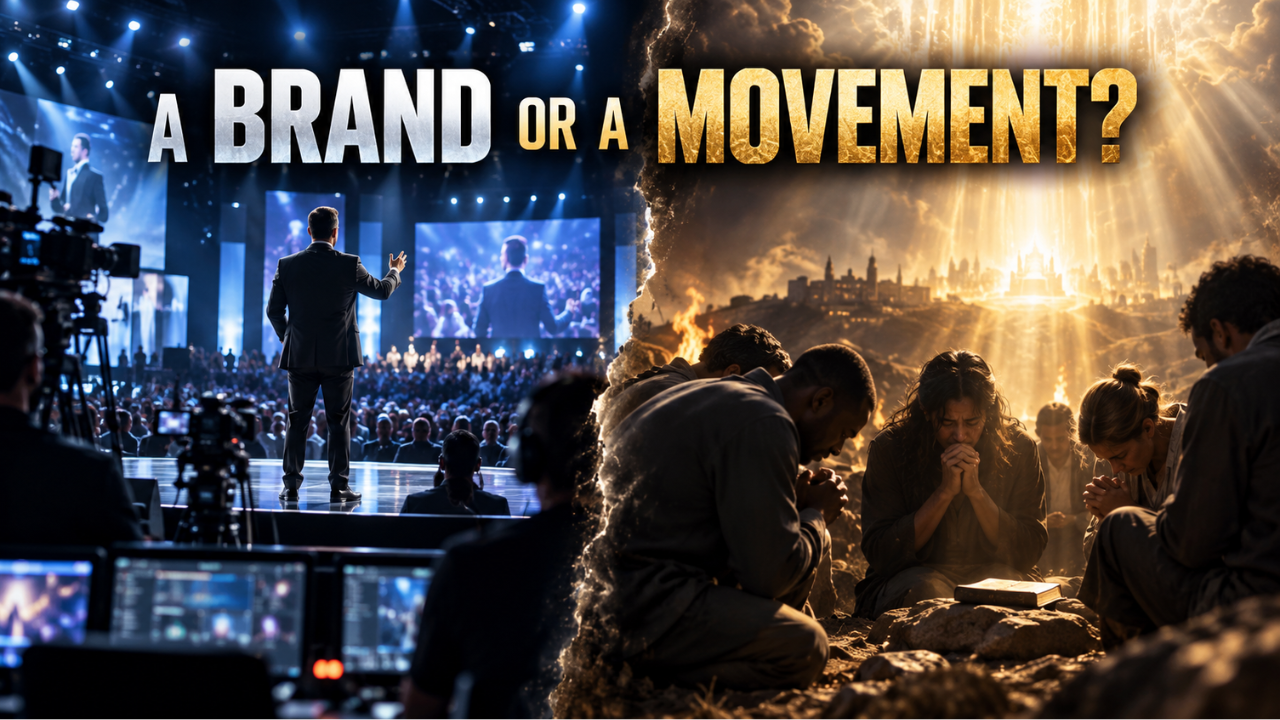
Revival and reformation have never belonged to the glory of man. They have never been the possession of a gifted personality, a platformed voice, or a single individual carrying an anointing for personal recognition. Even when Heaven has used vessels in history, the true movement of God has always been larger than the vessel. The fire may touch a man, but the purpose is to awaken a people.

In the New Testament pattern, Jesus did not announce the building of a religious celebrity culture. He declared, “I will build My Ecclesia; and the gates of Hades shall not prevail against it” (Matthew 16:18). The Lord did not say He would build a stage, a brand, or a one-man ministry machine. He said He would build His Ecclesia — a called-out, Spirit-governed, Kingdom people who carry His authority in the earth.

This matters deeply in the hour we are now entering. The old wineskins of religious performance cannot carry the new wine of Kingdom reformation. The Lord is not merely raising up isolated voices; He is forming a Remnant Ecclesia. He is gathering sons and daughters who refuse to worship personality, refuse to build around ego, and refuse to give the glory of God to any man.

The book of Acts reveals this pattern with holy clarity. On the Day of Pentecost, the fire of Holy Spirit did not rest upon one preacher alone. “They were all filled with Holy Spirit” (Acts 2:4). Peter stood to proclaim, but the fire had fallen upon the company. The apostolic voice interpreted the moment, but the Ecclesia carried the witness. Heaven was not birthing a platform; Heaven was birthing a people.

The early believers “continued steadfastly in the apostles’ doctrine and fellowship, in the breaking of bread, and in prayers” (Acts 2:42). This was not a personality-driven revival. It was a Spirit-formed community. Doctrine, fellowship, communion, prayer, signs, generosity, reverence, and daily witness all flowed together. The fire of reformation was not carried by one man’s gift, but by a consecrated body under the Lordship of Christ.

That is the sound being restored in this hour. The Remnant must recover the corporate nature of Kingdom authority. One voice may announce. One messenger may awaken. One prophet may cry aloud. One apostle may father and establish. But reformation is carried by a people who have been delivered from the need to be seen and consumed with the glory of the King.

Paul said, “We have this treasure in earthen vessels, that the excellence of the power may be of God and not of us” (2 Corinthians 4:7). The vessel is never the treasure. The messenger is never the movement. The preacher is never the glory. The power belongs to God, and the vessel only remains safe when it remembers that it is made of earth.

This is where the Remnant mentality must become clear. No single individual gets the credit for true revival. No man owns the fire. No leader possesses the glory. No ministry can claim what belongs to the Father, the Son, and Holy Ghost. The cry of the Remnant must be the cry of Psalm 115:1: “Not unto us, O LORD, not unto us, but to Your name give glory.”

The religious machine has trained people to gather around personalities. The Kingdom trains sons and daughters to gather around the Lamb. The religious machine celebrates the gifted. The Kingdom crucifies self-promotion. The religious machine builds followers of men. The Kingdom forms witnesses of Christ. The religious machine asks, “Who is the main voice?” The Kingdom asks, “Where is the obedient Ecclesia?”

Paul confronted this spirit in Corinth when believers began dividing themselves around human names. “I am of Paul,” “I am of Apollos,” “I am of Cephas,” and “I am of Christ” (1 Corinthians 1:12). Paul’s response was sharp: “Is Christ divided? Was Paul crucified for you?” The apostle refused to let the people turn servants into idols. He understood that the moment a movement becomes centered on man, it begins drifting from the cross.

The same apostolic correction is needed today. Reformation will not be carried by people addicted to platforms, applause, and personal kingdoms. It will be carried by those who can decrease so Christ may increase. John the Baptist understood this posture when he declared, “He must increase, but I must decrease” (John 3:30). That is not weakness. That is Kingdom order.

The early Church fathers carried this same understanding in different ways. Ignatius of Antioch emphasized the gathered Church as a people ordered under Christ, not as a scattered crowd of independent spiritual performers. Irenaeus contended for the faith once delivered, not as private revelation belonging to elite personalities, but as apostolic truth entrusted to the whole Church. Cyprian understood that the unity of the Church mattered because Christ was not forming detached individuals, but a holy people.

This does not mean Heaven does not raise leaders. It means true leaders never become the center. Apostles, prophets, evangelists, pastors, and teachers are gifts given “for the equipping of the saints for the work of ministry, for the edifying of the body of Christ” (Ephesians 4:12). The fivefold ministry was never given to replace the body. It was given to mature the body.

The true apostolic does not create dependency. The true apostolic fathers sons and daughters into maturity. The true prophetic does not gather people around mystique. The true prophetic calls the Ecclesia back to the voice of the Lord. The true pastor does not build emotional captivity. The true pastor guards the flock until Christ is formed in them. The true teacher does not display intellectual superiority. The true teacher anchors the saints in truth.

That is why the Remnant Ecclesia is so dangerous to the powers of darkness. A celebrity can be attacked. A platform can be shaken. A personality can fall. But a mature, consecrated, Spirit-governed people cannot be easily overthrown. When the whole body awakens, the gates of hell face something far greater than a preacher. They face the corporate authority of Christ expressed through His Ecclesia.

This is the fire of reformation now burning again. It is not merely revival as emotional visitation. It is reformation as governmental alignment. It is the restoration of Christ as Head, Holy Spirit as Governor, Scripture as foundation, and the Ecclesia as the visible witness of the Kingdom in the earth.

The Remnant must refuse the orphan spirit that needs a hero. We have a King. We do not need spiritual celebrities to admire from a distance; we need fathers and mothers who pour into sons and daughters. We need leaders who believe Holy Spirit can govern the people of God. We need apostles and prophets who, like Christ, pour what the Father has given them into those entrusted to them, trusting Holy Spirit to guide these Kingdom firebrands into wisdom, reverence, obedience, and the unadulterated Gospel of the Kingdom.

This is where the one-man religious show ends. It cannot carry the weight of the Kingdom Age. It cannot steward the corporate glory. It cannot disciple nations. It cannot form mature sons. It cannot stand under the fire that is coming. The age of performance is collapsing under the weight of the King’s glory.

The Remnant Ecclesia is rising with a different sound. It is not saying, “Look at us.” It is saying, “Behold the Lamb.” It is not crying, “Follow our brand.” It is crying, “Return to the King.” It is not building monuments to men. It is becoming a living temple filled with the glory of God.

This is the hour for the saints to take their place. Not as spectators. Not as consumers. Not as fans of anointed personalities. But as sons and daughters, priests and kings, warriors and witnesses, servants and reformers under the government of Holy Spirit.

The fire of reformation belongs to Christ. The glory belongs to the Father. The witness belongs to the Ecclesia. And the Remnant must now rise with clean hands, burning hearts, and one confession:

Not unto us, O Lord.
Not unto us.
But unto Your name be all the glory.

Stay tuned, the journey continues…..

A voice of fire to the Remnant,

— Dr. Russell Welch

Dr. Russell Welch is a published author, prophetic teacher, apostolic builder, author, and founder of faith-driven publishing and media initiatives. He is known for crafting bold, Kingdom-centered messages that call the Ecclesia into maturity, doctrinal clarity, and governmental authority. With a passion for equipping the Remnant and honoring generational legacy, Dr. Welch writes and teaches at the intersection of Scripture, history, and spiritual governance, challenging believers to live as sons and daughters who legislate Heaven on earth through truth, holiness, and unwavering fidelity to Christ.

Be sure to check out his book: The Consecrated Firebrand: A Warrior’s Guide to Holy Living, available exclusively on Amazon … here

Amazon Author Page


The Kingdom Age Has Come -The Old Wineskins Cannot Carry the Glory of the King

The watchmen of the Lord have been crying from the walls, and those with ears to hear can discern the sound. The Church has shifted into a new hour. This is not the end of the Lord’s Ecclesia; it is the awakening and restoration of the Lord’s Ecclesia. The Father is not abandoning His Church. He is reforming His people, calling them out of passive religious systems and back into their original Kingdom assignment.

For too long, much of what has been called “church” has been shaped by platforms, personalities, performance, and one-man religious systems. Yet Jesus did not come to build celebrity ministries, religious empires, or spiritual theaters centered around human charisma. He said, “I will build My Ecclesia, and the gates of Hades shall not prevail against it” (Matthew 16:18). Then He declared, “I will give you the keys of the Kingdom of heaven” (Matthew 16:19). That means the Ecclesia was never called merely to gather around a pulpit. She was called to carry governmental authority under the Lordship of the King.

The old wineskins of the Church Age cannot carry the new wine of the Kingdom Age. The old wineskin says, “Come watch one man minister.” The Kingdom wineskin says, “Equip the saints for the work of ministry.” The old wineskin says, “Build my name, my brand, my platform, and my following.” The Kingdom wineskin says, “Let the King be glorified, let the Lamb receive the reward of His suffering, and let the Ecclesia rise in mature sonship.”

This is why the one-man religious show will not function in this new age. It may still attract crowds, but it will not carry the glory. It may still produce noise, but it will not produce Kingdom transformation. It may still gather spectators, but it will not form sons and daughters. Heaven is no longer breathing upon systems that exalt man while merely mentioning Jesus. The Father is looking for a people who will decrease so the King may increase.

Jesus did not preach the gospel of church culture. He preached the gospel of the Kingdom. He declared, “Repent, for the kingdom of heaven is at hand” (Matthew 4:17). After His resurrection, He spent forty days speaking to His apostles concerning the Kingdom of God (Acts 1:3). Paul ended his ministry “preaching the kingdom of God and teaching the things concerning the Lord Jesus Christ” (Acts 28:31). And Jesus Himself said, “This gospel of the kingdom will be preached in all the world as a witness to all the nations, and then the end will come” (Matthew 24:14).

The message of this hour is not religious survival. It is Kingdom manifestation. The Lord is raising a Remnant Ecclesia who will no longer bow to the machinery of man-made religion. They are not rebels. They are sons. They are not church-haters. They are Kingdom reformers. They are not dishonoring the Body of Christ. They are calling the Body of Christ back under the government of the Head, Christ Jesus.

In this Kingdom Age, the King must be glorified above every ministry, every movement, every denomination, every network, and every human name. The Kingdom does not revolve around gifted men. The Kingdom revolves around the enthroned Christ. Every true apostle, prophet, evangelist, pastor, and teacher exists for one holy purpose: to equip the saints until the Body comes into maturity (Ephesians 4:11–13). The fivefold ministry was never given to replace the saints. It was given to activate them.

And now the heavens are revealing the true apostles in this age. They are not being revealed by titles, stages, entourages, or religious branding. They are being revealed by fatherhood. True apostles father sons and daughters even as Christ fathered His disciples. They pour into others what the Father has poured into them. They do not hoard revelation to secure dependency. They impart truth, wisdom, authority, character, courage, and Kingdom responsibility so the next generation can carry the assignment further.

This is a season when true apostles and prophets must pour into their sons and daughters all that the Father has entrusted to them. They must not raise followers around their personality; they must raise mature Kingdom firebrands who can walk under the government of Holy Spirit. Like the Lord, they must have faith that Holy Spirit will guide, correct, teach, mature, and empower those who have been entrusted to their care. Jesus did not cling to His disciples in fear. He trained them, formed them, commissioned them, and trusted Holy Spirit to lead them into truth.

This was also the pattern of the apostles and fathers of the first centuries of the New Covenant Ecclesia. They carried the unadulterated Gospel of the Kingdom with reverence, courage, holiness, and fire. They understood that the faith was not to be commercialized, diluted, or reshaped around the appetites of the age. They guarded the deposit, contended for the truth, formed disciples, and raised witnesses who could stand under persecution, resist mixture, and proclaim Christ as King.

That same apostolic spirit must return to the Ecclesia now. The Lord is not looking for spiritual celebrities who collect sons and daughters as trophies. He is raising fathers who pour, prophets who purify, teachers who anchor, shepherds who mature, and apostles who build according to Heaven’s blueprint. The true apostolic will not make people dependent upon the man. It will bring people under the Lordship of Christ, the authority of Scripture, and the government of Holy Spirit.

The Remnant must now understand who they are. They are not merely church members, religious consumers, or passive attenders waiting for one anointed man to do everything. They are blood-bought sons and daughters of the King. They are ambassadors of Christ, a royal priesthood, a holy nation, and the called-out Ecclesia of the living God. They have been entrusted with keys of Kingdom authority, not for prideful dominion, but for faithful representation of Heaven in the earth.

To legislate Heaven on earth means we come into agreement with what Heaven has already declared. It means we bind what Heaven has forbidden and loose what Heaven has authorized. It means we pray from the victory of the cross, not toward it. It means we confront darkness with the authority of the risen Christ and decree what the King has spoken, not what human emotion desires. It means our lives, homes, cities, regions, and assignments must come under the rule of Jesus Christ.

This is why the old wineskins must break. A spectator Church cannot carry a governing Kingdom. A personality-driven Church cannot carry a corporate anointing. A religious machine cannot carry the fire of Holy Spirit. A man-centered system cannot carry the glory of the enthroned King. The Kingdom Age requires a mature Ecclesia, a people formed in sonship, trained in obedience, anchored in Scripture, purified in reverence, and governed by Holy Spirit.

The Lord is tearing down the scaffolding of religious performance so His house can be built according to His pattern. He is exposing mixture, confronting pride, shaking celebrity Christianity, and judging systems that used His name while resisting His government. But in the same hour, He is awakening His Remnant: a people without price tags, without idols, without applause addiction, and without loyalty to the machinery of man-made religion.

This is the hour of the glorified King. The Church has not been discarded; she is being restored. The Lord is transitioning His people from passive religion into Kingdom authority, from spectator Christianity into governmental sonship, from one-man ministry systems into the corporate anointing of the Remnant Ecclesia. The old wineskin cannot carry what Heaven is pouring out, but the surrendered, purified, fathered, and commissioned Ecclesia shall become a vessel of Kingdom fire in the earth.

So let the watchmen cry. Let the apostles father. Let the prophets purify. Let the intercessors travail. Let the sons and daughters rise. Let the Ecclesia awaken. The King is on His throne, the keys are in the hands of His people, Holy Spirit is governing the movement, and the Remnant is being commissioned to carry the unadulterated Gospel of the Kingdom until the kingdoms of this world become the Kingdom of our Lord and of His Christ.

Stay tuned, the journey continues…..

A voice of fire to the Remnant,

— Dr. Russell Welch

Dr. Russell Welch is a published author, prophetic teacher, apostolic builder, author, and founder of faith-driven publishing and media initiatives. He is known for crafting bold, Kingdom-centered messages that call the Ecclesia into maturity, doctrinal clarity, and governmental authority. With a passion for equipping the Remnant and honoring generational legacy, Dr. Welch writes and teaches at the intersection of Scripture, history, and spiritual governance, challenging believers to live as sons and daughters who legislate Heaven on earth through truth, holiness, and unwavering fidelity to Christ.

Be sure to check out his book: The Consecrated Firebrand: A Warrior’s Guide to Holy Living, available exclusively on Amazon … here

Amazon Author Page


A prophetic call to restore Kingdom giving, expose religious manipulation, and return ministry provision back to faith in the Father.

It seems that every time I accept friend requests from many individuals outside the United States, I am quickly bombarded with requests for financial support. I want to say this with compassion, but also with Kingdom clarity: I am truly sorry for the message much of the American Church has exported concerning money, ministry, and provision.

Many have been taught that once they step into ministry, the sons and daughters of the Lord are automatically responsible to carry their personal needs. But this is not the true pattern of the Kingdom. The Father may move through people, but people are never to be treated as the source.

Jesus said, “Your Father knows what you need before you ask Him” (Matthew 6:8). He also commanded us to “seek first the Kingdom of God and His righteousness, and all these things shall be added to you” (Matthew 6:33). Paul declared, “My God shall supply all your need according to His riches in glory by Christ Jesus” (Philippians 4:19).

Yes, Scripture says, “The laborer is worthy of his wages” (Luke 10:7). But that verse was never meant to justify manipulation, pressure, guilt, emotional begging, or ongoing financial appeals disguised as ministry. A laborer being worthy of his wages is not the same thing as launching a beggar’s campaign against the saints.

When God calls a man or woman, He also takes responsibility for the assignment He gave them. The One who commissions also sustains. The One who sends also provides. The One who opens the door also knows how to furnish the room.

Abraham understood this when he told the king of Sodom, “I will take nothing… lest you should say, ‘I have made Abram rich’” (Genesis 14:23). Elijah learned this when God used ravens, a brook, and then a widow to sustain him (1 Kings 17:2–16). Jesus Himself taught us to pray, “Give us this day our daily bread” (Matthew 6:11), not “Teach us how to pressure people into meeting our needs.”

Sadly, the American Church has done a terrible job modeling this in many places. Too often, members have been treated more like personal ATM machines than sons and daughters of God. Instead of raising mature disciples who know how to hear God, trust God, and obey God, religious systems have trained people to respond to pressure, personality, crisis, fear, guilt, and emotional manipulation.

One of the most unbiblical forms of manipulation is tying the blessings of God and the promises of God to how much someone puts in an offering plate. That is not faith. That is religious control. Giving is holy when it flows from love, obedience, generosity, and a willing heart, but it becomes polluted when people are made to believe that God’s favor can be purchased.

Peter rebuked this spirit when he told Simon, “Your money perish with you, because you thought that the gift of God could be purchased with money” (Acts 8:20). Paul also made it clear that Kingdom giving must never be driven by pressure or compulsion: “Each one must give as he has decided in his heart, not reluctantly or under compulsion, for God loves a cheerful giver” (2 Corinthians 9:7).

The Father blesses according to covenant, obedience, faith, mercy, grace, and His own goodness. His promises are not merchandise. His blessing is not for sale. His favor is not unlocked by manipulation from a platform.

Any person can twist Scripture to defend a system, but twisting Scripture has never been the mark of truth. We know who is the father of lies, and we know the enemy’s ancient pattern is to distort what God has said. He did it in Eden. He did it in the wilderness when he tempted Jesus. And he still does it whenever Scripture is used to manipulate rather than liberate.

This is why we must return to the fear of the Lord. Provision is holy. Giving is holy. Stewardship is holy. Ministry is holy. And when holy things are handled with manipulation, Heaven takes notice.

The gift of faith is one of the most ignored gifts when it comes to finances. Many speak of miracles, healing, prophecy, and deliverance, but when money is involved, they immediately run to man before they petition Heaven. Yet Hebrews 11:6 says, “Without faith it is impossible to please Him.” If we trust God for souls, healing, deliverance, revival, and breakthrough, we must also learn to trust Him for provision.

George Müller modeled this beautifully. He cared for thousands of orphaned children in Bristol, England, yet he was known for not making financial appeals to man. He brought the needs before God in prayer and trusted the Father to move upon hearts as He desired. Müller’s life became a rebuke to religious striving and a testimony that Heaven still responds to faith.

Hudson Taylor, the great missionary to China, carried the same conviction. He taught that God’s work done in God’s way will not lack God’s supply. The principle is simple but powerful: if God truly sent the work, God is fully able to sustain the work.

This does not mean God never uses people. Of course He does. The Kingdom is generous. The book of Acts shows believers sharing, giving, and meeting needs as Holy Spirit led them. But Spirit-led generosity is not the same as religious pressure. Kingdom giving flows from obedience, not manipulation.

Holy Spirit is raising up Watchmen in this hour who are sounding the alarm and calling the Bride back into Kingdom alignment. The days of merchandising the saints, manipulating the vulnerable, and treating God’s people as financial machines are coming under the light of Heaven.

We do not petition people as our source. We petition Heaven.

We do not manipulate the Body. We trust the Father.

We do not build ministry on emotional appeals. We build by faith, obedience, purity, and surrender.

The One who called us is faithful. The One who commissioned us is able. And the One who gave the assignment will provide for what He has ordained.

Stay tuned, the journey continues…..

A voice of fire to the Remnant,

— Dr. Russell Welch

Dr. Russell Welch is a published author, prophetic teacher, apostolic builder, author, and founder of faith-driven publishing and media initiatives. He is known for crafting bold, Kingdom-centered messages that call the Ecclesia into maturity, doctrinal clarity, and governmental authority. With a passion for equipping the Remnant and honoring generational legacy, Dr. Welch writes and teaches at the intersection of Scripture, history, and spiritual governance, challenging believers to live as sons and daughters who legislate Heaven on earth through truth, holiness, and unwavering fidelity to Christ.

Be sure to check out his book: The Consecrated Firebrand: A Warrior’s Guide to Holy Living, available exclusively on Amazon … here

Amazon Author Page


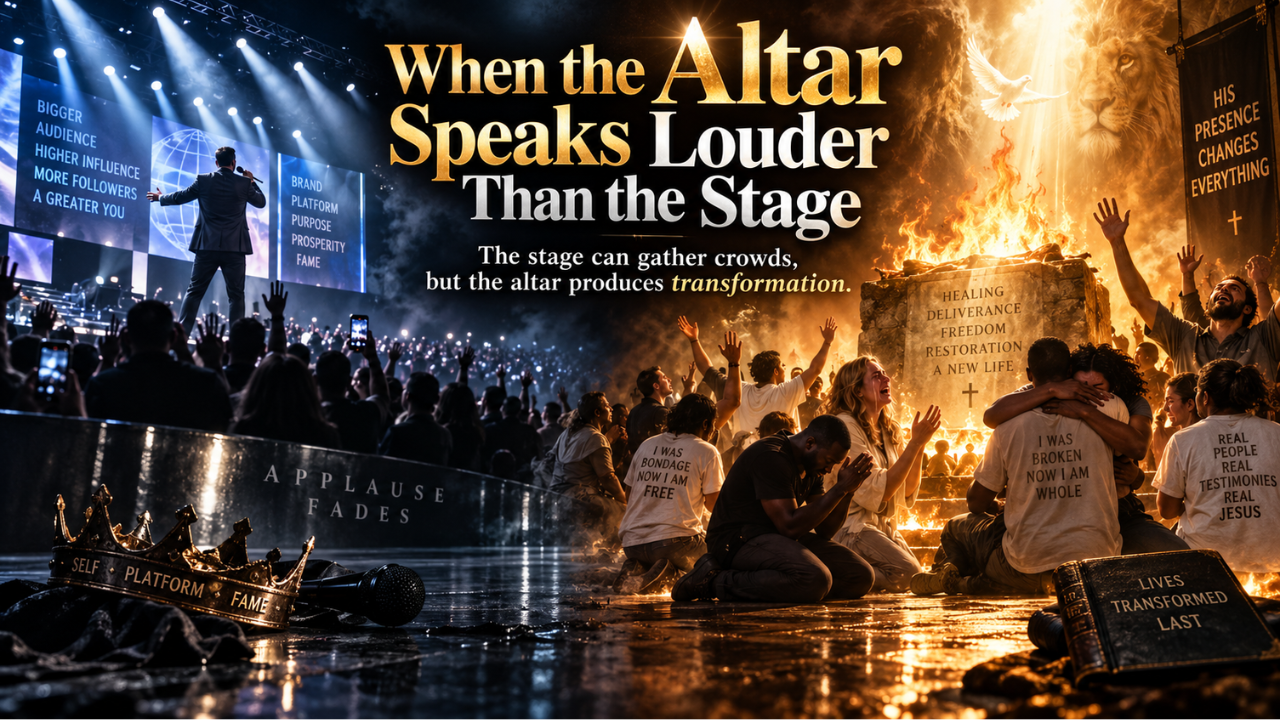
“Man can build the altar, schedule the event, and stir the crowd — but only Heaven can send the fire.”

Heaven does not respond to hype. Heaven does not bend because men built a stage, printed a flyer, gathered a crowd, named a movement, or declared a date God never spoke. The modern-day Church must learn again that fire from Heaven is not manufactured by human ambition. It is not produced by noise, branding, emotional pressure, or religious performance. Heaven responds to obedience, surrender, repentance, holiness, and broken hearts before the altar of the Lord.

One of the most sobering lessons in Scripture is found in Leviticus 10, when Nadab and Abihu, the sons of Aaron, offered “strange fire” before the Lord. They were not outsiders mocking the altar; they were priests standing near holy things. Yet nearness to sacred activity did not excuse unauthorized fire. They attempted to offer something God had not commanded, and the judgment of the Lord exposed the danger of imitation worship. This is a fearful warning to every generation that tries to substitute human flame for holy fire.

The Lord is not obligated to bless what He did not birth. Man may create an event, but only God can appoint a visitation. Man may schedule a gathering, but only Heaven can breathe upon it with glory. Man may stir emotion, but only Holy Spirit can pierce the heart with conviction. The difference between hype and holy fire is that hype moves the flesh for a moment, but holy fire produces repentance, transformation, and reverence before God.

Throughout history, the witness remains the same: Heaven responds to broken and repentant hearts. Psalm 51:17 declares, “The sacrifices of God are a broken spirit; a broken and a contrite heart, O God, You will not despise.” God does not despise the crushed heart that returns to Him in truth. He does not ignore the people who tremble at His Word. He does not turn away from the altar wet with repentance.

The problem with much of the modern Church is not that we lack activity. We have activity everywhere. We have conferences, campaigns, platforms, livestreams, strategies, and religious machinery moving at full speed. But the question is not whether we can gather people. The question is whether God has found a people low enough, clean enough, surrendered enough, and obedient enough to carry His fire.

Isaiah 66:2 gives us Heaven’s pattern: “But on this one will I look: on him who is poor and of a contrite spirit, and who trembles at My word.” The Lord tells us plainly where His eyes rest. Not first on the loudest room, the largest crowd, or the most polished production. His eyes rest on the one who trembles before Him. The Remnant must recover the holy tremble.

The early Church understood that repentance was not a side issue; it was part of the way of life. The Didache instructed believers to confess their sins and not come to prayer with an evil conscience. That is a far cry from a generation that often wants the blessing of God without the searching of God. The early believers knew that worship could not be pure while the heart remained unexamined. They understood that the altar of fellowship required clean hands and a surrendered conscience.

Tertullian wrote that repentance is “life,” because it is preferred to death. That is not religious gloom; that is Kingdom mercy. Repentance is not God trying to shame His people. Repentance is God throwing a rescue plank to the drowning soul. It is the doorway back into divine clemency, restored fellowship, and holy alignment with the King.

Ignatius of Antioch warned that where division and wrath are present, God does not dwell. That should make the modern Church tremble. We cannot produce Heaven’s fire while nurturing pride, bitterness, competition, jealousy, rebellion, and self-exaltation behind the scenes. Strange fire is not only false doctrine; it is also a wrong spirit trying to handle holy things. God will not endorse the flame of man’s ego and call it revival.

Revival is not proven by how many people attended. Revival is proven by how deeply hearts bowed. Revival is not proven by how loudly people shouted. Revival is proven by whether sin was confessed, idols were abandoned, forgiveness was released, holiness was restored, and Jesus was enthroned again. The true fire of God does not entertain the flesh. It consumes the sacrifice.

This is the hour for the Remnant to discern the difference between manufactured momentum and divine visitation. Not every flame is from the altar. Not every movement is birthed by Holy Spirit. Not every gathering carrying spiritual language has Heaven’s endorsement. The sons of Aaron teach us that holy things cannot be handled casually, and the altar must never be approached with imitation fire.

The Lord sets the dates. The Lord appoints the moments. The Lord decides when Heaven invades earth with glory, conviction, mercy, and awakening. Our assignment is not to hype the people into a moment, but to prepare the altar, humble our hearts, repent of our sins, tremble at His Word, and obey His voice. When the fire is truly from God, no man has to manufacture it, because Heaven itself will answer.

Stay tuned, the journey continues…..

— Dr. Russell Welch

Dr. Russell Welch is a published author, prophetic teacher, apostolic builder, author, and founder of faith-driven publishing and media initiatives. He is known for crafting bold, Kingdom-centered messages that call the Ecclesia into maturity, doctrinal clarity, and governmental authority. With a passion for equipping the Remnant and honoring generational legacy, Dr. Welch writes and teaches at the intersection of Scripture, history, and spiritual governance, challenging believers to live as sons and daughters who legislate Heaven on earth through truth, holiness, and unwavering fidelity to Christ.

Be sure to check out his book: The Consecrated Firebrand: A Warrior’s Guide to Holy Living, available exclusively on Amazon … here

Amazon Author Page


When a people bow low in repentance, Heaven can set an entire nation on fire with revival.

Revival does not begin when men become impressive; revival begins when men become broken. The Welsh Revival of 1904–1905 reminds us that a nation can be shaken when ordinary people come under extraordinary conviction. It was not launched by celebrity machinery, polished promotion, or religious entertainment, but by prayer, repentance, worship, and surrender. Wales became a testimony that when God bends a people low before Him, the fire that falls upon them can cross oceans. Historical accounts consistently connect this awakening with Evan Roberts, a young Welshman whose burden for souls became one of the defining sparks of the movement.

Evan Roberts was not a polished platform personality when the flame began to spread. He was a former coal miner and ministerial student, only in his mid-twenties, yet he carried a holy desperation that many established voices had lost. Scripture says, “Not by might, nor by power, but by my spirit, saith the LORD of hosts” (Zechariah 4:6). That verse seemed to breathe through Wales as meetings erupted not around human performance, but around the manifest dealings of God. The Lord often chooses hidden vessels so that no flesh can glory in His presence.

The heart of the Welsh Revival was conviction of sin. This was not shallow emotion, religious excitement, or temporary enthusiasm; people were pierced by the holiness of God. Jesus said Holy Spirit would “reprove the world of sin, and of righteousness, and of judgment” (John 16:8), and that is exactly what revival does when it is pure. It does not flatter the soul; it brings the soul into the light. Wales was not merely stirred — Wales was searched.

Historical reports describe prayer meetings, spontaneous worship, public confession, and deep repentance as marks of the revival. Many gatherings were not controlled by formal programs but moved with a holy sensitivity to the Spirit’s leading. One recurring watchword associated with Evan Roberts was the call to obey the Spirit, and that phrase captures the atmosphere of the movement. When Holy Spirit governs a room, man’s agenda bows, pride loses its seat, and the fear of the Lord becomes weightier than religious routine.

The Welsh Revival also carried a sound. It has often been remembered as a revival that moved through singing as much as through preaching. Worship became more than music; it became the cry of a nation bending its heart before God. The Psalms declare, “Let every thing that hath breath praise the LORD” (Psalm 150:6), and Wales seemed to answer with tears, hymns, prayers, and holy surrender. When worship is purified by repentance, it becomes a weapon that breaks atmospheres.

There was also a clear burden for souls. The testimony commonly repeated from the revival is that thousands upon thousands were converted in a short period of time, with some historical summaries estimating around 100,000 converts during the awakening. Whether one debates exact numbers or methods of counting, the undeniable record is that the movement deeply impacted Welsh religious life and sent shockwaves far beyond its borders. True revival does not merely fill buildings; it awakens consciences, transforms homes, and confronts society with eternity.

One of the most sobering features of the Welsh Revival was how deeply it touched ordinary life. The fire did not remain locked inside chapel walls. When conviction grips a people, business practices change, speech changes, relationships change, entertainment changes, and hidden sin loses its hiding place. Proverbs 14:34 declares, “Righteousness exalteth a nation: but sin is a reproach to any people.” Wales became a witness that national healing must begin with spiritual confrontation.

The revival was not born in comfort, but in hunger. Before the movement became widely known, there were years of prayer, local awakenings, and spiritual preparation in Wales. Men like Joseph Jenkins and Seth Joshua are often connected to the spiritual atmosphere that preceded Evan Roberts’ public role. This matters because revival rarely appears suddenly, even when it seems sudden to history. Beneath the visible flame, there are usually hidden altars, unseen tears, and nameless intercessors who have refused to let go of God.

The Welsh Revival reminds the modern Church that Holy Spirit does not need our machinery to move. He may use platforms, buildings, media, and organization, but He is never dependent upon them. Acts 2 shows us that when the Spirit was poured out, the sound from Heaven gathered the crowd before Peter ever preached the sermon. The first advertisement of Pentecost was not a campaign strategy; it was the presence of God. Wales, in its own hour, became another reminder that when Heaven breathes, people come.

Yet we must also speak with wisdom: revival history is never spotless because people are never flawless. The Welsh Revival carried glory, but it also carried strain, excess, controversy, and human weakness. Evan Roberts himself would later withdraw from public ministry, reminding us that vessels must be guarded even when the fire is real. The lesson is not to despise revival, but to steward it with Scripture, humility, rest, accountability, and obedience. Fire must be welcomed, but fire must also be tended at the altar of truth.

What crossed oceans from Wales was not merely a story, but a hunger. The revival influenced spiritual conversations far beyond Wales and is often discussed in connection with the wider awakening atmosphere that preceded and overlapped early Pentecostal stirrings, including movements that would soon emerge in other nations. When God ignites one place, the smoke of that altar can be smelled in another. Habakkuk 2:14 declares, “For the earth shall be filled with the knowledge of the glory of the LORD, as the waters cover the sea.” Wales became one burning witness that the glory of God was never meant to remain regional.

The cry of the Welsh Revival still speaks: bend low, confess fully, pray deeply, worship purely, obey Holy Spirit quickly, and burn for souls again. The Church does not need another performance-driven religious moment; she needs a holy visitation that restores the fear of the Lord. If God could shake mining towns, chapels, families, workers, students, and entire communities in Wales, He can shake our cities again. But the altar must be rebuilt before the fire falls. May the Lord bend us low until Christ is exalted high.

Stay tuned, the journey continues…..

— Dr. Russell Welch

Dr. Russell Welch is a published author, prophetic teacher, apostolic builder, author, and founder of faith-driven publishing and media initiatives. He is known for crafting bold, Kingdom-centered messages that call the Ecclesia into maturity, doctrinal clarity, and governmental authority. With a passion for equipping the Remnant and honoring generational legacy, Dr. Welch writes and teaches at the intersection of Scripture, history, and spiritual governance, challenging believers to live as sons and daughters who legislate Heaven on earth through truth, holiness, and unwavering fidelity to Christ.

Be sure to check out his book: The Consecrated Firebrand: A Warrior’s Guide to Holy Living, available exclusively on Amazon … here

Amazon Author Page


When the Real Jesus Ruins You for Religion

“If we do not have the Spirit of God, it were better to shut the churches, to nail up the doors, to put a black cross on them, and say, ‘God have mercy on us!” ~Charles Spurgeon

If Jesus Isn’t In It, I’m Not Interested

I have reached a place in my walk where I can say this without apology: if Jesus is not in it, I am not interested.

If He is not the center, I do not need the platform.
If He is not being exalted, I do not need the invitation.
If He is not being honored, I do not need the applause.
If His presence is not welcomed, I do not need the room.

Christ must be center stage.

Not the preacher.
Not the personality.
Not the movement.
Not the brand.
Not the building.
Not the denomination.
Not the religious machine.

Jesus.

The One crucified.
The One risen.
The One seated at the right hand of the Father.
The One whose eyes are like flames of fire.
The One whose voice still calls men out of darkness and into the Kingdom of His glorious light.

“The Church right now has more fashion than passion, is more pathetic than prophetic, is more superficial than supernatural.” ~Leonard Ravenhill

I spent too many years inside the religious system to be impressed by religious performance. I have seen enough church activity without Kingdom authority. I have heard enough sermons that mention Jesus but never surrender the room to Him. I have watched enough religious machinery keep moving while the presence of the Lord was standing outside the door knocking.

Then in 2016, my life was turned upside down.

I did not simply have a better church experience.
I did not simply learn a new theological concept.
I did not simply get excited about ministry again.

I encountered Jesus.

Not the polished American version.
Not the convenient version.
Not the marketable version.
Not the manageable version.
Not the version shaped by culture, politics, religion, or seeker-sensitive comfort.

I encountered the real Jesus.

The Jesus the Bible reveals.
The Jesus the prophets pointed toward.
The Jesus the apostles preached.
The Jesus demons trembled before.
The Jesus who rebuked religious hypocrisy, healed the broken, delivered the bound, cleansed the leper, overturned tables, called disciples, confronted systems, and announced the arrival of the Kingdom of God.

That encounter ruined me for anything less.

It ruined me for dead religion.
It ruined me for powerless Christianity.
It ruined me for celebrity ministry.
It ruined me for performance without presence.
It ruined me for platforms that celebrate man while treating Jesus like a sermon accessory.

“So many people get happy and blessed when they’re in an association or fellowship… [but] they’ve ‘lived on meetings’ instead of ‘living on Christ.’ ~Leonard Ravenhill

Beloved, Jesus is not a topic.

He is Lord.

He is not an add-on to our ministry plans.
He is not a brand enhancer.
He is not a religious slogan.
He is not a Sunday morning decoration.
He is not the mascot of American Christianity.

He is King.

And if the Church is going to be restored to Kingdom power, Jesus must be brought back to the center. Not verbally. Not symbolically. Not as a theological statement buried on a website.

Center stage.

Celebrated.
Exalted.
Obeyed.
Feared.
Loved.
Followed.
Preached.
Honored.
Enthroned.

The Remnant is not rising to build another religious empire. The Remnant is rising because the real Jesus is calling His people back to Himself. He is calling us out of mixture, out of compromise, out of man-centered ministry, out of religious ambition, and back into the fire of first love.

So let me say it again:

If Jesus is not in it, I am not interested.

Because once you encounter the real Jesus, nothing else can satisfy.

Stay tuned, the journey continues…..

— Dr. Russell Welch

Dr. Russell Welch is a published author, prophetic teacher, apostolic builder, author, and founder of faith-driven publishing and media initiatives. He is known for crafting bold, Kingdom-centered messages that call the Ecclesia into maturity, doctrinal clarity, and governmental authority. With a passion for equipping the Remnant and honoring generational legacy, Dr. Welch writes and teaches at the intersection of Scripture, history, and spiritual governance, challenging believers to live as sons and daughters who legislate Heaven on earth through truth, holiness, and unwavering fidelity to Christ.

Be sure to check out his book: Restoring God’s Watchmen: Modern-day Jeremiah’s walking in the authority & power of His Glory, available exclusively on Amazon … here

Amazon Author Page


When the Church trades truth for approval, culture becomes the pulpit

We are living in a day when much of the Church has grown silent on issues that openly oppose the Word of God. In large part, this silence has been fueled by the fear of man, the desire to be accepted by mainstream culture, and the pressure to appear tolerant in a generation that has redefined compassion apart from truth. Yet Scripture never calls the people of God to be cruel, hateful, or arrogant — but neither does it call us to be silent, cowardly, or compromised.

Paul warned the Church, “Do not be conformed to this world, but be transformed by the renewing of your mind” (Romans 12:2). That word is not a suggestion for private spirituality only; it is a command to the Ecclesia not to take on the mold, values, language, approval systems, and moral confusion of the age. When the Church begins to measure truth by what culture permits, applauds, or celebrates, culture has become her master.

Because of this silence, many pulpits have unintentionally given permission to lifestyles, ideologies, and spiritual compromises that Scripture clearly confronts. What previous generations would have discerned as rebellion against God is now often celebrated under the banner of love, inclusion, and cultural progress. But biblical love does not rejoice in iniquity; it rejoices in the truth (1 Corinthians 13:6). Love without truth becomes sentiment. Truth without love becomes harshness. But the Kingdom carries both — mercy that reaches and holiness that transforms.

Jesus never taught His Church to seek acceptance from the world. He said, “If the world hates you, know that it has hated Me before it hated you” (John 15:18). He also warned, “Woe to you, when all people speak well of you, for so their fathers did to the false prophets” (Luke 6:26). The approval of culture has never been the evidence of faithfulness. Often, it is the first warning sign that the Church has softened the message until offense has been removed from the cross.

This is why the letters to the seven churches in Revelation are so urgent for our hour. Jesus did not only rebuke the lost world; He rebuked His own churches when they drifted from faithfulness. To Ephesus, He said they had abandoned their first love, even though they still had works, labor, and doctrine (Revelation 2:2–5). That means a church can be busy, active, structured, and even doctrinally aware, yet still lose the burning love that keeps obedience alive.

To Pergamum, the Lord rebuked the toleration of corrupt teaching and mixture, saying there were those among them who held to the teaching of Balaam, leading God’s people into compromise (Revelation 2:14–16). Pergamum reveals a terrifying truth: a church can dwell in a hostile culture and still survive persecution, yet begin tolerating mixture from within. External pressure is dangerous, but internal compromise is often deadlier.

To Thyatira, Jesus confronted the toleration of Jezebel, a spirit of seduction, false prophecy, and moral compromise that led His servants into defilement (Revelation 2:20–23). The issue was not merely that wickedness existed in the culture around them. The issue was that the church tolerated what the Lord commanded them to confront. Tolerance becomes treason when it protects what Jesus died to deliver people from.

To Sardis, the Lord said, “You have the reputation of being alive, but you are dead” (Revelation 3:1). That word should shake the modern Church. Reputation is not resurrection. Crowds are not necessarily life. Platforms are not necessarily presence. A church can have activity, branding, influence, buildings, music, and motion, yet be spiritually dead because it has lost the voice, fire, holiness, and government of Holy Spirit.

To Laodicea, Jesus rebuked lukewarmness, self-sufficiency, and spiritual blindness. They said, “I am rich, I have prospered, and I need nothing,” but the Lord said they were “wretched, pitiable, poor, blind, and naked” (Revelation 3:17). This is the danger of a Church that has become comfortable with cultural success. It can mistake wealth for favor, influence for authority, and self-confidence for spiritual maturity.

Yet the mercy of Jesus is seen in the fact that He rebukes because He loves. He said, “Those whom I love, I reprove and discipline, so be zealous and repent” (Revelation 3:19). The rebuke of the Lord is not the rejection of the Church; it is His call to awaken her before judgment hardens what mercy was sent to correct. The Lord does not expose compromise to destroy His people, but to purify them.

The tragedy of our hour is that while many in the Church are shaking hands with the very systems that oppose the Lord’s authority, the doors of persecution continue to open against those who still refuse to bow. The same culture that demands the Church’s silence will not be satisfied until the Church also gives its agreement. First it asks for tolerance. Then it demands celebration. Then it punishes refusal.

But the apostles already told us this day would come. Paul wrote that in the last days people would be “lovers of self, lovers of money, proud, arrogant,” and “lovers of pleasure rather than lovers of God,” while still having “the appearance of godliness” but denying its power (2 Timothy 3:1–5). That is not merely a description of the world; it is a warning about religious forms that remain visible after holiness has departed.

The Church must recover the courage to say what God has said. Not with hatred. Not with cruelty. Not with religious arrogance. But with tears, conviction, authority, and holy fear. “We must obey God rather than men” (Acts 5:29). When the fear of man governs the pulpit, the fear of the Lord departs from the house.

The Remnant must understand this clearly: silence in the face of deception is not wisdom. Compromise in the name of acceptance is not love. Agreement with culture at the expense of obedience to Christ is not ministry — it is surrender. The Church was never called to be mastered by Babylon, trained by Jezebel, celebrated by Rome, or shaped by the spirit of the age. She was called to be the Bride of Christ, washed by the Word, clothed in righteousness, and governed by Holy Spirit.

Now is the time for the Ecclesia to recover her voice, cleanse her garments, and stand once again as a witness to the truth, the holiness, and the government of the Kingdom of God. The Lord is still saying, “He who has an ear, let him hear what the Spirit says to the churches” (Revelation 2:7).

The question before us is not whether culture will approve of the Church. The question is whether Jesus will.

Stay tuned, the journey continues…..

— Dr. Russell Welch

Dr. Russell Welch is a published author, prophetic teacher, apostolic builder, author, and founder of faith-driven publishing and media initiatives. He is known for crafting bold, Kingdom-centered messages that call the Ecclesia into maturity, doctrinal clarity, and governmental authority. With a passion for equipping the Remnant and honoring generational legacy, Dr. Welch writes and teaches at the intersection of Scripture, history, and spiritual governance, challenging believers to live as sons and daughters who legislate Heaven on earth through truth, holiness, and unwavering fidelity to Christ.

Be sure to check out his book: Restoring God’s Watchmen: Modern-day Jeremiah’s walking in the authority & power of His Glory, available exclusively on Amazon … here

Amazon Author Page


The systems of men may tremble, but the Word of the Lord stands forever — and the Remnant is rising in the authority of Heaven

We are beginning to see the Remnant recognized, not first by applause, but by resistance. The religious spirit has started to discern what Heaven has been forming in hidden places, and now the institutional system is attempting to diminish their authenticity by calling them “out of order.” Yet the Lord has often raised His vessels outside the comfort of controlled religious environments, for John the Baptist did not emerge from polished platforms but from the wilderness, crying, “Prepare the way of the Lord” (Matthew 3:3). What men call disorder may, in fact, be Heaven disrupting what has long been out of alignment.

The sons and daughters of God are being summoned out of spiritual captivity, yet many systems continue to capture hearts through performance-driven programs that resemble entertainment more than encounter. There is a mystifying presentation in much of modern religion, polished with lights, sound, branding, charisma, and emotional momentum, but often lacking the weight of holy conviction. Paul warned that in the last days men would have “a form of godliness, but denying the power thereof” (2 Timothy 3:5). The danger is not excellence itself, but excellence without consecration, performance without Presence, and gatherings that impress the flesh while leaving the spirit asleep.

The Gospel of the Kingdom was never meant to be watered down into a soothing message that lulls hearers into compromised complacency. Jesus did not preach a gospel of comfort detached from repentance; He came saying, “Repent: for the kingdom of heaven is at hand” (Matthew 4:17). The Kingdom message confronts darkness, exposes mixture, heals the broken, delivers the captive, and brings the whole life under the government of God. Any message that removes the cross, silences holiness, avoids repentance, and entertains people into spiritual sleep is not the Gospel Jesus preached.

The early Church understood this with trembling clarity. Ignatius of Antioch warned believers to avoid strange doctrines and remain rooted in Jesus Christ, because the Church was always under threat from teaching that sounded spiritual but led hearts away from truth. Irenaeus contended against deception by calling the people of God back to the apostolic faith once delivered. The fathers did not guard doctrine because they loved argument; they guarded doctrine because they understood that corrupted truth produces corrupted disciples.

Now this religious machine has become a multi-billion-dollar enterprise, and systems built on influence, image, and institutional control will guard their territory fiercely. Jesus overturned tables in the temple because worship had been turned into merchandise, and what was meant to be a house of prayer had become a den of thieves (Matthew 21:13). When ministry becomes an industry, the prophetic voice becomes a threat because it interrupts the economy of compromise. The Remnant does not threaten true shepherds, but it does expose hirelings who have learned how to profit from the sheep.

Yet none of this is new under the sun. The spirit of religion has always sought to hijack the destinies of sons and daughters by replacing intimacy with control, obedience with ritual, and sonship with institutional dependency. Jesus said to the Pharisees, “Ye shut up the kingdom of heaven against men” (Matthew 23:13), revealing that religion can stand at the door of inheritance and block the very people God is calling in. This is why the Remnant must not only be bold, but discerning, because not every structure bearing the name of God is submitted to the heart of God.

Heaven is not surprised by this moment. The Lord Himself revealed to John on the island of Patmos that there would be systems, powers, beasts, false prophets, harlot structures, and counterfeit authorities that would attempt to seduce, intimidate, and govern the earth apart from God (Revelation 13; Revelation 17). Revelation is not merely a book about future crisis; it is an unveiling of spiritual realities that have always warred against the testimony of Jesus. The Lamb is not reacting to history; He is reigning over it.

There is something unique about the Remnant in this generation. The anointing they are walking in carries a familiar sound, almost as if the spirit of Elijah has touched the altar again and the testimony of the two witnesses has begun to echo through the earth. Malachi prophesied that Elijah would come before the great and dreadful day of the Lord, turning hearts back into alignment (Malachi 4:5–6). Revelation speaks of witnesses clothed in authority, standing before the Lord of the earth with power that cannot be explained by religious credentials (Revelation 11:3–6).

This is why the cosmos itself seems to recognize the weight of what is being released. Paul wrote that creation groans, waiting for the manifestation of the sons of God (Romans 8:19–22). The Remnant is not rising to become religious celebrities; they are rising as sons and daughters who carry the authority of surrender. Their emergence is not about platform, personality, or applause, but about Heaven’s government being demonstrated through yielded vessels.

The early fathers understood that the Church was never meant to live as a powerless institution. Athanasius contended that Christ came not merely to inspire men, but to restore humanity through union with Himself. Tertullian spoke of the Church as a people whose witness carried power even under persecution. The true Ecclesia has always been most dangerous to darkness when she is least dependent upon worldly validation.

Religion does not write the last chapter. The Father has already written it, and the Lamb has already secured it by His blood. Revelation does not end with Babylon seated in power; it ends with Babylon fallen, the Bride prepared, the King reigning, and the kingdoms of this world becoming the kingdoms of our Lord and of His Christ (Revelation 11:15; Revelation 19:7). The systems of man may rage, resist, mock, and accuse, but they cannot overturn what Heaven has decreed.

We are watching this unfold in real time before our eyes. The Remnant is being awakened, the Ecclesia is being summoned back to her governmental assignment, and the voice of the Father is calling His sons and daughters out of spiritual sleep. What religion tried to bury, Heaven is breathing upon again, and what systems tried to silence, Holy Spirit is setting on fire. The hour belongs not to the machine, not to the performer, not to the hireling, but to the Lamb and to the people who follow Him wherever He goes.

Stay tuned, the journey continues…..

— Dr. Russell Welch

Dr. Russell Welch is a published author, prophetic teacher, apostolic builder, author, and founder of faith-driven publishing and media initiatives. He is known for crafting bold, Kingdom-centered messages that call the Ecclesia into maturity, doctrinal clarity, and governmental authority. With a passion for equipping the Remnant and honoring generational legacy, Dr. Welch writes and teaches at the intersection of Scripture, history, and spiritual governance, challenging believers to live as sons and daughters who legislate Heaven on earth through truth, holiness, and unwavering fidelity to Christ.

Be sure to check out his book: Restoring God’s Watchmen: Modern-day Jeremiah’s walking in the authority & power of His Glory, available exclusively on Amazon … here

Amazon Author Page


When Heaven’s fire enters the room, every false system loses its authority

How many of you have ever felt like a religious disrupter — not because you were trying to be difficult, offensive, or disruptive, but because the Spirit of God in you refused to bow to the atmosphere in the room? You walk into certain meetings, and suddenly the religious spirit begins to make noise, create disturbance, stir suspicion, or even launch an outright attack against you. The fact is, it is seldom your fault; more often than not, you are not purposely causing a problem at all. Many times, what is really happening is that something holy in you has entered a room where something counterfeit has been comfortable for far too

Jesus said in John 15:18, “If the world hates you, you know that it hated Me before it hated you.” The same King who healed the sick, cast out devils, preached the Kingdom, and restored the broken was also hated by religious systems that loved order more than obedience. He did not disrupt Heaven; He disrupted religious control. He did not violate the Father’s heart; He exposed the hearts of men who had built systems without the Father.

We must understand this: sons and daughters who have surrendered all at the altar will carry a presence that unsettles anything not submitted to Christ. When a life comes under the government of Holy Spirit, it no longer carries the fragrance of religious performance. It carries the fire of consecration, the authority of truth, and the sound of another Kingdom. That kind of life does not blend easily into atmospheres built on compromise, control, fear, pride, or spiritual appearance.

The early believers understood this holy tension. The Epistle to Diognetus said Christians “dwell in their own countries, but simply as sojourners,” and that they live on earth while their citizenship is in Heaven. That is the strange glory of the true Ecclesia: present in the world, yet governed from another realm. We are not here to be strange for attention; we are here to be so surrendered that Heaven becomes visible through our obedience.

The religious spirit always gets loud when it can no longer control the room. It will accuse what it cannot discern, criticize what it cannot carry, and attack what it cannot govern. That same spirit called Jesus demonized, accused the apostles of rebellion, and resisted the move of God whenever the wineskin of Heaven threatened the comfort of man-made religion. But Acts 5:29 still thunders through the ages: “We ought to obey God rather than men.”

Beloved, we are anointed with the same Spirit that rested upon our King. Acts 10:38 says God anointed Jesus of Nazareth with Holy Spirit and power, and He went about doing good and healing all who were oppressed by the devil. That means the anointing does not merely make us emotional; it makes us dangerous to darkness. It makes us compassionate toward the broken, but confrontational toward bondage.

When you carry the anointing of Christ, you will not always be celebrated in religious rooms. Some will love the gift but reject the fire. Some will want the healing but resist the government. Some will enjoy the language of revival but hate the repentance that true revival demands.

Ignatius of Antioch is often remembered for the thought that Christianity shows its strength when it is hated by the world, and whether quoted in exact form or summarized through his martyr-witness, the meaning carries a sharp truth. The true faith has never needed cultural applause to prove its power. The blood of martyrs, the prayers of saints, the holiness of surrendered vessels, and the boldness of Spirit-filled witnesses have always shaken empires more than polished religious performance ever could.

Do not confuse rejection with failure. Jeremiah was rejected, yet he carried the burden of the Lord. John the Baptist was dismissed by the polished religious establishment, yet Jesus said there had not risen one greater among those born of women. Stephen was stoned, yet his face shone like an angel because Heaven was standing open over him.

Athanasius famously taught that Christ became what we are so that He might bring us into what He is, and while we never become God in essence, the point is powerful: redemption restores union, image, sonship, and holy participation in the life of Christ. We are not carrying a lesser religious brand; we are carrying the life of the risen Lord within us. The same Christ who overturned tables also washed feet. The same Christ who rebuked devils also wept over cities.

So when the religious spirit begins making noise around you, do not immediately shrink, apologize for the fire, or assume you missed God. Test your own heart, yes. Walk in humility, yes. But do not surrender your assignment just because the atmosphere became uncomfortable.

Romans 8:14 says, “For as many as are led by the Spirit of God, these are sons of God.” That means the sons and daughters of the Lord are not governed by applause, titles, committees, platforms, or religious intimidation. We are governed by Holy Spirit. When He leads, we follow; when He speaks, we obey; when He burns, we become the altar.

The Bride of Christ is not being prepared to entertain Babylon or appease religious systems. She is being washed with the water of the Word, clothed in righteousness, filled with oil, and made ready for the Bridegroom. Ephesians 5 tells us Christ is sanctifying His Bride, cleansing her, and presenting her glorious, without spot or wrinkle. That means the fire you carry is not rebellion; it may be the sound of consecration confronting mixture.

Remnant, do not be surprised when your surrender disrupts what others have normalized. Do not be shocked when your hunger exposes spiritual complacency. Do not be offended when your obedience makes comfortable religion uncomfortable. The sons and daughters who live under the government of Holy Spirit will always carry the fragrance of Christ, and to some it will smell like life, while to others it will expose death.

So stand in love, but stand. Walk in humility, but do not bow to control. Carry mercy, but do not compromise truth. The King has placed His Spirit within you, and when Holy Ghost fire burns in a surrendered vessel, religious systems may tremble, demons may cry out, and atmospheres may shift — but the Bride will be purified, the Kingdom will be preached, and Jesus Christ will be glorified.

Stay tuned, the journey continues…..

— Dr. Russell Welch

Dr. Russell Welch is a published author, prophetic teacher, apostolic builder, author, and founder of faith-driven publishing and media initiatives. He is known for crafting bold, Kingdom-centered messages that call the Ecclesia into maturity, doctrinal clarity, and governmental authority. With a passion for equipping the Remnant and honoring generational legacy, Dr. Welch writes and teaches at the intersection of Scripture, history, and spiritual governance, challenging believers to live as sons and daughters who legislate Heaven on earth through truth, holiness, and unwavering fidelity to Christ.

Be sure to check out his book: Restoring God’s Watchmen: Modern-day Jeremiah’s walking in the authority & power of His Glory, available exclusively on Amazon … here

Amazon Author Page